Posts Tagged ‘Country’

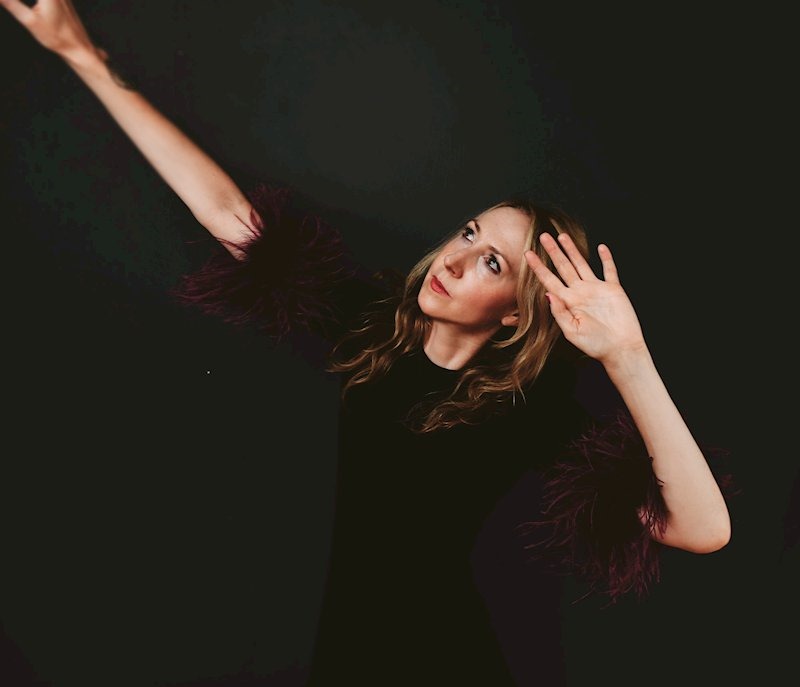
NYC singer-songwriter Jessie Kilguss presents her latest single ‘Howard Johnson’s’, previewing her sixth album They Have A Howard Johnson’s There, with an era-inspired nostalgic video by Deborah Magocsi. This album was engineered, produced, mixed and mastered by Charlie Nieland (Debbie Harry, Rufus Wainwright, Blondie, Scissor Sisters) at Saturation Point Studios in Brooklyn.

For this single, Kilguss is accompanied by John Kengla (David Byrne, Ben Kweller, Serena Ryder) on guitar, bass and keys, Rob Heath (Madison Square Gardeners, Julia Nunes) on drums and percussion, and Dave Derby (The Dambuilders, Gramercy Arms, Lloyd Cole) and Charlie Nieland on backing vocals. Other tracks on this album features Andrea Longato (Duncan Shiek, Jeremy Jordan, Alphonso Ribeiro), guitarist Kirk Schoenherr (Tegan and Sara, Elle King, Chet Faker), and Rembert Block (Rembert and the Basic Goodness).

“This song originated from some writing I did in a poetry workshop with performance artist Karen Finley. I had seen her read at the fantastic On The Verge Festival, which celebrates women artists of all disciplines at the Wild Project, produced and curated by my friend Heather Litteer. I was drawn to Karen’s writing and saw a post of hers on Instagram advertising an online poetry workshop inspired by the movie Dog Day Afternoon, as well as dogs in general. I had never taken a poetry workshop before but I am a huge dog lover and thought “what the hell”. I like pushing myself out of my comfort zone,” says Jessie Kilguss.

“In the movie, Al Pacino is speaking with his lover about what he’ll do to prove his love and he says something like “I’ll charter a plane to Algeria. They have a Howard Johnson’s there”. It stood out to me because it was so ridiculous and also, my father Howard had passed away a month earlier. So the song is a tribute to my father, Howard Kilguss, and is also inspired by Dog Day Afternoon. My father had a deep connection with dogs, so I thought it was even more appropriate to write this song for him".

AA

Poccc

Following the demise of Needlework, who we absolutely loved here at Aural Aggravation, front man Reuben Pugh has been keeping busy and keeping creative, with the swift emergence of lo-fi slacker country act Troutflies.

Ahead of an imminent debut album, The Dancing Years, they’ve dropped the song ‘Cross on a Hill’, which has hints of Pavement and Silver Jews, blended with the drawl of Mark E. Smith, and is accompanied by a video that matches the loose, low-budget feel of the song. We dig.

AA

531393817_122160077354381252_7463272933200659176_n

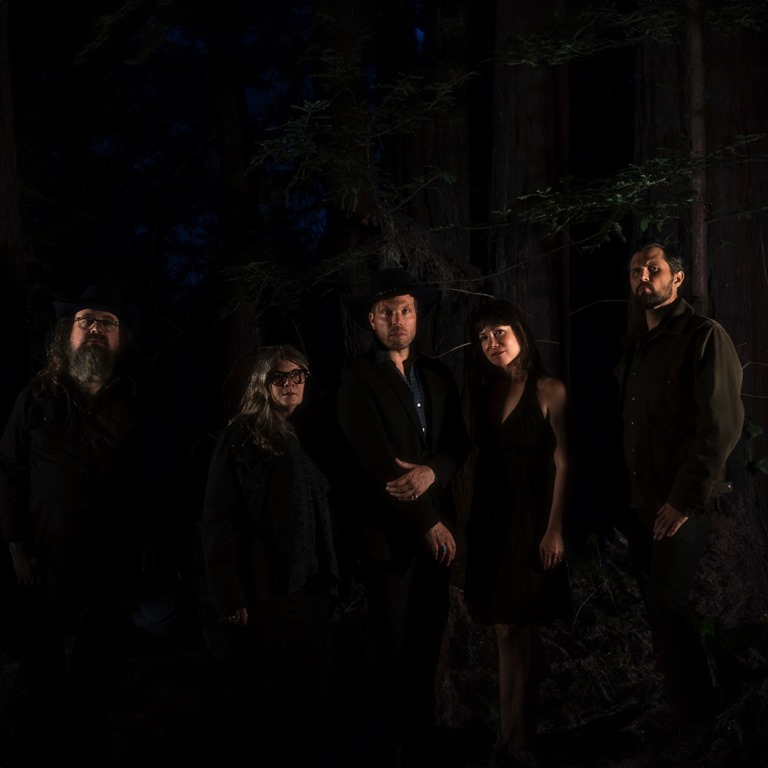
LUX INTERNA reveal the music video for the lush and warm track ‘No Arrow’ as the final advance single taken from the American dark folk innovators’ forthcoming new album New Wilderness Gospel, which is chalked up for release on May 2, 2025.

LUX INTERNA comment: “In ‘No Arrow’, a tangle of voices and moments meet, intertwine, and transform each other”, guitarist and singer Joshua Levi Ian explains on behalf of the band. “Here, it’s always 4:00 am. You’re stepping out of the roadside bar as the desert winds gently stipple flickering red neon with grains of sand, while the lights from the town in the valley shimmer below like ghosts in the darkness. Or perhaps you’re waking up in the Mojave heat and lighting a cigarette in the motel bed as you watch your sleeping lover bathed in shadows and the shards of electric light that creep in through the holes in the curtains. Or maybe you’re still driving, tired but full of flame, as the car’s headlights are continuously humbled by the vastness of a great nocturnal kingdom. Either way, you feel a mix of calm resolve and wildlife surging up inside you. Your body is awake, a beautiful animal of flesh and fire. It feels like everything that came before has intentionally led you to this moment. But you know that he’s out there, waiting and watching. And there’s a cold and calculating malice in his eyes. This thought used to terrify you. You would have done anything to shake him off your trail. But not anymore. Now you’re ready. You welcome the encounter. Now he’s the one that best beware.”

AA

bbcf112f-1d07-af27-3477-739d767e1e69

Cruel Nature Records – 27th September 2024

Christopher Nosnibor

The scene of microlabels will always give you something absent from the mainstream. I mean it’ll give you many things, but I’m talking about variety. We live in the strangest of times. Postmodernism brought simultaneously the homogenisation of mainstream culture and the evermore extreme fragmentation of everything outside the mainstream. And example of that fragmentation is the existence of Cruel Nature Records, who operate by releasing albums digitally and on cassette in small quantities. Further, the second album by Deep Fade, is typical, released in an edition of forty copies. It’s better to know your audience and operate on a sustainable model of what you can realistically sell, of course, but do take a moment to digest the numbers and the margins and all the rest here. It’s clear that this is a label run for love rather than profit.

The sad aspect of this cultural fragmentation is that so much art worthy of a wider, if not mainstream, audience simply doesn’t get the opportunity. Not that Deep Fade have mainstream potential, by any means. As evidenced on the seven tracks – or eight, depending on format – tracks on Further, Deep Fade are just too weird and lo-fi for the mainstream to accommodate them. They simply don’t conform to a single genre, and with tracks running well over eight minutes and often running beyond the ten-minute mark, they’re not likely to receive much radio airplay either.

Opener ‘Tidal’ is exemplary. Somewhere during the course of its nine minutes it transitions from being minimal bedroom pop to glitchy computer bleepage to a devastating blast of messed-up noise. Yet through it all, Amanda Votta’s vocals remain calm and smooth as she breathily weaved her way through the sludge. The twelve-minute title track veers hard into wild Americana, a mess of country and blues and slide guitar, before tapering into fuzzed-out drone guitar reminiscent of latter-day Earth. Amidst trudging drone guitar, thick with distortion, it’s hard not to feel the lo-fi pull.

We’re immensely proud to present an exclusive premier of the video for the mighty ‘Tidal’:

AA

‘Surge’ arrives on a raw metallic blast before yielding to a spacious echo-soaked guitar drift and some dense, grating abstractions. Texture and detail are to the fore on this layered set of compositions are by no means easy to navigate.

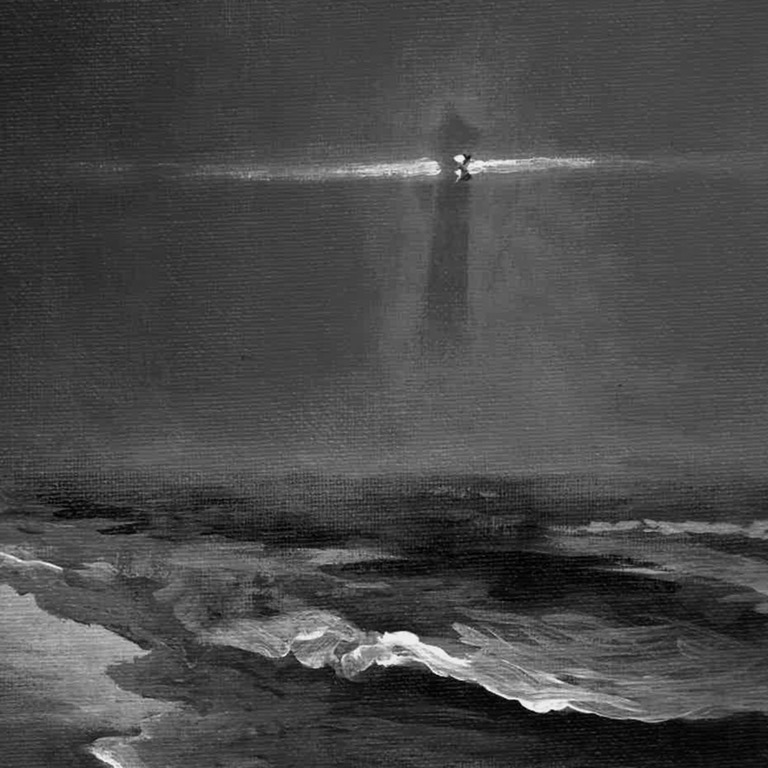
As the band explain, ‘The album, influenced by Neil Young and Einstürzende Neubauten, was recorded across various locations including St. John’s, Providence, Liverpool, and Edinburgh. Environmental elements play a significant role, with guitars recorded during a nor’easter and vocals captured at lighthouses, incorporating natural sounds like wind and bird calls… Toronto’s Church of the Holy Trinity and the Cowboy Junkies’ The Trinity Sessions also influenced the album’s sound, adding to its atmospheric and melancholic feel.’

Atmospheric and melancholic it is, although many of the aforementioned touchstones aren’t easy to extrapolate from the mix. Nevertheless, and you feel your stomach enter a slow churn, which is exacerbated by the low-gear drones which sound like low-circling jets – there have been a lot of those lately and the air is filled with paranoia and mounting dread right now. Further, however not only provides a sonic landscape that matches this mood, but runs far deeper into the psyche.

The acoustic ‘Little Bird’ scratches and scrapes over a fret-buzzing acoustic guitar. The fifteen-minute ‘Heartword is simply a mammoth-length surge of everything, occasionally breaking down to piano and deep tectonic grinds.

It’s fitting that Deep Fade should call their second album Further, because this is where they take things. At times it’s terrifying and at times it’s immense.

The lyrics are as breathtaking as the crushing bass on ‘Wake Me’, and the sparse arrangement of closer ‘Fixed and Faded’, with its breathy, folky vocal and crunchy overdriven guitar which drones, echoes, and sculpts magnificent spares from feedback and sustain, brings a sense of finality and offers much to digest.

The digital version includes an additional track, another monumental epic in the form of the eleven-minute ‘Hawk’, a work of haunting, spectral acoustic country: it’s one hell of a bonus worthy of what is inarguably, one hell of an album.

AA

a1741881484_10

Today, we share the mysterious and poignant track ‘Moonshiner’ from the eponymous solo album by guitarist, producer and composer Alessandro ‘Asso’ Stefana. The album is due for release on 17th May 2024 via Ipecac Recordings, with PJ Harvey as Executive Producer. ‘Moonshiner’ is one of the track from the albums featuring the voice of Roscoe Holcomb taken from the Smithsonian Folkways archives.

Asso describes his use of the archives as “a powerful and moving testimony to a bygone era… I have always been fascinated by the idea of mixing folk, a music so intimately linked to the land, with something that goes beyond the boundaries of the genre.” One of Asso’s aims for this album was for it to feel “suspended between earth and sky” – the interplay between decades old recordings with new improvisations evokes feelings of being grounded and untethered at the same time. 

See the visualiser here:

AA

Moonshiner

Photo credit: Roberto Cavalli

Christopher Nosnibor

They’ve been going since 2013. Emerging from various permutations of solo and band-related projects by front man and songwriter Si Micklethwaite – evolving from his solo wall-of-pedals shoegaze work as Muttley, through the Muttley Crew collective to eventually coalesce as Soma Crew with guitarist Steve Kendra and drummer Nick Barker, with a rotating cast of contributors along the way. I’ve probably seen – and written about – most of these incarnations of both the band and their forebears, and they’ve never failed to provide music of interest. While the core trio means they’ve always retained their distinctive identity in ways which extend beyond Micklethwaite’s distinctive approach to songwriting – minimal, repetitive, cyclical, hypnotic – the shifting lineups have meant they’ve spent their career continuously evolving. It’s true that the evolution has been slow – a tectonic crawl, in fact, and if you ever meet the band, especially Si, it’s obvious why. These guys are as laid back in their approach as the music they make – and the music they make is psychedelic, hypnotic, slows-burning, hazy.

This latest offering – and it’s been a while since the last one – feel different. Strangely, it feels more overtly rocky. Bit it’s also different in other ways, while at the same time delivering everything you’d expect from these guys.

Confused OK is a long, droning, shimmery blissed-out exploration of all of the territories that Soma Crew love to ramble around: krautrock, drone, and here they bring a country twist to this weirdy retro grooveout. The country twist is very much a new addition to their relentless grooves and tendency to hammer away at a couple of chords for an eternity. And once again, on Confused OK Soma Crew Are seemingly content to batter away at a single chord for an eternity. More bands need to get on board with this.

With the slide guitar splattered all over the nagging bluesy honkytonk rhythm of the first song, ‘These Careless Lips’, they come on like The Doors circa LA Woman, at least musically. But whereas Morrison sounded like a roaring drunk spoiling for a brawl on that messy album, Micklethwaite sounds like he’s more likely to nod off than kick off, his vocals a low, mumbling drawl weaving loosely around the key of the guitars. The second song, ‘Tranquillizer’ is appropriately titled and is quintessential Soma Crew: seven and a half minutes of reverb-drenched tripped-out motorik drift. The intro hints at some kind of build, but once all the elements are on board, it’s a magically spaced-out kaleidoscopic spin where relentless repetition becomes inescapably hypnotic.

Flamboyant solos, guitar breaks… they’re so unnecessary, so much wanking. There’s none of that crap here: the extended instrumental breaks plumb away forever and a day, the guitars peeling off shards of feedback and tremulous layers of effects while the drums and bass stick tightly to the same locked groove.

The production on Confused OK is murky, hazy, the separation between instruments is, well, it’s all in the mix, which coalesces to create a fuzzy fog which recreates the sound of the late ‘60s, and it works so, so well.

Expanding their style further, ‘Let it Fall’ is a three-and-a-half minute slice of indie pop with a vintage sixties psychedelic feel, and it’s followed by the downtempo mellowness of ‘This Illusion’, before ‘Another Life’ goes all out for the blues rock swagger with a glammy stomp behind it. With the lyrics so difficult to decipher, it’s impossible to unravel the link between ‘The Sheltering Sky’ and Paul Bowles’ novel, although no doubt there is one, and here, they really cut loose with some wild guitar as Si sings up for a change over this hypnotic throbbing boogie.

Sprawling over seven minutes in a mess of reverb and distortion, ‘Propaganda Now’ closes the album off with a pulsating groove and an effervescent energy, fitting with its call to wake up and small the bullshit. Because it’s time. Sure, the Johnson / Trump ‘post-truth’ era may have given rise to the wildest frenzy of right-wing conspiracy theory, but now we know – we KNOW – that we’ve been lied to and fed a conveyor belt of bullshit… the pandemic was real, the fear was real, but our government partied hard while we were all trapped in lockdown, and their cronies made MILLIONS, nay, BILLIONS from backhanders and dodgy contracts for dodgy kit that never reached a soul. And now, the cost of living crisis, attributed to the war in Ukraine, has seen energy companies and supermarkets record record profits – because among it all, profits have been protected at all costs – namely at cost to customers while CEOs and shareholders rake it in.

Confused OK may sound like a mellow droner of an album on the surface, probably because it is. But is has detail, it has texture, and it has depth. It’s also their strongest work to date.

Soma new

German post–modern noise rock ensemble ZAHN will release their second full–length album Adria on 24th November. Adria offers a bold escape from your daily life through technicolor transmissions of post–rock, krautrock, dark jazz, noise–rock, post–punk and electronic music. Influenced by the likes of TRANS AM, THE JESUS LIZARD, METZ, THE MELVINS and TORTOISE. Adria is a compelling soundtrack to a 1980’s anti–utopian road movie!

Adria was mixed and mastered by Magnus Lindberg (RUSSIAN CIRCLES, CULT OF LUNA) at his Stockholm studio. The cover artwork, based around photographs by Lupus Lindemann(KADAVAR), was designed by Fabian Bremer (RADARE, AUA).

The album is a testament to the incredible power of this trio and its ability to effortlessly ensnare your attention for the duration of a ten minute–song of purely instrumental music. Over the course of the album’s 11 tracks ZAHN emerge as a form of PINK FLOYD of noise rock, relentlessly pushing the envelope on what’s already accomplished while remaining tasteful and tasty at every corner.

Listen to ‘Schmuck’ here:

AA

ZAHN band

Lost Map Records – 14th July 2023

Christopher Nosnibor

The release of ‘Stillness’ as a single last week by Firestations was a simple but neat bit of promotion. Backed with a remix version, its lustrous dreamy waves alerted me to the existence of Thick Terrain, the album from which it’s lifted. The album was released back in July, but, because there is simply so much music out there, it’s simply impossible to keep up, however dedicated you are in your exploration of new music.

I know a lot of people listen to Spotify while they’re working or on the bus or whatever, and stuff pops up and they like it, and many friends say they like how it recommends them stuff they wouldn’t have sought out but have found they’re pleasantly surprised by and it’s as if it knows… well, yeah, it does, to an extent, but not in a good way. Algorithms, selections by ‘influencers’, or sponsorship – none of these are as organic as people seem to believe. It’s not about choice anymore, but the illusion of choice. Before the advent of the Internet, I would spend my evenings listening to John Peel, and later, as a weak substitute, Zane Lowe, before I could tolerate his effusive sycophancy no more, and later still, but less often, 6Music. These were my Spotify, I suppose, but oftentimes, music in the background while I’m doing other stuff simply doesn’t engage me so much, and if music is to be background, it works better for me if it’s familiar.

I still listen to albums while I work, and have found since the pandemic that I can no longer wear earphones and listen to music in public places. Given what I do when I’m not doing my dayjob – namely review music – I prefer to sift through my myriad submissions, pour a drink and light some candles and fully immerse myself in something that takes my interest and suits my mood based on the press release or, sometimes, just arbitrarily.

Anyway. Back when I used to listen to the Top 40 – mid- to late-80s and early 90s – I would hear singles which piqued my interest, and would discover that often, they were the second, third, or even fourth single from an album that had been out some months, even the year before, and, alerted to the album’s existence, I would go to town the next weekend and buy it on tape in WH Smith or OurPrice or Andy’s Records.

The model has changed significantly since then: EPs are released a track at a time until the entire EP has been released as singles by the release date, and you’ll likely get four ahead of an album’s release and then within a fortnight of the album’s release, that’s the promo done. And so Firestations’ rather more old-school release schedule proves to be more than welcome, because it so happens that their first album in five years is rather special.

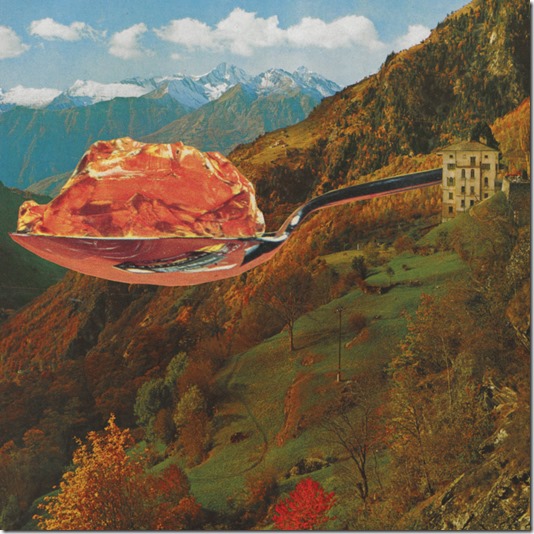
Released on Lost Map Records, which is run by Pictish Trail, from his caravan on the Isle of Eigg, it’s a set of psychedelic dreamgaze tunes reminiscent of early Ride, and takes me back to the early 90s listening to JP. Straight out of the traps, ‘God & The Ghosts’ places the melodic vocals to the fore with the chiming guitars melting together to create a glistening backdrop, shimmering, kaleidoscopic. The lyrics are pure triptastic abstractions for the most part, and in this context, the curious cover art makes sense – or at least, as much sense as it’s likely to.

While boasting a chunky intro and finalé, ‘Hitting a New Low’ is janglesome, a shoegaze/country which evokes dappled shade and wan contemplation than plunging depression, before ‘Travel Trouble’ comes on with the urgency of early Interpol, at least musically: the vocals are a dreamy drift and couldn’t be more contrasting.

Thick Terrain has energy, range, dynamics, and stands out from so many other releases that aim to revisit that 90s shoegaze style because the songs are clearly defined, and while displaying a stylistic unity, they’re clearly different from one another: Firestations don’t simply retread the same template, or stick to the same tempo. There is joy to be found in the variety, and Thick Terrain is the work of a band working within their parameters while pushing at them all the time. From the mellow wash of the instrumental interlude of ‘Tunnel’ to lead single ‘Undercover’ – an obvious choice with its breezy melody and easy strum and blossoming choruses – via the psych/county vibes of ‘Also Rans’, Thick Terrain is imaginative.

And ultimately, we arrive at ‘Stillness’, which, clocking in at six-and-three-quarter minutes is anything but an obvious single choice, at least in terms of radio play. It’s the perfect album closer: low, key, slow-burning, it evolves to break into some ripping riff-driven segments before ultimately fading out to space.

Thick Terrain treads lightly through a range of ranging textures and soundscapes, and does so deftly.

AA
a3885607160_10

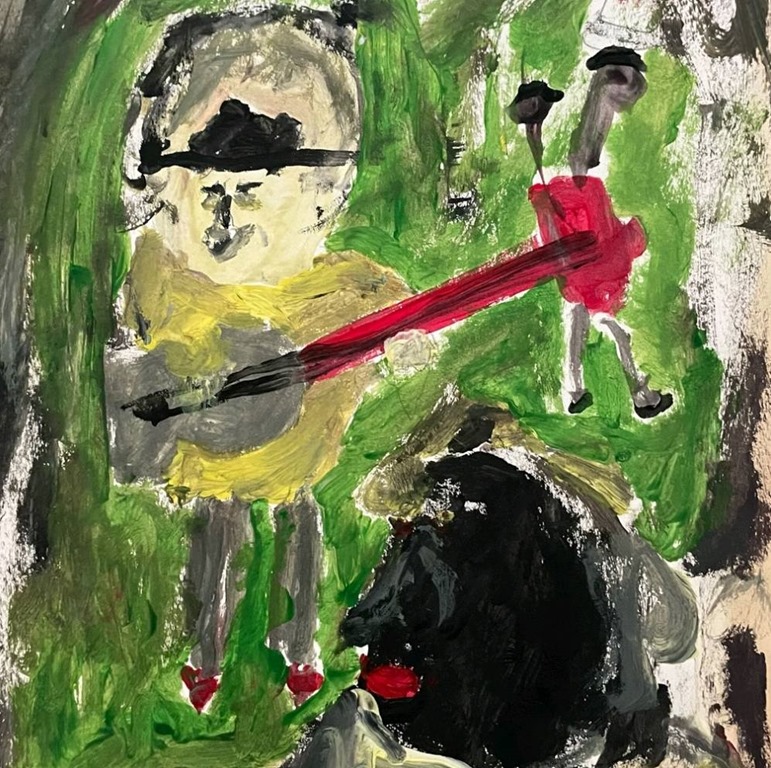
Erototox Decodings

Christopher Nosnibor

Internationally, Kristof Hahn is best known as a member of Swans since their return in 2010, contributing electric guitar to My Father Will Guide Me up a Rope to the Sky and everything since (he was briefly a Swan in the late 80s and early 90s, becoming a touring member for The Burning World and appearing on White Light from the Mouth of Infinity and subsequently joining Gira’s Angels of Light. A lot has happened since then: My Father Will Guide Me was only forty-four minutes in total, whereas now they’ve evolved to have single tracks of that duration, and Hahn’s contribution on recent albums and tours has been lap steel. Witnessing his action on the last tour, while standing so close to him I could actually see the mud spattered around the ankles of his jeans, the significance of his contribution to the immense walls of noise the band create is clearly apparent. I’ve also been vaguely amuse by just how neat and dapper his presentation is, producing a comb to slick his hair back following particularly strenuous crescendos – although I also witnessed him taking said comb to the strings of his instrument in Leeds to yield some particularly unholy noise from an instrument more commonly associated with laid-back twangin’ country tunes.

What’s perhaps less widely known is that Kristof has enjoyed a lengthy career in music before joining Swans, as both a solo artist and a member of rockabilly garage acts The Legendary Golden Vampires, founded in 1981, and The Nirvana Devils (circa 1984). It’s with the former he’s back flexing his creative muscles despite an intense touring schedule with Swans.

Here, the Berlin-based core duo of filmmaker Olaf Kraemer (vox) and Kristof Hahn (guitars, organ, harmonica), reunited for the first time in many years, are joined by Thomas Wydler (drums), Achim Färber (also drums), and Chandra Shukla (sitar), to cook up a collection of ten songs.

The style is understated, country-leaning, occasionally folksy, with an underlying melancholy hue, with ‘Wohin Du Gehst’ crossing the language barrier to convey a low-level ache of sadness in its tone. Kraemer’s vocals are husky, almost croony, with hints of Mark Lanegan, and suit the low-key compositions well, conveying emotion and world-wearinness and a certain sense of sagacity, which is nowhere more apparent than on ‘White Horse Blues’.

If the reverby guitars of their Husker Dü’s ‘She Floated Away’ channels Chris Isaak, the song’s incongruously jaunty twist is in the vein of fellow German duo St Michael Front, while ‘The Rain’ is sparse and hypnotic and wouldn’t sound out of place on True Detective. The melancholy Leonard Cohen-esque ‘Sad Song’ speaks for itself, quite literally, self-referentially returning to the hook ‘this is such a sad song / and I sing it just for you’.

Discussing the songwriting ‘craft’ on an album feels pretentious and a bit wanky, but making songs this sparse – but also this layered – is a true example of crafting. Having mentioned Leonard Cohen previously, one thing that’s often overlooked is just how many incidental details there are on many of Cohen’s songs: The Songs of Leonard Cohen in particular is , on the face of it, acoustic guitar and voice, but there’s much more happening in the background, coming in and out of the mix, and this is something that comes through in attentive listening to Polaris. It’s subtle, keeping the overall sound quite minimal, but the attention to detail is what really makes it special.

AA

a3829215066_10

Neurot Recordings – 29th September 2023

Christopher Nosnibor

I’m finding myself on something of a Neurot trip this week, following my fervent frothing over the mighty new album by Great Falls. As if to prove that the label has been putting out outstanding records for a very long time (and with unstinting singularity, presenting a broad stylistic range, too: this is anything but heavy), twenty years on from its original release, Grails’ debut is getting a reissue. While the nice coloured vinyl pressings (in ‘Coke bottle clear’ and ‘beer’ hues) aren’t necessarily for everyone, the release does afford a timely opportunity to reflect on the debut release of a band who have gone on to forge a significant and varied career, with their latest album – number eight – being released next month.

Steve Von Till’s comments about hearing the demo for the album, on which the offer of’ the release was made, reminds us of the musical landscape of the time in 2002: ‘Most instrumental music at the time was trying to emulate Godspeed You! Black Emperor or Mogwai, but this was different. This seemed to have elements from more diverse sources that I loved such as Dirty Three, Comus, Richard Thompson, and Neil Young, not to mention, who in hell would dare to cover Sun City Girls?’

There was a lot of instrumental post rock around, and while there was a wealth of great bands around, locally as well as nationally and internationally, it’s fair to say that a large proportion of it was much of a muchness, with myriad explorations of chiming guitars and slow-building crescendos.

The prominence of acoustic guitars, softly picked and strummed, and rather unconventional use of violin creates an unusual dynamic on these compositions, which tend to be sparse in arrangement and with considerable space between both the instruments and the individual notes, and the crescendos are few and far between – the first doesn’t arrive until over halfway through the third track, the slow, meandering ‘The Deed’, when the swell of guitar pushes upward through yawning strings and finally the full drum kit crashes in. But the impact is less from whacking on the gain on the instruments, but the musicians utilising the dynamics of playing, and the simple equation that playing harder is louder. Against the prevailing tide of pedal boards as big as drum risers packed with effects, this stands out as being not only very different, but bold, the emphasis on the tones and timbres of the instruments in unadulterated form, the sounds the result of technique.

The soft piano of ‘In the Beginning’, when paired with picked guitar has an almost pastoral feel; the heavy smack of a drum feels incongruous before a soft yet almost clumsy waltz emerges briefly, and structurally, the pieces seem to belong more to jazz than anything else, although ‘Space Prophet Dogon’ (the Sun City Girls cover) draws together elements of Celtic-influenced folk and psychedelia, and goes for a long toe-tapping groove over a crescendo by way of an extended climax. It takes a certain courage to fly in the face of fashion in such an obtuse fashion, as well as to play in such an intimate way that you can hear the sweep of a finger across a fret, where natural reverberations become as integral to the sound as the notes themselves. This is nowhere more apparent than on the hyperpsarce intro of ‘Broken Ballad’, a sedate almost country-tinged tune and one of the album’s more conventionally-shaped pieces. The slowly-unfurling ‘White Flag’ shares a certain common ground with later releases by Earth: slow, spacious, revolving around a simple, picked guitar motif, but it does swing into an exhilarating full band finale that’s different again.

Closer ‘Canyon Hymn,’ presumably a reference to Laurel Canyon, the name of the and when they recorded the demos which would become The Burden of Hope, is by no means an anthem or a theme, but encapsulates all aspects of the album’s range within a soothing five minutes. If the title, The Burden of Hope, implies a certain weight of responsibility, the music it contains sees that hope take wings. Twenty years on, The Burden of Hope sounds uplifting, and still fresh.

AA

cosmicimg-prod.services.web.outlook