Posts Tagged ‘Collage’

Self-Released – 13th December 2024

Christopher Nosnibor

Sometimes, the notes artists pen to accompany their latest works are somewhat dry, rather technical. Others provide effusive essays, while others still no details whatsoever. Flin Van Hemmen’s words which accompany Luxury of Mind are poetic, somewhat vague and elliptical, but lyrically rich and personal, if vague.

In order to thaw matters of the heart, one must go to where it’s cold.

It was the summer of 2022 and I was finally summoned there.

My personal winter had come, a place at once foreign and familiar.

In a flash I was made aware of all my life’s dimensions – the ones less welcome, or simply too big to face.

My sense of musicianship was temporarily halted, at that point unsure of its return.

Early 2024 I knew my personal winter was waning, and so I started tinkering away again, musically.

The pitter patter of the rain, the orchestra rehearsing their parts simultaneously, the sounds inside the corner store where I buy my daily coffee.

And how do they sound, together?

What indeterminacies reveal itself, or do I pick up on?

That’s my journey and a journey I wish to share with you in Luxury of Mind.

I have elected to quote in full because they are clearly pertinent to the substance of this material. Van Hemmen is clearly and peculiarly specific that he feels the need to share this specific journey, which clearly has involved stasis and self-doubt. Writer’s block? He seems to allude to rather more than that here.
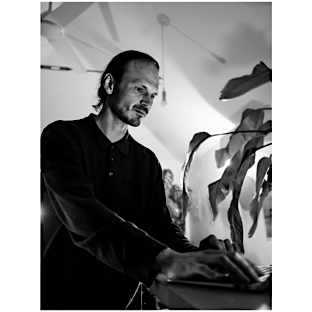
Flin van

‘A Picture of Your Face (In the Light of the Fire)’ is bold, choral to begin. It’s not grand in the bombastic sense, but feels deeply spiritual, ceremonial, and for wont of a better word, ‘churchy’. While the sense of grandeur is uplifting, and spiritually powerful, the drone of organ and voices coming reverberating in a large, echoey space reminds that where there is a ‘churchy’ aspect, religion – particularly of the Christian persuasion – for all the exultation, is laced with guilt, apology, pleading – pleading forgiveness for sins, pleading for entry into heaven. And as such, it reminds of the paradox whereby Christians prefer to confess and atone their sins rather than simply try harder not to err in the first place. There are scratches and crackles which rupture the graceful smoothness of the piece, and the title track slips into a darker, danker space, with a sound like torrential rain on a tin roof, with murky ambience lurking about.

‘Eloquence and Grief’ brings new levels of disorientation, sort of a film-soundtrack piece with discordant background babble and crowd noise as an orchestra forges a soundscape which evokes mountains and canyons. Its meaning is difficult to extrapolate: it feels like multiple narratives occurring simultaneously, and the same is true of the eerie dark sound collage of ‘Volition & Velocity I’, and its equally gloomy, dolorous counterpart, ‘Volition & Velocity II’.

The whole feel of Luxury of Mind is haunting, unsettling, like walking through the soundtrack to a vague and abstract film, traversing time and space, intersecting scenes of bustling medieval towns, and post-apocalyptic shots of burning villages, intercut with occasional psychedelic visuals, while electronic circuits in heavy rain and church bells chime for the funerals of unnamed bodies. It’s not quite horror, but it’s heavy with gloom and trauma, and, by this measure, Luxury of Mind sounds like the soundtrack to a period filled with anguish and psychological pain. It concludes with the sparse and dank clanks of ‘Last Year in Cantecleer’ – and it must have been a washout.

It feels as if we’re sinking in floodwater, drowning in a tidal wave of toxic bullshit, while all around everything goes wrong. But at least one thing has gone right for Flin Van Hemmen: Luxury of Mind is an album with so much texture, so much depth of texture, so much mood, that it’s impossible to deny its creative success.

AA
a0351313896_10

Mortality Tables – 22nd November 2024

Christopher Nosnibor

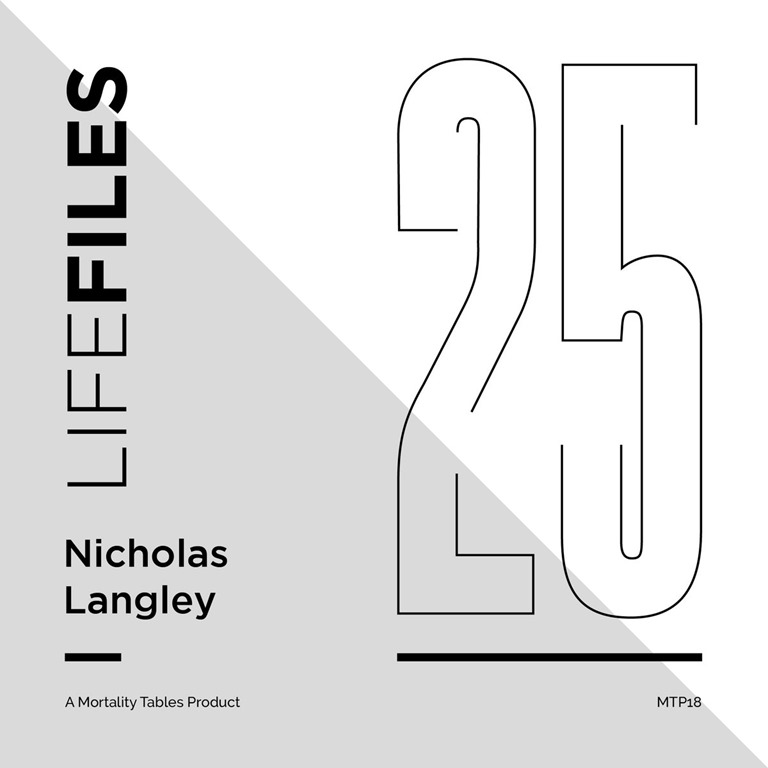
Matthew’s Hand by Nicholas Langley is the twenty-fifth instalment in Mortality Tables’ LIFEFILES series, now in its third season. The principles of this ongoing project are simple: ‘Recordings of places, people, objects, moments in time, environments and quotidian events are shared with a range of artists working across different disciplines. Those artists are free to respond to the recordings in any way they like.’

Simple principles, but in actuality, giving free reign to the artist to respond to the source material offers near-infinite possibilities. And so it is that Nicholas Langley presents to six-minute pieces in the form of ‘Milton Keynes University Hospital, 3 April 2024’ and ‘Milton Keynes University Hospital, 17 April 2024’.

Label head Mat Smith provides the following context for the source material for this release: ‘On 2 April 2024, I fell over while walking near Smithfield Market on my way to work, and broke my hand. The two recordings used by Nicholas were both made at Milton Keynes University Hospital – the first while waiting for an x-ray that confirmed the fracture the following day, and then two weeks later while in the waiting room for the cast to be removed.’

I’ll spare the tale of the time I fell and broke my ribs and shredded my hand one night, but shall move to the point that for some of us, the reaction to an event which contains an element of shock and even mild trauma is to document it. Having photographed my bleeding palm, and recorded the horrendous roar of the oxygen machines which were installed in our living room for the final nights my wife was with us, I can only conclude that recording these things creates a separation which enables us to process them as being ‘media’, for wont of a better term, rather than the painful reality of our actual lives. I certainly prefer this rationale to the idea that it’s a sociopathic impulse to revel in experiences of trauma and pain.

‘Matthew’s Hand’ captures the ambient chatter and clatter of a waiting room, at least initially, before this fades out to be replaced with something that one might describe as echo-soaked abstract synth jazz. Langley applies the principles of dub reggae, but without the percussion. The sonic experience is in some ways like the lived experience of the waiting room, as the chatter dims into the distance and your head slowly swims in a sea of overwhelmed strangeness as you wish you were elsewhere.

Someone recounts the grim tale of someone who was close to a mortar explosion at the beginning of ‘A Mortar Went Off Near Him’, before heavy elongated, humming drones enter the mix, and Langley builds a dense soundscape of whistles, hums, and whooshes which owes as much to early 80s industrial as it does to more contemporary dark ambience. A monotonous throb emerges, and it’s overlaid with scrawls of feedback and sharp, needling treble. Ultimately, little happens over the course of its seven-minute duration but somehow, you feel the effect.

Taken together, the two tracks have an impact which somehow extends beyond their sound alone.

AA

a1808514016_10

Drek Skivor – 5th July 2024

Christopher Nosnibor

It’s been a little over a year since we last heard from Fern. Previous release, Deformed, was, as I put it, ‘appropriately titled’ and ‘some mangled shit.’ Such is Fern’s approach to music-making, it would seem, seeing damage as potential, an opening, a possibility. It may be a perverse pleasure, but it can be a pleasure nonetheless, to hark at the sound of breakage and malfunction. Perhaps because it’s noise which possesses an honesty that’s rare in so many musical recordings, where the more common ambition is to create the best, most polished, or otherwise superior version of something, be it a song in the conventional sense, or a live recording of something perhaps less conventional. It’s a rational and valid objective, but the reason I suggest that the sound of something broken is honest is because it feels rather truer to life’s lived experience.

How many obstacles must one surmount to achieve that polished definitive version? Moreover, how many obstacles must one surmount to simply get through the days? Life has a habit of throwing shit at you. Just when you think you’re having a good day, an ok week, something breaks – and it nearly always costs money. Your laptop dies, your phone screen cracks or your charger cable breaks. The shower starts leaking or there’s a power cut. Some days – and weeks, and months – it simply feels like everything is against you. Something goes awry at every turn. Life, then, is imperfect, an endless succession of glitches and breakages, against a backdrop of noise and distortion and shouting and frustration and confusion and just a whole load of shit in general.

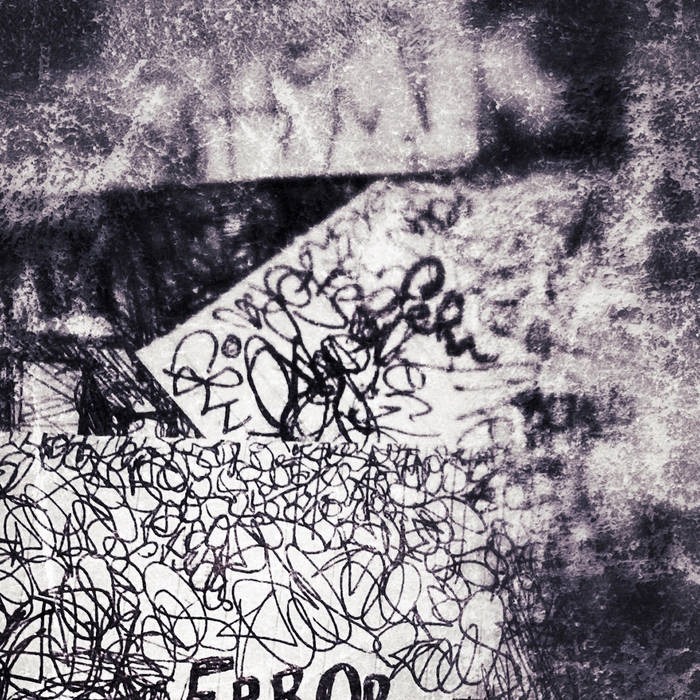
I arrive at Error having recently had a couple of posts removed by Facebook having been flagged by their bots as ‘spam’ due to my attempts to artificially gain likes by tagging people. Those people specifically being the Aural Aggravation page, the band, and their PR and / or label. Somehow, this is spammier than sponsored links to shit I have no interest in that repeatedly crop up every time I return to the site and spammier than the relentless porn links and so on posted in groups. And so I arrive at Errors frustrated, antagonised, feeling that systems are against me, and feeling – in some way – persecuted, as if this is some deliberate obstruction to my efforts to promote obscure music. Music like this.

‘Is this music the result of a degaussing error? Or is it a long gone and forgotten tape shaped and distorted by time and a chewing cassette deck, still here for us to experience……’ This is the way the release is famed on Bandcamp. And I find that Errors isn’t as messed up as all that. It’s not exactly easy listening, but…

The first track, ‘slip ‘n’ slide’ is a fairly standard work of glitchy minimal electronica: a bit dark, a bit stark, bit trip-hop. ‘abrupt morning’ hums and crackles, and something about the production renders everything muffled, distant, in the way The Cure’s Seventeen Seconds feels simultaneously claustrophobic and distant. It is not a comfortable sensation. It is a work of sonic wizardry, to create a sound which stands at such polarity.

‘mellow dream’ is a more conventional ambient work, a buffeting sonic cloud carried by the wind, although there are some less mellow moments where darkness enters the equation and unsettling undercurrents rumble disquietingly.

‘ignite interlude’ goes all-out on deep bass hip-hop, but sounds like listening to a Wu-Tang side-project from the pavement as it plays from a car pulled up at traffic lights with the windows up, before ‘c’mon intro’ hits a slamming industrial dance seam – but again, it sounds as if it’s bleeding through the wall from next door. The album takes a solid turn towards the dancefloor in its second half, although the insistently percussive ‘bits and pieces’ is more reminiscent of Throbbing Gristle. ‘generative form’ feels like something of a collapse into a formlessness defined only by a looping repetition, emanating a kind of fatigue that paves the way for the suffocating collage of loops and electronica of ‘lambs’ – where they sound as if they’re being tortured and strangled. It’s a scrambled melange of sounds collaged from wherever, which brings the album to a suitably dark and unsettling conclusion.

I’m not quite sure what I’ve heard here, or whether I like it or not, but that, I feel, is the desired effect – and it’s certainly a desirable one.

a2358833930_16

5th July 2024

Christopher Nosnibor

Sometimes, I really do feel as if my brain is my enemy. Word association and wordplay are a particularly frequent and annoying curse. Oftentimes, I keep this to myself, but midway through listening to this, it struck me, completely at random, that Killzones isn’t a million miles away from Calzone, at least when written down. So why share this? A problem shared, and all that, for one. But as much as anything, I felt the urge to purge, or moreover to crack open the challenges that present themselves as part of the creative process. Writing – and finding something new and interesting to say – about music, day in, day out, is a challenge in itself, without other factors.

Seemingly, the recording of this EP proved rather less challenging for its makers, who came together and developed it swiftly and fluidly –although the same can’t be said for listening to it. That’s by no means a criticism. In a climate where the airwaves are jammed solid with anodyne sameness and slickly-produced beige sonic slop disguised as raw or edgy on account of some explicit content and some choice language that requires beeps or asterisks in the mainstream media, anything that does something different offers a welcome challenge in the way many pit themselves against the Great North Run or similar. We’ve grown accustomed to everything being delivered neatly-packaged and pre-digested, and feeling like following a recipe from Hello Fresh makes us a Michelin chef. Collectively, we’ve forgotten how to chew – meaning that this will either kick-start your metabolism or simply make you spew if you’re unaccustomed to anything that’s this high-fibre. Just look at that cover art. It’s dark, grainy, uncomfortable. It’s the perfect encapsulation of the music it accompanies.

Machine Mafia is quite the collaborative paring: Adam Stone of gritty northern grimsters Pound Land and Jase Kester of ever-evolving experimental noisemakers Omnibael / Omnibadger have come together to do something different. Very different.

As Jase explained to me, the EP features ‘no live instruments, leaning into the way dub reggae was so embraced by punk right in the early days.’ And there’s no question that it has both – simultaneously – the spaciousness of The Ruts (D.C) and the density of early PiL. It’s a formidable combination, that’s for sure.

The title track assembles sampled snippets as its foundation, drawing parallels with the collaging methods of Cabaret Voltaire and Throbbing Gristle, evolved from William Burroughs and Brion Gysin’s late-50s tape experiments – in turn a progression from the cut-ups on paper. Atop of this slice ‘n’ splice selection of political speeches and an almost subsonic, floor-shaking bass, Stone delivers a mumbling, drawling semi-spoken spiel. It’s like Sleaford Mods on Ketamine, a heavy trudge of ever-degenerating sound which eventually collapses to a low-end buzz and a crisp sample that makes the pair’s political position clear through antithesis.

On ‘Faces’, scrapes of discord, distortion, and a thudding beat half-submerged in the mix grinds out the opening before a dark, dense bass groove starts a gut-shaking growl. The drawling, atonal vocals, too, are distorted and low in the mix, and I’m reminded of some of the more obscure Ministry offshoots witch Chris Connelly – the vibe is dingy, sleazy industrial, a bit early Pigface, and sounds like it was recorded in a damp mould-stained basement on a salvaged reel-to-reel.

The songs get slower and heavier – and longer – as the EP progresses. ‘I Am Not You’ comes on as if Dr Mix and The Remix had done dub, while ‘Lecture 0.3B’ goes all out on transforming a simple spoken-word piece into a cut-up tape experimental headfuck with loops and delays and effects galore, all laced with crackles of distortion and sonic degradation fuzzing and fading the edges. It lands somewhere between the JAMS, Max Headroom, and Throbbing Gristle’s ‘Hamburger Lady’ – weird, unsettling, dystopian, with near-familiar elements twisted and recontextualised in an ugly mash-up collage work.

Conceptually, Killzones is far from new – but then, there’s no claim to innovation here, explicitly drawing a line from the past. But the kind of reference points and influences in evidence here are not the ones you find often, if ever – independently, perhaps, but the whole point of intertextuality as a method of creating is the nexus of divergent touchstones and the way in which they’re combined. With Killzones, Machine Mafia deliver a crash course in experimental music 1976-1994. It’s a mangled, messy cognitive assault. It’s knowingly, and purposefully, difficult, unpleasant, and a complete creative success.

AA

a0890048129_10

Mortality Tables – 7th June 2024

Christopher Nosnibor

Mortality Tables have continued to release titles from their ‘Life Files’ series at a remarkable rate, with instalments 18 and 19 landing in May, and hot on their proverbial heels, this, number 20, in the first week of June.

The premise remains consistent, namely ‘Recordings of places, people, objects, moments in time, environments and quotidian events [which] are shared with a range of artists working across different disciplines. Those artists are free to respond to the recordings in any way they like. And so, as ever, the field recordings, courtesy of Mortality Tables main man Mat Smith provide the foundation and inspiration.

Killiegrew Monument is a peculiar thing. Located in Falmouth, and intended as a memorial to the last surviving member of the Cornish family, the monument is a sharp obelisk constructed in 1738. It looks altogether more contemporary, and ultimately anomalous with its surroundings. And one might say that this release is similarly anomalous. I can imagine that beholding this curious construction would inspire an array or reactions. But why the fuck would you play a stone monument with a sharp stone? Is that really one of the responses you’d likely have to coming face to face with such a construction? Well, perhaps, if you’re possessed of an avant-garde mindset, whereby instead of reflecting on the origins of The Wind in the Willows, you find yourself contemplating ways of making unusual noises.

Once again, when it comes to the ‘Life Files’ series on Mortality Tables, we don’t know what the source materials actually sound like.

‘Killigrew Monument Played With A Sharp Stone (Part One)’ is an odd sound work: there’s chatter and ambient drift and scratches and shuffles and scrapes, but what on earth is going on? Seagulls wheeling and cawing – and on those squawks the sound echoes and reverberates, and the collage of sound collides with a strange rendition of ‘One, two, three four five, once I caught a fish alive’.

There’s lots of processed echo and cawing gulls at the start of ‘Killigrew Monument Played With A Sharp Stone (Part Two)’, as well, and it does, in some respects, sound like someone crooning abstractly into a child’s echo mic just to see how it sounds. The longer of the two pieces, at almost thirteen minutes in duration, it creates a deeply strange and disorientating atmosphere, which is likely evocative of this curious monument, which stands out of time and out of keeping with its surroundings as a testament to human folly, and, ultimately to vanity.

Too abstract to be ‘songs’, too much happening to be ‘ambient’, the result is a haunting and somewhat disorientating soundwork of a rare quality.

AA

a4230686863_10

Sonoscopia sonos – 15th September 2023

Christopher Nosnibor

Trobollowitsch is certainly a name that sticks in the mind, and so it was that back in 2016, I penned a piece on Roha by the Austrian Sound artist. At the time, I struggled to really connect with his conceptual compositions.

This latest offering finds him working with Thomas Rohrer, a Swiss musician, who ‘plays the rabeca, (a Brazilian fiddle), and soprano saxophone’, and whose work ‘is largely based on free improvisation, but also engages in a dialogue with traditional Brazilian music.’

The collaboration between the pair actually began in 2017, but they didn’t begin work on any recording until January 2021, when, according to the bio, ‘they embarked on a duo project combining Trobollowitsch’s rotating mechanical turntables equipped with branches, wood and dried leaves with Rohrer’s soprano saxophone, small objects and rabeca… During their collaborative recording process, renowned singer Sainkho Namtchylak from the Tuva region contributed her captivating, versatile voice, which she has used to great effect in a variety of musical genres, including jazz and electronic music.’

Given their diverse background and different modes off operation, this collaboration was always going to be not only eclectic, but a collision of diversity, and the question would always be to what extent do they compliment one another, or otherwise pull in such different directions as to render the work more of a competition than a collaboration? Given that both Trobollowitsch and Rohrer are credited with ‘recomposition’ of several tracks, there’s a sense that this effort is defined, if not by friction as such, then by differences, and a working method which entails dissecting and reconstructing, a restlessness and dissatisfaction.

Crackling static and an electrical hum are the key elements of the title track. It’s somehow both spacious and claustrophobic, and as the sounds rumble and echo around, you feel like your shut right in a small room – more like a walk-in cupboard – as the serrated buzzes and grinding drilling sounds fizz and fret all around, gradually warping and twisting, sometimes ballooning and others shrivelling. Suddenly, I jump. Is that my phone vibrating? No, it’s not, it’s a vibration puncturing the third wall, something that sounds like it’s in the room rather than coming from the speakers, which are by now emanating shrill blasts of feedback.

The sound collaging on this album is something else, leaping into the three-dimensional at the most unexpected moments, and the sounds and textures constantly shifting to forge a work which is more than music, more than sound: this is something you feel, not emotionally or cerebrally, but physically: it makes your fingers tingle and move in a quest to grapple with the details. Sometimes those details are dark and demonic, as on the unsettling ‘Ovaa’. The vocals are rasping, gasping subterranean, subhuman grunts and gasps, strangled cackles that cark and bleat and croak and claw up from the sewers. It’s pure horror.

There are undulating, stuttering low-end bumps, there are hornets the size of buzzards as your car breaks down and your skull slowly crumbles as your brain struggles to process everything… anything. This is a soundtrack to something that simply shouldn’t exist; it’s aa soundtrack to your worst nightmares, as yet unimagined.

The production, the panning, the listening experience of interacting with this in the way it’s intended is terrifying and surprising in equal measure, as tweets and twitters occupy the same space as thunderous thumps and insectoid skitters and metallic scrapes and… there’s a lot going on, and it all makes for in accumulate and intense and really rather difficult sort set – not really of compositions, but largely incoherent audio processes. The accumulations and stacking of the sounds is by no means truly random or haphazard, but their assemblage creates as experience which feels altogether more happenstance. It’s a scrappy, scratchy, stop-start mangling of noise, and at times, it’s scary and strange, at other’s it’s ominous and eerie. It’s unsettling, and difficult to absorb. It’s incredible.

sonos#26A_front

Unseen Worlds – 4th August 2023

Christopher Nosnibor

Having failed to make it to Carl Stone’s show in Leeds the other week – in the same way I’ve failed to make pretty much any shows this year and am largely tied to engaging with music in recorded forms for the foreseeable future, it feels only right that I should compensate in some small way with a review of his upcoming compilation album, a monster career-spanning triple album.

And when it comes to his career, the title sets out the immense landmark it represents. Not just the fact that this release is a summary of a career spanning half a century, but the broader context that there has been electronic music for so long. Village Voice have called him “the king of sampling”. Being born in 1975, I only became aware of sampling in the late 80s, and while Tangerine Dream and Kraftwerk and Throbbing Gristle are legendary as pioneers of electronic music, you probably don’t generally think of there being many other artists breaking ground and experimenting as far back as 1972.

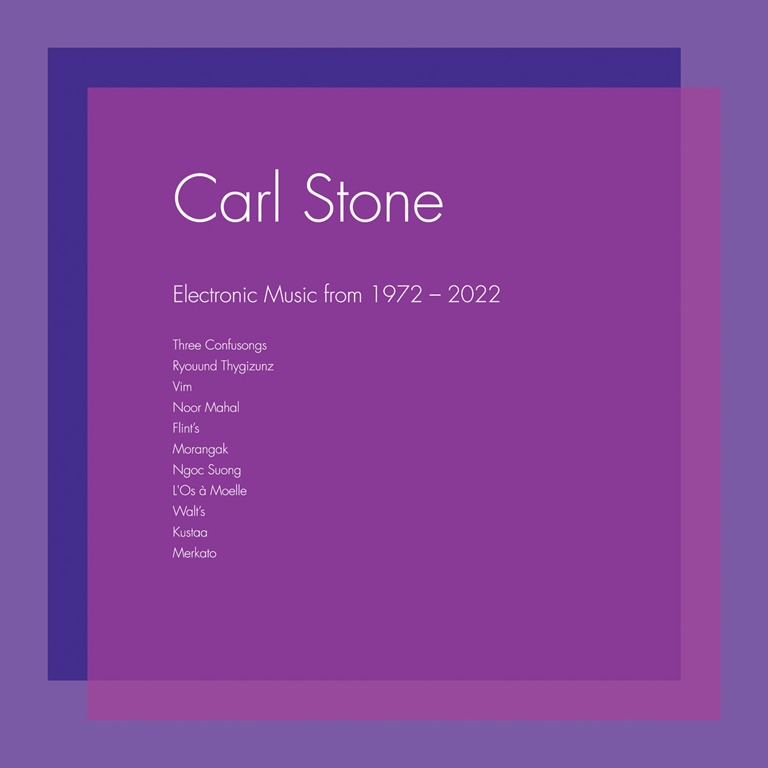
The accompanying notes provide an outline that’s easier to quote than to summarise: ‘Electronic Music from 1972-2022 seeks to frame fifty years of Carl Stone’s compositional activity, starting with Stone’s earliest professionally presented compositions from 1972 (‘Three Confusongs’ and ‘Ryound Thygizunz’, featuring the voice and poetry of Stefan Weiser – later known as Z’EV) up to the present. This collection is not meant as a definitive history but rather as a supplement to be used alongside the previous two archival releases. It is simultaneously an archival release marking Carl Stone’s evergreen 70th birthday and a document of archival art. In the spirit of disorienting repetition and layering, call it an archive of archiving.’

This, then, is by no means a retrospective in the conventional sense, but it does clearly trace a trajectory of the evolution of Stone’s work. The album doesn’t spread the tracks evenly, being weighted heavily to certain years, with each year effectively representing an era.

The 1972 material, which occupies side A and represents the early years, is very much a cacophony of loops and echoes, reminiscent of William Burroughs and Brion Gysin’s tape experiments of the later 60s, and foreshadowing the first releases by Foetus and Cabaret Voltaire, as well as the disturbing drones and processed vocals off Throbbing Gristle, and clearly very much ahead of its time and venturing into the realms of dark ambient before it was even given a label.

Side B leaps forward fifteen years to 1987, with a brace of scraping, discordant pieces, both of which extend beyond the ten-minute mark. The production of these more structure, beat-orientated collage pieces is quite eye-opening: how times and technology change! ‘Vim’, which sounds like a cut-up of The Beach Boys is very much a cut-and-paste assemblage of loops, but the sound is crisp and marks an evolution more of light years than actual years. At ten and a half minutes, it feels it goes beyond proving its point, but then again, perhaps that is a point in itself. It also reminds us of the changing musi8cal landscape: 1987, the year the Justified Ancients of Mu Mu released the sample-riot 1987: What the Fuck is Going On. This is significantly more sophisticated than the JAMMs, and takes a less confrontational approach to the application of the emerging technologies. In contrast, the other 1987 track, ‘Noor Mahal’ combines tribal drumming and hypnotic folktronica, prefacing the airy new age folk crossover forms that would bubble up in Enya’s ‘Orinoco Flow’ and The Beloved’s The Sun Rising’ a year or two later.

And this is what ultimately threads Stones’ work together. He’s astute enough to be aware that evolving technologies are in themselves the soundtrack of the times, and it’s clear listening to this in sequence that experimental music invites chicken-and-egg discussion as to whether the music evolves because of the way technology facilitates it, or of the technology encourages those who are so inclined to push it to its furthest ends.

There’s just one nineties cut, with the jaunty ‘Flint’s’ from 1999, before the millennium brings a selection of dark jerky pieces (‘Morangak’ (2005) is a particularly gnarly Dalek-like mess of a loop) with two absolute beasts in the form of ‘Ngoc Suong’ (2003) and ‘L’Os à Moelle’ (2007), which both sit around the twenty-three minute mark and occupy a side of vinyl apiece, proving particularly disorientating. The former is also particularly testing, an experience akin to water torture, while the latter is… different by its sameness. Like listening to The Eagles on a three-hour car journey. I woke up with a jolt, my face on my keyboard, realising my review was incomplete and it was fifteen minutes later than it had been, and this track feels like a comment on the time in which it was created. It gets weirder as it progresses, of course.

Cut forward to 2022, with three much shorter pieces occupying side F, and ‘Walt’s’ presents a different kind of surprise, being bright, crisp, with technicolour energy and it’s almost game-showy. Spinning folksiness with cornball AI –sounding blooping, and also whipping in some Bollywood bang and an 80s synth-pop vibe, it’s dizzying, and these elements are present in varying levels on ‘Kustaa’ and ‘Merkato’ which are overtly ‘world’ music inspired wile spreading in all directions at once. And this, ultimately, is what Electronic Music from 1972-2022 tells us: Carl Stone has spent five decades ahead of and / or capturing the zeitgeist, distilling the essence of the contemporary into a headspinning whirl. This may be a swift tour, but at the same time it’s comprehensive, and well worth exploring.

AA

AA

a3301642996_10

Cruel Nature Records – 26th May 2023

Christopher Nosnibor

If ever a band could be defined by constant flux and evolution it’s this Derby duo, who began life as Omnibael before becoming the more frivolous-sounding Omnibadger. Working their way through doom-grunge riffery to all-out industrial electronic noise, theirs has been an interesting journey thus far, and one that it would seem is by no means over yet.

So many acts set themselves into a mould and stick to its form for the duration of their career. Some may find a market and thrive in it, but for many, it becomes a trajectory of diminishing returns as they plough the same rut over the course of successive albums, as things become evermore predictable and wearisome, and people lose interest. But then, so many acts make a radical shift and lose a substantial part of their audience in the process. You simply cannot win.

Only, Omnibadger have done things differently: they have spent their career trying to decide who they are, meaning each release has been different, with one release often landing leagues apart from its predecessor. To say that they’ve spent their career deciding may suggest that search is now complete, but that would be a wrong conclusion: that quest continues, and likely will: Omnibager exist to eternally push the boundaries, to seek, to progress, to evolve. There is no linear progression, only expansion.

It all kicks off from the outset with ‘Lick One’, and it gives little away in many respects: it’s a semi-ambient collage of rumbling noise which gives way to tribal percussion, and it’s a confusion of collage that’s difficult to find a hold in. But that’s no criticism: it’s tedious knowing what you’re going got get for the entirety of an album from the first four bars. And this isn’t a ’bars’ album: it’s a hotch-potch sonic soup where rhythm really is not a dominant element, and at times isn’t even present at all.

‘Speeding Ground (Part 1)’ is an epic electronic exploration, stun lasers and gleeps and glops and trilling top-end drones shrill and challenging, like a Star wars scene – and then it goes hypno-prog, a thumping rhythm backing a screeding sheet of noise. And on it goes, thumping and thundering a relentless beat. At Nearly fourteen minutes, it’s a monster.

‘F.I.X.’ slams in some gnarly electro stylings, with undulating synths and insistent, fretful beats twitching away as a backdrop to howling vocals. It’s as if Gnaw Their Tongues and Cabaret Voltaire had bit in a head on collision. There’s no winner here, just a mangled, smoking mess. And as if to reinforce the point, ‘You Never Tell Me What You Think’ crashes in with a nagging bass groove and aa shedload of aggro, and battering away at a simple monotonous grind while the vocals are mixed low in a ton of reverb with the treble cranked to the max, it sound like early Revolting Cocks. Elsewhere, ‘But What I Want Is Not the Most Important Thing Right Now’ spins like an outtake from Pretty Hate Machine, all mangles electronics and gritty guitar.

Clocking in at over ten minutes, final track ‘Equations for a Falling Body’ is the album’s second monolithic piece, and it grinds and scrapes and sheers and saws it way through its duration. Within a couple of minutes, it’s built to a full-throttle racket of discordant electronic chaos, a tempest of noise.

That’s ultimately a reasonable description of Famous Guitar Licks Vol. III (their second album, which is largely guitar-free) overall: audacious, like Throbbing Gristle ironically calling their first (and second) release ‘best of’ and their second album First Annual Report.

By way of a ‘difficult’ second album, with Famous Guitar Licks Vol. III, the only difficulty is for the listener, who is faced with a harsh and challenging listen. But for all of its racket and unpredictable nature, the experience is rewarding, and even enjoyable in a perverse way.

AA

cover

Everyday Is The Song is an evocatively drifting ambient-adjacent work of sampled tape, a diaristic soundwork that weaves interconnected songs out of field recordings and ephemeral music snippets featuring dozens of players in Void’s artistic community, including Owen Pallett, Sarah Pagé, N NAO, Shota Yokose and YlangYlang.

Two tracks from the album have just been made public.

‘Present Day Montage’ is one of them, and it begins as a scratchy droning chordal piece sampling organ from “I’ve Never Seen Paris In The Spring” by Philadelphian Darian Scatton’s Still Sweet project (from a rare 7-inch on Edible Onions), gradually blended with samples from a Montréal live performance recording by Acid Mt. Royal (Sarah Pagé, Maya Kuroki, Shota Yokose & Eddie Wagner). Void drops one of their trademark minimal broken-clockwork beats around the halfway mark, accentuating the sense of temporal slippage and transience. Disembodied atonal singing voices, the echoes of crowds and empty spaces, and the glistening of freight trains grinding on the tracks that run through Montréal’s Mile-End district, create a montage that melds gently otherworldly melancholy with concrete urban-industrial specificity.

“Present Day Montage” has a self-explanatory title. As one of the closing songs on the album, it was meant to evoke a time-lapse sequence that runs up to my current time and place, in relation to the years where ‘this album took place’—like those epilogues at the end of films that describe the fate of the characters. This time-lapse reveals both changes and repeated cycles, elements that stay in place and others that drift by, the sensation of both fast motion and slow stillness. — Joni Void

Listen to ‘Present Day Montage’ here:

a2463471976_10

6th February 2023

Christopher Nosnibor

I miss 2005. It might sound crass or lame, but I really do. Sure, I miss being in my twenties, and I miss not having the responsibilities I have now and I miss still studying and I miss being as alert and edgy, but more than anything I miss the sense of life and future that 2005 offered. Musically, it was a good – exciting – time with a new wave of post-punk influenced bands coming through. Interpol dropped Antics in 2004 and Editors began to break in 2005, and there was a real groundswell of excitement around the new-wave renaissance as spearheaded by bands who really channelled a certain Joy Division-inspired darkness.

With ‘Drive By Argument’, Real Teeth capture that spring of excitement, but without sounding nostalgic. It may seem a contradiction, but then, that was how it was in 2005, too. The emerging bands drew on the past, but didn’t sound like they were trying to recreate it. And the same is true of Real Teeth.

The single is accompanied by ‘a collage video from short clips of dash-cam footage of London from 1999’, and that’s probably more nostalgia-laden than the song itself.

But, propelled by a rhythm that’s packed with stuttering fills, a groove-driven bass and choppy guitars, it’s got a lot going on, with nods to Radio 4 and Gang of Four thrust to the fore in what is a busy and multi-layered cut. With a vital energy and dynamism, not to mention some well-placed changes in tempo and tone, ‘Drive By Argument’ is straightforward on the surface but has more going on underneath, and is worth taking some time to chew on.

AA

su59097-Real_Teeth-Drive_By_Argument-P1001437