Posts Tagged ‘Cassette’

Originally released digitally on 14th March, and recorded at Hermitage Works during November 2024, the four track EP will receive its first physical release and will be available via Bandcamp.
Mixed and mastered by Max Goulding and Nathan Ridley.

Track Listing

One Window Open

Polar

Unit

Void Request
a1695055066_10

Liner Notes (by Fred MG):

Bo Gritz have been at it for ten years now. Or do we mean five?

You see, while the trio of Benjamin Salt, Max Goulding and Finn Holland have been together since 2015, they are also one of those groups who have a significant fork in the road in their past, specifically the Coronavirus pandemic. Lockdown gave Bo Gritz the opportunity for a hard-ish reset, with the band using all that time as a chance to work new synthetic textures into the tried and tested combo of guitar/bass/drums/vocals. Coupled with them securing a new permanent practice space in South London, the Covid period ultimately led to the hair-raising noise-rock of Bo Gritz’s most recent LP, 2023’s Chroma.

On Prang, Bo Gritz continue to reap the benefits of their new era. This is a potent four-tracker, industrialised and bristling. From the single-note lurch that heralds first track ‘One Window Open’ to the last thwack of closer ‘Void Request’, Prang’s barely-shackled chaos makes for an unpredictable and arresting listen. It’s ambitious, grizzly and extremely hard not to fall for.

At the noisier end of rock, there’s a strong modern lineage of album openers which get all their mileage from a stomping single-note riff. To a list which includes Pissed Jeans’ ‘Waiting On My Horrible Warning’ and Death Grips’ ‘Giving Bad People Good Ideas’ we can now add ‘One Window Open’. The track sitting just below mid-tempo allows space in the beat with which Bo Gritz can gesture towards all manner of beat-based stylings, from mercurial junglism to broken-beat techno.

The stall set out, Prang’s other three joints also tow the line of order and bedlam. ‘Polar’ is screed with strange, almost-tuneful noise which sounds like a revving motorcycle fed through an ungodly array of outboard gear. Occupying a space between texture and melody, this sort-of-lead line increasingly becomes the centrepiece of the song as things go on. Something similar takes place on ‘Unit’, and this track’s nervous twitching also has one thinking of that instrumental version of ‘Breathe’ by The Prodigy which used to be on the soundtrack of one of the Wipeout games.

As with the instruments, so with the vocals. Across this EP, Holland assimilates a sense of barely-controlled chaos into both the lyrics and delivery. The way in which ‘Polar’ sets lurid imagery (‘they said his eyes were cut out’) against the straight-laced sloganeering of capital (‘business must only get better’) makes one think of Thom Yorke’s star-making era cut with a little of that Gilla Band hysteria. ‘Void Request’ – a joint with a hint of Leeds lifers Bilge Pump in its DNA – finds Holland barking stentorian code one minute, muttering in the background the next.

Times change, but humanity doesn’t. Whether Bo Gritz had been doing their thing for five, ten or fifty years, the feeling at the heart of Prang – the suppressed horror of contemporary civilisation, the ugliness lurking underneath the workaday – is one for the ages. It’s just that now, in Bo Gritz’s new phase, they’ve got the emotional and material tools to deliver their message with a viscerality which feels thrillingly contemporary.
Cruel Nature Records – 25th April 2025

Christopher Nosnibor

Limited to 30 cassette copies worldwide, which sold out in advance of the release date, anyone wanting this now will have to satisfy themselves with a stream or download. Tapes really have become cult cool again of late. Raised on vinyl, the cassette was my format of choice in the mid- to late-eighties, until I got a CD player for Christmas in 1991, although I continued to buy vinyl through the 90s because an LP cost about £8 whereas a CD cost around £12. I loved tapes, and I especially loved being able to copy stuff to tape, and do it so cheaply. It was a long time before the advent of the technology to rip and burn CDs.

But for a time, I would buy albums on tape, often in Woolworths or WH Smiths and sometimes from Britannia Music when my parents had made enough purchases to earn a free album – because a tape was about eight quid and you could stuff it in your Walkman and sometimes, perhaps, get it played in the car when going on holiday. Although I recall purchasing Children by The Mission in 1988 on the same trip my parents took me to buy a snake, and my mother moaned and asked if we could have ‘the nice man’ back on (meaning the Bruce Springsteen album I’d been listening to before discovering The Sisters of Mercy and The Mission.

So, the status of the cassette release has certainly changed – again, and one can’t help but wonder if it’s only a matter of time before the cassette single makes a comeback.

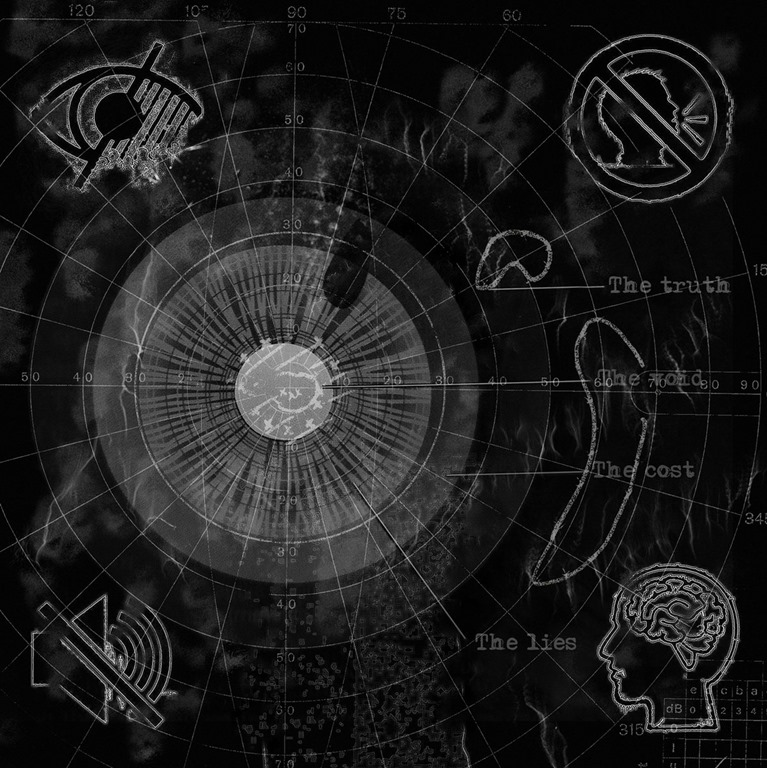
Before the Skeletal Dance Of Our Festering Jesters is… bassy. And with good reason for certain. As the Bandcamp blurbage details, ‘Blind Johnny Smoke was born severely deaf in both ears, and started to lose his vision as a teenager with only a few degrees of central vision remaining and still decreasing. Then at the end of 2023 he experienced a sudden loss of his remaining hearing on his left side leaving him profoundly deaf. This posed huge questions for him, what life will be like going forward, how this would change how he felt about the nefarious shit going on in the world around him, and whether he was still equipped to be able to express himself through music. With the aid of The Juddaman, the answer lies within the tapestry of Before the Dance of our Festering Jesters.

Musically, the album is almost obscenely focused on bass frequencies, which coincidentally are the only sounds Blind Johnny can detect without hearing aids. There is a dub sensibility that the band have always dabbled with, but here it weighs in heavily alongside trademark percussive programming and unmusical cut up noise. The accompanying words are as angry as ever and, after a few years of Blind Johnny performing on the spoken word circuit, the lyrics have depth and trickery sitting alongside blunt vitriol.’

‘Sensory Denudation’ presents a groaning mass of distortion, and the spoken word vocals offer up comparisons to Pound Land and Sleaford Mods, and nothing about this is easy on the ear as ambience and trudging industrial noise grind away. It’s the Mods and Benefits who come to mind during the stark electronic grind of ‘Safety First’ and ‘Words Without Echo’, which also introduces a Public Image kind of slant, and Before the Skeletal Dance Of Our Festering Jesters brings together post punk and ranty rap with hip-hop and industrial and spoken word. It’s hard going if you’re wanting tunes, but ‘Ghouls’ is perfectly representative of the low-tempo, thudding noise approach the band have taken to the creation of Skeletal Dance.

‘This is All I Hear Now’ is pure rant, raw and aggressive, the ‘blah, blah, blah’ refrain snarled over a thick, woozy bass, before the six-minute ‘Party On’ turns its focus on the UK government’s COVID lockdown ‘partygate’ shenanigans and dubious contracts for PPE as dense, industrial percussion builds, and I’m reminded of Test Dept’s The Unacceptable Face of Freedom. It’s pretty potent stuff.

Running beyond seven minutes, ‘Crooked’ is the album’s centrepiece, a murky postindindustrial wasteland of a soundscape dense in distortion, crashing beats trudging hard through an unusually melodic chorus which provides the album’s lightest moment at the point it was least expected. Sorry for the spoiler there. It’s back to seething and sparse, throbbing techno bass and thumping beats on ‘Behind Closed Doors’, a bleak slice of dark dance that wouldn’t have been entirely out of place on a Wax Trax! release in the late 80s or early 90s.

‘Laughter’ offers a sliver of illumination in this overall dark offering, although it’s very much relative and it’s a cold, mirthless cackle than an uproarious belly-shaker: a piano-led piece of Numanesque electropop, it’s stark but structured.

Everything builds perfectly for the monster finale, the twelve-minute ‘Satellites, a low, rippling drone crawling and billowing from the speakers in the most lugubrious and ominous fashion. A chorus of voices rises up, dissonant but united, before fading out in a waft of reverb, to be replaced by slow-smouldering synths and a sparse but insistent beat that strolls its way to an almost tranquil horizon.

Before the Skeletal Dance Of Our Festering Jesters covers a lot of ground, and while much of it is pretty desolate, it is not an album entirely bereft of hope.

AA

a0086783039_10

Cruel Nature Records – 20th April 2023

Christopher Nosnibor

Regular readers – or even more casual ones – will likely have noticed that Cruel Nature releases have received a fair bit of coverage here. The Newcastle-based cassette label, and brainchild of Steve Strode, are now celebrating a decade of their existence, releasing non-conformist, way-outside-the-mainstream music, and they’re celebrating with a compilation of 23 (of course, it has to be 23) exclusive tracks recorded specifically for this release, on a label who can now boast the tagline of ‘Channelling sonic diversity since 2013’.

Spectrum very much succeeds in showcasing that sonic diversity, presenting a collection that spans ambience to brutal metal. In times past, no-one who would listen to one would listen to the other, but my own musical journey over the last decade and a half means that whereas once I’d have sneered at one and hesitated over the other, I’m now on board with both. And why not? Cruel Nature Records has spent a decade now giving a home to music that doesn’t really fit, and doesn’t conform to a specific genre.

Of the 23 contributors, a fair few of them have previously featured on these pages, so new material from them is most welcome. VHS¥DEATH are among them, and ‘Sacrifice’ is a relentless industrial hardfloor disco banger, which couldn’t be more different from the mellow jazz ambience of Aidan Baker’s contribution, ‘Grounded Hogs’. And in a nutshell, the contrast between the two tracks instantly encapsulates the ethos of Cruel Nature. Anything goes as long as it’s different and interesting.

It’s great to hear snarking antagonists like Pound Land in the same space as Nathalie Stern’s haunting atmospheres and the spare folk of Clara Engel. Pound Land deliver a gloomy grinder in the form of ‘Flies’; despite its minimal arrangement, it’s dense and oppressively weighty, not to mention really quite disturbing in its paranoid OCD lyrical repetitions.

‘K Of Arc’ by TV Phase’ is a punishing, percussion-led trudge through darkness, while Charlie Butler’s ‘Eagle’s Splendour’ which immediately follows couldn’t be more different, it’s rolling piano and soft, rippling chimes providing six and a half minutes of mellow enchantment.

Petrine Cross bring a rabid howl of utterly crushing, dungeon-dark black metal that’s as heavy and harrowing as anything they’ve done, making for a most welcome inclusion here. Offering some much-needed levity, Empty House’s ‘Blue Sky Dreamers’ is a wistful slice of breezy indie with a hint of New Order, not least of all on account of the run-filled bassline, while Katie Gerardine O’Neill swings something of a stylistic curveball with some quirky deconstructed jazz.

Also worthy of mention (although in fairness, there isn’t a contribution on here that isn’t, had I the time for a track-by-track rundown) are Aural Aggravation faves Whirling Hall of Knives and Omnibadger, with the former whipping up a mangles mess of glitching distortion and the latter – these buggers get everywhere, having featured on the Rental Yields compilation I covered only last week – mixing up a collage of hums, thunderous drones, and a cut-up melange of feedback and miscellaneous noises to discombobulating effect. Then again, the final two tracks, courtesy of Lush Worker and Lovely Wife respectively bring some mangled reverb-heavy drone-orientated avant-noise and eight and three-quarter minutes of demented, downtuned, downtempo sludgy space rock. Both are truly wonderful, and this is a superlative compilation that perfectly encapsulates the eclecticism of Cruel Nature. It’s also the perfect illustration of why we need these small labels who aren’t driven by commercialism or profits or shareholder value. For disseminating all of this weird and wonderful music – music which often challenges the very idea of music – the world is a much better place.

Fans of the label with absolutely love this, and for those unfamiliar with the label, there couldn’t be a better introduction. Here’s to the next ten years of Cruel Nature.

AA

cover

Karlrecords – 10th March 2023

Christopher Nosnibor

When I started out reviewing, I always thought how cool it would be to get to hear new releases by acts I like in advance, and to opine on the latest releases by acts familiar to many. But I’ve come to realise that the real joy – and what I now see as my purpose – is to discover and share new and lesser-known artists. It is a gift which keeps on giving, for I hear so many people in my demographic moan about the lack of any decent new music. It’s simply not true: they’re just not looking in the right places (and their idea of ‘decent’ music tends to be rooted in their youth and coloured with nostalgia, which is sad really. Opening one’s ears and opening one’s mind is the key to keeping young. Or something). Of course, it’s always subjective, but there is a rare exhilaration and delight in – after all this time – hearing something that doesn’t sound like anything else.

And so here we have the debut EP from Sara Persico, which prefaces a full album in the pipeline. It doesn’t remind me of anything – but it does give me a rush, but also chills me to the bone.

It’s dark and it’s stark, and it’s challenging.

According to her bio, she was ‘born and raised in Naples, Berlin-based sound artist/vocalist Sara Persico cut her teeth experimenting on the fringes of Naples’ fiery underground experimental/noise scene, developing a technique that would integrate her voice with analogue electronics, field recordings, and samples.’

Fiery would be a fair description of the six tracks on Boundary, released on cassette. It’s big on bass and beats. Big big big. The percussion bashes at the cerebellum and kicks the cerebral cortex, while bass resonates through every fibre of the body. This dense and weighty stuff. It’s the elements of dance music slowed to a glacial crawl. Instead of making you want to move, it absolutely freezes you solid, tense, immobile. And as for Persico’s voice – it’s something else. She sounds tortured, trapped, and transcendental.

Stripping things back to a stammering, glitched drone on ‘Exit’, she switches between ethereal lilt to banshee howl, and the two are overlaid in a sonic collage that’s compelling and terrifying simultaneously. ‘Under the Raw Light’ is tense, aggressive, even, in its ferocious beats and Persico’s voice that sounds as if it’s coming from the other side, frenzied, tortured. In contrast, the closer, Umbilical’ is a disconcerting spoken word work pitched against a thudding heartbeat and muffled bass. It leaves you feeling… what? Detached, in some way.

Despite being built around familiar elements, Boundary doesn’t sound like anything else, and launches Sara Persico as a unique and exciting voice.

AA

KR107_front

Cruel Nature Records – 2nd December 2022

Christopher Nosnibor

Seems I’ve blinked and missed a while slew of releases from Ontario experimentalist Clara Engel since writing about Hatching Under the Stars in the spring of 2020. Then again, the spring of 2020 doesn’t so much feel like a lifetime ago, as much as it does another life. Released on 5th April 2020, we were only just over a week into the first lockdown here in England, and we had no sense of what was to come.

As the blurb outlines, the album was ‘recorded entirely at home / solo’ and ‘Their Invisible Hands presents 13 tracks of subtle dream-like beauty… A mystical work, mixing classical and dark folk wanderings with misty soundscapes, which creates an abstract, new world atmosphere.’ Self-released in April digitally and on CD, Cruel Nature are giving it a cassette release.

In a way, returning to Clara’s work now is a powerful, and grounding experience. What has happened in the space between? Everything…and nothing. As they explain in the accompanying text, replicated on their Bandcamp, “I’m not writing the same song over and over so much as writing one long continuous song that will end when I die.”

If the last couple of years or so have reminded us of anything, it’s our mortality. And the sound of Their Invisible Hands is both spiritual and earthy. To unpack that, the sparse instrumentation, which consists predominantly of creening woodwind, chiming, picked strings, and hand percussion, has a simple, primitive aspect to it, and the slow, rhythmic undulations are attuned to elements of nature, as grounded as the act of breathing. ‘Dead Tree March’ is exemplary, a long, expansive drone that pulses in and out, repetitively, hypnotically, a sparse guide to a meditation.

Engel’s vocals, meanwhile, are ethereal and other-worldly, with a primal folk leaning that moves effortlessly between narrative and incantation, both of which tap into that subconscious part of the mind that it seems only music and nature can reach.

These themes of nature and of the ancient, of thoughts and tales lost in time, are constants in Engel’s work, giving credence to their comment about writing one long continuous song. In this context, it’s easy to see their entire catalogue as an interrogation and exploration of a quite specific field. Engel’s world is one full of magic and mystery, cryptids and magic beans and magnificent birds which sing. These songs are steeped in atmosphere and wonderment.

‘Ginko’s Blues’ is perhaps the most overtly classical piece on the album, a sparse composition led by picked acoustic guitar that calls to mind a stretched, dispersed rendition of Beethoven’s ‘Ode to Joy’, as it’s slowly dragged into a sea of scratched strings and gauze-like reverb.

Dissecting Their Invisible Hands too hard is to misunderstand its nature. It’s not an album to pick apart for the various elements, or even to comprehend its structures, origins, or meanings: any attempt to do so is to demystify its resonance. ‘It’s all fun and games ‘till somebody shows you their heart.. on a platter on a stake on a riverbed rusted…’ they sing on ‘High Alien Priest’. The metaphorical and the literal blur unsettlingly.

You shiver and find yourself mute as Engel leads you through an array of evocative soundscapes. All you can do is let go, and to explore them.

AA

a0799919546_10

Dret Skivor – 5th August 2022

Christopher Nosnibor

In typical Dret style, the accompanying notes are brief and to the point; functional, you may say.

As such, we know nothing of either AU or FDO as individuals – if indeed they are – of their previous works or methods, but then, nor to we need to in order to address the release at hand. ‘When analogue electronic drone meets toy keyboard drone, the results are this.’

‘This’ being a forty-three minute piece of continuous drone. Not that it’s all just one long drone: it’s multiple drones that hang and hover in layers. Despite its lack of overt structure or form, there are clear distinctions and a strong separation between the different layers, that, unexpectedly – and whether intentional or not – bring something of a conventional musicality to proceedings, with a distinct ‘lower’ drone overlaid with a higher ‘lead’ drone, as well as incidental moments of discord and dissonance as the shifting tones interact with one another. And, as the piece progresses, so the pitches change, and consequently, so do the moods. At first comparatively calm and tranquil, the tension rises over time.

Shrill wraith-like whispers flit through a darkening atmosphere as the lower drone begins to thicken and swell in density and volume and the overall sounds grows murkier, forging a more sinister, ominous feel.

Over time – and here, time feels like a vague concept, where seconds stall and minutes moderate and ultimately swing in suspension, slowing, until reaching a point around twenty-five minutes in where nothing moves and a perfect stasis is reached. The interweaving drones remain locked, and there is no movement. Life itself has stopped and the listener finds themselves frozen, like an insect set in amber to be preserved for all eternity. And here – here – the urge for any form of transition or trajectory abates, simply sliding away along with even the desire to move.

Somewhere along the way, you simply forget you exist and the sound becomes everything, and yet, simultaneously, it fades into the background as you find yourself in a fugue-like state, entranced, and barely notice when it ends.

AA

a2685101601_10

Cruel Nature Recordings – 11th March 2022

Christopher Nosnibor

Following on from their eponymous debut, Pound Land – the duo consisting of vocalist/lyricist Adam Stone (Future Bomb/Holy Ghost People/frequent collaborator with Dead Sea Apes) and multi-instrumentalist Nick Harris (Reverends of Destruction/ ex-Dead Sea Apes) return with what they describe as ‘eight tracks of post-industrial post-hardcore dead-pan misery – a ‘kitchen-sink’ punk for the 21st century’.

The album title isn’t one that’s likely to see Pound Land crashing the charts, and it’s one that runs the risk of drawing easy criticism, if its contents doesn’t hit the mark for some. But then, it’s a double-bluff, because ant critic who criticises the band for sounding like they can’t be arsed clearly can’t be arsed to critique with any effort.

They slap in straight away with the blunt and subtle as a brick ‘Twatted’, and it’s a six-minute barrage of top-endy guitar racket, a simple chord sequence put through the wringer after a succession of pedals with distortion and reverb and maybe a hint of flange. The lead guitar is sinewy, a snaking twang of treble and it’s so, so raw. A primitive drum machine sound thwacks away and Stone mumbles the expletive-laden lyrics in a northern drawl: ‘You know what I’m fucking saying, mate? Everyone’s a fucking twat, mate.’ It’s raw and it’s real. The production values are bargain basement and then some, and around the mid-point they come on full Fall circa 1983 as they bludgeon away at their wonky guitar racket.

‘Brain Driver’ is a dingy mess of seething, writing no-wave and industrial racket by way of a backing to a monotone vocal performance, and this time it’s six-and-a-half minutes of dirge-like scrapings and discomfort, but they’re just warming up for the album’s thirteen-minute centrepiece, ‘Tony Ex-Miner’. It’s a sparse, grating synth effort, like Suicide without the rhythm. It’s an atonal droning expanse of bleakness that saps your very soul. This is a reason to appreciate it, in case you’re wondering. A sampled narrative about Margaret Thatcher is almost, but not fully, audible.

The sneering grunge squall of ‘Tapeworm’ follows more conventional punk/rock structures; drums, bass, guitar come together to grind out a thunderous wall of noise, and it’s early Head of David that comes to mind as they slowly tug your entrails out and squeeze the mess of guts as they spill. There is nothing pretty or pleasant about this, not the dingy murk of the title track or the dislocated electronic dissonance of the disorientating slur of ‘Total Control’, that sounds like Stone retaining control of his bowels and bladder is no small feat. ‘I look after my mind’, he drones, detached, alone on the dark.

The compositions, such as they are, are sketchy, minimal, and there’s little to cling to by way of melody: instead, Pound Land drag you through city back alleys clogged with litter, smeared dog shit and the puddled piss of street drinkers – mate. The subject matter may be kitchen sink, but the atmosphere is abject and apocalyptic. It’s an album for out times. You’re not supposed to like it.

AA

a2595844187_10

Cruel Nature Records – 24th September 2021

Christopher Nosnibor

Cruel Nature’s September releases are all about lost classics from Gateshead. Every local scene has those bands who had so much potential to go further afield, and who, given the right exposure, the right breaks, could – and should – have been (inter)national cult icons.

‘Local’ bands so often get a bad rep, as if they’re somehow inferior because they haven’t broken out. Sometimes, it’s misfortune. Sometimes, it’s because of life – dayjobs, family, personal circumstance. And sometimes, it’s simply a lack of ambition to do anything more than make music and play locally, and that’s not reason to judge an act. Not everyone wants to be a global superstar, and of the tend of thousands who do, hardly any make it anyway, so maybe accepting your limitations is a good thing to do, and far healthier than throwing yourself not the rat-race running on the vaguest of hopes of ‘making it’ – whatever that is.

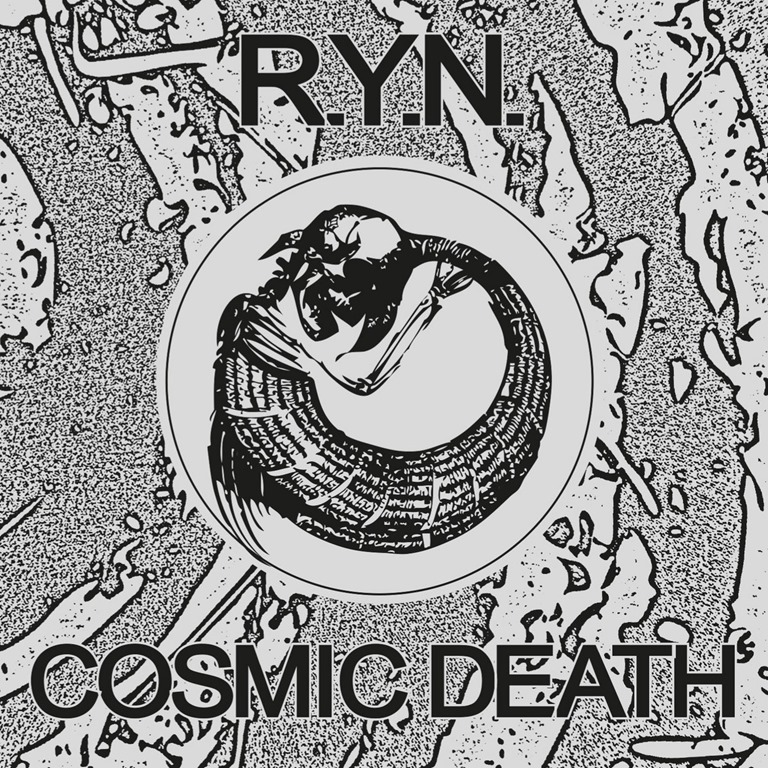
Like turn-of-the-millennium purveyors of brutal harshcore, ODF, R.Y.N. demonstrate a remarkable range and quality of non-mainstream music being played around Gateshead. R.Y.N. was the drone / void ambient project of Gateshead duo Pete Burn and Dean Glaister, active from 2003 to 2011. Like the simultaneous ODF release, Cosmic Death is a retrospective which puts their 2008 albums Astral Death and Cosmic Birth together for the first time as a double cassette package.

Cassette one contains the six tracks from Astral Death, and the eight-minute ‘Conscious Patient’ provides a wonderful introduction into their world of dense, dark, grating dronescaping. Things delve deeper and darker with the nine-minute churning drabness that is ‘The Cleansing’: cleaning is appropriate, and it’s the sonic equivalent of as colonic irrigation. It feels gentle in comparison to the grating metallic oscillations of the third track, ‘Mind Over Mind’. It’s a fifteen-minute thrum, where nothing happens, nothing changes, and it’s not quite harsh noise wall – not least of all because there are shifts in texture and tone – but it’s limited, and a piece that achieves its effect through its sheer relentlessness and lack of variety, the effect of the dense wall of sound being cumulative psychologically.

It’s readily apparent that R.Y.N. had global potential, but for an audience so niche they’d have probably have needed to relocate to Japan to play to an audience of more than fifteen people, unless they’d scored a support with a noise giant like Merzbow or Whitehouse – in which case they may have got to play to 75 or a hundred people on a good night. But quality and quantity are rarely contiguous, and when it comes to creating dark atmosphere, these guys were clearly masters.

‘Cosmic Research Unit’ is still a heavy drone work, but feels softer and leans more toward ambience. It doesn’t get such bleaker than ‘Astral Death’. It sounds like a recording of an engine or a lawnmower, played at reduced pace. It’s like HNW with additional layers of swampsome murk that shift and provide some sense of movement, however slow and lingering.

Cosmic Birth opens with the title track, and picks up where its predecessor left off, with a harsh scraping metallic drone like a machine churning and grating on and on, over which whispering drifts of sonic smoke linger – and it very much sets the tone for the remaining seven tracks, which include two twelve-minute epics in the form of the dank and murky ‘Brain Pictures’, and ‘Creation of Infinity’, both of which lead the listener inside themselves to contemplate those darkest inner recesses, and the fifteen-minute ‘Gravity Drain’, which really pushes the oppressive atmospherics to the limit.

‘Catacombs’ plunges through sonorous and penetrating darkness to arrive, with a bone-rattling percussion way off in the background, at an empty space. And ultimately, the final destination: the somehow incomplete yet equally finite ‘Serpen’, which swirls around ominously and maintains a knife-edge suspense.

After wandering through endless tunnels without light and without any real hope of escape from this claustrophobic aural subterranean, it becomes clear: this is the face of the abyss – from which, there is nothing and no return.

AA

a1776692118_10

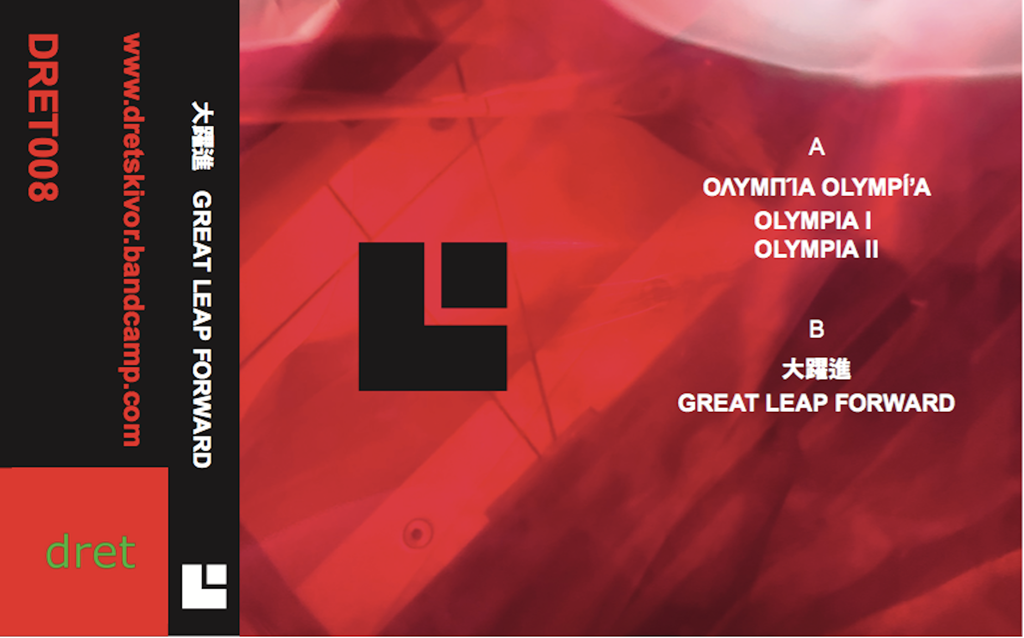
Dret Skivor – DRET008 – 6th August 2021

Christopher Nosnibor

The latest offering from Dret Skivor, a Swedish tape label specialising in drone and various shades of experimental noise, is the new album from Danish maker of electronic noise Thomas Li, who, as Li, has self-released almost a dozen works digitally. Biographical details are less than minimal, and that’s cool. Why do we need to know about the artist, their background or their back catalogue? Do we really need to know the context or the intent, the theory behind a work? Sometimes, when it’s an experimental work informed by theory or a certain concept, it helps, because the concept and theory are integral to both the process and the end product. Then again, there’s a danger that sometimes said theory or concept can impinge on one’s appreciation of the work. Sometimes, it’s best to just be able to listen, and allow oneself to be immersed in the sound, without pouring over lengthy liner notes, researching myriad avenues presented by the references, and straining one’s brain over concepts. This is particularly true of many works of a more ambient persuasion. I’m not remotely anti-academic or anti-intellectual – quite the opposite. But sometimes, you just need a break, and music can be the perfect conduit to vital headspace. An overemphasis on context can detract from the often underrated pleasure of simply listening, and enjoying.

Admittedly, enjoyment of an album like this is the preserve of a small minority: it doesn’t contain any ‘tunes’, it’s beatless, and it’s not always entirely mellow either. But it does have a great deal of texture, and this is something you can really lose yourself in.

Great Leap Forward contains three tracks, with side one occupied with the two-part ‘Olympia’ and the second side containing the eighteen-minute monster title track.

‘Olympia I’ is nine minutes of dense, churning drones, billowing sonic clouds that choke and smother, while counterpart ‘Olympia II’ gurgles and churns a dark whirling cyclone of sound. The latter is more interesting, sonically, with a lot more going on – meaning it’s also more challenging and more tense, as crackles and hums fizz and spin from the dank depths of bubbling noise.

The title track is altogether less tumultuous and more background ambient by comparison. Being eighteen minutes in duration, on the face of it, not a lot happens: there are no climactic blasts of noise, there’s nothing explosive or even overtly disruptive. And yet for all its subtlety, it is engaging, and there is movement, there are shifts and distract and divert. Howling winds blast over barren landscapes of drifting sand and strains of treble and whines of feedback emerge from the eternal mid-range rumble that drones on, and on, and on.

In the context of his output to date, this may not really be quite such a great leap forward, but it does clearly mark an evolution and an expansion on the soundscapes sculpted on previous works. And, played with the accompaniment of a candle and some CBD-infused beer, Great Leap Forward is a well-executed soundtrack to mental recuperation.

AA

tape label grab for bandcamp

Panurus Productions – 5th March 2021

Christopher Nosnibor

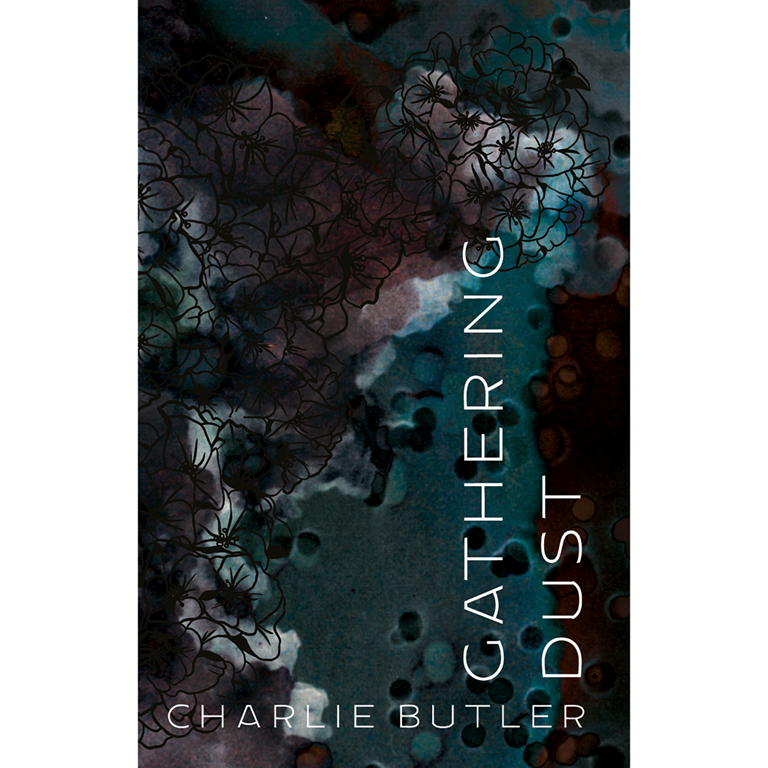
Charlie Butler’s Gathering Dust is something of a departure for Newcastle tape label, PANURUS Productions, in that it’s incredibly mellow. It’s not a complete departure, through: designed as a cassette release, it features two longform tracks, each fitting neatly onto one side of a good old C30 (the likes of which I used to get from Maplins back in the early 90s) – or, in an ideal world, perhaps one side of a 12” or 10” vinyl release. But we know that for a niche label like this, the cost of a vinyl run is prohibitive, and while their print runs are extremely limited, they do sell out – which is the perfect operating model: knowing the scale of their audience and sales reach, and catering to demand without massively overreaching, means costs are covered, and everyone wins. There’s a stream and digital download for anyone who wants it, after all. Everyone’s a winner.

The album title is in fact an amalgamation of the individual titles of the two tracks, and separated, the context shifts a little. Gathering dust connotes a lack of movement, a stasis, something that’s essentially furniture, something neglected, unused. This places the power of word association in sharp relief: together, the words suggest something very different in contrast to when they’re independent of one another.

And so ‘gathering’ brings connotations of collecting, bringing together, of hunter—gathering. And from the dense, swirling drone of a trilling keyboard on the fifteen-and-a-half-minute track that is ‘Gathering’ emerges a slow-picked guitar. The drone und strang approach, whereby echo and tube crunch coalesce to envelop the guitar in a soft sonic bubble is highly reminiscent of latter-day Earth and Dylan Carlson’s solo releases. It doesn’t ‘do’ much, and doesn’t need to: ‘Gathering’ is a long, slow, and expansive work that explores atmosphere.

‘Dust’ is a deep, sense drone that billows and booms, and is indeed reminiscent of the heavy drone of Sunn O))). Its effects are soporific, and for a time my notes are sparse as I drift and move beyond the immediate environs of my workspace to immerse myself in this thick fog of a composition as it slowly unfurls with its post-rock leanings and immersive atmosphere. There’s a tonal warmth that surrounds this, and it borders on ambience at times, and dust washes and drifts like particles descending. And over time, it builds… and builds, swirling into a dense, billowing sonic cloud. The final minutes are reminiscent of the eternal drone of Earth 2 – and being one of my all-time favourites, that’s very much a compliment and an indication of just how textured and enthralling Charlie Butler’s brand of drone is.

Gathering Dust is remarkably dense, but it’s not heavy per se. It’s one of those releases you can simply surrender to, and lose yourself in the enormity of the sound.

AA

cover