Posts Tagged ‘Avant-garde’

Constellation Recordings – 12th November 2012

JOYFULTALK’s new a/v single ‘New Biology’ is the seventh entry in Constellation’s Corona Borealis Longplay Singles Series. ‘New Biology’ follows the acclaimed full album, A Separation Of Being released this past March, and includes an experimental film by JOYFULTALK’s Jay Crocker.  ‘New Biology’ is exclusive to Bandcamp and PWYC for the first week of release. JOYFULTALK’s Constellation digital discography is also on sale during this time. Proceeds from all these sales go 100% to the artist, as part of Constellation’s pandemic initiative for immediate artist support.

‘New Biology’ is an extended improvised piece with a focus on the exploration of “free” electronics.  For the past decade my practice has been working towards the construction of a portable electronic music system completely based on the principles of immediacy. I have tried to design a system where I can explore improvisations without ever being “cornered” by the system itself. A system that can be played and manipulated as easily as a guitar, saxophone, drums etc. I wanted to be able to play in time or with the absence of time to perform manipulations of stored sounds or constant recycling and reimagining of new sounds with no dead ends and only the limitation of creativity as an obstacle.

The visual aspect of the piece works along the same lines of improvisation. It is a meditation in  smudging, painting, glitching and pulsing analogue and digital strains into endless video streams of trans-configured consciousness. NEW BIOLOGY follows a loose narrative of moving from this physical manifestation of being to another. Bypassing linear time to be recast as something new.

Check ‘New Biology’ here:

thumbnail_JFTphoto

Outsider Art / Nim-Brut – 4th December 2020

Christopher Nosnibor

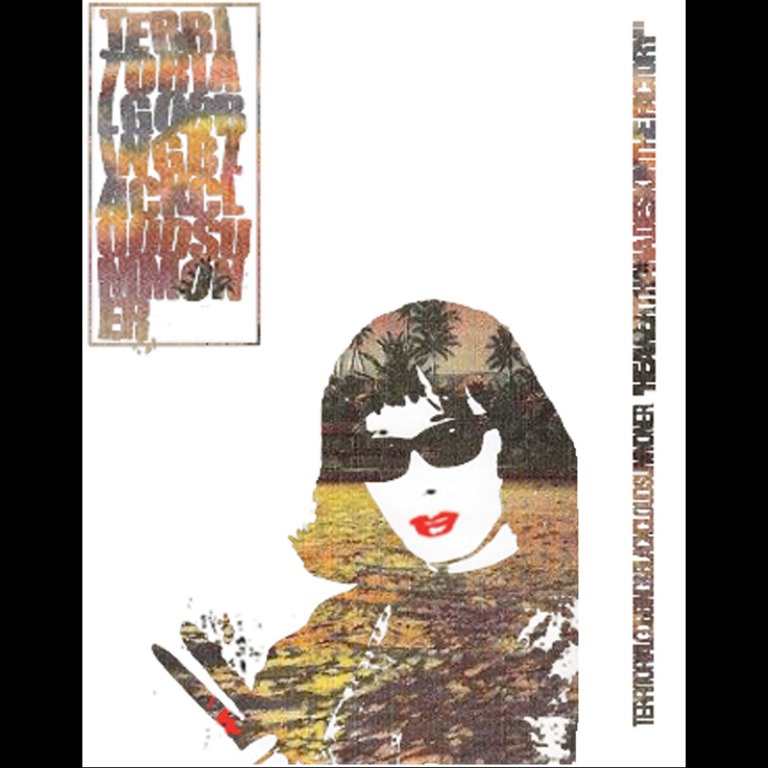
I should probably apologise in advance for this one: my mind has a habit of sprouting off on tangents of word association at the best of times, and with the turmoil that is 2020, a year that’s been – and continues to be – an endless conveyor belt of shit on shit, none of which makes any fucking sense, there are many days and evenings when I am absolutely all over the place. Not literally, of course, since I can’t really go anywhere or see anyone. The weirdy collage sprawl of ‘Carving Another Flute’, the first of three compositions on this split / collaborative effort by BlackCloudSummonerand the hypermanic, uber-prolific Theo Gowans, aka Territorial Gobbings is the perfectly bewildering soundtrack to these brain-foggingly bewildering times. So ‘Carving Another Flute’ just makes me think, inexplicably, of the slang term skinflute. That’s probably the only instrument not in the mix in this chaotic cacophony of an album, that’s got everything else going on, probably including the kitchen sink.

‘Peaches and Crayons’ sounds soft and playful, but is in fact droney and dark, and there’s no easy access point here. But they save their harshest noise for last: ‘Playing All My Black Dice Records At The Same Time’ is a 15-minute assault that is pretty much what the title says, meaning it’s a squalling blitzkrieg of screaming feedback and mid-and low-end that growls and bangs around erratically midst metallic crashes and a fizzing circuitry. It’s utterly excruciating, and probably one of the most intense and sustained blasts of noise I’ve heard in a while, being nothing short of an explosive sonic firework display – but, unchoreographed and untamed, it’s more like a blaze in a firework factory, with everything going off all at once, and it’s incendiary and blinding and overwhelming. Crash-landing somewhere between Merzbow and Whitehouse around the time of Never Forget Death, it’s a fucking nasty mess of abrasive noise – which of course means I love it.

There’s no sitting on the fence with this one: if you do noise, you will love this. If you don’t, it’s your worst nightmare.

AA

a2866943211_10

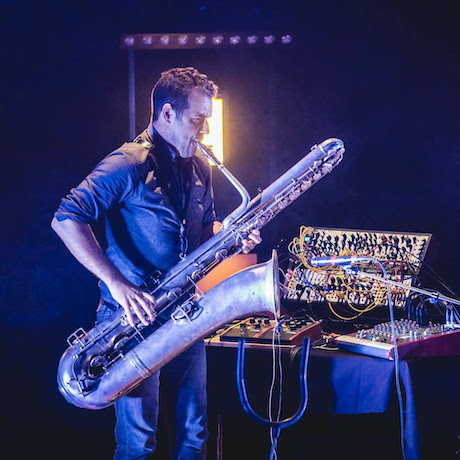
Jason Sharp has been a fixture of Montréal’s experimental/improv scene for many years, chiefly as a saxophonist exploring eletcro-acoustic and durational music, and in a wide variety of jazz, avant and contemporary music ensembles. “Gates of Heaven” is an 18-minute through-composed acoustic recording and Sharp’s first official new release since Stand Above The Streams (2018). The single accompanies an experimental film by Guillaume Vallée.

Jason reveals, "this recording captures a solo bass saxophone performance in the Gates of Heaven, a small synagogue in Madison, Wisconsin. After an exhaustive recording session elsewhere, I visited the synagogue en route to the airport to quickly record a solo piece. The engineer and I had only a couple of hours to capture something before catching our flight home to Montreal.  Microphones were set up at varying distances throughout the synagogue and I improvised a solo piece using the acoustics of the space. We had just enough time to record what became an 18 minute multi-tracked piece. Each layer was a first take and a response to the previous. It began to rain heavily towards the end of our session audibly rattling the synagogue, we tore down the mics, and hurried to the airport. Taking this fleeting moment for myself to play in this beautiful resonant space was both nourishing and revitalising. I returned to this recording when the pandemic hit in mid-March as a way to focus my attention on something positive and future-driven. Listening back to this acoustic document during this unprecedented time, I once again felt the support this space had provided – and was reminded of the fragility that improvised music can often reveal and the strength it can restore."

Guillaume Vallée adds, "along with the musical beauty of the piece, the context of recording was an inspiration to me. When Jason explained to me that he recorded the piece in a place of worship, I imagined something soft & dark, some sort of suggested figurative visual ambiance. After listening obsessively for days, I began to work on a three-part narrative structure that follows the music’s progression. Everything comes from Super8 images that I shot years ago and got processed and scanned during isolation. Flowers, walls from the Middle Ages, a church – in colour and black & white that have then been heavily processed through analog video tools. I wanted the images to be sculpted by the music, as a pure depiction of the emotional states of mind this piece puts me in."

Watch the video here.

AA

Sharp

Pic: Gwendal le Flem

zeitkratzer productions – zkr0027 – 23RD October 2020

Christopher Nosnibor

As the founder of one of Europe’s leading avant-garde orchestral ensembles in the form of zeitkratzer, whose releases include recordings of Metal Machine Music, works by Stockhausen, and two collections of Whitehouse ‘covers’, Reinhold Friedl is very much at the forefront of contemporary classical. Formed in 1997 with Friedl on piano (sometimes a ‘prepared’ piano, a la John Cage), they’ve established themselves a formidable force, incorporating elements of free experimentalism and drone.

For the recording of KRAFFT, the nine-piece ensemble came together with another respected musical collective, Ensemble 2e2m, a chamber group from Paris dating back to 1972, known for their unique sound and the first recordings of Giacinto Scelsi’s music.

As the press release recounts, KRAFFT for orchestra was composed in 2016 as a commission from the French State and premiered in Paris and Marseille. It was also the first meeting of the two ensembles – and yet the come together perfectly to create four immense, drone-orientated passages.

Being Friedl, there is a great deal of detail and precision behind the methodology: this is certainly not random stop-start hums and thrums or elongated notes played with varying – and usually increasing – intensity, and for this reason I shall quite at length: ‘KRAFFT is a minimalist maximal composition: all instruments play in rhythmic unison throughout. Only the sounds and their combinations change relentlessly throughout the piece. KRAFFT is spelt wrong on purpose to create an ironic-onomatopoetic rendition of the German term “Kraft”, meaning “power” or “force”. The listener is exposed to a sonic undertow. The notion of huge power and force is connected here to clandestine and unknown rules controlling the progression of sound; something is happening, but we do not exactly know what, when or how. KRAFFT is composed with the help of the computer program TTM (Textural Transformation Machine), developed by Reinhold Friedl to sculpture multiple random processes.’

The TTM formed part of Friedl’s Ph.D. at Goldsmiths University London, and was developed by the composer to sculpture texture transformations with the help of sophisticated random processes. As such, Friedl’s compositional methodology develops way in which John Cage incorporated random determiners within his work, and in using a ‘machine’ to make those random selections, he distances the ‘composer’ from the composition and increases the likelihood of true randomisation.

Returning to KRAFFT, there is a clear trajectory to the composition as a whole, namely an intensity and volume which increases incrementally as it progresses over the course of half an hour. The first part is soft, light, even playful, moving into somewhat darker, more discordant territory onto the second.

By part 4, immense booming low-end notes surge and rumble with such density as to have an almost physical force. Atop of this, the smaller strings scrape, squawk and twitter like birdsong and feedback. It’s an eleven-minute tidal wave of sound that swells and surges to a crescendo of truly enormous proportions. While it’s safe to say it’s unlikely to be aired on Classic FM, KRAFFT is as accomplished and powerful orchestral work as you’ll hear all year.

AA

zkr0027_front

Unseen Worlds – 25th September 2020

Christopher Nosnibor

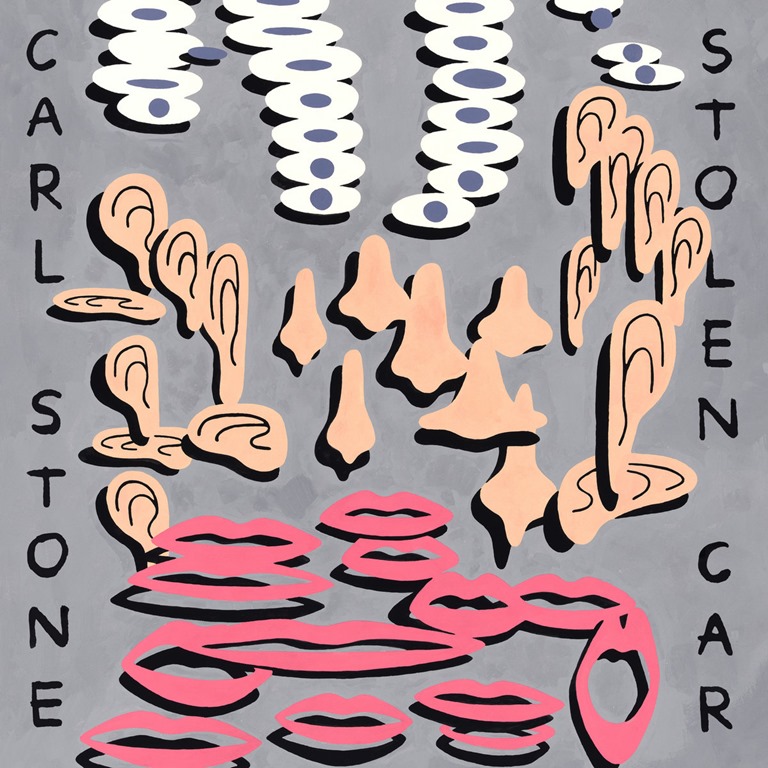
Pitched as ‘the gleeful, heart racing sound of hijack, hotwire, and escape’, Carl Stone’s latest release of a remarkably lengthy career is a smash-and grab hotch-potch of percussion-driven pieces.

Writing on the album on its release, Stone comments, ‘These tracks were all made in late 2019 and 2020, much of when I was in pandemic isolation about 5000 miles from my home base of Tokyo. All are made using my favorite programming language MAX. However distinct these two groupings might be they share some common and long-held musical concerns. I seek to explore the inner workings of the music we listen to using techniques of magnification, dissection, granulation, anagramization, and others. I like to hijack the surface values of commercial music and re-purpose them offer a newer, different meaning, via irony and subversion.’

Stone’s purpose is integral to appreciating the album, because the sounds with which it I formulated are the epitome of derivative, and without that context, one may be inclined to consider Stolen Car a serious endeavour rather than a work of subversion and commentary.

It begins with ‘Huanchaco, is a hyperactive mess of undulating synth which duels with freakout freeform jazz horns, all propelled by some frenetic drum ‘n’ bass beats.

Stammering, overlapping vocal loops provide the fabric of ‘Auburn’. Cut and spliced in such short fragments as to bubble and blur, and as everything melts into a foamy soup, there’s a fast-pace indie tune playing on the radio in the next room, and this in turn melts into the r’n’b pop froth of ‘Au Jus’, a chopped-up summary of the sound of the autotuned contemporary mainstream – slick, stylised, and devoid of content.

As the album progresses, everything seems to accelerate, growing more dizzying as K-pop and Katy Perry are whipped into an out-of-control fairground. Each track feels – and sounds – like listening to the entire top 40 single chart for the last five years with each single playing simultaneous and 25% faster than recorded. With the quickening of the pace also comes an increasingly bubblegumminess, but also a sense that things are out of control. It feels like a metaphor for postmodern culture, its endless acceleration built on a perpetual recycling whereby surface substitutes depth.

Stolen Car is a disorientating rollercoaster of a ride – a joyride where the joy is edged with panic as the smile becomes a fixed plastic grin as the fun turns to fear that at any moment you’re going to flip off the road, meet head-on with a wall, or worse still, carry on going, ever faster, forever….

AA

a3719238387_10

24th July 2020

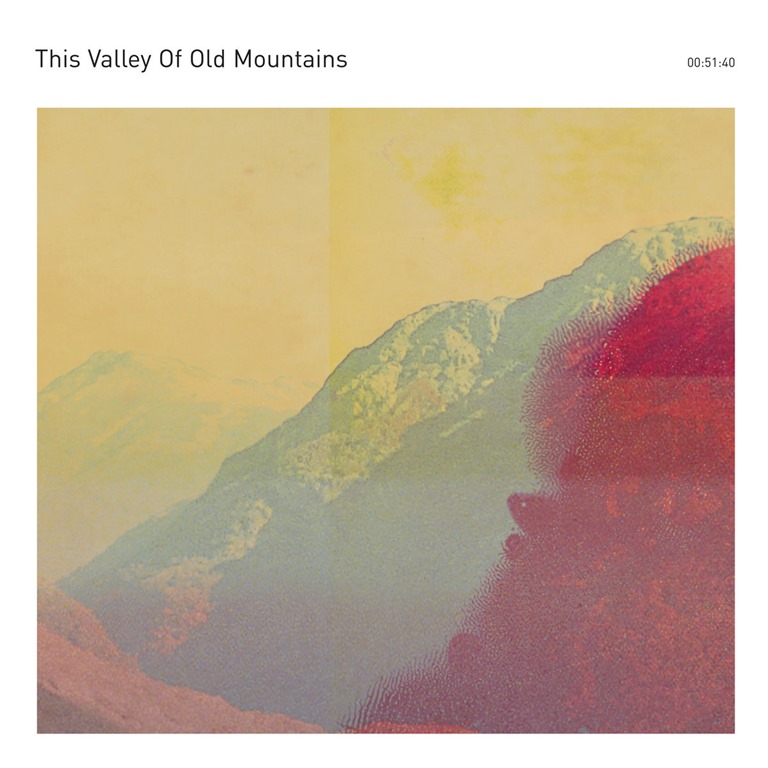
This Valley Of Old Mountains is a collaboration between Taylor Deupree and Federico Durand, which the press release informs us, ‘quietly creates the folklore of an imaginary land. From a hemisphere apart, share simple sounds with complex stories. Their music balances an edge between translucency and exploration, focusing on obscurity, repetition and a shared

fascination of the mountains between them’.

The album’s thirteen tracks are sparse and lilting, and oftentimes intimate a certain oriental influence as the notes – picked and struck – ring out into a confined-sounding space. For the remainder, they simply hover and hum, an easy, effortless wash of sound. You don’t you just sit as the glitches play out, twisting your psyche fleetingly, and wonder where it’s actually going as you venture into your own head.

Not a lot happens here, but then again, this isn’t about events, and more about atmosphere. Listening to This Valley of Old Mountains, there are moments where I can’t tell if I’m listening to the album or just the throb of the extractor fan in the bathroom next to my office. In a way, it doesn’t really matter either way.

‘Honii’ brings trilling twitters of birdsong to join the slow, echoing chimes of dulcimer and similar, while ‘Wintir’ is minimal, atmospheric, and exemplary of sparsely-arranged warps and wefts. ‘Polei’ is a slow, soporific tinkling piece, and fits with most of This Valley of Old Mountains’ mellow mellifluousness.

This Valley of Old Mountains is background, is barely-present, is vague in structure. It’s a perfectly ambient work of ambience, and works perfectly.

AA

a3671003152_10

1st May 2020

Christopher Nosnibor

Pocket Signs is Sly & the Family Drone’s Matt Cargill and UKAEA’s Dan Jones, and according to Matt’s mail, Signs of the Times was ‘fired out in an afternoon with the aid of lager and pepsi max. Lights out, volume up, watch yer face bins.’ He describes it as the result of ‘plugging in all the objects and making a haunted, sprawling, disorientating racket. Blown out electronics, lacerated drums, churning bass and crumbling voices’. Which means I know I’m going to love it, along with at last 50 other people.

The album features two longform tracks, each a magical, mystical 23 minutes in duration, and like the times in which they were created, they’re a confusing mess of incoherence, a fractured and nonsensical sonic collage.

‘What About Obedience?’ starts out with what sounds like an engine roar – but not a real engine, so much as an engine on a racing console game. Then a deluge of clanks, bleeps, whirrs, clicks, pops, shoot-‘em-up laser guns and twanging elastic bands melting in a nuclear storm all pile in, more or less simultaneously and it feels like watching the news while scrolling through social media (as I do around five every evening while cooking dinner). The experience is utterly bewildering and to even attempt to unravel it all is futile, because the world has truly gone mad.

Searching for structures in this chaotic morass of noise is like trying to find logic in the UK government’s strategy for loosening lockdown, but there are some amazing moments to be found here, as snippets of tunes and spacey krautrock synth motifs emerge briefly from the blistering howl of undifferentiated nose that funnels like a gale.

Gurgles and glops and electronic extranea combine to forge an aural blitzkrieg that could easily be the soundtrack to a digital apocalypse. Everything swirls and melts into a maelstrom that builds a physical mass and hits with an impact that’s more than simply sensory.

Where do you go from a piece that concludes with a sustained squalling blast of white noise that leaves you with the sensation of the end of days? More of the same, of course: ‘How to be Saved’ begins with a series of murky vocal samples, echoed and overlaid, atop burrs of electronic discord, and in no time at all, later upon layer of dissonance has emerged to forge a raging torrent of noises. Feedback strains and scrapes, sharp and metallic with knife-like edges while surging currents gurgle and synth sounds squelch and quirt, titter and tweet around a vortex. Abstraction and chaos reigns, pulsing, bouncing, screaming and bumping in all directions. At time, the melee is impenetrable, bewildering, as it echoes around your cranium. Voices emerge and fade again at random: seemingly, everything is at random, and it’s a glorious headfuck. Not so much a dronewerk as a metadrone assemblage, it’s a wild and brain-frying journey, this may just be the perfect soundtrack to the now – or it may just tip you over the edge.

Oh, and the cover art is truly special.

AA

cover

Industrial Coast – 20th March 2020

Please Call Me Fuck In Front Of My Friends, the latest dispatch from the prodigiously prolific Theo Gowans, aka Territorial Gobbing, finds oodles of discombobulating discord and dissonance thrown together in a set of skewed sound collages. As such, it’s business as usual. TG’s wildly experimental approach to rendering and processing sound by means not just of founds found and myriad effects, but the (mis)appropriation of random objects means you never know what the hell you’re actually listening to: loud crackles and scratches are probably the sound of sweet wrappers and paper towels being scrunched up close to the mic. It’s supposedly Theo’s most ‘organised’ work to date, and maybe it is, but of course, it’s all relative and one man’s organised is another man’s chaos – as anyone who’s seen my office will probably appreciate.

Amp hum and scrambled tape loops twist and entwine into a massive twisty knot of noise, a clashing conglomeration of aural chaos, a crazed cataclysm of random elements thrown together in the most haphazard of fashions. This shit’s impossible to pin down.

Garbled groans and wheezes, bleeps and blasts of noise collide with static and radios being tuned detuned, and retuned; there are prolonged periods where not a lot happens, which are annihilated by brain-bending bursts wee everything happens all at once.

‘Pyrex Chalice’ is representative, with something that sounds like bottles and cutlery being used as an improvised xylophone while dustbins clatter in a city alleyway and someone close to the mic stifles the breaths of a crafty wank.

Metallic scrapes and clatters coagulate into messy improvised chimes, and there’s some kind of whispered, gallic-sounding sleaze that descends into sobbing and is backed by clattering pots and pans on ‘Massage the Scar, Five Minutes, Five Times’. If none of it makes any sense, then that’s entirely the point.

Playful but bleak and as twisted as fuck, Please Call Me Fuck In Front Of My Friends again suggest that Territorial Gobbing is one of the acts closest to the spirit of the other TG, and Genesis P-Orridge’s absorption of the influence of William Burroughs’ cut-ups. The Industrial Records release of a collection culled from Burroughs’ archives of tape cut-ups on Nothing Here Now But the Recordings marked a direct link: Territorial Gobbing very much continues the trajectory in creating music that discards linearity in favour of simultaneity.

Weird times call for weird music, and Please Call Me Fuck In Front Of My Friends is the perfect brain-bending soundtrack and exactly the distraction you need.

AA

a3230074679_10

Bearsuit Records – 20th March 2020

Because I like my shit weird, I’m always thrilled to receive new releases from Bearsuit Records, and Harold Nono’s latest is one of a brace of fresh releases – brimming with weird shit, of course.

The title We’re Almost Home suggests a relaxation, an easing into the home straight. Instead, what Nono delivers is a brain-bending sonic tempest, with ideas lifted from all corners of the planet.

Nono’s straight in with insistent stuttering rhythms that pound systematically over the point as the title intimates, against a jolting japandroid clash of fragmented robotix. Like all of Nono’s previous releases, it’s a whimsical culture clash, stop-start chillout dance grooves are juxtaposed with trilling synths, samples, scratchiness and warping

‘Shaking on an Iron Bed’ is a calamitous crash of wild jazz horns and cymbal bursts that give way to pulping disco with orchestral strikes, while the jazz tones keep on coming. All the ‘what the fuck?’, all the ‘why?’ and all the ‘no need!’ and yet, despite everything, it’s all the reasons Nono is worthy of you ear. It shouldn’t work, and on paper doesn’t work, and even at times in actuality is kind of off the mark, but the transitions are so rapid that it’s doing something else completely different before it’s even registered.

There are moments of Stereolab-like mellow doodling to be found in places, as on ‘Let the Light In (Prince of Darkness)’, heavy dark ambience, as on ‘Ron’s Mental Leap Coach’ and tripped out semi-ambient space electronica, as on ‘The Fall Reprise’. There is oddness and drama, and a whole bunch of abstract glitchiness, and it’s all characteristic of both Nono and Bearsuit. If you’re curious to take a walk on the weird side, then this comes recommended. If you’re not, then you need to expand your horizons, and this is still recommended.

AA

Harold Nono – We’re Almost Home

Christopher Nosnibor

It’s all about the work / life balance, right? That’s what I tell myself, and my colleagues, an anyone who will listen. The truth of maintaining a work/life balance often – at least in my experience – means killing yourself to meaningfully fulfil the life element. Because life isn’t about resting, it’s about doing the things that matter, pursuing your passion, not binging on Netflix. That isn’t life, that’s hiding from work, finding a mental space in which to escape and decompress. But no-one ever lay on their deathbed saying ‘I wish I’d watched more TV’. I haven’t watched a single episode of ‘Love Island’, ‘The Voice’ or ‘X Factor’ and am fairly confident my life isn’t in any way deficient because of it. Being a writer is more than tapping out a few jolly lines while sitting on the sofa watching a nice rom-com with the wife after the kids have serenely taken themselves to bed straight after dinner, and being in a gigging band, however infrequently you may gig, takes some serious effort, especially in addition to full-time dayjob and family commitments and all the rest.

And so I disembarked in York, where I live, after a two-day work trip to Norwich, and seven minutes later was on a train to Leeds. Some people are accustomed or otherwise adjust readily to travel: I’m not among them. People laugh at me when I use the term ‘train-lagged’, especially when in the context of a day-trip to Sheffield from York, but believe me, I feel it on a molecular level or something.

Another thing I’ve discovered recently is that reviewing and performing are very different disciplines, more so even than leading a meeting and taking minutes – which is pretty much what I’m attempting here.

Performing requires beer, and I had a couple on the train, and a couple more while grabbing some food and plotting a vague strategy for mayhem before going to set up. Unusually, we had a proper soundcheck, although I hate vocal soundchecks. As long as things work, I’m more concerned about volume and tonal impact than mix, given that what happens during the performance rarely resembles the soundcheck anyway, and the while white noise and shouting only works at speaker-shredding, tinnitus-inducing volume. You don’t need to hear the words, you just need to feel the force, ad anything less than freight-train impact falls short. We made noise. We nodded, retreated to the back with more beer.

The Truth About Frank’s set started unusually gently, with an ambience that wasn’t even particularly dark, before murk and muffled samples edge in. Before you know it, the PA is blaring a surging swell of beats and a wash of noise, oscillating washes of discoordinated sound layers meld with off-kilter techno. This is one of TTAF’s more structured-sounding sets, and it builds well and culminates in a fragmented flurry of fractured noise.

DSC_3619[1]

The Truth About Frank

…(something) ruined crash-landed by happy accident, and once again, in the squall of brutal noise, I ruined myself. This simply seems to be how it is. This was probably our strongest and most brutal, tinnitus-inducing set yet. I told the sound guy during soundcheck that I wasn’t fussed if my vocals got buried in the barrage of noise, and unlike some, he respected that. There are fantastic audio and video recordings of the set: I’m barely audible for large portions, but Paul Tone is on absolute A1 peak form for brutal electronic noise, and the volume, it would seem, was pretty much excruciating. So I’m happy.

DSC_3616[1]

…(something) ruined

My sketchy notes state that Black Alert play Tangerine Dreamy Krautrock with samples. It’s an evolutionary electro set that’s heavy on vintage synth and drum sounds, with the drums pumped up in the mix. It’s a nice contrast, and the emphasis on melody is welcome at this point in the evening.

DSC_3621[1]

Black Alert

And then there’s Un Sacapuntas. The solo noise project of Alice Nancy, this performance – and it’s all about the performance – is something else. There’s a reason I prefer to play early, an acts like this are all the reasons why: you wouldn’t want to follow this. Alice is mesmerising and intense as she fastens a contact mic to her throat while unlacing her shoes. What follows is an intense and hypnotic show, both sonically and visually: burrs of treble and shrieks of feedback break through a dank rumble while she shrieks unintelligibly and wafts around the stage, a ghostly presence.

DSC_3629[1]DSC_3636[1]

Un Sacapuntas

It’s a superb end to a great night which is exemplary of the Hogwash experience: Dave Procter’s curation is both considered and intuitive, bringing together a road range of unusual non-rock acts from near and far. With a respectable and enthusiastic audience, Leeds underground scene is very much kicking.