Posts Tagged ‘Atmospheric’

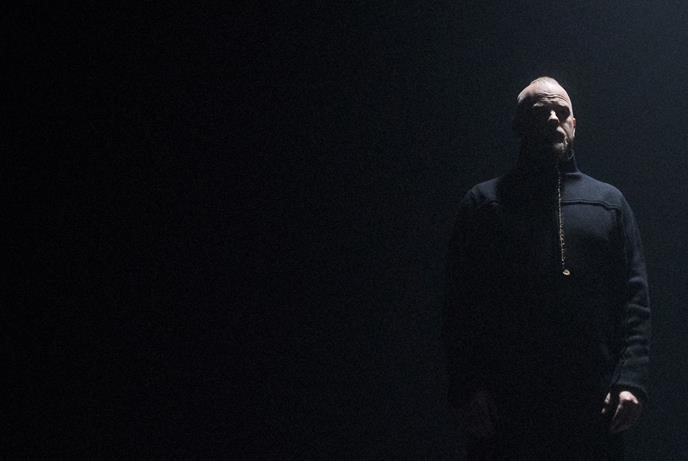
Decline and Fall, a new Dark Wave project from Portugal formed by Armando Teixeira, Hugo Santos and Ricardo S. Amorim, today share a new track off their forthcoming debut EP Gloom, which is set to be released on May 3rd via Bleak Recordings.

Armando Teixeira has a long and multifaceted career and is considered one of the pioneers of EBM and Industrial in Portugal, through projects such as Ik Mux, which began in 1986, and Bizarra Locomotiva, which he founded in 1993 and remained the main creative force until he left a decade later. With a vast and award-winning body of work as a composer, whether in Boris Ex-Machina, Knok Knok, Da Weasel, Bullet or Balla, which has been the artistic incarnation he has nurtured for the longest time, he also has a prolific career as a record producer.

Ricardo S. Amorim is the author of the books Culto Eléctrico and Wolves Who Were Men-The History of Moonspell, and met Armando Teixeira in 2015 for an article about Bestiário, the second full-length by Bizarra Locomotiva, released in 1998. When they met again years later, in conversations about music and records that influenced them, Armando Teixeira’s desire to return to his roots was awakened, composing in a way that brought to the surface what would be his primary influences, from post-punk to new wave, through industrial, but with a necessarily more evolved experience and artistic maturity, as well as access to completely different tools from those he had when he started out in the 80s, and a technical and theoretical knowledge that has never stopped growing.

Wanting to surround himself with people who shared this vision, Hugo Santos, from Process of Guilt, which, over the last 20 years, has explored heaviness and rhythmic intensity, punishingly repetitive and cathartic, as a privileged form of expression. Common tastes and influences are discovered, records are shared that have influenced all three or that are new discoveries for one or the other, inspiration grows and the seed that gives rise to Decline and Fall germinates.

Listen to ‘Undone’ here:

AA

a3013843323_10

EYE – the new band from Mammoth Weed Wizard Bastard (MWWB) singer-songwriter/musician Jessica Ball – recently announced the arrival of their eagerly awaited debut album, Dark Light set for release on 26th April via New Heavy Sounds (Shooting Daggers, MWWB, Blacklab).

Dark Light is an intensely atmospheric fusion of emotionally charged songcraft and inspired sonic energy. The clue is in the album’s paradoxical title. Chilling and even bleak melodies with arrangements daringly and deliberately stripped down and minimal. Revealing a kinship with sonic bed-fellows Mazzy Star, Chelsea Wolfe or even Portishead, which can be heard on first single ‘In Your Night’. Jessica comments,

“Our first release ‘In Your Night’ represents Eye musically, conceptually and lyrically and I’m proud for this to be the first song that everyone hears from us… Light and dark, night and day, quiet and loud is the running theme throughout this song and album as a whole. Whether you’re up close to a song, or listening to the album as a whole, these themes will be ever present throughout. We’re playing around with these two extremes sonically and what these represent emotionally and mentally. I feel that nothing takes you on a journey more effectively than a good build up, or something happening unexpectedly, much like real life. We are just the eye that witnesses it all.”

Watch the video for ‘In Your Night’ here:

A A

EYEEE

Amidst Wardruna’s songwriting hibernation, the group resurface to offer a taste of their next album with the single release and music video for the song ‘Hertan’ on 5th April.

About the new single Einar comments: “’Hertan’ is the proto-Scandinavian word for ‘heart’ and that is exactly what we explore in this in this song and film. The duality of the heart with the rhythm, flow and pulse we can see, hear, and feel in nature and in all forms of life – and the more abstract idea of the heart, The rudder on the ship of emotions, our decisions, and our true desires.”

Once again, Wardruna teamed up with Finnish director and photographer Tuukka Koski for the video production of Hertan. Koski has previously directed Wardruna´s videos for ‘Raido’, ‘Voluspá’, and ‘Grá’. This time, the production mainly took place during some freezing nights in northern Finland at the island of Hailouto.

“It is always a true pleasure to create art with Tuukka and his colleagues at Breakfast Helsinki! His experience and eye for detail as well as the ability to always conjure up next-level material, is very inspiring to be part of. Three days, three locations, no sleep but a lot of heart. This is how it went down. Hope you will enjoy the result!” – Einar Selvi

You can see the result here:

WARDRUNA

Photo credit: Tuukka Koski

Karlrecords – 21st January 2024

Christopher Nosnibor

Reinhold Friedl’s career has been long and interesting, and continues to be so. The list of collaborations on his resumé is beyond outstanding, and he has taken the concept of the prepared piano, as first conceived by John Cage, to limits beyond imagination. As such, while the idea may not have been his own, Friedl’s advancement over the last twenty years has been the definition of innovation. But what makes Friedl such a remarkable figure is his capacity to explore so many different and divergent avenues, and to turn his hand to so many different projects – and this latest, with Martin Siewert is exemplary. Siewert’s instrument is the guitar, but his style of playing is far from conventional, tending to conjure atmosphere from feedback and sustain and otherwise working the space between the notes instead of blasting chords. As such, this is an inspired pairing.

Lichtung blasts in with a thick, heavy, grindy drone that almost borders on Sunn O)) territory: the twenty-four-minute first track, ‘Genese’ is a journey, which begins with an all-out assault of thick, gut-twisting drone and shards of shrieking feedback which twist into a maelstrom of chaos before receding to reveal altogether more tranquil shores. From this, it builds, a droning, churning wash, buzzing drones and dramatic crashes. And from the rising tempest, lone piano notes rise… These particular notes are identifiable as a regular piano, rather than a ‘prepared’ one – but that’s the nature of the tweaked instrument: random items on the strings create random sounds. It’s a curious array of sounds, and over the course of the track, the sound rises and falls, ebbs and flows, but the water is always choppy, the storm building and rumbling before it rages its full force. ‘Genese’ feels like it could be an album in its own right, but there’s a whole lot more to come.

‘Gedstade’ is a mere interlude at five minutes in duration: with plinking, plonking random twangs and scrapes and woozy drones, not to mention extraneous noise and crashes and more, it’s strong on atmosphere and oddness.

Often when interacting with music, or when critiquing music – and these are two different, if quite proximate experiences – I will ask myself, or otherwise consider, ‘how does this make me feel?’ Because ultimately, music, like any art, is about the experience of the recipient, and that experience defines its success and / or impact. To expand on that, and to clarify, many may dislike and so decry a great work of art on account of their singular experience, because it’s difficult to rationalise or otherwise quantify said work. As a critic, to baldly declare ‘they’re wrong’ would be a mistaken and to devalue the experience of others. But if others share a very different experience… then that is their experience.

And so we arrive at ‘Gestitche’, the album’s third and final track, a fifteen minute exploratory work which begins with crashes of low-end piano which sound like thunder and shake the ground beneath this exploratory composition. It’s heavy, doomy, dolorous. The scratchy, discordant guitar work only accentuated the album’s immensely broad sonic range. Squalling squealing guitar ruckus and feedback riot tears its way through the tempest of noise and plunging piano and sputtering sparks of wires. As the track progresses, things evolve and escalate, the thunder builds to a tempest, and at times you feel thoroughly assailed.

To my ears, then, Lichtungis a compelling experience. Lichtung is unquestionably niche, like all of Friedl’s but that in no way diminishes its value. And the joy of Friedl’s work is its variety, and the way in which he interacts with his collaborators. To this end, this album is a work which brings joy.

AA
a1344738009_10

1st December 2023

Christopher Nosnibor

My introduction to West Wickhams was the day their debut single ‘He’s Acquired a New Face’ crashed my inbox in the Autumn of 2019. Something about it absolutely gripped me. Something about it was strange and different. And of course, it’s no longer available anywhere. But it was the only thing they had out at the time, and for various reasons, I didn’t get wind of subsequent releases, the first of which arrived almost a year later, and now it turns out I’ve got some catching up to do, as it turns out they’ve knocked out not one, but two five-track EPs since June 2022. But first, Vivre Sa Vie. A nine track EP!!!

Admittedly, when most of the tracks are around two to two-and-a-half minutes in length, it’s definitely got an EP running time, and would easily fit on a 10” record, but still.

It’s a joy to discover that while the songwriting has evolved and expanded, they’re still magnificently idiosyncratic, and still revel in every layer of echo and reverb going. ‘I am Sparkling Cyanide’ is a mid-tempo shimmery tune that’s almost poppy, bringing together early 80s synth pop with a dash of The Jesus and Mary Chain, all spun through a shoegaze filter. But ‘The Maddening Crowd’ is a piston-pumping blast of fucked-up psychedelic surf rock with an agitated bassline and relentless cheapy drum machine creating a rigid spine, over which even cheaper synth notes tinkle and twinkle.

With its nagging bassline and monotonous programmed beat ‘Carla Suspiria’ plunges into haunting early 80s goth territory, its heavy atmospherics reminiscent of early Danse Society. The vocals – like the guitar – are almost lost in a cavernous reverb. The atmosphere gets darker still on ‘I’m Spinning I’m Spinning’: the fat bass sound is pure Cure and listening to it feels like floating in space – detached, disorientated, out of body.

‘At the Cinema’ transforms the mundane into a heightened emotional experience, channelling Joy Division all the way, even down to the sounds of breaking glass.

The large number of tracks is by no means an indication that they’ve just bunged everything on there just because they’ve got it: Vivre Sa Vie is quality all the way, and they’ve utilised the space afforded by the longer format to structure the sequence in a way that feels like there’s a flow and a certain linearity, punctuating the really bleak gloomers with the poppier efforts.

The final track, ‘Damned Defiant!’ crashes in on a barrage of beefy percussion countered by chiming synths, and it’s a total assimilation of The Cure’s catalogue, and it’s rendered so magically, and in the space of two minutes and nine seconds that it can only be described as doomy goth-pop perfection.

AA

a2127070247_10

15th December 2023

Christopher Nosnibor

Glasgow Duo Empty Machines promise a blend of post punk, shoegaze, and indie synth rock, and ‘Velvet Sky’ is an expansive, atmospheric tune, layers of vocals floating in a swirl of textures synths and guitars submerged in effects. Reflective, contemplative, there are some bold dynamics here as they take things down to allow level before surging back. The blurry, saturated, shadowy but dazzlingly bright video perfectly encapsulates the mood here – one which is centred around a range of conflicting sensations and uncertain emotions. You feel a certain sense of bewilderment, as if being transported by invisible forces, both physically and psychologically.

It’s the vocals which carry the melody through a tidal wave of dense instrumentation, and with the drums low in the mix in comparison to this cinematic instrumental maelstrom, there’s a sense of volume, of sonic force to this dreamy but powerful single, as soft and smooth as velvet, but as dense as diamond.

AA

398690273_17873728037990162_7432350919056172319_n

Totnes-scene post-rock/post-punk band Abrasive Trees, who have become regular features on the pages of Aural Aggravation, have announced the premiere of their latest work, ‘Mill Session’ – a short film featuring new songs, interview material and spellbinding visual art, all filmed within an ancient mill.

The five-piece, which includes Matthew Rochford and Ben Roberts from Bella Union project Silver Moth worked with a team of local professionals and producer Pete Fletcher from the Isle of Lewis to produce the 20-minute video which features two unreleased tracks ‘Star Sapphire’ and ‘Tao To Earth’.

As well as the new music there’s also a live version of the previously released ‘Kali Sends Sunflowers’ and interview material sprinkled through the film – guided by music journalist Andy Hill.

458d674aeca54d1ed10d55194a910dcd21d5b260

AA
Visual artist Jess Wooller’s work has also been used throughout to produce a solid document of the band’s current creative direction. Filmed in a centuries-old mill in Totnes, the video was crowd-funded by fans of the band from several countries including Scotland, France, Belgium, and Germany.

Matthew said of the film: “We’d aspired to create this film after meeting earlier this year to discuss what we could and couldn’t do – given our commitments to all of our other creative projects. We had considered going into a recording studio but decided to do something completely different and release some of our new material in this way. Somehow it all came together with the right people at the right time and the right place. We received financial and practical backing from the Abrasive Trees community – so it’s a genuinely crowdfunded project”.

It’s an ambitious project from a musically ambitious band, and you can watch it here:

AA

d1fcb641d8b79e6d6a9e53624774b837ad93cc6a

18th November 2023

Christopher Nosnibor

As my sweep-up of singles released a few weeks back but still in the later stages of 2023 continues, we come to John X Belmonte’s ‘Under the Stars of Andromeda’. The New Yorker has been slipping out slabs of dark alternative pop since 2020, and has maintained a fairly steady output these last three years. Citing David Bowie, Depeche Mode and Kate Bush as influences, he promises ‘Haunting atmospheres, beautiful melodies, driving rhythms, and rich sonorous vocals [which] draw the listener into his musical dream world.’

With perhaps the exception of Depeche Mode from Black Celebration and later, these touchstones don’t really convey just how gothy Belmonte’s work is. ‘Under the Stars of Andromeda’ is a dark, stark electro cut that pulsates and has all the ingredients of the kind of electrogoth which started coming through in the mid 90s. There are chilly layers of synth which drift and hang like a freezing fog to conjure murky atmosphere, and as the track evolves, it feels that we’ve left earth and are being carried through clouds of dust particles, floating free of any gravitational pull, and a thumping techno beat cuts in and takes things stratospheric.

It’s the vocal which really defines the sound, and the genre leanings, too: Belmonte’s baritone croon is theatrical, taking obvious cues from Andrew Eldritch and Peter Murphy, and it’s subject to heavy processing and compression, meaning that while it sits tightly within, rather than above the music, in terms of not only mix but tonal range, it feels detached, dehumanised. It’s effective, in that it sounds menacing, and sends a shiver down your spine, as you wonder just what he has in mind when he says ‘we’ll find a better place.’

The synth sounds may be trancey and expansive, but clocking in at four minutes, ‘Under the Stars of Andromeda’ is neat and compact, structurally, and the production is faultless.

AA

Bel

Cruel Nature Recordings – 24th November 2023

Christopher Nosnibor

The brief accompanying biography tells us that ‘Look To The North is the ‘dronefolk’ duo comprising David Colohan (United Bible Studies, Raising Holy Sparks) and Zachary Corsa (Nonconnah, Lost Trail)’, and that ‘Recorded in 2021, A Shadow Homeland is 4 tracks of atmospheric other-worldly introspection; melancholic ambience interspersed with sparse piano, spoken word and field-recordings, creating an immersive transcendental twilit experience.

We’re immediately in with what initially sounds like some form of narrative, and joining as we do seemingly in the middle of it, it’s difficult to orientate oneself in terms of context. Soon, soft droning tones drift in like mist and rings out heraldic over the hills and draping the woodlands with string-like sounds amidst images of clouds and nature, interlaced with spiritual abstractions rich in poeticism, but their meanings obscure. The title of this first composition, ‘Disintegrating Consoles And Cartridges’, has a ‘found sound’ connotation, a suggestion of decaying histories and lost origins, and in time, distant voices mutter almost imperceptibly while piano notes roll in and out. Increasingly I find sparse piano notes which are allowed to resonate conjure the saddest and most bereft of emotional sensations, and by the end of eight minutes, I find myself feeling empty, heavy of heart, and pining for something lost – something I can’t quite recall beyond a vague sensation, like the occasional pang of pining for childhood or people and places left long behind, the melancholia of hazy reminiscences which creep at the fringes of a fugue-like memory.

‘The Water That Shattered Their Image’ feels darker at the start, Not necessarily ominous, but there are grainy textures scratching lower in the layers of sound, elongated whisps and broad sonic washes, and they bring a certain discordance and discomfiture. Human voices mingle into wolf-like howls, baying, crazed, before growing hushed, as if in anticipation of the album’s dominating finale, the seventeen-and-a-half-minute ‘An Amulet For The Flux Of Blood’. Here, the piano is very much the central instrument, but surrounded by layers of organ and organic-sounding drones. These sounds coalesce to create a haunting yet smoothly tranquil atmosphere.

To suggest that it seems to share more in common with post-rock than any form of folk is perhaps to pick pedantically at irrelevant details, but I mention this because these genre distinctions have a tendency to set certain expectations. But as elegiac pastoral works, infused with subtle elements of collaging and experimentation, the pieces which make up A Shadow Homeland certainly don’t disappoint, and indeed, confound any expectations one may have. Mood-wise, I’m left feeling uncertain; neither uplifted now downcast, but somewhere in a strange place and a sensation of something missing. It’s neither pleasant nor unpleasant, but remarkable that such understated instrumental works can resonate in such a deep and complex way.

AA

a0117392340_10

Dret Skivor – 1st December 2023

Christopher Nosnibor

Yes, that’s fjord, not fox, meaning you won’t find these collaborating sound artists bouncing around the woods dressed as furry animals, making daft, random sounds. Well, you won’t find them bouncing around the woods dressed as furry animals, anyway, although Dave Procter did spend many years performing while wearing a latex pig’s head, but he put a stop to that after David Cameron started turning up at his shows.

This latest collaboration between Martin Palmer and Dave Procter is, in fact, inspired by the site of previous experimental audio tests in 2019, namely the sculpture “what does the fjord say?” in Trondheim harbour. As they tell it in the accompanying notes, ‘Armed with percussive sticks, contact microphones, audio recorders and the occasional toy and synth, they set about a full exploration of the sculpture and their own sonic ideas in and around the sculpture, using created and environmental sounds to answer the question posed by the sculpture. These recordings are Palmer and Procter’s replies.’

The first reply ‘støyende arbeider’ is more of a lecture than a simple reply, with a running time of twenty-one minutes. Consisting of random clatters, crashes, squidges, squelches and shifting hums which ebb and flow amongst an array of incidental intrusions, it’s more of a non-linear rambling explication, and exploration of the rarely-explored recesses of the mind than a cogent conclusion. But then, why should a reply necessarily be an answer. This, then, is a dialogue, a discussion, not an interview constructed around a Q&A format. It’s nothing so formal, and all the more interesting for its being open-ended, evolving organically. There are points at which the thuds, clanks and scrapes grow in their intensity, creating a sense of frustration, as if attempting to unravel a most complex conundrum and finding oneself stuck and annoyed by the fact that there is something just out of reach, something you can’t quite recall. And at times, this is also the listener’s experience. The way to approach this is by giving up on the expectation or hope of coherence, or anything resembling a tune, and yield to the spirit of experimentalism.

‘Moose Cavalry’ and ‘Mock Paloma’ are both significantly shorter pieces, the former being atmospheric and evocative, the animalistic calls conjuring images of beats roaming moorlands in the mist. Plaintive, droning moans and lows transmogrify into warped, pained cries and needling drones. The latter is different again: dark, tense, shrill tones scratch and scrape, flit and fly, reverberating from all directions. It’s unsettling, uncomfortable.

These three compositions are so different from one another, it superficially makes for a somewhat disjointed set, but on deeper reflection, what Palmer and Procter have forged a work which demonstrates how it’s possible, and even desirable, to approach a subject from multiple angles and perspectives. I still don’t know what the fjord says, but I do know that Palmer and Procter have posed some interesting musings in response.

AA

a3551752136_10