Posts Tagged ‘anguish’

Fysisk Format – 12th December 2025

Christopher Nosnibor

I’m not being flippant or facetious when I say that we don’t contemplate or discuss death nearly enough. It’s only natural that we – all of us – are scared by the prospect, be it of losing a loved one, or one’s own demise. The concept of no longer existing is beyond comprehension. No-one has ever reported back on what happens afterwards, although the notion of an afterlife is at the core of many faiths and belief systems, and people believe because it gives hope. the alternative, being a definitive end followed by absolutely nothing, is almost too much to bear. And so the tendency is to bury heads in the sand – metaphorically – and to assume – especially in youth – that we’re immortal.

But we are not. I myself began to feel an awareness of death in my youth, quite inexplicably. On reaching twenty-five, I became obsessed with the fact I had attained a quarter of a century and the sheer pace of the passage of time. Since then, I have lost all of my grandparents, an uncle, several friends I was at school with, and my wife. I write this simply as a matter of fact: death is one of the few facts of life, but one we seem programmed to deny the very existence of, let alone its proximity. I see so often, comments on the deaths of people in their sixties, seventies, even eighties, that they were ‘no age’ or ‘taken too soon’. This is outright denial. We consider people in their sixties to be ‘middle aged’. They’re only middle-aged if they’re going to live to a hundred end twenty: for most of us – and again, it’s uncomfortable to accept it – but 37-40 is middle aged.

So, they may be young – still in their early twenties – but Norwegian quartet Fanatisme, who ‘channel the lunatic, forest-worshipping spirit of early Ulver and Darkthrone, merging it with the gothic pulse of Christian Death and The Cure’ are presenting on their debut album ‘a fiercely individual rush of post-punk-infused black metal, a spine-chilling celebration of humanity, the beauty of life, and the inevitability of death.’

And this is interesting: a lot of goth and metal hangs its mood on the death thing, to the extent that death is often romanticised, but without really taking a grip on the reality. On Tro, håp og kjærlighet, Fanatisme explore a vast sonic and emotional range, which seems befitting of the topic. Not that I can comprehend the lyrics: even if they were sung in English, this would be an absolutely impenetrable snarl. But you get the sentiment and the sheer force of Tro, håp og kjærlighet, which is at times rabid.

The first piece, ‘Stannhetens Slor’ is clearly designed as an intro, standing at under three minutes, and it’s a soft, drifting ambient work for the most part – but near the end, it builds and swells and culminates in an anguished scream of treble, a drone that grows to a howl. And then the guitars happen: ‘Nordens Eteriske Sommer’ slams in, a quintessential black metal blast of raw-throated vocals howling in a tempest of squalling sludgy guitars and a ragged, shamelessly underproduced rhythm section. ‘Kjrlightetsbrev til Vren’ actually sees the band find a rare groove, albeit punctuated by rabid, rasping vocals, while ‘Manetroket’ is a full-fat, heavyweight trudger of a riff monster.

Despite the complete impenetrability of the lyrics, this is an album that has impact and has a certain resonance. And it works. I wouldn’t recommend listening to this on your deathbed, but I do recommend listening. The last song finds them really hitting the spot, and hard. ‘Livet r en dans p Posens Tornet’ is one of those colossal epis that impossible to deny. The guitars race hard and fast a streaming metal churn of energy which rushes forward, its urgency dominating the whole blistering maelstrom, bringing an expansive, and heavyweight album to a racing climax. And whatever is lost in translation here, Tro, håp og kjærlighet is a high-impact release.

AA

347698

Sacred Bones – 23rd August 2024

Christopher Nosnibor

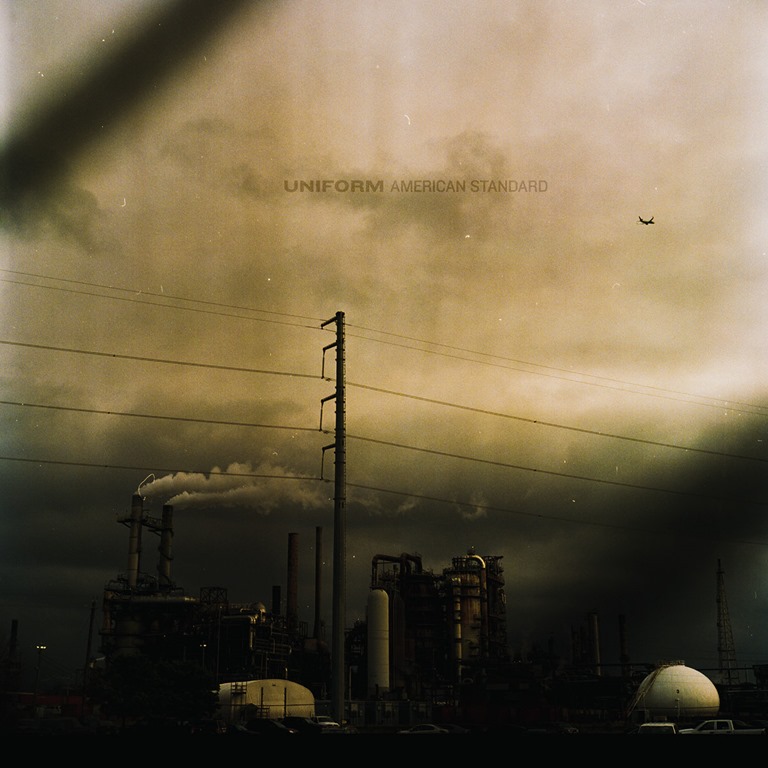
You know that when the bio for an album’s release is prefaced by a trigger warning, this is going to be some pretty powerful stuff. But this being a Uniform album, it almost goes without saying. Since their inception, they have gone all-out on every level, with the harshest noise providing the backdrop while Michael Berdan strips his skin to make the most brutal, unbridled, rawest expositions of the human condition, invariably born out of his own personal traumas.

I’ve often wheeled out the line that in the personal lies the universal, and even where there’s no direct correlation in terms of shared experience, the articulation of extreme emotions often provides a vessel whereby the outpouring of an individual’s catharsis offers a chalice into which others may pour the flow of their own emotional stigmata. If the metaphor seems a shade overwrought, bear with me.

Uniform is, unquestionably, a vehicle through which Berden vents endless pain and anguish. He’s a troubled person, and he’s open about this, to the extent that it’s more than just a but uncomfortable. But this isn’t some kind of trauma porn ride: the appeal of Uniform is this raw honesty, the absence of filter. You know – and feel – this is real. It’s not a case of manipulating the listener’s emotions, but an example of creativity as a vital outlet, a survival mechanism, even. It doesn’t exist for anyone’s entertainment. And with each release, Uniform, seem to find new heights of intensity, and new levels of sonic brutality, while dredging new emotional depths.

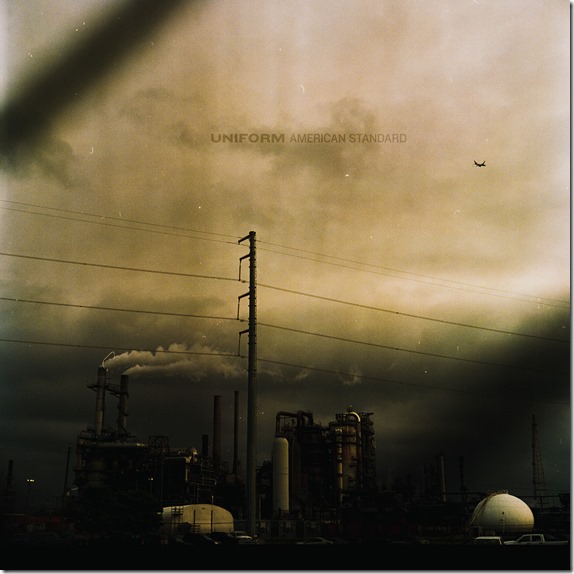
Shame felt like a gut-wrenching pinnacle which would be difficult, if not impossible, to surpass – but then, so did The Long Walk. In this context, it should come as only small surprise that American Standard goes even harder and harsher, but the simple fact is it would hardly seem possible. But here we are.

In the run-up to the release, Berden has spoken / written openly and in detail about his struggles with bulimia, and the fact that over many years of managing alcoholism and having come to a point whereby this is no longer a taboo topic, breaking down this particular wall has felt altogether harder.

Even the preceding singles, ‘Permanent Embrace’ and ‘This is Not a Prayer’, could not have provided anything like adequate forewarning of the intensity of the album as a whole.

I shall quote, while I take a moment and steel myself for this:

“The following songs are about a lifetime of making myself vomit,” Berdan writes in the personal essay that accompanies the album. His pain is so apparent, so immediate, that it feels like hearing someone scream for the very first time. “There’s meat on my face, that hangs off my face, sweats like I sweat, cries like I cry.” The music finally begins with those words, not in a glorious crash and clatter but in the tones of a gurgling drain. This is the sound of liquid moving through pipes that are full to the point of bursting with things usually hidden inside of stomachs and behind mental walls.

It all starts with an admission. Beneath the harrowing screams, there’s the pain of bulimia nervosa. There’s the pain of a sickness that is as physical as it is psychological. This is a kind of coming out. This is a kind of emergence. A far cry from edgy provocation or high school level transgression, this is something truly unacceptable.

As one might fear, this is just the beginning. As Don Delillo once wrote, “There are stories within stories.”

American Standard contains only four tracks, but the first, the title track, is fully twenty-one minutes long is the definition of harrowing. It’s a massive departure, in that with perhaps the exception of their 2015 debut, their compositions have conformed to the fairly defined structures, often with verse and chorus structures built around chord sequences and the arrangement of the percussion.

After an intro that can only be described as a scream of pain, ‘American Standard’ lurches into life as a churning throb of noise, and Berden’s bonne-rattling roar is only just audible amidst the pulverising fizz. When the power chords kick in, they’re like a full-on slam to the guts. Around the nine-minute mark, some keys enter the mix and there’s almost a redemptive tone, at least in the music, but Berden’s vocals continue to articulate the upper reaches of anguish. This is a different kind of purging from the subject matter – a flaying, emotional purging, a release of all of the years of torture and self-flagellation, distilled to the highest potency. It’s the barely human sound of breaking, breaking, emptying, over and over. The lyrics may not be easy to decipher, but the excruciating pain Berden articulates in their delivery is unmistakeable as he howls his larynx to bleeding shreds amidst a thunderous cacophony worthy of Swans live performances. If it’s not the heaviest shit you’ve heard all year… well. Just making it to the end of the title track is a thoroughly draining experience that leaves you feeling utterly spent.

The pounding machine-gun drumming, squalling, atonal synths and booming bass blasts of ‘This is Not a Prayer’ offer no respite, the layers of vocals, all screaming in pain, is beyond punishing: you feel your chest tightening and breath growing shorter with each intake, your throat clenching. The sheer physicality of the piece – which they sustain for a relentless six and a half minutes – is a panic attack in a can.

If the introduction to ‘Clemency’ swirls into ambience, it’s a bilious, nauseating brew of sulphur and fumes that festers just long enough to unsettle before the hardest percussion and the dirtiest guitars lurch in and everything becomes intensely claustrophobic. Again, there’s no oxygen, you’re constructed by the density and sheer relentlessness of it all. And it slams away like a lump hammer for almost eight minutes. The arrival of ‘Permanent Embrace’ feels like relief, of only for its brevity. There are some uplifting synths in the mix, but it’s the most savage finale they could have mustered.

The last time a record affected me this intensely in a physical way was over thirty years ago, when at the age of fifteen or thereabouts, having been introduced to Swans by way of Children of God, I picked up a copy of Cop at a record fair. I found it hard to conceive the record was actually revolving at 33rpm: it felt more like three, as time stood still and I felt my body being compressed by its crushing weight.

American Standard is certainly anything but standard. It goes beyond – way beyond – harrowing, or heavy, in any sense that words can easily convey. It’s the hardest listen. It simply hurts. But you know that this was the album they had to make. Forget your discomfort, and feel the pain.

AA
a2313479398_10

Tartarus Records – 26th April 2026

Christopher Nosnibor

The mood which pervades all life right now, feels pretty bleak. It’s not only that turning on the news brings endless darkness, with endless reports of multiple wars and families around the globe, but it feels as if a cloud has descended over all existence for all but the mega-wealthy who are living it large, laughing their way around the globe on cruises and in private jets in the knowledge that they’ll be gone and interred in spectacular mausoleums or at least having secured their notes in history and with extensive entries on Wikipedia. My daughter, who’s twelve, and loves retailing me with facts, told me just last night that based on current consumption, oil supplies will be exhausted when she reaches the age of fifty-six. “I don’t want to live til I’m fifty-six,” she said. It wasn’t spoken with an air of pessimism of gloom, but a statement grounded in an acceptance of the hell that the future holds.

It’s in this context that we arrive at III, by extreme experimental duo All Are to Return, who preface their new album with the commentary that ‘We have entered a new age of extinction – of poisoned lands, habitat destruction and encompassing climate catastrophe. AATR III reflects the harshness of life laid bare to the vagaries of capital, of uncaring generations heaping misery on their successors and the life-forms with which they share a fragile biosphere.’

Something I find bewildering is that in the nineties, environmental issues were pretty niche, as was being vegetarian – you’d be hard-pressed to find vegetarian cheese or yucky TVP on the high street, and would only be able to score some half-edible veggie sausages in Holland and Barrett or some crustie hippie shop down some side-street. Now, this is mainstream, and yet still politicians back big businesses who push fracking and deforestation and place profits ahead of what most refer to as ‘sustainability’, but is, ultimately, in reality, ‘survival’.

Perhaps I digress a little, but feel it’s relevant before returning to the pitch which explains how ‘The album’s unmitigated brutality of sound and expression are mediation of these concurrent events. Colossal noise-scapes are shaped with pulsing synth patterns, shredding percussion and vocals that are screams from the void. As a whole, the many-layered compositions carry massive assaults on the senses and a rage unhuman.’

The first few seconds alone are an all-out sonic assault, a blast of harsh static noise, a howling white noise blizzard which hurts. And from thereon in, it only gets harsher, an obliterative wall of noise that goes full Merzbow in no time. It shivers and trembles, grates and vibrates, everything overloading, eardrum-shredding, abrasive, aggressive, snarling, gnarly.

Not everyone ‘gets’ noise: to many, it is just ‘noise’. But noise is a vehicle which provides a unique catharsis, a means of channelling rage which cannot be conveyed in words alone. There are vocals on III, but they’re the sound of demonic torture in a sea of flame.

Thunderous, speaker crackling distortion overloads, and the vocals are butt demented, demonic shrieks buried amidst a skin-stripping nuclear blast. Every track is harsher and louder and denser than the last – and it’s the perfect soundtrack to the world right now. It would equally be a perfect soundtrack to Threads, being pure white-noise, blinding apocalypse in sound.

‘Drift’ is entirely representative: a solid wall of noise, harder and heavier than a slab of concrete – and it is the perfect encapsulation of the rage of life in the now. I sat down to listen to this as Iran rained missiles down on Israel in retaliation for the bombing of their embassy in Syria… Israel immediately vowed to return fire. Gaza has been levelled. We’ve just endured the wettest – and warmest – February and March on record here in the UK and half the country is under water, and many places received the entire rainfall for April in the first week, since when we’ve had more frosts than in the previous two months. Around the globe, wars rage and famine is rife, and frankly, everything is fucked. To think otherwise is delusional. Legacy? It’s clear what the legacy of the 21st Century will be, and ‘Legacy’ encapsulates that perfectly.

All Are to Return articulate their anguish at this fucked-up state of affairs by the medium of the harshest of noise. And it makes perfect sense. III isn’t quite Harsh Noise Wall, but it is fucking brutal. ‘Archive of the Sky’ is nothing short of devastating.

III hurts. It rakes at your guts, it rains heavy blows from every angle. It rapes your ears and pounds your cranium, it thumps your ribs and slays your sense. Every second is a sonic detonation, a devastation annihilation, a squall, a wall, an explosive blast, the sound of the world caving in, the sound of the absolute end. You want to hear the sound of the apocalypse? Listen to this, and live through the end of the world. It’s coming, and sooner than you care to contemplate.

AA

AATR III Artwork

Transcending Obscurity Records – 19th January 2024

Christopher Nosnibor

Every day, every week, the world descends further into a pit of shit of human making. I feel as if I’m continually circling back to this same premise to frame almost every discussion, not just when writing about music, but any conversation I have about pretty much anything. The sad fact is that there is simply no escaping the fact that it’s not just me personally, but the whole of our existence which hangs under a cloud of gloom.

Only this afternoon, my mother texted me in her usual cack-handed typo-filled fashion bemoaning the succession of storms which has battered the country this week, commenting on how she can’t get over it and asking what we’ve done to deserve such crap weather. I simply couldn’t face pointing out that things have been heading in a bad direction since the industrial revolution and that we’re pretty much driven off a cliff at full speed in the last fifty years thanks to capitalism, and what we’ve done to deserve is fucked the planet with greed. She probably wasn’t really looking for an explanation, and likely wouldn’t have appreciated or even understood if I’d given one. Meanwhile, wars are raging around the globe, and escalating on a daily basis. And because we don’t have quite enough death and destruction, the state of Alabama has seen fit to pilot slow and painful executions by nitrogen gas. What the fuck is wrong with the world? And is it any wonder we’re experiencing a massive mental health crisis?

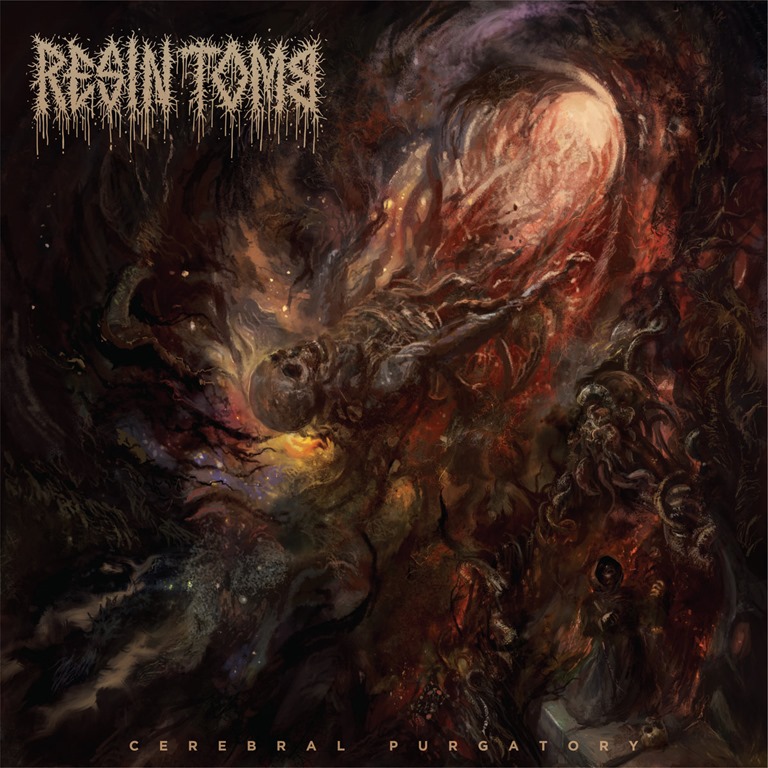
In the face of all of this, you do what you can to get by, and while many will advocate meditation and calming music as an alternative, or supplement, to medication, catharsis can also provide a much-needed means of release. And after releasing a couple of well-received EPs, Australian band Resin Tomb have dropped their debut album, Cerebral Purgatory. It’s a title which pretty much encapsulates the condition of living under the conditions I’ve outlined above – and purgatory is the word, because there is no escape and it feels neverending. The first track, ‘Dysphoria’ perfectly articulates the existential anguish of life in these troubled times. Again, the title is spot on: I frequently see – and have likely made my own – mentions of how we are seemingly living in an amalgamation of every dystopia ever imagined. But what is the psychological response to this? Dysphoria: ‘a profound state of unease or dissatisfaction’, the antonym of euphoria. Much as I do sometimes feel like cheering humanity to the finish line in the race toward self-extinction, for the most part, I feel not simply gloomy or pessimistic, but a deep sense of anguish and anxiety, not to mention powerlessness. And I am by no means alone – although it’s more apparent from time spent on line than conversations with friends, family, or colleagues, perhaps because people tend to shy away from heavy topics for the most part, and instead prefer to shoot the breeze about the weather. But ‘Dysphoria’ is a brief, brutal blast, gnarly mess of difficult emotions articulated through the medium of full-throttle guitar noise and vocals spat venomously in a powerful purge.

As their bio puts it, ‘They’ve forged their own sound which is a remarkably cohesive mix of dissonant death metal, gravelly grind and somehow even thick, blackened sludge.’ And yes, yes they have. And it’s a dense, powerful, racket they blast out. There’s little point in drawing on references or comparisons: there are simply too many, and they all tumble over one another in this cacophony of monstrous metal noise, a flaming tempest of gut-ripping heaviosity.

‘Flesh Brock’ packs tempo changes and transitions galore, packing more into three minutes and eight seconds than seems feasible. And in packing it all in, the density reaches a critical mass which hits with the force of an atomic blast.

Four minutes and twenty seems to be Resin Tomb’s sweet spot, with four of the album’s eight tracks clocking in at precisely that. And when they do condense so much energy and weight into every second, four minutes and twenty seconds affords a lot of room.

The title track comes on with hunts of Melvins, a mess of overloading guitars and a bass so fucking nasty and so forceful it could shatter bones, melding to deliver a colossal bastard of a riff. ‘Human Confetti’ comes on heavier still, pounding away with a pulverising force and playing with elements of discord and dissonance in the picked guitar line – and while the lyrics may be indecipherable, the title alone conjures a gruesome image.

If ‘Purge Fluid’ and ‘Concrete Crypt’ again convey their fundamental essences in the titles alone – and these are absolutely brutal, punishing pieces – the album’s final track, ‘Putrefaction’ absolutely towers over the murky swamp of black metal and grindcore with a dramatic, nagging picked guitar and a cranium-crushing wall of noise. Holy fuck. It hurts. And good. Angry is good, and better to channel that anger into art than knifing people in town on a Friday night. That’s one for another time, perhaps. At this particular moment, we have this – an album so heavy, so violent, it’s an exorcism.

AA

719914

Neurot Recordings – 15th September 2023

Christopher Nosnibor

Once upon a time, way back, I’m confident I read an interview with the artist Francis Bacon which contained the phrase ‘life is pain’. It certainly sounds like one of his brutally bleak and precisely pithy lines, encapsulating his eternally dark world view, but I can’t for the life of me find it anywhere, at least not attributed to Bacon. It’s a phrase which seems to have acquired an online ubiquity to the point that it’s simply something people say now. People say all kinds of nonsense, though. I had a work colleague who would often wheel out the line that ‘pain is weakness leaving the body.’ He was an imbecile, and that’s not how it works or I’d be Hercules by now.

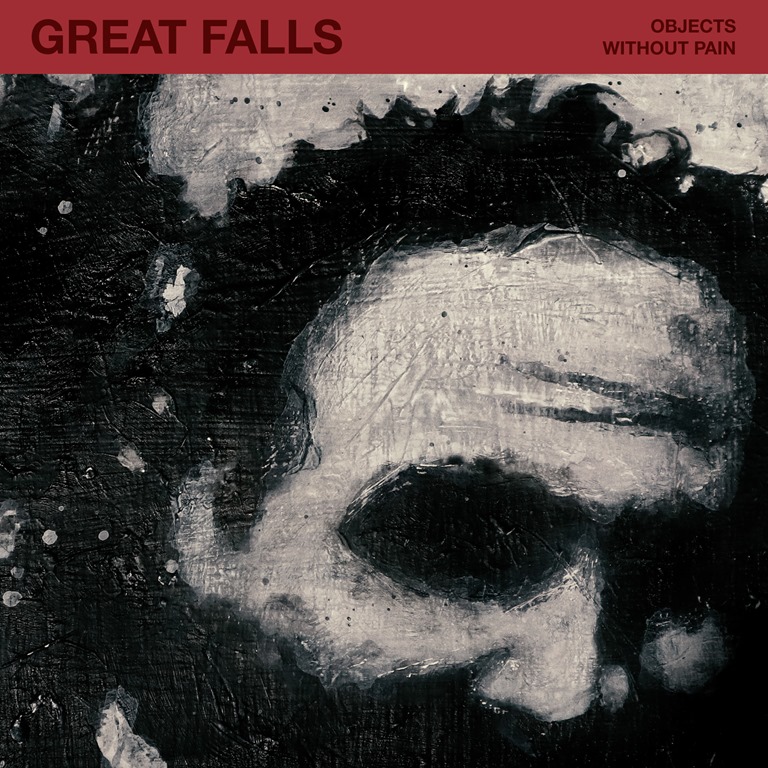
In this context, the concept of objects without pain is almost inconceivable. No pain? Oh, to be inanimate… But as the accompanying notes soon render apparent, Great Falls’ fourth album is a work which plunders a whole world of pain: ‘Objects Without Pain takes us on a bleak, purgative journey through a separation – a snapshot of the turmoil and indecision that occurs after the initial realization of someone’s misery, and before the ultimate decision to end a decades-long partnership. From the foreboding intro riffs of ‘Dragged Home Alive’ to the end of the 13-minute closer ‘Thrown Against The Waves,’ its eight tracks explore the thoughts that come up when a person is staring down the barrel of blowing up their life: How did this happen? Is it too late for a new life? Will the kid be OK? What will make me happier: familiar torment or unknown freedom?’

This is dark, alright. And it’s weighty, but not always in the most obvious sense. Indeed, the nine-minute opener, ‘Dragged Home Alive’ begins with nothing but a clean guitar, strummed scratchily. But then the vocals, a pure howl of anguish, tell us this is not some mellow folksy effort, and from there it builds, and when the bass and drums kick in, it’s nothing short of explosive. The drums are fast, nuanced, dynamic, almost jazzy, while the bass is thick and squirmy, it’s the sound of a snake wrestling to escape the hold of a human, and everything comes together with such fiery force you feel dizzy, whiplashed, battered from every angle – then the second half is almost another song; still slow, still heavy, but with a very different sound and level of energy, and it fucking pummels. This is powerful stuff.

They keep the riffs coming thereafter, too, as they deliver obliterative volume and endless anguish and emotional torment of a failed relationship and its fallout. It’s not pretty or poetic, but the internal monologue and the conflict laid out straight in real-time, churning through questions of blame and sifting through belongings, bald vignettes and depictions of packing, moving.

I spend my day

Searching homes

And I can be

Alone for real

I spend my day

Searching towns

And I can be

Searching alone

And I can be

Searching alone

I can’t do this

It hits hard because it’s so, so raw, so real, so much a real voice, unfiltered and rendered overtly lyrical. And because of this, rather than in spite of, the lyrics are true poetry. The pain is real, and you feel it.

‘Born as an Argument’ is considered, slow, dolorous, but also raw and ragey, and with its double-pedal drumming, it’s heavy-hitting. Even winding down to soft, almost folky vocals to fade, the heavy mood lingers, and then ‘Old Words Worn Thin’ crashes in with lumbering bass and vocals screaming anguish. The bass that crunches is at bowel-level on ‘Ceilings Inch Closer’ is the definition of energy, channelling all of the negativity and conflicting emotions into something so sonically solid the impact is physical.

As a label, Neurot has a knack for finding bands which are ‘like’ Neurosis but different, with Kowloon Walled City recent standouts for their brand of stark, bleak, nihilistic heft, and, on the same pile, Great Falls. Only, while sharing that heavy nihilism and the roaring rage of Unsane, they stand apart from so much of the label roister by virtue of their sheer force and absence of breathing spaces. Breathing is for wimps. Suck it up and plough on. Bathe in the brutality of Great Falls. Absorb the pain, and grow stronger for it.

AA

779849

Human Worth – 15th September 2023

Christopher Nosnibor

It may not be apparent from my review output, bur I am uncomfortably familiar with experiencing torpor. That weight that descends like a cloak and simply loving is as much as you can manage, and in no time, half an hour, an hour has elapsed, and… what? Where does the time go? Where does your life go? For many of us, work eats our lives, as does just doing whatever it takes to keep afloat and on top of things. I will admit to being less familiar with abscission, which I had to look up to find that it’s ‘the shedding of various parts of an organism, such as a plant dropping a leaf, fruit, flower, or seed. In zoology, abscission is the intentional shedding of a body part, such as the shedding of a claw, husk, or the autotomy of a tail to evade a predator,’ according to Wikipedia.

I get the sense from listening to Abscission that this shedding is rather more metaphorical, and that the album is more of a work of catharsis, shedding skins and layers of shit, of unwanted emotions, to feel lighter, to emerge somehow freer, less encumbered by emotional baggage. But this is also something else. More than merely a shedding of dead skin, the experience of listening to Abscission is closer to tearing the skin from your body, the flesh from your bones to escape your corporeal being. Bloody, brutal, unspeakable pain.

On Abscission, Torpor bring the weight, the crushing weight that drags you down at every limb, your spine, your guts, your heart. The first track, ‘Interior Gestures’ is pure leaden punishment. It starts with megalithic raging, guitars like slabs of basalt, the guttural vocals growling and snarling beneath it all, before shifting into a dark yet graceful expanse, and for a moment, you can breathe, and feel a radiant energy. There’s something about slow, heavy music which is, in some instances, uplifting, and Torpor’s gentler passages are truly magnificent, delicate, elegant, even.

‘As Shadows Follow Body’ has a few delicate moments, but for the most part, it’s simply devastating. If the likes of Neurosis and Amenra are perhaps obvious touchstones, where Torpor stand apart is that they make both bands sound like PWL era Kylie. This goes beyond heavy. When everything is churning low and slow, you feel your muscles wilt and body sag. It’s how you perhaps imagine being hit by a truck, or the implosion of a submarine where the intense pressure simply collapses your body. I may be alone or in a very small minority in imagining these things, but sometimes, articulating the experience of particularly intense music requires something of a stretch when it comes to articulation, and most similes and metaphors simply fall a long way short.

I can’t decide – perhaps because my brain is melting – if it’s appropriate or ironic that listening to Torpor should induce torpor. I’m feeling numb, weary, my back and libs ache, likely from spending hours observing bad posture practices during my dayjob before returning to the same position to sift take care of life admin and review submissions. And listening to Abscission only seems to accentuate my aches, because listening to it feels like carrying a heavy load, for miles, in intense heat.

‘Accidei’ locks into a grinding repetition that’s reminiscent of early Swans or Godflesh, and crawls sluggish and sludgishly, before the album’s shortest song, ‘carbon’ ploughs into the depths and tears the ground apart.

‘Island of Abandonment doesn’t so much plunge new depths of heavy, as sound like the real-time death of an underworld god. It does pick up the pace around the midpoint, building to a sustained crescendo that feels like a typhoon. By the end of its enormous eleven-minute assault, I find myself at a loss. I’ve been covering heavy music for a long time, and have spent it developing my descriptive vocabulary. But words fall short, so short, in the face of this. This is another world. Enter it at your peril.

AA

a1160466171_10

Sacred Bones – 19th May 2023

Christopher Nosnibor

It’s been fourteen years since there was new music from Khanate, the experimental doom outfit featuring members of Sunn O))), OLD, and Blind Idiot God. It’s perhaps not surprising that my social media feeds have been bursting with the news of the surprise arrival of their fifth album on digital platforms ahead of a physical release next month– and because it landed from nowhere overnight, you couldn’t say it was eagerly anticipated, but it’s got a lot of people excited.

As you would expect, given the members’ main projects, and the previous Khanate releases, To Be Cruel is an absolute monster, with just three tracks spanning a full hour. You don’t tune in to Khanate for snappy pop tunes.

The first chord hits like an atomic bomb, blasting from the speakers with such force it’s almost enough to floor you, and rising from the sustain, crackling synth notes, then another sonic detonation that’s so hard and loud it hurts. Many of the tones and tropes of To Be Cruel are heavily redolent of the crushing doom drone of Sunn O))), but as the first piece, ‘Like a Poisoned Dog’ abundantly evidences, Khanate are different. This difference may be less apparent to the casual listener, but the stop/start power chords and skewed, sinewy shards of feedback are cut from a different sonic cloth, and if Sunn O))) are renowned for their indebtedness to Earth, there are elements woven in here which seem to owe more to early Swans, and while I wouldn’t necessarily want to speculate on whether the album’s title is some kind of response to Swans’ 2014 album To Be Kind, there is some kind of contextual interface here, in that both acts are pushing parameters within a longform song format.

And then there are the vocals: it’s a good seven minutes before Alan Dubin makes his first contribution: the song takes another swerve, the blistering blast simmers down and as he howls and roars, the feel is a cross between the darkest of mangled metal and brutal hardcore. And his manic screams are powerful and affecting. He sounds troubled, but in a way that conveys the kind of tortured mental suffering that’s common to many: it’s a primal howl of rage ad anguish that we struggle to unleash, and so to hear this is to feel emotions channelled by proxy, and as much as it hurts, it’s a release.

‘It Wants to Fly’ takes it to the next level, presenting almost twenty-two minutes of pain. The guitar is slow, crushing, punishing. What can you say? It hurts. It’s also minimal in arrangement but maximal in volume: this is first-gear BPM, with decimating feedback between the crushing chords. At the same time, it’s doomy and ominous as well as raging, making for a powerful cocktail of weight and raw emotion. There is no question that Khanate bring both.

And so it is that the album’s third and final track, the twenty-minute title track, is twenty minutes of low drone and tortured screaming that sounds like a breakdown captured on tape as Dubin yelps and screams about spiders against a sparse backing of a distant rumble and clanging guitar. ‘Look! In the closet!’ he shrieks in what sounds like abject terror. You dare not look. You don’t even want to hide under the bed: you just want to leave the house. The composition takes its time, it hums and drones, and in time, it hits and it hurts, and in some way you wish you could be Dublin, you want this release to have a channel into the unhinged. But you’re stuck on the outside, an observer to what sounds like either the ultimate catharsis or mental disintegration.

Ground down to nothing beyond and anguished screams and squalling feedback, this is bare bones, the sound of desperation. It isn’t pleasant, and there is simply no room to breathe: this is dark, dense torturous, and it’s exactly what fans have been waiting fourteen years for.

AA

a3411741448_10

Invada Records – 21st April 2023

Christopher Nosnibor

‘Eagerly-awaited’ and ‘hotly-anticipated’ are phrases which are often tossed about with abandon when it comes to albums, but Benefits’ debut really has had a lot of people on the edge of their seats for months, and it’s no wonder the limited vinyl and less limited CD sold out well ahead of the release.

Their rise has been truly meteoric, but if ever a band deserved to be catapulted from nowhere to selling out shows up and down the country, it’s Benefits, who’ve done it all by themselves and on their own terms, garnering rave live reviews and scoring interviews in the NME and The Guardian and, well, pretty much everywhere. They don’t only deserve it because of their DIY ethic: they deserve it because they’re an unassuming bunch of guys from the north of England (which in industry terms is an instant disadvantage), and moreover, they’re fucking incredible. And it’s not hyperbole to say that they are the voice of the revolution. It’s unprecedented for a band this sonically abrasive to rocket into a position of such widespread appreciation, and even more so when they’re not readily pigeonholed.

Attitudinally, they’re punk as fuck, but musically, not so much: while there are elements of hardcore in the shouted sociopolitical lyrics and frenetic drumming, there isn’t a guitar in sight, not anything that remotely sounds like one. They’re certainly not metal. And you can’t dance to their tunes – because ‘tunes’ is a bit of a stretch (although that’s no criticism). If their subject matter and modus operandi share some common ground with Sleaford Mods – disaffected, working class, ranty, sweary – they’re leagues apart stylistically. Whereas the Mods will joince and jockey and nab the listener with a battery of pithy one-liners, Benefits are an all-out assault, ever bar a sucker-punch of anger blasted home on a devastating wall of noise.

A fair few tracks here have previously been released as singles, although several previous singles, including the recent ‘Thump’ are notably absent to make room for previously unreleased songs, and the sequencing of the ten tracks which made the cut is spot on.

The first, ‘Marlboro Hundreds’, is a massive blast of percussion that grabs the listener by the throat with its immediate impact. Reject hate! Question everything! Success is subjective! The messages may be simple, but they’re essential, positive, and delivered with sincerity and all the fire that cuts through the bullshit and mediocrity. The grinding electronics take a back seat against the drumming, and the vocals are quite low in the mix, but with a clearly enunciated delivery and a crisp EQ they cut through with a penetrating sharpness that really bites.

The album takes a very sharp turn into darker, less accessible territories: ‘Empire’ is a dark, mangled mess of agonising noise, and defines one of the album’s key themes, namely of the dark terrain of patriotism and nationalism which defines and divides Brexit Britain, while warning of the dangers of passivity and blind acceptance of the echo-chamber of social media and the shit pumped out by the government and right-wing media outlets.

Lead single ‘Warhorse’ is the most overtly song-like song in the set. It’s raw punk with electronics, and the one that could legitimately be described as a cross between Sleaford Mods and IDLES, but with a raging hardcore punk delivery. The slouching dub of ‘Shit Britain’ offers quite different slant, spoken word rap groove.

‘What More Do You Want’ swipes at critics of ‘political correctness gone mad’ and the ‘anti-woke’ wankers and it minimal musical arrangement with stuttering percussion renders it almost spoken with an avant-jazz backing, before horrendous blasts of noise tear forth with such force as to threaten to annihilate the speakers. This is Benefits at their best and most unique.

‘Meat Teeth’ is sparse and plain fucking brutal as Hall rants and raves over a growing tide of distortion and feedback. The track packs so much fury that its impact is immense, especially in its tumultuous climax.

Arguably the definitive Benefits cut, ‘Flag’ incorporates rave elements to test through jingoism and nationalistic bullshit, taking down the kind of cunts who voted Brexit while owning a second home in Spain, the monarchy-loving casually-racist flag-shaggers who sup Carling and love an Indian while bemoaning all the ‘coloured’ doctors in hospitals and surgeries, and the Poles ‘coming over here and taking our jobs’ despite no-one else being willing to sweat it out behind the counter at Costa or pick strawberries for less than minimum wage. It’s the same duality of these so-called ‘patriots’ and past generations that provide the focus of ‘Traitors’ ‘We get the future you deserve’ Hall rages at the boomers who’ve sold out the subsequent generations for buy to let homes and destroying the planet for greed, share dividends, and skiing holidays. His voice cracks as he spits the words, the fury at this fucked-up mess. It’s powerful, and it really does occupy every inch of your being listening to this, because it ignites every nerve in our body to connect with such raw intensity.

‘Council Rust’ brings a more tranquil tone, but it’s not a calmness that comes from seeing the light at the end of the tunnel but from a sense of hopelesness, of feeling battered and bereft. Nails leaves you feeling drained, but uplifted. Yes, everything is fucking shit, but you are not alone: Benefits know, and articulate those tensing muscles and clenching fists and heart palpitations and moments where you feel as if you can’t quite breathe into incendiary sonic blasts. Benefits are without doubt the most essential band in (shit) Britain right now. And with Nails, they have, indeed, nailed it.

AA

a0662330954_10

7th October 2022

Christopher Nosnibor

Having been introduced to GLDN this summer via the gritty industrial gore-flecked First Blood EP, the vehicle of Nicholas Golden continues at juggernaut pace, having prefaced the full-length Haemophilia with lead single ‘Suicide Machine’.

While some are particularly sensitive about anything pertaining to suicide, its disturbing prevalence means it’s a topic that needs to be out there and under discussion. While rates among the young are conspicuously high, here in the UK, rates are now highest for men in the 45-49 bracket (my own demographic), while globally, it’s rocketed among those beyond retirement age. And, traumatic as it may be for some directly affected, it shouldn’t be considered taboo or require a trigger warning – otherwise, pretty much all industrial and metal would need to carry warnings before every song.

Point is, that suicide, death, and, indeed, the fixational theme of plasma and platelets that dominates the work of GLDN are as much tropes, themes as much metaphorical as literal – and that’s ok. To confront one’s darker thoughts is healthy, and is a world apart from acting upon those thoughts. More often than not, those who produce the most dark and grotesque art, in any medium, prove to be the most balanced and the least dangerous, as they’ve found a healthy outlet for whatever it is that’s chewing at them.

On the evidence of Hemophilia, there’s a lot chewing at Nicholas G, and he channels every last ounce of that angst into his art. The result is an album that’s tense, taunt, relentless. And yes, of course it’s harsh. Not to a power electronics level of extremity, but this is an album that’s edges are serrated with industrial abrasion every inch of the way. Oh, and there’s blood and guts all over – just look at the cover. It sounds how it looks: by turns incendiary with rage and ominous and sinister with disconsolate darkness, Hemophilia has sonic and emotional range, but at the sae time, it’s bleak, bleak, bleak, as song tiles like ‘Self-Mutilation as a Form of Compliance’ indicate.

It opens with the lo-fi punky metal thrashabout of ‘Animal’, which is as up-front as it is unexpected, with GLDN roaring raggedly against a gritty, grimy guitar blast. But ‘New Face, Same Lies’ is bleakly electronic, dingy, subterranean, whispered and tense and is everything you would expect. The contrast of these two tracks alone tells you pretty much everything you need about GLDN and Hemophilia – namely it’s every inch the gritty, dark industrial album you’d expect, but it’s got twists – lots of twists. ‘#1 Crush is just one of them – a chugging metal reworking of the flipside to Garbage’s second single ‘Vow’, it clearly recognises the song’s lyrical darkness, then plunges is into an abyss and culminates in screaming angst. Despite being familiar with the song – it’s something of a personal favourite from the Garbage catalogue – it didn’t land as immediately recognisable, and that’s a positive, and a measure of just how much GLDN have twisted and mangled the tune – or put their own twist on it, if you’re talking more commercially. It’s a bold move, and one that proves successful. In contrast again, ‘Half-Life’ is sparse, stark electronics and as gritty, grimy and gnarly as hell.

At times it’s pure NIN: often it’s much more, not least of all in that it does its own thing within the industrial framework and at times pushes beyond, making for an exciting and dynamic album, and one that is, naturally, brimming with anguish and existential angst. And relentless, pounding beats, too. ‘Suicide Machine’ stands as a highlight, with parallels to ‘Happiness in Slavery’ from Nine Inch Nails’ Wish, which is clearly one of Nicholas Golden’s touchstones – and it’s a solid choice, as a release that really took harsh noise to a massive audience.

Hemophilia is dark, dense, and intense, the sonic equivalent of bloodletting. And the production is tight. It’s clearly a studied work, and the execution is magnificent – not just the performance, but the production, too, which presents the songs in their best light, tugging out the details and the dynamics to yield maximum impact.

AA

a0853929147_10