Posts Tagged ‘Album Review’

Submarine Broadcasting Co

Christopher Nosnibor

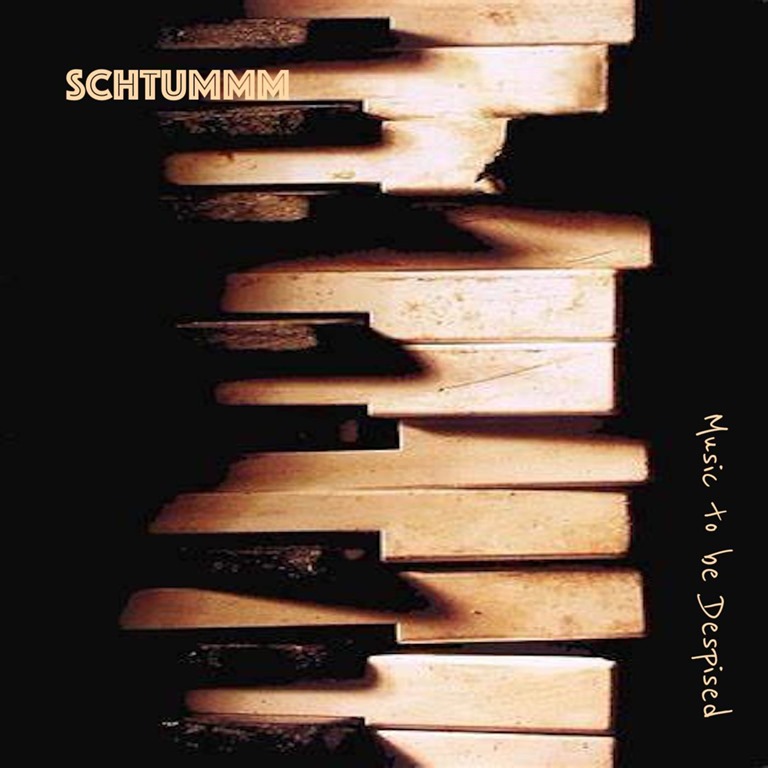
The press release details that ‘SCHTUMMM is the new project from Craig Manga (Mangabros, Modwump)’, and that ‘it’s Craig’s solo foray into generative music and it’s experimental, complex, emotional, mathematical and thoroughly original. There is beauty in there for those who are prepared to look’.

‘Despise’ is a harsh word. It connotes such a strong dislike that it borders on the physical. A loathing, a hatred, so consuming one would wish to obliterate it. How could anyone despise music where there is beauty to be found?

To be fair, Manga does make it quite difficult to find the beauty or even particularly like his work at times here.

After the gentle introduction of ‘First Cuts’, which combines subtle post-rock elements with a delicate ambience, and is pretty innocuous to say the least, things immediately become a whole lot more challenging with ‘Cesium Bed Deposits’, an experimental electronic effort which finds multiple rhythmic sound sources jostling and clanking for supremacy while whistling notes on the feedback spectrum waver in and out. It has something of a vintage vibe, hinting at the likes of Cabaret Voltaire and Test Department, even Throbbing Gristle, the kind of innovators who took new and emerging technologies and pushed them – and the boundaries of music – to the limit.

‘Juggerman’ is another exercise in dislocation and disorientation, warped tape loops spooling every which way around bulbous bass notes and clicks and pops which form muddy, stop-start rhythms. White boys can’t dance, especially not to twisted disco that’s out of key and out of time with itself as the tempos wow and flutter erratically all over ‘Tempus Fidget’ (which gets extra points for the audacious pun).

Things take a microtonal turn on ‘Circuitry <v.2.0 binary flesh>’. With piano notes bent and stretched out of shape, it sounds like ‘How Long’ by ACE, or maybe 10cc’s ‘I’m not in Love’ on a chewed-up audiocassette that’s being run over by a bulldozer, while the glitching circuity slowly melts in a stammering overload. It’s certainly a perverse and an intentionally frustrating listen.

The three-part ‘Memorygauze’ sequence, each part of which is precisely 10:00 induration (apart from the third, which is ten minutes and three seconds – I’m convinced b now that SCHTUMMM is out to affront my sense of order and my somewhat OCD tendencies are tripping over this detail

The looping vocal collage of the first of these, ‘Memorygauze: ,the erosion of nostalgia: infantile dementia>’ employs the popular horror trope of the eerie children’s voice singing, but renders it all the more unsettling with its abstraction, and the child-like simplicity of the sing-song repetition when pitched against dripping bleeps and a stuttering heartbeat of a rhythm becomes more uncomfortable over time. ‘Memorygauze: ,the erosion of nostalgia: juvenile dementia>’ sounds like the same track only more melted, a trick repeated on ‘Memorygauze: ,the erosion of nostalgia: alienator goofiest nosh>’, which actually sounds closer to the first, only with additional sighs, farts, and beeps in the mix before going drum ‘n’ bass about six minutes in. It’s almost as if SCHTUMMM is endeavouring to wring every last drop of frustration by testing the patience to the max and then just keeping on going – and going, and going. And I admire the audacity. I also appreciate the exploration of tonality, the way the relationship between incongruous sounds is interrogated in detail. It’s also a credit that instead of switching rapidly between ideas, each is given time enough to be fully realised.

Ultimately, from the frustration emerges a real admiration: it’s a challenging album, and it’s meant to be, and as such, very much an artistic success.

AA
cover

Front & Follow – F&F062 – 28th August 2020

Christopher Nosnibor

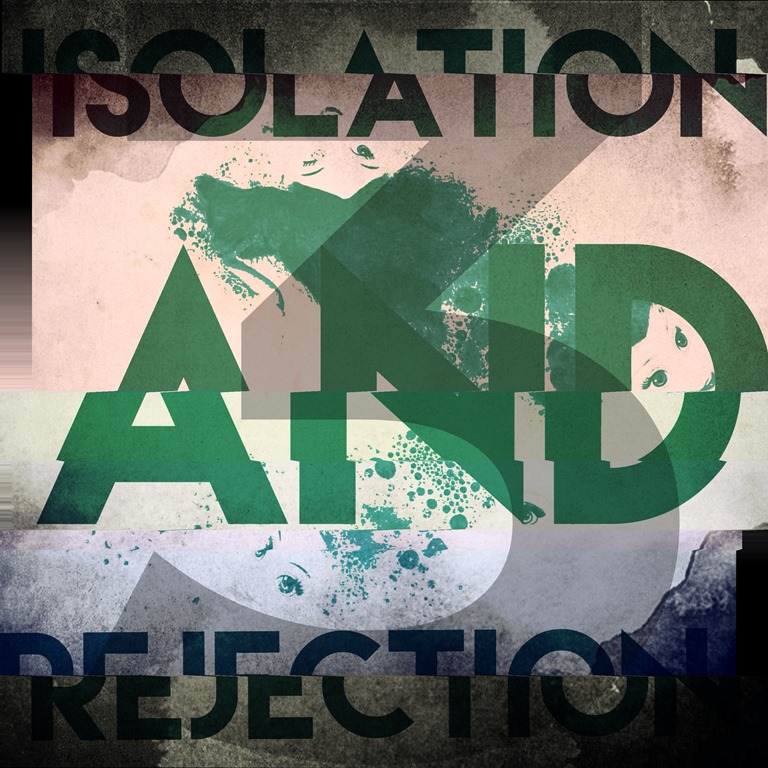
This twenty-three track extravaganza marks the third of five compilations for which cult label Front & Follow has been briefly resurrected with a view to supporting artists who’ve had their work rejected while raising funds for The Brick in Wigan, a charity for homeless people, which also operates a food back – more vital than ever, sadly.

What I personally like about the series and its approach to its purpose is that as has always been the case with F&F and the artists it releases, is its understatedness. And while there’s a lot of noise about the anguish of isolation under lockdown in the media and social media, the liner notes stress clearly ‘This is not an isolation project – it’s a rejection project’. This is very much representative of F&F’s singularity: the label was always about operating apart from trends or vogues, and as such, while it would inevitably cater to a niche audience, it wasn’t a fickle one.

While many of the artists are unfamiliar and probably not only to me, Social Oscillations and Sone Institute stand out as acts whom I’ve reviewed on previous releases on F&F.

Musically, and in terms of quality, though, it’s very much a level playing field, and it’s not hard to grasp why, having been inundated with submission for their modest project proposal, they decided to release a full five volumes.

It’s straight in with the eerie, spooky-sounding dark ambient courtesy of Social Oscillation’s ‘Dreich’, a word that’s stuck with me since my time in Glasgow around the turn of the millennium. It’s so descriptive, and yes, the song’s grey, sombre tone fits it nicely.

As with the previous volumes, despite being largely electronic and instrumental in its basis, the stylistic span is impressive: from minimal, dubby-techno to experimental post-rock via the most vaporous ambience, it’s all here, and curated so as to be perfectly sequenced.

With the super-murky ‘Crawling Guardian’, Everson Poe evokes the spirit of The Cure circa 17 Seconds and Faith before it goes crushing doom metal in the final minute, and the dingy production only amplifies the oppressive atmosphere. Elite Barbarian’s ‘Gat Trap’ is particularly unsettling and particularly impossible to pin down as is groans and rumbles; Newlands’ ‘Father Sky’ is a hypotonic chant, and ‘Orla’ by Farmer Glitchy is tense, claustrophobic, uncomfortable. Jonny Domini’s ‘New Pink Shirt’ is a bit of a departure, being a kind of Pavement-meets-The Fall lo-fi indie racket. It’s pretty cool, and John Peel would have loved it. Dolly Dolly’s ‘HEADS’ is a neat, if rather twisted, spoken word piece, and while it’s perhaps understandable why it may have ben hard to home, it’s no reflection on its being a good piece.

And, yet again, you can’t help but think that those who rejected all of these tracks, no doubt with an ‘it’s good, but just not for us’ let-down, are the ones who have missed out, and it’s all to the benefit of Front & Follow with their accommodating policy in curating this series.

AA

F&0F062 - ISOLATION AND REJECTION - VOL 3 cover

17th August 2020 – Submarine Broadcasting Co

Christopher Nosnibor

According to the blurbage (I can’t claim to spend all that much time on research when my primary objective is to report a critical and sometimes emotional response to a release, and band and PR invest a lot of time in their explications, so why not?) ‘Hozro’, is a native American Dineh word that means living being conscious about the beauty, the magic and the mystery of the universe to which we belong.

I’ve been struggling to find much hozro myself in recent months, confined to a diminished space, rarely seeing or speaking to anyone outside my immediate household and inundated with reports of the shitshow that is western governments, so ,maybe I need this album right now.

Iyari describes it as post-rock, but threatens elements of folk and traditional music, avant garde and electronica, as performed by him and a while slew of guest musician, who all contribute

‘Eloher’, the first composition, is but an introduction, a path that leads the listener toward the body of sound that lies ahead, and it’s a wide-ranging and eclectic set, of which the title rack is representative. There’s a certain restraint in the echo-soaked lead guitar line that rings out over a low-key but insistent sting-damped strum.

Is it just me that instantly connects reverb and atmosphere? Is it the musical equivalent of an autosuggestive word association? Maybe, but Hozro brings all the atmosphere with its sparse arrangements.

There’s a magnificently moving vocal on ‘The Great Spirit’, and while it soars and quavers most movingly, there are undercurrents that intimate ancient folk traditions, and one suspects its this that taps into a deeper level of the psyche than the surface of the singing or the tune itself. ‘Islay’ may or may not be a musical homage to the Scottish island which is home to distillers of the finest single malts going, because Hozro is a pancultural melting-pot, and moreover, one which actually infuses the elements effortlessly. ‘Land of the Silver Shadows’ stands out, not by virtue of its difference, but the fact it encapsulates every magnificently understated aspect of the album within a softly-ripping six minutes.

Iyari clearly grasps the idea that less is more, and in bringing the volume and the detail and the level of demand on the listener down, Hozro brings more – much more, making it one to explore.

AA

a3729313554_10

This is It Forever – 9th October 2020

Christopher Nosnibor

The years between 2004 and 2008 are something of a musical blur now, a period – well over a decade past – spent at the Brudenell and various other venues – immersed in endless post-rock sets. The similarness of so many bands wasn’t a problem: if any one band could be considered immersive, then the scene as a whole melted into one protracted wash of chiming guitars and a succession of crescendos that became almost an integral aspect of life itself as everything drifted into a mist that was pure escapism from the drudgery of work.

I didn’t actually manage to catch Bradford’s Falconetti, and instead came to them by way of a mate who picked up an EP – the self-released debut Oceanography – at Jumbo Records in Leeds on the basis of the staff write-up (Jumbo’s attention to detail with the inclusion of a blurb for everything they stock, coupled their support for local and regional acts really is special)

Falconetti were active between 2003 and 2008, and the fact A History of Skyscrapers contains just eight tracks while representing (almost) the entirety of their output (barring ‘Solid State’ from their last EP, given away at their final show in 2008, and the outlying hip-hop crossover collaboration ‘Falconetti vs The Enemy’), which emerged slowly along the way is evidence of just how they didn’t rush their work. It may or may not have hampered their short-lived career, but listening back now with fresh ears, it’s clear that the small legacy they have left is practically faultless.

If the title, and the connotations of ‘a history’ suggest chronology, then A History of Skyscrapers brings a certain disappointment, in that the tracks aren’t arranged in order of release, and do don’t provide a sense of the band’s evolution over time: the idea here is that A History of Skyscrapers approximates the debut album that never was.

‘Finisterre’ stays with the nautical themes that dominate their work, but breaks from the instrumental form to incorporate soaring, semi-operative female vocal curtesy of guest singer Emma Adams, against a shimmering, lustre-filled guitar.

‘Body of Water’, from the 2003 Oceanography is outstanding, building as it does from a delicate meandering into a full-on heavy riff noise that betrays their appreciation of Jesu and takes it further into lunging God/Godflesh territory with grinding guitars, lumbering bass, and some wild free jazz horns.

Lifted from that final EP, ‘Sonatine’ is lugubrious, spacious and the sound of a band expanding and experimenting, while the twelve-minute ‘Straits of Messina’, from 2007’s Finesterre is a slow-simmering exercise in subtlety and texture that’s minimal and mournful and moving, as is fitting for a composition about the site of a major earthquake in 1908, which had a magnitude of 7.1, almost completely destroying the cities of Messina and Reggio Calabria, with the loss of between 75,000 and 82,000 lives.

For all of the bleak history, there is a grace and elegance about Falconetti’s work, and while much of the sound of very much rooted in the time, not least of all the mournful brass and rolling guitar lines, softly picked and reverb-heavy, over a decade on, their brooding atmospherics and range, which incorporates elements of shoegaze and dream pop and ambient and even post-punk mean that Falconetti sound as fresh and exciting as ever.

There’s a strong temptation to reflect on what could have been, but knowing how fickle and chance-based the music industry is, it’s as likely they’d have stalled and faded around regional small-venue gigs as it is they’d have progressed to headlining 200+ capacity venues nationally and acquired the kind of cult following in mainland Europe that would have kept them going nicely. So instead, it’s better that A History of Skyscrapers is viewed with the appreciation for the music as it is: as ‘Magna Via’ builds to a cathedral of a crescendo, we’re reminded of just how cathartic and invigorating the best of post-rock was, and still is. And while Falconetti may be no more the music still remains – and is now considerably easier to access, thanks to This Is It Forever and this compilation.

cover hi res

31st July 2020

Christopher Nosnibor

Matt Vowles is the first to admit that he’s a little out of step with musical trends and ‘late to the party’ in forming a goth band in 2018.

Unlike some of us, he was around the music in clubs in the mis 80s, but spent over 30 ears doing other things, before, as he explains, ‘in 2017 I rediscovered my passion for this genre. I started listening again to those goth bands from the eighties. I was totally reinvigorated. So I put down all of my keyboards, picked up my guitars and started MY goth band, BLACK ANGEL. Now here we are: two albums later. People say BLACK ANGEL captures that sound and feeling from 1985. I love the process which is what is most important. This is what I do now. And as they say, the rest is history…..I guess I was just a little late to the party.’

Kiss of Death does very much capture the essence of the school of goth from the mid-to-late 80s, and the album’s pitch as being for fans of The Sisters of Mercy, The Cult, and Bauhaus is pretty much on the money, although to my ear Kiss of Death is more Mission than Bauhaus, favouring as it does that grand arena-filling reverb and a layered but polished sound defined by a sturdy rhythm section and chorus-heavy guitars that spindle and twist their way. Then again, the album’s last song, ‘Black Angel’ lifts its bassline from ‘Bella Lugosi’s Dead’ and features a classic stony-voiced horror narrative segment, so maybe it’s a fair summary after all.

After a grand intro that echoes and swirls, the title track is in with a hard four-square thud of a drum machine, and welded it is a Craig Adams-style bass groove: nothing fancy, just that classic, metronomic strike-on-every-beat low-end. The lead vocals are menacing and low in the mix, and in the choruses it’s the female backing vocals that dominate and carry the melody. Incorporating the Sisters’ rhythm section circa ‘85, the Sisters’ bombast circa ‘87 and the melodical leanings of The Mission, it equally calls to mind contemporaries like Mayflower Madame. It’s quite telling that much of the album’s sound bypasses the 90s ‘second wave’ sound and instead hones in more on the chuggier, rockier side of the first wave – think The Cult’s Sonic Temple and The Sisters’ Vision Thing: and while there are synths present, they’re more augmentation to the guitars than to the fore.

‘Animal’ is Black Angel’s ‘More’, with a megalithic chorus propelled again by a relentless mechanised beat and a rush of layered backing vocals that border on the choral, but the synth elements hint at Depeche Mode, while ‘Alchemy’ comes on like The Sisters’ cover of ‘Ghostrider’ with its nagging bassline and blistering guitars, but laced with chilly synths.

‘Hurricane’ is more a cross between The Cult and Rose of Avalanche, while ‘Put Your Lips…’ is conspicuously ungoth, more a glam-goth rock ‘n’ roll stomp – again, more 90s Mission with a nod to James Ray’s cover of ‘My Coo-Ca-Choo’.

Lyrically, much as it’s an album about love, it’s a goth album about love, and as such all the familiar tropes about demons, goddesses and all the rest are present in abundance: it would be unduly harsh to criticise on this score, and Kiss Of Death is a truly solid contemporary trad-goth album.

AA

a0863276264_10

14th August 2020

Christopher Nosnibor

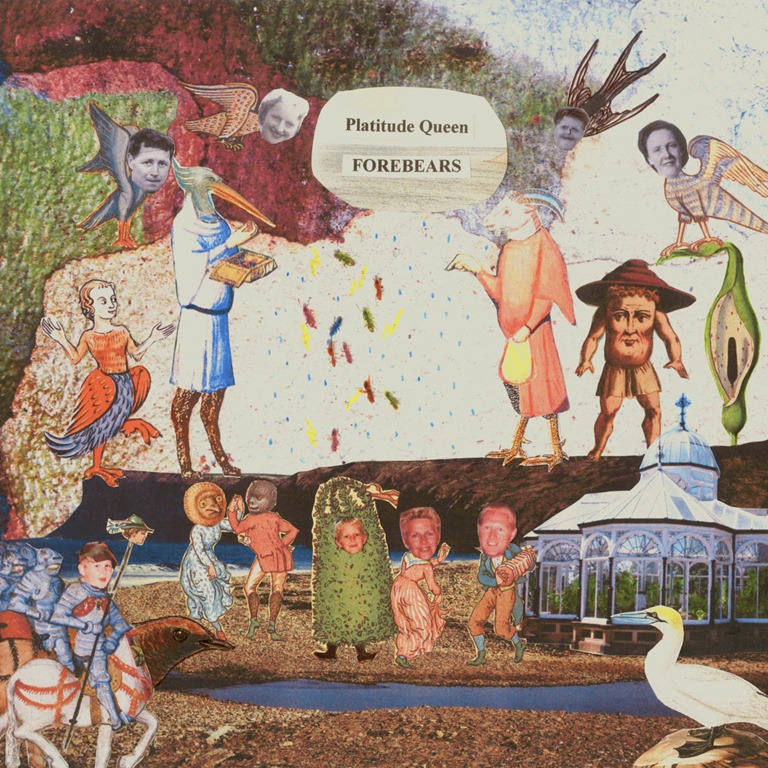
Amongst the fermenting foment that is the melting pot of the Leeds alternative scene, J. S. Gordon, or Jack as he’s also known, is one of those people who’s to be found ambulating the underground circuit around the rehearsal space and indie venue CHUNK with noisemongers IRK. His Platitude Queen vehicle represents a less frenetic, splenetic kind of sound: a ‘contemplation on cultural heritage’, it’s pitched as an album which fits ‘the wider traditions of folk music’ while crossing into ‘the world of hauntology’.

In liner notes fitting for a philosophy graduate, Gordon unpacks the idea behind the album:

‘The form of hauntology which besieges this collection of songs is one that lurches from the depths of the past, but also recognises the (lack of) future. The traditional view of hauntology (as per Jacques Derrida) is that the present is haunted by persistent recurrence of concepts and ideas from the past. The discomfort lies in the fact that these concepts, these ghosts, do not properly belong to the past, and the observer who connects with these ghosts is therefore also removed from a common sense view of time. We are therefore forced to remove our expectations of causality and the origins on these concepts, before they “returned” as ghosts.’

In its continual plundering of the past and the immense fiscal value of the nostalgia industry, in which a collective yearning for even the most recent past has scope for commodification, Postmodernism is in some sense built on hauntology, and in its endless recycling of the past, whether through a contemporary filter or a fashionable dash of retro chic, we find ourselves in a present where the future is doomed to remain mired in the past, while at the same time any real sense of history is dismantled by an all-encompassing simultaneity. As such, everything is rootless, as fragmentary echoes of all things past reverberate around us. And so we come to Forebears.

Forebears certainly presents an intriguing aspect on what you may categorise as hauntological folk: often wonky, always sketchy, and curiously evocative, if not necessarily unheimlich in its evocativeness.

The first song, ‘Sambucus’ is sparse and lo-fi, an acoustic piece that rumbles and mumbles like a Silver Jews outtake, wistful melancholy and off-the-cuff. The stomping ‘Dance of the Mummers’ s quite a contrast, a kind of folk-punk Cossack shanty, but as if played by Trumans Water on acoustic guitars. If that description sounds addled and vague, then it’s probably about right in conveying the strange atmosphere of the album. Everything calls to mind something else, something just beyond the ken of recognisance.

‘Hob Headless’ introduces an almost country tint, and ‘Pignut’ comes on like a wonky, vibrant and wholly irreverent collision between Pavement and The Pixies, unplugged. The eight-and-a-half-minute ‘Peg Powler’ is stark and lugubrious, some Leonard Cohenesque acoustic picking growing to some layered splendour and a slow surge of tension. Forebears, then, isn’t short on intriguing moments, or, indeed, quality songs that hang suspended in an indefinable time all of their own.

AA

a3444374070_10

24th July 2020

Christopher Nosnibor

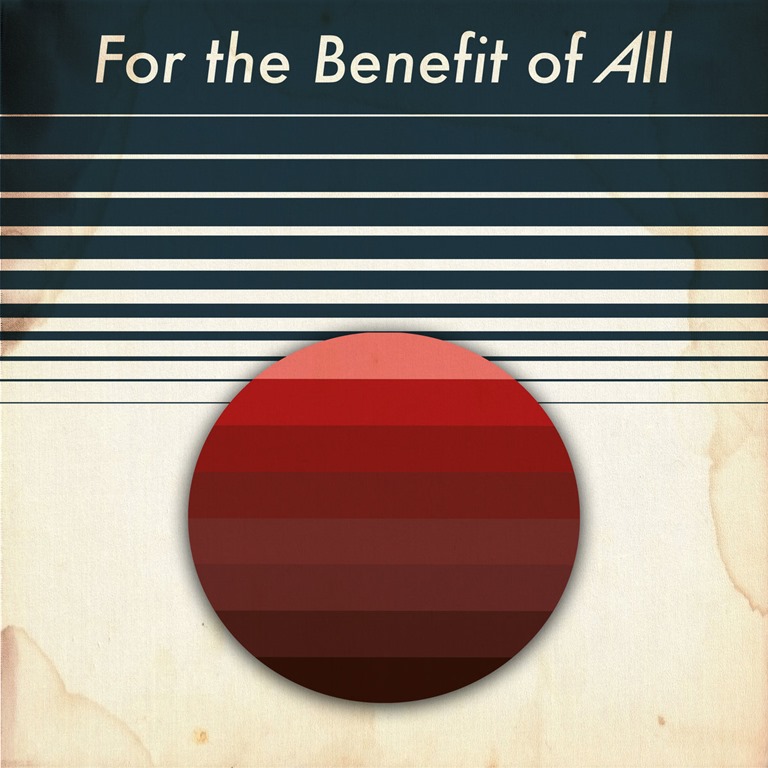
For the Benefit of All represents the coming together of two artists whom the descriptor ‘visionary’ isn’t really hyperbole: having led Her Name is Calla through a decade-long career of turbulence which produced a catalogue of truly definitive, landmark releases in the field of post-rock which pushed the boundaries of the genre in myriad directions, as well as forging a solo career as a minor-key acoustic troubadour T.E. Morris’ cult status is based on his creative singularity. Meanwhile, Jo Quail has very much created her own niche, bringing the cello to a whole new audience with her tempestuous compositions that are far more rock than classical, turning her instrument of choice from an orchestral element to a full band and more courtesy of her innovative playing techniques and judicious use of effects (admittedly a bloody huge bank of effects).

As the press release outlines, For the Benefit of All was inspired by, and was originally intended to be performed within, Kelly Richardson’s Mariner 9 panoramic exhibition at the Attenborough Arts Centre in Leicester, but was cancelled due to the global Covid-19 pandemic.

As such For the Benefit of All is essentially a soundtrack work, but also a narrative work, which plots the trajectory of a mission to Mars. It’s a sci-fi hybrid that tells of a future based on true events past and present, and more than this, it’s a reflection on time and space. With the original project plans put paid by the COVID-19 pandemic, they elected to continue work remotely and release the music as a standalone work, and it succeeds – although it does work best with an understanding of the context, because an abstract ambient work without context is simply one more abstract ambient work. In context, it’s very much a departure for both artists, devoid of climaxes and crescendos, instead focusing on the recreation of the emptiness of space, where movement is slow, and the immediate surroundings are filled with vast expanses of nothing.

In many mays, it also stands as a metaphor for the circumstances of its creation: we’re all together apart, distant, separate, isolated however adept we are at calling, Zooming, or meeting in the street. We are all floating in space, just out of reach, and sometimes two metres may be two thousand miles. And we’re not built for this.

The chapters contained within the booklet which accompany the compositions provide a textual narrative which adds to the substance of the work. The track titles, meanwhile, signify dates on the journey, from the significant 1972 ‘(A map from Mariner 9)’ which was the first vehicle to orbit another planet and successfully returned over 7,000 images from the enigmatic red planet, to the futuristic dates projected for colonisation. Going further back, 1610 relates to Galileo, the polymath from Pisa, the first person to use a telescope for astronomical purposes, and his viewing the red planet through the newly-invented ‘spyglass’.

The majority of the music is quiet, spacious, minimal, and while the plot includes raging global and galactic wars, the soundtrack is more given to creating the sense of distance, of isolation, of… space. The emptiness. The void. The tranquillity. The absence of atmosphere.

A hushed rapidfire beat flickers like a palpating heartbeat beneath the barely-there ripplings of the penultimate piece, ‘2212 (We Had it in Our Hands the Whole Time)’ and while it’s still subtle, it’s dramatic in its effect, and the rising tension is palpable.

The final section, ‘2452’ leaves us with both a cliffhanger and a sad sense of emptiness at the end of an expansive and exquisitely delicate album that often belies the violence, turbulence, and often bleak reflection on humankind that it soundtracks.

AA

a2831098516_10

Lamour Records – 28th August 2020

Christopher Nosnibor

Vinyl may continue to make a comeback, but the 7” box set is hardly the format of choice in the second decade of the second millennium. It’s sad in a way, as I very much treasure my special editions of the debut albums by Garbage and The Cooper Temple Clause in that very format, but have to admit, if I’m actually going to listen to either album, I tend not to play these versions.

According to the press bumph, ‘This is actually the original format from 1949, when the record companies demanded a little more from their listeners. At that time they were forced to choose the playing order by stacking the discs on top of each other on the designed gramophone player. Long before today’s playlists. ‘I can’t claim to recall this being an actual thing, but my first record player, a hand-me-down from my parents, was a massive Phillips thing with speeds of 17, 33, 45, and 78. I’ve never yet seen a 17rpm record, but the deck came with a spindle upon which one could stack up to ten 7” singles, which would drop down and play, jukebox style.

Apparently, ‘The box Umf with four vinyls [sic / sick] is a tribute to two major sources of inspiration: the Dadaist Hugo Ball and the German kraut pioneers Cluster. Featuring some sci-fi (crackling movie music from the 50’s) and mixed percussion from Asia (Java, Japan, Korea). Somewhere out on the periphery, Ball and Cluster meet in a common idea: That everything has a sound, and most sounds can be music.

The concept behind this album is that ‘Umf is thus an individual album “at your choise”. It makes some demands. But it can be worth it. A mosaic where each song title gives a hint of how the music sounds: umf, bloiko, olobo, huju, higo, blung, wulla, gorem.’ In other words, an interactive album, where the sequencing is at the listener’s discretion, a sort of ‘choose your own adventure’ book in musical form, or otherwise the vinyl equivalent of shuffle.

Give that the tracks are ambient, fleeting, transitory, and non-linear, and the titles seemingly more sonically descriptive than language-based, this really is a work that gives itself to permutational sequencing, to collaging. Singling out individual ices is, of course, pointless: for the most part, they’re airy, abstract, occasionally, rumblings and laser points interrupt the relatively smooth, formless flow, which at times trickles to almost nothing, and at others grumbles and swells like an intestinal infection that churns and grumbles. It may be understated, but it’s never uninteresting.

AA

lamour078_front

Cruel Nature Records – 28th August 2020

Christopher Nosnibor

It would be a flippant cliché to describe this offering by the insanely prolific Whirling Hall of Knives (this is their fourth release of 2020 and their thirteen full-length album) as an album of two halves, split as it is across two sides of the cassette release – but it would also be a valid assessment of its musical contents, also. For while it is consistently atmospheric and droney throughout, the six tracks, which bleed into one another to create the sensation of two longform tracks (the digital version is even mastered as such) consisting of a number of passages, they each bear a distinct character, if not necessarily form.

With such a daunting back catalogue, it’s difficult to know where to begin both on terms of exploration and comparison, but it’s probably fair to say that being neither as harsh as some efforts, or as ominously oppressive as others, Sabre is representative while siting at the more accessible end of their output spectrum.

These compositions are loose, transitional, and while they do lead the listener on a sonic journey of sorts, it’s meandering and non-linear in its trajectory.

The clattering rhythm that marches in the opening bars of the first track, ‘Laid to Rust’, immediately reminds me of the intro to ‘Breathe’ by Ministry, although perhaps a shade dubbier. But the percussion soon fades out and leaves, not grating metal guitars, but tapering whistles of feedback and drones like damaged woodwind. But this is very much a percussive album, at times verging on experimental dance music… and so in fades ‘Those Tracers’, the lead single, accompanied by a video we’re immensely proud to premiere here at AA. This is very much a work of abstract freeform dance music that bumps along in a vortex bubble.

Side A closes off with the altogether more attacking ‘Gutterpressed’, a gritty industrial grating through which bleak winds howl desolately.

Side B’s three cuts are lower, slower, dronier. Before sliding into a sepulchural reverence, ‘Olde Slice (Edit) is ominous and sparse. When the beats do emerge on ‘Ring Dialog’, they’re swampy and backed off, some indistinguishable robotix vocals echoing into a murky mass. The final track, ‘Barkd’ drift and hovers for so long, but suddenly, from amidst distant chords that reverberate hints of the sparsest, most minimal desert rock , percussion rises and drives away at a heavy beat and pulsating industrial bass throb to conjure an intense and oppressive atmosphere as the album inches toward its finale.

Sabre isn’t easy to categorise, and at times, it’s not that easy to listen to, either. But that’s what makes it.

Preorder Sabre here.

AA

art_whok_sabre_tape_outer copy

Weeping Prophet Records – 31st July 2020

Christopher Nosnibor

The facts and the pitch are that Fuse Box City is a new London based band. They combine indie and electronic with noise and melody; the intricate layering of which produces a rich sound that provides a platform for Rachel Kenedy’s fragile yet mellifluous vocals to sit on top. Talking about the stuff that matters all in the same breath.

I like hybridity and eclecticism, and have developed an increasing appreciation of some of the 80s samplist / looping acts that broke through in the late 80s. It wasn’t immediately apparent at the time, but this wasn’t about simply making dance music and turntable scratching and drum machines: this was utilising emerging technology to create a soundtrack to our ever-faster, ever more fragmented experience of life.

Revisiting the spirit of then makes sense to an extent: we’re witnessing even less comprehensible times, even faster, more fragmentary lives, and even niftier tech while in a position to cast an eye back over recent history.

But sometimes blending lo-fi indie and experimental electronica and throwing in bits of prog and 80s hip-hop means the elements don’t always gel especially well, and ‘Shine On’ makes for a shaky, somewhat chaotic and disjointed start.

Maybe it’s a matter of adjustment, or maybe the band really do find their groove better as the album progresses, and it’s when they slow things down a bit as they do first on ‘Pub Licker’ and then on ‘Crossing Swords’ that things begin to feel rather more cohesive, and find FBC explore a territory that sounds like a trip-hop reimagining of Young Marble Giants.

The album’s closer marks another departure: the thirteen-minute ‘Bendy One’ starts out a low, slow semi-ambient work with a murky beat stuttering away like a fibrillating heart, and low in the mix before slowly taking form: the beat becomes ore solid, regular, insistent, and comes to dominate a vague wash of a droning backdrop which stretches and yawns and swells behind Kenedy’s soaring choral vocal. Somewhere along the way it emerges as a new ag stomper with a thumping tribal beat and some squirming electronics that bubble away in the background of some approximation of a celebratory sunset incantation.

The end product seems to be that of a band who are ideas-rich and unafraid to experiment, while still finding their feet and sense of direction. Despite its messier moments, which often boil down to execution as much as concept, it’s a bold debut, and never uninteresting or uninspired.

AA

FBC001_2020WPR_front