Posts Tagged ‘Album Review’

Tartarus Records – 26th April 2026

Christopher Nosnibor

The mood which pervades all life right now, feels pretty bleak. It’s not only that turning on the news brings endless darkness, with endless reports of multiple wars and families around the globe, but it feels as if a cloud has descended over all existence for all but the mega-wealthy who are living it large, laughing their way around the globe on cruises and in private jets in the knowledge that they’ll be gone and interred in spectacular mausoleums or at least having secured their notes in history and with extensive entries on Wikipedia. My daughter, who’s twelve, and loves retailing me with facts, told me just last night that based on current consumption, oil supplies will be exhausted when she reaches the age of fifty-six. “I don’t want to live til I’m fifty-six,” she said. It wasn’t spoken with an air of pessimism of gloom, but a statement grounded in an acceptance of the hell that the future holds.

It’s in this context that we arrive at III, by extreme experimental duo All Are to Return, who preface their new album with the commentary that ‘We have entered a new age of extinction – of poisoned lands, habitat destruction and encompassing climate catastrophe. AATR III reflects the harshness of life laid bare to the vagaries of capital, of uncaring generations heaping misery on their successors and the life-forms with which they share a fragile biosphere.’

Something I find bewildering is that in the nineties, environmental issues were pretty niche, as was being vegetarian – you’d be hard-pressed to find vegetarian cheese or yucky TVP on the high street, and would only be able to score some half-edible veggie sausages in Holland and Barrett or some crustie hippie shop down some side-street. Now, this is mainstream, and yet still politicians back big businesses who push fracking and deforestation and place profits ahead of what most refer to as ‘sustainability’, but is, ultimately, in reality, ‘survival’.

Perhaps I digress a little, but feel it’s relevant before returning to the pitch which explains how ‘The album’s unmitigated brutality of sound and expression are mediation of these concurrent events. Colossal noise-scapes are shaped with pulsing synth patterns, shredding percussion and vocals that are screams from the void. As a whole, the many-layered compositions carry massive assaults on the senses and a rage unhuman.’

The first few seconds alone are an all-out sonic assault, a blast of harsh static noise, a howling white noise blizzard which hurts. And from thereon in, it only gets harsher, an obliterative wall of noise that goes full Merzbow in no time. It shivers and trembles, grates and vibrates, everything overloading, eardrum-shredding, abrasive, aggressive, snarling, gnarly.

Not everyone ‘gets’ noise: to many, it is just ‘noise’. But noise is a vehicle which provides a unique catharsis, a means of channelling rage which cannot be conveyed in words alone. There are vocals on III, but they’re the sound of demonic torture in a sea of flame.

Thunderous, speaker crackling distortion overloads, and the vocals are butt demented, demonic shrieks buried amidst a skin-stripping nuclear blast. Every track is harsher and louder and denser than the last – and it’s the perfect soundtrack to the world right now. It would equally be a perfect soundtrack to Threads, being pure white-noise, blinding apocalypse in sound.

‘Drift’ is entirely representative: a solid wall of noise, harder and heavier than a slab of concrete – and it is the perfect encapsulation of the rage of life in the now. I sat down to listen to this as Iran rained missiles down on Israel in retaliation for the bombing of their embassy in Syria… Israel immediately vowed to return fire. Gaza has been levelled. We’ve just endured the wettest – and warmest – February and March on record here in the UK and half the country is under water, and many places received the entire rainfall for April in the first week, since when we’ve had more frosts than in the previous two months. Around the globe, wars rage and famine is rife, and frankly, everything is fucked. To think otherwise is delusional. Legacy? It’s clear what the legacy of the 21st Century will be, and ‘Legacy’ encapsulates that perfectly.

All Are to Return articulate their anguish at this fucked-up state of affairs by the medium of the harshest of noise. And it makes perfect sense. III isn’t quite Harsh Noise Wall, but it is fucking brutal. ‘Archive of the Sky’ is nothing short of devastating.

III hurts. It rakes at your guts, it rains heavy blows from every angle. It rapes your ears and pounds your cranium, it thumps your ribs and slays your sense. Every second is a sonic detonation, a devastation annihilation, a squall, a wall, an explosive blast, the sound of the world caving in, the sound of the absolute end. You want to hear the sound of the apocalypse? Listen to this, and live through the end of the world. It’s coming, and sooner than you care to contemplate.

AA

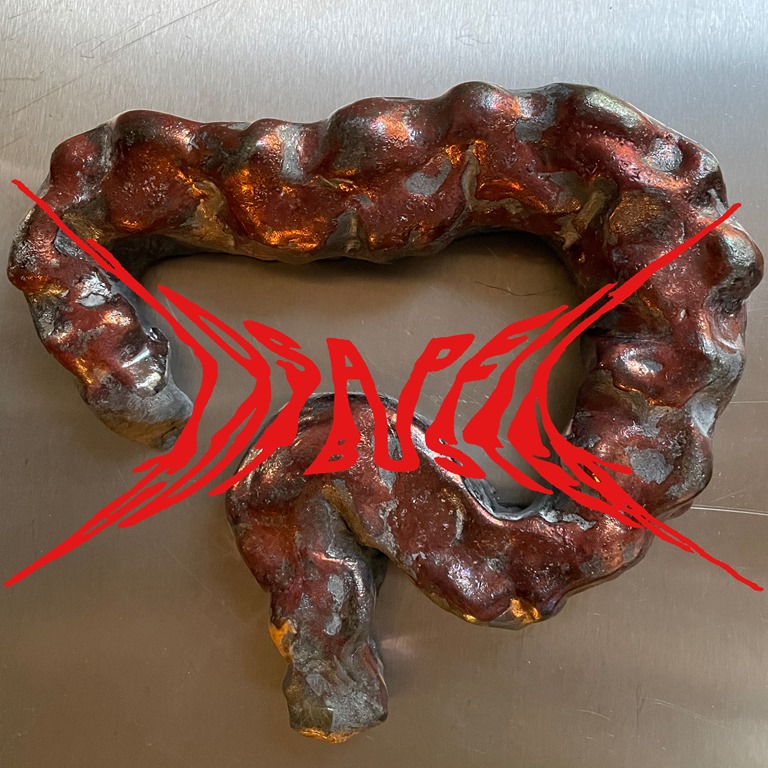
AATR III Artwork

Fire Records – 26 April 2024

Christopher Nosnibor

Another day, another artist I’m discovering and wondering if I’m increasingly poor at keeping up or of there really is just more music in the world than I could ever keep abreast of even if I devoted every waking minute to trawling every corner of the Internet for news and playlists. Maybe it’s a bit of both. There is, perhaps, something of an expectation that someone who writes about music should have a deep and wide-ranging knowledge of the subject. The trouble is, the more music you’re exposed to, the more avenues it opens up, and suddenly there’s this and this and this… and how is there time for all of it?

If you’re obsessive about a given genre, you may be an expert in your field, but you’re missing out on all of the other fields. Explore the other fields far and wide, and you’re missing something elsewhere. I see people on social media who seem to spend their entire days playing – usually streaming – new albums, and they’ve heard pretty much everything on release, five, six, seven albums a day. I’m rarely able to listen to music while working my dayjob, and when reviewing, I can’t really manage more than an album a night to hear, digest, process, formulate an opinion and sentences to articulate it.

In daily life, I rarely suffer from FOMO, but when it comes to music, I feel – increasingly -that I’m unable to keep up. I’ve not listened to the latest Taylor Swift album, for example. Or any of her albums for that matter. Am I missing out? My daughter would insist that I am. But as much as I listen to music for pleasure – at least when I can – I also listen with a view to providing coverage to artists who aren’t Taylor Swift, who you won’t find covered in every other publication. And so we come to Yosa Peit, who I clearly can’t claim to have discovered at the dawn of her career, but who, while having gained a following and a contract with Fire records, clearly isn’t a household name either.

The pitch for ‘The free-ranging sound of Yosa Peit’ is that her work ‘recalls the intense arrangements of a cyber-era Prince with the surrealist tones of Arthur Russell and the vulnerability of Arca circa 2017.’

I’m a little uncomfortable with Prince. By that I mean, likely somewhat controversially, I think he’s massively overrated, and moreover, I’m not really a fan of anything funk.

Perhaps it’s my relatively superficial knowledge of Prince that’s the reason that Prince is by no means my first point of reference on hearing Gut Buster, an album which is positively brimming exploding with ideas. There are elements of crisp pop and some bust-up, fucked about bluesiness to be found in the mix in this extravaganza of inventiveness, which also sculpts dark electropop shapes with some heavy bass and ethereal synths. At times, skitters and ripples rush by faster than the mind can compute, and there are some pretty slick grooves, even hints of what one might broadly refer to as ‘urban’ shades – as exemplified on ‘Tower Shower’, which also brings some dubby bass and blasting beats.

Gut Buster has soul – bit tosses it in a liquidizer and pulses it to a pulp with skittery bits and pieces of synth and hyper-processed vocals, 80s AOR melted into soporific trip-hop and hyperactive techno tropes. The chipmunk vocals area bit irksome at times, but there’s so much else that’s good that you can forgive it. The minimal gloop of ‘Call Me’ is a slow bump and scrape, and showcases the way in which Peit’s compositions are riven with intricate and fascinating detail.

Gut Buster is odd, quirky, in places dark and in others, less so. Unashamedly other and oddball, there is much to unravel here.

AA

383430

Cruel Nature Records – 26th April 2024

Christopher Nosnibor

Plan Pony – the solo project of Jase Jester, one half of Ombibael / Ombibadger – has been simmering for a while, and we’ve been following his output since the release of the ‘Martyr’ single back in 2020. So I was naturally excited to hear his latest offering.

I felt suddenly uncomfortable, concerned, even, on seeing the accompanying blurbage, which leads with ‘RIYL: Animal Collective, Madlib, Nurse With Wound, Hype Williams, Black Dice’. I mean, I do like a bit of NWW, and don’t mind some Black Dice, but I absolutely abhor Animal Collective. So, so much. Something about Animal Collective radiates muso smugness – something it would be hard to accuse Jase of.

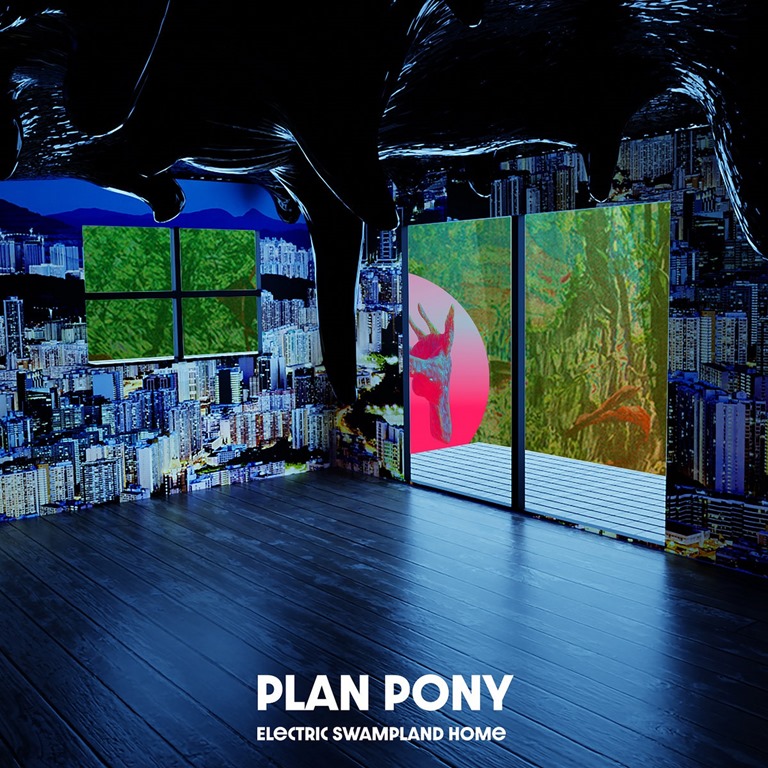
Electric Swampland Home is the first Plan Pony album, and as with previous outings, finds Kester grappling with vintage gear to conjure authentic vintage noise inspired by those early adopters. He’s right when he tells me that emulators simply aren’t the same, and that when technologies were emerging, the sound of the resulting recordings was born of necessity – like when you bounce tracks on a cassette four-track and lose some quality and definition in the process, and the presence of amp hum and tape hiss because amps hum and tape hisses. Adding tape hiss or vinyl crackle digitally is an affectation, and while some may be sold on this kind of nostalgic artifice, it lacks that certain something.

While questions of authenticity provoke heated debate in circles around some genres – punk, obviously, grunge, perhaps to a lesser extent, and right now, indie and alternative as new acts track stellar trajectories seemingly from nowhere while claiming modest grass-roots credentials while obfuscating middle class and public school backgrounds and major label backing, Electric Swampland Home is a truly authentic work. Kester hasn’t amassed a pile of highly-sought-after vintage kit in the way people with hods of cash buy up 808s and Moogs to try to be cool. Electric Swampland Home is the sound of a Boss sampler and an old Tascam digital studio he’s had for yonks, and which by today’s standards are pretty primitive.

From the very start, Electric Swampland Home creates discord and chaos with the woozy, bent, and frankly fucked-up ‘Travelling There’, a loop of atonality that gives way to a rolling rhythm and feedback-squalling bass crunch… and from thereon in, everything goes.

‘The Village’ tosses a salad of tribal beats, twisted Kyoto and a dash of Joujouka. While I’ve never been comfortable with the kind of cultural appropriation that the likes of Paul Simon’s takes on ‘world music’ present, this is something entirely different – a full global exploration which occurs simultaneously. This owes more to the tape experiments of Burroughs and Gysin, Throbbing Gristle and Cabaret Voltaire than anything else, conveying a sense of the way in which everything happens all at once, and linearity is a construct.

Across the album’s eight tracks, Plan Pony meshes some dense sonic textures and layers of difficult dissonance. Notes and tones bend and warp, things twist and melt and bleed into one another: edges blur and fade. The way the juxtaposing and often incongruous elements are brought together isn’t explicitly jarring, it’s not a bewildering collision of noise, but something rather more subtle – although no less impactful and no less disorienting. As with Burroughs’ cut-ups, Electric Swampland Home captures – recreates, distils – the overwhelming experience of modern life, the blizzard of information, the endless intertext, the diminished attention span, the globalisation and the egalitarianism of everything. That isn’t to say we live in an egalitarian world – but that everything equally demands our attention from every corner of everything, to the point that it’s impossible to prioritise or even reasonably assess what’s of more importance than anything else. And so we quiver, frozen in stasis, poised between myriad options and so often spend hours selecting none of them.

This is nowhere more clearly conveyed on the warped, glitchy layerings of ‘Same Cloud’, which brings everything all at once. On the one hand, it’s the most overtly ‘song’ like piece on the album. On the other, it’s like listening to the radio from the next room while reading a book with the TV on in the background, and your phone’s ringing and next door are doing DIY and your mind’s wondering about what’s for dinner – and this continues into the sample-soaked looping stuttering jangle of ‘Amphibian’.

‘8pm Local Time’ combined field recordings, a low-level quivering bass and squelchy laser-blasting electronics together, and not necessarily in the most comfortable of fashions.

Electric Swampland Home revels in incongruity, in awkwardness, in otherness, and in many ways, it’s a magnificent representation of life in all its colours and chaos, its business and unpredictability. It’s not an easy or immediate album, and it’s not for a second intended to be. It is an unashamedly experimental work, and one which succeeds in its explorations.

AA

a3913248541_10

Human Worth – 20th May 2024

Christopher Nosnibor

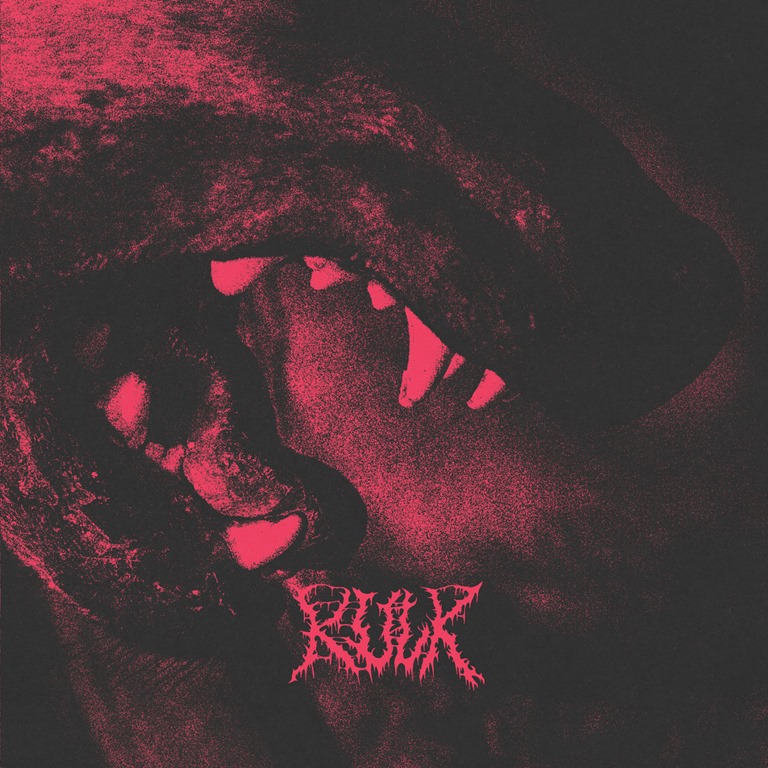
The latest album from Norwich based two-piece Kulk, It Gets Worse, arrives two and a half years after the release of We Spare Nothing, described as ‘thunderous and experimental’, and honing their ‘unique and monolithic brand of heavy doom and sludge’.

The timing – and the title – couldn’t be more apt. Just when you were probably thinking we’d endured the absolute worst of life on this planet – from Brexit and Trump via a global pandemic and insane inflation and everything money-related being utterly screwed and still getting more painful by the day after 14 years of a Conservative government – it continues to get worse – half the world is at war, the other half the world is either flooded or in flames, and there are mass killings practically every other week. It’s not, then, simply a nihilistic strapline to grab the attention, but pretty much a demonstrable fact. Things never get better – only worse.

The band articulate both the circumstances and the mood when they frame the album thus: “This album is about the universal suffocating weight of hoping for more while navigating a climate where the apparatus for seeking it is being consistently undermined. What it feels like to not only struggle keeping your head above water but to try jumping out from the deep end without losing your trunks. It is selfish guilt and misplaced woe, desire is a distraction from the world at our feet”.

Bookended by short instrumental intro and outro tracks, ‘More’ and ‘Less’, It Gets Worse packs back-to-back balls-out riff-fests, where the bottom end sounds like a bulldozer and the beats sound like bombs. Whereas a lot of stuff on the doom and sludge spectrum is simply plain slow, Kulk are masters of the tempo shift. ‘A Heavy Sigh’ comes on at pace and builds a real groove, before hitting the breaks around two thirds in, at which point it becomes reminiscent of Melvins. The reason Melvins have endured is that – perhaps despite the popular perception – they’ve showcased a remarkable versatility and an urge to experiment, and it’s here that the comparison stands strongest with Kulk: they’re not just big, dirty riffs and shouting, although they do a first-class job of putting those things up front and centre. ‘Out of Reach’ is a pounding, raging roar of frustration amped up and overdriven to the max, hitting that perfect pitch at which blasting out a repetitive riff at skull-splitting decibels is the ultimate catharsis and the only practical and sane response to the world in which we find ourselves.

Things take a turn with ‘Mammoth’ showcasing a more hardcore bent initially, before descending into a howl of feedback, a noise-rock quasar delivered with the most brutal force. The vocals are barely audible, and then things get ever harder and harsher on ‘Beyond Gone’ which goes full industrial, hammering away at a simple, repetitive chord sequence with murderous fury. You feel your adrenaline pumping as they thunder away, combining pure precision with absolute chaos as feedback swirls and squalls all around like an ear-shattering cyclone.

The slower ‘Fountain’ shows considerable restraint and makes for an oppressive four minutes: it brings a bleak mood, and the hit lands late but hard when the distortion slams in. Getting Adam Sykes of Pigsx7 to play on ‘Life Will Wait’ is a major coup, and the track is a belter, built around a hypnotic three-chord riff – because all the best riffs have three chords – and really works the quiet/loud dynamic to the max.

Often, when people – particularly people in my demographic – write of the music of the 90s, it’s with a dewy-eyed nostalgia for their lost youth. Sure, I have my moments, but when I say that It Gets Worse takes me back to the 90s, I’m recalling the excitement of discovering endless obscure little bands cranking out major racket in pubs and tiny venues, some of whom managed to either get records or CDs released by shoestring labels, or otherwise scrape together funds to record and release a 7” or CD – and many of whom didn’t, and only exist in hazy recollections. The point is that these were exciting times. The only positive about living in shit times is that shit times make for good music, as people need an outlet to channel their pain, anguish, frustration, and rage. It Gets Worse is saturated with pain, anguish, frustration, and rage. And because of that, it’s very much a product of our times, and it’s absolutely essential.

AA

AA

a2498304630_10

Thrill Jockey – 19th April 2024

Christopher Nosnibor

There’s been a quite staggering trajectory to the work of BIG|BRAVE: with each release they achieve an even greater level of intensity, which seems to be unsurpassable – until the next album. They’ve come a long way from their minimal ambient / folk beginnings. The instrumentation has remained minimal, but cranked out ear-splitting decibels, they’ve developed a way of creating a lot from comparatively little, and unlike many guitar bands, they’re not afraid of space. There is starkness, there is silence, there is separation between the instruments, and much room to breathe between slow, thunderous beats and crushing chords which collide at the pace of tectonic plates.

Vital was aptly titled, and marked a new peak in the articulation of raw emotional turmoil. It seemed improbable that nature morte could equal it, and yet it did, and went beyond, a desperate, feral edge pushing its emotive force to a higher level.

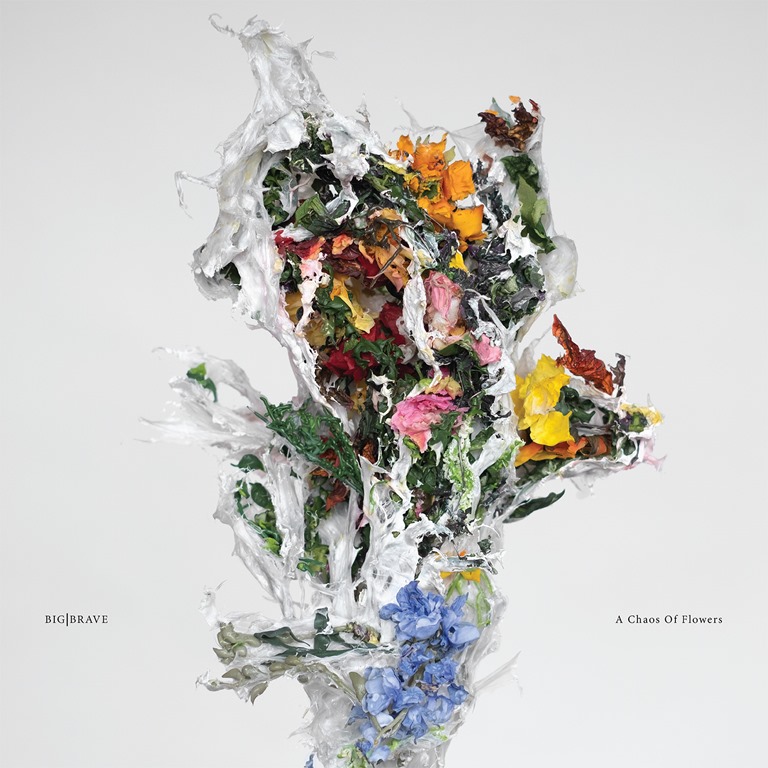
Coming a mere fourteen months after nature morte, and some substantial touring, how could they possibly sustain that kind of intensity? It seems improbable, but it’s happened. A Chaos Of Flowers is graceful, delicate, even folksy – but also eye-poppingly intense, cranium-splittingly loud, and utterly devastating.

The tracks released ahead of A Chaos Of Flowers hinted that this new album, beyond what seems human, would once again match its predecessor. ‘I Felt a Funeral’, which is also the album’s opening track, has strong folksy vibes… until the sonorous guitar tones enter. There are hints of late Earth about his, the way the resonant tones of pure sustain simply hang in the air. But dissonance builds, and there’s an awkwardness to this scratchy, imperfect beauty. The way Mathieu Ball’s guitar scratches and scrapes and builds to a blustering squall of dense, twisted noise is remarkable, building from nothing to an all-consuming howl. Yet at the same time, there’s restraint: it’s as if he’s pulling on a least to restrain this ferocious monster in his hands.

Currents – and volume – build. You’ve never heard guitar like this before. It brings the crushing weight of the drone of Sunn O))). And the thunderous relentless repetition of early Swans, but delivered with a breathy ethereal sparseness that’s difficult to place. And then there are the vocals. Not since first hearing Cranes in the early 90s have I heard a vocal so otherworldly.

The guitar feedback yearns heavy and hard in the final minutes of ‘not speaking of the ways’, a track which starts heavy and only grows in both weight and intensity. Robin Wattie’s voice is half adrift in a sea of reverb and drifting, almost drowning, in a tidal flow of guitar noise, for which you’d be hard-pressed to find a comparison. I’ve fried, struggled, failed. You can toss Sunn O))), Earth, MWWB around in the bag of references, but none really come especially close to conveying the experience of A Chaos Of Flowers.

The songs are shorter than on recent predecessors, and overall, the mood of A Chaos Of Flowers is different – dare I even say prettier than the last couple of albums. There’s a musicality and gentility about this album which marks something of a shift, and single ‘canon: in canon’ is the perfect evidence of this. One may say that ‘heavy’ is relative in terms of distortion and volume, but there is more to it than that. Many of the songs on A Chaos Of Flowers are delicate, graceful, sparse, with acoustic guitar and slow-twisting feedback dominating the sound of each track. There’s a levity, an accessibility, which is at the heart of every song here. Much of it isn’t overtly heavy… but this is an album which will crush your soul.

If A Chaos Of Flowers is intentionally less noisy than its predecessors, it’s no less big on impact. Raging, ragged chords nag away, until ‘chanson pour mon ombe (song for marie part iii)’ brings bleak, tones which cut to the core and explodes in to the most obliterative noise close to the end: this is the absolute definition of climactic finale.

There’s a rawness, a primitive, elemental quality to their music which has defined their previous albums, and this remains in A Chaos Of Flowers. You arrive at the end feeling weakened, short on breath, emotionally drained. I ask myself, how did I get here, so sapped-feeling? The answer lies in the force of this immense album. A Chaos Of Flowers is devastating in its power, and BIG|BRAVE reached a new summit – once again. The deeper and darker they go, the better they get.

AA

AA

641805

Cruel Nature – 26th April 2024

Christopher Nosnibor

Just as their album was smashing the charts and the band were riding the crest of the wave, the shit hit the fan for The Last Dinner Party over a quote about how “People don’t want to listen to postpunk and hear about the cost of living crisis any more.” Of course, it was taken out of context, and all the rest, but I’ve got no truck with any kind of critique from a bunch of boarding school poshos: of course they can peddle theatrical escapism, because they’ve spent their entire lives in a Gatsby-like whirl of posh frocks and soirees. The name is a bit of a giveaway: only people of a certain position in the social strata ‘do’ dinner parties, dahling, no doubt sharing culinary delights discovered while trotting the globe on their gap yahh. Meanwhile, half the country is at the point where it struggles to afford a McDonald’s, let alone gastropub grub.

It might sound counterintuitive to those so far removed from the reality endured by the majority – the Jeremy Cunts and Rachel Johnsons of the world who reckon £100K a year isn’t much – but music that reflects the grim realities of life are what people do want. Life juggling work and parenting while struggling to make ends meet can be not only stressful, but isolating, and so music which speaks of the harsh realities serves as a reminder that you are not alone. It’s relatable in the way that soaps are for many.

As an aside, I saw a post from a (virtual) friend on Facebook recently commenting that every time they visited Manchester, it pissed it down, and it so happens that this is my experience also. It’s small wonder, then, that Pound Land are such miserable mofos, and again, contrast this by way of a band name with The Last Dinner Party. This is an act that’s gritty and glum and telling it like it is. And you know how it is – and how bad it is – when stuff in Poundland, the shop, costs £1.50, £2, even a fiver. Back in the 90s, you could got to Kwik save and get a tin of No Frills baked beans for 3p and a loaf of bred for 19p.

It’s perhaps because of just how far downhill and how fast it’s happening – in real time – that with Mugged, Pound Land have delivered their most brutally blunt and utterly squalid set to date.

‘Living in Pound Land’ is a brief blast of an intro, atonal shouty pink with some wild parping jazz tossed in, and it hints at what’s to come: ‘Spawn of Thatcher’ is dirty, disdainful, spitting and snarling vocals hit with a grunt and a sneer amidst a cacophony of jazziness held together by a saw-toothed bass grind.

There are hints of The Fall in the mix, a dash of the raging fury of Uniform, too.

As ‘Flies’ evidences, they’re not all one hundred percent serious: against a pounding drum machine reminiscent of Big Black and a bowel-tensing bass, we get a yelping pseudo-John Lydon vocal going on about flies in his underpants.

The nine-minute ‘Power to the People’ is the album’s centrepiece, literally and figuratively. A slow, groaning behemoth, it thuds and grinds away for nine and a half minutes, coming on like ‘Albatross’ for the 2020s (That’s PiL, not Fleetwood Mac) mixed with a Fall cut circa ‘Slates’ played at half speed, its grinding repetition emerging more at the Swans end of the spectrum. It’s ugly, it’s unpretentious. ‘Power to the people! Make everything equal!’ slides down to a rabid howl of ‘be happy with what you’ve got’, exposing the lie of meritocracy and social mobility. The album’s second ten-minute monster, ‘Shish Doner Mix Apocalypse’ is a brutal shredder – like much of the rest of the album, only longer.

Contextually, one might be inclines to position Pound Land somewhere alongside Sleaford Mods and Benefits, but they’re a very different proposition – sociopolitical, yes, but more overtly rock in musical terms, mashing up punk, post-punk, krautrock and noise rock. And then there’s that manic jazz streak.

The snarling racket of single cut ‘Pistol Shrimp’ is both representative, and as nice as it gets. That is to say, Mugged is not nice: in fact, it’s harrowing, gnarly, overtly unpleasant. But it is also entirely necessary.

AA

cover

Karlecords – 12th April 2024

Christopher Nosnibor

This three-way collaboration promises ‘intense, menacing layers of thick drones and alien sounds,’ and comes laced with sadness in the wake of the recent passing of Phill Niblock.

Karlrecords’ statement around this release and how it came to be is simple, direct, and worth quoting here:

In summer 2022, within just a few weeks and by pure coincidence, 2 proposals regarding Phill Niblock albums arrived: one suggesting an overdue vinyl reissue of a CD release (more on that when the time has come for it), the other email was from Anna Clementi saying she and Thomas Stern were working on new pieces that Phill Niblock has written for her … when Zound Delta 2 was complete, Phill sent photographs for the two artworks, we met twice to discuss details, but unfortunately he died unexpectedly early January this year so the album now is, sad as it is, a posthumous release … an intense goodbye from one of 20th century most iconic composers.

While Niblock departure was sudden and unexpected, it’s remarkable that not only had he enjoyed a career spanning five decades and ranging across minimalist and experimental music, film and photography, but that at the age of ninety, he remained prolific until his final days, as Looking for Daniel, released in February, and representing his final compositions, evidences.

Like Looking for Daniel, Zound Delta 2 contains two longform composition, and, again, it’s a monumental drone-orientated work. ‘Zound Delta 2’ is eerie, other-worldly, haunting and atmospheric. Ethereal voices hum and moan, breathy wordless monastic incantations come together and emanate disembodied exhalations as if calling from the other side. No doubt the actual source sounds and the process was quite banal and workaday, but the effect… the effect sends shovers all over and goosebumps pickle in response to this chilling swell of sound. Beneath the moans and cries are slow-turning rumbles and delicate, wisp-like ambience. Everything sounds slowed down and stretched, sound suspended in time and space as they hang in the air. The layers wrap around one another, and while minimal in form, a density of atmosphere builds which makes it hard to catch your breath.

Sometimes, a dream can affect the shape and mood of the entire day which follows, and this has been one of those days for me. More often than not, it’s simply a hangover of anxiety or a sense of doom which looms, but since my wife died early last year, I’ve dreamed of her only rarely, so when I do, the impact is great, and if feels as if she’s speaking to me, even when there’s no obvious message. Invariably, she’s well again in my dreams, or at least looks healthy again, and sometimes, she imparts words or wisdom. But mostly, it feels a if her presenting in my dreams is a reminder, a kind of haunting. The reason I take this diversion isn’t purely a matter of indulgence, but because it’s relevant to the tone of ‘Zound Delta 2’, which creates the sensation of Niblock pre-empting his departure with a recording which sounds as if it’s being projected from beyond. The abstract voices aren’t tortured hellish howls, but the sound of purgatorial lostness, wandering in between worlds, wanting to communicate, to be heard, but without the capacity for articulation.

Perhaps this isn’t the album I should be listening to tonight – but then again, perhaps it is. Culturally, we avoid talk of death, we shield our eyes from it. As the sole inevitability of life, we need to turn and confront it. ‘Zound Delta 2’ is without doubt one of the most powerful, intense, moving and difficult pieces I can recall hearing. It is so, so sad, so far beyond human, so far beyond this realm. It feels like the purest grief, the deepest of sadness, the ultimate release, the sound of being dragged, unsuspectingly, into the spirit realm. Everything collapses and eddies into a disorientating swirl of sound in the tracks final minutes, growing evermore uncomfortable.

‘Zound Delta 2 (Version)’ is fractionally shorter, but no less comfortable. Again, it begins quite gently, almost delicately and emanating an air of tranquillity – but it’s soon disrupted by creeping undertones of distortion. There’s squelching, trudging, sloshing and rumbling discomfort amidst uneasy drones and heavy flutters, and if it’s momentarily lighter than the ‘original’ version, this alternative or second version swiftly evolves to become pure tension. As it progresses, ‘Version’ become more uncomfortable, more distorted, more strangled, tortured, and asphyxiated. I feel my muscles tighten and my head spin. It’s dark, it’s tense, it’s difficult.

Clearly, it would be erroneous to presume that Niblock was aware of his limited time. But something about Zound Delta 2 feels like a planned exchange from a place beyond our experience and understanding. It’s as if he had stepper over some time before, and brought something back and shared it with his collaborators for this work.

Any response to a musical work is personal, subjective. Perhaps my in-the-moment reaction is coloured by timing, by the moment of the now – bad timing. But – BUT… something about Zound Delta 2 is intrinsically hard to manage, touching a subconscious level that really triggers something. As slops and churns wash and eddy around the eternal drones which form the dominant fabric of the album, Zound Delta 2 tugs at our feet and ankles and disturbs the ground beneath our feet. Dark and dank, Zound Delta 2 is not an album to listen to in the dark.

AA

KR115_front

Kranky – 5 April 2024

Christopher Nosnibor

Stars of the Lid are one of those acts who seem to have spent a – now lengthy – career on the fringe, an ultimate cult act who’ve built a substantial following without ever being well-known. Here in the UK, at least, they’re strictly a 6 Music act. With Brian McBride’s passing last year, their future remains unclear, but in the meantime, Adam Wiltzie, who had already been active for some time as a solo artist, offers up a new set of drifting, dreamy, discombobulating amorphous ambient works in the form of Eleven Fugues for Sodium Pentothal.

Sodium Pentothal is (to quote, unfortunately, Wikipedia), ‘an ultra-short-acting barbiturate and has been used commonly in the induction phase of general anesthesia’ and is also perhaps better known as a ‘truth serum’.

We recently aired the opening track, ‘Buried At Westwood Memorial Park, In An Unmarked Grave, To The Left Of Walter Matthau’ here at Aural Aggravation, and it’s inevitably tempting to infer connotations from this title in context of events – something the album’s title wouldn’t seem to necessarily counter. But Eleven Fugues for Sodium Pentothal seems to be preoccupied with memory and place in a broader sense.

We’re infirmed that the album ‘took shape following a move north from Brussels into the Flemish countryside, although it was initially inspired by a recurring dream wherein “if someone listened to the music I created, then they would die.” The album uniquely evokes and evades the allure of oblivion, keening between beauty and ruin, forever unresolved.”

Dreams have a way of staying with you, and of twisting your psyche in some unsettling way, the more vivid ones lingering and replaying for hours, even days on end, the vaguer ones leaving you feeling somehow disjointed and in a slip from being in step with the world, partially detached, partially disconnected, as if looking at your own life through a window. Recurring dreams can prove particularly unsettling, and have a way of encroaching on your waking hours, assuming a reality of sorts.

The track titles, in the main, tell us very little, presenting mere abstractions, although one suspect they carry significantly greater weight of meaning for the composer. Bereavement and loss has a way of bringing layers of meaning to the slightest things, often unsuspectingly – a sight, a sound, something not even remotely directly related, has the capacity to trigger a memory, which in turn has the capacity to elicit an emotion or some not-quite-definable internal response. It’s often fleeting, or otherwise vague and indefinable, something impalpable and beyond reach, leaving a certain pang of bereftness – in much the same way as if waking from a dream.

Eleven Fugues for Sodium Pentothal is not a dark or heavy album, but one which is dense in its atmosphere and carries a certain air of melancholic reflection in its drifting waves. This melancholy may well be as much a reflection of the way places – even unfamiliar locations – have the capacity to stir memories but indirect association – again, a sound, a smell, a certain shade of lighting, the angle of a tree, a riverbank – prods a deep corner of the memory most unexpectedly, causing memories we didn’t even know we had, or still had, to trickle forth, vaguely, out of focus, out of context, and sometimes you wonder if is really is a memory or a fragment of a dream.

There are some deep, rich, grainy textures to be found here, and ‘(Don’t Go Back To) Boogerville’ brings some dark, heavy strings and sonorous scrapes to close the album – which, incidentally, contains only nine tracks. Loop’s Robert Hampson was an inspired choice for the album’s mixing, bringing the layers of organic-sounding drones to the fore.

Returning to the press notes, ‘Wiltzie cites the barbiturate of the title as both muse and sacred escape: “When you are sitting face forward on the daily emotional meat grinder of life, I always wished I could have some, so I could just fall asleep automatically and the feeling would not be there anymore.”’ With Eleven Fugues for Sodium Pentothal, he has created that perfect escape. This is an album that lends itself well to listening – or half-listening – by candlelight with a slow-sipping drink, and to simply drift and nod to.

AA

547558

Crooked Acres – 29th March 2024

Christopher Nosnibor

Megalithic Transport Network is the vehicle – if you’ll excuse the necessary pun – of Martyn Stonehouse, and as his project’s moniker suggests, Stonehouse has quite a deep-seated interest in transport systems, as well as, more broadly, industrialisation, and what one might call the heritage of production and its progress, with previous works including Excavations On Harthill Moor, and other meditations on geographical / environmental events.

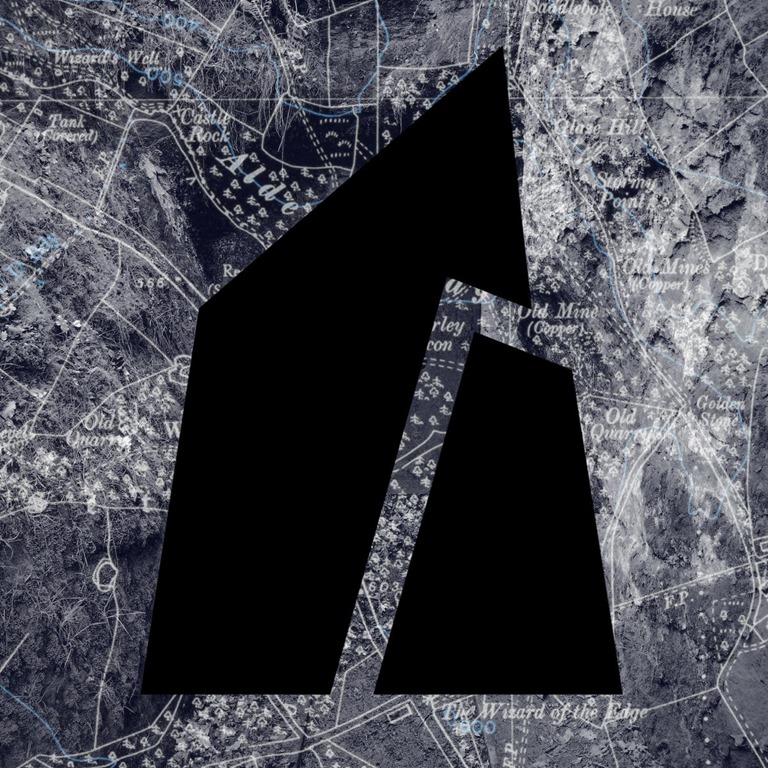
As the accompanying notes outline, ‘Drawing inspiration from the 18th and 19th century mining works at Alderley Edge in Cheshire, Engine Vein explores themes of our industrial past and the myths surrounding the historical site itself, which has been worked since the early Bronze Age up until the 1900s. As well as the mines themselves, the area is full of intriguing features and is steeped in folklore, including the story of The Wizard, The Golden Stone and a Holy Well.’

The tracks titles clearly are directly connected to specific locations, and mark the points at which human geography intersects with physical geography – quite specific instances of man-made interventions imposed upon the landscape, you might say: ‘Descent Assembly’; ‘The Hough Level’; ‘Engine Vein’; ‘West Incline’; Windmill Hollow’. Our relationship with mining has changed substantially over the long centuries. What began as a marvel of development has now become a defining feature of the destruction of the planet by human hands and machinery. But this is how our species is: we always go too far, beyond what’s necessary or sustainable. It’s small wonder there’s a collective nostalgia for bygone days and the deeper recesses of history.

Engine Vein, though, sits in a unique space, between two levels of nostalgia, and the present.

First, as for the method and practicality of its creation, Engine Vein was ‘written as live evolving pieces of electronic sound, each recorded using an AE Modular Synthesiser, Korg MS2000 and Yamaha R100 direct to tape, before being digitally transferred’.

And so it is with Engine Vein that MTN explores a tale of industrial with industrial sounds, and if not necessarily vintage equipment, at least using kit that evokes the spirit and sound of a different kind of industrial, namely that of the late 70s. Engine Vein doesn’t replicate the gnarliest noise of Throbbing Gristle, but the more proto-electro pulsations of cuts from 20 Jazz Funk Greats.

It is, as a listener, difficult to directly correlate the track to their associated locations, for two reasons: first and foremost, there’s no ‘field’ element to the compositions, nothing which is identifiably evocative, nothing which associates the sounds with time or space, period or location. But as much as this, there is the historical gap which sits unbridged – how post-millennial technology emulating the sounds of the late seventies and early eighties connects with the time frame which inspired it.

None of this is to say that Engine Vein is a bad listen: it’s simply better, perhaps, to listen to it separately from its context. It’s rare for a time / place inspired / orientated release to be so overtly beat-driven, and for all the dark shifting ambience which lurks and lingers in the further reaches of the many layers, Engine Vein is a throbbing, pulsating, and quite up-front, energy-strong set which draws as much on 90s dance tropes and rave as it does more primitive 80s forebears.

Of course, for the artist, the experience may be entirely different again: perhaps, for him, this is a listening experience which harks back, back, way back and back further. The title track, with its low, slow pulsations and layered facet, does perhaps speak on another level, and its low, dark throbbing certainly has a resonance which bothers the midriff if not one’s perception of history.

Engine Vein is constructed around a dense sonic haze, throbs and pulses. And at times it’s hard to separate the reality from the recordings, as well as the hazy memories. Dark heavy drones, gouging lines ploughing thick and deep churn the ground to a depth and drag the thick sods over one another. ‘Windmill Hollow’ draws the set to a slow, sludgy conclusion, and leaves you feeling dredged out, tired.

There are manifold depths and layers to explore here, making Engine Vein an album worth spending time with.

AA

a0735635442_10

New Heavy Sounds – 16th February 2024

Christopher Nosnibor

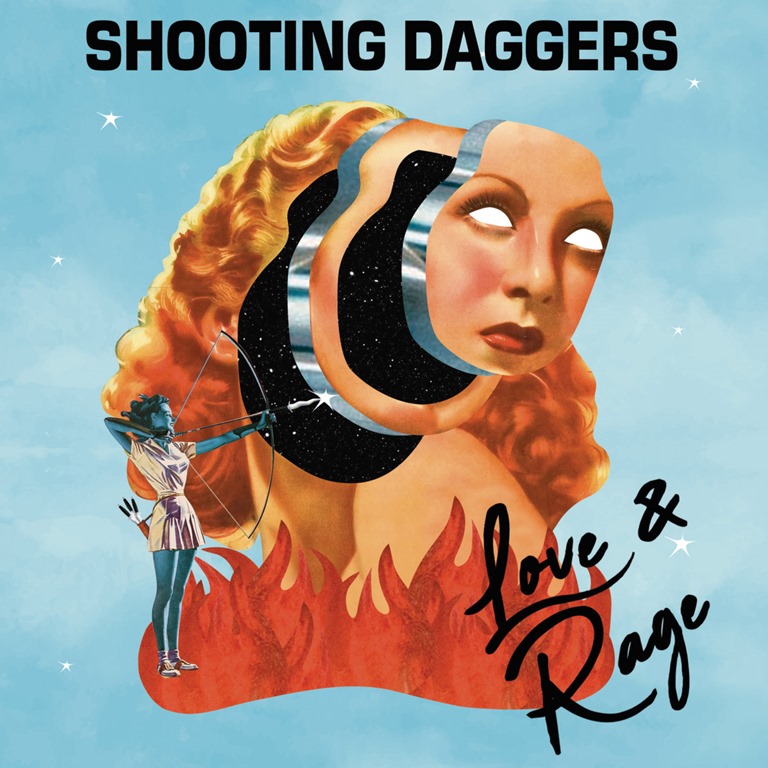
As a label, New Heavy Sounds really do what they say on the proverbial tin – giving a platform to heavy music, while seeking out new forms and styles. Yes, they’ve brought us a slew of stoner doom, but also vintage heard rock with contemporary spins – and, as Mammoth Weed Wizard Bastard and Black Moth, representing each respectively, also illustrate, representing female-fronted acts, too. And so, next up, London-based queercore punk trio, Shooting Daggers.

Having debuted with an EP in 2022, they shared a split single release with intense and fearsome Ukrainian punk labelmates Death Pill last year – and it was a most fitting pairing.

Said single contribution, ‘Not My Rival’ features on this, their debut album, in remastered form, but still clocking in at under two and a half blistering minutes. This version isn’t really different, just cleaned up a bit and mastered at the same volume as the rest of the album. And what a fiery blast of rabid punk fury it is. ‘Give Violence a chance!’ they holler while the bass tears the flesh from your ribs and the guitar burns.

As a title, Love & Rage perfectly encapsulates the pounding ferocity of the album’s nine explosive cuts, the majority of which are comfortably under three minutes in duration. Sal’s vocal delivery is of that circa ‘79 / ’80 vintage, but at the same time contemporary, shouty, spiky, a dash of X-Mal but equally ragged and raw and without stylistic affectation. This is music played with passion, music made because it has to be, an act of catharsis, pure, unbridled venting.

The mid-album slowie, ‘A Guilty Conscience Needs an Accuser’, which closes side one on the vinyl version, not only provides some welcome respite from the incendiary fury, but also showcases their capacity for melody, harmony, and subtlety. There’s certainly not much of that to be found on the rest of the album. ‘Tunnel Vision’ is a gutsy grunger played at double speed, and ‘Bad Seeds’ pounds in a manic hardcore blast which tears your head off and is out the door in a minute and twenty-three.

The title track lands unexpectedly anthemic, energetic but considered, and even a bit Dinosaur Jr. It works, and it works well, and the final track, ‘Caves/Outro’ plays out on a ripple of piano and a note of tranquillity, a calm after the storm. And for all of the ferocity which defines both the album and the band themselves, there’s much positivity in the lyrics and an energy to the performance which is anything but negative.

‘Yeah! Do it! Do it!’ Sal encourages enthusiastically on ‘Dare’; ‘Just have a try’ she sings on ‘Smug’, and on the title track, the message is to ‘Turn the pain into power’. But this is no feeble stab at rabble-rousing or a cliché and ultimately empty bit of tokenistic fist-waving. Shooting Daggers appreciate that anger truly is an energy, and they bring it with full force. The result is an album that packs a punch, and when it comes to punk credentials, this is the real deal.

AA

a2224855558_10