Posts Tagged ‘Album Review’

Roulette Records – 25th October 2024

Christopher Nosnibor

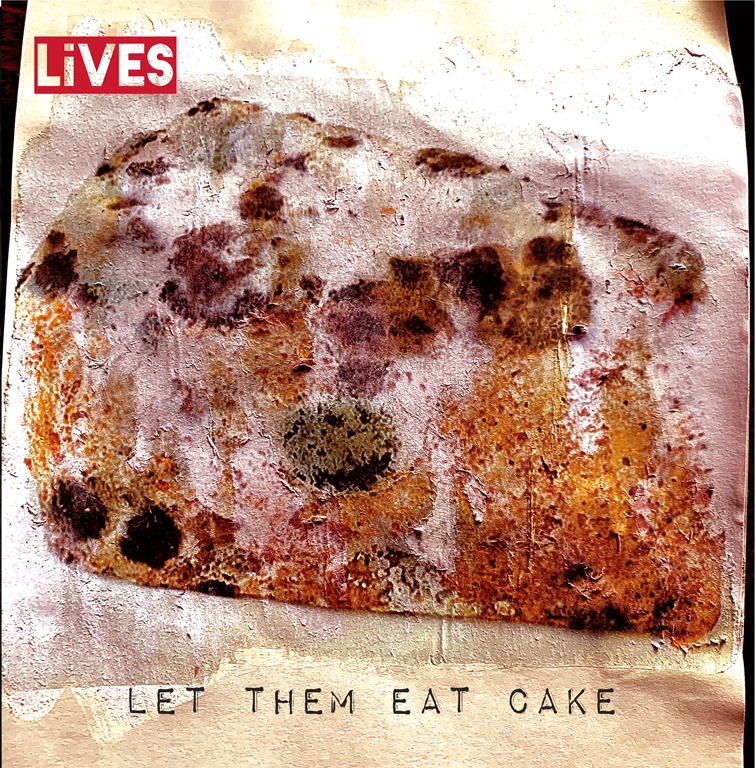
As the album’s title suggests, this is a political record. Then again, the single ‘Cancelled’, released a few months back as a lead-up, certainly gave enough of a hint that this was going to be a rage against contemporary society, and the themes of the social media ‘shitshow shower’ and the culture wars and flame-throwing, division and disinformation that has taken over so much of the Internet – a space where we seems spend more time living virtual lives than we do on real life – dominate the lyrics.

The opening lines of ‘What a Way’ neatly encapsulate the band’s angle:

He’s a little nazi with a pop-gun,

Spilling all of his hate onto the forum,

Overcompensating for the fact that,

It’s lonely life

And so it is that these seven sharp cuts (plus a radio edit of ‘Cancelled’) really pick apart just what it is about modern life that s so rubbish. That’s perhaps rather flippant, not to mention reductive of what Let Them Eat Cake is about. It explores numerous aspects of how the world on-line has eroded so much in culture, and how it’s riven with contradictions. On the one hand, the interconnected world of the ‘global village’ Marshall McLuhan first wrote of in Understanding the Media in 1964 has truly come to pass. The world is switched on and connected 24/7, and it’s possible to conduct conversations and business with the other side of the world in real time. News is instantaneous and everywhere. All music – well, hypothetically, and moreover perhaps depending on your tastes – and media are there, instantly, and for free. But on the other hand, as much as there’s a sense of sameness and conformity – same music, same news, same memes, same opinions – and an ever-blander homogeneity, the inhabitants of the global village hate one another’s guts and seem to even derive pleasure from rage, throwing bricks through their neighbours’ windows, keying their cars and burning their houses.

Everyone is shouting louder than the next, ‘look at me, look at me!’ while posting the same generic shit, the same Instagrammable coffee and cake (let them eat it, sure, diabetes is a small price to pay for millions of followers and true ‘influencer’ status, right?), and what’s more there’s simply too much of it. Anxiety, depression, and therapy have become normalised topics as people spill their guts into the world (and the subject of ‘Come Together’), and while yes, it’s good that they’re no longer taboo or shameful, what’s not good is that we’re in this position where these are everyday realities for so many.

Let Them Eat Cake is a snapshot and a critique of all of this.

‘Cancelled’ certainly gets the album off to a fiery, riff-driven start, but it soon becomes clear that LiVES have some considerable capacity for stylistic range. Of course they do: to rail about cultural sameness while doing the same thing on every song would be hypocritical.

The title track has more of a 90s indie vibe, and even goes a bit Manics, a bit Mansun, and a little bit glammy, and ‘Come Together’ has more of an indie vibe, too, but also a theatricality which calls to mind The Sensational Alex Harvey Band, but then ‘What a Way’ cranks up the guitars and hits like a punch in the guts. ‘Already Dead’ and ‘Is This What You Want?’ bring a big stoner-meets Led Zep rock swagger, which contrasts again with the country twang of ‘Hope and Freedom’.

The span of styles makes for an album that never falls to formula or gets predictable, but the lyrical focus ensure it retains that vital cohesion. What really comes across through every song is that this is an album from the heart, born of frustration, disappointment, despondency, irritation, antagonism, that whole gamut of emotions stirred by that feeling of inflammation that everything is so very, very wrong. For all that frustration, disappointment, despondency, irritation, antagonism, Let Them Eat Cake is an album packed with passion, not to mention some corking tunes.

AA

AA
LPJ1200S

XTra Mile Recordings – 18th October 2024

Christopher Nosnibor

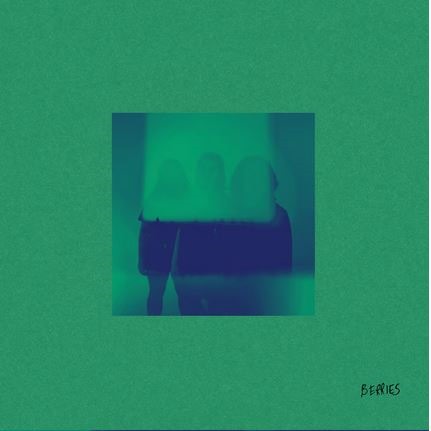
Berries have been on our radar since 2017, and now, just over two years on from How We Function, they return with they eponymous second long-player. They’ve done a good job of building the anticipation with a run of well-spaced singles, starting back in the summer with ‘Watching Wax’, before revealing an altogether previously unseen side with the acoustic-led ‘Balance’. So which Berries will we see come to the fore here?

It’s more than a pleasure to report that it’s the very best Berries which manifest across all of the album’s ten cuts, all of them sharp. Ten tracks is in itself significant: it’s the classic album format of old, and all killer, no filler, and no faffing with interludes or lengthy meanderings. The whole album’s run-time is around half an hour: it’s tight, it’s succinct, the songwriting is punchy and disciplined, and has the feel of an album as was in the late 70s and through the 80s, planned and sequenced for optimal effect. But they also manage to expand their template within within these confines: there’s some mathy tension in the lead guitar work, and there are flourishes which are noodly without being wanky, and they serve more as detail rather than dominating the sound.

‘Barricade’ kicks in on all cylinders, uptempo, energetic, post-punk with punk energy amped to the max. By turns reminiscent of early Interpol and Skeletal Family, with some nagging guitar work scribbling its way across a thumping rhythm section, it’s a corking way to open an album by any standard. ‘Blurry Shapes’ is a crafted amalgamation of mathy loops in the verses and crunchy chords in the choruses, all delivered with an indie-pop vibe which is particularly keen in the melodic – but not twee or flimsy vocals. and Berries just packs in back-to-back bangers.

‘Watching Wax’ lands as the third track, a magnificent coming together of solid riffing, chunky bass, and sassy vocals. Balance’ provides a change of pace and style immediately after, and it’s well-placed, wrapping up side one.

‘Jagged Routine’ starts off the second half with a choppy cut that brings in elements of poppy post-punk, math-rock and circa 1987 goth alternative rock. I’m reminded rather of The Kut, but then equally The Mission in the final bars, while ‘This Space’ steps things up with a dash of Gang of Four and a mid-00s technical post-rock flavour compressed into a driving rock tune that clocks in at just shy of three and a half minutes.

On Berries, Berries sound perhaps a little less frantic and frenzied, and maybe less confrontational and driven by antagonism than on their debut, but as a trade-off, they sound more focused and more evolved. The introspective introversion of the form creates an intensity that suits them well.

The guitar riff in the verse of ‘Narrow Tracks’ is so, so close to a lift of ‘When You Don’t See Me’ by The Sisters of Mercy that it makes me feel nostalgic for 1990, but finally gives me cause to rejoice in 2024, as they’ve incorporated it into a layered tune that has many elements and just works. Having waded through endless hours of bands doing contemporary ‘goth’ by making some synth-led approximation of a complete mishearing of anything released between 1979 and 1984 by the bands that would be branded goth by the press, it’s a source of joy to hear an album that captures the essence of that period without a single mention of the G-word.

Berries is a fantastic album. It gets to the point. It has power it has energy in spades – and attitude. They also bring in so many elements, but not in a way that lacks focus. In fact, they sound more focused than I would have ever imagined. This album deserves to see Berries go huge, and it’s got to be one of my albums of the year simply by virtue of being absolutely flawless and 100% brilliant.

AA

AA

-IoeYM00

AA

Berries

6th September 2024

Christopher Nosnibor

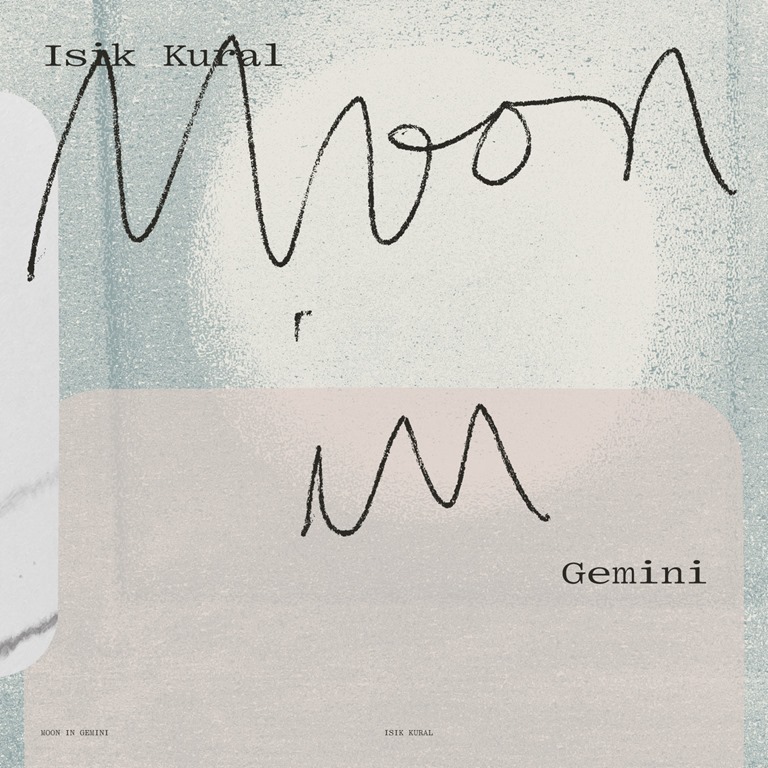
Isik Kural’s Moon in Gemini is described as ‘a luminous scrapbook of slow-flowing narratives couched in intuitive and symbolic storytelling. Awash in woodwinds and strings, lullaby-inflected lyrics and tender imagery, Isik’s voice moves closer to the listener’s ear on his third album, intoning states of being in which the wonder filled sound of everyday life can be heard and felt. Moon in Gemini is a space for wide daydreaming, where the invisible steps forward and dauntless ghosts play under a hazy lunar light.’

This is a charming proposition, and the actuality proves to be even more so. Moon in Gemini contains fourteen compositions, the majority of which are fleeting, ephemeral pieces of but perhaps a couple of minutes in length: a handful extend beyond three minutes, but none beyond four.

The overall effect, then, is soothing, but the fragmentary nature of the assemblage means the flow is broken, and often the smooth, calming flow is disrupted as compositions end – I won’t say prematurely, because who am I to say when a composition should end, how long it should be? These things are purely artistic choices, and my feeling that pieces here sometimes feel incomplete or abridged is simply a that, a feeling, as much from my desire for more than any clear or objective assessment.

The first piece, ‘Body of Water’ is typical in its soothing, tranquil ways. Delicately picked guitar and mellow woodwind drift and trill with a delicate drip-drop sound, and it’s beautifully relaxing, the sonic recreation of the experience of sitting by a still lake in warm – but not hot – sun while a gentle breeze ripples the surface. I close my eyes and find myself on the edge of a tarn in the Lake District: a happy place, a place of tranquillity, of escape. It’s a place I could spend long hours, and in my heart I believe those hours could extend for days. But it fades out, far too soon – after a mere minute and fifty seconds, the moment’s passed. But this is in many ways just how it is to be sitting by a lake, and sensing a moment of true perfection: just as you begin to bask in it, the wind picks up and a cloud drifts over the sun, the temperature drops and you realise that that perfect moment was simply that – a moment. Moments pass before you can grasp a hold on them. They exist in a momentary flicker, the blink of an eye, and so often, they’ve passed before you even realise they’ve arrived.

AA

AA

‘Prelude’ is a dainty, sugary, music box tune which exists out of time but is, at the same time, steeped in an ambiguous nostalgia. Precisely what it’s a prelude to, I’m not sure, but I’m also not sure it matters, while ‘Almost a Ghost’ is haunting, gentle, introspective and flitting with fluttering sounds of nature alongside its rippling pianos and low-key, almost spoken-word vocals. Each piece is shimmery beguiling, the supple and subtle layers rippling over one another while on the pieces where there are vocals – and much of Moon in Gemini is instrumental – it’s true that Isik’s voice is quite special, and an instrument in its own right, and also more about the enunciation and, often breathy, bedroomy, about its contribution to the overall atmosphere. ‘Mistaken for a Snow Silent’ is beautiful, and as much on account off its sparse simplicity than anything else.

We hear ambience and chatter around and even through the songs, and these incidentals work well, in context.

‘Gül Sokağı’ is low and slow and possesses a quality that difficult to define The soft woodwind on ‘Birds of the Evening’ is light and airy and mellifluous. The experience is uplifting, and as a whole, Moon in Gemini is sedate and arresting.

To bemoan that an album doesn’t provide everything that I would like is not a legitimate criticism: it’s not a failing on the artist’s part, and I cannot seriously claim a loss of expectation: with Moon in Gemini, provides everything promised, and more. This is a truly beautiful album, and one which has a rare warmth and softness.

AA

AA

a1909099100_10

Klonosphere Records / Season of Mist – 13th September 2024

Christopher Nosnibor

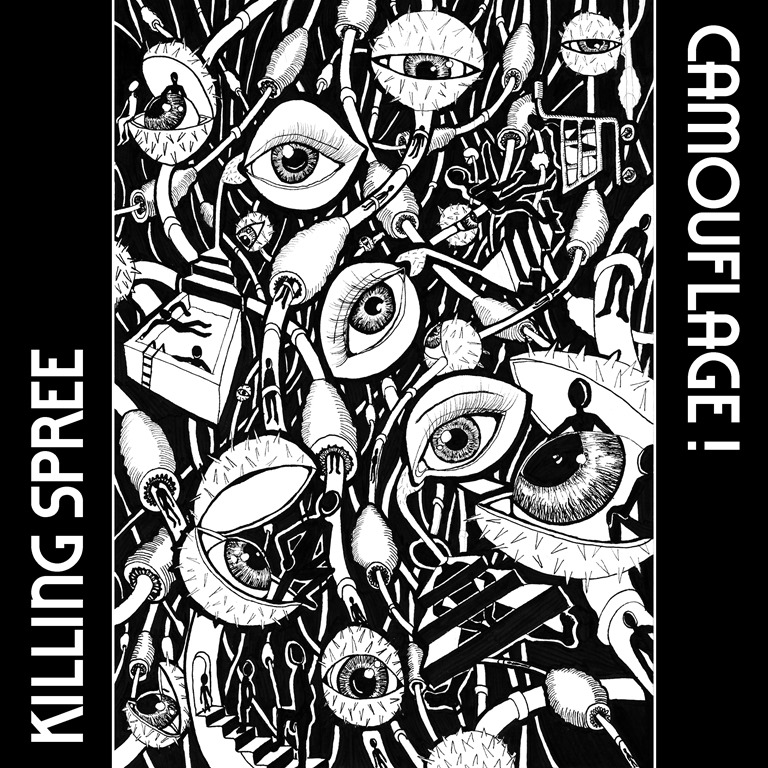
We’re promised ‘an unprecedented auditory experience’ and warn us to ‘Prepare to be engulfed in a sonic journey where brutal rhythms meet wild improvisations, pushing the boundaries of what metal and jazz can achieve together.’ As much as I think ‘unprecedented is a much overused word – and often as spuriously as ‘exponential’, when presented with a work which combines metal and jazz, I have to admit that there’s fairly limited precedent in what is, unquestionably, a very small field. There’s GOD, perhaps, but they were of a more industrial persuasion, in a meat grinder with heavy avant-jazz, whereas Killing Spree are dirty, dark, guttural growly metal. The pitch is that ‘Following the acclaimed release of their EP A Violent Legacy, featuring inventive covers of classics by Death and Meshuggah’, Camouflage ‘continues to showcase their unique blend of death-metal ferocity and electrifying, irreverent free jazz textures’.

Killing Spree is Matthieu Metzger (Klone, National Jazz Orchestra, Louis Sclavis, etc.) and Grégoire Galichet (Deathcode Society, Glaciation, Kwoon, Vent Debout), and it’s Metzger who brings the jazz. As we learn, his sax is heavily treated, ‘manipulated with an array of machines’ and in truth, it doesn’t sound like a saxophone for the most part. In fact, while at times it sounds like an angry three-foot hornet having a fit, it generally sounds like nothing else on earth, at least not that I’ve heard. Consequently, it doesn’t even sound particularly ‘jazz’; it’s an aggressive drone, a buzz, a deep whine.

The title track is a wild ride of what sounds like a combination of technical metal and sludgy, doomy Sabbath-esque metal and blasts its way past the seven and a half minute mark. The drumming is colossal, positively megalithic.

At times, shit gets really weird, and no more weird than on the frenzied thrash of ‘Disposable’, where everything jolts and crashes against everything else: the riff is as relentless as it is chaotic, then from amidst the frenetic cacophony, bold brass bursts forth, and fuck me if it doesn’t border on ska-punk, and it would be quite the knees-up were it not for the fact that everything else in this manic maelstrom is gritty metal and heavy as hell. ‘The Psychopomp’ sounds like a stomping keyboard-led synthy glam stomper , and is perhaps the most overtly prog piece on here. Around the mid-point it hits a heavy groove, overlayed with some agitated-sounding but also absolutely epic brass. These guys certainly get thee way of layering: there is simply so much going on across the span of each song, let along the full expanse of Camouflage that it’s difficult to digest.

The delicate woodwind into on ‘Toute Cette Violence Qui Est En Moi’ gradually evolves into some brazenly meandering jazz, with rattling percussion and a sense of space – space to breathe, space in general. Moments later, ‘All These Bells and Whistles Part I’ piledrives in with a frenzy of horns and percussion and off-the scale discord and crazed incongruity – not to mention thunderous end-of-days power chords which slug their way, low slow, and heavy, to the end. It’s a long four and a half minutes, a crawling trudging grind worthy of early Swans, with the addition of dingy, devastating vocals.

The two-part ‘All These Bells and Whistles’, with a combined running time of almost twelve minutes is truly a monster, and this is a fair description of this genre-smashing effort. I expected to have some pithy summary, but my brain is fried. It’s dark, it’s gnarly, it’s jazzy, it’s heavy… it’s everything all at once.

AA

509094

Cruel Nature Records – 24th October 2024

Pound Land have become regulars here at Aural Aggravation, essentially because I absolutely love what they do and feel that it’s fitting use of the platform I have to broadcast the fact. They’re clearly not everyone’s proverbial cup of tea, with their overtly dour, dingy, misanthropic racket which provides the sparse backdrop to sociopolitical critique being presented with a grainy, lo-fi production which is absolutely guaranteed to ensure that they’re not going to be all over the radio, or even usurping the popularity of Sleaford Mods anytime soon, or ever. ‘Dour’ and ‘dingy’ hardly sound like strong selling points, but I’m clearly not alone in my appreciation of their work, and it’s been perversely satisfying witnessing the growth of both their reputation and audience.

But just to be absolutely one hundred per cent, cast-iron solid in guaranteeing this, their latest album is something of a twofer, a cassette release (of course) with a live set occupying the first side, and a single longform track in the shape of the half-hour long ‘Worried’ filling the other. It’s effectively Pound Land’s Ummagumma.

And while most bands who put out a live release pick recordings which are the most representative, while at the same time capturing them at their best – which is why a lot of live albums tend to be assembled from recordings made over the course of a whole tour, Pound Land are giving us a document of a one-off, as they write: ‘[It’s] a recording of the band playing live at New River Studios in North London in the summer of 2023. This was in the midst of a heatwave, without Nick on guitar, and joined by the good boss of South London DIY label Rat Run Records, Rob Pratt (who organised the gig and opened proceedings that night as his electronic alter-ego Entschuldigung). 35 minutes of dub-inflected psychedelic synth-soaked Pound Land has been captured, improvising through the heat and the alcohol, and laden with BBC Radiophonic-style special effects. Recorded by Tom Blackburn at the desk, then mixed by Tom and finally mixed and mastered by Nick Harris. This is Pound Land live as they’ve never sounded before (and possibly won’t again).’

Yes, it’s been mixed and mastered, but it’s essentially a warts-and-all document of a single moment in time.

Minus the guitar but with the addition of jittery sax, the bass-led rendition of ‘Violence’ reminds me rather of the Foetus track ‘Honey I’m Home’, which foetured on the live album Male and semi-official bootleg, with its simple, trudging chord sequence, especially with the drawling, thick-throated snarling vocal. Brutally atonal, it’s a hell of a set opener, and sounds like they’re on stage trying to see how many people they can drive out of the room in the first five minutes.

Single cut ‘Liar’ is a raw and raucous blast, motoric beats and monotonous bass groove laced with frenzied woodwind and a blitzkrieg of laser synths provide the sonic backdrop to Adam Stone’s ragged hollering, before they dig even deeper with ‘Flies’, which lands somewhere between The Fall and the Jesus Lizard. The eight-and-a-half-minute ‘Brain Driver’ is something of a standout: fully two minutes longer than the studio version, it’s a dirty, bassy, jazzy, reverby spaced-out journey through darkness.

And then there’s the new studio track on the reverse, which they describe as ‘a 30-minute-plus sonic odyssey’, expanding that ‘This mammoth audio-journey was the result of many months of hard work by Nick Harris, joined by Adam Stone on voice and guest-star Adam Pettis (ex-The Ofays/Fuck Fuck) from America, on guitar, electronics and vocals. Arguably some of the best production and sound work Nick / Adam have committed to tape.’

No argument there: it actually sounds produced (which is no criticism of their other work), and is an expansive and explicitly experimental piece with infinite layers of echo and delay giving this tense composition a dubby vibe. In the dark blend are elements of trip hop and late nineties / turn of the millennium apocalyptic hip-hop and nihilist No-Wave spoken word, plus tribal beats and a whole lot more, including a dash of Scott Walker and Suicide. The sound is cleaner – in that it’s not buzzing and fuzzed-out or breaking your guts with booming bass – but still murky, and treble tones and sibilant syllables in the vocals cut through it. It’s clearly a departure from their existing body of work but whether it marks the start of a new direction, or is, like the live set it’s being released with, a one-off, remains to be seen. Whatever happens next, this is a very different kind of offering from Pound Land, and one which proves they’re not moored to a fixed idea of what they are.

AA

cover

Trace Recordings – 11th October 2024

Christopher Nosnibor

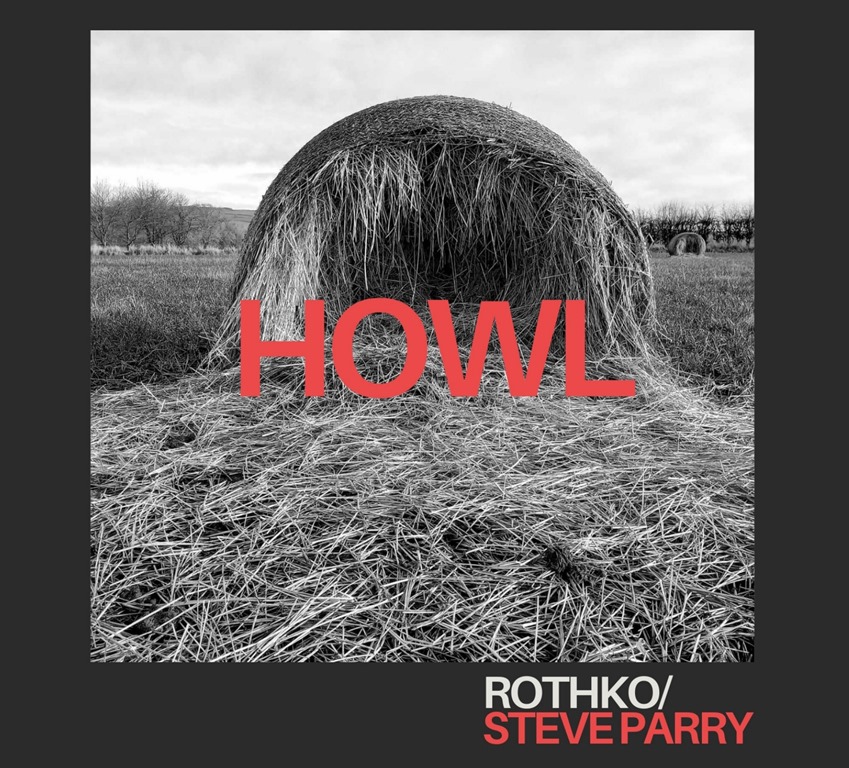
One might say that this collaboration has been a long time in coming: the pair have been friends for some twenty years, and have made contributions to one another’s recordings over that time. There’s no question that it was worth the wait. Their process and the way in which they each contributed is integral to the finished work, and here, not only to save typing, but to ensure nothing is lost in translation or paraphrase, I shall quote from the accompanying notes:

‘Emanating from the sounds of a church organ, with many short pieces recorded by Steve Parry in an ancient secluded church, and then embellished by Beazley, with his resonant bass tones, electric guitar and electronics, HOWL captures the senses of ambience, harmony, discordance and noise, with recordings of the churches space, of its emptiness, interspersed with the music.

‘The two, long, resulting pieces, create an almost ritualistic event, of something taking place that is mysterious, uplifting, and, in parts, unsettling.

‘The album reflects an emptiness, the echoes from ancient walls, a deep sense of place—and the refractions between these two artists. HOWL veers between moments of meditative beauty and unsettling discord, creating a soundworld that feels ritualistic, mysterious, and transformative.’

This is very much an accurate summary and fair description of the album, consisting as it does of two compositions each with a running time of around twenty minutes, but it’s more of a challenge to convey in fullness the resonant effects of this vaporous sonic drift. The first, ‘In the Season of Darkness’ is formed around elongated drones, but their organ origins isn’t immediately obvious in the ear. One associates the instrument with bold, piping swells which sing to the heavens, but here, it’s more subdued, almost a low, rumbling wheeze which provides an eddying undercurrent. Acoustic guitar and slow, meandering bass are far more dominant, and it’s very soon clear that this is by no means an ambient work, or a work without structure or form. The guitar and bass play distinct notes and motifs, often alternating with one another, but sometimes playing in co-ordination, and others still across one another. Treble strains like taut whines of restrained feedback filter through, these higher-end frequencies forming a counter to the resonating bass and the mid-range organ drone which slowly begins to emerge and take form a few minutes in.

The dissonant incidentals rupture the surface like lightning through a thick, rolling cloud cover. The mood is sombre, ominous. The fact it’s pitch black outside and has been since around 6:30, I’m feeling autumnal and writing by candlelight probably means I’m feeling it more, but this is music with a subliminal, subconscious pull. There’s a segment around the mid-point where there’s a pause, and there’s nothing but clatters and clanks, like tin cans rattling in the wind, before the drone returns, darker and denser than before, and with a sepulchral reverb, and it’s something which taps into something primitive and earth-born within. I can only really articulate it by way of a brief recollection of a time I visited an obscure stone circle in Scotland. Most of the stones were gone, but the shape of the circle was marked out by a ring of nettles. It was probably around twelve metres in diameter, and the few remaining stones were no more than three feet high. It was a little way off a minor road, in an unkept grazing field and as unremarkable as it was forgotten and neglected, and I had only paused by it because I had spotted it on the map. But, arriving at the place, something happened: the air temperature dropped a couple of degrees, the wind sped up and clouds obscured the sun; but more than this, there was an atmosphere which brought goosebumps and a shiver down my spine. The place had an atmosphere, and I almost felt as if I was for a brief moment splitting across millennia. The sensation was but fleeting, but it was palpable. The experience of hearing this piece is akin to that, resonating on a level beyond the sphere of commonplace experience.

Counterpart composition, ‘In the Season of Light’ is, again, constructed around a long, long, reedy drone, this time with piano and delicate scrapes and wind-like rustles and whooshes adding the additional layers and textures. It doesn’t feel our sound especially light or uplifting: dark sonorous tones and groaning creaks occupy the corners, before, again around the mid-point, a gentle guitar part, reminiscent of later Earth tunes, arrives, and there are some delicate strings, too. Finally, light begins to break through.

HOWL clearly has no correspondence with Allen Ginsberg’s seminal poem, but does very much tap into something primal and primitive, the way we feel the effects of the seasons, the sun, the moon, possessing what one might perhaps describe as a ‘spiritual intuition’, reaching elemental aspects of the human DNA. Understated, but powerful and moving, it’s a subtly intense work.

AA

6 page ECOpack with measurements.pdf

October 2024

Christopher Nosnibor

Having just effused over the benefits of Bandcamp Friday, as well as wrestled with the overwhelming volume of notifications and review submissions, this one lands as the kind f curveball only the likes of Foldhead are likely to deliver, in that this is by no means a new release. Beserk Pinball Machine / Quasar Delirium was in fact first released back in 2021, as something of an archival recording: ‘Recorded in 2015 for a tape label that ceased to exist prior to the intended release date. The 25 copies that had been made were distributed at the Experimental Yorkshire festival which took place at Hebden Bridge Trades Club on 21 July 2018’ And now the Bandcamp page has been refreshed, with ‘two new mixes + a new piece.’

I’m not sure if ‘beserk’ is an intentional variant of ‘berserk’, but I’m going to assume it is. The etymology of the word ‘berserk’ is quite fascinating. The word itself means ‘out of control with anger or excitement; wild or frenzied’, but its origin lies in the reverence the Saxons held for bears. ‘Berserk’ translates as ‘bear shirt’, and berserkers were the warriors placed at the front of a battle formation: their job was to chew their shields, gnash their jaws and foam at the mouth like frenzied bears in order to share the shit out of their opponents before the charge.

This release is every bit as scary and unpredictable as a frenzied bear, and certainly inflicts a bear-like mauling on the senses, being particularly brutal on the ears, and on the lower intestines for that matter.

The opener and lead track, ‘Beserk Pinball Machine’ is an absolute noise monster. There are – sort of – vocals in the mix, but they’re distorted and largely buried beneath a deluge of mangled noise, churning distortion and feedback all mixed together to forge the nastiest mess of trebly sonic ruination. It’s just shy of fifteen minutes shattering, explosive, convulsive digital meltdown which makes Merzbow sound mellow, and Kenji Siratoi supremely calm in comparison. Paul Whatshisface, having previously been a member of Smell & Quim and Swing Jugend – as well as occasional noise duo …(something) ruined has had a long career operating in harsh noise circles, and this is both noisy and almost unspeakably harsh. The noise frenzy ends abruptly, but there’s a spell of low-level hum at the end which offers some respite, however much the not-silence nags.

‘Quasar Delirium’ is appropriately titled: another quarter of an hour of brain-melting, tinnitus-inducing noise squall. Only this has more fizz, more squeal, more laser bleeps, more treble, and more feedback, more melting circuitry, all against a backdrop of churning cement-mixer grind, washing machine spin-cycle metallic reverberations. The experience is how I imagine standing next to a massive propeller engine without ear defenders, while a Star Wars type laser-gun battle takes place all around – while buildings explode and collapse all around, and there is nowhere to hide.

The concept of remixes in this context is rather amusing, and ‘Machine Pinball Bezerk’ and ‘Delirium Pulsar’ are more about fucking shit up even harder than remixing in the more conventional sense. ‘Machine Pinball Bezerk’ sounds like an atomic bomb: it’s noise on the scale of the scene in Threads where the buildings are decimated by a wall of white-hot flame. It’s a scene that seems to last an eternity despite being maybe five minutes at most. The fifteen minutes of ‘Machine Pinball Bezerk’ feels like a lifetime and you can almost feel the tinnitus coming on after just five minutes, while your brain melts and trickles out of your ear.

‘Delerium Machines’ delivers more of the same, the most pulverising, excruciating blasting racket. It hurts, and the overall experience is disorientating: an hour and a quarter of the most abrasive, churning noise imaginable. It’s not Harsh Noise Wall, but there’s not much variety, either, meaning that this release is a relentless assault that will likely leave you wilted, drained by the end – and that’s assuming you can still hear.

AA

AA

a1518553209_10

Ipecac Recordings – 4th October 2024

Christopher Nosnibor

The band’s very name carries considerable weight. It’s a phrase oft-used, but rarely really assessed and processed. But the band’s comments around their second album place it front and centre: “This is more of a statement about how things are going in the world right now.” says Spencer. “Things were pretty shitty before. I think things may actually have gotten a little bit worse.”

In the last week, here in the north of England, it’s rained. A lot. Here in York, the river breached its banks for the first time this autumn. Last year, this didn’t happen until sometime in October, although – despite multi-million-pound work being done on flood defences – vast swathes of land lay under water for the best part of six months thereafter. It’s also rained a lot in the south, too, with flash flooding. Yesterday, I turned on the news to see images from the US, which showed trucks being driven on rapid currents of rivers which hours earlier had been roads. And yet still people shrug and say ‘meh, it’s cyclical, we’ve had ice ages, we’ve had climate change before, I don’t see any evidence it’s man-made. Besides, we’ve just had the coldest summer in years, how’s that global warming, eh?’ When it comes to climate denial, denial is the operative word. Sure, climate is ever-changing, but not at this rate.

But as a species, we seem hell-bent on self-destruction: seeing things unfold in real time in the Middle East is terrifying, the mounting death toll in Gaza – or what’s left of it – a horror almost beyond words, while Russia continually alludes to a nuclear response. But this isn’t even a return to the Cold War climate, because a very hot war rages all the while, with no sign of abatement or a peaceful resolution.

So, have things ‘gotten a little bit worse?’ It would seem so. And the thing about history is that it happens – or is made – fast, and sometimes faster than others. As I type, I’m having to turn the volume up to drown the sound of fighter jets running night exercises – I like to hope they’re exercises – nearby and over the city. RAF Eurofighters – currently, it would seem there are seven running circuits around the area – and occasionally US planes, too, have been evermore present of late, and it’s hard not to feel nervous.

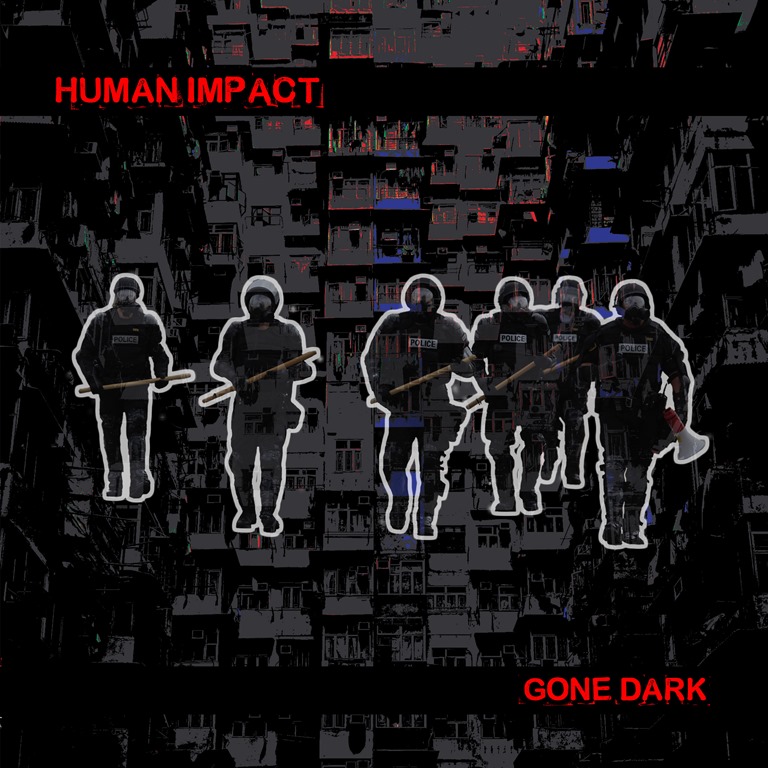
Turning up the volume on Gone Dark at least is no chore: it’s an album which needs to be heard at the kind of level it was played, the kind of level you know it would be played live. Seeing Unsane at The Brudenell in Leeds back in 2011 will forever be a standout for me. Nothing fancy or showy: they were simply relentless and brutal. And so it is that Human Impact bring the best of their component parts, consisting as they do of Unsane frontman Chris Spencer and Cop Shoot Cop squallmaker Jim Coleman, with bassist Eric Cooper (Made Out of Babies, Bad Powers) and drummer Jon Syverson (Daughters). These are four guys who know how to make the most punishing noise. And if noise has colour, the colour of Human Impact is a stark, steely grey, with the texture of sheet metal.

As the accompanying notes explain, ‘Gone Dark‘s songs emerge from a cinematic miasma of dark ambience, processed field recordings, street rants and industrial grinding. Like embers flickering from an inhospitable wasteland, Gone Dark‘s nine tracks provide paths away from total annihilation, with Spencer barking “Wake up or live on your knees” (‘Collapse’); “Now is the time to resist” (‘Destroy to Rebuild’) and “Follow the sound … the future is now” (‘Corrupted’)
“It’s just sort of the modern state of being, to me. From really a human perspective in terms of us being part of the masses, all of us together as one giant conglomerate of production and taxpayer bullshit,” says Spencer. “I make a conscious effort to try to think of things in terms of ‘we’ and ‘us’ and what’s happening to us as a whole instead of just my stupid problems.”

Understanding this context is integral to appreciating Gone Dark. There’s a pervading weight to every song, and the mood is of rage – the kind of rage that comes from a feeling of powerlessness. ‘Collapse’ sets the bleak, nihilistic tone as it hammers away, the guitar and bass meshing together to form a dense sonic sludge. It’s abrasive, but suffocating, conveying a sense of desperate confinement. Anger, anguish, anxiety. Gone Dark positively burns with all three.

It would be wrong to bemoan any lack of variety across the album’s nine punishing assaults: Gone Dark reflects life in the real world. There’s no respite, only relentless, brutal onslaught, kicking after kicking. You don’t get to catch your breath or mellow with some nice time out: no, you just have to endure the blows and do whatever it takes to stay afloat, and you stagger, punch-drunk, swaying on your feet wondering how much more you can actually take. It’s not a real question, since there is no option to do anything but plough on. Life is harsh, and this is a harsh album – not in the sense of harsh noise, but in its unyielding density. Gone Dark is the sonic equivalent of a good kicking. It’s so raw, so harrowing, and so intense it hurts.

AA

114481

2nd October 2024

Christopher Nosnibor

Christ only knows what this is intended to be a soundtrack to, but the debut long-player from chaotic Welsh post-punky alternative rock act Baby Schillaci could be loosely considered a concept album. The soundtrack to a schizophrenic episode, perhaps?

Opening with ‘## TITLE SEQUENCE ##’ and with ‘## INTERVAL ##’ breaking the sequence midway through, there’s a semblance of a structure here, and while some of the titles do hint at a narrative art in keeping with ‘real’ soundtracks – ‘DISINTEGRATING SMALL TALK’ and ‘JACKIE’S GIRL’, for example, elsewhere there just seems to be more of an interest in brutality and mortality – consider ‘BLUNT FORCE TRAUMA’ and the crazed, explosive single cut ‘THE FLATLINERS’.

The aforementioned ‘title sequence’ brings tension – a stark piano and brooding bass builds and ultimately yields to a surge of expansive abstract dissonance, but with a widescreen, cinematic feel, before ‘ULTRA HD HAPPY FACE’ blasts in with some thick, scuzzy guitars and there’s a strong early 90s alternative vibe to it. But as much as it’s Jacob’s Mouse and the Jesus Lizard, it’s got that roaring grunge revival thing going on, and calls to mind Pulled Apart by Horses’ debut album. ‘tHe AnTi suNCreaM LEaGUe’ comes on like Therapy? in collaboration with Sleaford Mods with a bit of Rage Against the Machine going on, which on paper shouldn’t work, but it’s an absolute riot: furious overdriven guitars nagging at a cyclical riff paired with a relentless, vitriolic spoken word rant hits the mark, and again reminds us – at least those of us who were there – just how eclectic the 90s alternative scene was. This was the decade when shit got weird, in a good way. It was a time which will be forever synonymous with grunge and Britpop, but it also gave us the previously unthinkable musical hybrid of the Judgement Night soundtrack, and a whole host of less-than-obvious crossovers. Pop Will Eat Itself were a one-band hybrid of infinite proportions, while Faith No More were more contained but no less genre-busting, and there was just so much weird shit happening the only question was as to what’s going to happen next. Sadly, the answer was Oasis, and while interesting stuff was still happening on the fringes, Oasis simultaneously killed indie and alternative and musical innovation with their turgid pub-rock monopoly.

Built around a thick, low-slung, grinding bass, ‘DISINTEGRATING SMALL TALK’ has something of the industrial roar of Filter about it, but then again, some of the stoner swagger of Queens of the Stone Age. These guys don’t limit themselves when it comes to their songwriting. Genre? Pfft. Look, if it sounds good and they get to kick out some dirty noise, it’s good. And this IS good.

‘THE FLATLINERS’ starts out like early Interpol before flooring the pedal and accelerating in a deluge of guitar and frenetic drumming, and it’s like at least three songs in one, and it’s this crazed shift from one thing to another which defines The Soundtrack. Closer ‘BLUNT FORCE TRAUMA’ is a sort of motoric workout where The Fall and The Black Angels collide, but the sound is solid and it builds to a mighty climax.

The thing The Soundtrack needs now is the accompanying movie… I’ve no idea what it would look like, but it would be wild!

AA

Baby Schillaci - The Soundtrack Artwork BIG

Cruel Nature Records – 27th September 2024

Christopher Nosnibor

The scene of microlabels will always give you something absent from the mainstream. I mean it’ll give you many things, but I’m talking about variety. We live in the strangest of times. Postmodernism brought simultaneously the homogenisation of mainstream culture and the evermore extreme fragmentation of everything outside the mainstream. And example of that fragmentation is the existence of Cruel Nature Records, who operate by releasing albums digitally and on cassette in small quantities. Further, the second album by Deep Fade, is typical, released in an edition of forty copies. It’s better to know your audience and operate on a sustainable model of what you can realistically sell, of course, but do take a moment to digest the numbers and the margins and all the rest here. It’s clear that this is a label run for love rather than profit.

The sad aspect of this cultural fragmentation is that so much art worthy of a wider, if not mainstream, audience simply doesn’t get the opportunity. Not that Deep Fade have mainstream potential, by any means. As evidenced on the seven tracks – or eight, depending on format – tracks on Further, Deep Fade are just too weird and lo-fi for the mainstream to accommodate them. They simply don’t conform to a single genre, and with tracks running well over eight minutes and often running beyond the ten-minute mark, they’re not likely to receive much radio airplay either.

Opener ‘Tidal’ is exemplary. Somewhere during the course of its nine minutes it transitions from being minimal bedroom pop to glitchy computer bleepage to a devastating blast of messed-up noise. Yet through it all, Amanda Votta’s vocals remain calm and smooth as she breathily weaved her way through the sludge. The twelve-minute title track veers hard into wild Americana, a mess of country and blues and slide guitar, before tapering into fuzzed-out drone guitar reminiscent of latter-day Earth. Amidst trudging drone guitar, thick with distortion, it’s hard not to feel the lo-fi pull.

We’re immensely proud to present an exclusive premier of the video for the mighty ‘Tidal’:

AA

‘Surge’ arrives on a raw metallic blast before yielding to a spacious echo-soaked guitar drift and some dense, grating abstractions. Texture and detail are to the fore on this layered set of compositions are by no means easy to navigate.

As the band explain, ‘The album, influenced by Neil Young and Einstürzende Neubauten, was recorded across various locations including St. John’s, Providence, Liverpool, and Edinburgh. Environmental elements play a significant role, with guitars recorded during a nor’easter and vocals captured at lighthouses, incorporating natural sounds like wind and bird calls… Toronto’s Church of the Holy Trinity and the Cowboy Junkies’ The Trinity Sessions also influenced the album’s sound, adding to its atmospheric and melancholic feel.’

Atmospheric and melancholic it is, although many of the aforementioned touchstones aren’t easy to extrapolate from the mix. Nevertheless, and you feel your stomach enter a slow churn, which is exacerbated by the low-gear drones which sound like low-circling jets – there have been a lot of those lately and the air is filled with paranoia and mounting dread right now. Further, however not only provides a sonic landscape that matches this mood, but runs far deeper into the psyche.

The acoustic ‘Little Bird’ scratches and scrapes over a fret-buzzing acoustic guitar. The fifteen-minute ‘Heartword is simply a mammoth-length surge of everything, occasionally breaking down to piano and deep tectonic grinds.

It’s fitting that Deep Fade should call their second album Further, because this is where they take things. At times it’s terrifying and at times it’s immense.

The lyrics are as breathtaking as the crushing bass on ‘Wake Me’, and the sparse arrangement of closer ‘Fixed and Faded’, with its breathy, folky vocal and crunchy overdriven guitar which drones, echoes, and sculpts magnificent spares from feedback and sustain, brings a sense of finality and offers much to digest.

The digital version includes an additional track, another monumental epic in the form of the eleven-minute ‘Hawk’, a work of haunting, spectral acoustic country: it’s one hell of a bonus worthy of what is inarguably, one hell of an album.

AA

a1741881484_10