Posts Tagged ‘Album Review’

Unsounds – 57u – 10th February 2017

Christopher Nosnibor

Unsounds have a history of releasing magnificently-packaged albums, and Subvoice by Yannis Kyriakides is up there with the best of them. The double CD is housed in a chunky hardcover book binding, which contains an actual book, some forty pages in span.

My introduction to the concept of the subvoice came via William Burroughs, who, around the time he was exploring the myriad potentials of the cut-up technique, made innumerable audio experiments. While most of these involved tape splicing, dropping in and cutting out, some investigated the subvoice in a most literal fashion. Some of these barely audible and even more barely listenable recordings appeared on Nothing Here Now But the Recrdings on Industrial records, with the liner notes describing ‘Throat Microphone Experiment’ – if memory serves – as a not entirely successful attempt to capture subvocal speech.

The definition of ‘subvocal’ is ‘relating to or denoting an unarticulated level of speech comparable to thought’. Kyriakides describes the works in the collection as ‘an investigation into ideas of voice and language [which] range from works in which text is directly encoded into music… to ones in which the voice is examined, dissected and pulled apart’. He explains that ‘in both approaches the underlying idea is to explore what happens when material has a clear semantic form, whether communicated in text or speech, is translated into musical structure’.

While thematically and theoretically linked, the nine pieces – which have a combined running time of almost two and a half hours – are from quite distinct and separate collaborative projects Kyriakides was involved in between 2010 and 2015.

The first piece on disc one, ‘Words and Song Without Words’ is the shortest work, being a couple of seconds under ten minutes, but appropriately introduces the kind of sonic palette Kyriakides and his collaborators – in this instance, Francesco Dillon, who contributes cello – work from. ‘Paramyth’ is eerie, disconsolate, the cracked ramblings splayed in all directions over tense piano and uncomfortable strings, but ultimately peters out into something softer. Skittering strings scurry busily in brief and disjointed flurries, hectically flying here and there, on ‘Toponymy’. Muffed voices bring a discomforting sense of the unheimlich, a sense of the intangible and of something just out of the reach of understanding.

Ominous notes hover and ring on the last piece on the first disc, ‘Circadian Surveillance,’ a twenty-five minute exercise in haunting atmospherics, where distant voices are barely audible under a rumble of turning static and hovering notes which resonate into dead air.

Onto disc two, ‘Der Komponist’ – a composition for orchestra and computer – begins quietly, ominously, with protracted near-silences between delicate, low, slow builds, before horns begin to add cinematic drama. It’s very filmic, very – for wont of a better word – soundtracky, and is reminiscent of some of JG Thirlwell’s more recent orchestral works. The climax is a slow, swelling succession of surging brass, underscored by a rippling digital churn.

‘Politicus (Dawn in the Giardini’ is perhaps the lightest and most playful composition of the nine, and utilises the variability and versatility of the prepared disklavier. The original work was a twelve-hour sound installation. The booklet explains the technical aspects in great detail, and Kyriakides outlines the way in which algorithms based on speech drive the formulation of the piece, here in an abridged fourteen-minute segment. The immense complexities behind the composition are completely hidden from the listener, with the surface completely masking the mechanical depths.

The final piece, ‘Oneiricon’ is a work for ensemble and computers. It’s an exploration of dreams, and is often subtle to the point of subliminality. And because Subvoice is very much a ‘background’ work, while it often drifts for significant stretches without really pulling particularly hard on the attention, it does mean that its immense duration is not an issue. Equally, because Subvoice is a collection rather than a work conceived as a single continuous whole, it’s possible to listen and appreciate in segments, without absolute commitment. And it is an album to listen to and appreciate: Kyriakides’ compositions are varied and textured and demonstrate an attention to form and sonic detail which extends far beyond the basic premise of ‘the voice.’

a0933203676_10

Nuclear Blast – 1st September 2017

Christopher Nosnibor

When charged with the task of covering a new release by a ‘big’ name act, or an act which has been around a long time and developed a significant global following, but that you’re not an ardent fan of, the pressure is on. As a reviewer, you’re supposed to know everything about every aspect of every band ever, and the kind of act who has an established fanbase is also the kind of act who has a fanbase who expect critics to really know their shit before passing comment on ‘their band. At least, that’s my perception based on hard experience from sitting on both sides of the fence.

That progenitors of gothic metal Paradise Lost are still here to launch the fifteenth album of their career is impressive by any standards. And while I’ve been aware of them for an eternity – as a Sisters of Mercy fan for an even longer eternity, it was their cover of ‘Walk Away which provided an introduction – I’ve never really spent any time getting acquainted with their back catalogue. Nevertheless, and despite their death / doom roots, the fact Medusa is strong and proper heavy is even more impressive, especially given their forays into Depeche Mode-style synthpop and electronica and a stint on EMI which saw them move further into more commercial territories.

As the press release notes, ‘most people will know Medusa as the Gorgon from Greek mythology; she is the infamous beast with venomous snakes for hair who will turn anyone that dares to look into her eyes to stone. It is this hideous creature who Paradise Lost have chosen to be the figureheard for their 15th studio album, as, from a philosophical perspective, she is more than simply a monster.’

It’s the epic, doomy trudge of ‘Fearless Sky’ which grinds out for over eight and a half minutes which gets the album off to a dark and suitably intense start and demonstrates they’ve still got the high-art bombast which defines their sound, and of the poem which gave them their name in the first place. It was hearing segments of Milton’s immensely epic poem read aloud by one of my university’s more eccentric but enthusiastic professors which turned me on to his work, and in context, it all fits together. Medusa is an immense and ambitious album, and it’s also as heavy as hell.

The thunderous tribal drumming which propels the low-end focused sludge riffery of ‘Gods of Ancient’ leads the album deeper into darkness before the snarling desolation of ‘From the Gallows.’ ‘The Longest Winter’ is perhaps more accessible with its processed, dry and altogether more melodic vocals, but the guitars are still are thick and overdriven as you like. As for the title track, it brings the sense of immense portent with its groaningly heavy guitars and noodling lead, paired with a sense of gothic theatricality which lends it a kind of poeticism.

This is an album that trudges, dark and heavy, for the duration, and any comparisons to other bands from either the goth or metal sides of the equation are essentially redundant because it was this band who effectively spawned the hybrid which Medusa so perfectly epitomises anyway.

What makes Medusa a great album is that while it is heavy, it’s heavily gothy and it’s ultra metally in the snarling, guttural sense, and it’s also got immense range. As such, it doesn’t ever feel formulaic or dull, and ultimately, Medusa is a strong album which stands up in the Paradise Lost catalogue.

paradiselostmedusacd

Gizeh Records – GZH73 – 1st September 2017

Christopher Nosnibor

Because this is a Gizeh release, it’s beautifully presented, housed as it is in tri-fold card sleeve with subtle, minimal artwork. While the front cover is difficult to be certain about, the interior tryptic shows a panoramic landscape of a wide glacial valley somewhere in Britain. Observing the division of the fields draws the attention to the relationship between physical and human geography, and this all feels somehow fitting in the framing of Through the Sparkle.

And because this is a Gizeh release, the music it contains is delicate, haunting, sparse yet rich and contemplative. Through the Sparkle sees French ensemble Astrïd collaborate with American pianist and composer Rachel Grimes to spin seven contemporary classical compositions which massage the senses almost with the softest of touches.

Through the Sparkle is not an ersatz pastoral suite, but does keenly conjure a certain, if indefinable, natural spirit. The piano work is exquisite in its subtlety, rippling gently beneath tapering woodwind on ‘The Theme’, while on ‘Mossgrove & Seaweed’ notes lap evenly and lightly to create an air of lightness, of rapid yet serene movement, natural and fluid. It’s a flickering, shimmering sonic tension that shifts and changes shape over its duration,

Nothing about these pieces feels forced or intrusive. They’re the sonic evocations of dappled shade through leaves on a sultry, sunny August afternoon, a light breeze and the full spectrum of verdant hues – albeit with the shades muted by the distance of fading memory. There’s nothing about Through the Sparkle which feels overtly or calculatedly centred around a sense of nostalgia, but a sad, aching beauty – intangible but distinct – will inevitably evoke a certain wistfulness. And so it is that a degree of melancholy drapes itself around the hushed, rarefied atmosphere of the compositions on Through the Sparkle.

A sombre tone overarches the slow march of ‘The Herald en Masse’, which slowly breaks into an uplifting wash of rhythmic sound. It may not have quite the intensity of Swans, but it’s in the same sphere as it rises toward an almost transcendental sway.

Hesitant notes hover at the start of ‘M5’ and the rich, resonant and loamy tones call to mind latter-day Earth. Its sparse arrangement conjures a spacious atmosphere and pulls the listener’s attention into the details of the tone, texture, reverb and a sense of the individual notes breathing in the space around them.

‘Hollis’ brings a graceful melody that’s sad because it’s beautiful, while ‘M1’, the second-half counterpart to ‘M5’ – feels very much about the space between the notes as brief notational sequences cascade from a softly picked acoustic guitar before silence follows. There’s something almost flamenco about the picking of the strings and the way the notes resonate against one another.

The mournful tones of the final track, ‘Le Petit Salon’ are haunting in their understated discord, as piano and strings drift in different directions over percussion which fade in and out. It’s all about progression and movement.

Through the Sparkle balances shimmering, softly shining upliftingless with shifting shadows. It’s an easy yet rich listening experience which brings with it a sense of the way in which music can enrich the soul.

https://i0.wp.com/www.gizehrecords.com/uploads/5/5/8/2/5582438/gzh73-digitalsleeve_orig.jpg

Crónica – CRÓNICA 126-2017

Christopher Nosnibor

The title of the latest album by the super-prolific experimental composer and student of film and musique concrete, Emmanuel Mieville, comes from the Japanese translation of the Sanskrit word and alludes to a chapter of the Lotus Sutra, a renowned text from Māhāyana Buddhism. Apparently. It’s hardly my field of expertise. And so the inevitable question arises: what’s my point of entry?

Juryo is by no means an accessible album and its four longform tracks, which span between nine and eighteen minutes don’t readily lend themselves to lengthy debates about Buddhism and the path to enlightenment. Similarly, that the album consists of four compositions shows no obvious correlation with the twenty-eight chapters of the Lotus Sutra. As such, it’s fair to surmise that the allusion which connects the title to the contents is in largely an oblique one, beyond the fact that the album features field recordings captured in Asia.

This is swampy, abstract, murky noise. On the surface, it’s a formless conglomeration of noise, grating, grinding scrapes and bumps. Woozy rippling bubbles flit and floom over tidal waves of surging extranea, which may or may not be the swash of actual water rippling over rocks: it could equally be an aural illusion, or an intentional simulacrum.

Top-end whistles sustain for an eternity and aggravate not only the aural receptors but the mind on ‘Nyorai’, although in the mix are recordings of Tibetan nuns and FM radio from Hong Kong. These manifests as chants and clattering chimes and finger cymbals which emerge around the midpoint of the seventeen-minute sonic journey. According to the liner notes, ‘Murasaki’ means ‘purple’ in Japanese, but the spinning, swirling sonic discombobulations which eddy and swirl present a kaleidoscopic vista.

In the sleeve notes, Mieville explains that ‘Taisi Funeral’ (the fourth and final track) is a ‘recording of Buddhist chanting for a deceased person recorded in a small village in Taiwan, mingled with my own synthetic sounds. Tanit Astarté is a quotation from Antonin Artaud’s book Héliogabale and refers to the moon goddess, as described in Phoenician myths’. It’s certainly the most overtly musical and rhythmic of the four compositions, but as a rising surge of amorphous sound rises to wash away the voices and the rhythm peters out, it transforms to an altogether more ambient soundscape. Morever, while still linking back to the overarching theme of the Lotus Sutra, we can see that Meiville’s sphere of reference is considerably broader than may first appear.

Juryo is subtly complex and had both range and depth. It doesn’t readily conform to any one genre, but to lazily slot it into the broad space occupied by ‘experimental / avant-garde’ is to fail to recognise the spectrum of stylistic elements it incorporates.

Emmanuel Mieville – Juryo

Anticipate Recordings – 17th March 2017

Christopher Nosnibor

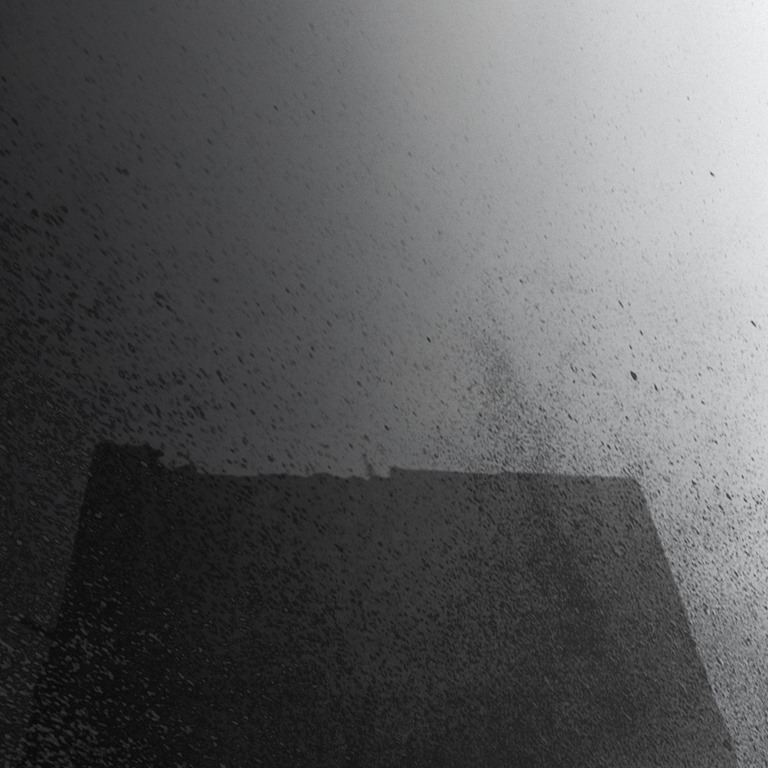
The cover art gives little to nothing away, but at the same time, it’s perhaps a remarkably accurate representation of the blurring, blending overlays of contrasting tones and textures which define the ephemeral pieces which form the abstract picture which is A Passage of Concrete.

The album pitch details how A Passage of Concrete ‘ebbs and flows across an electroacoustic narrative of fragmented memory tethered to the present moment, unravelling movement, location, distance in a story that cares about place as both texture and emotional notation. Honig’s sense of place and the way he utilises it is disparate and varied, from field recordings made in busy streets, to parks and empty apartments, via high-ceilinged spaces. One might say that  Honig is preoccupied with both sonic and psychological reverberations and resonance, and that A Passage of Concrete represents the coalescence of these things.

Scratchy and distant shuffling scrapes, flickering, arrhythmic beats provide the backdrop to a sparse delicate acoustic strum on ‘Apartment Workshop’. Steady, pulsing beats pin down the extraneous sonic ripples and segments of ambient audio captured in bustling crowds, while ‘Forest of Refractions’ wraps droning organ undulations around a glitchy beat. The mellow keys which radiate dappled light on the two ‘Fugue State’ pieces are pleasant but innocuous, and while ‘dark’ notes resonate across bouncing beats over the album’s duration, it’s not easy to get a handle on. Yet for all that, it’s not an album which possesses the deep draw of emotional engagement.

While the album’s fourteen tracks, many of which are fragmentary, and a number of which are but sketches of around a minute in duration, are exercises in the vague and the transitional, the percussion, fluid as it is, provides a certain solidity to the compositions in structural terms. The effect is to give A Passage of Concrete a greater sense of tangibility than an album which is purely abstract and ambient. As such, its capacity to connect with and conjure from the listener’s memory is reduced. It lacks that essential, if evasive and indefinable quality of being haunting and evocative. Ezekiel Honig may be a master at conveying his own mental geography, but A Passage of Concrete lacks the abstraction required to render it universal. So where do you go?

On ‘A Slow Expansion,’ the classic evocation of nostalgia, the crackle of a worn vinyl groove fleetingly emerges. I can’t be drawn. The crackle track, the ultimate cliché of nostalgia, has become Vienna: it means nothing to me, and stands as nothing more than a signifier of ersatz nostalgia. It no longer holds any emotional resonance.

A Passage of Concrete is not a bad album by any means. In fact, it’s an extremely interesting album, but one that’s difficult to appreciate on anything but an artistic or musical level. Sonically, there’s no questioning the accomplishment of the material on display. But to measure the extent to which Honig succeeds in his goal is entirely subjective: what will resonate with one individual won’t touch another. But at its best, music transcends everything: sound transcends language and sound attains absolute universality. A Passage of Concrete fails to achieve this ultimate goal of connecting the listener’s psyche through abstraction, because it feels somehow prescriptive. Honig’s structures steer the listener in the direction of his headspace rather than providing a conduit for the listener to interact fully by exploring their own. The end result, then, is a pleasurable listening experience, but one which lacks the capacity for full immersion and to truly move the listener.

Ezekiel Honig - A Passage of Concrete

Hallow Ground – HG1703 – June 2017

Christopher Nosnibor

TAR is the fourth solo album by Tehran-based composer Siavash Amini, although he’s joined by Pouya Pour-Amin on electric double bass and Nima Aghiani on violin. Not that the individual instruments are readily recognisable in the thick sonic swirls which combine to forge the ever-shifting soundscapes of TAR at least in the main. But when Aghiani’s violin weeps and bleeds emotive from amidst the amorphous aural clouds which turn and taper, billowing and rolling, throbbing and pulsating.

‘A Dream’s Frozen Reflection’ begins droney but gentle, but inside the first two minutes breaks into a serrated sonic tempest. Music that sounds for all the world like a circular saw accompanied by a saw played more conventionally (does anyone play the saw any more? Or has it more or less gone the way of the comb and the washboard?) isn’t an easy sell, but Amini creates an intense aural experience that immerses the senses. But for all the harsh tones, there are contrasts in abundance, and through forging a shifting soundscape, the atmosphere changes, sometimes almost subliminally over the course of the piece.

‘Rivers of Tar’ plunges into murky, dark territory, but crystalline glissandos cascade through the eddying clouds of sulphur, while graceful strings rise and sweep expansively. It’s hard to determine whether or not it really carries an emotional resonance, but as a listening experience, it’s got more than enough range and features some passages which do have that vital drag.

At times, ‘The Dust We Breathe’ is barely there, delicate contrails of soft ambience washing in and out. There are periods dominated high-volume undulations of grating, snarling noise early on, but over the course of its fourteen-minute duration, the track drifts quietly and softly into the background.

It’s Amini’s ability to manoeuvre, effortlessly and almost untraceably, the trajectory of the four compositions from head-crushing abrasion to lulling calmness which is the greatest achievement of TAR. It’s an ambient album which carries a sting in the tail sharp enough to hurt, while equally massaging the mental receptors with its delicate tones.

The extent to which TAR translates Amini’s desire to explore ‘the fragile tensions between and individual and collective subconscious’ is largely irrelevant: TAR is an unexpectedly dynamic work, brimming with texture and contrast.

Siavash Amini – TAR

Ipecac Recordings – 4th August 2017

Christopher Nosnibor

According to the band’s biography, ‘Dead Cross emerged out of a series of impractical schemes, fallen-through plans, and last-minute musical experimentation. Shows were scheduled before a single song was written, fans were formed before even one show was played. The chaos of its creation seems apt; after all, the band is comprised entirely of artists who have thrived playing tightly-coiled turmoil—intelligent dissonance disguised as disorder.’ None of this is surprising, given the co-conspirators who make up Dead Cross – namely Dave Lombardo, Justin Pearson, Michael Crain, and Mike Patton. On paper, it’s a recipe for sonic mayhem. And that’s precisely what Dead Cross delivers.

It’s fast, furious and frenetic from the first bar. ‘Seizure and Desist’, recently unveiled as a video single, kicks it off in spectacularly explosive style and sets both the tempo and the tone. It’s a snarling, furious assault. It’s brutal and deranged, and yet it gloriously melodic, with a chorus and a hook that’s almost chartworthy.

Dead Cross is intense. Loud. Hard. Fast. Mental. Throw Faith No More, Pantera, Strapping Young Lad and The Wildhearts in a blender and you’re in the vicinity.

On one hand, this is a proper, old-school thrash album. On the other, it’s got Mike Patton all over it. Since forever, Patton has demonstrated a unique style and an even more unique sense of theatricality and melody. Unique, in that he’s able to incorporate these elements into the most incongruous and unexpected musical contexts, and successfully. Certainly, his immense vocal range and versatile delivery is a key factor, but there’s far more to Dead Cross – the band and the album – than once man. It’s all about the disparate parts and how they melt together to create something distinctly different. There’s no one dominant aspect here: this is a true collaboration, and all the more intensely insane because of it.

In the hands of pretty much any other band, thrash or other, the cover of ‘Bella Lugosi’s Dead’ would be both shit and pointless. But Dead Cross fill it with violent menace while retaining the finely-balanced drama of the original – and condense it all into two and a half minutes by pummelling it out at a hundred and fifty miles per hour and driving it along with a dirty, gritty as fuck bassline overlaid with heavily processed vocals. The end result is bloody brilliant.

Dead Cross is relentless and brutal. The shrieking venom of ‘Grave Slave’ is a grinding churn of guitars propelled by nonstop blastbeats. ‘Church of the Motherfuckers’ closes the album off with a throbbing chug, and, while slower, brings Patton’s capacity for flamboyant theatricality to the fore, while diminishing for fevered attack not one iota.

Often, I’m given to criticise so-called supergroup projects for failing to produce anything even as great, let alone greater than the sum of the parts. But it’s the fact that Dead Cross have produced an album that is precisely the sum of the parts which makes it such a belter.

Dead Cross Cover

Front & Follow – F&F046 – 1st September 2017

Christopher Nosnibor

Having followed Mark Kluzek’s Doomed Bird of Providence for some time now, I was keen to hear the latest instalment. Over the last six years, he and his collaborators have produced a series of concept albums centred around Australian history, all using the medium of dark folk with heavy echoes of Nick Cave. Burrowed into the Soft Sky is very much an album devised as being suited to a vinyl release, and is perhaps the most challenging Doomed Bird release yet, consisting as it does of just two tracks each with a duration of some twenty minutes. While still pursuing what the bio refers to as ‘Kluzek’s obsessive and singular foray into early colonial history’, Burrowed into the Soft Sky discards the vocal element, meaning the narrative, such as it is, is purely musical.

To understand the objective and the context of the album and the individual tracks, it’s beneficial to quote liberally from the accompanying press release.

‘The underlying themes for each track are contrasting yet tie together via their historical context; a period where indigenous Australian belief systems and day-to-day lives were irrevocably assaulted. The song Burrowed into the Soft Sky is based on a passage from Patrick White’s novel Voss. The book is very loosely based on the final (and fatal) journey through the northern regions of Australia by German explorer Ludwig Leichardt. Kluzek took a passage from the book where a comet passes over and Voss, his team and a tribe of Australian Aboriginals engage with and interpret the experience until it is ‘burrowed into the soft sky’.’

How this manifests is in a piece which exits as a sequence of gradually-shifting transitions, sparse and haunting woodwind drifting across an urgent acoustic thrum, while percussion builds, and then draws back again. Around the mid-point it bursts into a sustained crescendo, with sweeping strings cascading over an insistent, energetic beat, but for the most part, it’s less about overt drama and more about the brooding. The closing segment is a dolorous fanfare, with nostalgia-evoking horns sounding out over a slow march that finally tapers to a twinkling glockenspiel that does evoke something approximating a soft sky.

Mark Kluzek- The Doomed Bird of Providence8

The press release provides the following explication for the track which occupies side B: ‘The Blood Dimmed Tide is Loosed takes a significantly darker turn shining a light on a pattern of atrocity that took place in the north east of Australia at a time where a dynamic of back and forth, invariably initiated by colonists, took place and culminating in a “dispersal” of a tribe, “by shooting them down – men, women and children, the object being to destroy as many as possible.” This is based on accounts of such events in the book Exclusion, exploitation and extermination: race relations in colonial Queensland (Raymond Evans, Kay Saunders, Kathryn Cronin). Attacks of this nature on tribes were commonplace.’

As indicated, the track immediately plunged into darker territory, uncomfortable, tense tones forging a claustrophobic atmosphere. Strings scrape like nails down a blackboard over ominous fear chords before a militaristic imperial march emerges from a tempest of percussion and screeding feedback. This in turn coalesces into a repetitious throb, imposing and intense, which bludgeons the listener’s senses as cymbals crash violently, and by the mid-point it’s collapsed into a wash of hums and drones, interrupted by clattering flickers and subterranean moans and skitters. The closing section again builds an oppressive mood, the thudding percussion partially submerged by a swell of ever-thickening noise.

A priori knowledge of the context is by no means essential to the appreciation of Burrowed into the Soft Sky. It does of course benefit the listener to have a sense of placement, but given that the correspondence between the tracks and their inspiration / meaning is far from obvious in any case, it’s an album which can readily be heard – if not necessarily ‘enjoyed’ – on its own merits. As a work which wanders through a number of instrumental musical territories, Burrowed into the Soft Sky is interesting and rewarding.

DBOP_coverFINAL

Cleopatra Records / Practical Records – 23rd June 2017

Interdisciplinary artist Rachel Mason has spent the best part of the last two decades carving out her own niche from within the hotbed of the NYC and LA scenes, with music being only one of the many strands of her creative explorations. In between making films, sculptures, and creating performance art pieces which range from the playful to the weird, she’s released quite a lot of albums. Her latest, Das Ram, is billed as ‘a full-blown modern pop-rock album of catchy songs with flamboyant flavor, dramatic vocals in between Siouxsie Sioux and SIA, captivating melodies and poignant lyrics’.

It’s not easy to focus on the lyrics, poignant or otherwise, when there’s so much going on. Das Ram is an album that’s very much geared toward delivering songs with groove and big energy. ‘Rosie’ kicks off with a delicate shoegazey pop verse that blossoms into a glorious chorus propelled by a super-frenetic drum machine with hectic hi-hats and a glistening, glittering energy shimmers.

Rachel Mason 2 - credit Kerwin Williamson

Das Ram is an eclectic set, and wildly varied. The dramatic orchestral strikes which jut and jar through ‘Heart Explodes’ provide a dramatic landscape for Mason to prowl through en route to a soaring chorus which indicates what Florence and the Machine could sound like if Flo Welch and her crew had any grasp on subtlety.

Single cut ‘Tigers in the Dark’ is a flamboyant gothic-hued disco cut that pulls together the danger of Siouxsie with the brooding electropop sensibilities of Ladytron or Goldfrapp. ‘Marry Me’ goes all Disintegration-era Cure in the mid-section, but Mason’s vaguely shrill and increasingly desperate-sounding imploring to form marital unity (part Kate Bush, part PJ Harvey) is actually quite scary. You’d probably agree just to avert the danger of being strangled in your sleep, although it would only be a temporary postponement).

‘Cancer’ is a wild, woozy ride, a blizzard of wibbling electronica and car horns and stammering programmed drum ‘n’ bass percussion providing the sonic terrain for lyrics that veer from the abrasive to the abstract. ‘The end stage is on!’ she squeals as a refrain before a gritty, funk-infused bass cuts in half way through.

Das Ram is good. Really good. It’s a pop album, and one which will evoke myriad comparisons. And it’ll touch them all favourably, because Rachel Mason assimilates her influences in a way which isn’t merely derivative, but innovative, and Das Ram is an album which wanders through infinite shades of weird, and bristles with tension and myriad shades of darkness.

Spiegelman/Rachel Mason

Hominid Sounds – 30th May 2017

Christopher Nosnibor

Matt Cargill’s project still has one of the best names around: it’s not only an example of punning genius, but also one of those band names which sets expectations as to what you’re going to get musically. I say musically, but that’s very much a matter of perspective. SATFD don’t make music in the conventional sense, and Molar Wrench is as sonically challenging as any of the previous releases SATFD have put out. On this outing, they’re joined by Dutch/British free jazz unit Dead Neanderthals, to form what they describe as ‘the ultimate tag team of the murky European underground’.

Given that the two acts featured on a split release last year, this collaboration seems like a logical progression. It certainly marks a departure for Sly, in that the trademark subterranean grind of endless, dark drones and unsettling atmospherics is matched with and at times consumed by the maddest jazz shit going.

The album contains just four tracks, but packs in a hell of a lot of racket. It all kicks off with a frenetic, a wild, free jazz cacophony, a melange of clamorous, ultra-hyped parping horns, sonorous lowed drone and is dominated by truly frenzied, cacophonous bent. Circuits fizz and hum while the percussion thrashes and crashes arrhythmically, throwing the listener around with reckless abandon a rollercoaster of tempestuous sonic mania.

There are two ‘Muck Man’ tracks and the first is ten minutes of slow, throbbing churn made up primarily of low and mid-range sludge, the drums holding a ragged but hard rhythm amidst a maelstrom of thick, dirty, pulsating noise. It’s almost a riff, but more a succession of waves in a rhythmically surging sonic tide, a with the density of liquid mud. Immersive would be one word.

‘Muck Man Part 2’ is altogether more low-key, a dark, atmospheric piece that manifests as a prehistoric sulphur swamp in sonic form. Slowly, the murky drift builds to a screaming tempest of noise; the brass develops from a low drone to a shrill shriek of pain and the drumming transitions from a sedate trudge to an explosive riot of noise, abrasive blasts of snarling electronica and whatever the fuck else bursting in waves of sonic shock.

The title track closes off the album, and it’s an eleven-minute trudge that calls to mind the claustrophobic brutality of Swans’ ‘Young God’ EP. The plodding percussion provides a doomy and tense prickling spine to the oppressive grind that lumbers on for what feels like a skull-crushing eternity.

There is a definite structure to Molar Wrench, in that it starts off wild and winds down to a grinding crawl, but it by no means feels like the energy displayed at the outset dissipates as the album progresses. It’s more a case that having exhausted the listener with frenetic kinetics and gone all-out on the attack at the front end, the album seeks to bludgeon the listener into submission in the later stages. And highly effective it is, too.

cover