Archive for the ‘Singles and EPs’ Category

The Quietus

Christopher Nosnibor

It’s not that I like to brag, but I’ve been writing about Sly and the Family Drone since 2012, when they blew me away at the Brudenell in Leeds, with a chaotic, percussion-heavy, audience-participation-led performance (and since when my writing has improved and I’ve become a shade more sensitive, perhaps). Witnessing Matt Cargill standing aloft on a stack of amps while surrounded my members of the crowd battering drums distributed by the band was one of the most exhilarating experiences of my life, and I was an instant convert. In some respects, I was fortunate to witness it: in a recent interview, Cargill was at pains to stress that it’s one of those spontaneous things: “It doesn’t happen at every gig,” he warns. “And I don’t want it to become a thing that people expect or are disappointed when we don’t do it. There are times I’ve seen people write, ‘Bring your drumsticks!’ I’ve never said that and I don’t want you to do that! If we were doing it every night people would be, like, ‘Oh, fuck off! They’re doing their schtick.’”

It’s this spontaneity and true commitment to improvisation that is a significant part of the band’s appeal. You never know quite what you’re going to get, and there’s a sense that nor do they: it all unfolds in real-time.

Their subsequent releases since my introduction in 2012 have never disappointed, and for me, at least, the best thing about Sly is that they embrace the difference between the live and recorded media. As such the recordings are the recordings, the performances are the performances. Explaining the difference to The Quietus, Cargill says “It was nice to be able to do all that spatial and stereo stuff which we wouldn’t be able to do live,” he says. “Because of mics on drums and stuff, it just doesn’t really work in that way. So we were able to spend a bit of time just working on that and doing some quite weird-sounding drum stuff which I’m really happy with.” The same article also explains, ‘The passages of manipulated drumwork are bookended by the band performing together in full skronking and lumbering flow and, in a move that vaguely echoes the ecstasy of their live sets’ endings, it finishes with a warm and symphonic cacophony of horns. “It’s kind of a pieced together track but I think it works as an entire piece,” reflects Cargill.

They have forged a career – or perhaps eked one, on the breadline, with a cult reputation which exceeds the returns a fringe act can attain in this crappy climate, a climate whereby post-Brexit overseas travel is prohibitive and not just financially – from being far out. Embracing elements of jazz and noise and a whole spectrum beyond, it’s fair to say that this is an act who plough their own furrow, and for that, respect is due, and them some.

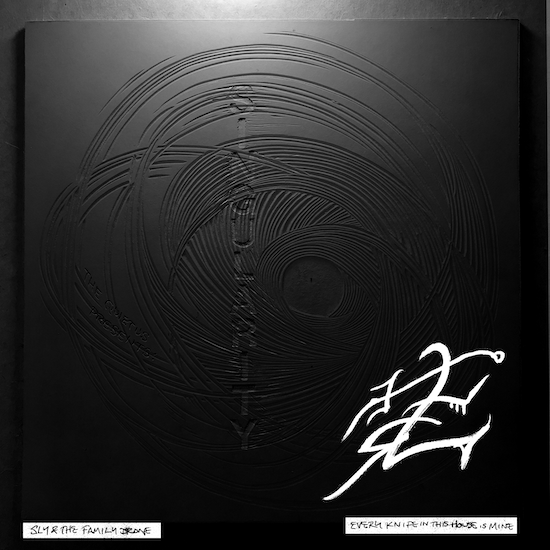
This latest release is – as ever – an interesting one. It’s a limited lathe-cut 12” released via The Quietus, a publication with an immense reputation for its championing of the weird and the wonderful, and which perhaps more than any online publication with a significant readership plugs the gap left when Sounds, and then Melody Maker ceased to be. For non-subscribers, it’s available digitally via the usual platforms.  The ones I don’t use or advocate. But I digress. ‘And Every Knife In This House Is Mine’ is Sly at their best.

As a single track – less a composition than an exploration – with a running time of twenty minutes, it’s an EP or an album by some bands’ standards, but what it ultimately is is an immersive experience which sees them make the most of having access to studio facilities to push their sound further in different directions.

It’s a shrill, rippling wave of feedback that pierces the eardrums in the opening seconds which announces its arrival before a tempest of crashing drums, wayward brass and extraneous noise deluges in, and more happens in the first forty seconds of this tune than the entirety of many albums. Shortly after, it settles into a thunderous groove, the rhythm section grindingly heavy while wild horns – Kaz Buckland’s alto sax and James Allsopp’s baritone sax interplay is a back-and-forth that is timed with perfect precision.

There’s a lot of reverb, and a lot of space here. They pull back from the brink of pure chaos and meander through some expansive gentler passages, before, each time, exploding into a wild crescendo. It’s hard to differentiate snarling electronics from barking vocal yelps , and there isn’t a second where there isn’t something happening. It’s impossible to maintain a commentary on this sequentially.

A tumult of noise, bleeps and glitches, bloops and whirls, all fuse to form a wild cacophony, and it’s pure bliss to yield to this sonic tidal wave. But over the course of the track’s twenty minutes, there are constant ebbs and flows, the lower-level churning swashes rendering the louder segments and extended crescendo’s all the more impactful.

Things get decidedly Throbbing Gristle around the midway point, with swampy electronics and groaning low swoons taking things down, disrupted by random clatterings of percussion, before things take a turn for dark around the fifteen minute mark, with drones that sound like a 747 heading towards the ground in a nosedive… and then the climaxes with an extended jazz frenzy, and… woah.

Running through every form and texture, Every Knife In This House Is Mine is both exhilarating and exhausting… and everything you would expect from Sly and the Family Drone, and all that jazz.

AA
SlyAndTheFamilyDrone_Flat_copy_1669300606_crop_550x550

26th June 2023

Christopher Nosnibor

‘Industrial’ is a definition that’s shifted significantly over the years. The shift seems to have come some time in the late eighties or early nineties, when the likes of Ministry and Pitch Shifter were breaking into a much more mass-market audience: the former smashed MTV with the singles from Psalm 69, with even Beavis and Butthead getting down to ‘NWO’ and proclaiming ‘even the old dude is cool’ in reference to William Burroughs’ appearance in the video to ‘Just One Fix’. It seems hard to reconcile the enormity of that album with the face of music in the media now, but the early 90s really were something. You’ll read endlessly about how Nirvana smashed open the doors and so on, and perhaps to an extent that’s true, but they were simply a part of the zeitgeist in an era when MTV focused on ‘M’, and you would find bands like Soundgarden and Butthole Surfers and Rage Against the Machine being played alongside ‘Sabotage’ by The Beastie Boys, and it didn’t seem incongruous with all the mediocre pap because, well, that was what people were listening to. I even picked up a Therapy? live bootleg CD in a record shop while on holiday in Venice in the summer of ’94. I was excited, but it didn’t seem particularly strange at the time. Pitchshifter, meanwhile, had named their debut album Industrial, and it was fucking heavy, but it wasn’t until they changed their sound and rode the wave of sports metal around the turn of the millennium that they got popular, doubtless aided by their intersection with The Prodigy.

But because of the bracketing of these bands as ‘industrial’ in the 90s, the original characteristics of what had previously been deemed ‘industrial’ became buried, and forgotten. It’s hard to really find a connection between Ministry and the likes of Throbbing Gristle and Cabaret Voltaire (at least musically: they all loved Burroughs, but Jourgensen’s fascination was more about the junkie guru legend, whereas TG and The Cabs were into exploring ways of applying the cut-ups and Burroughs’ tape experiments of the late 50s and early 60s to music.

Binary Order sit firmly in the bracket of contemporary industrial, or what many refer to as Industrial Metal, and with this release they really show their influences and wear them with pride.

Now, I do get somewhat twitchy when the running order of a review stream or download differs from the Bandcamp stream or whatever, because the flow of a release is important – at least to me, and I tend to consider the overall flow of a release in my appraisal of its success.

So we’re going with the Bandcamp sequence here, which kicks off with lead single and title track, ‘Thrown Away’, a cover of the song by the oft-maligned nineties nu-metal act Papa Roach, who, remarkably, are still going and releasing albums at a steady rate. Are people really still buying this shit? Rap Metal was surely one of the worst things to have happened to music… but here it is. They blast off the four-track EP with a chunky riff-dense rendition of ‘Thrown Away’, and with that out the way, be can finally turn to the rest of the EP.

The remaining three tracks are remixes of songs from their debut album, Songs from the Deep, released in November of last year. The ‘Bleeding Mix’ of ‘Parasite’ is a gut-churning gurgle of stuttering electronica, that starts with a pumping, shuddering beat and a quivering synth groove which provides a stark backdrop to the raw vocals… but then it gets a bit ravey and autotune and straddles the uncomfortable intersection between dancefloor and sonic assault.

The Arcadmix Remix of ‘A Good Death’ is altogether more atmospheric and moody, and works well, largely because it’s neither overtly dancey nor Industrial / Nu-Metal. The six-and-a-half-minute ‘Irreversible Mix’ of ‘Hands of Time’ manifests as a long, oppressive, darkly ambient drone that’s a real departure from the rest of the EP.

The diversity is the key strength of this release, paired with the fact that it shows a band wanting to push their limits and aren’t especially precious about how their material is reshaped or adhering rigidly too their chosen genre.

AA

812429

Warren Records – 31st July 2023

Christopher Nosnibor

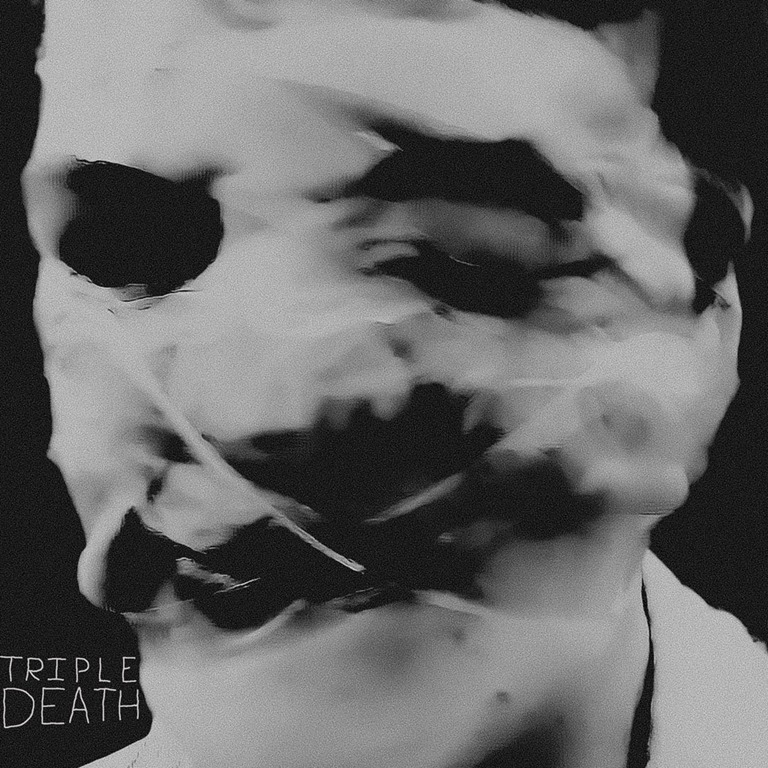
There are few things quite as gratifying as seeing one of your own quotes as the lead on a press release. And so it is that Hull noise punks Bug Facer, who I declared were my new favourite band on the release of their debut single, ‘Horsefly’ in Nov ember, praising them for their ‘claustrophobic, pulverising heaviness that leaves you aching’, rage hard on their debut EP.

What are they angry about? Everything and anything: modern life in general. Triple Death may only contain three tracks and have a running time of less than fourteen minutes, but they pack in the fury with a critical mass. The first cut, ‘Eggshell’ sets the tone, and, they say, ‘explores the idea of cycles with no end and how on an existential level we try to apply meaning to struggle.’ This isn’t just noisy shit: it’s noisy shit with some deep thought involved, and ‘Eggshells’ is low and slow, with a hesitant bassline and swirling guitar that swishes around in a gush of treble, and instrumentally it lands somewhere between The Fall and ‘Budd’ by Rapeman, and it’s completed with howling vocals that sound like every syllable is being torn from James Cooper’s lungs. It’s harsh and harrowing and truly the sound of pain leaving the body.

Theirs is an usual setup, with the drummer and bassist contributing vocals alongside co-founder Cooper who plays guitar. I say play: he and second guitarist Josh Burdette torture their instruments, channelling their angst through mangled chords at high volume. Sonically, their approach is unusual, too: they’re not big on riffs or distortion or driving percussion, the popular cornerstones of angry music of many genres: the sound on Triple Death is steely, grey, murky, creating the kind of oppressive sensation I feel listening to Unsane and Red Lorry Yellow Lorry. It makes you feel tense, twisted up and knotted inside.

Picking up the pace with ‘Prod’, which, with the addition of some gurgling synths, steps into a Krautrock groove, before the guitars lunge in and things get messy, the deranged, raw-throated vocals and serpentine guitar lines interweaving in a thicket of discord flay the nerves without mercy. ‘We are all the cattle… We are all the cattle, is the refrain’. And we feel it.

It’s a reworked version of ‘Horsefly’ that closes the EP off, and it’s a cleaner sound that marks the primary difference from the original release of this six-and-a-half-minute trudger of a tune that has the kind of earthy weight of Neurosis. The guitars chime dolorous doom as the bass and drums hammer hard, heavy, relentlessly thudding, so low and slow as to drag your heart down towards your knees.

The clue, I suppose, is in the name. This isn’t just death: it’s triple death, and Triple Death is grim, gloomy, the soundtrack to battling against the tide of shit on shit, when a trip to the seaside is a game of dodge the turds and a tub of butter costs seven fucking quid. When they tell you that inflation is a global issue but the fuel providers and supermarket chains record bumper profits and immense payouts to execs and shareholders while nurses are querying at food banks… fuck this shit. Triple Death is the soundtrack to telling the world, ‘fuck this shit’. One more time: fuck this shit.

AA

BugFacer_TripleDeath_artwork_1080sqr

28th July 2023

Christopher Nosnibor

Funny how time goes. Precisely two weeks short of a year ago today, I reviewed Bedroom Tax’s debut single ‘Kin’, against a backdrop of a heatwave and wild fires in the UK, and increasing level of panic over fuel costs ahead of the winter in prospect. And we thought things looked bleak then. No heatwave in the UK this year: instead, we’ve spent the last three months swinging between regular summer weather and days that more closely resemble October while the rest of the world burns, and we long for the days when it was only the cost of energy and Lurpak that were heading into the stratosphere.

Bedroom Tax are one of many bands with sociopolitical leanings who have adopted names which set their stance out in the simplest of terms. I’m thinking BDRMM, Bedsit, Benefits, bands born in many ways out of frustration and necessity, and their very existence is a statement about the crushing economic climate we live in – at least if you’re a regular person and not in the executive echelon, or otherwise comfortably off thanks to inherited wealth, a backhander from a mate in government, or an MP.

The so-called ‘bedroom tax’, introduced in 2012 is one of many examples of the tory government shafting the poor and the disabled, and as Michael Rosen pointed out in an article for The Guardian in 2014, the bereaved, was found in 2019 to be discriminatory by the European Court of Human Rights. No wonder the government are keen to ditch the ECHR: they keep ruling that their inhumane policies are illegal.

Since releasing ‘Kin’, Bedroom Tax have spent their time reflecting and refining their sound. It’s been time well spent.

‘Bad Behaviour’ is a magnificent melding of post-punk and post-rock with ‘urban’ elements, and possesses both beauty and bleakness simultaneously. Chiming guitars and programmed beats provide the backdrop to the incisive yet flowing rap of the lyrics, poetically dissecting social division and the hand we’re dealt due to privilege or lack of. It’s got bounce and groove, and even a certain noodly indie jangle that’s seen the sound of The Smiths cast through a more current prism that’s still more 2006 than 2023, but there’s a joy in witnessing the bounds of genre time being dismantled, and knowing that Morrissey would fucking hate it.

It’s a progression from the kitchen-sink reflections of ‘Kin’, but at the same time, there’s still that gritty realism, with echoes of The Streets, and the reason Bedroom Tax are so appealing is because there’s no pretence, no artifice: they’re telling it like it is.

And just as punk and post-punk emerged from the desolation of Thatcher’s Britain, so the current wave of acts who hark back to that but with the addition of more contemporary twists are coming from parallel circumstances. Austerity may not be the buzzword of the present, but we never left it: cuts upon cuts by cunts upon cunts are why we are where we are. And acts like Bedroom Tax articulate the everyday realities of life right now. We need these guys.

thumbnail_Bedroom Tax

7th July 2023

Christopher Nosnibor

I recall, when I was growing up, people often being admonished for using the word ‘hate’. ‘It’s such a strong word’, would be the lecture. Usually it was adults telling teens this: no, you don’t ‘hate’ school, you don’t ‘hate’ that band, or that annoying kid in your class. I never saw it as such a big deal. I suppose, on reflection, we were using ‘hate’ in a hyperbolic sense. Now, however, we seem to use the word somewhat less frequently, but feel hate – real hate – being expressed more freely. It’s not pleasant, and while much is said and written about the toxic environments of social media, the real world really isn’t any more pleasant. From toxic work environments to increasingly right-wing governments creating division and stoking hatred of minorities, be they immigrants, the poor, or the disabled, the world we live in is not a nice place to be, and it’s small wonder that mental health issues are at an all-time high.

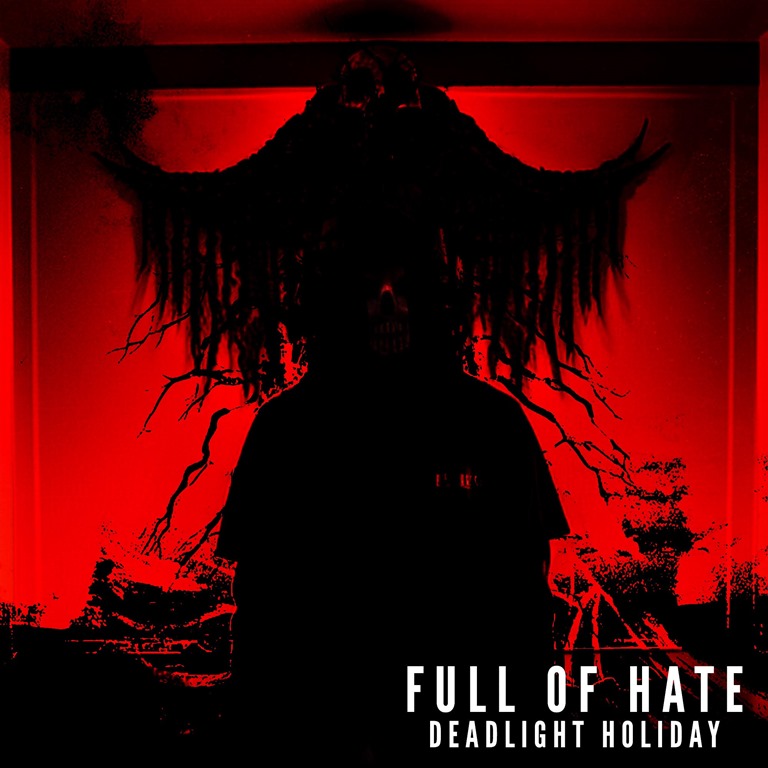
‘Full of Hate’ isn’t about the outward projection of hate onto individuals or groups, but the inward-focused grapplings of torment, as the accompanying notes explain: ‘The song captures the suffocating feelings of anger and isolation that engulf us and often leave us with a feeling of being confined. Moreover, the song does so within the span of ninety seconds.’

And that it does: they’ve condensed all the intensity of emotion into a minute and a half. Zero fat here. It’s the bass that defines ‘Full of Hate’. By which I mean it’s a 360-degree immersive sound, the thick distortion secondary in impact to the booming frequencies. So dense is the sound that it almost submerges the mechanised drums and growling vocals. The vocals are unexpected, at least on first listen: there’s an association with screaming and full-lunged roaring as giving vent to anger, rage, and catharsis. But on ‘Full of Hate’, the vocals are controlled, focused, all the more difficult to process in context. There are some moments of dodgy autotune, but overall, it’s that sense of keeping a lid on things that suggests psychopathy, and which renders ‘Full Of Hate’ all the darker, all the more intense.

It’s one powerful, tension-blasting minute-and-a-half that’s awkward and uncomfortable, seething rather than foaming as the rage flows.

AA

476853

23rd June 2023

Christopher Nosnibor

Talk about moving fast: as their bio details, ‘The Bleak Assembly was formed in July, 2022. Two weeks after its inception, the first EP, We Become Strangers was unveiled. The Bleak Assembly’s meaning takes inspiration from Charles Dickens’s Bleak House – the ‘Bleak Assembly’ being the chain of people in the story whose lives are destroyed by the promise of wealth.” This seems a fitting parable for modern times, and show how we never, ever learn from history.

Comprising Michael Smith (all Instruments) and Kimberly (from Bow Ever Down), they continues to create at pace (ugh – I hang my head at having written such a corporate phrase in a review… but, phraseology notwithstanding, it’s true), and followed up their debut EP with the ‘Alibi’ single in February of 2023, and now they present Strangers Among Strangers. The goal of this EP, says Michael Smith was to “try a different sound. Bands seem to fall into a certain sound after a while, so if that should happen to us. I wanted to open it up to a more electronic sound to give us more room in the future.”

They have pedigree and experience, having between them shared stages with the likes of Assemblage 23, Razed in Black & Switchblade Symphony with their own individual projects, and it’s unusual to see them declare up-front that The Bleak Assembly will likely remain strictly a studio project. But why not? Sometimes the creative process evolves organically and feels like it needs to have that live outlet, while at other times, recordings simply don’t lend themselves to being replicated live. And then there are logistics, not to mention economics. The latter is a very real factor in determining how artists operate now. Funny (not) how the cost of everything has gone up apart from wages and the fees paid to artists.

But this sounds like a studio project, also. And that’s no criticism, and no bad thing. Oftentimes you’ll find bands striving – and failing – to capture the energy of their live performances in the studio. It’s often the case that they developed out of playing live and that’s the platform on which they’re familiar and on which they thrive. And fair play to them: but other acts evolved in the studio and are detrimented by distance, while others simply don’t feel comfortable as live entities and feel they simply cannot replicate their studio works in a live setting. Whatever the case with The Bleak Assembly, they’ve clearly found a method which works for them, facilitating a rapid stream of material.

With Strangers Among Strangers, The Bleak Assembly, who clearly have something of a fixation on strangers and the unheimlich have crafted a crisply-manufactured piece of electropop, and while it’s got some strong gothy / darkwave elements, there’s a lot of Midge Ure era Ultravox and Violator-era Depeche Mode in the mix here, as is immediately apparent on ‘A Night Like This’ (which isn’t a Cure cover).

Strangers Among Strangers is solidly electro-based and packs some real energy. It’s synthy and it’s dark – and nevermore dark than on ‘Ready to Die’, where Kimberley faces straight out into the abyss and confronts the ageing process and, ultimately, the end, against a backdrop of swirling chorus-soaked guitar that’s pure 1985. ‘Remains’ is similarly bleak on the lyrical front, and these songs channel a lot of anguish. It may well be that they’re common tropes in the field of goth and darkwave, but the delivery is gripping, as well as keenly melodic. There’s something of a shift on the EP’s second half, moving to a more guitar-driven sound, but the throbbing synth bass and cracking vintage drum machine snare keep everything coherent and push the songs along with a tight, punchy feel. There’s much to like.

AA

a0917300862_10

Gizeh Records – 30th June 2023

Christopher Nosnibor

In this sense, Bleaklow is a rather different proposition, and in some respects, the instrumentation is a significant factor in the shape of the sound, with Claire contributing ‘Voice, Nord Electro, Yamaha PSS-170, field recordings, Moog Taurus’, and Richard contributing ‘Electric gtr, drones, field recordings, Yahama PSS-170, Moog Taurus’. But by the same token, there is something about anything Richard Knox does which has something of a signature – not a signature sound as such, more of a signature feel, which comes from the kind of wispy ambience and dense atmospherics.

The overall effect of Bleaklow’s debut, Glume, is mellow, amorphous washes of cloud-like sounds drifting softly on invisible air currents, but there are moments where the textures are coarser, more abrasive, and these provide vital contrast. ‘Husk’ scrapes in with a wash of distorted guitar before tapering tones supple piano and vocals, layered to a choral effect surge and swell.

Claire’s voice by turns evokes Kate Bush and Cranes, haunting, ethereal, and as much as this sits in the post-rock bracket from which Richard and Gizeh emerged back in the early 00s (the label put out not only the The Heritage, the debut mini album by Her Name is Calla, but Knox also put out a super-limited CD of ‘Condor and River’ in a crazy corrugated card sleeve, as well as Arrivals, the debut album by worriedaboutsatan, wrapped in a chunk of blown vinyl wallpaper, which looks and feels amazing but is a real bugger to store… but I digress) it also very much harks back to 90s shoegaze, with a heavy debt to Slowdive and My Bloody Valentine, but then again, it’s impossible to listen to this without recourse to The Cocteau Twins. If this sounds like a catalogue of touchstones, it’s testament to how deftly they draw on myriad elements and whip them into a sonic souffle with the texture of candyfloss – not that this is particularly sweet, but it is lighter than a feather, lighter than air. And nowadays, the packaging is a little less DIY, but still very much focused on sustainability: the packaging for Glume is a recycled cocoa-card sleeve, whereby the ‘recycled card is made from 40% Post Consumer Waste and 15% natural fibres (by-products derived from the food processing industry which would otherwise go to landfill.) Turning a waste product into a natural, GMO free, raw material derived from nuts, fruits etc, resulting in distinctive colour shades’. It’s not just commendable, environmentally: it taps into the physicality of a releasing music and rendering the physical release a work of art rather than a commodity of plastic in plastic.

Everything on Glume happens at a sedate pace, and everything melts slowly together. The chances are that at some point, you’ve sat, stood, or even laid on the grass and simply looked at the sky and watched the clouds slowly shifting shape, rabbits and elephants becoming elongated and increasingly deformed, until they’re no longer rabbits or elephants, but abstract shapes stretching and fading to formlessness. The songs on Glume are by absolutely no means formless, but the sounds are like mist and the structures are supple. It’s a magnificently realised work: textured, detailed, nuanced.

It may not be bleak, but it’s dark, and it’s got detail. Bask in it.

AA

a0373089653_10

Blaggers Records – 30th June 2023

Christopher Nosnibor

Earlier this year, JW Paris were the millionth act to cover Chris Isaak’s ‘Wicked Game’ – a song that bombed on initial release in 1989 and only started getting attention when it was featured on the soundtrack to David Lynch’s Wild at Heart, and becoming a hit in 1991. What was interesting about JW Paris’ version is that it was different. It didn’t pussyfoot around being nice and delicate – not that it was insensitive or trashed the original, it just had the guts to be different instead of a predictably, safe, straight copy. And I suppose this sums the band up, really. They do their own thing – and it so happens to be good.

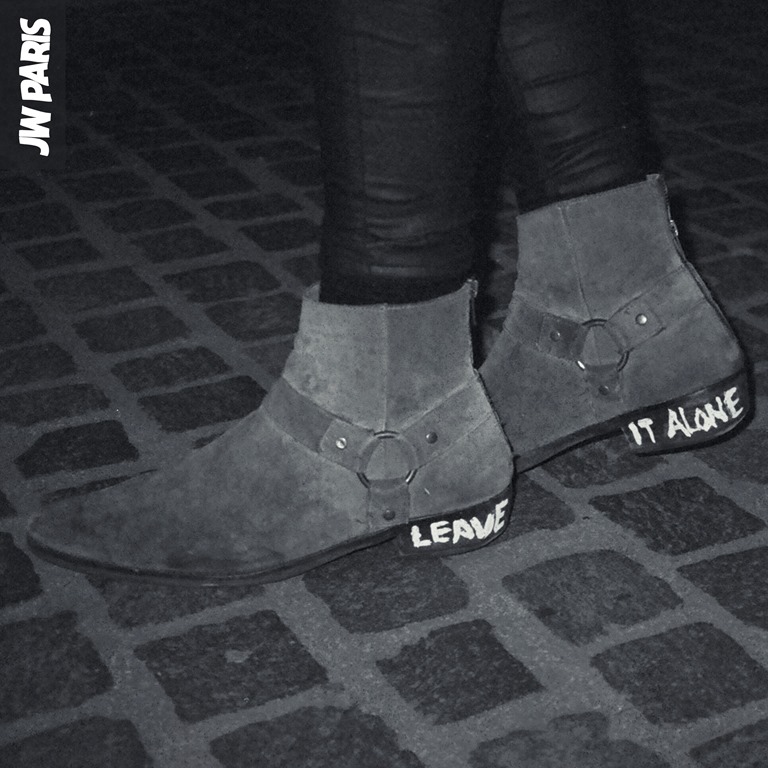
‘Leave It Alone’ is three-and-a-half minutes of choppy post punk with bite – not to mention a yawning guitarline that evokes the essence of Nirvana and The Pixies, straddling a magnificent strolling bassline and exploiting that classic quiet / loud dynamic – but keeping the overdrive in check in favour of a cleaner guitar sound – but with a chorus that’s eminently moshable.

Yes, of course it all pulls me back to the early 90s – no one song or band or anything specific, but that vague, aching haze of what it was like to be there in my late teens and early twenties. There’s some recycled gag about the 60s now being applied to the 90s along the lines of if you can remember the decade, you weren’t there, and there’s an element of truth on a personal level with it being the time I got into beer (and vodka) and live music, but there’s that other key element, namely the passage of time. It’s not even about memory fading: when you’re living life and simply in the midst of things, you don’t stop to take stock or pin a marker on your memory that any given moment in time was something to remember as special. It’s only in hindsight – even if that hindsight is developed in relative proximity to the event – that you often come to appreciate things for what they were. This is, of course, the nature of nostalgia, and why people in their thirties become fixated on the ‘golden age’ of music, movies, and TV, which almost invariably coincides with their late teens and early twenties before the weight of adulthood and the crushing tedium of work and shit took over. But I say this because the further a time recedes into history, the vaguer and more nebulous the recollections become.

It’s not that I can’t pinpoint where bands have leaned on Nirvana or The Pixies for inspiration, but the bigger – and vaguer – picture is that TV and radio and gigs were awash with acts which represented the zeitgeist: it’s impossible to remember all of the little bands who maybe released one single or nothing at all, who played in upstairs rooms in poky pubs, but the period overall is indelibly etched into my memory banks. And this is important, because JW Paris don’t sound like they’ve studied key albums of the time and appropriated accordingly, but have, instead, soaked up the spirit and distilled it into a sweet and powerful shot.

There are layers to this: ‘Take a look at me, am I the person that you wanna be?’ becomes ‘am I who you want to see?’ How much is projection, perception? And not just perception of others, but self-perception. Look in the mirror: are you who you want to see? And how much does that change over time? It’s not always easy to make peace with your former selves.

Speaking on the single, the band say “‘Leave It Alone’ is a deeply personal song that reflects our own inner journey of self-discovery and acceptance… With honest lyrics and a haunting melody, it invites our audience and listeners on an introspective exploration of identity and the longing for inner peace”.

And I guess that’s what the preceding five-hundred-word contemplation is: it’s my introspective exploration, as inspired by the song. A good song does so much more than fill a few minutes with sound: it enters you and takes you places. ‘Leave It Alone’ is a fucking good song.

AA

923819

Suburban Spell Records – 23rd June 2023

Christopher Nosnibor

The pitch, which recommends Suburban Spell as being for fans of OMD, Boy Harsher, The KVB, Kraftwerk, Gary Numan, The Cars, Rational Youth, piqued my curiosity, rather more than it did my interest. We’re clearly in retro synth territory here, but then there seems to be something of a glut of artists falling into this bracket right now. It can’t all be nostalgia: most of the current crop of artists emulating the late 70s and early 80s weren’t even born before the 90s or even the turn of the millennium. Some of it I suspect is kids discovering their parents’ music collections, while equally, per perhaps more so, it’s a sign of the times we live in. It’s hard to really explain in depth or detail precisely why nostalgia depresses me, but it does, and ersatz nostalgia several fold.

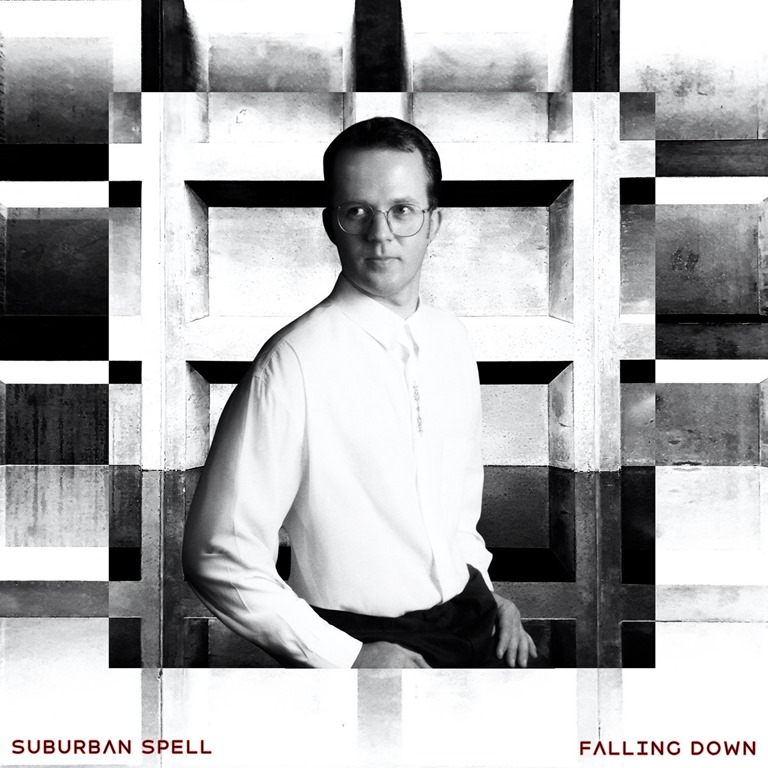
Suburban Spell, however, require less exploration or explanation: this is the solo project of Peter Endall, who was a member of Schizo Scherzo, who were, according to his bio, active in ‘the heady days of Melbourne’s 80’s music scene, playing alongside the likes of The Eurythmics, Pseudo Echo, Real Life and Fergal Sharky.’ These are names to conjure with, names to reflect on.

So when I read that Suburban Spell ‘combines the austere beauty of Kraftwerk, 80’s melodic sensibilities, driving rhythms and some noisy grind thrown in for good measure. Influenced by the heyday of new wave and 70’s-80’s electronica, this music carries the beautiful imprints of such artists as Ultravox, OMD, Visage, Jean-Michel Jarre, The Cars, Gary Numan and New Order’, it makes sense. This is the music of the era which is coded into his generational DNA. Not that I really get much sense of Ultravox, OMD, or Visage from the five tracks on offer here. But… they’re good.

The songs on the Falling Down EP are both much darker and much more sophisticated than those on Schizo Scherzo’s Back to Back EP – but then, that was 1985, and technology has evolved and people mature and evolve also.

The title track is the opener, and while it’s very much 80s in its stylings, it’s contemporary in its production. It’s driven by a pulsating synth and beat dominated by a whip-cracking Akai snare, while Endall delivers a vocal smoothed by reverb and EQ balancing. But it’s the echoey bass break, that evokes the spirit of New Order and Disintegration-era Cure that really makes this a winning groove.

‘Salvation Army’ explores deeper atmospherics through a starker musical backdrop before ’12 Causes of Pain’ thuds in with some hard dancefloor-friendly trance-pop. The looping pulsations cast a nod to Dionna Summer’s classic ‘I Feel Love’ – a song that feels like it belongs to the 80s, but was actually released in 1977 – and the vocals and rippling synth overlays are pure Kratwerk. It’s easy to forget that the sounds so commonly associated with the 80s actually came from the late 70s, but there’s always a lag between decades: s, too. songs from the early 90s can so easily be mistaken from the late 80s, too.

I’ve spent a huge chunk of my evening trying to figure out which 80s track ‘Natural Science’ reminds me of, and while I can’t quite pinpoint it, Depeche Mode’s ‘Enjoy the Silence’ is as closed as I can get, although it equally brings strong vibes of Howard Jones and the like.

The six-minute closer, ‘Side Car’ goes all out for spacious, atmospheric, and ambient, twisting into post-rock territory with the breaking out of a reverby guitar. Against a swirling synth backdrop with a slow, ponderous bass and shimmering textures, before fading to quiet in a wonderful fuzz of ambience.

Falling Down has much going for it: so much so, that by the end of the set, it’s more pick-me-up than falling down.

AA

a4010990686_10AA

Well this is appropriately timed. Me, I don’t handle heat especially well. By which I mean that even when my eye sockets don’t feel like they’re stuffed with teasels and I’m not sneezing and wheezing, my brain turns to pulp and my body gradually liquefies once it tips above 20ºC. This means that my dayjob is a struggle, I type and talk bollocks in chats with friends, and I don’t know what I’m doing half the time.

Yes, the heat affects me badly. I lose my appetite. I can’t think. I feel as if I’m existing outside my own body. You can call me a wimp if you like, but it won’t even register. I’m too busy being spaced out and excessively hot to register a coherent opinion. After a fortnight of sweltering, I kinda feel like I’ve lost myself. Me lost me, if you will.

This, then, is the result of two evenings’ work. After things have cooled down, after rain. After I had time to process, digest. And yet still I feel disconnected, outside of my own life.

‘Heat!’ is brilliant and strange, and this new single, ‘taken from their new album RPG out on Upset The Rhythm on July 7th’, is a brilliantly disorientating piece. Warped, woozy bass synth tones bend and glitch in the sparsest of compositions, where birdsong tweets and skitters. Something about the malleability of the notes, the weird pliability of the tones.’

There’s some kind of electro/tribal percussion which thumps and bounced along, and the numerous triptastic aspects paired with the quirky vocals make for something strange and unique.

It’s accompanied by a video that’s like a prehistoric reimagining of some vintage computer game – or the spaces you find when you tip off the track on MarioKart – only it bends and melts and is full of dinosaurs and a whole world of what the fuck. Mystical, magical, strange, this is an entry into another world.

AA

_SSKTEYg

Amelia Read Photography