Archive for the ‘Singles and EPs’ Category

14th September 2023

Christopher Nosnibor

Have I lost the plot covering such commercial stuff as this? No, not at all, and besides, plot is overrated, and this is an interesting one. Having built up something of a following since emerging a few years ago, Luna Aura’s latest EP release coincides with her touring as support for Slipknot Frontman Corey Taylor on his solo tour. If on the face of it, it seems like a surprising choice for such a pop-orientated act to bag such a slot, however big on guitars they are, Corey’s ubiquitous media of late in promotion of his second solo album has seen him really pushing to emphasise the fact that he’s a multi-faceted, genre-fluid songwriter.

I think I’ve been growing a newfound respect for him for this: he genuinely seems more about making the music that he enjoys than about being remotely cool, which is a far cry from the enigmatic masked presentation of Slipknot, where no-one ever knew who any of the members were for a long time. I always thought Slipknot were shit on every level, and I’d always suspected they were middle-aged record company execs donning boiler suits for some postmodern nu-metal equivalent of The KLF, only more calculatingly exploitative. I was wrong, but not completely off track. But it turns out Taylor’s had some high-profile feuds with the kind if people who warrant feuding with, although I digress. The promo rounds for CMF2 have been interesting, in that they show Taylor, aged 49, facing up to the fact that he’s staring directly at a point in life where his physical capacity is waning and frankly, he’s reached a point in his life where he doesn’t care about cool and just wants to do his thing. At 48, I find this far more relatable than an artist trying to remain relevant and be the voice of ‘youth’, like so many acts who emerged around the turn of the millennium, not least of all so many punk-pop acts who are old enough to be grandparents to their target audience. But also, credit due for giving a young, up-and-coming female artist the exposure instead of some predictable all-male band.

Perhaps unsurprisingly, half of Luna’s EP has already been unveiled as video singles, because that’s how it works now, but regardless, hearing all five songs in sequence is what this is about, and over the course of five songs, we get a sense of Luna’s range and what she’s about.

It’s hard to evaluate new music from new artists that resembles the new music by new artists that was emerging when I was at the same point in my own life. As a teen in the 90s, it didn’t only feel like the most exciting time in music ever, but it felt like our generation had something of its own and something that spoke both to and for us. This was our punk, our new wave, our new romantic. I may have been aware of and listening to new romantic and electropop as it emerged, but at the age of maybe eight or nine, I can’t claim it was for ‘me’. Grunge and the alternative music of 92-94… that was different. On the one hand it seems unusual that a generation behind should revisit and reclaim it. But after a wilderness spell of shit mass-produced r‘n’b and a truly dismal decade socially politically, and all the rest, it makes sense that this should once again reflect the zeitgeist.

But something has changed. There has been a shift. Not only has life in general got shitter, but technology and social media have changed everything. Attention spans have shrunk, and that’s a fact. When it comes to music, you’re got maybe ten, fifteen seconds to make an impression (although an article published earlier this year suggested it was as little as five seconds – but interestingly, the study showed listeners tended to like a song more if they listened to the whole thing first, rather than just being exposed to just a clip).

In this context, it’s obvious why ‘Money Bag’ is the first track and why it was the first single: it’s uptempo, guitar-driven and punky and blasts in, all fuzzy guitar, and arrives at the hook in under a minute. It’s a promising start. Savvy songwriting for attention-deprived times. The guitar is up-front, overdriven, gutsy. But the chorus goes for the bubblegum vacuous style, with an airy ‘woo-hoo’ at the fore. It’s popular right now, and it’s a winning formula, but it just gets on my tits because it feels like a lazy stab at a radio-friendly hit without actually writing a lyric. And it often seems to work. Well, for some people: not for me, really.

But after this obvious start that’s probably only weak in my view, the majority of the rest of the EP is pretty solid. ‘Lost in the Fiction’ is smoother but no less guitar-based, and with an overtly digital feel, it slots in comfortably alongside Garbage sonically and stylistically.

Blind? Bland would perhaps describe this derivative turn-of-the-millennium alt-rock bounce-along that’s Avril Lavigne and Natalie Imbruglia and Alanis Morrisette all rolled into one, which isn’t the worst thing, and it’s neatly crafted, but you can’t accuse Luna Aura of being predictable or one-trick. ‘Candy Coloured Daydream’ is an explosion, with a monster hook and killer chorus, and ‘Cut and Run’ closes in kick-ass style, with an opening riff that’s pure Nirvana before adding a 90s shuffling drum groove and more driving guitar. The Fiction EP is grunge for the 21st century – it’s perhaps more melodic, but it’s got attitude and you can mosh to it. And that’s more than reason enough to say yeah.

AA

AA

LUNA AURA - CANDY COLORED DAYDREAM copy

Forever Underdogs – 22nd September 2023

Christopher Nosnibor

I Got quite excited by Hull’s Bedsit on hearing their last release. Perhaps the summary in their bio explains it, more or less, in pitching the band as being of interest to fans of Basement, Nothing, Yuck, Nirvana, Smashing Pumpkins, and in next to no time, alongside my raving about them, they’ve come from nowhere (ok, Hull isn’t quite nowhere, but it works as a narrative) to airplay from Steve Lamaq and applause from Louder than War.

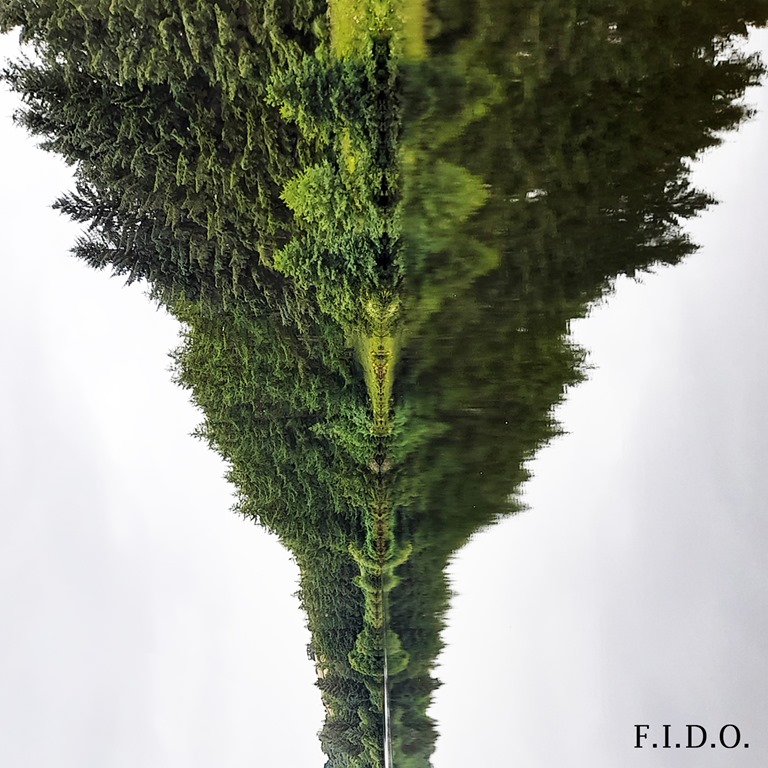
The joy of F.I.D.O. lies not only in its being a great tune, but from its gloriously lo-fi, crunchy sound. A twisty riff played almost tentatively by way of an intro is suddenly smacked along in a tidal wave of rhythm, bass, drums and it recreates the buzzing vibe of Dinosaur Jr on ‘Freak Scene’ or ‘Girl from Mars’ by Ash. It buzzes, it vibrates.

They’re pretty strident in their messaging here, and this is certainly no feel-good tune, as much as it’s a nihilistic howl that goes against the grain, and is certainly not a call of solidarity with their peers and contemporaries, It’s a shake, a slap, a sneer of derision that says ‘get a fucking grip!’

“F.I.D.O. is for the countless artists who labour to perfect their work, manifest their passions and achieve success, only to be left screaming into the void for years on end. It’s about the ridiculousness of dreams and the temptation of surrender. We’re made fools by our expectations of the music industry and the life of an artist, coaxed by visions of giants from a bygone era. The iconic rockstar is dead, or worse yet, duplicated posthumously in a vapid monetary mockery. It seems impossible nowadays for an independent artist to ever get heard, break out, be seen. When art is entwined with identity, emptiness can feel like death.

Why do we even try? Where does that spark come from, and is it at all worth trying to keep it alive? If an artist is neither seen nor heard, do they even make a sound?”

It’s a sentiment that not only do they fully espouse in their work, but one I can back to the absolute max. It’s not about the technicality, but the raw energy, and it’s right up and in your face, and then when the vocals come in against that welter of guitars, it’s absolutely fucking glorious. There are numerous references I just can’t call to mind, but there’s a dash of Therapy? and a pinch of Bilge Pump in there, and the refreshing thing about Bedsit is that while so many contemporary acts who bring that 90s vibe present sanitised, cleaned-up interpretations, Bedsit keep it raw, rough and ready – and in doing so properly capture the spirit of the era they’re so deeply rooted in.

F.I.D.O. is a massive, grungy monster. Driven by thick riffs and thumping percussion, the melodic and contrasting vocals land between Nirvana and MSP with aa hint of Fugazi as they melt grunge in a pot with post-punk and post-rock that maybe hits a spot in the region of Trail of Dead. But none of this really touches the rush and the squall.

The bottom line is that they’re bursting with energy, and they’re a band you can believe in. ‘F.I.D.O.’ kicks all ways, and the amount of ass-kicking they packing they pack into four minutes and twenty seconds is incredible.

The single comes backed with ‘Click Track’, a frenzied thrashing furry that’s pure and brimming with passion.

Feel the force.

AA

BEDSIT - _F.I.D.O._ ARTWORK

8th September 2023

Christopher Nosnibor

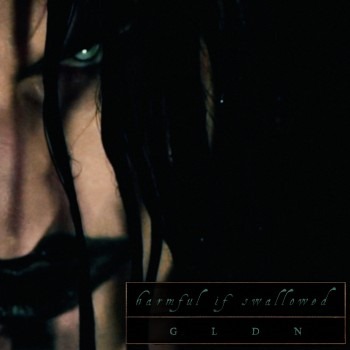
GLDN – the vehicle for the one and only Nicholas Golden – blasts in by way of a return after a few fallow months with a single – his sixth – in the form of ‘Harmful If Swallowed’, taken from the upcoming remastered and expanded deluxe edition of their first release, First Blood. There was a lot of blood then, and moving forward, this new offering is less gore-centric, but is somehow yet more disturbing. This may just be a personal response – but then, what response is there to anything artistic in its nature – but I tend to be more unsettled by the psychological than the visceral. I mean, in real life, blood makes me feel nauseous and faint, but ultimately, I ca n handle it, but headfucks, they’re harder to handle.

Tripped-out piano provides the initial disorientating backdrop. Of course it does: GLDN’s domain is the dark and unsettling, and his cues stem in no small part from Nine Inch Nails’ magnum opus The Downward Spiral, the point at which Trent Reznor really found his stride in terms of nuanced composition and dynamics beyond harsh and soft, loud and quiet, but expanded his emotional range and sonic texture.

‘Harmful If Swallowed’ is well-studied, then, but it’s more than mere appropriation. This is one of those songs that’s dark, dense, and menacing, rather than overtly abrasive and aggressive, and the twisted, tangled emotions it explores are introspective and desolate but interwoven with a sense of underlying tension which hints at the turning of tables.

Two-thirds in, things take a turn for the heavy with a chugging crashing in as flames erupt and the darkness and crushing sense of apocalypse take over.

Stylistically in visual terms, GLDN is equal parts Reznor and Manson, striking and disturbing in equal measure. In the accompanying video, GLDN goes full Jekyll and Hyde. The Reznor GLDN crawls, naked, skin peeling, hunched and traumatised, flipping to thee sneering, croaking Manson GLDN who is the demonic supreme master.

GLDN continues to test, tease, and challenge, both musically and presentationally, and ‘Harmful If Swallowed’ is strong and progressive on all fronts.

AA

su74197-harmfulnewcover

Spartan Records – 7th September 2023

Christopher Nosnibor

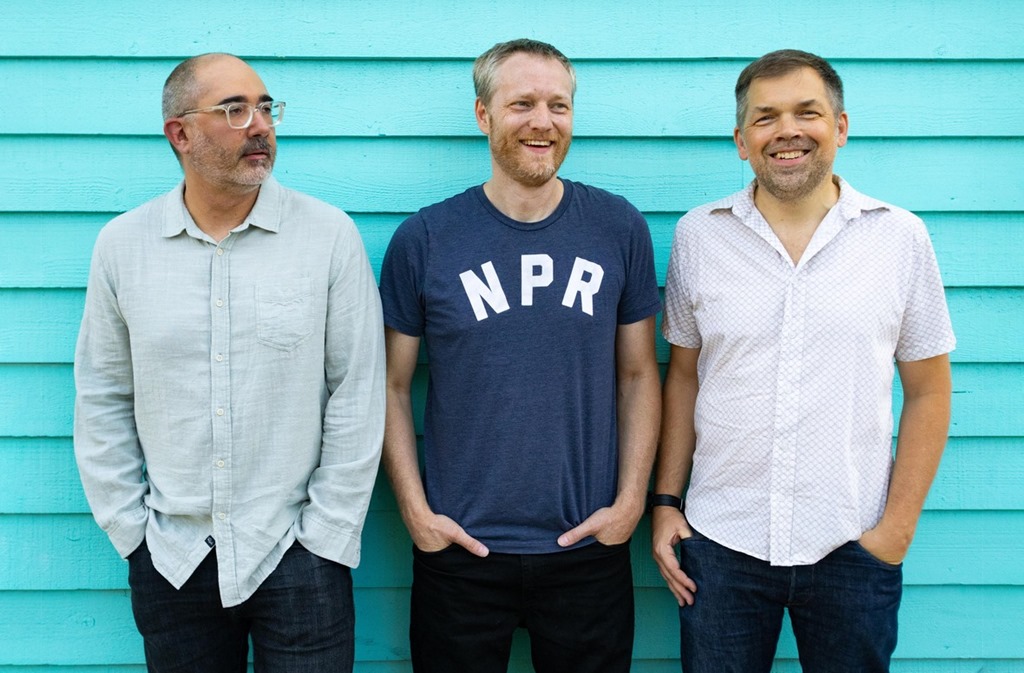
Milliseconds featuring Joe Easley (drums) and Eric Axelson (vocals / bass / synth) of The Dismemberment Plan, and Leigh Thompson (guitar / noises / pedal board) of The Vehicle Birth will release their J Robbins-produced debut LP So This Is How It Happens on October 13 via Spartan Records.

After recently premiering the first single ‘Time and Distance’ on Stereogum, the band is now unveiling the second single ‘Fallingwater.’

I have to confess that with so many submissions, I, like many in the ‘industry’ and also the majority of the public in this era of low-attention and time-constrained living, make instant judgements about not only music, but pretty much anything and everything. I’ll read a headline and not bother with the article, or if I do, may only make it through the first paragraph before my opinion is set and I move on. It’s a habit I annoy even myself with, and it’s a relatively recent habit I’ve developed, which I can pretty much pin to the start of the pandemic, in the days before lockdown when I would be checking the same news sites every couple of minutes to see if there were any new developments, for updates on numbers of cases and deaths.

So about ten seconds into ‘Fallingwater’, I’ve already reached the conclusion it’s limp toss, a slightly emo take on pop-punk, with its cleanish guitar sound and sing-song, slightly nasal vocals. But in the time it takes me to process why I don’t like it, I realise that actually, it has qualities I do like. It’s one of those songs that finds its stride as it progresses, and ultimately reveals itself to have more in common with proper 70s punk than the sanitised fully-adult-guys-bouncing-around-and-making-like-they’re-still fifteen-and-represent-the-youth’ punk-pop shit that’s still being released faster than babies are being born around the globe.

Sure, it’s melodic, but it’s got an edge to it, as well as some nifty unexpected changes which indicate some pretty smart songwriting skills, especially as said changes aren’t awkward or jarring. Having revised my position, I decide that maybe this is a song that warrants some coverage, which I might feel like devoting some time to some discourse, even if some of that discourse is around the process of creating that discourse (or deciding against doing so).

Only then, then, do I consider the accompanying notes – because as much as I can find myself drawn by the pitch, I think that what matters ultimately is the music. Great PR won’t make a shit song amazing – although it does seem that some may be blinded by great PR to the extent that some real crap can go massive, even if briefly by generating some kind of mass delusion, but that’s perhaps for another time.

In explaining the song’s inspiration and style, Axelson says, “Musically we felt like we were tapping into Hüsker Dü and The Kinks when writing this. Those chorus chords especially with the high strings ringing out as a drone definitely owes something to Bob Mould, and the riff in seven that separates sections of the song, feels like some early / mid Kinks, or maybe ‘Alex Chilton’ by the Replacements, but in seven. The weird twist comes in the bridge: initially it was just one voice, but in the studio we layered harmonies and it came out a bit Beach Boys, just maybe not as pretty.”

It isn’t, but then, The Beach Boys were just too clean and pretty, too lightweight and sanitised, whereas with ‘Fallingwater’, Milliseconds still bring some bite – more the spirit of ’77 than anything combining the punchy panache of Buzzcocks with the savvy of Wire to make for three and a half minutes of old-school enjoyment.

AA

Milliseconds_01_Col_edit

Photo Credit: Evan Bowles

1st September 2023

Christopher Nosnibor

Since I was first introduced to Salvation Jayne, back in 2017, I’ve admired their energy, their punchy, punky rock tunes (unashamedly not ‘alt’ and straight-up kicking arse). But what happens when a band loses a pivotal member, particularly under rather messy circumstances? It’s nothing new, of course: Fleetwood Mac’s career after Peter Green was both longer and more commercially successful, and the same is true Pink Floyd after Syd Barrett’s departure and post-Gabriel Genesis. Roxy Music lost Brian Eno early on, and Marillion enjoyed a lengthy career post-Fish… and so on, from Iron Maiden to, er, Queen. Arguably, some of these lineup shifts have marked changes for the better. Others… maybe not so.

As far as many were concerned, myself included, Salvation Jayne was Chess Smith. Clearly, Salvation Jayne, releasing their first new music since her departure, would disagree, and they’ve forged on and are now clearly facing forwards and evolving. The arrival of Estelle Mey on vocals is swept over briefly in the band bio which announced a change in sound with the new lineup, describing it as ‘intense, dark and dynamic post-punk’.

It crunches in with warping electronics trilling over a murky bass noise that sounds like a bulldozer before slamming in with some serious force, the nagging guitar reminiscent of post-millennium Pitch Shifter and some vaguely nu-metal vibes, but still retaining the powerful pop elements which defined their sound, and it’s certainly a meatier and more aggressive sound they’re showcasing here. Contrasting shouty verses with a more melodic chorus, it’s a tried and tested structural formula, and they really work that dynamic, and it works well.

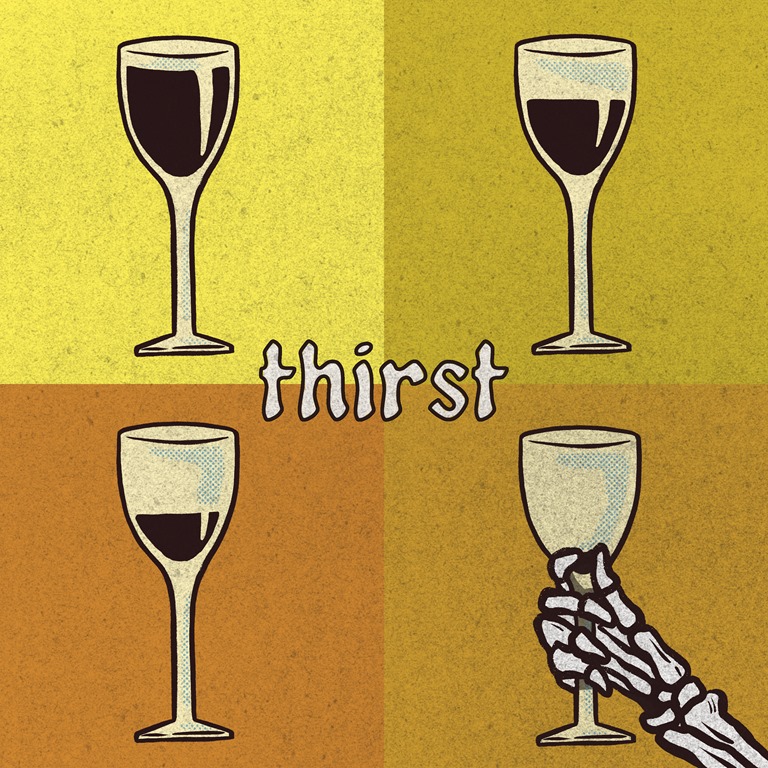
The layered vocals add unexpected depths and dimensions, and if there are moments where ‘Thirst’ feels crowded, the level of detail means there’s more to explore and it’s an adventure to unravel with subsequent plays and following the initial impact. Yes, Salvation Jayne are back, and they’ve got a big tune here.

AA

Salvation Jayne artwork

28th August 2023

Christopher Nosnibor

Techno/industrial is rather like craft beer. It was invented in Europe (KMFDM are obvious progenitors back in 1984), before being embraced in the States and with Wax Trax! almost singlehandedly spawning a factory for the genre, which in turn found significant popularity in mainland Europe, particularly in Germany.

English exponents are rather harder to come by, although Benjamin Blank, who has been working under the Binary Order moniker since 2008, is a worthy representative. His words on this latest single, lifted from forthcoming album The Future Belongs to the Mad (out at the end of November), illustrate perfectly why this mode of music is ideally-suited to life in Shit Britain: “’Slow Blade” is a reflection of the decline I’ve witnessed in my lifetime. It’s a decline that has gotten us to a point where we are more concerned with passing the blame than attempting fix the decay that has rotted away at us all, leaving many despondent and lost, myself included.”

I’m writing this in the week that, as schools are due to reopen after the summer break, hundreds are being forced to close or otherwise relocate students because the buildings are unsafe, built using cheap concrete which is structurally unsound and liable to collapse without notice. Our government has known about this for years, but has failed to act. And, indeed, over the last thirteen years, our infrastructure has been slowly crumbling – our roads, our sewerage systems, our rail network – as profit has been put before people, and we’ve become embroiled in petty patriotism, culture wars, and outright horrible racism and prejudice of every kind. It’s no wonder Blank feels as if our small island is sinking while the only things rising are rates of poverty, depression, and other mental health issues.

‘Slow Blade’ feels like a significant progression from the material which comprised previous album, Messages from the Deep. While it incorporated guitar elements, it was very much in the vein of early Nine Inch Nails, the sounds crisp, tight, overtly synth-dominated. In contrast, ‘Slow Blade’ is far more gnarly, far dirtier, more raw, rough-hewn, and simply more metal. And not the kind of metal you’d likely associate with industrial – the likes of Ministry or perhaps Godflesh – but gritty, murky black shit smashed together with the guitar slabs of nu-metal. At least, to begin with – because ‘Slow Blade’ is a song of psychotic multiple personalities, and a song in three parts.

Unexpectedly, the songs slows and goes first expansive and melodic, then explodes in a frenzy of stuttering techno beats that’s more Fixed than Pretty Hate Machine, and then it brings the two elements together in the third and final stage. While to suggest it has a particular arc, narrative or otherwise, feels like something of a stretch, ‘Slow Blade’ transitions through a series of emotions, from blind raging fury to the acceptance of defeat as everything collapses. The end is final. And we all know it’s coming.

AA

082306

Christopher Nosnibor

Stoneflies – Now I am Become Death

This one has landed timely and on trend, with a title quoting J. Robert Oppenheimer, in turn quoting The Bhagavad Gita, a 700-verse Hindu scripture, which contains (in translation) the phrase “Now I am become Death, the destroyer of worlds.” With things potentiaally still on the brink in nuclear terms between Russia and Ukraine, the prospect of global nuclear annihilation stands as likely now as any time as in the early nighties. To take a line from The Psychedelic Furs, ‘get smart: get scared’. And if it’s not nuclear annihilation, it’s climate change… we are all fucked, and the clock is ticking.

And yet…

If Barbenheimer has become a thing, whoop for the resurgence of cinema. Really. This is not an easy time to stay afloat, to keep things together. But… bigger picture. The world is on fire, but instead of funding fixes to climate change, the mega-rich are taking holidays in space. Hawaii will take billions to rebuild, but instead of donating from their spare billions to support it, Musk and Zuckerberg are facing off over a cage fight in the most embarrassing showcase of a machismo pissing duel this millennium. Fuck! This is wrong, so, so wrong.

In the face of this, it figures that black metal and goth and a host of genre forms which emerged from the bleak times of the 80s and early 90s have taken a firm hold on the now. Sure, I’ve mentioned it before, but it clearly needs reiterating: dark times inspire dark music and dark moods, and these are certifiably dark times. Fascism, racism, and oppression, are on the rise. You can’t trust anyone, least of all the government. They’re fucking you, and they have an eye on your escape.

We’re told that ‘Now I am Become Death’ is ‘a powerful and thought-provoking journey through the depths of human emotion and introspection. With hauntingly intense instrumentals and emotionally charged vocals, this track encapsulates the band’s vision of merging extreme metal’s raw power, progressive metal’s experimental arrangements, and psychedelic rock’s mesmerising spirit into a genre-defying sonic experience.’

We’re also told that ‘Their music is an exploration of the human psyche and the complexities of our existence with the new track a journey through the darkest corners of the mind, confronting our fears, and the struggle to emerge with a newfound sense of purpose and strength. ‘Now I am Become Death’ is part of a series of singles, which will be released over the coming months, from upcoming album All Too Human.’

Emerging from a hovering hum and an electrical crackle and darkness visible, a whistle of feedback pierces the eardrum… slowly descending, for a moment ominous and eerie, before the drums and guitars start to build… and then everything kicks in, a monster trudge of overdriven guitars and gasoline gargling vocals.

It’s brutal, pure devastation. ‘Now I am Become Death’ is four and a half minutes of ferocity. From the low, slow, insistent bass and wailing anguish of otherwordly voices before things assimilate into a demented, dark, groove. Where Stoneflies succeeds is in their balance and menace at the same time; the weight isn’t without detail, but the detail doesn’t diminish the weight, making for a tune of massive impact.

AA

Stoneflies artwork

Christopher Nosnibor

Engineer Records

I have mentioned – more than once – that I’m not fan of punk pop. But I am a strong believer in that there are two kinds of music – good and bad – and that there are exponents of both in any genre. A quote that sticks in my mind is Morrissey’s declaration that ‘all reggae is vile’. Now, I’m no fan of reggae, but that doesn’t mean that reggae is shit, it simply means that most reggae is not to my taste – but then there are reggae-flavoured songs and bands I absolutely fucking love, from The Special to The Ruts, not to mention some of Bauhaus’ dub/reggae dabblings. But vile? I suppose this was one of those early hints that Morrissey was a racist twat, along with his comments about needing to be black to get on Top of the Pops or whatever it was. Only back in the mid-80s, it was simply viewed as being niggardly, misanthropic, and contentious because it made good press.

I know absolutely nothing about the band, or the release: this is one of those CDs that just arrived through my letterbox. Some people would worry about how people find their email address or whatever, but I’ve come to be comfortable with people sending me stuff, because, well, as long as it’s downloads and CDs and books, rather than death threats, it’s a good thing.

Bed of Snakes definitely sit at the punkier end of the spectrum, rather than the poppier end. and it’s an instant grab with ‘Bridge to Nowhere’. It has the drums right up front and centre, the guitars crackle with crunch and big speaker volume, and the vocals are lower in the mix than the mixed-for-radio stabs at success that’s depressingly commonplace. There is, to my ear, nothing more irritating than clean vocals at the top of the mix on a tune that purports to be punk… and even in general. Mix really does matter, and with guitar-based music, the vocals should sit in it, rather than dominate, way above it. Too much vocal just sounds… wrong. But this, this is perfect, And those vocals are gritty, full-throated, raw, they grab you, and they’re riven with energy and sincerity.

‘Over You’ slumps into middling mediocrity and it would take far longer than the song’s two minutes and thirty-seven seconds to list the bands it sounds like. For me, it’s two and a half minutes of wondering why. Why do something so derivative? Why, when you can clearly do so much better, be so much more exciting? I suspect that radio play is the goal. Let’s write the tune that could get radio play, guys! I get the rationale, but no-one wins here.

But they’re back hard and heavy on the closer, ‘Stolen Moments’. As on ‘’Bridge too Nowhere’, the guitars are big and gritty, and the sound is dense and there’s a punchy, passionate edge that feels real. And two outta three ain’t bad: Bed of Snakes have proved that they’ve got guts and grit, and some knack for riff-driven tunes. Let’s have some more!

11th August 2023

Christopher Nosnibor

One of the great pleasures I derive from reviewing music, particularly that of experimental and ambient persuasions, is the amount I learn from reading about the inspirations behind the works. Because of the nature of these musical forms, the inspirations are wide and varied, but often reactions or responses to events or places, or even abstract concepts, and unencumbered by the conventions of lyrics, which are so often hampered and constricted by the limitations of meter, rhyme, even vocabulary and simple words themselves, lyrical songs fail to convey things which, on occasion, music alone can do. Because music speaks its own language, and has the capacity to communicate, to convey more than words. As a writer, and writing about ambient compositions, I am often acutely aware both of my limitations and the contradiction of the process, in essence, or reversing the magic of instrumental musical works to ‘explain’ them using rather blunter tools, but at the same time, I relish the challenge. Moreover, I have learned more of history and geography and beyond from my curiosity-led research than I ever did from my formal education.

So much information is simply not given to us, and so much history – recent history – is lost to us, unless it has a specific local interest, and even then, many people who are natives to the very town or city they life often know woefully little of the heritage which surrounds them. I am guilty of this also, knowing comparatively little of my locale, although it was again my own curiosity which compelled me to learn the history behind the existence of a brick and concrete bomb shelter in my own back yard.

Globally, we’re so wrapped up in the moment, and a nostalgia for the recent past that the history of a generation or more ago may as well be Elizabethan rather than Victorian or Georgian.

And so it is that I had absolutely no knowledge of Carabanchel Prison… which of course meant that I simply had to find out about it. How did I not know about the largest prison in Europe, built between 1940 and 1944, and operative until 1998? Disused and abandoned for a decade, plans to convert the immense brick complex to flats came to nothing (can you imagine actually living there) before it was demolished in 2008. So many questions… about its occupants, about it mere existence, about its collapse… so many questions about a place which housed political prisoners after the Spanish Civil War, and many more besides.

This EP is, in fact from the soundtrack to a forthcoming movie, released next month. As the accompanying notes explain: ‘The film portrays a person painting a line from the prison’s epicenter to across the wall. The abstract textures that drown the images are created by streams of water. The film was shot in 2006, inside the prison of Carabanchel, Madrid. The prison had then been closed and abandoned for over 10 years. It was finally demolished in 2008. The tapes were edited in 2023, 17 years after its making. The film features Ragnar Bey as the painter.’

Painting a line through aa disused prison my seem a rather curious film project, but no doubt context bolsters its content. But the soundtrack…

Across three pieces, each around four to six minutes in duration, War San (Swedish composer Kim Warsen) leads us through the building’s structure, and the titles correspond with the location: ‘Wall’, ‘Cell’, ‘Exit’.

Despite taking the form primarily of an elongated, wavering drone, ‘Wall’ has soft elements, trilling long notes as though from some pipe or another: not a pipe organ or bagpipe, but something long, droning but at the same time bright, airy. Meanwhile, ‘Cell’ feels almost spiritual. There is an oppressive darkness which pervades, and lingers at the corners throughout, but the overall sensation blends contemplation with optimism, before ‘Exit’ breezes, cloudlike towards freedom.

Perhaps, then, this EP’s function of a soundtrack to a post-abandonment creative project means any presupposition about it being a place of confinement is mistaken. Instead of chewing over its darker history, Carabanchel Prison invites us to reflect on the fact that those days are over now, and looks to a brighter future. It traces a line – quite literally – from confinement to exit, and to freedom. If only this was possible for more historical dates and places.

AA

CARABANCHEL_PRISON_Cover_NEW

Icons Creating Evil Art – 4th August 2023

Christopher Nosnibor

The third single from Swedish act Darkplace is their first to feature vocals, and is not a cover of the Gary Numan hit.

The band are described as ‘a mysterious new Swedish dark dream pop/post-punk group whose forthcoming debut album, About The End Of The World, is a conceptual work inspired by the bleak landscape of the Stockholm suburbs that birthed them.’ They go on to say ‘for the members of this highly secretive group, it is not just about the music. They perceive themselves as more an art project that happens to be exploring and commenting on the state of the world through their chosen mediums of music and video.’

Is a band mysterious if they tell you they are, or does that undermine the mystery? Surely a lack of disclosure is mysterious in itself? If I’m overthinking, it’s almost certainly a consequence of their overexplaining, although I am entirely on board with the idea of an act taking their art seriously to the point of fully inhabiting that space. When it comes to concept-based creations, you have to fully believe in it, otherwise, how can you expect anyone else to?

When it comes to Darkplace, context counts for a great deal, and to provide this, I shall quote liberally here: ‘Centred around an alternative reality – or is it just a grim present and future? – the album is being unveiled gradually via a series of videos based on animated digital paintings for each of its tracks… Their new single, ‘Cars’ […] sees the story move on to a man who travels north following cryptic messages written on highway signs that only show up in the blast of his headlights. Is he the only person who can see them and follow the trail? Darkplace cryptically state that “trying to escape this psychotic, slow burning apocalypse is not easy. Nowhere is safe. These weird structures and phenomena seem to occur everywhere, all over the world. Nowhere is safe!”

Perhaps somewhat ironically, the slow-burning apocalypse of which they write is accelerating at a pace no-one can keep up with, and half the planet is on fire now, quite literally, although this afternoon I read of hailstorms of biblical proportions in Germany and Italy, smashing car windscreen and requiring snow ploughs to clear the streets. It really does feel like the end of the world, and there’s a strong chance that is truly is.

Detached from the narrative of the album, ‘Cars’ stands well as a standalone single. It’s a taut, dark (of course) slice of post-punk inspired tunage, and while its lineage is clearly one that can be traced to the early 80s, it’s equally indebted to the school of the early 00s, which brought us Interpol and White Lies. What goes around comes around, and here in 2023, times are the bleakest they’ve been since the early 80s, with the added bonus of climate change threatening the collapse of civilisation and life as we know it. It’s dreamy but driven by an insistent beat and nagging guitar lines, and if the vocals, floating in reverb, evoke The Charlatans or Slowdive, and there’s perhaps a hint of Doves in the mix, the energy is more reminiscent of early Editors. Lyrically, it’s anything but uplifting, but the musical counterpoint really sweeps you along, making for an exhilarating three minutes.

AA

fc7f46444f143114c333beafb3be754b3b51910f