Archive for the ‘Reviews’ Category

Christopher Nosnibor

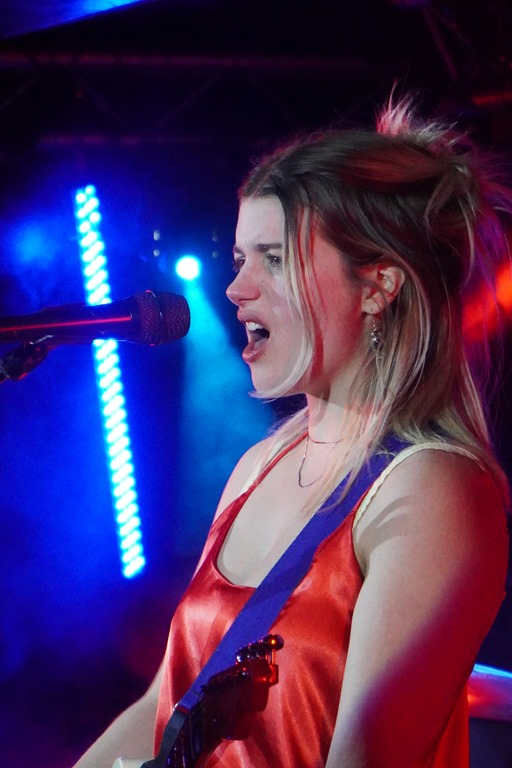
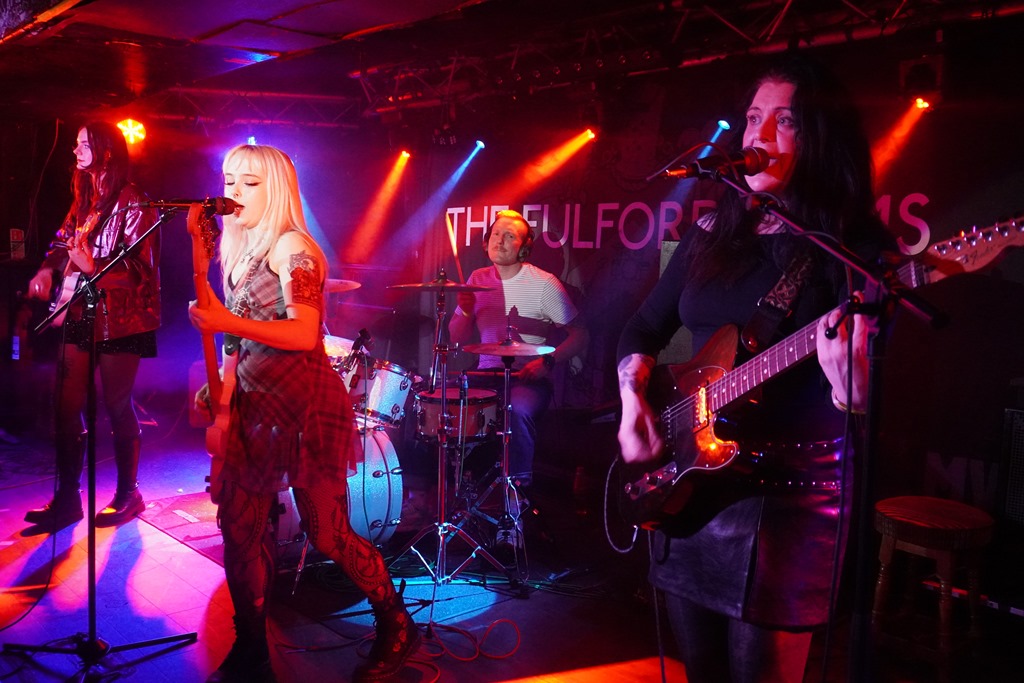
For many so-called ‘heritage bands’, the gig circuit can be trail of diminishing returns – then again, for others, the gigs are bigger now than in their heyday. Nostalgia is a powerful market, but one that often tapers off as the fanbase ages. Our older population may be expanding, but that doesn’t mean they’re all up for gig-going in their retirement years. Spear of Destiny sit in the middle of this range: they’re not playing the 1,500-2,000 capacity venues of some of their peers, but they’re packing out smaller venues, such as this one, often. You have to wonder if Kirk Brandon can even remember what his home looks like given his intense touring schedule, if not with Spear of Destiny, then, more recently, with the resurrected Theatre of Hate. They only finished their Janus tour in June, and here, they are, back on the road after barely time to do the laundry and restock the merch. The frequency of visits to destinations with smaller demographics does nothing to diminish the attendance, either: the fanbase is hardcore, and they do seem to be drawing younger people in, too, as interest in the bands kids’ parents listened to appears to be on the rise. I’m not going to claim that the 80s and 90s were better than now for music – not least of all because I don’t believe that’s the case, despite it being harder to find stuff now if you want to escape the algorithmic force-feed – but there was something about those times that’s lacking now, and it’s not just innovation. Politics and protest seemingly had a more central place then, too: in recent years have

It was only last September that Theatre of Hate stopped by this very same venue, and the Spring of 2023 that Spear of Destiny trod these same boards – and yet tonight, perhaps because it’s a Friday – the place is packed, perhaps more so than on the last two visits.

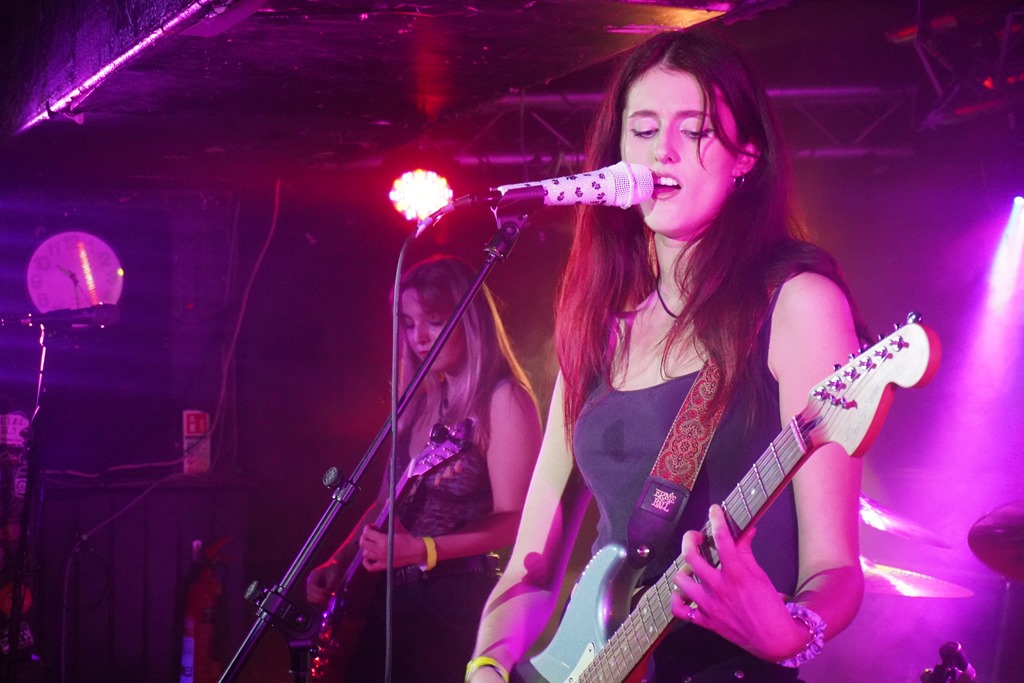
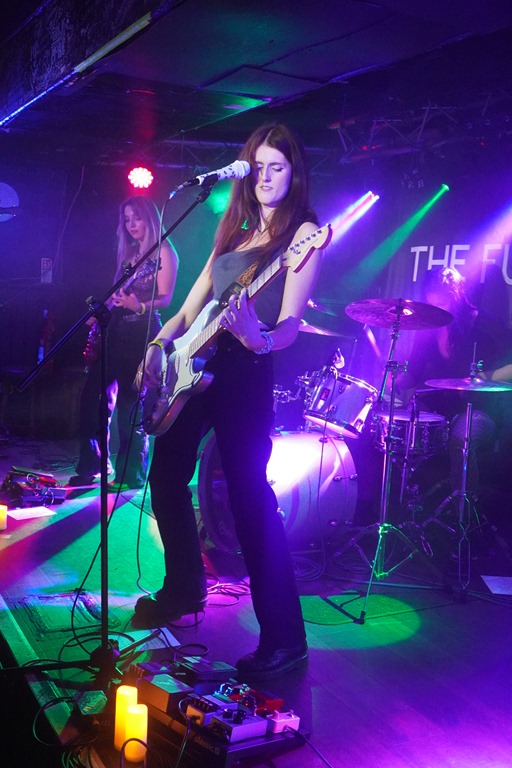
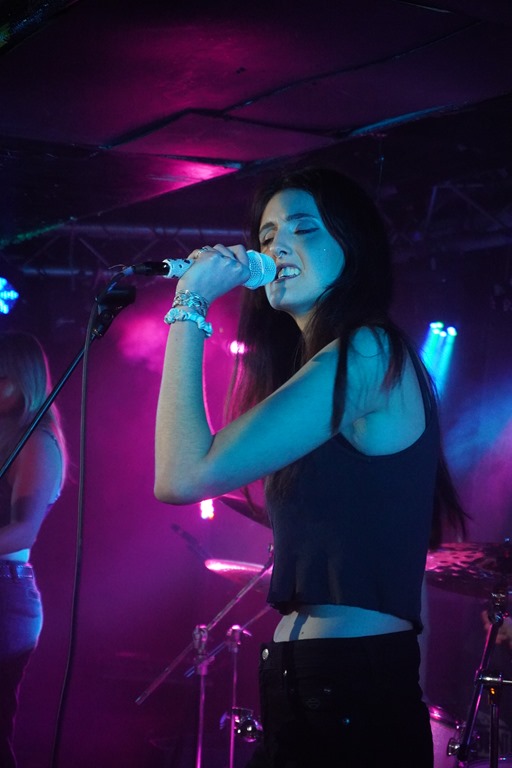
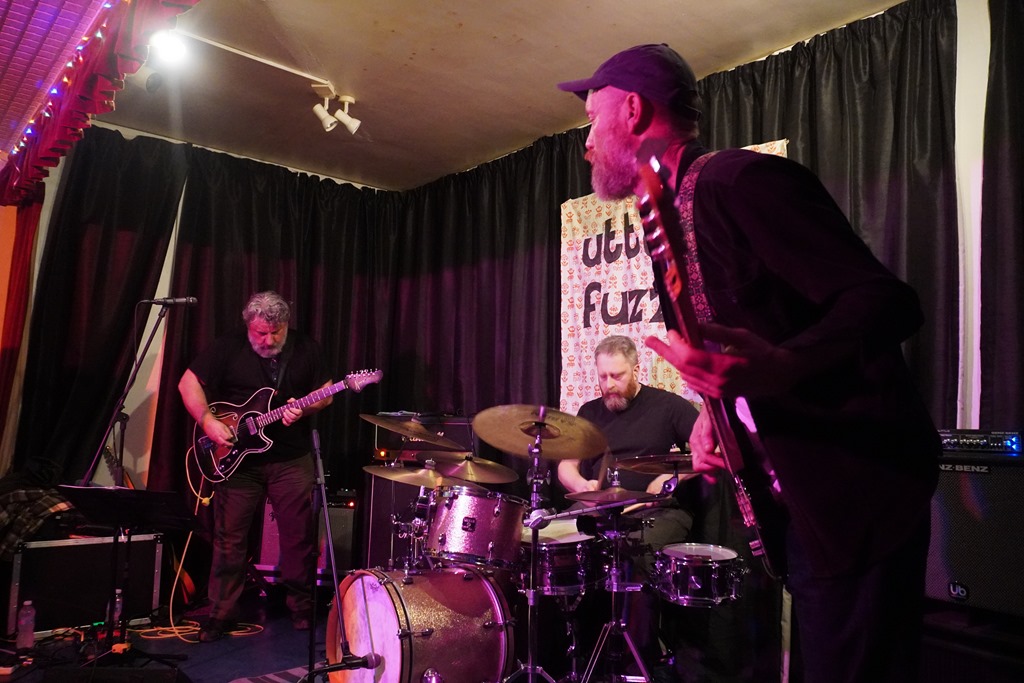
Immediately they dispel that whole ‘heritage band’ thing by opening a solid set with a slew of newer material, delivered with vigour. It’s also very much a set for the more devoted fans: popular songs and hits like ‘So in Love with You’, ‘Tinseltown’, and ‘Young Men’ are bypassed in favour of a set that works its way through recent tunes and deeper cuts, and only really goes all out on the big popular choices in the second half. No-one’s complaining, though, and the band look to be enjoying themselves: at one point, Kurt exchanges grins and chat with bassist Craig. And I’m reminded – as a huge, huge Sisters of Mercy fan, but one too young to see them in their first era – that I’m standing maybe six feet away from the bass legend that is Craig Adams. The fact that The Mission were the first major-league band I saw, from what felt like a mile away, at Sheffield City Hall in 1990 is the context here.

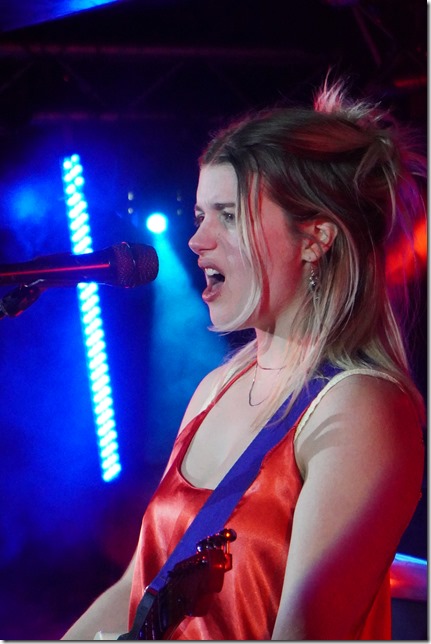
DSC04111DSC04198DSC04219

Kirk’s voice may not sound quite as strong as on his last visit, but the chap’s been poorly, and he’s still capable of belting out the tunes, and, soaring in all directions and, when it matters, leaping an octave in an instant and hitting all the high notes. And as a four-piece, while the absence of sax is notable particularly on some songs, they create a sound that’s dense, and as always, they play with precision tightness while maintaining a fluidity and a palpable energy. Everything else is in place, with a dominant rhythm section, from martial beats to thunderous tribal percussion, paired with Adam’s sturdy grooves.

Up front, there’s ‘Strangers in Our Town’, and ‘Never Take Me Alive’ lands early on, too. It’s easy for forget that this is a band who’ve released significantly more albums since their eighties heyday than during that time, and the set offers a fair balance of post-eighties material with a selection of songs from that commercially fruitful spell – and it’s worth noting that fan favourites aren’t necessarily the singles, but key album tracks. ‘Mickey’, for example, was only a single in The Netherlands, but is one of the highlights of World Service, and tonight’s set.

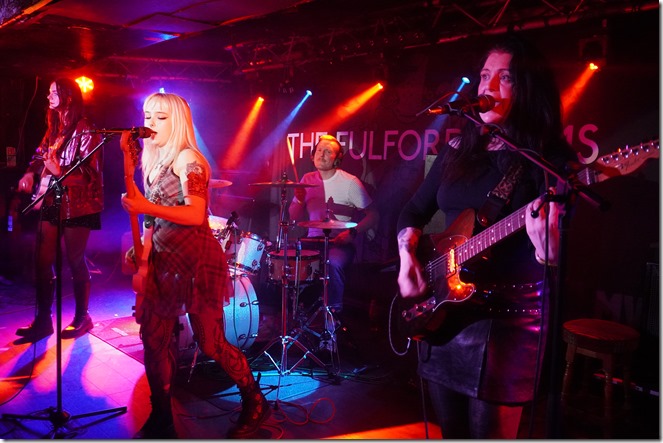
DSC04134DSC04157

Into the final leg, ‘Rainmaker’ really rouses the rabble, and ‘Radio Radio’ prompts a huge singalong before they depart the stage. The place erupts when the band come back on, and the encore launches with a spirited ‘Soldier Soldier’… and finished with ‘Liberator’ – because there is simply no other way to end a Spear of Destiny set. It brings the house down – every single time. More of the same next time, please.

Christopher Nosnibor

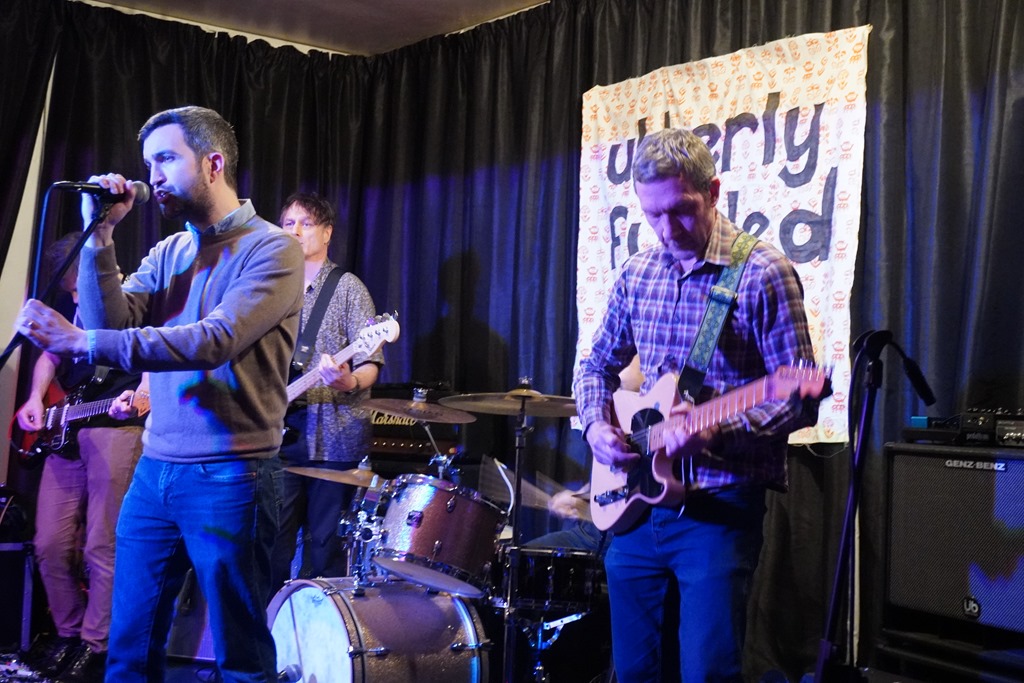
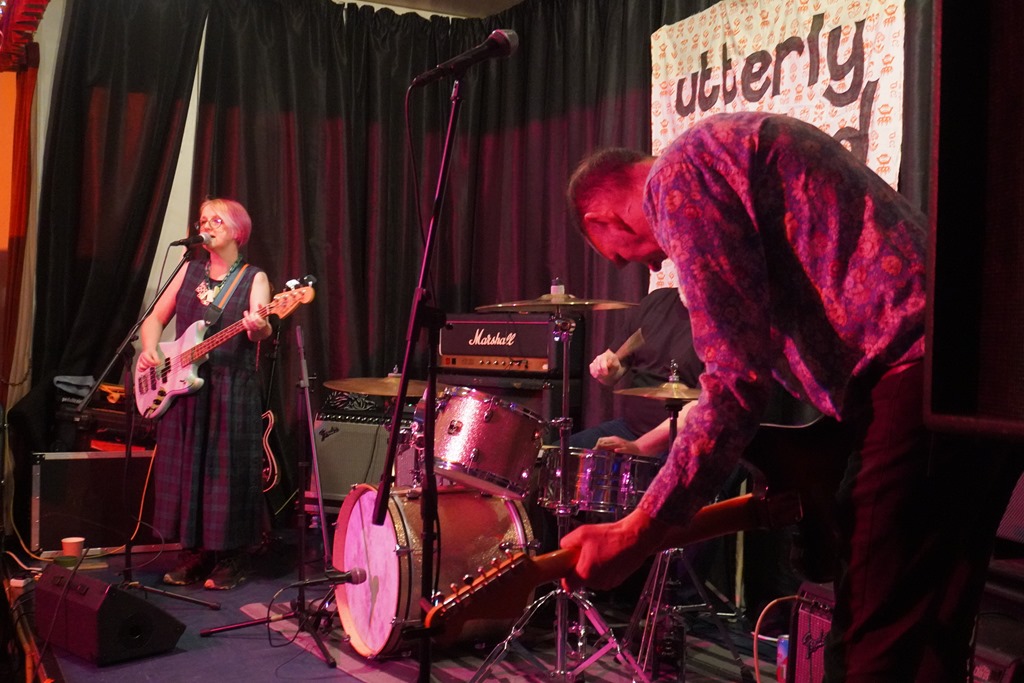
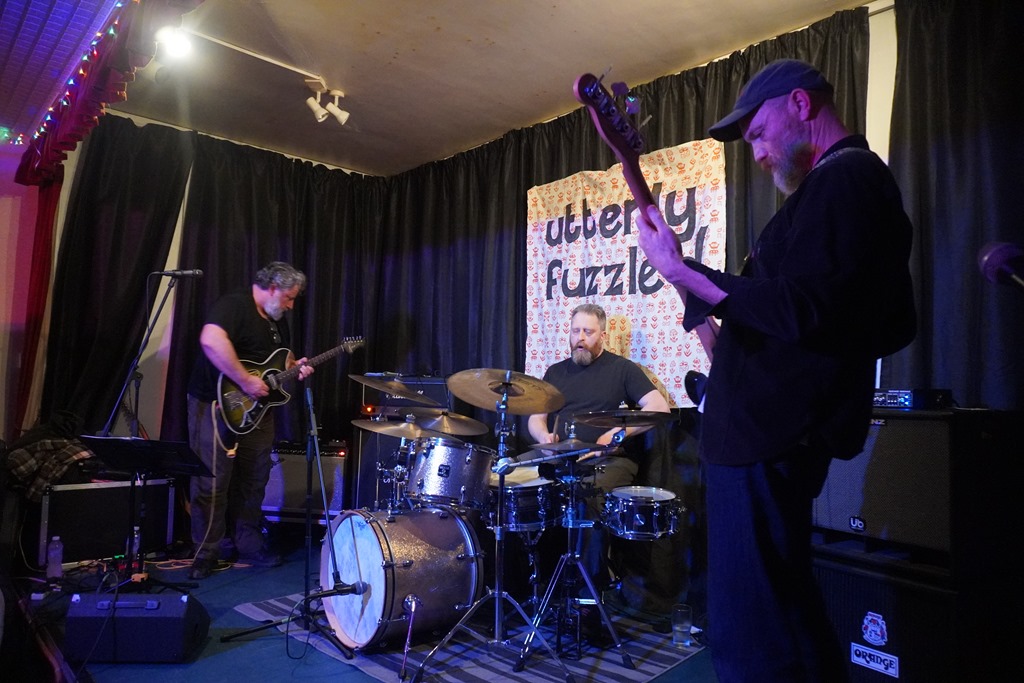
It says something about the organisers when you book a ticket for an all-day event having only heard of two of the bands on the bill, and don’t even feel the need to research the others. The previous three Utterly Fuzzled events have rapidly built Jo and Pete Dale a reputation for curating lineups of remarkable quality from the region and further afield – such a reputation that today was down to its last nine tickets the day before – impressive considering that it’s running alongside a storming sold-out three-day event up the road at The Fulford Arms. It’s worth noting that this is all happening a couple of miles or so out of the city centre, where there is only really The Crescent and The Barbican within close proximity of the city walls. What can we take from this? There is still a strong demand for live music that isn’t mainstream, isn’t tribute acts, and that the scene in York – thanks to a number of hardworking people – is thriving right now, with a rare abundance of homegrown talent and a strong sense of community at its heart. And the Utterly Fuzzled events encapsulate all of that and more, being almost a mini-scene of their own – not in a snobbish, self-serving way, but quite the opposite, offering ‘no questions asked’ discounted tickets, and espousing an ethos of inclusivity.

With these events, there will always be something new to stimulate the ears, and in keeping with the DIY ethos that’s perfectly summarised by the stage backdrop, they always find ways of opening proceedings with some homespun flash of warped inspiration. Today, it’s Iris the Gong. Said gong is a feature of their events, and on this occasion, she becomes the star, where initially, Jo Dale serves up some dramatic crescendos and crashes. Pete then steps up to forge altogether sparser atmospheric sounds, utilising all parts of the gong and using a large beater to creates low hums. Then it’s open to the floor for some audience improvs, culminating in a few face-wobbling smashes.

It makes for quite the intro for Troutflies – one of the two acts I was aware of in advance, and who have featured on here recently. They’re loose and li-fi, with melodica drones, various bits and pieces clop clopping and scraping, samples and guitar that’s by turns laid back and scratchy wavering through some half-songs – sort of low key, a bit slowcore, quite Silver Jews, a bit Pavement before Slanted and Enchanted, and at times gloriously atonal and off-key, and as far as time signatures go, they’re out the window. Reuben Pugh drawls rather than sings, and it all works, in the sense that yes, it’s supposed to sound like that. It’s not for everyone, and it takes a certain amount of guts – or madness – to get up and make such a spectacular cacophony.

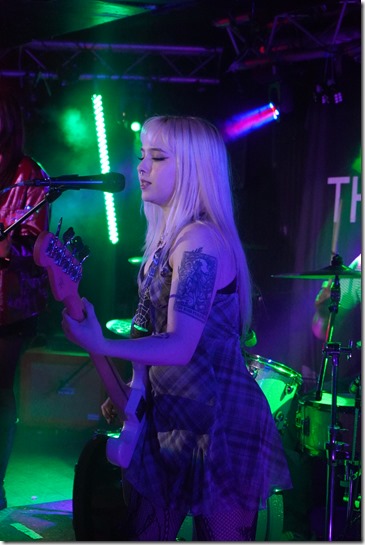
DSC04223

Troutflies

Late substitutes Orchard, from Scarborough, are loud and fast and abrasive. Angular punk noise with guitar and drums, shared vocal duties. The guitarist could save himself some work by buying a tuner, but kudos for his ability to tune by ear. What matters is that they really do attack the songs – songs in favour of immigration, about depression, about the country’s lurch to the right, and play with passion The guitars are gritty, the drumming hard and expressive, the vocals shouty. On the strength of this outing, which concluded with guitarist Joel clarifying that his previous comment about making a onesie from Nigel Farage’s skin did mean skinning him alive and wearing it, leaving some nonplussed expressions, their album, released at the end of the month will be killer.

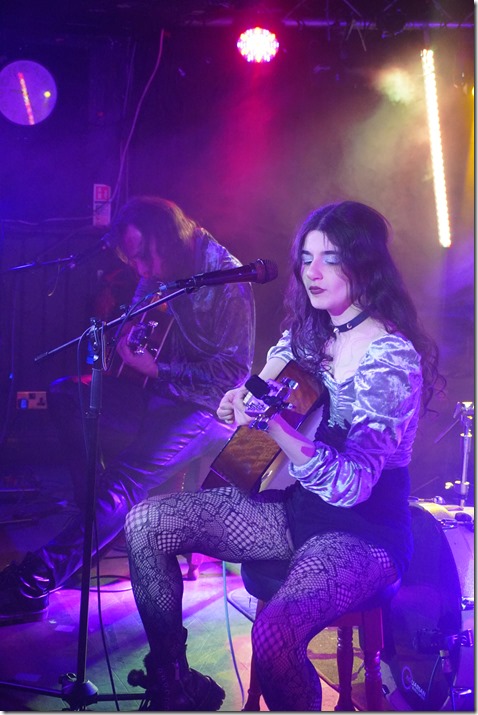
DSC04240DSC04236

Orchard

St Christopher are perhaps one of the city’s best kept secrets, not least of all because of the infrequency of their live outings. This is their only one of 2025. They’ve been going since 1984 and have had releases on legendary labels including Sarah Records. They play solid indie / alternative rock with close harmonies. Their 80s background is evident, and that’s a positive. They’re incredibly tight and assured, with a really full sound. They may not have released anything in a while, and may not have attained quite cult status… yet, but as also rans who are still running, there’s time yet.

DSC04250.crop

St Christopher

All Ashore pack five bodies onto the little stage and bring some uptempo, vaguely twee late 80s / early 90s indie vibes. They’ve obviously put some co-ordination and consideration into their outfits, and they’ve got some very bouncy friends along who make for a lively front row.

DSC04273

All Ashore

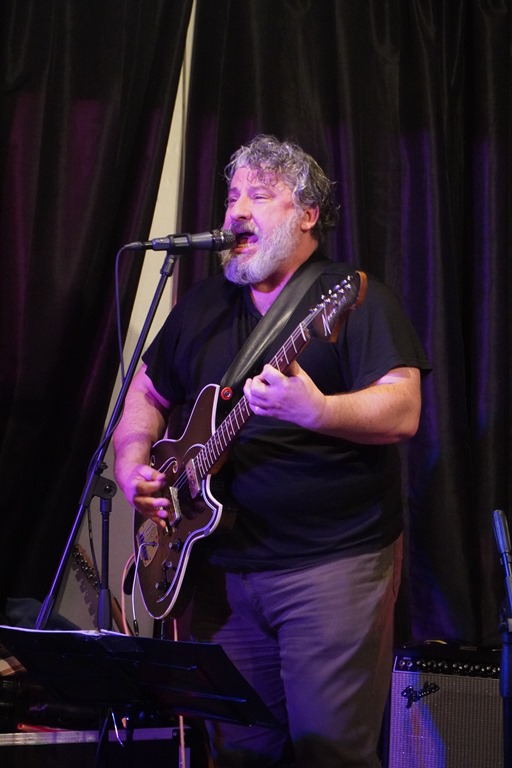
Not that Knitting Circle struggle to land gigs, but if you want to play more, one simple solution is to put them on yourself. Knitting Circle are dependably good. Since the departure of vocalist and multi-instrumentalist Jamie, who penned a number of their songs, things are inevitable different, but reconfiguring as a purely guitar-based trio has forced them to really home in on their focus. Guitarist Pete plays with no pedals, serving up a clean, crisp, choppy sound. ‘Fox’ is a standout in a set that’s consistent and tight, sounding more than ever like Gang of Four crossed with Shellac. As ever, ‘Safe Routes’ is powerful and moving. We need peace. We need humanity. If only this room was a microcosm of the world.

DSC04321DSC04303

Knitting Circle

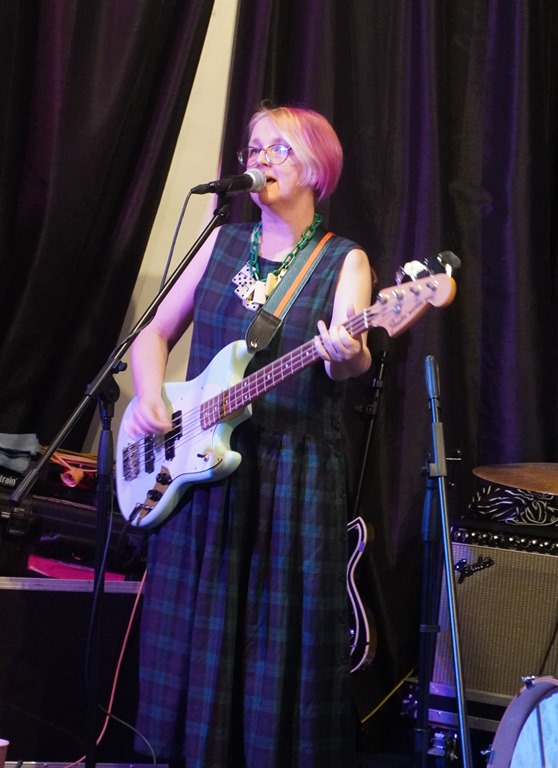
Mammoth Penguins serve up a set of tight indie with hints of US influence, alt rock with a dash of country. Another power trio, they serve up a chunky sound which provides the bed for some narrative lyrics. Said lyrics aren’t always slick or poetic, but they’re real life, and they’re a ban which grow on you as the set progresses. By the end of the set, they’d won over the entire room by virtue of their sheer quality.

DSC04345

Mammoth Penguins

Tonight’s lineup was perhaps the most diverse and unpredictable of the Utterly Fuzzled series to date, but the mixed bag nature, when coupled with the warm atmosphere – and cheap beer – really made it something special, something akin to listening to an episode of John Peel. You might not love all it, but the quality is undeniable, and you know you’ll discover at least one new act you dig. It’s everything that’s missing from music lately. And it’s so, so much fun, restoring faith in humanity, and uplifting in every way.

Sub Pop – 14th October 2025

This one has seemingly come out of nowhere. And it’s on Sub Pop. And they’re calling it a Maxi 12”, as was the term for a 12” EP back in the 80s and 90s. And I suppose it does actually quality, given that the old-school Maxis tended to feature either two tracks per side, or an extended version of the single, plus B-sides, and that’s then case here. But with this being a sunn O))) release, the lead track is just shy of fourteen minutes in duration, and the tracks on the flip are eight and seven-and-a-half-minutes long respectively. Back then, a maxi would cost maybe £3.50, or £3.99 (I’m talking about the ‘90s: it was a couple of quid in the 80s… I can’t actually remember the price of an LP in the 80s, but have receipts sitting inside sleeves that verify that in 1994, a new LP on vinyl cost around £7 and a CD £11… so the fact that this ‘maxi’ is $25 tells you all you need to now about inflation and capitalism and how times have changed.

Anyway. The three tracks on this release, with a total running time of almost half an hour are notable as ‘first official sunn O))) studio recordings to feature only the original core duo on heavily saturated electric guitars and synthesis.’ It’s also introduced with a sense of elevation that’s typical sunn O))), when they inform us that ‘sunn O))) gave extreme focus and care to each step and aspect of the recording, each tone and level of saturation, each gain stage and speaker, each arrangement and harmonic. The Pacific Northwest forest is our guide.’

‘Eternity’s Pillars’ is a raging behemoth of feedback and sustain, every chord struck a billowing beast that punches through the endless drone, and while it is unquestionably classic sunn O))), it also brings together the defining elements of early Earth, in particular Earth 2, an album which effectively created the blueprint for the entirety of sunn O)))’s existence. Not a lot happens: that’s never the point. Downtuned guitars churn the bowels, scraping and snarling their way to monumental, megalithic sustain, though a continuous whine of feedback, each strike hanging in the air for what feels like an eternity. The pace is a crawl. Time stalls. It’s absolutely punishing. New shapes emerge, fleetingly, toward the end, notes rising like monuments from a cloud of smoke – by no means a melody, but it’s a progression, a change in mood.

‘Raise the Chalice’ is named ‘for a rallying cry often uttered by Northwest legend Ron Guardipee throughout the mid-1990’ – making it their second composition in his honour (the other being 2023’s ‘Ron G Warrior’, which was also released on Sub Pop), and opens with a full growl like a giant engine slowly revving , but instead of revving up, it gradually revs down into a slow-churning sonic abyss. It doesn’t sound, or feel much like a rallying cry. With the density of dark matter, the enormity of the sound engulfs the senses. By the arrival of ‘Reverential’, there’s a feeling of exhaustion, as if all the light and oxygen has been extracted, and yet still the sound continues to apply a crushing pressure.

While it’s difficult to really rank or compare sunn O))) releases as to what constitutes their ‘best’ or ‘heaviest’ work, this is certainly classic, quintessential sunn O))), and it’s very, very heavy indeed.

AA

a3585267222_10

16th October 2025

Christopher Nosnibor

Does the constant flood of bile on social media, the relentless flow of horrible, horrible news, and the general shitness of both people and society make you want to run away, hide, live in the woods? It seems that during the lull that was lockdown – a weird period which threw so many people into a spin of confusion that we really need to accept that there have been long-lasting repercussions from what amounted to a collective trauma – something changed, as if the world shifted on its axis. Some of us were more traumatised than others, it’s true, and that’s for wide-ranging reasons.

Alice Rowan – aka Mayshe-Mayshe – has documented her own post-lockdown issues with long Covid via her social media, and how it’s impacted her ability to maintain her work-rate. But here she is, finally bringing her third studio album, Mosswood to the world, and it’s the perfect antidote to all the stress and strain of modern life.

She describes it as ‘a dreamy art-pop exploration of mossy woodland and Tove Jansson’s final two Moomin novels… Her music blends dreamy art-pop and electronica with rich storytelling and infectious melodies, with organic elements woven into all aspects of her music.’ You may ask why – why would an adult be so invested in a fantasy world which has such strong connotations of childhood? A reasonable response would be ‘why not?’ In the face of the horrors which surround us everyday, retreating to the comforts of those peaceful, simpler times is the ultimate escapism. And what’s more, there is a strong connection with all things natural here, evoking the woods so many of us yearn to escape to.

Mosswood is introspective and personal, but also a passage to perfect escapism, and Mayshe-Mayshe balances breeziness and an air of naivete with anxiety and inner turmoil. And the result is so, so magnificent, magical, a balm to all of the noise. It’s the twitter of birds, the scratching of bugs, the tinkle of streams. Incorporating field recordings for the first time, on Mosswood Mayshe-Mayshe really brings nature in. Single release ‘Mycelium’ is exemplary: the percussion is more like the footsteps of overgrown insects – I’m reminded of Roald Dahl’s James and the Giant Peach in soe ways. But songs like ‘Tiny Disasters’ push to the fore the tensions and the darker aspects of the creative psyche, and reminds us that sometimes, life is simply difficult to process. ‘I’ll be afraid again…’ she repeats, twitchily, capturing perfectly exactly what it’s like to fret, chew and churn., against a glitchy, flickering beat and buzzing sound backing.

In the main, Mosswood is the sound of dappled shade, of gentility and deep breaths – and the big reverb which surrounds Alice’s voice is less like a cloak and more like a comfort blanket as the listener is led into a soft, gentle soundspace, which evokes snuffling and scuffling, and, more importantly, pure escape. On ‘The Little Things’, she sings in breathy, introspective tones of worries – but the immersive waves wash those worries away.

What Mosswood really tells us is that happy, skippy tunes do not instantly equate to effusions of joy, or endless happiness. That said, Mosswood is the sound of freedom, of connecting with nature, feeling the textures of grass, of bark, of moss. Utilising an array of instrumentation, Mosswood is understated and so, so uplifting. There are so many layers, there is so much detail to absorb. But ultimately, Mosswood reminds us that nature is there, all around, and it’s beautiful and our lives are richer if we engage with it. Look at the trees. Touch the bark. Breathe the air. This is life. Live it. Celebrate it.

AA

Mosswood cover art for digital v2Mayshe promo bug - credit Isobel Naylor

4th July 2025

Christopher Nosnibor

It may be coincidental that Chess Smith threw down Saving Lilibet on 4th July, but it’s certainly appropriate. This is a release that is all about fighting spirit, taking things back, and claiming a state of independence.

Her bio for this release is nothing if not direct:

Chess Smith has been a commanding presence on the Kent music scene for over a decade, both as a solo artist and a frontwoman, most recently as critically acclaimed power vocalist for Salvation Jayne… until 2020, when an abuser tried to take her power, dull her shine, and break her spirit. But they didn’t succeed.

Despite enduring a devastating nervous breakdown at the time, Chess has come back fighting in spectacular style with Saving Lilibet, her most personal, and relatable, work to date. She has made it her mission to provide a voice for those who have experienced abuse and toxicity, and to show the world that you can not only heal after these experiences – you can thrive.

As the saying goes, what doesn’t kill you makes you stronger, and simply telling her story, getting up and putting this out there, with no holds barred, demonstrates phenomenal strength. And for all that, Saving Lilibet is not remotely sad or self-pitying, but a set of songs which is uplifting, and very much focused on empowerment and positivity.

The intro, ‘Saving Lilibet’ is a weirdy, atmospheric little piece, on which Smith’s voice echoes from left and right, ‘save, save’. One gets the impression that this is the voice in her head, her internal monologue speaking to her, pulling her out of her torpor. And that’s exactly what she does, with some pristine pop tunes.

Lead single, ‘Bounce Back’ in many ways speaks for itself. When I covered it back in February, I noted how it was both ‘slick and soulful’, but I don’t think I fully appreciated just how strong the production was: it’s got the groove of Thriller-era Michael Jackson backing up a really crisp pop song, propelled by a thumping retro beat and showcasing a bold vocal performance, which, paired with her heartfelt lyrics hollers ‘taking no shit’.

Second single, ‘Drama King’ is up next, and once again, it’s tight, and light, but by no means flimsy in content or delivery’, and it so happens that the singles are entirely representative of the collection as a whole. The vibe is very much 80s pop played through a post-millennium filter – something which is nowhere more apparent than on the slower ‘Alexa’, while ‘Dissociate’ blends hints of Madonna with some Hi-NRG dance pop and moments of introspection.

‘All My Love’ is a big, anthemic slower song, and clocking in at almost six and a half minutes, it’s epic in every way. And once again, it’s realised with absolute precision and try dynamic is remarkable.

Saving Lilibet is a triumph on every level, and Chess Smith proves she’s not just a survivor, but an artist – and human being – who is determined to thrive. It’s inspiring stuff.


Chess Smith Artwork

Midira Records / Cruel Nature Records – 24th October 2025

Christopher Nosnibor

A new Nadja release is always cause for a pique of interest. Excitement doesn’t feel like quite the right term for an act who create such dense, dark, brooding soundscapes. Centred around the duo of Leah Buckareff and Aidan Baker, each release marks a shift thanks to the contribution of a range of guest performers, and cut is no exception – and this time, following the instrumental epic that was Labyrinthine (2022) – we have vocals, from not just Baker and Buckareff, but also Tristen Bakker, Oskar Bakker-Blair and Lane Shi Otayonii, among others. They certainly bring a lot of guests to a party which features just four tracks. But that is ’just’ four tracks which each occupy an entire side of vinyl on a double LP. As with Labyrinthine, these are compositions which span ten to sixteen minutes, and utilise that timeframe to maximum effect. They don’t hurry things, with slow, tapering drones interweaving, the emphasis on the atmosphere and the detail over the impact. And yet, despite this, or even perhaps because of this, the impact is strong, albeit in more subtle ways.

Their comments on the album are illuminating, explaining that ‘Thematically, cut explores trauma and physio-/psychological stress, as well as possible tools and means of overcoming these stressors, of which the music itself (sonic sublimation) might be one… Musically, while Nadja retains their signature wall-of-noise doomgaze sound, they also explore quieter, more introspective moments as well as new/different instrumentation, with harp, French horn, and saxophone featuring for the first time on one of the band’s recordings’.

‘It’s Cold When You Cut Me’ is stark, bleak, minimal. The air feels dead, it’s suffocating. The sparse percussion rattles along, but the drones are glacial. Five minutes in, rumbling bass and heavy beats roll in, and by the mid-point there are crushing waves of lugubrious noise worthy of Swans, but overlaid with trilling brass and woodwind, jazz in slow-mo, the honk of migrating birds and trilling abstraction.

But this is just a gentle introduction ahead of the thunderous grind of ‘Dark, No Knowledge’, which begins with atmospheric whirlings and even hints of Eastern esotericism, voices rising in the distance, atop wisps and rumbles, echoes and murmurings, before the dense, sludgy, post everything doom drone cascades in like a mudslide. It’s low and it’s slow, crawling like larva. buzzes and rumbles sustain for an eternity. You can actually feel your stomach drop in response to the bass frequencies.

The sound seems to get thicker and murkier as the album progresses, and if ‘She Ate His Dreams From the Inside & Spat Out The Frozen Fucking Bones’ isn’t nearly as abrasive as the title may suggest, its slow repetitious form is truly hypnotic as it trudges its way along.it possesses a rare density which matches its delicacy, and comparisons to latter-day Swans stand in terms of positioning the piece. There are thick, distorted tones grinding like earthworks through the airier overtones, and the contrast brings something magical and soothing. Then ‘Omenformation’ crashes in like a tsunami. The volume leaps, the density leaps, and you find yourself blown away by a sonic force strong enough to knock the air out of your lungs. The dingy, booming bass alone is enough to send you to the ground. The drums are immense. In fact, everything about this is almost inarticulable, as Nadja scale up the sound to beyond that of mere mortal beings. This is music with a physical force and a power beyond words, beyond contrivance. It’s archaic, occult, primal in its power. This is a track which treads through a series of movements, the last of which is crushing in its weight.

It’s true that cut possesses all of the sounds which are recognisable as being concomitant with Nadja’s distinctive dense, doomgaze stylings, and a lot of the vocals are as much additional layers rather than clearly enunciated words, and as such, add further depth – and a certain human aspect to the overall sound. The result is a work which speaks to that level of the psyche beyond words, which conveys trauma and physio-/psychological stress, and which offers a degree of relief through an experience which is wholly immersive and immensely powerful.

AA

a1598661613_10

Nadja2025

Photo: Hugues de Castillo

Coup Sur Coup – 17th October 2025

Christopher Nosnibor

Few drummers receive much recognition, unless they’re the backbone of bands who are household names (people know Ringo Starr, Keith Moon, Dave Grohl, Mike Joyce, Lars Ulrich), or have otherwise featured prominently in a specific musical milieu (Martin Atkins and Paul Ferguson come to mind). Their contributions are overlooked and underappreciated, and in the main, there’s a tendency to only notice exceptional drummers, or poor ones. It’s not the job of a drummer to grab attention, but to hold everything together at the back. Consequently, you might be forgiven for being unfamiliar with William Covert, whose career is defined more than 15 years of drumming in math rock, post-rock, and post-hardcore bands (Space Blood, Droughts, and Rust Ring).

As the narrative goes, ‘Covert began experimenting with live-looped synths alongside acoustic and electronic drums. This experimentation birthed two full-length solo albums characterized by post-rock and krautrock-inspired synth loops and melodies, all performed solo with loop pedals and sequencers.’ Dream Vessel was born out of a desire to pursue a different approach and a different direction, and indeed, the first part of this latest offering was a collaborative, group effort, with Nate Schenck on bass and Jack McKevitt on guitar, while we learn that ‘the other half was performed entirely solo, diving deep into cinematic ambient soundscapes, dreamy Frippertronic-influenced guitars, modular synth, and free-jazz drumming filtered through a post-industrial lens.’ Nothing if not varied, then.

The album’s five tracks span thirty-eight minutes, and it’s very much an exploratory experience. ‘Brotherhood of Sleep’ eases the listener in gently, with a slow, strolling bass and reverby guitars. It’s an expansive and spacious instrumental work, rich in texture and atmosphere – a shade proggy, a little bit jazzy, unfurling at a sedate pace. ‘Trancers’ fades in, and offers similar vibes, but it’s both more spacious, and more groove-led. The guitars bend and echo that bit further, and as the track progresses, so the pace and urgency build, along with the density of the guitars, which warp and stretch more with every bar. It may not hit the extremity of My Bloody Valentine’s Loveless, but the guitars do sound as if they’re melting by the midpoint, before the track locks into a muscular, driving groove that’s a world away from where it began. There’s an appeal that’s not easy to pin down when it comes to compositions which begin in one place and end up entirely in another, while it’s not entirely clear how they’ve transported the listener from A to B. The experience isn’t completely unlike making an absent-minded walk somewhere, when you haven’t been paying attention, and arrive with minimal recollection of the journey- although the difference is that the walk is usually via a familiar route that requires little to no concentration or engagement, whereas a song that swerves and switches involves an element of brain-scrambling along the way.

‘Dream Void’ is a centrepiece in every way: The third track, right in the middle, it’s over nine minutes in duration and a towering monolith of abstract drone. It’s immense, cinematic, widescreen, gentle. Around the mid-point, the drums arrive, and they’re busy, but backed off in the mix, and we’re led down a path to a place where frenetic percussion contrasts with chords which hover and hum for an eternity. Slow-picked guitar brings further texture to the mellow but brooding post-rock soundscape of ‘C-Beams’, which pushes toward nine minutes, as the album ventures into evermore experimental territory. As present as the drums are, they don’t provide rhythm, but bursts of percussion, swells of cymbal and wild batteries of rolling, roiling whomps.

The more concise, feedback-strewn ‘Throttle’ marks a change in aspect, a roar of noise, a wail of feedback, and positively wild, before ‘Come True’ closes the set with some Kraftwerkian bubbling synth and undulating bass, paired with a rolling beat. It’s all nicely done. And this is true of the album as a whole.

Dream Vessel is gentle, overall, but not without edge, or variety, and certainly not without dynamic. Here, ‘interesting’ and ‘unusual’ are not dismissive shrugs with a hint of condescension: Dream Vessel brings together a host of ideas and traverses a succession of soundscapes , never staying still for a second.

AA

a0283722598_10

17th October 2025

Christopher Nosnibor

From the very outset, this is not easy on the ear. Sometimes, something leaps out about an album in the opening minutes, and here it’s the production – or lack of. The title track heralds the arrival of Benefactor, the first album by Washington D.C. improvisational psychedelic outfit Zero Swann in two years. And it’s a swampy, reverby, dingy mess. It’s integral to the experience, but it’s also likely to be a deterrent for some – but screw them, it’s their loss, right?

Although straddling heavy psychedelic and the dramatic gothic style, it’s the sludgy, feedback-riven outtakes of The Jesus And Mary Chains’s Barbed Wire Kisses which first come to mind when listening to this.

Benefactor is the follow up to 2023’s Amon Zonaris, which, at the time, was a one-off collaborative release with Scott “Wino” Weinrich. This time around, bandleader and Saccharine Underground label curator Jeremy Moore is flying solo, handling guitars, fretless bass, drums and noise assault. And there’s no shortage of the noise assault on this punishing no-wave behemoth. As they tell it, ‘From the noise rock / no wave snarl of Ritual Tension and early Sonic Youth, to the shoegaze sounds of My Bloody Valentine, to doom and free jazz chaos over a backdrop of pure lo-fi abrasion, Moore’s latest outing is a true crosspollination of styles’. It is, and what’s more, many of those styles are melted together to form a dark, disturbing sonic sludge.

‘Grave Wax Horticulture’ is a skull-splitting mesh of noise, equal parts The Jesus and Mary Chain and Christian Death. It’s theatrically gothy, in the vein of The Horrors, but primitively noisy – which is a fair summary of the album as a whole. It’s experimental, overloading in its racketaciousness – and while is a psychedelic album, it’s a full-on assault album, too, which draws parallels with Head of David’s first album, LP, and simply summarises a noise ethos which eschews convention in every sense.

Moore’s commanding baritone brings a sense of drama, not to mention a certain theatricality to the chaotic, palpating grind, and there’s an edge to his delivery which is both world-weary and tense, a voice emerging from the desolation of a society collapsing, a world in flames. This is surely the sound of the apocalypse, the sound of everything ending. Everything is overloading, murky, blown-out, blasted with distortion and reverb, resulting in a discordant thunderous attack which fires in all directions at once. It’s a primal roar reverberating from buildings collapsed to rubble, a brain-bleeding blitzkrieg of ruinous proportions, as mechanised drum sounds fire like machine guns and missile explosions, cutting through the wildest, densest racket. The absence of overt structures only compounds the sense of things falling apart. It’s the sound of unravelling, of societal threads pulling apart in real-time, a descent into mayhem, anarchy, barbarity.

‘Anagrams for Agnosia’ is perhaps jazz, but jazz in the loosest sense: it’s exploratory, experimental, freeform, but more than anything, it’s the sound of fracture, or fragmentation, instruments churning and burning, and pulling in different directions like splinters of an object in the wake of a detonation. As the screams die down, there is the thud of a panicked heartbeat, before the final track, ‘Phaneron’ obliterates with a squalling wall of howling guitar, stuttering drums and raw, ruinous noise.

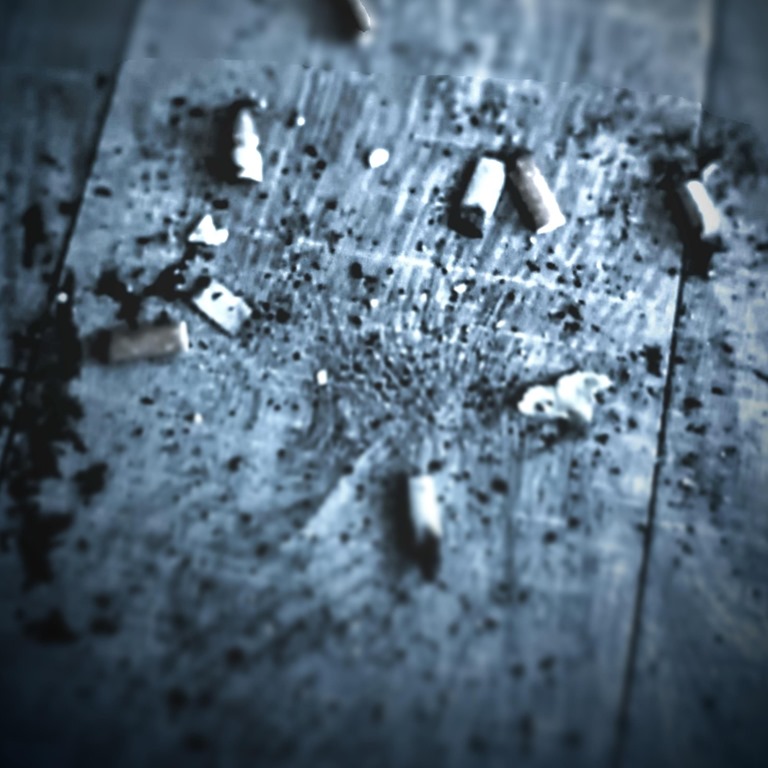
Benefactor is an album without let-up, which provides no breathing space, and is thoroughly relentless in its intensity from beginning to end. Recommended, but approach with caution, and a stiff drink. It sounds like the cover looks.

AA

a0986994420_10

17th October 2025

Christopher Nosnibor

Raoul Sinier first caught my attention with the release of Guilty Cloaks, although he had already built a substantial catalogue of strange and surreal works in the preceding years, notably Brain Kitchen (2008) and Tremens Industry (2009). After Welcome to My Orphanage (2013) and Late Statues (2015), I rather lost track – something which is clearly to my detriment – and then he fell silent following Death, Love and Despair in 2018. Perhaps that title was a revelation beyond any of the contents or accompanying notes. It’s not anyone’s business, regardless.

What matters is that the arrival of Army of Ghosts is a welcome one, and one which is heralded in the accompanying press release with the fanfare that ‘Raoul Sinier is back — more hybrid and unpredictable than ever’. We go on to learn that ‘His new album is a bold fusion of everything that made electronic music iconic, layered with sample work straight out of hip-hop’s golden age. Add in overdriven guitars, throbbing bass, flashes of rock, prog, and funk, and you’ve got a sonic landscape that’s as explosive as it is unique. Floating above it all is Sinier’s signature ethereal voice, a haunting counterpoint to the beautiful chaos below.

Melancholic yet sharp, lyrical yet raw, his music walks the line between introspection and confrontation.’

The appeal of Sinier’s work is its inventiveness – although with Guilty Cloaks, I will admit that I was drawn by a certain post-punk vibe, too – and Army of Ghosts is certainly inventive.

The album’s first song, ‘Phony Tales’ switches between Phantom of the Opera theatrical verses and brutal industrial choruses worthy of Trent Reznor. It’s not just the surge of sound, but the crashing, metallic bin-lid snare that dominates the mix and completely spins your head. It may only last two minutes and ten seconds, but it’s intense.

Much of Army of Ghosts is intense, but in different ways. The drums are uncommonly dominant, and Sinier’s vocals often invite parallels with A-Ha’s Morten Harket, but crucially, said vocals are wrapped in a broad range of forms. ‘Brace Yourself’ offers a lethal cocktail of this, and that, and the other, led by some trip-hop drumming and proggy guitar work, before tapering out with a dark, sonorous bass. It’s that same insistent, baggy beat and Bauhaus-meets-metal explosion which shapes ‘Disperse’, a word which has enhanced implications and resonance of late.

In its eclecticism, Army of Ghosts comes up trumps. ‘Walking Through Walls’ offers springy post-punk energy in the vein of Bauhaus at their best, while the title track straddles post-punk and Nu-Metal, and then post-rock, with sludgy bursts of low-end distortion and…piano. Unexpectedly, it calls to mind the stylistic swathe of Bowie’s 1: Outside, an album which knows no borders.

Sinier knows how to spring surprises, and the wild intro to ‘Spectral Ocean’ is indeed wild, a furious flurry of violin, layered and awash in echo abruptly giving way to a low-slung thunderous bass groove that’s got goth stamped all over it and would have been perfectly at home on the new Rosetta Stone album – and that’s before we get to the brittle, picked guitar and sturdy mechanical drumming that pumps away relentlessly. After the widescreen expanse of the moody ‘Distant Wildlife’, which builds to a dark, slow-burning climax, driven by a dense, throbbing bass, the final track, ‘Neon Sign’ pairs things back and goes all out on the haunting atmosphere, with serrated guitars cutting through drifting synths and a contemplative vocal performance – before suddenly closing with a blast of drone metal straight off Earth 2.

The thing about Army of Ghosts is that it is both detailed and direct, sometimes simultaneously, but it is never predictable. The song titles do not offer a clear overarching theme, but the ghostly and paranormal hover in every shadowy corner of this theatrical and imaginative set of songs – a set that’s wildly varied, but consistent in its quality. Raoul Sinier is most definitely back, and this is very much a good thing.

AA

WXFDSWXCXII front

Rocket Recordings – 17th October 2025

Christopher Nosnibor

The thing that particularly stands out in the bio for the latest Smote album is this: ‘Daniel Foggin has spent the majority of his adult life working as a landscape gardener, frequently pursuing his trade in conditions of either baking heat or freezing cold and, as he puts it “more often covered in mud than not”. Yet the primal, meditative aspects of this work, the act of communing with nature, its histories and its depths have fuelled his art on a profound level. As Daniel himself relates; “I think the music is a direct reflection of this feeling that I haven’t quite managed to define yet, it is dirty and hard but there is an overwhelming comfort to it.”’

It’s something artists rarely mention: they have day jobs. Perhaps there’s an element of shame in it for some. Maybe it detracts from the mystique. Or it could be that it’s considered a detraction from the pitching of the latest creation. But it’s a truth rarely spoken: most musicians, and artists in any medium, have day jobs and have to make time for their creative work. Tours have to be negotiated with work, taken out of annual leave, often juggled with family responsibilities. Sleevenotes by Joe Thompson of Hey Colossus and Henry Blacker is the most open narrative on the realities of this I’ve read to date, and at times the exhaustion crawls from the pages. As such, it’s refreshing that Foggin not only acknowledges his day job, but recognises it as a significant influence on his creative work. And why not? The most engaging art is drawn from life, after all. Much as it would be a more ideal situation that artists could make their living from art, at the same time, there is perhaps greater value in art created by those who live in ‘the real world’ rather than floating, detached, elevated above it in some kind of bubble.

The words ‘Free House’ make me automatically think of pubs, which perhaps says more about me than the artist, of whom we learn that ‘In the world of Smote, going further out means going inward. Less a metaphysical journey into inner space, more a physical journey into the ground itself, converging with its roots and vibrations. What’s more, a journey right to the heart of its principal architect’s daily experience’.

A cottar is a farmer, and with the album’s first piece, we’re plunged into a deep, surround-sound immersive dronescape, There are many layers to it: reverberating voice, trilling flute, sonorous synths, distant percussion… and it builds, and builds, growing into a hypnotic swell before finally breaking into a slow, weighty post-metal riff that twists and turns with spectacular force, hammering with the force of Pale Sketcher by the six minute mark. It has the weight of sodden earthworks, and conveys the hard exertion of ploughing and tilling, as it descends into a speaker-shredding wall of distortion.

‘The Linton Wyrm’ brings heavy Nordic connotations as it plods on, and on, over the course of a rousing nine and three quarter minutes. It’s not so far removed from the epic force of Sunn O))), but equally Wardruna, a band who evoke earthiness and the essence of pagan spiritualism – not about worshipping mythical gods, but celebrating a connection with nature on a level which is almost primal, and isn’t readily articulable through words: it’s something which transcends language.

Single cut ‘Snodgerss’, which clocks in at under four minutes is both representative of the album as a whole – and not. With its trilling flute and thunderous slow riffery, it incorporates some of the leading elements, but in a way which is considerably more accessible, not least of all with its folk leanings, and presents them in a condensed format. That said, it’s an intense piece, which offers no let-up.

The ten-and-a-half-minute ‘Chamber’ is slower, heavier, dronier, and encapsulates the true essence of the album as a whole, building on a low, resonant throb before the introduction of mournful woodwind. As graceful and soulful as it is, it connects with a primitivism which reaches to the core, a place beyond linguistic articulation. This is the sound of forests, of hills, of streams and moorlands.

The final track, ‘Wynne’ hammers the album home in a squalling blast of overloading guitar and powerful oration propelled by thunderous percussion. It’s mighty, and beyond, seven and a half minutes of blinding intensity which concludes an album that’s varied but unswerving in its density and force. You can truly feel the earth move.

AA

a1730365911_10