Archive for the ‘Reviews’ Category

1st August 2025

Christopher Nosnibor

The other day, while riffling through my record collection, I found a few LPs and 12” I had quite forgotten owning, including a promo copy of ‘Chance’ by Red Lorry Yellow Lorry. Stapled to the plain black die-cut cover of this white-label record with the title hand-written in biro, is a press release which simply reads ‘I know this is what you’ve all been waiting for….. Yep. The new Red Lorry Yellow Lorry single It’s called “Chance” and as usual it’s on Red Rhino Records. It’s very good’ and is signed ‘Yours condescendingly’.

You just don’t get press releases like that any more – especially not typed in all block caps and photocopied.

I appreciate the effort that goes into a good press release, and a solid band bio, because it does help me as a reviewer get a sense of context, of what a band’s about, what an album’s about. But the counterpoint to that is that there’s so much detail being spoon-fed, there’s less room for creative interpretation. The fact of the music industry has changed radically since the 80s and 90s, the days of the weekly inkies, the time before the Internet.

There simply was no way of ‘doing research’. And writers had tight deadlines. And so they just riffed to fill the column inches. Facts were hazy, critiques were often based on first impressions and knocked out in an hour after an extended liquid lunch. Names, dates, titles weren’t always accurate. And fans scoffed at the errors – and still do when clippings are posted online – but that was the nature of the beast.

Now, misspell the name of the bassist or give the wrong year for their debut EP, or somesuch and PRs, labels, and bands are onto you straight away asking for corrections. In a competitive market – I often report that on average, I receive around fifty submissions a day – simply getting coverage is a massive feat. This is certainly not to say that those times past were better – simply different, and I simply navigate my way to this release via this route to demonstrate the ways in which things have changed in the years since I started out writing about music in the 90s. It’s also altogether rarer now to find negative reviews, and while a part of this is due to the overwhelming amount of music being released meaning that reviewers are generally more inclined to spend what time they have promoting music they like, there’s also a certain element of fear of there being a social media pile-on, or having their supply of gratis music cut off. But artists and their labels and PR really need to accept that they’re not going to please all the people all the time, and sometimes, it’s necessary to call out an act with dodgy politics or whatever, or to simply call a turd a turd.

Anyway. Before I’ve even hit play, I’ve learned that this release by MOTHS is ‘a visceral journey through the Seven Deadly Sins, with each track embodying a facet of indulgence, obsession, and self-destruction — from the corrosive jealousy of “Envy” to the insatiable hunger of “Gluttony” and the rage of “Wrath”. The album plunges listeners into a dark, immersive experience where desire spirals into chaos’, and that ‘Diving deeper into heavier territory, MOTHS fuse elements of death and black metal with their signature blend of progressive, psychedelic, doom, and stoner metal, crafting a sound that’s both aggressive and atmospheric. With every step forward, MOTHS continues to explore new sounds and challenge genre boundaries, proving that music has no limits when driven by passion and innovation.’

I feel as if my work is already done. I can pour myself a large vodka and kick back, right? Well, I could. But that’s not my style. At least not the kicking back part. Large vodka in hand, I brace myself for the sonic onslaught… to be faced with some tinkering banjo or acoustic guitar giving country licks that are pure blues / Americana. And it gets jazzier and groovier as it goes on. What the fuck is this?

‘Sloth’ slides into ‘Envy’, a slippery, sultry alt-rock cut where the vocals are bathed in reverb, and the lo-fi production belies the fact that this is a vaguely jazzed-up take on grungy emo, at times coming on like Paramore recorded on a 90s cassette four-track. The haziness of the recording is actually something of a positive, but these are songs which require a slicker, fuller production. As a consequence, these takes sound more like demos than final versions.

The murky rawness works better on ‘Greed’, which brings rabid, raw-throated, growling black metal elements to the vaguely gothic metal compositions. It segues into ‘Pride’ which goes full-throttle skin-peeling abrasion before suddenly going commercial rock with fancy licks at the midpoint. I like ZZ Top, as it happens. I just wasn’t expecting a riff from Eliminator here.

‘Pride’ does take things full heavy, a prime slice of sludgy doom, and ‘Lust’ is, without question, a slugging slab of doominess, with some fancy fretwork thrown in on top. There’s certainly a lot going on here, and most of it works. MOTHS certainly bring some megalithic riffs and a lot of fire to an album that may be unpredictable in places, but is, overall, solid and with no shortfall of gutsy, guitar-driven heft.

AA
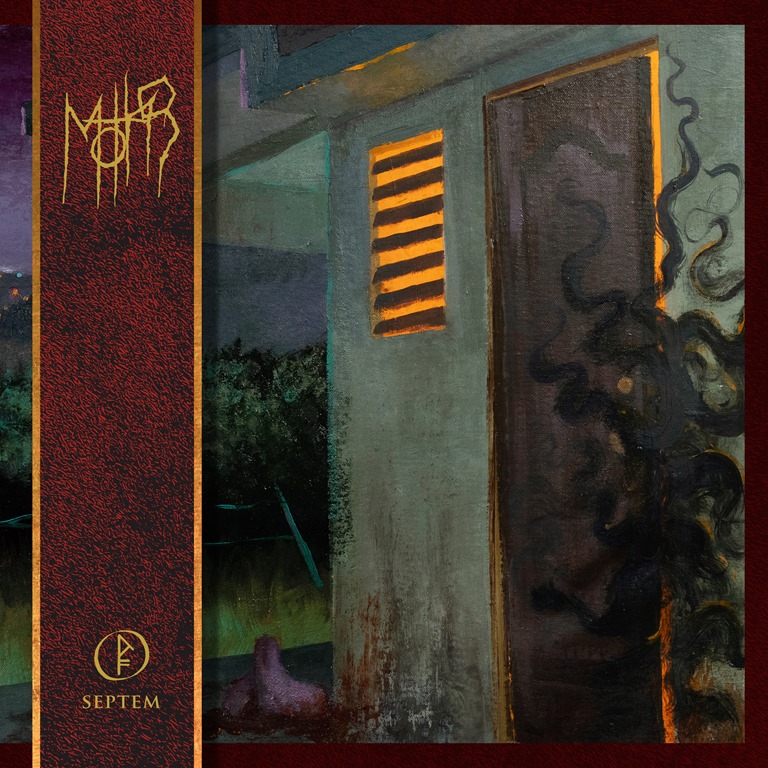
MOTHS - cover

Floodlit Recordings – 29th August 2025

Christopher Nosnibor

Having discovered Swans in my teens – it was the late 80s and a friend introduced me to their most recent album, Children of God, which swiftly led me, via weekends spent at record fairs, to Cop, whenever I’m forewarned that a new release is ‘heavy’, I invariably find myself thinking ‘really? How heavy? Bring it on!

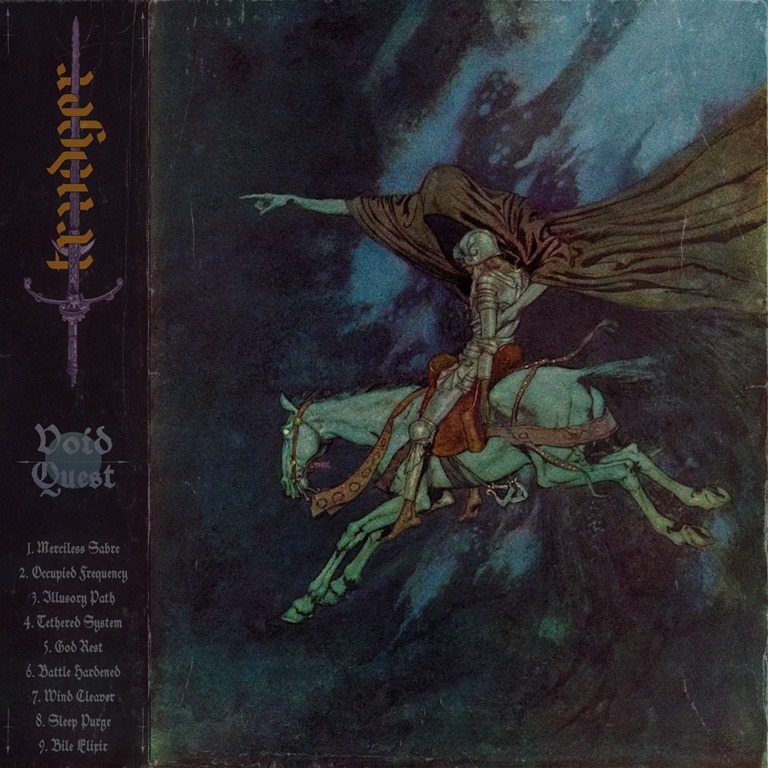
I read – am forewarned – that Trudger’s ‘new album Void Quest… released on August 29th through Floodlit Recordings, a new label venture from guitarist of Pijn and Leeched… [is]

absolutely savage’. I saw Pijn live a few years ago and they slayed, so I consider this a positive in advance. And there’s no question that Void Quest is something of a monster. Arriving a full eleven years on from their debut, it’s as if they’ve distilled all the rage and festering fury of a decade into the nine songs on offer here.

The first track, ‘Merciless Sabre’ is fast and furious, but arrives with a surplus of fast licks and an element of black metal fretwankery that, in my ears, diminishes its weight despite the rampant, rabid ravings of the vocals, the tempestuous blast of the instruments combined to create a thunderous wall of noise.

Things settle to a more organised shape with ‘Occupied Frequency’, where math and metal merge. It seems as if they flung everything into the blender to grab the attention at the start and possibly overdid it, as things aren’t quite as wildly ostentatious thereafter. Sure, the guitar work is fast and furious, and it’s still showy and perhaps a bit over-the-top, but they layer down some magnificent textures and judicious detail amidst the relentless sonic assault, the eardrum-bursting blast.

‘God Rest’ is slower, heavier, and utterly devastating in its driving density. ‘Battle Hardened’ is simply out-and-out brutal, a song that slays all comers. Think you’re hard? Wait for this. This is shit that will slice your head off and ruin your internal organs.

Void Quest is heavy, but what makes it really heavy is its relentlessness. Thirty-five minutes or so of blasting ferocious noise, it leaves you feeling like you’ve just been given a good kicking. I wouldn’t recommend taking a kicking, but I would recommend this.

AA

a2040788392_10

Gutter Prince Cabal – 19th July 2025

Christopher Nosnibor

As far as I can recall, I first encountered the word ‘bruxism’ in the early 90s, through the back-print of my Therapy? ‘Teethgrinder’ T-shirt. I fucking loved Therapy?, and the shirt was one of my favourites. I regret selling it, but I needed to eat, and a stretched and faded T-shirt that would pay for a whole week’s worth of groceries was an obvious choice for bunging on eBay.

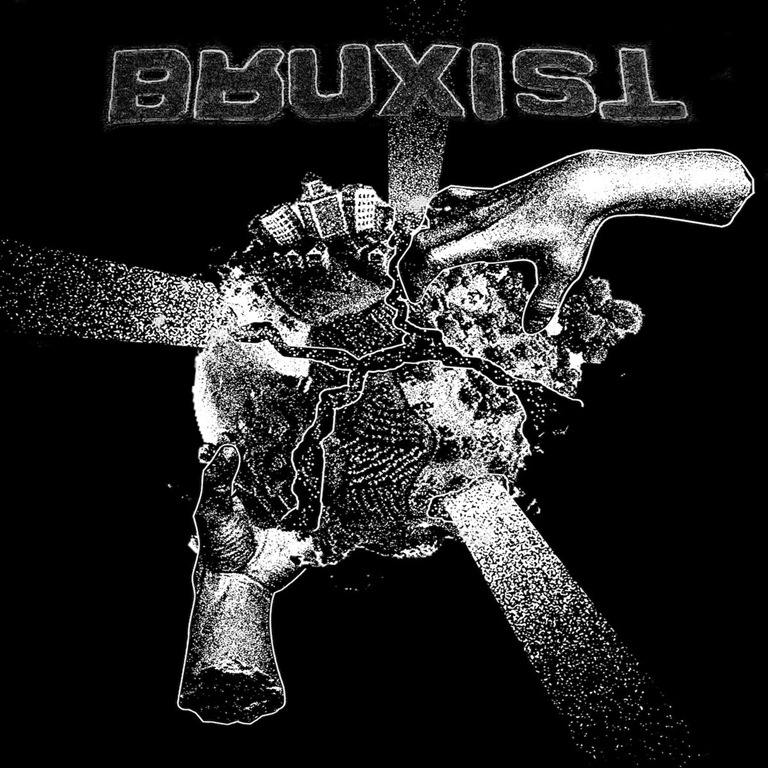
I’ve since come to realise that I, myself, am prone to extreme jaw clenching during times of anxiety, and while listening to particularly intense music. Which brings us to the eponymous debut by Bruxist. As the pitch outlines, ‘Rooted in crust punk fury and d-beat momentum, Bruxist crashes through the gates with chainsaw Stockholm-style death metal, grimy rock’n’roll swagger, and even shards of frostbitten black metal. It’s a high-speed collision of sound: filthy, feral, and dangerously alive.’

And it is. The album offer seven relentless, pummelling tracks, half of which are under – or only just over – three minutes in duration. ‘Inversion’ doesn’t so much launch the album as kick down and throw in a massive stash of Molotov cocktails before starting a riot as the building burns. It’s frenzied and filthy, the guitars are a murky blur, the drumming is frenetic and the vocals a gargling raw.

‘Six Feet Headfirst’ staggers and swaggers, brawling, snarling and rabid, before ‘Black Sheep Discipline’ slams in at a hundred and fifty miles an hour.

The album is relentless in its pace and brutality. There’s a moment in the closer, ‘Divide and Conquer’, where it breaks down to just the bass for a few bars. It’s the grungiest, gnarliest noise imaginable. Then everything piles back in and nothing short of absolute devastation ensues in that final minute.

Bruxist is done in around twenty-three minutes – and in that time the band delivers something that’s almost unspeakably savage. It’s a proper, full-throttle, furious jaw-clencher, that’s for sure.

AA

a1744781853_10

Cruel Nature Records – 12th September 2025

Cruel Nature have a solid track record for putting out some storming releases by bands who you could reasonably describe as ‘difficult’ but also ‘cult’. This is pretty much Pound Land in a nutshell. As for Headless Kross… The Glaswegian act’s Bandcamp describes them as ‘the ideal soundtrack to the slow unravelling of the world as we understand it. Their sound has been described as psychedelic doom – monolithic riffs, rumbling bass and primal beats lurk behind waves of effects, all strangely underpinned by ethereal shrieks of half heard words, possibly real, possibly not.’ That their name is – I’m assuming – an allusion to the fourteenth album by Black Sabbath offers something of a clue. The fact the label has pushed the boat out for an advance-order lathe-cut vinyl version of this release speaks for itself. At least in relative terms, this is a big ‘un.

Having toured together, they decided to put out a split release, and it’s pleasing to see these making a comeback – something Cruel Nature in particular has been spearheading. I’ve sung the praises of the split release on a number of occasions in recent months, and this is a perfect example of why they’re great: here, we essentially have an EP apiece from two quality acts who are – and this is significant, and absolutely key – contrasting and complimentary.

As the album’s accompanying notes are keen to point out, ‘The result isn’t your standard split album – it’s a sonic blood pact, equal parts homage and havoc’, going on to explain that ‘They also agreed to trade riffs and cover a song by each other: Pound Land tear into ‘Signed In Blood’ and Headless Kross unleash a doom-laden crushing riff-tastic seismic version of ‘Pathogen’.

Headless Kross are up first with their trio of ball-busting, sludge-trudge riffery. ‘The Thing Invisible’ is six minutes of thick, treacle-like riff-wading, with some extravagant solo work before the snarling, mania-driven vocals join the fray a couple of minutes in. Their take on ‘Pathogen’ is nothing short of devastating: a rabid roar tears over a thunderous trudge, and hints at how Pound Land would sound if they could be arsed to be angry or metal. The solo that breaks out toward the end is brief, but wild.

‘The Necessity of 3 Conditions’ is eight and a half minutes of relentless brutality. A Suicide-like throb pulsates: the drumming is almost buried in the dingy low-end mess and the vocals rip bling rage across the whole dingy grind.’

If you’re wanting some light relief, you’re not going to find it with Pound Land’s five tracks: operating here as a six-piece unit with Jase Kester back in the lineup and bringing layers of abrasion, they set their stall up straight away with the anti-capitalist, bollock-to-billionaires agenda served up neatly with their first track, ‘Fuck Off to Mars.’ It’s gnarly, twisted, dark, and despite the low-slung, dingy bass and rabid, reverby vocals which evoke Fudge Tunnel’s first album, there’s something about it that drags the listener in by the throat.

‘I See Crime’ is messy, dirty, but works, although I’m not sure if it’s because of or in spite of the angular contradictions of honking horns ad grimy guitars with a nasty low-end attack.

Nothing about this release is accessible: it’s low, slow, riffy, hard, heavy. Very heavy. Hypnotically heavy. It’s all the riffs, and is something special. Very special. Get this, now.

AA

a3551559418_10

Room40 – 22nd August 2025

Christopher Nosnibor

Sometimes, I will encounter a release, and while knowing that I need to cover it, I find myself paralysed by the discovery that I am completely out of my depth. This is never more common when presented with works which represent cultures from beyond my – embarrassingly small – sphere of knowledge. And embarrassing is the word. Doubtless some would steam in and opinion with an overflowing confidence which presents itself in perfect disproportion to their knowledge, but bluffers inevitably come unstuck sooner or later, and are shown up as the arrogant cocks they are. I’ve always been of the opinion it’s better to be open about those gaps in knowledge, accept that no-one can know everything, and take the opportunities which present themselves to gain some education.

During my first or second year as an undergraduate studying for a degree in English, one tutor commented that I had squandered almost half of the first page on ‘rhetorical throat clearing’ – a magnificent and amusing turn of phrase, which summarises something I’m still guilty of some thirty years later.

Anyway: the point is, when presented with Ŋurru Wäŋa, the new album by Hand To Earth, I find myself swimming – or somewhat sinking – at first. The accompanying notes set out how ‘A search for a sense of belonging is at the heart of what drives Hand to Earth, a group of five people, who come together from different backgrounds, different birthplaces, and different musical approaches to share their songs, and by doing that to create something new.’

Peter Knight (trumpet, electronics, synthesisers, bass guitar) goes on to explain that ‘Ŋurru Wäŋa traces notions of home, belonging, and displacement. In the two parts of the title track, Sunny Kim intones the words of Korean poet Yoon Dong Ju’s poem, Another Home, in counterpoint to Daniel Wilfred’s song, sung in the Wáglilak language. Ŋurru Wäŋa (pronounced Wooroo Wanga), translates as ‘the scent of home’, and as we travel we long for that fragrance, passing the bee, guku, making the bush honey while the crow circles calling overhead.’

The notes add that ‘The music Hand To Earth creates collisions between the ancient and the contemporary; between the ambient and the visceral.’

And indeed it does. Listening to Ŋurru Wäŋa is a transportation, and transformative experience, not entirely similar from watching a documentary soundtracked by the sounds of the peoples being documented. From the very first minutes of the spacious whispers and slow, elongated notes of ‘buish honey (guku)’ the lister finds themselves in another place, another space, another mind. It feels, in ways which are hard to pinpoint, let alone articulate, spiritual, beyond the body, but at the same time closer to the earth – closer to the earth than I have ever been or even understand how to become. I realise I have been, and become so conditioned that such senses are beyond me, likely eternally, but on listening to the ringing sounds – not unlike the droning hum of a singing bowl – and breathy incantations of ‘Ŋurru Wäŋa Part I’ and revisited in the dark, sonorous rumbling of ‘Ŋurru Wäŋa Part II’ which brings the album to a close.

In between, swerving drones and impenetrable utterances evoke another time, another place, far removed, something mystical. It’s the sound of nature, of forests, of grass, of sky, as well as of soul, of heart, exultation, of but also the sound of humanity in a form so many of us have lost, and lost our capacity to connect to. This is the music of life, and it swells and surges, it’s the sound of being alive, and celebrating its magnificence.

Under capitalism, we forget that we’re alive, we trudge along, under duress, hating every day. Making it through a day is the goal for the most part, our ambitions are tied to capital, to the drudge, to the eye on the promotion, but, mostly on the commute, the team meeting, to clocking in and out, to the wage, to the 9-5, the confines of the shift, the need to pay the rent… We are all so numb, so desensitised. We’re not even living, but merely existing. With Ŋurru Wäŋa, Hand To Earth sing of another life – and it’s another world, and one we should all aspire to.

AA

AA

a1662627484_10

Cruel Nature Records – 1st August 2025

Christopher Nosnibor

Nicholas Langley outlines his latest offering with the explanation that “One Square Centimetre Of Light is a continuation of the ideas and techniques I used to compose Thinky Space and especially Cymru Cynhyrchiol. Recorded in spring and summer 2024, this album was an outlet for a lot of thoughts and emotions regarding the involuntary loss of time and memory.’

There are gaps in the narrative here – gaps which I don’t feel it’s necessarily appropriate to probe or plug, particularly when, in his extensive explanation of the album’s final, thirteen-minute piece, ‘Missing Day’ – of which he writes: “‘Missing Day’ can refer either to the mourning feeling of losing whole days to bad health, or to the actual calendar day of mourning, Missing Day, on February 20th. For this piece, as well as layers of tracks 3, 4 and 5, I returned to the generative music techniques I started in 2016. This time around I spent many days getting to grips with programming multiple pieces until I eventually programmed a piece which exactly conveyed my feelings of mourning and hope.”

Memory loss can be a source of panic, anxiety, and while it appears to be a focus, or inspiration of sorts for this album, it feels inappropriate to probe here. But listening to the soft, soporific ambience of One Square Centimetre Of Light, I find myself wondering – where will it go next?

It doesn’t really need to ‘go’ anywhere: the instrumental works which make this album are subtle, sublime. ‘Welsh Summits’ is a beautiful, resonant ambient exploration, while ‘The Weather on the Seafronts’ is magical, mystical, ambient, while ‘Old Age’ quivers and chimes abstractedly, with layers of resonance and depth.

And so we arrive at ‘Missing Day’: fully forty minuses of melodic instrumental exploration, serene, calm, expansive. It’s soft and as much as One Square Centimetre Of Light soothing, the vast sonic expanse of ‘Missing Day’ encapsulates the album’s conflicting and conflicted nature.

One Square Centimetre Of Light is overtly serene and beguiling, but hints at an undisclosed turmoil beneath the surface, a work which is a sonic balm, the result of a process to calm inner strife. As lights at the end of the tunnel go a mere on centimetre is barely there – but there it is. And it is hope. keep the focus on that.

AA

a2057051706_10

Sinners Music – 28th February 2025

Christopher Nonibor

I’m a little behind with things. Life has a habit of running away at pace. There’s no small element of truth in the observation that Life is what happens to us while we are making other plans – often attributed to John Lennon, but which first appeared in the mid-1950s, in an article in the Stockton Record of Stockton, California.

The latest release helmed by Iain J. Cole and released on his Sinners Music label is something of a departure. Although bearing the ‘various artists’ label, it is, in fact, a set of collaborations recorded with a number of different authors, whose works are narrated by other speakers. Conceived , curated, and the stories edited by David Martin, Iain J. Cole provides the musical accompaniment for the five – or seven – pieces which make up this monumental release.

Each track is a true longform work: all bar two are around – or substantially over – twenty minutes in duration.

Martin’s own contribution, ‘Relic’ evokes aspects of both The Man Who Fell to Earth and The War of the Worlds, as well as various other sci-fi tropes and no small dash of Lovecraft. Cole’s accompaniment is absolutely perfect: largely ambient, it’s composed with the most acute attention to detail, adding drama at precisely the right points, but without feeling in any way contrived or over-egged.

‘What Rupert Don’t Know’ – an exclusive short story written by Glen James Brown and narrated by Alexander King sees Cole linger in the background with a soundtrack that hangs at a respectful distance in the background, and takes the form of some minimal techno.

Gareth E Reese’s ‘We Are the Disease’, read by Daniel Wilmot, has a very different sound and feel. The vocals have a scratchy, treble-loaded reverby sound, somewhere between a radio just off-tune and Mark E Smith. It’s a bleak tale, an eco-horror delivered as a series of scientific reports, and with Cole’s ominous sonic backdrop, which has all the qualities of a BBC Radiophonic Workshop piece, the tension is compelling.

Claire Dean’s ‘The Unwish’, narrated by Helen Lewis marks a necessary shift in the middle of the album – a female voice is welcome, for a start, and so is the change in narrative voice. Women writers observe and relay differently, and the details are integral to the literary experience. Add to that a Northern intonation, and we find ourselves in another world

As a collection of speculative and environmental sci-fci, an endless sky is noteworthy for its quality. The bonus cuts – a brace of ‘soundtrack’ instrumentals showcase Cole’s capacity to create immersive slow techno works which draw heavily on dub. ‘The Rupert Zombie Soundtrack’ is a sedate, echo-heavy slow-bopping trudge, and then there’s the twenty-minute ‘The Blind Queen Soundtrack’, which is more atmospheric, more piano, less overtly techno.

Over the course of some two-and-a-bit hours, an endless sky gives us a lot to process. So much, in fact, that I’m not even sure it’s possible in a single sitting. What does it even all mean when taken together?

an endless sky is delicate, graceful, detailed. Beyond the narratives – which in themselves offer depth and detail – there is something uniquely compelling about an endless sky. Keep Watching…

AA

a2800421803_10

Christopher Nosnibor

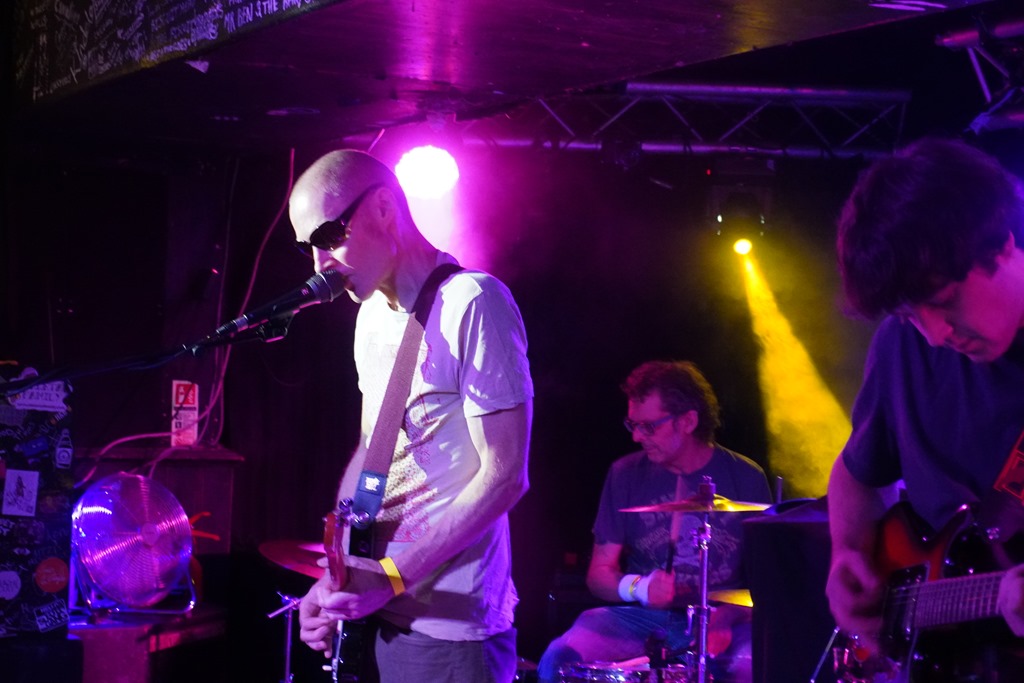
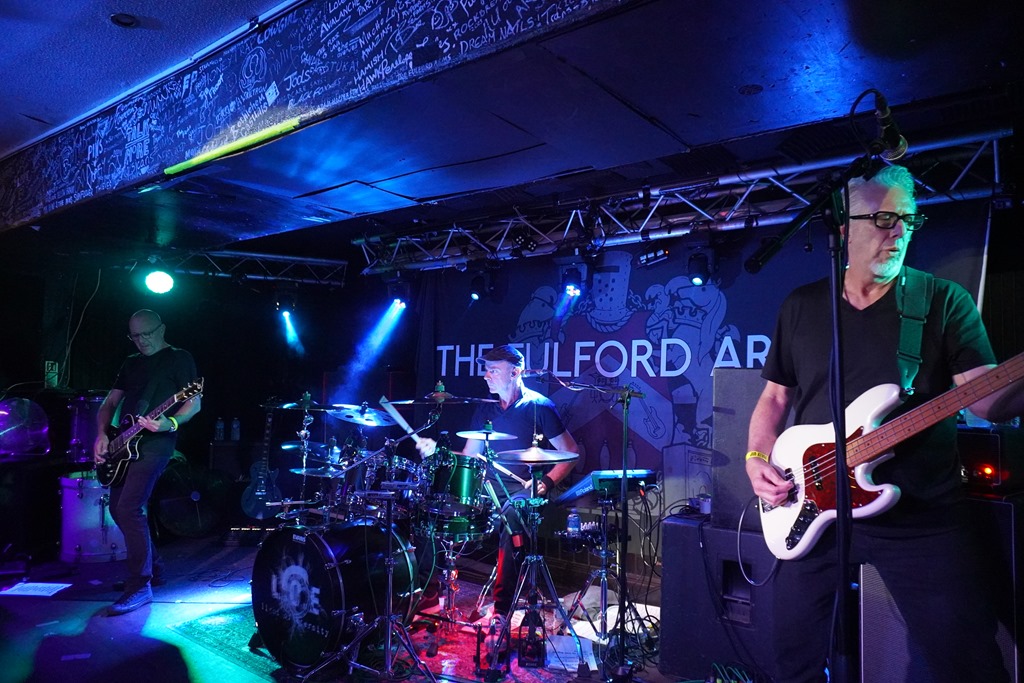
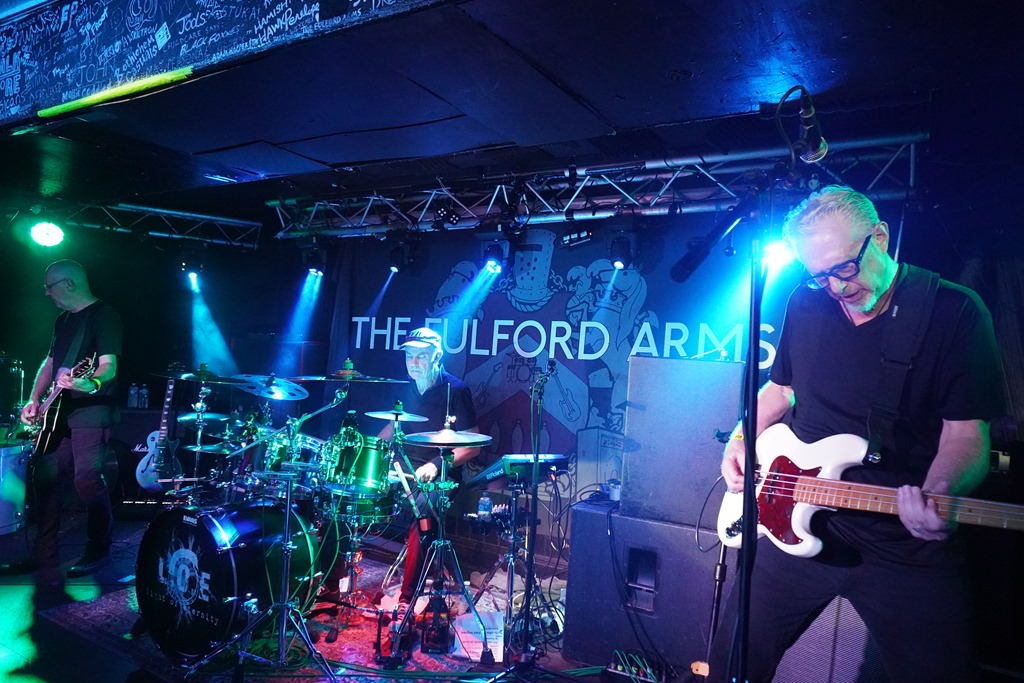
The Fulford Arms has quite a record for booking bands which are of a significantly larger magnitude than its 125 capacity – Wayne Hussey, and The March Violets are a couple which immediately spring to mind from personal experience, while Utah Saints, Bob Vylan, and Ginger Wildheart are further examples, and there are countless others who played here before going massive. And now Light of Eternity join that list. Formed with legendary drummer Paul Ferguson, whose credits in addition to Killing Joke are a feature in their own right, they’ve released a brace of belting EPs and are now undertaking their first tour, taking in a number of larger venues as a headline act, an even larger venues as support for Ministry. And here we are: the first night of the tour is also their live debut, here in this grassroots venue with its small, low stage, and black walls marked in chalk with the names of the acts who have played previously.

Soma Crew have a knack for landing a fair few of the city’s high profile support slots, and deservedly. Supporting The Fall will likely be a career highlight, but something about tonight is special. The Crew’s ever-shifting lineup sees them packing out the stage as a sextet, and they open with the crawling ‘Dead Insect’. Is it the right choice for this occasion? Do they care? On the second song, ‘Counterfeit’, they hit the motorik groove that’s their strong suite, and from hereon in, they’re away. Broken string? Meh, it’s no issue when you’ve got three guitars (plus a bass), one with an E-bow plugging away at a single chord. With the addition of a throbbing bass, it all makes a magnificent hypnotic drone. This is Soma Crew at their best.

DSC02831

Soma Crew

The DJ spun Ministry (‘Just One Fix’) and Murder Inc. between bands. Is it the done thing to play tracks by bands related to those about to take the stage? Why not, eh? I’d actually played not only the band’s two EPs but Locate, Subvert, Terminate, just the other day in advance of tonight, and it proved appropriate. There’s an interesting – and perhaps somewhat telling – selection of bands T-shirts on display here: no shortage of Killing Joke, but also The Sisters of Mercy, Paradise Lost, and The KLF… and the near-capacity crowd is suitably rewarded with a belter of a set, with twelve songs in all, which represents both EPs and another EP’s worth of as-yet unreleased material.

DSC02851DSC02847

Light of Eternity

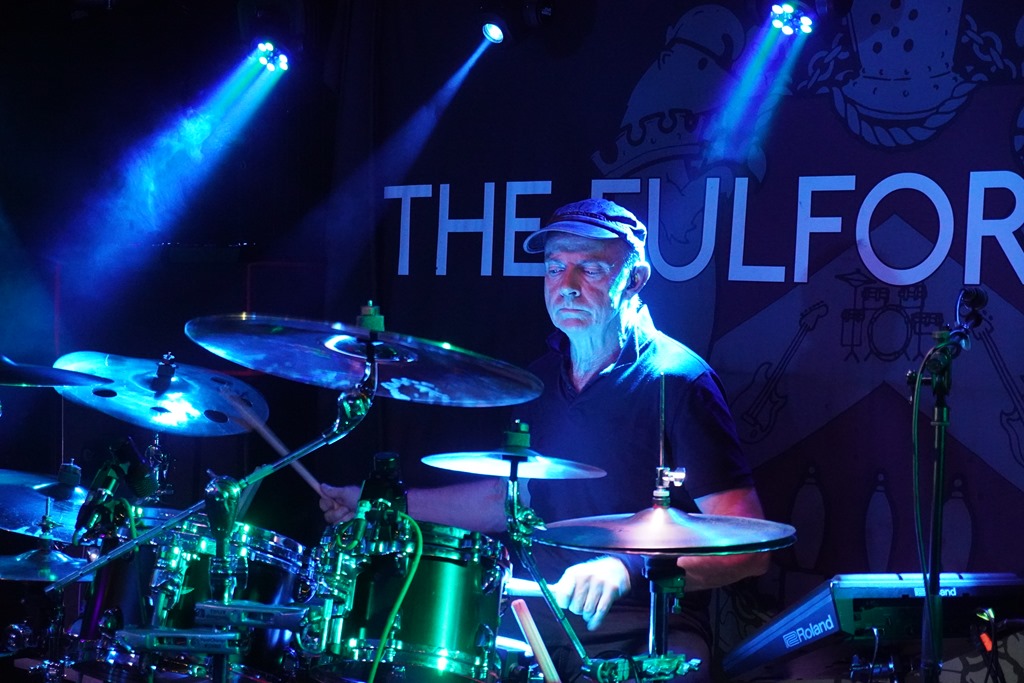
Ferguson’s drum kit isn’t only the focal point: it occupies the majority of the little stage, with Fred Schreck (bass and vocals) and Pauly Williams (guitar) positioned either side. It’s perhaps as well they’re not given to ambulating a great deal. In Williams, they’ve found a guitarist with a sound that’s incredibly close to that of the late, great, Geordie Walker, and capable of churning out methodical riffs – and his dense, compression-heavy sheet metal thunder really rings out in a live setting, more so than recorded. He keeps his head down and just keep cracking ‘em out, and it works well alongside sturdy bass grooves, while it’s the busy, full-kit drumming that provides much of the action, the movement, within the songs.

DSC02911DSC02896

Light of Eternity

Their presence could be reasonably summarised as unassuming but focussed. They’re not a band for chat: Schreck does begin to speak on the subject of America, and hope, before ‘Dark Hope’, but it’s curtailed by the onset of the next percussive barrage which marks the start of the song. Ferguson not only leads proceedings, but does so in his own world, and that world is the centre of all of this. After the first few songs, he’s one hundred percent in the drum zone, and it’s apparent he doesn’t do breaks, preferring instead to keep that relentless momentum. Some may read it as standoffish, but it’s fairly apparent that it’s about the intensity, the songs slamming in back-to-back, the explosive beats, the churning riffs. Singer may not have Jaz Coleman’s charisma, but his reverb-drenched vocals are crisp and clear and delivered in such a way that the experience is that of an unyielding force.

DSC02893

Light of Eternity

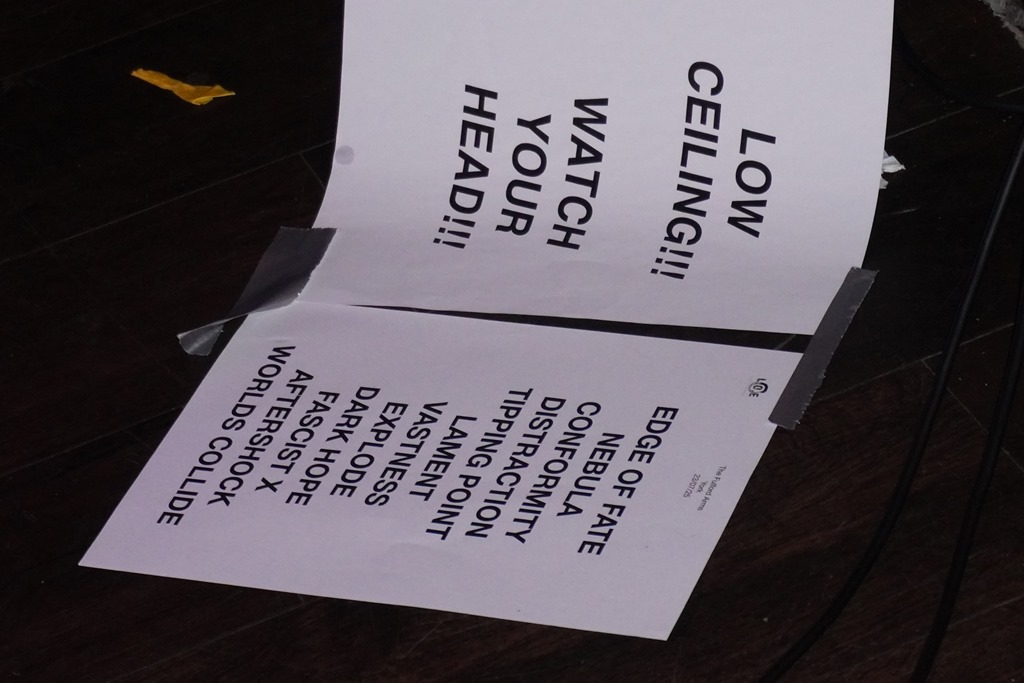
Checking the setlist encapsulates the mood and subject matter of Light of Eternity: ‘Conformity’, ‘Distraction’, ‘Tipping Point’, ‘Explode’. They may be older (Ferguson is 67 now), but they’re not settling into a comfortable relationship with the status quo, offering a cocktail of anger and disaffection at the state of the world. ‘Dark Hope’ is grungy, built around descending chords played with steely guitars. The unreleased ‘Fascist X’, landing near the end of the set is a full-throttle heavy grinder, while ‘Aftershock’ is an absolute juggernaut. They simply don’t let up: every song is driving, solid, muscular, a wall of leaden density.

There isn’t a weak song in the set, and their live debut more than delivers on the promise of the first studio releases. Most of those present reasonably expected quality, but for a live debut, this was phenomenal. The smaller venue was a test, in a way – and they passed it, and then some. The rest of the tour promises to be fantastic – but those who were here tonight witnessed something special that they won’t forget in a hurry.

21st July 2025

Christopher Nosnibor

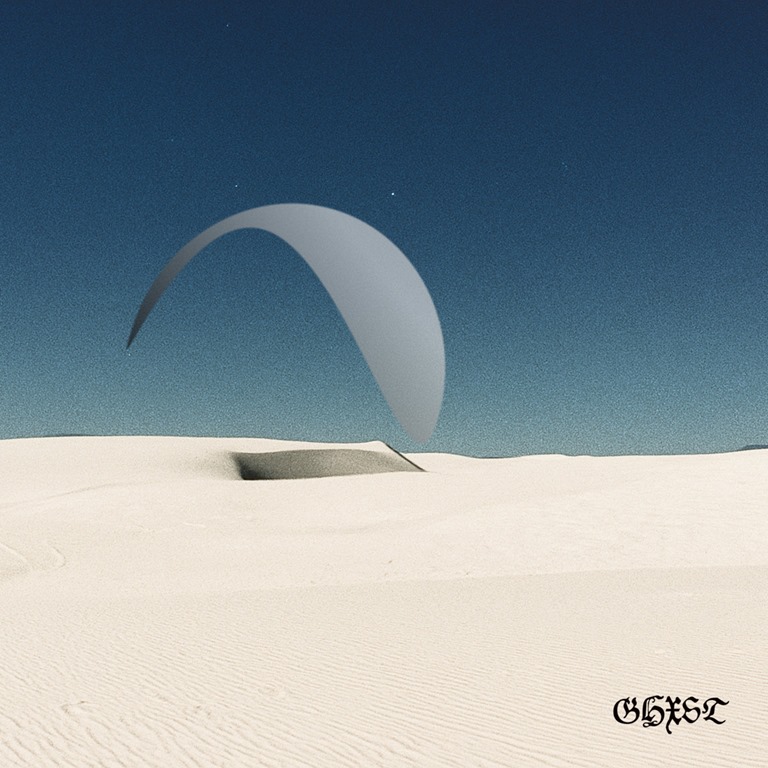
I’ve been digging GSXT for a whole decade now and shouting about it whenever the opportunity arises. I’m not sure how many people have been paying attention, but anyone who hasn’t has been missing out. They took their timing building up to their debut album, released in 2022, with half a dozen EPs preceding it. ‘Cosmic’ is the first material since Admire, three years ago, and this new single continues their trajectory of extending their repertoire, taking the form of a slow-building expansive brooder.

A cinematic piece of post-punk desert rock, and with hints of recent releases by Earth ‘Cosmic’ tones down the snarling overdrive that’s the duo’s signature sound in favour of something more hypnotic, in the vein of ‘Sonores’. It suits them well, as it happens: Shelly X’s voice drifts and aches through the bass-led verses, floating in a growing swirl of guitars in the chorus before a straight-up rock guitar solo swoops in.

To describe ‘Cosmic’ as commercial would be rather misleading, because it’s certainly no sell-out. But it does mark a significant step. What’s more, it’s absolutely huge, and immediately accessible, making it the cut which has the broadest appeal yet. Maybe now they’ll listen up, eh?

AA

a1762628991_10

Torto Editions / Ramble Records / Atena Records – 25th July 2025

Christopher Nosnibor

DuChamp (certainly not to be confused with the seminal avant-gardist Marcel Duchamp) is a Berlin-based artist, and for this release, is the product of ‘a journey of development, research, and refinement of a deeply personal voice’, their chosen selection of instruments is listed as ‘baritone guitar, voice, organ, synths, bouzuki, electronics, incredible stubbornness.’

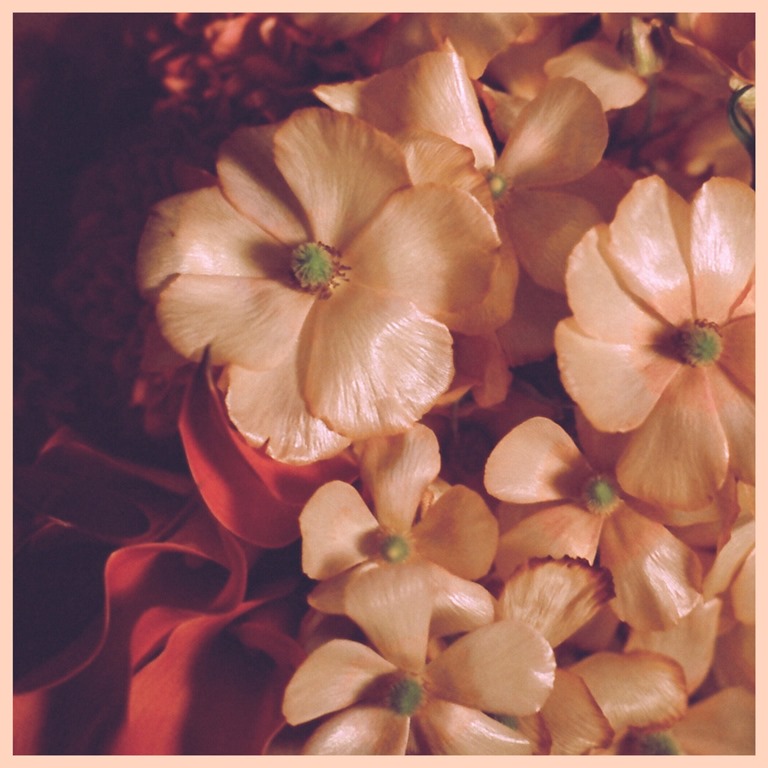
The baritone guitar is not a common instrument, but oner which sounds quite unlike any other guitar in terms of its tonality. Its application here is in providing the core to elongated sonorous drones on the five compositions on The Wild Joy. It’s a title I take to be somewhat ironic, for despite the resplendent flora which graces the album’s cover, the title of the first piece, ‘Sine proprio’ translates, depending on your choice of reference source, as ‘without property’, ‘without possession’, or ‘poverty’. Whether or not this is a reference to a physical or spiritual poverty isn’t apparent, but what this nine-and-a-half minute dronescape does possess is a wealth of texture as the layers build and vibrate against one another.

‘The Shape of Time’ is very much constructed around contrasts; a whining, scraping drone nags the conscious level of listening, while a low, rumbling bassy resonance lingers way below, and it’s something you feel as much as hear. In the space between, incidentals drift in and out. In the distance, gongs chime and fade slowly, and the disparity between their timing and that of the pulsating throb which has begun to build is disorientating, unsettling.

‘Epithalamion’ marks a dramatic shift – in every way, starting with the change of instrumentation, and by no means ending with the change of approach, with a wild, undisciplined key-bashing crescendo occupying the first couple of minutes, before giving way to a wheezing sound like an organ on the brink of expiry. With its origins in the classical age, an epithalamium is a poem written specifically for the bride on the way to her marital chamber. This, however, sounds more like a piano being pushed down six flights of stairs, before a ghastly gasp sputters along interminably for the remainder of the duration. I pity the bride this was penned for.

Things are different again on ‘Fulaxos’: there, the baritone guitar comes into its own and to the fore, played conventionally, a picked, rolling motif that’s brooding, even doomy provides the starting point for a piece which gradually unfurls toward a place of light and optimism. The final track, which is also the title track, brings us almost full-circle, but there’s a levity to this extended, delicate dronescape, and the soaring vocal only accentuates this sense of elevation.

The joy may be somewhat subdued overall, but it’s there, on what is, ultimately, an accomplished, multi-faceted work.

AA

a3734767457_10