Archive for the ‘Albums’ Category

Ideologic Organ -  SOMA037 – 17th April 2020

Christopher Nosnibor

The blurbage which accompanies this release was prefaced by a line from Eyvind Kang, stating, ‘The digital release idea has been a kind of lifeline, a way of thinking of music and sound as survivance and meditation’.

We are indeed fortunate: if we think isolation in the age of the global village is difficult, imagine life during previous plague pandemics. One may argue that without the blizzard of (dis)information being disseminated, we’d be in a much better place, but however much we may miss our friends and relatives, things are undoubtedly easier for many – although certainly not everyone – in the Internet age.

Writing from his Berlin sublet, where he says he is ‘here for the duration it seems’ Stephen O’Malley says ‘We are all in these similar boats, together.’ And there is some comfort in all of this. For a time, I’d been concerned that continuing with music reviews in the face of everything was somehow an act which diminished, undermined the gravity of the situation. People are dying, people are alone, unable to leave the house. And here I am spouting opinions about music?

Of course, we need all arts, in particular music, now more than ever, to fill the gaps. And the artists need to keep making music, and not just for financial reasons: artists have a tendency to respond to situations by making art, and my writing about it is part of the dissemination process. And so, after a couple of wilderness weeks where the very act of sitting in front of a screen and keyboard felt like the very definition of futility, I came to see it more of a duty.

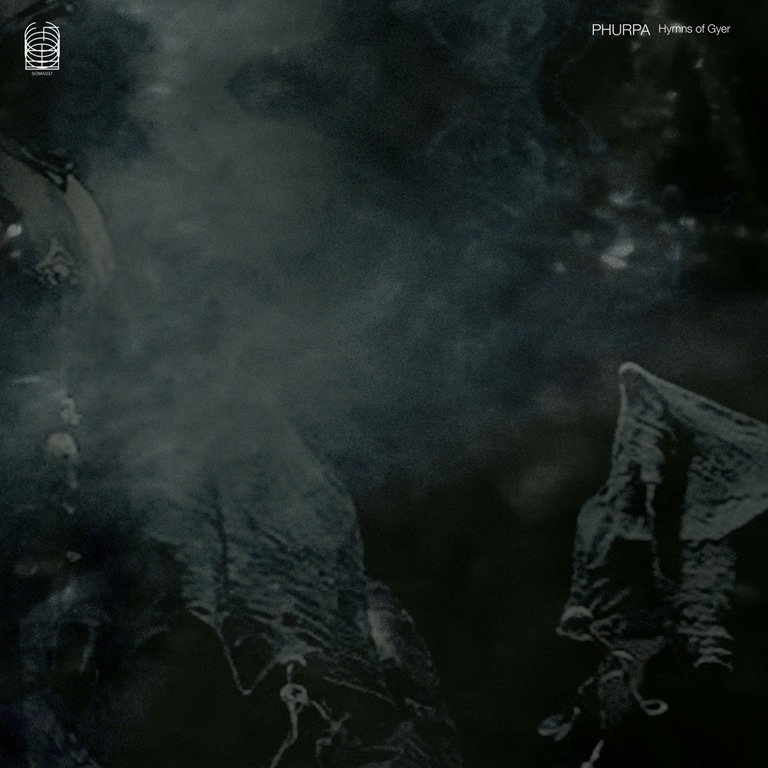
The latest material from PHURPA, Hymns of Gyer is one of four new titles on Ideologic Organ.

It’s a low, wheezing, groaning sound that drones and echoes the introduction to Hymns of Gyer. Sounding somewhere between a digeridoo and a zen om chant from deep within a cave, it’s both ominous and meditative.

Enigmatic Russian collective, PHURPA, centred around Alexey Tegin have steadily been building a catalogue of spiritually-focused and other-worldly sounding recordings centred around Bön, Tibet’s oldest spiritual tradition. Hymns of Gyer features four mesmeric vocal drones, and if Sunn O))) did throat singing, it would sound like this.

The slow undulations and the multiple voices, each droning pitch resonating against the others in an endless succession of swells and ebbs, sometimes booming and billowing.

There is no discernible structure or form, but the purpose of these performances is about a different kind of focus: an inner focus, one which achieves a transcendental oneness. ‘0.1 [3]’ and ‘01.3’ yawn and drone on for over a quarter of an hour apiece, with the latter in particular building a dense, low-end breathy intensity, elevating and ululating expansively with an effect that resonates around the lungs. This is incredibly physical music, body music in the most literal sense. It’s impossible to dissect either the sound of its effect. All you can know is that it IS. It rumbles around every inch of your being. It doesn’t speak to or of anything. It just echoes and envelops, and immerses.

Listening with no real expectation, I found my breathing slowed, my pulse slowed. Maybe this was what I needed. Maybe this what we all need. It’s impossible to be prescriptive right now, but the drowning sprawl of Hymns of Gyer very much does offer an oasis of meditative calm.

AA
a1461353755_10

One Little Indian – 1st May 2020

Christopher Nosnibor

Like many, Daisy Chainsaw’s incursion into the singles chart with ‘Love Your Money’ in 1992, was my introduction to KatieJane Garside. I’ll admit that I wasn’t immediately sold, and it wasn’t until I caught Queenadreena supporting The Rollins Band in the early noughties that I came to appreciate her as a performer, at once captivating and terrifying. Queenadreena, and, subsequently, Ruby Throat charted an artistic and musical progression, and Liar, Flower is a continuation, a new iteration of Ruby Throat, consisting of Garside and multi-instrumentalist Chris Whittingham.

The band moniker intimates the kind of juxtapositionality of Daisy Chainsaw: pretty, delicate, and brutal, and it proves to be most fitting. Geiger Counter is mostly delicate, if not necessarily pretty, and definitely presents those elements of juxtaposition and opposition with serenity colliding with screaming abrasion in a varied set of songs.

‘9N-AFE’ is sparse, eerie, a mesmeric beatless trip-hop backing accompanies a lost, haunting vocal, and it calls to mind early Cranes. It’s followed by the slow-skipping chamber-folk of ‘baby teeth’ and the stark country hues of ‘blood berries’, which finds Garside weaving and soaring stratospheric notes and evoking Kate Bush.

Geiger Counter may be geared toward the quieter, more introspective end of the sonic spectrum, but it’s stylistically varied. The instrumentation is subtle, delicate, and remains very much in the position of accompaniment, placing Garside’s voice to the fore.

There are exceptions: ‘doors locked, oven’s off’ is a lilting acoustic instrumental just a couple of minutes in duration, while the stripped-back vaudeville ‘broken light’ suddenly breaks into jazz-tinged piano discord, and ‘even though the darkest clouds’ goes full electric, sucking hints of Neil Young and Dinosaur Jr into its maelstrom of guitars. Garside is on fire, sounding dangerous and demented. The lyrics are often difficult to decipher, but ‘don’t worry darling, I’ve got to wash my hands’ breaks through the chaos and screams OCD. Or maybe that’s just me. They rock it up again on ‘little brown shoes’ too, a scuzzy blues stomper with a solid groove where KatieJane wails like a banshee witch and growls like all the menace. The swampy ‘Mud Stars’ plunges into a miasma of soulful blues that becomes increasingly uncomfortable as it slides into a haze of noise.

The simple acoustic arrangements are understated, Garside’s vocals haunting in a way that slides beneath the skin: the brooding post-rock atmospherics of ‘Hole in my Hand’ are moving, but in an almost imperceptible way. It feels like the reflective calm after protracted spell of emotional turbulence.

There’s a clear and strong arc that carries Geiger Counter, an album which builds in volume and intensity as it progresses, culminating in the all-out abrasion of the no-wave noise rock riot that is ‘My Brain is Lit Like an Airport’. As a journey, it becomes increasingly challenging as it goes on, and as an album it’s stunning.

index

Only Lovers Records – 27th March 2020

Christopher Nosnibor

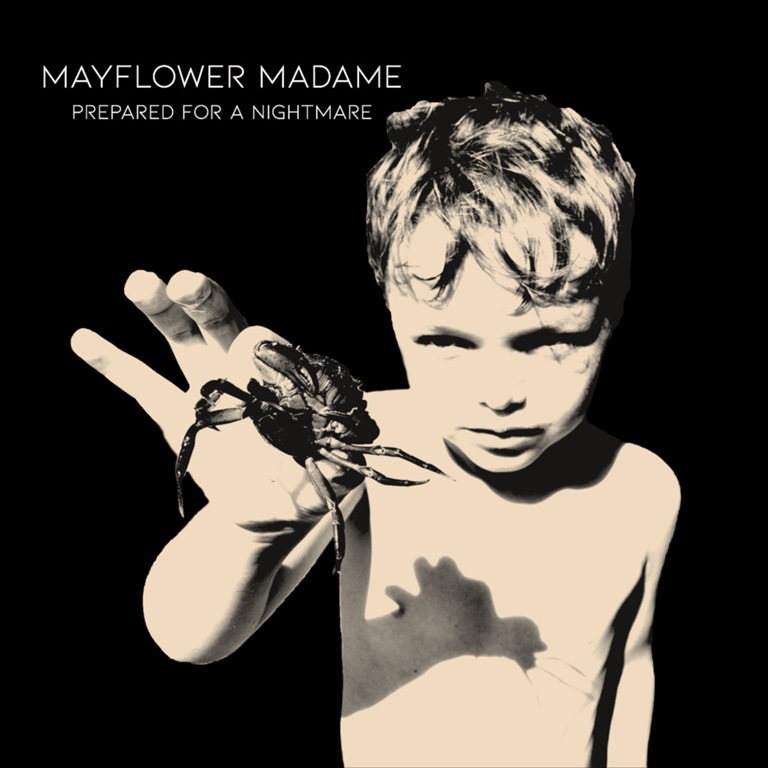
This is an album I’ve been on the edge of my seat for for quite some time: their debit, Observed in a Dream was fully four years ago, which feels like an eternity. The two preceding singles set the bar for expectations for Prepared For A Nightmare – preparing us not so much for a nightmare, but a haunting set of songs that built on the foundations of its predecessor, flexing new muscles, pushing new boundaries.

The title track raises the curtain in grand style, brooding drama filtered through a misty haze of reverb. The guitars wander in and out of key along doric scales that spin a gothy twist to the echoey psychedelic surf vibe.

After a mid-tempo opening salvo, ‘Ludwig Meidner’ steps it up with full-tilt rolling drums reminiscent of The Danse Society circa Seduction, blended with The Cure on Pornography. There are cold, needling synths in the mix undulating across the thunderous barrage of percussion and the sound’s filled out by a low-slung bass groove while Trond sings about ‘dancing on your grave’: the lyrical themes and musical style remains unchanged, but what is different is that there’s more space, which conjures a different darkness.

‘The Night Before’ is a doomy, gloomy trudge, sparsely set and more about layers than rive – which is perhaps true of the album as a whole this is more focused on detail, on nuance, on atmosphere. Closer ‘Endless Shimmer’ hints at all the shoegaze, even op, and it’s in the mix, but it’s taut, dense, and dark and there’s a tension that simmers beneath that’s hard to pull apart. The fadeout on ‘Goldmine’ seems a little odd, but perhaps that’s as much about fashion as anything. The 80s… This is so reminiscent as to be a repro in some way. But it’s ok: there’s no sense that any of this s forced or artificial. Prepared For A Nightmare oozes song quality and a richness of performance and appropriate production. It’s seriously hard to fault any of it.

Prepared For A Nightmare is definitely darker and deeper and less immediate than its predecessor, but it’s all the better for it.

AA

a2389555485_10

Géante 4 is a graphically scored piece that I’ve illustrated/written of about 10-12 minutes in length that I was hoping you could tackle as a solo piece. It involves between 3-7 voicings per section over 5 sections, in total around 10-12 minutes. I had the Japanese guitarist Michio Kurahara do a version of this last autumn when we were doing some basic tracking for this session in Tokyo.

We also did a 90-minute version in Norway last summer with 2 double bass players, a haldorophone, piano and sine wave/tape. I’d love for you to approach this very much as you like, based on the rough parameters of the score. I imagine that the common aspects to Kurahara’s version would be the sustained tones and the transitions, as well as the modes you’re transitioning between.”

So begins O’Malley’s missive to Stuart Dempster, trombonist (or, as his brief bio states, ‘Sound Gatherer – trombonist, composer, didjeriduist, et al, and Professor Emeritus at University of Washington’) with avant-garde collective Eye Music, who are here represented as an octet.

O’Malley’s directions are simultaneously clear and vague, and the same is true of the blank ambience this release contains: namely, two versions of the same piece, meaning both the four- and five-layer mixes are 12:41 in duration.

The elongated notes of echoing drones, dense, sinewy, turn gradually fade in and hover… and hover… and swirl. The overall blend of sound bears no resemblance to the sum of the parts, and electric guitar, flute, cello, trombone, harmonium, field organ, synthesizer, and bowed stringboard with metal slide and blur and melt into a broad, organic-sounding wash that paints in broad watercolour strokes.

I’m not so anal as to sit and compare the two tracks intonation by intonation, and I haven’t attempted to play them simultaneously. The 5 layer mix does feel deeper, denser, slower, darker, but it cold equally be my variable and gradually declining mood, as happens some evenings. Many. No doubt a detailed comparison may prove illuminating, and prove of some value to someone somewhere, but no-one needs it here as part of a review, and besides, I’d hate to spoil your fun.

Fun isn’t top of the list with this release: beat-free, sans overt structure, and ambient with some more brooding tendencies, the atmosphere is cloudy, overcast and hints at a turbulence that never actually arrives, but is always bubbling over the horizon: the soundtrack not to a storm, but a preceding pressure drop.

AA

SOMA036_cvr-350x350

Panurus Productions – 29th May 2020

Mantis Shrimp is the second Shrimp release following their eponymous debut released just over a year ago, in January 2019. A collaboration between various luminaries of the underground scene in Newcastle, England, and Ryosuke Kiyasu, who has enough projects to his credit to render him a one-man music scene in Japan, they describe their sound as ‘chitinous free grind onslaught’.

Now, if ‘Shrimp’ has connotations of small fry, the proverbial puny weakling, and their debut laid waste to those associations with a devastating cacophony , then it’s perhaps worth approaching this instalment with the knowledge that the mantis shrimp is the brutal bastard of the small crustacean world: a violent predator, mantis shrimp typically eat fish, crabs, clams, snails, worms, shrimp and squid, and can take on animals significantly larger than themselves thanks to their ‘calcified clubs’

According to Wikipedia, these hard exoskeletal bastards are sometimes referred to as ‘thumb splitters’ ‘because of the animal’s ability to inflict painful gashes if handled incautiously…—mantis shrimps have powerful claws that are used to attack and kill prey by spearing, stunning, or dismembering’.

This pretty much how it feels listening to the four pieces here.

There’s a strain (and strain is an apposite word choice) of experimental jazz that sounds like the end of a piece, where the instruments all clatter and rumble as they wind down from a climax, only that is the piece, and each piece lasts an eternity. That’s this. Only with grating guitars and bowel-ripping guttural vocals, which add depth and detail to the calamitous, chaotic racket.

‘Sealed Explosion’ eases it in gently, with thirteen minutes of stop / start percussion and stuttering discord that crashes and stumbles in all directions. It’s an absolute headfuck, and it’s only more intensely difficult from hereon in, with the sludgy squall of ‘Grasping Pincers’ bubbling through a relentless racket of crashing cymbals and stammering anti-chords and screeding feedback. The lull after four and a half minutes feels like an immense relief – but then you realise there’s another ten minutes to go as Watts starts up the gasping growl (first mistyped amusingly but perhaps appropriately as ‘sharts up’) that will continues to rasp through the bewildering tempest of noise. There’s some wild funk bass played at a hundred miles an hour around the ten-minute mark, but it’s submerged beneath a brain-shredding wall of noise. That’s no criticism, just a mere statement of fact.

‘Boiling Swamp’ spring and spurs, eddying electronics and guitars that sound more like they’re tuning up than playing actual music dominate the thrumming, humming drone of feedback and bass groans and tweeting sonic contrails. It gradual descends into a bass drone miasma, while shrill top-end feedback shrieks all around. Not a lot happens, but amidst the turbulence, there are wordless howls and hollers. Or, if words, impenetrable. As they ought to be. Watts resorts to guttural snarls in the dying minutes of this chthonic noise dirge that evokes Sunn O))) minus the growling low end crossed with Whitehouse, and which leaves ‘Endless Collapsing Staircase’ in prospect.

It’s 28 minutes of trippy experimental electronica that straddles noise, power electronics and various ambient forms. Percussion rattles erratically amidst trilling industrial scrapes, gradually building through wordless vocal drones and swelling layers of extranea. Anguished howls, shrieks, and barks punctuate a mess of feedback and flailing percussion. It’s a fucking horrible mess of noise: there’s a stab at a fractured bass groove in amongst it all. It never quite gets going, and 14 minutes in, it sounds like it’s all over as it collapses into a mess of pedals, but we’re barely at the midpoint. Watts sounds like he’s being gutted in a ceremonial act that’s been incorporated into a Large Unit performance. Or something. It hurts. But it works.

a3330396040_10

16th April 2020

Christopher Nosnibor

It was live that I was first sold on The Twilight Sad. Having been recommended their debut album, I felt a certain indifference, but a few weeks later, witnessing the intensity and blistering volume of a live show, they affected a genuine shift in my life in music.

Timing matters, and it’s a fact the band themselves acknowledge in the blurb accompanying this digital release: ‘We have been talking about recording a live album for a long time. We think this is the best we’ve been playing as a live band and wanted to document that. With five albums of material we felt now was the time.’

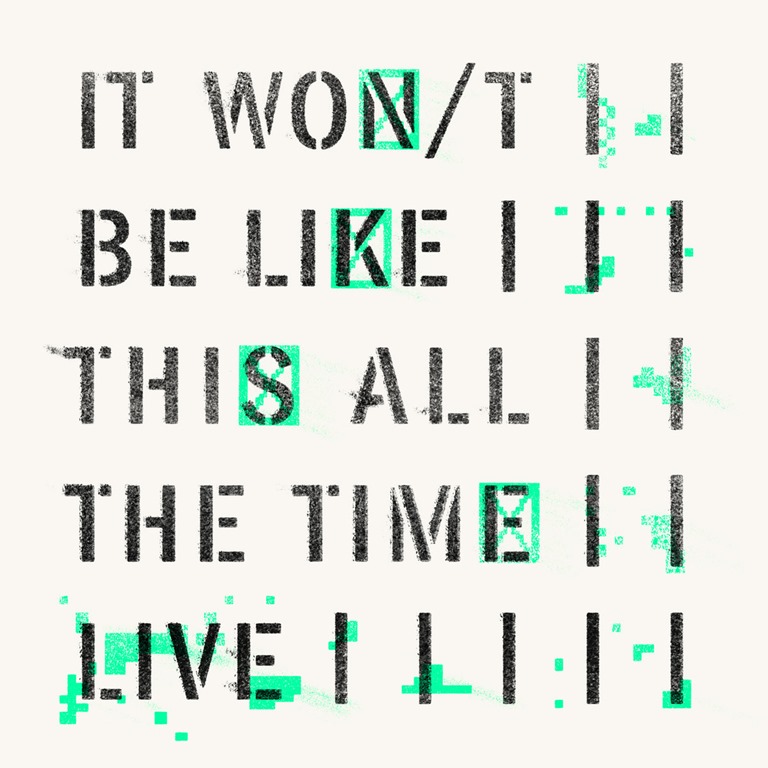
Ordinarily, I wouldn’t quote at such length, but the band’s statement speaks multiple volumes about the nature of the band, and precisely why they mean so much to their fans: ‘Over the past few months we were figuring out how to release the album and then covid-19/lockdown/gig cancellations happened. We quickly decided that we would release the album digitally on a pay what you want basis. The reason behind this is that we know that financially it is a worrying time for a lot of people and for ourselves included. We wanted to make sure we could give everyone who likes our band one of our gigs live in their living room as we can’t be out in the world playing gigs right now. We wanted to make sure that anyone who wants the album can afford it as well. I hope everyone is doing okay. I hope this helps… The title of our last album It Won/t Be Like This All the Time has been living with me for the past three/four years and right now that sentiment feels stronger than ever. We’ll get through this together.’

This release will definitely help. This is a largely personal thing, I’m sure, but I’ve struggled to stir much enthusiasm for the myriad live streams from living rooms. Kudos to the artists plugging the gig gaps and engaging directly with their fans. But seeing one or two members of a band strumming away in their living room doesn’t capture or recreate the experience of attending a live show, which is about the immediacy and the intimacy and while I’m not one for hug or physical contact, the sense of oneness that comes from standing packed in close with people in a shared moment of appreciation and often catharsis is unique. And if I want full-on, tear-jerking, breath-shortening catharsis, I go and watch The Twilight Sad.

The fact The Twilight Sad have such a massive hoard of recent live recordings from the last tour is good news: having caught them just before and also just after the release of the album, it’s fair to say that they really have hit a new pinnacle lately. And as a document which captures their recent form, listening to this is transportative. Rather than lamenting the lack of the full band as I watch an acoustic home show – and with absolutely no criticism of the bands doing this – I’m back there, reliving the experience. For this reason, it’s very much a plus that they’ve replicated the full concert experience rather than simply selected recordings of the tracks from the latest album and presented them in sequence. Strong as the album is, this is more, with 18 songs that really do show the band in spectacular form.

It’s a powerful opening: the massive incremental swell that builds on the album version of ‘[10 Reasons for Modern Drugs]’ is replicated perfectly here: a bubbling synth and simmering tension culminates in a maelstrom of guitars. Meanwhile, ‘Shooting Dennis Hopper Shooting’ is one of the definitive Sad tunes and one the most killer tracks of 2019, and they deliver it with full force here. But then, that’s every performance of every song at every show, and is precisely why they shows are so very fucking special.

‘VTR’ brings all the emotion, and dipping further into the back catalogue, they attack ‘Don’t Move’ at a blistering pace, and while the synths still dominate the melody, Andy MacFarlane’s guitar squalls bring all the noise and all the texture. And this is an important point of note: however tight they get, however close to fidelity the sound, there’s always an edge that’s unmistakeably live about The Twilight Sad, and the emotions are never less than painfully raw.

‘That Summer, At Home, I had Become The Invisible Boy’ lands just short of the middle of the set, and is everything that sold me in the first place: the volume and intensity are captured perfectly as James Graham howls ‘The kids are on fire in the bedroom / the cunt sits at his desk / and he’s plotting away.’

‘The Arbor’ is denser and even bleaker than the studio version, and calls to mind Pornography era Cure, and ‘I/m Not Here [Missing Face]’, one of the starkest, darkest tracks on the album, is harrowing as hell live as James croons darkly, ‘I don’t want to be around you anymore / I can’t stand to be around me anymore’ against a guitar that positively wails in anguish.

Every single song is a highlight, but the inclusion of ‘Seven Years of Letters’ and ‘Wrong Car’ are rather welcome surprises which almost compensate the absence of ‘I Became A Prostitute’, while listening to the cover of Frightened Rabbit’s ‘Keep Yourself Warm’, which has become a set staple and here spans a massive eleven minutes, provides another reminder of the way band and fans connect to share their pain and anguish.

The album closes, as every set rightly does, with an eight-minute rendition of ‘And She Would Darken the Memory’. It never fails to hit home, landing a punch to the gut and bringing a lump to the throat. On paper, the words ‘the rabbit might die’ may only yield a shrug, but howled in a thick Scottish accent amidst a tempest of guitars, it acquires all the emotional resonance that words alone can’t articulate.

Make no mistake: this is an outstanding live album by any standards, capturing the essence of the live experience of the band perfectly. But it’s also something that will mean absolutely everything to the fans. And of course I mean me.

AA

a3904098291_10

10 to 1 records

Christopher Nosnibor

It’s been three years since The Doomed Bird of Providence graced us with Burrowed into the Soft Sky, an album containing two richly atmospheric longform instrumental tracks. With the Rumbling Clouds of War Hover Over Us, which bears a characteristically cumbersome title, Mark Kluzek continues to pursue an instrumental direction, while moving away from Australian colonial history in favour of and exploration the escape of his grandfather Władysław Kluzek from Poland after the German invasion in WWII

The EP, containing four pieces, is demarked at four parts, indicative of a continuous but segmented sequence. Being instrumental, however, any narrative bent is very much implicit, and with a combined running time of approximately twenty minutes, Rumbling Clouds of War Hover Over Us returns to the more succinct style of previous releases.

The title makes sense in context, but carries a universality in reminding us that we are never more than a few short steps from war, and these delicately-poised compositions are heavy with sentiment, dense with instrumentation that articulates it while leaving room for interpretation.

Part 1, the title track, begins with a sombre piano and trudging drum, augmented with strings and woodwind to forge a dense, lugubrious atmosphere. There’s a slow, sashaying gallic-slash-silent movie feel to ‘You Never Became Used to Death’, and the rolling piano rolls into ‘Constant Moving Stream’ which builds the theatrics and drama with bold chords swelling over another insistent beat that marches on while a crescendo swells and then fades, its peak unrealised, the tension unresolved. The final piece, ‘But Something to Aim For’ keeps things taut, and is filmic and threatens a climax that never quite breaks, and that tension remains unresolved even with the soaring violin work and gradual layering that brings the album it its conclusion.

Being instrumental, there’s no overt narrative to be played back or unravelled here: Rumbling Clouds of War Hover Over Us relies on an element of input from the listener. True to form, The Doomed Bird of Providence conjure some stirring passages that resonate internally, subconsciously, and echo deep within.

AA

a0003650112_10

farmersmanual – 17th April 2020

Christopher Nosnibor

‘Tissy solves for x, called tsx by friends, is the youngest avatar used by Oswald Berthold of farmersmanual, CD_slopper and pxp. Despite so many pseudonyms already available it became necessary once more to spawn a new ID because simply better fit.’ So begins the press release for recur² by tsx. I don’t even know what the fuck that means, and I haven’t even hit ‘play’ yet.

The press blurb informs us that ‘recur² is tsx’s third release since the debut recur published 2017 in the Trust label’s e-series – recur² is nine tracks sparkling and brut, four of them iced with as-usual awesome vocals by Sue Tompkins taken through farmersmanual’s autovoice tool – finished off by an amazing hi-speed hi-res video for the featured instrumental ’shallow miswant no rid’’. I’m still little the wiser.

The majority of this album’s nine tracks consists of clanking, bleeping, blooping sythniness and shuffling, melting beats that mine deep grooves that warp and weft, pinning themselves to a small space and focusing on the tonal and the textural over linearity or progression. The result is somewhat claustrophobic, even frustrating – or maybe I’m just projecting. I may not have been on the level of lockdown that prevents me leaving the house to exercise or to acquire foodstuffs, but frustration and claustrophobia and a sense of stasis have seeped into every corner of my life at the time of writing, and it’s bound to colour my perception, especially when presented with a musical suite like this, which presents a combination of depersonalised electronic instrumentation and veritable gibberish that speaks to the incoherent internal dialogue of imprisonment.

The pieces, with their impenetrable and oftentimes nonsensical titles, are all short, almost fragmentary, the majority spanning two to three minutes ‘uouh’ is the first of four which feature Sue Tompkins’ vocals, here manifesting as a sort of cracked, witchy drawl which, given its organic feel, sits at odds with the crisp digital tones. ‘Been Fly Void’ ripples digital abstractions, pulsations and undulations that stop, start, and stutter haltingly while Tompkins’ breathy vocal croon contrasts on an other-worldly level.

It’s hard to know precisely what to make of this under any circumstance, but in the context of a world gone mad, it probably makes more sense than perhaps it otherwise would.

AA

gt41_art

Karlrecords – KR077 – 24th April 2020

Christopher Nosnibor

For those unfamiliar (and that may well be many), die ANGEL is the collaborative project of Ilpo Väisänen (ex Pan Sonic) and Dirk Dresselhaus, which began in 1999 on a joint tour with Pan Sonic and Dresselhaus’ Schneider TM, with an objective to ‘use electronics, string instruments and effect loops to develop a sonic world that goes beyond fixed structures and clearly defined genres’. 30 years and 10 albums on, they’re still pushing those boundaries, and on this outing, the duo are joined by Oren Ambarchi.

It’s interesting to note that the material was recorded between December 2015 and January 2016, with Ambarchi adding overdubs in the spring of 2016, and the album being edited and mixed in the May of the same year, meaning it’s languished for the best part of four years., although it’s unclear as to why.

The album, available only on digital formats, comprises four longform tracks that would commonly correspond to a double 12” format

The album starts with ‘Epikurous’, which begins with a long, quavering drones that oscillates menacingly and ambulates directionless, a dark ambient cloud that drifts into the minimal throb of ‘Cargo Cult’. This piece is loosely formed around a rhythmic pulsation, a long, sonorous drone, interspersed with occasional interjections of ranging textures and frequencies. Sharp clustering bleeps and squiggling electronic fizz disrupt the smooth flow as echoic explosions and fractured rattles skitter and scuttle and scrape in and out of the frame.

‘Coup d’État’ is a bubbling foment that foams and froths unsettlingly, like a rumbling gut: it’s queasy, uncomfortable, a difficult, awkward churning that nags and grumbles, and filters into the dank miasma of the fourth and final piece, the ten-minute ‘Khormanoupka’. This is the deepest and darkest of the set, and rumbles almost subliminally, creating a deep, subterranean atmosphere, and as it crackles to a close, the listener is left empty and alone.

There is nowhere to go after this. The world didn’t end but what are you left with? An uncomfortable silence after half an hour of uncomfortable noise, noise that’s dissonant, difficult, and murky. And it works well.

AA

KR077_front

Wormhole World – 10th April 2020

Christopher Nosnibor

Aaagh! It’s food porn overdose on ‘Jesus, God of Tower Hamlets’, the first track on ‘Looking After The Duck’, the new album by Crumpsall Riddle, aka Steven Ball and Jude Cowan Montague. Ball drones out ingredients – an Instagram wet dream or recipe for disaster dependent on your perspective – and a ream of random shit that seemingly splices news headlines and myriad found phrases read in a monotone like a shopping list over a thrumming drone that’s reminiscent of Suicide before Cowan Montague wails the fuck over it all in a truly demented fashion… and there it is: the soundtrack to our times. Nothing makes any fucking sense. To return to a paraphrased third-hand summary of Deleuze and Guratari’s assessment, a schizophrenic mindset it the only sane response to a late capitalist society. So what about now? Is this the end days of capitalism? What does anything even mean? And is looking for answers the most futile pursuit ever?

It’s clear JCM thrives on collaboration, and to describe her as ‘flighty’ is no criticism here: eclectic and diverse would be equally fair synonyms, but would fail to fully capture her free-spiritedness where it comes to her myriad creative projects. Steven Ball proves to be an inspired choice of co-conspirator for the making of musical mayhem. Suffice it to say that the abstract post-punk of Looking After The Duck, which comes with hints of Wire, couldn’t be much further from Hammond Hits, the uber-retro collaborative album recorded with Matt Armstrong, recently reissued on vinyl: while this album was an exercise in reconstructing a vintage pop aesthetic, Looking After The Duck indulges a far more experimental urge, and manifests as minimal, lo-fi indie affair that’s more reminiscent of Young Marble Giants.

‘Is this the end of the clock?’ they chant drably, repeatedly, on ‘Terra Unknown’, while circuits fizz and analogue synth sounds whizz and swish every whichway around them.

Wibbly electronic drones, pulsations, and oscillations abound, and a disembodied, wordless backing vocal provides the backdrop to abstract atonal spoken word on the nine-minute ‘Songs of Sol’, a would-be folk shanty in a parallel universe. And then it descends into a humming wash of bubbling pink noise and an analogue thrum that rises and falls, ebbs and flows, while Ball continues a never-ending monologue diatribe of randomness, a William Burroughs style cup-up without the focus. Yes, I’m struggling to find a thread of sense here, but sense of overrated in a world in which sense and linearity have all but dissolved.

The album as a whole is a disconnected, disjointed testament to postmodernity, collaging more vintage sounds – a trilling organ synth sound quivers a mournful backing to ‘The Old Man’ – with fragmented slivers of extranea, and leaning toward more arbitrary song structures over linearity. Looking After The Duck is, to my ears, leftfield and brilliantly out there: many will find it plain weird and tuneless. Many would be wrong: it’s oddball experimentalism that spawns innovation and progress. It’s also truer to the internal dialogue than many would admit, and it’s this uncomfortable truth that can be unsettling. People are scared to be presented with a mirror to their minds. This knowledge doesn’t make Looking After The Duck any less awkward or uncanny. But it is strangely brilliant, and no mistake.

AA

cof