Archive for the ‘Albums’ Category

Panurus Productions – 4th December 2020

Christopher Nosnibor

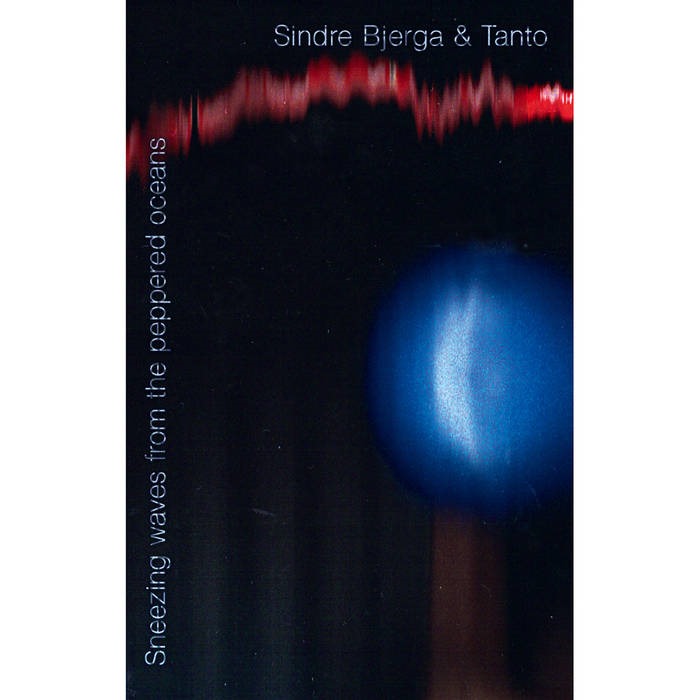
Some of these experimentalists, they’re real buggers, you know. Awkward sods. Wilfully obtuse, intentionally unlistenable. Sindre Bjerga & Tanto sure as hell aren’t aiming for mass appeal on this absolute monster of a cassette release. In fact, I’d go so far as to suggest their primary goal is mass-alienation, because this is pretty fucking horrible. And it never stops.

Sindre Bjerga & Tanto’s collaboration contains two pieces which fill a C90. It’s an experimental mash-up, a cut-up, fold-in audio experiment that if not inspired by William Burroughs’ 1960s tape experiments, lots inevitably can be traced in terms of lineage and influence, conscious or otherwise. And for all the levity of the title, it makes for some seriously hard listening.

Amidst crackling fizz and stretched tape discord, there’s a warped, off-key rendition of ‘Don’t Cry for me, Argentina’, that’s buried in an underwater bubbling, a blur of blender nose and a mess of detuned radios. Shrieking feedback emerges and lingers on after grating clanks, and serrated droned, pulsing washed of analogue noise and sharp static blasts that cut through bubbling torrents and crude farting noises and a collage of contrasts and contradictions.

It becomes more challenging as it progresses: ‘Crashing Sonic Pepper Waves’ delves deeper under water and begins to take on the feel of a long underwater swim – the sound of a frenzied splash after being toppled overboard from a liner or destroyer. Beepling wipples fracture and disrupt a narrative of long, dark tones that rumble and scrape and intonate a truly post-industrial, post-apocalyptic soundscape – bleak, desolate, rusted, decayed.

If the first forty-five minutes feel like an endurance test then the second – ‘Tabasco Mist Prescription’ feels even more intensely so. What do you actually do with this? A masochist can enjoy it to an extent, and anyone with an appreciation of Throbbing Gristle and any of the myriad acts of all strains of genre style influenced by TG likewise. TG represent the closest reference here, with the heart of industrial music being less about the stylized appropriation of factory noise and the like than an attitude based on perversion of what was even considered ‘music’ delivered with a confrontational, antagonistic attitude – and Sneezing Waves From The Peppered Oceans is antagonistic, and then some.

35 minutes into ‘Crashing Sonic Pepper Waves’ is shrill blasts of treble are being amped up against all kinds of found-sound dissonance and difficulty, and it only gets messier, more brain-pulping with the messy murk of ‘Crashing Sonic Pepper Waves’. It’s unsettling, uncomfortable, and those are the compliments. It’s not even particularly dark, it’s just a nasty conglomeration of disparate sounds, collaged together to render something that’s uncomfortable, and never-ending, and quite enough to induce heartburn.

It’s good, but don’t expect to like it.

AA
a3254763830_16

Human Worth- 26th November 2020

Christopher Nosnibor

This one’s been cropping up in my Facebook feed a fair bit lately, and I’m quite ashamed by how long it took me to get around to playing it, given the great work Human Worth do both in terms of music and charitable donations – plus the fact they’re decent guys who I’m proud to know. Shit happens, even in the midst of Lockdown 2.0 where it’s shit mostly because there’s only shit and nothing happens, and mostly it’s simply that there just aren’t enough hours in the day. In the event, it turns out the greatest loss is mine, because this album really is something else. How was I to know that this was the album I’d been looking for, that I needed in my life the last few months?

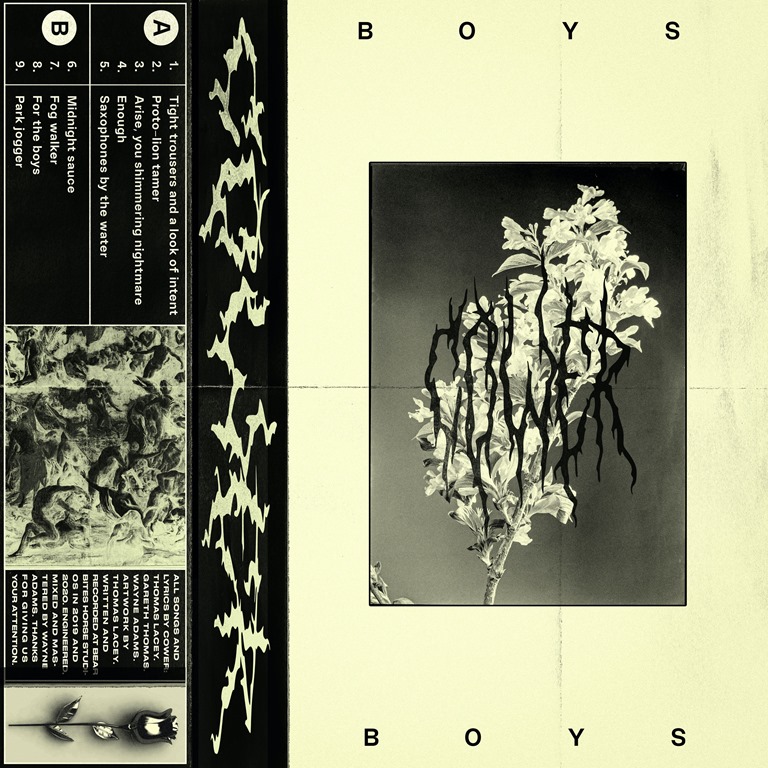
Given the pedigree of the performers who make up Cower – namely Wayne Adams (Pet Brick / Big Lad), Gareth Thomas (USA Nails / Silent Front) & Thomas Lacey (Yards / The Ghost of a Thousand) – it would be a reasonable expectation for their debut album to contain a fair bit of noise, but then equally, it would be reasonable to expect it to be a bit experimental, a bit electronic, and a bit weird. How do all of the elements brought by the component parts marry up?

The short answer is remarkably well, and Cower sound like all of the component pats simultaneously, but equally none, as they morph together to forge something truly unique, and also quite unexpected.

It begins in a pretty understated fashion, with ‘Tight Trousers and a Look of Intent’ following the path of a dense, woozy, but accessible dark electro tune. Admittedly, that pulsating bass throb is something you could drown in, but the incidentals and the vocals are quite accessible – although all hell breaks loose just halfway through and it’s wild. Initially, I was inclined to say that as an opening, it was ‘tame’, but that would be unjust: restraint isn’t an indication of weakness, but of controlling the beast. But then, when the beast breaks loose… ‘Proto-Lion-Tamer’, brings the noise, and does it in proper full-on style, a squalling, brawling mess of din – old-school noise merchants like The Jesus Lizard are in the blender with contemporaries like Daughters and Blacklisters to whip up a nasty maelstrom of noise.

Tribal drumming dominates the bleak, eerie soundscape of ‘Arise You Shimmering Nightmare’, while the downtempo mid-album slowie, ‘Saxophones by the Water’ finds them coming on like Violator-era Depeche Mode, and this trickles through into the next song, ‘Midnight Sauce’ that combined a rich, soulful vocal with some chilly synths and blasts of percussion-led noise and cinematic drama that goes fully 3D, to the extent that it gives JG Thirlwell a run for his money.

If BOYS pursues a dark, brooding, electro road as its dominant style, it’s the album’s range and diversity that is its real selling point, and the songs are all far darker than most of the titles suggest. And if much of the album feels pointed, challenging, ‘For the Boys’ is outstanding in its emotional sensitivity. Closer ‘Park Jogger’ in particular sounds like it might be light, even vaguely comedic by its title, but no: it’s a colossal electroindustrial behemoth tat packs some seriously pounding force into its short running time.

With BOYS, Cower surprise and excel: the quality of the songs is remarkable: there’s a real sense of everything having been carefully crafted for accessibility, to the extent that this is actually a pop album – making for the darkest, heaviest pop album you’re likely to hear in a long time.

AA

COWER_BOYS-CoverArtwork

Pelagic Records – 20th November 2020

Christopher Nosnibor

The Swedish quartet’s fifth album finds them freely drawing on myriad genre references to conjure a cocktail that extends far beyond even the broadest perimeters of post-rock to render this a truly hybrid work. The scale of the ambition is immense, and for a band who rarely spent time together and only rehearse ahead of tours or to write and record albums, the way they’ve drawn everything together so organically is remarkable.

The title is quite fitting as they swing back and forth across the forms and styles, with a brooding electroambient introduction in the form of the title track which builds by stealth over the course of seven and a half minutes to a grand-scale swell of cinematic hypnotism with rolling drums driving a cyclical synth motif.

‘E22’ brings the guitars to the fore and is more overtly conventionally post-rock, but it’s got a certain progressive edge, not to mention some weight, breaking into some hefty bass-dominated riffage around the five-minute mark. There’s a pace-rock / psyche twist to ‘Mindtrip’, by far the album’s most accessible and buoyant tune, and it contrasts with the altogether more tense ‘Shelter’, which emanates a simmering tension. The absence of vocals actually accentuates the mood and renders it all the more relatable, as the listener pours the emotional contents of their own experience into the empty vessel the band present.

This, for me – and doubtless for many, having attended countless instrumental post-rock shows in the decade spanning 2002-2012 – is the draw of the genre, at least when well-executed: post-rock presents sonic expanses without authorial steer, without any insistence on specific meaning, leaving the listener to fill in the spaces. And with vast, expansive spaces in which to wander, into which to pour one’s thoughts and experiences, this is music that opens its arms to a world of freedom.

They don’t do short songs: Oscillate only contains eight tracks, but only two of those clock in under six minutes, and the final pairing of ‘Eraser’ and ‘The Headless Man’, both of which extend well past the eight-minute measure. The first of these is a dynamic rush of a tune, with propellant drumming and a solid bass throb, while the second is a redemptive sunburst of a tune, the light of dawn breaking over the horizon.

Oscillate is a strong set, and the album will indubitably appeal to fans of MONO, Explosions in the Sky, and Godspeed You! Black Emperor, but in context, comparisons are reductive: this is an album that stretches far wider than its influences and is truly impressive in its breadth and scale.

AA

a2086206515_10

Hummus Records – 23rd October 2020

Christopher Nosnibor

Well of course my interest was piqued: Convulsif’s fifth album, pitched as a work of ‘self-inventing gloomy rock in the abyss between such subgenres as noise, metal, jazz and grindcore’ likely to appeal to fans of GOD, Godflesh, Swans, Naked City, Napalm Death, Painkiller, Boredoms, and Neurosis. It doesn’t get any more of my noisy industrial-favouring bag than that – not least of all because the referencing of short-lived Godflesh / Techno Animal offshoot GOD seems wilfully perverse. Let’s face it, what is the real scope for techno-hued jazz/grind crossover?

The Swiss quartet eschew conventional rock instrumentation with a lineup featuring bass, drums, bass clarinet and drums, and I can already hear many wailing about the lack of guitars. Hearing the cacophonous freeform racket they conjure, however, would be enough to make even more wail, and certainly not just about their unconventional band makeup, and just to enhance the album’s commercial appeal, the bleak set’s titles are all cut up and mashed up lines of Charles Darwin’s Beagle Diary.

The first cut, the seven-minute ‘Buried Between One’ is dominated by the gut-churning, nausea-inducing rhythm section stylings of Swans circa Filth and Cop – the drums explode like volcanic detonations, slow and sporadic, and the lumbering low end stops and starts and lurches woozily, while everything else on top is just discord, and as the track progresses, it all whips into a hellish maelstrom, a brutally sustained crescendo that leaves you wondering ‘where’s left to go from here?’

The elongated drone, low, sonorous, ominous, that introduces ‘Five Days of Open Bones’ provides some respite, , before dolour bass and brooding violin drift in; the atmosphere is dense and grows from a mist to a fog as the drumming builds… the tension increases… they sustain it, but you now it’s surely a matter of time before something yields… the clarinet ebbs and flows like a layer of synth, but the fact this is organic and orchestral somehow ads something else… and then… and then… Anyone familiar with the last incarnation of SWANS will now what it’s like to endure such a seemingly endless build. It’s exhilarating and torturous in equal measure. Your heart’s palpating and your lungs feel ready to burst and you think you might vomit… and then it all breaks into a frenetically frenzied jazz noise of parping horns and hundred mile-an-hour drumming. No, that’s not right. Surely. But then, this isn’t SWANS, this isn’t your regular avant-industrial: this is the kind of experimental freakout that’s right at home at Café Oto, and ‘Five days’ feels literal in its timespan.

A couple of brief, lurching interludes make for more difficult listening, with ‘Surround the Arms of the Revolution’ sounding like ‘A Screw’ played by a drunk jazz ensemble, paving the way for the fourteen-minute finale that is ‘The Axe Will Break’, which is constructed around a tight, cyclical bass motif, which is again, decidedly jazzy in a Sly and the Family Drone sense. The endless repetition is mesmerising, hypotonic, and the tension builds almost imperceptibly… but build it does. It grinds it way through a merciless squall of noise through which filters mournful woodwind that flickers hints of post-rock reflection before being submerged in the swelling surge of chaos. The final five minutes – an eviscerating sustained crescendo of monolithic proportions – is little short of devastating. Jazz isn’t always nice.

AA

a3431541039_10

Cruel Nature Recordings – 6th November 2020

Christopher Nosnbor

The latest release from Heat Death of the Sun, aka Eugene Davies, was recorded live in Newcastle at The Cluny – a venue that provided a space for many oddball / alternative / noisy gigs and hosting many of the artists on local labels Cruel Nature and Panurus Productions – in May 2019. Yes, back when live music was a thing. There’s a semi-ironic joke to be made that people were practising social distancing at shows like this long before it became a thing, and that there’s likely less chance of catching even the most contagious of viruses at an ultra-niche gig than in your local Aldi, but the sad fact is that while it’s tough for the everyone involved in the music industry, the impact of lockdown on the micro-communities which exist through underground music is immense in mental health terms.

It may not be a fresh observation for me to note the other irony here, namely that people who are disparate, disconnected, and often prone to anxiety and low mood come together over some of the darkest, most challenging music. Often, it’s because they find it articulates their feelings in ways they can’t, and music has a near-infinite capacity to transcend words.

Listening to Drinking Oil From The Black Fountain – a single, continuous piece spanning twenty-eight minutes and documenting HDoTS set – I find myself lamenting my inability to travel to Newcastle and the fact I wasn’t present at the show. The atmospherics are deep and dark and I imagine at the appropriate volume, in a darkened room, the experience must have been immersive and fully multisensory. The range of frequencies is extensive, and winds buffet long and low against tremolo notes that seesaw and drone, intermittently interrupted by swells and glitches. Despite the distance, it holds up well as a recorded audio work.

As the piece progresses, the ruptures become more pronounced, the thudding detonations of bass more resonant, and the whole sonic web begins to tangle itself more irrevocably, twisting and knotting, with the result that what began as a softly oscillating wash transmogrifies into an unsettling, uncomfortable source of tension, and there’s still fully ten minutes to go as I ding my muscles tensing, my jaw clenching, and my stomach beginning to lurch.

Twisted folksy drones shudder in and out of the increasingly warped array of sounds as they slowly melt together before collapsing in a liquefied state as storm clouds gather and thunder rumbles ominously and culminating in a slow, looped throb to fade.

It’s a powerful, hypnotic work that evolves nicely over its course, with just enough angles and disjointed corners to render it challenging without being a total headfuck.

AA

a1428120230_10

Cruel Nature Recordings – 13th November 2020

Christopher Nosnibor

Cruel Nature’s ongoing success in producing ultra-niche cassette releases in quantities that manage to sell out in advance of the release is impressive given not only the format, but also the times we’re living in. The label clearly knows its audience and market, with all 75 copies of David Colohan’s Walking Ghost Phase spoken for.

The album is dedicated to Walter Wegmuller, the polyartist perhaps best known for the 1973 Krautrock album Tarot, which was composed as a soundtrack to the 78-card deck with 22 major arcana cards which he designed in his capacity as a visual artist, and who died in March this year.

It contains four compositions, each precisely twelve minutes in duration and numbered I -IV. There’s a clear trajectory, if not necessarily a narrative arc, across the album, whereby the four segments segue seamlessly, yet are distinct in their form and are marked by a clear tonal variation and a sense of progression.

‘I’ begins with soft, ambient synth washes, through which bubbling modular ripples ride to give a supple yet structured krautrock feel – part Tangerine Dream, part Tubular Bells. An organ wheeze provides the undercurrent for ‘II’, but then there’s an expansive lead line that’s more progressive in its leaning, and laden with FX so as to render it unclear if it’s a guitar or a synthesize, but whatever it is, it’s noodly. The tracks takes an almost folksy turn after just a couple of minutes, but it’s a weird tripped-out electro-folk for a retro space age, and sounds like the aural equivalent of a 1960s sci-fi novel. It’s mellow but there are deep currents running barely perceptible, beneath the surface.

There’s a slow-spinning, misty drift around ‘III’, with elongated notes sounding like the heralding of a new (age) dawn. Sparse guitar echoes and hangs in the air, a dampened chord reverberates through the hazy atmosphere, prisming light in infinite, glorious hues.

This is nothing if not relaxing: Walking Ghost Phase is subtle, sedate, and there’s nothing overtly haunting, gloomy, or menacing here as Colohan conjures the essence of tranquillity over the course of an hour’s calm reflection, which culminates in ‘IV’ leafing the listener serenely toward the light illuminating the horizon.

AA

a2279535951_10

Panurus Productions – 4th December 2020

Christopher Nosnibor

Although August is the peak of the British summer, its end often seems to mark a sharp shift into Autumn; less a transition than a rapid cut. It’s a trick of the mind and a distortion of memory, of course, but summers always seemed longer and hotter in childhood; the realisation that what once felt like an infinite expanse of time which was free to fill or squander at will is, in fact, but a heartbeat in a life is a source of deep anguish. There is never enough time. No-one ever lay on their death-bed lamenting that they wished they’d spent more time watching repeats of Bargain Hunt or Homes Under the Hammer or whatever, no-one complains that they read to many books or spent too much time living their life, do they? The torment of a constant awareness of the passage of time is self-sabotaging, as the paralysis of panic grips hard. And pitched as ‘a screaming elegy for lost moments and isolation’, this is precisely what Centuries of August, which takes its title from a line from a poem by the solitary and reclusive Emily Dickinson, articulates.

If everything seems to be dominated by themes of isolation and derangement in 2020, then perhaps that’s because the magnitude of the events – or non-events – we’re living though exit on a scale that is truly all-consuming. Even the most introverted and reclusive are finding the isolation difficult to deal with: there’s a world of difference from choosing not to go out and see people, and not having the choice, especially as for many, music events provide a safe space where it’s possible to feel included and among people without the need for the kind of forced interaction that’s part and parcel of the workplace, and where it’s possible to experience a sense of community and collectivism without conforming to the less comfortable social conventions.

2020 has revealed new shades of darkness, and Centuries of August expresses anxiety, panic, rage, fear, isolation, in every one of those shades – as long as it’s black.

It’s a low, ominous synth drone that brings fear chords like creeping mist in a graveyard that marks the stealthy arrival of ‘Ripe for Solitude, Exhausted by Life’ – before all hues of murky black metal hell break loose. It’s a thunderous tempest of the darkest, densest noise, pounding hard and fast, before eventually dissipating once more into to quiet clouds of synth.

‘The Breezes Bought by Dejected Lutes’ is by no means the Elizabethan romantic piece the title suggests, but a savage blast of bleak and brutal mid-range sludge. There are drums, guitars, and vocals in the mix somewhere, but everything is a grimy blur and it’s impossible to identify anything distinctly.

Quavering dark ambience cast shadowy shades of gloom over the opening moments of ‘This Lamentable Autumn’; a picked lead guitar line adds a rich, brooding atmosphere, and then there’s everything else, coughed up from the very bowels of hell, a swirling sonic fog that goes beyond pea soup to the consistency of treacle, and wading through the barren soundscape for sic and a half minutes almost precisely recreates the experience of the last eight months in sound, before eight-minute closer ‘Under the Lowering Sky’ bulldozes in with cranium-crushing density.

That Centuries of August takes the lo-fi production values of the genre to its more extreme limits is integral to its appeal: the fact it’s so murky as to border on the frustrating is a source of power here, accentuating the oppressive density of the compositions to a level of intensity that hurts. But it’s the kind of pain that’s the perfect mirror, reflecting the conflicting nature of time, amplified by the anguish of living in the now.

AA

cover

Outsider Art / Nim-Brut – 4th December 2020

Christopher Nosnibor

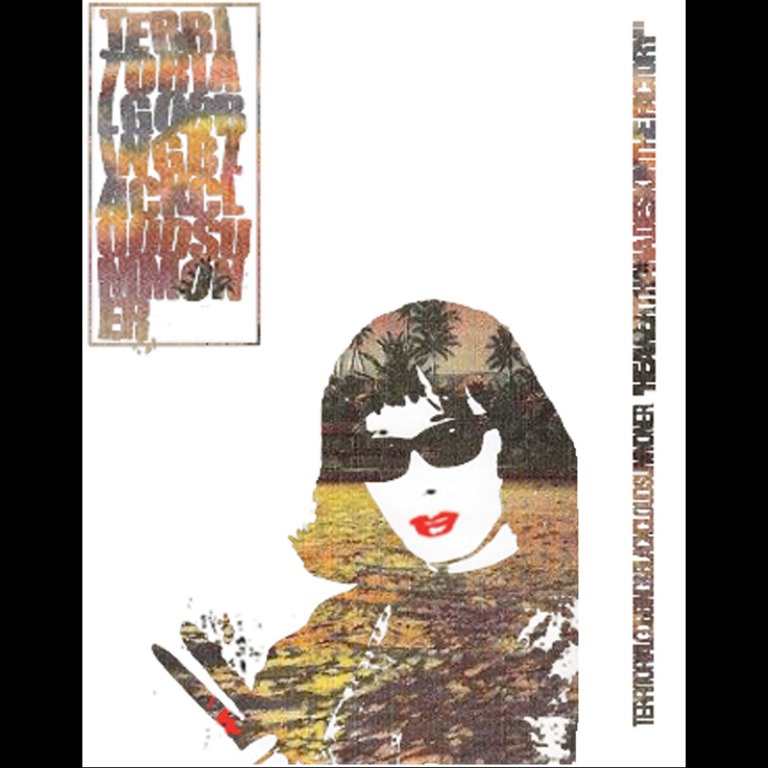
I should probably apologise in advance for this one: my mind has a habit of sprouting off on tangents of word association at the best of times, and with the turmoil that is 2020, a year that’s been – and continues to be – an endless conveyor belt of shit on shit, none of which makes any fucking sense, there are many days and evenings when I am absolutely all over the place. Not literally, of course, since I can’t really go anywhere or see anyone. The weirdy collage sprawl of ‘Carving Another Flute’, the first of three compositions on this split / collaborative effort by BlackCloudSummonerand the hypermanic, uber-prolific Theo Gowans, aka Territorial Gobbings is the perfectly bewildering soundtrack to these brain-foggingly bewildering times. So ‘Carving Another Flute’ just makes me think, inexplicably, of the slang term skinflute. That’s probably the only instrument not in the mix in this chaotic cacophony of an album, that’s got everything else going on, probably including the kitchen sink.

‘Peaches and Crayons’ sounds soft and playful, but is in fact droney and dark, and there’s no easy access point here. But they save their harshest noise for last: ‘Playing All My Black Dice Records At The Same Time’ is a 15-minute assault that is pretty much what the title says, meaning it’s a squalling blitzkrieg of screaming feedback and mid-and low-end that growls and bangs around erratically midst metallic crashes and a fizzing circuitry. It’s utterly excruciating, and probably one of the most intense and sustained blasts of noise I’ve heard in a while, being nothing short of an explosive sonic firework display – but, unchoreographed and untamed, it’s more like a blaze in a firework factory, with everything going off all at once, and it’s incendiary and blinding and overwhelming. Crash-landing somewhere between Merzbow and Whitehouse around the time of Never Forget Death, it’s a fucking nasty mess of abrasive noise – which of course means I love it.

There’s no sitting on the fence with this one: if you do noise, you will love this. If you don’t, it’s your worst nightmare.

AA

a2866943211_10

Metropolis Records – 20th November 2020

Christopher Nosnibor

Despite their associations with both KMFDM and Foetus (Raymond Watts has been a touring member of both, and En Esch has returned the favour by contributing to PIG), and playing as the main support to Nine Inch Nails on the European leg of the Downward Spiral tour and releasing albums on Interscope around the turn of the millennium, PIG remain something of an obscurity, a band revered by those in the know. I can’t help but think that it’s because, for all their adoption of the aggrotech / technoindustrial stylings of KMFDM, and the grandiose extravagance of Foetus, they don’t really sit comfortably anywhere.

Their recent releases, which have been coming thick and fast in the past few years, while adhering to the fundamentals of their earlier blueprints, with thumping beats and grating, heavily processed guitars, have taken a poppier, and also more glam leaning. It’s a style that suits the flamboyant Watts, who’s always revelled in the theatrical and the performance aspects of rock ‘n’ roll. Pain is God continues to incorporate the glammy elements that first came to the fore on 2016’s The Gospel, particularly on stomping single cut ‘Rock ‘n’ Roll Refugee’ – but then, this is being a PIG album, it incorporates so many elements, spanning eurodisco, industrial, and aggrotech, all tessellated together to form a perfect assembly. The ‘Militant Mix’ of ‘Mobocracy’ (the original version of which was the lead track on a limited tour-only EP released last year) melds grating slabs of industrial guitar to a thumping dancefloor beat, breaking down to piano and grand strings.

‘Badland’ brings a bold funk strut and a barrel load of brash brass. Orchestral details lace the slow grinding greasy girth of ‘The Wages of Sin’, while ‘Kickin Ass’ does just that, with a thick bass groove and a guitar line that’s more hair rock than glam rock, but still manages to avoid being remotely corny. The lighter-waving anthemic ‘Suffer no More’ which draws the curtain on the album does teeter perilously close, but gets a pass by virtue of its incongruity and sheer audacity.

If the album and song titles are thin on porcine puns, the themes and tropes are the same as they’ve been since the very start of Watts’ career under the PIG moniker – sex, death, pain, evil – with a generous scattering of religious references, predominantly around Catholicism (the cover art is a reasonable starting point), and a superabundant splattering of sleaze. And with the sultry seduction of ‘Drugged Dangerous & Damned’ Watts manages to shoehorn in one of his signature triple alliterations. For some reason, it never gets tired. I suspect this is, at least in part, because Pig balance all the self-knowing parody, the supersaturation of cliché and repetition with a flair for invention, stylistic range and, above all, decent tunes.

AA

a2986325886_10

19th October 2020

Christopher Nosnbor

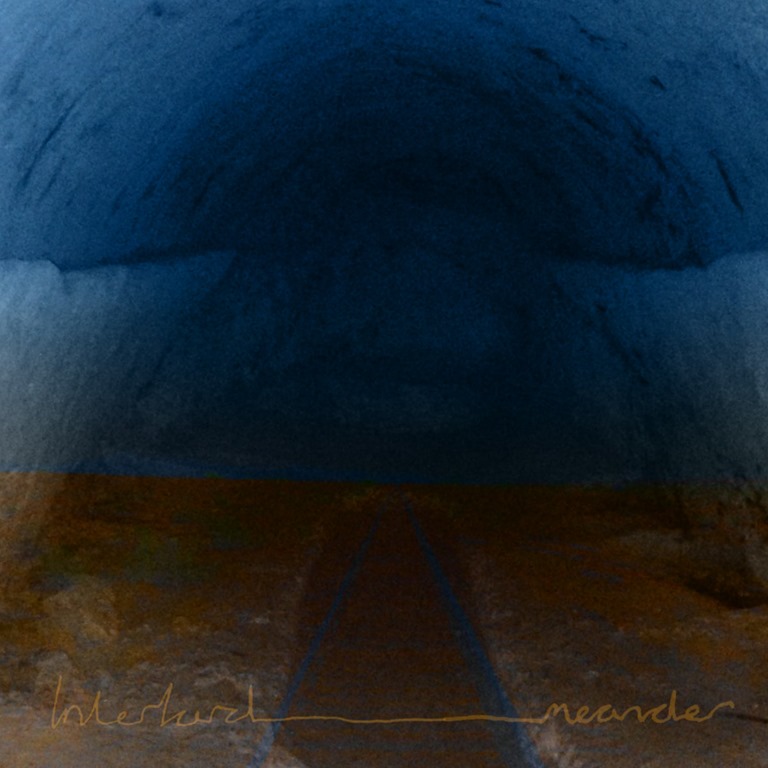
The title – Meander – intimates something that not only lacks a clear, direct trajectory, but to my mind at least, something ambling and aimless, like a leisurely walk on a Sunday afternoon in summer, a story narrated at length and via an array of detours and diversions, or a river reaching the later stages of its route towards the sea, when its force has dissipated and it weaves in a sedate series of s-bends through gentle lowlands.

Interlard’s new album may not be defined by a distinct or direct linear trajectory, but it’s anything but sedate, barrelling in with a sonic assault from the outset, with ‘Getting in the Van’ a churning wash of cyclical repetition. Yes, it may well resemble the swashing slosh of a washing machine with additional top-end bleeps, but it also stands as the opening to a passageway that heads downwards into a dark network of tunnels and caverns, an underground maze of the mind and off twisting soundscapes.

It soon becomes apparent that Meander is one of those albums that’s designed specifically to perturb, to disturb, to disrupt, perhaps in any which way it can, and to achieve this, there’s an element of chaos, or the random, as an array of sounds are collaged together, overlapped and overlaid.

‘Jonny Staccatto Does Cold Turkey’ packs all the weirdness into just over three and a half minutes, with woozy bass and discordant twangs and looped vocal samples emerging from snippets of laid-back jazz. Elsewhere, thunderous martial drumming and whirrs like drills buzz through reverberating feedback on the short but intense ‘Power Walking Holding a Claw Hammer’ that batters its way into the space between Test Department and Nurse with Wound. ‘Ugly Socialite’ ploughs a thudding furrow of bleak monotony as it trudges on, and on, and ‘Griefcase’ is dank and murky, oppressive.

Sonically, Meander is big on both texture and tone and moreover, where it stands apart from so many other works that slot into the broad field of experimental / industrial / electronica is in its stylistic range: Interlard explore far more than shades of noise and abrasion. In some respects, this actually renders it more challenging, as reconciling the more mellow passages and out-and-out incongruences within the context of a ‘noise’-oriented set isn’t easy: it goes against the grain of convention, but that’s all the more reason to appreciate the project’s broad artistic vision.

AA

a4055504987_10