Archive for the ‘Albums’ Category

MC/free iOS app Langham Research Centre LRC001

7th December 2020

Christopher Nosnibor

My last encounter with Langham Research Centre was 2017’s Tape Works Vol 1, an experimental set that evoked the spirit of William Burroughs while also being littered with references to JG Ballard which inevitably piqued my interest. However, on the arrival of Quanta / Signal / Noise, I discover that both a remix of Tape Works Vol 1 as well as Tics and Ampersands and the spectacularly mundane yet dauntingly postmodern-sounding Gateshead Multi-storey Car Park, both released in 2018 had bypassed me.

Quanta / Signal / Noise, a work in four parts seems to offer a fair – and welcome – point at which to reconvene with Langham Research Centre. the press release forewarns of ‘a shift away from the conventional building blocks of music: notes and harmony and rhythms that are mapped onto a grid of steady pulse. Instead, the focus is on a fascination with sound itself; with its unfolding textures, shapes, energies and dynamics’. So far, so much standard avant-garde / experimental fare.

The release contains four tracks, in the form of versions 1 to 4 of ‘Quanta / Signal / Noise’, each of which has a duration of four minutes and thirty-four seconds, two of which were composed by Iain Chambers, and two of which were composed by Robert Worby. ‘Version’ is a misnomer: none of the pieces bear any real resemblance to one another, ranging from heavy discordant clunks and thunks to fizzing circuitry and erratic bleepery, with woozy atmospherics, warped chatter of multiple simultaneous conversations and deep, dark, ominous undercurrents. Explosions shattering plate glass windows behind real-time running documentaries collide simultaneously with birdsong and erratic levels of volume. It’s an interesting sonic collage, but, one might say, largely of its type.

But there’s more to this than immediately meets the ear, as in addition to the standard audio release, there’s an iOS app, ‘Langham Research Centre variPlay: Quanta / Signal / Noise’, produced and developed in collaboration with London College of Music at the University of West London, which presents an interactive version of the release. The pitch is that it may be thought of as ‘experimental cinema for the ear or maybe a tool for dynamic sound painting [which] follows in the musical tradition established by composers, specifically in the middle of the 20th century, when sound recording became widely available… In the app version, by playing with these sonic materials, imaginary auditory landscapes may be created. Sonic narratives, with expressive moods, unfold before the ears and mobile, fluid sound canvases can be brushed and sketched and collaged.’

Such interactivity may not be wholly new, but still, to break the third wall in such a way becomes rare, and inviting the audience to become the artist radically alters the dynamic of the relationship not only between the artist and audience, but also audience and material. The material ceases to be something the audience ‘receives’, but instead repositions the audience as part of the art ad its creation. That breaking down of boundaries utterly transforms the experience of reception. It is quite possible that the concept is more exciting than the reality, but then, playing about with sound can be great fun. Unfortunately, the app only appears to be available for Apple / iPhone users, so I’m unable to confirm or comment either way.

The app version stands in extreme contrast to the physical release, on cassette, a format that was on the brink of obsolescence over twenty years ago, and yet is still going, albeit with a microniche market. The chances are half the interaction with the format involves a hexagonal pencil or a Bic biro.

Nevertheless, it’s an intriguing exercise to witness the evolution of interactive art that strives to question and to redefine the role or artist and audience, as well as the notion of the ‘finished’ or definitive artefact, making this more than just something to listen to, even if only conceptually and for a certain portion of the audience.

AA
LRC001_front

Christopher Nosnibor

Digital release date: 18th December 2020

Physical release date: March 2021

Released as part of a series of collaborative releases between INA GRM and Editions MEGO, this is something of an unusual package, in that it’s presented as a split LP, but is also sort of two separate LPs. – digitally, they’re being released separately, but the vinyl version is split. Given the length of each contribution – in the 20-25-minute zone that neatly corresponds with one side of a 33rpm vinyl album – it makes sense, and certainly more sense than splitting a continuous piece in two over a 45rpm 12”, or the economics of a pair of one-sided albums.

Hecker – Florian, not Tim – contributes a work of ‘computer-generated sound with resynthesized situated texture recordings’. It’s a rumbling tempest of a composition, the crashing of digital waves against a hard shore of tightly-packed circuitry that rolls and thuds. A sonar pulse is rent by tinnitus-inducing drill-like whirr, and over the course of its twenty-five-minute exploration of toes and textures, Statistique Synthétique becomes quite a challenge – one that you may find yourself drifting from and struggling to maintain focus on at times, while at other wishing you could zone out a bit more instead of having an incessant buzzing and crackling piercing your brain.

I often find that with experimental instrumental works that do place such a strong emphasis on texture and that whole ‘cerebral sonic experience’ for want of a better phrase, that my mind does tend to drift while listening. It’s a challenge as a reviewer to critique something that’s so intentionally removed from the domain of overt musicality, or using a combination of music and words (or even not) to express or article something. Because precisely how does one engage with it – or, to consider another perspective, how is one supposed to engage with it? What does the artist want to convey to the audience, what kind of dialogue are they striving to create? Works like this certainly aren’t preoccupied with emotional responses or striking that kind of resonance that’s so integral to music with even the most vaguely ‘popular’ leaning. It’s not a matter of technical competence, at least in the sense of musicianship: there’s no breathtaking virtuosity on display in the world of electronics – and when I say ‘electronics’, I mean laptop and circuitry, not electropop or whatever. And so this is almost purely cerebral, and I’m forced to reflect on the way certain sounds, pitches, frequencies, and textures make me feel, what they do to me – how much treble and fizz makes me tense, how much s just quite exciting. Here, Hecker pushes all the buttons, literally and metaphorically, and I find myself twisting and turning in varying degrees of discomfort.

The objective, apparently, is to stove got ‘a properly hallucinatory state, that is to say to a meeting point where the object and perception dissolve into each other, in a sort of transcendental field.’ I might not quite be reaching that peak, but it certainly has some kind of effect.

Okkyung Lee gives us howls and yowls and overloading circuitry that bleeps and barrels, and of the two pieces, it’s the sharper, and more abrasive, and is also perhaps less nuanced. That’s no criticism: there’s a dense roar that tears from the speakers and there’s a tangible sense of volume. Everything creaks and groans and stammers, as if the equipment is about to buckle and blow under the weight of so much noise all at once.

This fits in context: Teum is intended as ‘a truly telluric moment’, the expression of ‘where tectonic movements and shear stresses become music’. ‘If the earthquakes were, as we thought in the 18th century, due to underground thunderstorms,’ observe the liner notes, ‘there is no doubt that this piece of music, both celestial and continental, could have been their audible manifestation’.

And there is no question that this is a musical work with a strong sense of physicality. The sound veritably heaves and shudders, a gut-lurching low-end heft you feel as much as you hear.

There’s a lot going on here, and there are – so it seems – some wild brass explosions rioting in the distance at some point amidst the churning sprawl. Again, this isn’t about emotional resonance, but how it touches and effects the listener on other levels.

These two works are distinct and different, both sonically and intent and purpose – and consequently, their effects are different too. But equally, the difference can be attributed to the different forms, and textures, with Hecker’s composition being sharper, more abrasive and, I suppose, more overtly ‘computerised’ than the denser, earthier piece by Lee. But for this, the contrasts are complimentary, and the two sit side by side and back to back nicely, and make for a perfectly-pitched double dose of discomfort.

AA

a3134891178_10

Front and Follow – F&F064 – 30th October 2020

It’s taken me a while to get around to this, the fifth and final instalment of Front and Follow’s lockdown fundraising compilation series, Isolation & Rejection, as the last couple of months in particular have found many, including myself in a weird lockdown limbo: schools are back, but I’m not back at the office for the day-job, and regular social activity remains more of less off-limits, even here in tier 2 York. So, not really an excuse, so much as an explanation f how work/ life balance hasn’t been entirely conducive to devoting the time deserved by a mammoth release like this, which certainly deserves more than a cursory glance and a few lines lauding the series’ quality to date and its having raised some £2,000 for The Brick in Wigan.

When I say ‘mammoth release’, Volume 5 contains twenty-four tracks, making a total of 115 tracks released across the whole series. And these aren’t all short efforts, and nor are they of a single genre, so taking this in isn’t like a set of two-minute three-chord punk tunes where the options are ‘yeah, no, ok’.

Yet again, the stylistic breadth, paired with the depth of quality is astounding, and given the open-door policy that was the criteria for this series – namely that submissions must have been previously rejected for inclusion elsewhere – it just goes to show how many remarkable artists there are out there. While there have been some curious and oddly-matched contributions in the mix, it’s fair to say that despite the acceptance of all submission, there hasn’t actually been a duff track in the entire series.

Volume 5 maintains that record. That all important opener this time comes courtesy of Assembled Minds, whose ‘The Eerie Machine Hums a Barley Song to the Sun’ is a lo-fi retro-vibing easy listener in the vein of Stereolab, with all the analogue and some bendy discord to give its Krauty instrumental groove an additional twist. With ‘Mute’, Accidental Tones’ bring the eerie shit, with a dolorous loop of funeral bells, before A.R.C. Soundtracks introduce 80s drum machines to a deep post-punk synth drone, and what ‘Exhibit F’ lacks in duration is packs tenfold in density. It’s a pretty dark opening by any standards, but as a compilation…Not that compilations are never bleak, but there’s a certain expectation that they showcase a certain degree of accessibility: and maybe this is why so many compilations re only so-so: they’re designed with one eye on commercial appeal and drawing a broader audience. Because Front and Follow never even cast a glance at a broader audience and the premise of this series isn’t remotely populist, they’ve remained free to do what they do best.

Cahn Ingold Prelog’s ‘Dwieddon’ is a grainy mess of pink noise and static that crackles like the heavy patter of rain, disrupted by an arrhythmic beat that clunks along awkwardly at first, before a pulsating thud booms in with an incongruously dance feel, while Heat Evolution bring some glitchy, swampy pulsations and some big explosive blasts.

Detailing the entire contents of this would be a task beyond gargantuan, but for the most part this is a set comprised of glitchy oddities and grinding sonic earthworks, with dark, heavy atmospheres – das fax mattinger’s nine-and-a-half minutes of deep, shuddering drone is as much a physical experience as it is cerebral, while contributions from Isobel Ccircle and Jonathan Sharp also explore all the corners of dark ambience. There’s throbbing techno and heavy hip-hop on offer, too, but none of it’s especially gentle or kind. And in saying how dark it is, it’s worth mentioning the gloomy synthy goth of Johnny Mugwump’s ‘the mirror cracked’ and the impenetrably dense black metal murk of Petrine Cross’ ‘Absorbed in Artificial Night’.

If Isolation & Rejection Vol 5 explores a quite focused part of the sonic spectrum, it does so in the kind of detail that reveals its breadth, with all shades of electronica and all shades of darkness and shadow covered in its immense span. It’s a strong end to a strong series, and while Front and Follow aren’t giving any indications that this is more than a one-off, there’s no shortage of back catalogue to explore while we wait for the next wave and, maybe, just maybe, the next collection.

AA

a2030166761_10

Christopher Nosnibor

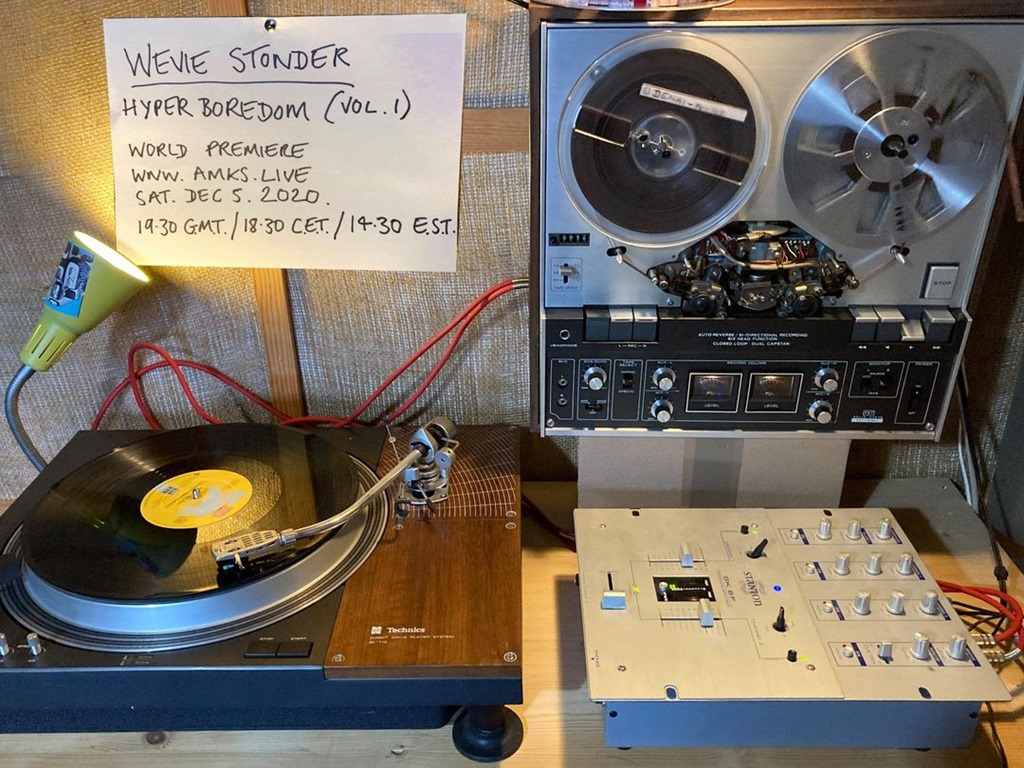
2020 has been cack. That’s pretty much a fact. And here we are in December after nine months in varying degrees of lockdown around the globe, and many of us are really starting to feel it now. So what do we need to top off this annum of cack? More cack, of course, courtesy of the prime purveyors – and possibly the sole exponents – of cack-pop, Wevie Stonder.

Founded by Al Boorman in Brighton in 1993, along with Chris Umney, Richard Sothcott, Henry Sargeant, Wevie Stonder’s bio is a combination of tall tales and out-and-out oddness, which pretty much summarises everything they’ve done. Sargeant turned solo and split for Germany, where he’s now massive – or at least Vast – while Boorman operates a ‘music and sound design’ studio called Wevie as his mainline, with a catalogue of adverts and TV credits, spanning Comedy Central, Adidas, Netflix, and even Disney. Hunter S. Thompson said that when the going gets weird, the weird turn pro, and these guys demonstrate that it’s actually possible to go pro without ditching the weird. And make no mistake, they’re way weirder than most.

So this landed with me, and I don’t even know what the fuck it is. It’s a digital file. Is it an album? A podcast? Kinda. A FaceBook post on the Wevie Stonder page announced that ‘While some have been working on a vaccine, Al’s been working on an antidote to 2020 as a whole. To hear the results so far, tune in to the Skam Records live stream’. And so here we have an hour of wild experimentalism – with the emphasis firmly on the mental.

It starts off comparatively sedately with some wibbly synths and some narrative delivered in a prim English accent reminiscent of British 1950s children’s TV shows, but rapidly explodes into a brain-melting collage of all kinds of chaos. Despite the fact I’m personally more than well accustomed to all kinds of

A mere two minutes in, notes are sliding, gliding melting, a sonic equivalent of Dali’s brie-like clocks, before scratches and scrapes collide with mainstream trance and snippets of 80s disco chart hits are cut and spliced with vintage averts and clattering industrial beats. Carpet tile infomercials and grinding techno are glued at completely wrong angles. It’s disorientating, and the juxtaposition of the mundane and the strange creates an experience which is perfectly unheimlich, straddling as it does the familiar and the not-quite familiar just a step or two out of step with one another. It’s this proximity that creates such discomforting dissonance. You almost know where you are with it… but then there are elements which are just so wholly inexplicable.

You begin to feel woozy. You know, you get, that there is no lens into the mind of another person, especially not someone who thinks differently… but what the fuck is this? Suddenly Trout Mask Replica sounds coherent and linear. The thing about Hyperboredom (Vol 1) is just how quickly the scenes cut. It’s dizzying, and often, those cuts aren’t remotely subtle, but as clumsy as they come, calling to mind the primitive collaging of the Justified Ancients of Mu Mu on 1987 and Shag Times.

Daytime YV snippets and wonky jazz collide in a messy mashup. ‘If you get bored of your own boredom, you experience what we call hyperboredom’ a soporific voice explains with almost a yawn. I’m thinking I’m more likely to throw up than suffer from any shade of boredom listening to this.

Whether knowingly or not, Hyperboredom belongs to the cut-up lineage that can be traced back to William Burroughs’ tape experiments of the late 50s and early 60s, and while the anarchic yet quintessentially English leanings may owe more to the Bonzo Dog band, the overall formulation is explicitly around methods of collaging, and the way different source materials play off one another. And in listening to this hour-long cut ‘n’ splice oddity, it’s impossible not to pick out or otherwise listen out for familiar voices and clips, and these in turn trigger recollections and avenues of reminiscence and contemplation, or otherwise the satisfaction of saying to yourself ‘ah, yes, I remember that’ – or frustratingly – aagh, that sounds so familiar, but what is it?’

And ultimately, what is it? It’s everything all at once, and one to explore, however much it might make you dizzy. The forthcoming album looks likely to be a cracker.

AA

129038816_10159179282120337_5309783341428705808_o

Gizeh Records – GZH100 – 4th December 2020

Christopher Nosnibor

I’ve followed Gizeh from their very infancy, but first encountered them via their offshoot microlabel, Loom, back in 2007: Her Name is Calla were tour support for iLiKETRAiNS and the only merch they had was a CD-R of ‘Condor and River’ in a handmade sleeve of corrugated card. Around the same time – this was the pinnacle of the post-rock explosion – I bagged a copy of Glissando’s Loves are Like Empires with an actual wax seal on the containing envelope.

I’ve since purchased, hoarded, reviewed, and obsessed over countless Gizeh releases over the following thirteen years, not least of all releases by worriedaboutsatan, Shield Patterns, Last Harbour, Hundred Year Old Man, and Aidan Baker… It’s been a joy to see the label grow while continuing to serve a comparatively small community of musicians, often cross-collaborating with one another, and operating within a broad yet overlapping field that sees their work complimenting and contrasting admirably. The fact that every release has felt special, and has placed a strong focus not just on musical quality, but presentation, with quality artwork printed onto heavy stock

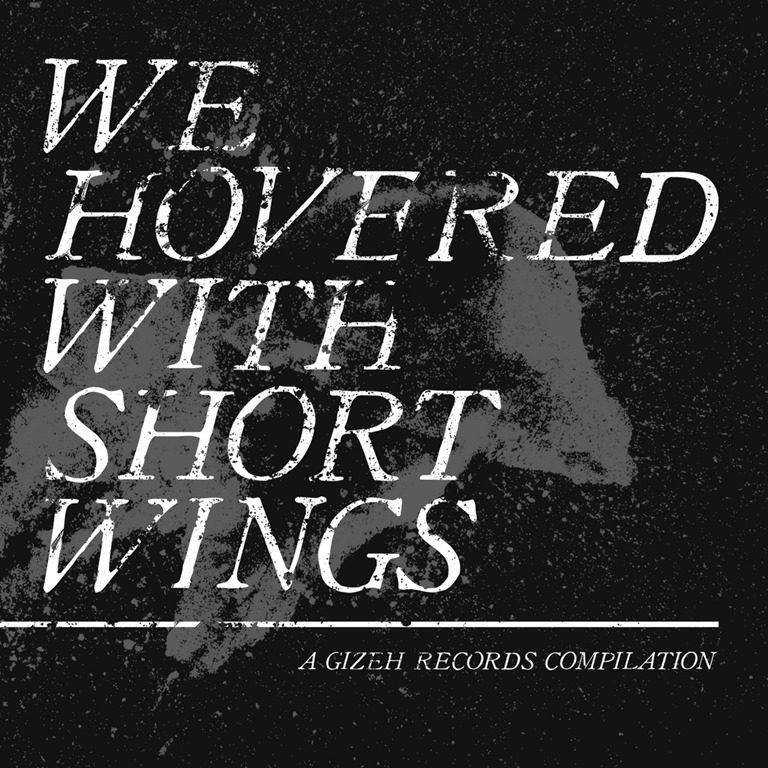
It’s the singularity and keen sense of label identity from founder Richard Knox which has been consistent throughout the eighteen years since the label’s inception, and that probably explains why their 100th release, We Hovered With Short Wings, isn’t a standard retrospective compilation – although it is a compilation, that instead presents twenty-one exclusive tracks from artists who’ve appeared on the label over the label’s lifetime. This is a really strong selling point: anyone who is a fan of the bands and /or the label, will already have the releases thus far, or be working on plugging the gaps in their collections, without the need for duplication.

The press release recommends this be filed under ‘Ambient/Post-Rock/Alternative/Experimental/Post-Metal/Neo-Classical/Drone’, and while most Gizeh releases recommend similar in various permutations, the joy of We Hovered With Short Wings is that represents all genres and pretty much all possible permutations of them too.

Disc one finds Some Became Hollow Tubes’ ‘No One is OK’ make the first plunge into heavy territory, away from delicate orchestral post-rock, although to focus on this is to perhaps overlook or minimise the range of the material on offer here, and the same goes for the second disc also, which opens with a deep, ominous swell of sound: Richard Knox and Frédéric D. Oberland’s live rendition of ‘Requiem for Laïka’, and passing into a rich arrangement of melancholy strings, picked acoustic guitar and soaring operatic vocals, it more or less encapsulates the label’s house style, but then Aging’s ‘Her Mercy’ turns bluesy, and it’s followed by the megalithic eleven-minute live rendition of ‘Ascension’ by Hundred Year Old Man, which brings the bleakest of bleak slow ambient metal. And it’s in this context that you really start to get the full picture.

This compilation isn’t about what they’ve released, but what they represent, and crackles, bleeps, and slow-rippling orchestral swells abound across the span of this immense and ambitious collection. Showcasing a broad range from ambience to doom, orchestral textures and layers of detail are characteristic features for almost all of the contributors featured here. Broad, sweeping strings that strike deep into the heart are Gizeh’s signature, and this is a label unafraid of backing art rather than promoting mere entertainment. That isn’t a matter of snobbery, but a measure of their confidence to stand apart and to cater to a small, niche, but devoted audience, rather than pursuing a larger market.

It’s an approach that’s clearly served well thus far, and this compilation appears to stand as much as a statement of intent as a celebration of achievements to date.

AA

a3078587874_10

Lamour Records / Purlieu Recordings

Christopher Nosnibor

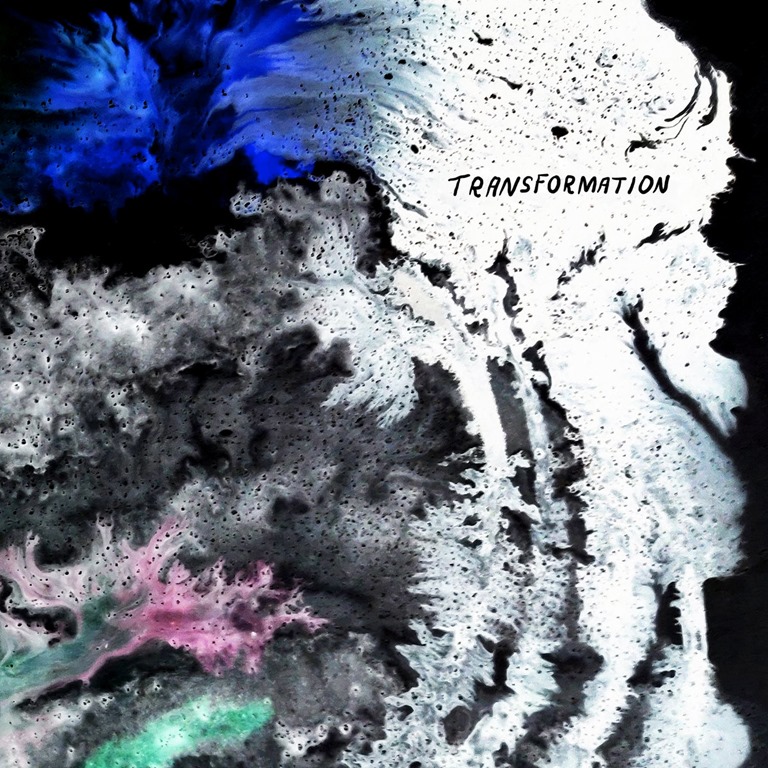
Spending most evenings immersing myself in an array of weird and wonderful and sometimes not so wonderful noise, this album came as a real surprise. The accompanying text does little to prepare the listener for such a gentle and exquisite collection of cinematic neoclassical compositions.

And yet the liner notes are precisely why Transformation is surprising, because all is not as it seems, explaining that ‘The album Transformation challenges the boundaries of human and machine, the physical and the artificial, the feasible and the impossible. The result is a thoughtful and true emotional storm where the piano forms the basis for an opposite pole between sound and playing technique. When the sound is real, it is played with inhuman technology. When played by hand, the sound moves outside the spectrum of the physical piano. What role does "lying" play for the listener?’ And what exactly are we listening to here?

It’s impossible to distinguish organs and organic sounds from synthesised or sampled approximations, and while the human / inhuman / orchestral /electronic sounds are impossible to distinguish – is that piano, performed by a musician with a real passion and a deep sense of drama, creating rippling waves of notes, or is it all so much programming? Listening to ‘Skeppsrå’, it sounds real. It feels real. I want it to be real. Can I therefore simply not believe that it’s real and accept it?

It’s not quite as straightforward as that. Once you’re aware of something, it’s impossible to erase that awareness. You want to feel as though you’re tapping into something real, otherwise it’s just muzak, film music made to fill a space and manipulate an emotional response to what may otherwise be a blandly-shot scene.

‘Tradition’ sounds like the product of synthesised sounds, while the brooding sonorous atmospherics of ‘Mekanik’ are simply other-worldly, while ‘Skogsrå’ is another magnificently supple slice of post-rock flavoured ambience that swirls and soars towards the stratosphere.

There’s no questioning that the elegiac solo piano piece, ‘Artikulation’ a beautifully poised piece, understated yet rich and immersive, and likewise ‘Klinga’ which follows. But are those ‘wrong’ notes simply artifice? Are they programmed in to create ‘imperfections’ in order to create a sense of humanity and therefore a greater ‘trust’ in the machine? Or is this an example of an openness about human error? I’m not convinced: why would any musician play to highlight their flaws? But this is the challenge and the dilemma: what and who do you trust?

Trust nothing and trust no-one: but do trust me when I say that Transformation is a fascinating and most listenable work.

AA

a2896102920_10

Panurus Productions – 25th September 2020

Christopher Nosnibor

The liner notes forewarn us of ‘a relentless free form noise rock onslaught from Dwindling’ with ‘Four tracks of wild soul purging absurdity extracted from strings, sticks and throat for your unsuspecting ears.’

But no forewarning could ever be enough to prepare even the most hardened fan of wild experimental noise shit for this frenzied sonic riot. Wretch – Memento is difficult to digest, and in the moment, it’s utterly bewildering.

Dwindling is Robert Glew (Drums), Giblet Gusset (Voice/Circuits), and Michael Waters (Guitar/Mix), and it’s a discordant cacophony from beginning to end. Mostly is a mess of feedback and clearing, clamorous arrhythmic percussion It all sounds like a drunken din, three people playing five different tunes all at once, all largely buried in feedback and reverb, at a rehearsal played in someone’s garage and recorded on a condenser mic on a 90s Walkman. The vocals are shrill, shrieking, demented banshee howls, ululations and barks, inhuman, demonic. Cathartic, and no mistake, but skin-crawlingly uncomfortable and otherly, it’s a sound that’s unsettling – that experience of unheimlich that unsettles the psyche – it’s identifiable as human, but it doesn’t feel quite human, and so instils a sense of unease that’s not readily articulable. Of course it isn’t: it’s that squirming, awkward sensation in your stomach that’s actually quite unrelated to the matter at hand. The tracks on here my well be a million miles from any sense of conventionality, but ‘Wretch – Memento’ takes discomfort to another level. Everything about it, from the impenetrable, tortured vocals to the nasty treble that never stops is uncomfortable.

‘Alphas Rind, O!’ is a mass of treble, wailing and ululating vocals pitched against a churning mess of noise, the sound of a kitchen blender and some ugly bass, and things get even more intense on the thirteen-minute ‘Axed RailKnell’, which in turn bleeds in to the seventeen-minute finale, ‘GARES’, a squall of noise that actually hurts.

It’s not hard to figure out how this found a home on Panurus: this is a label that trades in noise and has few limits, and if you’re on the market for extreme, Dwindling deliver it with Wretch – Memento. So who wants some more pain?

AA

a2577236056_16

Misanthropic Agenda – MAR056 – 4th December 2020

Christopher Nosnibor

It’s been a few years since I last engaged with Simon Whetham’s work, which at least up to a certain point had a certain preoccupation with geography, or least location. In a sense – albeit somewhat tenuous, that relationship to place remains as a backdrop of sorts to Forced to Repeat Myself, which documents a tour (remember those?) in 2018.

Perhaps the absence of touring has driven many artists to review their archival recordings, and on Forced to Repeat Myself, Whetham contemplates the way in which touring drives a tendency toward homogeneity in terms of the way each night’s performance is assembled. For rock bands and acts performing compositions of a fixed nature, this is part and parcel; the repetition of set lists and even, over time, between-piece patter and introductions. But for artists whose work is based on improvisation, repetition is undesirable – after all, at what point does repetition become something rehearsed and preplanned?

As the accompanying text observes, ‘One characteristic aspect of the touring experience that is not discussed often enough is the dilemma of repetition. Not repetition as a mechanism of the work itself, but as a tedious consequence of being obligated to perform night after night in quick succession. Generating a completely unique performance for each stop, even with the assistance of improvisation, is a laborious undertaking that consumes too much time and sanity, while adhering to a rigid set of rules leaves one open to both burnout and diminishing returns. Is there a way to split the difference so that both performer and audience are always engaged to the highest standard?’

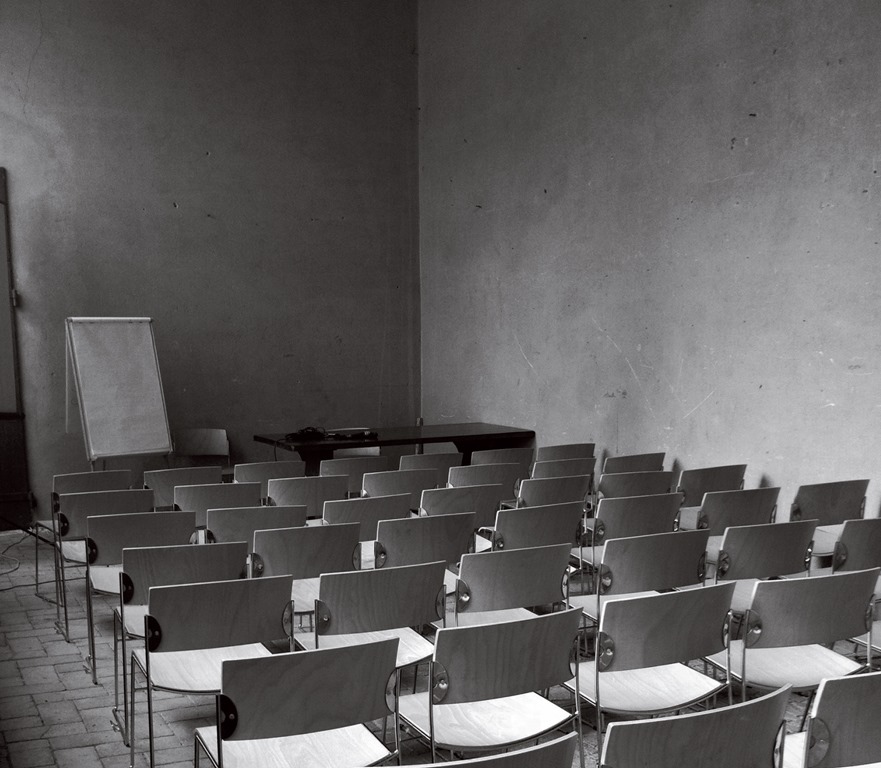
And so this is the context for Forced to Repeat Myself. As a document, it’s a curious one, and it may or may not be ironic that the cover art for Whetham’s ‘live’ album is a photograph of a venue with rows of empty seats. If it was indeed shot at one of the shows where Whetham performed on said tour or any other (and the presence of a flipchart suggests otherwise), it was surely during soundcheck. But then, history can be subject to so many manipulations, and the time and space begins to flake over the passage of the latter… the relevance of the track titles is unclear: they’re not dates, and this is not some kind of aural tour diary. Nor are the tracks really the same. Yes, Whetham does revert to certain tones and textures as one would expect from the same equipment operated within a more or less predetermined set length.

Random is only so random, and external factors invariably influence and direct the shape of things. That said, the same performance is never the same performance: different venues of different shapes and sizes, the kit run through a different PA, different audience responses… Life in lockdown may feel like perpetual groundhog day, but the reality is that we never live the same moment twice. No-one is more acutely aware of this than Whetham himself when he comments, “In each situation objects and materials unique to the space were incorporated into the performance setup and structure, generating sounds or resonating with them. And yet I could hear similar scenes, movements, even spaces. This repetition determined the dynamic of the composition, working with it and against it.”

And so we return to geography, location, in the most immediate of contexts. And over the course of the album’s eight pieces, the identifiable repetitions are few, as the same sounds are reworked, remixed, reimagined, and with each manipulation, however subtle, they’re a step or phase away from their previous version.

But over the course of the album we’re reminded just how strong Whetham’s ear is for texture and tone, and there is a spectacular abundance of crackling overdoing distortion, groaning drones humming clicking, bangs and scrapes and minimal electronic sounds colliding and vibrating against one another – hard and violently. The absence of audience sound and the up-close fixing of circuits mean that this doesn’t feel or sound like a live album, but it is, every inch, a hard sonic challenge.

mar056 digipak

Editions Mego EMEGO292 – 6th November 2020

Nineteen years on from the release of his first audio document, Russell Haswell’s latest effort is a typically wild collection of vintage synth sounds whipped into crazy cacophonous cocktail.

The objective titles of the release echo the statement on artistic commodity made by Public Image Limited on their 1986 release, which went by the titles Album, Cassette and CD (although technically, all three formats contain the album, making the vinyl edition something of a misnomer). In the digital age, and notably in the year which has seen UK vinyl sales hit a thirty-year peak, the format is an integral part of the experience.

As the press release notes, ‘12" channels the original role of the medium with 2 tracks of beats that present themselves in unpredictable ways. 12" also features the head shattering bonus cut, Always Check Their Instagram. LP cut at 33rpm allows explorations into broader territories with deep ambience running into twisted acid and splattered shapes bouncing amongst rapid fire rhythms’. The 12” single in the 80s and 90s did very much acquire a unique position, accommodating extended mixes and longer songs, and often an additional B-side.

That the tracks on 12" are exclusive to the format and not available on the digital release may deprive many listeners of the pleasure of three Haswell classics may seem rough, but on the other, is fair play, because context counts and the medium really is the message. Moreover, while I’ve amassed a hard-drive groaning with digital audio files over the last decade for review purposes, if I’m going to buy music, I’ll still always favour a physical format, despite increasing problems when it comes to storage, and, with vinyl, my medium of choice, actually getting to play it on account of the stereo and record collection being in the living room where the TV is, which is occupied by the family pretty much every waking moment.

So, for review I have just seven tracks, namely the set which comprises LP and Digital. In digital format, naturally: I tend not to get much vinyl in the mail for review these days, funnily enough.

The dark, dank rumblings of ‘Ambient Takedown’ register low in the gut, with heavy tones like a distant jet, and the sound hovers for a time that feels significantly longer than its two-minute duration. It does nothing to prepare the listener for the polyrhythmic drum-machine frenzy that of ‘r-809’, a ten-minute riot of tinny synthesised percussion which bounces along and around in hyperspeed. There’s a thrumming bass and insistent, repetitive squelching sound and there are moments when everything goes off all at once, and it’s as if someone dropped a match in a firework factory. It’s the first of two extended workouts, the second being the album’s closer, ‘End of Eternity’. It’s a sprawling mass of squalls and tweets, a foaming froth of sine waves and howling analogue torture that wows and flutters and goes on, and on, stopping, starting, fizzing and scraping churning and stammering wildly as it scrawls and scratches its way through the terrain of Power Electronics and headlong into an aural apocalypse.

In between, the remining tracks ae fairly concise, with only ‘The Bottom Line of Safety’ running past the five-minute mark. ‘Pulsar 2’ is an overloading crackle of noise, a wibbling modulation rendred unrecognisable by being cranked up beyond distortion: it’s the kind of gnarly mess one tends to associate with Haswell, and precisely what you’d expect from an artist who’s been a member of Consumer Electronics, both live and on record in recent years. If these pieces feel fragmentary, and vaguely frustrating in their lack of a firm form or obvious trajectory, then it’s fair to say it’s entirely intentional.

Some of it may sound like so much dicking about, but Haswell’s grasp on tonal contrasts – and beats – is firm: this is very much about exploration rather than entertainment.

AA

a3854325872_10

MNJ Records – 27th November 2020

Christopher Nosnibor

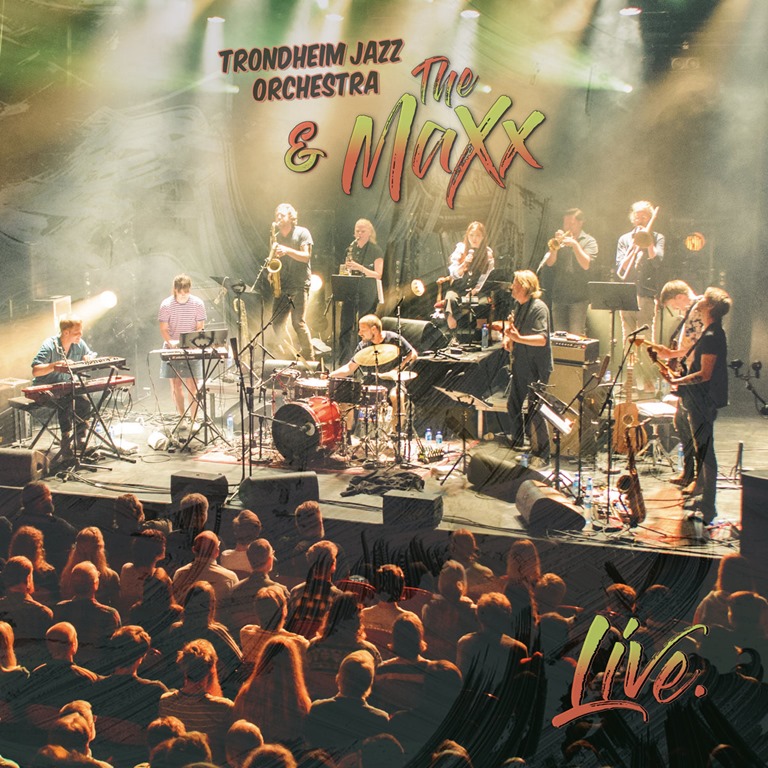
The title boils it down pretty much to perfection: this album is a document of a collision of two collectives, resulting in a performance featuring an 11-piece outfit with full brass section featuring two tenor saxophones, alto sax, trombone, and trumpet, in addition to a brace keyboards, a recorder and your conventional rock setup with bass, drums, and guitar. As the image on the album’s cover shows (overlaid with some terrible graphics), they filled the stage in the packed-out venue and as the audio reveals, they entertained the audience with around forty-five minutes of beguiling big-band jazzing.

Now, there’s jazz and there’s jazz…and there’s jazz. Classic jazz, played live in basement bars, I can dig, but doesn’t work in a recorded setting: to me, this is background mzk; experimental jazz that melts the brain and is eye-opening in ways beyond words is exhilarating but exhausting and best consumed in small doses; and then there’s that smooth, poppy, commercially-orientated Jamiroquai jazz that just blows goats. And then there’s this, which somehow manages to incorporate elements of all three, often simultaneously.

‘Orgelbå’ mashes world and jazz with some ebullient vocals and nagging cyclical motifs. It’s bold, energetic, and melodic in its bold swells of brass. It’s also quite accessible, verging on background… and it’s ok. Background has a definite place, but it is very much on the entertainment side of the line, opposite art. This isn’t about technical ability: both require equal skill, but commercial appeal and artistic merit are very much independent measures when it comes to music or, indeed, any creative art.

It all gets a bit nasty on ‘Time Taxi (Part 1)’ with some kind of bee-bop vocals entering the fray of a rather commercially-orientated melody. Ach, I say ‘commercially-orientated’, but what I suppose I mean is irritating mainstream jazz. When the pitch mentions ‘dystopian sci-fi’, it’s probably a fair assessment but not in the way it’s intended, and what starts out promisingly swiftly becomes something rather more awkward. But then, you can’t please all of the people…

AA

a3758635034_10