Archive for the ‘Albums’ Category

Christopher Nosnibor

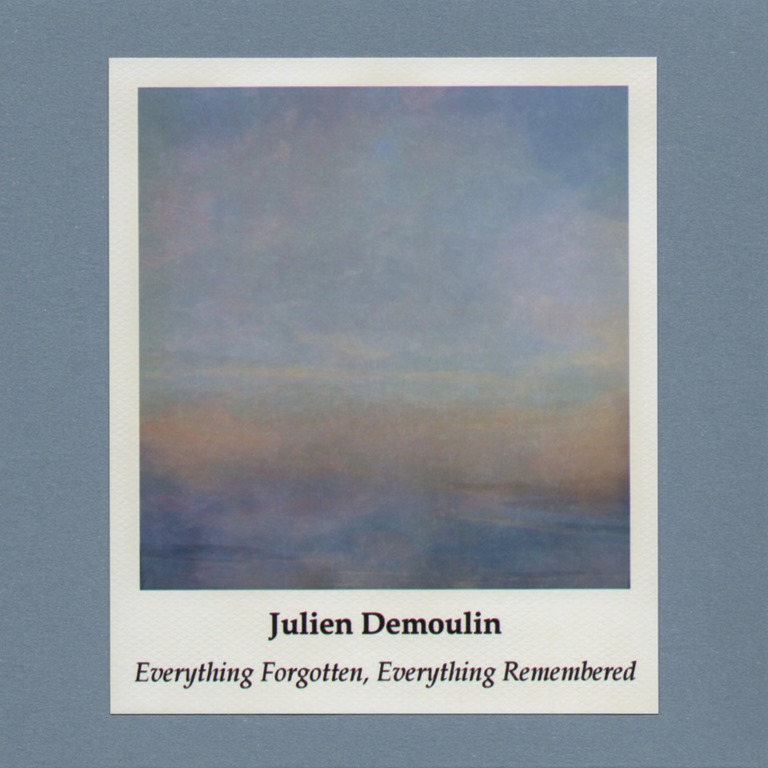
Pitched as being for ‘fans of artists such as Harold Budd, Stars Of The Lid and A Winged Victory For The Sullen’, Julien Demoulin’s Everything Forgotten, Everything Remembered is one of those releases that covers many bases, and straddles many forms. Demoulin also records as Silencio, and Everything Forgotten, Everything Remembered is his third release on Sound in Silence following Floods by Silencio in 2013, and his debut full-length, Loose Ends, in 2015.

It’s mellow, mellifluous ambience that leads us on the start of the journey with the slow-drifting spaciousness of ‘A Kingdom’. It’s a space out of time, and if you let yourself drift and wash along with the soft and subtle sounds, you can feel a sense of collapsing and self-reconstruction as the album itself grows and evolves. Everything Forgotten, Everything Remembered drifts and slows and is by no means memorable in itself. In fact, it’s no criticism that nothing much happens here; this is very much overtly an ambient work, whereby notes hover heavily and dappled turns hover in the air.

Demoulin’s collaborators – Frédéric Dufourd (one half of the lo-fi duo Donna), plus vocal drones provided by Alex Copeland (aka IA) and ethereal vocals by Maryam Sirvan (one half of the electronic duo NUM) are stealthy in their presence as the details echo in the distance of a mix dominated by broad ambient washes, interweaving drones and multi-tonal quaverings that hover and drift.

It’s a deeply relaxing experience. So relaxing, in fact that I nodded off during the first listen, and shortly before I did, I typed several lines of notes which were incomprehensible, incoherent bollocks that made no sense the following morning and some had to be cut from the review. This review. I type enough bollocks as it is. But – where I’m going with this is that Everything Forgotten, Everything Remembered will make you forget. It will induce drowsiness. And it’s in this context that the album’s title takes on a certain weight of meaning. The soft, amorphous tomes envelop the listener in a sonic bath that lifts the weights from the muscles and relaxes the muscles. You can’t help but slow your breathing, to unwind. And as the body relaxes, so does the mind.

You may well forget more than you remember while listening to this, but that’s ok. Forgetting is the gateway to a calmer life, and I would love to forget more.

Everything Forgotten, Everything Remembered is an accomplished work, and anyone who thinks creating vast, expansive works, is wrong and has never had to work with anyone or anything. It’s soft, it’s mellow, it’s grace personified. Whatever lies ahead will happen.
a2481255191_10

Cruel Nature Records – 3rd December 2021

Christopher Nosnibor

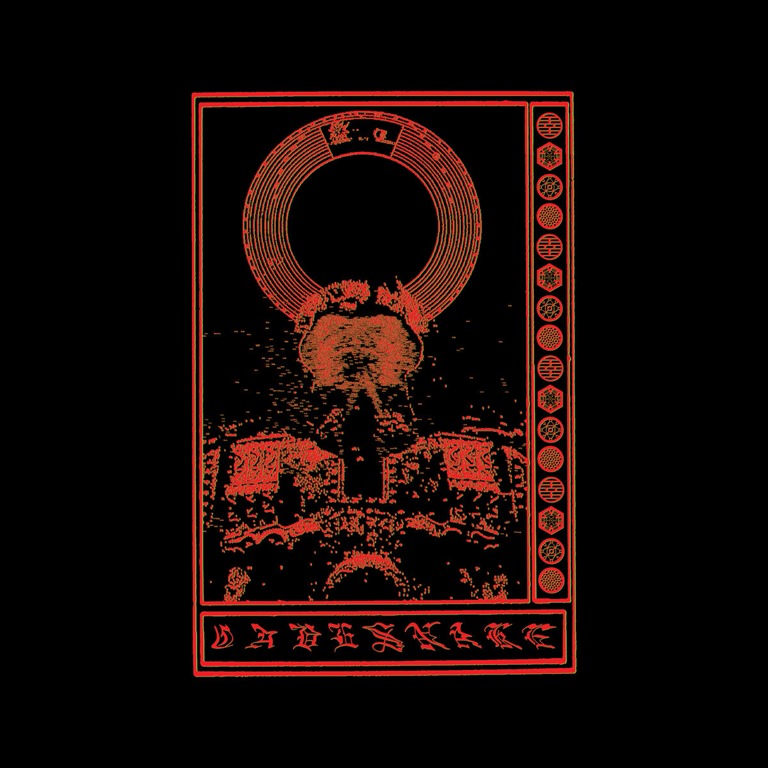
Cruel Nature’s release schedule for December is heavily snake-orientated, with Cavesnake’s eponymous album emerging on the same day as Mitternacht’s The Snake, although the two serpents are very different beasts.

For Cavesnake, the bio informs us that ‘Oxgoat and Sikander Louse came together through a shared love of ugly, blown out Black Metal, achingly beautiful ambient soundscapes, and deep space horror’, and that ‘They use the interstitial zone of Cavesnake to explore themes of loss, emptiness, ontological insecurity and the righteous acceptance of the impending apocalypse.’

It’s seriously fucking dark from the opening, with creeping fear chords and dark ambience drifting slowly across the horizon.

Cavesnake record straight to tape and through a rigorous process of layering, drenching samples in reverb, re-amping guitar drones through monstrous cabinets, they force their music to hang listlessly in a void space akin to an event horizon. And dark it is: ‘Pseudohalo’ may only be four minutes in duration, but it’s a bleak and oppressive opener, although it’s nothing to the whiplash black metal mudslide of ‘Bloodless Weapon’. This is murky, dark, heavy. It growls and grinds and churns and burns, and shrieks howling screeds of sonic lesions, an aural excoriation that scrapes and drones for almost nine minutes.

The ten-minute ‘Posture in Defeat’ is a swirling back hole, a deep, dark eddy of slow collapse, the pretty mid-frequency glimmers rent by earth-shattering sonic donations like planets colliding, while ‘Vipers Dance’ which stretches and twists a full twelve minutes is serpentine, dark, ominous, bleak. Without an explicit context, it’s for the listener to place and utilise this listening experience to suit their experiences, and for the most part, for me, I find myself nervous, anxious, uncertain, as every composition is dark, oppressive, the sound of impending doom. It’s thick, swirling, a dense swirling vortex of airlessness from which there seems to bee no escape as it envelopes your entire being. You simply cannot breathe; all you want to do is breathe. The snake is constricting now, your ribs and lungs are tight. Please…

The final track, ‘Fleshware’, offers no respite, a churning grind and whisper or multi-layered noise that offers no breaks, no moments of calm, only increased tension. It scrapes and screeds and snarls and growls, and near the end, a distorted, impenetrable voice speaks, rasping the album to a close.

It’s pretty heavy, and so intense. Prepare to be bitten.

AA

a1638098834_10

Cruel Nature Records – 3rd December 2021

Christopher Nosnibor

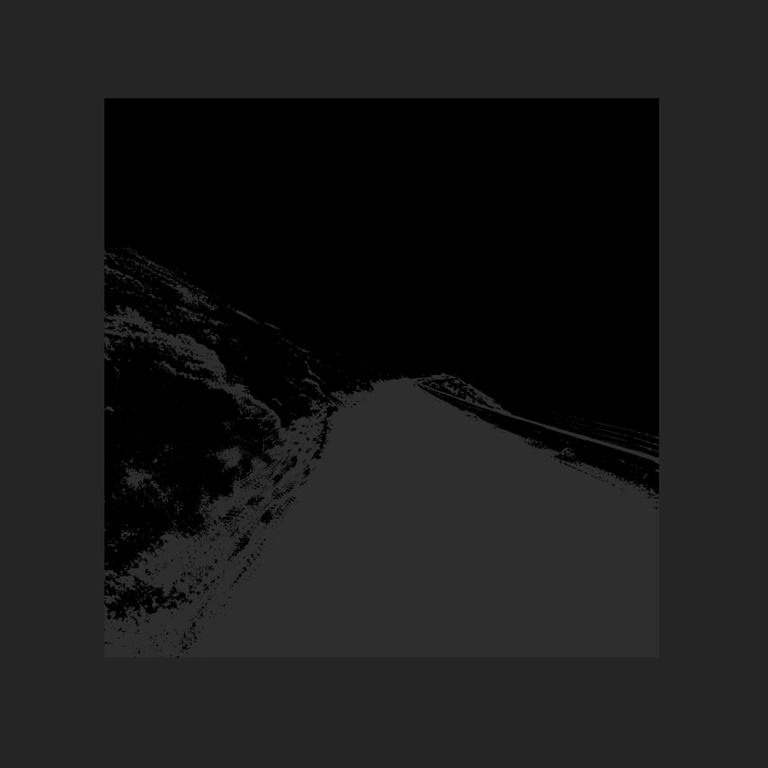
It may have been the year of the Ox in the Chinese zodiac, but 2021 seems to have been more the year of the snake, especially in politics. This snake, however, is one you can trust, if only to be treacherous, particularly in winter: as the accompanying notes explain, ‘The Snake was loosely conceived as a soundtrack to driving along the mysterious, historic route through the Pennines which connects his hometown of Liverpool with his childhood city of Sheffield, and as such forms a bridge between family and friends.’ It’s perhaps not entirely coincidental that it shares its title with the track by Sheffield legends The Human League, also in reference to Snake Pass which carries the A57 to an elevation of some 1,680 feet.

Mitternacht – the solo vehicle for one of the members of Liverpool band Rongorongo – captures the mood in nine compositions, and it’s not just a linear journey, but a journey through time, with nods to aspects of the road’s history as well as it’s geography and geology.

‘The Turnpike’ refers to the original name of the pass, the Sheffield to Glossop Turnpike, and locks into a krautrock groove and it sets the tone, with some dark beats and squelchy, muddy bass frequencies along the way. The Bleaklow Bomber is a US Boeing RB-29A Superfortress which crashed on the gritstone moorland of Bleaklow, killing all 13 crew in 1948, the remains of which remain visible, and it’s a reminder that man is always at the mercy of the environment, and can never truly conquer it whatever advances are made. ‘Nowt But Horizon’ reflects the more ambient aspects of the album, and conveys the vast expanse of untamed wilderness that is the Pennines. It’s bleak, unforgiving, as stretches of the Pennine way more than abundantly evidence. The complex beats are muffled, the air deadened and murky.

Clocking in at over eight-and-a-half minutes, ‘Snowstorm’ is a real standout, flickering, fluttering synth arpeggios rippling, skittering and drifting atop deep, booming swells of bass. Retro loops scratch and cut in and out, and as the layers build, so it becomes increasingly disorientating, a kind of aural onomatopoeia.

For any vintage vibes about The Snake, there’s also a timelessness, which is never more present than in the closing ‘Temptress of the Hills’, a subtle piece that, like much of the album, is built around looping repetitions and granular textures. It’s an evocative work, but one that you can also nod along and mellow out to, and as such, Mitternacht has delivered an accomplished and accessible album.

AA

a1638021615_10

1st December 2021

Christopher Nosnibor

Do you ever feel that the problems facing humanity right now are of our own making? That the phrase ‘scum of the earth’ applies to humanity as a whole, because we as a species have simply fucked everything up beyond all repair? Because the simple fact is, we have. What other creature destroy its own habitat as well as those of nearly all others? Parasites seek to achieve symbiosis with their host; viruses mutate to become more transmissible but less fatal; the aim is not to kill its host but to thrive and expand. Mankind is worse than parasitic, the most brutal virus that evolves slowly and in ways which are counterintuitive, namely to exhaust its host. Where do we actually go from here? The prospect of inhabiting Mars with colonies because we’ve fucked up the world we were born to seems beyond insane.

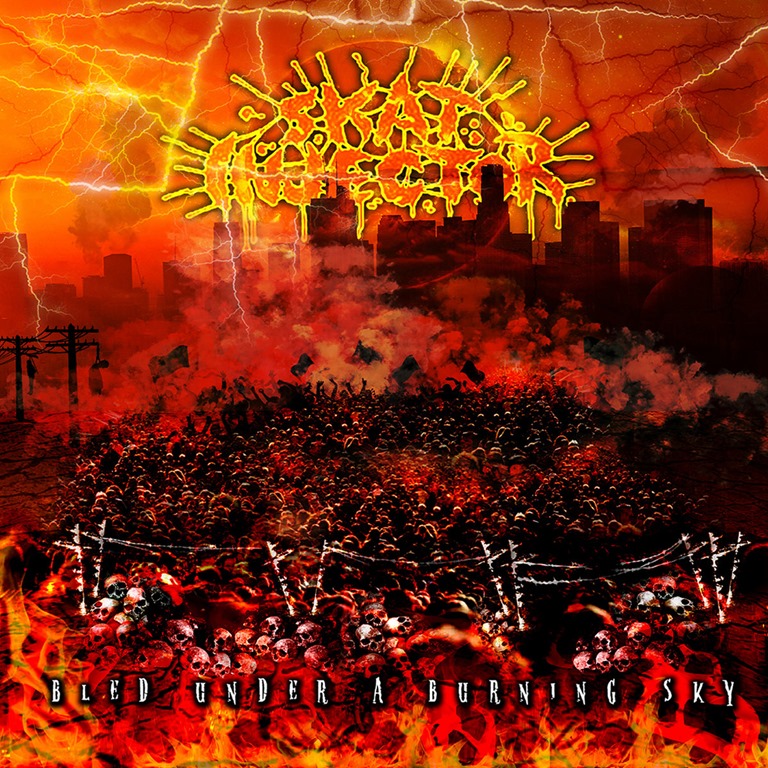
The shock-factor-monikered Skat Injector are – as you’d likely expect – upfront in their positioning, pitched as serving up ‘Grindcore-inspired speedcore and a diatribe of anti-human propaganda because that’s what we deserve for what we’ve become.’ They have a deep sense of self-loathing and misanthropy, and it’s abundantly cleat on this dehumanised, inhuman blasting racket that’s dark, deep, glitchy, subterranean, demonic, wrecked on every level.

They rail against ‘Willful [sic] ignorance, habitat loss, animal abuse, global ecocide, global warming, environmental pollution, overpopulation and many other attributes of a leeching narcissistic race which needs to live within its bounds’. They shouldn’t have to; this is how life should work.

On Bled Under A Burning Sky, Skat Injector pound and rage and rage and pound, as grating, raw-threated vocals spit, snarl, and grind against a backdrop of frenzies percussion. The lyrics aren’t always – or often – decipherable, but the sentiment is clear.

‘All Tomorrow’s Genocides’ is like a grindcore Prurient, with soft, spindly synths slowly spinning misty swirls of fear chords around pulverizing drill-like beats. Explosive doesn’t come close to a fitting description.

‘An Earth Cleansed with Flame’ goes full harsh electro and is straight up Chis and Cosey trance backing, at least at first, manifesting as aggressive dance with harsh vocals, while the six-minute ‘The Future Sound of Suffering’ brings the suffering and it’s painful in its crunching brutality. ‘Vanishes Rapidly’ is constructed around explosive dynamics, and flips from near ambience to the firing of an AK-47 directly into the ear. It’s brutal and it’s savage, but also very much the ultimate expression of the industrial era, and ‘Obsidian Dawn’ only amplifies and intensifies. It fucking hurts.

The album is dominated by beats so hard and fast they sound like drills and nail guns, this is industrial and its hardest and most industrial, the sonic equivalent of applying a power drill on hammer setting to the eyeball.

At almost fifty-two minutes, it packs a lot of firepower, a lot of punch – so much so that it leases you panting and pounded – in a good way, of course, assuming you have at least a faintly masochistic streak and appreciate music that’s as much about testing your endurance as it is coaxing and massaging the pleasure zones with a battering ram and a taser simultaneously.

The second CD – another fifty-three minutes – of instrumental and extended versions of the album’s tracks is certainly not one for the passing listener or casual fan, and it’s perhaps not essential even for moderate fans, although the nine-minute extended version of the title track is certainly a nice pain-inflicting bonus.

AA

a0672851917_10

Room40 – RM4163 – 3rd December 2021

Christopher Nosnibor

Field recordings are rarely something one would consider ‘contemporary’, although if you think about it, they invariably capture a moment in time in some way or another, be it the morning of the dawn chorus or the grind of machinery which is firmly post-industrialisation; the sounds committed to tape all document history in sound.

Ian Wellman’s latest release is quite specific in its focus on present times. It is almost impossible to avoid the pandemic; it has, after all, affected all of our lives, and in myriad ways. As the accompanying text states, ‘If this past couple of years has taught us anything, it is that to hold someone closely is not something we may take for granted. The bonds of friends and of family are tenuous, as tenuous as the world that we find ourselves in.’ While most attention has understandably been given to the vulnerable, the bereaved, and the sufferers of long covid, there have been long—terms and slow-evolving effects on everyone. And this is what Wellman soundtracks with subtlety and care here.

The parenthetical ‘(Police Helicopter Activity Increased – Jul 2020)’ is brief, but it’s impactful. On the one hand, it’s a simple snippet of the sound of rotors; on the other, it’s the kind of conglomeration of low-flying helicopter buzz that makes you duck and look up and feel paranoid: police helicopters hovering or circling overhead always do, right?

The final moments of ‘It Crept into Our Deepest Thoughts’ bursts into shards on abrasive noise in the final moments. It’s on ‘The Toll on Our Daily Lives’ that Wellman really encapsulates the struggle. The first four minutes are dislocated ambience, which reflects the general sense of detachment and distance, but the last minute is dominated by a rising tide of noise, a surging swell. And it speaks because it really is the sound of swelling tension and anguish. The reality is that living through this is not something that belongs to a ‘model’, there is no fix by means of re-engagement. This resonates because it speaks to and of the building anxiety, and it builds because maintaining that level of alertness, that level of fear, actually has a cumulative effect in real terms, and we’re simply not designed to process life in the now. There is nothing normal about this, old or new, and ‘The Toll on Our Daily Lives’ encapsulates this perfectly, both in its title and the sonic smog that ambulates broodingly, again growing in density and becoming more oppressive and heavy and harsh as it progresses. You feel not only the weight, but the tension. It’s real, it’s palpable, and it’s a direct reflection of life as lived.

The interludes, too, are so very visual and evocative: a cock crows and what sounds like rainfall and passing cars crackle and splash on ‘(Ash Falling on Power Lines – Sept 2020)’ (the ash of wild fires burning), and there’s a post-apocalyptic feel to ‘(Wind Against Decaying Bus – Jan 2021)’, and they all combine to create what the blurb describes as ‘a devolving diary of unsteady moments and the assurance of change as the one constant in our collective times’.

‘As The Beast Swallowed Us Whole’ veers between ominous rumbling and near-ambience and surging, cracking textured distortion that borders on noise, and there is nothing comforting about this album. Even the final track, the optimistically-titled ‘The Light at the End’ is woozy and disorientating, and evaporates into a crackle of static that ends abruptly, and feels more like the light being snuffed out. You want to be wrong… but life… it’s a killer. Swear all you like, but whether or not it’s going to be okay remains to be seen.

AA

a0173304686_10

Southern Lord – 26th November 2021

Christopher Nosnibor

Long after the heyday of the legendary Peel Sessions, BBC sessions remain something to be revered and something special. Even back in the 80s and 90s, when Joh Peel’s show was the place to gain exposure as an underground band, and a Peel session the pinnacle of prestige for any act outside the mainstream, the likes of David ‘Kid’ Jensen and Janice Long were also notable DJs who invited bands to record live / studio sessions, and while R1 has since become the domain if wall-to-wall major label slop without a single window for anything remotely alternative (that died with Zane Lowe’s departure in 2015, and while his sycophantic arselicking was nauseating, he did at least provide a platform in an otherwise mainstream space), 6Music, recently salvaged from decommission continues to uphold the tradition, thanks to Mark Riley (formerly of all-time Peel faves The Fall) and Mary Anne Hobbs. Hobbs(who quit R1 in 2010 to mentor students at The University of Sheffield and stepped into 6Music a couple of years later) in many ways represents the last bastion of the old-school, in a good way: the veteran DJ is more attuned to less obvious music than many DJs a fair bit younger, as her offering a slot to Sunn O))) indicates.

The beauty of BBC sessions is that they offer acts studio time to use as they please. Many crank out versions of tracks off their latest album, but others explore new territory, either with works in progress, random covers, or something else entirely. Sunn O))) elected to record a whole new album. And so it is that the follow up to Pyroclasts is an extension of the work from that previous album (plus one from its predecessor, Life Metal (2019)) – of which Pyroclasts was in turn an extension of sorts, having been recorded during the same sessions. They certainly know how to stretch a concept: the thing with Sunn O)) is that for all of their impenetrable wall of seriousness, which corresponds with their impenetrable wall of sound, there is a sense of wryness, a sense that they’re more than self-aware of their mythmaking and stylisation, and that delivering it all with not even straight faces, but faces obscured by cowls, isn’t entirely serous. By this, I mean high art and humour aren’t mutually exclusive. Sunn O))) make serious music in a serious fashion, and are even serious about it, but maintaining character throughout is integral tom the wheeze. And so in keeping with maintaining both the style and the form, they grind out longform pieces that drone interminably and gnaw away at the intestines in an uneasy tonal probing.

Having toured with the band as a support on the UK leg of their tour, Anna Von Hausswolf joined the band in the legendary Maida Vale studio and lent vocals, adding an ethereal quality to the low-end drone that continues for all eternity.

Immediately, we’re dragged into Sunn O)) time. Most radio sessions comprise three or four songs, with a duration of maybe fifteen minutes or so in total. Because most radio shows last maybe three hours, and a feature slot of fifteen to twenty minutes is proportionate. But with Sunn O))), most tracks are half a show in duration, and the first track on here, ‘Pyroclasts F’, an excerpt of which was revealed in November, is comparatively gentle, drifting semi-ambient work, combining heavy guitar drone and feedback, and of course it’s never-ending. Well, fifteen minutes in duration, to be more precise, as its counterpart Pyroclasts C#.

It’s not until ‘Troubled Air’ starts and that the truly intense, gut-shredding sensation hits. It’s five ambient minutes until the monstrous power chords strike the knell of dark doom, and we’re in classic Sunn O))) territory. Growling for an uncomfortable eleven minutes on Life Metal, this performance extends the piece for over half an hour, with downturned chords struck at An impossibly slow rate. The earth turns between chords, the sustain extending light years. The ominous organ notes trill and quaver like mist creeping in a horror movie, while the doomy chords torture the bowels and lower intestine and blossom into blooming cathedrals of chthonic darkness. It’s a sonic black hole from which there is no escape, and it grinds and billows and the listener is slowly sucked under by the relentless swirling currents.

Metta, Benevolence captures Sunn O))) at their minimal best, conjuring enormous, sweeping soundscapes of the densest, darkest, most relentlessly dark drone.

AA

a3821764350_10

By Norse – 26th November 2021

Christopher Nosnibor

Hildring is the second album by Wardruna vocalist Lindy-Fay Hella with musicians Dei Farne. It’s been a long time in the making, with ‘Taag’ dropping as a single back in the summer of 2020. But what is time when the world is off its keel and the world is spinning at a different pace, one so rapid we’ve lost touch with our innermost selves? Lindy-Fay Hella and Dei Farne connect with a past world, a time before technology: not necessarily a more primitive time, but a time in which there was a closer connection to earth and nature, and also to the inner self, the core spirit.

‘Hildring’ is the Norwegian word for mirage, and it’s fitting, for despite the solid, tribal percussion that dominates the sound, paired with solid, chunky basslines, the remaining musical elements are fleeting, flitting, mellifluous, transient, impossible to grasp a firm hold of.

That isn’t to say the album is all airy atmosphere and no substance: quite the opposite, in fact, there’s a sturdiness and density to the richly layered compositions, and it’s a very fine balance of the seemingly separate elements, namely the solid, and the ethereal and airy. The drumming is immense, ribcage-rattling, rousing. There is a wonderfully rich, earthy quality to Hildring. In keeping with Wardruna’s quest to explore Norse cultural and esoteric traditions by delving into ancient history and mythology, so in this collaborative project Lindy-Fay Hella continues that focus. The sound is modern, but the album is deeply evocative as echoes of the ancient resonate forward through every note, and you feel the aura of generations past around your being as you listen. It resonates in ways beyond expression, beyond lived experience. It’s deep, and it’s powerful, and strikes a resonant chord from the off with the percussion-led title track, where soaring vocals and a driving bass melt together amidst spacious waves of sound, and it sets the bar and the form.

In something of a shift from the overarching style, ‘Insect’ feels rather more overtly electronic, with skittering glow-worm flickers flitting hither and thither, but it’s still packing a rare emotional intensity.

‘Compositionally, ‘Briising’ is minimal; drums, bass, sweeping, droning synth, and incidental cymbals accompany a balanced, inwardly-focused vocal performance. There’s a menacing, growling vocal that is again otherworldly, and if not scary, then unsettling. ‘I return to fire’, he repeats in a dark, gravelled monotone.

‘Taag’ goes big on the expansive sound, and it’s sweeping, immense, immersive. It’s bordering on the grandiosity of post-rock, and propelled by urgent drumming. Elsewhere, the sparse, looping synth of the appropriately-titled ‘Otherworld’ is relentless and resonant.

Throughout, Lindy-Fay’s vocals are outstanding, and the album showcases her remarkable vocal dexterity. Often light and airy and floating and soaring above all layers of human perception, Hildring is magical, mystical, beautiful, majestic, and powerful. There, I managed to not to use ‘epic’!

AA

GDOB-30H3O1-001.pdf

4th September 2021

Christopher Nosnibor

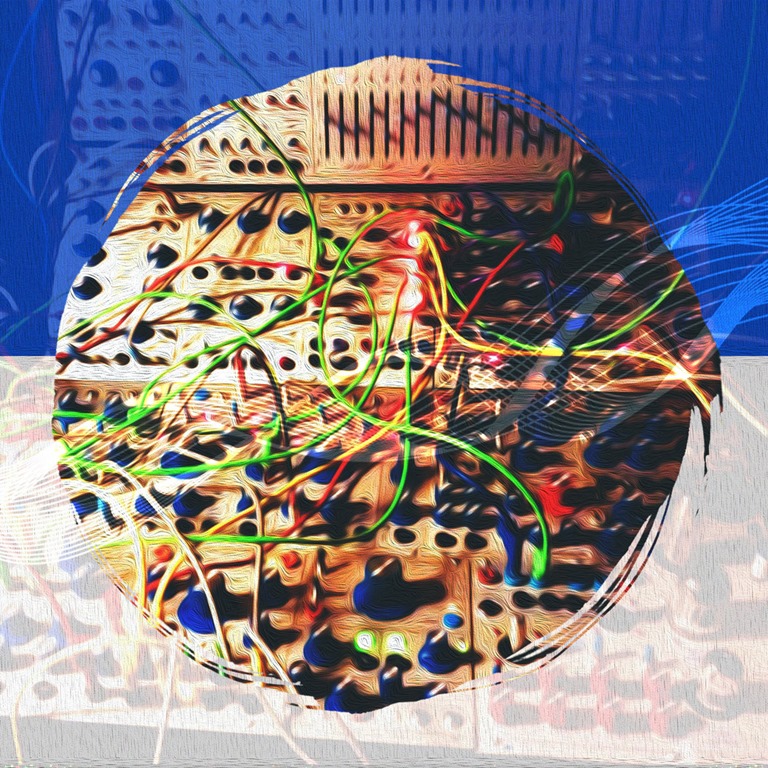
It’s small wonder that there is a huge affection for modular synths, because quite simply nothing else creates the same range of sounds. French label Modulisme is devoted to all things modular, to the exploration of modular synthesis. It’s operated by a small team consisting of Philippe Petit (A&R), Yan Proefrock (Founder, administrator & artistic director), Guillaume Amen, Cédric Languin, and Bas Mantel, and elements of the contents of their website are telling: the header for the links section suggests that ‘To keep our virus spreading Modulisme is relayed thru the following alleys’. William Burroughs references aren’t the only literary and theoretical allusions, and there’s an interesting formal styling to the titles of the label’s releases, which document artist sessions for the label, which is clinical and library-like. Subtitled ‘the birthday session,’ Modulisme Session 051 2nd Year BD commemorates the second anniversary of the label’s existence.

Petit explains that for this release, he elected to ‘« compose » a session instead of improvising’, and explains how he ‘followed the idea of drift as a privileged practice of opening up to the new, the one defined by Debord’… and ‘Following the spirit of situationist irreverence and creativity I hope to stimulate a dérive towards a closer listen…’

In doing so, Petit explores the full range of his modular gear on this outing for an even ten pieces, which include four behemoth workouts spanning in excess of seven minutes, including the monumental seventeen-minute ‘Une villégiature Cosmétique’ which spirals in as the second track.

There’s a lot of bibbling bubbling, frothy, squelchy synth sound on offer here, and much of it is quite palatable; but then, in exploring that range, Petit lands on the grinding unease of ‘Driftin’ to EcsTazy’ which strays into metallic discombobulation and discomfort as it serves up eleven minutes of metallic scrapes, buzzes and agitated drones, but-ups, samples, loops and overlays. It’s neither pleasant nor comfortable, and if on the one hand it’s a thrown-together random work of frivolousness and near-flippancy, it’s equally a reminder that endless ruptures can be difficult to navigate, and ‘drift’ ultimately translates as entirely non-linear and consequently at times difficult to digest and difficult to process.

The two ‘Psychographical Pivotal Point’ pieces may be but brief interludes, but they both pack in an abundance of warping rhythms and general abstract weirdness. No, it is not all in your mind.

Listening to Modulisme Session 051 2nd Year BD is like swallowing a lot of food without chewing, and some if it is hard to swallow. That’s by no means a criticism. Art is supposed to be challenging. And this is most definitely art.

AA

a1561580880_10

Despot – 3rd November 2021

Christiopher Nosnibor

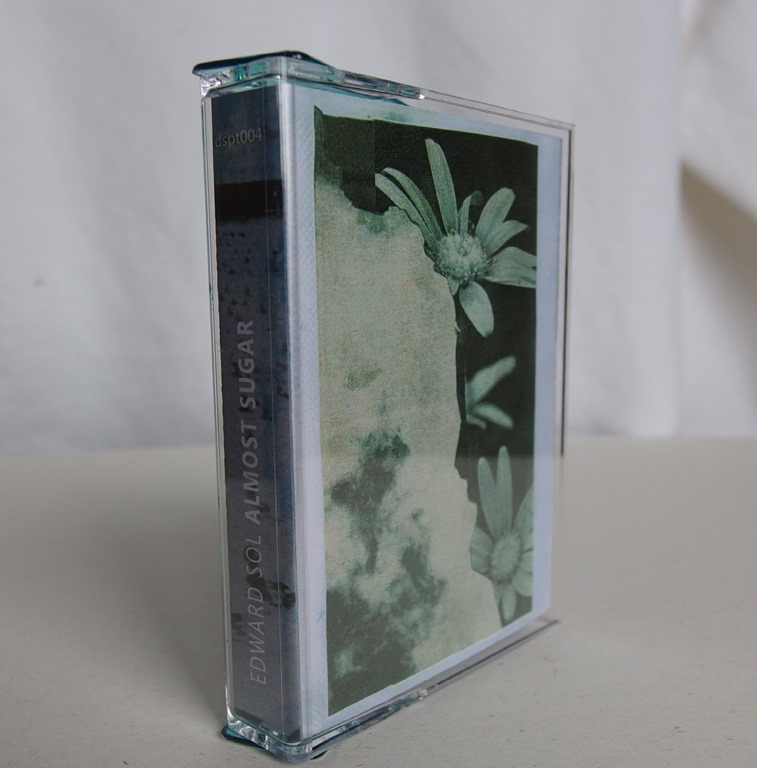
Ukraine continues to reveal itself as having a throbbing underground scene, producing some really high-quality nuggets of experimental and exploratory music. ‘Almost Sugar’ is one of those short albums, occupied with a single longform composition on each side of a cassette or 12” record – and with the wait times and increasingly prohibitive cost of producing short runs of vinyl die to myriad factors including but not exhausted by the pandemic, the cassette is becoming ever more the format of choice.

The cassette is something of an unexpected format to experience a renaissance, largely on account of some hipsterish nostalgia for a format that formed an integral part of the formative years for so many of us. It’s very much a rose-tinted hue: memes about pencils (I always used a Bic biro myself) fail to convey the anguish of a chewed tape that had spooled out, and never mind the hassle of endless hours rewinding and fast forwarding to locate specific tracks, and so on. Much of the cassette experience was centred around frustration, and it was simply something we accepted because that was the format we had, and the only recordable (and re-recordable) one at that. Still, it would be wrong to downplay the joy of the compilation (we didn’t all call them mixtapes back then). But also, there are now practical reasons for the return to the cassette as the physical format of choice, and that’s largely down to cost and availability.

However, as Neill Jameson recently wrote in Decibel Magazine, supply chain issues may soon prove to dent the demand for the cassette again, and while on a practical level, I can’t say I’m too disappointed, on a principal level, I very much am: the two sidedness of the format is closest to replicating the vinyl experience, and the limitations of length have a close relationship to duration of recordings. Format does matter; physical mediums to matter. Necessity isn’t only the mother of invention it’s also the driver of discipline. Two fifteen to twenty-minute sides require considerably more focus than a continuous seventy-two minute expanse.

Title track ‘Almost Sugar’ is fifteen minutes of bubbling analogue exportation, with a whole lot of hissing static and polytonal drones and hums combining to for a slow-twisting, heavily atmospheric work. It’s a high concept piece, constructed around the way in which the sugar crystal ‘changes its structure under any impact’. Consider this fact next time you’re stirring your tea or coffee, or tossing a couple of spoonfuls over your morning cereal, or maybe whipping up a cake batter.

‘Superdry People’, the piece which occupies side two, is darker, murkier, the sound of a slumbering beast awakening, an ominous dungeon rumble emanating from the some subterranean chamber or even the bowels of the earth. According to the accompanying notes, ‘Superdry People’ is ‘a play about «superdry people», who are heading to the pool, apparently to «soak off». Splashes of some substances, mechanisms, fragments of secular talks’, but the title simply makes me think of tossers in trendy expensive coats, and as a London-based brand feigning the exoticism of being from Japan with it’s ‘Superdry JPN’ logos and shit, it’s one that inspires ire that extends to the people who purchase their gear. I hope that this yawning sonic abyss is the conduit which will suck all the real Superdry people into its vortex, never to return. We can but hope.

But while we’re waiting for the tossers to evaporate, this is a perfect album to immerse yourself in.

AA

a0739924440_10

Cruel Nature Records – 3rd December 2021

Christopher Nosnibor

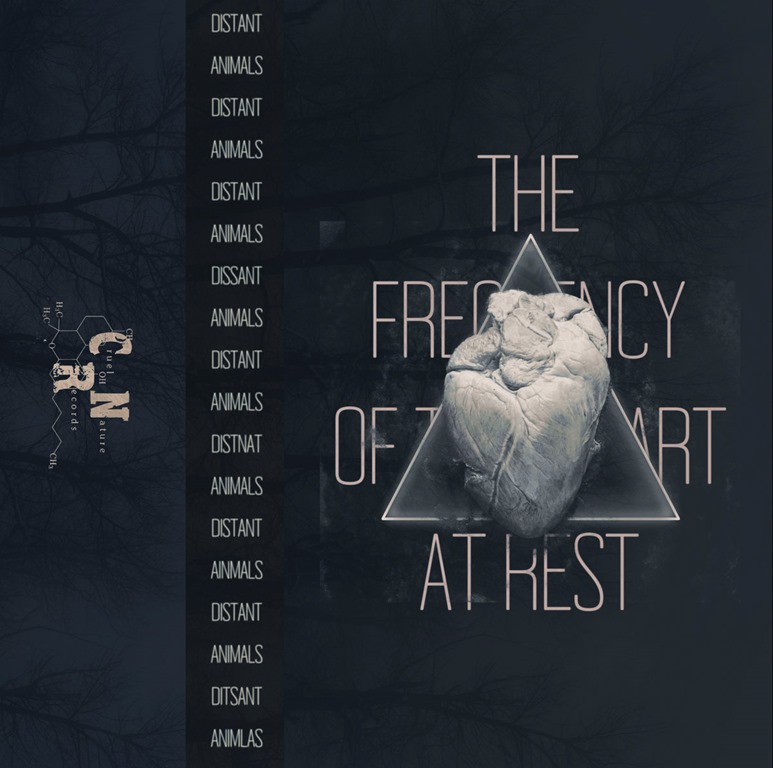
This is one of those albums where the approach to its creation is based around process and technical elements, and the title is not an abstract concept, but precisely the theme around which those technical aspects are centred. Specifically, as the accompanying notes explain, the album uses ‘a custom tuning system’ ‘based upon multiplications of the frequency of the human heart whilst sleeping’.

Or, indeed, not sleeping, as we learn of the composer’s own battles with ‘extreme sleep loss – waking as often as every 15 minutes throughout the night for a period of almost 3 years’ and how ‘the work encapsulates the haze of the perpetual tired’.

It’s relatable, as a near-lifelong insomniac myself, with my sleeping difficulties beginning at the age of five. And not sleeping is both traumatic and debilitating, and sleep deprivation can do awful things to the mind. The paranoia and hallucinations are real. ‘The Cats are Hiding and So Am I’ is a title that hints at this disconnection from the world that goes beyond the mind.

And so The Frequency Of The Heart At Rest is a curious compilation of sounds and sources, fleeting flickers of extranea in the mix beside powerful strings and dramatic drones, at times bordering on neoclassical, others something more industrial, others still folksy, and yet others still approaching ambience. In drawing on an array of sources, and then adapting and mutating them by means of overlays, adjustments of tape speed, this is very much a collage work, and the meticulous attention to detail – the way the sounds interact with one another, the slowing and the reverberations that contrive to create a rare and unique depth and density – is clearly the work of an artist who’s at once focused to the point of obsession, but also has found that point of detachment whereby the creation of such art becomes possible.

The result is incredibly powerful, in that it speaks to those who have occupied this space, where sleep and waking merge into a continuously blurry, bleary, fugue-like state. At times wistful, melancholic, or reflective in a more uplifting way, and yet at others bleak, The Frequency Of The Heart At Rest feels very much like an exploration, a work which strives to navigate this semi-real, half-lives, partially-cognisant existence.

‘6am, The Bathroom, Screaming’ is dark, ominous, heavy beats echo thunderously and captures the essence of the album, and the experience perfectly. No explanation as to why, what, if any story there is behind it, and it may be that the reason is unknown, but the piece transitions from bleak claustrophobia through a spell of ambient tranquillity before blossoming into a passage of soaring, string-led post rock with conventional percussion. The head is not so much a shed, as a cavern of chaos. The whiplash static storm of ‘The Hallways at Home’ is a synapse-blitzing crackle of electricity and fizz of pink noise over which gusts of nuclear wind drift with a desert emptiness. ‘Mealtimes at the Madhouse’ is Chris and Cosey in collision with Nine Inch Nails, a disorientating and hypnotic sketch built around a pulsing synth bass and thudding beat, while the final track, ‘Psalm of the Sleepless Child’ is an extended composition of dark shuffling and rumblings: it’s bleak, and feels very much like the soundtrack to being lost in an anxiety dream from which you can’t wake up, before veering into very different and positively Krautrock territory.

The Frequency Of The Heart At Rest is by no means restful, but is a work of rare intensity, one that prompts palpitations through its woozy, off-kilter other-worldly disorientations. It’s a restless jumble of tension and fatigue, where nothing makes sense, and it’s truly wonderful.

AA

a0578214927_10