Archive for the ‘Albums’ Category

LP/DL Editions Mego eMEGO238

8th September 2017

Christopher Nosnibor

The album’s blurbage tells us that ‘Shit & Shine’s sidestep from percussion led bunny rabbit rock ensemble performance based glee to ultimate heavy fools of the sticky dancefloor remains one of the more inspiring turn around’s in recent years’. They’ve certainly come a long way from the percussion-dominated noise rock racket of their formative years, but Craig Clouse continues to demonstrate a tireless appetite for pushing both himself and the listener.

Some People Really Know How To Live picks up where the 2015 album Everybody’s a Fuckin Expert (also on Editions Mego) left off, and the cover art even serves as a companion piece of sorts. Musically, it combines elements of disco, electro, old-school industrial and classic experimentalism to forge a sound that’s murky, dense, vaguely nauseating and still strangely danceable.

Warping, woozy drones taper in and out against bumping bass and a whip-crack vintage Roland snare sound on opener ‘Behind You Back’, before ‘Dish 2 Dish’ brings the groove. Dark and vaguely dubby, it’s also angular an abrasive, hectic and blustery, with some big bass tones. Its lack of sophistication is somehow a virtue, in that there’s a directness and spontaneity that gives it real punch.

Samples are lobbed in here and there, adding to the dislocation of shivering synths and engine-like growls, atonal incidentals and the fractured, warped grooves which abound. ‘Notified’ brings heavy clattering percussion and low-down grindy bass. With a time signature that’s unpredictable to say the least, it’s disorientating and head-pummelling. Elsewhere, the fucked-up funk of ‘Girl Close Your Eyes’ bumps and grinds its way through the stomach to make you shake. With beats that are propulsive providing the power behind a twisted sonic attack that’s more repulsive, Some People Really Know How To Live is some good shit.

AA

eMEGO238_front

Southern Lord – 29th September 2017

Christopher Nosnibor

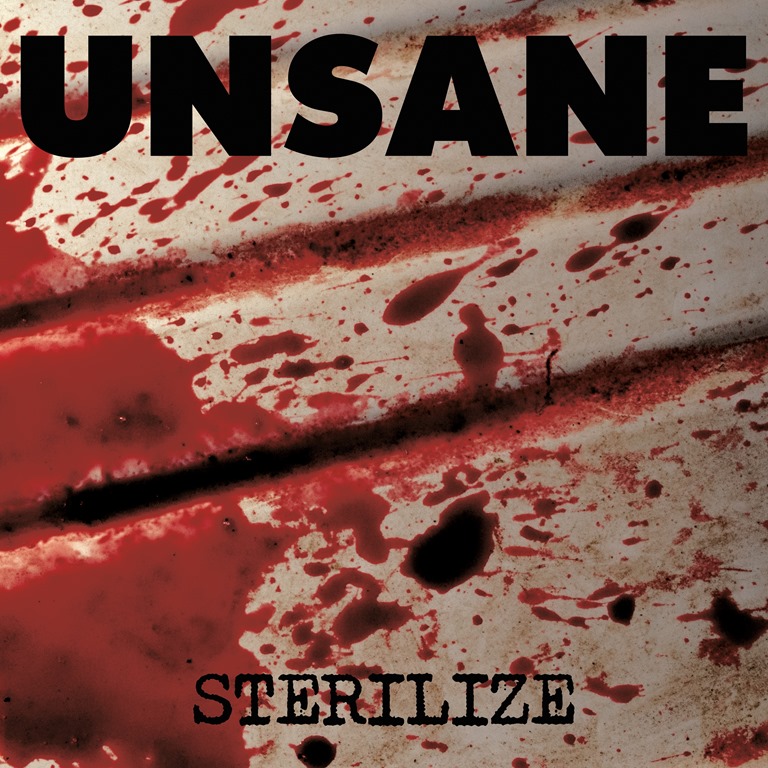
It’s been five years since Wreck appeared on Alternative Tentacles. So what have Unsane been doing in the intervening period? Gazing at their navels, taking up yoga and discovering a serene spirituality as a means of dealing with the anguish of life in the modern world? As if. They’ve been distilling their brutal rage into even more intensely bleak slabs of sonic nihilism. And, naturally, it’s housed in appropriately unsubtle, gore-soaked artwork. Unsane’s album covers are nothing if not distinct: while so many metal album covers which display hematomaniac tendencies are highly stylised and revel in the intended shock value, Unsane’s covers are all the more shocking by view of their clinicality, resembling crime scene photos than works of art. This is in many ways true of the music itself: there’s a functionality, a bluntness about it, and no sense of there being any indulgence or show.

Everything about Sterilize is stark, uncompromising, and connotes post-industrial, post-everything society, the dehumanising effects of merely trying to exist in the capitalist world where everyone gets pushed further and further down for the benefit of the few. It’s the soundtrack to life being sucked from the soul, the sonic encapsulation of desolate fury.

The grey steel assault of ‘Factory’ sets the tone and tempo: screeching feedback whistles through the grey, grain of the guitars and sludgy bass. From thereon in, the ferocious howls of anguish and packed in tight, back-to-back.

The song titles are also functional, direct, descriptive. Again, there’s no fluff, and little joy, to be found around ‘We’re Fucked’, ‘A Slow Reaction’ or ‘Distance’. Everything is paired back to the bare essentials and compacted for maximum impact. This includes the blues-based sound that defines Unsane: it’s crunched up, compressed, stomped into submission, meaning that while there is a certain swing to it, it’s limited to the most concise and precise form.

‘The Grind’ is aptly titled and brings a thunderous deluge of guitar; ‘Aberration’ is built around a simple four-chord trudge; and ‘No Reprieve’ sums up the album as a whole. You don’t listen to Unsane for variety, either across a given album, or their output overall. You listen to Unsane to vent, to experience a relentless viscerality. There’s something almost self-flagellatory about listening to an Unsane album in its entirety. At a certain point, the initial sense of catharsis is replaced by a crushing claustrophobia. This isn’t to say it’s an unpleasant experience, but is indicative of the effect of such sustained intensity. It’s as exhausting, mentally and physically, as the exertions of daily life on the treadmill, a punishment as reward.

When they slow the pace a shade, the weight is turned up, and when they hit a groove, it’s explosive and blistering. The tripwire guitar that stretches its sinews over the sludgy trudge of ‘Lung’ only raises the tension, and closer ‘Avail’ draws a heavy curtain of screaming anguish on proceedings with distorted vocals tearing across a rumbling bassline and savage guitars.

There’s a desperation and urgency about Sterilize which ensures that it crackles from beginning to end. Everything seethes, spits and scrapes and there’s not a moment’s relief. It’s this intensity which makes Sterilize as strong as any Unsane release. It’s mercilessly harrowing, but is ultimately satisfying in a perverse, sadistic sense.

AAA

hi3000x3000RGB

Macaque Records – 21st August 2017

Christopher Nosnibor

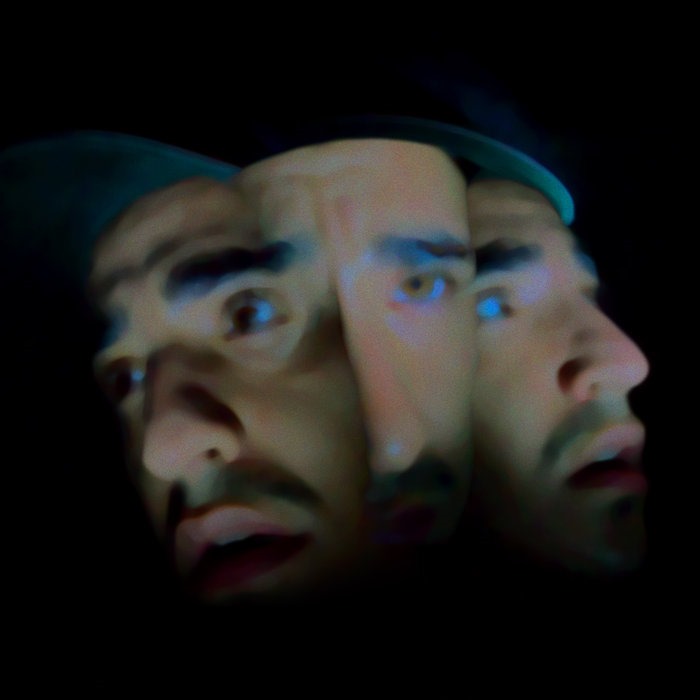
Gilman Mom is the musical vehicle for Dominic Francisco (which has a star quality of its own). As Dominic explains, Manifest Destiny ‘plays heavily with texture and field recordings melding with emotional chords and words in attempt to convey my mental transformation from a vulnerable state to a confident one’.

The text which accompanies the release is almost uncomfortably direct, and it seems appropriate to quote in full:

I want it to feel like a troubled night walk of self-reflection that blossoms into realization.

This album isn’t for you so much as it is for me. I needed a way to document my circular thought process. Around and around until I stumbled upon developments. It’s not for everybody but it’s what I felt in my head when I thought about you for so long after that night. Nature surrounded me almost perfectly as this unfolded; you left me in the rain and by the time that storm ended I had found myself again. With this piece I want to remember who I was and how I got here. However fragile we were and unfit for each other, I gained so much insight into who I am from what was us. With your inadvertent help I’ve entered a state of definity. This is my journey to that place.

It’s clear from this that Manifest Destiny originates from an intensely personal place and one feels almost voyeuristic by simply being in its presence, without even listening to it. Should you listen to it? It sounds more like a work of therapy following a sequence of breakdown and recovery. Is it even intended for the ears of the casual listener?

In contrast to the write-up, the music the album features is uncomfortably indirect. Rumbling piano, distant discord that rolls like thunder way, way off, an unsettlingly sparse piano and muttered vocal snippets, the words inaudible, congeal into a dense mass of sound which offers little by way of shape, form, or tangibility.

At times barely there, eddying arabesques of synth contrails surround distorted, hushed vocal snippets, the actual words unintelligible. Gloopy tremors shiver amidst subaquatic hums and bubbling drones. Clicks, clatters and muffled extranea ebb and flow in the sonic swamp.

Any sense of linear progression, narrative flow, or emotional shift over the sequence of the album’s eleven tracks is difficult to determine: it feels more like a murky sonic miasma, slowly pulsating through a fog of introspection, apart from the glimmers of light briefly afforded by ‘Fool’s Gold’ at the mid-point. This is in no way a criticism: as an experience in ephemera, a vague allusion to sequence of events and emotions largely unknowable, the context matters less than the recordings themselves. And these are deeply atmospheric, sparse yet subtly immersive compositions, which exist in a realm of detachment, a world between worlds.

AAA

Gilman Mom - Manifest Destiny

Southern Lord – 29th September 2017

Christopher Nosnibor

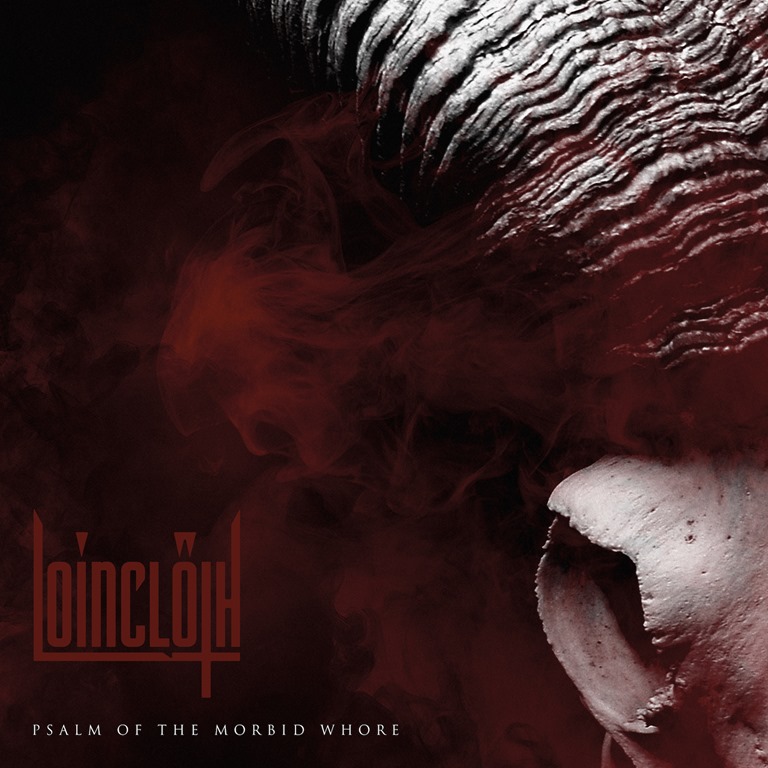
The arrival of this album in my inbox gave me pause for thought. Their debut album, the brilliantly-titled Iron Balls of Steel was a full five years ago. I reviewed it, and raved about it. And I realise I’ve been doing this for quite a while now. Over that time, bands – great bands, shit bands, mediocre and forgettable bands – have come and gone. And now, Loincloth, whom I praised for their ‘megalithic chunks of undecorated, heads-down behemoth guitar riffage and earth-shuddering rhythms hewn from colossal slabs of basalt’, are entering the catalogue of bands gone.

The press release includes the following statement: “Loincloth is no longer a live band, so this record is our final offering not only to the great horned one below, but to the committed ladies and gentlemen of the Cloth.” Still, what a sign-off. Never mind the ladies and gentlemen of the Cloth: the nine shuddering riffcentric sonic barrages that form Psalm Of The Morbid Whore are terrifyingly heavy, dingy and gut-churning enough to leave the listener close to touching cloth. As such, while their departure is sad news, the delivery of this awe-inspiring musical gift is a cause to rejoice for those who like their shit heavy.

The press release pitches Psalm Of The Morbid Whore as ‘packing nine new instrumental passages of white-knuckled twists, and by-the-throat percussion, into a half-hour’.  But this fails to convey, even slightly, the grungey riffs which jolt and jar, shuddering through a stop/start chug of thick distortion. Between the blastbeats and thunderous culminations of bass and rhythm guitar twist sinewy lead guitar lines that spread and unfurl like foliage spreading in a mystical forest. Also emerging from the swamps are fleeting moments of prog-hued illumination.

It also overlooks the progression between Psalm Of The Morbid Whore and its predecessor. While the tracks are, on the whole, short, there are a number of longer workouts, with the final cut, ‘Ibex (To Burn in Hell Is To Refine)’ running to almost eight minutes (twice the length of the lengthiest piece on Iron Balls). And, significantly, the tone has shifted, from the slightly jokey or flippant-sounding ‘Underwear Bomb’, ‘Shark Dancer’ and ‘The Moistener’ of the debut the to the subterranean savagery of religious / pagan coloured titles like ‘Necro Fucking Satanae’, ‘Pentecost Dissident’, ‘Bestial Infernal’. Psalm Of The Morbid Whore is dense, dark, and heavy, and while in some respects less claustrophobic than its predecessor, it feels more focused, less metal, more grunge, and also more groove orientated.

But most importantly, Psalm Of The Morbid Whore retains the dirty, unpolished primitivism worthy of a band named Loincloth.

aaaa

tp0009c_SP_Gate_Cover

24th August 2017

Christopher Nosnibor

Although he’s released two solo albums under the guise of Wiekie, Adam Weikert is perhaps best known as the drummer of Her Name is Calla. This first release under his own name marks something of a departure, and given its inspiration and evolution, it’s perhaps not unreasonable to say that Weikert’s decision to release an album as ‘himself’ represents a stripping away of the layers of artistry to reveal a work which is more directly personal.

The blurbage contextualises the release as follows: ‘Born years ago as response to cope with a traumatic event of his youth, and revived years later after ill health forced Adam to temporarily stop singing – USIDOH showcases the scattered fragments of poems alongside happenstantial Neoclassically themed works, creating a unique and personal experience.’

Attempts to unravel the meaning of the album’s title, which I take to be more of an initialism than an acronym, during the writing of this review bore little fruit of use. The poems – which are contained in an 80-pagebook which accompany the physical release – are considerably more instructive as to the true meaning of the project. That isn’t to say they’re in alignment with the album’s eleven (instrumental) tracks, because the poems – plural – essentially blur into a single, drifting longform work which has its own shape and tempo, as well as illustrations which augment rather than impinge on the experience. That is to say, the two elements of the project are complimentary rather than directly parallel. Nevertheless, the poems are absolutely integral to the overall experience, rendering USIDOH more of a multimedia work than simply a musical piece.

The words are weighty and the presentation is not only highly visual but intrinsic to the execution. Just as the music on USIDOH draws on aspects of the postmodern and the avant-garde within its broadly neoclassical framework – Wiekert conjures a vast array of atmospheres and emotions through the use of abstraction and semi-ambient field recordings and found snippets in conjunction with mewling saw, sweeping strings, brooding piano and nagging banjo – so the poems pull on high modernism, postmodernism and concrete poetry to further accentuate the lines, disparate and abstract yet unified by virtue of emanating from the same mind, over a period spanning the six years from 2005 to 2011.

‘Die Puppe’ weaves in and out of experimental atmospherics, before ‘Vardøhus Festning’ forges an imposing, imperious mood. ‘Sloth’ is a simply beautiful piano composition, which rolls and drifts mellifluously. There’s almost a playfulness about ‘A Constant Repose’, which first aired via YouTube aired a couple of months ago, the nimble piano work affecting a lightness of mood. But beneath it lies a subtle undercurrent of nostalgic melancholy. And if anything, it’s this emotional layering and the depth of nuance and detail which makes USIDOH such an appealing and compelling work, musically.

As a complete package, there’s a lot to unravel. USIDOH is very much art: Wiekert has poured everything into this, and it shows. There are times when it’s not easy to penetrate, but that in itself is reason to set aside some time to explore a work that multifaceted, deep and resonant, and achieves this without slipping into pretentiousness. There’s no question that USIDOH is ambitious, but Wiekert succeeds in delivering something which conveys the vision.

USIDOH

Dark Tunes – 9th June 2017

Christopher Nosnibor

Confidence in a band’s abilities is a good thing. And in context, this is impotent: history shows that even in 1981, Andrew Eldritch was convinced that The Sisters of Mercy were an important band. He’s been proven right, but could very easily have been forgotten and disappeared into the musical morass of the post-punk era, leaving a handful of interviews with one more egotistical tosser languishing in obscure and long-forgotten zines.

Greek goths The Black Capes aren’t lacking in confidence, as their bio indicates: ‘Lamentations about the fading glorious times of gothic culture may very well come to an end with the arrival of The Black Capes. Where great icons such as Type O Negative, The 69 Eyes or The Sisters Of Mercy have been unchallenged in the gothic Olympus, finally there is a worthy successor from Athens.’

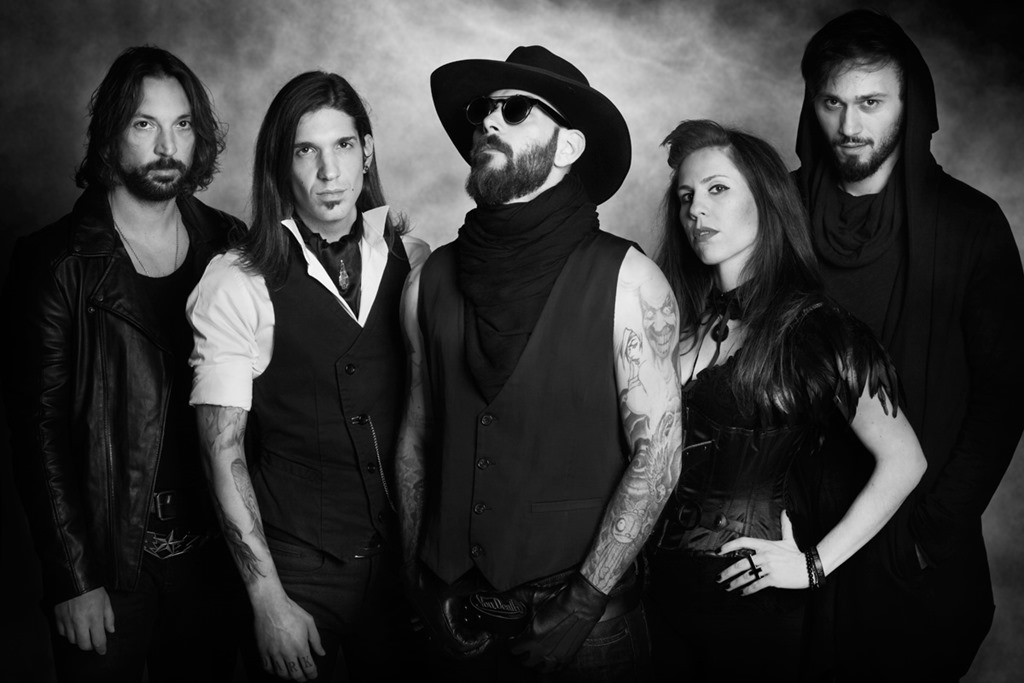
But with the opening bars of ‘Sarah the Witch’, I’m hearing technical goth-metal overtones and catch a strong whiff of cliché (and I’m not going to comment on the press shots). Much as I admire their balls – metaphorically – I can’t entirely buy into the hype. All These Monsters isn’t a bad album by any stretch, and against chunky, chugging guitars, it packs in a proliferation of nagging, hooky choruses.

theblackcapes1

‘Now Rise’ packs the chunk of Killing Joke and a claustrophobic verse dominated by a thick bass with some roaring metal vocals which tear into the verses. Elsewhere, the picked lead guitar work on ‘New Life’ is pure First and Last and Always era Sisters, but the throaty vocals are more Fields of the Nephilim, and the overall effect is diminished by its obvious drawing on pre-existent sources, in that it boils it all down to a derivative, Sisters of Murphy type amalgamation.

But The Black Capes are very much mistaken if they truly believe they’re the saviour of goth. They’re too much straight-ahead rock for a start. As such, it leans very much more toward Type O (are they really considered ‘icons’ of ‘goth’?) and equally sits more with the mid to late 80s second wave as represented by rock-orientated contemporaries like Gene Loves Jezebel and Rose of Avalanche than post-punk progenitors like The Sisters or Siouxsie. Ultimately, All These Monsters is adequate, but uninspired and unremarkable, and seems to largely miss the connection with the roots of the genre the band claims to be so keen to reinvigorate.

BlackCapes_cover

Hallow Ground – September 2017

Christopher Nosnibor

Hallow Ground is one of those niche little labels that exceeds in catering to a small but devoted audience. The quality is pretty consistent, and while you know broadly what you’re going to get from anything in their catalogue, there’s nevertheless a sense of challenge with each release. And so it is with The Expanding Domain, which is pitched as showcasing the way in which the producer’s ‘fascination with ambient becomes a blank slate upon which [he] and his collaborators serve shimmering Trance-derived melodies, murky Industrial grooves and all-consuming Harsh Noise attacks.’

If it sounds like a difficult and disparate blend, it is, making for 23 intense minutes, but it works. ‘Cold Bloom’ may be brief, but moves through a succession of quite contrasting passages, from ominous ambient rumbles and analogue tweets through expansive orchestral strikes lifted straight out of 90s clubland. As such, it condenses all aspects of the album into under two and a half mind-punishing minutes.

On the one hand, it seems like a bad idea and waste of energy to become overly concerned with genre definitions and intersections. On the other, The Expanding Domain seemingly less invites and more demands that type of scrutiny.

‘Lil Puffy Coat’ – which I’m taking as a playful reference to The Orb’s ‘Little Fluffy Clouds’ amalgamates dislocated Krautronica with shades of abstract industrial to forge a sinister expanse of liquid concrete: grey, heavy, but tactile, its form transitional, not yet set firm, and therefore difficult to define.

The volume and aggression are ratcheted up on the heavily percussive attack that is ‘Fear in Reverse II’, the pounding barrage of metallic hammering reminiscent of Test Department providing the perfectly painful foil to the howling discord that screeches above it.

The title track is definitive: with Dominick Fernow (aka Prurient) and Death Grips drummer Zack Hill contributing additional percussion and Dirch Heather bringing the modular synths, it’s a perfect hybrid of delicate, semi-ambient electronica, gnarly, dark ambient that broods and churns, and throbbing industrial. The result is immersive and unsettling, an album somehow at ease with its incongruity which is melded into a perversely cogent form.

Dedekind Cut – The Expanding Domain

Christopher Nosnibor

It seems as if this release is designed to cause maximum confusion. It’s called 2014 and is being released here in 2017. It was ‘originally’ released by German label Attenuation Circuit on 8th August 2017, and has been – so far as I can make out – independently released by the artist himself, with the subtitle of Attenuation Circuit 2017. Given the album’s contents, it sort of works.

The accompanying blurb – which is in fact culled from a review published on August 12th (is this chronology messing with your orientation yet?) is a curious mix of hyperbole, unusual metaphors and theoretical reference points:

‘Gintas K will shower the ears with a whole lot of incredible data streams, all clustering electronica bits and bytes that drop down in a wild way. As if data communications had been flushed through the shower head, tumble down and ending up together in the drain. Strangely when the tap is closed and these electrodes have calmed down in their dripping ways, they actually form beautiful sounding music… well, music might not be the word for all to say, but it does feel like there is a lot of beauty to be discovered in these busy data dada streams.’

As much as the quirkily playful application of abstract digitalism does clearly it comfortably within the framework of Dadaism, it’s also a work which readily aligns itself to the postmodern, in the way that it effectively recreates the experience of information overload, and does so in a fashion which is both nostalgic and retro (the sparking circuits are more dial-up than fibre optic) and executed with a certain hint of parodic pastiche. At the pace of progress as it stands, even 2014 feels like a point of nostalgia on the cultural timeline: a year which predates the vote for Brexit and the accession to power of Donald Trump, it may be a year with little going for it and which has little to mark it as memorable, but many would likely concur that 2014 stands in a period which is better than the present.

2014 is certainly one of Gintas K’s noisier and more challenging releases. While Slow was a subtle and quite quiet, delicate work, 2014 is far more up-front and attacking in every respect. It’s also more difficult to position, in that it absolutely does not conform to simple genre categories like ‘ambient’, instead straddling vague brackets like ‘electionica’, ‘industrial’, and ‘experimental’.

Hurtling from the speakers from the get go streams a barrage of gloopy digital extranea, a glissando of chiming binaries and a dizzying digital wash that flickers and flies in all directions, an aural Brownian motion of beeps and bleeps.

The eight-minute ‘max’ starts very much as ‘min’, with a full three minute’s silence, before a brief crashing facsimile of some metallic kind of percussion makes a fleeting appearance. There are sporadic clunks and scrapes and minute glimmers of higher-end frequencies, but for the most part, the silence of space dominates the clutter of sound.

‘5 zemu ir max2’ sounds like R2D2 having a seizure, with occasional blasts of distortion and random thuds punctuating the frenzied stream of bleeps. It’s ten minutes long. And I have no idea what the title – or indeed any of the titles attached to the individual pieces – stands a s reference to, just as the overarching 2014 has no obvious connection to the seven tracks it contains.

Crackled a gloops and bloops and whiplash blasts of static, crashes like cars impacting at speed and jangling rings all congeal into a digital mush which bewilders and disrupts the temporal flow. 2014 is disorientating, and not just in the immediate moment, but in terms of a wider placement and sense of time / space.

Gintas K - 2014

Tenacity Music – 12th May 2017

James Wells

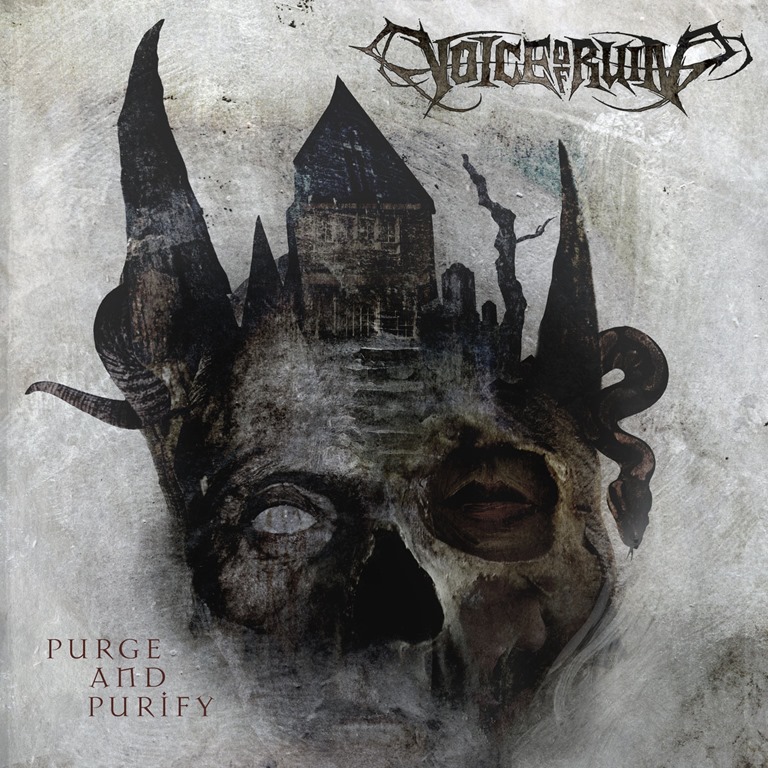
Now into their eleventh year, Sweden’s Voice of Ruin throw down their third full-length. And they don’t mess around. They’ve shared stages with the stage with bands like Hatebreed, Children Of Bodom, The Black Dahlia Murder, Caliban, Fleshgod Apocalypse, Entombed or Sylosis.

I’ll admit that I’m not intimately familiar with all of these bands: any reviewer who makes like they know every touchtone act for every band going is a liar. But I’m more than qualified to report that this is brutal: the first track, ‘Disgust’ starts with the title being spat with howling distain before the barrage of instrumentation blasts in full-throttle, and it sets the tone and the pace nicely. There are fast and furious guitar solos in abundance, but they’re pegged against some seriously dense and dingy rhythm guitar and a powerhouse rhythm section which keeps everything pinned down with a major emphasis on the low-end and the relentless chug.

On ‘Horns’ they throw in some neat post-metal detailings, while ‘I Confess’ has some theatrically gothic overtones. The spiralling technical work which dominates the dense riffery and rage which define Purge And Purify make for an album that has a lot to keep the listener engaged.

Voice Of Ruin – Purge And Purify