Bleak Recordings/Division Records – 22nd September 2017
Christopher Nosnibor
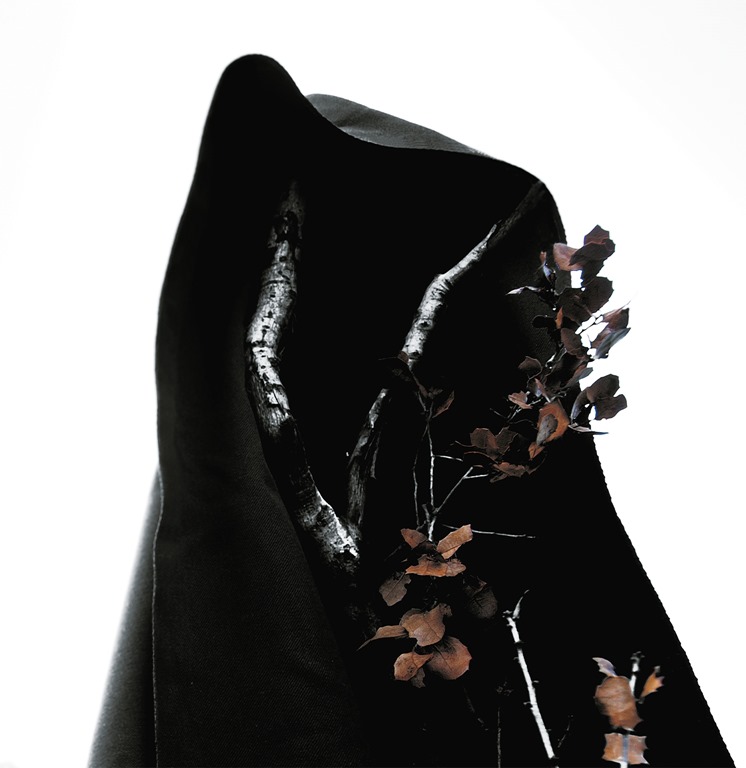
Black Earth is pitched as and expansion on their previous releases, and as ‘a sonic mammoth that pushes their music even further into new dimensions of heaviness, harshness and despair.’ We also learn that ‘the lyrical themes are directly related to the presence and function of men in the planet and, particularly man himself.’ Given that man has pretty much singlehandedly fucked up the planet – creating the ‘black earth’ of the title, it’s small wonder that this is a work of seething fury edged with self-loathing and guilt.
‘(No) Shelter’ hammers out an industrial metal trudge reminiscent of Godflesh and perhaps even hints at early Pitchshifter, the mechanised drum explosions slicing through a wall of low-end grind that’s countered by tripwire guitars with some attacking treble. From the relentless, rhythm-driven maelstrom, vocals howl pure blackened nihilism. It’s a punishing eight and a half minutes and a brutal way to open an album.
‘Feral Ground’ plunges deeper into doomy drone in the opening bars before a pulsating throb of battering ram percussion and churning guitars and bass blended into a thick wall of sonic clay. It’s all about the chunky chop ‘n’ thud, stuttering, stop/start riffs, the trudging grind. One can trace a lineage of brutally nihilistic music which achieves absolute catharsis by simply bludgeoning the listener with brute force, and which possesses a tangible physicality from Swans’ initial phase, through Godflesh and Pitchshifter via Earth to Sunn O))). It’s within this context that Process Of Guilt introduce elements of Neurosis’ gnarly organic enormity to the slow pounding fury of their precursors.
On ‘Servant’, the guitars shriek in tortured anguish, the notes bent out of shape into howls of feedback while the rhythm section pounds on, hard. The twelve-minute title track is a relentless succession of sledgehammer blows, tearing guitar chords and straining feedback, and provides the album with a towering centrepiece.
The fifth and final track, ‘Hoax’ is a trudging dirge of a tune, nihilistic fury distilled and dragged to around 60BPM.
Black Earth is bleak, and it’s heavy, and it feels like the end of days.
2015’s Of Ruin was a sludgy, doomy epic of monumental proportions, and its successor, PYR (2016), which saw them expand to a three-piece heralded the arrival of a more expansive sound. Stoic signifies a further evolution, and feels like their most focussed work to date. This means that there’s nothing quite as vast as the 21-minute ‘Desperate Thrang’ on Stoic. Nevertheless, it’s an album of immense scope and equally immense weight.
Opening with the nine-minute ‘Nothing Dreamt’, Ghold intensify both the droning doom and the heavy psychedelia of their previous outings. The vocals, low in the mix and drenched in effects, swirl amidst a backdrop of guitars as thick as slow-crawling lava. The thunderous riffology is balanced with extended passages of nuanced atmosphere which are delicate, even beautiful, as elongated drones drift into ambience.
‘Ruptured Earth (Head in Sand)’ brings both pace and volume, showing that Ghold haven’t lost sight of their thrashy roots, but have instead honed their sound into a glorious hybrid that’s uniquely theirs.
‘SKHUL V’ brings the heavy trudge, its ultra slow, ultra low sludgefest reminiscent of early Melvins. The percussion is immense, with light years passing between beats. It bleeds into the raging tempest that opens ‘SKHUL VI’, a frenzied and sustained sonic attack. It shudders and burns, and by the four-minute mark has achieved an optimal throb before gradually disintegrating, collapsing in on itself. It’s twelve-minute duration is a succession of cycles, a slow, grinding riff emerging from the howl of feedback only to become buried, lost in a vortex of its own slowing tempo, re-emerging at last as a crawling slice of glacial, minimal jazz.
If the whole deal sounds a shade incongruous, it’s to the band’s credit that they make it work, and so seamlessly. Stoic isn’t just a solid album, it’s an incredible album that pushes further toward the reaches of categorisation.
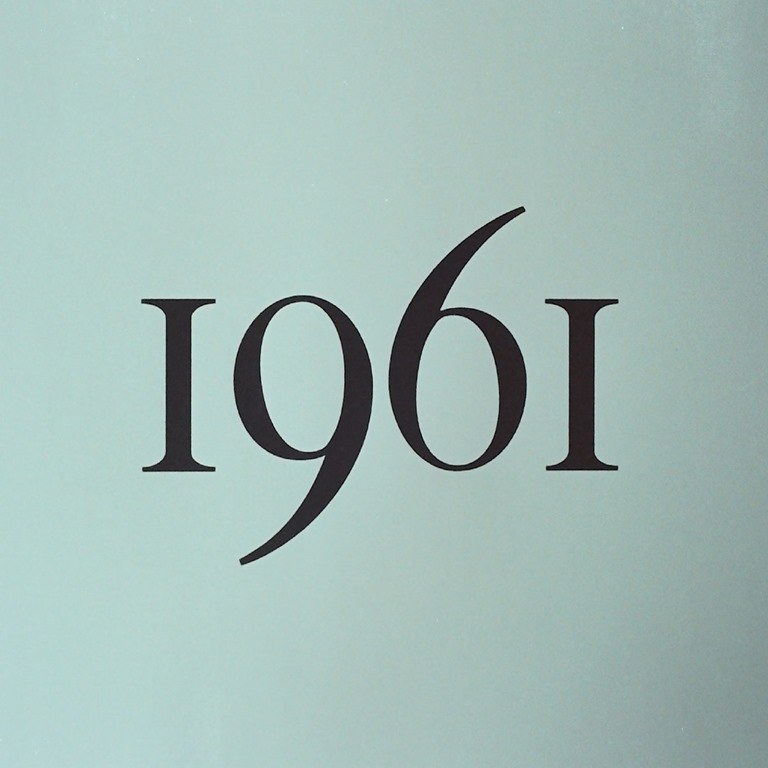
In the Nursery – or ITN as they’re sometimes referred – have been in existence for some thirty-five years but the Sheffield act centred around core duo of brothers Klive and Nigel Humberstone have existed well beneath the radar for the duration of their career. This hasn’t prevented their music being featured on Game of Thrones, Interview with a Vampire, The Aviator, and Beowulf, amongst others, and 1961, which follows over two dozen previous albums after some six years’ silence, showcases a set with a cinematic quality which is ideally suited to TV and movie soundtracks.
While the album’s title and overarching theme is significant on a number of levels, not least of all it being the year of the birth of the Humbertstone brothers – as well as landmark historical events including the construction of the Berlin Wall – its sound exists out of time, and if it does betray a link to any period, it’s the 1980s. Post punk collides with orchestral grandeur across the album’s nine tracks, which explore a broad array of atmospheres and spaces, with judiciously placed samples and – occasionally – vocals bringing variety and range.
A stocky bass enveloped in eddying synths, cool and spacious dominate the marching beat of ‘Until Before After’, the album’s opener, which hints at the kind of brooding, atmospheric post-rock of early iLiKETRiANS. If the comparison seems dissonant in terms of time-frame, it’s testament to ITN’s ever-shifting sonic form and their endless capacity for evolution.
If the idea of a choir of soaring operatic vocals reminiscent of Karl Orff’s ‘O Fortuna’ atop a sweep of dramatic strings by what sounds like a full orchestra sounds ostentatious, the execution of ‘Torschlusspanik’ elevates is miles above pretention to true art.
Rippling pianos, soaring, graceful strings, chiming guitars and murky percussion all form the fabric of an intriguing album: ‘Grand Corridor’ conjures a claustrophobic intensity worthy of Joy Division, while the acoustic guitar led ‘Pacify’ has echoes of Bauhaus on Burning from the Inside and ‘Solaris’, with its pounding percussion and a bassline that’s pure Peter Hook, is a major standout.
There’s a lot going on, and it’s all good: 1961 is a spectacularly articulate album that never ceases to reveal new layers, new corners, new depths.
This is pretty high-concept stuff. The album’s framework is based around the sci-fi Contoyen, a novel by the band’s own singer, Philippe Deschemin, and the album’s nine tracks are billed as ‘1st Circle’ through to ‘9th Circle’. Not being available in translation, the connection to the book aids my comprehension and analysis of the album not one iota. However, the bigger picture does, at least a little: eternal masters of intertext and referencing, Porn are in fact named after The Cure’s seminal 1982 album, and are influenced by early 80’s electronic noise exponents such as SPK and Esplendor Geometrico, as well as the 80s/90s dark rock lineage of Bauhaus, Fields Of The Nephilim and Type O Negative.
No two ways about it, we’re in dark, gothy territory here, and The Ogre Inside is a desolate wasteland of an album with an icy core. The album is dominated by spindly lead guitars which are backed by throbbing, tearing, juggernaut rhythm guitars and bass which throb and chug.
Chilly synths and rippling electronics provide texture and atmosphere to the opener, lead single ‘Sunset of Cruelty’, which finds a complex, interweaving lead guitar meshing its way over a thunderous metal-edged rhythm. It’s not short on force.
‘She Holds My Will’ has heavy hints of Rosetta Stone on The Tyranny of Inaction, blending industrial guitars and rhythms with swirling gothic synths and atmosphere, and successfully, landing in the space between early Nine Inch Nails and The Sisters of Mercy circa 1985.
The nine-minute ‘May be the Last Time’ is one of two behemoth compositions which dominate the album. It’s expansive, emotive, and with Deschemin’s gravelly baritone howling through the delicately poised darkness, it’s reminiscent of Fields of the Nephilim.
None of this is to suggest that The Ogre Inside is in any way derivative – more simply to frame it within the tropes of the genres from which it’s clearly emerged. Porn also display some range across the spread of the album: while it’s still centred around chorused guitars juxtaposed with chugging metallic rhythm guitar, there’s a strong hook and keen sense of melody. It’s not flimsy or overtly pop, but it is catchy and accessible and enjoyable.
The album’s penultimate track, ‘You Will be the Death of Me’, is dense, hefty and propelled by rapidfire bass pedalling, and raises things to a high level of tension before the megalithic finale, which stands in the shape of the second nine-minute colossus of a title track.
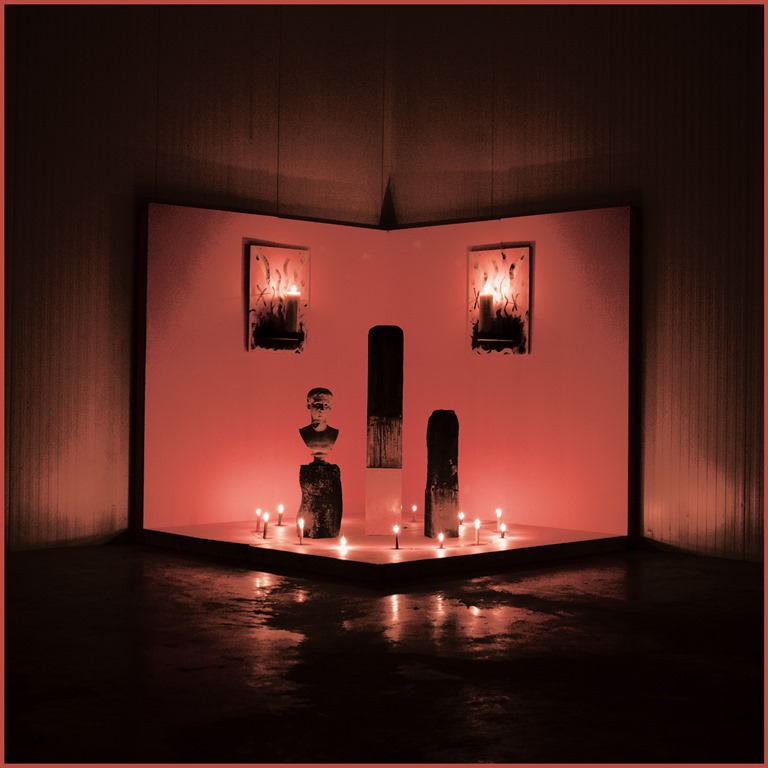
The Ogre Inside is a well-paced and highly structured album, which stands up without any need for a handle on the work on which it’s based. It’s also an album which is consistent and strong, sustaining both the quality and the rich, dark atmosphere from beginning to end – and that’s no minor achievement.
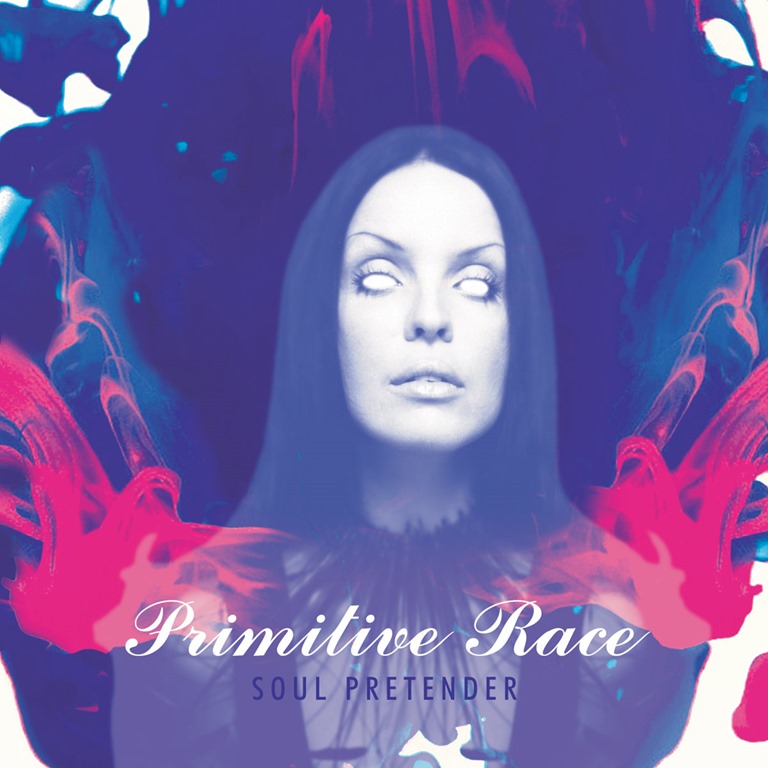
Primitive Race emerged through a collaborative release with Raymond Watts’ cult techno / industrial vehicle PIG in 2015, which was swiftly followed by an eponymous debut album. Conceived by Lords Of Acid manager / executive producer Chris Kniker, the band’s first iteration featured Graham Crabb (Pop Will Eat Itself), Erie Loch (LUXT, Blownload, Exageist), and Mark Thwaite (Peter Murphy, Tricky, Gary Numan), with a vast roll-call of guest contributors including Tommy Victor (Prong, Ministry, Danzig), Dave “Rave” Ogilvie (Skinny Puppy, Jackalope), Kourtney Klein (Combichrist, Nitzer Ebb), Mark “3KSK” Brooks (Warlock Pinchers, Foreskin 500, Night Club), Josh Bradford (RevCo, Stayte, Simple Shelter), and Andi Sex Gang. As such, they set out their stall as not so much a supergroup, but an industrial uber-collective, and Primitive Race captured that essence perfectly.
Soul Pretender marks a dramatic shift in every way. This is not an ‘industrial’ album. If anything, it’s a grunge album. That’s no criticism: it’s simply a statement of fact.
And while Primitive Race was by no means light on hooks or choruses, Soul Pretender is overtly commercial in comparison. Again, it’s no criticism, but simply a statement of fact.
It’s a common mistake made by critics to posit a negative critique based on what an album isn’t, without really taking into account the aims and objectives which made the album the album it is. So: ‘technoindustrial supergroup make an album that isn’t technoindustrial therefore it’s shit’ is wrong from the very outset.
Kniker makes no bones about the shift: Primitive Race was always intended to be a collaborative vehicle, and with former Faith No More singer Chuck Mosley on lead vocals and Melvins drummer Dale Crover on board, it was inevitable that Soul Pretender would have a different feel.
There’s a warped, Melvins / Mr Bungle vibe about the verse of the opener, ‘Row House, which is centred around a classic cyclical grunge riff that shift between chorus and overdrive on the guitar, and the 90s vice carries into the melodic ‘Cry Out,’ which is centred around three descending chords in the verse, erupting into a chorus that’s pure Nevermind Nirvana. And that’s no bad thing: it’s a great pop-influenced alt-rock tune with a belting chous.
The excessive guitar posturing on ‘Take It All’ is less impressive as a listening experience than on a technical level, but it’s soon blown away by the sneering ‘Bed Six’, with its chubby riffage and overall thrust.
The title track is perhaps the perfect summary of the album as a whole: uplifting four-chord chugs and a monster chorus are uplifting and exhilarating, and ‘Nothing to Behold’ works the classic grunge dynamic with a sinewy guitar and melodic hook. In fact, ‘classic’ is a key descriptor while assessing the compositional style of Soul Pretender: there isn’t a dud track on it, and the songrwiting is tight. There may not be any immediate standouts, but the consistency is impressive, and in that department, it’s a step up from its predecessor, which packed some crackers, but a handful of more middling tunes. Again, the change in methodology – a static lineup rather than infinite collaborators – is likely a factor here.
The album’s lack track, ‘Dancing on the Sun’, is a slow-burn beast, with hints of ‘Black Hole Sun’ trodden beneath the heft and swagger of Queens of the Stone Age. It’s precisely the track in which an album should end, nodding to the epic and marking an optimal change of pace. And it’s in reflecting on the overall structure and shape of Soul Pretender that it’s possible to reflect on what a great album it is, with its back-to-back riffery and explosive choruses. And did I mention force…
It’s a fucking miracle Arrows of Love are still here, let alone that they’ve managed to nail a second album. But then, to watch them play live, it often seems like a fucking miracle that they can make it to the end of a set. Everything about Arrows of Love, from day one, had had an air of precarity, teetering on the brink of implosion. Every song carries that same sense of danger. It’s their wild volatility that sets them as one of the most exciting bands of the last decade, but ultimately, it’s the songs that matter. They’ve always had songs: sprawling, messy, noisy, fucked up and perversely challenging songs, underpinned with some lean grooves.
Product has been a long time in coming and the line-up on this, their second album, is quite different from the one which recorded their debut. In the period between the delivery of aforementioned debut the nihilism-in-a-nutshell noisefest that was Everything’s Fucked (May 2014) Arrows of Love have evolved, and perhaps some of it’s a natural progression and some of its… not so much an increasing maturity as a refocusing of energy, and some if it’s a result of the personnel changes. One obvious shift is the absence of shared vocals: Lyndsey Critchley’s departure has certainly altered the dynamic of the band in that sense (bassist Nuha Ruby Ra’s vocal contributions are a lot less prominent, and she only leads on one track, the surprisingly sultry and almost tender ‘Come With Me’), and Product is a lot less direct and attacking than its overtly grunge-orientated predecessor.
That doesn’t mean that Product is any less confrontational or antagonistic, and the nihilism which drove Everything’s Fucked is apparent in the subtitle ‘Your Soundtrack To The Impending Societal Collapse.’ Moreover, the use of the definite article shows an absolute confidence in what lies ahead – Arrows of Love are certain we’re past the tipping point and freewheeling toward the end of the world as we know it. Product is certainly a darker, more claustrophobic affair than its predecessor, and finds Arrows exploring wider, deeper territory in the process.
‘Signal’ is dark, dense, disturbing, and desperate, and is heavily hung with a curtain of goth which drapes over the violent (post)punk energy. ‘Did you ever see this coming?’ Nemah challenges through a fuzz of distortion ‘Let the lunatics run the asylum,’ he spits, and we know that this isn’t the future he’s predicting, but a plain observation on the present. The tension builds into a squalling racket and the vocals reach fever pitch as the track reaches its explosive climax.
It feels like an eternity since ‘Predictable’ first aired on-line – and while the band articulate their ennui at the daily shit that is life in the 21st century, as a musical work it’s anything but predictable. The vocals transition from drawling boredom in the verse to screaming mania in the chorus, while the guitars lurch and swerve every which way.
Marking a change of pace and direction, ‘Desire’ is dark, brooding, stripped back, introspective. At near the six-minute mark, it’s a seething mess of emotions: Arrows of Love are a band who’ve always emanated a gritty sexuality, but this channels it in a very different way, and it’s not comfortable or snuggly.
‘Tidal’ is perhaps the most overtly ‘art-rock’ song on the album, as well as being the most classically ‘grunge’ composition, with its quiet / loud verse / chorus juxtaposition. At the same time it encapsulates the dual character of Product, and album that swings – quite effortlessly, and thus with maximum impact – between classic post-punk trappings and raging noise, with exploratory experimentalism informing the process.
‘Beast’, which premiered some months ago now, is a swampy, squalid mess of seething abrasion a throbbing mess of bass that sonically calls to mid Melvins in places but ultimately stands as the soundtrack to a riot. The shrieking ‘Toad’ is equally uncompromising, and ‘The Parts That Make the (W)hole’ comes on like a hybrid of The Fall, Shellac and The Cooper Temple Clause. ‘Restless Feeling’ captures the dark, dirgy doom of Swans circa 1984 and makes for one hell of a low ending to the album: if anything, it’s the sound of society after the collapse as its low-end swell builds to an all-consuming tsunami of noise.
Product bridges the gap between Bauhaus and Nirvana, but ultimately, any comparisons are but signposts to an album which is unique in its standing. Product avoids pretence and overblown portentousness: it doesn’t make lofty statement about the future, but instead stands as a painfully intense document of the present. If any album of the last five years articulates the dizzying, anxietised state of contemporary life, it’s Product.
Mass VI may have six tracks listed, but effectively, it only has four full movements, with a brace of brief interludes breaking up the blasting, blistering intensity. And what intensity. Five years on from Mass V and Amenra have not softened their sound one iota.
The ten-minute ‘Children of the Eye’ makes for a slow-building opener: there’s a full minute of silence before a quiet, gentle intro of chiming guitars rips into a screaming vortex of noise that channels a spiral straight into the depths of a world far below the earth. The delicate, reflective mid-section offers much-needed reprieve, albeit temporarily, before the deluge of guitars bring a return to the tempestuous anguish. No doubt, the Neurosis comparisons stand as obvious, and it’s not hard to make the connection as to why Amenra have made their way to the Neurot label. But the howling, barking vocal derangement is altogether more frenzied and tortured to the point that borders on the inhuman. It’s the sound of a voice detached from the world and detached from hope, desperately screaming into a sonic vortex which swirls as an emblem for the pain that is existence.
‘Plus Pres de Troi’ brings a heavy, dolorous trudge and a sinewy, organic guitar sound. The thick guitars grate in an epic Sunn O))) -like drone. Gradually unfurling, transitioning between the aural equivalent of delicate fronds to boughs torn asunder by hurricane-force blasts.
It’s on ‘A Solitary Reign’ that Amenra really show both their depth and range. Epic doesn’t come close: yes, it’s post-rock, post-metal, and it’s raging, brutal shoegaze with an emotional dimension that’s deeply affecting in the way that only music can be. There are no words to fully articulate such resonance and the levels sound and voice can reach into the soul and affect the mind. As a reviewer, there’s a real sense of impotence when faced with something like this. It’s so much easier to write either objectively or to dissect technical issues, or to otherwise slate in the most violent terms possible something that’s inherently shit or lacking in whatever, way. But how does one articulate music that turns the innards to liquid and melts the brain? What do you say about something that leaves you feeling numb, incapable of movement, and utterly overawed? When the last thing you want to do is analyse, and instead sit back and let the experience touch every corner of your innermost being, how do you reconcile the role of fan and critic? You give yourself over to the music of course, and accept that this is bigger than you.
Mass VI is bigger than your small world, your little life. Mass VI reaches deep into the heart of the human condition through the medium of sound. The fact that the lyrics are impenetrable and inaudible for the most part only heightens the experience: it’s the language of sound which conveys so much and means everything.
The eleven-minute closer, ‘Diaken’, combines all of the elements of drone / doom / post-metal / post rock in a thunderous and sprawling behemoth of a sonic journey to create something that’s both cerebral and physical: the crushing riffs played on obliterative guitars contrast with the delicate, detailed breaks to breathtaking effect.
Despite its duration, Mass VI feels remarkably concise, largely on account of just how focused it is. There’s no waste, no packing, no flab: everything about the album is centred around distilling every sound into creating optimum power, and the result is stunning.
It’s hard to reconcile the sounds emanating from the speakers with this being a document of a live performance. And yet Schulevy Maker, which comprises two long-form tracks in the form of ‘Schulevy Maker’ Parts 1 and 2, was recorded live at Cafe Oto in London in December 2013, and captures two outré sonic experimenters coming together to forge something that’s weird and wonderful in equal measure. It’s credit, then, to the artists and all involved in the creation of this album that the sounds are so rich, layered, and detailed so as to sound as if they were meticulously ordered, edited, polished and mixed with great labour in the studio. There is a lot going on, and none of it is remotely obvious or predictable.
The set begins with a nagging motif, repeated end on end and resembling a demo of The Fall circa ‘79, over which electronic screaches and wibbles and irregular, occasional clatters of percussion weave and flit in an out. And over all of this, Tazartès and Dunietz grunt and ululate, quaver and trill. At times, rather less a walrus of love and more like a walrus slain, Tazartès explores the lower registers of the larynx, while Dunietz offers a soaring, semi-operatic counterpoint.
Amidst grating industrial drones and scrapes, weird samples and chiming finger cymbals, the pair challenge accepted notions of melody with their often deviant vocalisations which stray from the roots of key and tempo. And yet as much as they often run contra to one another, every instant is a moment of perfect connection and compliment, and there’s a synchronisation of their idiosyncrasies which renders the performance utterly compelling.
It’s strange and disorientating, and it’s not always easy to find a foot or handhold amidst the ever-shifting soundscapes which rapidly transition from accessible to strange, and often appear to originate from another world entirely.
Jeph Jerman: snare drum, frame drum, cymbal, pumice, e-bow with metal, wok lid, old brass bowl and ball bearing, disintegrating paint brush Giacomo Salis: percussion, objects, field recordings
Paolo Sanna: percussion, waterphone, prepared zither, thingamagoop2, s.w.radio
So, not just any paintbrush: Jeph Jerman’s instrument of choice is a disintegrating paintbrush. The list of instrumentation deployed in the production of Kio Ge is nothing if not improvisational, and this is in keeping with the spirit of the album’s twelve improvised fragments.
There’s nothing fully realised in an explicit sense here, but that’s not what Kio Ge is about. These pieces – they’re not strictly compositions in that they’re not pre-ordained, but by the same token, composition can take place in real-time, spontaneously – but it may be more appropriate to refer to them as musical happenings or sonic events.
While many of the tracks sit in the three to four-minute bracket, a number are barely a couple of minutes in duration, but what they offer in a holistic sense is a series of sketches which clatter and clank, bubble and scrape, transitioning through simple, sparse arrangements to dense, multitextural works.
These aren’t pieces which resonate on any particular level, and they don’t move the mind, the soul or the body with their abstract firms and absence of rhythm. But that does not mean that Kio Ge lacks engagement: in fact, Kio Ge engages at precisely the points the attention begins to wander.
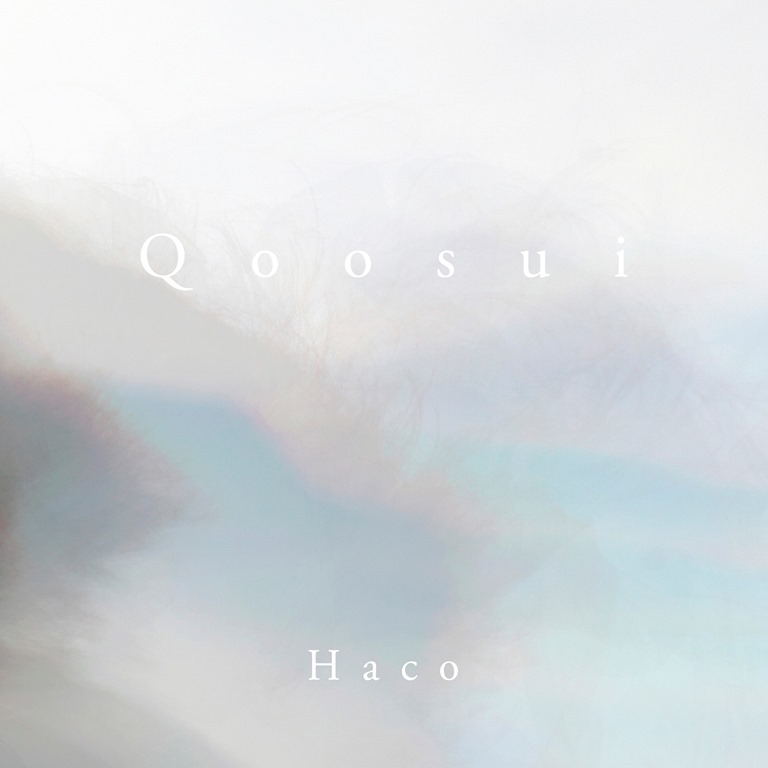
David Toop enthuses over Haco as ‘weightless, not so much a voice from heaven but a voice that swirls in liquidity, water spirit…’ In this, he probably gets as close to capturing the essence of Haco’s music as its possible. It’s a challenge for any writer when presented with sonic abstraction: how to render the intangible tangible, and at the same time convey the experience of sound in words?
The music on Qoosui is not easy – and in fact almost impossible – to pin down. An analogy to catching a cloud is close, but not right: the seven pieces exist in a state somewhere between liquid and vapour, and flow in multiple directions seemingly simultaneously. Rippling synths slowly bubble as wash aquatically on ‘Kusul’, and paves the way for a sequence of amorphous, drifting compositions which drift and tether. Crystalline shards cut through cloud-like washes on ‘White Letter from Heaven’, and Haco’s voice is seemingly not of the human body, transcendental, and not of this world.
This is, in many respects, the source and heart of Qoosui:inspired by spirit voices, Haco becomes one. The medium is the message on every level.




 Aural Aggravation