Archive for the ‘Albums’ Category

Interstellar Records – INT043

Christopher Nosnibor

And suddenly, one cold, wet, dark, depressing November night, an album arrives that slaps you round the face, hard, and makes its presence known. And within three songs, you know it’s probably one of the best things you’ve heard all year. And it’s a concept album.

I’d been thinking that 2017 hasn’t been a great year for music, while chewing on the irony of the fact I often berate people making the same complaint for their failure to look in the right places: there is always good – awesome, exciting – new music emerging from somewhere. Admittedly – and this shouldn’t be about me, but I find that reception of music is an intensely personal and individualism – I may not have in the most receptive of moods, or have kept up with as much of the music passed my way this year, but 2017 simply doesn’t feel like one of the greats, despite having a handful of clear highlights. But these highlights are less about objective merit and commercial success, and what’s actually stuck. This, however, is an album with immediate impact. It grabs the listener by the throat in the opening bars. And it doesn’t let up.

According to the liner notes, ‘Calamitas deals with danger babe Ruby, who stole Silvio Berlusconi’s heart, Satan deceiving us all by using the purgatory doctrine, dictator Kim Jong Senior (II), the sexiest man alive back in the days, beautiful femmes fatales with a look that kills, the man who cut off his own leg to get disablement pension (he didn’t succeed), personal misery, the best days of my life, the abyss that is staring back, etc.’ So, it’s a true story, albeit one where the narrative is buried beneath a strain of sinewy guitars and barked vocal delivering impenetrable lyrics. And that’s all good.

‘Calamitas’, we also learn, means ‘loss, disaster, damage, harm, defeat and misfortune’. These things, the album’s ten tracks convey with crystal clarity through the medium of raging, guitar-driven noise. And as much as Calamitas is a snarling, gnarly mess of brutality, it’s gritty, tense, and cut from a different cloth from so much murky metal thrashing.

I’m reminded as much of anything of the swagger of Girls vs Boys on their debut album, Hey Colossus, and Henry Blacker, and there’s a strong flavour reminiscent of Helmet and The Jesus Lizard and the Am Rep / Touch and Go label styles. There’s noodly, Shellac-meets-Tar math-grunge on ‘A Knife for Every Heart’ and ‘Best Days of Our Lives’, which builds a tripwire tension. ‘Fuck me Blind’ is darkly claustrophobic, built around a cyclical riff, sinewy top guitars and ballistic hollering. There’s also a gnarly blues undercurrent to many of the songs here, and for all the messy guitars, the bass is pure thunder and lays down some irresistible grooves over the course of the album’s ten cuts. There’s a dark, gritty vibe and a gloriously ragged edge to it all, and Markus Dolp’s gruff, Cookie Monster vocals have hints of Tom Waits and JG Thirlwell.

Some cuts do venture into all-out hardcore punk / metal attack, like the squalling black mass that is, opener ‘Anti’ but what makes Calamitas such a corking album – beyond the fact that it simply is a corking album – is its range. Yes, it’s all a bloody, brutal, guitar-driven mess of noise, as becomes a band who’ve spent two decades exploring the terrains of noise-rock, but it’s sonically articulate while it rages blindly and incogently. It’s the perfect balance, and the frenetic and the furious drive that defines Calamitas makes for a gloriously intense listen.
BUG

Miasmah Recordings – MIALP037 – 25th November 2017

Christopher Nosnibor

Svarte Greiner is in fact Erik K Skodvin. But identity is mutable, and on Moss Garden, Skodvin explores the mutable identity of sound in space. And by space, I mean both in terms of the spatial creations of soundscapes, and outer space: through the former, Moss Garden evokes the latter.

The album contains two side-long tracks. ‘The Marble’ creates a slow-moving sonic expanse of drifting ambience. Crackles of static create minor interference in the smooth surface which extends over light years of distance. It’s a journey of infinitesimally gradual transition and glacial, galactic expansion. Everything moves in suspension, slowly, moving in its own dense molecular soup.

‘Garden’ begins with a crescendo and works backwards, tapering off into near-silence before beginning to grow at vegetable pace. There’s no specific purpose to this elliptical reference to Andrew Marvell, but listening to musical explorations so overtly background affords the mind space to wander, and it’s always a source of amazement what thoughts and recollections venture to the fore when given the room to surface at will. Sitting back in a dimly-lit room with a large measure of something strong, this is the perfect sonic immersive to lift the listener out of the humdrum and into another dimension.

AAA

Svarte Greiner – Moss Garden

Bearsuit Records – 1st December 2017

Christopher Nosnibor

The album’s acknowledgements indicate that the little Edinburgh label has some high-profile and well-respected champions, including Stuart Maconie, Tom Ravenscroft, Gideon Coe, Mark Riley, David Stubbs… and some guy called Nosnibor. I’m deeply flattered to find myself in such prestigious company. It’s no secret that as a music writer, I’m a fan first and foremost, and Bearsuit stand out for their unswerving commitment to the weird and the wonderful – and, indeed, the wonderfully weird.

From minimal, brooding electro-pop to experimental avant-folk via haunting, spectral gothtronica, and space-prog in waltz-time, it’s all here on this latest compilation. Psychedelic dreampop, scratchy, glitchy trip-hop, stark post-industrial noise, and a jumble of all other elements which should never meet cozy up side but side and on top one another. Quirky isn’t in it.

Luscious, sweeping strings glide over a softly pulsating throb, and it’s all very cinematic, very John Williams on ‘Fulfilling Eclipse’, Alexander Storadiau’s contribution to this collection. No two ways about it, it’s a grand opening worthy of JG Thirlwell. But then PoProPo bring a busy mess of high-friction jazz-funk-punk, which just wouldn’t be complete without the wibbly Theremin wails. The weirdy, sultry cabaret of Martian Subculture’s ‘Chewing Gum’ contrasts again.

The reason I love Bearsuit isn’t because I love every tune they release, but because every tune they release opens my ears to something new, and because they’re fearless in pushing the most far-out stuff from the deepest underground. Tthere are some truly ‘what the fuck?’ moments on here. ‘Tous Les Rochers’ by Yponomeutaneko leads the way. Swaggering brass and monotone spoken word breaks into discord and a load of crazed shouting. I haven’t a fucking clue what they’re shouting about, or why, or why the track even got recorded, but the fact it did, and that it’s on here is utterly brilliant. The sing-song vaudeville oompah of ‘World Travel of the Piano Tuner’ by Shinnosuke Sugata is music completely out of time, complete with muffled wax cylinder production.

The Moth Poets offer up some glacial post-punk disco hybrid collision with operatic bombast. Swords Reversed bring a palace of oddball melody and thumping beats, while Petridisch – one of three acts with two tracks featured – cultivate an air of otherness. No two acts featured are alike, and yet they compliment one another perfectly. Sequencing matters as much as selection on a compilation album, and The Invisible & Divided Sea flows nicely.

It’s a gloopy, tangential, often disorientating concoction of disparate sounds that somehow stands as the perfect representation of both the artists involved and the label itself.

AAA

Bearsuit Comp Cover

Avalanche Recordings – 17th November 2017

Christopher Nosnibor

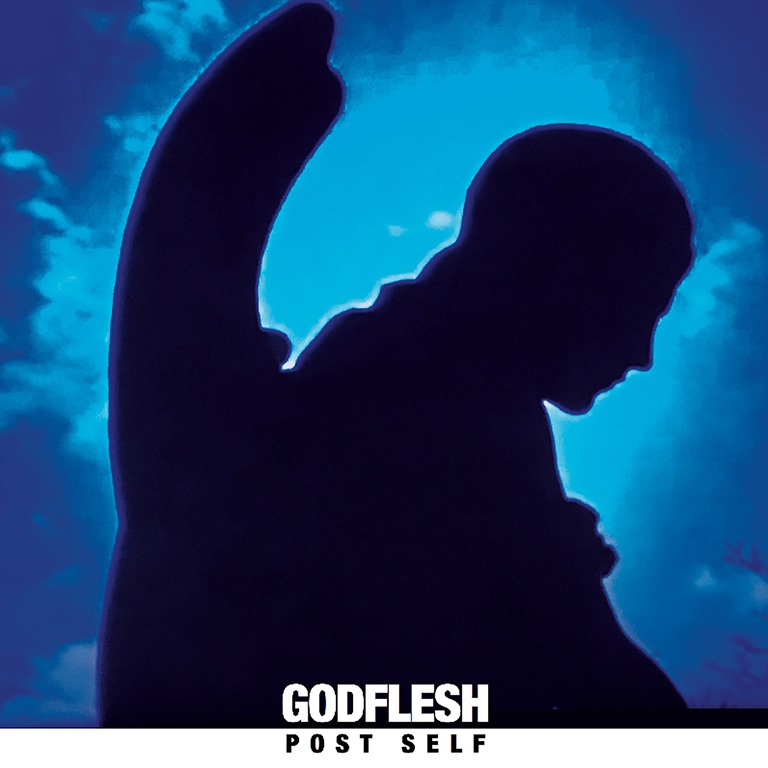
We’re used to press releases gushing with superlative verbiage, so the short statement which accompanies the second post-return Godflesh album stands out by virtue of its brevity and factuality. It simply reads: ‘Over two years in the making, Post Self explores a different side of Godflesh, taking in their formative influences to conjure something informed by late 70’s/early 80’s post-punk and industrial music. The album deals with themes of anxiety, depression, fear, mortality, and paternal/maternal relationships’.

It’s entirely fitting. Godflesh require little introduction as pioneers of stark, brutal music, paired with lyrical brevity.

We live in a post-everything world, and Justin K Broadrick has long crated music that’s post most things. His solo album, Post-Human, released under the JK Flesh moniker, saw Broadrick draw together various threads of his extant output into a ferocious sonic assault. Post Self­ manifests as a different kind of post-dissection from the solo release, and also brings a different shade of grind from A World Lit Only by Fire. Post Self is unmistakeably Godflesh, and incorporates all of the elements that make Godflesh Godflesh. Thudding, mechanical percussion, snarling bass, lead-guitar motifs built on feedback and minimal, repetitive riff structures and relentless brutality define the album. And in contrast to the certain sameness that overarched its predecessor in terms of texture and tempo, Post Self­ has all the dynamics and attack of much earlier works, as the thick sludge ‘n’ scrape pounding is replaced by space, a greater separation of top and bottom, and altogether more diverse sounds and structures – and with serious impact.

The title track is he first cut, and booming, dubby bass and mechanised percussion pound beneath squalling guitars, with murky rhythm juxtaposed with super-toppy lead. The vocals are practically impenetrable, throaty, splenetic snarls drawled out over a full bar. The relentless thud of ‘Parasite’ again explores tonal range and difference, a mangled interloping treble-edged lead threading a spindly web of pain over a bowel-churning bottom-end. ‘No Body’ has all of the vintage Godflesh tropes, with brutal digital percussion and trudging riffing dominating everything. ‘Be God’ is a sonic bulldozer, the bass grind an earthmoving shovel and scrape which yields to gentle musicality, the strum of a reverby, indie guitar into the fade before ‘The Cyclic End’ washes into dystopian shoegaze that’s more reminiscent of Jesu than Godflesh, but for the booming bass throb and creeping darkness. Combining glacial coldwave synths, mangled vocals, and a grating, trudging bass, ‘Mortality Sorrow’ is as unrelentingly stark and unforgiving as it gets.

I constantly find myself facing the question about the balance of objectivity and subjectivity. Objectively, Post Self is painful, breathtaking to the point of discomfort brutal, punishing. Of course it is: it’s a Godflesh album. But subjectively, it feels both more vital and equally more bleak than its predecessor. There’s a passion here, but the mechanical, dehumanised detachment that characterises Godflesh is equally present. Subjectively, I’ve always been drawn to Godflesh because of just how removed from human input they’re capable of sounding, forging a sound that emanates rage and despair while stripping every last sinew of humanity from the end result.

And buried and largely indecipherable as the vocals are, the themes are less conveyed by the lyrics than the delivery. The atmosphere is intense, claustrophobic, oppressive, and every inch of the album is imbued with implications of depression, anxiety, fear and self-loathing. It gnaws away cerebrally, while working away at the pit of the stomach and kneeding away at the intestines.

Post Self is Godflesh on form: nihilistic, pulverizing, and ploughing their own deep furrow of dark, furious despair. No other band can create work quite like this, and rejuvenated, reinvigorated, they continue to push the parameters.

AAA

Godflesh - Post Self

Southern Lord – 24th November 2017

James Wells

When you’re presented with an album containing ten tracks, where only two clock in at over two minutes, you know it’s likely to be a pretty direct attack, and you don’t need a lengthy dissection to get the guts. In fact, you don’t need words, you just need to feel it kicking you in the guts, over and over.

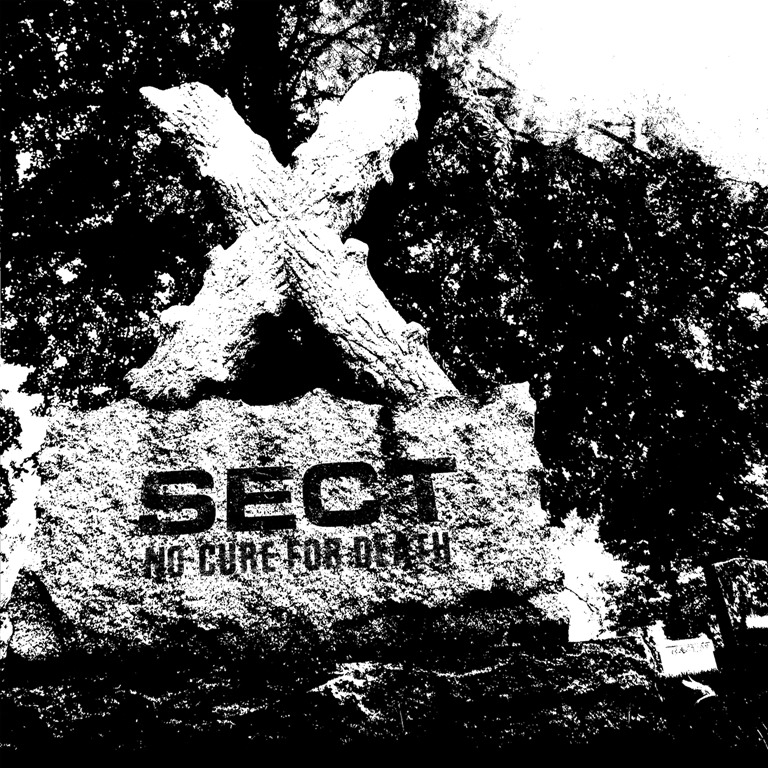
No Cure For Death is a gnarly, guttural, snarling mess of feedback and noise. Savage, brutal, unrestrained noise: that’s what No Cure For Death throws down from beginning to end – not that it’s a particularly long period between the two markers.

Death, decay, despair ooze from every pore of this feedback-soaked frenzy of blistering noise. It’s dark, dingy, a seething miasma of gut-churning overloading, overdriven loathing of all things. It’s the world we live in, of course: it’s fucked-up and ruined. It’s everything it should be.

AA

Sect cover image for Haulix

Living Music Duplication – 17th November 2017

Christopher Nosnibor

Thor Harris continues to keep himself more than vaguely occupied in the post-Swans era, and also continues to demonstrate just what a versatile percussionist he is. The collective, centred around Harris, who not only contributes diverse and eclectic percussion, but also wind instruments including some of his own devising. features at its core, Peggy Ghorbani on marimba, and Sarah ‘Goat’ Gautier on marimba, vibraphone, xylophone, organ, voice, mellotron and piano.

Anyone on the market for Swans-style brutal percussive bludgeoning should leave now. Thor and Friends are pitched as an ‘avant-chamber ensemble’, drawing on ‘the classic Minimalist composers including Terry Riley and Steve Reich, but also amalgamate such diverse influences as Brian Eno, Aphex Twin, Moondog and The Necks around a polyrhythmic core of mallet-struck instruments, primarily marimba, xylophone and vibraphone’.

There’s a lighthearted, skipping melodic heart beating beneath the eddying synths and weirdy whistles and subtle strings which are all interwoven into one another on the hypnotic and ever-shifting ’90 Metres’. Ominous and eerie tones and echo-heavy chimes dominate both ‘Creepy Carpets’ and ‘Dead Man’s Hand’, while elsewhere, ‘Mouse Mouse’ explores a more playful side, manifesting as a sing-sing tune that has an almost nursery rhyme / lullaby feel to it.

In the fucked-up, brutal world in which we find ourselves, where it’s everyone for themselves while each and every citizen is shafted by governments and multinationals and consumerism, kindness does feel subversive. And in their own quiet way, Thor and Friends offer their own subversive resistance. It’s a gentle, mellifluous collection of compositions which are neither overtly contemporary nor steeped in traditionalism. It’s this sense that the music exists out of any place in time, and that it doesn’t obviously connote any concrete physical space that makes it so very appealing.

Thor and Friends

Southern Lord – 3rd November 2017

Christopher Nosnibor

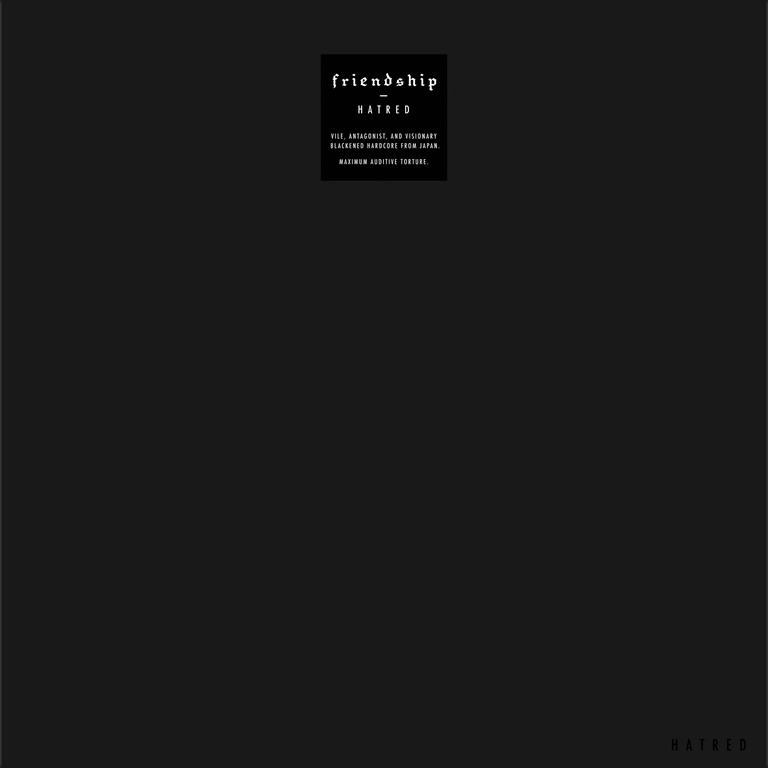
Fast and furious isn’t in it. But the enigmatic and secretive Friendship are from Japan, and when it comes to extreme music, Japan really leads the field. And if Hatred seems an odd title for an album by a band called Friendship, then the equation really should be turned on its head: for a band this brutal, abrasive and gnarly to be called Friendship is simply perverse. There’s nothing friendly about them, and song titles like ‘Rejected’, ‘Regicide’, Corrupt’, ‘Tortures’, ‘Grief’, and ‘Execution’ don’t exactly send hugs in abundance either.

Of the album’s twelve tracks, only two extend beyond the three-minute mark, and half are sub two minutes. Holy fuck, this is fast and hard and nasty. It begins with feedback and immediately plunges into the dingiest, gnarliest, darkest metal noise going. The drums are pounded so fast it sounds like a pneumatic drill. Everything else is just a blurred barrage of insane, intense noise. There are riffs, but they’re brief, and churningly cyclical. The rest is all squall. And it’s a furious, punishing grind.

If friendship it is, it’s an abusive one which shows no regard for the wellbeing or mental health of those concerned. But as far as hatred is concerned, this album is all aspects of pure loathing distilled to the most potent concentrate.

Listening to Hatred is like having your soul torn from the heart of your being and ground to a pulp before your eyes, while your eyes are being pricked with hot pins. Aurally, it’s torture in its own right.

AAA

Friendship cover art

Ici d’ailleurs – 15th September 2017

Christopher Nosnibor

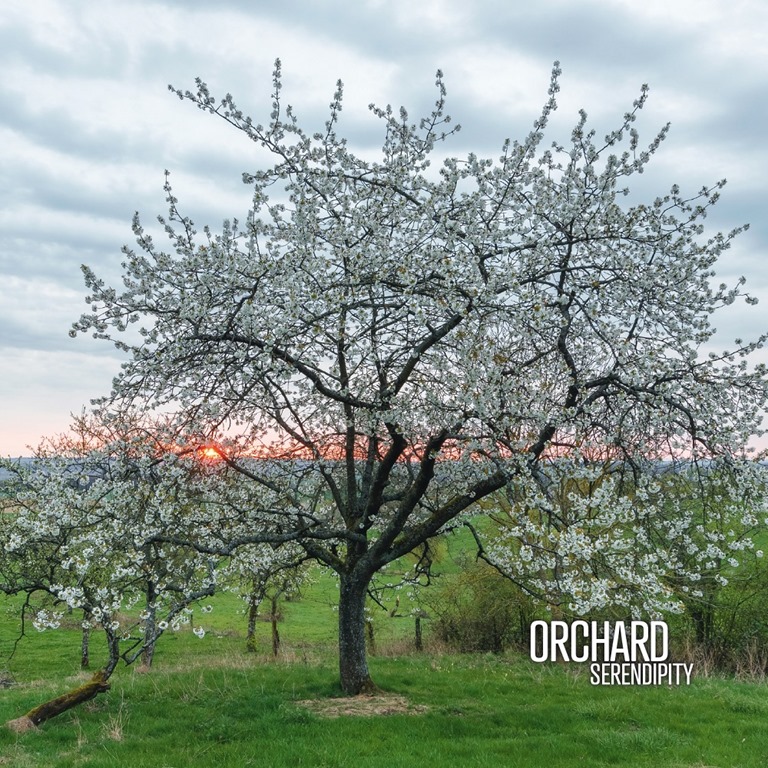
The gathering together of Aidan Baker (guitar), Gaspar Claus (cello), Franck Laurino (drums) and Maxime Tisserand (clarinets) was engineered by Stephane Gregoire, Ici d’ailleurs’ artistic director for the purpose of simply seeing what would happen. The four were selected because of their musical dissimilarities, and the fact they did not know one another personally or musically. As such, the element of chance was one of the leading factors in the emergence of the pieces which make up the album. All of this makes Serendipity an appropriate addition to the ‘Mind Travels Series’ releases, of which it is the eighth.

Serendipity brings its share of unexpected twists and turns, sudden changes in tone and direction, but what’s more remarkable is just how smoothly it flows. And while there are expansive ambient passages, it’s certainly not an ambient record.

‘A day staring at eternity’ part 1 begins with an elongated, broad sweeping drone before strolling percussion and a wandering bass brings a sense of structure and more linear movement on ‘part 2.’ Through disconsolate, minimal jazz – horns lost in a wilderness of sighing drones – to a funereal darkness and eventually racing, urgently towards…what? eternity is not fixed, but stretching out across myriad horizons, all of which are uncertain.

‘Drawn with the wind,’ also in four parts, works a seam of expansive space-age prog with ambient undercurrents. A motoric swell of urgent percussion propels the composition relentlessly forwards, before stepping back in tempo and position to forge a distant thunder amidst eddying drones. The fourth part blossoms into a spectacular sonic sunburst, a slow groove at its heart. The performance and production coalesce to create a spellbinding moment.

The twenty-one-minute ‘After all the sun is awakening’ is immense in every sense, a widescreen krautrock drone that sways and swirls hypnotically. Strings drift and drape over rumbling sonic abstraction which envelop the listener.

The last two pieces, ‘We host you’ and ‘Fructification’ stand somewhat apart from the rest of the release. Shorter, more linear and overtly psychedelic, the former is a nifty noodlesome nugget, while the latter somehow represents the culmination of Orchard’s objective, incorporating as it does all elements of the album with condense concision, weaving around a paired-back yet insistent groove.

As a whole, Serendipity is an impressive work which demonstrates the power of collaboration when the right people come together – making Orchard a fruitful collaboration indeed.

AAA

orchard_1000px_rvb

Thrill Jockey Records – 17th November 2017

Christopher Nosnibor

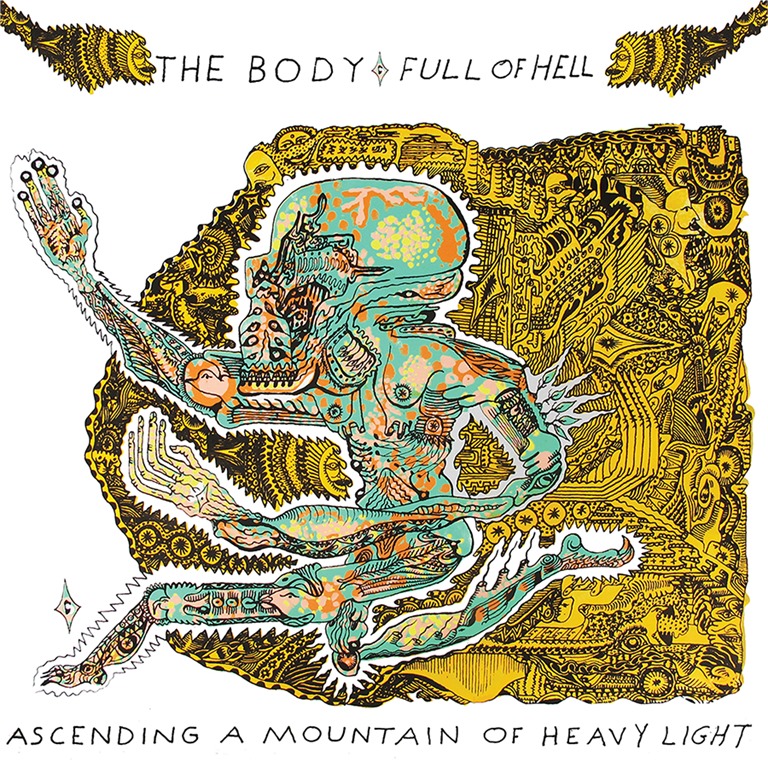
The second collaborative album between The Body and Full of Hell, which collides with the earth like a meteor, and a mere 18 months after its predecessor, and just six months after Full of Hell’s full-tilt annihilation that was Trumpeting Ecstasy, it’s every bit as unremitting and remorselessly heavy as anything previous. It’s the sound of two uncompromising bands finding compromise by amplifying one another to the nth degree, meaning that Ascending a Mountain of Heavy Light is fucking intense, fucking heavy, and yes, even more fucking intense.

The accompanying blurb forewarns that ‘samples, synth, saxophone, and a drum orchestra all throb, and sputter, coagulating under the weight of the two bands. Programmed drum patterns and loops taking cues from hip hop are bent and twisted throughout, flawlessly emboldening the distortion drenched guitars and howling vocals.’ And did I mention that it’s intense?

Beyond the first few seconds of skittering synth oscillations, there is no light on the opening track, ‘Light Penetrates’. The crushing power chords land at tectonic pace, while the vocals – an impenetrable scream of anguish – are nothing more than a primal scream of pain. And then the jazz shit beaks loose, with horns squealing like tortured pigs bleeding in all directions.

There’s nothing pretty about this, but occasionally, from amidst the screeding walls of amorphous racket emerge full-throttle stoppers, like the pounding ‘Earth is a Cage’. Elsewhere, ‘Didn’t the Night End’ is a snarling, grinding, bowel-shaking racket of surging waves of noise that simply hurt. It’s the kind of snarling, grinding, bowel-shaking racket that makes you want to lie on the floor and curl up into a foetal position. It makes you want to die, and it certainly makes you long for the night – and the noise – to end, as it assails the senses from every angle.

The drum intro is nabbed from oh, so many tracks – a simple four-four thump of a drum machine bass – before everything explodes in a tempest of screaming industrial-metal fury. Early Pitchshifter come to mind, at least in the drum programming, but this is something altogether more psychotic in its unbridled fury, and in its amalgamation of paired-back hip-hop and industrial metal, all crackling with overloading distortion, ‘Master’s Story’ invited comparisons to the innovations of Godflesh – at least until it goes all crushing doom halfway through.

As with anything produced by either band, either independently or collaboratively, Ascending a Mountain of Heavy Light is not music for pleasure, and large chunks are little short of anti-music, blistering walls of sonic brutality built on discord with the most challenging of tones and frequencies explored to the max.

AAA

cover

Gizeh Records – 10th November 2017

Christopher Nosnibor

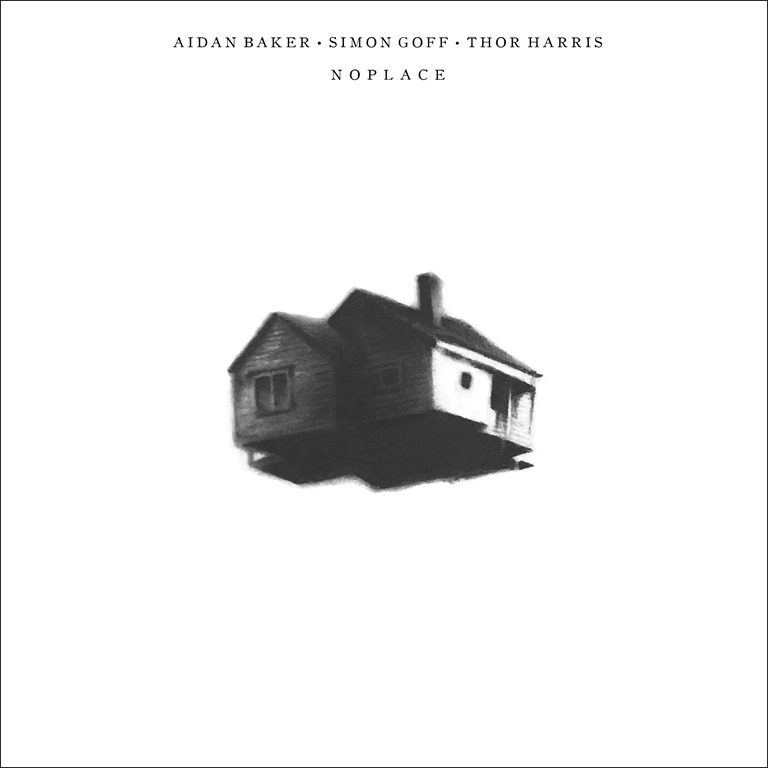
This is certainly quite the collaborative lineup, featuring as it does Aidan Baker (Nadja / Caudal / B/B/S/), Simon Goff (Molecular, Bee & Flower), and Thor Harris (Swans, Shearwater, Thor & Friends). What renders Noplace all the more impressive is that it’s an improvised work, recorded in a single day.

As the press release recounts, ‘having known each other for a number of years and previously contributed to one another’s recordings this trio finally came together as a whole on May 7th 2017 at Redrum Studios in Berlin. In a short, improvised session of just a few hours they set about laying down as much material as possible which was then subsequently edited and re-worked (without overdubs) to form this album.’ And the results are quite something, and I very quickly manage to put aside the thought that the cover art reminds me of the film Up, minus the balloons.

Rippling strings quaver over softly swelling undercurrents while rolling percussion provides a subtle, unobtrusive rhythm as ‘Noplace I’ introduces the album before creeping into the darkness f counterpart piece ‘Noplace II’. And yet it’s very much only the beginning: having been moulded post-recording, the album’s seven individual pieces are structured and sequenced so as to lead the listener on an immersive journey which gradually and subtly moves from one place to entirely another.

‘Red Robin’ builds a pulsating, looping groove overlaid with creeping stealth. Its repetitious motif may owe something to the hypnotic cyclical forms of Swans, but its trance-inducing sonic sprawl also alludes to a hypnogogic reimagining of dance music – and this filters into the spacious ‘Noplace III’, which draws together expansive ambience and, in the distance, shuffling, tranced-out beats, to create something that stands in strange, murky Krautrock / dance territory. Yes, it sounds electronic. Yes, it sounds unique, but at the same time, yes, it sounds familiar in terms of the individual genre tropes. It’s ‘place’ is precisely ‘noplace,’ in that it belongs nowhere specific, yet appeals on many different levels and in many different ways.

Interweaving motifs continue to feature in ‘Tin Chapel,’, but the rhythm here is much more prominent, a weighty four-four bass/snare beat driving a linear road through the sweeping, strings that glide from mournful to tense. The locked-in psyche-hued desert rock bass groove pushes the piece forwards, while at the same time holding it firmly in one place. In turn, it tapers into the bleak, murky expanse that is ‘Northplace’.

The final composition, ‘Nighplace’, brings things down and almost full circle as the percussion retreats into the background amidst a wash of elongated drones which ebb and flow softly.

Noplace certainly doesn’t feel improvised, and while it’s remarkably cohesive, as well as possessing a strong sense of structure, it also reveals a remarkable range, both sonically and compositionally. And irrespective of any context, it’s an engaging and immersive aural experience.

AAA

GZH79-Baker-Goff-Harris-Noplace-Digital-Sleeve