Archive for the ‘Albums’ Category

A ‘stripped back electronic companion to Omertà and Fermi’, Reconstructed Memories features just Paul Kirkpatrick and cellist Rachel Dawson. Kirkpatrick describes it as ‘quite different, more ambient but hopefully still engaging and melodic’, and frames it as ‘the story of life in an hour’.

Omertà and The Fermi Paradox were very different albums, with the latter (link) being an ambitiously expansive work, pushing outwards in all directions, not least in its exploration of time and space. Reconstructed Memories is much more inwardly-focused, and while it’s far from claustrophobic or suffocating, its minimal approach is, in itself, enough to redirect the energy and create a very different atmosphere.

As opening piece, the atmospheric, piano-led ‘A Beginning’ suggests, this is a linear, chronological work. The spoken-word intro, presumably delivered by Dawson, is instructive and creates the space for Reconstructed Memories to unfurl. ‘What should I write and tell? Big stories, big memories are always there… Let’s talk about some small, beautiful memories… Life is full of small memories…’ And it’s so very true. Life is not about the events, but the everyday details. It’s is easy to miss those details, too, caught up in simply existing, and waiting for the events, But you won’t move house, get married, have a child, or otherwise experience something momentous daily, or even often. Landmarks are rare and infrequent, and are relative in the context of the trajectory of a life. But life goes on, and is defined by those fleeting interactions. It’s not just the devil who exists in the detail, but life itself which occupies the cracks and recesses, the spaces in between.

And so it moves, in an evolutionary trajectory, gradually unfurling, expanding, revealing new vistas through a series of memories, reflections, and reconstructions. And it’s beautifully executed, each piece a perfectly-formed vignette delicately spun from soft, rolling piano and graceful strings. The moods are varied, at times light and lilting, others more melancholic and pensive, but ever-shifting and ever-evocative.

‘Regression One’ takes a step into darker territories, with a whispered spoken word narrative and connotations of the awkward, disturbing plunderance of the recesses of memory picked psychotherapy. How real and accurate are those memories? Memories are unreliable, coloured by perspective and faded by time. The effect, is, as the title of the next piece intimates, a blurring. Picked guitar echoes hesitantly, decaying into the mist among atmospheric, ambient strings. The arrangements make optimal use of the minimal instrumentation to create music that’s spacious and contemplative.

The artistic success of Reconstructed Memories lies in its vagueness. Such non-specificity places the process of input onto the listener, and it is they who find themselves reflecting on their experiences, their own hazy and tainted memories, prompted by abstract reminders to turn their gaze inwards. It’s the complete absence of context or meaning which renders the album simultaneously universal and personal.

Screenshot_2019-05-16 Reconstructed Memories Pre-Release Listening Masters

Treading that line between elevated art and unnecessarily loftiness and pretension… It’s a challenge. It’s not always easy to differentiate parody and sincerity, not least of all because we exist in a world in which real-life news resembles Brasseye and The Day Today. Irony is dead, and belief is the enemy in a post-truth society.

So when a press release reads half like a sample from a William Burroughs cut-up whereby Lemegeton Party is described as ‘the narcotic and occluded industrial-ambient debut for the Junkie Flamingos,’ it’s difficult to rate its level of seriousness. And, according to the accompanying text, the album is inspired by Friedrich Hölderlin’s Hyperion, [and] is gilded with a neoclassical sheen that alludes to both the divine and the diabolical. Kundalini’s whispered invocations which have so creepily effective in addressing psychosexually abject conditions in She Spread Sorrow are immediately recognizable here. Yet, she shifts the content towards messages of power and strength, even if cast in the shadows of desolation and solitude’.

The chances are – no criticism – that this will go over the heads of many, and returns us to the question of the extent to which understanding the theory behind any work of art should have a bearing on one’s capacity to appreciate it. I don’t believe that it should even one iota. But then again, my own background draws me to note that in their naming, Junkie Flamingos allude to surrealist juxtapositions built on incongruity, something which defined Dada and indicates a strong Surrealist bent.

The detail is that Junkie Flamingos is ‘a project conceived in 2017 by Luca Sigurtà, Alice Kundalini, and Daniele Delogu’, and that ‘Each of these musicians has their distinctive sounds: Sigurtà with his vertiginous electronica, Kundalini best known as the author behind the death industrial project She Spread Sorrow, and Delogu in the bombastic folk of the Barbarian Pipe and. Their collective amalgamation shifts but does not denude each of these aesthetics in the construction of this oblique, sidereal album.’

It’s clear Junkie Flamingos have high artistic ambitions, and ‘Evening of Our Days’, the first of the albums five expansive tracks sounds pretty serious: even a line like ‘you are a small man’ sounds menacing, threatening, dangerous when whispered, serpentine, from the mouth of Alice Kundalini against a rising tide of electronic manging. The backdrop is sparse, but ugly. ‘Shape of Men’, the album’s eight-and-a-half minute centrepiece is dolorous, sparse, and funereal as a single bell chime rings out over a low, thudding bass beat.

‘Restless Youth’ rumbles, grinds and glitches amidst flickering beats, ominous rumbles, hushes, barely audible vocals, and a general radiance of discomfort and disquiet. The lower, slower, and quieter they take it, the more you feel your skin crawl and your nerves jangle. Sitting between ambient and sparse electronica, it’s darkly atmospheric not in the ambient sense, but in the most chilling, semi-human, psychotic sense. ‘The Language of Slaves’ continues on the same path, the semi-robotic, processed vocals creating a distance between event and emotion. There’s no obvious entry point, and this is music of detachment and cognitive dissonance. These are the album’s positives. It isn’t easy to get into, but why should it be? But where Lemegeton Party stands out is in its subtlety, something chronically underrated right now. With Lemegeton Party, Junkie Flamingos steel in by stealth… and then fuck with your psyche. And that’s why I love it.

AA

Junkie Flamingos – Lemegeton Party

31st May 2019 – Constellation Recods

Christopher Nosnibor

The album title may be as soaked in sickly-sweet dripping niceness as it is cliché, but it’s very much a contrast to the name of the Montréal trio responsible for it, just as it is with the music it contains. It’s pitched as ‘an exhilarating and relentless barrage of astringent noise-punk driven by the ferociously wide-screen tri-amped guitar squall of Kaity Zozula, the brawny pummel of Joni Sadler’s drums, and the wry subliminal/phenomenological sing-speak of vocal phenom Ky Brooks’, and one for fans of Au Pairs, Harry Pussy, Magik Markers, Melvins, X-Ray Spex, Life Without Buildings, Sonic Youth, and Perfect Pussy. All of which is to say that it’s a squalling, slanted, angular, gritty, snarling bastard of a record. Noisy? Oh yes, but it’s noise that’s not only about volume but extreme discord, about tones and abrasion that drills into the skull and hammers and the head and kicks at the kidneys and spits in the face while screaming ‘fuck you, motherfucker!’

It kicks off with the title track, a jolting, sinewy mess of choppy, trebly guitar that strains away at a repetitive riff that collapses into an angry buzz before everything goes haywire, any semblance of a tune crashing into an atonal mess of crashing cymbals and whiplash guitar noise that carries the listener away on a mudslide of underproduced sonic discomfort.

Stuttering, jarring guitars that buzz like swarms of furious hornets create crashing discord against calamitous bass and crashing percussion that can’t even pretend to be jazz: it’s wayward, deranged, demented, arrhythmic and difficult, and all better for it. The vocal is more spoken word than singing, the lyrics narrative rather than overtly lyrical. Rhymes ae even further out of the window than melodies, and everything about Honey is challenging and confrontational and rejects all notions of musicality and accessibility – which means it’s bloody great.

All of the reference points and comparisons are so underground that they’re probably worthless if attempting to pitch this to a wider audience, but if you dig Pram, Voodoo Queens, Lydia Lunch, then you’re going to be so into this. Then again, The Fall and Bleach era Nirvana, Siouxsie, Solar Race, and early Pavement are equally in evidence on a scuzzing raketmongous mess of an album that’s magnificently raw and not so much underproduced as delivered as is. This is a band that would work well with some Steve Albini action, but then again, you feel that Honey captures the band perfectly and as intended.

‘Flat White’ is a dirty dinge of spoken words that boil down contemporary hipsterized consumerist culture: ‘flat white and scummy’, although the majority of the album is fast and furious and emerges through a lurching, gut-churning murk. ‘Intrinsic’, unveiled ahead of the album, is a drawling, sprawling ugly mess of guitar-driven disaffection. Flat, trudging, bleak: Brooks’ dry vocal picks apart a repetitious, circular ponderance in a barren monotone against a grinding guitar for an age before the drum thumps in and then everything blasts off into all shades of sharding splinters of screaming nasty.

Nothing about this album is comfortable. I’ve spent the last few days searching for the perfect simile, but there isn’t one. It’s not like being punched in the guts or picked repeatedly in the abdomen, and nor is it remotely like an incision from a sharp blade – more like being hewn into pieces with a rusty saw while being beaten about the torso with a lump of rock. It’s not the volume that’s hard to handle, but the sheer relentless angularity. Nothing fits, and everything grates. Honey is the most awkward and abrasively serrated record I’ve heard all year. It’s so dissonant, atonal, and messed up, listening to it makes me want to puke. And that’s precisely why it’s probably the best thing I’ve heard so far this year.

AA

AA

Lungbutter - Honey

Sargent House – 24th May 2019

Christopher Nosnibor

Once more, Earth continues to evolve. The band that singlehandedly created a genre it has now long left behind, and which began as a duo, is a duo once more and returns with another album which in many ways resembles much of their output from over the last decade or so, but which in so many ways is worlds apart.

Listening to each album as a sequential progression, one ay be forgiven for thinking that much of Earth’s output post Earth 2 has mined a similar seam, notably since their post-millennial return, but also in particular since the Angels of Darkness albums, which marked a shift in the approach to composition. “In the past I’ve usually had a strong framework for an album,” Carlson says. “This one developed over the course of writing and recording. It just felt like ‘Earth’—like just the two players doing their best work at playing, serving the music,” adding, “It was definitely a very organically developed record,”

It’s perhaps the process which informed and led to the creation of Full Upon Her Burning Lips which is key to the latest transition. “I limited the number of effects I used. I always like the limiting of materials to force oneself to employ them more creatively. Previous Earth records were quite lush sounding, and I wanted a more upfront and drier sound, using very few studio effects.”

Not since 2005’s Hex have Earth release an album of such an overtly conventional album-format, with ten tracks on offer here. That’s where the concession to convention ends, though: Full Upon Her Burning Lips does not contain ten concise, crafted, three-and-a-half minute pop tunes (although a large portion of the compositions do sit within the three-to-five-and-a-bit minute bracket), and commences with the twelve-and-a-quarter sprawler, ‘Datura’s Crimson Veils’, which begins tentatively, a guitar motif built around chiming harmonics and the tones in between as the notes sustain and decay. And then it moves into the epic, rolling repetition that soon yields to meandering but always returns to its starting point. The drums don’t drive it, but simply hold time the sedatest of ways.

Being an Earth album, it is instrumental, and the structures are based around protracted cyclical repetitions than any overt verse-chorus demarcations, or any separations of passages or movements, instead pursuing indirect paths toward a distant horizon.

‘Descending Belladonna’ has almost a Shadows twang to its glow, granular guitar unfurlings. Unexpected? Yes, but also no, as somehow it sits comfortably and feels completely natural. And again, this is perhaps the clearest indication of how Earth have evolved, and continue to do so.

‘She Rides an Air of Malevolence’ is the album’s centrepiece, another epic spanning over eleven minutes: there’s no real air of menace, and far from being dark or menacing, the focus remains firmly on tonality and texture, the notes peeling an drifting, interacting as they do so, the strolling bass maintaining a respectful distance while adding depth and a certain drive.

There’s no escaping that the pieces here are – as is always the case with any Earth release – variations on a thematic template, an, if I’m not mistaken, played in the same key and also very much at the same, deliberate tempo. But this is, in fact, integral to the experience, both of the album and Earth as a musical entity. Everything is so gradual as to be almost beyond the senses, which are continually lulled into a sort of fugue state by the soporific undulations and sedate – or sedated – pace. With the music this stripped back, it does come down to tempo and tone, the interactions between sounds, and with Full Upon Her Burning Lips, Earth reaffirm that less is most definitely more.

AA

980483

Saustex Records – 17th May 2019

Christopher Nosnibor

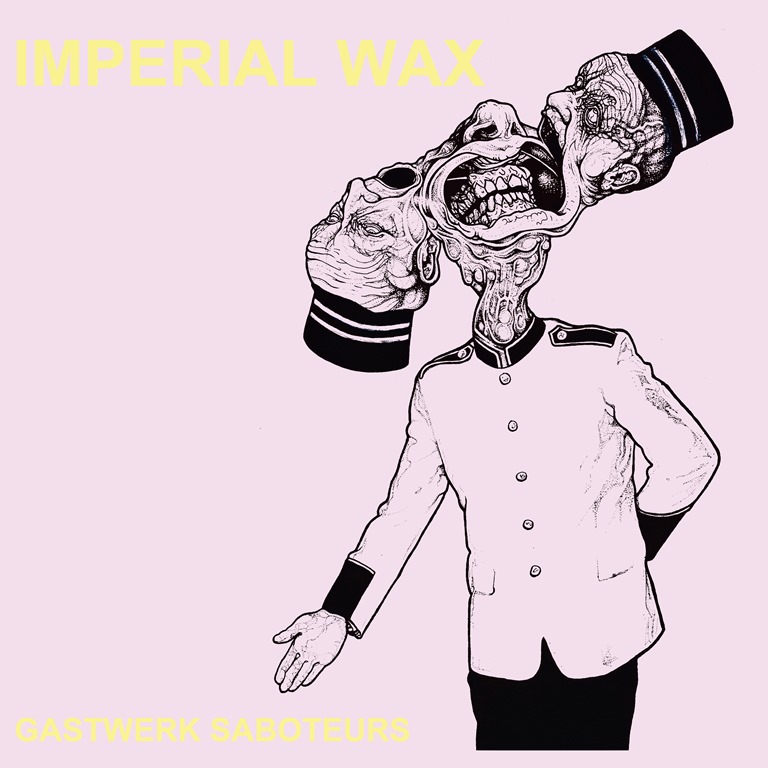
And so the band that is effectively The Fall minus The Man Who Was The Fall-uh, with a name which is a truncation of a Fall album title, deliver a debut album which also bears a title that could easily be a Fall album. As a longstanding fan of The Fall (aren’t we all?) I’ve faced immense conflict over Imperial Wax. My review of their first single was favourable, because unwritten professional obligations somehow and because it was actually good. And actually, the bottom line is that Gastwerk Saboteurs is again good, albeit in a different way and partly because it confounds expectation. But then, what are the expectations? The only expectation of The Fall was that whatever they did, they did, they’d like The Fall. And it wasn’t purely down to Smith’s atonal off-kilter verbiage that this was so: there was something that filtered through that was subliminal, and existed on another level.

So, here we have the debut album by The New Fall. But this does and doesn’t sound like The Fall. For the most part, this is a full-on, no-pissing punk album. It is not a Fall-resurrected album. What do you do with that? The features which defined the band’s final years are all in evidence, and unashamedly here, and on that basis, it’s impossible to sidestep the fact that Gastwerk Saboteurs sounds quite Fall-like in places. But then again, it sounds like a band ploughing hard at a punk-rock furrow with real zeal and loving it.

It drives in fast and hard with ‘The Art of Projection’ which is a straight-on punk effort on one hand, but on the other, it’s got post-punk and a mess of Krauty Fall-iness in the mix.

Prefatory single ‘No Man’s Land’ displayed a heavy Fall influence, but then again, can one rightly describe the band that was The Fall as ‘Fall-influenced’? While some purists beefed that nothing produced their last two decades couldn’t touch anything they did post ’79, ‘81, ‘83, ’85 (because they’ve all got different perspectives and time markers for what they consider the band’s ‘golden age’), the fact is that while they may have settled into a certain groove in later years, if Mark characterised the band with his unique and inimitable vocals, the band backing him, which marked the most stable lineup of their entire career, was a formidable riff-conjuring unit responsible for the music – both its composition and performance. And on that basis, while the closing lineup may not stand as a ‘classic’ in vintage terms, but make no mistake: they were The Fall to the end. But then, they were contractually obliged to sound like The Fall, no doubt. It’s no disrespect to MES that his band should want to cut loose a bit. And Gastwerk Saboteurs finds them cut loose, if only for a bit, kicking out some solid four-chord riffs with sneering attitude.

‘Saying Nothing’ packs a primitive post-punk chop, and there are plenty of fine and overtly unpolished songs wedged in tight here. If anything, it’s the rough ‘n’ ready rawness of this socio-politically-charged album that defines it far more than any musical lineage. It’s a fresh start, and a strong one.

AA

502565

10th May 2019 – Constellation

Christopher Nosnibor

SING SINCK, SING was always going to be a bit of a trip, being the fruits of a collaboration between Efrim Manuel Menuck – founding member of Godspeed You! Black Emperor and Thee Silver Mt. Zion – and Kevin Doria from Growing and Total Life.

‘Do the Police Embrace?’ sets the tone: an immense, repetitive, oscillating drone where melody melts into vaporous abstraction and the vocals, not atonal, but keyless and quavering. There’s a heavily sedated, psychedelic feel which is all-pervasive: the album’s five tracks are sprawling patchouli-scented sonic meditations.

‘A Humming Void an Emptied Place’ is the sound of multitonal dronal collapse, and stands comparisons to some of the extended drone-centric workouts that feature on Swans’ Soundracks for the Blind and the releases from their last iteration, only without the build, the crescendo, dare I say the pay-off? The objective is clearly very different: this is an album designed for hypnotic immersion rather than catharsis.

In music criticism, ‘woozy’ is one of those descriptors that has mixed connotations, perhaps more often than not hinting at a vague mixed pleasure a certain level of dizziness can give rise to, the light flip of the stomach after a rollercoaster or a touch of alcohol-induced giddiness. But are SING SINCK, SING (is that an album title or a band name, or both?) feels more like the woozy of carsickness after a long journey on winding, bumpy roads on a hot day. It’s the awkward, slurring slapback reverb on the vocals on ‘We Will’; it’s the droning organ tones that criss-cross in slightly out-of-time waves; it’s the formless expanses which undulate, heave, and sigh.

AA

cover_1551113580700996

Hominid Sounds / Rip This Joint –10th May 2019

Christopher Nosnibor

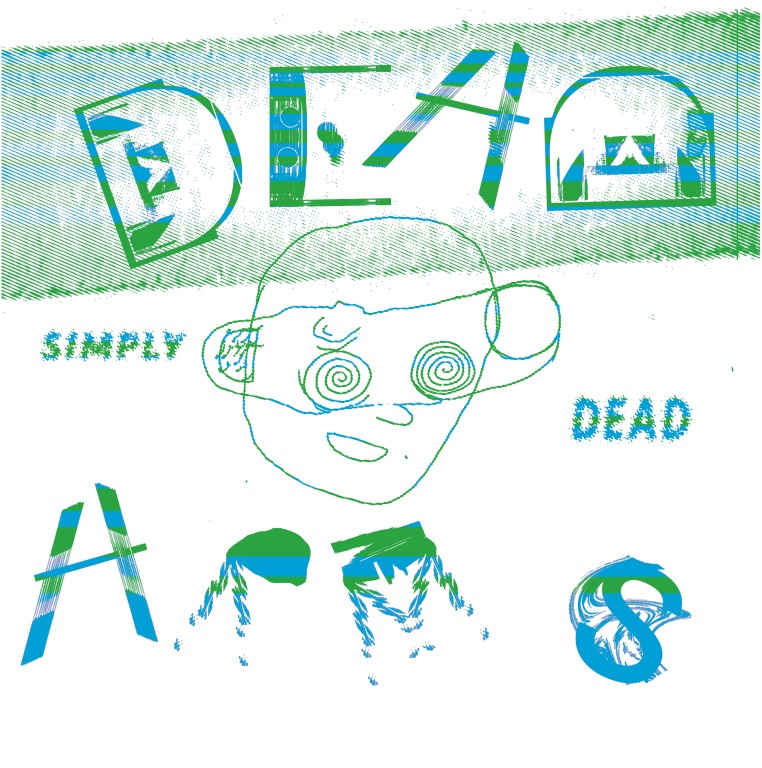
Do we need another sort-of semi-supergroup? When said collective features members of USA Nails, Death Pedals, It Often Takes A War, and Los Bitchos, we absolutely do. The label promises an album packed with ‘succinct slices of Jesus Lizard infused garage punk dealing with the big issues of our time from Brexit to Hollywood sex scandals’.

The lyrics aren’t always – or even that often – decipherable, but this is the kind of roaring guitar racket that you listen to first and foremost for sonic impact and the sheer viscerality. Then again, titles like ‘Biased Broadcasting Corporation’ give a fair indication of their anti-establishment antagonism. No messing: Dead Arms play proper punk, hardcore style, fast and incredibly furious: the rage burns and pours from every pore, every bar, every note. And yes, the influence of The Jesus lizard on their gritty, dirty, sweaty heft of noise is more than apparent even without single cut ‘Apocalypse Yow’ (which is straight out of the book of That Fucking Tank punning titles and is accompanied by a zero-budget video cobbled together from BBC footage from the House of Commons).

The howling mania and jolting, juddering, lurching rhythm and angular guitars are raw and primitive, and there’s nothing pretty about this. With the majority of the songs clocking in well under the three-minute mark, it’s a short album that achieves maximum impact through sheer brute force.

AA

Album Artwork

Opa Loka Records – OL1902 – 10th May 2019

Christopher Nosnibor

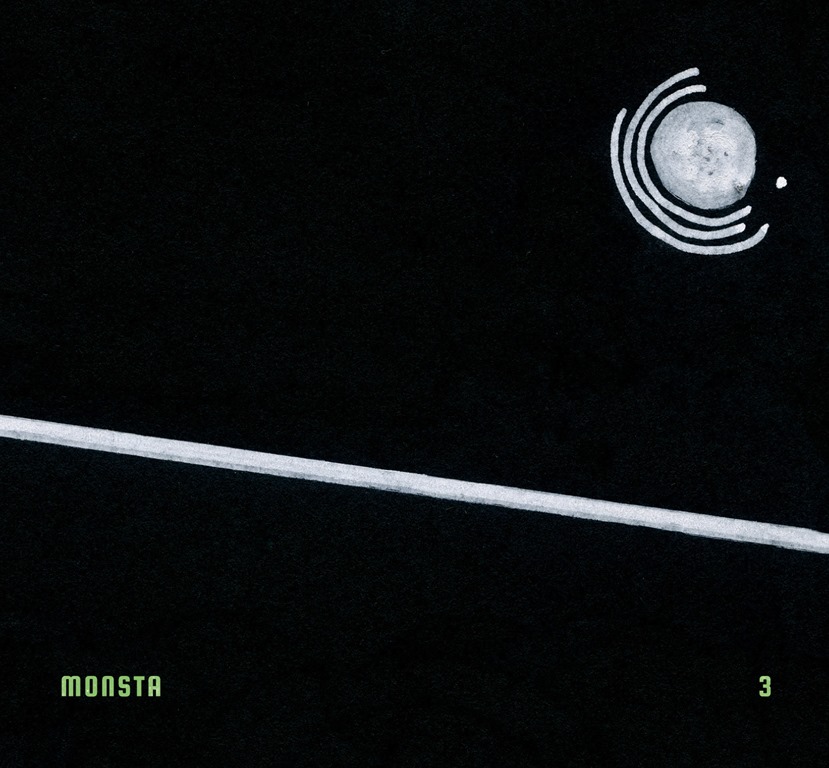
Monsta is a solo project by Boaz Bentur, bass player and producer from north of Israel combining elements from psychedelic music, electronic and experimental.

III is Bentur’s second release as Monsta, and comprises two (very) long tracks, ‘A3’ (28:00) and ‘B3’ (36:54). According to the accompanying text, ‘This album is a part from a series of live psychedelic/meditative sessions performed in special locations and atmospheres when people are lying down on the floor with eyes closed’.

At first, there is nothing, and I forgot I’d even started the thing playing. Then, after a minute or so, a vague sound, barely audible… then something resembling the sound of a distant plane…. The continuous hum swells in volume, but changes barely, if at all. Over time, echoic rumbles and soft, nebulous drones spread to fill the air. Besides this, not a lot happens. But one senses the purpose behind the music here is about anything but events, what happens or doesn’t happen, but about the sensations it inspires. And that sensation is incredibly soothing, as the sounds somehow render time an irrelevance and lift the mind out of the body into a state of great calm. You don’t step out of time, as much as slowly float above it, the bonds of corporeal existence gradually loosening as you slide into another dimension.

Around 18 minutes into ‘A3’, you realise it’s still going and that the echoing notes and vespers that tinge the air have changed, although it’s impossible to describe how or why. There just seems to be more… space. More echo. This feels more controlled somehow, more composed, note consciously layered, the reverberations more formulated, but it still feels and sounds fluid, and every layer of vaporous drone seamlessly transitions into the next. And consequently, you’re actually feeling relaxed, ok.

Yes, by you, I mean me. I’m not really listening: because Monsta III is ambient to the max. I’m pottering about doing other things, reading news items and Facebook comments, but as ‘A3’ tapers into the turning contrails of ‘B3’, I’m vaguely aware that this is ‘background’ music at its best. My heart rate is normal, I’m not twitchy or anxietised, and without my doing breathing exercises. I’m light, at ease. Vaguely bewildered, uncommonly separated and approaching a certain contentment.

And even now, the title remains a mystery.

OL1902_front

Southern Lord – 10th May 2019

Christopher Nosnibor

BIG | BRAVE continue their journey by revisiting their roots – as much in terms of principles as sonically. Consequently, A Gaze Among Them is exploratory and dynamic above all else, and herein lies both its strength and appeal: it’s the work of a band pushing themselves, in all aspects of the creative process. and the band pushing themselves pushes the listener, too, leading them through the sweeping vistas imbued with a significant emotional heft. Of course, that’s difficult to quantify, because it’s about the individual. And yet… BIG | BRAVE commutate immediately, transcendentally, and on the basis of their own agenda

Apparently, the album’s creation began with the question “How do we take very little and make something bigger than what we actually have?” Vocalist and guitarist Robin Wattie explains further, “the biggest challenge was to not do what is easiest. i.e. what we knew worked for the last albums or what is, for us, easy to write. With A Gaze Among Them, Mathieu and I put ourselves through the ringer [sic]– I did not want to do what seemed to me to be a ‘logical next step’ in what we could do musically. I wanted to go back to our original concepts and work from there – space, tension, minimalism and voice (finding melody and musicality in pieces that consist of one note for longer than ten minutes, for example) were the primary concentrations I wanted to push.”

The result is – as anyone familiar with their work to date would expect – immense. The emotional power is every bit as impactful as the crushing power chords, which are but punctuation to expansive passages deep in atmosphere.

There is much space and tension to be found both binding and pushing apart the sonic elements that make up the album’s five immense tracks as the drums pound into infinity while the overdriven low-end yawns and surges into peaks and troughs on a scale of a galactic tide.

The nine-minute opener, ‘Muted Shifting of Space’ has all the hallmarks of post-punk melded with shoegaze but performed with the density of hefty sludge, and the raging tempest that explodes in a blistering crescendo at the mid-point of ‘Holding Pattern’ is sublime.

‘Monolithic’ is one of those words that’s slipped into overuse when critiquing music in this field, but it’s apposite in context of the toweringly immense, dense sonic sculptures BIG | BRAVE forge and which cast long, looming shadows into the psyche. There are passages when they sound like a bad, but mostly they sound like something else, something so much greater than the parts. Wattie’s voice is the key defining feature, simultaneously forceful and fragile, calling to mind Cranes’ Alison Shaw as she ambulates and fills the ever-shifting space. It’s a sound that’s haunted, lost, detached, frantic, and other-worldly.

‘Body Individual ’expands that territory, starting sparsely with little more than Wattie; voice ringing out and wrought with an array of conflicting emotions, before a churning mess of noise that builds like latter-day Swans. But the build knows no end: the sound builds, and builds, until it’s all consuming, all-encompassing. It’s something else, and then something else again.

‘This Deafening Verity’ is but an interlude, three minutes of atmospheric organ drone punctuated by distant rumbles of thunder. Robin mewls plaintively, the words unintelligible. It matters not: it conveys so much on its own, inviting the listener to place themselves into the blank spaces, before ‘Sibling’, which prefaced the album’s release grinds its way to the close, a monotonous distorted pulse providing a rhythmic core around which the layers swell from stark to swirling, erupting in dense clouds of nebulous noise around the mid-point. Descriptions and comparisons fall to futility when presented with something this enormous this powerful, particularly when that power stems from a place that’s invisible and impossible to pinpoint.

AA

257800

Southern Lord – 26th April 2019

A new Sunn O))) album is still an event, even after all these years as the leading exponents of droning doom, a field now crowded with imitators and influences. The sense of ceremony is a major factor: Sunn O))) appreciate and command ceremony in every aspect of their exitance. As good as so many who have emerged to follow in their wake may be, there really is only one Sunn O))). The thing with Sunn O))) is that while they very much do mine deep into their self-made seem, each release offers something different, a variation on that consistent sameness.

And so it is on Life Metal that co-founders Stephen O’Malley and Greg Anderson set themselves a production-orientated goal for realising their immense sound, namely to have their playing captured by god himself, Steve Albini. The story goes that Steve took the call, and said ,“Sure, this will be fun. I have no idea what is going to happen.”

The resulting four tracks, which evolved through time in rehearsal, and with collaborative input from Anthony Pateras, Jóhann Jóhannsson collaborator Hildur Guðnadóttir, guitarist / bassist Tim Midyett, and live mainstay T.O.S bringing Moog action, were laid at Albini’s legendary Electrical Audio studio, and the end product (at least on vinyl) is pure analogue, with an AAA rating.

And it certainly brings the band’s earthy qualities to the fore: the richness, the density of the speakers vibrating in their cabs as displaced air emerges as sound in its most overtly physical manifestation is all captured in a way that conveys the immersive, all-enveloping experience of being a room with the band. As is also the case with Swans and A Place to Bury Strangers, the intense volume isn’t a gimmick but a necessary part of the sound and the experience. Some frequencies simply don’t exist at lower volume, and tones resonate against one another in a certain and quite different way when everything is turned up to eleven and then maximum gain applied. And the effect is transcendental. And whereas its predecessor, Kannon was comparatively concise, with its three tracks clocking in around the half-hour mark, Life Metal goes all out on the expansive, the four pieces running for a fill seventy minutes.

It begins with a distant rumble, before, after just a matter of seconds, the first chord crashes in: thick, dense, so distorted and low-registering as so almost collapse under its own density. But from the slow-crawling swamp-heavy ooze emerges individual notes, the makings of a melodic lead guitar line, and from the darkness radiates a gleam of light. Feedback… soaring notes… grandeur on a galactic scale. And then… Guðnadóttir’s voice. Detached and somehow simultaneously clinical yet emotive, assured yet utterly lost, it possesses an other-worldliness as it drapes dimensions across a simmering drone forged from a lattice of layers reminiscent of sections of Earth on Earth 2.

‘Troubled Air’, which features Pateras’ pipe organ work heightens the impact of volume as well as the ceremonial, ritual undertones which run through every Sunn O))) composition. By turns beauteous and beastly, shifting between moments of monumental grace and churning discord.

The nineteen-minute ‘Aurora’ goes low and slow, a single chord hanging in the thick, muggy air for an eternity until it twists out of shape and becomes a whine of feedback. And then it goes lower and slower still. The suspense builds between each chord, which elongates out to a droning sustain, and when the next lands, it’s with the force of an imploding black hole. Because Sunn O))) don’t do things on a small scale or in light: instead, they amplify darkness until it goes beyond critical mass to become all-consuming.

It ends abruptly in a peak of feedback before a deluge of grinding guitar, overdriven and distorted to a point beyond devastation hits like a tsunami to open the twenty-five-minute closer, ‘Novae’. Again taking clear cues from Earth 2, it’s a heavy drone that occupies the full sonic spectrum as howling strains of feedback whine over bowel-rupturing lower frequencies. Nothing much happens: it doesn’t need to. This is about taking a concept and pushing it as far beyond its logical end as possible, something Sunn O))) have effectively made a career of. And it still works.

And if ever a single album encapsulated the fundamental concept of Sunn O))), Life Metal would be a strong contender.

AA

919042