Archive for the ‘Albums’ Category

Fabrique Records FAB073 – 17th January 2020

Christopher Nosnibor

As the press text summarises, ‘Cusp is a collection of compositions taken from the soundtrack for the film STRESS by Florian Baron. The feature-length documentary gives voice to five young veterans, their experiences and trauma’. It was never going to be light or upbeat, and immediately, the sounds emanating from the speakers are unsettling, disturbing: blasts and reverberating crashes echo all around over slow, elongated drones, and ‘It’s Happening’ washes into the slow ebb and flow surges of synth that form ‘Them or Me’.

It may be good to talk, but those of us who haven’t been there simply cannot relate, cannot compute or comprehend the meaning, the pain, the anguish. It’s a world beyond and it would be a mistake and an insult to pretend otherwise. Anything, from sympathy to empathy feels like an underestimation and an undersale, a devaluement. Perhaps it’s an act of solipsism: the suffering in the mind of another is unknowable. This renders the territory Cusp and the film it soundtracks difficult on a number of levels.

Trauma is by no means entertainment, and while I haven’t seen the film, Irmirt’s handling is impressive in its subtlety, and it’s understandable why she was awarded the German Documentary Film Music Award in 2019. The jury remarked how in her soundtrack, she ‘dissolves the boundaries between sound design and musical composition in a virtuoso and at the same time self-evident way, thus creating a sound cosmos that, through uncompromising reduction, generates brutal knowledge.’

The best soundtracks are always understated, and compliment, rather than dominate the visuals they accompany, and Cusp, which takes fragments of the soundtrack as a whole – with eight tracks, half of which are only around the two-minute mark, this is a distillation of a broader experience, and it works well.

It is dark, unsettling, but nothing is overdone. And that’s why it works.

AA

Jana Irmirt - Cusp

Karlrecords KR073 – 24th January 2020

Christopher Nosnibor

Aidan Baker and Gareth Davis are no strangers to Aural Aggro: both feature in the roll-call of post-rock collective A-Sun Amissa, led by Richard Knox, and Baker’s myriad collaborations and contributions have received coverage here, and with good reason. Their contributions to the field of post-rock / ambient / brooding neoclassical orchestral avant-garde are substantial, to say the least.

It was two years ago that Canadian guitar player Aidan Baker and Belgian clarinettist Gareth Davis came together to release Invisible Cities, which, as the press release notes, ‘the duo explored the calmer side of things – from chamber jazz to ambient / drone and back, giving much space and air to breathe to their respective instrument’.

And so to the sequel: more of the same, yes, but different. Because there is always evolution, and never stasis.

Ominous. Unsettling. Slow-moving. Atmospheric. Resonant. The adjectives bubble up through the mist of ‘Hidden’, the album’s first composition as strings scrape and moan through a gauze-like haze and layers build and drift. Everything is vague, the elements fading into one another, with brief incidentals bringing tension and disquiet to an otherwise tranquil but strangely indefinable atmosphere.

‘Eyes’ rumbles into darker territory, rumbling, billowing darkness providing an undercurrent for wisps of otherworldly drones – forged on strings, but detached from the context of specific instrumentation

When listening to ambient works, I do, at times, find myself pondering the source or the various sounds. ‘That’s a violin’; or ‘that’s a cello’; or ‘that’ll be the clarinet’. It’s a distraction I could do without, especially when effects – and sometimes just reverb and the way notes and sounds rub against one another to create seemingly unnatural sounds – mean that instruments don’t sound like the instruments they are, and often don’t even sound like conventional instruments. It’s better just to let it all wash over you, and to let the sound swell and envelop your being.

This is very much true of the dense, malevolent sonic swirl of ‘The Dead’, which tapers down seamlessly into ‘Continuity’, where drones hover and piano notes crash as if sliding down a staircase and metallic drones slide and it’s a minimal approach to instrumentation that creates the greatest tension, which ultimately dissipates in the altogether warmer climes of ‘Names’.

Baker and Davis bring out the best in one another, combining their creative capabilities to forge ambience with depth and the power to affect mood rather than merely hover, and Invisible Cities II is strong, moving, and evocative while at the same time conjuring a perfectly distracting aural fog.

KR073_front

Midira Records – MD080 – 13th December 2019

Christopher Nosnibor

It’s new year’s day, 2020. Like many, I’ve spent the last few weeks reflecting on the passing year: I usually do around this time, remembering where I was a year ago, two, three, five, ten years previous. Wondering precisely what I’ve got to show for it. that slow, sad, weight of nostalgia as the images captured in memories fade and curl around at the corners. Wondering: was I actually happier then, less prone to panic, or is this simply rose-tinting, psychological refuge in the comfort of the known, the life lived, rather than the fearful prospect of the unknown future? Such conflict, such dichotomy and dilemma.

And so, another year is indeed over, and here we are, staring into the void. Teetering on the brink of the abyss of a new decade in a post-fact, post-truth world where the capitalist world teeters on the brink of self-induced collapse and global climate catastrophe. And there is no success like failure.

We’ve failed as individuals, and as a species. The year is over… so what is there in prospect?

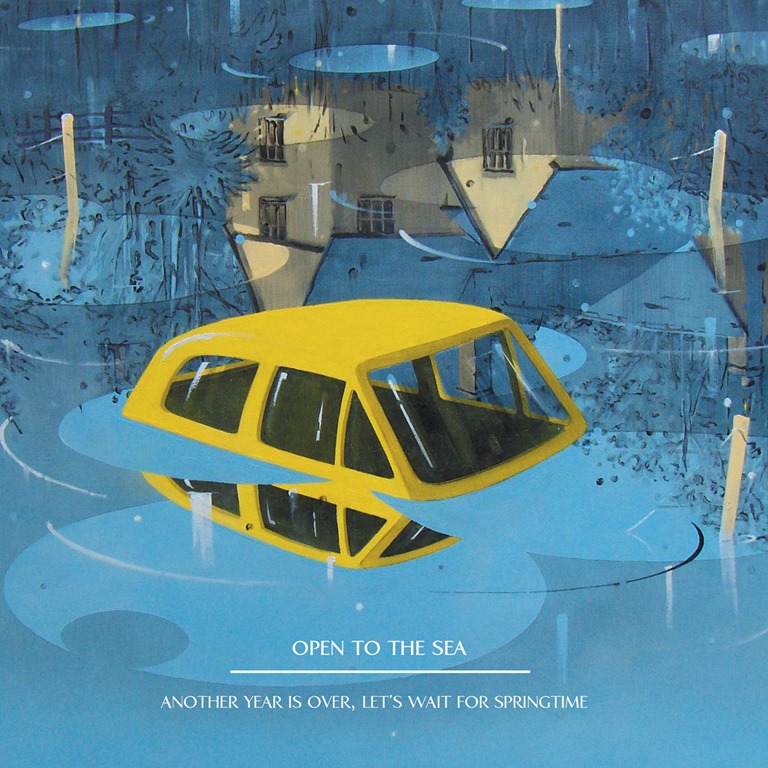
Open to the Sea’s new album, released late December provides the soothing backdrop to my existential strife, and it’s barely there for the most part. And yet, it’s there just enough: understated, yet still clearly stated.

The press release provides some useful insight into the album’s origins and its creators: ‘Open To The Sea is the collaboration project of Matteo Uggeri and Enrico Coniglio and Another Year Is Over is their second album. While Coniglio focusses on guitar, synths and other instruments, Uggeri adds samples and field recordings to create a soundcosmos full of tiny melodies and themes with appereance by some guest musicians on drums, trumpet and cello. That would make a perfect experimental ambient album with jazzy moments, but Uggeri & Coniglio push this release further by adding some vocals to most of the tracks by inviting guest singers like Dominic Appleton (This Mortal Coil) or Lau Nau from Finland.’

Minimal post-rock forged from sparse piano notes which drift into a rarefied air, spun with subtle, near-subliminal swirls of ambience, and stammering, glitching beats that hammer like a palpating heartbeat rattling in a tense ribcage, and picked guitar notes waft into the ether.

With different vocalists contributing to the various tracks, the tone and feel changes: ‘Heavy Like a Falling Leaf’ is soft, airy, yet poised, while ‘Uninvited Ghost’ and ‘Crystal Dog Barks’ feature a spoken word lyrical delivery, which in some respects changes both the dynamic and balance, and the function of the musical accompaniment, rendering the piece less a song and more of a narrative with instrumental backing.

‘Duduk Confession’ is hushed, brooding, with haunting strings and ominous hums lingering in the shadows, and on ‘Tapes and Cows Pt 1’, lonely brass wails softly over low notes to produce the most forlorn jazz imaginable. Scraping strings and frosty synth flickers accompany the deepest woe, which gradually evolves into warped space-age electro that melts into some warbling jazz trumpet.

The penultimate composition, ‘facing the waves’ is by far the most conventionally ‘songy’ of the ten, with a straight-ahead drum rhythm and solid piano providing the primary instrumentation on a whispy indie/shoegaze work. The fading refrain of ‘time now to start again’ is sung by a layered-up vocal set and, unexpectedly, Interpol come to mind.

The final song, ‘Another Year is Over, Let’s wait for Springtime’, with its whispering dialogue and soft dulcimer shimmers and soft, snowy strings that glide smoothly into the darkest corners, reminds me of my urge to hibernate, but also the fact that everything passes in time and everything is cyclical. Yesterday, today, tomorrow – they’re all points on a circle, and as linear as life lived is, as sure as birth and death, one year will follow the last, and so it will go on, whether we’re here or not.

AA

MD080_front

Panurus Productions – 22nd November 2019

Christopher Nosnibor

Newcastle-based cassette label Panurus really don’t have a particular house style, genre r aesthetic beyond releasing stuff that’s different and obscure. A lot of music that languishes in obscurity does so not because it’s not good, or even necessarily because it’s inaccessible, but because it simply doesn’t receive the ‘right’ exposure – or any at all.

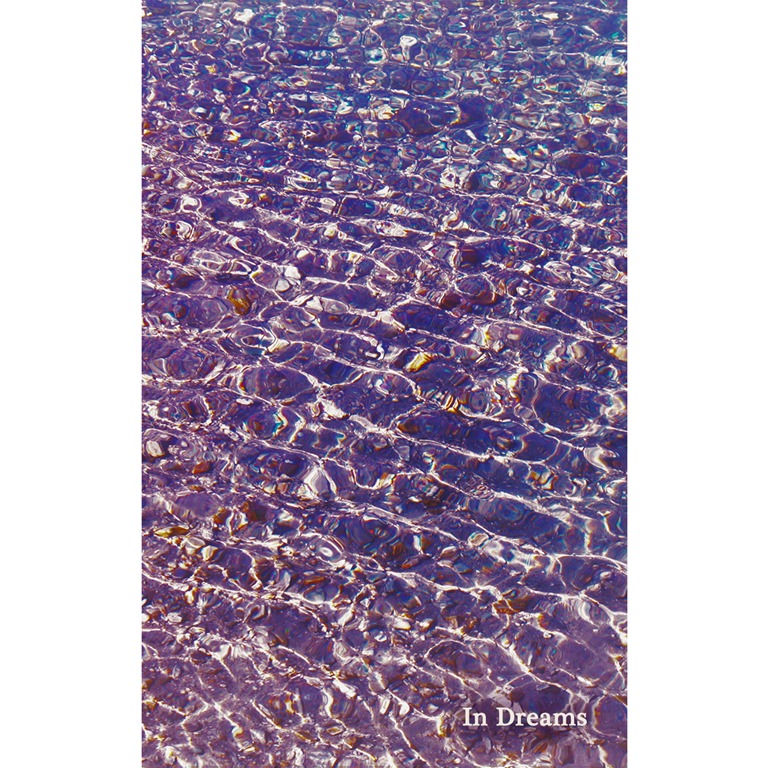
In Dreams is a sharp contrast with the last two Panurus releases, in the for of the ultra-harsh blackened hardcore torrent that was Mineshaft’s VENUM LUXDOR DISCOVERY SUPER NOVA and Whelmed, a deluge of sluge and nose courtesy of Lump Hammer and Bodies on Everest, in that it’s an electronic work that promises ‘a serene soak in this sonic pool – an oneiric rendition of water and submersion’.

The majority of the titles share an aquatic theme, and the albums ripples in gently with ‘Floating’. The soft, easy notes tinkle softly like summer rain on the surface of a kale, with a soothing effect. It segues seamlessly into the broader sonic wash of delicate hums which form ‘With the Tide.’ This is not the surge of waves breaking on rocky outcrops, but a steady, low-ebb lapping.

Deeper currents begin to build on ‘Awash’, and for the first time, there are hints of tension and an indication of the potential power a body of water may possess. This dissipates as the listener is carried almost subliminally into the otherworldly space of ‘Drifting Slowly’, a strange and almost silent sonic realm that calls to mind Blue Planet scenes, the serenity of the deep, a vast expanse occupied exclusively by strange and silent creatures. The final two compositions, ‘Out of Body’ and ‘Descent’ merge together in a soft, muffly suspension.

In Dreams is almost quintessential in its ambience, almost formless, the amorphous shapes impossible to capture or define. It’s undemanding, and it’s pleasant.

AA

cover

December 2019

Christopher Nosnibor

Ukranian industrial duo Kadaitcha, consisting of Andrii Kozhukhar and Yurii Samson, have stepped up a gear for their fourth album, Tar, which follows Southern Phlegm, which landed at the front end of the summer. It’s an expansion in every sense: sonically, it displays a broad palette, from barely-there ripples and clicks to all-out abrasion, with all shades in between, and with seven compositions, ranging from six-and-a-half to thirteen-and-a-half minutes in duration, there’s a lot of room in which to venture on an exploratory journey.

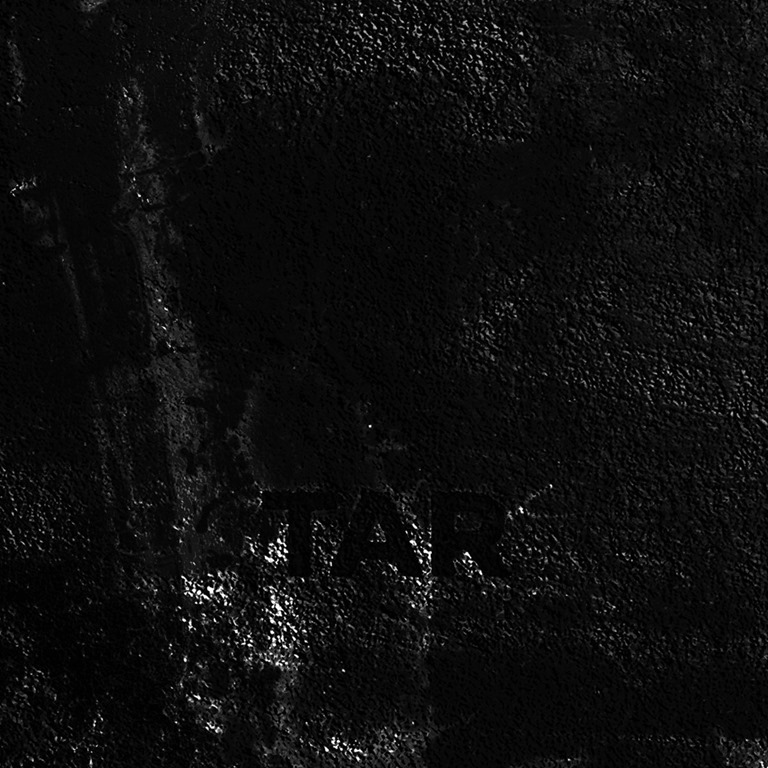
They describe Tar as their ‘most powerful and elaborate release so far’, and there’s a story of sort behind it, as Andrii explains: ‘[The] album cover is based on the images from the series APEIRON by Ukrainian photographer Maxim Dondiuk. It’s a series of scanned photo negatives found in the Chernobyl exclusion zone, which were remaining there lost and forgotten for over 30 years, being subject to radiation and forces of nature.’

The images, available on Dondiuk’s site are disturbing and otherly, and convey more about the horror of the Chernobyl catastrophe, an event on an environmental, ecological and human scale that still has yet to be fully assimilated and that has, globally, faded into the annals of time for many, than any narrative possibly could. Tar effectively provides a soundtrack to these images. The album has a discernible arc, which transitions and deteriorates into ever-deepening distortion and degradation.

Spacious, atmospheric electronic layers hover and cascade around sparse desert guitar twangs at the start of the first piece, ‘Idle Hands’, before mangled chords, overdriven and distorted, crash in. ‘2219 F’ also collides soft, semi-ambient soundscaping with crushing wall-of-noise guitar screes that come on like an avalanche and devastate everything in their wake. And yet things are only just beginning to take shape: this only foreshadows the aural challenges yet to come. ‘Ran’ brings pulverizing rhythms and a deluge of noise in an altogether more overtly ‘rock’ format, and it’s got tension and attack, and marks the first stage in the transition toward a harrowing mess of ugly noise.

There aren’t many vocals on Tar, but when they do enter the mix, they’re gnarled, dehumanied, and monotone: ‘Eclipse’ is Throbbing Gristle on a doom-infused downer: a persistent electronic throb provides the backdrop to a detached, dehumanised vocal wheeze, and ‘Serpent Hill’s slithers into a murky morass of discomfiture. By the end – the overloading analogue explosion of the 13-minute ‘Yatagarasu’, which calls to mind Halogen-era Whitehouse – it’s a barrage of noise, a clunking beat and something semi-musical plinking away beneath a squall of white noise.

It hurts, but in a good way, a way that conveys damage, devastation, and environmental devastation.

AA

AA

AA

K - Tar

Svart Records – 15th November 2019

Christopher Nosnibr

It’s the Christmas lull and having just pulled together a review of the year, I realise I’ve still got months of catching up to do, with stacks of releases by acts I genuinely like that I’ve yet to get around to listening to lurking in my inbox and download folder.

For those needing to catch up: ‘The Deathtrip began around 2003 by UK-based guitarist/composer Host, with a view to create some cold black metal tracks, evoking a feeling beyond what was generally circulating in the scene at the time. Very much a DIY project, the initial recordings consisted of songs featuring raw yet distinctive riffing over intentionally stripped down, repetitive and simplified programmed drums, combined with a raw-as-can-be ‘production’. The aim was for something hypnotic & primitive, achieved by using repetitive structures and multi-layered guitar parts’.

Like so many acts over the last decade, I first discovered The Deathtrip when I received an album for review – in this instance, 2014’s Deep Drone Master. On the one hand, it struck me as a quintessential black metal album; on the other, it was a damn good example of a black metal album that stood up alongside the greats.

The same is true of Demon Solar Totem. It’s dark, dense, demonic. The production is ultra-murky and appropriately lo-fi, adhering to the DIY aesthetic and the principles of a scene so underground and to be ploughing a passage though molten magma: the drums are a blurred blizzard of blasting beats. The snare is practically absent amidst crashing cymbals and hundred-and-fifty mile per hour bass beats.

The title track commences proceedings with eight minutes of grandiose black metal steeped in ceremonialism. It’s punishing and furious and dark and highly theatrical, and monastic voices rise in sepulchral echoes as the guitars fade in a long afterburn. And everything burns: it’s a nonstop blast of furnace-like heat belched from the bowels of hell. Every note, every guttural utterance, is twisted and tarred. It’s relentless and savage. ‘Vintage Telepathy’ hammers a sludgy trudge, and powers onwards to the megalithic dirge that is the final track, the nine-minute ‘A New Awakener’.

There is nothing kind or accessible about Demon Solar Totemi: it’s unremittingly punishing. And that’s precisely why it works.

Editions Mego – 1st November 2019

The 80s was an exciting and revolutionary time, and UK label Some Bizzare gave a platform to some of the more unusual exploratory and experimental acts around the middle of the decade, meaning that while acts like Depeche Mode and Soft Cell were mainstays that brought in funds, they were able to release albums by Soft Cell offshoots like Flesh Volcano, as well as work by Foetus, The The, Coil, Einstürzende Neubauten, and Cabaret Voltaire. Their reputation may have slipped in later years following various stunts and a major falling out with Neubauten over unpaid royalties, but the legacy very much remains strong.

The Elbow is Taboo was Renaldo & The Loaf’s fourth and last album of their initial phase prior to their return in 2010, which was released by and Some Bizzare in the UK and Ralph in America in 1987. Marking a significant expansion and evolution on their previous outings in compositional and instrumental terms, and the result of three years’ work, it’s considered to be ‘the definitive statement by the group in this early period’.

There was a 2016 reissue, with a stack of ‘elbonus’ material and I’m sold on the pun alone, but this Editions Mego reissue has to be the ultimate, as in addition to the elbonus stuff, the first 300 vinyl copies and digital editions also include bonus bonus 7” tracks ‘Hambu Hodo’ live and a remix, ‘Hambu Hoedown’, which ultimately sees the album’s original nine tracks expanded to twenty-two. Comprehensive is the word.

But is it any good?

It’s leftfield, weirdy and experimental: the album’s first piece, ‘A Street Called Straight’ melds medieval folk with tribal drumming and something pan-pipey and hints at neofolk but then goes off at some odd tangents, before ‘Boule’ does some kind of quirky somersaults across traditional Japanese music and sparse, clattering electronica. It’s the stuttering, busy-yet- rattly percussion that defines the oddball and off-kilter compositions, from the wonky country twangery of the title track to the marching Krautrock groove of ‘Hambu Hodo’ that lands somewhere between the pulsing electro of DAF and the zany mania of early Foetus. ‘Critical/Dance throws some jazz and atonal bleepings into the mix. It’s this offbeat eclecticism paired with an emphasis on rhythm that renders The Elbow is Taboo simultaneously compelling and bewildering.

The slew of bonus material on Elbonus ranges from fragmentary loops to fully realised versions and songs, spanning disorientating sound collage to audio collisions which are simply dizzying, not to mention quite inexplicable.

If ever an album qualified as a lost classic, it’s The Elbow is Taboo. So if the 80s underground is your scene, you need this. And if it isn’t, then it’s time to get educated.

AA

Renaldo & The Loaf – The Elbow is Taboo

Toundra, the intrepid instrumental rock band from Spain that recently announced the release of Das Cabinet Des Dr.Caligari are proud to present the first video/single from the album, which will be available on February 28th 2020.

You can now enjoy the first song, Akt. 1, here:

AA

The video is taken from the first Act of the movie to which Toundra have composed a breath-taking original soundtrack. The film is a quintessential German silent horror film directed by Robert Wiene that turns exactly 100 years old in 2020, and that the band approached it as a dialogue with the listener with the intention of questioning ideas like manipulation, freedom and human nature itself.

There has also been a tour announced this week, a unique opportunity to watch the movie while the band performs the album entirely.

28.02.20, Madrid, Teatros del Canal, tickets soon

06.03.20, Zaragoza, Las Armas

07.03.20, Barcelona, Aribau Multicines, tickets, http://www.cafekino.es

15.03.20, Siegen, Vortex

16.03.20, Hamburg, Knust

17.03.20, Jena, Kassablanca

18.03.20, München, Backstage

20.03.20, Darmstadt, 806qm

21.03.20, Martigny, Caves Du manoir

22.03.20, Stuttgart, Club Zentral

Christopher Nosnibor

CHUNK is a rehearsal space in Leeds which also puts on live shows. They’re the very epitome of DIY: it’s a couple of damp, crumbly rooms on an industrial estate some 40 minutes’ walk from the train station. They don’t have a license or a bar, so their gigs are BYOB, and they have a solid manifesto that stipulates ‘no bigots’. Divey as it may be, it’s a safe and accommodating space that’s crated its own scene, embracing the weird, the wild, the noisy, a hub for disparate outsiders. And I’ve seen a fair few decent gigs there, a fair few of which I’ve written about here, and in the company of decent people. Hell, I’ve even performed there: CHUNK facilitated my meeting with Paul, aka Foldhead, an event which would mark the arrival of a new musical entity in the form of …(something) ruined.

Spaces like this are rare these days. Everyone’s in it for the money, and no-one else has any. And so you have to love CHUNK for its commitment and integrity.

Sadly, commitment and integrity don’t pay bills, and this release is specifically pitched as a fundraiser for vital repairs. Less sadly, it’s a showcase of the acts who’ve emerged around CHUNK, and a celebration of the thriving underground scene in Leeds, which has recamped to CHUNK and Wharf Chambers now the Brudenell – ever-awesome as it is – has stepped up several notches from the student hangout it was a decade ago to a three-room venue of international standing. CHUNK have also expanded to a label branch – Voice of Chunk – to disseminate the works of the CHUNK community, and this release, on that label, captures the spirt of the scene perfectly.

This compilation reflects both the sense of community and the diversity of the scene centred around this space, and a fair few of the acts featured have been covered here at Aural Aggro.

The first track is a rough ‘n’ ready demo of a song Beige Place – whose debut live show I witnessed in this very venue – have been playing on their recent dates supporting Shellac. Yes, read and digest. Wonky, cronky, oddball, shouty no-image math-rock misfits from Leeds support Shellac on UK tour. And inexplicably divide Shellac fans. Kudos. This doesn’t actually need any more work, beyond perhaps mastering by Bob Weston. Its raw, ragged discomfort is everything it should be.

Cattle – who I’m elated to be featured on a bill alongside in February – bring a crashing swell of nihilistic nose with ‘Found in a Tract of Land’, and Cattle’s drummer Steve Myles also features on the contribution from Groak, who tossed ‘Lemnian Earth’ into the mix because they’re winding down and elected to support the venue instead of holding out hope of a new EP.

Elsewhere, M-G Dysfunction introduce an electronic element to the mix. Black Antlers impressed me when I caught their debut performance at CHUNK (where else?) in June, and the appearance of ‘Insomnia’ here marks their debut release, and showcases some brooding, shuddering electropop that comes on like a goth Goldfrapp or Zola Jesus without the operatics.

I’ve had the pleasure of bringing Territorial Gobbing to York, and as much of that pleasure was derived from observing the bewildered expression of many of the audience members. ‘Whose Big in the Karaoke Underground?’ is a disorientating mess of sounds, incongruous fragments, bleeps and bloops randomly spliced together, and Thank’s ‘Good Boy’ is noisy another highlight, although it sounds like it was recorded from the room next door. Meanwhile, Open’s ‘The Love Machine’ is an overloading, pounding psych racket, and Groak’s curtain closing ‘Lemnian Earth’ is s snarling, blackened assault that’s as raw as roadkill.

Having picked out some highlights, it’s worth pointing out that there isn’t really a duff or dull moment among the fourteen tracks here, and while not every act may be to everyone’s taste, that’s something to celebrate, being indicative of a scene that promotes diversity and where the most disparate acts perform side by side and support one another. Above all, this compilation shows – once again – how the Leeds alternative scene is thriving and continually producing new and exciting music by artists who dare to be different.

CHUNK is a rehearsal space in Leeds which also puts on live shows. They’re the very epitome of DIY: it’s a couple of damp, crumbly rooms on an industrial estate some 40 minutes’ walk from the train station. They don’t have a license or a bar, so their gigs are BYOB, and they have a solid manifesto that stipulates ‘no bigots’. Divey as it may be, it’s a safe and accommodating space that’s crated its own scene, embracing the weird, the wild, the noisy, a hub for disparate outsiders. And I’ve seen a fair few decent gigs there, a fair few of which I’ve written about here, and in the company of decent people. Hell, I’ve even performed there: CHUNK facilitated my meeting with Paul, aka Foldhead, an event which would mark the arrival of a new musical entity in the form of …(something) ruined.

Spaces like this are rare these days. Everyone’s in it for the money, and no-one else has any. And so you have to love CHUNK for its commitment and integrity.

Sadly, commitment and integrity don’t pay bills, and this release is specifically pitched as a fundraiser for vital repairs. Less sadly, it’s a showcase of the acts who’ve emerged around CHUNK, and a celebration of the thriving underground scene in Leeds, which has recamped to CHUNK and Wharf Chambers now the Brudenell – ever-awesome as it is – has stepped up several notches from the student hangout it was a decade ago to a three-room venue of international standing. CHUNK have also expanded to a label branch – Voice of Chunk – to disseminate the works of the CHUNK community, and this release, on that label, captures the spirt of the scene perfectly.

This compilation reflects both the sense of community and the diversity of the scene centred around this space, and a fair few of the acts featured have been covered here at Aural Aggro.

The first track is a rough ‘n’ ready demo of a song Beige Place – whose debut live show I witnessed in this very venue – have been playing on their recent dates supporting Shellac. Yes, read and digest. Wonky, cronky, oddball, shouty no-image math-rock misfits from Leeds support Shellac on UK tour. And inexplicably divide Shellac fans. Kudos. This doesn’t actually need any more work, beyond perhaps mastering by Bob Weston. Its raw, ragged discomfort is everything it should be.

Cattle – who I’m elated to be featured on a bill alongside in February – bring a crashing swell of nihilistic nose with ‘Found in a Tract of Land’, and Cattle’s drummer Steve Myles also features on the contribution from Groak, who tossed ‘Lemnian Earth’ into the mix because they’re winding down and elected to support the venue instead of holding out hope of a new EP.

Elsewhere, M-G Dysfunction introduce an electronic element to the mix. Black Antlers impressed me when I caught their debut performance at CHUNK (where else?) in June, and the appearance of ‘Insomnia’ here marks their debut release, and showcases some brooding, shuddering electropop that comes on like a goth Goldfrapp or Zola Jesus without the operatics.

I’ve had the pleasure of bringing Territorial Gobbing to York, and as much of that pleasure was derived from observing the bewildered expression of many of the audience members. ‘Whose Big in the Karaoke Underground?’ is a disorientating mess of sounds, incongruous fragments, bleeps and bloops randomly spliced together, and Thank’s ‘Good Boy’ is noisy another highlight, although it sounds like it was recorded from the room next door. Meanwhile, Open’s ‘The Love Machine’ is an overloading, pounding psych racket, and Groak’s curtain closing ‘Lemnian Earth’ is s snarling, blackened assault that’s as raw as roadkill.

Having picked out some highlights, it’s worth pointing out that there isn’t really a duff or dull moment among the fourteen tracks here, and while not every act may be to everyone’s taste, that’s something to celebrate, being indicative of a scene that promotes diversity and where the most disparate acts perform side by side and support one another. Above all, this compilation shows – once again – how the Leeds alternative scene is thriving and continually producing new and exciting music by artists who dare to be different. We need this space! Please support it.

AA
Sounds of CHUNK