Archive for March, 2026

Saccharine Underground – 27th March 2026

Christopher Nosnibor

Bell Barrow are on fire right now. And so is half the world. I wouldn’t necessarily suggest that they thrive on war and global turmoil, so much as feel the compulsion to create in the face of global crisis. I may be projecting a little here, but seriously – come the fuck on: how can anyone not feel all-consuming, abject terror right now? We’re hearing a lot of Israel claiming an ‘existential threat’ from the supposed nuclear activities of Iran right now – although this seems a little lacking in credibility, since it can’t also be true that the USA ‘annihilated’ Iran’s nuclear capabilities last summer. I mention this in my preface to the review of True Human Trough because although the current events aren’t mentioned specifically, it’s clear that this is an act who are tuned in to current tensions as well as ecological concerns, and who channel the energy of anxiety into their music.

As they themselves write, “These compositions function as experiments in torture empathy: forcing the listener to inhabit the suffering inflicted on our ecosystem by human dominance while simultaneously confronting a far older truth—that humanity’s power is temporary, localized, and ultimately irrelevant. Plant life, scavengers, and insect civilizations speak here through perceived chaos, not to ask for mercy, but to assert inevitability. True Human Trough reflects agony, yes—but more importantly, it documents supremacy. We may poison this world for now, but be clear…in the universal order, they rule in the end.”

I admire their optimism, and for what it’s worth, I share this hope. Because right now, it feels as if our species is suffocating the planet harder by the second. And suffocating is how the first track on this frenzied sonic blitzkrieg of an album feels. ‘Solunar Theory’ is a melting morass of experimental jazz immersed in a wall of phased reverb. Time signatures collapse into chaotic discord on ‘The Unbirthing of Jackals’. Everything lurches, drunkenly, it’s a dizzy stagger that’s powerful enough to unsettle the guts and leave you seeing stars. This is a woozy cacophony rendered all the more brain-frying by the wild application of reverb. Everything is off-kilter, the EQ is all over and there’s flange and phase and good old-fashioned manic musicianship, melting Beefheart and Zappa and Trumans Water in a cauldron with The Necks and Throbbing Gristle. Reading that back, it actually reads like some fucked-up Victorian era recipe that’s only missing some tripe and trotters to top a truly foul soup. Bell Barrow simmer up a pretty foul sonic soup even without these ingredients: ‘Neckless of Tongues’ delivers it

‘Infauna’ refers to the animals living in the sediments of the ocean floor or river or lake beds, while ‘bloat stage’ is occurs during the decomposition of a corpse. Yes, I looked this up while experiencing the obliterative force of ‘Bloat Stage Infauna’, and in context, it all makes sense. ‘Rites of Silent Spring’ is almost black metal in its frenetic frenzy, but of course, it’s also a jazz-infused instrumental which is a long way removed from black metal – which pretty much sums up True Human Trough, an album that’s everything all at once.

The production and mix is deranged, demented, furious. There’s no intention of softening the blows here: Bell Barrow are set on bringing pure mayhem and disruption – of the best possible kind.

We are living through historical moments in real time. As we hurtle towards self-extinction – it’s more a question of by which means than if now, what with the pace of climate change, AI’s rapid and unfettered advancement and now – let’s call it what it is – the onset of World War 3 – with True Human Trough, Bell Barrow have created a work which soundtrack the next stage of the end of times.

AA
Jeremy Moore by Fleurette Estes- February 2026 - Landscape 001

AA

Jeremy Moore by Fleurette Estes
Florida’s death rock/goth artist SINISTER SHADOWS has released a music video for the song ‘Just Begun,’ taken from the self-titled debut album out on March 26th via The Doorway To label.

It’s quite a shift in style from its predecessor, ‘No One Home But Me’. Watch the video for ‘Just Begun’ here:

AA

Sinister Shadows was created out of the love of death rock and goth rock from the Eighties and Nineties – bands like Bauhaus, The Cure, Sisters of Mercy, The Mission, and Nick Cave.

Sinister Shadows ‘ mastermind, Ryan Michalski (Idiot Robot, Ryan Cosmonaught), ran a video magazine called The Gothic Box in Tampa Florida years ago and went to such venues as The Orpheum and The Castle. Sinister Shadows wants to bring back the darkness, romance and flair that has been long missed of this sound and movement.

The album was recorded at Ryan’s RPM Studios in Tampa throughout 2025. The album sees the participation of Ryan’s longtime music partner Clint Listing (The Slumbering) for an intro and outro to the record.

AA

Ryan Of Sinister Shadows, Photo by Ryan Michalski(1)

Cruel Nature Records – 27th March 2026

The work ethos of Pound Land always makes me think of The Fall – and the same is true of the relentless repetition of their compositions. And it comes as no surprise that Red, the second studio by Pound Land side-project Machine Mafia, consisting of Jase Kester and Adam Stone, was recorded in a single day. Keeping things in-house, it was mastered by Agent Kester, too.

Whether or not the album’s title is in any way connected to its being recorded at Big Red Studios in Macclesfield, we don’t know, and it doesn’t really matter anyway. What matters – and what we are told – is that ‘Lyrically, Red explores themes such as the sanctity of personal freedom, the dreary mediocrity of business academia, the medicalisation of human behaviour, the strange comfort found in boredom, and supernatural motorcycle-riding anti-heroes with flaming skulls.’ Some of these topics I find personally relatable (my brief time as a university tutor was not enjoyable, essentially working a zero-hours contract teaching modules miles beyond my own field of research, to receive poor feedback from students who’d shelled out thousands for a degree and felt let-down by having a tutor who wasn’t a specialist, and only worked limited hours, so wasn’t sitting in their office for drop-in visits or able to respond to emails immediately. My favourite was a student emailing me five minutes before an essay submission deadline asking where the submission sheets were on the website while I was on a train with no access to my emails), others less so (I simply don’t get boredom: there’s always too much to do). But what I absolutely get is channelling all the frustration into something creative.

Given that Pound Land are kings of gnarly, repetitive, grinding noise and that Kester’s work outside Pound Land (Plan Pony, Omnibael / Ombibadger) has explored numerous shades of abrasive racket, that Machine Mafia create an unholy din is to be expected, and that’s what they provided with their debut album, Zoned, released almost a year ago to the day of this, their second full-length. But whereas Zoned tended to deliver short, sharp sonic assaults, with the majority of the thirteen tracks clocking in at less than five minutes, Red really pushes the boundaries, the five track release dominated by a brace of megalithic monsters in the shape of the thirteen-and-a-half-minute ‘Business Studies’ and their epic rendition of Suicide’s ‘Ghost Rider’ – which is even more manic and more brutal than the one performed by Foetus with Marc Almond. As for its colossal elongation, although the original is a mere two and a half minutes long, its hypnotic, repetitive groove could readily withstand looping into eternity. The Sisters of Mercy used to run it for six minutes or so as an encore in 1984 and ’85, Eldritch cutting loose with the Alan Vega screams. Machine Mafia tweak the tempo up a notch, and it’s a messy, dirty blast of electropunk, Stone spitting and whooping the words through the mangled metallic whir of overloading electronics.

It’s the perfect finale, and sits perfectly with the originals, which are a mess of pounding beats, squalling feedback, and angry vocals. The first of these, ‘NO’, is a relentless howl, five minutes of nonstop thunder and ear-splitting treble, Stone rabid and raving.

‘DSM’ is more straightforward noise rock, a bass-driven blast with layers of feedback. The format is repetition, repetition, repetition, like a noise reimagining of The Fall, drawing in elements of Metal Urbain. ‘Business Studies’ is simply brutal, a bludgeoning bastard of a noise with the refrain ‘fuck business studies’. ‘It’s all shit and piss’, Stone summarises with the kind of anguish that feels like he’s bursting out of his very skin. The vocals are thick with distortion, the glitching bass blasts from the speakers with dangerous density and it’s all wrapped in a mesh of feedback that makes The Jesus and Mary Chain sound like easy listening. ‘Boredom’ takes its cues from Throbbing Gristle’s ‘Discipline’ and adds wild feedback to the mix. It’s punishing.

There’s an additional, unnamed, ‘secret’ track a little way after ‘Ghostrider’, and it’s a messy, lo-fi mess of crashing drum machines and grinding synths over which Stone rants so hard you can almost hear the spittle. It sounds like early Uniform – stark, harsh, rabid.

Uncompromising doesn’t come close. Red is absolutely fucking punishing. If you’re into dense, dark, nasty noise, you need this.

AA

AA

a0309064163_10

Glasgow-based post-metal collective Void of Light have unveiled the new video for ‘Mirrorings,’ the lead single from their forthcoming debut full-length album Asymmetries, set to be released on April 3 via Ripcord Records.

Clocking in at a towering ten minutes, ‘Mirrorings’ first premiered at Decibel Magazine, who praised the track saying: “Clocking in at 10 minutes, ‘Mirrorings’ offers a pretty solid introduction to these gloomy Glaswegians, a dynamic epic that shifts from pummeling sludge to melodic shoegaze-inspired dynamism.”

AA

The band had this to say about the new album and new song: “Asymmetries is the culmination of two years of hard work and exploration. Across the album’s five tracks, we set out to shape our own sound within a well-established scene, creating something that genuinely feels like ours. The closing track, ‘Mirrorings,’ brings the album’s introspective themes into a final, defining moment and represents what we feel is our strongest offering so far.”

Void of Light are a six-piece post-metal force built on contrast. Brutal yet deeply atmospheric, their sound fuses crushing riffs and thunderous drumming with melodic leads and carefully layered arrangements. Rooted in post-metal’s foundations but shaped by a wider spectrum of influences, the band carve out a sound that feels vast and aggressive, yet intricate and finely balanced through a keen sense of dynamics.

Following the release of their self-titled EP in 2022 and the two-track EP Enshroud in 2023, Void of Light completed a short UK tour and quickly established themselves as a powerful live presence across local venues and festivals. Renowned for their formidable performances, the band deliver an imposing wall of sound that is both overwhelming and precisely measured, drawing audiences into an intense, captivating experience.

On Asymmetries, Void of Light turn inward. Exploring themes of perspective, reflection, and internal conflict, the album charts a journey of reconciliation between the masks of the past and the truths of the present. 

To celebrate the release, Void of Light will perform their album release show on April 3rd at The Flying Duck in Glasgow with support coming from Codespeaker & Obsidian Sand.

AA

09099a46-7335-e61a-22e1-559fee39d577

Bearsuit Records – 20th March 2026

Christopher Nosnibor

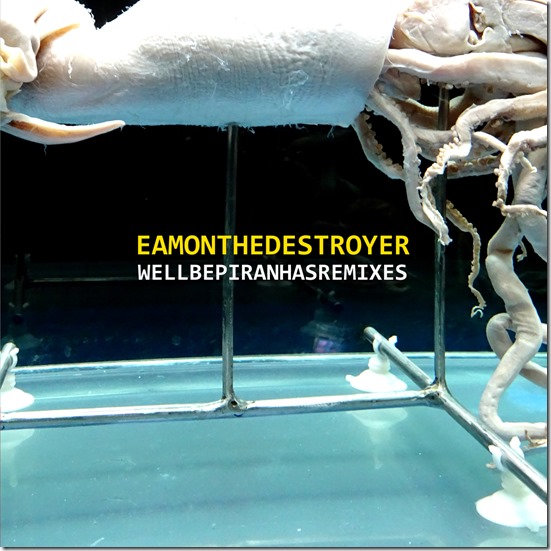
Anyone who’s been following this site for any time will have likely encountered the work of Eamon the Destroyer, and Edinburgh-based label Bearsuit Records, and in doing so, will have learned that the label specialises in weird shit, and that Eamon is an artist who conjures a uniquely strange musical hybrid, which is entirely free of the mores of genre-specificity. Idiosyncratic is the word.

And what better way to shed new light on all of this than through a remix album? I’ve written extensively in the past with a critical view on remixes – about how they eke out material on and on, or pad out singles into EPs and albums, and also about how they can be really fucking boring, with back to back versions of the same song over and over but with different drums, more disco drums, more aggressive drums, more industrial drums, while the vocals are dubbed out and mostly what you get is some ravey shit.

This is very much not the case with the remixes of We’ll Be Piranhas, the original version of which was released in 2023 and has already been subject to a follow -up / satellite release in the form of Alternative Piranhas EP (2024), which, as the title suggests, features alternative takes of some of the songs on the album. Since then, Eamon the Destroyer has released another album of new material, but this evidences that there’s more mileage in Piranhas yet. These reworkings are subtle and sensitive and, in the main, preserve the essence of the original tracks. That is to say, it’s a chaotic assemblage of twangy Western stuff which clashed and melts into Eastern vibes, all melted together with a filmic overlay, and none of it makes sense, but at the same time it makes perfect sense – if that makes sense. And if it does, well, good, because little else about all this does.

The sequencing of the tracks is different from the original album, and it works, taking into account the transformative reinterpretations of the songs, starting with a laid back but grooved-up take on ‘A Pewter Wolf’ by Senji Niban.

The Elkeyes remix of ‘Rope’ is particularly brain-bending, with its warped jazz elements which are vaguely reminiscent of later Foetus. At the same time, it brings a weight, a long shadow of gloom, with organ-like drones. It’s a lot to process all at once. And while remixes often add length to tracks, the reworked title track is cut to half the length of the original, although with the weirdness and distortion turned up a long, long, way. Similarly, the No Mates Ensemble cut ‘My Stars’ from nine-and-three-quarter minutes to three and a half, and reframe it as a slowly evolving avant-jazz meandering. Elsewhere, ‘Société Cantine transform the low-key space-synth strum of ‘Underscoring the Blues’ into a seven-minute hybrid of quasi-operatic drama and drum ‘n’ bass.

It’s different alright, and that’s the point of a remix album, of course. But the success of the We’ll Be Piranhas remixes is that it doesn’t fall into the trap of regular remix mode. Here, the songs aren’t obliterated, but simply respun. It’s a winning formula, and this is anything but a predictable rehash exercise.

(Click image to listen.)

AA

640331993_1516522533809344_8570693407697595941_n

Mortality Tables – 27th February 2026

Christopher Nosnibor

Mortality Tables’ Impermanence Project continues apace, this time with a nine-minute work by alka, with spoken word by Andrew Brenza. This piece uses a 1979 / 80 cassette recording of Mortality Tables founder Mat Smith singing Marie Lloyd’s music hall song ‘My Old Man (Said Follow The Van)’ with his late father, James.

As Bryan Michael (alka) writes, ‘I felt there was a parallel between the rent collector-avoiding moonlight flits that inspired ‘My Old Man (Said Follow The Van)’ and the fleeting, ever mutable nature of life. I also like the idea of moments being captured within magnetic fields – a cassette, in this instance – which can then be re-played. To me, they’re like ghosts of memories.

Given just how fragile those magnetic fields are – prone to deterioration and even erasure – while the very tape itself is liable to stretching, warping, being chewed in the heads and rendered unplayable, or even snapping, it feels as if the medium of the source material is, in itself, an encapsulation of impermanence. Even supposedly permanent records are always at risk of ceasing to be.

And, indeed, such a simple recording, likely made for fun in the moment without a view to posterity, absolutely captures the essence of impermanence; James is no longer with us, but his voice lives on here, while the voice of Mat as a child is a reminder that childhood, too, is but a stage, and one which is, in the scheme of life, but brief.

Initially, the sound is so quiet that one may even think there is nothing but silence, but gradually, soft, gently pulsating synth tones fade in. The instrumentation is sparse, ethereal, cloud-like, while the voices drift amidst a soft, dreamy haze, very much creating the effect of the ‘ghosts of memories’ of which alka speaks. It isn’t until the final three minutes that Brenza’s spoken word contribution begins, reflecting on impermanence and mortality, and ‘the way I started to dress like my father once, after his death, because it made me feel close..’

The different elements are drawn together in an almost alchemic fashion, to produce a work which is not lugubrious, but wistful and contemplative.

AA

a0843506011_10

MESH demonstrate their remarkable proficiency far beyond producing massive electronica hits by delivering a wide-angled mid-tempo advance single that amalgamates melancholia with relentless urgency in the shape of the music video ‘This World’. This is the final advance track before the iconic alternative electronic duo’s new album will be released on March 27, 2026.

AA

MESH comment: “I lingered in front of a piano and my mind wandered into cinematic film score territory and continued into how these soundtracks or epic pieces of music set an emotional landscape for the film”, Richard explains. “This was my train of thought when I wrote what was to become ‘This World’. Then Mark added the underpinning modular lines which gave this uneasy dynamic.”

“This is a really beautiful song in my opinion”, Mark opines. “It came together by a huge group effort with Rich’s solid and emotional instrumentation, lyrics that just seemed to come together, and Olaf’s inspired production and arrangement changes. It turned out to be one of my favourites on this album.”

AA

W16bOcPA
Photo: Guido Braun

6th March 2026

Christopher Nosnibor

My first encounter with The Sunken Land was at the York EMOM (that’s Electronic Music Open Mic) at the start of the month. There were looks and mumblings of surprise, confusion, and even consternation within my vicinity. These events attract makers of a broad spectrum of music, from those who dabble to the obsessives, from laptops to modular setups to self-made kit, and from pop to ambience to far more experimental stuff. Often, there’s much interest and conversation in the gear being used, particularly as a fair bit of the kit is rather novel. ‘What is that?’ began to be asked around as The Sunken Land’s set started. There was incredulity, amazement at the instrument being wielded on stage, something alien to these night. It was a guitar.

The man playing, it, one David Martin, was conjuring layered soundscapes, pleasant to the ear, but underpinned with a physical density. It was well executed, and powerful, and distinct.

worm moon sessions, released the following day, captures the sound of that live performance well.

While there’s apparently no scientific evidence, there is plenty of anecdotal indication that people feel different on and around full moon. Werewolf mythology is but one example of the way the power of the moon seems to affect us, and since this satellite planet drives the Earth’s tides, it’s hardly surprising we also feel that we sense its force. There’s also something compelling, mesmerising, hypnotic, about a large, bright moon, or a moon with an aura, or displaying an unusual hue. This year’s worm moon, on 3rd March, was particularly unusual, emerging a fiery red from a total lunar eclipse, and perhaps some of this rare power filtered into The Sunken Land’s recordings here. While worm moon sessions may not represent an immense leap from demos 2026, released in February, there’s most definitely evidence of a gradual honing of the ‘bedsit doomgaze’ form here.

AA

AA

‘worm moon’ brings the heavy drone of Sunn O))) but with elements of melody rising out of the dense sonic swamp. These melodic details, in context, evoke the form of later Earth. It’s the kind of slow, deliberate guitar work that compels the listener to really hone in on the textures and tonality, the way the notes of a struck chord – thick with distortion and expanded with reverb – interact with one another.

The shorter ‘almost true’ is altogether lighter, more graceful, emphasising the ‘gaze’ aspect of the self-made genre tag. It’s still dense and underpinned with slow, droning distortion, but there’s a soft, almost ethereal hue around it, and the experience is ultimately uplifting, like the first signs of spring.

AA

AA

a3144201409_10

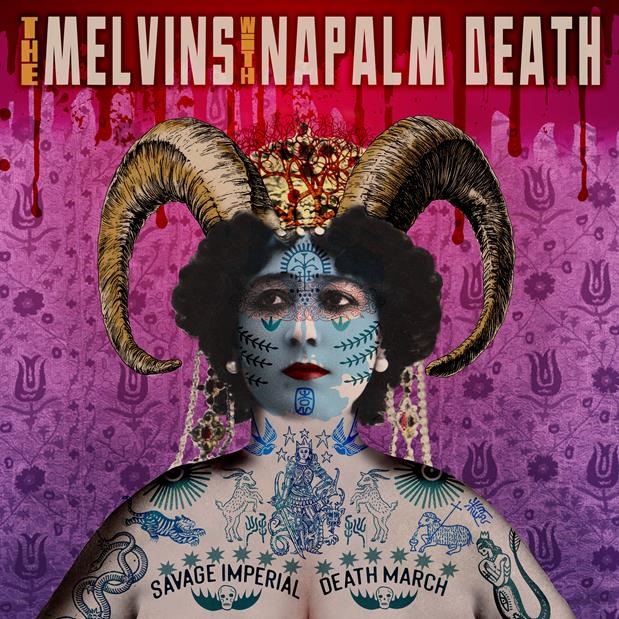
The Melvins and Napalm Death share ‘Rip The God’, the latest in a chaotic alchemy conjured on their joint album, Savage Imperial Death March (10th April, Ipecac Recordings).

The album shares its name with the bands’ Savage Imperial Death March tours from 2016 and 2025, but marks their first full-length studio collaboration under the moniker.

About this next track, Shane says; “The opening Buzz riff begins with that classic timing – a hiccup right at the end of the riff cycle making the riff extra special! Simple yet tricky to remember…  it had my head spinning when I played the bass to it – Multiply that head spin with the guitar pedal noise static we all added – God was ripped and drunk on joyful noise…”

AA

The album was recorded at the Melvins’ Los Angeles studio, with Buzz Osborne (vocals/guitar) and Dale Crover (drums) joined by Napalm Death’s Barney Greenway (vocals), Shane Embury (bass), and John Cooke (guitar).

“I have loved the Melvins forever and their outlook on music,” Embury explains. “A chance to make an album of eclectic musical madness with them was truly an honour and a whole lot of fun, which surely is the whole point! Let’s do another one soon.”

“Napalm Death are one of my favorite bands ever,” Osborne says. “It was an absolute pleasure and a dream come true to do this collaboration with them. We wrote songs together. I would write a riff and we would learn it and record it right there. They wrote stuff and we would learn it immediately as well. It was truly a 50/50 partnership.”

"Funny how life turns out sometimes… collecting hard-to-find Melvins 7-inches on Bleecker Street in 1989 and then touring twice and doing an album with them within the following 35 years,” Greenway adds. “Had a great time with it all, and nice to work with fellow travellers in the Melvins who also couldn’t care about pandering to ‘demographics’. I felt myself almost
babbling lyrically during the recording, and that alone made for very fun recording times."

Savage Imperial Death March pre-orders are available now. The eight-song album will be released on CD, digitally, and across four limited-edition vinyl variants: Black As Your Soul, Indie Exclusive Obnoxious Orchid, Ipecac Exclusive Absurd Aqua, and Revolver Exclusive Neon Coral. An abbreviated version of the album was released during the band’s 2025 tour as a hyper-limited vinyl/CD edition. This iteration features new Mackie Osborne-created artwork and two new tracks (‘Awful Handwriting’ and ‘Comparison Is The Thief Of Joy’).

AA

990162-9903cf014505143c

10th October 2025

Christopher Nosnibor

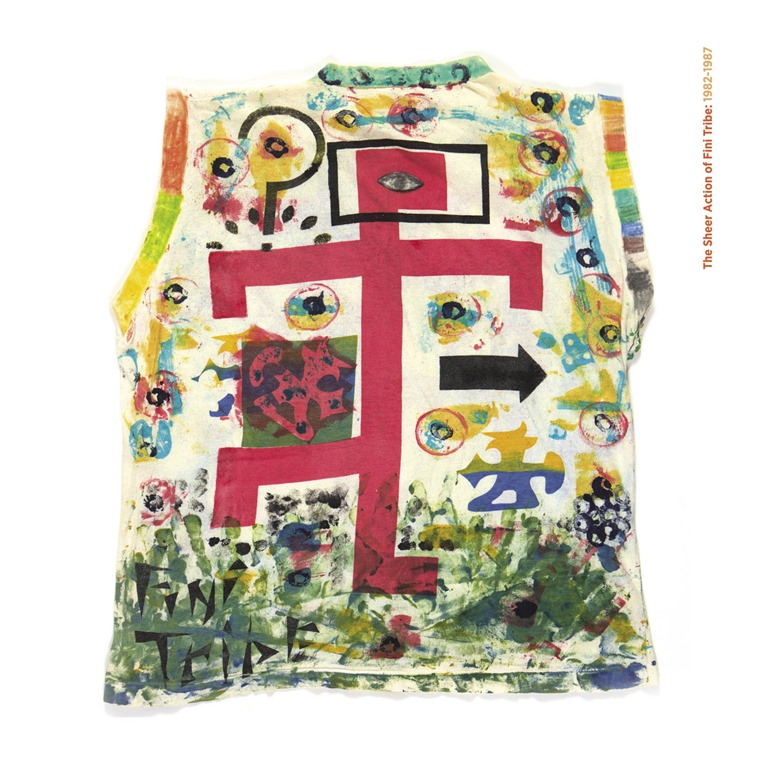
This one’s been out for a while now, but some releases simply have a slow diffusion. And Fini Tribe’s career was one of slow diffusion and… and what, really? Certain corners of the press dug them. Me, I was a bit too young at the time to appreciate them, and never felt compelled to delve into them retrospectively… until now. Chris Connelley, of course, went on to find fame and (mis)fortune with The Revolting Cocks, and also stepping up to the ranks of Ministry. His autobiography, Concrete, Bulletproof, Invisible & Fried: My Life as a Revolting Cock (2008) might not be the best-written book ever and might have benefitted from some finer editing, but it’s a wild ride, and it’s a fair analogue for his recorded output, too. A bit variable, but when it’s good, it’s off the scale. That they would change their approach in the mid-late 80s means that this compilation spans their initial phase

Whatever happened to Revolting Cocks in the later years, where they became a touring tribute act is a topic for another time, but the fact Connelley’s legacy includes Murder Inc. and contributions to KMFDM and one-off single projects like PTP and Acid Horse (a collaboration between Ministry and Cabaret Voltaire) is worthy of reverence.

But before he jetted off to the USA for that pivotal meeting with Big Al, there was Fini Tribe, and they produced a veritable shedload of material in five-year spell.

As the accompanying notes detail, ‘Fini Tribe was born into the cash-poor but culturally-wealthy environs of post-punk Edinburgh in the very early 80s – 1980 to be precise. A tiny three-piece with no drummer would soon swell into a muscular six-piece with inherited or cheaply-purchased instruments. Band members Chris Connelly, Simon McGlynn, Andy McGregor, Davie Miller, Philip Pinsky, and John Vick haunted the cold, damp warrens of the Niddry Street and Blair Street rehearsal rooms, just off the high street in Old Town Edinburgh. Drawing on the influences of everything from Throbbing Gristle, Wire, Can, Captain Beefheart, and numerous angular funk bands that were spewing out of the John Peel Show at the time, they also drew from the seemingly bottomless well of modern film, writing, and art that was abundant in the festival city.’

The result? Everything including the kitchen sink. And here we have a forty-seven track document of that career, with singles, Peel Sessions, live cuts, remasters, remixes, you name it. It’s all there, from the earliest works, like the tracks from the scratchy post-punk debut 12” Curling And Stretching (1984) are present in remastered form, and they sound stark and magnificently angular and challenging.

AA

There must have been something in the water – or maybe it was the Irn Bru or Buckfast – in Scotland around this time, since it yielded The Jesus and Mary Chain, Primal Scream, Altered Images, and laid the foundations of the JAMMS / KLF – although at this time Bill Drummond was doing mental shit plotting rabbit-shaped tours for Echo and the Bunnymen.

The first EP is spikey and angular and vaguely jazzy, and brings in elements of post-punk and what would become aligned with mathy post-rock in years to come. It’s aged well, for sure, and the same is true of the second EP, Let The Tribe Grow, released in October 1986. Combining warped synths and jittery guitars to conjure an air of tense paranoia, this is tense listening. ‘All Fours’ deploys thunderous percussion that’s pure Test Dept, and ‘Detestimony’, too, is dominated by relentless crashing beats. The EP’s last track, ‘Monomil.’ is murky, doom-laden ambient and fairly disturbing

Their cover of Can’s ‘I Want More’ saw the band move to Wax Trax! and perhaps not entirely coincidentally cement a more pumping dance style – that is to say, an industrial dance party style that was very much the sound of WT circa ’87 and shares considerable common ground with early RevCo – but at the same time, they still sound unmistakably Scottish, and not solely on account of Connelley’s vocals. ‘Idiot Strength’ (the B-side of ‘I Want More’) could be an outtake from Big Sexy Land. The same is true of the drum—dominated ‘Make it Internal’, which now sounds like a rehearsal for ‘Beers, Steers, and Queers’. In some ways, it probably was.

After the early EPs and Peel Sessions, there’s a host of material hauled from the dark depths of the back catalogue, much of which is of a rare quality.

On ‘An Evening with Clavichords’ and ‘Goode Duplicates’ they sound more like a frantic 80s pop band wrestling with jazz elements and slap bass, and there’s a whole lot happening on ‘Bye Bye to the October Sky’, which straddles goth, electro, industrial, and all kinds of post-punk experimentalism. ‘Throttlehearts’ lands like a Scottish Scott Walker, and is pretty mad but also compelling.

The live material – four tracks from ’87 and five from ’83 – both from sets performed in Edinburgh, are illustrative of a band unyielding in their desire to challenge. The later recording is reminiscent not only of RevCo, particularly in the grinding bass grooves and messy confrontational stylings, but the live albums of Foetus on their Thaw tours of ’88 and ’89. The set from ’83 is rougher rawer, in terms of performance and sound quality, but the contrast is telling in that the later recording is more attacking and abrasive. This was not a band that mellowed as they evolved: instead, they grew in ferocity during this time.

The collection winds up with some experimental offcuts, which aren’t the most listenable of pieces, but do provide an insight into their evolutionary workings. The Sheer Action of the Fini Tribe 1982-1987 is a fascinating document, not necessarily a band ahead of its time, but a part of a revolutionary zeitgeist. And while bands like Depeche Mode and Yazoo and The Human League were bringing synths into the mainstream with pop tunes created using emerging technologies, the underground was throwing out bands like this, bands like DAF, bands like Foetus, Meat Beat Manifesto, Test Department. A lot has changed since then – culturally, and musically – change worthy of not simply acknowledgement but an entire thesis. It’s a thesis not for me to write, but The Sheer Action of the Fini Tribe 1982-1987 is a document which needs to be referenced in it.

AA

AA

a0023583703_10