Archive for September, 2024

Discus Music – 27th September 2024

Christopher Nosnibor

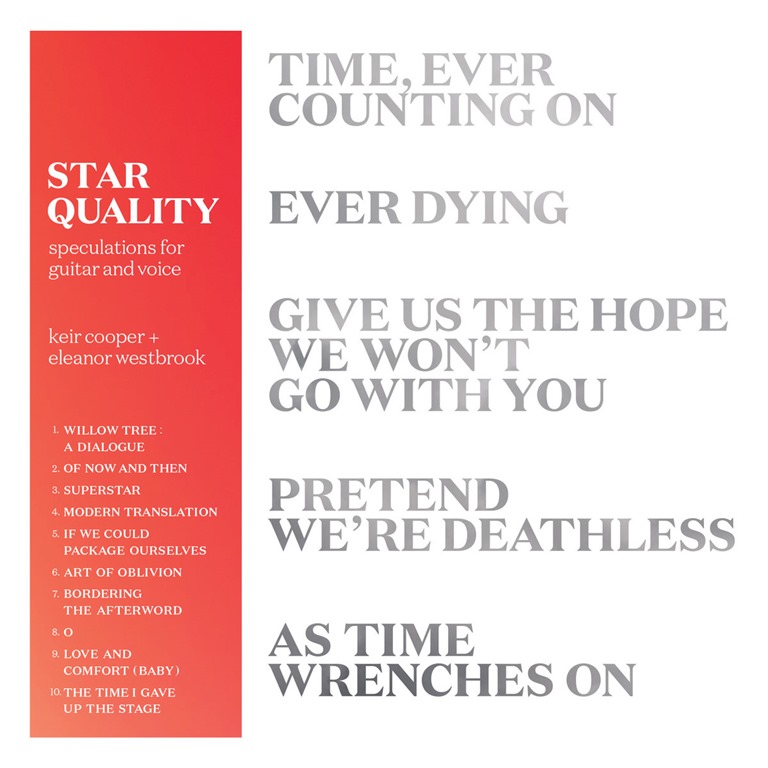
One way to tell an avant-garde musical work from its title alone is when the title provides a quite precise statement relating to its compositional nature. And so it is that this collaborative set of songs by Keir Cooper and Eleanor Westbrook are structured around guitar and voice.

‘Willow Tree – A Dialogue’ takes the interesting form of – perhaps not surprisingly – a dialogue of sorts, in which Westbrook’s adopts two contrasting modes of delivery, with a spectacular operatic aria juxtaposed with a spoken-word interrogation as a counterpoint. The effect is closer to a simultaneous internal monologue running across the song itself rather than a dialogue in the conventional sense. Meanwhile, the delicately picked neoclassical guitar is subject to interruption by clunks and distortion and occasional whirs and bleeps and the operatic vocal strays off kilter and the dream which drifted in twists and flickers with darker shades: not pronounced enough to be truly nightmarish, but unsettling.

The pair continue to explore the contrasts of melody and disharmony as Westbrook squeaks, squawks, trills, and purrs an infinite array of vocal gymnastics and Cooper’s guitar work, which chimes and treads delicately from folk to flamenco via classical streams, stamps on its own beauty with sudden and unexpected stops and stutters and forays into wrongness with stray notes and dissonance.

‘Superstar’ strays into the space which soundtracks a sense of derangement, the territory where things make no sense, and that place of incomprehension instils an unsettling confusion that borders on anxiety. ‘Modern Translation’ follows a similar trajectory: it’s a piece of magical neoclassical chamber music that’s twisted as if performed in an auditory hall of mirrors. Everything is wrong: something that should be soothing and beautiful is warped in a that it becomes unheimlich, eerie.

It’s hard to locate a touchstone or reference point for this: perhaps there are elements of later Scott Walker present, blended with hints of The Ex with its more avant-jazz leanings. One can only muse as to how they came to create this work: despite its clear foundations in the realms of classical and opera, Star Quality ventures so far from this path that it often bears little resemblance to any given style. The pieces evidently do have quite detailed and complex structures, as there’s nothing haphazard or uncoordinated about the way the two play together, but it’s impossible to decipher them from an outside perspective.

There’s a grand yet ethereal theatricality to ‘Bordering the Afterworld’, and ‘O’ soars and swoops and squeaks and whoops its way theatrically – and somewhat crazily – across some sprightly, if vaguely gothic-sounding guitar picking that suddenly, from nowhere, begins to buzz and thump. ‘The Time I Gave Up the Stage’ draws the curtain on an incredibly curious and as far off the wall as is imaginable.

Star Quality clearly has theatrical inspirations and aspirations, but shows two artists who are more interested in exploring their outer limits than taking the limelight in a mainstream setting – and for that, I applaud them.

AA
a1210959813_10

Kalamine Records – 14th September 2024

Christopher Nosnibor

Whether it be solo works ranging from ambience to classical, or collaborations running the full gamut in the electronic field, Deborah Fialkiewicz’s output in recent years has been nothing short of prodigious, and spanning as many forms as her work does, there is never a dull moment. This latest work, under the POOCH moniker, in collaboration with Dan Dolby (Bassist in Mastiff, Noisemonger in Catafalque and Sulphur Nurse) is no exception. It offers a set of eight dark, stark electronic compositions which owe a considerable debt to early industrial and electronic works, bringing a combination of dark atmospherics and nagging beats. Although entirely instrumental, we’re in the kind of territory occupied by the likes of Cabaret Voltaire, Test Dept, and Chris and Cosey’s Trance.

As an opener, ‘Hades’ is as dark and subterranean as the title would suggest, a bleak, murky pulsation squelching around and leading the listener down, down, down. It serves as something of a primer, a mood-setter, but doesn’t fully prepare one for the altogether steelier, starker, more rhythmic and percussion-driven pieces which follow.

The title track pairs a dense, dirty bass with clattering, metallic percussion which assails the mind like a concerted assault with the contents of a cutlery drawer, and it bashes away relentlessly for four and a half minutes straight. On paper, it might not sound much, but as an experience, it’s pretty hard-hitting. Built around short, clipped repetitions, it creates a suffocatingly claustrophobic aural space. The word ‘pooch’ evokes a cuddly companion, something friendly, but there’s nothing cuddly or friendly about this, a listening experience closer to being whipped with a chain than fussing a canine buddy.

Each composition bears a one-word title (‘GameBoy’ being a forced blend-word (it doesn’t really qualify as a portmanteau) in order to maintain the theme. Funtime bit-tunes are bent with glitches and warping drifts of darkness here, before things begin to slide further into beat-orientated minimal techno.

The steady beat which dominates and defined the spartan ‘Quazar’ is almost soporific: the track assumes something of a background position as it clicks along nonchalantly, with a low, unshifting drone hovering just around the level of register. Nothing happens. It doesn’t need to. And while the thunder which heralds the arrival of ‘Midnite’ might initially serve as an alert, the piece soon melts into abstraction. The final track, ‘Stimpy’ may be missing Ren, but hits hard, built around a strong, thudding beat and looped electronic undulations.

For all of its cuddly connotations, Pooch is a pretty dark album. To my mind – and it could be to my mind alone – music which is heavily beat-orientated and instrumental feels impersonal somehow, and I find it somewhat disorientating, disconnecting, alien. And so it is that the pounding beats of Pooch leave me feeling somewhat dazed, detached, even dizzy. But it’s impossible to deny the detail, the quality of the execution, or the fact that this is an outstanding work.

AA

cover

Christopher Nosnibor

Well, this one landed unexpectedly. It’s a welcome arrival, although taking a second hit of material from Uniform’s latest and quite possibly most brutal and challenging album to date does feel like an exercise in Masochism. It’s also a superb example of alternative marketing, landing this alternative version of American Standard less than a month after the album’s release, on digital and tape formats.

Context, from Uniform’s bandcamp: ‘A companion piece to American Standard, Nightmare City is essentially the same record devoid of the rock elements. By removing the presence of traditional instruments, the synths, lap steel, and pianos that sit beneath the surface of the proper album are allowed room to breathe and speak for themselves. The end result straddles the worlds of Basic Channel influenced dub, Tangerine Dream inspired soundscapes, and brutal death industrial.’

It’s a bold move, befitting of Uniform, a band who have relentlessly pushed themselves to explore ever-wider horizons, switching from their original drum-machine driven raw industrial noise to adopting live drumming, undertaking a number of collaborative projects with the likes of The Body and Boris, and especially befitting of this album, where Michael Berdan tore away the last vestiges of artistic separation to rip off his skin and purge the rawest emotions stemming from his dealing with Bulimia.

Nightmare City is another step towards stripping away the layers and presenting the naked self. ‘The bedrock of American Standard stands upon the Nightmare City. It’s not the happiest of all places, but understanding the landscape yields its own rewards,’ they write alongside the Bandcamp release.

One thing about being in a band – even if there are only two of you – is that there’s somewhere to hide, somewhere to transfer the focus. Hell, even performing solo, if there’s noise, there’s something take shelter behind. I’ve always thought that solo acoustic and spoken word performers were the bravest: there is simply no place to hide, and nothing to blur or mask any fuck-ups. Nightmare City isn’t quite solo acoustic, but it is seriously minimal.

Removing the ‘rock’ elements to reveal the bare bones of the songs shows the inner workings of Uniform, and they’re unexpected, to say the least. One would expect them to build up from the elements of drums bass, guitar. But this leads us on a different journey.

Punishing riffs and pulverising percussion, rather than supple layers and swirling instrumental ambience. As the band put it, ‘Although the finished product stands as a culmination of cohesive sounds, the individual threads that weave songs together often provide necessary nuance and exposition all of their own. Each isolated stem might be part of a greater story, but the whole cannot stand as intended without a complex series of seemingly disparate elements.’

Hearing the swirl of these ‘seemingly disparate elements’ feels like hearing the ghost in the machine, a haunting, eerie, ethereal echo, which barely seems to correspond with the structured framework of the final versions of the songs. One might almost consider this a palimpsest, an album beneath the album, submerged by process of layering and erasure. The tracks are – and I shouldn’t be surprised, but still I find I am – completely unrecognisable. Instead of being the punishing beast the album version is, ‘American Standard’ sounds more like one of the epic instrumental segments of recent SWANS works. There’s a muffled thud like a heartbeat on ‘This is Not a Prayer’ which possesses something of a womb-like quality, while ‘Clemency’ feels like a moment caught between heaven and hell, soundtracking the struggle of being pulled between the two in some purgatorial space as ceremonial drums hammer out a doomy passageway and spluttering vocals spew raw anguish.

In common with American Standard is the darkness which looms large, the tension, the suffocating gloom, the discomfort which dominates, and hearing this spectral echo of the album brings a fresh understanding and appreciation of the process and the depth of layering and everything that goes into their material. ‘Permanent Embrace’, too, sounds both like an ascent to the light and a sepulchral sigh, a funereal scene in which the grave suddenly opens like a sinkhole sucking everything down into the bowels of the earth.

Nightmare City is appropriately titled: it is a truly hellish, tortuous listening experience – but at the same time quite remarkable. Uniform, in their quest to do something different, to push themselves and in refusing to conform to genre conventions, continually find new ways to articulate the pain of the human condition.

AA

a1449843444_10

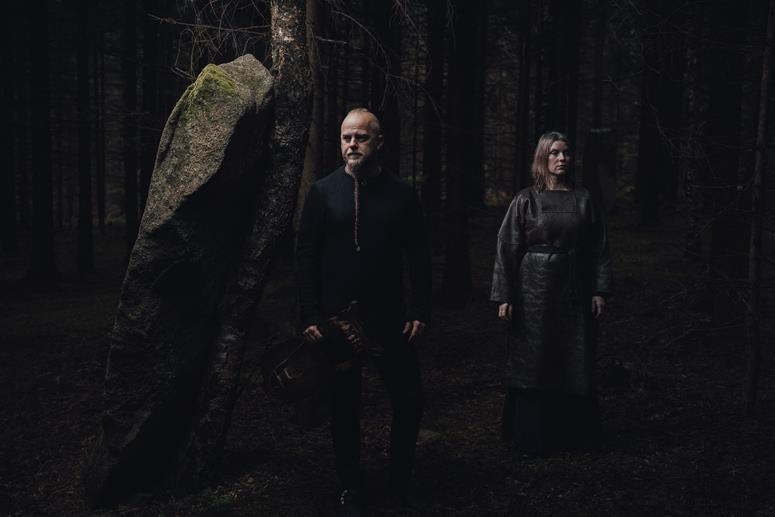
From the deep woods now emerges Birna, Wardruna’s sixth studio album. Through his restless dialogue with nature, main composer Einar Selvik has been searching for the voice of the bear, resulting in this upcoming release, scheduled for January 2025.

Birna – the she-bear in Old Norse – is a work of art dedicated to the guardian of the forest, nature’s caretaker, and her battles here on earth. Slowly driven out of her habitat by modern day societies, she has entered a stage of permanent hibernation. As a result, the forest is gradually dying, longing for its pulse and heart – its shepherd. Birna calls for her return.

“Where the previous album Kvitravn was a step conceptually from the past to the present, Birna even more so seeks to address the here and now and the way forward,” states composer Einar Selvik.

Alongside the album announcement is a new single and music video for "Himinndotter," the song constitutes a search and a calling for our lost sister of the woods. Composer Einar Selvik states “Himinndotter (Sky-daughter) is part of a six-song exploration of the bear on Wardruna’s upcoming album Birna (She-bear). The title plays on the globally common notion of the bears mythical origin as a celestial being. Himinndotter features a guest appearance of the Norwegian choir Koret Artemis.”

The video for ‘Himinndotter’ is filmed in Rondane National Park in Norway and is once again directed by Wardruna’s longtime collaborator Tuukka Koski, and produced by Breakfast Helsinki and Ragnarok Film.

Watch the video for ‘Himinndotter’ here:

Wardruna live in 2024/2025

USA & Latin America 2024:
03 Oct – Morrison (CO), USA – Red Rocks Amphitheatre with special guest: Chelsea Wolfe
06 Oct – Mexico City, Mexico – Auditorio BB – SOLD OUT
09 Oct – Santiago de Chile, Chile – Teatro Caupolican
12 Oct – São Paulo, Brazil – Terra SP

Europe 2024:
07 Nov – Milano, Italy – Teatro Degli Arcimboldi
08 Nov – Zurich, Switzerland – The Hall
09 Nov – Paris, France – Salle Pleyel with special guest: Jo Quail – SOLD OUT
11 Nov – Hamburg, Germany – Laeiszhalle – SOLD OUT
12 Nov – Berlin, Germany – Tempodrom
14 Nov – Lyon, France – Amphithéâtre 3000
15 Nov – Frankfurt am Main, Germany – Jahrhunderthalle
16 Nov – Nürnberg, Germany – Meistersingerhalle – SOLD OUT
17 Nov – Wien, Austria – Konzerthaus
19 Nov – Brussels, Belgium – Cirque Royal – SOLD OUT
20 Nov – Halle, Germany – Händelhalle
21 Nov – Prague, Czech Republic – Forum Karlin
23 Nov – Utrecht, Netherlands – Tivoli Vredenburg – SOLD OUT
24 Nov – Utrecht, Netherlands – Tivoli Vredenburg – SOLD OUT
26 Nov – Düsseldorf, Germany – Tonhalle – SOLD OUT

Australia & New Zealand 2025:
23 Jan – Melbourne – Palais Theatre
25 Jan – Sydney – Enmore Theatre
27 Jan – Brisbane – Fortitude Music Hall
30 Jan – Auckland – Kiri Te Kanawa Theatre

UK & Ireland 2025 (with special guest Jo Quail):
17 Mar – Liverpool –Philharmonic
18 Mar – Birmingham – Symphony Hall
19 Mar – London – Royal Albert Hall
21 Mar – Bristol – Beacon
22 Mar – York – Barbican
23 Mar – Dublin – Olympia Theatre
25 Mar – Glasgow – SEC Armadillo

Norway 2025:
26 Apr – Oslo – Operaen – SOLD OUT
27 Apr – Oslo – Operaen – SOLD OUT
29 Apr – Trondheim – Olavshallen
02 May – Kristiansand – Kilden
03 May – Stavanger – Konserthuset
04 May – Bergen – Grieghallen

Europe 2025:
07 June – Reyjavik – Harpa
30 Jul – 03 Aug – Rasnov – Rockstadt Extreme Fest

Wardruna-Himminndotter-Lead-MortenMunthe-Medium-9906db014504513c

Photo credit: Morten Munthe

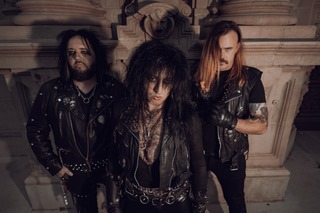
After recently announcing their signing with Peaceville Records, California death-rockers New Skeletal Faces return today with a new single and details of their upcoming album, Until The Night.

The single, also titled ‘Until The Night’, is the first track from the band’s Peaceville debut and delves deep into the forgotten, dark underbelly of rock and roll. “Until The Night is about the ritualistic deviancies partaken by the lost souls of our planet” the band say. “It’s an anthem for the heathens that plague the night." The album, recorded and mixed by Bill Metoyer (Slayer/W.A.S.P.), is set for release on November 1st.

Alongside the single comes a raucous new video directed by Gaberealhell. Speaking about the video, the band said, “The video for ‘Until The Night’ captures the true essence of the song and lifestyle of the band. Done with little planning and no storyboard, you can feel the uncertain, spontaneous atmosphere”.

We reckon they sound better than they look, and arrive with a strong dash of vaguely gothy early post-punk in the mix.

Watch the video here.

AA

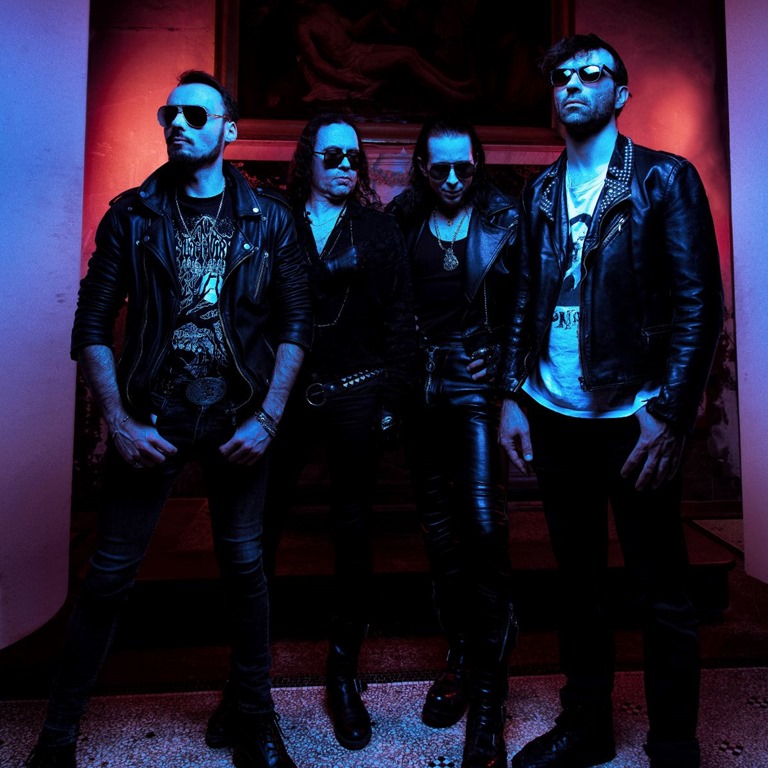
The band’s Peaceville debut, Until The Night (which follows in the path of 2019‘s Celestial Disease full-length release) further enriches New Skeletal Faces’ effortless blending of the spirits of old; with the seductive & spellbinding gothic prowess of bands such as Christian Death fused with the raw unbridled energy of early Swedish black metal legend, Bathory to create a bold new statement of intent, in stark contrast to the often overly-refined polish of contemporary metal. Until the Night is, as a result, something more akin to listening to the 1980’s Sunset Strip in an alternate universe from hell.

Formed in 2017, the trio of Errol Fritz, KRO, & Don Void present themselves as a cosmic abomination that tote the genre lines between all manners of darkness in music. New Skeletal Faces cast their own black light onto the long dormant corpse of Death Rock, shattering the mirror of modern Heavy Metal into fragments that reflect back a fresh new take on this form of music with an energised & outlandish conviction.

Recorded in the shadowy recesses of Hollywood, California, the opus was tracked, mixed and mastered by producer/engineer Bill Metoyer (Slayer, Wasp, DRI), capturing a richly crafted, organic sound authentic to the legends of the past, presenting all-new haunted tracks alongside a reimagined take on Bathory’s own Raise The Dead. Of the recording Bill Metoyer said “It was a pleasure working with New Skeletal Faces. A band who not only chose to NOT follow recent songwriting trends of so many other newer metal bands seem to do nowadays, but also the trends in the SOUND of their record.”

thumbnail_New Skeletal Faces

Pic: Becky DiGiglio

Record Release Shows:

Friday, October 18th – Til Two Club San Diego (Club Grave Beat)

Saturday, October 26th – Knucklehead Hollywood CA, (Club Rockit)

Friday November 29th – Lucky Liquor, Seattle, Washington

Saturday, November 2nd – Rubber Gloves Rehearsal Studios, Dayton, Texas (w/ Pentagram)

Saturday, November 30th – Coffin Club, Portland Oregon

24th May 2024

Christopher Nosnibor

Welcome… to The Royal Ritual! I simply felt the urge to open with that. It felt necessary, if only to me. But if you can’t please yourself…

In my case it’s something of a belated welcome, having been aware of the act and its founder, David Lawrie for quite some time, but having only recently come around to the actual music, with my introduction being their recent show in York. There’s something to be said for hearing a band live first, without knowing the songs, rather than the other way around: if they can grab you in that twenty minutes or half an hour, when you’re not necessarily primed to absorb songs and details, then there’s a strong chance they’ve won a fan, provided the recordings are up to scratch.

Where The Royal Ritual really stand out live is with the use of live guitar, which brings the benefit of not only an immediacy and human aspect to the predominantly digital music, but an additional body on stage, which creates not only a visual balance but a greater sense of movement.

Recorded, these elements are less essential, and the songs here are clearly the product of extreme focus and a meticulous attention to detail. When I wrote in my review of the York show that The Royal Ritual sound ‘produced’, I observed that ‘their approach to production owes more to the methods of Trent Reznor as pioneered in the early 90s on Broken and The Downward Spiral, balancing gritty live guitars with synths and fucked-up distortion and harnessing their tempestuousness in a way that creates a balanced yet abrasive sound.’ And so it is on record, also.

Pleasure Hides Your Needs is The Royal Ritual’s second full-length release, following MARTYRS in 2022. A lot has happened, and much has changed since then, and the project, born in lockdown, has evolved significantly – as have many of us. Life is different now: that’s a fact.

We learn that ‘Pleasure Hides Your Needs sees David contemplate his own life and experiences, adopting a distinctive, more personal tone than the expansive and outgoing approach of MARTYRS: “Pleasure Hides Your Needs is much more introspective when compared to the social and political commentary of MARTYRS,” says David. “For me, it is about the closing of three distinct chapters of my life. Finding the common threads through each of those chapters in order to represent them sonically, and in a consistent way, was a really interesting challenge – if at times quite emotionally exhausting.”

Life is exhausting, in every way, but there’s a tense energy to Pleasure Hides Your Needs. It builds from the instrumental intro piece, ‘Shadow Self’, where crashing waves erupt from soft ripples, dark rumbles and inaudible muttering contrast with chimes, before ‘Vantage Point’ opens a broad sonic vista paired with a solid kick drum beat. Just as it’s leaning into the proggier end of alternative rock, a gritty guitar kicks in and the mood immediately turns darker.

‘Fifteen 14’ lands as an unexpectedly pop tune, with a solid chorus, which softens the arrival of the album’s nine-and-a-half-minute centrepiece, ‘Sinner Gambler Fugitive’, which really does run the gamut for range, a sonic and emotional rollercoaster. It’s ‘Modes of Violence; that goes full industrial, with a metallic smash of a snare and snarling bass providing the backdrop or Lawrie’s wrought vocal as he wrestles with a veritable tempest of emotion, before he hollows himself on the bleak, minimal title track.

The album as a whole is more geared toward tension than release, always simmering but rarely bursting the floodgates. Muted isn’t the word: it’s more a case of clenching tightly to maintain a grip of control for fear of what may erupt otherwise.

Pleasure Hides Your Needs is dark and exploratory, but still eminently listenable. As The Royal Ritual evolves its sounds and expands its horizons, there remains much potential to explore myriad paths in the future, and recent touring will likely serve to open new avenues of exploration.

AA

a0879761406_10

Ahead of its release this Friday, September 20, Andrew PM Hunt, aka Dialect, shares a final single from his new album Atlas of Green. For ‘Ancient Faith Radio,’ the second to last piece on the album, Hunt assembled a series of photo slides he acquired online many years ago that capture scenes from many more years ago in a saturated, sentimental haze of technicolor. ‘Ancient Faith Radio’ and its video, as with the album, is an excursion into fragmented memories both lived and yet to be lived, the past and future in a single moment.

Mapping new folds in the passage of time, Atlas of Green is traced with an aura of sonic urgency which arises through its process-led construction.The album embraces chance encounters within the malfunctions of physical media and glitching gear. Within these interwoven clusters of organic and blemished sound, Dialect reclaims the joyfulness of the inner amateur and creates a soft landing for new seeds of magical possibility – rooted in the bounds and abundance of realism.

Check ‘Ancient Faith Radio’ here:

AA

Dialect’s Atlas of Green will be released on vinyl, Japanese import CD, and digital editions on September 20, 2024. On behalf of Andrew PM Hunt and RVNG Intl., a portion of the proceeds from this release will benefit The Greenhouse Project, an early years educational facility and after-school club in the heart of Toxteth, which supports the needs of all children to make exceptional progress and go forwards in their learning journey with pride and confidence.

Tour Dates

09/19/24 – London, UK @ Cafe OTO

11/12/24 – Barrow-in-Furness, UK @ Piel View House w/ Tashi Wada

11/13/24 – Edinburgh, UK @ Summerhall w/ Tashi Wada

11/26/24 – Glasgow, UK @ Glad Cafe

AA

942fa5dc-9879-4b79-8175-67c157bb60df

With their final single in advance of their new album, the melancholia driven mid-tempo track ‘But Today’, 

Soror Dolorosa present a different facet of Mond. Illuminated by a visualiser, this song channels classic Wave sounds into an expression of sorrow and regret. ‘But Today’ is taken from the forthcoming new full-length of the French post-punk gothic rockers, which is entitled Mond (the German word for ‘Moon’), and has been slated for release on October 4, 2024.

Check it here:

AA

Soror Dolorosa comment: “The last advance single ‘But Today’ is also the final song on our new album and one of my favorites so far”, mastermind Andy Julia writes. “Creating the different phases of the song was the result of a magnificent teamwork. It gave me particularly great pleasure to get my vocals and the choirs into harmony with the keyboards that you can hear in the chorus. This might well be our most progressive track on Mond that also has the most complex structure. We felt thrilled when we noticed that the complexity was not mitigating the efficacy of the groove and the brilliance of harmonies. Our producer James Kent told us: ‘This reminds me of the Fields of the Nephilim, what a smash!’. All of us in the band were rather thinking about Depeche Mode when we designed the sound and that particular tone of the guitar riffs. I could hardly visualise this song more efficiently than by unveiling the artistic process behind the creation of the cover artwork for Mond that was inspired by my muse. At the beginning of the shooting we had this idea of creating a mysterious character like the myth of the Ancient Greek seer Pythia. Therefore, we began to work with poses of a veiled lady who utters prophecies while having divine visions in a state of trance. Yet with the passing of each hour, the spirit of the moon goddess came over us and Angélique’s naked body finally reflected the light of the stars that are falling apart somewhere between the flame of the sun and the cold nocturnal light of the moon in a perfect symbiosis.”

AA

7061539a-2aa7-a712-bae1-fd68e1b8e9a6

Room40 – 20th September 2024

Christopher Nosnibor

Autumn is something of a difficult season to assimilate. As much as it can be filled with beautiful shades as the leaves turn and the sunlight takes on a softer hue, there can often be a hint of melancholy in the cooler air and darker evenings. Some may yearn for the heat of summer, but more than that is the reminder that we’re on a transition toward winter, and the passing of another year. The passing of time is something which creeps up on all of us with an inexorable inevitability, and while you’re busy living life – or, likely, battling just to keep on going through it – time slips by, and your twenties slide into your thirties slide into your forties… people, places, jobs all come and go. Go where? And what have you got to show for it?

As one of the most dismal summers in a long time – not to mention the coldest in six years – draws a close to the wettest eighteen months or so since records began here in the UK, where it’s felt like eighteen months of October, the arrival of the 15th Anniversary Edition of A Colour For Autumn is nothing if not timely. Anniversaries inevitably give pause for thought, inspiring reflecting on the time of the actual event, and the intervening period. And with in his reflections on A Colour For Autumn, and its context, Lawrence English makes some powerful observations:

‘Climate change, as a lived experience and not merely as a ‘possibility’, suddenly came into focus with reports flooding in about the climatic dynamics since the turn of the century and events like the Black Saturday fires here in Australia. It felt like, and continues to feel like, seasonality as some predictable measure of our world is relegated to the ‘before’ times. This record is not about these climatic shifts however, more a recognition of how we have used patterns and predictability to guide us over the centuries and perhaps a realisation that the way forward is not the path we have known historically.

‘Listening back to the record with fresh ears, a process made completely delightful by Stephan Mathieu who has carefully remastered it, I am struck by how minimal some of the structures were. There are moments that strike me as uncharacteristically patient and even generous, allowing one element to hold without interference. I’m grateful to still feel a deep connection to this edition and to the people and places that helped shape it.’

‘Droplet’ seems to start midway through: there is no intro, no fade-in, no slow-build. We find ourselves landing in the midst of a long swell of ethereal sound, a chorus of spectral voices drifting in vapour and carried on clouds. Sometimes, ambience carries something of greater depth than is readily apparent. More than a medium to meditation, a conduit to contemplation, seemingly formless, abstract sound resonates on a subconscious level with and unexpected force. Over the course of almost seven minutes, the track drifts and twists and a squall of dissonance and a whistle of feedback builds in the background.

Just as the pieces merge into one another, so the titles of some of the tracks link together to form phrases, albeit with only vague meanings: ‘The Prelude To’ leads into ‘The Surface of Everything’. Elsewhere, English departs the surface and transports the listener high above the atmosphere in ‘Galaxies of Dust’. You almost feel as if you’re floating, detached from everything, even time, hanging in suspension.

Much of the sound on A Colour For Autumn takes the form of hums and drones, and while gentle and delicate, there’s an ever-present discomfort, something just beyond perception, on the edge of the senses, which unsettles, nags and gnaws. It’s this uncertainty, this element of disquiet, which makes A Colour For Autumn such an enthralling and evocative listening experience.

AA

a2415743988_10

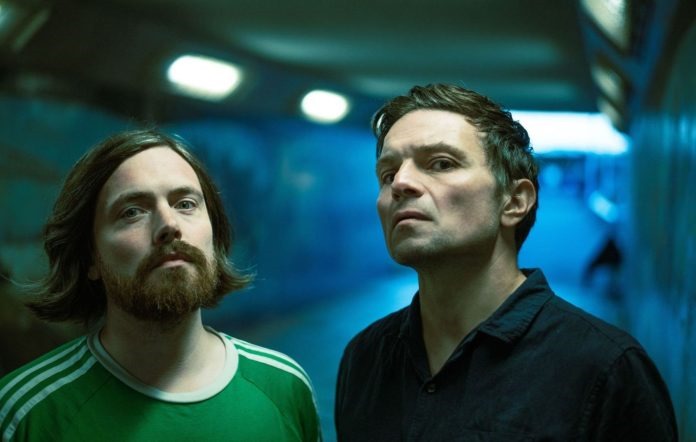
Benefits blast in ahead of another substantial UK / EU tour with the release of the first new material since their debut album, Nails.

‘Land of the Tyrants’ features additional vocals by Zera Tønin of Arch Femmesis.

It may be more overtly dancey than previous outings, hitting an almost trance groove, perhaps even a bit KLF, and the rage is more simmering than roaring in in terms of delivery, but lyrically… as explosive as ever, ‘Land of the Tyrants’ tells it like it is. The video is more overtly produced, but it’s dark and stark. It’s grim up north, right?

Tour dates:

05/10 HUDDERSFIELD Parish

06/10 LANCASTER Kanteena

07/10 GLASGOW The Hug and Pint

08/10 EDINBURGH Wee Red Bar

09/10 ABERDEEN Tunnels

10/10 STIRLING Tolbooth

11/10 MIDDLESBROUGH Play Brew

12/10 LIVERPOOL The Shipping Forecast

13/10 PRESTON The Ferret

17/10 ROTTERDAM Left of the Dial Festival

18/10 UTRECHT ACU

19/10 ROTTERDAM Left of the Dial Festival

20/10 OSTEND Cafe de Zwerver

22/10 SOUTHAMPTON The Joiners 23/10 BRIGHTON Hope and Ruin

24/10 MARGATE Where Else

25/10 LONDON The George Tavern

26/10 NEWPORT Le Pub

AA

Benefits@2000x1270-696x442

Pic: Tom White