French psychedelic/prog-rock collective Djiin will have recently revealed a music video for a brand song of their forthcoming fourth full-length album Mirrors due out on May 3 via Klonosphere Records/Season of Mist.
The follow-up to 2021’s third album Meandering Soul was recorded, mixed and mastered by Peter Deimel at Black Box Studio and sees Djiin further honing their exciting and powerful blend of psychedelic stoner rock and 70’s progressive rock. Written during the last four years by Chloé Panhaleyx (Vocals/Electric Harp), Allan Guyomard (Drums/Backing Vocals), Tom Penaguin (Guitar/Backing Vocals) and Charlélie Pailhes (Bass/Backing Vocals), "Mirrors" is full of powerful and fuzzy riffs, twisted beats, psychedelic melodies and vocal incantations that invites listeners to embark on transcendental and magical journey. The use of the electric harp in this “classic” rock line-up adds a unique and surprising sonority that accentuate the band’s mystic and ritualistic universe.
Anglo-Finnish progressive metallers Wheel recently announced the release of their much-anticipated third studio album Charismatic Leaders on the 3rd May 2024 (InsideOutMusic). The album was meticulously crafted to meet Wheel’s ever-heightening benchmarks and recording with engineers/co-producers Daniel Bergstrand and Fredrik Thordendal (Meshuggah) stretched from August to December 2023. The end result, mixed by Forrester Savell, has consolidated all the gains of what came before: singer/guitarist James Lascelles, lead guitarist Jussi Turunen and drummer Santeri Saksala’s third album represents their heaviest and most conscious music to date.
Today they launch the albums third single, ‘Disciple’, and you can listen now here:
The band will be celebrating the release of their new album with their first ever shows in Australia (supporting label-mates Caligula’s Horse) as well as their first ever North American headline shows. Later in the year the band will return to Europe for further headline dates, and you can find the full list below:
31st October – Olympia, Tampere, Finland
1st November – Sawohouse UG, Kuopio, Finland
2nd November – On The Rocks, Helsinki, Finland
7th November – Lutakko, Jyväskylä, Finland
8th November – Finlandia-Klubi, Lahti, Finland
9th November – 45 Special, Oulu, Finland
15th November – Logo, Hamburg, Germany
16th November – Melkweg Up, Amsterdam, Netherlands
17th November – 013, Tilburg, Netherlands
19th November – Rebellion, Manchester, UK
20th November – Cathouse, Glasgow, UK
21st November – Rescue Rooms, Nottingham, UK
22nd November – 1865, Southampton, UK
23rd November – Underworld, London, UK
24th November – Thekla, Bristol, UK
26th November – Kavka, Antwerp, Belgium
27th November – Luxor, Cologne, Germany
28th November – Colos Saal, Aschaffenburg, Germany
30th November – Backstage, Paris, France
2nd December – Komplex, Zurich, Switzerland
3rd December – Legend, Milan, Italy
4th December – Backstage Halle, Munich, Germany
5th December – Analog Music Hall, Budapest, Hungary
However well you plan, things just happen that are beyond your control. It’s how you deal with these problems that present themselves which counts. In pulling off ‘Blowing Up the House II’ a punk and post-punk half-dayer with half a dozen bands for free / donations, Andy Wiles has performed little short of a miracle. Looking at the poster for the event on the venue wall, with a hand-written A4 sheet stuck in the middle with the stage times, it’s apparent that only three of the acts from the original advertised lineup are actually on the bill. Losing one key act due to diary mismanagement on their part must have been frustrating, but to lose the headliners on the day due to the drummer having broken his arm surely felt like a message from the gods, and not a kind one.
Still, the replacements could not have been better; the addition of JUKU on an already solid bill proved to be both inspired and fortunate, and then for Soma Crew to step into the headline slot, hot on the heels of the release of their new album made for a fitting switch.
Among the lower orders, Saliva Birds had some steely post-punk moments that reminded me of later Red Lorry Yellow Lorry with driving bass and solid drumming, and overall, they were pretty decent, and went down well.
As was the case with Saliva Birds, I had zero expectations of Zero Cost, up from Hull. They play some perfectly passable hard, fast three-chord punk marred somewhat by excessive guitar solos. They were at their best when they went even harder and even faster for some back-to-back explosive 30-second blasts. They only half-cleared the room, and they got some old people dancing very vigorously.
It’s getting to the point where Percy are likely in the top three or four bands I’ve seen the most times, partly because they’ve been playing gigs locally since before the dawn of time, but mostly because they’re worth turning out for. It’s fair to say you know what you’re going to get with Percy, in terms of consistency, and the rate they write new material, there’s always something new in the set – namely half of the forthcoming album, with the title track getting a premier tonight.
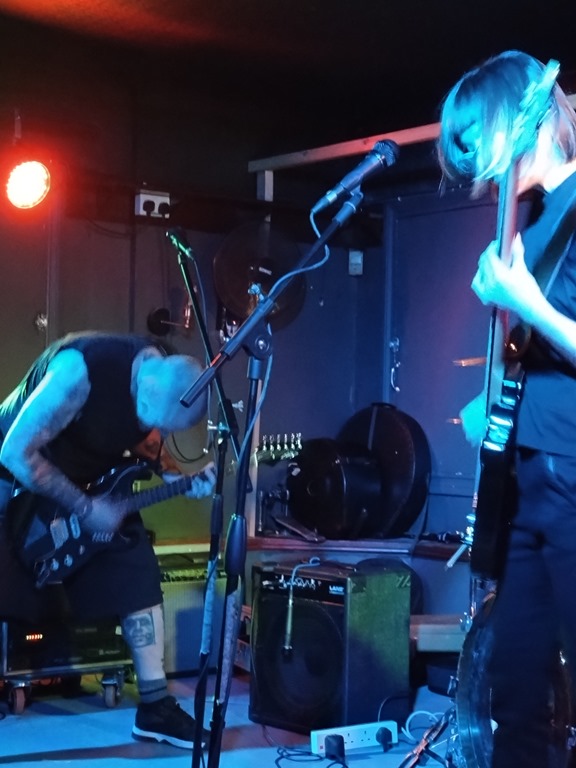
Opening their set with the darkly paranoid ‘I Can Hear Orgies’, Colin’s guitar is a metallic clang amidst screening feedback, contrasting with the eerie synths and insistent rhythm section. The loudness of Bassist Andy’s shirt threatens to drown out the sound from his amp, a big low rumble that defines the band’s sound. The drums are loud and crisp and propel some proper stompers.
“Don’t try the wotsits, they taste like earplugs,” Colin quips, in uncharacteristically jovial form, referring to the jar on the bar.
On the evidence of tonight’s outing, the album will be a dark, jagged collection of post punk songs about alcoholic blackouts and sex parties, and even without older favourites like ‘Chunks’ and ‘Will of the People’ in the setlist, there’s plenty of earworms. The waltz-time Thinking of Jacking it in Again’ sits somewhere between The Stranglers and Slates-era Fall.
Percy
My review of JUKU’s debut performance last Summer was the fourth most-read article at Aural Aggravation for 2023 (behind the review of Swans’ The Beggar, Spear of Destiny at The Crescent, and my interview with Stewart Home). It was a gig that warranted all the superlatives. And they’re every bit as immense and mind-blowingly good as I remember tonight. It’s full-throttle heads-down stompers from start to finish. With big, ball-busting grungy riffs hammered out hard at high volume, there are hints of the Pixies amidst the magnificent sonic blast… but harder and heavier. And the drummer is fucking incredible. His powerhouse percussion drives the entire unit with ferocity and precision. Naomi’s delivery and demeanour contrasts with the lyrics wracked with turmoil, while Dan plays every chord with the entirety of his being, and to top it all, they have some tidy post-punk pop songs buried like depth charges beneath that blistering wall of noise. It’s a perfect package, and they’re an absolute-must-see band.
JUKU
With a lot of bands and a lot of kit, with really tight turnaround times, it’s a huge achievement that the headliners are only ten minutes late starting, and credit’s due to venue and bands alike for their no-messing approach to plugging in and playing without any soundcheck beyond checking that there is sound. The sound, in the event, is consistently good all night – well-balanced, clear, and achieving an appropriate volume.
Soma Crew are another band I’ve seen more times than I can now count, and they just go from strength to strength. Many acts would have been daunted by following JUKU, bit they’re seasoned performers who play with a certain nonchalance and slip into their own inward-facing bubble where they just play, and magic happens.
Tonight they’re out as a three-piece (the lineup seems to vary week by week, probably as much dependent on availability as by design), and much respect is due for their starting with a quintessential Soma Crew slow-builder, a crawl with crescendos which plugs away at the same droning chord for a solid six or so minutes. On the face of it, their hippy-trippy space rock is neither punk nor post-punk – but what could be more punk than doing precisely this? As their Bandcamp bio asks, ‘Why play 4 chords, why play 3. Why play 2 when 1 will do…?’ This is a manifesto they truly love by, and I’m on board with that: the joy of their music emerges from the hypnotic nature of the droning repetition, a blissful sonic sedative.
Soma Crew
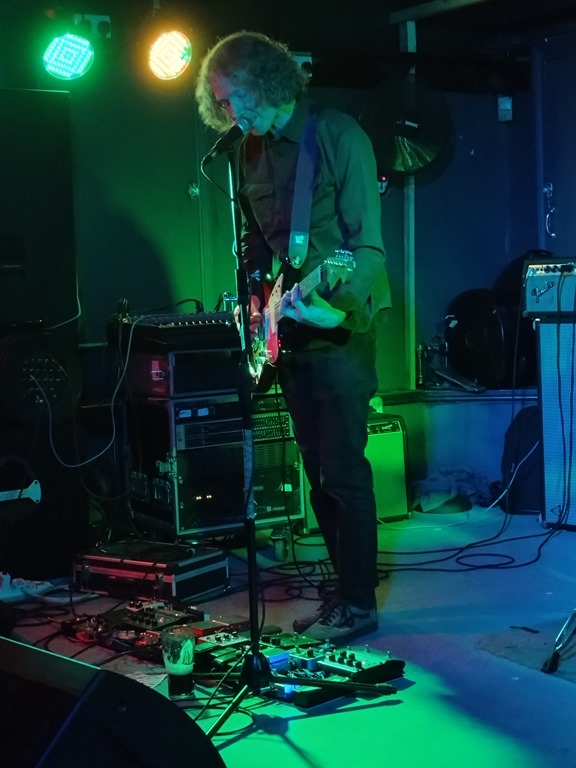
While the rhythm section throbs away on a tight groove, beautiful chaos cascades from Simon’s amp via an array of pedals that occupies half the stage. It’s seven-minute single ‘Propaganda Now’ that solidifies their taking command of the room by virtue of doing their own thing.
Once again, it’s a trip to a grass-roots venue that shows just how much great music there is to be had a million miles from the corporate air hangars which charge £7 a pint and scalp the performers for 30% of their merch takings. It’s not even about the pipeline for the next big names who’ll be on at Glastonbury in a few years: it’s about real music, music that matters.
Letters and things lost have an almost mythical status in the field of literature. So many volumes are dedicated to the reproduction of exchanges between authors of revered status, and are poured over, clawed over, by both fans and academics. Many writers of great novels were also great letter-writers, and the letters often serve to build not only biographical depth and detail but also shed light on the development of the novels, that mystical ‘creative process’. Much of history exists in letters – the rich primary source material from which we piece together the picture and assemble a coherent narrative. It may be a construct, but it’s a necessary one when it comes to understanding the world and how we collectively came to arrive at the present.
The fact no-one writes letters anymore is a great loss. The same thought and effort simply doesn’t go into emails, and they tend to be considerably shorter, too, especially in the last decade or so. In fact, the quality of communication has slumped through the floor in recent years. Emails volumes – at least, ones that aren’t transactional in some way, have plummeted in favour of WhatsApps and messenger missives via FaceBook, Twitter, etc. It’s hard to really articulate just what’s been lost over the last few years, besides simply the art of in-depth, detailed longform communications, but with anything more than five lines long likely to be dismissed as TL;DR, it’s significant. I digress… because there are rare avenues open to expand on these matters.
Benjamin Heal, one of those multi-faceted, polyartistic individuals who is hard to pin down due to the sheer range of his output, has, through the years, pursued an academic career with a focus on William S. Burroughs – a prodigious writer of letters – and performed experimental noisy indie under the guise of Cowman, sharing stages with the likes of Trumans Water and Gum Takes Tooth, as well as his more electro-centric vehicle Coaxial.
Now resident in Taiwan, his latest project seems to bring together these elements of a diverse life. The material on this, the debut release from The Lost Letters – which finds Heal working with Fulia, is a calm and calming collection of delicate songs. The duo offer a quite gentle and melodic set of tunes in which is mostly centres around mellow acoustic-led indie, and slow, sparsely-arranged, soporific shoegaze and it’s not merely projection on my part in detecting a wistful, vaguely nostalgic air permeating the songs. The songs effortlessly drift and weave, Fulya’s vocals adding a layer of sound rather than easily audible lyrics.
The seven-minute ‘Cecille’ has, by its trilling gentility, nothing to do with The Walking Dead: it’s a graceful exploratory work which is mellow, melodic, and carries heavy hints of The Cure circa Disintegration thanks in no small part to its fulsome, airy bass sound and crystalline guitars, and it’s fair to reference Cocteau Twins at this juncture, too.
Things take a turn for the darker and more discordant on the lugubrious, plodding ‘Cut’, which scrapes and scratches for another seven minutes. With its muttered, monotone vocals and insistent sparsity, it offers hints of Shellac and latter day Band of Susans, in contrast to the soft acoustic instrumental work of ‘Route Rute’. These songs are on the longer side by necessity: repetition has greater impact over duration, and if the literary allusions and lifts by means of the deployment of the cut-up technique devised by Burroughs and Gysin are largely lost in the mix, the overall effect of discomfort and disjointedness remains strong throughout the set. ‘Crystal Skies’ is murky, with a drifting ambience spun through with a softly picked guitar, before ‘Sails and Sou’wester’ brings the album full circle to its nautically-themed beginning. While inviting comparisons to Slowdive and Cranes, it cascades dreamily into a mesmerising sea of sound, so richly evocative that you ache as it drifts on toward the horizon, leaving you reaching for something intangible.
Critics often write of craft, but the most moving music often comes from intuition and feeling, and this is moving in the subtlest of ways. Quite simply, The Lost Letters is a beautiful album.
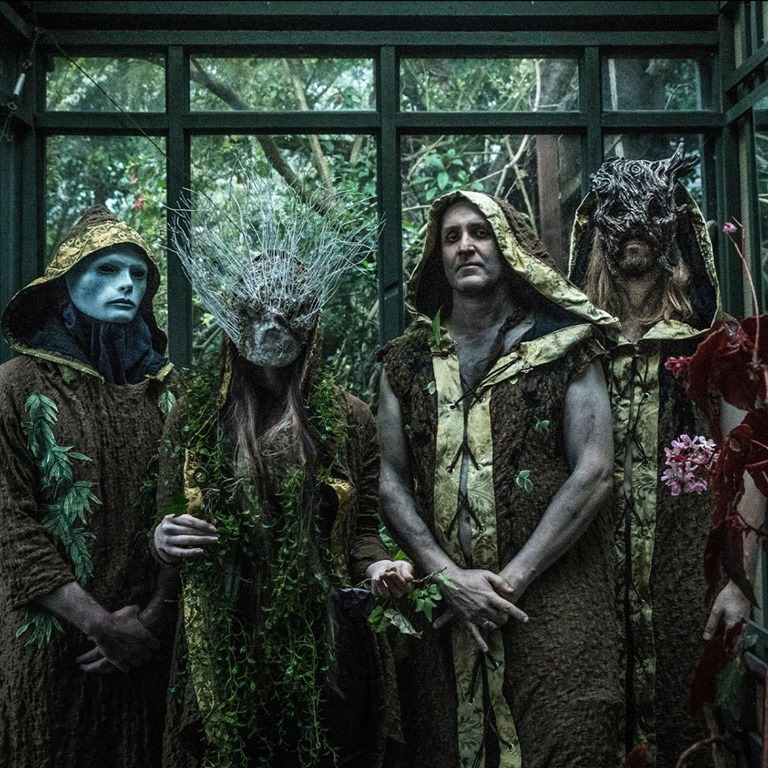
Avant-garde green metal outfit BOTANIST conclude the sowing of new singles with the track ‘Royal Protea’, which is taken from the forthcoming album Paleobotany that will begin to bloom in shops on May 17, 2024.
The ancestors of the flowing plant family of Protea evolved about 75–80 million years ago on the supercontinent of Gondwanaland, which covered most of the southern hemisphere. Due to the continental drift of earth’s tectonic plates, Gondwana separated into smaller parts that form today’s southern continents. In present times, Protea are mainly found in the area of South Africa. Its largest species, the self-fertilising Protea cynaroides, which is also called Giant Protea and King Sugar Bush is the country’s national plant.
Listen to ‘Royal Protea’ here:
AA
On their twelfth full-length Paleobotany, BOTANIST take us back more than 70 million years to a time when dinosaurs ruled the planet and early forests began to turn to coal. Before the age of giants ended in flames with the apocalyptic impact of the Chicxulub asteroid, some families of plants that still have descendants today also grew much larger.
Paleobotany comes with all the trademark characteristics that set BOTANIST apart from all other metal acts on this planet. Lyrically, the band from San Francisco, CA revolves around species of plants – in a clean break from the usual genre stereotypes like Satan, dragons, and booze. Their music clearly has its foundation anchored in ‘metal’, but instead of 6-string guitars the Americans use 110-string hammered dulcimers. To the confused horror of traditionalists, BOTANIST fit these percussion-stringed folk instruments with magnetic pickups and distort them through various perverse means that range from amplifiers via analogue tape to digital manipulation. The resulting sound is as unique as spectacular.
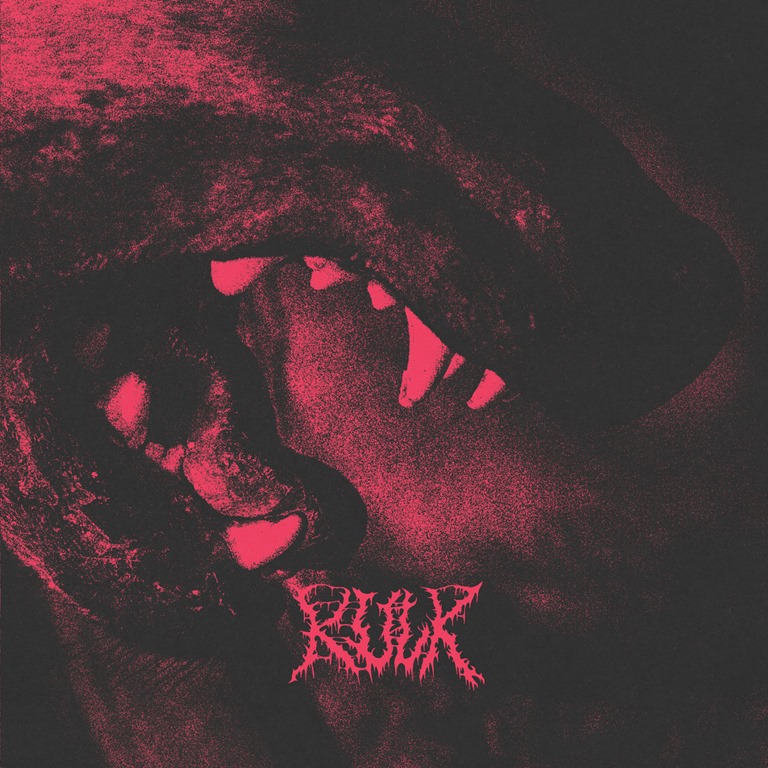
The latest album from Norwich based two-piece Kulk, It Gets Worse, arrives two and a half years after the release of We Spare Nothing, described as ‘thunderous and experimental’, and honing their ‘unique and monolithic brand of heavy doom and sludge’.
The timing – and the title – couldn’t be more apt. Just when you were probably thinking we’d endured the absolute worst of life on this planet – from Brexit and Trump via a global pandemic and insane inflation and everything money-related being utterly screwed and still getting more painful by the day after 14 years of a Conservative government – it continues to get worse – half the world is at war, the other half the world is either flooded or in flames, and there are mass killings practically every other week. It’s not, then, simply a nihilistic strapline to grab the attention, but pretty much a demonstrable fact. Things never get better – only worse.
The band articulate both the circumstances and the mood when they frame the album thus: “This album is about the universal suffocating weight of hoping for more while navigating a climate where the apparatus for seeking it is being consistently undermined. What it feels like to not only struggle keeping your head above water but to try jumping out from the deep end without losing your trunks. It is selfish guilt and misplaced woe, desire is a distraction from the world at our feet”.
Bookended by short instrumental intro and outro tracks, ‘More’ and ‘Less’, It Gets Worse packs back-to-back balls-out riff-fests, where the bottom end sounds like a bulldozer and the beats sound like bombs. Whereas a lot of stuff on the doom and sludge spectrum is simply plain slow, Kulk are masters of the tempo shift. ‘A Heavy Sigh’ comes on at pace and builds a real groove, before hitting the breaks around two thirds in, at which point it becomes reminiscent of Melvins. The reason Melvins have endured is that – perhaps despite the popular perception – they’ve showcased a remarkable versatility and an urge to experiment, and it’s here that the comparison stands strongest with Kulk: they’re not just big, dirty riffs and shouting, although they do a first-class job of putting those things up front and centre. ‘Out of Reach’ is a pounding, raging roar of frustration amped up and overdriven to the max, hitting that perfect pitch at which blasting out a repetitive riff at skull-splitting decibels is the ultimate catharsis and the only practical and sane response to the world in which we find ourselves.
Things take a turn with ‘Mammoth’ showcasing a more hardcore bent initially, before descending into a howl of feedback, a noise-rock quasar delivered with the most brutal force. The vocals are barely audible, and then things get ever harder and harsher on ‘Beyond Gone’ which goes full industrial, hammering away at a simple, repetitive chord sequence with murderous fury. You feel your adrenaline pumping as they thunder away, combining pure precision with absolute chaos as feedback swirls and squalls all around like an ear-shattering cyclone.
The slower ‘Fountain’ shows considerable restraint and makes for an oppressive four minutes: it brings a bleak mood, and the hit lands late but hard when the distortion slams in. Getting Adam Sykes of Pigsx7 to play on ‘Life Will Wait’ is a major coup, and the track is a belter, built around a hypnotic three-chord riff – because all the best riffs have three chords – and really works the quiet/loud dynamic to the max.
Often, when people – particularly people in my demographic – write of the music of the 90s, it’s with a dewy-eyed nostalgia for their lost youth. Sure, I have my moments, but when I say that It Gets Worse takes me back to the 90s, I’m recalling the excitement of discovering endless obscure little bands cranking out major racket in pubs and tiny venues, some of whom managed to either get records or CDs released by shoestring labels, or otherwise scrape together funds to record and release a 7” or CD – and many of whom didn’t, and only exist in hazy recollections. The point is that these were exciting times. The only positive about living in shit times is that shit times make for good music, as people need an outlet to channel their pain, anguish, frustration, and rage. It Gets Worse is saturated with pain, anguish, frustration, and rage. And because of that, it’s very much a product of our times, and it’s absolutely essential.
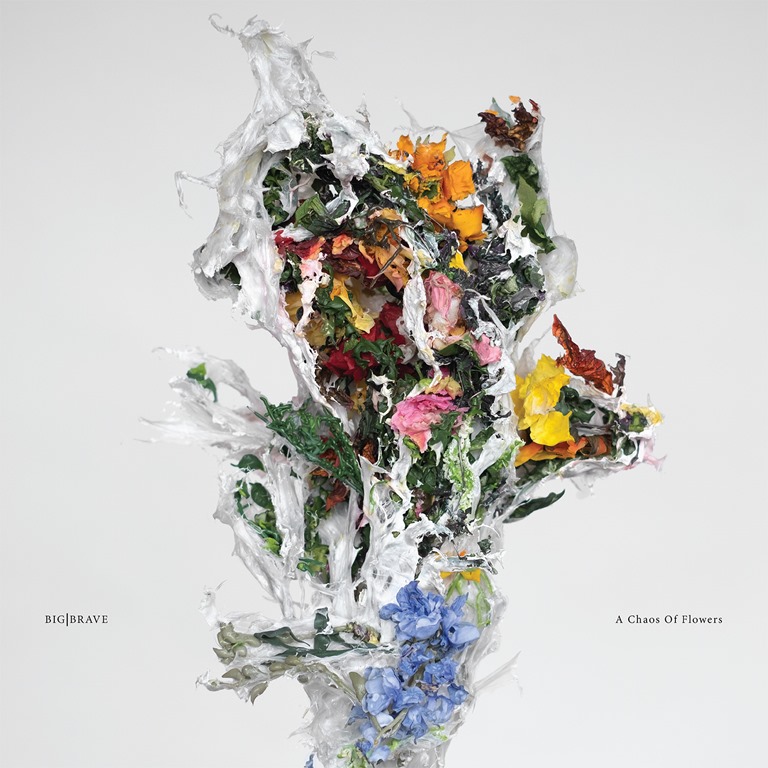
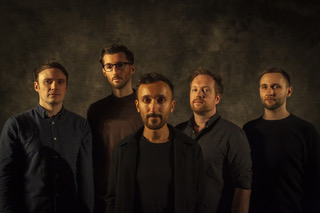
There’s been a quite staggering trajectory to the work of BIG|BRAVE: with each release they achieve an even greater level of intensity, which seems to be unsurpassable – until the next album. They’ve come a long way from their minimal ambient / folk beginnings. The instrumentation has remained minimal, but cranked out ear-splitting decibels, they’ve developed a way of creating a lot from comparatively little, and unlike many guitar bands, they’re not afraid of space. There is starkness, there is silence, there is separation between the instruments, and much room to breathe between slow, thunderous beats and crushing chords which collide at the pace of tectonic plates.
Vital was aptly titled, and marked a new peak in the articulation of raw emotional turmoil. It seemed improbable that nature morte could equal it, and yet it did, and went beyond, a desperate, feral edge pushing its emotive force to a higher level.
Coming a mere fourteen months after nature morte, and some substantial touring, how could they possibly sustain that kind of intensity? It seems improbable, but it’s happened. A Chaos Of Flowers is graceful, delicate, even folksy – but also eye-poppingly intense, cranium-splittingly loud, and utterly devastating.
The tracks released ahead of A Chaos Of Flowers hinted that this new album, beyond what seems human, would once again match its predecessor. ‘I Felt a Funeral’, which is also the album’s opening track, has strong folksy vibes… until the sonorous guitar tones enter. There are hints of late Earth about his, the way the resonant tones of pure sustain simply hang in the air. But dissonance builds, and there’s an awkwardness to this scratchy, imperfect beauty. The way Mathieu Ball’s guitar scratches and scrapes and builds to a blustering squall of dense, twisted noise is remarkable, building from nothing to an all-consuming howl. Yet at the same time, there’s restraint: it’s as if he’s pulling on a least to restrain this ferocious monster in his hands.
Currents – and volume – build. You’ve never heard guitar like this before. It brings the crushing weight of the drone of Sunn O))). And the thunderous relentless repetition of early Swans, but delivered with a breathy ethereal sparseness that’s difficult to place. And then there are the vocals. Not since first hearing Cranes in the early 90s have I heard a vocal so otherworldly.
The guitar feedback yearns heavy and hard in the final minutes of ‘not speaking of the ways’, a track which starts heavy and only grows in both weight and intensity. Robin Wattie’s voice is half adrift in a sea of reverb and drifting, almost drowning, in a tidal flow of guitar noise, for which you’d be hard-pressed to find a comparison. I’ve fried, struggled, failed. You can toss Sunn O))), Earth, MWWB around in the bag of references, but none really come especially close to conveying the experience of A Chaos Of Flowers.
The songs are shorter than on recent predecessors, and overall, the mood of A Chaos Of Flowers is different – dare I even say prettier than the last couple of albums. There’s a musicality and gentility about this album which marks something of a shift, and single ‘canon: in canon’ is the perfect evidence of this. One may say that ‘heavy’ is relative in terms of distortion and volume, but there is more to it than that. Many of the songs on A Chaos Of Flowers are delicate, graceful, sparse, with acoustic guitar and slow-twisting feedback dominating the sound of each track. There’s a levity, an accessibility, which is at the heart of every song here. Much of it isn’t overtly heavy… but this is an album which will crush your soul.
If A Chaos Of Flowers is intentionally less noisy than its predecessors, it’s no less big on impact. Raging, ragged chords nag away, until ‘chanson pour mon ombe (song for marie part iii)’ brings bleak, tones which cut to the core and explodes in to the most obliterative noise close to the end: this is the absolute definition of climactic finale.
There’s a rawness, a primitive, elemental quality to their music which has defined their previous albums, and this remains in A Chaos Of Flowers. You arrive at the end feeling weakened, short on breath, emotionally drained. I ask myself, how did I get here, so sapped-feeling? The answer lies in the force of this immense album. A Chaos Of Flowers is devastating in its power, and BIG|BRAVE reached a new summit – once again. The deeper and darker they go, the better they get.
With the release of the 10th anniversary edition of Fair Youth landing next month, UK instrumental rock act Maybeshewill have shared a new stand-alone single ‘October.’ Originally slated for their 2021 album No Feeling is Final the band felt the song didn’t quite sit on the album tonally, feeling more of connection to Fair Youth.
Bassist Jamie Ward comments, “One of the first songs written when the band tentatively began exploring the idea of creating together again, ‘October’ has its roots in a voice memo jotted down in vain hope during the band’s rehearsals for their final tour before they disbanded in 2016. ‘October’ is a song about the creative spark, about rekindling friendships and an ode to keeping trying to explore your artistic passions even when that might seem futile. A rare piece of Maybeshewill history that has its significance despite ultimately not ending up being included as part of a larger body of work.”
Listen to ‘October’ here:
Maybeshewill celebrate a decade of their ‘Fair Youth’ album with a brand new 10th anniversary edition, available on the 3rd May 2024 (Superball). Released as a special limited edition opaque hot pink & black marbled LP, as well as digitally, this version has been newly remixed & remastered by the bands own Jamie Ward. The band had this to say:
“Looking back on Fair Youth with a decade of hindsight, it holds a particularly special place in Maybeshewill history – not least because it was the first record that, start to finish, was a product of all five of us. It took us very literally around the world to play for so many new audiences, but was also the last record we made before taking an extended break. It was intended as an overwhelmingly positive record, and I think sonically, that remains true. It’s a record we all remain extremely proud of, and are delighted that it’s getting a beautiful new pressing courtesy of our friends at Superball.”
Jamie Ward comments of the new mix & master: “With 10 years more mixing experience under my belt I feel a bit better placed to conquer the wall of sound and get a little more separation between the instruments to really bring out the details of those arrangements. In general I’ve tried to make things hit a little harder and be bit a more vibrant and technicolour.”
The band will also head out on tour in the UK in May, joining forces with Bossk for a co-headline run, before playing two European festivals this summer. Find the full list of shows below:
15th May – The Fleece, Bristol, UK*
16th May – Rescue Rooms, Nottingham, UK*
17th May – Gorilla, Manchester, UK*
18th May – Brudenell Social Club, Leeds, UK*
19th May – The Garage, London, UK*
26th June – Resurrection Fest, Viveiro, Spain
31st July – Rockstadt Extreme Fest, Brașov, Romania
Get lost in Blood Incantation’s interstellar new video‘Luminescent Bridge’ – available today ahead of their performances at Roadburn Festival. ‘Luminescent Bridge’ pivots to the introspection of infinity. Created entirely in the studio, the nine-minute track plays out like a dying star—ominous, forlorn, yet hopeful of rebirth.
Blood Incantation tells, “Originally conceived as an acoustic interlude in the tradition of ‘Meticulous Soul Devourment’ and ‘(Mirror of the Soul)’, ‘Luminescent Bridge’ quickly became something entirely different upon entering Rocky Mountain Recorders in March 2023. Compelled by a tangible air of creativity, we forwent acoustic instruments entirely and ended up implementing several spur-of-the-moment ideas – such as drums, grand piano and even trombone – to create a vast, dynamic tapestry of textures both alien and familiar, yet remaining quintessentially Blood Incantation in feeling and atmosphere. Drenched in analog and digital synthesizers, multiple tape echoes and soaring electric guitar, this intended outro to a subsequently abandoned 7” EP became a towering landscape of otherworldly sonics, earning its place as the title track for our latest maxi-single release.”
“With this expansive energy in mind, we knew the eventual music video would similarly have to be something completely new for us, further evolving our imagery and aesthetic into new realms as we make our way towards our imminent third album. Thanks to the masterful VFX and cinematography of our friends Miles Skarin and Alex Pace who also worked on the music videos ‘Inner Paths (to Outer Space)’ and ‘Obliquity of the Ecliptic’, and the ‘Timewave Zero’ live Blu-Ray, respectively – we are able to present to you the official video for ‘Luminescent Bridge’."
Of the video, director and visual effects artist Miles Skarin says, “When the Stargate Research Society asked us to help visualise a recent extrasolar communication they had received, we knew this would be a project of epic proportion. The data packet they sent to us from Colorado contained footage of Blood Incantation’s interstellar expedition to a distant star system. What we saw after decompressing the video stream blew us away, not only had they captured a beautiful cinematic exploration of the exoplanet’s sand dunes, but we can see their journey across the expanse of space was successful. Alex Pace’s cinematography from this location was stunning and provided us with everything we needed. Due to the solar radiation exposure, the data from the interstellar voyage was difficult to decipher, so we have used our artistic abilities in VFX and 3D animation to reconstruct the visual of crossing the Luminescent Bridge, first depicted by the artist Steve R Dodd."
Watch the epic video for ‘Luminescent Bridge’ here:
Just as their album was smashing the charts and the band were riding the crest of the wave, the shit hit the fan for The Last Dinner Party over a quote about how “People don’t want to listen to postpunk and hear about the cost of living crisis any more.” Of course, it was taken out of context, and all the rest, but I’ve got no truck with any kind of critique from a bunch of boarding school poshos: of course they can peddle theatrical escapism, because they’ve spent their entire lives in a Gatsby-like whirl of posh frocks and soirees. The name is a bit of a giveaway: only people of a certain position in the social strata ‘do’ dinner parties, dahling, no doubt sharing culinary delights discovered while trotting the globe on their gap yahh. Meanwhile, half the country is at the point where it struggles to afford a McDonald’s, let alone gastropub grub.
It might sound counterintuitive to those so far removed from the reality endured by the majority – the Jeremy Cunts and Rachel Johnsons of the world who reckon £100K a year isn’t much – but music that reflects the grim realities of life are what people do want. Life juggling work and parenting while struggling to make ends meet can be not only stressful, but isolating, and so music which speaks of the harsh realities serves as a reminder that you are not alone. It’s relatable in the way that soaps are for many.
As an aside, I saw a post from a (virtual) friend on Facebook recently commenting that every time they visited Manchester, it pissed it down, and it so happens that this is my experience also. It’s small wonder, then, that Pound Land are such miserable mofos, and again, contrast this by way of a band name with The Last Dinner Party. This is an act that’s gritty and glum and telling it like it is. And you know how it is – and how bad it is – when stuff in Poundland, the shop, costs £1.50, £2, even a fiver. Back in the 90s, you could got to Kwik save and get a tin of No Frills baked beans for 3p and a loaf of bred for 19p.
It’s perhaps because of just how far downhill and how fast it’s happening – in real time – that with Mugged, Pound Land have delivered their most brutally blunt and utterly squalid set to date.
‘Living in Pound Land’ is a brief blast of an intro, atonal shouty pink with some wild parping jazz tossed in, and it hints at what’s to come: ‘Spawn of Thatcher’ is dirty, disdainful, spitting and snarling vocals hit with a grunt and a sneer amidst a cacophony of jazziness held together by a saw-toothed bass grind.
There are hints of The Fall in the mix, a dash of the raging fury of Uniform, too.
As ‘Flies’ evidences, they’re not all one hundred percent serious: against a pounding drum machine reminiscent of Big Black and a bowel-tensing bass, we get a yelping pseudo-John Lydon vocal going on about flies in his underpants.
The nine-minute ‘Power to the People’ is the album’s centrepiece, literally and figuratively. A slow, groaning behemoth, it thuds and grinds away for nine and a half minutes, coming on like ‘Albatross’ for the 2020s (That’s PiL, not Fleetwood Mac) mixed with a Fall cut circa ‘Slates’ played at half speed, its grinding repetition emerging more at the Swans end of the spectrum. It’s ugly, it’s unpretentious. ‘Power to the people! Make everything equal!’ slides down to a rabid howl of ‘be happy with what you’ve got’, exposing the lie of meritocracy and social mobility. The album’s second ten-minute monster, ‘Shish Doner Mix Apocalypse’ is a brutal shredder – like much of the rest of the album, only longer.
Contextually, one might be inclines to position Pound Land somewhere alongside Sleaford Mods and Benefits, but they’re a very different proposition – sociopolitical, yes, but more overtly rock in musical terms, mashing up punk, post-punk, krautrock and noise rock. And then there’s that manic jazz streak.
The snarling racket of single cut ‘Pistol Shrimp’ is both representative, and as nice as it gets. That is to say, Mugged is not nice: in fact, it’s harrowing, gnarly, overtly unpleasant. But it is also entirely necessary.







 Aural Aggravation