Archive for April, 2024

Norwegian grindcore innovators Beaten to Death have recently shared a video for a brand new track off the ban’’s forthcoming sixth full-length studio album Sunrise Over Rigor Mortis, which is scheduled to be released on May 31st via Mas-Kina Recordings. 

Watch the ‘Enkel Resa Till Limfabriken’ video here:

As always, the record was recorded live and mixed by guitarist Tommy Hjelm, and just like the previous two releases, William Hay signs the amazing illustration that adorns its cover.

The Oslo-based five-piece claim that they have all “aged horribly” since the band’s acclaimed last album, Last Maar, Ik Verhuis Naar Het Bos, was released in 2021 and have embraced that natural process and its theme within this new effort, but dismiss any thoughts of a band slowing down and settling into a more relaxed acceptance of things though for Beaten to Death are as uncompromising and voracious as ever and Sunrise Over Rigor Mortis ensures no one will have any doubts. Unleashing their familiar and fiercely individual torrents of grindcore dispute with melodic discord, the new offering is Beaten to Death at their most physically merciless, creatively ravenous and gleefully mischievous.

Unleashed on the grindcore scene back in 2011, Beaten To Death has quarrelled with and dismissed expectations of the genre and the boundaries of any hardcore fury from day one. It has seen their five full-lengths from debut Xes and Strokes through to Last Maar, Ik Verhuis Naar Het Bos greedily welcomed and frequently acclaimed. Of course their sixth full-length holds nothing back in its dismissal of trends and expected processed procedures in its making either, broadly grinning at both and having fun with the themes it takes apart.

b261c3b3-e68a-f167-645c-bbc2ce578a44

15th March 2024

Christopher Nosnibor

While releasing a double-A-sided single is one option, in the digital age, releasing two singles simultaneously is also a viable option. It doesn’t coast any more, but does probably double the likelihood of scoring hits, and double hits equals double download potential. It’s the 2024 equivalent of releasing a single on multiple formats, only not nearly the pain in the arse collectors had to suffer in the 90s, heading down to the local record shop to bag the regular release on 7” and 12”, cassette and CD, and then again the following week for a limited edition format. Because back then, these strategies would have an impact on chart placings, and chart placings mattered, receiving airplay on the UK Top 40 on Radio 1on a Sunday evening, and the chance of further exposure on Top of the Pops. Now, if any fucker downloads your release, you’re doing well, because infinite streams may be something to plug but the revenue is not. Yay, fifty thousand streams… we earned 10p.

As usual, I digress.

Reviser are pitched as sitting alongside ‘classic 80’s bands such as Sisters of Mercy, The Cure, and Killing Joke, REVISER sounds complimentary to such contemporaries as Actors, Soft Kill, and Drab Majesty.’

So many contemporary acts align themselves to The Sisters of Mercy while offering but pale ghosts of imitation, and I find myself feeling deflated on a constant basis. Reviser do at least offer something, in the deep, grooves which likely come from baritone guitarist and vocalist Krysztof Nemeth, which shares some commonality without being a lame tribute-style rip-off. The baritone guitar is a rare and underrated instrument, showcased to strong effect by Leeds duo That Fucking Tank. Here, with its thicker tones, it manifests as a foot-to-the-floor low-end groove that clearly takes its cues from ‘Alice’ and choice cuts from First and Last and Always.

‘Burn it Out’ is synthy, but there are flickers of fractal guitar which float across a thunderous drum machine. Krysztof Nemeth – while not remotely ‘gothic’ in his vocal delivery, eschewing melodramatic baritone in favour of singing ‘straight’ brings further layers to the band’s evolving atmosphere. ‘Assassins’ again brings that solid 4/4 groove melded to relentless drum machine, reminiscent of ‘Lucretia, My Reflection’ (I’m thinking this is no accident), combining reverby guitar and wispy synths, finishing it all off with some processed vocals. It’s a bit post-Depeche Mode electrogoth, but the guitars provide texture and the songwriting and the delivery is on point, hitting the balance between that mechanised detachment and a the twitch of human heart.

This takes you back to the spirit of 83/84, when their forbears were knocking out black gold, and a single, at its best, was a tightly-packed statement of dark intent. These singles – taken together – deserve your attention.

AA

AA

255181

Now ahead of their appearance at Desertfest London next month and their upcoming UK tour with High On Fire, SILVERBURN, have shared a new lyric video for ‘Pain Body’.  ‘Jimbob comments,

"Pain Body is an energetic cleanse, an aural exorcism of toxic spectres. True catharsis and a sonic healing rite.”

Watch the video for ‘Pain Body’ here:

Welsh metal visionary Jimbob Isaac, known from his previous bands Taint and Hark, recorded the album during lockdown in 2020. He handled all vocals, guitar, bass and drums himself. With this album, Jimbob has meticulously crafted a wholly uncompromising solo offering in the truest sense. It has been said that extreme conditions demand extreme responses, and Self Induced Transcendental Annihilation (‘SITA’) began as an elemental response to the almighty global gut-punch that surrounded it’s creation.

From the world-ending double-kick maelstrom of opening track “Annihilation” to the cinematic, discordant chug and release of “Etheric Crush” this album draws from Isaac’s beloved eras of 90’s metal and 00’s metallic hardcore, noisecore, space and sludge metal and bands like Botch, Mastodon, Knut, Converge, Keelhaul, Crowbar, Sepultura, Neurosis and Helmet.

SILVERBURN tour w/ High on Fire

June 14th – Islington Assembly Hall, London, England
June 15th – Rebellion – Manchester, England
June 16th – Slay – Glasgow, Scotland
June 17th – Brudenell Social Club, Leeds, England
June 18th – Thekla, Bristol, England

AA

Silverburn

Klonosphere Records – 3rd May 2024

Christopher Nosnibor

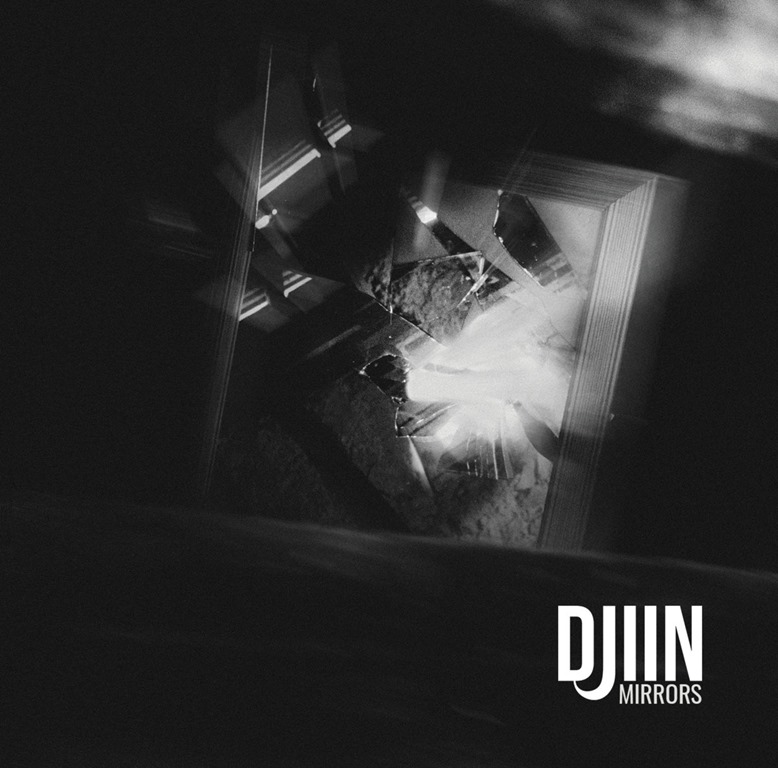
If there’s one thing you need to learn about Djiin, it’s that they don’t bend or bow to conformity, and they come from a quite different angle in comparison to the majority of bands pedalling riffs and noise.

Their bio describes them as ‘a psychedelic stoner-rock band whose name is inspired by a psychedelic stoner-rock band whose name is inspired by spirits and other beasts of the Semitic beliefs and traditions. Influenced by 70’s progressive rock and krautrock bands, doom scene and heavy rock from the glory days of the early Sabbath era, as well as other modern references based on the diversity between western and traditional eastern sounds, Djiin develops a personal, atypical and captivating universe. Spirits and other beasts of the Semitic beliefs and traditions. Influenced by 70’s progressive rock and krautrock bands, doom scene and heavy rock from the glory days of the early Sabbath era, as well as other modern references based on the diversity between western and traditional eastern sounds, Djiin develops a personal, atypical and captivating universe.’

You may need a moment to step back and digest the depth of this. Djiin are not your average metal act.

‘Blind’ blew us away as a single cut ahead off the album’s release, and while it’s in some ways representative, it’s also the soft end of the band’s sharp wedge.

The title track twiddles and widdles in a way that Bill and Ted would probably flail over, and it’s a textured, detailed post-rock epic reminiscent of the hectic fretwork that dominated the sound of 2004-2006, but doesn’t sound in any way dated – not least of all because this is a pummelling blast of noodlesome guitar noise which transcends the confines of time or genre, lunging and lurching against a host off walls which confine genres within narrow, predetermined confined.

‘In the Aura of My Own Sadness’ is a glorious sprawl of post-rock exploration which ventures into a host of territories which are hard to unpack, not least of all because of some of the way if delves into detailed noodly territory, breaking into hefty tribal tones of the pulverising slow doom of the closer, ‘Iron Monsters’.

Mirrors may only contain five tracks, but in terms of depth and quality of content it offers a considerable amount more via its layered, if brutal, soundscape, which carves deep. It’s heavy album, and that’s for sure, and one which doesn’t conform to the distinctions of genre. But genre distinctions count for nothing: what counts is a that his is a raging apocalyptic blast – and it’s good.

AA

a1658479541_10

Tartarus Records – 26th April 2026

Christopher Nosnibor

The mood which pervades all life right now, feels pretty bleak. It’s not only that turning on the news brings endless darkness, with endless reports of multiple wars and families around the globe, but it feels as if a cloud has descended over all existence for all but the mega-wealthy who are living it large, laughing their way around the globe on cruises and in private jets in the knowledge that they’ll be gone and interred in spectacular mausoleums or at least having secured their notes in history and with extensive entries on Wikipedia. My daughter, who’s twelve, and loves retailing me with facts, told me just last night that based on current consumption, oil supplies will be exhausted when she reaches the age of fifty-six. “I don’t want to live til I’m fifty-six,” she said. It wasn’t spoken with an air of pessimism of gloom, but a statement grounded in an acceptance of the hell that the future holds.

It’s in this context that we arrive at III, by extreme experimental duo All Are to Return, who preface their new album with the commentary that ‘We have entered a new age of extinction – of poisoned lands, habitat destruction and encompassing climate catastrophe. AATR III reflects the harshness of life laid bare to the vagaries of capital, of uncaring generations heaping misery on their successors and the life-forms with which they share a fragile biosphere.’

Something I find bewildering is that in the nineties, environmental issues were pretty niche, as was being vegetarian – you’d be hard-pressed to find vegetarian cheese or yucky TVP on the high street, and would only be able to score some half-edible veggie sausages in Holland and Barrett or some crustie hippie shop down some side-street. Now, this is mainstream, and yet still politicians back big businesses who push fracking and deforestation and place profits ahead of what most refer to as ‘sustainability’, but is, ultimately, in reality, ‘survival’.

Perhaps I digress a little, but feel it’s relevant before returning to the pitch which explains how ‘The album’s unmitigated brutality of sound and expression are mediation of these concurrent events. Colossal noise-scapes are shaped with pulsing synth patterns, shredding percussion and vocals that are screams from the void. As a whole, the many-layered compositions carry massive assaults on the senses and a rage unhuman.’

The first few seconds alone are an all-out sonic assault, a blast of harsh static noise, a howling white noise blizzard which hurts. And from thereon in, it only gets harsher, an obliterative wall of noise that goes full Merzbow in no time. It shivers and trembles, grates and vibrates, everything overloading, eardrum-shredding, abrasive, aggressive, snarling, gnarly.

Not everyone ‘gets’ noise: to many, it is just ‘noise’. But noise is a vehicle which provides a unique catharsis, a means of channelling rage which cannot be conveyed in words alone. There are vocals on III, but they’re the sound of demonic torture in a sea of flame.

Thunderous, speaker crackling distortion overloads, and the vocals are butt demented, demonic shrieks buried amidst a skin-stripping nuclear blast. Every track is harsher and louder and denser than the last – and it’s the perfect soundtrack to the world right now. It would equally be a perfect soundtrack to Threads, being pure white-noise, blinding apocalypse in sound.

‘Drift’ is entirely representative: a solid wall of noise, harder and heavier than a slab of concrete – and it is the perfect encapsulation of the rage of life in the now. I sat down to listen to this as Iran rained missiles down on Israel in retaliation for the bombing of their embassy in Syria… Israel immediately vowed to return fire. Gaza has been levelled. We’ve just endured the wettest – and warmest – February and March on record here in the UK and half the country is under water, and many places received the entire rainfall for April in the first week, since when we’ve had more frosts than in the previous two months. Around the globe, wars rage and famine is rife, and frankly, everything is fucked. To think otherwise is delusional. Legacy? It’s clear what the legacy of the 21st Century will be, and ‘Legacy’ encapsulates that perfectly.

All Are to Return articulate their anguish at this fucked-up state of affairs by the medium of the harshest of noise. And it makes perfect sense. III isn’t quite Harsh Noise Wall, but it is fucking brutal. ‘Archive of the Sky’ is nothing short of devastating.

III hurts. It rakes at your guts, it rains heavy blows from every angle. It rapes your ears and pounds your cranium, it thumps your ribs and slays your sense. Every second is a sonic detonation, a devastation annihilation, a squall, a wall, an explosive blast, the sound of the world caving in, the sound of the absolute end. You want to hear the sound of the apocalypse? Listen to this, and live through the end of the world. It’s coming, and sooner than you care to contemplate.

AA
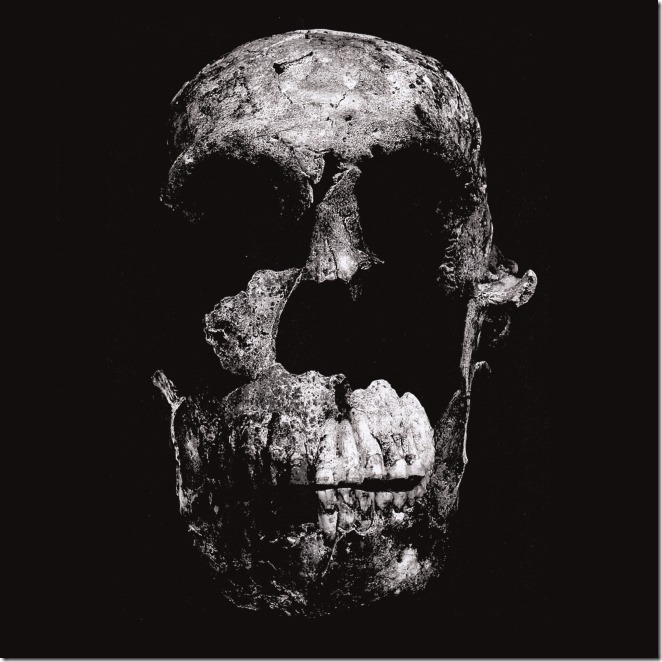
AATR III Artwork

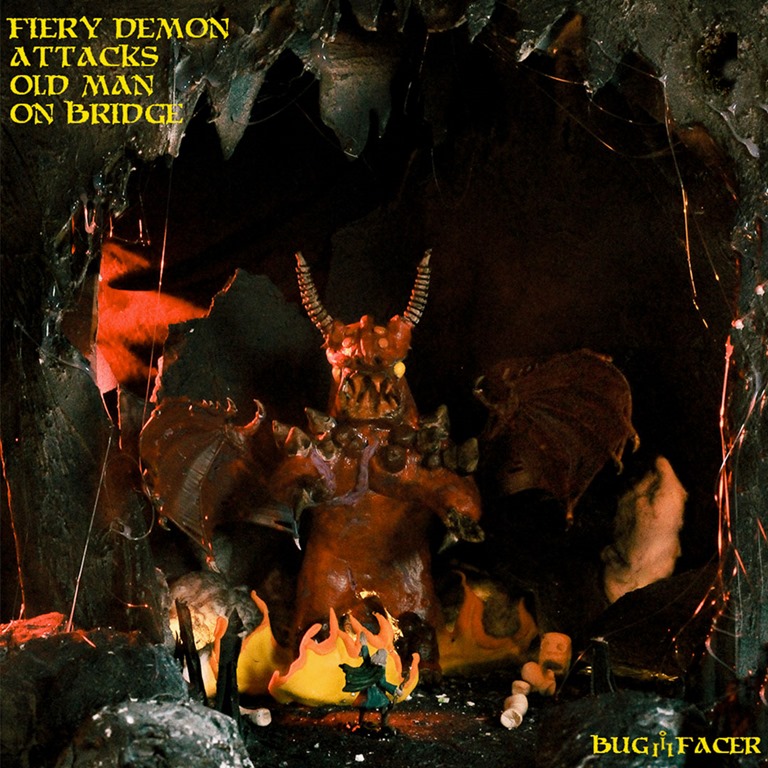
Following the release of their raging & explosive debut EP Triple Death, East Yorkshire based noise punks Bug Facer are back with penetrating new single ‘Fiery Demon Attacks Old Man On Bridge’ – a Tolkien-esque fantasy garage punk track heavily inspired by The Lord of the Rings, that started life as a riff & a shout!

Released on Hull based label Warren Records, ‘Fiery Demon Attacks Old Man On Bridge’ is the first track to be written by their new 4-piece line-up & was produced by local indie ‘master of the faders’ Adam Pattrick.

The track follows a fellowship’s passage through an old mine infested with Goblins & Orcs who battle with an aged wizard & the Demon of Hellfire. As always, the release offers an insight into the band’s overarching concept around their music, in which they aim to deafen audiences with pure primal musical grit & emotion!

The band say of the release “We wrote a track like this because as a band we don’t necessarily take ourselves too seriously. Music is about creativity & having fun, not every track has to have subliminal meaning. Just have a bit of fun!”

Listen to ‘Fiery Demon Attacks Old Man On Bridge’ here:

Bug Facer was formed after long-term friends James Cooper (guitar) and Will Longton (drums/vocals) left their previous band Woodlouse, a psychedelic progressive rock act, wanting to explore a darker tone, delve into primal rhythms & strip back their sound. Through interactions on the local music scene, the band next recruited Tom Steel on bass & vocals plus Josh Burdett on guitar which brought an extra layer of grit & warmth to their already huge sound. Taking inspiration from bands like Thee Oh Sees, The Jesus Lizard, Tropical Fuck Storm, Sepultura, Code Orange, Slint & Black Country New Road they began jamming, adopting a trance like approach in rehearsals, waiting for moments of magic to appear from the darkness.

Describing themselves as a noise punk band forged from sand & broken glass, ready to make some music for cave people to grind bones, gnaw at rocks & howl around a fire pit to, Bug Facer’s scratchy fuzz dissonance is born from an ancient primordial power & their goal is to rattle the bones of anyone within a thousand-mile radius.

With a growing number of gigs at Hull’s New Adelphi Club their vision is fast becoming reality… & talking of visions, when band member Will was a young lad he thought he saw the ghost of Michael Jackson, only to find out later that day that Jackson had indeed died!

BugFacer_FieryDemonAttacksOldManOnBridge_artwork_1080sqr

Fire Records – 26 April 2024

Christopher Nosnibor

Another day, another artist I’m discovering and wondering if I’m increasingly poor at keeping up or of there really is just more music in the world than I could ever keep abreast of even if I devoted every waking minute to trawling every corner of the Internet for news and playlists. Maybe it’s a bit of both. There is, perhaps, something of an expectation that someone who writes about music should have a deep and wide-ranging knowledge of the subject. The trouble is, the more music you’re exposed to, the more avenues it opens up, and suddenly there’s this and this and this… and how is there time for all of it?

If you’re obsessive about a given genre, you may be an expert in your field, but you’re missing out on all of the other fields. Explore the other fields far and wide, and you’re missing something elsewhere. I see people on social media who seem to spend their entire days playing – usually streaming – new albums, and they’ve heard pretty much everything on release, five, six, seven albums a day. I’m rarely able to listen to music while working my dayjob, and when reviewing, I can’t really manage more than an album a night to hear, digest, process, formulate an opinion and sentences to articulate it.

In daily life, I rarely suffer from FOMO, but when it comes to music, I feel – increasingly -that I’m unable to keep up. I’ve not listened to the latest Taylor Swift album, for example. Or any of her albums for that matter. Am I missing out? My daughter would insist that I am. But as much as I listen to music for pleasure – at least when I can – I also listen with a view to providing coverage to artists who aren’t Taylor Swift, who you won’t find covered in every other publication. And so we come to Yosa Peit, who I clearly can’t claim to have discovered at the dawn of her career, but who, while having gained a following and a contract with Fire records, clearly isn’t a household name either.

The pitch for ‘The free-ranging sound of Yosa Peit’ is that her work ‘recalls the intense arrangements of a cyber-era Prince with the surrealist tones of Arthur Russell and the vulnerability of Arca circa 2017.’

I’m a little uncomfortable with Prince. By that I mean, likely somewhat controversially, I think he’s massively overrated, and moreover, I’m not really a fan of anything funk.

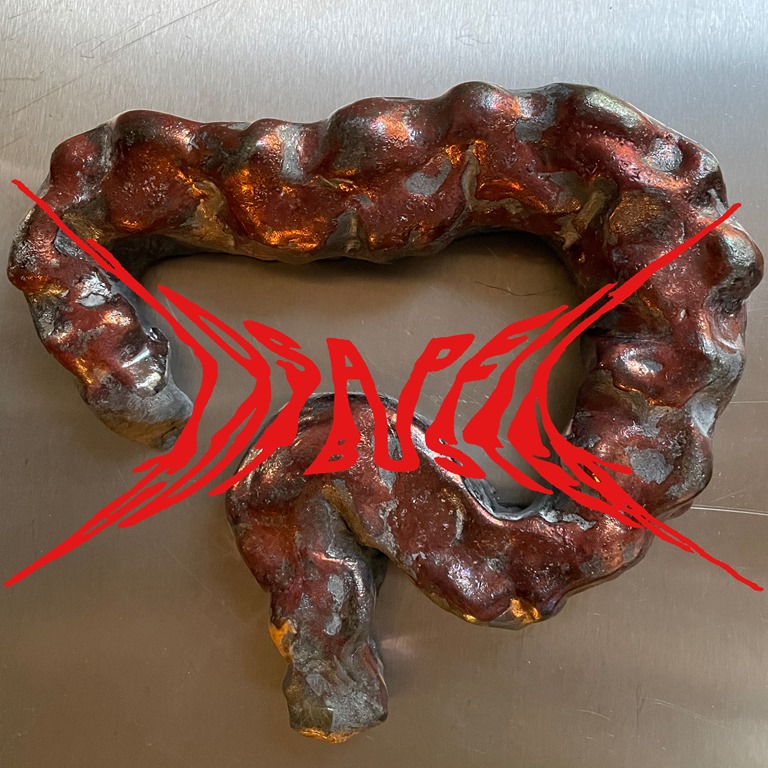
Perhaps it’s my relatively superficial knowledge of Prince that’s the reason that Prince is by no means my first point of reference on hearing Gut Buster, an album which is positively brimming exploding with ideas. There are elements of crisp pop and some bust-up, fucked about bluesiness to be found in the mix in this extravaganza of inventiveness, which also sculpts dark electropop shapes with some heavy bass and ethereal synths. At times, skitters and ripples rush by faster than the mind can compute, and there are some pretty slick grooves, even hints of what one might broadly refer to as ‘urban’ shades – as exemplified on ‘Tower Shower’, which also brings some dubby bass and blasting beats.

Gut Buster has soul – bit tosses it in a liquidizer and pulses it to a pulp with skittery bits and pieces of synth and hyper-processed vocals, 80s AOR melted into soporific trip-hop and hyperactive techno tropes. The chipmunk vocals area bit irksome at times, but there’s so much else that’s good that you can forgive it. The minimal gloop of ‘Call Me’ is a slow bump and scrape, and showcases the way in which Peit’s compositions are riven with intricate and fascinating detail.

Gut Buster is odd, quirky, in places dark and in others, less so. Unashamedly other and oddball, there is much to unravel here.

AA

383430

Today, we share the mysterious and poignant track ‘Moonshiner’ from the eponymous solo album by guitarist, producer and composer Alessandro ‘Asso’ Stefana. The album is due for release on 17th May 2024 via Ipecac Recordings, with PJ Harvey as Executive Producer. ‘Moonshiner’ is one of the track from the albums featuring the voice of Roscoe Holcomb taken from the Smithsonian Folkways archives.

Asso describes his use of the archives as “a powerful and moving testimony to a bygone era… I have always been fascinated by the idea of mixing folk, a music so intimately linked to the land, with something that goes beyond the boundaries of the genre.” One of Asso’s aims for this album was for it to feel “suspended between earth and sky” – the interplay between decades old recordings with new improvisations evokes feelings of being grounded and untethered at the same time. 

See the visualiser here:

AA

Moonshiner

Photo credit: Roberto Cavalli

Cruel Nature Records – 26th April 2024

Christopher Nosnibor

Plan Pony – the solo project of Jase Jester, one half of Ombibael / Ombibadger – has been simmering for a while, and we’ve been following his output since the release of the ‘Martyr’ single back in 2020. So I was naturally excited to hear his latest offering.

I felt suddenly uncomfortable, concerned, even, on seeing the accompanying blurbage, which leads with ‘RIYL: Animal Collective, Madlib, Nurse With Wound, Hype Williams, Black Dice’. I mean, I do like a bit of NWW, and don’t mind some Black Dice, but I absolutely abhor Animal Collective. So, so much. Something about Animal Collective radiates muso smugness – something it would be hard to accuse Jase of.

Electric Swampland Home is the first Plan Pony album, and as with previous outings, finds Kester grappling with vintage gear to conjure authentic vintage noise inspired by those early adopters. He’s right when he tells me that emulators simply aren’t the same, and that when technologies were emerging, the sound of the resulting recordings was born of necessity – like when you bounce tracks on a cassette four-track and lose some quality and definition in the process, and the presence of amp hum and tape hiss because amps hum and tape hisses. Adding tape hiss or vinyl crackle digitally is an affectation, and while some may be sold on this kind of nostalgic artifice, it lacks that certain something.

While questions of authenticity provoke heated debate in circles around some genres – punk, obviously, grunge, perhaps to a lesser extent, and right now, indie and alternative as new acts track stellar trajectories seemingly from nowhere while claiming modest grass-roots credentials while obfuscating middle class and public school backgrounds and major label backing, Electric Swampland Home is a truly authentic work. Kester hasn’t amassed a pile of highly-sought-after vintage kit in the way people with hods of cash buy up 808s and Moogs to try to be cool. Electric Swampland Home is the sound of a Boss sampler and an old Tascam digital studio he’s had for yonks, and which by today’s standards are pretty primitive.

From the very start, Electric Swampland Home creates discord and chaos with the woozy, bent, and frankly fucked-up ‘Travelling There’, a loop of atonality that gives way to a rolling rhythm and feedback-squalling bass crunch… and from thereon in, everything goes.

‘The Village’ tosses a salad of tribal beats, twisted Kyoto and a dash of Joujouka. While I’ve never been comfortable with the kind of cultural appropriation that the likes of Paul Simon’s takes on ‘world music’ present, this is something entirely different – a full global exploration which occurs simultaneously. This owes more to the tape experiments of Burroughs and Gysin, Throbbing Gristle and Cabaret Voltaire than anything else, conveying a sense of the way in which everything happens all at once, and linearity is a construct.

Across the album’s eight tracks, Plan Pony meshes some dense sonic textures and layers of difficult dissonance. Notes and tones bend and warp, things twist and melt and bleed into one another: edges blur and fade. The way the juxtaposing and often incongruous elements are brought together isn’t explicitly jarring, it’s not a bewildering collision of noise, but something rather more subtle – although no less impactful and no less disorienting. As with Burroughs’ cut-ups, Electric Swampland Home captures – recreates, distils – the overwhelming experience of modern life, the blizzard of information, the endless intertext, the diminished attention span, the globalisation and the egalitarianism of everything. That isn’t to say we live in an egalitarian world – but that everything equally demands our attention from every corner of everything, to the point that it’s impossible to prioritise or even reasonably assess what’s of more importance than anything else. And so we quiver, frozen in stasis, poised between myriad options and so often spend hours selecting none of them.

This is nowhere more clearly conveyed on the warped, glitchy layerings of ‘Same Cloud’, which brings everything all at once. On the one hand, it’s the most overtly ‘song’ like piece on the album. On the other, it’s like listening to the radio from the next room while reading a book with the TV on in the background, and your phone’s ringing and next door are doing DIY and your mind’s wondering about what’s for dinner – and this continues into the sample-soaked looping stuttering jangle of ‘Amphibian’.

‘8pm Local Time’ combined field recordings, a low-level quivering bass and squelchy laser-blasting electronics together, and not necessarily in the most comfortable of fashions.

Electric Swampland Home revels in incongruity, in awkwardness, in otherness, and in many ways, it’s a magnificent representation of life in all its colours and chaos, its business and unpredictability. It’s not an easy or immediate album, and it’s not for a second intended to be. It is an unashamedly experimental work, and one which succeeds in its explorations.

AA

a3913248541_10

Montréal guitarist and producer Kee Avil returns with Spine, the follow up to her 2022 debut LP Crease, an intricately constructed, knife-edge take on avant-pop which garnered plaudits from outlets like The Wire, The Quietus, Mojo and Foxy Digitalis, picking up a Canadian Juno Award nomination and Bandcamp Album Of The Day and Albums Of The Year along the way.

Kee Avil’s music is both adventurous and intimate, intellectually challenging and emotionally resonant, and with her sophomore release Spine, she strips back her heavily textured compositions, opening up a much rawer sound. She calls it folk—and while traditionalists might scoff, this is urgent music that reflects the precarity of modern life, as well as the jarring mixture of electronic and real-world interactions that have become the fabric of our day-to-day experiences.

Avil says: “‘Gelatin’ sounds like rock and mud to me. It’s dense and heavy, viscous. It feels like it emanates from underground, underwater. It took a while for this song to come together – it started off with just voice and foley for a long time. When the beats were put in, it finally all glued together.”

Watch the video here:

AA

c3de1866-49b1-8a26-a451-244255dd5292

Kee Avil: Photo by Caro Etchart