Archive for December, 2020

Bad Paintings – 16th December 2020

Christopher Nosnibor

It’s perhaps fitting that elkyn should wrap up the year with a Christmas single. Bleak as the year has been for so many, it’s been an interesting and evolutionary year for the shy and retiring Leeds-based artist, 22-year-old songwriter and multi-instrumentalist Joseph Donnelly.

2019 saw Donelley tour the UK with 60’s LA legends LOVE featuring Johnny Echols, as well as playing shows with Katie Malco, Rozi Plain, S.T. Manville, Molly Linen and Mark Peters. 2020 put a halt on touring, and pushed him back into quiet retreat, and it seems that creatively, it’s proven remarkably beneficial.

Transitioning from elk to elkyn following the release of his debut ‘beech’ EP, and after a spell of silence, he returned with a slew of new material that’s as breathtakingly delicate and understated as you could conceive, beginning with a beech remixes ep and the single ‘if only it was alright now’.

How does covering a Coldplay track sit in the scheme of things? After all, they do epitomise the mainstream preference for the blandest, most diluted, tepid, fare going, the musical equivalent of instant decaff.

With chiming bells and dulcimers and soft washes of synth, this rendition certainly sounds and feels like a Christmas single, but with softly picked acoustic guitar and Donelley’s quite distinctive vocals that are imbued with a sunny 60s pop vibe, it doesn’t feet like Coldplay either. With a bold drum rolling in like thunder and a cinematic production, it’s well executed and makes for a fitting bookend to an outstanding year for elkyn.

11th December 2020 – PNKSLM Recordings

Christopher Nosnibor

Trapped in a box, a loop of ever-diminishing life, it’s not difficult to comprehend why amidst the confusion, the sadness, the frustration, and anxiety, and general bewilderment, nostalgia should grow its presence. Your life sucks, and it probably always has, but it’s easier to cast a hue of fondness over the past than to accept that if the present’s bad, the future is worse. It’s a natural part of the ageing process, too, of course: kids get younger and the music and fashions get worse by the year.

Katja Nielsen, singer and bassist with Swedish punk act Arre! Arre! had been suffering from bipolar disorder a decade before diagnosis. With the outbreak of a global pandemic, band activity curtailed: she found that writing songs helped her process, and so She/Beast was born, with ‘In the Depths of Misery’ being the first of a brace of EP, both of which derive their titles from quotes from Vincent Van Gogh, another bipolar artist.

The liner notes recount how the songs were ‘written and arranged entirely in Nielsen’s living room’ and ‘mark a dramatic departure from the furious pace of Arre! Arre!’s output, instead evincing a lo-fi, pop-rock sound’.

How it translates is as all the dark side of the 80s distilled into a neat package: it’s very much bass-driven, propelled by a drum machine that thumps away mechanically, with economical programming – no fancy fills or extravagant cymbal work – and laced with stark synths. Throw The Cure, X-Mal Deutschland, Skeletal Family, and all the fringe artists from that 1979-83 period who ventured into the darker realms of post-punk, into a blender and you’ve got the sharply piquant flavour of She/Beast.

It’s poppy, but it’s heavy on shade. ‘I don’t know what to do with myself’, she sings lost and aimless on ‘The Sadness Will Last Forever’. The bubbling ‘Born to Fight’ is exemplary of the way Nielsen brings everything together. A looping buoyant synth line that would have sat comfortably on an early Depeche Mode single is welded to a thudding four-four Craig Adams style bassline that dominates the rhythm section, while Nielsen spins a message of self-affirmation in a dreamy style, her voice compressed and floating in reverb.

The loping drums of closer ‘A Fragile State of Mind’ are murky in the mix, but the snare cuts through in the way that’s characteristic of that 80s sound. It’s so, so evocative that it carries almost as much weight and impact as the tune and the lyrical content combined – meaning that in context, this short, five-song EP speaks and resonates on levels far beyond its constituent parts.

AA

a3365911352_10

1st January 2021

Christopher Nosnibor

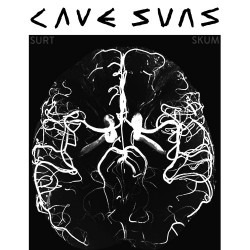
‘Surt Skum’ is a sweet Swedish treat and translates to ‘sour foam’ – at least according to the missive that accompanies the latest release from psych rockers Cave Suns and their missive from Tier 3 Newcastle, who report that they ‘entered their lysergic bubble of a practice room, to escape the impending mask strewn, gig parched landscape of the North East’.

Emerging from a series of improvisations, this EP offers some solid – if ragged – grooves and a fuckload of energy – not to mention some wild wah-wah action.

The title track kicks things off in a suitably raw but dynamic style: propelled by motoric drumming and a throbbing, repetitive bass that provides the backdrop to a sprawling, wah-laden lead, it’s a dense rush of heavy kraut-infused psych played rough ‘n’ ready, and this sounds lie a one-take live in the studio affair, and the up-front drum thump that clatters and crashes through ‘Sleep Never Rusts’ isn’t so much underproduced as unproduced – but the sounds very like Joy Division’s ‘Dead Souls’, and the nagging bassline isn’t the only factor in this epic builder.

Six-and-a-half-minute finale ‘Sloop John Dee’ brings goth-tinged Celtic guitars as if played by Hendrix to a heavy stoner riff that’s welded – albeit loosely – to a stomping tribal beat that’s pure new wave.

It all adds up to a pretty intense experience, and a cracking release.

Libertino Records – 11th December 2020

James Wells

Debut singles are interesting things: a statement of intent, perhaps but equally likely to be a mere taste of an artist’s capabilities, and not necessarily direction. It all depends on the career-stage of the release, of course: an emerging act releasing a single in that initial rush of enthusiasm may regret it, or, if not, will rapidly transform into something quite different.

Gwir’s debut, pitched as ‘a perfect marriage of both of their influences… With its 90s baggy groove and Flaming Lips twisted popness’, and it’s certainly a solid introduction, and an indication of a band with no small degree of talent.

I can’t say I get so much of a baggy vibe from the swirling, layered sound of the tune, but it’s definitely deeply steeped in eras past. It trickles in on a slow-rippling, shimmering haze, a flickering psychedelic-tinged trip that’s a glorious twisted hybrid of shoegazey / neo psych with a slightly trippy / folksy vocal delivery, and while it may not fully convey ‘the uncertainty and emotional vulnerability of the lyrics’ which aren’t so readily decipherable, ‘Gwir’ builds eddying currents that transport the listener into the clouds. One to pay over, and over, and get lost in.

893235

Criminal Records – 18th December 2020

Christopher Nosnibor

For many, 2020 has been a year to forget, next-level dismal, in ways that it’s hard to relate from our isolated boxes. Those of use fortunate enough to be working from home struggle to fully grasp the hardship of furlough or redundancy, to fully appreciate the impact of mass poverty and the pace of its spread.

Christmas is always difficult for so many people, and if Whammagedon is enough to be an issue for you, then you’re probably in a really, really fortunate position. Seeing artists rallying round at a time when many of them are themselves struggling due to a lack of gigs, which in turn means no merch sales and so on, is heartening in a time of seemingly eternal bleakness, and The Kut’s first new material in a while, in the form of Christmas single ‘Waiting for Christmas’ sees 100% of profit from sales and streams being donated to the Red Cross, supporting those affected by poverty as a result of the pandemic.

‘Waiting for Christmas’ may be a Christmas single, but it’s not, if that makes sense: it’s more about intent than profile or publicity, and as the press release notes, ‘while independent musicians are usually discouraged from releasing at Christmas, due to expected lack of ‘impact’ in comparison to major label peers, The Kut affirmed, “We know the single is an underdog, by the design of the music industry, but I am appealing to our supporters and to Christmas and music lovers in our community… If we can raise even a few hundred pounds for those affected by poverty during the pandemic, and support families, we would love to do that. We have lost so many people before their time, and so many families are suffering and feel alone. With the single, we are collectively raising a candle for all those we have lost and showing solidarity with our wider community this Christmas.”’

It’s a slow-burning ballad, which is seasonally / charity single appropriate and Where ‘Waiting for Christmas’ differs from the norm is that straight into the first verse, Maha reflects ‘It’s Christmas, why do I feel so low?’ Confronting those so-common-but-less-commonly-addressed mental health issues in a Christmas single is practically unheard of, but we need more of this: this is what makes ‘Waiting for Christmas’ an essential Christmas single, even more than the fact it’s a decent tune.

Released across digital formats and CD via a dedicated website, it’s not about the Christmas charts but raising few quid.

AA

thumbnail_image003

After announcing the release of his second EP titled "Continued Survival", the Italian-born electronica musician and producer Souvlaki unveils another piece of this new work, which was preceded by the single “7LUNGS” (featuring Slim Gong) at the beginning of November.

“Isolation” features Deborah Grandi on vocals and is presented with a stop motion video directed by Souvlaki himself, along with Carlo Rodella and Nicola Nolli.

The musician comments: "This is the first song I started working on for this new EP, the one that set the whole songwriting process in motion. Deborah’s vocal lines were written almost on the spot, we found them when we first listened to the base in the practice room and they immediately seemed to work well in the song.

The lyrics match the story of the video, the central theme is people’s incommunicability, and the song title seems to sum it up quite well.
I have to admit that I struggled to finish the arrangements of “Isolation”, but I perceived its great potential right away and I didn’t want to set it aside. Thanks to Simone Piccinelli, who contributed to the production of the EP, I got to find the balance between all the elements in this song.

I am satisfied with the outcome and I hope listeners will appreciate it too; personally, I like the atmosphere it evokes, that slightly “retro” touch; it plays along within a mix between darkness and positive feelings."

The EP "Continued Survival", produced by Souvlaki and Simone Piccinelli at La Buca Recording Club and mastered at Woodpecker Mastering will contain 6 tracks, including the single "Isolation" and the previously released single "7LUNGS" and will be available on all main digital platforms starting January 15th.

Watch the video here:

AA

Screen_Shot_2020-12-07_at_7.45.35_AM

4th December 2020

Christopher Nosnibor

Woooh, shit, trigger warning! Aggressive electronic music which may trigger feelings of anxiety and n increased heart rate paired with themes of death and suicide! Biomechanimal should be plastered with red flags and probably quarantined. Wait, we’re all quarantined, and it should go without saying there’s some heavy sarcasm there.

Personally, my tigger is the ‘triggers’ crowd: unless either billed as family entertainment or the content is particularly disturbing, art shouldn’t require a warning: the very function of art is to challenge, and to present audiences with real emotions and concepts that are uncomfortable. Art is a window – or a mirror – on the world, and one that provides a conduit to explore the places we don’t necessarily venture in everyday conversation.

‘End Your Life’, which features Nysrok Infernalien is pitched as ‘a brutal, filthy expression of electronic music,’ and an ‘aggressive collaboration [which] brings together elements of industrial, extreme metal’.

If, in combining the crazed attack of the likes of KMFDM with the persistent but gnarly groove of early Ministry and stitching it together with a gauze of heady trancey cybergoth, anyone could possibly expect anything that wasn’t full on and in-your-face intense and designed with absolute precision to punch buttons – while at the same time geared up to make you move – is living on a different planet. Sonically, ‘End Your Life’ is very much rooted within genre context, but it’s actually an uplifting tune, a rush of hi-nrg beats and hyper synths, while lyrically, it’s hard to decipher, and it may be a threat or a promise or neither. But it’s more likely you’ll be too busy bouncing around to want to be slitting your wrists.

The five accompanying mixes mangle the tune to varying degrees, each accentuating a different aspect of this snarling beast of a tune, with the harsh metallic guitars often pitching to the fore, propelled by pounding beats that pump so, so hard. Die Sektor strip it back and slow it down a bit, and get a bit Nine Inch Nails in the process. Overall, there’s more than enough variety in the mixes to keep it interesting, and they compliment the original version well.

AA

a0539954098_10

11th December 2020

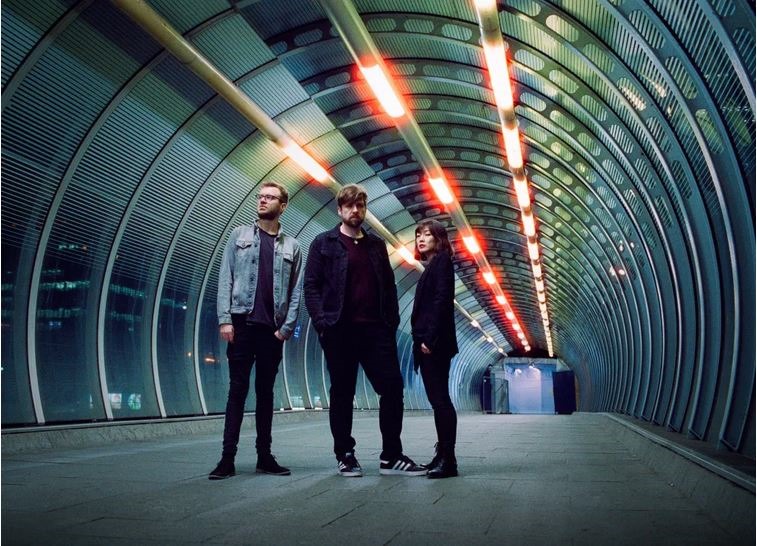
London trio Slow Cooked Bears are all about the hybridity, bringing together a mixture of visceral alternative noise rock to forge what they describe as ‘a left-field, avant-garde sound that’s both nostalgic and modern with elements of grunge, synth pop and reverb heavy post-rock’.

Now, nostalgia ain’t what it used to be, especially now it’s become the last cash cow for late capitalism to milk, and there’s never been a better time to milk it dry than in 2020 when half the world is stuck at home, unable to socialise, see friends or family, shop or conduct all of the activities that have been part of everyday life for the last century. Who doesn’t yearn for the past? Who hasn’t at some point in recent months delved into musical memories that remind them of time spent in the company of friends?

Their releases to date all carry something of a spacey theme, that seem to have little correspondence to the oddball barbarism of the band name, which makes ‘The Grand Scheme’ something of a departure from Eclipse (2018) and Space Odyssey (2019).

It kicks in with a big swaggering blues riff and burns into a grungy alt-rock descending chord sequence for the chorus. It’s hooky as hell, and they sound confident but not cocky, and there’s a 90s vibe that hints vaguely at Placebo while they’re kicking out Zeppelinesque guitar breaks spun through a contemporary filter that alludes to the likes of Rivals Sons and (earlier) Royal Blood. As such, it’s nostalgia, but with a twist, and it works. In the grand scheme of things, and even by any measure, this is a pretty strong single cut.

Capture

Gizeh Records – GZH100 – 4th December 2020

Christopher Nosnibor

I’ve followed Gizeh from their very infancy, but first encountered them via their offshoot microlabel, Loom, back in 2007: Her Name is Calla were tour support for iLiKETRAiNS and the only merch they had was a CD-R of ‘Condor and River’ in a handmade sleeve of corrugated card. Around the same time – this was the pinnacle of the post-rock explosion – I bagged a copy of Glissando’s Loves are Like Empires with an actual wax seal on the containing envelope.

I’ve since purchased, hoarded, reviewed, and obsessed over countless Gizeh releases over the following thirteen years, not least of all releases by worriedaboutsatan, Shield Patterns, Last Harbour, Hundred Year Old Man, and Aidan Baker… It’s been a joy to see the label grow while continuing to serve a comparatively small community of musicians, often cross-collaborating with one another, and operating within a broad yet overlapping field that sees their work complimenting and contrasting admirably. The fact that every release has felt special, and has placed a strong focus not just on musical quality, but presentation, with quality artwork printed onto heavy stock

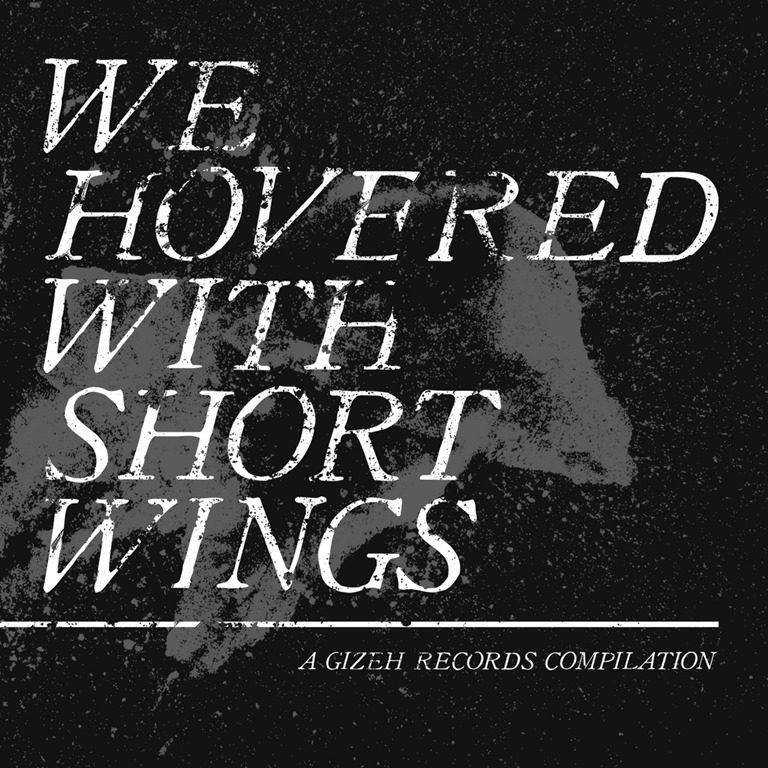
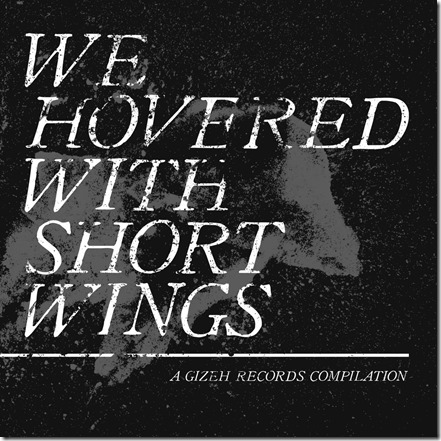
It’s the singularity and keen sense of label identity from founder Richard Knox which has been consistent throughout the eighteen years since the label’s inception, and that probably explains why their 100th release, We Hovered With Short Wings, isn’t a standard retrospective compilation – although it is a compilation, that instead presents twenty-one exclusive tracks from artists who’ve appeared on the label over the label’s lifetime. This is a really strong selling point: anyone who is a fan of the bands and /or the label, will already have the releases thus far, or be working on plugging the gaps in their collections, without the need for duplication.

The press release recommends this be filed under ‘Ambient/Post-Rock/Alternative/Experimental/Post-Metal/Neo-Classical/Drone’, and while most Gizeh releases recommend similar in various permutations, the joy of We Hovered With Short Wings is that represents all genres and pretty much all possible permutations of them too.

Disc one finds Some Became Hollow Tubes’ ‘No One is OK’ make the first plunge into heavy territory, away from delicate orchestral post-rock, although to focus on this is to perhaps overlook or minimise the range of the material on offer here, and the same goes for the second disc also, which opens with a deep, ominous swell of sound: Richard Knox and Frédéric D. Oberland’s live rendition of ‘Requiem for Laïka’, and passing into a rich arrangement of melancholy strings, picked acoustic guitar and soaring operatic vocals, it more or less encapsulates the label’s house style, but then Aging’s ‘Her Mercy’ turns bluesy, and it’s followed by the megalithic eleven-minute live rendition of ‘Ascension’ by Hundred Year Old Man, which brings the bleakest of bleak slow ambient metal. And it’s in this context that you really start to get the full picture.

This compilation isn’t about what they’ve released, but what they represent, and crackles, bleeps, and slow-rippling orchestral swells abound across the span of this immense and ambitious collection. Showcasing a broad range from ambience to doom, orchestral textures and layers of detail are characteristic features for almost all of the contributors featured here. Broad, sweeping strings that strike deep into the heart are Gizeh’s signature, and this is a label unafraid of backing art rather than promoting mere entertainment. That isn’t a matter of snobbery, but a measure of their confidence to stand apart and to cater to a small, niche, but devoted audience, rather than pursuing a larger market.

It’s an approach that’s clearly served well thus far, and this compilation appears to stand as much as a statement of intent as a celebration of achievements to date.

AA
a3078587874_10

Lamour Records / Purlieu Recordings

Christopher Nosnibor

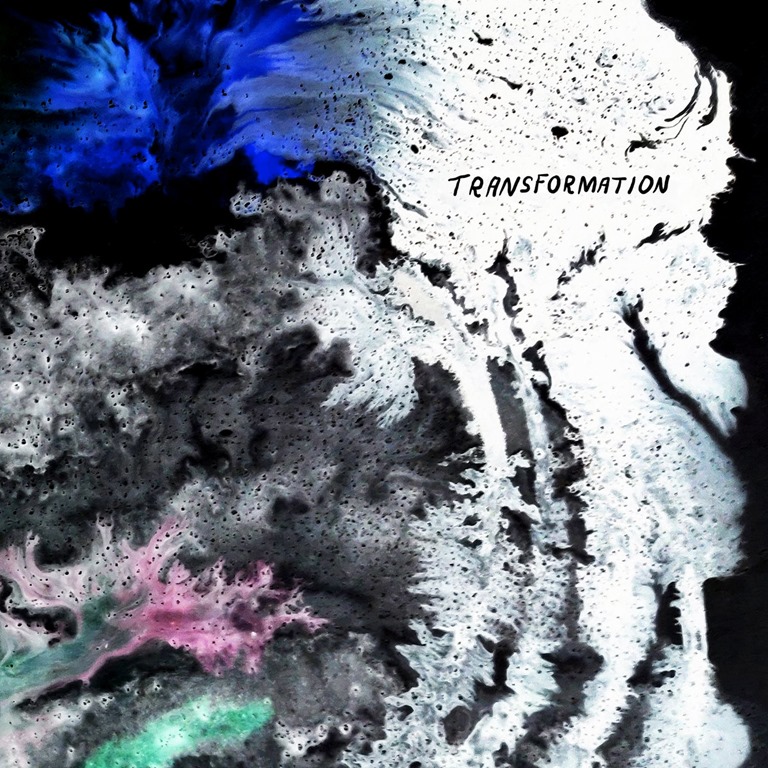
Spending most evenings immersing myself in an array of weird and wonderful and sometimes not so wonderful noise, this album came as a real surprise. The accompanying text does little to prepare the listener for such a gentle and exquisite collection of cinematic neoclassical compositions.

And yet the liner notes are precisely why Transformation is surprising, because all is not as it seems, explaining that ‘The album Transformation challenges the boundaries of human and machine, the physical and the artificial, the feasible and the impossible. The result is a thoughtful and true emotional storm where the piano forms the basis for an opposite pole between sound and playing technique. When the sound is real, it is played with inhuman technology. When played by hand, the sound moves outside the spectrum of the physical piano. What role does "lying" play for the listener?’ And what exactly are we listening to here?

It’s impossible to distinguish organs and organic sounds from synthesised or sampled approximations, and while the human / inhuman / orchestral /electronic sounds are impossible to distinguish – is that piano, performed by a musician with a real passion and a deep sense of drama, creating rippling waves of notes, or is it all so much programming? Listening to ‘Skeppsrå’, it sounds real. It feels real. I want it to be real. Can I therefore simply not believe that it’s real and accept it?

It’s not quite as straightforward as that. Once you’re aware of something, it’s impossible to erase that awareness. You want to feel as though you’re tapping into something real, otherwise it’s just muzak, film music made to fill a space and manipulate an emotional response to what may otherwise be a blandly-shot scene.

‘Tradition’ sounds like the product of synthesised sounds, while the brooding sonorous atmospherics of ‘Mekanik’ are simply other-worldly, while ‘Skogsrå’ is another magnificently supple slice of post-rock flavoured ambience that swirls and soars towards the stratosphere.

There’s no questioning that the elegiac solo piano piece, ‘Artikulation’ a beautifully poised piece, understated yet rich and immersive, and likewise ‘Klinga’ which follows. But are those ‘wrong’ notes simply artifice? Are they programmed in to create ‘imperfections’ in order to create a sense of humanity and therefore a greater ‘trust’ in the machine? Or is this an example of an openness about human error? I’m not convinced: why would any musician play to highlight their flaws? But this is the challenge and the dilemma: what and who do you trust?

Trust nothing and trust no-one: but do trust me when I say that Transformation is a fascinating and most listenable work.

AA

a2896102920_10