Archive for May, 2020

Christopher Nosnibor

It’s no secret: I fucking love cheese. To the extent that it’s the single foodstuff that prevents me from being vegan, and to the extent that if I had to live on any one type of food, it would be cheese. Forget pudding, gimme the cheeseboard. In fact, scrap starters and mains, just give me all the cheese. My 4-tier wedding cake consisted of a wheel each of Brie, Stilton, Cornish Yarg, and a truckle of mature cheddar. So I kinda feel that Chronic Johnny’s debut single is a song that should appeal, regardless of actual content.

Harrogate may not be an obvious place to spawn a ‘wild noiserock trio’ like Chronic Johnny, but on reflection, it makes sense: it’s a lovely, leafy, middle-class market town close to York. What could possibly spur a bunch of guys to make angular, guitar-driven racket, the sound of anger and frustration in a setting like this? Well, precisely a setting like this. There’s always something to rebel against, always a reason to feel disenfranchised. And always a reason to make noise.

And Chronic Johnny make a cracking noise of a decidedly 90s alternative vintage, all spiky, overdriven guitars that jerk and jolt, and peppered with a substantial dash of rockabilly / surf spice, not least of all in the manic, yelping vocals. It’s such a frenetic, hybridized racket that comparisons are pretty pointless; it’s more that this furiously dirty din, driven by a growling, busy bassline, draws together the essence of a period in time, and drags it, squalling and brawling into the present. It’s gnarly, and it kicks ass.

Cruel Nature – CN132 – 25th May 2020

Christopher Nosnibor

Mike Vest happens to be in several noisy bands I really, really rate, notably Ozo, Bong, Blown Out, 11Paranoias and Drunk in Hell. And now, while I’m wondering if the guy has somehow mastered cloning and not told anyone, you can add to that staggering list Lush Worker, his solo project.

Cruel Nature, one of two Newcastle-based cassette labels who represent the city’s tight-knit but remarkably prolific and outstandingly strong underground scene, which is a melting pot for all shades or nasty noise and dark metal-orientated music, here serves up a whopping portion of Lush Worker, with three albums bundled onto a limited-edition double cassette spanning nearly two hours of what they describe as ‘heavy shockwave drone and dream guitar noise overload, perfect to bliss out to’.

The first of half a dozen Lush Worker releases from 2019, Cruise was first released digitally last February, and essentially comprises the twenty-eight-minute title track, a long, swirling guitar drone that straddles shoegaze and ambience, with a brace of shorter (sub-two-minute) ‘sample’ tracks, omitted here presumably for space, continuity and purpose. Because while this may be three albums, it may s well be one monster album, and is perhaps best approached as such.

Admittedly, no-one is likely (alright, I’m making a substantial assumption here) to listen to this either an album at a time, or as a whole in a single sitting. Not because it doesn’t flow perfectly as a single-sitting piece, but because even in lockdown, does anyone have that kind of time?

So ‘Cruise’ cruises on, slowly, a spiralling cathedral of guitar that simultaneously drones and soars in a mess of wailing feedback and misshapen chords. There’s some distant beat in the mix, but its submerged beneath an undulating tide of treble.

The five cuts of ‘slow burn guitar’ from the appropriately-titled Uplift, released in October 2019, with the exception of ‘Flatliner’ are all around the nine-minute mark, and are more rhythmic, if not necessarily overtly structured: ‘Sub-Ether’ is a heavily psychedelic shoegaze swirl, centred around a repetitive, cyclical motif overlaid with layer upon layer of FX-soaked overdrive, with the album tapering to an elongated buzzing drone on ‘Frozen Egypt’, where it’s the slow-melting bass trip that makes it.

Somewhere in the haze of dubby desert rock, there’s a soaring experimental psychedelic drone on ‘Slow Zone Design’, and howling lead guitars duel against one another, occasionally colliding in a smash of metallic sparks.

Although presented here out of sequence (and the cassette sequence is different again from the digital release), with Hb1c MkII having been released in May, it makes sense for its two half-hour behemoth efforts to round off this release, mirroring its opening counterpart. However, ‘Hb1c MkII’ is a much mellower piece, a near-ambient drift of echo and delay, the chiming notes floating and fading into a rippling haze, before ‘Sobek 110’ delineates things further, a twenty-eight minute single-note drone at heart, it’s a meditative, medicated, soporific experience.

Collectively, these three albums demonstrate different but connected and complimentary facets of Vests Lush Worker output. Dim the lights and explore.

AA

cover

1st May 2020

Christopher Nosnibor

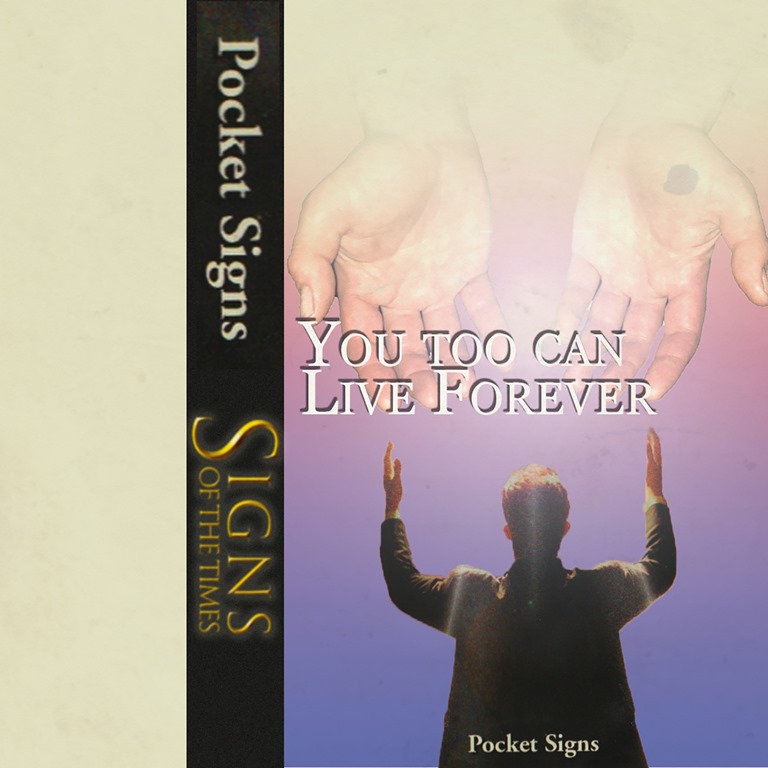
Pocket Signs is Sly & the Family Drone’s Matt Cargill and UKAEA’s Dan Jones, and according to Matt’s mail, Signs of the Times was ‘fired out in an afternoon with the aid of lager and pepsi max. Lights out, volume up, watch yer face bins.’ He describes it as the result of ‘plugging in all the objects and making a haunted, sprawling, disorientating racket. Blown out electronics, lacerated drums, churning bass and crumbling voices’. Which means I know I’m going to love it, along with at last 50 other people.

The album features two longform tracks, each a magical, mystical 23 minutes in duration, and like the times in which they were created, they’re a confusing mess of incoherence, a fractured and nonsensical sonic collage.

‘What About Obedience?’ starts out with what sounds like an engine roar – but not a real engine, so much as an engine on a racing console game. Then a deluge of clanks, bleeps, whirrs, clicks, pops, shoot-‘em-up laser guns and twanging elastic bands melting in a nuclear storm all pile in, more or less simultaneously and it feels like watching the news while scrolling through social media (as I do around five every evening while cooking dinner). The experience is utterly bewildering and to even attempt to unravel it all is futile, because the world has truly gone mad.

Searching for structures in this chaotic morass of noise is like trying to find logic in the UK government’s strategy for loosening lockdown, but there are some amazing moments to be found here, as snippets of tunes and spacey krautrock synth motifs emerge briefly from the blistering howl of undifferentiated nose that funnels like a gale.

Gurgles and glops and electronic extranea combine to forge an aural blitzkrieg that could easily be the soundtrack to a digital apocalypse. Everything swirls and melts into a maelstrom that builds a physical mass and hits with an impact that’s more than simply sensory.

Where do you go from a piece that concludes with a sustained squalling blast of white noise that leaves you with the sensation of the end of days? More of the same, of course: ‘How to be Saved’ begins with a series of murky vocal samples, echoed and overlaid, atop burrs of electronic discord, and in no time at all, later upon layer of dissonance has emerged to forge a raging torrent of noises. Feedback strains and scrapes, sharp and metallic with knife-like edges while surging currents gurgle and synth sounds squelch and quirt, titter and tweet around a vortex. Abstraction and chaos reigns, pulsing, bouncing, screaming and bumping in all directions. At time, the melee is impenetrable, bewildering, as it echoes around your cranium. Voices emerge and fade again at random: seemingly, everything is at random, and it’s a glorious headfuck. Not so much a dronewerk as a metadrone assemblage, it’s a wild and brain-frying journey, this may just be the perfect soundtrack to the now – or it may just tip you over the edge.

Oh, and the cover art is truly special.

AA

cover

Nahal Recordings – 10th April 2020

Christopher Nosnibor

Because detail is important, let’s begin with the parenthesis. The label’s press release announces ‘We teamed up with the extraordinary French ondist Christine Ott to create an unprecedented album entirely made with Ondes Martenot, one of the very first monophonic and experimental synthesizers in history’, resulting in ‘a cosmic journey of layered waves of sound’.

Maurice Martenot’s invention may not have acquired the popular status of the theremin, but Christine Ott’s instrument of choice is nevertheless significant in the evolution of sound generation as one of the very first monophonic and experimental synthesizers in history back in 1920.

Chimères begins with a pause, at least metaphorically: ‘Comma’ is six minutes of instrumental hauntology, as the notes trail, taper and quaver into still air and silence. As the album’s title suggests, this is a curious hybrid work, and while perhaps less monstrous than all that, the Ondes Martenot conjures strange, otherworldly sounds that are, at times, quite unsettling as they yawn, quiver, and squelch into seas of reverb. At times resembling analogue synth sounds, and at others approximating strings and even woodwind, the

‘Todeslied’ is the sound of disembodied spirits flittering around in the physical world, a phantasmagorical freakshow of sonic ectoplasm which gradually bubbles its way through a succession of bursts and plumes via something semi-industrial into a tranquil sunlit meadow of sound. Meanwhile ‘Sirius’ brings some deep ambience, while the eight-minute ‘Eclipse’ brings swirl of darkness that’s more of a sucking black hole than a fleeting dimming of light, building to a whupping rotary sound and blizzard of bleeps in the final minute.

It’s a lot to take in, and closer ‘Burning’ is a magnificent if slightly disorientating combination of slow-glooping electronica and orchestral chamber music. It isn’t easy to assimilate, but it is wonderfully executed, and once you can overcome the unfamiliarity of the form, there are some magical moments to be discovered.

AA

a3802769926_10

Cruel Nature – CN133

Christopher Nosnibor

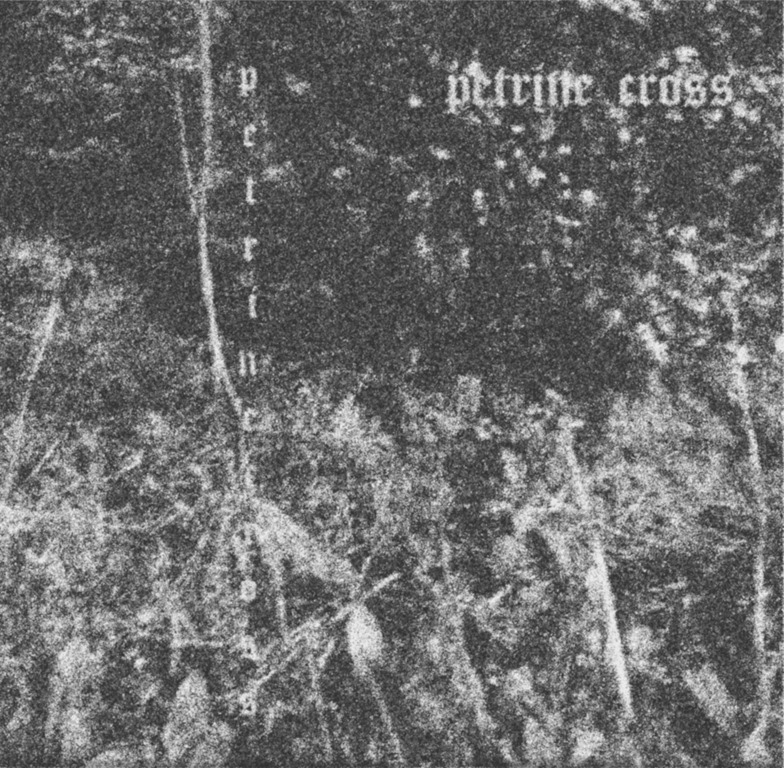
It’s not often demo tapes get a ‘proper’ release. Then again, it’s not often you actually get demo tapes these days: cassettes may be making something of a comeback on the underground, but you’re more likely to get a demo recorded on mobiles with the tracks assembled using some smart software than on a four track. I remember my old Fostex X-18 seeming incredibly compact back in ’92. Less true of the X55, but with its double-speed spooling and advanced mixing capability, it was more like having a proper studio on your desk. How times have changed.

But when it comes to black metal, low-grade production is integral to the aesthetic. It’s supposed to be impenetrably murky, the songs emerging from a booming condenser mic recording overloaded with volume, crackle, and hiss.

I was fortunate to catch Petrine Cross virtually live at a Heinous Whining streaming event the other week, and it was devastating: I was blown away by the dark intensity of the performance, and this release confirm this was no one-off or a case of me being carried away with too many cans in my atempt to recreate the gig experience at home.

A solo project for Esmé Louise Newman of emotionally-charged black metal duo Penance Stare (and her resumé is pretty impressive too), Petrine Cross is pitched as ‘Thought-provoking raw ambient black metal, inspired through solitude and literature, that hits hard in all its oppressive glory.’

‘Charred Skirts and Deathmask’ could be read one of a number of was, but it begins with a soft-edged undulating drone, which continues throughout its eight-plus-minute duration beneath a crushing deluge of punishing guitar noise. There are no discernible chords, no clear structure, just a full-on deluge of sludge. There are some vocals in there somewhere, too, I think. I don’t need the details, and that’s perhaps as well, as they’re obfuscated by a dense wall of undifferentiated sound that’s all in the mid and lower ranges.

I’m listening by candlelight and screen glare, and it seems appropriate as the snarling blast of ‘I Beneath a Rougher Sea’ tears from the speakers, a muffled, murky blast of a cyclical chord sequence, overloading with distortion. It takes some time for any form to emerge from the searing sonic wall, and when it does, it’s vague, melting in its blisteringly intense grind.

The recordings may be primitive, but I’m not sure they would necessarily benefit from a more luxurious, layered studio treatment. The context is key: this is black metal – albeit in a stripped-back, ambient form – and doesn’t require polish. These recordings are cavernously dark and dredge the depths of the soul. Search deep.

AA

cover

Christopher Nosnibor

Here in Britain, sophomore is such a music journo word: because of the structure of our education system, it simply doesn’t occur in any other context. The fact the same is true in Australia perhaps makes it an odd choice of name for an Australian band, but one suspects there’s a degree of knowingness around this, paired with the fact that the band is essentially a second project for noisy alt-rock duo Mannequin Death Squad, which sees Elly and Dan joined by Vanessa and Shelly in a quest to pursue a slightly more indie / pop direction.

‘Social Distancing’ is, as you might expect, another in a blizzard of recordings inspired by current events – or, indeed, non-events, as the days melt into one another – but does stand out as being particularly good. Maybe I’m biased; maybe it just resonates: it’s not the virus that’s putting me in a psychological spin, but news and social media, through which the landscape changes by the hour.

‘I can’t breathe / with all this information thrown at me’, are the opening lines, and it pretty much encapsulates the experience a connected digital society in which everyone has an opinion and data overload is more of a syndrome than something theoretical. I feel that communication with even me closest friends is becoming increasingly difficult as we all become zombified by bewilderment.

From a quiet, picked guitar intro, in classic grunge style, it breaks into a big, guitar-driven chorus, but the guitars chime rather than drive, and the vocal harmonies are so sweet as they advise ‘don’t listen to the radio /don’t listen to those TV shows’. I’ve been feeling the pain of government disinformation a lot lately, and much as keeping informed is useful, I’m beginning to question the validity of the exercise. But the real crux comes near the midpoint on the refrain ‘and the lonely get lonelier’ and it lands hard. Because it’s true. We all feel isolated to varying degrees, because we are, literally, in isolation – but some are more isolated than others.

Stuck indoors with your family may be tense and torturous, and only having text or Skype or similar may be a woefully weak substitute for human contact, but what about those without any of these things? The sentiment is touching, and it’s also a belting tune, that ultimately lands like The Pixies doing anthemic.

AA

a3183615244_10

7th May 2020

Christopher Nosnibor

Of all of the releases that have been created under the great lockdown of 2020, this may be one of the most inspired, innovative, and also poignant I’ve encountered yet.

Although the project has been, in part, something to keep York-based lo-fi instrumentalist owl (Oli Knight) busy and connected while there’s no live music, no band rehearsals, or studio time to be had, its foundations are far deeper: the liner notes explain that the album is ‘dedicated to the memory of Alex Winspear who we sadly lost 13/09/2011’, and continue with further detail:

‘Alex had the idea to record pieces of music with as many people as he could in as many different styles, since then I have always wanted to do a similar thing. He inspired me as a musician and a human and I’m happy that I managed to get so many people to be a part of this project, I think he would have loved this’.

As such, all proceeds from Family & Friends are being donated to the Samaritans, and it’s available on a pay-as-you-feel basis.

The album’s forty tracks feature no fewer than thirty-seven contributors, including parents – because if nothing else, being confined to the home has made people resourceful, and to use what’s immediately to hand. As it happens, mum brings hefty percussion and a driving psych/desert rock vibe that’s quite a standout, so it’s a win there.

No doubt partly on account of geography, there are a number of contributors on this album I either know personally, or have seen performing locally, and in some odd way, they provide not only a warm glow of pride, but also a certain sense of comfort.

The first piece features Alex Winspear with owl., and was constructed using a sample from a salvaged recording. Its placing feels obviously significant under the circumstances, and in many ways counts for more than the gentle, flickering jazz-tinged acoustic post-rock of the actual composition, which, it has to be said, is extremely pleasant.

All of owl’s parts were recorded to iPhone in a single take, and any errors remain preserved. This is integral to the lo-fi authenticity of his work, and give it not only an immediacy, but also a humanity that’s disarming, endearing. None of the pieces have titles, beyond the names of the performers, and their range is remarkable, from rolling piano that broods and emotes, to flighty folk, and warpy glitchtronica.

Members of Bull independently provide sounds on two of the tracks, while Charlie Swainston is very much a notable name, but it’s Lou Terry’s scratchy country that stands out, along with

Ste Iredale and Jean Penne’s spoken word segments, which bring a different dimension – primarily words – to proceedings. Elsewhere, Matthew Dick’s gloopy, spacious, looped bass work is quite hypnotic, and paired with a full percussion track, there’s an expansive rock vibe being mined to full effect.

Martyn Fillingham from …And the Hangnails and Wolf Solent, who brings noise and drone are obvious namechecks, and their contributions are also worthy of mention musically.

Family & Friends is ambitious, and succeeds on so many levels, not least on the artistic level that is contains some nice tunes, and with such diversity, there’s something for everyone. Buy it: it’s for a good cause.

AA

a0450403177_10

Room40 RM401 – 1st May 2020

Christopher Nosnibor

One aspect of postmodernism that can be both intriguing and frustrating is its tendency to contradiction. Moreover, the way in which postmodern criticism centres in on the contradictions of postmodern art, culture, and society, and extrapolates how postmodern art revels in the contradictions inherent in postmodern culture without in any way seeking to resolve them. Postmodernity seems to suggest that questions are enough, without need for answers. But are they?

Living in England, I’ve witnessed post-postmodernity taken to the most meta of levels in recent days having witnessed Prime Minister Boris Johnson attempting to detail the new guidelines for managing the COVID-19 pandemic on our small island, and am, along with the rest of the nation reeling at the advice that if I can’t work from home I should go to work, but I shouldn’t go to work if possible, and if I do have to go to work, to avoid public transport, and if I am working from home, it’s ok to go out as much as I like for exercise but only if essential, and I can meet people from other households, but only one person and it must be outdoors, and while maintain a 2-metre distance, which is the same as the distance as from people in public anyway.

Where am I going with this? Apart from more questions, more rhetoric?

Less is more. But sometimes, it’s also less. Lawrence English’s latest offering consists of two longform tracks, of around twenty minutes a piece, corresponding with a side of vinyl or cassette, although at present, Lassitude is only being released as a download. And not a lot happens.

‘Saccade (For Elaine Radigue)’begins with a trilling, rapid-oscillating drone that hangs in he mid-range. It doesn’t do anything, and doesn’t go anywhere, but gradually blurs. No, the sound remains static: the perception of it blurs. At least for a time, after which the notes slow and melt together.

There’s less texture and less shift to ‘Lassitude’, which sustains an even hum for the majority of its twenty-minute duration. It has no direction, and no substantial content, but that isn’t the purpose. There are tonal shifts, gradual gradients down, but they’re slowly incremental, almost subliminal. And ultimately, to what end?

Perhaps there is no end: perhaps this is the end. Perhaps the end has been coming, slowly, all this time, and our lives to now have been a waiting for the end. Perhaps not. What do we know?

AA

St. Petersburg

Southern Lord – 29th May 2020

Christopher Nosnibor

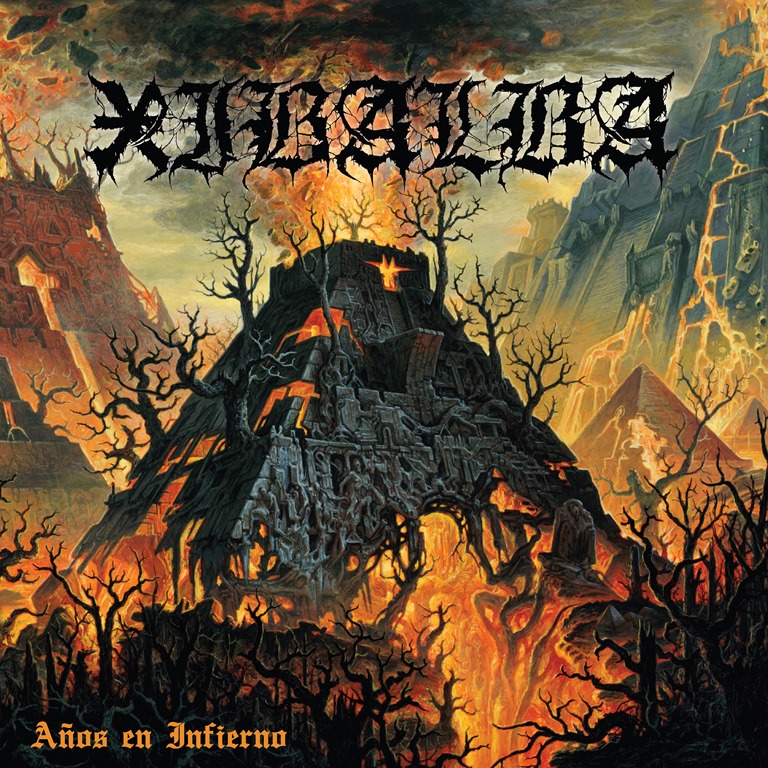
The title, Años En Infierno, translates as ‘Years in Hell’, and 2020 has felt like years condensed into what in reality amounts to just a few weeks. Time flies when you’re having fun, but drags for an eternity when you’re trapped in one place and life is slowly passing you by. On reflection, though, much of the time post-millennium has been pretty hellish and in myriad ways, and we have indeed endured years in hell – but right now, this moment in time feels abjectly apocalyptic, and the arrival of this album as a soundtrack seems timely.

Five years on from the savage assault that was Tierra Y Libertad, the Californian creators of the heaviest of metal haven’t gone light or soft on us, with a set of songs that switch the pace from breakneck double-pedal drum propelled thrash fury to slow, sinewy doom within the space of a single four-minute piece. Everything about Años En Infierno is dense, condensed, giving it a degree of intensity that truly hurts. It’s physical, pounding at the ribcage and raining blows to the head; but it’s also psychological. The guttural vocals and simply the style of playing exudes anguish, torment. The lyrics – bark, snarled, growled. Amd indecipherable by ear – offer a relentless succession of images of degradation, death, despair, although nothing different from watching or reading the news for a few minutes. This is the world now, and Xibalba soundtrack it perfectly, in that Años En Infierno is relentless, unforgiving, and so hard and heavy that to experience it from beginning to end is to take a thorough pummelling.

‘Saka’ brings a whole other shade of heavy, with thunderous tribal drumming hammering out a pulverizing percussive tattoo. The guitars churn, and they’re a pure filth that gnaws at the intestines: it’s a deeply physical experience, like being punched, repeatedly. When they’re going hard and fast, it’s blinding; when they slow it down, it’s to the pace of slow decay: the air hangs in thick suspension as time stalls to a crawl.

‘Al Abismo I’ marks a change of pace and also mood, with a slow picked, chorused guitar weaving a reflective atmosphere and drifting ponderously into expansive realm between latter day Earth and Fields of the Nephilim. It casts a different kind of darkness, and when the guitars do erupt, albeit briefly, it’s a landslide of sludge, an annihilating tornado of ferocious noise. The track bleeds into its furious counterpart, ‘Al Abismo II’, a guttural, grinding explosion from the bowels of hell. The mid-section breaks it down to a delicate, brooding post-metal chime, but then it goes full-on power-chord crushing dirge as it powers it way to its dark conclusion. It drives a punishing album to a monolithically heavy finale, while also hinting at a certain light on the horizon. We can only hope it will emerge in time.

AA

LORD279_12inch Gatefold LP Jacket 1 Pocket

Christopher Nosnibor

Much as I think the live stream shows that have become a thing during lockdown are a great way for bands to stay connected with their fans when tours have been cancelled, and artists and fans alike are frustrated and apart, I’ve struggled to get into them as an experience.

Discussing this with a gig-mate, I explained that I’d tried a few guitar bands doing streams from bedrooms , and found the experience of just one or two band members doing acoustic stuff and chatting a fair bit in between may create a certain sense of an intimate setting, but lacks the multisensory aspects, as well as the impact of music at gig volume.

‘I did do a couple early on’, my friend replied, adding ‘It’s not really what I want. I want to go to a gig.’

It struck me that that was it, in a nutshell. A stream is not a gig. TV, radio, YouTube, a live album… is not a gig. It’s like arguing that a Kindle is like a book. It may well be, but it isn’t, and the things it lacks are the reason it will never be a convincing or authentic sensory substitute. When it comes to live music, the cliché ‘you had to be there’ is ineffable. Yes. You do actually have to be there.

Nevertheless, with friends whose music I’m into on tonight’s lineup, I decided to invest a little more in recreating the live experience, starting with a pre-gig pint, which I texted pictures of to various people. Being a warm night, I didn’t put the heating up, but I did draw the blind and shut the door to my office, and put the display full screen (The streaming chat is irritating and detracts from both the music and the visuals, however sparse) and cranked the speakers up, and sat back to witness low rumblings and slow-decaying chimes that marked the start of Möbius’ set. The visuals consist of a dark background and shining points of yellow-white light. Wordless dual vocals ring out and resonate against one another, generating a subtle power, somewhere between Gregorian chanting and Jarboe at her most ethereal. The drones grow denser, louder, the effect of a single note sustained for an eternity increases as time passes: my body hums at the same frequency for a time, before the resonant echoes are gradually swallowed in a swell of distortion. Chances are, if played at the same volume, a recording would have the same effect, but it’s an immersive set nevertheless.

DSC_4118[1]

Möbius

Between-acts, there’s some obscure noise mix streaming, and Plan Pony is up next, blasting out speaker-mangling low-end distortion. If the noise is impressive, it’s matched by polarised visuals. Manipulating blasts of harsh guitar sampled in real-time and thrashed through an immense table fill of effects, the output is a sonic blitzkrieg. The quiet passages don’t translate quite as well, partly because my neighbour’s got a mate round and they’ve got the radio on in her back yard, but some snarled-up samples and snippets of music emerge from the grumbling electronics as he twiddles knobs, before long building again to a shattering wall of harsh noise.

DSC_4119[1]

Plan Pony

Zad Kokar takes things to next-level wtf, with bewilderingly nightmarish visuals that ae probably best described as max Headroom on acid, accompanying a blizzard of audio mashup that’s like early Prodigy in collision with early cabaret Voltaire. Both on acid. Diverting from the in-yer-face mental shit, we’ve got Clean Wipe, a guy in shorts stroking a doorframe while tweaking knobs on effects pedals at a circular kitchen table while the background changes colour constantly. It takes me an age to realise there must be contact mics on the door frame, and I can’t decide if I need more beer or I’ve had too much already.

It’s been a strong start, and TCH, on at number 4, take the mood and volume down a bit, but in a good way. The noise is dark and dingy, and reflects the setting in which we see a hooded figured tweaking minimal kit in a small, mildew-stained room. It’s more like watching a documentary on heroin withdrawal than a musical performance.

DSC_4130[1]

TCH

I clock 61 viewers, which is probably about the capacity of CHUNK, and the nights thy host are usually BYOB, so cracking a can of ALDI’s The Hop Stepper that I fetched from downstairs between acts seems consistent with being there.

Petrine Cross is Esmé of Penance Stare doing one-woman black metal at a million decibels. The set’s an ear-shattering mess of noise and distortion and visually, it’s stark, dark and black and white. The sound is overloaded, borderline unlistenable, but that’s likely intentional, and it’s clear some effort’s gone into this. Each song has its title on-screen at the start, there’s a plug for a charity compilation (again, on-screen text means no need for awkward chat) and songs are intercut with footage of the cat. It’s belting. And her room as some nice cornice work.

DSC_4134[1]

Petrine Cross

It’s a distorted dictaphone tape recording – a fractured ranted monologue about life in isolation under lockdown – that provides the material for Duncan Harrison’s set. It captures the mental tension of the moment so well, it’s uncomfortable listening. It’s followed by Energy Destroyer’s barrage of noise accompanied by video footage of him swinging either nunchucks or lengths of rubber in his back garden, and it’s the bodywarmer that makes it.

It’s disorientating watching the back of a performer’s head as they play and seeing them again on the PC monitor before them, with the whole scene framed by leaves and soundtracked by birdsong and incidental rumblings. But this is what we get from Garden Magik, whose set evolves gradually into a digital storm. At some point in the gale-force distortion, I realise my mind isn’t entirely on the set, but then, in a live setting, I would have likely enjoyed the sonic experience but found my mind wandering to maters of work and other stuff – and that’s no criticism. Under lockdown, in my office, it’s even easier to become distracted by text messages and FaceBook.

Content’s ‘If Hard Work Pay Show Me Rich Donkey’ leaps out as a feature of the between-act PA tunage before Sadistic Statistic, who give us more garden footage and a full-on Merzbow blast of obliterative sonic carnage. The images of cats are unrepresentative: the melting digitisations less so: at times, it sounds like it looks: brain-shredding, difficult, and impossible to pin down. Harsh is the new norm here: this is one of those sets that leaves you feeling utterly wrung out by the time the last sparking crackle fades.

DSC_4137[1]

Sadistic Statistic

Stuart Chalmers takes us on a mesmerising tour of a cave, before Otherworld bring gloopy, cracking electronics accompanied by swirling pixelated patterns that aren’t exactly easy on the retinas. It’s low-level noise that’s centred around slow-, hypnotic pulsations. It’s pitch-black in the room now bar the screen and I’m staring fixedly at the shifting shapes as the sound ripple around me, and the experience is quite gig-like until Mrs N returns an extension lead, which isn’t quite the same as being handed a final pint before the train.

DSC_4138[1]

Otherworld

In terms of lineup and performances, this was a hell of a night. It would, unquestionably, have been infinitely better to have witnessed it in person, surrounded by other people also witnessing it in person: atmosphere is interaction, but also an unspoken feeling that passes between people in a room. Virtual claps posted on a chat stream simply cannot replace real time reactions. But, while it’s the best we’ve got, it’ll have to do. What I took from tonight is that some genres seems better equipped to operate differently, and experimental electronic odd shit, with its propensity for visuals and playing in darkness, seems to have less work to do to adapt than conventional rock formats, making this the closest to the live experience I’ve yet witnessed. And yes, I had a blast. And made it home with no problems, too.