Posts Tagged ‘Zu’

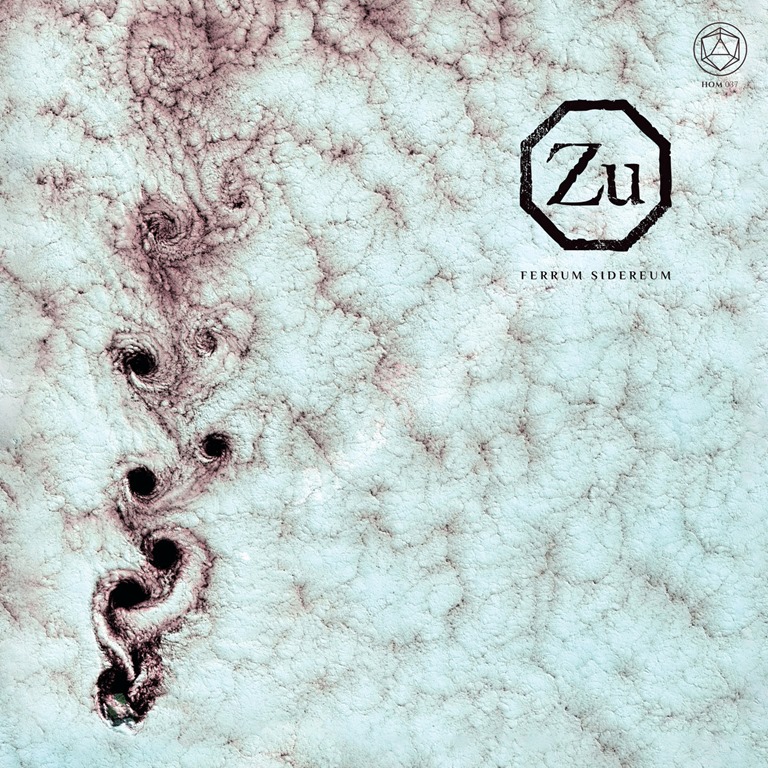
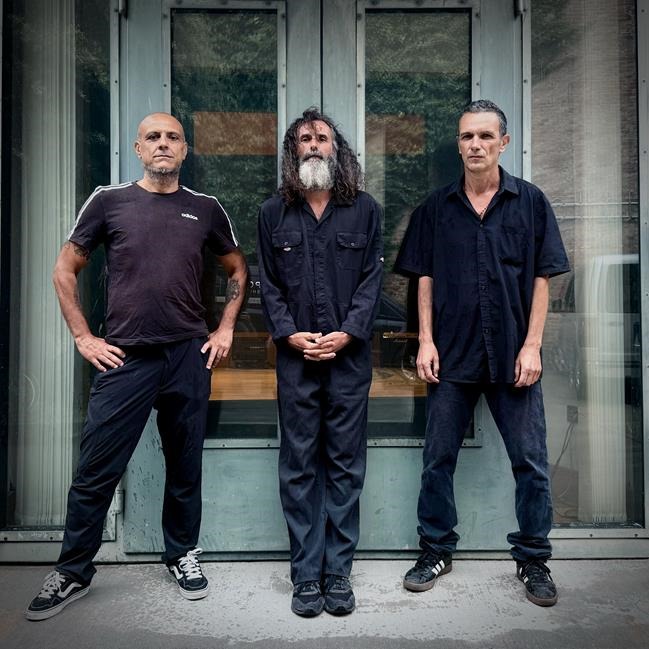
Legendary Italian experimental trio Zu recently announced their return with Ferrum Sidereum (produced by Marc Urselli), a big and bold double album arriving on House of Mythology on the 9th January.

The music combines the complexity of progressive rock, the grit of industrial music, the precision of metal, the spirit and energy of punk, and the freedom of jazz. The result is a sonic journey that is as cerebral as it is visceral, defying easy categorisation while remaining unmistakably Zu.

Today they share the new single and video for ‘Kether’ – about which the band comments,

“Kether is the crown, the halo, the nimbus, the corona. Since it has been symbolically attacked, we symbolically take it back.The golden crown became the sign of kings, but it is a much older and deeper symbol, and it is at anyone’s reach to reactivate the crown.”

AA

IMG_18602-9903cf03cf05143c

Photo credit: Marco Franzoni

Legendary Italian experimental trio Zu recently announced their return with Ferrum Sidereum (produced by Marc Urselli), a big and bold double album arriving on House of Mythology on the 9th January.

The music combines the complexity of progressive rock, the grit of industrial music, the precision of metal, the spirit and energy of punk, and the freedom of jazz. The result is a sonic journey that is as cerebral as it is visceral, defying easy categorisation while remaining unmistakably Zu.

Today they share the new single and video for ‘A.I. Hive Mind’ – about which the band comments, “Smart cities, brain computer interfaces, internet of things, singularity. This particular track addresses all of these things as well as questioning the loss of self, the idea of single consciousness and collective predictable behaviour. Perhaps the most burning question for us is: What does it mean to be human in a world increasingly shaped by artificial intelligence, simulated realities, and technological control?”

AA

Zu have also shared live dates in support of the new album – dates and details below.

2026 LIVE DATES

10/01/26 – Bologna, TPO – Italy
21/01/26 – Caserta, Lizard Club – Italy
23/01/26 – Palermo, Candelai – Italy
24/01/26 – Catania, Zo Culture Contemporanee – Italy
28/01/26 – Milano, Santeria – Italy
29/01/26 – Verona, Colorificio Kroen – Italy
30/01/26 – Zagreb, Mocvara – Croatia
31/01/26 – Nova Gorica, Mostovna – Slovenia
01/02/26 – Bratislava, Žalár – Slovakia
02/02/26 – Prague, Palac Akropolis – Czech Republic
05/02/26 – Berlin, Neue Zukunft – Germany
06/02/26 – Copenhagen, ALICE – Denmark
07/02/26 – Malmo, Inkonst – Sweden
09/02/26 – Bruxelles, Magasin 4 – Belgium
10/02/26 – Eeklo, N9 – Belgium
11/02/26 – Amsterdam, OCCII – Netherlands
12/02/26 – Paris, Le Chinois – France
13/02/26 – Bulle, Ebullition – Switzerland
14/02/26 – Torino, Magazzino sul Po´ – Italy

Ferrum Sidereum – Latin for ‘cosmic iron’ – draws inspiration from the mythological significance of meteoritic iron, found in artefacts like ancient Egyptian ritual objects, Tibenta ‘Phurpa’ blades, and the celestial sword of Archangel St Michael. This elemental force imbues every moment of the album’s apocalyptic sound. Whilst heavy in tone and subject matter, bassist Massimo Pupillo comments that their music also aims to "raise good energy… people would come up to us after the show and tell us that they felt alive."

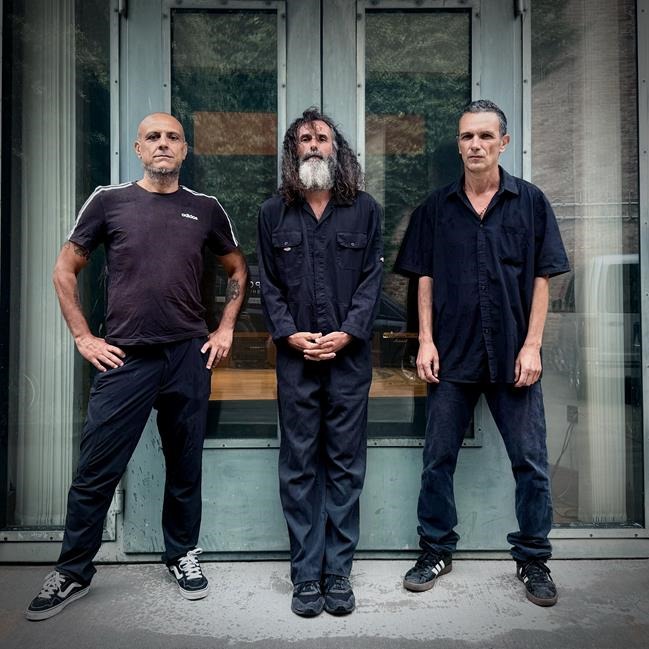
The trio – Paolo Mongardi (drums, percussion), Luca T Mai (baritone saxophone, synth, keyboards) and Massimo Pupillo (electric bass, 12-string acoustic guitar) – spent a year refining this sprawling 80-minute epic through relentless rehearsals and live studio recordings in Bologna. Produced and mixed by three-time Grammy-winning engineer Marc Urselli, known for his work with Laurie Anderson, Lou Reed, and Mike Patton, the album balances raw intensity with refined production tweaks and textures.

“We are very spiritually-oriented people,” says Massimo. “Machines and AI do not have spirituality. So they can mimic and they can assemble existing things, but they cannot create. That spirit is probably the most important thing that our music carries.”

AA

IMG_18602-9903cf03cf05143c 

Photo credit: Marco Franzoni

Legendary Italian experimental trio Zu returns with Ferrum Sidereum (produced by Marc Urselli), a big and bold double album arriving on House of Mythology on the 9th January.

Ferrum Sidereum – Latin for ‘cosmic iron’ – draws inspiration from the mythological significance of meteoritic iron, found in artefacts like ancient Egyptian ritual objects, Tibenta  “Phurpa” blades, and the celestial sword of Archangel St Michael. This elemental force imbues every moment of the album’s apocalyptic sound. Whilst heavy in tone and subject matter, bassist Massimo Pupillo comments that their music also aims to "raise good energy… people would come up to us after the show and tell us that they felt alive."

The music combines the complexity of progressive rock, the grit of industrial music, the precision of metal, the spirit and energy of punk, and the freedom of jazz. The result is a sonic journey that is as cerebral as it is visceral, defying easy categorisation while remaining unmistakably Zu.

Today they share the track "Golgotha", about which Massimo says; “Once upon a time, the stars spoke to men, but now cosmic destiny brings a silence. Silence in which lies what men say to the stars. Man radiates atmospheres and is in continuity with the cosmos. These are atmospheres of colour and atmospheres of sound.  What we radiate is colour and sound. And the cosmos listens.  The return of what it incessantly gives to the earth.”

AA

The trio – Paolo Mongardi (drums, percussion), Luca T Mai (baritone saxophone, synth, keyboards) and Massimo Pupillo (electric bass, 12-string acoustic guitar) – spent a year refining this sprawling 80-minute epic through relentless rehearsals and live studio recordings in Bologna. Produced and mixed by three-time Grammy-winning engineer Marc Urselli, known for his work with Laurie Anderson, Lou Reed, and Mike Patton, the album balances raw intensity with refined production tweaks and textures.

“We are very spiritually-oriented people,” says Massimo. “Machines and AI do not have spirituality. So they can mimic and they can assemble existing things, but they cannot create. That spirit is probably the most important thing that our music carries.”

Set for release in January 2026, Ferrum Sidereum is Zu’s biggest and boldest statement yet that challenges all conventional boundaries. Uncompromising, innovative, fiercely original.

Zu

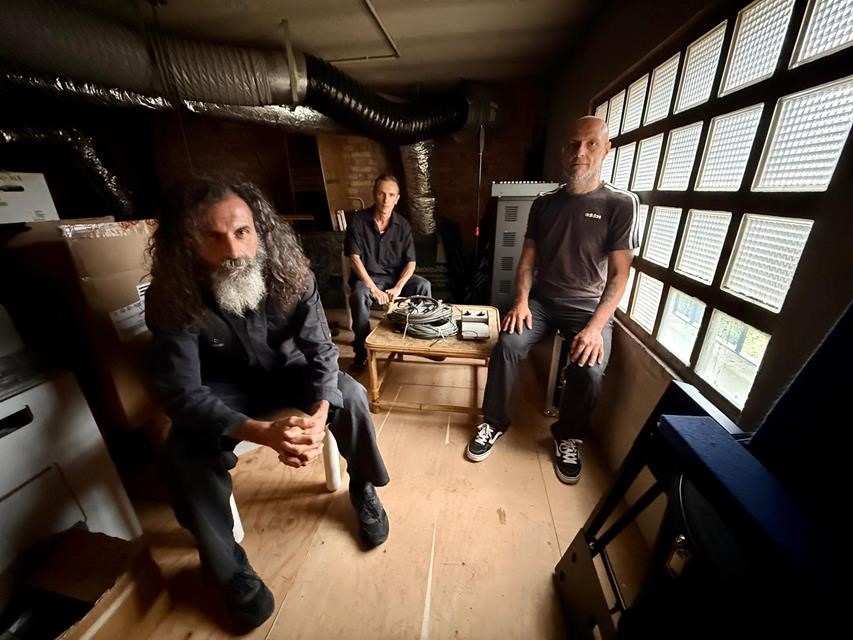
Photo credit: Marco Franzoni

Subsound Records – 18th April 2025

Christopher Nosnibor

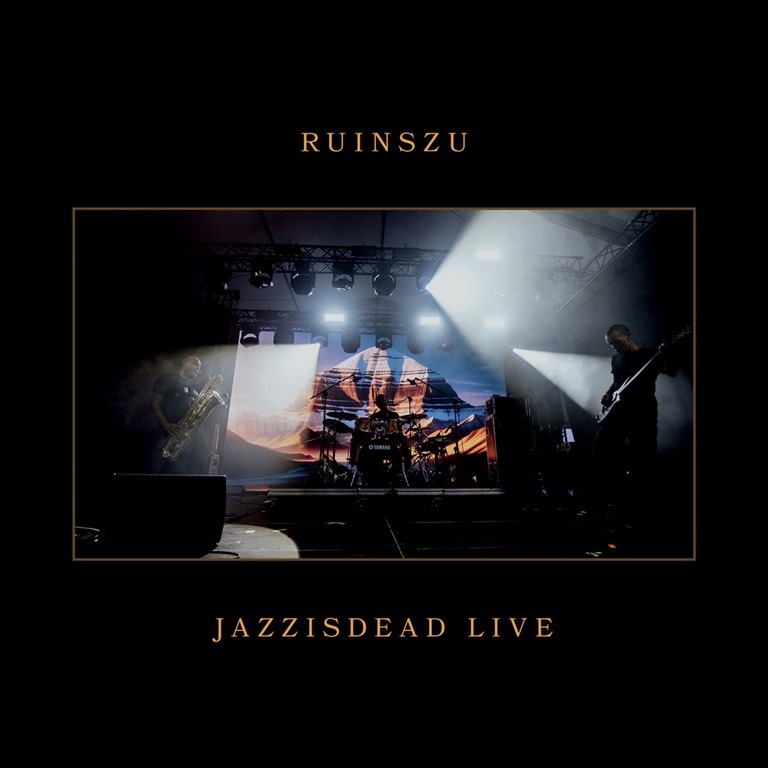
Twenty-eight years and fourteen albums into their career, Zu continue to confound, and to defy comfortable categorisation. Jazzisdead, their first release in six years, is their third live album. It’s most certainly not, however, a set comprising live renditions of greatest hits and fan favourites, and instead being a collaboration between Zu bassist Massimo Pupillo and saxophonist Luca T. Mai, with drummer Yoshida Tatsuya, founder of the Japanese band Ruins – and as such, the moniker follows in the vein of Zu93 (Zu with David Tibet of Current 93). The result, then, is a crazed hybrid of punk, sludge metal and jazz driven by some frenetic full-kit drumming.

‘Gravestone’ kicks it off with a thunderous riff and it’s a track that wouldn’t sound out of place on a Melvins album, while the frenzied ‘Speedball’ comes on like The Dead Kennedys but with some wild falsetto vocals and a blustering blast of sax. How is this even possible?

There are some more sedate passages, but they seemingly exist as tricks to convince you that they’re capable of delivering something more conventional: the introduction to ‘Asmodeo’ is gentle, atmospheric, and it’s almost soothing – but halfway through, it’s explodes in a riot of honks and parps, drums flying in all directions, and each composition slalems hither and thither: at times they’re tightly together, at others , the three instruments play across one another at wildly divergent angles, as if playing three completely different tunes – and yet somehow there’s a groove happening.

‘La Grande Madre Delle Bestie’ features some eye-popping machine-gun snare work before slithering to a swampy crawl, and the thing about Jazzisdead is that it’s simply impossible to second-guess what’s going to happen next. Repeat listens don’t render the work more familiar, but instead reveal entirely different albums. Elsewhere, ‘Hyderomastgroningen’ is a lumbering beast that brings a grungy swagger that brings hints of the Jesus Lizard. However, it’s perhaps Melt Banana who stand as the closes comparison to this in their crazed and irreverent approach to music-making, and this is nowhere more apparent than on ‘Memories Of Zworrisdeh’, the album’s longest track with a running time of five minutes, and which packs in an album’s worth of ideas into that time. ‘Muro Torto’ is another track of two halves, with long, groaning drones giving way to an almost ska-like bouncing thumpalong. Predictable, this is not.

There are several pieces which are but fragments, intersecting passages a minute or two in duration, and these only add to the experience of an album so packed with changes in tempo and key that it’s most discombobulating. It’s dizzying, jaw-dropping, impossible to keep up with, and the interplay between the players is remarkable. Ultimately, Jazzisdead makes for a hell of a listen – although you might need to lie down for a bit afterwards.

AA

a3703079166_10

Subsound Records – 10th March 2023

Christopher Nosnibor

It’s easy in the age of the Internet to conduct enough research behind the scenes to present oneself as having an extant k knowledge of a subject. It’s also a huge temptation to do this as a reviewer or critic, because there’s a certain expectation from audiences that if you’re going to proffer opinions on things, you ought to know what you’re talking about. It’s that knowledge and authority that ought to differentiate someone who presents insightful critiques from the boorish tosser down the pub – or, as is more common now, on social media who has an opinion on everything but talks out of their arse because they know nothing.

But life is an open-ended learning experience, and the day you stop learning, you’re effectively dead. And so it is that while I’m familiar with Malcolm McDowell, primarily for his role in A Clockwork Orange, and Massimo Pupillo of ZU, but not the Italian poet and essayist Gabriele Tinti – which is surprising given his prolific output and the immense reach of his work, especially considering that his career hasn’t been without controversy. Still, the fact he is prolific and has immense reach, as well as being a keen collaborator, explains the coming together of these three for a collaborative album, which finds McDowell reading Tinti’s works over music by Pupillo.

McDowell reads five pieces from the 2021 collection Ruins, dedicated to what he calls the “living sculpture of the actor”, ruminating on the distant past as it echoes through to the present. In keeping with the subject matter – where art and mythology of the ages provide evocative contemplation – there are weighty words, formulated with such syntax as to accentuate their gravity and import, and McDowell’s delivery does them admirable justice. As much as Tinti is given to elevated tone, there’s both a resonating sense of spirituality and an earthiness to his words, and McDowell reads with nuance, bringing the more visual aspects to the fore as he speaks of flesh and blood and bones wounds and exploding veins. There’s a physicality to the writing which possesses a rare potency, and as such, the words are well-suited to the context.

Pupillo’s atmospheric score, conjured using ‘a plethora of different sources, various synthesis, samples of eastern European choirs, processing McDowells’ voice,’ lends further layers of depth: at times choral and monastic voices rise and ring out against elongated drones, rich and organ-like, at others billows of sound creep like tendrils of fog.

Songs Of Stone may only be some twenty minutes in duration, with each side working nicely as a single, continuous soundwork punctuated by the spoken segments, but its grave intensity means that any longer would be difficult to digest. As it stands, Songs Of Stone feels perfectly formed.

AA

a3543316873_10

Miasmah Recordings – 16th April 2021

Christopher Nosnibor

It was the heavyweight score of his debut album, Hold, that provided my introduction to the work of James Welburn, and very much piqued my interest – because in some way, sonically at least, it seems I like to be published. Almost six years to the year on, Welburn delivers another immensely heavy set with Sleeper in the Void.

According to the accompanying blurb, the album ‘feels like a story in two parts, rising lethargically, but with gargantuan power. The second begins with the momentous In and out of Blue, where Juliana Venter’s disembodied, spectral dirge takes center stage among the furious drums and bassy riffs, reaching a full crescendo with seconds to go. Parallel marks a release – Hilde Marie Holsen’s nostalgic soundscapes, pristine as glass, meeting the distant thunder of Welburn’s strings on the horizon. And finally, Fast Moon ends the record in a most surprising way – a tribal industrialized banger, complete with vile distorted beats and every other spice in demand on a blackened dancefloor.’

It’s intense from the outset, and ‘Raze’ is anything but lethargic. It begins with a modestly middling dark ambient drone, but before long, pattering drums are hammering like machine-gun fire and whipping up a frenzy while all around the drones increase in volume and intensity until there’s a veritable cyclone of sound raging all about. The experience is dizzying, suffocating.

The percussion is again punishing on ‘Falling from Time’, but while the sound is still dense and murky, the thundering rhythm, is far more mechanised, more industrial, thudding in a furious frenzy amidst an impenetrable smog of sound. The tempo is fast, and it’s relentless: you could perhaps even dance to it, although that’s not so much my thing: instead, I found my pulse accelerating and a glow of perspiration as the tension grows. Finally, the synths break into a softer swirl, although there are ominous tones eddying around as the drums finally peter out and it’s finally possible to catch your breath and compose yourself. It’s but a brief respite before crushing percussion crashes in on the doomy dirge of the title track: stuttering, stop-start detonations cut through the shoegaze on ketamine crawl of the blurred blizzard of extraneous noise.

Julia Ventner’s vocal on ‘In and Out of Blue’ and ‘Fast Moon’ (the latter of which is a grating, bulbous bass-driven beast of a cut that loops and lunged in a trill of treble and a crackle of fizzing distortion) are haunting, ghostly, and pitched against the lurching cacophony of drums and juddering blasts of noise that hit like a taser to the abdomen, it’s not only a contrast and a change of atmosphere her presence brings, but a new level of trembling intensity.

Sleeper in the Void unquestionably makes an evolution for Welburn: while incorporating many of the same elements fundamentally, their application is quite different on Sleeper in the Void in comparison to its predecessor. The basslines are less overtly structured, and Sleeper in the Void sees Welburn move further from any loose conventions of ‘rock’ toward something more abstract. It may be less direct, less bludgeoning, less reminiscent of early Swans, but it’s certainly no less intense or powerful, and it’s still dense and percussion-driven. If anything, the greater sense of nuance and Welburn’s expanded palette only amplify its menacing resonance, making Sleeper in the Void an album that may be challenging, but achieves optimum impact.

AA

MIA050_front

Ici, D’ailleurs – 22nd June 2018

I find myself increasingly drawn to album covers that evoke a sense of desertion, emptiness, and which are oddly plain, bald. French avant-garde specialists Ici, D’ailleurs are particularly good in housing albums in covers of this type, with their ‘Mind Travels’ series, of which this is number eleven, being particularly noteworthy (and the tri-fold cover with a thick spine is especially nice). On the one hand, the cover art gives nothing away. On the other, it created a certain sense of emptiness and foreboding, which perfectly describes the music it houses.

Mysterium Coniunctionis – the product of a collaboration between Thighpaulsandra (who featured on many Coil albums) and Massimo Pupillo (who built his reputation as bassist with Zu, and has continued to expand it working with Eugene Robinson and as part of Triple Sun) – is dark and foreboding, and more.

The press blurb explains the album’s purpose neatly, so I shall quote: ‘Mysterium Coniunctionis makes direct reference to the eponymous and testamentary work of the psychiatrist Carl Jung, subtitled An Inquiry into the Separation and Synthesis of Psychiatric Opposites in Alchemy. It clearly reflect the duo’s intention to create particularly immersive and meaningful music from supposedly opposing materials’.

Mysterium Coniunctionis contains two tracks, each around the twenty-minute mark in terms of running time, and corresponding with one side of an album apiece. Halfway through the first, ‘Sagyria’, my wife wandered into my office and said she was worried there was something up with the motor on the dehumidifier before realising the uncomfortable humming was emanating from my speakers. Humming, throbbing, deep and resonant tones dominate both compositions.

There’s minimal movement across the album as a whole, and listening digitally the tracks bleed together to form an extended, expansive soundscape that pushes discomfort, a sense of disquiet and tension. Always tension. Some fourteen minutes into the second track, ‘Solve et Coagula’, the sounds reaches a shivering, spine-tingling level of intensity and density. It’s all in the frequencies, as the midrange and treble loom to the fore and get uncomfortable – really uncomfortable.

The ‘opposing materials’ which form the fabric of Mysterium Coniunctionis are the digital and analogue: in combination, they forge a dense and unsettling sound that eddies and whirls and tunnels into the inner regions by stealth.

AA

URUK

House Of Mythology – 6th July 2018

Christopher Nosnibor

In expressing my lack of enthusiasm for David Tibet’s collaboration with Youth under the moniker of Hypnopazūzu, I seemingly gave rise to mirth with my reference to ‘pseudomystical bullshit’. Tibet can laugh it off, but after so long churning out material that veers between the indulgent and the vapidly whimsical, I’m not convinced it’s a laughing matter.

Now, I’ll admit, I’ve never really got to grips with Current 93 – their catalogue was beyond overwhelming long before I even discovered music beyond the mainstream, and their output exists s far beyond the mainstream that I had to pass through Throbbing Gristle, Whitehouse and a slew of others having spent my early teenage years mining the seam of goth and (what was then) contemporary industrial and real indie to even learn of their existence. Context counts, and however influential Tibet has been in ultraniche, cult circles, it doesn’t alter the fact that some of his art and affiliations over the course of his career have been questionable.

ZU93 is the effectively named new collaboration between David Tibet and the ever-changing Italian group Zu, centered around Massimo Pupillo and Luca Mai. Mirror Emperor operates around a concept or theme that’s never really rendered with any clarity. All of the song titles reference the titular Mirror Emperor, but they who, what, and wherefores are absent, and there’s little guidance in the lyrics, which are fragmentary, hallucinatory, abstract and non-linear. This in itself is no problem: life is fragmentary, hallucinatory, abstract and non-linear, and we’re all accustomed to postmodern art and its fragmentary, hallucinatory, abstract and non-linear representations of the life experience.

Musically, it’s sparse but powerful. In terms of composition and arrangement, Mirror Emperor is widely varied, but very much leans toward the dark and ominous. There are brooding strings that soar and sway, drift and drag. There are moments of deep resonance and thick sonic density. Far from being a skippy, trippy, easy ride, it’s often difficult and challenging. ‘Confirming the Mirror Emperor’ is built around a dense, murky bass that booms and surges over a slow, heavy beat, before layers creep over and lift it somewhere altogether different.

Tibet’s delivery is the stumbling block. Every word is delivered with the same sense of immense portent, as if each phrase is a revelation of cosmic proportions. Which it isn’t. ‘And quickly…. A knuckle cracks… into space… Opens up her… and feels…’ he gasps with breathless wonder. I’m more breathless with wonder as to how he can still pull this shit off.

Tibet’s despondency at the emptiness of contemporary culture is something to which I can relate: his wide-eyed mysticism, more of a throwback to 60s hippiedom than the escape routes available now, I can’t. It feels oddly disjointed and out of place. While his fans’ belief in his visionary prowess and the potency of his lyricism, convinces that posterity will see him aligned with Dylan and Cohen, I’m looking at the Mirror Emperor to check out his threads, and I’m seeing none.

It does get easier with exposure: Tibet slowly diminishes into the background as the music intensifies as the album progresses. ‘The Heart of the Mirror Emperor’ is forged from woozy electronic pulsations which glitch and glow. Ignore the breathy, triptastic babble about the sun and moon and it’s pretty good.

AA

ZU93 – Mirror Emperor

ZU93 is the effectively named new collaboration between David Tibet and the ever changing Italian group Zu, centred around Massimo Pupillo and Luca Mai. House of Mythology are proud to release their debut album Mirror Emperor on the 6th July.

“The album is the closing of a long circle for me,” comments Massimo Pupillo…“I’ve been following David’s work since the early days and count Current 93 as one of the main inspirations behind my work with Zu. For me his poetry and music is like a light in the depths of human experience, a soundtrack for one’s personal descent into the unconscious fields”. Tibet says of their union,  “Zu made something very beautiful and very powerful for me to skip into. I love this album,”  Mirror Emperor adds another chapter in Tibet’s ever expanding oblique vision, personal, dense and hallucinatory. A voice through a cloud, indeed.

On Mirror Emperor, the demiurge of our demise hides in the cracks of a broken world, beneath stones and moss, among the comets, in tears and things and on BloodBoats, as if a “cosmic melancholy” (Ligotti) is being articulated. More mourning than light. Tibet explains: "We all carry different faces, different masks, and all of them will be taken from us. We were born free, and fell through the Mirror into a UnWorld, a Mirror Empire. In this Mirror Empire we are under the Mirror Emperor, and there are MANY Bad Moons Rising. At the final curtain there is scant applause."

Ahead of the album, they’re streaming ‘The Absence of the Mirror Emperor’ as a taster. Get your lugs round it here:

AA