Posts Tagged ‘William Burroughs’

Cruel Nature Records – 4th April 2025

Christopher Nosnibor

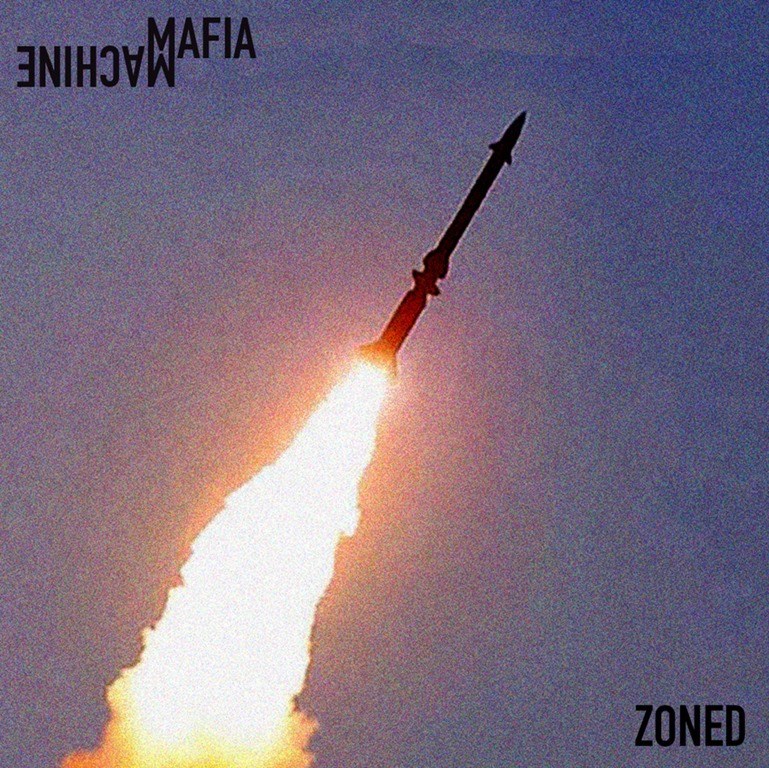
Machine Mafia may be largely unknown, but the duo’s members have some pedigree, being Adam Stone of Pound Land and Jase Kester (Omnibadger/Omnibael/Don’t Try/Plan Pony), all regulars at Aural Aggravation. Jase joined Pound Land’s ever-shifting lineup as the (then) sixth member in 2023 for a handful of live shows, and contributing additional noise to Mugged (because it needed more noise). Deciding to collaborate in early 2024, they slipped out a couple of self-released EPs, which as the notes which accompany Zoned observe, ‘more or less went under the radar at the time’ – which is why they’re getting a second go here, with Zoned being a compilation of those EPs plus four new tracks, or a new EP packaged with the previous ones, depending on your perspective. The tracks aren’t in their original order of release, and have bene resequenced, presumably for the purpose of creating a flow that’s sonic rather than chronological. And so it is that the album starts with ‘Killzones’, arguably the most overtly Pound land-like track on the album, which eases fans of Pound Land into the world of Machine Mafia nicely, or will otherwise alienate pretty much everyone else, unless they’re on the market for something that sounds like Sleaford Mods in collaboration with PiL while monged on Ketamine.

They describe themselves as ‘a voice/electronics duo in the grand tradition of Suicide, Silver Apples, Soft Cell, Pet Shop Boys etc.’ And it is indeed a grand tradition, to which one would reasonably add Sparks, Air, and Erasure, and even the final incarnation of Whitehouse, although what this list ultimately achieves is to demonstrate just how wide-ranging the electronic duo format stretches in terms of style. I very much doubt you’d find these guys donning big hats or flamboyant costumes and kicking out a set of brassy dancefloor-friendly pop bangers, at least on the evidence of the thirteen tracks on offer here. They recount that their first gig was ‘in a small craft ale bar in the Staffordshire town of Leek, receiving a ban for high decibel levels and foul language’. This sets the bar of expectation, and in this context, Zoned does not disappoint.

As I suggested in my write-up of the Killzones EP, the electronic duo they share the most common ground with is Cabaret Voltaire in their early years, mashing up samples and noise in a Burroughsian cut-up style, and churning out gnarly noise that sits between Suicide and Throbbing Gristle. This is particularly true of the collage chaos of ‘Lecture 0.3B’,

But then, ‘F.O.S’, is a blast of uptempo, lo-fi, bass driven drum-machine propelled hardcore punk strewn with feedback and snarling aggression, and ‘Where’s The Money Gone?’, from the Money Gone EP is a filthy racket with massive blasting beats which lands in the space between The Fall and Big Black, powering away at a motorik groove for the best part of six minutes while Stone hollers thickly and ever-more desperately ‘where’s the money gone?’ Well, we know it’s not gone into public services, but there some mega-rich cunts swanning around and jetting into space. And has anyone seen Michelle Mone since she sailed off on her multi-million quid yacht?

‘England’, originally released on Industrial Coast’s ‘Rock Against Racism’ compilation is very Throbbing Gristle, in the (pulsating) vein of ‘Very Friendly’.

Of the four new cuts, ‘Crabclaw’ invites comparisons to Selfish Cunt’s ‘Britain is Shit’, and this may not be entirely accidental, a stinking snarling assault on culture and the senses, with an overloading gritty bass and vitriolic vocals ranting in a mess of distortion and reverb over the murky morass of a musical backing. It’s the sound of frustration, it’s the sound of anger mashed together with despair. ‘Jackpot’, meanwhile, is like John Cooper Clarke spouting over a segment of Metal Machine Music. All the while, a drum machine and throbbing bass pulse away relentlessly: this is Sleaford Mods for real punks. ‘Human Like’ revisits the dubby tendencies first explored with ‘Killzones’, and it’s a dark, sprawling cavernous hell of reverb atop an organ-shaking bass, again bringing together PiL (think ‘Theme’) and Throbbing Gristle (think ‘What a Day’). It’s meaty, and then some, and crunches and grinds away for a full six echo-soaked minutes. Closing with the eight-and-a-half-minute megalith that is ‘Outside My House’, they go full Whitehouse, with a booming bass that’s positively weapons-grade density, over which Stone delivers a rabid, drawling rant from the perspective of a crabby right-wing old-timer while electronic extranea bubble and eddy around. It’s utterly brutal, and completely uncomfortable, and this is the brilliance of Machine Mafia. Gnarly, nasty, uncompromising, Zoned is not friendly, and it will leave you feeling drained, harrowed, punished. Mission accomplished. You’re not supposed to like this.

AA
a2183471837_10

Mortality Tables – 1st November 2024

Christopher Nosnibor

Spoken word is hard. I know. I’ve done it. I’ve been terrible at it. I’ve witnessed countless others be terrible at it, too. Spoken word is even harder as a prose writer. It’s just so difficult to hold an audience’s attention. This is why spoken word events seem to favour poetry: whether they rhyme or not, poems tend to focus on rhythm and to be brief, rarely longer than aa couple of minutes. And a lot of poets manage to memorise their pieces for performance, and poets who ‘read’ tend to be looked down upon in certain circles. It’s rather harder to memorise and recite a three-page slab of prose, and face buries in pages makes performing and engaging altogether harder. But worst of all, people simply don’t seem to possess the attention span.

Reading prose is hard. A segment of a story may not really work outside if its intended context, and a short story that only takes three minutes to read isn’t going to have much substance.

There’s a huge disconnect here: people listen to audiobooks but struggle with spoken word or anything that isn’t a renowned author or a celebrity voicing an accessible, pot-driven narrative.

William Burroughs told Philippe Mikriammos in an interview in 1984 that ‘many poets are simply lazy prose writers.’ He qualified this by explaining, ‘I can take a page of descriptive prose and break it into lines, as I’ve done in Exterminator!, and then you’ve got a poem.’

It’s true.

Chop your sentences down to phrases.

Cut your phrases down,

Down to their component parts,

Capitalise each line

– unless you’re e e cummings –

And lo,

You have a poem.

Burroughs had the advantage of recording his spoken word pieces and performing segments from his books in the 60s, 70s, 80s, when the medium was still comparatively fresh, and people had attention spans greater than goldfish, and had the additional benefits of a remarkable flair for reading and a truly unique voice. Here in the 2020s, it can be hard to attract – and maintain – any kind of attention with an audience. As I say, I know: I’ve done it, and I’ve been terrible at it. I’ve also been alright at it. I’ve driven people from the room, and considered it an achievement, because it’s infinitely better to have an impact of that nature than for audience members to fall asleep, or worse, forget the performance. The challenge for any spoken-word performer, be it in a live setting or in a studio, is how to grab, and maintain, the attention of any audience.

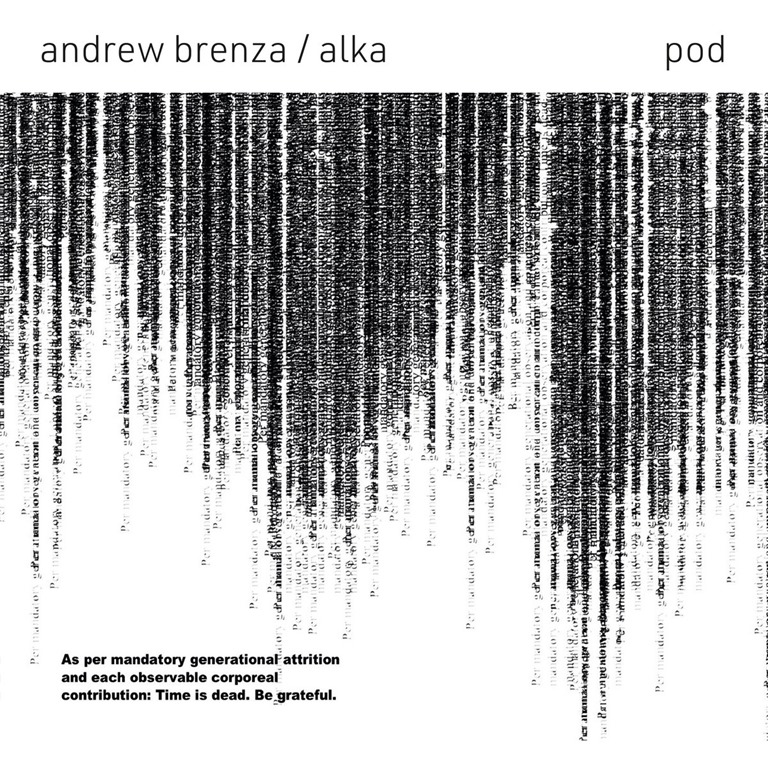
Here, Andrew Brenza reads from his book pod (ghosTTruth, 2023) with accompaniment from sound artist and electronic instrument restorer alka (Vince Clarke’s VeryRecords). Instrumental augmentation is the most obvious and immediate way of grabbing the attention. It transforms a spoken word work into a multimedia project, for a start, and moreover, the moment ‘music’ is involved, a whole new audience – which likely has no interest in spoken word – opens up.

His voice processed with a metallic flanged edge and epic reverb, and against an ominous organ droning ambient hum, Brenza becomes commanding, not to mention eerie in his delivery. This is the fine line all spoken word performers must tread, of course, but here it is felt acutely: The delivery can often overrun the work; style overtakes concept and content.

I find myself drawn into the delivery of pod – the sounds, the delivery. But engrossed in these, the content slips to become secondary, in a way. But perhaps that’s ok. ‘Intermission Meander’ provides a bleapsome interlude, and the narrative segments are vignettes, segmented scenes which are centred around image and concept rather than linear narrative, events, or characters. In this context, this release works. It is not an audiobook, but an audio accompaniment to a book. It’s difficult to absorb, but a successful project.

AA

a0689313884_10

5th July 2024

Christopher Nosnibor

Sometimes, I really do feel as if my brain is my enemy. Word association and wordplay are a particularly frequent and annoying curse. Oftentimes, I keep this to myself, but midway through listening to this, it struck me, completely at random, that Killzones isn’t a million miles away from Calzone, at least when written down. So why share this? A problem shared, and all that, for one. But as much as anything, I felt the urge to purge, or moreover to crack open the challenges that present themselves as part of the creative process. Writing – and finding something new and interesting to say – about music, day in, day out, is a challenge in itself, without other factors.

Seemingly, the recording of this EP proved rather less challenging for its makers, who came together and developed it swiftly and fluidly –although the same can’t be said for listening to it. That’s by no means a criticism. In a climate where the airwaves are jammed solid with anodyne sameness and slickly-produced beige sonic slop disguised as raw or edgy on account of some explicit content and some choice language that requires beeps or asterisks in the mainstream media, anything that does something different offers a welcome challenge in the way many pit themselves against the Great North Run or similar. We’ve grown accustomed to everything being delivered neatly-packaged and pre-digested, and feeling like following a recipe from Hello Fresh makes us a Michelin chef. Collectively, we’ve forgotten how to chew – meaning that this will either kick-start your metabolism or simply make you spew if you’re unaccustomed to anything that’s this high-fibre. Just look at that cover art. It’s dark, grainy, uncomfortable. It’s the perfect encapsulation of the music it accompanies.

Machine Mafia is quite the collaborative paring: Adam Stone of gritty northern grimsters Pound Land and Jase Kester of ever-evolving experimental noisemakers Omnibael / Omnibadger have come together to do something different. Very different.

As Jase explained to me, the EP features ‘no live instruments, leaning into the way dub reggae was so embraced by punk right in the early days.’ And there’s no question that it has both – simultaneously – the spaciousness of The Ruts (D.C) and the density of early PiL. It’s a formidable combination, that’s for sure.

The title track assembles sampled snippets as its foundation, drawing parallels with the collaging methods of Cabaret Voltaire and Throbbing Gristle, evolved from William Burroughs and Brion Gysin’s late-50s tape experiments – in turn a progression from the cut-ups on paper. Atop of this slice ‘n’ splice selection of political speeches and an almost subsonic, floor-shaking bass, Stone delivers a mumbling, drawling semi-spoken spiel. It’s like Sleaford Mods on Ketamine, a heavy trudge of ever-degenerating sound which eventually collapses to a low-end buzz and a crisp sample that makes the pair’s political position clear through antithesis.

On ‘Faces’, scrapes of discord, distortion, and a thudding beat half-submerged in the mix grinds out the opening before a dark, dense bass groove starts a gut-shaking growl. The drawling, atonal vocals, too, are distorted and low in the mix, and I’m reminded of some of the more obscure Ministry offshoots witch Chris Connelly – the vibe is dingy, sleazy industrial, a bit early Pigface, and sounds like it was recorded in a damp mould-stained basement on a salvaged reel-to-reel.

The songs get slower and heavier – and longer – as the EP progresses. ‘I Am Not You’ comes on as if Dr Mix and The Remix had done dub, while ‘Lecture 0.3B’ goes all out on transforming a simple spoken-word piece into a cut-up tape experimental headfuck with loops and delays and effects galore, all laced with crackles of distortion and sonic degradation fuzzing and fading the edges. It lands somewhere between the JAMS, Max Headroom, and Throbbing Gristle’s ‘Hamburger Lady’ – weird, unsettling, dystopian, with near-familiar elements twisted and recontextualised in an ugly mash-up collage work.

Conceptually, Killzones is far from new – but then, there’s no claim to innovation here, explicitly drawing a line from the past. But the kind of reference points and influences in evidence here are not the ones you find often, if ever – independently, perhaps, but the whole point of intertextuality as a method of creating is the nexus of divergent touchstones and the way in which they’re combined. With Killzones, Machine Mafia deliver a crash course in experimental music 1976-1994. It’s a mangled, messy cognitive assault. It’s knowingly, and purposefully, difficult, unpleasant, and a complete creative success.

AA

a0890048129_10

5th April 2024

Christopher Nosnibor

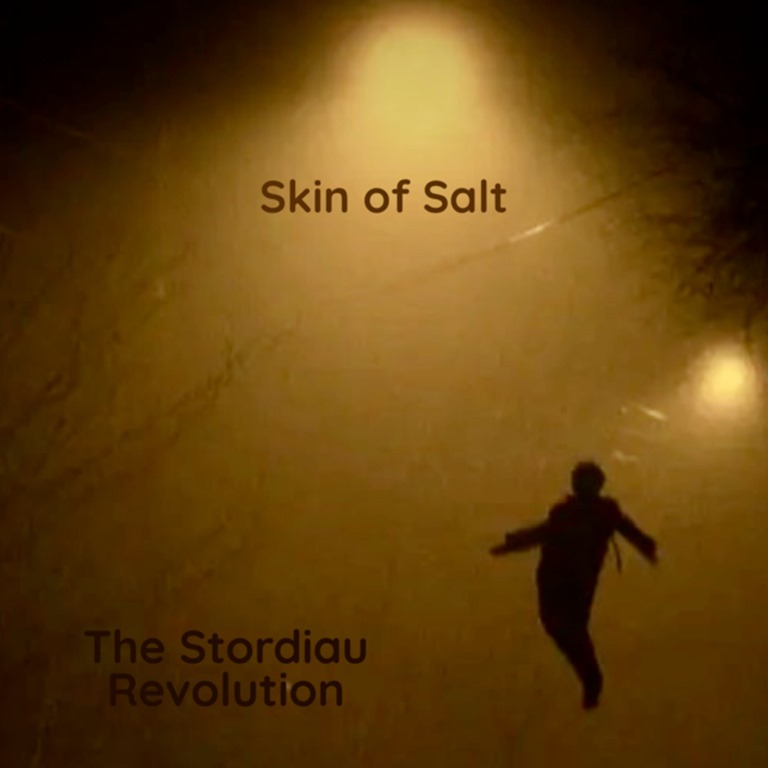
It’s been almost four years since I encountered Alaxander Stordiau, when I covered the single release by The Original Magnetic Light Parade, a collaboration between Stordiau and Edinburgh man, Harold Nono, on perennially oddball label Bearsuit Records.

With minimal info about that release – and not much more about this one, I’m mostly left to grapple with the music as it presents itself, with minimal content. This is good: and so is this EP.

A brief Internet delve uncovers that the material on this this EP was initially released a year ago, as part of an album-length work bearing the same title, slipped out on Soundcloud. Now, there are plenty of albums I think would have made decent EPs – or 7” singles – but there’s no reason to believe Stordiau has whittled this set down due to any issues with quality, and it does seem that it’s often easier to pitch an EP than an LP in our attention-deprived times. If I were to go all-out on a personal obsession, I’d make a greater deal of the fact that this four-track cut has aa running time of twenty-three minutes. There’s nothing to suggest Stordiau is a fan of William S. Burroughs or otherwise beholden to the ‘23 Mythos’, but the fact it does have a playing time of twenty-three minutes was of note to me, simply because. The twenty-threes just keep on coming.

And so to the music itself. ‘Fear Merges Easily’ is something of a teaser, an introduction, an atmosphere-builder, with wavering synth undulations creating a nice, even flow over a shuffling beat that sits off in the background. It’s got groove, but it’s subtle, and overall, it’s pretty mellow. It doesn’t ‘do’ much: one gets the impression it’s not supposed to, and nor is it necessary for it to do more. It’s vaguely background, it has some classic eighties electro and krautrock elements to it, and enough texture to keep it engaging.

‘Hearing the House Breathing’, stretching out to almost eleven minutes is the centrepiece and defining track here, and what’s interesting is how it’s centred around a core motif and built upon a solid spine of subdued beats, pulsating bass, and nagging synth shapes, but shifts and moves through a succession of segments. It’s dancey, but at the same time, it isn’t. and there are gasping, whispering vocals wheezing beneath the waves of undulating analogue ripples. Around the mid-point, it breaks into a more energetic mood, the bubbling synths bouncing over a lively robotic electro beat dominated by the whip-cracking snap of a vintage drum machine snare sound. Everything gets quite busy, and a shade hazy around this point, there’s a lot going on, and not all of it synchronous. I can’t be alone in finding this kind of busyness induces not a trance-like state, but one of feeling dizzy and vaguely overwhelmed, an experience not dissimilar to sitting in a busy pub or coffee shop and being unable to focus on reading or the conversation in front of my face for the distraction of all the babbling noise filling the air all around.

Things take a turn for the eerie, the proggy, the spacey, on the trilling title track, where a creeping dark chord sequence sits beneath altogether more vibrant tones, before giving way to a sloshing ebb and flow overlayed with some barbed organ, and there are moments here that remind me of Gift by The Sisterhood, Andrew Eldritch’s project between phases of The Sisters of Mercy: specifically, the notation the chilly closer ‘Rain From Heaven’. Closing off, ‘The Sting of the Lie’ is a relentless, cyclical composition over which blasts of wavering, quavering keyboards wander and spin.

Skin Of Salt brings together a range of elements, and not always comfortably. But why should music be comfortable, why should it always be easy, accessible? What’s wrong with discord and dissonance, lumpiness, discomfort? Why, nothing, is the answer. Life is brimming with discord and dissonance, lumpiness, discomfort. And without these elements, this would just be a bland hybrid of dance and ambient. Thankfully, it is so much more. Skin Of Salt isn’t mere mental chewing gum, but something which requires some proper chewing and a slow digestion.

AA

artwork-album_Skin-Of-Salt

Unseen Worlds – 4th August 2023

Christopher Nosnibor

Having failed to make it to Carl Stone’s show in Leeds the other week – in the same way I’ve failed to make pretty much any shows this year and am largely tied to engaging with music in recorded forms for the foreseeable future, it feels only right that I should compensate in some small way with a review of his upcoming compilation album, a monster career-spanning triple album.

And when it comes to his career, the title sets out the immense landmark it represents. Not just the fact that this release is a summary of a career spanning half a century, but the broader context that there has been electronic music for so long. Village Voice have called him “the king of sampling”. Being born in 1975, I only became aware of sampling in the late 80s, and while Tangerine Dream and Kraftwerk and Throbbing Gristle are legendary as pioneers of electronic music, you probably don’t generally think of there being many other artists breaking ground and experimenting as far back as 1972.

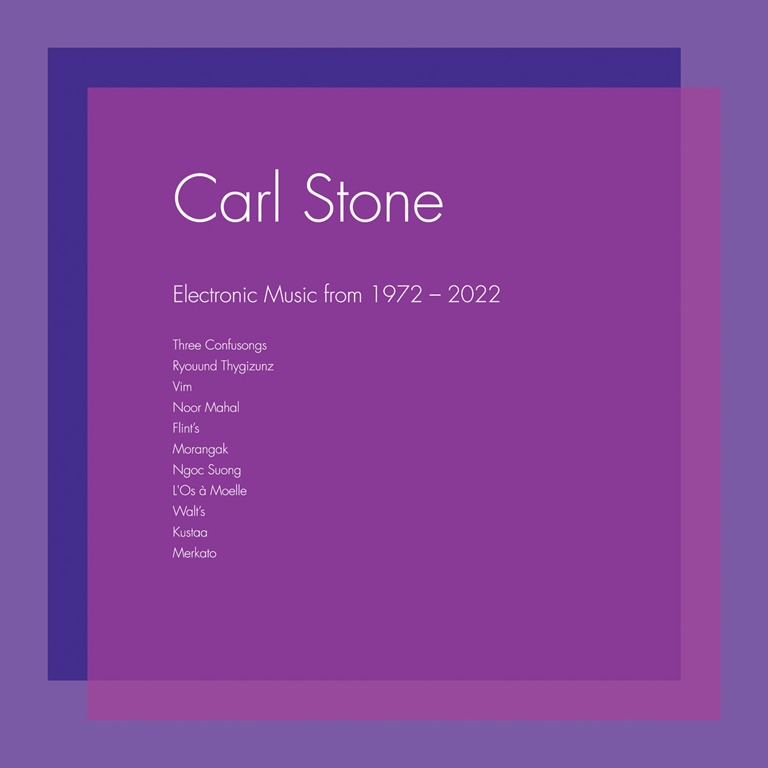
The accompanying notes provide an outline that’s easier to quote than to summarise: ‘Electronic Music from 1972-2022 seeks to frame fifty years of Carl Stone’s compositional activity, starting with Stone’s earliest professionally presented compositions from 1972 (‘Three Confusongs’ and ‘Ryound Thygizunz’, featuring the voice and poetry of Stefan Weiser – later known as Z’EV) up to the present. This collection is not meant as a definitive history but rather as a supplement to be used alongside the previous two archival releases. It is simultaneously an archival release marking Carl Stone’s evergreen 70th birthday and a document of archival art. In the spirit of disorienting repetition and layering, call it an archive of archiving.’

This, then, is by no means a retrospective in the conventional sense, but it does clearly trace a trajectory of the evolution of Stone’s work. The album doesn’t spread the tracks evenly, being weighted heavily to certain years, with each year effectively representing an era.

The 1972 material, which occupies side A and represents the early years, is very much a cacophony of loops and echoes, reminiscent of William Burroughs and Brion Gysin’s tape experiments of the later 60s, and foreshadowing the first releases by Foetus and Cabaret Voltaire, as well as the disturbing drones and processed vocals off Throbbing Gristle, and clearly very much ahead of its time and venturing into the realms of dark ambient before it was even given a label.

Side B leaps forward fifteen years to 1987, with a brace of scraping, discordant pieces, both of which extend beyond the ten-minute mark. The production of these more structure, beat-orientated collage pieces is quite eye-opening: how times and technology change! ‘Vim’, which sounds like a cut-up of The Beach Boys is very much a cut-and-paste assemblage of loops, but the sound is crisp and marks an evolution more of light years than actual years. At ten and a half minutes, it feels it goes beyond proving its point, but then again, perhaps that is a point in itself. It also reminds us of the changing musi8cal landscape: 1987, the year the Justified Ancients of Mu Mu released the sample-riot 1987: What the Fuck is Going On. This is significantly more sophisticated than the JAMMs, and takes a less confrontational approach to the application of the emerging technologies. In contrast, the other 1987 track, ‘Noor Mahal’ combines tribal drumming and hypnotic folktronica, prefacing the airy new age folk crossover forms that would bubble up in Enya’s ‘Orinoco Flow’ and The Beloved’s The Sun Rising’ a year or two later.

And this is what ultimately threads Stones’ work together. He’s astute enough to be aware that evolving technologies are in themselves the soundtrack of the times, and it’s clear listening to this in sequence that experimental music invites chicken-and-egg discussion as to whether the music evolves because of the way technology facilitates it, or of the technology encourages those who are so inclined to push it to its furthest ends.

There’s just one nineties cut, with the jaunty ‘Flint’s’ from 1999, before the millennium brings a selection of dark jerky pieces (‘Morangak’ (2005) is a particularly gnarly Dalek-like mess of a loop) with two absolute beasts in the form of ‘Ngoc Suong’ (2003) and ‘L’Os à Moelle’ (2007), which both sit around the twenty-three minute mark and occupy a side of vinyl apiece, proving particularly disorientating. The former is also particularly testing, an experience akin to water torture, while the latter is… different by its sameness. Like listening to The Eagles on a three-hour car journey. I woke up with a jolt, my face on my keyboard, realising my review was incomplete and it was fifteen minutes later than it had been, and this track feels like a comment on the time in which it was created. It gets weirder as it progresses, of course.

Cut forward to 2022, with three much shorter pieces occupying side F, and ‘Walt’s’ presents a different kind of surprise, being bright, crisp, with technicolour energy and it’s almost game-showy. Spinning folksiness with cornball AI –sounding blooping, and also whipping in some Bollywood bang and an 80s synth-pop vibe, it’s dizzying, and these elements are present in varying levels on ‘Kustaa’ and ‘Merkato’ which are overtly ‘world’ music inspired wile spreading in all directions at once. And this, ultimately, is what Electronic Music from 1972-2022 tells us: Carl Stone has spent five decades ahead of and / or capturing the zeitgeist, distilling the essence of the contemporary into a headspinning whirl. This may be a swift tour, but at the same time it’s comprehensive, and well worth exploring.

AA

AA

a3301642996_10

The Helen Scarsdale Agency – HMS064 – 6th May 2022

Christopher Nosnibor

As William Burroughs said of his collaboration with Brion Gysin, The Third Mind, ‘No two minds ever come together without, thereby, creating a third, invisible force which may be likened to a third mind’. This wasn’t an entirely original concept, as he was referencing Napoleon Hill’s self-help book Think and Grow Rich, published in the 1930s. Self-help books are notorious for dispensing band advice and convincing the incapable that they’re capable of anything, but there’s a powerful shred of truth in this nugget: collaboration can – although there are absolutely no guarantees – throw open portal and new horizons and unlock unexpected avenues and whole worlds of potential. That more or less all of my attempts at collaboration have swiftly ended in failure – or, more accurately, fallen apart without producing anything more than a few paragraphs at best – probably says more about me than collaboration or my collaborators, but then when things have worked out… Yes, they’ve delivered. When it happens, it really happens. You can’t force or predict ‘gelling’: it simply happens, or it doesn’t, and when it does, alchemy ensues. You tend to find that strengths and weaknesses interlock, and all bases are covered, to use a poor assemblage of cliches.

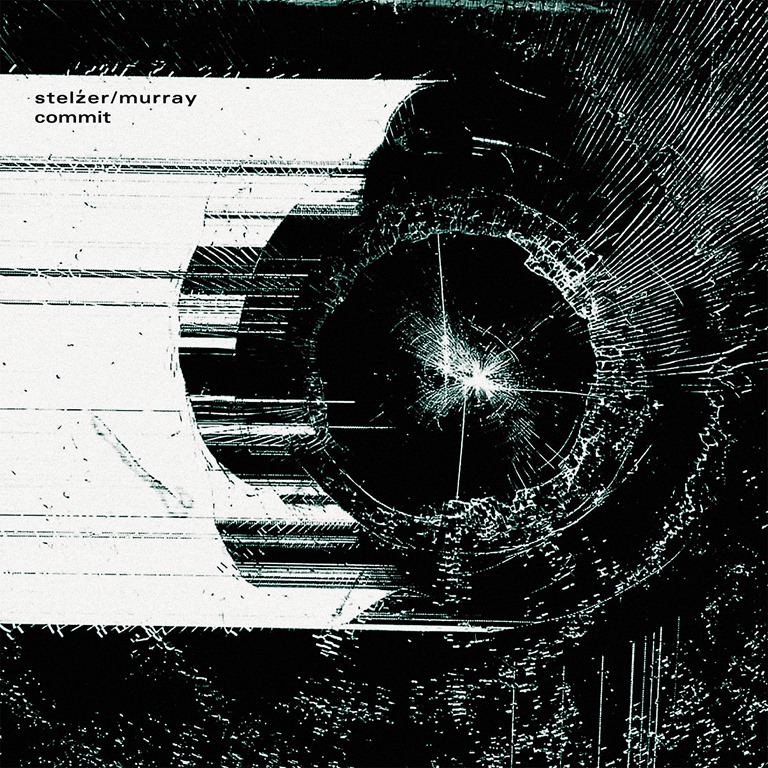
The accompanying text for the third production from the Stelzer/Murray project says that it ‘hits a sweet spot of slippery, industrial occultation that harkens back to an almost forgotten period of music from the late ‘80s and early ‘90s. Think Cranioclast, Arcane Device, Phauss, Small Cruel Party, Organum, and pretty much everything from the Quiet Artworks label… Exquisitely composed and overtly nocturnal without ever falling into the tropes of dark ambient and with plenty of gestures, signals, and threats that allude to any number of allegorically inclined processes (i.e. tape manipulation, time-delay accumulation, electro-acoustic minimalism, etc.).’

No question, despite their apparent absence of recollection of the actual process, Stelzer and Murray are the perfect foils for one another. Alchemy clearly has ensued – but make no mistake, this is some seriously dark alchemy, conjuring thick, black clouds of lung-clogging smoke that drifts, chokes, and suffocates.

On Commit, the atmosphere is dark, dank, doomy. The album is structured over two sides with the two parts of the title track, clocking in at around nine minutes apiece occupying side one before the nineteen-minute gloomfest that is ‘The House is Coming from Inside the Call’ smogging blurrily all over side two. The two parts of ‘Commit’ are darkly intense. They rumble and drone, groan and grind. There ae slow swells of cymbal, and a distant clicking, glitching that pulses time on ‘Commit 2’

is ‘The House is Coming from Inside the Call’ is sparse yet intense, and manifests as a series of movements over its duration. The atmosphere is heavy and oppressive, and the noise builds – and it is indeed noise that builds: it starts off as light drone and evolves into a thundering blast of grinding noise, clattering clanks of machinery and a howling siren that warns of danger, of imminent doom. You want to run for cover, to tale refuge, but there’s no escape and no shelter: thirteen minutes in and it’s built to a gut-churning, punishing churn of industrial noise, with clattering spanners and metal grating against metal.

In the dingy realms of dark ambient, Commit is a strong piece of work. It is dark, and dense, and intense. It possesses an unforgiving density, and it only gets darker and denser as it progresses. It’s an immersive and well-realised work, but Christ, is it bleak.

AA

HMS064_front

Audiobulb Records – 2nd March 2022

Christopher Nosnibor

Experimental and underground music, particularly of the electronic persuasion is a broad field, but, it would seem, a small world.

During lockdown, the Nim Brut label hosted a series of virtual gigs, where performers would submit sets accompanied by visuals, and the resulting streams were varied and eclectic, in the best possible way, presenting the full breadth of the melting pot of a diverse and disparate milieu. As is so often the case with events of this ilk, everyone was not lonely accommodating, but welcoming toward one another, celebrating the differences in style and approach.

Feast 5, back in August of 2021, was a belter, and not only because as half of …(Something) Ruined I got to unleash new brutal noise in a safe environment, but got to do so alongside some remarkable artists, notably Omnibael, who have featured a number of times here. Also on the bill was a performance so brief as to barely be an interlude, something I described as a ‘shifting wave of glitchronic ambience’ courtesy of Neuro… No Neuro, of whom I knew nothing, until today, when on the arrival of Faces & Fragments in my inbox, I learn that NNN is ‘a moniker of the electronic musician Kirk Markarian, an avid synthesist, drummer, abstract painter, and graphic designer residing on the alluvial plain of the Sonoran Desert, in dry and dusty Tucson, Arizona’.

The title is a fitting summary of the album, both its input and outputs, and the lived experience of listening to the thirteen pieces, which are as much collages as compositions.

As the liner notes explain, ‘Each track illuminates fragments of memory and speech, as they wander out of focus in the growing aperture of time.’

As such, each piece is formed, sculpted and layered, from an array of sounds and sources, snippets, and scatterings, fleeting and ephemeral; chiming notes ring out over soft washes, sporadic glops and plops, like drops of water falling in a cave, overlaid with brief fragments of voices. On ‘Everybody is Out to Get You’, those voices slow, distort, blur, into a nightmarish nagging. It drags on the psyche, against a skittering, jarring backdrop what warps and tugs unsettlingly, and makes for awkward, queasy listening.

Neuro… No Neuro’s own comments on the album’s formulation and function bring us closer to the heart of the state of confusion it creates, explaining, “Each track shares the ‘fragments’ of speech/memory, the growing aperture of time and loss of thought. While forming sentences via type has not declined (because there is time available), speech and recollection are steadily decaying into simplified phrases and poor playback for quick address.’

As William Burroughs said, the function of writing is to ‘make us aware of what we know and don’t know we know’, and this was particularly pertinent in the context of the cut-up texts he produced, essentially collages of other texts designed to recreate the real-time experience of memory and sensory awareness, and the simultaneity of events. We do not live in linear time; we experience multiple sensations simultaneously; thoughts, sounds, conversations, things happening around us all occur on the same timeline, in layers, and our memories record these experiences. This is the sensation that Neuro… No Neuro recreates with Faces & Fragments, from the stop start jittering of ‘Slice of Mind’, to the trickling sedation of ‘And the Energy Goes Back to the Ground’.

The faces blur into anonymity after a while; people look alike and are strange or strangely familiar, and things can get confusing after a while. Faces & Fragments may not – and probably doesn’t sound just like your internal monologue or the soundtrack to your life, but structurally, the resemblances are clear once you step back and reflect. Our thoughts are a jumble of intrusions and overlaps, with memories and recollections triggered by the most random associations and events, sometimes with seemingly no trigger at all, and all flitting through at the same time as you’re watching TV or scrolling through social media shit on your phone as messages and emails ping in and there are conversations and the radio or TV is dribbling away while dinner’s bubbling away in the oven. Life never stops: it happens constantly and all at once, overlapping, overwhelming. Faces & Fragments is a slice of life.

AA

AB119_front

Klanggalerie – 18th December 2020

Christopher Nosnibor

There’s no questioning Eric Random’s pedigree, having begun his musical career with The Tiller Boys with Pete Shelley and Francis Cookso before becoming part of the post-punk and experimental milieus of both Manchester and Sheffield, recording his first solo works at Cabaret Voltaire’s studio, and later fronting Nico’s band until her death in 1988. But while many artists dine out on their former glories – and it’s true that since the majority fail to scale to any great heights, a brimming resumé is something to celebrate, there’s equally a certain truth in the belief you’re only as good as your latest work.

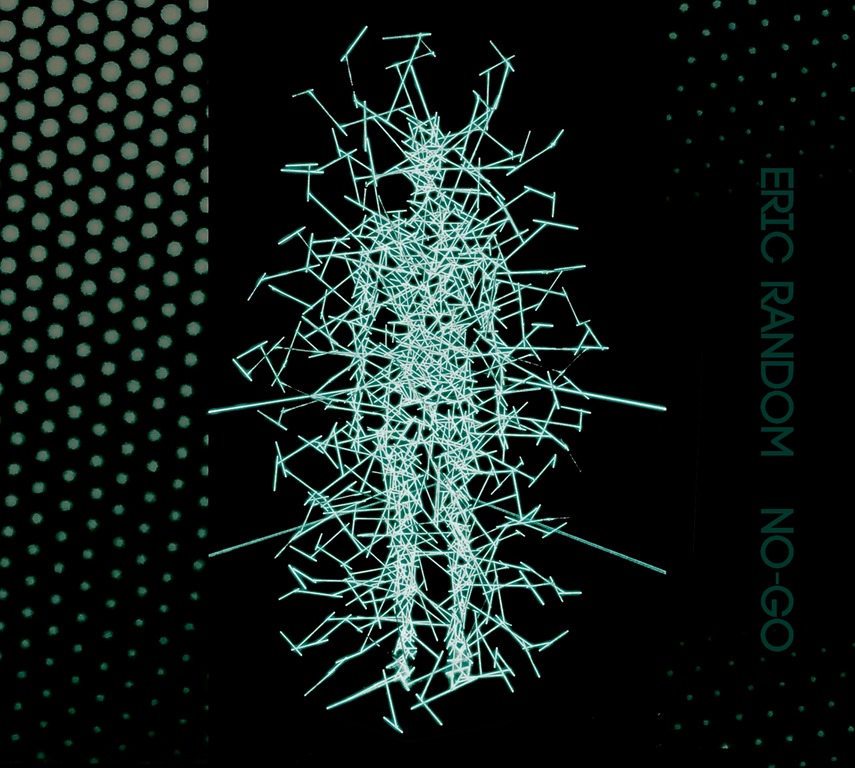
No-Go is his fourth album since his return in 2014 following a lengthy time out. Pitched as a step further into an electronic dance direction, and inviting comparisons to Wrangler and Kraftwerk, No-Go is brimming with 80s stylisations, and all the 808 and Akai snare cracks and robotix vocals you could imagine are crammed into these eleven tracks.

A jittery stammer runs through the entirety of the opener, ‘Synergy’, while all over, multiple other synth sounds swipe and bleep over the ultra-retro groove, and all over, Random recaptures not just the sound of the late 70s and early 80s scene in which he was so deeply immersed in, but also the feel of the period. It’s easy to forget just how vibrant the energised spirit of newness was around that time, with the rapidly evolving – and ever-cheaper – technology opening new doors to seemingly infinite possibilities. This was music that sounded like the future in every sense, and while a lot of it may sound dated now, the fact there appears to have been some kind of revival or renaissance under way for the best part of the last 30 years speaks volumes. Of course, where Random differs from the oceans of retro revivalists is that he’s not attempting to reconstruct a fantasy version of a bygone era: he was there, at the cutting edge, doing precisely this.

‘Compulsion’ is a bleak wheezy cut with tinny marching drums and vocal that are oddly reminiscent of early New Order in their flat, distanced delivery. It’d Depeche Mode that spring to mind in the opening bars of the buoyant yet bleak ‘Is the Sun Up’, but then

‘Sinuous Seduction’ leaps out on account of the sample of William S. Burroughs narrating a segment of Naked Lunch, and while one of the numerous passages about giant black centipedes may not be revelatory or even particularly inventive, it does serve as a reminder of Burroughs’ vast influence on music, in particular acts like Throbbing Gristle and Cabaret Voltaire, who swiftly recognised the analogy between the cut-up and the sample, something Burroughs himself had initiated with the experiments he conducted with tape in the late 1950s and early 1960s with Ian Sommerville. But then, equally, there’s just something about Burroughs’ creaking, dry-as-sticks monotone that is just unbelievably cool, and also sends a unique shover down the spine, distinctive to the point of being immediately recognisable, and also really not of this world, that detached, flat intonation about stuff that’s plain weird is perfectly suited to the music of the early years of the electronic age. The track itself is sparse, monotonous, robotic, and while it’s as much an example of doomy Eurodisco in the vein of The Sisterhood’s Gift, it’s not a million miles away from The Pet Shop Boys circa Disco – and that’s by no means a criticism.

Sandwiched between this and the blustery hard-edged disco of ‘No Show’, the ‘It’s come again’ offers some welcome respite with its more loungy leanings. Things get lively to the point of dizzying with the last few tracks, which are uptempo an mega-layered with bewilderingly busy arrangements, and it’s a tense climax to an album that shudders and judders, bubbles, foams, and fizzes with electronic energy.

In going back to his roots, Random has really hit the zone and delivered some old-school stompers in the process.

gg347_front

ZEHRA – 6th March 2020

Christopher Nosnibor

There’s always some impending doom or looming crisis facing us. As a species, we seemingly need some end of days narrative and a horizon shaded with the colours of oblivion in order to function – or maintain order. Collectively, we thrive on the drama. Given the state of the planet and of western democracy, it’s something of a shame that we’re still here, that we’ve not obliterated ourselves in a nuclear holocaust, that the earth hasn’t been swallowed by a black hole or supernova, that the millennium didn’t bring about the collapse of civilisation, that Ah Pook failed to materialise in 2012.

I’m listening to the mystical, timeless sounds of The Master Musicians of Jajouka, as captured on the colossal double album Apocalypse Across The Sky while being inundated with updates on the ever-accelerating spread of COVID-9: my office have emailed telling me that having pulled international travel a couple of weeks ago, there’s no travel between UK offices, including those within the same city, and that I’m to be prepared for enforced home-working. Could it be that where SARS and Bird Flu failed, we finally have the 21st century’s answer to bubonic plague? Time will tell, but it very much does feel as if there is indeed Apocalypse Across The Sky. Bring out your dead!

Having first come into being in 1950 and been introduced to a wider audience via the conduit of polyartist and William Burroughs collaborator Brion Gysin, The Master Musicians of Jajouka really broke into western consciousness in the late 60s, after Gysin took Rolling Stone Brian Jones to the village in Morocco – although there are now two groups purporting to be the ‘real’ Master Musicians: the one on this album, which ‘features’ Bachir Attar is the one Brian Jones encountered on his visit, when Attir’s father was at the helm. It’s ironic, as this is music that transcends all boundaries.

Apocalypse Across The Sky doesn’t sound especially apocalyptic, or radically different from any of the other recordings of the Master Musicians (in either iteration) I’ve heard that were captured since Brian Jones’ 1971 Pipes of Pan album, via the snippets captured in 1973 which appeared on the Burroughs album Break Through in Grey Room (my first encounter, and one which, with murky recordings sandwiched between various tape experiments, encapsulated the cut-up experience in a most singular way), the performances of various Joujouka musicians who performed at Gysin’s 1001 café in the mid-50s, released on One Night @ 1001 in the 90s, and on to more recent recordings.

Perhaps it’s my untrained ear: perhaps it’s that like many strains of dance and trance, which are very much dependent on the effects of repetition on both the mind and body, that much Sufi trance music sounds similar by design. But then again, when I described this music as timeless, I meant that the expectations of progression and evolution which are part and parcel of contemporary genre tropes simply do not apply here: folk music is steeped in tradition, and this is folk music in the truest sense, and therefore its very purpose is to remain unchanged and to preserve the past.

That isn’t to say all the pieces sound the same: some place considerably greater emphasis on the trilling pipes, while others are dominated by the complex polyrhythms, and Apocalypse Across The Sky does its thing and does it nicely, again capturing the experience of The Master Musicians of Jajouka. It’s hypnotic, captivating, resonant on a subliminal, psychological level.

AA

The Master Musicians of Jajouka feat Bachir Attar – Apocalypse Across The Sky

Cat Werk Imprint – 7th February 2020

Christopher Nosnibor

‘Walk away… walk around it.’ On the page, the words are devoid of threat or menace. But delivered in a fractured, disembodied voice that carries a strange sense of madness, it takes on altogether different shades of unsettling uncanniness. Amidst creeping fear chords, clicking insectoid flickers and scrapes and scratches, the voice, childlike and compressed warps and twists, as through refracted through a temporal veil or a spiritual force-field of some description. It feels like a communiqué from the other side. The voice is that of celebrated modernist sculptor and Henry Moore contemporary Barbara Hepworth, and this is one of the early moments on Olivia Louvel’s latest release, a work which forms the basis of the artist’s Masters degree, in which she investigates the voice ‘from preservation to resounding, while taking further the voice of Hepworth into the physical space as a multi-speaker diffusion’.

The source material is a 1961 recording of Barbara Hepworth’s voice, recorded by Hepworth herself in her studio in St Ives, the tape’s initial purpose was for a recorded talk with slides for the British Council, with an original duration of thirty-two minutes. Louvel’s resounding is of a similar duration, but instead of a linear narration which details the artist’s working methods, we get scrambled cut-up snippets which strangely still give a semblance of sense, reducing the extrapolations to the barest bones to give a sense of Hepworth’s creative processes and focus. But them, Willian Burroughs suggested that cutting up text (and for the purpose of this discussion, we’ll consider audio a form of text) reveals the truth, and while Hepworth’s talk isn’t brimming with political rhetoric and doublespeak, one feels that Louvel’s cut-up of her words does perhaps bring us closer to the heart of her meaning.

‘Must Carve a Stone’ loops and layers a breathy whisper of the word ‘carve’, which becomes an unsettling mantra. Minimal glitchtronica and hovering, echoing notes provide a ponderous, stammering backdrop to the looping, multi-tracked vocal layerings of ‘I Draw What I Feel in My Body’, and the sparse arrangement creates an uneasy backdrop to the words.

There isn’t a moment that’s comfortable or easy here, and Louvel’s ‘resounding’ of Hepworth is relentlessly challenging as an auditory and sensory experience. But it’s also impressive in the way that it provokes the listener to awaken those senses and absorb a multi-faceted presentation of what it is to be an artist.

AACW14_front