Posts Tagged ‘transcendental’

Christopher Nosnibor

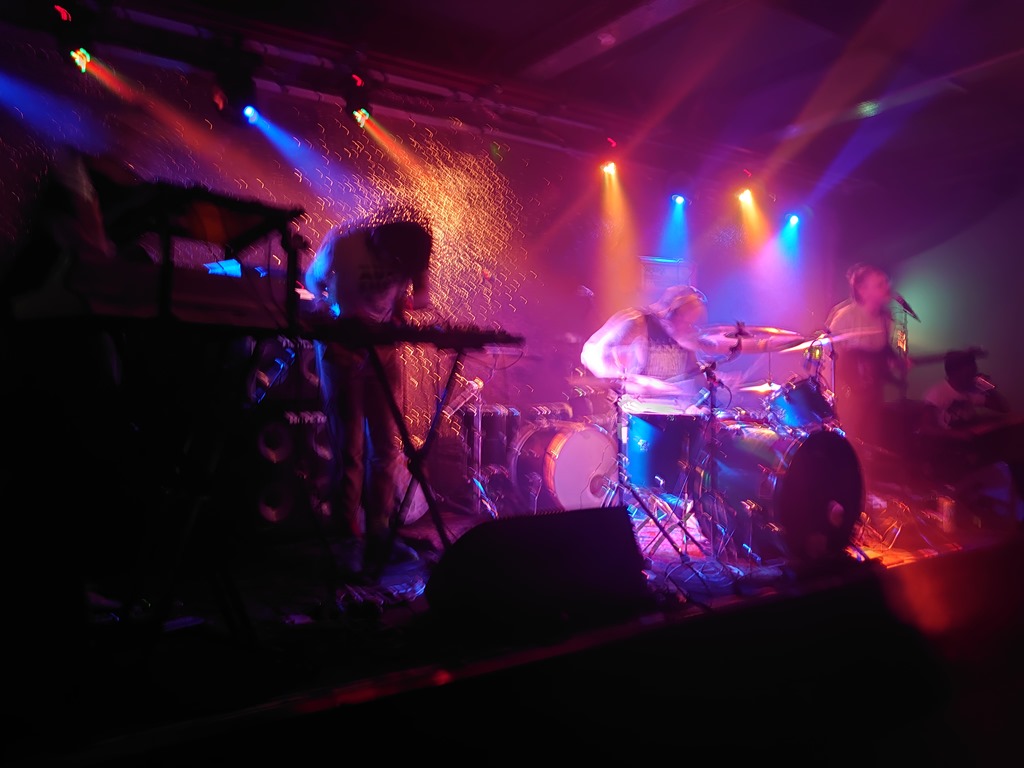
The last tour of Swans’ current iteration, drawing the curtain on a succession of albums – and tours – which have been truly immense in every way: the build-up felt like the end of an era. The event itself, perhaps less so. At one point, someone calls out a request. “We don’t do that,” Gira explains, in a kindly manner. He seems pretty relaxed tonight, and smiles a fair bit. No-one in the band gets bollocked or scowled at, and they all seem to be having a pretty good time.

But no, they certainly don’t do ‘that’. You don’t go to see Swans expecting to hear choice guts from their extensive back catalogue. You don’t even go expecting to hear songs, at least not in any recognisable form. The versions of recorded songs bear only limited resemblance to their studio counterparts, twisted, stretched, and otherwise evolved while on the road to a point whereby they’re almost new songs entirely. Recent shows have seen the band playing sets spanning a full two and a half hours, while only featuring six songs.

Before we come to Swans, Jessica Moss, who, amidst an extensive catalogue of work over the course of a lengthy career, is best known for her contribution to Thee Silver Mt. Zion Memorial Orchestra and being part of the whole Godspeed You! Black Emperor milieu. Tonight, she plays a rendition of her latest album, An Unfolding, in its entirety, and it’s breathtaking. Her nuanced violin and vocal work is augmented with booming, resonant bass tones. There’s a lot of yakking at the bar and further back in the 1,000 capacity, sold-out venue, where the house light stay up toward the rear of the room for the duration of the night, but for those of us in the front two-thirds, it’s a spellbinding experience, which perfectly sets the tone for the main event.

Moss’ half-hour set is over by around 8:40, and Swans, after a few brief checks, take to the stage around ten minutes later. Gira politely asks that there are no cell phones – “at least not where I can see them”, before he begins strumming a monotonous at two strings. He does so for what feels like an eternity. Or perhaps not. When Swans play, time takes on a different meaning, and it’s been a feature of this current iteration that the songs evolve and elongate over the course of the extensive tours, transforming and transmogrifying over the weeks and months on the road. They’ve been touring Birthing and this ‘farewell’ for a fair while now, although the set on the most recent leg has only featured ‘The Merge’ from said album. With ‘Paradise is Mine’, from The Beggar, and ‘A Little God in My Hands’, from To Be Kind, this is as close to a retrospective set as you’re likely to get, but none of these songs much like the studio versions, and half the set therefore features material which is either new or so far removed that it’s been retitled as well as restructured. But as I say, you don’t come to a Swans show for the songs. You come for the experience. And what an experience it is.
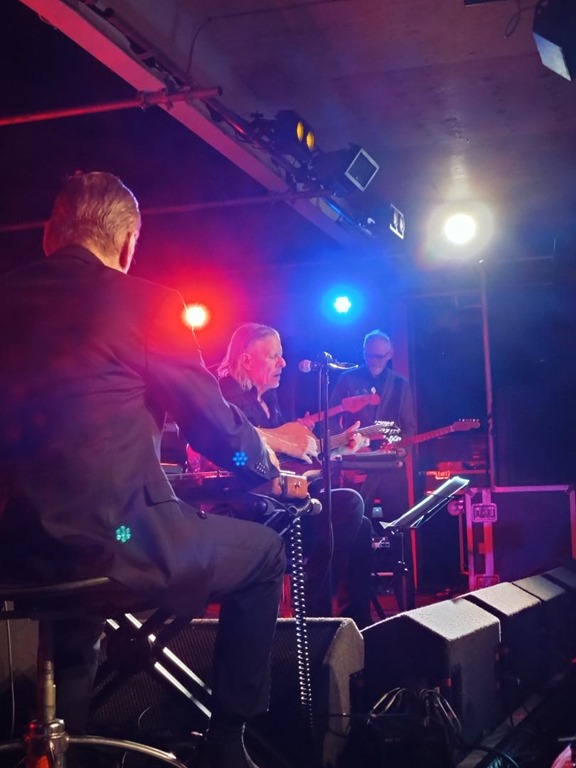
S1

It’s fair to say that there is simply no other band like Swans. Their reputation for extreme volume is only part of the story, a piece of the equation. Older fans who saw them in the 80s love to regale with tales of people throwing up, passing out, and so on, and that they’re pretty tame these days, and I have no reason to believe that these are purely apocryphal. Gira just can’t do quiet: even his solo acoustic sets playing smaller venues circa 2003 / 2004 were fucking punishing.

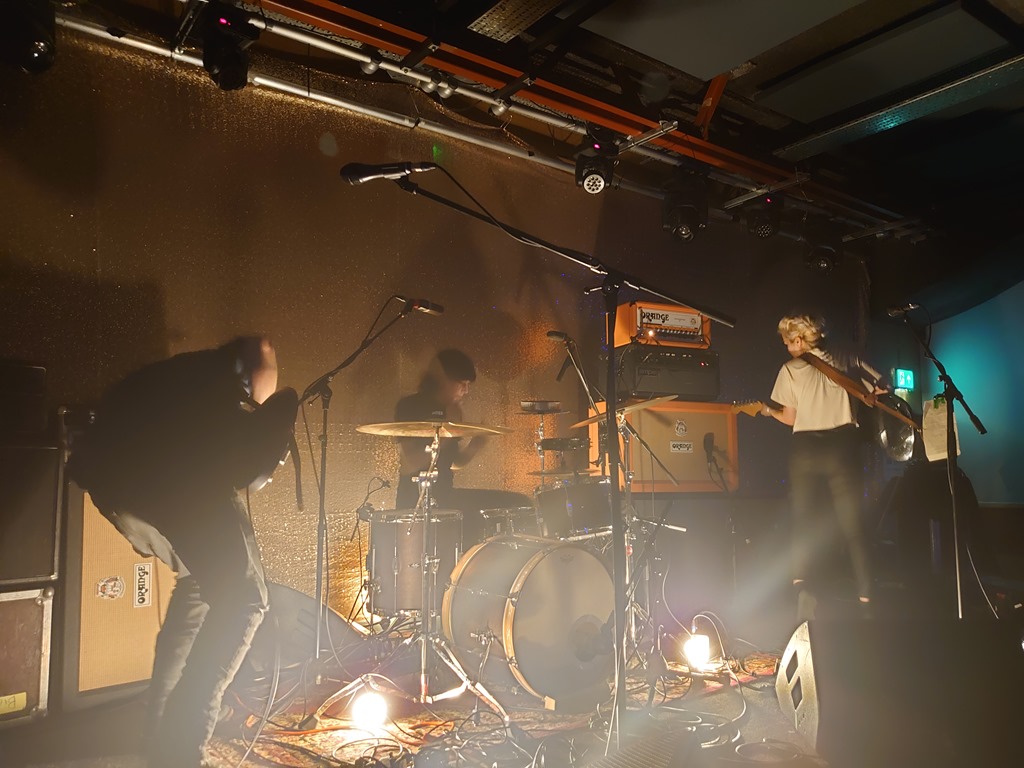
Some time in, Gira downs his guitar and stands up, turning to face the band, and flails his arms as if experiencing some kind of rapture or episode. But every gesture is a signal, from which the band members – there are six of them, plus Gira – and his near-psychotic choreography guides them through ebbs and flows, to ever greater, more intense crescendos. It’s maybe half an hour before the full drum kit kicks in, and I feel my nostrils vibrate with the sheer quantity of air displaced from the speakers. It’s transcendental, euphoric.
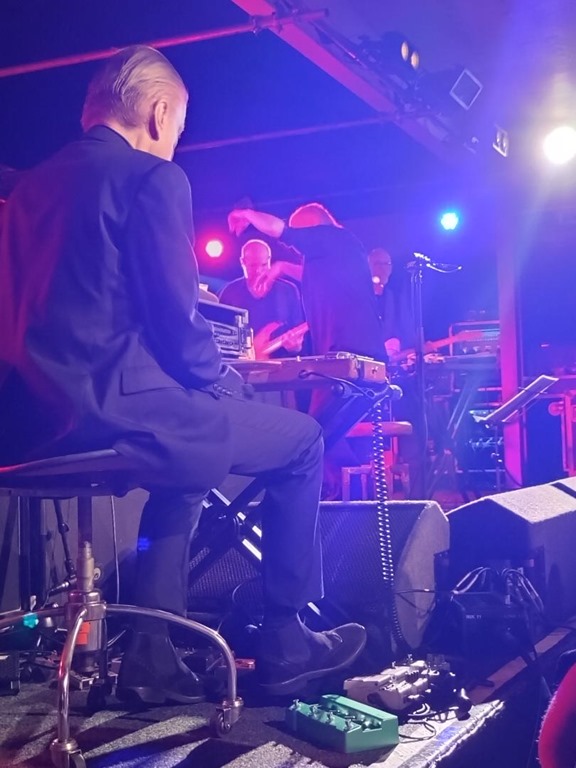
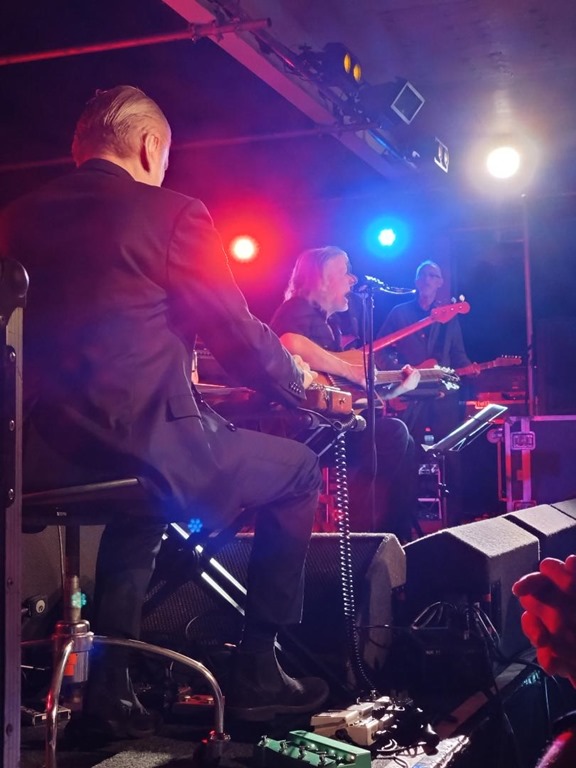
S2S3

A number of people who had started the set near me in the front row dissolved. I didn’t really notice when: like almost everyone else, I was simply transfixed. And yet, this was by no means loud by Swans standards: while I can’t claim to have witnessed the nauseating brutality of their early years, or the notorious punishment of the Burning World tour (ironic that their gentlest album, released on a major label, should have been served by a tour of such infamous volume… or perhaps not, perhaps it was a statement to prove that they hadn’t sold out), their shows at Leeds Stylus in 2016 and 2017 were something else – something so intensely physical, it hard to find the words. Then again, on their last visit to Leeds, playing at The Belgrave, I found myself thinking ‘this isn’t so loud’ but before long finding myself dizzy and wondering quitter where that immense noise had grown from. And this is perhaps an indication of how they’ve evolved. The bludgeoning force is still very much present, not least of all with two basses and the return of Norman Westberg to the lineup – surely one of the world’s most patient and understated guitarists, content to stand, not playing for ten to fifteen minutes, before battering away at one or two chords and thirty BPM for the next fifteen minutes, creating noise and texture rather than doing the conventional ‘guitarist’ thing – but now it’s more subtle, growing building, slowly, so slowly. A tweak here and there, another player adds a later, and while you’ve been watching the dynamics of the two bassist and Gira’s windmilling, the volume has increased threefold and your ribcage is rattling and your brain is slowly scrambling. Kristof Hahn does things with lap-steel that is beyond comprehension, cranking out squalling, screaming walls of noise – but there isn’t a weak element in the lineup. They each bring something unique, and the collective output is something else.

If this is the end of Swans doing big band, big noise stuff, then they have certainly delivered a finale of spectacular proportions. And whatever comes next, we look forward with bated breath.
Thrill Jockey – 24th March 2023

Christopher Nosnibor

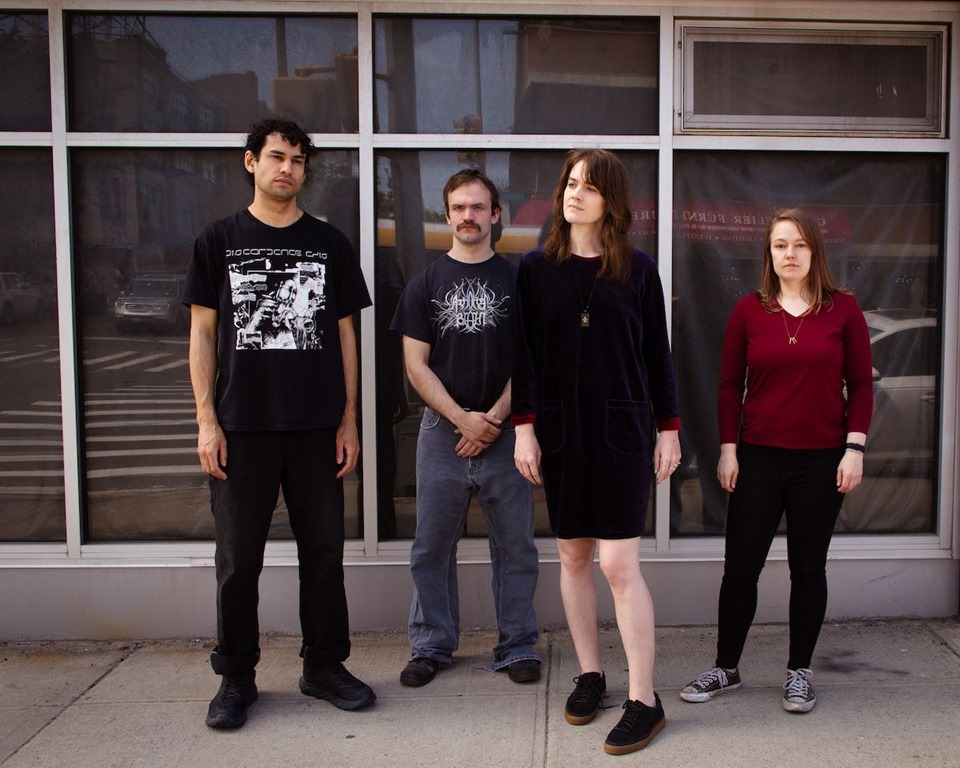
Wikipedia, and most other sources for that matter, will tell you that ‘Liturgy is an American black metal band from Brooklyn, New York’. The band’s own bio, which explains how their brand of ‘“transcendental black metal” exists in the space between metal, experimental, classical music and sacred ritual’ and that ‘The band is simultaneously a platform for fine art and theology’ is rather more illuminating in explaining how they have vastly expanded their horizons and those of the genre to create a form which is truly unique.

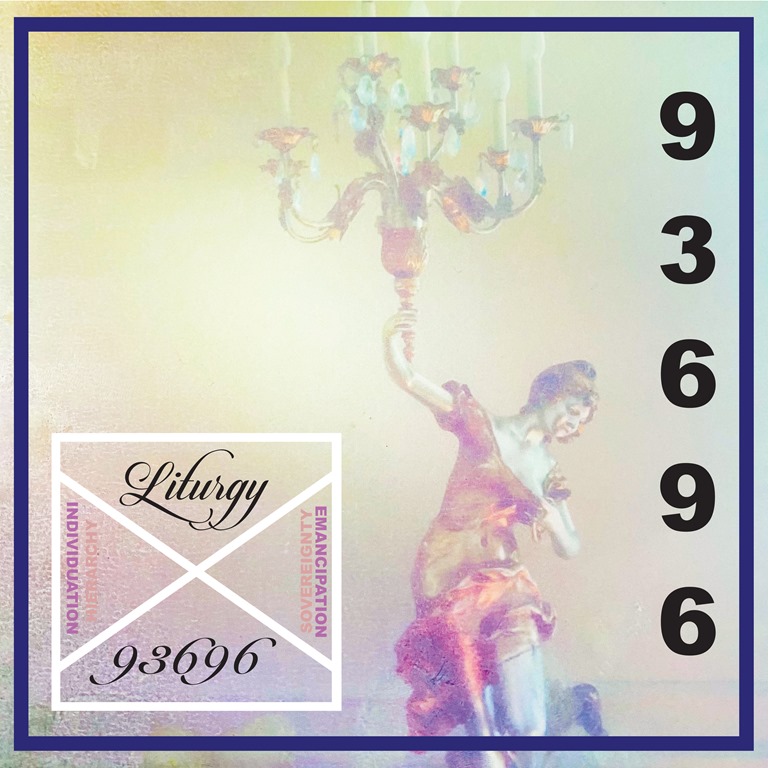
93696 is very much a concept-based work, which is best explained by quoting: ‘93696 is a number derived from the religions of Christianity and Thelema, a numerological representation of heaven, or a new eon for civilization. Hunt-Hendrix composed the album as an exploration of eschatological possibility divided by the four “laws” that govern her own interpretation of heaven, “Haelegen”: Sovereignty, Hierarchy, Emancipation, and Individuation. These laws constitute the four movements of 93696 which act as dramas all their own within the framework of the record.’

And what a record. ‘Epic’ barely touches it. It’s immense in every way, not least of all duration, with fifteen tracks spanning the best part of an hour and a half, this is expansive on a scale akin to SWANS (who they’ve previously supported). It’s also every bit as dynamically charged as latter-day SWANS albums, with tracks anything up to a quarter of an hour in length powering though a succession of crescendos, via sweeping choral soundscapes.

‘Djeennaration’ packs everything in early, presenting eight-and-a-half minutes of frenetic fretwork and thunderous percussion, over which vocals switch from angelic to demonic and back in the blast of a beat. It’s powerful, and quite bewildering in both its force and cinematic scope.

Done differently, this could feel overlong and pretentious, but the execution is so precise and the great ambition so focused on realisation that everything feels remarkably organic and despite making gigantic leaps between passages, changing tempo and tone here, there, an everywhere, it flows. Shuddering slabs of power chords that crunch like quartz while blasts off pure noise tear the air, but as ‘Haelegen II’ shows, with the incorporation of piano, there’s so much more texture and detail than plan fast-as-fuck fret attacks – then, from out of nowhere, things take a turn into folksy post-rock.

The savage squall of ‘Before I Knew the Truth’, released as a single a few weeks ago distils the potent force of the entire album into four and a half flooring minutes. There are some brief – and strange – moments of respite, such as the quavering woodwind tones of the brief interlude that is ‘Red Crown II’ and the delicate keys of ‘Angel of Emancipation’, and they’re most necessary, as the majority of 93696 is a force beyond nature.

The fifteen-minute title track is nothing short of an absolute monster, and as much as it’s n obliterative squally, it’s also a dynamic and wide-ranging sonic and cerebral experience, culminating in a vast orchestral sweep that’s nothing short of stunning.

This does feel very much like an absolute pinnacle and a definitive and exhaustive – and, it has to be said, exhausting – statement. Transcendental indeed.

AA

146782

Liturgy has shared the single ‘Angel of Sovereignty’ from their upcoming album 93696, out March 24th, 2023. The piece showcases Liturgy’s boundless ambition towards transcendence through rich compositions untethered by traditional rock constructs. Comprised almost entirely of a children’s choir, the track is unmistakably the work of Liturgy, building tension through an evolving round whose chords grow more dense and textured.

Liturgy transcends the traditional parameters of what constitutes a rock band. Founded by Ravenna Hunt- Hendrix, Liturgy is a part of a shared discipline of composition, art, and philosophy that thrives on exploring the spaces between. As an ever-evolving practice Hunt-Hendrix has incorporated elements of black metal, art rock, opera, and trap production into the musical language of Liturgy while engaging with transcendental, theological and eschatological theory through lectures series’ and art installations. A profound sense of yearning and emotional depth weaves through the Liturgy’s dense layers and anchors the project’s increasingly complex and innovative work.

New album 93696 is the purest synthesis of the diversity of Liturgy, a sprawling and monumental double album exploring religion, cosmic love, the feminine, and metamorphosis while manifesting the ecstatic with breathtaking grandeur. Listen here:

SK1CygqQ

Photo Credit: Jessica Hallock

Southern Lord (CD/DL) | Pomperipossa Records (LP – Europe) – 14th January 2022

Christopher Nosnibor

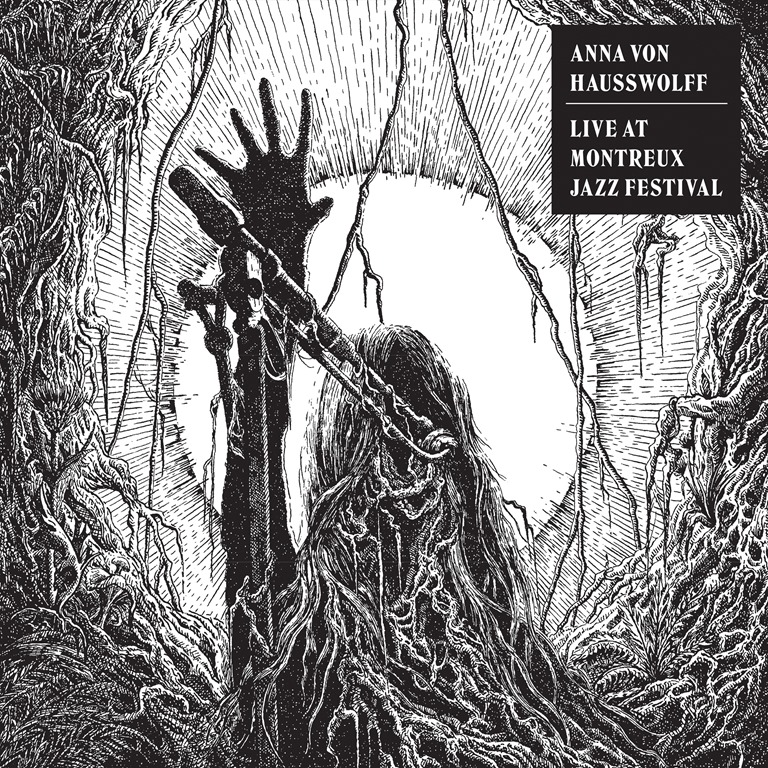
Perhaps the last thing one would expect to find being released on Southern Lord is a live jazz album. The label is, after all, home to much to the rawest, loudest, harshest metal and hardcore punk, not to mention, of course, the doom drone legends that are Sunn O))). But then, if Anna von Hausswolff seems like something of a roster misfit, it’s fair to say that her catalogue doesn’t conform to any obvious jazz tropes either.

The performance, from 2018, as the notes advise, features six fan-favourites from the two beloved albums; The Miraculous and Dead Magic, with the backing of a full band including additional vocals from her sister / cinematographer Maria von Hausswolff, and it’s ‘The Truth, The Glow, The Fall’ from Dead Magic, which opens the set in mesmerizingly hypnotic style. Against widescreen drones and rumbles, von Hausswolff’s vocal soar and swoop operatically. It’s a powerful and compelling start which paves the way for the grandiose expanse of creeping fear that is ‘Pomperipossa’ from The Miraculous.

‘The Mysterious Vanishing of Electra’ slows to a crawl with a Swans-like dirge centred around a simple, trudging repetition of bass and drum, and it’s here that things really take a turn for the heavy and the intensity builds. This rendition reminds me of the epic take on ‘Your Salvation’ by Foetus on the Male live album, grinding away at a single chord and hammering it into the ground before blossoming into something jaw-droppingly magnificent, and there simply are no words.

From hereon in, things only become more intense, more spectacular, with the brooding atmospheric ‘Ugly and Vengeful’ stretching out to almost twenty minutes, and leads the listener through an epic journey through a succession of sonic terrains. It’s a clear centrepiece within a set of vast sonic and emotional scale. It’s far, far beyond the domains of jazz, and even beyond the domain of ‘mere’ music: this is transportation and transcendental, taking you beyond the physical world and out of your own space to one beyond imagination. What’s perhaps most impressive is that this is all live; there’s no studio tweaking or trickery, but musicians conjuring pure aural alchemy in real-time.

After the delicate respite of ‘Källans återuppståndelse’, the fifteen-minute ‘Come Wander With Me Deliverance’ brings a suitably epic finale. The backing may be sparse at first, but the understated, almost wispy drones place von Hausswolff spectacular vocals to the fore. Then, when the drums and megalithic guitars crash in, they really do bring the weight. Yet the vocals remain the dominant force, and it builds – and builds, and builds – to a monumental crescendo. To have actually been there! The recording does a superb job of conveying just how gargantuan that finish would have been, and while there truly is no substitute for being in close proximity to a band working together, witnessing that connection and intuition as it flickers like electricity across the stage, and nothing can touch the experience of hearing, and feeling, music at gig volume as it vibrates the bones, Live at Montreux Jazz Festival comes very, very close.

We’re days into January, but it’s unlikely there’ll be a better live album this year.

AA

752975