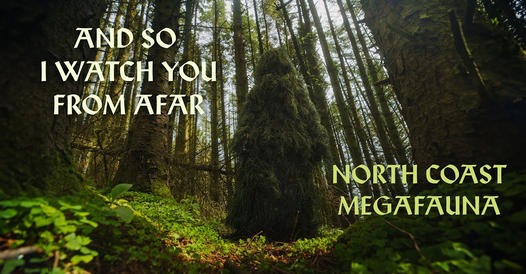
No hype needed: new material from AND SO I WATCH YOU FROM AFAR. Check it here:
AA
Human Worth – 20th May 2024
Christopher Nosnibor
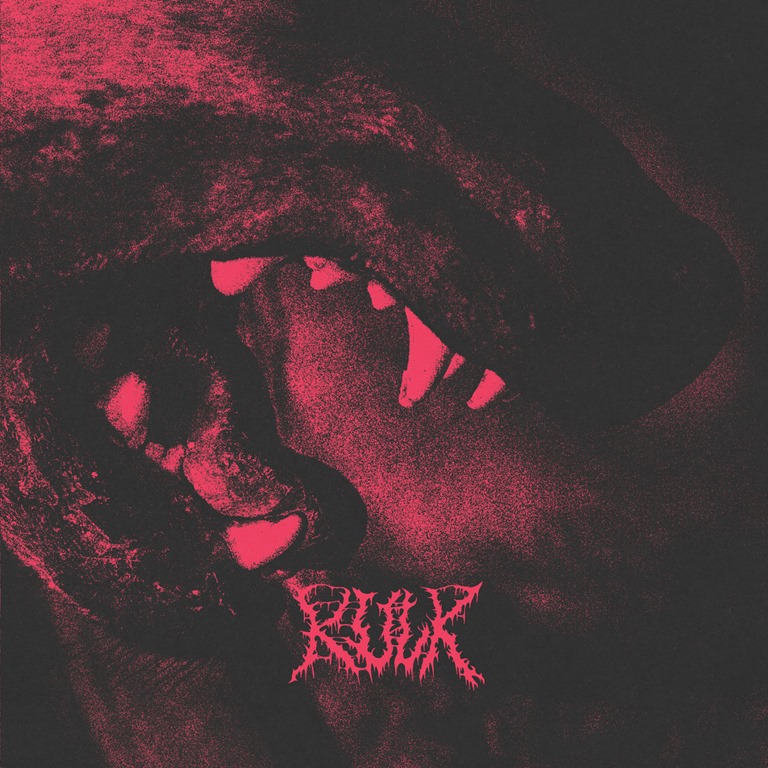
The latest album from Norwich based two-piece Kulk, It Gets Worse, arrives two and a half years after the release of We Spare Nothing, described as ‘thunderous and experimental’, and honing their ‘unique and monolithic brand of heavy doom and sludge’.
The timing – and the title – couldn’t be more apt. Just when you were probably thinking we’d endured the absolute worst of life on this planet – from Brexit and Trump via a global pandemic and insane inflation and everything money-related being utterly screwed and still getting more painful by the day after 14 years of a Conservative government – it continues to get worse – half the world is at war, the other half the world is either flooded or in flames, and there are mass killings practically every other week. It’s not, then, simply a nihilistic strapline to grab the attention, but pretty much a demonstrable fact. Things never get better – only worse.
The band articulate both the circumstances and the mood when they frame the album thus: “This album is about the universal suffocating weight of hoping for more while navigating a climate where the apparatus for seeking it is being consistently undermined. What it feels like to not only struggle keeping your head above water but to try jumping out from the deep end without losing your trunks. It is selfish guilt and misplaced woe, desire is a distraction from the world at our feet”.
Bookended by short instrumental intro and outro tracks, ‘More’ and ‘Less’, It Gets Worse packs back-to-back balls-out riff-fests, where the bottom end sounds like a bulldozer and the beats sound like bombs. Whereas a lot of stuff on the doom and sludge spectrum is simply plain slow, Kulk are masters of the tempo shift. ‘A Heavy Sigh’ comes on at pace and builds a real groove, before hitting the breaks around two thirds in, at which point it becomes reminiscent of Melvins. The reason Melvins have endured is that – perhaps despite the popular perception – they’ve showcased a remarkable versatility and an urge to experiment, and it’s here that the comparison stands strongest with Kulk: they’re not just big, dirty riffs and shouting, although they do a first-class job of putting those things up front and centre. ‘Out of Reach’ is a pounding, raging roar of frustration amped up and overdriven to the max, hitting that perfect pitch at which blasting out a repetitive riff at skull-splitting decibels is the ultimate catharsis and the only practical and sane response to the world in which we find ourselves.
Things take a turn with ‘Mammoth’ showcasing a more hardcore bent initially, before descending into a howl of feedback, a noise-rock quasar delivered with the most brutal force. The vocals are barely audible, and then things get ever harder and harsher on ‘Beyond Gone’ which goes full industrial, hammering away at a simple, repetitive chord sequence with murderous fury. You feel your adrenaline pumping as they thunder away, combining pure precision with absolute chaos as feedback swirls and squalls all around like an ear-shattering cyclone.
The slower ‘Fountain’ shows considerable restraint and makes for an oppressive four minutes: it brings a bleak mood, and the hit lands late but hard when the distortion slams in. Getting Adam Sykes of Pigsx7 to play on ‘Life Will Wait’ is a major coup, and the track is a belter, built around a hypnotic three-chord riff – because all the best riffs have three chords – and really works the quiet/loud dynamic to the max.
Often, when people – particularly people in my demographic – write of the music of the 90s, it’s with a dewy-eyed nostalgia for their lost youth. Sure, I have my moments, but when I say that It Gets Worse takes me back to the 90s, I’m recalling the excitement of discovering endless obscure little bands cranking out major racket in pubs and tiny venues, some of whom managed to either get records or CDs released by shoestring labels, or otherwise scrape together funds to record and release a 7” or CD – and many of whom didn’t, and only exist in hazy recollections. The point is that these were exciting times. The only positive about living in shit times is that shit times make for good music, as people need an outlet to channel their pain, anguish, frustration, and rage. It Gets Worse is saturated with pain, anguish, frustration, and rage. And because of that, it’s very much a product of our times, and it’s absolutely essential.
AA
AA
5th April 2024
James Wells
While firmly rooted in classic stoner rock, Gramma Vedetta’s latest offering, which follows on the heels of album The Hum of the Machine, which made number twenty-five in the Doom Charts (the existence of which is something I was unaware of), is an expansive, ambitious heavy prog monster of a tune. Yes, it’s over six minutes long and built around a big, swinging blues-based riff which displays elements of Led Zeppelin and Black Sabbath, but also brings in a hint of Pink Floyd in its widescreen feel. It also packs in a bunch of changes in tempo and transitions through a number of quite distinct segments.
Despite all of the elements having been done to death, ‘Don’t Cross the Line’ still feels like it’s doing something a little bit different, and, more importantly, it does what it does pretty well. Since it’s nigh on impossible to come out with something that’s entirely new – and even less likely to conjure something that’s new and remotely listenable or worth hearing – quality counts for a lot. Balancing beefy riffage with keen melody, ‘Don’t Cross the Line’ has enough to appeal to both traditionalists and those who like it with a bit of a twist, and that makes it pretty solid in my book.
AA
Exile on Mainstream – 28th March 2024
Christopher Nosnibor
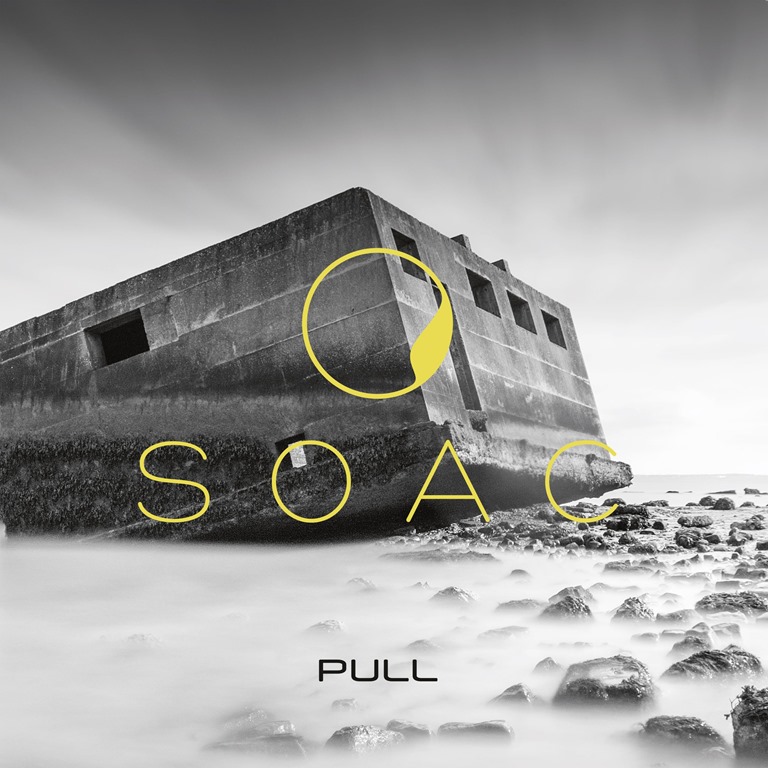
Cutting straight in with a big old guitar chug is a bold and hard-hitting way to open an album. No intro, no preamble, just big, beefy chuggernaut riffery. Bam! I’ve no aversion to a bit of intro a bit of preamble, but it’s refreshing to hit play and be smacked around the chops. The sound – and style – is quintessential grunge, and that grit, that grain, it has a grab that’s more than mere nostalgia, it’s a physical experience. But it very soon becomes apparent that Sons of Alpha Centauri are no generic grunge template rehashers, despite their adept use of the quiet / loud dynamics: ‘Ephemeral’, the opening song, draws in elements of quite blatant prog and classic rock, with melodic vocals and a reflective refrain of ‘Ephemeral… we are ephemeral’ that’s unashamedly prog in its ‘big, deep philosophical contemplations’ approach to lyrics. It’s certainly more ‘Black Hole Sun’ than ‘Smells Like Teen Spirit’.
Pitched as a ‘natural evolution’ to predecessor Push, they proffer ‘a powerhouse of searing post hardcore, alternative metal and progressive hazy rock’, where ‘Across the album, Sons of Alpha Centauri capture both a renaissance of the 90s post hardcore of their Sacramento luminaries, and a contemporary take on atmospheric dream-like rock music.’
Across the album’s nine tracks they straddle genre boundaries in a way that feels remarkably natural. Time was that I would be turned off by an album that was heavy instrumentally but not so heavy vocally – meaning I’d have been a bit hesitant about this. But it’s a mistake to perceive clean, melodic vocals as somehow weak or a detraction, as I discovered from listening to The God Machine and Eight Story Window, and Jonah Matranga packs in some emotional integrity into a strong set of songs.
‘Ease’ brings a watery-sounding bass and big, chunky guitar, and the combination makes for an unusual and interesting textural contrast, while the title track rocks particularly hard, the distorted guitar positively buzzing the speakers, Matranga giving a taut, tense performance.
At times I’m reminded of Amplifier, and not only in their incorporation of space themes – only far grungier in their melding of flighty prog and ballsy guitar attack. The chord structures of the aching ‘The Ways We Were’ are reminiscent of Placebo, and while sonically and lyrically there’s no real similarity, something about the dynamics and the heightened tension that defines Pull do warrant comparison, especially the slower, sadder ‘Tetanus Blades’. Sitting in the very middle of the set, it makes for the perfect album structure, and it’s clear that Pull has been created, crafted, curated, as an album rather than just some songs. ‘Doomed’ brings delicacy and introspection, anger and anguish delivered with a downcast sigh and wistful guitars. On ‘Weakening Pulse’ the guitars shudder and shimmer, and there’s a blend of dark aggression and choppy accessibility about ‘Final Voyage’. With its refrain of ‘Regenerate, regenerate, regenerate’ I can’t help but think of Dr Who, but that’s no criticism, and despite the big, bold, ambitious songs and matching production, they manage to steer well clear of going Muse on us.
The songs are pretty concise – mostly sitting around the three-and-a-half to four-and-a-bit minute mark, but have all the hallmarks of bigger, more epic songs. Yes, the vibe is very much rooted in the alternative sound of the 90s, but painted with the broader palette of the twenty-first century, whereby more diverse and eclectic elements have come to be accepted. It seems strange to think in 2024 that back in 1994, rap/rock crossovers were pretty revolutionary, that the soundtrack to Judgement Night was groundbreaking. In time, it came to pass that we discovered more complimentary hybrids, and Pull is a demonstration of this. There’s much detail to absorb and these are very much early impressions – but with so much to assimilate, Pull has everything about it that makes for an enduring album which only digs deeper with repeat listens.
AA
Australian instrumental post-rockers sleepmakeswaves have released another single from their forthcoming album "It’s Here, But I Have No Names For It" following the addition of two more US shows to their growing world tour dates. The band took to social media to tell fans about the new single:
"’Ritual Control’ was first demoed as ‘Dr. Riff Has Arrived’. I still wonder whether we were mistaken to have not kept the old title. Otto originally presented the song skeleton to us with the concern that maybe the riffs were "too dumb". In fact, Tim and I responded, they are the *perfect quantity* of dumb. Sure, these riffs aren’t going to earn a PhD. But they will hold down a full-time job, get the kids to school on time and read the occasional piece of challenging non-fiction on weekends. Courageous and heartfelt conversations like this are the core of what effective post-rock songwriting is all about. New album out next month!" -Alex
Listen to ‘Ritual Control’ here:
AA
The new album It’s Here, But I Have No Names For It, released on 12th April, was produced by the band themselves, at Golden Retriever Studios in Sydney, Australia. Written during the pandemic, it was originally recorded during 2022 just before the band embarked on a 3 month tour for their previous EP trilogy ‘these are not your dreams.’ Further recording was completed in 2023, including string arrangements by Simeon Bartholomew (SEIMS). The record was then mixed by Andrei Eremin (Closure in Moscow, Tash Sultana, G Flip, Luca Brasi) in Philadelphia USA and mastered by Jeff Lipton and Maria Rice at Peerless Mastering in Boston USA.
The first single ‘Super Realm Park’, prefiguring the record as a whole, is a majestic return to the classic hallmarks of the band’s melodic post-rock sound, whilst introducing new production and arrangement elements. Fans of the band’s heavy bombastic aggression will resonate with tracks such as ‘All Hail Skull’ and ‘Ritual Control.’ They also shine with invigorated melodic and emotive performances and arrangements on tracks like ‘Black Paradise’ and ‘Terror Future.’ Retaining their signature approach to heavy dynamics and crescendos the band are still at their unmatched peak when they turn their hand to cataclysmic emotional epics such as the title track and the album closer ‘This Close Forever.’
The band released a statement to fans, saying:
"The mysterious phase of nothingness, crucial to the smw creative process, is over: our new album is finally done. Thank you so much to all our listeners for your patience. It has been a slow but intense labor of love and we are proud of the songs on this record, and grateful for the many people who helped bring it to life. Hope to see you on the road in 2024, more show announcements to come, and we truly hope the new music we’re about to release resonates with you in the same way it does with us. Love smw”
Crazysane Records – 24th Nov 2023
Christopher Nosnibor
The press release describes Zahn as a ‘German post–modern noise rock ensemble’, while their bandcamp bio offers ‘A bold escape from your daily life through technicolor transmissions of post–rock, krautrock, dark jazz, noise–rock, post–punk and electronic music. Influenced by the likes of TRANS AM, THE JESUS LIZARD, METZ, THE MELVINS and TORTOISE’, adding that ‘Adria is a compelling soundtrack to a 1980’s anti–utopian road movie!’
As a prospect, it’s head-spinning, sounding like an everything-all-at-once hybrid, and the actuality isn’t much different. There are plenty of driving grooves, largely propelled by solid bass and insistent drumming, but there are also some angular riffs and big splashes of noise.
The first track, ‘Zebra,’ boasts a bulbous bass with some big low-end and some easy, noodly synths which wibble and wander agreeably and mellifluously… and then towards the end it builds and distorts and things get altogether more twisted and less pleasant. And this is a feature characteristic of the compositions on show here. They don’t mash everything into every second simultaneously, and there’s none of that jazz / Beefheart kind of stuff that sounds like each band member is playing a different tune in a different key and time signature all at the same time. There are times where that kind of avant-gardism most definitely has its place, and works, but this isn’t what Zahn are doing here. In keeping with the road movie concept, the pieces are constructed around transition.
The ten-minute ‘Schmuck’ is a magnificent example of their ability to do mellow, with clean sounds and even a tinge of a country twang, it swings along breezily and evokes sunshine and expansive vistas. Then, near the seven-minute mark, the bass steps up to a crunching grind and things get a whole lot noisier, from where it builds into a big, driven riff which crackles with energy. ‘Yuccatan 3E’ is another colossus of a cut, running to almost nine and a half minutes and manages to take it time in pushing outwards and working a single passage for a fair while, but equally packs in at least three or four songs’ worth of ideas.
The changes feel organic, and sometimes emerge gradually, and at others there will be a sudden and unexpected swerve, and there’s so much happening that the absence of vocals barely registers.
Because the mood, tone, and tempo differs so radically between songs – and between sections – Adria very much does feel like a journey, through space and time. ‘Apricot’ is a sparse synth work with crispy vintage drum machine snare cutting through quavering analogue synth sounds – then, without changing the instrumentation or the simple repetitive motif, it goes massive. A post-rock Depeche Mode chronically undersells it, but it’s as close as I can get, at least off the top of my head. The final minute is an extravagant climax, and truly magnificent.
The majority of the album’s eleven tracks run past five minutes, with the majority sitting more around the seven-minute mark, but the eleven-and-a-half-minute ‘Faser’ is the album’s megalithic centrepiece. It blasts hard with a fuzzy, scuzzy repetitive riff cycle with stoner rock tendencies, and it’s dynamic and exhilarating. Dropping down to bubbling synths in the breakdown around six minutes in, the threat of a re-emergence of the heavy lingers suspensefully. When it does land, it does so with a vengeance, before transitioning once more into something altogether different again, skittering its way into Krautrock territory.
The power blast of ‘Tabak’ hits square between the eyes and feels unexpected however expected it actually is. These guys are absolute masters of the unpredictable and varied structure, and conjure some highly evocative and atmospheric passages, and while the playing is technical, it’s not technical for its own sake: there’s nothing showy or extravagant, and the focus is very much on the compositions, the structures, and the impact. ‘Amaranth’ piledrives a full-on doom riff, slogging away at it for what feel like an eternity. It’s a heavy trudge, and really hits the spot – again, when you least expect it.
Adria straddles many, many genres, and does so in a way that’s incredibly imaginative. The key to its success is its execution, which balances precision with passion.
AA
Forever Underdogs – 22nd September 2023
Christopher Nosnibor
I Got quite excited by Hull’s Bedsit on hearing their last release. Perhaps the summary in their bio explains it, more or less, in pitching the band as being of interest to fans of Basement, Nothing, Yuck, Nirvana, Smashing Pumpkins, and in next to no time, alongside my raving about them, they’ve come from nowhere (ok, Hull isn’t quite nowhere, but it works as a narrative) to airplay from Steve Lamaq and applause from Louder than War.
The joy of F.I.D.O. lies not only in its being a great tune, but from its gloriously lo-fi, crunchy sound. A twisty riff played almost tentatively by way of an intro is suddenly smacked along in a tidal wave of rhythm, bass, drums and it recreates the buzzing vibe of Dinosaur Jr on ‘Freak Scene’ or ‘Girl from Mars’ by Ash. It buzzes, it vibrates.
They’re pretty strident in their messaging here, and this is certainly no feel-good tune, as much as it’s a nihilistic howl that goes against the grain, and is certainly not a call of solidarity with their peers and contemporaries, It’s a shake, a slap, a sneer of derision that says ‘get a fucking grip!’
“F.I.D.O. is for the countless artists who labour to perfect their work, manifest their passions and achieve success, only to be left screaming into the void for years on end. It’s about the ridiculousness of dreams and the temptation of surrender. We’re made fools by our expectations of the music industry and the life of an artist, coaxed by visions of giants from a bygone era. The iconic rockstar is dead, or worse yet, duplicated posthumously in a vapid monetary mockery. It seems impossible nowadays for an independent artist to ever get heard, break out, be seen. When art is entwined with identity, emptiness can feel like death.
Why do we even try? Where does that spark come from, and is it at all worth trying to keep it alive? If an artist is neither seen nor heard, do they even make a sound?”
It’s a sentiment that not only do they fully espouse in their work, but one I can back to the absolute max. It’s not about the technicality, but the raw energy, and it’s right up and in your face, and then when the vocals come in against that welter of guitars, it’s absolutely fucking glorious. There are numerous references I just can’t call to mind, but there’s a dash of Therapy? and a pinch of Bilge Pump in there, and the refreshing thing about Bedsit is that while so many contemporary acts who bring that 90s vibe present sanitised, cleaned-up interpretations, Bedsit keep it raw, rough and ready – and in doing so properly capture the spirit of the era they’re so deeply rooted in.
F.I.D.O. is a massive, grungy monster. Driven by thick riffs and thumping percussion, the melodic and contrasting vocals land between Nirvana and MSP with aa hint of Fugazi as they melt grunge in a pot with post-punk and post-rock that maybe hits a spot in the region of Trail of Dead. But none of this really touches the rush and the squall.
The bottom line is that they’re bursting with energy, and they’re a band you can believe in. ‘F.I.D.O.’ kicks all ways, and the amount of ass-kicking they packing they pack into four minutes and twenty seconds is incredible.
The single comes backed with ‘Click Track’, a frenzied thrashing furry that’s pure and brimming with passion.
Feel the force.
AA
Majestic Mountain Records – 29th September 2023
James Wells
One day, I’ll see a press release or bio for a stoner rock back that doesn’t reference Queens of the Stone Age. But I don’t expect that will be any time soon. They are, of course, the only band of the genre to have graced the mainstream singles and album charts around the globe, so it’s a handy touchstone for reviewers whose experience is limited to the mainstream and likely a useful reference for radio folks who operate a more limited sphere of reference for the benefit of listeners who tend not to really explore beyond, well, their back garden.… but how many who are seriously into the style hold QOTSA as their benchmark? I’m not knocking them in the slightest, because I very much dig their shit – but the best-known and most commercially successful exponents of any genre are rarely the choice of those with a deeper knowledge and appreciation. It’s the same as picking the Pistols as the definitive punk band or Oasis as the quintessential indie act.
‘Gunman’ crunches in with a gritty riff, and it’s gritty riffs that dominate the album – as they should, of course. There’s something about the production… the bass is ultra-low, almost subliminal, and there’s a lot of space and separation; the quieter moments find the guitars switch to clean, and ripple and echo, not seductively, but compellingly, absorbingly forging texture and atmosphere.
They go slow early, with the second song, ‘Dead Space’ going deep from its chiming, hypnotic intro via its lumbering riffage and evoking hot nights and open skies while bringing both heavy psychedelia and mellow melody to proceedings.
The songs alternate between the slow and reflective and monster rifffery, but even then, it’s the riffs which stick in the mind: ‘Ruins’ and the Soundgarden-esque ‘Pigs’ drive hard and fast, while ‘Wake’ is driven by rolling drums and chunky bass, the harmonies and brooding grind inviting comparisons to Alice in Chains in places.
The nine tracks on Úma strike a neat balance between melodic and meaty, hitting a sweet spot that feels just right, with ballsy riffs and tunage meeting in the middle to make for a solid album.
AA