Posts Tagged ‘Red Lorry Yellow Lorry’

10th July 2025

Christopher Nosnibor

The band’s Bandcamp page describe it as ‘the final chapter of a legendary journey’. David Wolfenden, who joined on guitar in 1982 after the release of their first single expands on this, writing that ‘40 years on and the guitars still try to strangle each other, the words still struggle to make sense of chaos and the rhythms drive us to a glorious destination.’

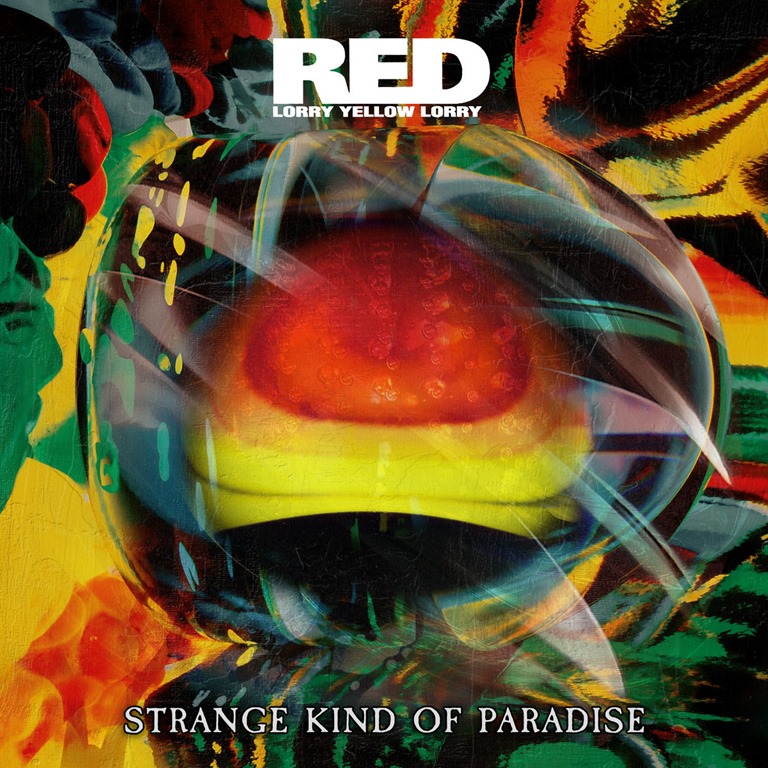
To describe Strange Kind of Paradise as ‘long-awaited’ would be an understatement: it’s an album practically no-one expected. Emerging that the murky milieu of the Leeds scene which was the spawning ground for all things dark and post-punk (and long before ‘goth was even a thing), Red Lorry Yellow Lorry’s early releases soundtracked the grim North in Thatcher’s Britain. They weren’t overtly political but they were clearly pissed off, and along with The Sisters of Mercy, Skeletal Family, and The March Violets (among others), they followed Gang of Four in capturing the zeitgeist.

During the 80s, they put out a solid string of albums and remained firm favourites on the alternative scene, and while they may have mellowed a shade over that time, with Blow (1989) being notable for making a departure towards more melodic territories, there was always a fire that burned through everything they did, and seeing them in 2015 at The Brudenell in Leeds reminded me on a personal level that the dark, brooding currents ran as strong as when I’d seen The Lorries play the Off The Streets benefit alongside the likes of The Mission and La Costa Rasa (and Utah Saints, where Andrew Eldritch joined them for a couple of songs) in August 1993, and they sounded exactly as they had in all the video footage I’d seen before and since.

It had looked for all the world that Blasting Off (1992) would be their final statement, and while the 2015 shows had seen the sale of limited CDs which mentioned the ‘forthcoming album’ Strange Kind of Paradise, almost twenty years on with no further movement, it seemed to be more of a mythical projection than a reality, as likely as a new Sisters album.

But last autumn, all that changed with the arrival of the Driving Black EP and the announcement that the album would follow shortly. And at long last, here it is. And yes, it was worth the wait.

The title track opens the album with the driving guitar and solid bass/drum pairing that is quintessential Lorries, the sound and mix reminiscent of Blasting Off – in particular ‘This is Energy’, but with the pace and determination stepped up several notches. Reed’s vocal is strong – in fact, it sounds the same as it did 30 years ago, although perhaps now, there are additional levels of nuance to his delivery, and it suits the songs well.

‘Chicken Feed’ (a mix of which appeared on the EP) is more melodic, even a shade groovy in a sort of 90s indie sense, the guitars chiming over layers of vocal harmony, and providing a hint of the diversity and expansion of songwriting which sets Strange Kind of Paradise apart from anything in their catalogue.

The acoustic-led ‘As Long as We’re Breathing’ is perhaps one of the most ‘different’ songs not only on the album, but in the entirety of their career, revealing an altogether softer, mellower side, while at the same time hinting at country and desert rock, Reed’s gravelly baritone reminiscent of Mark Lanegan. It’s a beautiful moment, and a truly moving song. ‘Nothing seems quite right / I’ve got a feeling we’re over the hill, but I don’t know because my chest is pretty tight / As long as we’re still breathing’, Reed sings with a palpable air of melancholy.

Then again, ‘Walking on Air’ brings a glammy swagger, but played almost in the rockabilly style of The Fall, marking another unexpected departure from the steely grey confines usually constructed by The Lorries. The same is true of the post-grunge ‘Killing Time,’ which again, is strong on melody, and big on emotional ache, riven with pining, yearning, sadness.

Side two opens with ‘Driving Black’, which, as I outlined in my review of the EP, is vintage Lorries all the way. Driving black, and driving hard. Easing off the gas a bit, ‘Shooting Stars Only’ returns to the vibe of Blasting Off, before ‘Many Trapped Tears’ goes for mid-tempo anthemic, with a solid riff. To clarify, we’re talking more Iggy Pop than Oasis in execution here. ‘The Only Language’ takes the tempo right up again, and is one of the most forceful sonic expressions they’ve made in a long time (even by their standards). Everything is firing on all cylinders as Reed snarls with total conviction ‘The only language I speak is the truth’. It’s one of those songs that gets you really pumped up, and the message has never felt more relevant.

And so it is that as this band – true stalwarts of the 80s alternative scene – finally sign off, we can reflect on how much we have to be grateful for. And as a final document, Strange Kind of Paradise sees them go off with a bang. It’s not a tired rehash, a limp collection of offcuts or unfinished works in progress, but an album that stands out as being quality all the way.

AA
a4282525804_10

COP International is incredibly proud to add another milestone release to the discography of this iconic band. The band’s first new studio record in more than thirty years, the Driving Black EP serves as a tantalizing prelude to their forthcoming album Strange Kind of Paradise (due February 2025). The EP offers three exclusive tracks alongside three distinctive mixes from the upcoming album, including one by the legendary producer John Fryer, renowned for his work with Depeche Mode, Nine Inch Nails, and Cocteau Twins; and another by the Lorries’ own bassist and producer, Simon ‘Ding’ Archer, known for his work with The Fall, 1919, PJ Harvey, and Pixies, who brings his signature experimental edge to the production.

Today, they’ve unveiled a video to accompany the lead track, and you can watch it here:

AA

a4237431651_10

COP International – 6th December 2024

Christopher Nosnibor

What a year this is proving to be for bands who have lain dormant, at least on the studio front, for quite literally decades. And when it comes to Red Lorry Yellow Lorry, it really has been a long time. The last Lorries release was an ultra-limited gig-only affair back in 2015, with just 50 copies pressed for Leeds in the August and 100 for Valencia the following month. Said EP featured two new songs, ‘Safe as Houses’ and ‘Piece of my Mind’, which were listed as being from the ‘forthcoming album Strange Kind of Paradise’. Time passed, and it really didn’t look like the album would ever see the light of day. But now, this official EP presages its arrival in February 2025, some thirty-three years since they called it a day with Blasting Off (1992).

The Lorries always stood apart from their contemporaries: whereas the Leeds post-punk scene of the early 80s clearly favoured black in every possible way, the band’s guitar sound was steely grey and like scraping metal, and paired with murky bass and relentless percussion, they forged an industrial clang that, was the perfect mirror to both the landscape and the times. Chris Reed’s baritone was less theatrical and more gnarly and angry-sounding than your archetypal goths which would follow. Fans will already know and appreciate all of this, but with so much history – and so much time having passed – some context is worthwhile, especially for those unfamiliar.

During their 80s heyday, they built a catalogue of outstanding 12” releases, with some of their best cuts not on the albums, and with Driving Black, they’ve added another. It contains six tracks, with two mixes of the title track – I gather the original will feature on the album – long with a mix of the as-yet-unreleased ‘Chickenfeed’. ‘Safe as Houses’ and ‘Piece of my Mind’ finally get to be heard – and owned – by more than 150 people, and hearing them again in this context reminds me of the buzz I got when first heard them almost a decade ago: they’re unmistakably RLYL, and if they’re more in the vein of the material on Blow and Blasting Off, the one thing that’s remained consistent throughout the band’s entire career is their sonic density, that claustrophobic, concrete-heavy heft, with ‘Piece of Mind’ being a solid mid-tempo chugger and a grower at the same time. It seems that the two tracks from the 2015 EP didn’t make the album cut – but this can be seen as good news, if they have material of this quality going spare. The same is true of ‘Living With Spiders’, a frenzied track which has spindly guitars crawling and scratching all over it. It would be a standout, but the consistency of quality across the EP means it’s one more cracking tune.

The strangest thing is how time – or our perception of time – seems to become evermore distorted. Perhaps some of it’s an age thing, but… I remember at the time, The Sisters of Mercy’s release of Floodland was hailed not only as the rebirth it was – stylistically and in terms of commercial success – but as a huge comeback after a great absence. But Floodland arrived only just over two years after First and Last and Always. Even more remarkably, I seem to recall the release of Crawling Mantra under the name The Lorries that same year was considered something of a comeback and a departure, even though Paint Your Wagon was released only the year before. The world seemingly lost the plot when The Stone Roses delivered The Second Coming after a five-year gap (and they really needn’t have bothered). And now, while Daniel Ek is advocating the production of ‘content’ on a constant basis, we have bands putting out their first new material in an eternity, and rather than having forgotten about them, fans are fervent – and rightly so.

Chris Reed’s reuniting with David ‘Wolfie’ Wolfenden – Leeds alumni who first appeared with Expelaires in 1979 along with one Craig Adams, who would do a stint as a member of The Mission’s touring lineup – is most welcome, because they’re simply a great pairing, and this is nowhere more apparent than on lead track ‘Driving Black’, which is vintage Lorries, kicking off with urgent, driving drums, before the throb of bass and rhythm guitar and a sinewy lead guitar, sharp and taut as a tripwire cut in and casts a thread right back to their earliest work in terms of style and structure.

The parallels between now and the 80s are uncomfortable; we may have ditched a Conservative government, but workers are still feeling the pinch, and global tensions are off the scale. That the BBC’s apocalyptic movie Threads is getting only its fourth screening – to mark its fortieth anniversary – feels worryingly relevant. And so it is that Red Lorry Yellow Lorry still sound essential and contemporary is equally testament to their songwriting and delivery, and the bleak times in which we find ourselves. Putting the social and political backdrop to one side, the Driving Black EP is an absolute triumph. There are no half-measures, nothing is weak or half-arsed, and it’s – remarkably – as if they’ve never been away.

AA

Red-Lorry-Yellow-Lorry-_Driving-Black_-EP-3000-Cover

Blaylox Records – 30th October 2020

Christopher Nosnibor

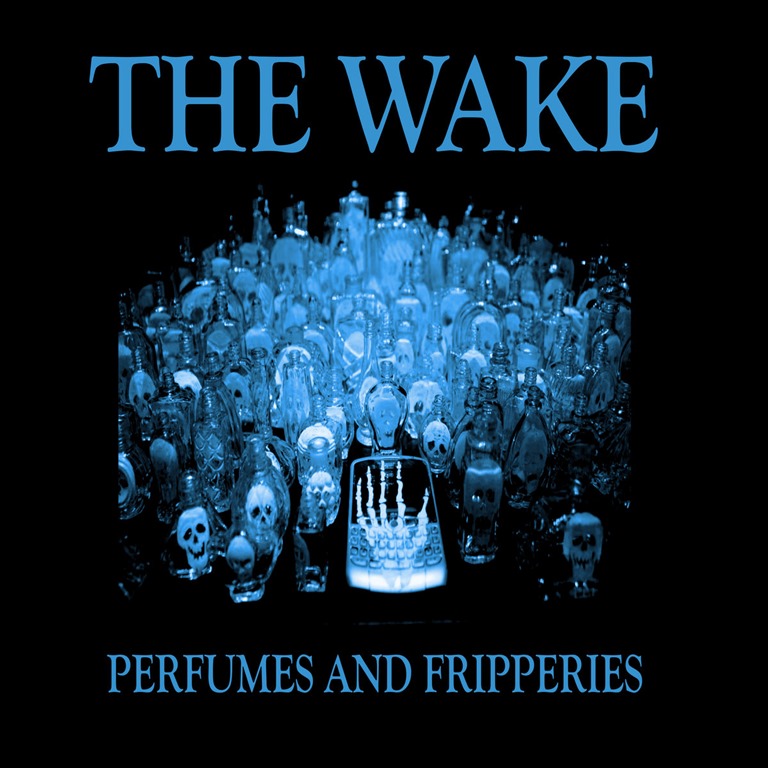
My ignorance of The Wake clearly blows every last one of my goth / post-punk credentials: where have I been all my life? Pitched as for being for fans of all of my favourite bands from my teen goth period – which I never really left – namely The Sisters of Mercy, Peter Murphy, The Mission UK, Tones on Tail, Red Lorry Yellow Lorry, Psychedelic Furs, The Cure, the band emerged in the so-called ‘second wave’ of goth appearing on myriad compilations and extensive touring with peers including Skinny Puppy and Nine Inch Nails, The Wake secured their place in goth and roll history.

‘Everything’, the second single lifted from the new album – their first in a quarter of a century – features Red Lorry Yellow Lorry’s Wolfie providing additional guitar, which further bolsters the release’s heritage credentials.

Not that it needs it: it’s a solid album in its own right. ‘Daisy’ is a daringly bleak, low-tempo opener that may not be quite Reptile House EP barren, but is nevertheless a spectacularly dark, atmospheric trudge through oppressively dark terrain, and at nearly six minutes long, it’s hardly an easy entrance.

Things go very Sisters circa ’85 with ‘Marry Me’, and the guitar work is clearly heavily influenced by Wayne Hussey, as are the vocals: this is their reimagining of the Sisters’ ‘Garden of Delight’ demo and it’s taut and murky, and they’ve got that heavily-chorused / valve sound nailed, and it’s that circa ’85 / ’86 vibe that drifts like a creeping smog of dry ice from every corner of Perfumes and Fripperies, aided by a dense production. While the swirling guitars are most obviously the defining aspect of the sound, the bass is thick and boomy, to the extent that you don’t so much hear the basslines as feel them, and they fill out the sound without being able to specifically separate the bass. Said shuddering bass is welded in a tight 4/4 to the mechanised drum tracks, which are pitched relatively low but are relentless – precisely as they should be.

There’s inevitably an element of comparing the motifs with precursive signatures: the tunnel-like vocal reverb is a Sisters signature that’s become a trope that so many bands have tried to emulate, with varying degrees of success.

The aforementioned ‘Everything’ is a hypnotic mesh of shoegaze that draws together early Lorries and All About Eve’s ‘Phased’, and Troy Payne’s vocals are treated with a steely metallic edge that replicates Chris Reed’s sound. Elsewhere, if the drum sound and overall structure of ‘Emily Closer’ is a Sisters / Rosetta Stone / Suspiria lift, the atmosphere is more Curesque, which the title kind of implies is the aim, and ‘Big Empty’ is hollow, brittle, a blanks pace of flanged bass and claustrophobically intense reverb.

‘Figurine’ marks a lurch into Fields of the Nephilim, and with the bombastic layers of female backing vocals wafting over some icy synths and a bassline that’s pure Simon Gallup on the last track, ‘Rusted’, it seems like The Wake have got all the goth bases covered. On the one hand, I should be irritated, as these things perpetuate the sameness of goth bands that’s been a bugbear of mine for years, largely because it feels self-limiting, like a genre trapped in time. But when it’s this well executed and the songs and production are this strong… you just can’t knock it.

Perfumes and Fripperies isn’t a great title, but it is a great album.

AA

a3729666156_10

4th August 2020

Christopher Nosnibor

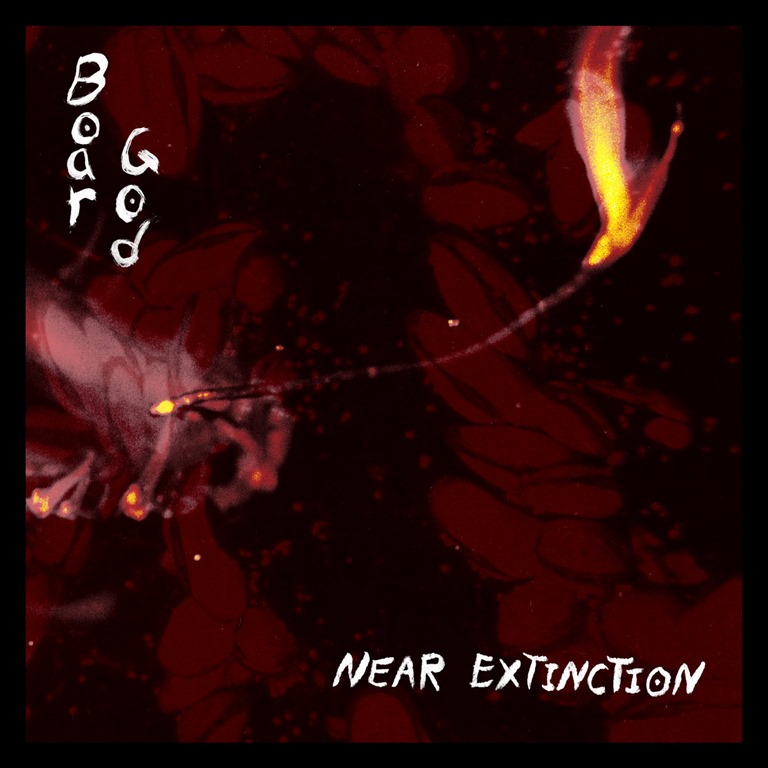
In the ever-expanding world of microgenres based on hybrids and crossovers, Montreal-based trio Boar God may be onto something as close to unique as you could imagine, describing their style as drone-punk. That said, drone takes many forms, ranging from the elongated notes that tend to feature in electronic works, to the dirgy, doom sustain of Sunn O)), with the kind of Psychedelic drone of The Black Angels in between.

Boar God’s sound belongs to none of these areas, and as such, does stand apart as different. The EP’s four tracks all sit around the six-minute mark, and blend driving alt-rock with a dash of shoegaze, and amp it all up with a spiky edge that’s as much post-punk as punk, but then I’d always say it’s the attitude that counts more than the sound in defining what’s punk.

Echoed tremolo tones shimmer like a heat-haze around guitars that scratch like sandpaper on the intro to ‘Life Eternal’. It’s a long, gradual build. The tempo quickens as the bass begins to run, faster and faster, the guitars chiming and swirling before everything breaks into a punchy clamour of everything, with Eric Bent’s vocals adding to the urgency. If it’s reminiscent of anything that immediately springs to mind, it’s Trail of Dead.

‘Azrael in Crisis’ goes all-out for the epic, with atmospheric synths swirling and wafting in the background, but still remains tightly-structured and punchy and dominated by a gritty guitar and booming bass. The energy is tempered by a chill, a bleakness, reminiscent of early Joy Division (think the outtakes that appeared on Still). The production is murky, and this is actually a good thing, as its low-budget, unpolished feel gives it an immediacy as well as replicating the late 70s’ / early 80s 8-track recording sound.

The pace and the angst are amped up on ‘The World Set Free’, a pounding amalgamation of Killing Joke and Red Lorry tallow Lorry, and again, it’s the thick, floor-shaking bass that defines and dominates the sound. Things take a twist for the gothic around two-thirds in, and as the fractal guitars glisten, the song acquires a dream-like quality.

Everything comes together at once on the closer, ‘The Tar Pits’, which locks into a motoric groove and drives it home with a searing guitar break and shrieking strains of feedback.

I know I’m a complete sucker for this kind of new-wave stuff, but as dark, angry, claustrophobic and steely-grey musings on loss go, Boar God bring a rare intensity on Near Extinction.

AA

a0466997498_10

Christopher Nosnibor

8th November 2019

The bio bit tells me that ‘NAUT is a 5 piece dark rock band from Bristol, whose shared love of classic rock and metal, alongside reverence for the post-punk pioneers of the late 70s and 80s makes itself known from the start. Their songs switch from raw tribal tom beats to uplifting anthemic synth in a moment, but always stay danceable and perhaps most dangerously, catchy’.

Fan comments on their bandcamp shed a little more light on their sound, observing the band’s ‘unique ability to recreate the original sound and feeling of 80’s uk goth rock. Sisters, Red Lorry Yellow Lorry, the Rose of Avalanche, early Nephilim…’ and their offering ‘the perfect mix of Post Punk with old school Goth Rock… Killing Joke meet The Wake & Love Like Blood.’

It’s no secret that I’m a rabid Sisters / Lorries / Nephs / KJ fan, but it’s equally documented that I consider most of the bands who’ve taken them as influences are generic and derivative, and that includes the mid-late 80s acts like Rose of Avalanche who traded in diluted forms of blueprint-based accessible alternative rock. This means I’ve no idea who The Wake or Love Like Blood are, but judging by the referential monikers, I probably don’t need to.

The EP’s title track kicks things off with a classically ‘gothy’ rhythm that’s dominated by a quickfire snare attack and defined by spindly guitars, trebly and awash with chorus. And talking of Chorus, it does boast a strong, hooky chorus, and there’s real energy behind it, which pushes it over the line from template-based to credible and sufficiently possessed of a band identity while still very much drawing well-studied inspiration from their precursors.

‘Spirit Horses’ steps down both the tempo and the individuality, and there’s a chord progression that’s lifted straight off The Sisters’ ‘Marian’, but the third and final track, which slows the pace further to a sluggish mid-tempo resembles ‘Blasting Off’ era Lorries, and works remarkably well with a looser feel but a grainy greyness that brings a certain weight.

On the strength of this outing, Naut are at their best when they go deeper and darker, and if they continue to evolve their songwriting in the directions demonstrated here, there’s a good chance they’ll break out beyond the trad-goth scene and into wider alternative circles.

AA

NAUT

Buzzhowl Records – 18th October 2019

Christopher Nosnibor

What came first, the music or the mindset? I’m going to put it down to how some of us – myself included – are wired, and will forever be drawn to that tense, dark sound that came out of the late 70s and early 80s that was a reaction to – and against – everything that was happening at the time. Just as punk was a reaction to – and rebellion against – prog and the beigeness of the times, so post -punk and its various strains, including (dare I whisper it?) goth harnessed the frustration and the dejection that was a product of the first years under Thatcher and the political climate of the second cold war and rendered it in a more articulate, and perhaps more musically resonant way (because let’s face it, 90% of so-called punk bands were just playing pub rock with the amps up).

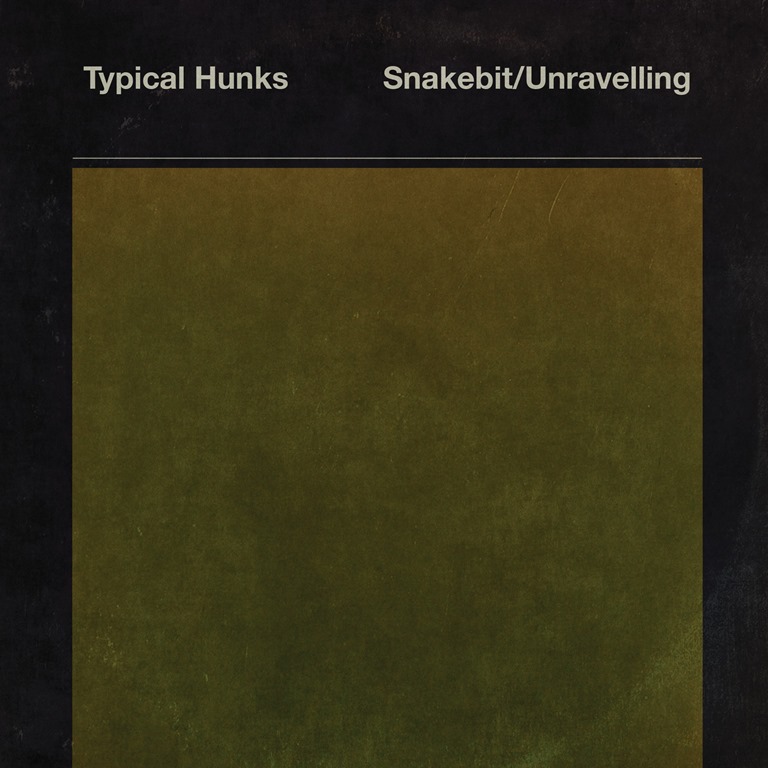
To revisit briefly an observation I’ve made variously in recent years, these are bleak, bleak times, and the future is well out of hand. The post-punk renaissance that began around 2004 with the emergence of Editors and Interpol grew from an underground which was there long before, but now it’s in full spate. Reading’s Typical Hunks fully embrace all of this as a guitar bass duo backed by a drum machine.

The guitar on ‘Snakebit’ is spindly, reverb-heavy, weaving one of those tense post-punk guitar-lines that’s pure Joy Division, and it snakes its way around a tight, insistent bass that booms and drives along with the insistence of the grooves Craig Adams laid down to define the sound of The Sisters of Mercy in the early years. That in turn is wenled to thumping beat that’s a distillation of all things Yorkshire circa 1983-4. It’s all in the programming: nothing fancy, no attempt to make it sound like an actual drummer, no flash fills or flourishes, just a hammering repetition and a snare sound that’ll slice the top off your head. Those Boss Dr Rhythm machines really are unbeatable. The vocals are tense, paranoid, and channel disaffection.

Strains of feedback and a hesitant bass hover before everything locks in around another relentless rhythm on ‘Unravelling’ with elements of March Violets, Red Lorry Yellow Lorry, and early Danse Society all spun into a solid block of discomfort. Vintage in its roots yet ultimately providing the soundtrack of the zeitgeist, this is a cracking Aside / B-side combo housed in a suitably barren sleeve, that showcases Typical Hunks at their strongest and most focused yet.

AA

Artwork

Burn Church Press – 26th April 2017

Christopher Nosnibor

Just because I’ve spent the last decade whittling down my cassette collction from over 500 to fewer than 50 doesn’t mean that I don’t think the tape renaissance isn’t cool. It represents a return to the appreciation of tactile, physical media, as well as a format that has a certain fragility which adds to its appeal: the idea that the cassette was cheap, convenient but also potentially damageable and disposable means that it’s possible to enjoy something of an ambivalent or even conflicted relationship with cassettes, often on a tape-by-tape basis. The return of the cassette suggests bands are haring back to a bygone age when acts – before the advent of the CD-R – would sell tapes at their gigs. These were often bands too new or too skint or too unsigned to have any vinyl releases.

The title of the debut release by Newcastle post-punk band Lost on Me also reminds us of the pre-internet era when bands would cut a demo and send it around gig promoters and record labels the like in the hope of getting gigs and more exposure, or even a recording contract and the chance to record in a proper studio rather than on a beaten-up four-track borrowed from a mate.

‘Protection’ bursts from the speakers in a blizzard of fractal, interlooping guitars, a mass f chorus and delay, and one might be forgiven for an initial thought which incudes Editors by way of a reference point – I’m thinking forst album era, I’m thinking ‘Munich’ in particular. But then Martin Downing’s dense, dark baritone enters the mix, and its heavy timbre has far more ‘gothy’ connotations, calling to mind Chris Reed from Red Lorry Yellow Lorry.

‘Landslide’ is a chiming pop tune at heart with a nagging guitar line, but the throbbing bass and deep, growling vocal casts heavy shade across its sunny surface. Third track ‘Balance’ brings a sinewy tension and a density that, again, is reminiscent of the Lorries.

The stuttering bursts of drums propel the wistful, emotive closer, ‘New Beginnings’ into territories which bring together contrasting dynamics to good effect, and once more indicate that these guys have studied the darker (and often more drum machine driven) side of the early 80s alternative scene. The production also contributes to the effect in a major way, with deep, deep reverb all over everything and a slightly hazy, murky analogue veil hanging over the guitars, in particular the thick bass tones. It’s all in the details, and they’re certainly not lost on me.


Lost on Me - Demonstration

Cult Records/Custom Made Music -22nd April 2016

Christopher Nosnibor

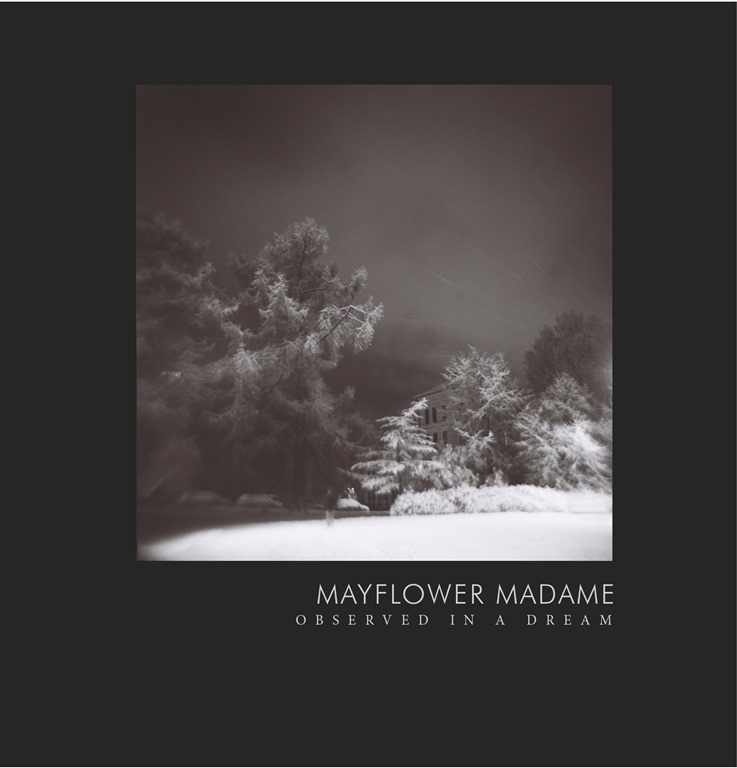
The album’s intro is immense. I mean, it builds and builds and threatens a blast of noise akin to Prurient, before the tide breaks and a sepulchral goth sound breaks out. Echoic guitars snake through a wash of reverb against a hipswaying bass groove as the mid-tempo opening track, ‘Confusion Hill paves the way for album steeped in vintage post-punk, but with more than enough inventiveness to stand up in its own right.

As much as it’s The Sisters of Mercy around the time of First and Last and Always it’s Suspiria. High on theatrical drama, bathed in reverb, ‘Observed in a Dream’ is an album which closely observes some old-school production values and uses them to good effect. The drums are up in the mix, the bass is low-slung and murky, and the guitars are brittle and fuzzy around the edges as they explore Dorian scales.

There are no shortage of highlights. The tetchy ‘Lovesick’ appropriates The Fall’s ‘My New House; and plays with a swampy psych vibe that’s both 80s Matchbox and The Volcanoes, throwing in a few dollops of Lloyd Cole and The Bunnymen into the mess.

‘Upside Down (the death loop’) plunges into deep psychedelic territory with its repetitive guitar motif and motorik drumming swathed in cavernous reverb, while the shadow of Red Lorry Yellow Lorry hangs long over the driving ‘Weightless’, and the title track sounds like a heavy collision between The Black Angles and The Jesus and Mary Chain, all throbbing bass, squalling feedback amidst an ocean of echo.

Whereas so many of the 90s wave off goth-inspired bands conspired to produce music that was arch and soulless, Mayflower Madame push a much more organic sound that’s geared toward psychedelic rock with a dark, smoky delivery that’s cool as fuck, evoking the spirit of The Doors as filtered through The Sisters, as if The Reptile House EP had been played with a live drummer. They keep it tight and keep it taut, but know how to cut loose and wig out when the mood takes.

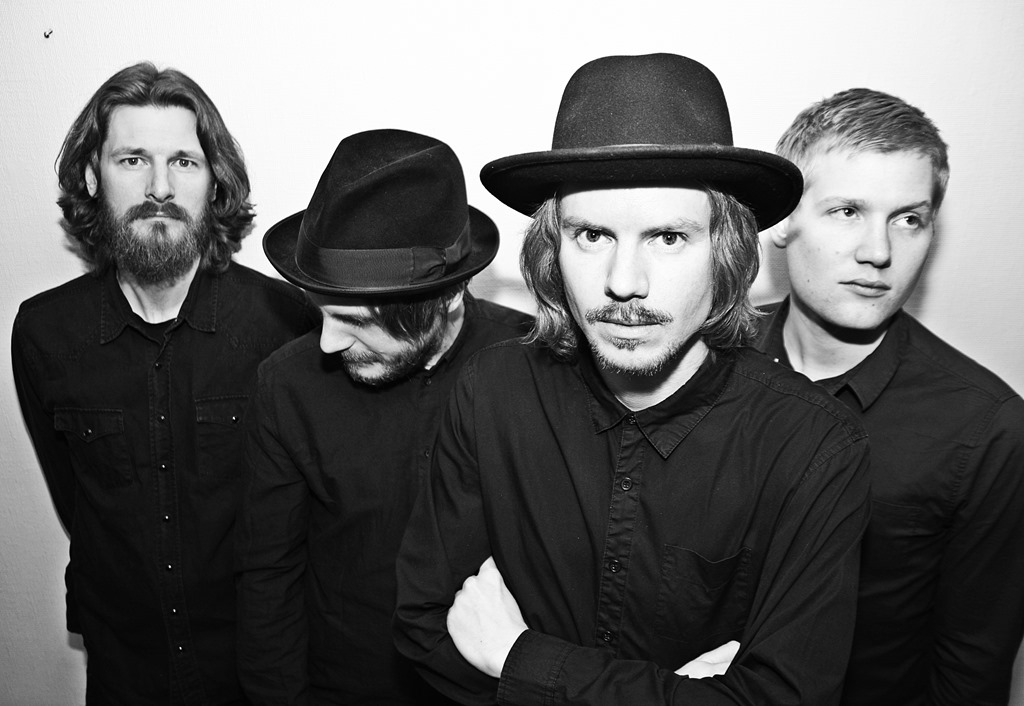
Goth ain’t dead, it was just waiting for a new messiah. Mayflower Madame have got the life, and Observed in a Dream is one of the most exhilaratingly atmospheric albums I’ve heard in a while. It’s nice to see some guys wearing hats, too.

Mayflower Madame - Observed in a Dream

Mayflower Madame on Bandcamp

Mayflower Madame


Pitched as ‘a high-energy haunting post-punk alt rock single that’s surely set to give you goosebumps and peak interest in their forthcoming LP’, ‘Revolvist’ comes with the tags for fans of Bauhaus, Love and Rockets, The Damned, Sisters of Mercy, Nine Inch Nails.

For our money, the dense screed of metallic, reverb-heavy guitar invited comparisons with Red Lorry Yellow Lorry and The Danse Society. What matters more than which forebear it most resembles, but the fact it’s a killer track. Watch, listen, enjoy.