Posts Tagged ‘range’

Mortality Tables – 29th November 2024

Christopher Nosnibor

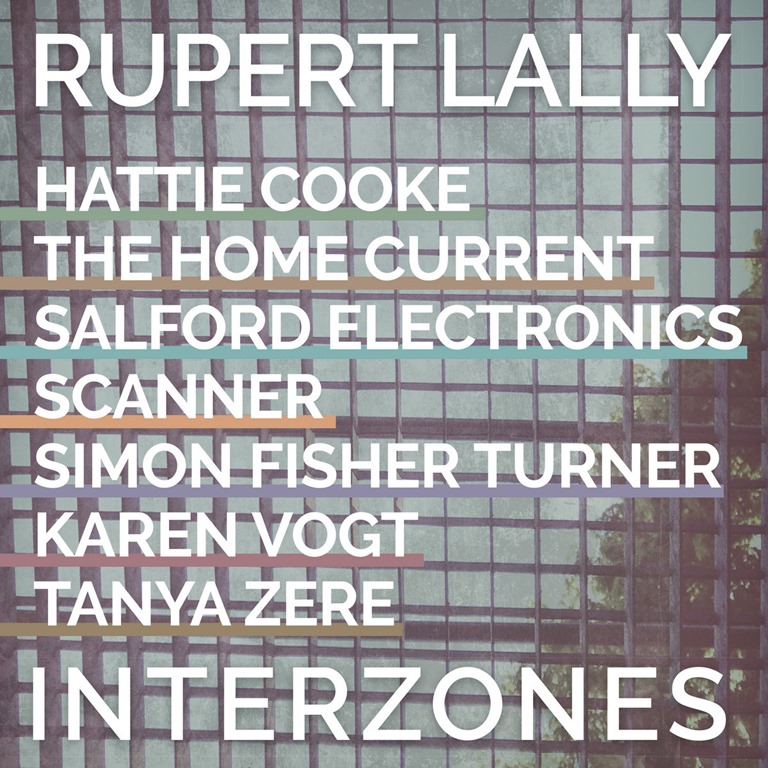
Because life experience creates linguistic associations, for me, it’s impossible to see or hear the word ‘interzone’ without immediately thinking of William S. Burroughs. The title of a collection of short stories and ‘routines’ penned in the mid-1950s, Interzone was the working title of the seminal breakthrough novel Naked Lunch (1959), and the collection, published in 1990 consists of segments which failed to make the final cut. The pieces were written while Burroughs was living in Tangier, something of a haven for expat writers, including, perhaps most notably, Paul Bowles, but also polyartist and true inventor of the cut-up method, Brion Gyson. Burroughs described the city as an ‘interzone’, and it was indeed both an ‘international zone’, as the portmanteau implies, and a space between zones, outside of any single culture or jurisdiction, its administration divided between the US, French, Spanish, and English sectors, where ‘nothing is true, everything is permitted’. Of course, there are numerous other connotations, but this is what I’m bringing in terms of prececeptional baggage to this.

The accompanying notes certainly indicate that the album’s content holds up to these parallel positions: ‘Like its name implies, these are place of transiency. Intermediate places. In-between locations. Melting pots of different people and different ideas, constantly evolving as one thing collides with another, and another, and another.’

The album was initially recorded in 2022 as a solo work, but subsequently scrapped and rerecorded with a different collaborator on each composition. Collaborations do tend to bring out different aspects of an artist, and it should therefore be of no surprise that this suite of nine pieces, recorded between 2022 and 2024 in Switzerland, England, Luxembourg, France and Zimbabwe, is eclectic in its take on electronica.

As the bookending pieces, ‘Entry Visa’ and ‘Exit Visa’ indicate, travel, movement, and transition, are the key themes here. But this is not some pan-cultural pick ‘n’ mix grab-bag, and instead creates an experience which replicates the disorientation of travel. It’s difficult to articulate just how this sonic patchwork works, or quite how the experience feels. It’s not as if it lurches from techno to grunge, to opera, to thrash, and in this respect Lally’s works represent his ‘two inches of ivory’, so to speak. But within the realm of electronica, Interzones covers substantial ground.

‘Play Position’, featuring Salford Electronics, is a sample-packed exploratory work with a prominent beat, which contrasts considerably with the near-ambience of ‘A Stealth Approach’, featuring Scanner; contrasting further, Simon Fisher Turner brings a sort of drawling space-age country aspect to ‘Calmer’, before things take a spin toward out-and-out trance on the title track, and Karen Vogt’s airy, soft vocals on ‘Running Circles’ pull the album gently into hypnotic shoegaze territory. The album continues on this trajectory, sliding deeper into dark, gothy electropop with ‘Ripples’.

The insistent beat and overtly dance style of ‘Exit Visa’ makes for an unexpected change in direction – despite the fact that, by this point, nothing should be truly unexpected. The effect, however, is disorientating, and you find yourself wondering how you came from A to B over the duration of the album. It’s testament to both Lally’s compositional skills and his selection of contributors – as well as the album’s sequencing – that somehow, it flows and the transitions themselves are seamless, which only heightens the sense of moving between spaces with no real sense of how it came to pass. Vitally, Interzones is a subtly detailed work, with hidden depths and moments of genuine beauty.

AA

a2037434320_10

Christopher Nosnibor

Forty-five years on from the release of their debut album, The Crack, The Ruts – or Ruts DC as they subsequently became – as still going, and perhaps unexpectedly, they’ve been more prolific in the second half of their career than the first.

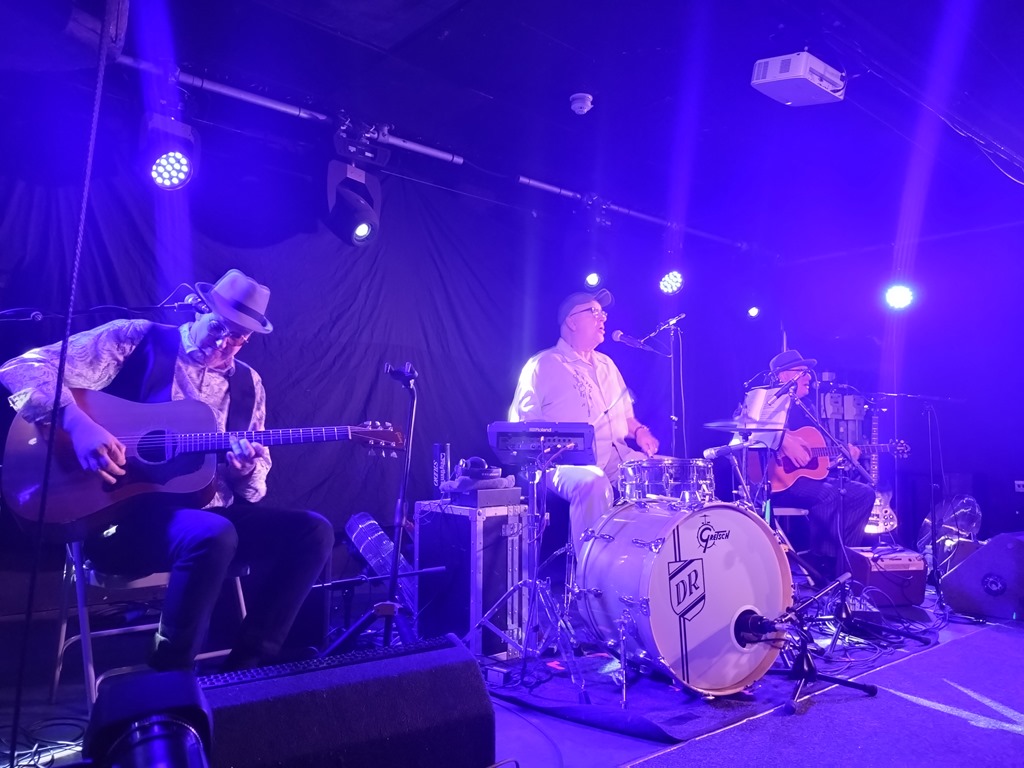
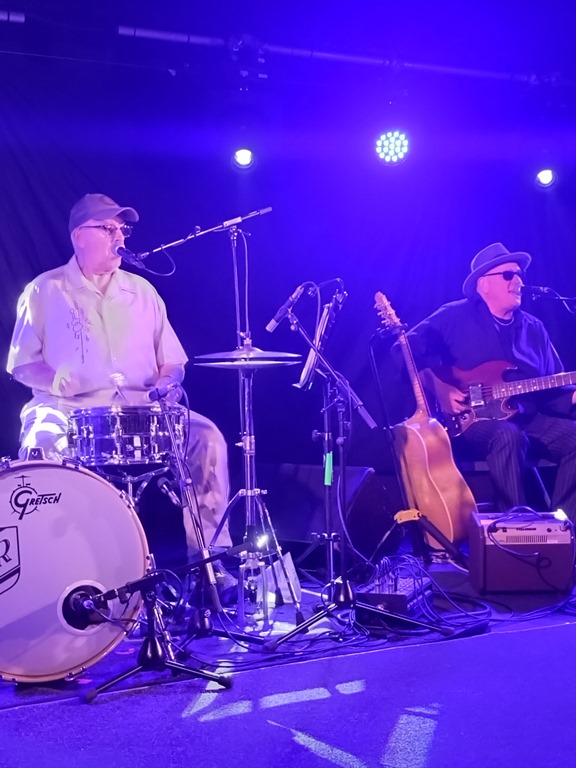
Having released two Electracoustic albums – stripped back versions of material from their back catalogue, they’re back on the road with this format, too. The trio seated in a line on the stage befits a band whose members are in their late sixties / early seventies. They’re done being ‘cool’ or staying ‘punk’: “punk’s dead”, Segs shrugs at one point during tonight’s set. It’s striking just how honest and open they are during the lengthy intros and meandering anecdotes which seem to spring spontaneously, often without punchlines or clear endings. These are off-the-cuff, unrehearsed, down the pub type chats, which provide some real insight into the workings of the band and its members. Unpretentious, grounded, it’s a joy to feel this kind of intimacy with a band of such longstanding who truly qualify – and it’s not a word I use often – as legends.

They’re a band at ease with one another and the audience, Ruffy particularly happy to be back in his home town and regaling us with a lengthy tale about his early life, his father, and shoplifting out of necessity.

Not being able to get out so much lately, I have to pick my nights out carefully and strategically, and I had been in two minds about this one, for a number of reasons. But within minutes, it became apparent that coming down had been the right decision. Y’see, music can reach parts that practically nothing else can. Once comes to associate songs, bands, albums, with people, places, life experiences. They become indelibly connected, for better or worse. And The Ruts are a band who carry substantial emotional, reflective weight for me on a personal level. Of course, this is about me rather than the band, but this is a contemplation on how we engage with music and how songs and bands, become the soundtrack to our lives, and it’s something we only really realise in hindsight. And I feel that sharing the details of this complex and intimate relationship with a band is part of a dialogue we need to open up.

I was around thirteen or fourteen when I began hanging round the second-hand record shop where I would subsequently become the Saturday / holiday staff. The owner was – to me, being fifteen years my senior – an old punk, and he introduced me to a shedload of bands, and would air-bass around the shop to ‘In a Rut’, a song he would also cover with his band. This song – indubitably one of THE definitive punk singles – would become an anthem to me in my life, a song I always play to remind myself to get my shit together when times are tough. If punk has a solid link with nihilism, ‘In a Rut’ provides a counterpoint, as a rare positive kick up the arse. It’s a song I play when I need to remind myself that I need to get my shit together. It must surely be one of the greatest songs of all time. And what a debut! And that was even before ‘Babylon’s Burning’…

The first time I met my (late) wife’s dad – who died in 2003 at the age of 50 – he was blasting The Ruts and Rage Against the Machine on his car stereo, and I knew immediately we’d get on well. And we did. He was a grumpy fucker who hated anything establishment, and had great taste in music.

And so The Ruts and Ruts DC are a band who run a thread through my life. I find it hard to hear them without a pang of sadness, but ultimately, they’re an uplifting experience, and this is so, so true of tonight’s show.

‘Music Must Destroy’ makes for a strong opener and provides an opening for a not-quite anecdote about number-one fan Henry Rollins (another hero of mine and my wife’s, we got to see The Rollins and numerous spoken word performances, including one which included an expansive tale of his obsession with The Ruts and how he came to front the band at their reunion fundraiser for guitarist Paul Fox in 2007), who provided additional vocals to this, the title track of their 2016 album. It provides an early reminder of the fact that they’re more than merely a heritage band, and that they’ve always been, and continue to be, political.

‘West One’ and ‘Love in Vain’ land early, and the range and quality of the material stands out a mile. The set spans punk, reggae, rockabilly, anthems… and they have songs that mean something, too.

20240718_202740

One thing that sets Ruts DC’s acoustic(ish) sets apart isn’t that the lead guitar has some pedals and tweaks and that it’s not a straightforward acoustic strum, but the fact the arrangements rightly bring the details to the fore. Listen to The Crack and it’s apparent that the basslines are special. And paired down, you can really hear everything that’s going on. Their material is so much more than the lumpen three-chord thud of regular pub-rock derivative punk. They switch slickly into dub mode, with echoed rimshots and booming heavy bass, and the sound – and musicianship – is outstanding.

‘Something That I Said’ arrives as the penultimate song of set one, before closing with a new song, ‘Bound in Blood’ that’s a strong new wave cut. And suddenly, with the introduction of an electric guitar, it’s louder, too.

The second set is more electric, but still minimal in terms of arrangement, and stripped back: ‘Dope for Guns’ shows the song’s solid structure. It’s a rapturous experience to hear them powering through ‘Staring at the Rude Boys’ and ‘Babylon’s Burning’ towards the end of the set, and then to hear them segue ‘In a Rut’ with a full-lunged rampant chorus of Neil Young’s ‘Rockin’ in the Free World’ was truly rapturous. Again, there’s a personal element here: a song I associate with my wife, and a song she in turn inherited from her dad, I found myself shedding a tear at hearing a great song well-played. It wasn’t just a token gesture to enhance and pad the set: they meant it and felt the power of the sentiment. And right now, we need to cling to that. These are dark and fucked-up times.

They ramped things up to slam in a fully electric, fully punk rendition of ‘Criminal Mind’ to draw the curtain on the night. And what a night. And what a band.

20240718_215617

While they do still thrive on their early material, and do it justice, they have so much more to offer, too, and significantly, they’re not attempting to recreate the experience of the late 1970s with some sad old punk nostalgia trip. They’re clearly happy onstage – that is to say, loving the fact they’re up there, still going, and playing these songs. They’ve every reason to be: tonight, they deliver solid gold.

Gizeh Records – 3rd November 2023

Christopher Nosnibor

While Christine Ott has maintained a steady flow of works over recent years – her fifth album arrives just two years after Time to Die – her latest offering has been a long time in the making. For example, we learn that ‘Die Jagd nach dem Glück’ (The Pursuit of Happiness) is an extract from her original composition for Lotte, mon amour, a film-concert created in 2014 based on 4 short films by Lotte Reiniger, a German director from the first half of the 20th century.’

It’s pitched as ‘a collection of twelve pieces for solo piano, twelve impressionistic miniatures, instrumental and cinematic fractals celebrating the beauty of life…

Éclats (Piano Works) is a kind of mirror image to Chimères (pour Ondes Martenot) (2020, Nahal Recordings).

‘Pluie d’arbres’ introduces the album with magnificently weighted, perfectly paces, rolling notes which balance grace and tension, and it’s a beautiful and engaging composition that comfortably slots into the ‘classical’ bracket not simply by virtue of its being a piano piece, but the delicacy of it all, and the way it articulates changing moods intuitively and with a depth of spirit.

The individual pieces follow one another in such a way as to create the impression of their being written to flow together, and while the tempo and tone may shift during the course of a single piece – there are flurries and flutters, moments of airy levity like the morning sun filtering through a curtain wafting on a gentle early summer breeze, notes coming suddenly in tinkling cascades – the album as a whole feels like a single, continuous piece. Rather than any one track being ‘dark’ or ‘light’, they each run through a succession of sensations, turning on a pinhead from brooding to playful, uplifting to reflective.

There’s an honesty about this, which speaks to the human condition. Yes, you may have good days and bad days, but most days are a series of peaks and troughs, highs and lows, unexpected and near-immediate switches that some about as the result of various but specific interactions – or, indeed, sometimes, a lack thereof. Éclats feels real because it doesn’t try to be any one thing, but more taps into the unpredictability of life. And Ott plays in such a way as to bring all of this out through the music, through her connection with the keys.

At times sad, at times uplifting, at times, it simply is… and this is the real joy of the experience of listening to Éclats. At its lightest, it carries you on rippling sonic clouds and pokes at the sky: at its darkest, it hangs heavy in your stomach. It’s hard not to be drawn in and fully engaged with this set of pieces, and it will take you anywhere if you let it.

AA

Eclats_DIGITAL_Artwork

13th June 2023

Christopher Nosnibor

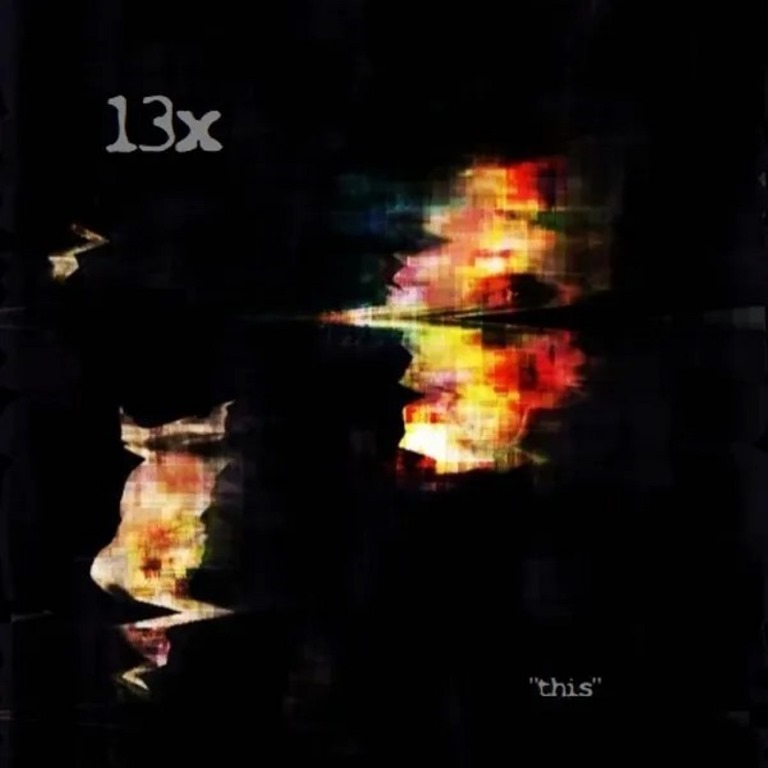
This. It’s a statement in itself. It’s simple, direct, to the point. It might indicate the image of a finger pointing down at the thing in question, like some kind of cartoon graphic or meme in the making – but there’s no need for it, or anything else. ‘This’ requires no qualification: it simply is. Self-contained. Precise. And this… well, this is 13x

It’s been a while since we last heard from ‘Multi instrumentalist transgirl’ 13x, who melted our brains good and proper in 2019 with antiscene. And it’s been a while because reasons, as the notes which accompany This outline: ‘Recorded over a 3 year period, this difficult release was made at the start of lockdown, and remained unfinished until now. Dealing with topics such as racism, transphobia, disingenuine people, the Government, abuse, loss and isolation, it goes from manic, crushing noize to quieter, more sombre tracks.’

Many, even most, of us, have endured some truly awful times these last three years, but it’s fair to say that some have endured more and worse shit than others. This is a document of some of the aforementioned shit of the notes, and the track titles encapsulate the mood and / or sentiment pretty neatly.

The first track, ‘TERFkilla’ is largely sparse and minimal in terms of both sound and arrangement, as a dissonant synth bleeps over a stuttering beat and low, droney bass. But shrill noise breaks over the top and the anger crackles within the cloud of abrasive noise. ‘fukt’ is, well, fukt, a sprawling mess of grinding synths and scratches, and some murky snippets of vocals with something of a hip-hop feel, and they sound sampled but appear to not be. They’re so cut and mangled, that when twisting and stammering against a backdrop of a shuffling drum loop and some low-end distortion it’s hard to know what the hell is going on – and it works.

There are plenty of samples woven into the fabric of This, and from an eclectic range of sources, ranging from Nirvana to a 60s interview with a catatonic schizophrenic, via a BLM interview after George Floyd was brutally murdered and Kate Winslett from Eternal Sunshine Of The Spotless Mind.

‘Fucking cunts’ is the looped refrain from the stomping aggrotech beast that is ‘Cistem Error vx.02’ – the most accessible and danceable track on the album, and simultaneously the most hard-hitting, while ‘brOkEnhEddz’ encapsulates the entirety of the album in just five minutes. Warped, woozy, it’s fractured and dark, whirring electronics and stuttering beats – but it builds and finds a groove, and from the chaos emerges something magnificent, an expansive, driving slab of dark synth pop.

I still find it unfathomable that we live in a world where vast swathes of society proclaim themselves to be anti-woke: if you’re anti-woke, you’re expressly pro-racist, pro-misogynist, pro-homophobic, pro-abuse, pro-anything that’s cunty. But then, we live in a world where vast swathes of people subscribe to Donald Trump’s view that ‘antifa’ is the enemy. But if you’re anti-antifa, you’re expressly pro-fa. There is something gravely wrong with this picture. ‘Truth Against Fascism’ and ‘The System Is Wrong (For George)’ are in effect a diptych of thematically-linked compositions. The former is a bleak mid-tempo trudge through mangled circuitry that reminds of the synapse-twisting impossibility of engaging in meaningful, rational discussion with right-wing shits who harp on about ‘stopping the boats’ and so on, while the latter has a gentler, more contemplative tone, laced with a wistful melancholy.

It’s this melancholy, expanded deeper into an aching sadness, which drapes itself all over both ‘Neeko’ and the album’s final track, the twelve-and-a-half-minute ‘Wintercutz’. I’m reminded vaguely of The Cure’s ‘Carnage Visors’ soundtrack from 1981, perhaps primarily because of the rolling drums of ‘Neeko’ and the expansive atmosphere which permeates both pieces. But there’s something special here: you can almost taste the nostalgia, and after the aggressive, angry start, there’s a sense that by the end of This, there is some sense of peace, acceptance, and a looking to the horizon in the hope of… something.

There’s often a significant disparity between the lived experience and its articulation in any medium: such is our wiring that even the most accomplished and attuned artists spend lifetimes striving to find the method that best suits them in their quest to convey what’s in their head to an audience who exists outside of their head. Sometimes, it’s not even about the audience: sometimes, the creation of art is a process by which to make sense of and deal with all of it. By purging the shit from the mind into something constructive and creative, however unappealing it may be to the masses, and there’s a strong sense that This is as much about purging and process as it is about communicating. But what This achieves is, in fact, both. This speaks without words, and says much, while at the same time, leaving substantial room for the listener to pour their own experience and frames of reference into the shifting sonic spaces. Over the course of ten pieces, This achieves a considerable amount: This has range. And This, while drawing on a host of elements from different places, sounds quite unlike anything else. This is This.

AA

a4153800615_10

Dret Skivor – DRET 009 – 3rd September, 2021

Christopher Nosnibor

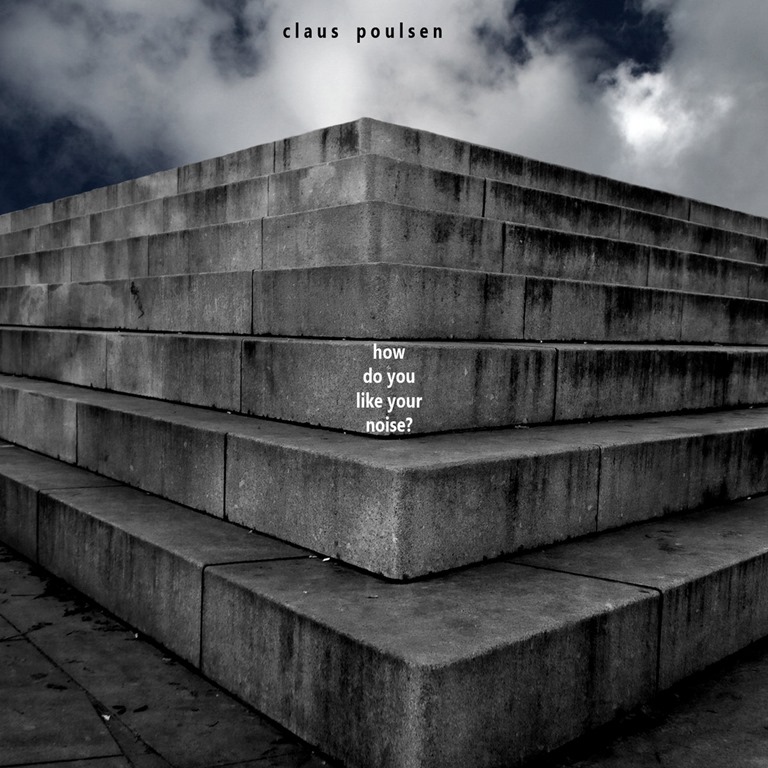
On the face of it, it’s a straightforward question. But chewing on it a little longer than is probably advisable, like a lump of gristle you can’t quite find an opportune moment to spit out discreetly at a family meal, it presents a range of different potential inflections, from the casual ‘how do you like your noise?’ delivered with the same intonation as ‘how do you like your steak / coffee / eggs?’ through to the rather more personal but interrogative ‘how do you like your noise?’

So while listening to the ten pieces on this short release, available digitally and as a C20 cassette, I gave this some consideration. It wasn’t necessary, but then, not a lot is, beyond the basic functions of eating, drinking, breathing, and sleeping. Then again, art has existed longer than civilisation, and perhaps it’s not so wild to think that giving an outlet to one’s thoughts and feelings which transcend verbalisation is also necessary in the most fundamental sense. Perhaps we need art to live. This act of consideration in itself made me realise that a lot of noise is something that’s possible to think alongside listening to. It isn’t that it’s necessarily undemanding: it’s often far from it. It’s just that noise has the capacity to free the mind in ways that more structured genres, and modes of music more geared towards beats and lyrics can often pull the brain waves into their structures instead of encouraging that certain mental drift. Of course, ‘noise’ can be subject to a host of interpretations, sometimes with an interchangeability with ‘sound’. Specifically, here, though, I’m talking about noise.

And ultimately, I can only conclude that I do like my noise harsh. For some reason, noise that makes me grit my teeth and chew the inside of my mouth while I’m listening is the noise that meets the needs of my inner workings. It excites me and sets me on edge. I suppose it’s because ultimately, when it comes to this shade of noise, all you can do is submit to it, and it’s a cathartic release to allow the sound to draw the stress from the mind and body.

How do you like your noise? is pitched as ‘a bunch of noises recorded live 2020 and gems from the archives’, and while it’s not always clear which represents which, there’s no shortage of nasty abrasion on offer here, and it’s clear that Pulsen ‘get’s noise – by which I mean, he has a handle on the effects of varying textures and frequencies, and how shifts between different ranges can trigger both physical and cerebral responses. The grating ‘metal massage’ and squalling electronic blitzkrieg of ‘urbanoise’ are exemplary of the kind of circuit-melting experimentation that many will find painful and torturous, and be grateful for their merciful brevity.

There’s range here: ‘dead man’ is a sparse and spacious guitar piece that borders on post rock, while ‘ringu’ does some glitchy warpy bendy note electronics tricks and teeters on the brink of some kind of electrojazz odyssey. There’s also some whimsical faffery, clattering and clanking around that’s more throwaway interlude than composition, with sub-minute snippets like ‘still haven’t found what i was looking for’.

And so, I changed my mind: I like my noise varied. On this release, Poulsen shows the full spectrum of his versatility, and the range of his noise. I like my noise, and I like this a lot.

AA

a3069066462_10

6th August 2021

James Wells

Some bands claim to be eclectic, but fail to substantiate those claims in the music itself serving up middling mediocrity, usually of a fairly anaemic indie / rock persuasion. Of course, no act with a diverse range of influences is likely to incorporate all of those influences into a single song (while rendering anything listenable), but, y’know, claiming Bowie and Led Zep and coming on like Oasis just doesn’t cut it.

Helve (not the Leeds post-metal act, but the London indie group) intimate that they draw on an eclectic combination of jazz, folk, electronic and experimental music, influenced by an array of genres and artists spanning Aphex Twin, Radiohead, Slint, Pat Metheny, Nick Drake, Portishead & Bill Evans.

All rolled together at the same time, that lot would sound absolutely fucking awful, but ‘Cabin Fever’ is nuanced in its hybridity, a kind of jazzy, blues influenced stroller at first that gets a bit proggy further down the line.

Singer/songwriter Leon has one of those voices that’s got range – not just technically good vocals, but vocals capable of conveying emotional range and depth too. A bit Thom Yorke, you might say, but also entirely his own, haunting and evocative, and here he spins all the different aspects of isolation – the introspection, the reflection, the self-loathing, the confusion, it all there, and we’ve all been there. Originally penned and demod in 2019 (as a much longer, more post-rock orientated tune with samples and other stuff in the mix) and rerecorded for this, their debut release, it feels particularly salient.

‘Cabin Fever’ isn’t an instant grab; instead of big hooks and an attention-grabbing chorus, it’s more of an atmosphere-orientated mood tune. Jazzy without being Jamiroquai, it’s the sound of late-night basement bars, and while it’s very much a product of our immediate times, clearly betrays roots that reach back further.

Slick on the image to select streaming service:

Helve artwork

11th September 2020

Music – and people and individuals – can be positive or negative forces. Often, in the arts, destruction isn’t only a necessary but truly essential part of the creative process, and this can also mean on a long-term cyclical basis also. But ultimately, the title of Arcade Fortress’ debut album makes for a solid recommendation: there has to be some equilibrium, and in destroying more than you create, the result is a negative, an artistic minus, a kind of void or black hole.

There are times I’ve been sceptical about this, though. I mean, creating is ultimately about legacy in some shape or form: what if your output is vast but dismal? What if your legacy is like Status Quo without ‘Matchstick Men’? What if your legacy is Oasis? What if your legacy is the Vengaboys?

Clearly, some people just don’t care, and just want to leave a mark, even if it’s just a skidmark. If the tile of their album is to taken as any kind of statement or manifesto, Arcade Fortress is a band with an eye on their legacy, and they set their stall out without shame, namely to draw together aspects of Biffy Clyro, Foo Fighters and Frightened Rabbit, to produce ‘a collection of eleven festival-ready rock songs’.

And so it’s all about objectives, about ambition. I don’t think these guys have any aspirations or illusions about becoming the next voice of a generation or anything so lofty or pretentious, and once you come around to understanding that, Create More Than You Destroy makes the most sense.

Up first, ‘Oxygen Thief’ is urgent, punchy, and has a poky, up-front production. The chorus is a punk-popper primed to curry favour with Kerrang Radio with a chanty ‘oi-oi-oi-oi!’ hook bridging from a catchy chorus. It’s a surefire moshpit fave in the making, if and when moshpits return – which surely they must, at least one day. We have to cling to some hopes. And hope and aspiration is strongly infused within the songs on here.

‘Crowded’ is a bit Foos-play-pub rock, and for some reason, my ears just hear Meatloaf fronting Biffy Clyro on ‘Erosion’. Elsewhere, ‘In It’ is more Reef / Red Hot Chilli Peppers than appeals to my ear. But then, the driving ‘Nothing to Say’ blends the quiet / loud dynamic of grunge and the raw four-chord stomp of punk to produce a song that’s simple but effective and hits the spot, and with a more melodic slant on gunge than either of the two most obvious touchstones, Nirvana and Dinosaur Jr, ‘Albi’ is a slow-burner that is well-executed.

It’s not hard to hear the appeal of Arcade Fortress here. It’s been a long time in the coming, and Create More Than You Destroy is not an album to be judged on whether it’s revolutionary, but on whether it’s an artistic success based on ambition and purpose: and since their ambition is to produce songs that, quite simply, rock, and in taking on an array of styles, Arcade Fortress show they’re adaptable and have an ear for the accessible: success surely awaits.

AA

Arcade Fortress Artwork