Posts Tagged ‘Progressive’

Pelagic Records – 5th May 2023

Christopher Nosnibor

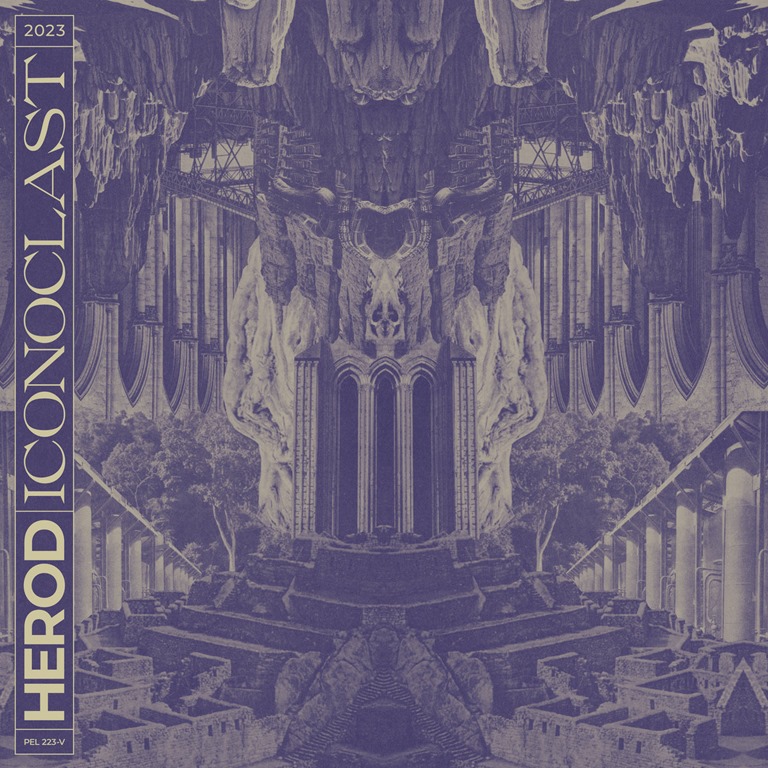
‘Biblical’ has become a byword for something tremendously large, epic, or of intense proportion, but also brutal and torturous and bloody. King Herod the Great is perhaps best known, not for his extensive construction projects, but for ordering the slaughter of the innocents: fearful of the threat of a ‘new king’, the story goes (although only according to Matthew) that he ordered the execution of all male children who are two years old and under in the vicinity of Bethlehem. The legend has inspired some pretty horrific depictions in art, from Duccio Di Buoninsegna to Reubens, and in context, Herod is an outstanding name for a metal band. And Herod live up to their name, too.

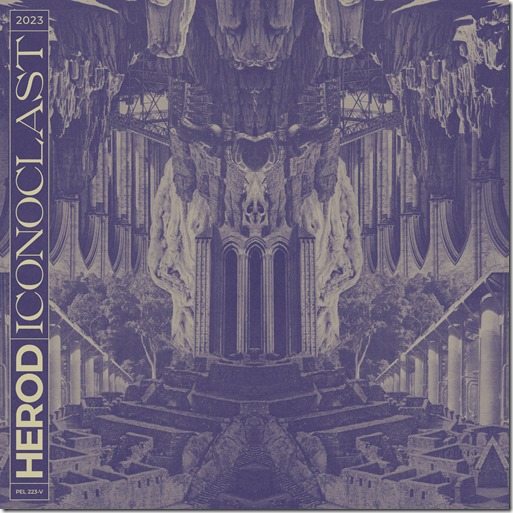
Iconoclast is a clear step on from Sombre Dessein, released in 2019. Back then, they were touting a ‘progressive sludge’ sound: in contrast, their lasts bio sees the band describe themselves as ‘atmospheric groove metal’.

“I’m obsessed with late 90’s Meshuggah, early Dillinger Escape Plan, and early Cult of Luna,” explains guitarist Pierre Carroz deftly about the influences behind the sound of his brainchild.

But for all the stylistic progression, thematically, they’re still squarely focused on the societal scourge of religion, as the title suggests, and it kicks off hard and heavy with ‘The Icon’, a barrelling, churning grind of dirty guitars which at the most unexpected moments switch tempo and gets tetchy and technical. Then, just shy of five minutes on, there are some clean, drawling vocals reminiscent of Alice in Chains – but disembodied, bent, it’s like Layne Staley is calling from the other side, and within just six minutes and a single track, Herod have slammed down a whole album’s worth of ideas.

The thematic thread is also apparent in the song titles, all of we which are ‘The…’ something. If imbues the album with a sense of being a book with the songs as chapters with corresponding titles which guide the way through a discursive exploration. Only, that discussion is a blast-out, a levelling by force.

There are eight tracks all, most well over the six-minute mark, and they blend sedated melodies with expansive guitar, raging, raw-throated vocals and thunderous percussion. There are slow, sedate passages, as on ‘The Girl with a Balloon’ which invite comparison to the earthy, low-tempo grit of Neurosis, and they really bring the weight when the riffs crash in. As much as the monolithic power chords dominate, the earth-shattering bass is absolutely essential to the sound.

‘The Ode to’ marks a significant shift in form, a resonantly vocal chorus scaling the heights and looking upwards to the heavens, a works of majesty that speaks to the ethereal and the eternal – but over the duration, the guitars harden and drive until the mid-point achieves a punishing plateau of distortion before returning to a mesmerising sway brimming with Eastern promise – before once again a landslide of guitars bring absolute devastation.

Herod get devastation, and get atmospheric, too. They get the merit of a melody, but tend to really delay gratification in favour of punishment before reward. Mostly, though, they get the power of punishment, and they mete out plenty of that over the course of fifty minutes. It’s a big fifty minutes, and it’s as heavy as fuck.

The nine-minute finale is heavily immersed in progressive sounds and styling, but when the crushing riffs blast in, all is well.

For all of the moments of levity and mindfulness, Iconoclast is everything fans – myself included – would want from Herod – snarling, churning riffs and roaring vocals, which combine to absolutely devastating effect. They’ve certainly evolved, but they’ve not lost sight of their sound, and have simply expanded it.

The resultant Iconoclast is an absolute monster.

AA
a1021108326_10

24th March 2023

James Wells

One thing the Internet has definitely changed is the single format. Historically, songs were edited for radio play, and to fit on a 45rpm 7” single: for both, three to four minutes was optimal. Now, podcasts and lack of format-based restrictions mean that, at least outside of the mainstream, anything goes and has pretty much the same chance of getting aired at least by someone who digs it.

And so, with ‘I Am Weak’, Solcura may well draw on some retro references – the obvious ones being Soundgarden and Tool, as they mine a hefty grunge / proto-nu-metal sound with some thick, heavyweight riffing – but clocking in at an epic six minutes, it’s very much a contemporary single.

There’s certainly nothing weak about it: the guitars are strong, as are the vocal melodies, and it’s one of those songs that starts gently – simply voice and bass guitar – and then the guitar starts up and the riff slams in and it really gets going, with everything meshing together, interweaving to create a richly-textured sonic cloth where grunge meets prog-metal with a delivery that’s hard to fault. For all its tunefulness, it’s a song brimming with anguish in the grunge tradition, but there’s something eternally affecting about that kind of introspective emotional rawness tinged with self-loathing.

They’ve already played Bloodstock and supported Pulled Apart by Horses, and with a new EP in the offing, 2023 is looking promising for these guys.

Solcura image 3

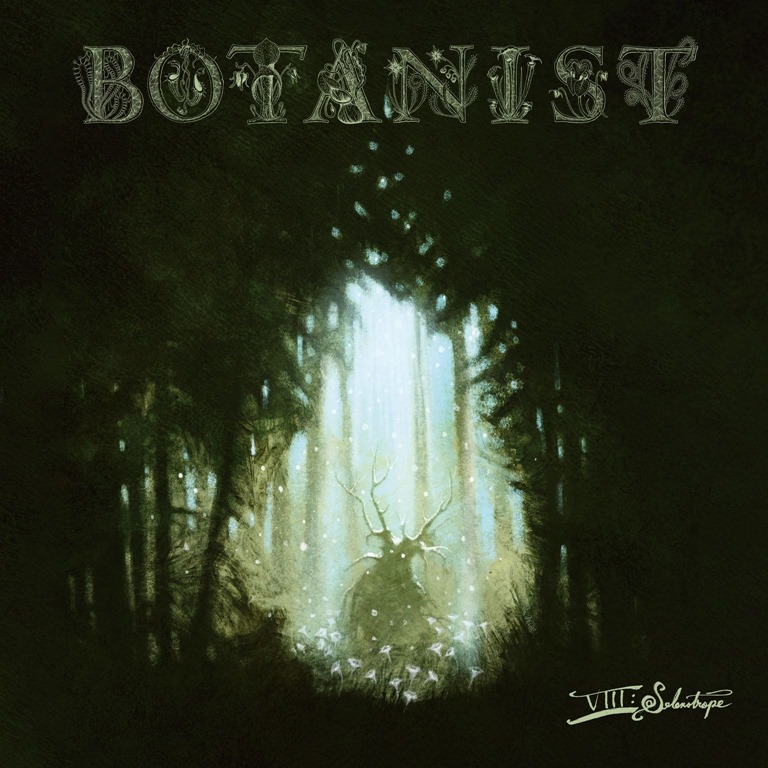
Plant-based metal avant-gardists BOTANIST have seeded the new track ‘Epidendrum Nocturnum’, which is named after a ‘nocturnal’ species of the orchid family (common to South Florida but also growing in the Caribbean and all the way down to Brasil), as the second single taken from their forthcoming album VIII: Selenotrope. The album is planted for blooming on May 19, 2023.

Listen here:

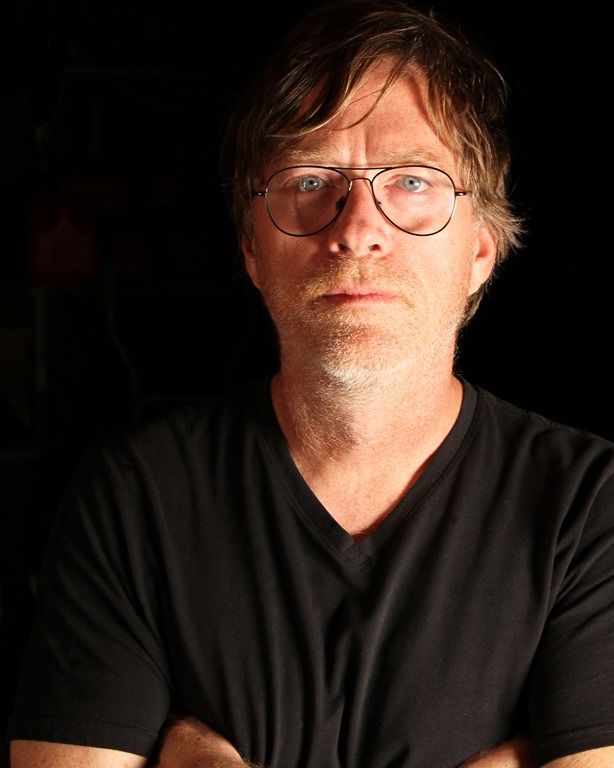
BOTANIST comment: “For VIII: Selenotrope, I wanted to limit myself to only dulcimers, drums, bass and voice”, mastermind Otrebor explains. “For the voice, I decided to have an album without any screams or harsh vocals whatsoever, and instead to rely on the whispers that speak to the listener as messages in a dreamlike state. As the album progresses, melodic choirs are increasingly introduced. These choirs, which have progressed in form and presence since I started Botanist, see their biggest role ever on VIII: Selenotrope. The song ‘Epidendrum Nocturnum’ is one of the album’s darker pieces. Its churning main section gives way to a cathartic landscape in which whispered elements underpin melodic choral paeans to flora that bloom in moonlight.”

tOnTnPbM

Botanist by Tony Thomas

25th November 2022

James Wells

Time marches on, and here we are almost midway through December still catching up with November releases, this time with Polish ‘dark rock’ duo Shrine Of Reflection.

There’s a great temptation to split hairs and that argue that surely the dark rock tag is goths pretending not to be goth, but that would be unjust, as this six-and-a-half-minute sonic adventure is more post-rock than anything, but there are also hints of prog and bleak neofolk vibes emanating from the murky tones, where a sparse, spindly lead line drifts over a slow, deliberate thunder-like beat that plods away like a heavy heart, before it blossoms into colour at the midpoint into an expansive, cinematic sweep.

The blurbage summarises that “‘Child Of The World’ is a song inspired by the movie, Interstellar. It’s about the misery of a human being who is trapped on planet Earth and who is unable to discover the truth of the universe’s nature despite the fact of being its child. All this person can do is just simply stare at the sky and dream.”

That sense of entrapment is relatable, but more than this, the vocals become increasingly cracked and desperate as the song progresses, before the slow-building crescendo takes over, finally tapering off into muffled samples that leave you looking into the emptiness, and wondering.

a2629310432_10

Allen Epley (Shiner, The Life and Times) has released ‘Evangeline’ the next single off his upcoming debut solo album ‘Everything,’ out 6th January 2023  on Spartan Records.

Listen here:

Epley says, “’Evangeline’ is a reference to someone close to me who tends to bottle up emotions until another person says something quite innocently, and it triggers an often hateful and explosive response. So the smallest innuendo or slight from a passerby could set off cannons and flamethrowers from this person. The offense doesn’t merit the response many times, inflicting even more damage.

I wanted it to be a short song and get to the point pretty quick. Don’t bore us, get to the chorus. Agreed. Vocally, I feel like the chorus part in particular reflects a kind of Elliott Smith vibe. Mike Burns adds the beautiful lap steel line that perfectly echoes the hurt in the lyric. Drummer Chris Prescott (from Pinback) sets the song in a restrained way then lets it open up on the solo section.”

AA

Allen_1_edit

21st October 2022

Christopher Nosnibor

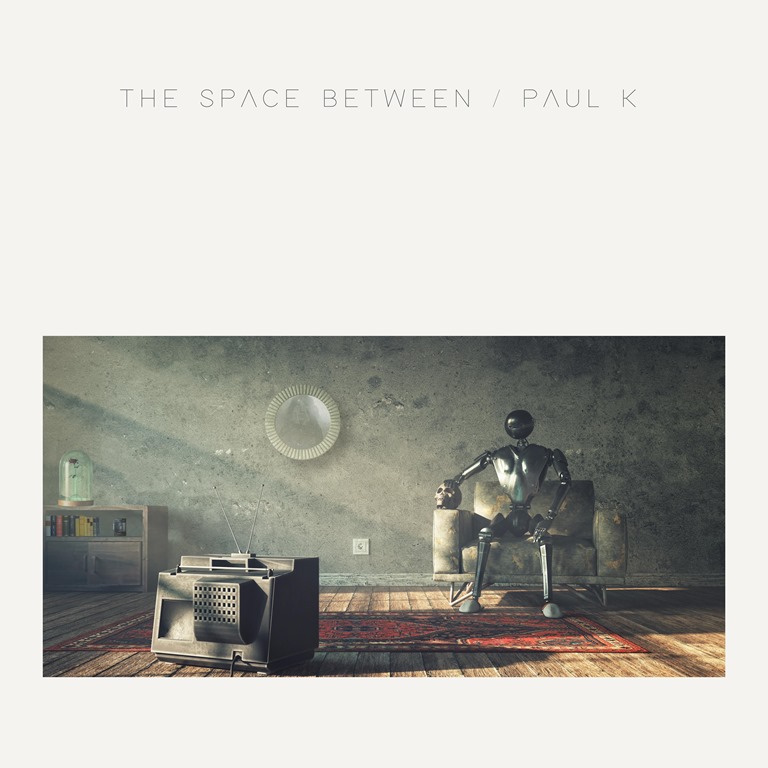
It’s been almost three years since Paul K delivered Reconstructed Memories. Listening to The Space Between, it becomes apparent why. Pandemic or nay, this is an ambitious and complex album which sees Paul return to the territory explored on 2018’s The Fermi Paradox and go the whole hog on devising and scoring a vast conceptual progressive work that’s heavily invested in narrative as it traces what he outlines as being a story ‘about an astronaut who has volunteered for a one way journey through space to pass through the Heliopause and is set maybe 30/50 years in the future.’

Space is both the backdrop and the story, in many ways, and the fascination it holds is something that transcends words or even rational explanation. Perhaps the fact that the sheer enormity and infiniteness of space is beyond our comprehension is a major factor in our space obsession. And however far and deep we probe, I suspect we will never truly be capable of assimilating the universe, especially as we, as a species, struggle to comprehend that we do not exist at its centre.

In classic sci-fi form and echoing 2001: A Space Odyssey, the concept behind the story is that the astronaut’s sole companion is an AI robot that becomes sentient during the journey, before the astronaut eventually dies and the robot continues the journey alone.

As Paul explains, ‘Each track plots the journey from liftoff looking back at the Earth (True Splendour) to the debilitating effect of years alone in space (Pareidolia) and is also related to the love and loss the astronaut has felt in his life’.

Understatement is the album’s defining feature. While it is unquestionably ambitious and incorporates cinematic arrangements, and notably choral-sounding vocals, the instrumentation is subtle and layered.

‘True Splendour’ makes for a gentle introduction and very much sets the tone. The Space Between keeps the drama and pomp to a minimum, and instead, the mood is contemplative, almost subdued, as strolling basslines wander sedately through soft washes of sound. Percussion is minimal, and low in the mix.

‘Sleep Within’ is perhaps the album’s most conventional ‘rock’ composition, but there’s a subdued, soporific overlay to its mid-pace melodic drift, although the reflective, wistful ‘Spektr’ has a certain solidity to it. In contrast, ‘Artifact’, the point at which the AI assumes autonomy, is almost vaporous, a soft piano reverberating among wispy sonic contrails.

The Space Between is an album that functions on numerous levels simultaneously, although they’re not all necessarily obvious. But it’s not imperative to follow the narrative to appreciate the detail; the album works in a way that not only creates space, but conveys space, the eternal distance, the vast emptiness… we are all lost and floating. But some are more lost than others. Welcome to The Space Between.

292588895_411372567443242_3679202510317740520_n

James Wells

Fucking hell, we really are running out of names, aren’t we? To the point where even otherwise memorable bands are forgettable because of their ultra-generic name. And some acts sink without a trace because they’re simply impossible to even find through an Internet search. Actor is an obvious example for me, but then we’ve recently had Loungewear grace these virtual pages, and now bloody Tracksuit. How would The The or The Police have faired in the Internet age, I wonder? I mean, stepping aside from the fact their music is tedious and people would probably skip their songs faster than ever now. But it seems like bands aren’t even trying now: Sports Team? Two very different acts operating as Working Men’s Club? Are they trying to bury themselves before their careers have even begun, or do they simply have no imagination and no concept of how The Internet works? Or have we simply reached the apogee of postmodernism, the point at which truly everything has been done, there is no ‘new’, only regurgitations and rehashing, and culture has reached its inevitable dead-end?

It’s a shame Tracksuit have doubly done themselves a disservice with a moniker that’s not only super-generic but also a bit shite, especially as it really doesn’t reflect what they’re about at all. It’s a shame because ‘Ghost of Rome’ is decent. It’s not some lame rappy shite or laid-back bedroomy r ‘n’ b: it’s fundamentally a stripped-back psychedelic rock tune with a keen sense off dynamic and a palpable energy, meaning there’s a lot to like as they dig in with a lively and buoyant bass groove that’s got action and detail. It’s got a heavy 70s vibe about it and it kicks ass – but probably doesn’t need anymore cowbell, because everything is just right.

Click the image to listen:

artworks-Mr3Pcx2wRdaWEIqW-kQ1W9Q-t500x500

The immense success of Psychonaut’s Pelagic debut album Unfold The God Man, which has been repressed 3 times throughout the pandemic and sold close to 3.000 vinyl copies to date, has proven that Psychonaut are a force to be reckoned with.

The three gentlemen from Mechelen, Belgium now return with a ferocious and muchly anticipated concept album that proclaims the formation of a new world through the acceptance of a new human identity. “We’ve always been interested in religion, spirituality and philosophy,” explains vocalist/guitarist Stefan de Graef about the music of PSYCHONAUT. “We’ve meditated together, had long discussions about the nature of life, and we share a common vision.”

Now, with the release of their sophomore album Violate Consensus Reality on 28th October (Pelagic Records), the Belgian three-piece take you on a visceral trip into our collective human consciousness. A journey marked by explosive riffs, soaring vocals and intricate yet catchy compositions.

An impressive album which cements PSYCHONAUT’s standing as aspirants to the throne of the contemporary European progressive / post metal community.

“We distance ourselves from a system that is based on the idea that humanity is fundamentally bad and needs protection from itself in the form of a hierarchy,” continues De Graef about PSYCHONAUT’s latest album. “By no longer subscribing to the notion that we are all separate beings in a separate world that is dead and pointless, we embrace the vision of a new civilisation that is rooted in the idea that we are part of a living, sacred universe.” Likening our present state of separation to “an island on oceans grown, designed to bear unpredictable wrath,” the band accompanies their denunciation by punishing riffs and heavily syncopated rhythms, grabbing you by your guts and taking you on a turbulent journey.

Violate Consensus Reality engages the senses in a way that is quite rare for concept albums, it is raw and brutal, unlike the lofty concept albums of yore with their endlessly repeating motifs and needlessly complex song structures. It stands in a long tradition of activism in music, but it also deconstructs this tradition by taking its loud and admonishing tone and providing it with a thoughtful base rooted in philosophy and spirituality.

With music deeply rooted in communal meditation sessions, psychedelic metal outfit Psychonaut are a unique entity in the Belgian metal scene and beyond. The mantric title track of their upcoming second album, which they have now shared, sees the trio once more aligned in body and mind as they appeal to the listener with a 9-minute atmospheric slow burner. Their stature is once more affirmed by Amenra’s Colin H. van Eeckhout, who ushers the track to an unforgettable climax.

Watch the video now:

AA

Psychonaut

Christopher Nosnibor

Sometime during lockdown – which one, I can’t remember exactly, but likely the first, where here in England what initially looked like being a couple of weeks, ended up being more like a lifetime. After the lockdown announced on 23 March 2020 was extended on 16 April for ‘at least three weeks’ and in fact running into June, the fear surrounding the lifting of restrictions saw references to Stockholm Syndrome circulating with increasing frequency in the media.

Described as ‘a psychological response’ which occurs when hostages or abuse victims bond with their captors or abusers, and the victim may come to sympathize with their captors, and

may even begin to feel as if they share common goals and causes.

The name originates from a failed bank robbery staged in Stockholm in 1973, where Jan-Erik Olsson, and his charismatic accomplice Clark Olofsson held four employees as hostages, remaining captive for six days in one of the bank’s vaults, and when the hostages were released, none of them would testify against either captor in court; instead, they began raising money for their defence.

While the syndrome is disputed, the concept is something of a source of fascination. Personally, I had never been one of those who found themselves ‘loving lockdown life’, but found myself apprehensive about the easing of lockdown: what would be the ‘right’ way to behave in public, how would things ‘work’? I didn’t need to worry about pub and gig etiquette for a while, but was more fearful of other people than I was of Covid – because people are unpredictable, and after being cooped up for so long, who knows how many might have lost it?

Swedish Netflix mini-series Clark is the story of Clark Olofsson, and while it’s won awards, I found its stylised and flippant comedy-drama approach to be pretty ‘meh’. There’s vague amusement to be had, but ultimately – and for obvious reasons – presents Olofsson as ‘cool’, a cheeky bad boy out for But then, just because it’s not what I would have wanted it to be doesn’t mean it’s no good, it’s just not my bag.

While there are some bold intercuts of ‘proper’ songs featured, it’s not a series where you find yourself really paying attention to the soundtrack for the majority of the time. Listening to the soundtrack independent of the series, it’s a mystery as to why this is.

Of course, much of the interest in the soundtrack will be the fact that it was scored by Mikael Åkerfeldt of progressive metal legends Opeth – and as much as this score is overtly cinematic, it draws equally on progressive rock, funk, laid-back jazz, and 70s cop shows. The last nine of the thirty-four tracks feature vocals, and this portion of the album feels separate again, and may have worked as a separate release or bonus CD or something, as it’s quite a leap. Hell, ‘Måndag I Stockholm’ goes full Sabbath. Incongruous is an understatement and it’s hard to know what to make of it all. Then again… why not?

AA

Varied, engaging and evocative, it’s imaginative and listenable and entertaining – and a lot less frustrating than the series itself.

 MikaelAkerfeld_Clark_LP_Gatefold.indd