Posts Tagged ‘Post-Punk’

No Sleep Records – 16th September 2016

Christopher Nosnibor

I have to admit, I’d been wondering what was happening with Battle lines. Following the single releases ‘Colonies’ and ‘Hunting’ (split with Post War Glamour Girls), and a storming set at the Brudenell to launch it, there was talk of an album when I chatted with the band afterwards, and then… Well, they seemed to drop off the radar. Carly had mentioned work and all of the things that get in the way of doing things, although it was some time ago, and I’d had a few pints during the evening and what with work and an endless stream of new releases demanding my attention… well, I sort of forgot about things. I’m sorry for the fact that this makes me the same as pretty much everyone else: I blame the ‘net age, the insane pace of our post-postmodern culture, where memories are overlaid and replaced in an instant, buried in the endless blizzard of shiny new things, images, sounds, more bad news and another media frenzy over the latest celebrity scandal. And so, a guilty late review of an album by a band I’m a big fan of.

While I’m looking around at intangibles to blame, I’m also aware that I’m feeding my own anxieties and understanding more the pressure on any artist, in any medium, to devote as much time to promotion as to the production of actual art. It’s all about the momentum! Paradoxically, to weather the storm that is the blizzard of social media, one is required to contribute to it further, and constantly. If you’re out of the public eye, you’re forgotten in a flash. It’s an absurd situation, of course: artists need to retreat in order to produce. In an over-loud world, silence is good, and importantly, silence from a band means they’re likely holed up working on material.

Battle Lines, individually and collectively, have been getting on with their lives, and thankfully, have been doing the things that are important, instead of fretting over their public profile. The press release apologises for their apparent absence, but is matter-of-fact about things:

It’s not a secret that we’ve been very quiet over the last year… There’s no big story, we love each other, we’re as good friends as we’ve ever been. Life has moved on for all of us, and we now reside in New York, London, Brighton and Leeds, geography prevents us from touring, but it can’t prevent us from releasing new music.

And so, while I was busy being distracted, Battle Lines slipped out their debut album, a record I’d waited more years than I care to count for: having first discovered them in their previous guise as Alvin Purple, I’d been captivated by the quality and richness of their dark, post-punk influenced material and the incredibly assured live performances they gave so consistently.

The switch to Battle Lines marked a refocusing: the energy which effused from their earlier songs was directed more inward, and the material displayed an almost ascetic discipline in its execution on those first single releases and in the live shows, more clinical, more icily intense than their previous incarnation.

This is all captured perfectly on Primal. The sparse title track and album opener hints equally at The XX and Closer era Joy Division. But then, glacial electropop undercurrents and thunderous tribal drumming also define the sound. And the sound… the fact they’ve taken their time over this means that the sound is honed to perfection. There isn’t a note out of place. That isn’t to say it’s overproduced within an inch of its sterile life or stripped of its soul: they’ve pulled everything to tight as to render it almost claustrophobically dense, a work which offers an insight into a near-obsessive control over the output. In context, it makes sense:

There’s an honesty about the notes which accompany the release which is at once uncomfortable and refreshing:

Lyrically this was an incredibly dark place to go to, I had come out of a relationship that became mentally abusive; looking back I wondered who I had become in excusing that kind of behaviour. This is what drove me in the album, those darkest moments became a journey of self discovery and a realisation of who I really am and what I deserved.

When life is out of control, what can you do but obsess about the things you can control – your art? But from darkness comes light, and creativity can be so cathartic. As dark as Primal is, it contains some truly beautiful and magnificently uplifting musical moments. Carly’s vocals at times soar so high as to disappear from the register of the average human ear, but ‘Sea of Fear’ is a swelling anthem of a track, and the sunburst shoegaze of ‘Smother’ ripples with the joy of drinking in clear air and rediscovering the potentialities of life.

‘Outsider’ is built around an insistent motoric beat and exploits the quiet / loud dynamic, bursting into explosive shoegaze wall-of-FX guitars which call to mind Ride in their early years, but as is always the case with Battle Lines, Carly’s ultra-high-frequency vocals means they don’t really sound like any of their forebears, or their contemporaries.

Of their single releases, only ‘Hunting’ has made it to the album. This is a bold and admirable choice, and one which makes a statement: a statement which says that \Primal is an album proper, a document, and not a ‘Hunting’ is, of course, a belting wall of noise driven by a twitchy disco beat and shuddering synth with metallic screeds of guitar peeling off a Donna Summer groove, over which Carly comes on like Siouxsie Sioux, breathy and intense.

The album concludes with ‘Riot’, a richly-layered and uplifting song which blossoms in a screed of guitar noise over an insistent rhythm section, the drums and bass tight and locked into a sedate groove.

Primal displays remarkable poise, and as much as its architecture is concerned with the turbulence which inspired its lyrics and overall tone, its coherence and control are remarkable. But rather than feeling soulless in its clinical execution, there’s a clear sense that Primal is about holding it together and showing just what can be achieved through sheer will and determination and the exertion of mind over matter. Despite the obstacles, personal and geographical, Battle Lines have (meticulously) produced a powerful album that was more than worth the wait.
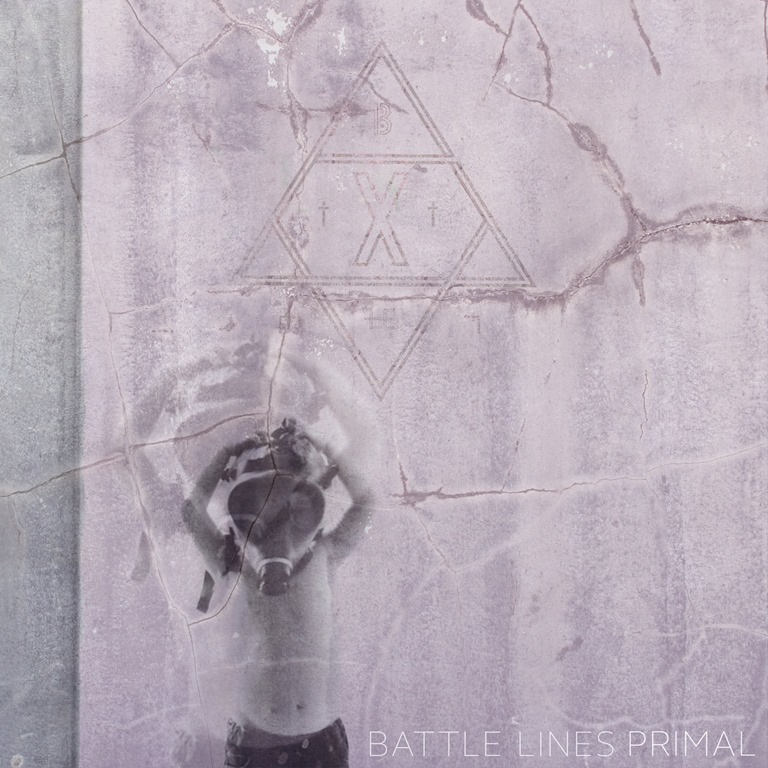
 

Battle Lines - Primal

6th December 2016

Christopher Nosnibor

Some reviews are seemingly fated. This is one such review: I was slow to get started, and then, having spent several evenings working on a detailed critical analysis, exploring the album’s wild eclectism on a more or less track-by-track basis in a discourse of some eight hundred words, my laptop crashed and most of the work was lost, with the only available version being a collection of notes which were days old. How it happened, when my word processor is set to autosave every five minutes, I have no idea. Thanks Microsoft.

Still, this is an Ashley Reaks album, and a man who can produce three albums in a year – and continue to produce art, and to gig relentlessly, under difficult personal circumstances – deserves the same kind of unbowing attitude from a reviewer.

Because it’s an Ashley Reaks album, anything can happen. And it will. And it does. Following on from Reaks’ ‘punk album’ This is Planet Grot (and a remarkable credible and impressive punk album at that), Growth Spurts, on the one hand, could be considered a return to more familiar territories. But then, on the other, it could justifiably be tagged his ‘jazz album’. The familiar elements of reggae and post-punk inspired dub are present and correct, but this collaboration-based collection of tunes also brings in some wild jazz stylings. The collaborative element is also key here, not only to appreciating Growth Spurts, but to understanding Reaks as an artist, at least as much as it’s possible to grasp such an idiosyncratic and singular individual.

Like his collage artwork, his music is a mish-mash of elements drawn from here, there and everywhere, often bolted together at weird angles and demonstrating incompatible proportions and lines of perspective. He has very much his own slant on things, and his approach is also very much his own: Reaks is one of the few artists who consistently produces work which has the capacity to surprise, to confound, and, occasionally, confuse – which is a healthy response to something which is so staunchly unconventional. You get the impression that Reaks’ raison d’être is to produce art which surprises and confounds himself, as much as any notional audience. His mindset appears to be that if it’s not fresh, unexpected, and if it’s not sincere, then it’s worthless. Collaboration, when done right, yields an output which is greater than the sum of its parts, and draws out facets of each contributor which may not otherwise be known.

As such, Growth Spurts is a world away from his previous collaborative effort, Cultural Thrift (2015) with poet Joe Hakim, on which Reaks stepped toward the rear portion of the stage to provide a background accompaniment (which in itself was a departure given Reaks’ propensity for dizzying soundclashes). Five of the ten pieces – it would be wrong to refer to this as a collection of songs, given that they feature spoken word and poetry – feature writers and poets from a broad and diverse range of backgrounds. They’re disparate characters, as varied as Reaks’ own sources of input, hand-picked to contribute to the album.

The result is dizzying, a rollercoaster journey through a vast swathe of cultural terrain. Each of the collaborative pieces is distinct and different, and finds Reaks attentive to the style of the different speakers. And as the strange, strangles vocal cacophony which introduces the album’s first track, the oddly ominous prog-dub drum‘n’bass neoclassical jazz mixup that is ‘Divorced from the Body’ shows, he’s digging deep to locate new and unexpected hybrids. And yet, amidst the chaos, he still whips up some killer hooks – something so many experimental / genre-smashing artists completely overlook in their quest to innovate, to dazzle with their imagination and technical prowess.

‘The Gentle Art of Ignoring’ with Sylvie Hill is the most outright jazz track on the album, and her sassy vocal delivery and confident Canadian accent brings another sharp dimension to an album which displays almost infinite dimensions, but there’s just so much to take in. But if you need a pointer for where to start, start with the basslines. The crashing jazz-influenced drum ‘n’ bass drumming, the wild brass, the myriad perspectives of the different vocalists all slot into place over those low-down basslines that stroll and groove and leap and boogie. Get on down.


Ashley Reaks - Growth Spurts

1st December 2016

Christopher Nosnibor

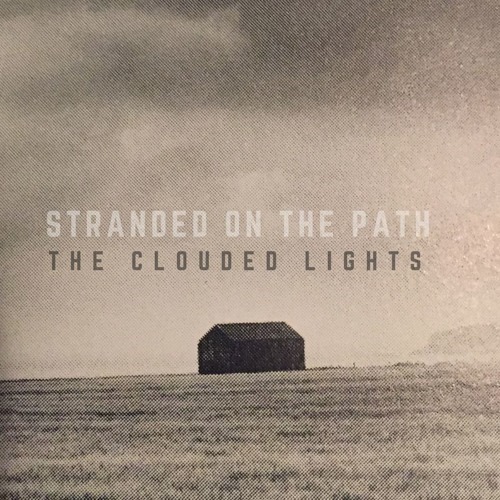
With Stranded on the Path, The Clouded Lights showcase a sound that’s very much rooted in the distinctly post-millennium revisioning of the post-punk sound, in the vein of early Interpol, Editors, et al, as well as contemporaries both regional (The Exhibition, for example) and international (New York’s New Politicians come to mind). So, there’s a real precedent, and a sense that The Clouded Lights are part of an expansive zeitgeist. Increasingly, it feels like that zeitgeist exists under the shadow of the apocalypse: the fear of the mushroom which loomed large over the 1980s is in many ways reborn in the 2010s (which still don’t sound like a real decade, but what can you do?) It’s an observation I’ve made previously, but the point is worth restating: the parallels between the early 1980s and the present are astounding – and depressing – and it’s small wonder that so much contemporary music echoes the sound of 30-odd years ago.

One of the key elements in the bands of the original new wave – Joy Division in particular, but listen to any of the darker, gothier bands, like Danse Society, Skeletal Family and you’ll find the same stylistic features – is strong, dominant drumming. The Clouded Lights have nailed the drumming, with a percussion style that’s urgent, tense, and, importantly, tight. The EP’s first track, ‘Borrowed Hearts’, is arguably the strongest and an obvious choice of lead, which balances bounce and bleakness, and is propelled by a busy, bluster-filled bassline that brings energy.

I’m a sucker for songs driven by rolling tom-led drumming, and the slower ‘Barter With the World’ ticks the box nicely. Chiming guitars and a vocal melody which casts melancholy shades define the song, and across the EP’s four tracks, there are some strong harmonies.

While shaded with heavy hints of darkness and defined by spindly, fractal guitars, Stranded on the Path is by no means a wholly bleak, pessimistic release, and the strong choruses and a leanings toward more uptempo material means it’s a release that’s inspiring, rather than a soundtrack to hang yourself to. It’s also a strong set, which suggests that, with live dates booked for the new year, The Clouded Lights could well be ones to watch in 2017.


The Clouded Lights - Stranded on the Path

Christopher Nosnibor

Six years ago, I saw Eagulls, alongside Cold Ones, supporting Cerebral Ballzy at A Nation of Shopkeepers in Leeds. Cold Ones were pretty awful but Eagulls were, to be blunt, utterly fucking gash, and I vowed never to see of hear them again if I could possibly help it. It’s a vow I’ve kept until now: there was no way I was going to pass up on Protomartyr playing practically on my doorstep as part of a co-headlining tour.

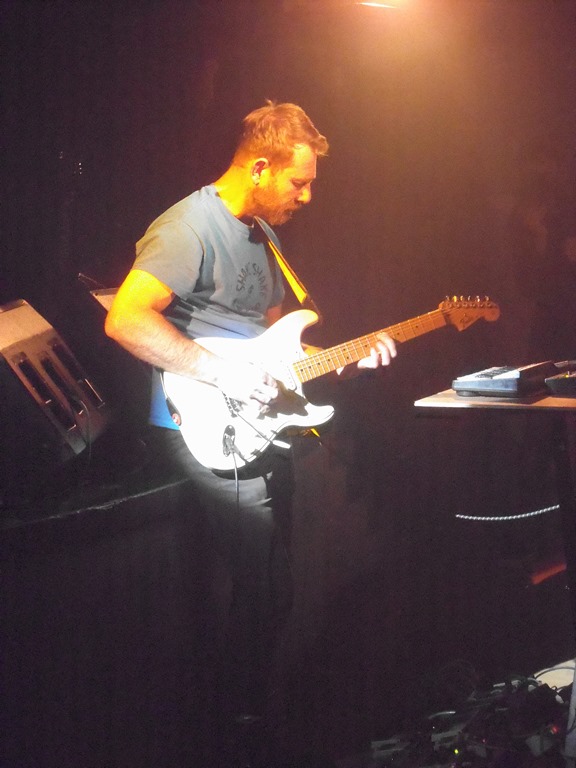
We’d been advised to get don early doors (7:30) as York (and now Leeds) perennials Fawn Spots were scheduled to play at 7:45 ahead of a 10:30 finish. In the event, I arrived at 7:35 to find a guy with a guitar, miniature keyboard and massive rack of pedals set up in front of the stage in the process of building a layered, loop-based sound that straddled post-rock, post-punk and shoegaze, with some tendencies toward whappy time signatures and general fiddling. It’s really rather good, and on the strength of this brief outing, 99 Watts from Darlington warrants further exploration.

DSCF6136

99 Watts

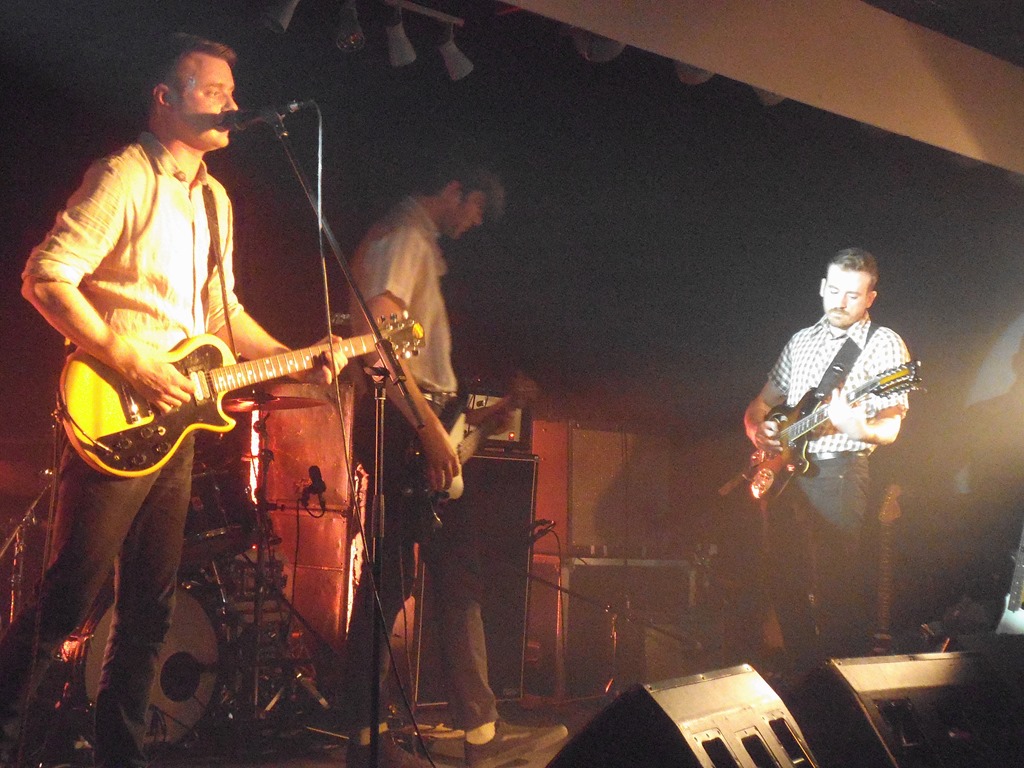
Fawn Spots are a band I’ve spent a long time exploring, and they’ve evolved so much over the course of their career. Having stated out as a snotty two-piece reliant more on attitude than ability, their debut album, released on Fire Records was testament to their blossoming into a thrashy post-punk powerhouse. Now free of the label and into their next phase, tonight’s set showcases material from in-progress album number two. It’s a new sound again, amalgamating elements of mid-80s Cure, Echo and the Bunnymen and Julian Cope. Early in the set, Oliver’s guitar playing sounds like Marty McFly at the prom, but fortunately, it’s just one broken and one out of turn string rather than a disappearing hand to blame. A switch of guitar later, he’s back to form, and while the songs are yet to bed in fully, it’s clear the next album will be a blinder.

DSCF6145

Fawn Spots

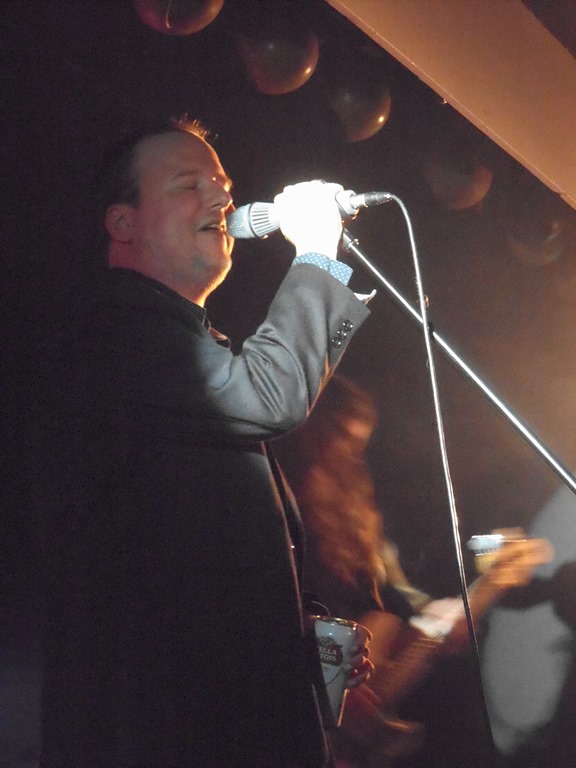
All of Protomartyr’s albums to date have been belters, and the reception they get shows just what an ardent fan base they’ve built with them. The kids – and they are kids – down the front are flopping and flapping uncoordinately, fringes drooping. And they know every single bloody word. It must be gratifying to see, though you’d never gauge it from the faces on the stage: three IT guys in jeans and t-shirts, fronted by their frustrated manager, a guy in his mid-to-late 30s and still in the beaten suit he wore to the office, churn out the tunes with passive expressions. If Mark E. Smith had been into US blues rock and discordant post-punk, The Fall would have sounded like this. While the deceptively detailed guitar parts are big on texture, the powerhouse drumming really drives the energy levels up, in contrast with Joe Casey’s downtrodden baritone grumblings. Repetition and dissonance are integral aspects of their angular sound, and it’s the fact they’re overtly uncool which makes them ultimately and ineffably cool.

DSCF6155

Protomartyr

Eagulls are bloody loud and crank out a dense wall of sound from behind a thick smog, silhouetted by stark lighting. Gone is the shambolic amateurism and apparent lack of identity of six years ago: the bands on stage are slick, confident, and it’s a straight fact that they sound fucking incredible. Immediately, The Cure and A Flock of (S)eagulls come to mind my way of reference points, and everything in their performance is immaculate. I feel like I’m experiencing first hand, at last, the spirit of gigging in 1985 (being born in 1975, I was simply too late to witness bands like The Cure and The Sisters of Mercy in their heyday.

DSCF6201

Eagulls

So why am I not absolutely feeling this, one hundred per cent, to my very marrow? Because it’s not 1985, it’s 2016. While everything about Eagulls is exactly right, it’s only a replica, a reproduction, out of time. It’s convincing, but it’s a carefully-studied fake. I’m not actually questioning their sincerity or integrity here, but their authenticity. Three songs in, and the rush of seeing such an accomplished performance has full hold: by seven songs, it’s becoming apparent that for all the style – and Eagulls have all the style when it comes to presentation – the content isn’t quite on the same level. It’s the same issue as I have with Department M: it’s meticulously observed, perfectly executed but lacking in soul and conviction.

Still, they do put on a show, and are deservedly well-received. But Protomartyr were always going to be the band of the night, and without doubt, they were.

Alrealon Musique – ALRN072 – 31st October 2016

Christopher Nosnibor

New York underground act The Strange Walls aren’t conformists or readily categorised: previous releases have been called shoegaze, darkwave, post punk, art punk, experimental, outsider. I’m not even sure what ‘outsider’ is supposed to sound like, but they’re big into their pseudonyms, thus cultivating an air of mystery around the band and their music. Emerging from an ever shifting lineup, core trio of the class of 2016, consisting of Jon V. Worthley, Dan Drogenous and Regna Yates, assisted by Jimmy Ayatollah and John Spreaders have whipped up something appropriately esoteric and wide-ranging for this release.

More significantly, …Won’t Last straddles many genres and yet subscribes wholly to none. A slow, ominous echoey bassline rent with shrieking, ghostly incidentals provide the musical backing to Regina’s vocal, which sings a vaguely familiar melody. But then it’s straight into a squalling lo-fi post-punk racket reminiscent of The Jesus and Mary Chain and A Place to Bury Strangers crossed with The Pop Group. It’s hard on the ears, and the contrast is almost schizophrenic. When an album’s tracks are as diverse as this, spanning psychedelia and folk and sometimes incorporating elements of at least two or three within a single song, it’s inevitable that some tracks will appeal more than others, and this is something which is wholly subjective. Yet the fact that there are some clear standout tracks is an objective observation, and the sequencing of the tracks accentuates this fact. The bleak electro sound of ‘In Time’ combines steely synths with a dash of dark pop sensibility which calls to mind early 80s Cure, and with its primitive, distant drum sound and reverb-soaked synth oscillations, ‘White’ lands somewhere between Cocteau Twins and Silver Apples, and these tracks inevitably sound stronger against the softer, less structured folky strummers. ‘Snow Day’ leans heavily on early New Order, while ‘Yawdons’ fulfils the criteria for obligatory droning experimental piece.

The ramshackle production equally works both for and against the album as a whole. Being better suited to some tracks than others, at times adding space and partially obscured sonic depths, at other simply sounding messy. The result, then, is an album that’s a bit hit and miss. Not bad, and in places brilliant, but a few tracks that will likely become skippers after a while.


The Strange Walls

Damnably – 26th August 2016

Christopher Nosnibor

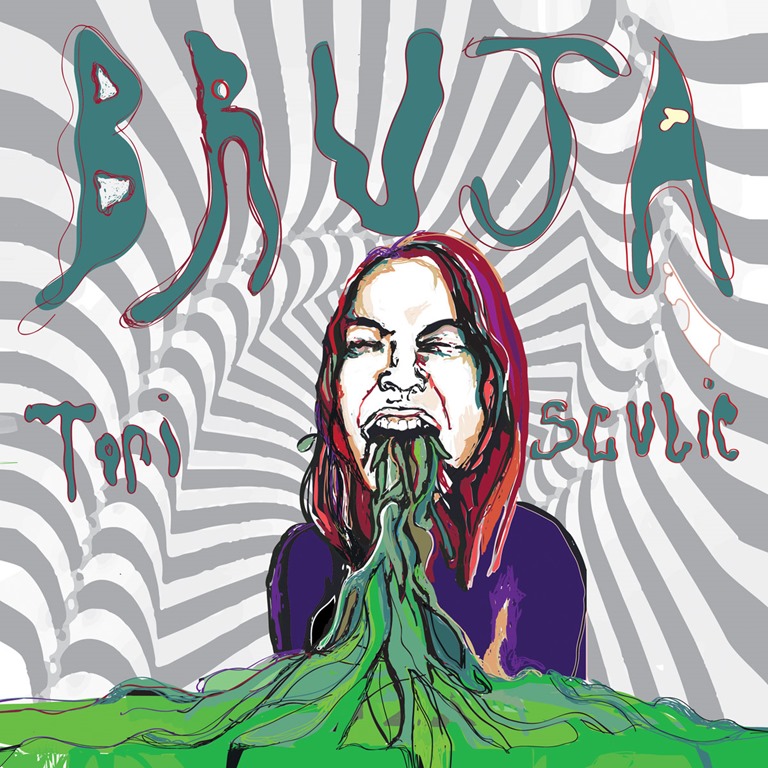
Barnsley: a long way off the musical map, eclipsed by Leeds and Sheffield. Yes, hometown of cult goth rock act Danse Society and a burgeoning post-punk inspired alternative indie scene and generally represented by the micro-label Of National Importance, but nevertheless, pretty much off the radar. Enter Bruja, a band credited with creating a ‘DIY junk-punk scene that has seen them hosting their own gigs, pressing up CDs, booking tours and making their own analogue VHS Videos to lighten the depressing reality of zero hours contracts in the service industry, unemployment and increasing xenophobic hostility’.

This once again returns us to what’s become something of a recurrent theme of late in my reviews on these pages: the depressing way in which austerity Britain and particularly post-Brexit Britain is a dark and dismal place, as depressed and divided as in the late 70s and early 80s. I was barely a child at the time, but essentially grew up against the backdrop of the miners’ strike and the Falkland’s war, followed by the Gulf War. War on TV in the 80s and 90s was a revolution in itself: now it’s wallpaper, but coupled with the effects of a long-term conservative government and the sense that history is repeating with a grim predictability whips up a cyclone of bleak feeling.

Impressively, Bruja have landed themselves on Damnably – home of Shonen Knife, Wussy and Oktoboke Beaver –  for the release of their new single. Promising ‘post-industrial, South Yorkshire modulatory desolation from a young band with a mean age of 24’, ‘Tori’ is a magnificently catchy post-Placebo new-wave influenced tune with a tremolo-heavy flanged-out lead guitar and driving rhythm section. Counterpart ‘Sculie’ is infectiously pop at its core, but propelled by some energetic drumming and a guitar sound that shimmers with the sound of an early 80s chorus pedal.

Times may be bleak, but it’s a good time for music. And this is good music.


Bruja

2nd September 2016

Christopher Nosnibor

Gang of Four’s Entertainment! Still stands as one of the definitive post-punk albums, capturing the zeitgeist of the late 70s. ‘Left’ and ‘socialist’ weren’t terms spat derisively by the media. The early years of Thatcher’s dismantlement of the country in the pursuit of the neoliberalist dream was already finding many disenfranchised and angry, with musicians articulating the sentiments of a generation in voicing dissent and dissatisfaction. Sound familiar?

I’ve been listening to Gang of Four since I was in my teens: too young to appreciate them in their day (I was born in1975), I was hooked a good decade before Franz Ferdinand and others started namedropping them and their status as one of the most important bands of the era. This isn’t any kind of hip gloat – not least of all because it would be a pretty shit one if it was. But my experience of the band live until earlier this year was limited to a few shitty VHS recordings, and the not so shitty various artists compilation VHS from circa 1984 that I picked up at a car boot in the early 90s.

So finally seeing them play live in 2016, given that the current lineup only features one original member could have been a disappointment on a monumental scale. But it wasn’t. the current lineup not only sounds great, but still has that vital sense of tension, of danger, that was always the band’s trademark.

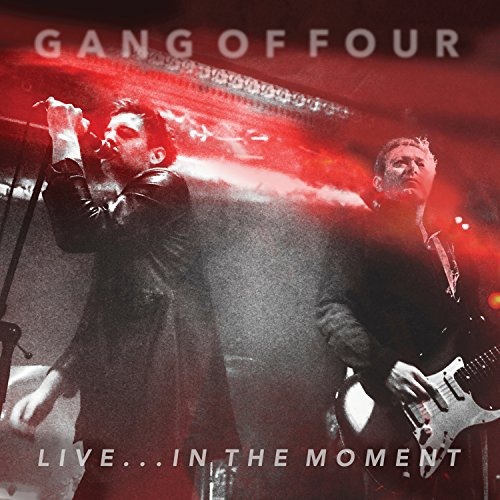
‘Live… in the Moment’ captures this perfectly, and is released in two different forms: During a year spent touring the world, the band recorded two of the best, namely their sold-out show at New York’s Irving Plaza (which will be available as a DVD or download) and their penultimate show of 2015, at London’s Islington Assembly Hall, which will be available as an audio CD, double coloured vinyl album and download. The DVD will be packaged with the CD. Both, it has to be said, are excellent.

As a live recording, the quality is good, but it’s not excessively crisp or polished, and doesn’t scream heavy EQing, mixing, overdubbing. No, this is an honest, real live album that captures the intensity and immediacy of being in a room with a band playing live at high volume. If sounds and feels like a live album: as it should: any act who sound exactly the same live as in the studio may be musically accomplished, but fails to make the live ‘experience’ an actual experience. What matters most is that the separation between the sinewy, choppy guitar lines and elastic, funk-infused stop/start bass grooves is spot on.

Similarly, the concert visuals, whole shot from a number of cameras, is straight-ahead: dark, murky, primarily from a lower, audience vantage point. Budget? Maybe, although I’d prefer to watch something that replicates the actual experience of the live show, rather than some ponced-up, glossy fixed-up representation. My only criticism of the footage lies not with the footage itself – I can handle the wobbles and slightly amateurish hand-held pans – but the editing: the cuts are simply too fast, and the zooms on fretboards, etc., simply too… zoomy. With multiple angles to choose from, they haven’t always picked the best. Still, it’s watchable enough in a way fits with the rough ‘n’ ready, ‘as it was’ approach. Moreover, it sits with the band’s general ethos: this is no major-label, big-money production and no corporate exec’s coining it at the expense of hard-working artists.

The track listing draws from across their albums with the exception of Mall, although no-one’s going to be disappointed to see that Entertainment! Is well-represented, with ‘Love Like Anthrax’, ‘Damaged Goods’, ‘At Home He’s a Tourist’, ‘History’s Not Made by Great Men’ and ‘I Found That Essence Rare’ all featuring. The DVD also features ‘Return the Gift’, which doesn’t appear on the CD, as well as non-CD cut ‘I Love a Man in a Uniform’. They all sound great, spiky and urgent, ‘To Hell With Poverty’ as pertinent now as 38 years ago. Irrespective of their influence, Live… In the Moment shows that Gang of Four are very much a going concern, and a band who aren’t only relevant after all this time, but a cracking live act.


Gang of Four Live

Makkum Records – MR18 – 11th June 2016

James Wells

Having existed in a number of variant forms since formation their formation over a decade ago, Kanipchen-Fit is currently Gloria (vocals), Empee Holwerda (guitar and vocals) and Frank Sloos (drums). Unfit For these Times Forever marks an evolution from their 2010 debut, not least of all because it features live drumming, which brings a very different dynamic to the sound.

But before we get to the sound, Unfit for These Times Forever is released on CD, DL and double 7”, and the physical formats come in a gatefold sleeve with a pop-up centre. It’s novel, and it’s also rather cool. The music’s pretty cool, too. Showcasing a dark post-punk infused indie rock sound. ‘How to Display a Flag’ is choppy, urgent, and is representative of the trio’s hefty sound with echoes of Husker Du and Gang of Four, combining ragged urgency and a funk edge. Holwerda’s guitar sounds like bass and guitar simultaneously.

Lyrical abstractions and oddness abounds, but these aspects are tempered by a personal and social sensibility. But then, Gloria’s background is in poetry and spoken word, and her background lies with New York performance collective Pussy Poets. ‘Residue’ finds Gloria unravelling her relationship with possessions that connect to people and the past in the context of peoples’ perceptions of others. ‘I wore my father’s jacket, it itched / I scratched, I got a rash / So I stopped wearing it,’ she recounts. There’s genius in the simplicity and the humanity of the words. Indeed, more than anything, what radiates from Unfit for These Times Forever is a sense of sincere humanity, and it’s paired with a quirky humour which isn’t only charming, but ensures the songs never move into the realm of po-faced politicking. Slanting guitars skew and jangle through the angular pop stylings of ‘Opening Ceremony’, and there’s even a hint of XTC and Pavement about closer ‘Unfit’, rounding off a record that balances unique and quirky with accessibility and depth. It has immediacy, but more than enough substance to give it durability. In other words, it’s got the lot, and is one of these rare beasts which functions – and succeeds – on every level.

Kanipchen-Fit  - Unfit


Kanipchen-Fit Online

Karisma Records – 3rd June 2016

Christopher Nosnibor

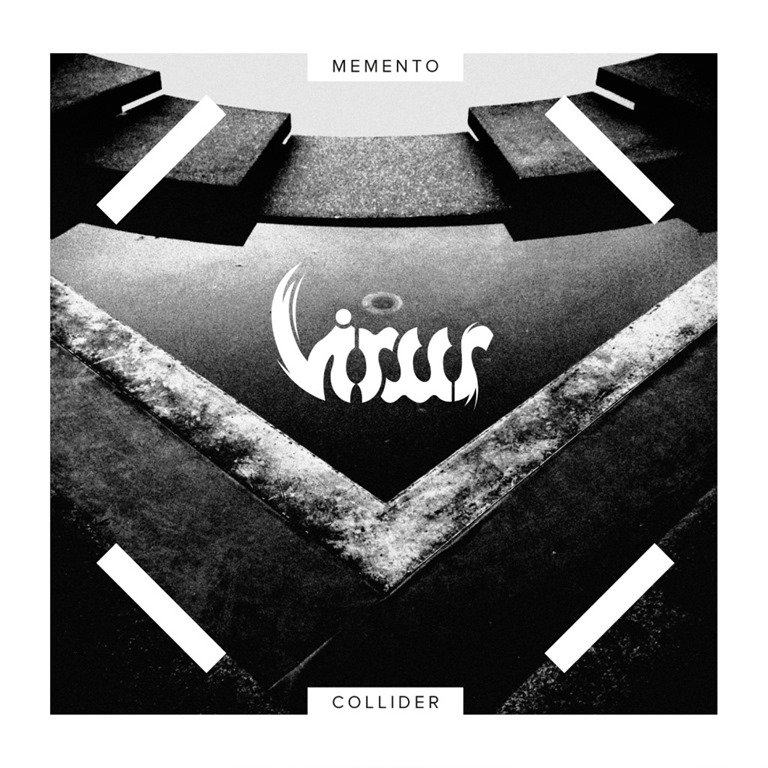
When an album contains only six tracks, and is housed in over art like this, there’s a certain degree of indication of what one may reasonable expectancy. Memento Collider fulfils some of those expectations, but confounds just as many. For a start, it isn’t a drone / doom / metal album, although it is heavy and it is dark. And the tracks are on the long side.

Sure enough, the album’s ten-minute opener is a tense, dark and expansive affair, built around an interlooping bassline and uncomfortable, – guitars that bounce contra to said bassline to build an uncomfortable dissonance. It’s heavily steeped in the post punk / proto-goth tradition in the vein of acts like The Danse Society circa 1983, the flat yet portentous, nihilistic vocal delivery only accentuating the awkward and uncomfortable atmosphere, a sonic dystopia.

‘Rogue Fossil’ again works a groove centred around looped motifs, a hectic, nagging bas coupled with urgent, stuttering jazz drumming hammers insistently while the guitar clangs and chimes at obtuse angles against its claustrophobic shell. The theatrical enunciation of the lyrics, in particular the hook (i.e. the song title), which accentuates the ‘i’ in ‘fossil’ adds a peculiar, alien slant to the track’s angular discordance.

‘Dripping Into Orbit’ melds together theatrical goth-tinged art rock and hectic, angular math rock to forge a bleak and uncomfortable sonic space. The rolling tempo changes re disorientating, accelerating and decelerating bar by bar in a fashion that evokes the spirit and sound of Shellac.

As the album progresses, it becomes increasingly locked into an inward-facing mesh of difficulty, an aura charting increasing stress and crackling cognitive disorder. The effect is cumulative, but each song brings with it new layers of dis-ease.

Listening to the jarring post-punk of ‘Gravity Seeker’, the track which features the album’s title buried in its lyrics as guitars trip and trail all over a lugubrious and repetitive groove, I find myself being sucked into a vortex of bleakness and begin to wonder just what kind of hell the and members have endured to produce music this unflinchingly bleak. The recording sessions for Memento Collider can hardly have been a laugh a minute. But perhaps it was a lot more fun than the music suggests: it’s a mistake to conflate the art with the artist, and equally, catharsis can often be the means by which mental equilibrium can be maintained. Its’s healthy to channel all of the ark stuff the weird stuff and the negativity into something creative – and this is indeed dark and weird.

The final track, ‘Phantom Oil Slick’ spans a full nine minutes and fills it with jangling guitars which bounce every which way over a bass that surges and swells before it breaks in a tidal frenzy. It’s dark, intense, and borderline psychotic in every aspect. A collision indeed. Strap in and go for it.


Virus

Virus Online

Cult Records/Custom Made Music -22nd April 2016

Christopher Nosnibor

The album’s intro is immense. I mean, it builds and builds and threatens a blast of noise akin to Prurient, before the tide breaks and a sepulchral goth sound breaks out. Echoic guitars snake through a wash of reverb against a hipswaying bass groove as the mid-tempo opening track, ‘Confusion Hill paves the way for album steeped in vintage post-punk, but with more than enough inventiveness to stand up in its own right.

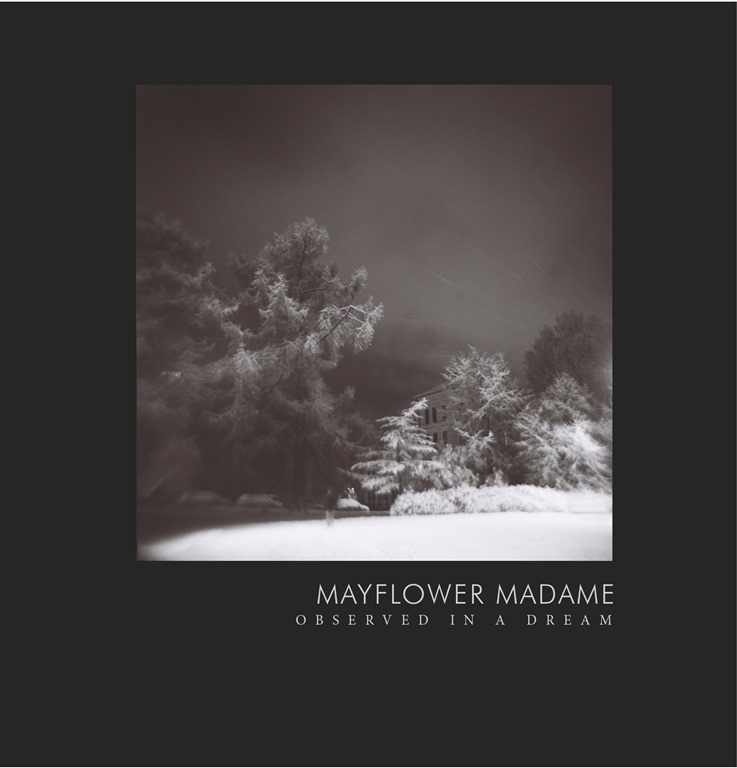
As much as it’s The Sisters of Mercy around the time of First and Last and Always it’s Suspiria. High on theatrical drama, bathed in reverb, ‘Observed in a Dream’ is an album which closely observes some old-school production values and uses them to good effect. The drums are up in the mix, the bass is low-slung and murky, and the guitars are brittle and fuzzy around the edges as they explore Dorian scales.

There are no shortage of highlights. The tetchy ‘Lovesick’ appropriates The Fall’s ‘My New House; and plays with a swampy psych vibe that’s both 80s Matchbox and The Volcanoes, throwing in a few dollops of Lloyd Cole and The Bunnymen into the mess.

‘Upside Down (the death loop’) plunges into deep psychedelic territory with its repetitive guitar motif and motorik drumming swathed in cavernous reverb, while the shadow of Red Lorry Yellow Lorry hangs long over the driving ‘Weightless’, and the title track sounds like a heavy collision between The Black Angles and The Jesus and Mary Chain, all throbbing bass, squalling feedback amidst an ocean of echo.

Whereas so many of the 90s wave off goth-inspired bands conspired to produce music that was arch and soulless, Mayflower Madame push a much more organic sound that’s geared toward psychedelic rock with a dark, smoky delivery that’s cool as fuck, evoking the spirit of The Doors as filtered through The Sisters, as if The Reptile House EP had been played with a live drummer. They keep it tight and keep it taut, but know how to cut loose and wig out when the mood takes.

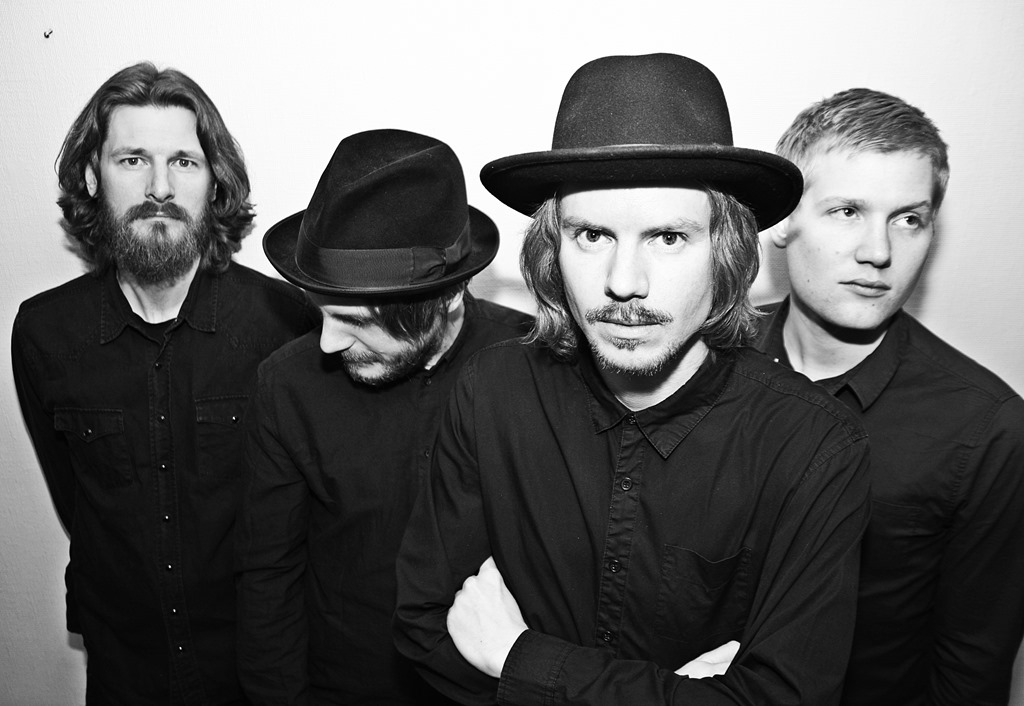
Goth ain’t dead, it was just waiting for a new messiah. Mayflower Madame have got the life, and Observed in a Dream is one of the most exhilaratingly atmospheric albums I’ve heard in a while. It’s nice to see some guys wearing hats, too.

Mayflower Madame - Observed in a Dream

Mayflower Madame on Bandcamp

Mayflower Madame