Posts Tagged ‘Post-Punk’

Constellation – 11th March 2022

Christopher Nosnibor

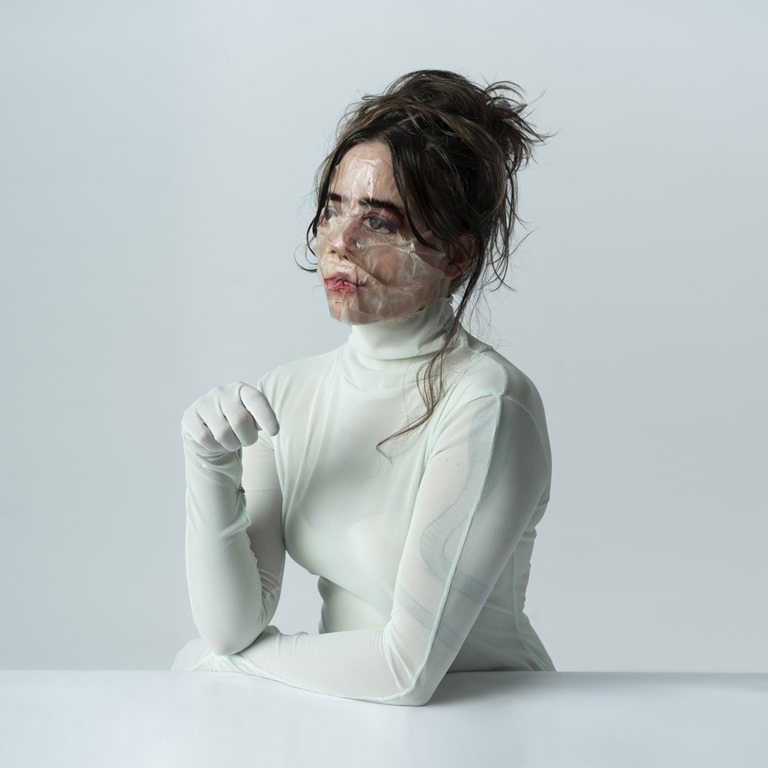
Kee Avil isn’t an individual, and isn’t really a band, so much as a concept, a collective, a project, the brainchild of Montréal producer and guitarist Vicky Mettler. Debut album, Crease, is pitched as ‘a singular expression of fractured dream logic concretized in chiselled postpunk guitar, sinuous low-end electronics, a panoply of organic and digital micro-samples creating alternately twitchy and propulsive rhythm, and the anxious intimacy of her finely wrought lyricism and vocals’.

It all sounds pretty grand and sets expectations high. Thankfully, Crease doesn’t disappoint. To manage those high expectations, let’s get it established here and now that it’s not a conventional album, with easy songs with obvious or accessible verse/chorus structures.

‘See, my shadow’ starts out with hints of early PJ Harvey but swiftly spins into industrial post-punk with electro/hip-hop beats, more akin to Lydia Lunch fronting Coil remixed by Portishead. It’s a lot to happen in the space of under four minutes, but then, that’s par for the course here: Crease is as jam-packed with ideas as it is sonic strangeness. It’s not an easy album to get a grasp on, and Mettler comes across as quite otherly. Some may say crazy, unhinged, but it’s not that. It’s just apparent she exists on another plane, and Crease shuns conventional structures in favour of exploring avenues of songwriting that more closely reflect an alternative vision and concept of ‘songs’. I certainly don’t mean that as a criticism, but equally, don’t want to sound like a wanker by saying that this is art and therefor superior. I mean, it is superior, but not because of that. To unpack that a bit, Crease is clearly the product of a quite specific mindset, and a determination to find a means of articulating. And sometimes, to articulate is to go beyond language and beyond conventional musical structures. As such, what Crease articulates is a separation from the rest of the world, the turmoil of the mind, the duality of the internal monologue.

‘Drying’ is sparse, glitchy, a clicky clatter and pop of percussion providing an erratic framework for the incidental instrumentation and slowed-down, opiate-haze vocals that are at once sultry and threatening.

‘And I’ is a sparse, scratchy acoustic guitar-based song; the tense picking at times calls to mind early Leonard Cohen, and the atmosphere is muscle-tensingly taut. It’s a masterclass in how less is so much more, and as Mettler’s breathy vocal arcs over the spindly fretwork, a kind of magic happens in the way it draws you in with a hypnotic sensation. ‘Devil’s Sweet Tooth’ lunges and sways, violins teeter on the brink of a breakdown

It’s often difficult to make out the actual lyrics, so you lean in closer in an attempt to get your head and hands around them. You fail, but you’re drawn in closer to the dissonant strangeness that’s more than just music: it’s a world of disconnection and dislocation. It’s unnerving, alien, but likely better than this one right now.

AA

a2394473098_10

Christopher Nosnibor

Snakerattlers are BACK! Almost two years to the day since their last show, the ass—kicking psychobilly duo are back on the circuit, and landing in style to launch a new album, The Left Hand Path at the same time.

Snakerattlers have always embraced their DIY position as something that enables them to do things their own way, and this event is exemplary: whereas album launches are often massive blow-outs with loads of bands and balloons and gimmicks, which mean you’re knackered by the time the headliners take the stage, they’ve gone for something that’s truly special and personal, in the form of an afternoon show with no supports, playing the album live in its entirety for the first ad only time, with some talk about the inspiration for each song before its played. It’s also noteworthy that said album is only being released on CD and vinyl: no downloads or streaming. A proper album, old-school.

The times on the door list Doors as 2:30 and Snakerattlers 3-4pm, and it’s getting busy when I arrive at 2:40, and while I am not tall, I’m amazed by the fact that practically everyone in the place is a fucking giant, so I grab a pint and get down the front, quick. Dank ambient atmospherics rumble over the PA.I figure there’s probably not much point trying to photograph the scribbled set list since the pitch of the launch event is to play the new album through as a one-off. So I suppose this is something of an in-the-moment first-hearing album review as well as a live review.
DSC_2162

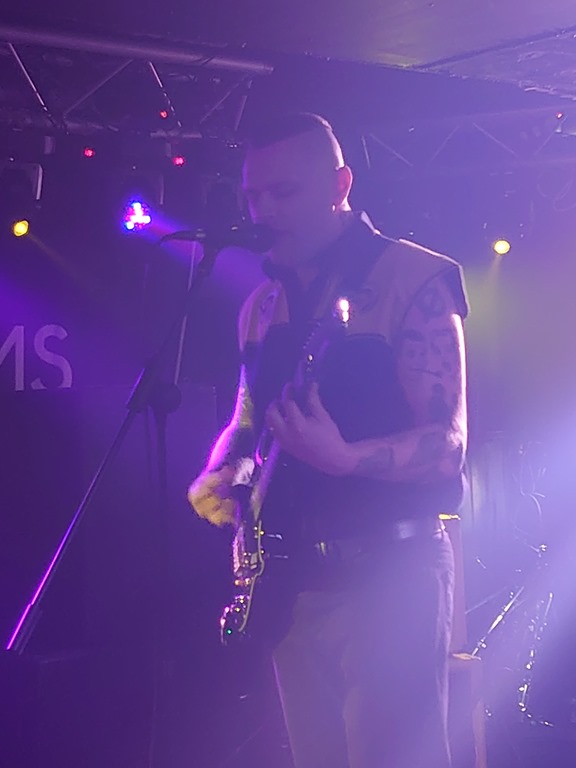
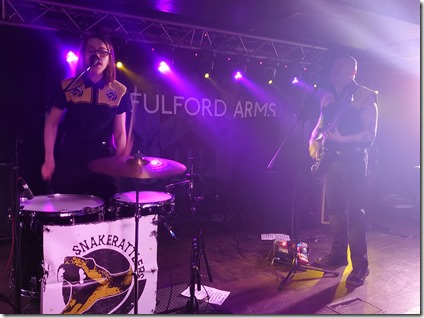
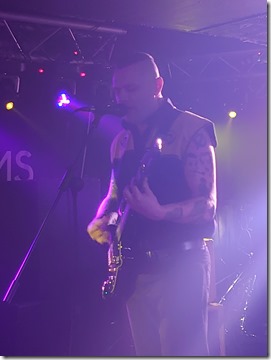
They’re punctual, and Dan’s grin is something to behold. He may be shitting his pants nervous, but I don’t think I’ve seen anyone look happier to be onstage before. As a band who usually play around a hundred shows a year, a two-year enforced break probably felt like having their limbs amputated.

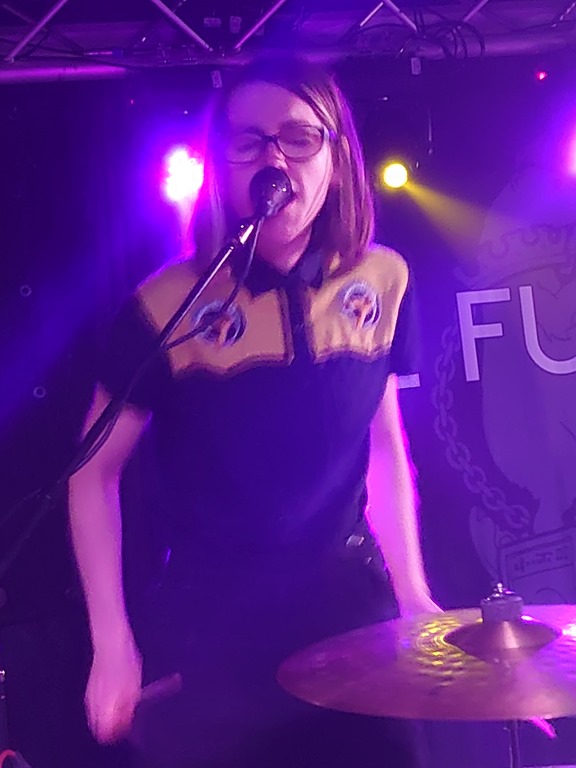
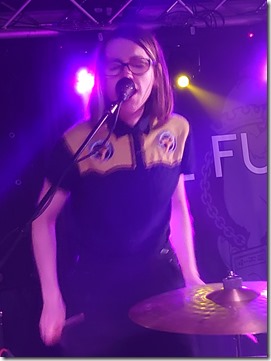
They’re straight in with a swampy reverby tune with no lyrics beyond ‘wooh’ and ‘huh!’ by way of an intro, and it feels like they’ve picked up precisely where they’ve left off, although it very soon becomes apparent that there’s been a significant shift in the world of Snakerattlers as they start working through the album. That’s what happens when there’s a global pandemic and successive lockdowns, and Dan is a lyricist who very much writes about the moment, meaning there’s a lot of contemplation and a darker atmosphere across the album as a whole. And while Dan is the voice and the mouth of the band, Naomi’s contribution should never be underestimated. Quiet, serious-looking, she’s the perfect counterpoint in terms of character, while her drumming has a natural feel to it, and a nice, easy swing, even at pace.
DSC_2158DSC_2157

‘One Hand’ is a song not about wanking, but about friendships (or lack of) and in some ways, independence, echoing the sentiments of The Fall’s ‘Frenz’. It starts gentle and sensitive, then goes blamm! ‘No Friend of Mine’ continues the theme of friendship, “All relationships are empty and temporary,” Dan comments in the song’s preamble, nabbing a Mansun lyric in the process, before launching into a rambunctious country-punk knees up. It’s about a minute long.

The songs feel evolved, and show a keen attention to changes in tempo and pacing, and the album sequencing also feels considered – which corresponds with the formats of choice, with the jangly ‘Rattle in my Bones’ ahead of the darker, gothy ‘I Remain’, with hints of The Gun Club. It’s slower, and fully anthemic, and I find myself prickling with goosepimples. ‘In the Ground’ is a contemplation on death penned during the pandemic, and it’s mid-tempo, minor key punk, and utterly magnificent to boot.

Taking the “darkness dial to 10” as he puts it, ‘All Hope is Lost’ emerged from a dark place during lockdown. It’s tense, and while it’s not quite Joy Division, it’s pretty damn bleak – but still manages a hook. ‘Small’ is more old school rock ‘n’ roll, while ‘It Comes’ (if that’s what it’s actually called) is a churner about insomnia, while ‘Spooks’, which emerged last year is more standard Snakerattlers uptempo Fall-esqu rockabilly – or rattle rock, as they prefer to call it.
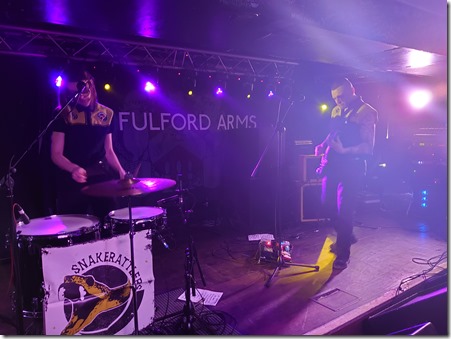
DSC_2164

There’s another switch with the twangin’ instrumental boogie ‘Wolf Dance’ that paves the way for the final double salvo of kick-ass tunes, culminating with the fast, angular ‘We are Your Hell,’ inspired by a dickish punter facing off to the band at their last gig in Leeds on 5th March 2020. It’s a storming finale to the album, and to the set. It’s been exactly forty-five minutes, and it’s been a blast from beginning to end.

And with that, they’re off to man the merch stall. Rock ‘n’ roll! Yes, Snakerattlers are most definitely BACK!
14th February 2022

Christopher Nosnibor

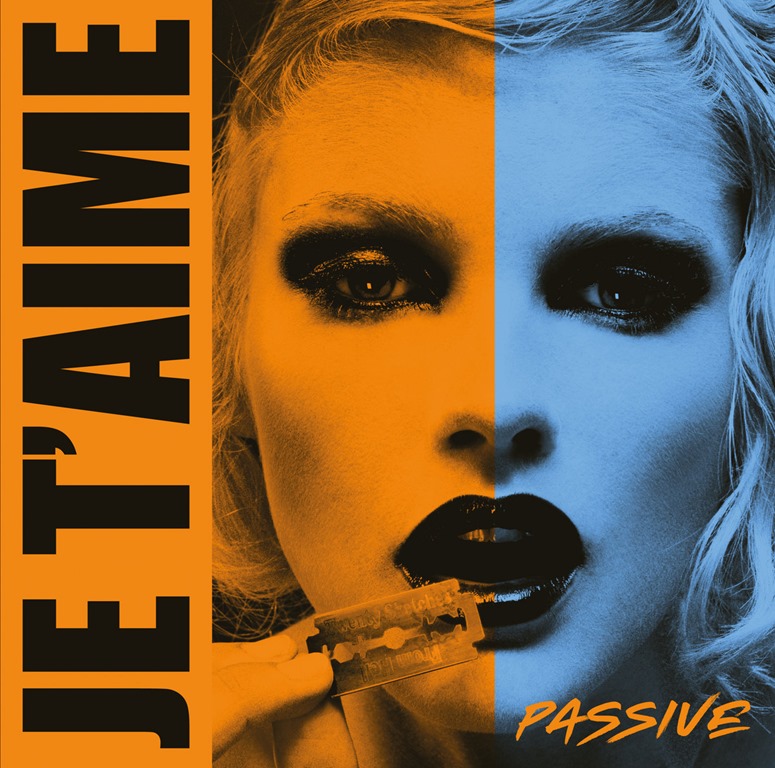
Passive is the second album from French post-punk band Je T’aime, and is the first of a two-part set, which will be completed with the release of Aggressive in the not-too distant future.

The album continues where its predecessor left off, and marks the development of a theme as part of an extended concept work, where we ‘follow the evolution of the same antihero; a common avatar of the three musicians. The tone hardens, the atmosphere becomes more melancholic, and the lyrics embrace bitterness and anger.’ The liner notes explain that Passive ‘continues the theme about the difficulty of growing up. Our main character is constantly caught up in the past, repeats the same mistakes and ends up not being able to move forward in his life. It is no mystery that the band’s music constantly looks for influences in the past 80’s for that reason’.

So many people do get hung up on the past, and seem to hit a point in their life – usually around their early 30s, in my experience – where they simply stop evolving and reach a stasis, a brick wall where they conclude that no good new music has been released since they were in their early 20s and nothing is as good as it used to be. It’s not all memberberries and memes, but there are many agents at play driving an immense nostalgia industry. And it’s easy money: no development required for new ideas when there’s a near-infinite well of past movies and music to plunder and rehash or at least lean on. Would Stranger Things have been the smash that it was if it was set in the present? However great the script, plots or acting, much of its appeal lies in its referencing and recreation of that intangible ‘golden age’. While that ‘golden age’ may depend on when an individual was born, the acceleration of nostalgic revivals and recycling means that kids who weren’t even born in the 80s or 90s are nostalgic for synth pop and grunge by proxy.

Passive is anything but. But what it is, is a dark, heavy slab of dark, bleak, brooding, a mix off sinewy guitars and icy synths with rolling bass and tribal drumming that lands in the domain of early Siouxsie, Pornography­era Cure and The Danse Society around the time of Seduction. The instruments blur into a dense sonic mesh. There’s a tripwire guitarline on ‘Another Day in Hell’, which kids off the album with a gloriously dark, stark, intensity that’s Rozz William’s era Christian Death as if played by X-Mal Deutschland. And if I’m wanking nostalgia over this, it’s less because I miss 1983 (I was 8) than the fact they capture the energy and production of that groundbreaking period with a rare authenticity.

‘Lonely Days’ is a bit more electro-poppy, but has a guitarline that trips along nicely and throws angles and shade. ‘Unleashed’ reminds me more of The Bravery and their take on 80s pop, but then again, The Cure’s influence looms large again, and elsewhere, ‘Stupid Songs’ goes altogether more New Order / Depeche Mode, but then again, more contemporaneously, it’s not a million miles off what Editors were doing on In This Light and On This Evening – and album I found disappointing at first because it felt like derivative 80s electro fare, before the quality of the songs seeped through to convince me.

One thing that’s often overlooked about 80s pop is that dark undercurrents ran through even the most buoyant of tunes from the most chart orientated acts; Duran Duran and Aha, even the music of Nick Kershaw, Howard Jones, A Flock of Seagulls, was cast with shadows flitting beneath that veneer of production. So when they go bouncy disco on ‘Givce Me More Kohl’, the parallels with The Cure’s ‘Let’s Go To Bed’ and ‘The Walk’ are apparent, with a lost and lonely aspect to the vocals, and they go full Disintegration on ‘Marble Heroes’. And that’s cool. It’s poignant, sad, wistful, an emotional cocktail. On Passive, Je T’aime revel in all of those elements of influence and pack them in tight, and they do it so well and with such discipline. They really know what they’re doing: the sound and production is class, and the songs and classic, and the sum of the parts is a truly outstanding album.

AA

a3347450970_10

Christopher Nosnibor

While the majority of their output belongs to the post-85, second wave of post-punk / indie-goth, both (timewise) and sonically, Salvation’s roots actually go back to the murkier days of when The Sisters of Mercy were a true Leeds band, living in a dingy terrace in LS6 and recording at Kenny Giles’ 8-track studio in Bridlington and running a label not so much on a shoestring, but on zero budget and Letraset.

Salvation’s first ingle, ‘Girlsoul’ was released on Merciful Release in ’83, and was produced by Eldritch, before a parting of the ways not dissimilar from that which befell The March Violets took place, and while their second single, ‘Jessica’s Crime’ was produced by Wayne Hussey in 1984, the mini-album Clash of Dreams which was scheduled for A Merciful Release in 1985 was shelved and only got to see the light of day in 2014.

By then, they had evolved into the more accessible indie-goth sound, which emerged circa 1985-6, and which perhaps not coincidentally corresponded with The Sisters of Mercy’s evolution towards a more commercial sound with the arrival of Wayne Hussey and their signing to WEA and the release of ‘Body and Soul’ and First and Last and Always, before the split that led to the emergence of The Mission.

But their coming together with Hussey early on marked the beginning of a longstanding partnership: in fact, it was in 1990, supporting The Mission at Sheffield City Hall I first encountered Salvation, which would have coincided with the release of their major label debut Sass, which marked something of a more commercially-orientated direction, and would also represent the band’s last new material as the band crashed under the pressures of relentless touring.

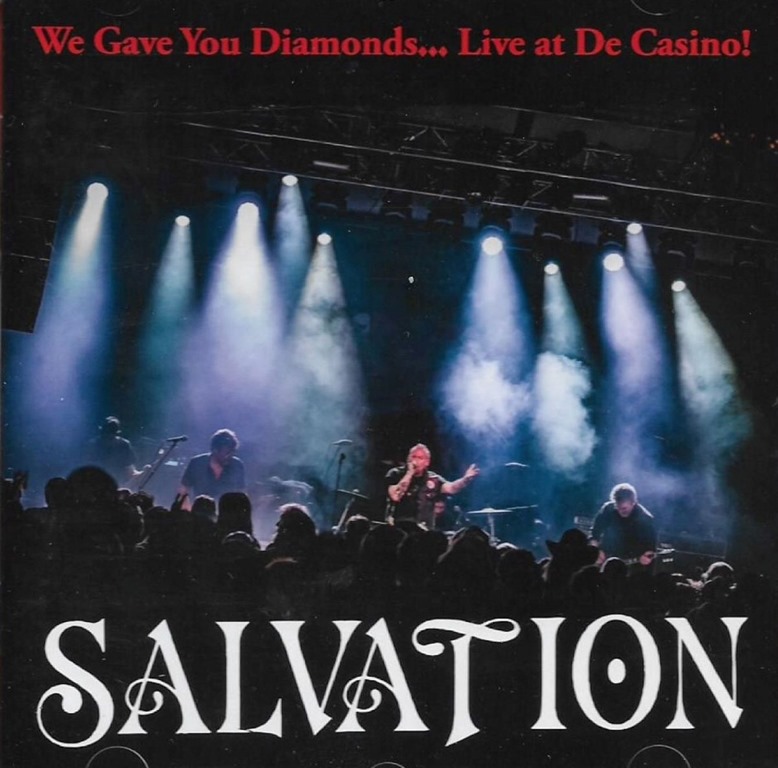
Fast-forward to 2020, and the band have emerged from their retirement to tour Europe with The Mission. We Gave You Diamonds… Live at De Casino was recorded Live at De Casino, Sint-Niklaas, Belgium on March 7th 2020 on the final night of a four-date tour supporting The Mission, and it’s a career-spanning showcase of a set that captures salvation on fine form, and Daniel Mass sounds relaxed with his chat between songs.

Only two of the eleven songs ‘(Clearing Out the) Debris’ and ‘Paint it Rose’ are from Sass, and the set is otherwise culled from their independent years, kicking off with ‘The Answer’ from 1986’s ‘Seek’ EP. It’s clearly of that mid-80s vintage, but still sounds fresh and is delivered with an energy that translated through the medium of the live recording, with its thumping bass and flowery guitar flourishes both crisp and clear. ‘Ladyfaithe’ from the same EP, which would subsequently their 1987 debut album Diamonds are Forever is also dropped early.

Mass probably doesn’t need to announce that they’re from Leeds at the start of the set: they sounds like a Leeds band, to the core. They also sound like a band who are having a blast, and the songs are played with precision and power, and they’ve held up well despite the passage of all the years: ‘All and More’ still kicks ass with twisty guitars and a solid bass groove, and reminds us just how strong they were at penning sharp hooks and nagging guitar lines.

They delve right back as far as ‘The Shining’ (a standout and a personal favourite that always gets lodged as an earworm whenever I play it) from their second single as well as the unreleased ‘The October Hour’ from the debut that never was. ‘Payola’ and ‘Pearl Necklace’, the B-sides from their single release of Donovan’s ‘Sunshine Superman’ from 1988. Yes, it’s a blast from the past, but this doesn’t have the vibe of a nostalgia trip: Salvation sound like a band reinvigorated and energised and feeling the songs.

And now, as we finally crawl out of the seemingly-eternal suspension of life that was the Covid pandemic, Salvation are once again set to play as support to The Mission – although the handful of dates isn’t quite the crippling schedule of thirty years ago. On the strength of We Gave You Diamonds, it’ll be worth making it down early doors, and with any luck they’ll be booking a few headline shows of their own before long.

AA

a0378534001_10

This is my first time at Headrow House in ages. Literally years. May 2019, to be precise, when Big Joanie supported Charly Bliss. It’s remarkable to reflect on that, now that Big Joanie are playing truly huge venues as the support for IDLES. This, of course, is, in a nutshell, why we need grassroots venues, and why it’s worth arriving in decent time and checking out the support acts. Tonight is another case in point.

But first, on arrival, I realise how much you forget. Like I’d forgotten how the downstairs bar is so loud and busy, and thought there was a larger selection of beers. Upstairs in the gig space, it’s less loud or busy, but then, it’s early doors, and I need a refill before the music starts.

Helle are up first, and they simply blow everyone away. They’re intense, fierce. Authentic, angry old-school punk, the female-led act employ S&M imagery in both their songs and appearance. It’s in your face in the best possible way – forceful, confrontational, strong, with edge.

It’s an unusual experience hearing two bands cover the same song just a few days apart, and noting the difference: against Healthy Junkies’ solid but standard rendition, Helle’s cover of ‘These Boots are Made for Walking’ is a feedback-soaked stompfest and kicks all kinds of arse. The singer possesses real presence, strutting and swaying, and has big, gutsy vocals to match: she’s raging, alright, and channelling the spirit of the late 70s all the way.

Helle 2Helle 1

Helle

Railing against the government, railing against the patriarchy, etc., etc., may seem old and standard, but 45 years since punk broke, it’s still relevant – which is depressing. In context, Elton John’s ‘Benny and the Jets’ seems like an unpunk song to cover, but they kill it, hard, while closer ‘Pornography’ goes hardcore. It doesn’t get better than this.

Pulverise bring a different kind of intensity, the Leeds five-piece collective being unashamedly nu-metal/rap-metal/sports metal in their stylings. With a 5-string bass chug and two guitars laying down slabs of distortion, it’s a full-on kick with a keen sense of groove. It’s very much a Judgement Night Soundtrack kind of groove at that, and the RATM influence on the sound, if not the subjects, is also apparent. And then they whip out a metal cover of’ ‘Insane in the Brain’ that sounds like Pitch Shifter and then it segues into ‘We Ain’t Going Out Like That’: it certainly illustrates the band’s vintage, and it’s good fun in a retro, kinda sports metal way.

Pulverise 1Pulverise 2

Pulverise

Weekend Recovery change their lineup more often than Lauren changes the colour of her hair, and so it is that the band on stage tonight isn’t the same I saw at Long Division in Wakefield in September last year, and the lineup launching the EP isn’t the one that played on its recording. On the one hand, it’s rather a shame: on the other, onwards and upwards, and the current lineup may well be their tightest yet.

Ant & Dec’s ‘Let’s Get Ready to Rumble’ makes for a corny but fun intro tape, and it bleeds into the Countdown Countdown for the band to rush onstage against the clock… badum, badum, badaladum… boshh! And they’re straight in with ‘Radiator’, the opener from sophomore album False Company.

The bass sounds like twigs rattling in a bag, scratching away during this first song, but everything comes together soon after. The sound and lighting are top notch, even if the stage show is channelling The Sisters of Mercy circa 1985, with Lori in particular so swathed in smoke as to be barely visible for the majority of the show. They slay ‘In the Mourning’ early in the set, and it’s a varied one, showcasing tracks from the new ‘No Guts’ EP as would be expected for a launch event.

WR1

Weekend Recovery

And oh yes, the EP is a solid 4 songs, as Lori pointed out to me from the stage, although only two of them feature in the set, which draws heavily on recent second album False Company. The first of these is ‘It’s Obvious’, a slow-burner with a mid-80s feel. Early single ‘Out of Control’ is played at breakneck speed, on account of Lori having a moment while programming the backing.

Across the set, they showcase tunes that could and would be immense given the right exposure. It’s followed by the rarely-aired heart-rending new tattoo before getting back to full-throttle energy with turn it up, the only song from their debut album: it’s very much a forward-facing set, with very few further reaches into the back catalogue.

WR4WR3

Weekend Recovery

Forster channels Suzi Quattro, and not just on account of her getup: she’s all the rock up there and has come into her own as a performer since tasking on the role of sole guitarist as well as singer. A kick-ass ‘Zealot’ prefaces set closer and ep lead ‘No Guts, All the Glory’ which is perhaps their strongest single to date, and rounding off a strong set to round off a night of great performances.

Cool Thing Records – 14th January 2022

Christopher Nosnibor

Asylums offshoot band Bait mark their return in blistering style with the ball-busting, ballistic blast of tension that is ‘Drama Drama Drama Drama’. Having dropped – or perhaps more accurately detonated – their explosive eponymous debut in 2018, showcasing a post-punk industrial crossover that crash-landed somewhere between PiL and Killing Joke, they reminded us of their existence in the spring of 2019 with the gritty grind of the single ‘DLP’ before falling silent.

In fairness, a global pandemic and a succession of lockdowns and limitations was never going to be conducive to the creation of new output, especially when core members Michael Webster and Luke Branch have been busy beavering away on a new Asylums album.

But, inter alia, they’ve also been working on the new Bait album, Sea Change, which is set for release in April, and ‘Drama Drama Drama Drama’ is one hell of a way of announcing it, distilling all of the pent-up frustration, fury, and anxiety of two years kept on edge into just under two minutes of eye-popping, adrenaline-fuelled sonic catharsis.

If the sneering edge of the vocal delivery sounds like it’s a put-down to those who’ve been panic stricken by the pandemic, it’s likely more a swipe at those who’ve chronically mismanaged the public’s expectations, left them separated, isolated, financially insecure, and unable to seek solace with friends or family while keeping them apart while quaffing drinks and generally having a jolly old time as well as getting minted off slipping multi-million pound contracts for unusable PPE and all the rest at the taxpayers’ expense. The reason the parties have particularly tipped people is because they missed the final moments of loved ones and suffered the immeasurable torture of enforced isolation.

The ‘drama drama drama drama’ in question here isn’t some lame Eastenders shit, this is life. The swirling turmoil and endless uncertainty of everything… On a personal level, when lockdown hit, I was inundated with messages at first, from friends, from family and especially work as WhatsApp groups were set up while we got sent home to work, and the channels of communication were beyond buzzing as everyone flipped out and I witnessed – and participated – in their panics in real-time. It was hectic, a blizzard, a blur… but it was when it went quiet I lost it. You get thrown into something so hard you have to swim. But when the armbands deflate…You text with no reply – that anguish is real and it’s intense. The minutes feel like hours. The tension rises, the panic rises, the palpitations flutter and the perspiration flows and in no time you’re a dishevelled, disoriented mess. You know it’s irrational, but panic is irrational. You struggle to steady your breathing. You can’t face the supermarket because it’s full of people. You can’t face meeting anyone. You can’t breathe. This is the drama, and it piles up and piles up and increases in intensity until it’s unbearable.

‘Drama Drama Drama Drama’ steps up the gritty edge of previous outings, and this time arrives somewhere between Killing Joke and Black Flag, which means it’s absolutely furious and relentlessly raging. It’s a killer tune with all the intensity, and the soundtrack to the now.

AA

a2611202220_10

Space & I Records – 21st January 2022

January is always a shitter. Whether you love Christmas or loathe it, or even if you’re largely indifferent, January is invariably a slump month of epic proportions. Those of us who aren’t mad keen on Christmas tend to cling to the light at the end of the tunnel that is new year, not because of the New Year celebrations, but because of the prospect of things getting back to normal, where everyone isn’t flapping about doing Christmas shopping and your mates aren’t in an endless conveyor-belt of work and other social commitments and might actually have time for just a pint and a chat, and because gigs and regular social activities resume and you can turn on the TV, radio or walk into a shop without hearing wall-to-wall fucking Christmas tunes.

But no, everyone’s skint, the ones who aren’t are doing dry January and not going out, and the days are short and cold and miserable and Christ, it’s bleak. And for the self-employed, the unsalaried, those in the arts, it’s even bleaker, especially during a pandemic. But then, as ‘Happy Birthday payday’ reminds us, staying afloat in the arts is hard at anytime.

It’s ironic that while mainstream chart musicians are lauded and the pop icon is considered aspirational, those who actually commit themselves to the graft of being in a proper band – or pursuing creative activities like writing or visual arts as a means of earning a living are relentlessly knocked back for being dreamers or unrealistic. Granted, it’s only very few who achieve the heights of Coldplay or Radiohead, or JK Rowling or Damien Hirst, but that isn’t to say that an equitable living shouldn’t be out of reach for the many in the lower echelons, and it simply shouldn’t be the case that tends of thousands of streams on Spotify or iTunes translates to less than the price of a pint.

Moses aren’t a band who are willing to compromise to turn that pint into a round: ‘Happy Birthday Payday’ is culled from their second album, Almost Everything Is Bullshit, which is not only a cracking title but a verifiable fact in this time of endless fakery, but one that’s unlikely to see it garner much mainstream radio play. Similarly, while ‘Happy Birthday Payday’ is a strong tune, bursting with energy and hooks, and with a nagging quasi-rockabilly guitar-line and some storming bass runs, it’s hardly zeitgeist. It’s cut from the punkier end of post-punk, and could have been part of the early 90s New Wave of New Wave ‘movement’ hyped by the press. It’s fast, furious, and spirited, and exactly the kind of tunage we need on offer beyond the mainstream – which is why outsider acts need to be viable, because without them, we’re fucked.

10th December 2021

Christopher Nosnibor

Sense of Scenery first came to my attention way back in 2009 with the release of The Disaster of Imagination which landed with me for review. I fucking loved it, and still love it now: it’s an album that’s stuck with me, and still gets regular play now, although it carries a certain weight of nostalgia now as it comes bearing memories of past, perhaps simpler times, and it also reminds me of people and places, and how things have changed.

But then, it always hit me with a certain level of emotional resonance, there was just something about it.

Sense of Scenery have been slow in their subsequent output: an EP in 2012, a remix EP the following year, and an instrumental single in 2017 has ben the sum of the output prior to the emergence of ‘Through the Walls’ as a single in August as a taster for an upcoming album. And now there’s this, a second single and accompanying B-side.

SOS come out swaggering with bravado about this one, claiming it to be ‘Like a direct injection of Viagra into the flaccid, shriveled wiener of Rock’. Which is pretty fucking bold, however you look at it.

It arrives on a wibbly wave of organ with some warping tape stretches, and a crisp metronomic drum sound, and while it’s immediately apparent that their style is unchanged in its post-punk leanings, it is very much evolved. Sean Douglas’ compositions still revolve around cyclical chord repetitions and choruses that step up the vocals and pack a mean hook, but things are altogether slicker, especially the production.

The drums are bordering on the mechanical, and there’s a tightness and smoothness about the overall sound that brings polish, but more than that, it brings a sense of paranoia and heightened tension. B-side ‘Smokescreen’ really brings this all to the fore, bordering on dance, especially with its blooping synth line, but it sounds like the soundtrack to an 80s car chase sequence, and it’s dynamic and exciting.

AA

a3458767912_10

James Wells

In advance, we learn that ‘The songs on Beautiful Hell will take you on a tour of the wreckage that is the contemporary state of affairs brought about during the reign of the Orange Beast. There was the destruction and reversal of environmental policies like withdrawal from the Parris Climate Accord, termination of the Clean Water Act & turning back the clock on human rights’, and that ‘the title track ‘Beautiful Hell’ draws a juxtaposition between the beauty of this planet and decaying state of political affairs. The tune ‘Under his Eye’ is focused on what is seemingly a path toward a Neo-Nazi Christian state. ‘Night Bird Cries’ is a lament for the decline of our environment and morality, that increasingly vie for our attention but go unheeded.’

The sound of Orcus Nullify – headed by bassist / vocalist Bruce Nullify – on this release is very much vintage goth, with fractal guitars, heavy in chorus and flange and setting spindly frameworks around thundering bass and tribal drums, the murky production evolving the sound and style of early Christian Death.

The intro to the title track sounds very like that of The Mission’s ‘Severina’ before it goes all splintering, spirally Nightbreed-sounding second-wave goth. For the record, that’s no criticism, just a contextual referencing placemarker. ‘Night Dance’ showcases a raw, dingy sound where the guitars are trebly and the bass is muddy and everything combines to create something dark and intense. ‘Fall from Faith’ is The Mission amped up to eleven, it’s The March Violets, it’s Groovin’ with Lucy, it’s Rosetta Stone.

As such, it’s not inventive, and Orcus Nullify clearly aren’t out to reinvent the genre, but to add to the body of the catalogue that could reasonably be labelled ‘classic goth’. Nothing wrong with that, and credit to the band, they’ve got the sound nailed, and some decent choons, too, with Beautiful Hell being a solid and dynamic EP.

AA

AA

a0128427574_10

Unbound – 11th November 2021

Christopher Nosnibor

I may not have discovered The Sisters of Mercy until 1987 (being born in ‘75, I was simply too young to have been around in their first phase), like many, I have long been fascinated by those early years and their ascent from vaguely ramshackle indie act to the band who released the album which would essentially define the sound of ‘goth’ for decades to come. By ‘fascinated’, I really mean ‘obsessed’, particularly in my teens, but my love of The Sisters has endured. While the story of those first five years has been told, retold, fetishized and transformed into lore with elements of legend and myth blended in along the way (much of which having been perpetuated by Andrew Eldritch himself), it’s never been given truly detailed coverage, and for this reason, I joined many in pitching in for the crowdfunding of Mark Andrews’ biography. The wait felt like forever, and in the meantime, Trevor Ristow dropped Waiting for Another War (which I’m yet to pick up) on the same period. And so it is that Sisters bios are like proverbial busses, although that’s certainly no complaint: it simply indicates the impact and significance of a band who, despite having been in existence for over forty years and who haven’t released a record in the last thirty.

The book looks and feels like quality (although some have griped about the lack of capitalisation on the definite article both on the cover and throughout the text), but it’s on the contents that Andrews’ work should be judged. There is no two ways about it that Paint My Name in Black and Gold was worth the wait.

Two things immediately stand out: the quality and depth of the research, and the quality of the prose. The latter is particularly appreciated, and important: all the research in the world counts for little if not conveyed in a way that’s appealing. Put simply, Andrews writes nicely, and he writes well, accessibly but not pitched at those with a reading level of The Sun. Nor does he become so involved in trainspotting details of catalogue numbers or numbers of copies pressed or sold or takes in the studio. This is a very human biography, and the input from pretty much everyone involved with the band during the time (with the notable exception of Eldritch) not only brings it to life, but also gives it a real weight of credibility. Mark Pearman (Gary Marx) comes across particularly well, his reflections honest and considered, his position remarkably philosophical and even-handed.

The way in which Andrews places the development of the band in context makes for very interesting reading, with extensive coverage of the Leeds scene of the late 70s and early 80s, as well as the band’s strong links with York at the beginning (the Priestley’s signage remains at the top of Bootham, although it’s now a rather bourgeois homeware retailer). This alone makes for essential reading for anyone with an interest in the emerging post-punk scene, where writing about Leeds has been largely overshadowed by that on Manchester, and of course, London.

He moves things on at a steady but swift pace, but at the same time doesn’t skimp on detail, and pack the book with anecdotes and information about standout nights on particular tours and recording sessions, as well as various wild antics that seem so at odds with the seriousness of the music. Above all, Andrews captures the essence of the experience of existing in and around The Sisters during this time – the camaraderie and sense of community and even family, the buzz, the connection between the band, collectively and individually, with their fans. He also traces how the dynamic would shift and some of that proximity would diminish over time as the band got bigger. It’s also apparent that even in the early stages, the band dynamic and friendships thrived on the differences as much as the similarities of the members, and how much Eldritch was the driving force.

Andrews also presents an impressively balanced and objective perspective: while clearly a fan, there’s no idolisation of the band or any individual here, and his admiration for Eldritch – something that most of the interview subjects also express – is tempered by a realistic appraisal of his shortcomings and at times wilful stubbornness and perversity. That Eldritch is a stickler and prone to obsessive behaviour is widely known among fans, but Andrew really brings things to life when he writes of how Eldritch would literally spend long nights fiddling with EQ levels just to hear how they sound, and it requires no imagination whatsoever to comprehend the frustrations of band members and producers alike working alongside him. But more than even this, in Paint My Name, Andrews goes a long way to excavate the contradictions and complexities of the man who became Andrew Eldritch, how the nerdy, glam-obsessed Andrew Taylor would transmogrify into the beast that is Eldritch, and details the damage done to both himself – mentally and physically – and those around him along the way. The poverty and degradation are at times harrowing, and the long tours of ‘84 and ‘85 may have been among the band’s most memorable and seen them play to the largest numbers of fans of their career, but the way in which Andrews relays just how strung-out, fucked-up and fractured the band were behind the scenes renders their achievements all the more remarkable.

The epilogue provides a condensed overview of the years which would follow, but it’s clear that none of The Sisters’ subsequent history could come close to being quite as gripping as the first five years, whereby the rise of The Sisters would reverberate indefinitely.

The hardback is sold out, but the e-book edition is still available via Unbound.

81MD-vGPuqL