Posts Tagged ‘Pop’

26th November 2021

James Wells

Following on from the single releases of ‘Climb’, ‘I A Fire’, ‘Hold the Line’, and ‘What is a Life?’, Reading four-piece Third Lung have delivered their much-anticipated new EP, Dialogues Of The Fatal Few.

Three of those aforementioned tracks are featured here, and while it would have been obvious and easy to have released a five-track EP featuring all four with the new song on offer here, that they’ve gone for a more succinct release means that Dialogues Of The Fatal Few is a much more focused and cohesive release, and not a complete rehash and compilation.

Opening with ‘I A Fire’ sets the stall out nicely, and while it’s mid-tempo, it’s bold and anthemic, and recalls the spirit of circa 2004 when Keane broke through with ‘Somewhere Only We Know’ and the single releases from Coldplay’s A Rush of Blood to the Head were all over the radio. Bear with me. In context, these weren’t bad tunes which hinted at considerably more than the tedium that would follow from both bands. ‘Hold the Line’ is perhaps the strongest song in the set, balancing brooding and dark with a blossoming sunburst chorus

Piano ballad ‘The Art of Stealing’ reveals a different facet of the band, and while it’s clearly not a single track, illustrates the benefits of EPs and longer form releases. It also provides a well-placed change in form in context of the EP, bringing things down a notch or two between the monster tunes.

There’s more to Third Lung than straight-up anthems: lyrically, they’ve got some depth and are worth listening to, although I suspect that’ll likely be secondary to their career trajectory, and with such a knack for big tunes, it’s surely only time before they’re big, too.

AA

Artwork

Christopher Nosnibor

Over recent months – and more – we’ve unravelled the series of releases by experimental oddballs Kröter, via their affiliation with the king of quirk, Mr Vast, formerly of cack pop maestros Wevie Stonder, aka Wevie De Crepon. You can never have too many side-projects, offshoots, and affiliated acts, and so it is that Kröter-associated Hunger give us Wollufos. (Hunger is Christoph Rothmeier & Jörg Hochapfel; Rothmeier is the other half of Kröter along with Henry Sargeant, aka Mr Vast). This is their eighth self-distributed album, and their first on vinyl.

Have you managed to keep up so far? Good, because it’s only going to get more complex and convoluted, because these guys are a prolific, self-contained community cranking out endless oddities, and Wollufos is no exception. They pitch it as ‘mixing fake folk acoustic instrumentation like banjos and open tuning guitars with Harry Partch-style homemade devices’. Fake folk?

From the springy sproingy lo-fi shuffling synth whackout of the brief intro piece that is ‘Zwergenfieber’, it’s immediately apparent that this is going to be a substantial serving of quirky, off-the-wall music that doesn’t conform to any conventions, even their own. The Berlin-based duo work across time signatures and genres at the same time, with some woozy, warpy synths and picked guitars existing in the same space but seemingly playing different songs. Then there’s the leaning towards titling their quirky, heavily rhythm-orientated instrumental ditties in French.

‘Mambo Momie’ is an exercise in bleepy motoric minimalism, and the album is brimming with minimal beats and squelchy synths, as is nowhere more apparent than on the strolling ‘Sunset Sling’. When it comes to making music with all the bells and whistles, Hunger take this quite literally: download bonus cut ‘Schuhe aus Brot’ sees them pull out all the stops to create something that borders on the overwhelming, with additional droning horn sounds and blasts of noise on top of the stuttering, clamorous percussion, before winding down to trickling chimes.

There’s some kind of half-baked wonky country / space crossover on ‘Chariot de Pipi’, and the atonal, off-key pickings of ‘Macramée Cramée’ are truly brain-bending. And then there’s the twelve-minute ‘Hundenebel’, a quivering proggy space-rock workout that makes optimal use of space and distance and of Daniel Glatzel’s clarinet to forge a vast sonic vista. Great, yawning siren wails rub against bubbling synth swells, and there are so many contrasts, to may layers, so many juxtapositions.

Why do we find discord so difficult to process? Even while I enjoy it, I find that numerous things that are seemingly disconnected or otherwise independent create something of a sensory overload that isn’t always entirely pleasurable, and can at times prove quite disorientating and uncomfortable. It messes with our orientation and equilibrium, trips our sense of balance and spins us off centre. Wollufos will leave you dizzy. At times it’s quite bewildering, but it’s never dull or lacking in inspiration.

AA

a2004897443_10

Christopher Nosnibor

That there is a shortage of grass-roots venues is a widely-reported fact, and the last year and a half has only exacerbated what is, put bluntly, a crisis in the music industry. At the heart of it all, the problem is is that we exist under capitalism. Art and capitalism simply aren’t compatible. We therefore have a model whereby venues need to book acts who will bring punters who will pay for tickets and spend money over the bar. But how do acts who simply don’t have an established audience, or are unlikely to ever attain that kind of audience reach whatever audience they may have? How do acts who need the exposure get the exposure in the first place? The system is flawed. However, recent years have seen the emergence of a different kind of venue, with rehearsal rooms doubling as gig spaces. They maybe small, but that’s for the better – gigs with an audience of maybe 20 people don’t need a lot of space. Unlicensed, BYOB means no overheads or costs there, and because these spaces make their money by other means, any takings from gigs are simply a bonus. They also tend to benefit from being on industrial estates, meaning there’s less risk of neighbours complaining about noise, meaning the only downside is that they’re not so often in prime city centre locations. But how many small venues are these days?

Places like CHUNK and Mabgate Bleach in Leeds and Hatch in Sheffield have led the way, and now Tower Studios in Stone, a little way out of Stoke-on-Trent, presents a ‘proper’ gig following one shot for online streaming as part of the last FEAST event (with FEAST being very much something born out of lockdown with a series of streaming events).

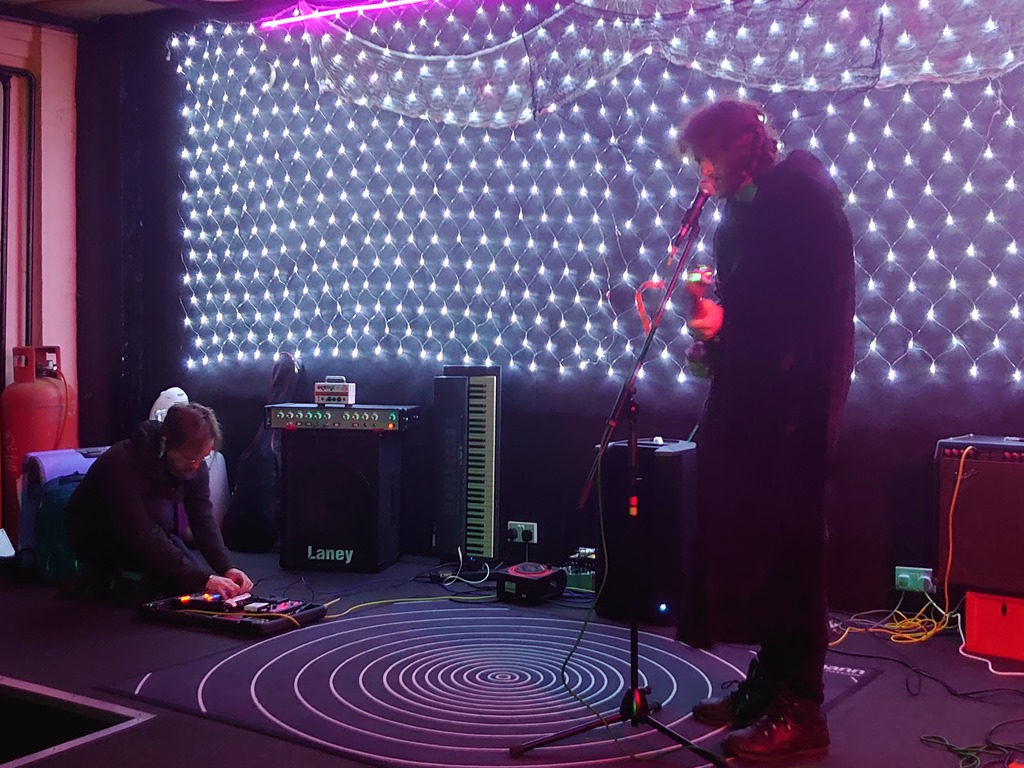
For a place a bit off the beaten track, it’s stunning. Scratch that: by any standards, it’s stunning. A rehearsal space with a stage and meticulously maintained, it’s something else. The PA speakers are halfway down the room in the main room and face the stage, doubling as monitors, meaning the band get to hear the ‘out front’ mix instead of the monitor mix. There is a second, smaller room, but we’re in the main room tonight for a lineup of noise and experimentalism, and if the audience isn’t huge, at least they’re receptive.

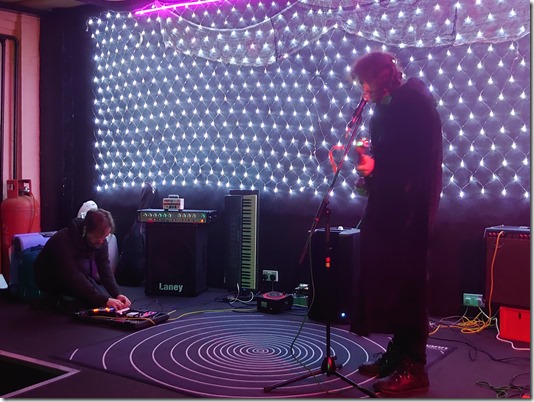
Omnibael open with an ear-bleeding blast of space rock feedback with industrial percussion worthy of Godflesh. Jase plays pedalboard predominantly. Brief moments swerve into black metal, but it’s mostly just a relentless barrage of noise. The third track goes a bit Sunn O))), with big hefty power chords paving the way for more raging metal noise. The duo’s experimental explorations may yet to have found a firm stylistic footing but this outing is perhaps their most focussed and most intense live workout yet as they continue to evolve.
DSC_0831

OMNIBAEL

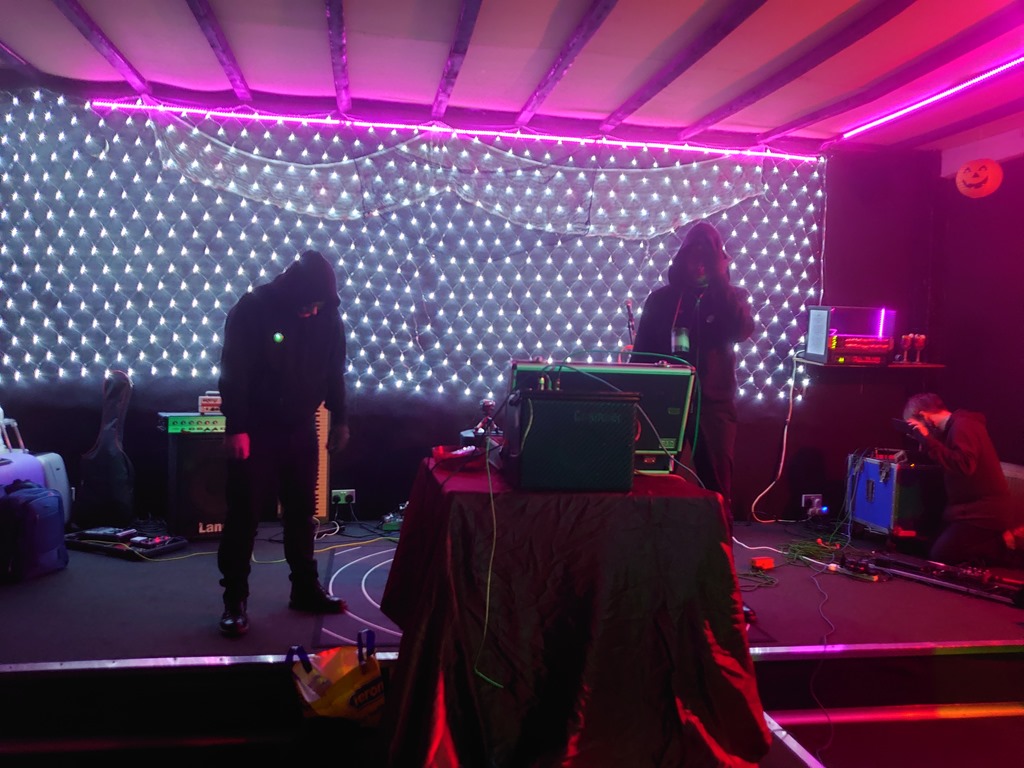
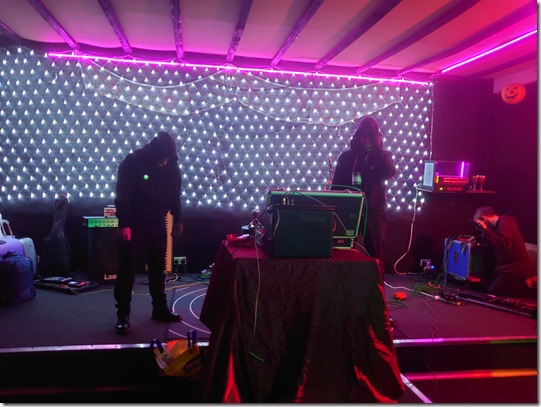
The second act, Vile Plumage, make like performance art, but struggle to keep straight faces, like they know this is audacious and preposterous. The gloved hands over faces cover grins disguised as menacing smirks. Stop start blasts of noise judder and thud. A rattling bean tin. We got given pebbles to toss into a bowl, and it was all quite bizarre and confusing, but entertaining in a strange and ritualistic way.
DSC_0832

Vile Plumage

I must have zoned out or blanked out for the next twenty minutes. Something about some guy cranking out electronic noise reminiscent of early Whitehouse while shouting torrents of vitriol and profanity through squalls of feedback, I don’t know much and I can’t comment on whether or not it was any good. But I think it happened.

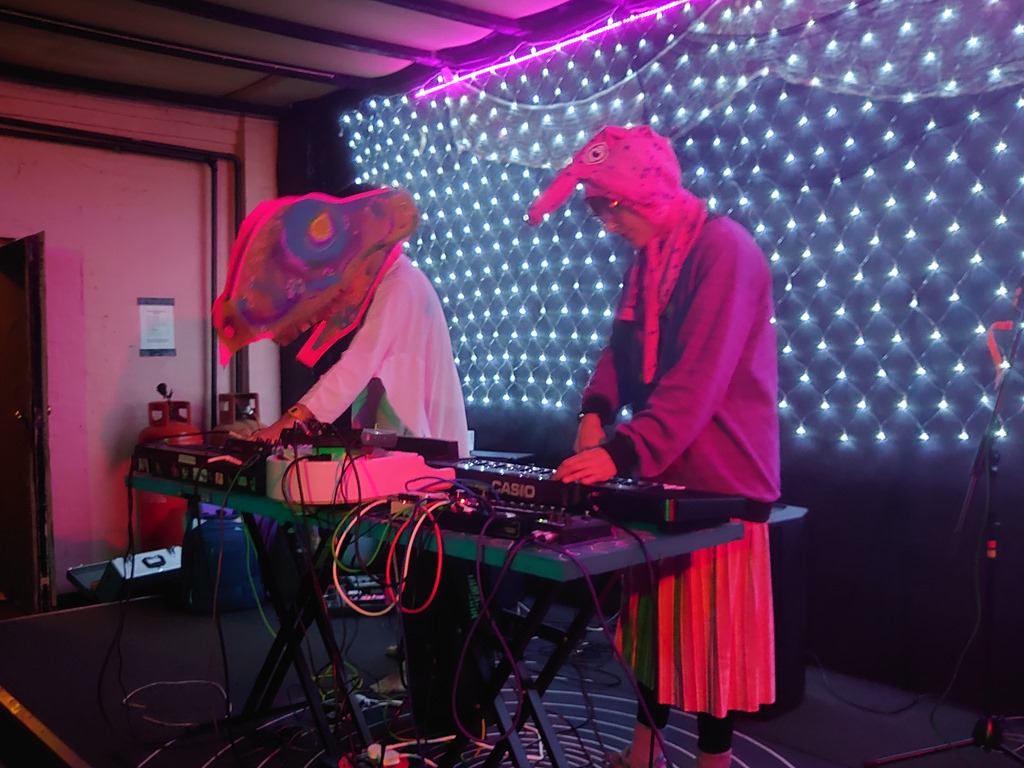
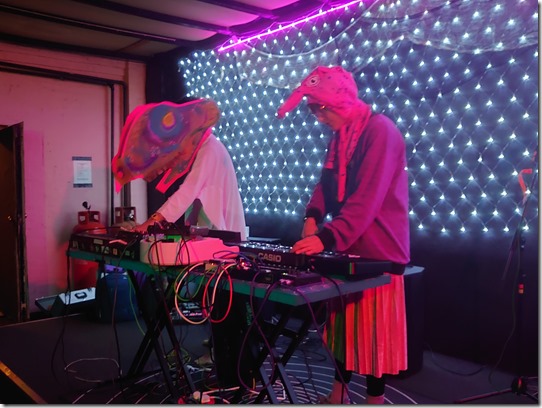
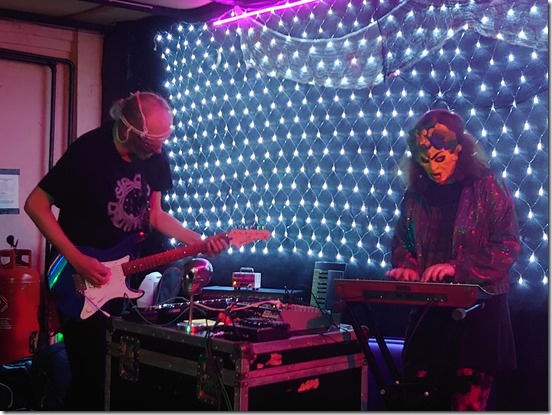
Garbage Pail Kids is an experimental duo which features Theo Gowans, aka Territorial Gobbing – meaning that anyone familiar with the scene will have an idea what to expect –namely anything as long as its experimental, noisy, and improvised – and Basic Switches, the experimental side project of Leeds indie act Cowtown. Weirdy drones and feedback strongly reminiscent of Throbbing Gristle dominate the set. There’s echoed vocal oddness and endless pulsations with phasers set to warp and stun. Crazy headgear is of course a signature, and the headgear is particularly crazy here. The ‘anything goes’ oddity is nonstop, and at one point we find Theo playing keyboard barefoot while ululating wildly. It’s a complete headfuck, but a brilliant one.
DSC_0836

Garbage Pail Kids

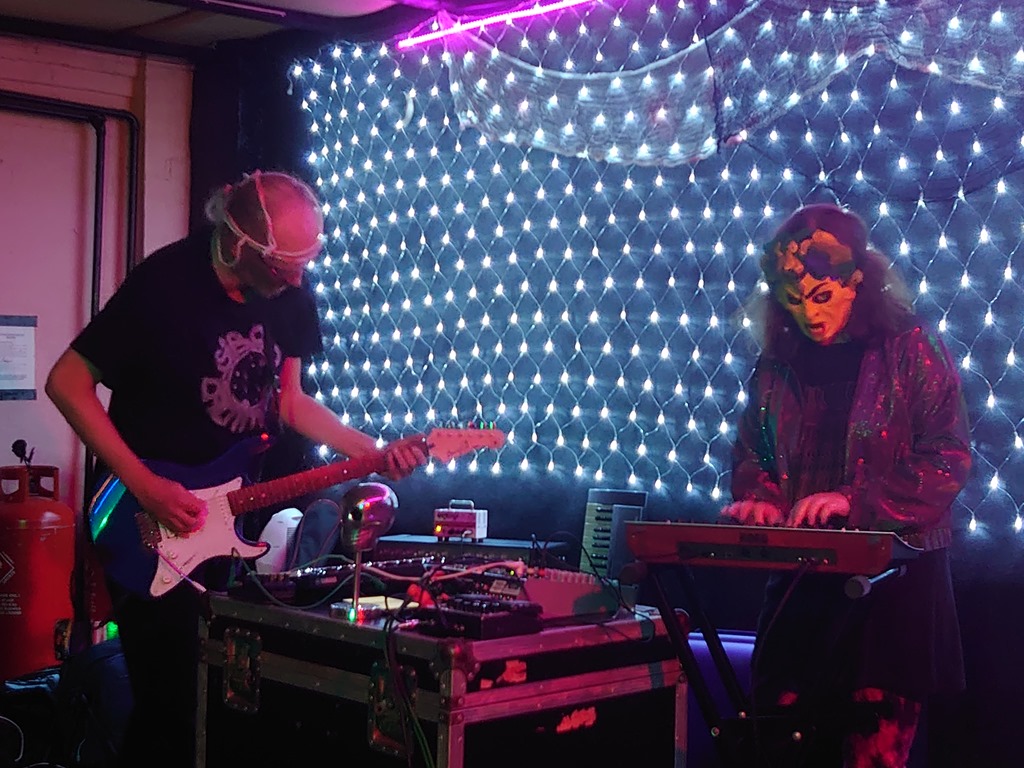
Final act Ashtray Navigations are far easier on the ear. Predominantly dominated by dark, ambient sounds and gentle ripplings, although these are ruptured by dense synth bass and crushing beats. They venture deep into prog and space rock with vintage drum machine sounds: the snare is pure Roland 606. The set builds with some bumping bass that’s more akin to Chris & Cosey’s Trance era works. After a guitar string change that does slow the momentum just a little, the last piece combines the throb of Suicide with extravagant prog guitaring. It works primarily because of the blistering volume that’s utterly gut-trembling.
DSC_0847

Ashtray Navigations

It makes for a great end to a great night, offering a selection of sounds that have enough in common to be complimentary, but different enough so as to snag the attention. With any luck, this will become the blueprint for nights to come.
12th October 2021

James Wells

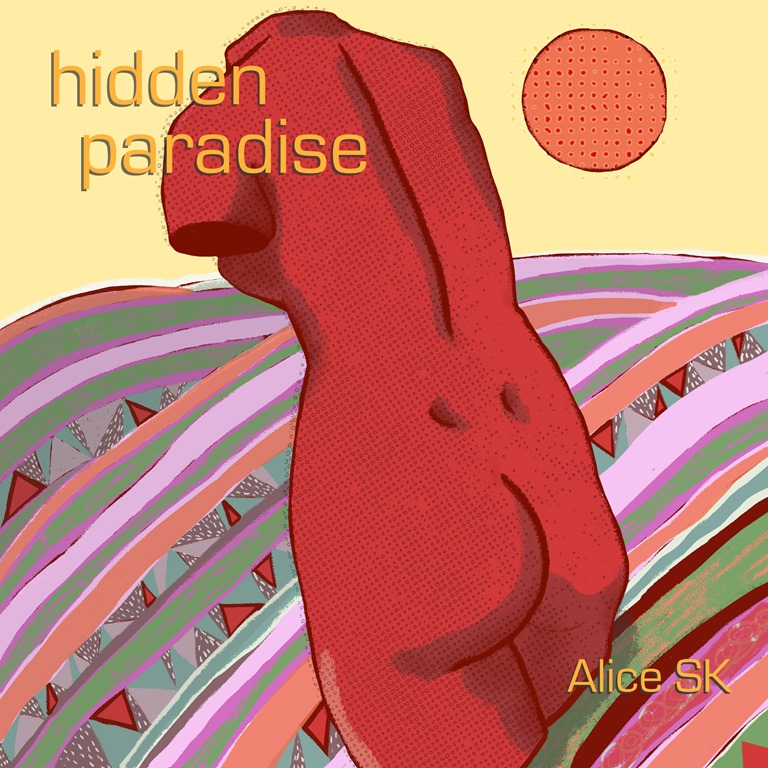
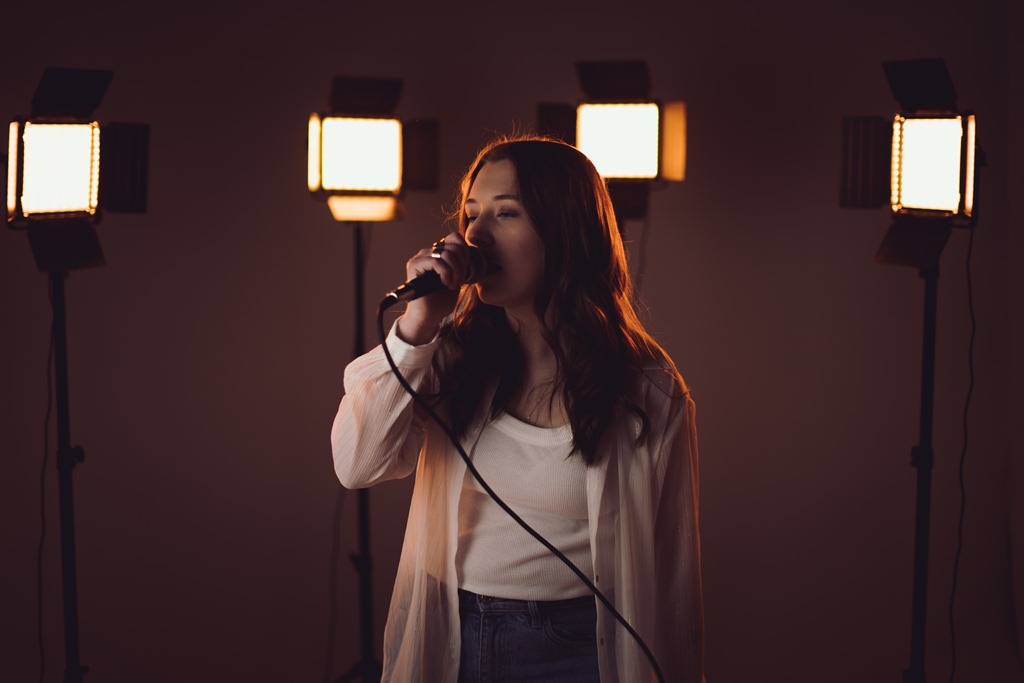
The follow-up to her debut, ‘Another Girl’s Man’, ‘Hidden Paradise’ finds Alice SK plundering a host of genres to forge something that’s breezy, undoubtedly poppy, with elements of indie, jazz, and even a hint of ska – in short, the kind of thing I’d normally not go for. But for every rule, there are necessarily exceptions: The Ruts drew heavily on dub reggae without losing sight of their punk roots; Blondie were a new wave and guitar pop in equal measure, and the fact is, pop is not a source of shame, or a cause for criticism or dismissal in itself.

‘Hidden Paradise; is nicely done: it’s got a downbeat undercurrent, but has a nice, catchy swing and some backed-off brass bolstering the breezy chorus. It has an immediacy, but, where it stands up against so much mainstream pop, it also has depth, both in terms of arrangement and lyrically, balancing the deeply personal with an uplifting delivery.

Alice is using her network to positive effect here, too: the track, which appears on her forthcoming EP Electric – scheduled for release early in 2022 – which was produced and co-written by Muca (Los Bitchos, L.A. Salami), and she’s definitely one to include in your ‘ones to watch’ list. She’s on ours.

Alice SK artwork

Youth Sounds / Cadiz Entertainment

Christopher Nosnibor

Well, this is a surprise, and I say that without sarcasm. The lead single from Youth’s debut solo album is a breezy slice of indie with a heavy 60s folk influence.

But then, Youth has always been a man of surprises. His transition from Killing Joke bassist to producer and remixer of some incredibly high-profile mainstream acts including U2 and Erasure, via recording as a member of 90s dance act Blue Pearl and back to playing bass with Killing Joke and juggling infinite other projects is an incredible feat, and while I might consider his lack of commitment to any one thing uncritical, it’s clearly apparent that he’s an artist who can turn his hand – and successfully – to anything. I suppose the only real question is ‘what does he truly believe in?’ or ‘who is the real Martin Glover?’

The press blurbage for the album, out in November, and its eclectic range does attempt to shed some light one this:

‘Growing up with the sound of 70’s pop radio and bands such as Smokie, Pilot and Bay City Rollers – some of the tracks here are a flashback to those times and the initial inspiration of a thirteen year old Youth to write his first songs. ‘Sha La Laa I Love You’ and ‘The King Of The Losers’ are intimate, honest and have a naïve and innocent pop sensibility that are underpinned with regret and loss. He’s also took [sic] inspiration from psychedelic pop and English folk rock and his own words, he was thinking – “Everything from Nick Drake to Led Zeppelin, through a lens of Fairport tripping out with the Velvet Underground with a couple of Beach Boys, all the way to Cohen and Rodriguez, via Jim O Rourke, jamming with Fred Neil and Bert Janch and Michael Rother.’

Yes, Youth has been around, and so absorbed and assimilated a lot of stuff, and ‘Spinning Wheel’ brings many of those different pieces together, starting with a keen ear for melody, with the added bonus of some nice, subtle harmonies. Objectively, it’s a neat and accessible pop tune, and you can’t say fairer than that.

20th July 2021

Christopher Nosnibor

More than I dislike talking politics or sport with colleagues and strangers, I feel most uncomfortable talking about music, because unless their leanings are, it’s almost guaranteed that we won’t hare similar tastes or knowledge. Usually, it’s a case of my hating everything they love, and their not having heard of anything I listen to. There’s no middle ground there: even if I feign an interest, nod and smile, where is there left to go?

And so I do often wonder about press releases, specifically the influences artists cite. In the more fringe fields of obscure metal, ambient, and electronica, esoteric reference points abound, perhaps because to an extent obscurantism carries a certain coolness and cachet. In more commercially-leaning circles, the opposite tends to be true. Artists aiming for a broad acceptance tend to cite artists who are well-known to the point that they’re essentially household names.

This isn’t to single out Jack Caine by any means, but his listed influences – Bob Dylan, The Beatles, Leonard Cohen, Tom Waits, Patti Smith, Arctic Monkeys, Joni Mitchell, The Smiths – feels incredibly ‘standard’. Are these really his influences? Maybe – it could really be that most people who make music listen to the same well-known artists. I also have a personal discomfort with citations of The Smiths, a band I loved with a deep passion in my teens, but have since struggled to relate to in my thirties and forties, and with their memory sullied by the colossal twat Morrissey has confirmed himself to be.

Of course, even music that is very much an evidential sum of its parts should be judged on its own merits, and while ‘derivative’ clearly bears heavily negative connotations, the assimilation of tropes and absorption of influences is, in itself, no bad thing per se. It’s all in the delivery, and for all this, ‘All in a Day’s Work’ is an accessible, melodic middling tune with hints of classic vintage indie and pop when pop wasn’t slick, manufactured, mechanised, digitised – and it’s well-executed. It has spirit, it has soul.

Building from a muted electric guitar played clean, over which Caine paints a kitchen sink scene, the bass begins to get twitchy and the muffled drumming begins to push things along and you just sense it’s going to break sooner or later… and then it spills. It’s a great single, with dynamics, energy, and emotion, and hooks.

su22432-Jake_Caine-All_In_A_Days_Work-Jake_caine_19

16th July 2021

James Wells

Here at Aural Aggravation, we may have a predilection for noise and abrasion, but sometimes, we get headaches, sometimes we just get too het up and stressed and life gets so horrible that we need a break. Besides, even pop songs don’t necessarily mean mainstream these days: and without the kind of exposure that propels them to stardom, purveyors of pop can be as underground as the darkest of sludge metal acts.

Bethany Ferrie – 23 and hailing from Glasgow – beings us a piano-led song that’s poppy, but also serious, but without being Coldplay or Keane about it. She does, however, represent a generation of new artists who are emerging with a maturity that belies their years.

On ‘This is Where I Leave You’, Bethanie twists and turns through a gamut of emotional turmoil, and there’s a whole lot of emotional anguish here, but it’s presented delicately and digestibly thanks to a sweetly melodic delivery.

Bethany Ferrie Press Shot 2

2nd June 2021

James Wells

So often, less is more. Ben Denny Mo’s latest single is simply acoustic guitar and vocal. As such, it’s certainly less in terms of arrangement, and with so few elements in the mix, it’s hard to go particularly OTT on the production too. This is what really makes this: there’s no multitracking, no gimmicks or studio trickery, no deception or other kind of alchemical wizardly to enhance the performance. What we have here is just a staggering wealth of musical talent and ability on display.

The Fakenham-based singer-songwriter has already become a firm favourite with BBC Introducing at home in Norfolk, having drawn comparisons to a wide range of singers from Jack Johnson, Dave Matthews, Michael Jackson, Sam Smith and John Martyn. It’s testament to his range and versatility, and there’s a lot going on, all packed into this concise little number. The guy’s got real soul, and she swoops, soars, leaps and bounds all over the song with unbridled energy, calling to mind Everything Everything’s Johnathan Higgs.

But with so much focus on ben’s voice, what about the musicianship, and what about the song? There’s a complexity of technique that belies the apparent simplicity of tapping a few chords, with some fast fretwork that blends classical and jazz with a dash of funk.

In cramming so much in and dazzling so brightly with it, it’s sometimes a little difficult to follow the song itself. The hooks are overshadowed by the performance itself, and I suppose ‘6am’ evokes the same kind of sensation as listening to Jamiroquai – which of course is subjective and divisive. The popular perspective is that it’s a groove, and there’s no question Ben’s got mass appeal, and ‘6am’ could yet prove to be the breakthrough.

su20272-BenDennyMo6

26th May 2021

Christopher Nosnibor

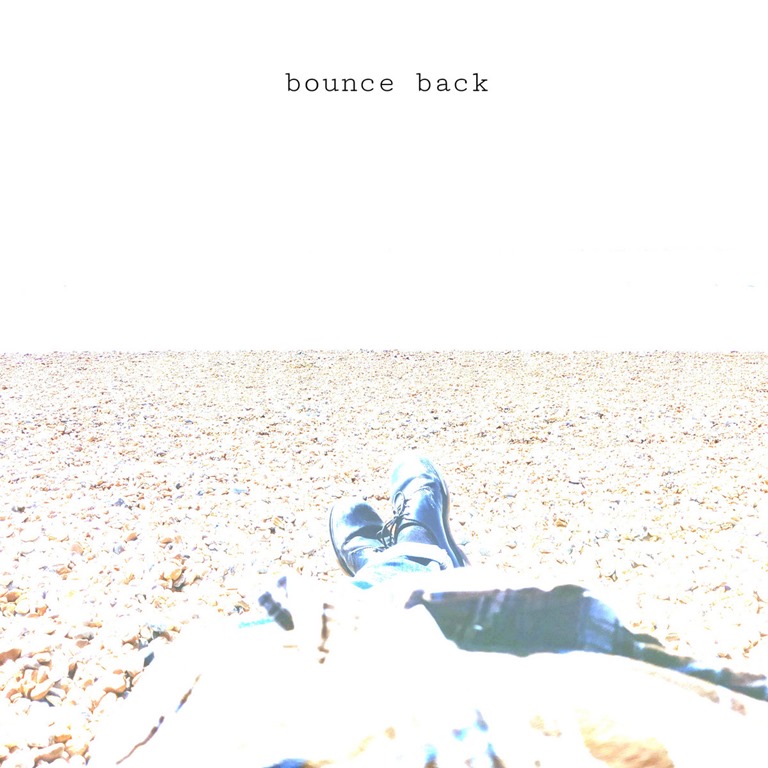
It’s been a whole month since we heard from lo-fi bedroom duo Videostore, and their latest effort continues the narrative trajectory that’s been running through so many of their releases.

The pair describe ‘Bounce Back’ as some ‘Cathartic song writing after they closed down the Videostore and everyone lost their jobs… Channelling some New York new wave/ no wave with special thanks to Blondie and Sonic Youth!’

This one starts of slow, stripped back and sedate, but as it builds, it balances lugubrious wallowing with some clean, poppy backing vocals. It’s one of their longer songs, and it’s a slow-burner that simmers before finally going off toward the four-minute mark – and when it does go off, it blazes hard.

AA

a0128443041_10

9th April 2021

Christopher Nosnibor

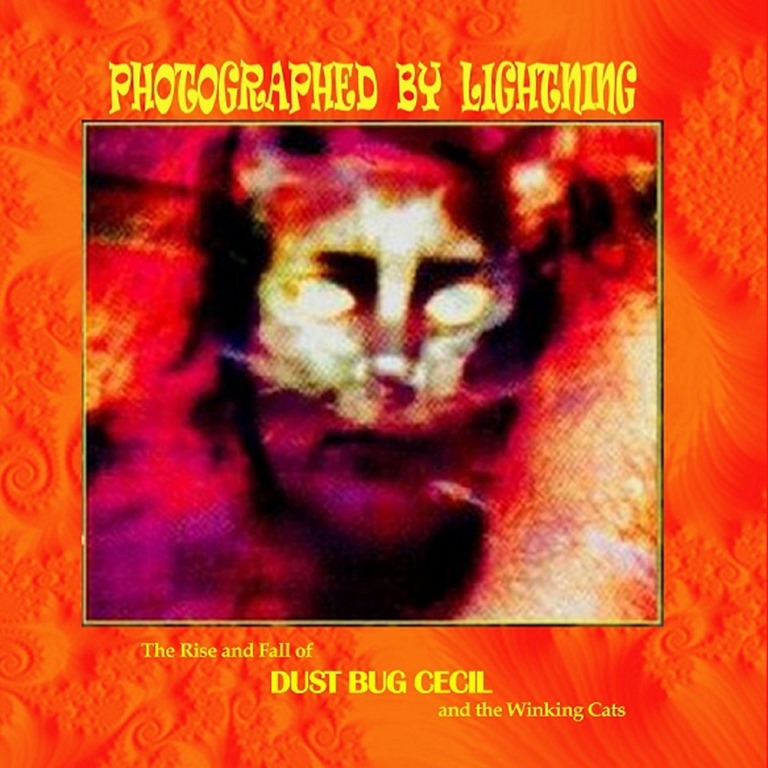
The remastered re-reissues of avant-experimentalist oddballs Photographed by Lightning continues apace with the emergence of Dust Bug Cecil (or, to give it its full title, The Rise and Fall of Dust Bug Cecil and the Winking Cats, supposedly taken from an obscure book about a direct to disc recording pioneer, and may in turn be a skewed play on Ziggy Stardust. Of course, everything is skewed in the world of PBL, and if Music From the Empty Quarter wasn’t evidence enough of this, then this should be enough to convince anyone: presented here as a whopping thirty-eight track document (2 CDs worth), Dust Bug Cecil is augmented with the entirety of their other 2002 album, Let Me Eat the Flowers. On the strength of this, it vocalist Syd Howells and co (here represented by Dave Mitchell (vocals, bass, keyboards); Bionio Bill (drums & percussives); Roland Ellis (saxophone); Chris Knipe (mandolin & fiddle), and Rev Porl Stevens contributing vocals to ‘White Master’)) had perhaps ingested more than just pansies prior to these sessions.

As Howells recounts it, ‘following the behemoth like Music From The Empty Quarter we went in search of tunes. Found some too. Glued them together with words and somehow found ourselves making a ‘pop’ album.’ In comparison to its predecessor, Dust Bug Cecil is a pop album in that there are none of the sprawling ten-minute epic headfucks on offer here, with most of the songs – and, indeed, they are songs – clocking in around the three-minute mark. It’s ‘pop’ in the style of the dark pop of post-punk, but its values are ostensibly altogether more punk, and its sound is primitive and murky. It’s pop in the way The Jesus and Mary Chain write breezy, surfy pop tunes and bury them in is a squall of noise that renders them almost indistinct.

There are melodies and choruses bursting out from every corner, but in context of 2002, songs like the album’s opener, ‘Eyes on Stalks’ and ‘Numb Alex’ sound like early 80s new wave demos: driving Joy Division-esque bass dominates a rhythm pinned down by a frenetic drum machine that sounds like it’s struggling to keep up with the throbbing energy, and there are hints of The Cure and B-Movie in the mix here.

The guitars buzz like flanged wasps on the vaguely baggy / shoegazey ‘Lady Lucifer’, prefacing the sound that A Place To Bury Strangers would come to make their signature. Elsewhere, the sound swings from almost straight 60s-tinged indie on ‘Let Me Eat the Flowers’, while ‘The Remains of a Tramp Called Bailey’ sounds like a head-on collision between The Pixies and The Psychedelic Furs, and ‘The Risen’ comes on like early New Order. If it reads like I’m chucking in a list of seemingly random and incongruous artists by way of confused and confusing reference points, it’s because that’s what the listening experience is like. None of the elements of the album are unique by any stretch, but their hybridisation very much is. The 60s garage vibe of ‘Untitled (for Dylan’) and the Fall-like scuzz of ‘David Dickinson Said’ (with its obvious but necessary ‘cheap as chips’ refrain) are well-realised, and suit the lo-fi production values.

Sonically, Dust Bug Cecil is nowhere near as challenging as Music From The Empty Quarter, and it was almost inevitable that they had to do something different, having taken the avant-jazz oddity to its limit. Then again, of course, there’s still the customary weird shit, like the squelchy racket with spoken word of ‘Bob’ and ‘Pablo’, and the doomy industrial synth robotix of ‘Be This Her Memorial’, which mean it’s hardly the most accessible album going and it is quite bewildering just in terms of its stylistic eclecticism.

It’s unquestionably a mixed bag, and not all of the efforts are completely successful or gel quite as hoped, something the band themselves acknowledge with hindsight. But it’s still very much a musical, if not commercial, success, showcasing a band capable of wild diversity in their creativity, as well as a band who’ve spent a career making the music that pleases them over anyone else.

AA

a2359923339_10