Posts Tagged ‘Pavement’

Christopher Nosnibor

When it comes to formats and the strategies for marketing new releases, it’s clear – particularly in hindsight – that the 90s was the peak period for milking fans with myriad formats, each featuring different mixes or edits, B-sides, and artwork. Now, I am by no means a nostalgia nut, but as a collector, part of me does miss this – particularly when most releases aren’t even available physically anymore, and some aren’t even downloadable. Adding a track your playlist is… nothing.

The latest offering from Glasgow’s wonky lo-fi maestros, Dragged Up, sees a different approach, at least, with an edited version of the A-side being released to streaming platforms but a full-length version available to download via Bandcamp, with the B-side being released a week later, followed by a physical release via the ever-innovative label Rare Vitamin.

You really need the full five-minute version of ‘Blake’s Tape’ to take it all in, to bask in the glory of the epic intro of churning feedback and rumbling discord which eventually gives way to a stomping, rambunctious indie tune which brings in elements of post-punk and folk, a collision of UK 80s and US 90s, and with the verses and choruses sounding like they belong to different songs, the dynamic is strong, switching as it does from nonchalance to pumping energy. And both are magnificently executed.

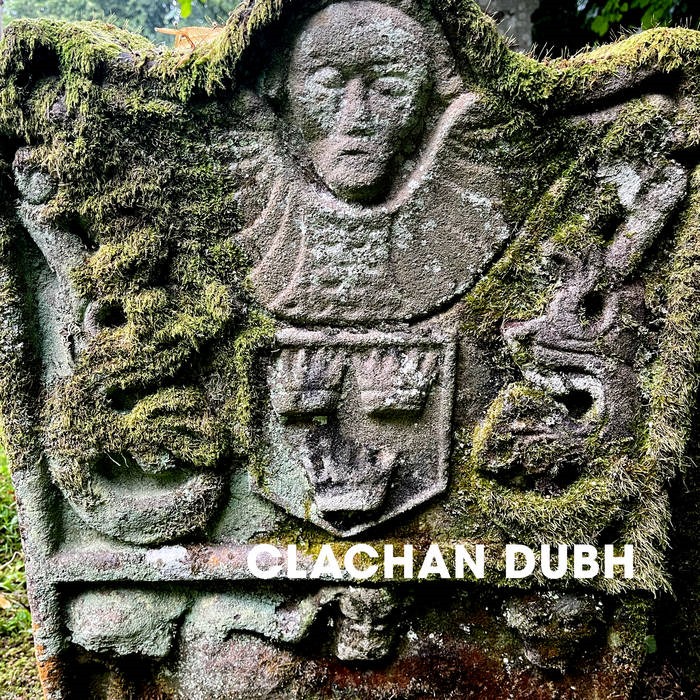
‘Clachan Dubh’ is a fast-paced, high-energy blast of fizzy guitars and blissfully loose interswitching vocals, and again it’s a collision of Pavement and The Fall plus all the scuzzy indue acts you’d read about in NME and Melody Maker in the early 90s. It’s less a case of them sounding like this band or that band, and more about the way they distil these various zetigeists and amalgamate them into a magnificent alt-rock hybrid which sounds like so much that’s gone before, and at the same time completely unique.

Oh, and they’ve got songs. Great songs. Get stuck in. And maybe go and see them on tour in a small venue in August, because after touring as the support for Steve Malkmus’ new band in the summer, there’s a fair chance they’ll be playing bigger places by this time next year.

AA

a3966480230_16a1631882881_16

Cruel Nature Records – 21st February 2025

Christopher Nosnibor

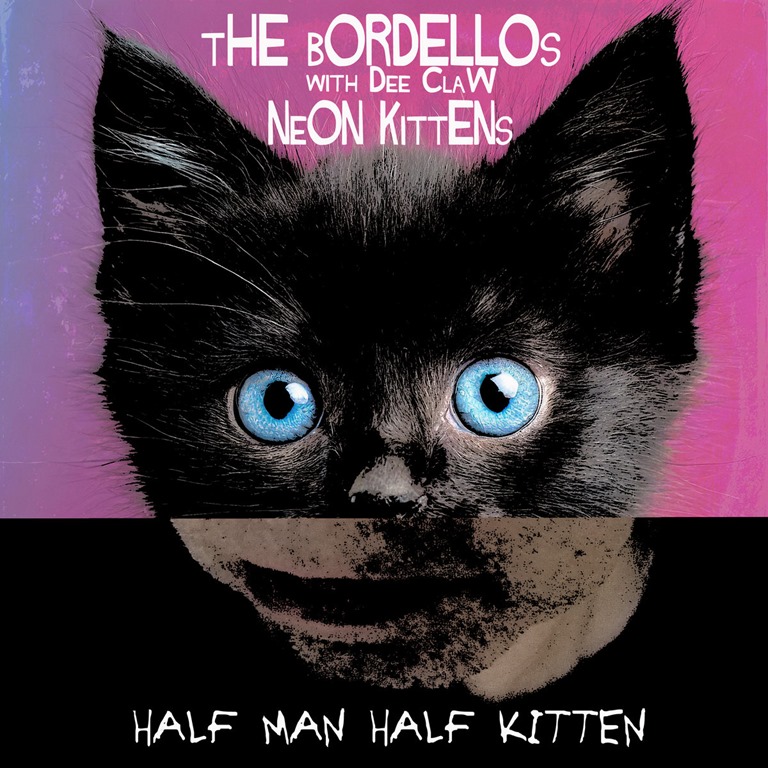
This split release has a lengthy backstory, which is given in full on the label’s Bandcamp page – but the short version is that when York’s Neon Kittens (how had I not heard (of) them, given that they appear to be from round my way and absolutely my bag? I feel ashamed, and fear I cannot even remotely claim to have the finger on the pulse of my local scene right now – but still, better late than never, right?) approached The Bordellos about a collaboration, the latter, having taken an eternity to only half-finish their current album-in-progress, some ten years after the release of will.i.am, you’re really nothing, offered everything they had for a split release. And lo, this is it.

I suppose the eight songs Neon Kittens have contributed here provide a solid starting point to their rapidly-expanding catalogue, and being paired with The Bordellos works a treat. Both espouse the same lo-fi DIY ethic, with a certain leaning toward indie with a trashy punk aesthetic.

That the cassette edition sold out on advance orders hints at the anticipation for the release: for, as The Bordellos describe themselves as being ‘ignored by millions, loathed by some, loved by a select few’, when you’ve got a small but devoted following, they get pretty excited for new material.

‘Set Your Heart to the Sun’ is perfectly representative of their scratchy, harmony-filled indie – kinda jangly, a tad ramshackle, but direct, immediate. Dee Claw’s airy vocal contributions really lift the sound and raise the melodic aspects of the songs. Not all of the songs have full drum-kit percussion, often favouring tambourine or bongos or seemingly whatever comes to hand, and more than any other acts, I’m reminded of Silver Jews or really, really early Pavement – those EPs that sounded like they were recorded on a condenser mic from the next room with more tape hiss than music, but still undeniably great tunes. And yes, they really do have great tunes – overall, they’re pretty laid-back in their approach to, well, everything: remember when ‘slacker; was a thing? Yeah. In place of polish, they have reverb, and these songs tickle the ears with joy.

Neon Kittens bring a rather denser sound and a greater sense of urgency with the buzzy, scuzzy ‘Better Stronger Faster’. A hyperactive drum machine stutters and flickers away beneath a sonic haze of fuzzy guitar: there are hints of Metal Urbain crossed with The Fall and Flying Lizards in the mix, while ‘All Done by Numbers’ brings Shellac and Trumans Water together in a head-on collision – and one suspects any similarity to Shellac’s ‘New Number Order’ is entirely intentional from a band who recently featured on a Jesus Lizard tribute. ‘Cold Leather’ presents a spoken word narrative over a lurching, lumbering morass of discord, held together by the whip crack of the snare of a vintage-sounding drum machine.

The majority of their songs are around the two-minute mark, and crash in, slap you round the chops, and are done before you really know what’s hit you. ‘Deaf Metal’ is a work of beautiful chaos, constructed around a thick, rumbling bass and rolling drums., while the rather longer ‘White Flag’ is almost a stab at a grunge-pop song, while the discordant clang of ‘Sailing in a Paper Boat’ is absolutely The Fall circa Hex Enduction Hour: lo-fi post-punk racket doesn’t get much better than this.

AA

a3951021685_10

Christopher Nosnibor

On this night twenty-four years ago, I was at Leeds University Refectory, watching The Sisters of Mercy play their tenth anniversary gig. Having previously only seen them once, in November 1990, at Wembley Arena, to be in the front row in a venue so much more intimate was absolutely mind-blowing. This reminiscence has little to no correspondence to tonight’s event, beyond the date, although I recall that it was a bitingly cold night, the kind of seasonal grimness that means it’s a real effort to venture out.

Thankfully, despite it not only being absolutely biting, but being a Sunday, a decent crowd has ventured out for this, the second part of the album launch event for The Illness’ debut album (the first part having been in Liverpool the night before, with the band being split between Liverpool and York). 6:30 doors and the prospect of not only two quality bands and an early finish are likely all contributing factors in terms of incentive.

So what do we know about The Illness? Not a lot. It’s taken them a decade knocking about to get to this point. The notes which accompany the Bandcamp of their eponymous EP, released in 2020 and featuring Steve West and Bob Nastanovich of Pavement, gives a clue as to where the time goes: ‘Following 5+ years of scrapped sessions, line-up changes and other distractions, both tracks were initially recorded in the basement of a former maternity home, Heworth Moor House in York (on Scout Niblett’s old 8-track machine). Steve recorded his vocals at Marble Valley Studio, Richmond, Virginia and Bob in Des Moines, Iowa.’

It’s a tale reminiscent of the likes of The Stone Roses and My Bloody Valentine stalling on their second album… only this is a band that stalled for more than five years without releasing a note. So the fact Macrodosed has arrived at all seems nothing short of miraculous.

Before they launch the album, Nature Kids – a band who’ve been gigging around York for a while but I have no experience of – warm things up, and they’re nice. That’s not ‘nice’ in the bland, insipid way, but the enthusiastic way. They serve up a set of mellow indie, which is both happy and sad at the same time. There’s some nice twangy country tones and subtle keyboard work, and some saw action, too. ‘Always’ goes a bit post-punk and has a tidy groove to it, and is a standout in a set of consistent quality. The lead guitar is what really stands out – although it’s subtle and understated, to the point that it takes a few songs to realise what it is about their sound that’s so magic. No two ways about it, this is a gem of a band.

DSC01079DSC01082

Nature Kids

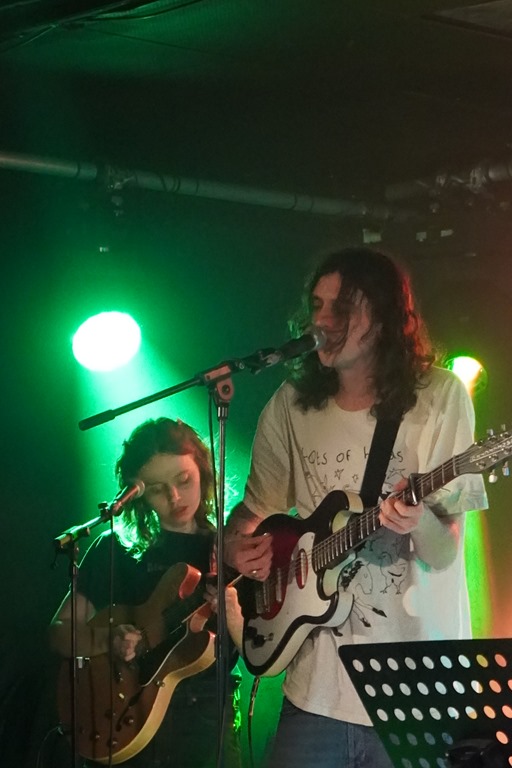
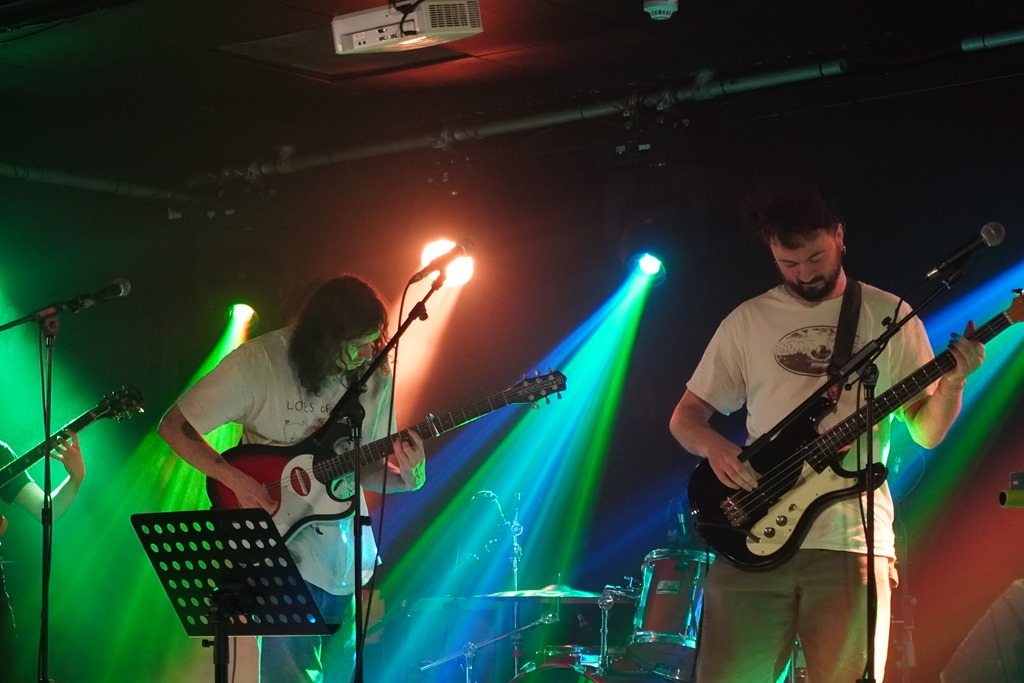
The Illness is not so much a band as a collective, and just as the album has a roll-call of guest contributors, so they present an ever-changing lineup on stage. There are never fewer than six of them, but sometimes as many as eight, and there is instrument and position-swapping galore, with vocal and bass duties switching all over.

Much of the time, they have three guitars, bass, drums… but there are some synths happening, and their sound is an immaculate blend of indie, prog, epic psychedelic space rock, all executed, if not with precision, then behind a curtain of shimmering sonic fireworks, from blooming roman candles to the spirals of Catherine wheels.

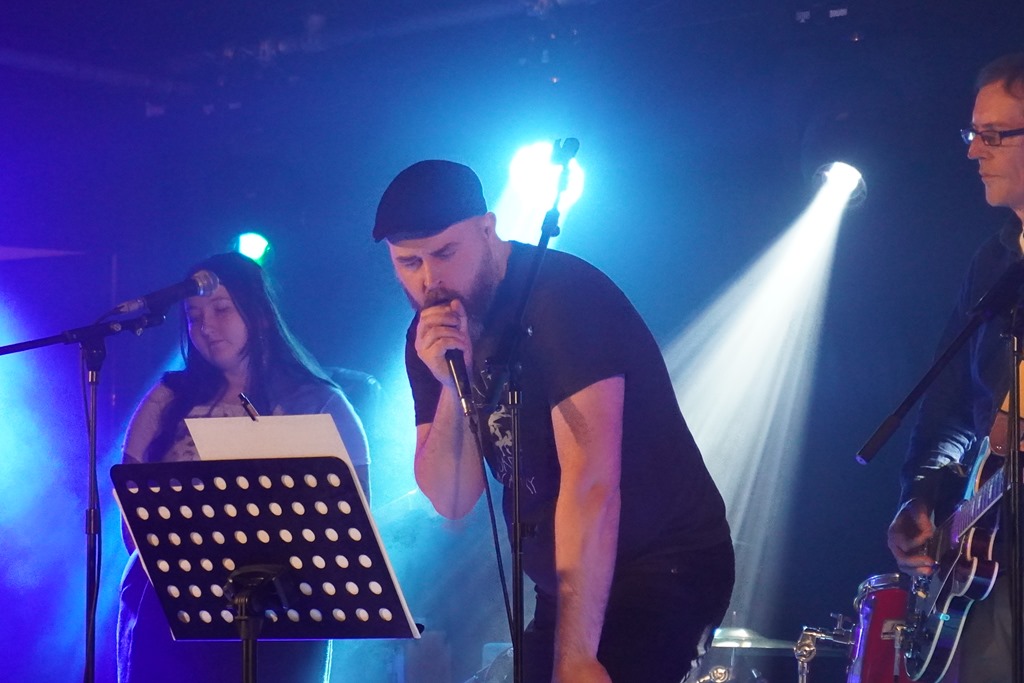
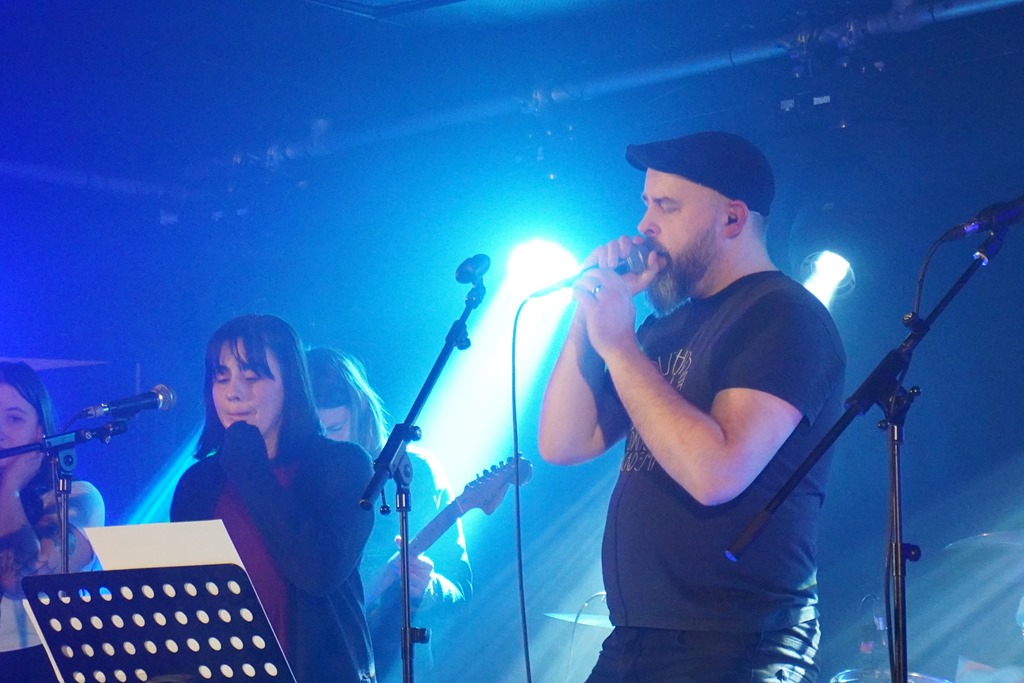
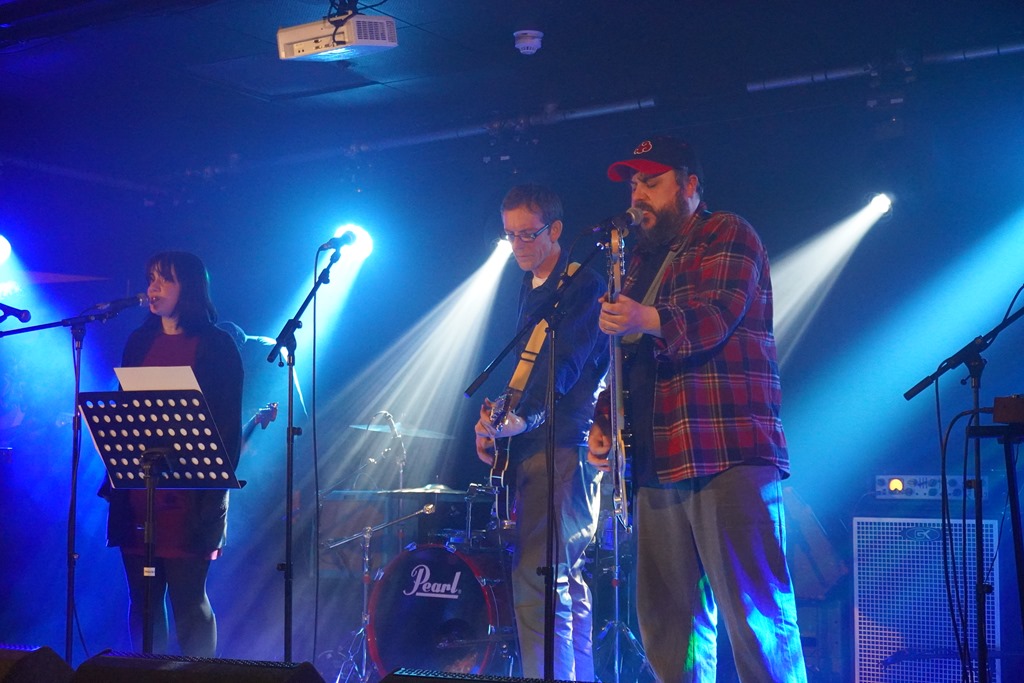
DSC01087DSC01101DSC01097

The Illness

‘Speedway Star’ is the second song of the set, and it’s laid back but had a certain grip. The album version featured David Pajo, and the question keeps arising: how? Ultimately, it doesn’t matter: what matters is that their set – a mere forty-five minutes – is something special.

The final song of the night is a full-on motorik wig-out, and it’s absolutely magnificent, with two trilling synths and two guitars, it’s equal parts Stereolab and Early Years (do better comparison). Danny (Wolf Solent, etc, a man who’s essentially a one-man scene in York and who I gather is a late addition to the band’s lineup) , who’s been keeping restrained throughout goes all out with a blistering guitar workout

The Illness may be well under the radar and well underachieving – given their connections alone they ought to be massive, never mind the fact they’re uniquely brilliant – but perhaps that will change given the brilliance of the album and superb shows like this. The Illness are totally sick… right?

Cruel Nature Records – 21st February 2025

Christopher Nosnibor

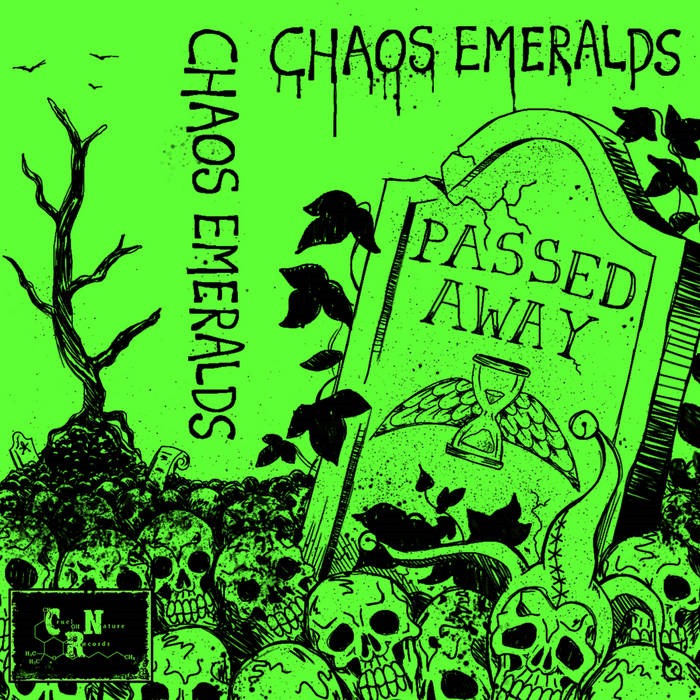
Cruel Nature are delivering a slew of releases on 21st February – an overwhelming volume, in fact. We’ll be coming to a fair few of them in the coming weeks, but first up, is the second album from Lanark / Reading based sludgy shoegaze project Chaos Emeralds, Passed Away, which comes in a hard-on-the-eye dayglo green cover which is catchy and kinda corny in equal measure.

According to the bio, ‘Chaos Emeralds is Formerly the solo project of Charlie Butler (Cody Noon, Neutraliser, Mothertrucker) with releases on strictly no capital letters, Les Disques Rabat-Joie and Trepenation Records, Chaos Emeralds has now expanded to a duo with Sean Hewson (Monster Movie, Head Drop, This) joining on lyrics and vocals.

Passed Away combines the lo-fi slowcore, shoegaze and doomy post-rock sounds of the previous Chaos Emeralds releases with a more song-focused approach to create a set of scuzzy emo gems.’

For some reason, despite ‘sludgy shoegaze’ and ‘lo-fi slowcore, shoegaze and doomy post-rock’ featuring in the above description, I didn’t quite expect the Pavement gone Psychedelic vibes of the title track which raises the curtain on the album. A primitive drum machine clip-clops away, struggling to be heard above a tsunami of feedback and waves of distortion on ‘Count Me Out’, which adopts the kind of approach to production as Psychocandy – quite deft, breezy and ultimately melodic pop tunes almost completely buried in a blistering wall of noise.

‘Juggler’ brings a wistful tone – somewhere between Ride and Dinosaur Jr – amidst ever-swelling cathedrals of sound, a soaring lead guitar line tremulously quivers atop a dense billow of thick, overdriven chords which buck and crash all about. The way the elements play off one another, simultaneously combining and contrasting, is key to both the sound and the appeal. It’s one of those scenarios where you find yourself thinking ‘I’ve heard things which are similar, but this is just a bit different’, and while you’re still trying to decide if it actually works or not, you find yourself digging it precisely because of the way it’s both familiar and different.

The vocals, low in the mix, feel almost secondary to the fuzzed-out wall of guitar, but their soft melancholy tones, sometimes doused in reverb, add a further minor-key emotional element to the overall sound, especially on the aching ‘Matter’.

When they do lift the feet off the pedals, as on ‘Welcome Home’, the result is charmingly mellow indie with a lo-fi sonic haze about it – and a well-placed change in tone and tempo, paving the way for the epic finale that is ‘In Our Times’, a low-tempo slow-burner which evolves from face to the ground miserabilism into something quite, quite magnificent, Hewson’s near-monotone vocals buffeted in a storm of swirling guitars as the drum machine clacks away metronomically toward an apocalyptic finish.

AA

a4117384026_16

Innis Orr / UR Audio Visual / Redwig / Bar Marfil – 1st November 2024

Christopher Nosnibor

Glasgow’s Howie Reeve could never be accused of being predictable, or dull. His musical output is eclectic, experimental, and more than that, it’s often spontaneous, energetic, and in-the-moment. His last release, in 2022, was a set of songs created with his (then) ten-year-old son. Before that, there was a live recording of Chassons (that’s Cathy Heyden on alto sax, practice chanter, tin whistle, and Howie Reeve on electric bass) performing at Le Maquis de Varielles, a document which captures ‘Both of us grabbing whatever else is to hand and occasionally ululating.’ This time around, there’s a whole host of accomplices doing more or less the same to lead the listener on a wild ride. Indeed, Leaf in Fog finds Reeve working with a substantial number of friends in order to realise this ambitious and wide-ranging work.

The title – and cover art – carries connotations of the natural world, perhaps a sense of drifting autumnal melancholy, but the actuality is something altogether more jagged, dissonant, tense and disorientation. There is an earthiness to the songs and their performance, but it’s rent with the kind of twists and spasms that tear the fabric like a psychotic episode.

‘Microscopic Liberties’ starts out – and concludes – as a work of ramshackle lo-fi acoustic folk that’s not quite folk but not quite anything else one could pin down as belonging to a specific genre either. In between, there are blasts of howling noise and slanting guitar slaloming askew across a wandering bass groove. There are moments where it goes a bit Pavement, others more They Might be Giants… and it’s only two and a half minutes long. ‘Water Catalyst’ follows immediately, and tosses in elements of prog, neofolk, medieval minstrel folk and jazz.

‘Apotrope’ may be but an interlude with a running time of a minute and twenty seconds, but it’s a sharp honk of straining horn, a fragment of dissonant jazz swirling in an ambience of voices and then some sing-song poetical narrative… it’s hard to keep up. The compositions, the song structures, border on the schizophrenic, or the aural equivalent of Tourette’s, but instead of being unable to hold back the ticks and sputter ‘tits, fuck, cunt, wank’, Reeve can’t leave a song to just drift along comfortably, and it’s always just a matter of time before spasmodic bursts of all hell break loose.

From among chaos, occasionally, moments of quite affecting musicality emerge: the pick and strum opening of ‘Shop Window’ is whimsical and at the same time somehow sad, and continues to be so even when chaos and discord and bleeps and whistles collide like a speeding juggernaut travelling in the wrong carriageway, obliterating the acoustic serenity. ‘Evidence’ begins subtle, slow, a dolorous bass trudging through lugubrious strings and a sparse, simple clip-clop rhythm. The vocals veer between light and lilting and wide-eyed and tense as the instrumentation switches and slides through a succession of unpredictable transitions, before ‘Trouser Tugger’ goes full Trumans Water, but with a more muted, bedsit indie feel, leaving you dazed and bewildered at the end of its clanging, jolting three minutes.

The songs on Leaf in Fog are predominantly folk songs at heart, and the core elements expose moments which are often quite touching and pluck at emotions which are just beyond reach, beyond articulation, obscured, perhaps, by fog, but equally obscured by fret buzz and crackles and crazed strings and horns and an endless array of additions and interruptions.

It would be impossible to pretend that Leaf in Fog is in any way immediate or especially accessible, and the truth is it’s likely simply too much for many. Like Beefheart’s Trout Mask Replica, there’s so much going on its dizzying and difficult, and requires a lot of focus, and energy, to listen to. But Reeve – with more than a little help from his friends – has conjured a bold work, brimming with charm and mysticism, imagination and madness. Venture into the fog and explore, but do tread carefully.

AA

a1513935626_10

Gringo Records – 15th December 2023

Christopher Nosnibor

By way of a name, Reciprocate doesn’t give much away. With its connotations of collectivism and collaboration, it could be anything from limp indie to a jazz ensemble, although to my ears, it suggests ska-punk or some other corny right-on festival friendly guff. But no: they’re an avant-rock trio, and something of a supergroup when it comes to representatives of the UK DIY scene, consisting of Stef Kett (Shield Your Eyes), with drummer Henri Grimes (Shield Your Eyes, Big Lad), and Marion Andrau (The Wharves, Underground Railroad) on bass, and the name, it transpires, is a reflection of the synergy between the three, promising ‘intoxicating, super catchy good-time, big heart music – a human album delivering a human message of love and love lost.’

The blurbage goes on to outline how Soul To Burn proceeds at a cadence all of its own, halting and blasting, ducking and weaving, zooming away from its distant cousins: Taste era Rory Gallagher or Mr Zoot Horn Rollo of Beefheart’s Magic Band, leathering it at full throttle, fuelled by virtuosic back beats that remind of somewhere between the rolling rock of Mitch Mitchell and the fractured noisebeat of Lightning Bolt’s Brian Chippendale: immediate, innovative, virtuosic, exhilarating.

The album’s ten songs are concise and precise, with ninety percent keeping below the four minute mark, and it’s perhaps this focus which really makes Soul to Burn pop. ‘Sleevetugger’ is pretty minimal, and has soulful, bluesy vibe with even a dash of county twanged into the mix – but it’s played with a wonkiness worthy of Pavement, and that absolutely changes everything. They amp it up on the groovesome ‘Rhodia’, where a riff that comes on like a Led Zep lift is delivered with a rough and ready noise-rock approach.

For context, my first exposure to live music was electric blues acts playing in pubs in my home town of Lincoln, at the tail end of the 80s and very dawn of the 90s. While I was just starting to discover alternative music – via the top 40 and also Melody Maker – I was still that bit too young to go to ‘proper’ gigs, and besides, there weren’t (m)any in Lincoln back then. But what struck me was the musicianship of so many of the acts, many of which would play a mix of originals and covers, and I also came to appreciate how everything blues-based springs from an extremely limited root stock. ‘Derivative’ isn’t really a criticism that holds any water. But, to make blues rock work, it has to either the executed extremely well, or otherwise fuck with the formula in some way, and bring something different to the party. Either is really, really hard to do in such an immense field. The last decade or so has seen countless acts achieve success with some pretty mediocre blues rock played loud: I began to think I was bored of blues. But then an album like Soul To Burn turns up unexpectedly, doing it with a real punk attitude, and turns everything around.

Whereas many power trios – not to mention duos, who are the power trio of the post-millennium years – go all-out to fill every inch of space with sound, Reciprocate create space and separation. Everything isn’t blasting to the max, and instead, what we get is a rare level of detail. The bending strings, the fret buzz, the rattle of the snare, the ragged imperfections – they’re all there, and are integral to the fabric of the recordings.

They do melody and groove, and it’s enjoyable, but when they wander off track, as they do most spectacularly towards the end of ‘Pissed Hymn’ there’s something truly glorious about it. The title track is ahead-on collision between Shellac-like mathiness and raucous, rabble-rousing folk. Everything gets twisted and knotted up, the template gets tangled and torn, and it’s unpredictable and exciting.

And it’s got a cat on the cover. 10/10

AA

Reciprocate - Soul to Burn cover 3000px

Now That We Are All Ghosts is the second album from Milwaukee’s Resurrectionists. The project was self-engineered, recorded and produced; it was mastered by Bob Weston at Chicago Mastering Service. The album features nine songs of Doom Chamber-Americana, all powerfully cinematic and ripe for video treatments, leading the group to take the unusual and ambitious step of commissioning videos for every one of them.

‘Let Me Talk You Through This One’ is the fourth of these videos, and it accompanies a laid-back, strung-out lo-fi tune reminiscent of Pavement at The Silver Jews.

The video: An exquisite moody piece by animator Eric Arsnow. Floating towards home (maybe) in a small boat lit only by a lighthouse on an ominous night. He gets there in time.

The song: Originally written for the solo project “The Intelligibles” around the year 2000. A song about ambition, moving places and time.

-Joe Cannon/Resurrectionists

Check the video here…

AA

Resurrectionists pc Brian Theisen

30th June 2022

James Wells

‘i write weird songs for weird folks’ writes alien machine, all in lower case. ‘A solo artist pretending to be a 3 to 5 piece garage punk outfit,’ ‘the sea complains’ is their fourth release. Details of this US-based artist are sparse to non-existent, but it appears that having emerged in 2014, they lay creatively dormant before deciding to reconvene with racketmaking during the pandemic, which seems to be a common thing as people sought ways of dealing with the strangeness and the isolation.

This is raw, primitive, and psychotic. The skewed, angular, murky mess of the first track, ‘math’ sounds like it was recorded on a Dictaphone in the living room while the band play their first rehearsal in the basement. The overall effect is very much early Pavement (pre-Slanted, those EPs collected on Westing were betonf lo-fi) / Silver Jews lo-fi so slack as to not give a shit about being in time / holding a tune / anything at all really, and it’s played with the wild, frenzied mania of Truman’s Water. Then again, ‘coward’ is a pulverising screamo-fest that brings in elements of Shellac, the guitars sliding and jerking in all directions over a loping drum beat, and closer ‘aquaburst’ goes fill Truman’s, with clanging Big Black guitars and everything going off all at once, but not necessarily in the same key or time signature.

It’s a headache-inducing discordant buzz, and it’s wonderful.

There’s nothing particularly weird about this – although fans off mainstream chart music would likely disagree – but it is a hard-on-the-ears trebly racket, that’s so slack it can’t even be arsed raising a finger to production or concessions to clean sound. It doesn’t get much more DIY than this.

AA

a3486262544_10

27th July 2022

Christopher Nosnibor

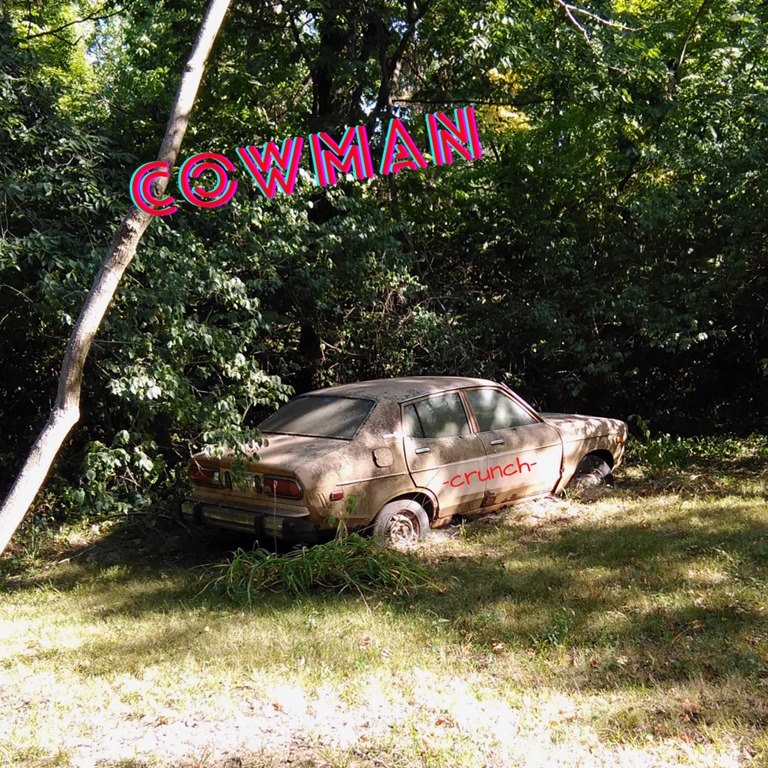
The multi-talented, multi-discipline and perhaps, sometimes, not-so-disciplined Benjamin Heal returns in his Cowman guise, under which he’s been operating since 2005 with a new EP, his first in a decade, after previous creative detours with Coaxial and various other projects.

Over the course of a sporadic and low-key career, li-fi, slackerist Cowman has – impressively, whether by fluke or by design – appeared on bills with a slew of cred cult acts, including Ack Ack Ack, Gum Takes Tooth, Cove, Pifco, and John Parish. These notable highlights are well-deserved, but it’s a pleasure to witness cowman making a comeback, instead of simply revelling over former achievements.

Crunch is a magnificently loose knockabout and if Pavement comparisons may seem lazy shortcuts, they’re also entirely justified. But then… then… there’s a whole lot more. The first track, ‘Concrete Eyes # Turpentine’ , with its inexplicable punctuation, starts out a fairly straightforward, if angular indie kicker in the vein of Slanted era Pavement, with wonky, off-kilter guitars that sound vaguely out of key, but then spins off into an epic swirling expanse of psychedelic post-rock. The whole thing is almost ten minutes long, drifting into a long, sluggish drone in the final minutes.

There’s an easygoing picked guitar line that contrasts with jittery drums on ‘Concrete pink Dots’ before the distortion kicks in, and it does so hard, creating a dense whorl of noise that almost buries the drums, until they surrender to the barrage of din, and we find ourselves drifting in a cloud of hazy shoegaze guitar. It’s mellow, but it’s loud, and that’s where the hypnotic ‘Bloody Diffuser’ picks up as it embarks on another ten-minute sonic journey, a slow-smouldering soundscape heavy on delay and reverb. Switching through a succession of segments, where the transitions are jolting, flicking changes rather than seamless transitions, it’s by turns doom drone and psychedelic drone, but ultimately, it’s all the drone – and that’s a good thing.

Ordinarily, two versions of one song on the same release feels a bit lazy, but then again, I spent the 90s buying singles on three formats in order to obtain all the versions and B—sides, and I have a hunch that Benjamin is also well-versed in the maxi-single and the like, and it so happens that the cropped version of ‘Tobacco Eyes’ that rounds it off actually feels like a single that had it been released circa 92 would have been lauded in the press as being in the vein of Pavement and Truman’s Water. And in fairness, that’s just as true in 2022.

AA

a2287012021_10

25th June 2021

Christopher Nosnibor

The older you get, the weirder things get. On the one hand, the generational gap widens by the day, but on the other, you see thing come full circle, and faster. Growing up in the 80s, the fact of the matter is that my parents had abysmal taste in music, both contemporary and of their era. My mum would groove to Phil Collins and Tina Turner and Paul Young Van Halen and the fucking Bee Gees while ironing, while my dad hadn’t bought a new LP since Steeleye Span’s ‘All Around My Hat’. Car journeys on family holidays were a real hoot, what with Leo Sayer and 80s Cliff Richard tapes alternating with Now That’s What I Call Music 1 and 2. Philip Larking was right: your parents fuck you up in ways they don’t even realise. However, the point is that increasingly, new bands are turning to their parents’ rather cooler collections and discovering the likes of Nirvana, Pavement, Weezer, Teenage Fanclub and Pixies – and Sweethearts are a case in point.

They’re pitched as standing at the forefront of the 90s resurgence, but for some of us, the 90s never ended, especially for many of those who were in their teens and early twenties at the time and are around 4 now. Midlife crisis? Maybe. But then, for many, music stops when they hit 30, and I’ve spent the last fifteen years listening to peers bemoaning the lack of any decent new music. They’re all wrong, of course: there has been innovative and exciting new music released every year since the beginning of music. It just happens that none of the music of interest has received any kind of mainstream attention for a long time. But it’s all out there if you know where to look.

You wouldn’t call ‘If I Could I Would’ innovative, but that isn’t the point: this is a classic example of a band drawing on their influences, which so happen to reach back a generation – and distilling them into a strong and potent mix. ‘If I Could I Would’ is a melodic grunge-leaning slice of college rock, but there are some obvious indie features spun into the composition, not least of all the lead guitar part that spins its way around the rhythm section like a tripwire.

Lyrically, the song explores the limitations of desire and capability, and the song’s hook is a neat piece of circular, self-negating logic: ‘If I could, I would, but I can’t so I couldn’t’. It’s not nihilistic, just more a slackerist ‘meh’, and with its nostalgia-inducing retro musical backing, it’s the perfect summary of the listlessness of the zeitgeist.

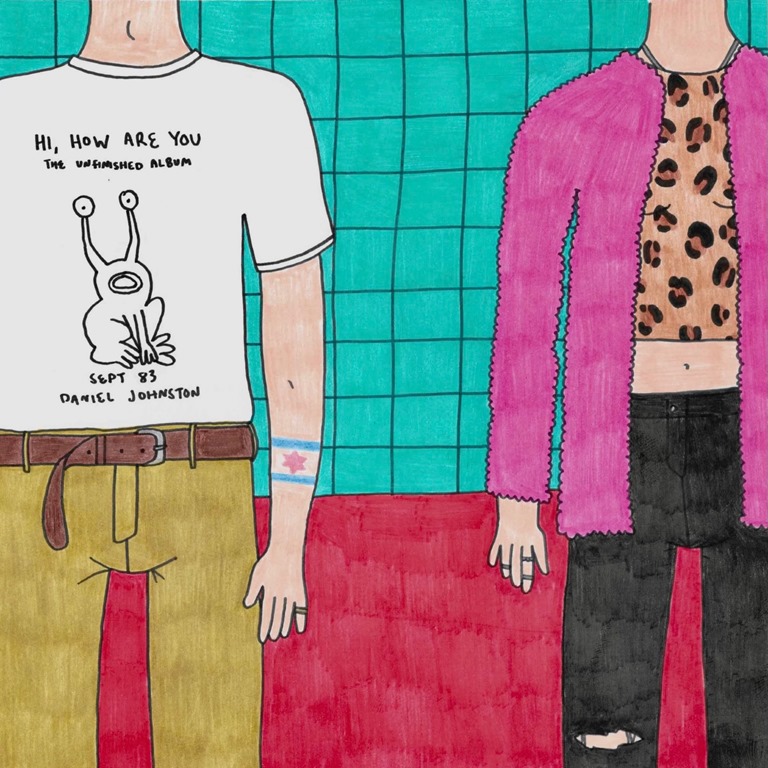
Sweethearts - Artwork