Posts Tagged ‘Nostalgia’

Anticipate Recordings – 17th March 2017

Christopher Nosnibor

The cover art gives little to nothing away, but at the same time, it’s perhaps a remarkably accurate representation of the blurring, blending overlays of contrasting tones and textures which define the ephemeral pieces which form the abstract picture which is A Passage of Concrete.

The album pitch details how A Passage of Concrete ‘ebbs and flows across an electroacoustic narrative of fragmented memory tethered to the present moment, unravelling movement, location, distance in a story that cares about place as both texture and emotional notation. Honig’s sense of place and the way he utilises it is disparate and varied, from field recordings made in busy streets, to parks and empty apartments, via high-ceilinged spaces. One might say that  Honig is preoccupied with both sonic and psychological reverberations and resonance, and that A Passage of Concrete represents the coalescence of these things.

Scratchy and distant shuffling scrapes, flickering, arrhythmic beats provide the backdrop to a sparse delicate acoustic strum on ‘Apartment Workshop’. Steady, pulsing beats pin down the extraneous sonic ripples and segments of ambient audio captured in bustling crowds, while ‘Forest of Refractions’ wraps droning organ undulations around a glitchy beat. The mellow keys which radiate dappled light on the two ‘Fugue State’ pieces are pleasant but innocuous, and while ‘dark’ notes resonate across bouncing beats over the album’s duration, it’s not easy to get a handle on. Yet for all that, it’s not an album which possesses the deep draw of emotional engagement.

While the album’s fourteen tracks, many of which are fragmentary, and a number of which are but sketches of around a minute in duration, are exercises in the vague and the transitional, the percussion, fluid as it is, provides a certain solidity to the compositions in structural terms. The effect is to give A Passage of Concrete a greater sense of tangibility than an album which is purely abstract and ambient. As such, its capacity to connect with and conjure from the listener’s memory is reduced. It lacks that essential, if evasive and indefinable quality of being haunting and evocative. Ezekiel Honig may be a master at conveying his own mental geography, but A Passage of Concrete lacks the abstraction required to render it universal. So where do you go?

On ‘A Slow Expansion,’ the classic evocation of nostalgia, the crackle of a worn vinyl groove fleetingly emerges. I can’t be drawn. The crackle track, the ultimate cliché of nostalgia, has become Vienna: it means nothing to me, and stands as nothing more than a signifier of ersatz nostalgia. It no longer holds any emotional resonance.

A Passage of Concrete is not a bad album by any means. In fact, it’s an extremely interesting album, but one that’s difficult to appreciate on anything but an artistic or musical level. Sonically, there’s no questioning the accomplishment of the material on display. But to measure the extent to which Honig succeeds in his goal is entirely subjective: what will resonate with one individual won’t touch another. But at its best, music transcends everything: sound transcends language and sound attains absolute universality. A Passage of Concrete fails to achieve this ultimate goal of connecting the listener’s psyche through abstraction, because it feels somehow prescriptive. Honig’s structures steer the listener in the direction of his headspace rather than providing a conduit for the listener to interact fully by exploring their own. The end result, then, is a pleasurable listening experience, but one which lacks the capacity for full immersion and to truly move the listener.
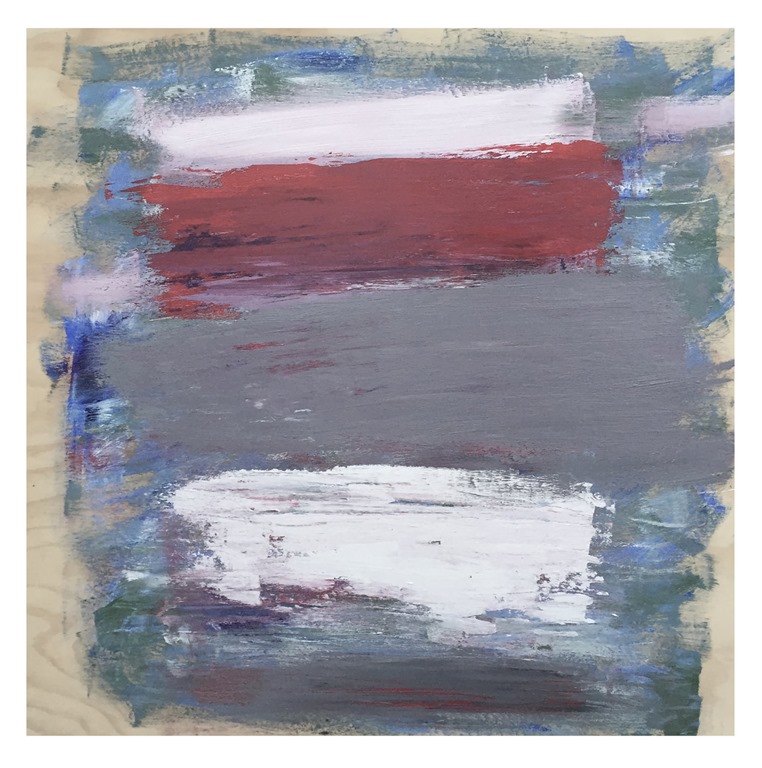

Ezekiel Honig - A Passage of Concrete

GoldMold Records – 10th February 2016

Christopher Nosnibor

Once upon a time, everything was tapes. The romanticism of a frustrating and often inconvenient medium has endured perhaps largely on account of the potential impermanence of their nature: how many music fans of the cassette age mourn the loss of a beloved recording on account of a moment’s forgetfulness which resulted in overrecording, or some freak event which resulted in demagnetisation? How many hours spent spooling and respooling tape which had become mangled in the heads, or otherwise stretched or snapped? The albums of yesteryear, all recorded to quarter inch tape, slowly decaying are an integral backdrop to our appreciation of the existence of the sounds they contain.

But is with books in the printed medium over digital text, it’s easier to form a bond with an artefact which feels somehow personal and personalisable. Just as a book with various creases and marks, perhaps even annotations develops a tangible, unique sense of ownership a Kindle edition never can, a playlist can never have the same resonance as a lovingly-sequenced mix-tape with hand-scribbled notes accompanied by a creased post-it or page from a spiral-bound notepad containing a covering note, folded into quarters and stuffed inside a scuffed case. On an emotional level, at least, sonic fidelity counts for less than fidelity to a pure moment, and it’s the thought that counts: those analogue documents of yesteryear can contain the entirety of a crush that dissipates in weeks or the early stages of a lifelong relationship on any level.

While the debates over the nostalgia ‘industry’ continue to rage, it’s fair to say that the renaissance enjoyed by the cassette is not a purely economic one. After all, the costs involved in burning a bunch of CD-Rs and stuffing them into handmade sleeves is negligible, and even though a bulk batch of 100 C30 cassettes can be obtained for in the region of 55p per unit, the time and effort required to dub even a small run of tapes is proportionally greater than any number of CD-R burns. But the changing nature of the music industry means that where it’s at now is in the small-scale, the personal, and the idea that an artist or label has invested time and personal attention on a product imbues the object with an instant emotional resonance.

The debut release from Glasgow’s Forehead – the vehicle of Sean Garrett (said to be ‘the shyest frontman you’ll ever meet’ and mother goose of the Lovely Ladies) – is appropriately named, as it is being released – if you hadn’t already deduced – on (baby blue) cassette, in a limited edition of just 15. It’s also being released as a download of course. Because no artist makes a release exclusively for 15 people.

The blurb notes that the four tracks contained herein ‘have been about for a while but are only being released now, a testament to Sean’s wholly unwarranted modesty’. And yes, the songs are superb, in a sketchy, nervous, hesitant yet achingly sincere way. You get the impression that Garret’s shyness is integral to the material, to the extent that its awkwardness defines what makes it special. And by no means interpret awkward as clumsy: there’s a skilled songwriter hiding behind the sonic fog here.

Regardless of the protracted journey between conception, recording and release, in keeping with the EP’s title, Bedroom Tapes conveys the spirit of 90s analogue enthusiasm. Low-key, lo-fi indie rock songs, reminiscent less of Pavement and more of Silver Jews, define the Forehead sound. This only serves to amplify the nostalgic quality of the release, evoking the excitement of hearing something stubbornly lo-fi, dubbed from a cassette or a record, the grind of a worn stylus on cheaply-pressed vinyl, for the first time.

Forehead also captures the awkward shyness of J Mascis on ‘Honest’, and the swampy plod of ‘Corner Pieces Falling Apart’ bursts into slanted psych-hued noise before crawling off to hide under the table.


Forehead