Posts Tagged ‘Noise’

Uniform are old friends Ben Greenberg (ex-The Men, Hubble, and the producer/engineer responsible for much of the Sacred Bones catalog) and Michael Berdan (ex Drunkdriver, York Factory Complaint) and formed in New York City in 2013.

To coincide with the 28th October release of their Ghosthouse EP (which has scored Aural Aggravation’s vote), they’ve unveiled their cover of Black Sabbath’s ‘Symptom of the Universe’.

Get your lugs round it here…

Christopher Nosnibor

It’s an interesting demographic spread in the Fulford Arms tonight, almost evenly split between middle-agers and young alt types. This will make perfect sense to anyone who’s already heard Hands Off Gretel: founded and fronted by 19-year old Lauren Tate, they’re the sound of youthful angst, raw and brimming with rage and entirely relatable to their peers. Their sound also bears more than a passing resemblance to early Hole, and in Lauren, there’s the wild energy of late 80s / early 90s Courtney Love that’s instantly recognisable to those who remember that far back. I’m conflicted: downcast at being reminded so starkly that I’m now in the middle-age camp, elated that I was there the first time around and also that there are young bands with this much passion and this much gut making music that’s real and fearless.

Humble Scoundrel kick things off and while they’re also young, they’re also seriously good. They’re fronted by a guy who looks kinda nerdy in his specs, but said front man is renowned Leeds band poster / flyer / t-shirt etc. artist Tommings, and they’re no flappy weaklings: the plaid-shirted power trio kick out a decent brand of rocking indie with some strong harmonies and some elastic 90s alt/rock basslines whacked through a BigMuff and cranked up to gut-churning levels to give them something special. The lead vocals are poppy, but countered by some crunching guitars. Somewhere around the mid-point, they drop a ‘quiet track. It’s built around a gothy Celtic guitar line over some thumping martial drumming, and it brings some well-placed variation in a strong set, and the between-song banter is genuinely amusing.

DSCF6211

Humble Scoundrel

It’s been just shy of a year since I last saw Seep Away play, and they’ve come on no end in the intervening months. Tighter, louder, more in-yer-face, it’s their increased confidence that really makes the difference, and this – and a triangle – is what drives their full-throttle bass-driven grindpunkthrash racket. Jay Sillence raves and lurches around like a man possessed, while the musical proponents of the band – Max Watt (guitar, backing growls), Dani Barge (bass) and Dom Smith (drums) – give it their all. I’m always drawn to bands who pour in every last ounce of energy into a performance, largely because it’s indicative of their passion and commitment, and to see a band who sound great but are clearly coasting just doesn’t provide the same excitement. That Dom’s on the brink of exhaustion by the last track, but powers through at a hundred miles an hour tells pretty much all you need to know about the frenetic force of their live assault. Carnage of the best kind.

DSCF6232

Seep Away

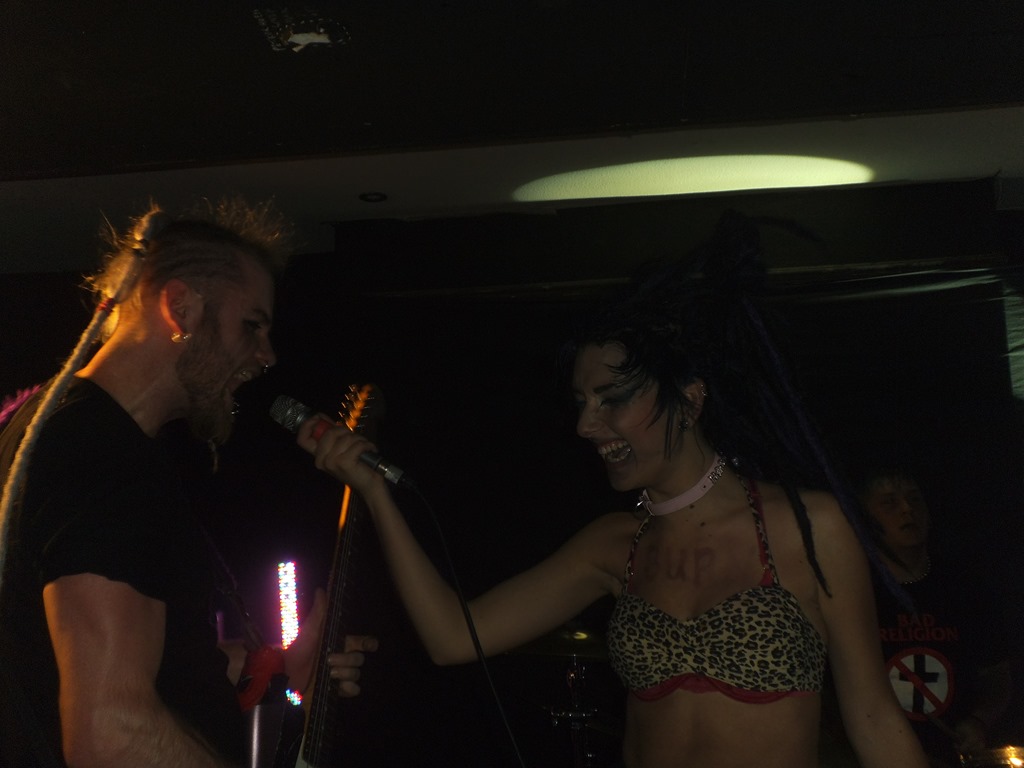
There’s a crush for the front at the little low-staged venue for Hands Off Gretel, and it’sno surprise: while their aural assault is quite something, they’re a live band you need to see as well as hear. Lauren – dressed in hot-pants and ripped tights, a tiara nestled in her long dreadlocks and ‘BURN’ scrawled onto her chest in makeup – is high-kicking and hollering hard from the start as they tear through a set which showcases the majority of their incendiary Burn the Beauty Queen album.

DSCF6391DSCF6300

Hands Off Gretel

Every track is a highlight (although I’m personally pleased to hear ‘Bad Egg’), and while Lauren is obviously the focal point and an immense presence on stage – not to mention a singer of immense power, with a terrifying, full-throated holler, and to describer her as a compelling performer would be an understatement – it wouldn’t work if they didn’t operate as such a cohesive unit. Hands Off Gretel are a band, an a strong one, who really work the quiet/loud dynamic, and when they break out into the chorus riffs, they really give it.

DSCF6397

Hands Off Gretel

DSCF6399

Hands Off Gretel

By the end of the set, the stage is awash with beer – on account of numerous spillages and the fact Lauren has a tendency to cool herself by pouring it over herself – and perspiration. Lauren’s makeup is smeared, and after a racketous rendition of ‘Oh Shit’, they don’t bother to leave the stage before encoring with a killer one-two of ‘Eating Simon’ and ‘My Size’. When it comes to blistering intensity, Hands Off Gretel have got it nailed, and judging by tonight’s turnout, there’s a real thirst for their brand of angst-laden rage.

Sacred Bones – 28th October 2016

Christopher Nosnibor

They don’t make 12” EPs like they used to. While I was never big on the idea of packing a piece of wax out with remixes or an extended mix alongside the single version on a throwaway B-side, at its best, the format offered the punter an additional track over a 7” and larger artwork. But they haven’t really made records like that since the mid 90s or thereabouts.

Uniform’s Ghosthouse is a 12” in the style of the 12” EPs of old. And it’s a fucking belter, if you like dark, pulsating, intense noise. Early Godflesh make a reasonable comparison when it comes to this NYC duo’s uncompromising guitar and drum-machine assault, but the dingy punk din of Head of David and 90s noisemakers Headcleaner are also fair reference points.

The intense throb of the title track calls to mind Suicide with its primitive metronomic thudding beat and grating bass loop, but with a screaming lo-fi metal edge. Shards of feedback pierce the murk.

‘Waiting Period’ sounds like it’s coming from a long way away. Not so much lo-fi as no-fi, the production is more concerned with actually getting the track down on tape than making it pretty. the sound levels waver all over and the drums bounce around in a riot of reverb, while the guitars buzz in bursts of treble and the gnarled vocals… well, it’s anyone’s guess really, but the end result is something that sounds like a hardcore Dr Mix and the Remix – messy, but in a good way.

The final track, ‘Symptom of the Universe’ stamps the Unifrm sound on the Sabbath track, and amalgamates the grinding industrial metal fury of Ministry with the freneticism of Dead Kennedys – which, put another way, means it sounds a fair bit like Lard. With hollered vocals reverberating over a descending minor chord sequence and a guitar sound that’s pure overload, it hits optimal chuggage instantly. It’s crisp, sharp-edged and dangerous, and culminates in a full-on sonic supernova of mangled noise.


sbr166-uniform-DIG-300

Ventil – V004

Christopher Nosnibor

Having been impressed by the Kutin / Kindlinger / Kubisch / Godoy collaboration, Decomposition I-III, released on Austrian label Ventil Records, I was eager to get my lugs around Manuell Knapp’s latest offering, which purports to see the Vienna/Tokyo based artist depart from his ‘analogue home-turf to go exploring in the digital fields’. None of this forewarns of the fact that he pours napalm over every last inch of every field in a five-hundred-mile radius and hurls an incendiary missile straight into the middle of it just a few moments into this devastating album.

There’s something stark and straightforward about the track listing for this release: AZOTH Side A and AZOTH Side B. In a way, it gives the listener a blank frame in which to place the music, and equally, it gives nothing away.

The synthesised plucked chimes follow warped Kyoto motifs, while explosions blast all around. The contrast between tranquil folk tropes and the sound of a war raging makes for an unusual and unsettling experience. Gradually, the notes become increasingly dissonant until, before long, all semblance of musicality is obliterated in an ear-splitting wall of noise and rubble. From the wreckage emerges dark, chthonic drones, monstrous, alien sighs, which tear from a whisper to a scream. It’s fucking brutal. Brief moments of tinkling synths taunt the listener with the prospect of respite before the next merciless, neuron-melting assault. Brief moments occur where the noise and the fear chords emerge simultaneously, inviting comparisons to Prurient, but for the most part, AZOTH is the kind of atomizing noise attack that’s Merzbow’s trademark.

Knapp certainly grasps the power of frequency – and volume – and uses the two in combination to achieve optimal sonic torture. When it comes to overloading sonic noise, just when it seems impossible to push the circuitry any further, Knapp tweaks it a bit more, amping up the shrieking blast of noise to levels beyond madness, pummelling the listener from every angle with snarling bass noise competing with a shrill, jagged, high-end squall. While many noise recordings are generic or plain lacking in imagination – Harsh Noise Wall being a particularly dire example of how derivative noise-related subgenres can be, and the moribund nature of concept music centred around a weak, one-dimensional concept, Knapp is attuned to the importance of dynamics and textural variation.

Knapp also knows about art and exploitation: the vinyl version is released in an edition of just 15 copies, each with unique, hand-painted art, and comes with a price tag of €666. Amusing in an ionic way, it’s worth noting that at the time of writing, only five copies remain. This is the kind of release that won’t have broad appeal, or, indeed, much appeal at all in he scheme of things, but will always attract some truly fanatical devotees – and speculative purchasers with cash to burn. But in all seriousness, viewed from a broader perspective beyond merely sound, AZOTH is a work of art. And, ultimately, the sound is art too. It is, of course art, of a challenging, avant-garde nature, rather than of the entertaining, accessible, poster and postcard reproduction variety.

Side 2 marks a change of tone and begins with rumbling, dark ambience and hints at being something of a counterpoint to Side 1. The low, ominous drones eddy bleakly around in a tense, turbulent atmosphere. And then the screeding feedback tears through, while a growling drone worthy of Sunn O))) blasts beneath, and in an instant, everything is fucked. Total aural annihilation ensues amidst an avalanche of flanged laser bomb detonations fire in all directions: it’s bewildering, overwhelming.

The totality of the blitz is all-encompassing. AZOTH is about as uncompromising as can be.


AZOTH

Southern Lord – 30th September 2016

Christopher Nosnibor

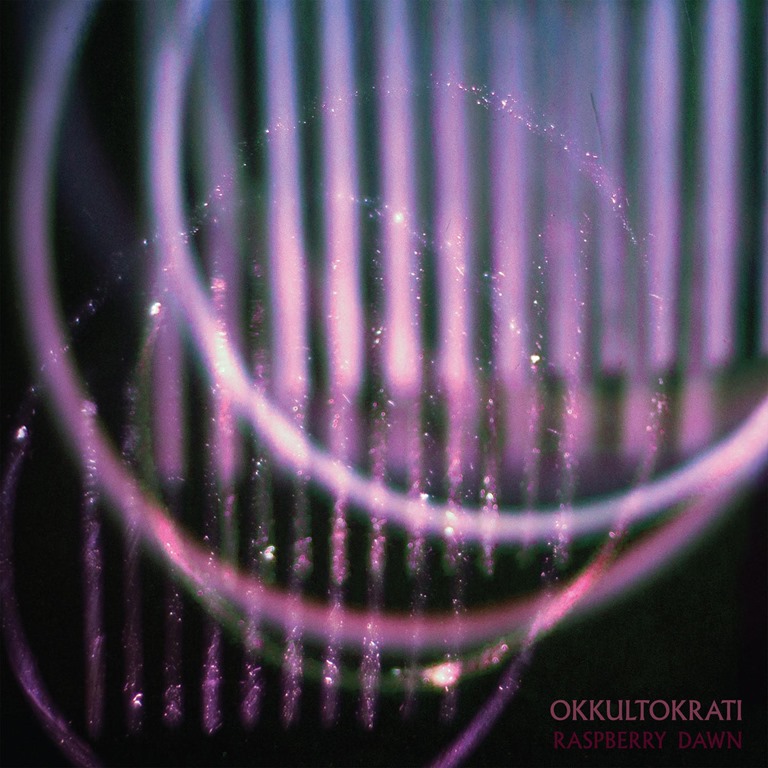
It’s a new release on Southern Lord. What more do you need to know? I mean, it’s not going to be some delicate chamber pop or winsome indie effort, is it? Hurry on by if you’re on the market for some chilled-out glitchtronica or ambient, or indeed anything that isn’t ball-bustingly nasty… right? Well, almost. With Okkultokrati’s new album, Raspberry Dawn, the label with a reputation based on its commitment to gnarly, guitar-based brutality takes a break from business as usual to offer something rather different – although it’s still by no means commercial, accessible, or easy listening.

Pitched as being ‘weird, wired and quite possibly the holy grail for those looking for radical rock reinvention and new sensations in the current era’, Raspberry Dawn promises an amalgam of ‘classic 70’s riffing, snotty punk, and brash old school metal, inventively mixed with pulses and spikes of dark wave and ice cold, psychedelic repetition.’

In truth, it’s oftentimes a pretty ‘what the fuck?’ kind of album: ‘World Peace’ is a four-chord punk stomper at heart, but with piston-pumping drums, black metal vocals and all sorts else, not least of all some doomy synths, thrown in. It’s kinda like a mash-up of the Sex Pistols and The Damned in their ‘gothic’ phase with Quorthon on vocal duties. There are changes in tempo and eardrum-busting leaps in volume, too. What DO you make of such a mess of stuff? Christ – or Satan -only knows what’s going on with the title track, a punching punky-pub rocker at heart, it also tips a nod to the old-school speed-metal of Mötörhead Frenzied, fucked-up fun, t’s probably the most straightforward track on the album, even when a piano enters the mix in the final bars.

It’s experimental, but not in the conventional sense: aside from the dark ambient passage at the start of ‘We Love You, which starts out as a darkwave electro groover before rupturing into a psychotic industrial/metal reimagining of The Psychedelic Furs, Raspberry Dawn is very much centred around solid, square 4/4 rhythms played at high speed and fairly standard chord sequences knocked out on overdriven guitars. The snarling vocals in themselves aren’t all that unusual. But that doesn’t make it ordinary.

‘Suspension’ is a lurid, hypnotic opiate haze of a nightmarish dreamscape, woozy and uncomfortable. The psychotic psychobilly attack of ‘Hard to Please, Easy to Kill’ is a snarling synth-driven beast with a throbbing bassline, and ‘Hidden Future’ is a snarling black metal Big Black squall.

There’s a lot going on. A lot going on. You need to concentrate to appreciate.


Okkultokrati

Monotype Records – mono102 – June 2016

Christopher Nosnibor

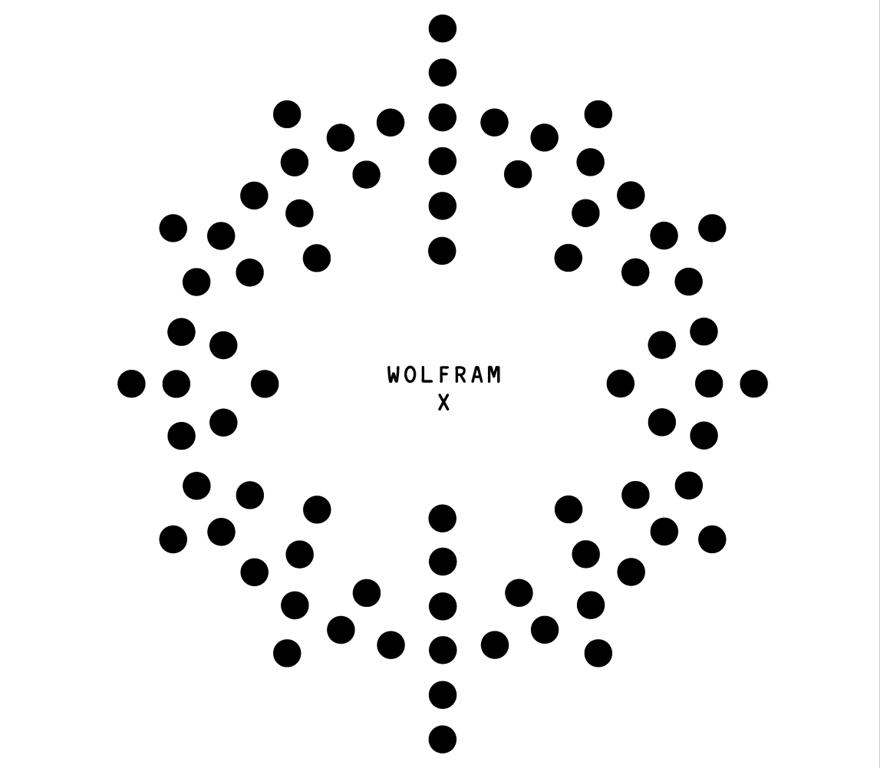
It’s been eleven years since Wolfram last released an album. But the gap between albums no longer seems to be such an issue as it was: the industry has changed and now that, beyond the mainstream, at least, labels have significantly less power, artists are generally free to release material when they’re ready. Or when they can find an outlet. Or when they have the time outside the day-job, or the funds to do it. There’s no long-winded explanation for the space between Wolfram’s releases, and ultimately, it has no bearing on the simple fact that there’s an album.

Said album begins with a long wash of sound which resembles the sea, swelling and swelling to a wash of fizz with ‘W:X:swarm’. From amidst the pink and white noise frequencies emerge small sonic details: a buzz, barely audible and yet distracting. In a sense, the importance of minutiae and detail is a key theme of the album. Small and seemingly insignificant in themselves, these features become impossible to unnoticed once they’ve caught the attention. So, the fact each track is a minute longer than the one before may not be significant in itself, particularly given that the tracks segue into one another to create on continuous track, Yet the designations of the individual tracks to correspond with sonic shifts between each passage and the increasing running times are indicative of an internal logic which overarches the album as a whole.

Beyond X (the album) being part of ‘a wider project consisting of miniCD-R, CD and audiocassettes on a special box, produced in limited runs of just 25 copies (budget is a factor, but there’s also a cult appeal in rendering work clandestine and unavailable to the masses), the significance of the album and individual track titles is not clear. But then, mystery is also part of the appeal. And of course, X is that unknown, indefinable quality.

‘exploded view’ is perhaps the strongest example of Wolfram’s interest in contrast and his ability to forge tonal conflict. Crackling static first brings light interference to tranquil drones, slowly but surely growing in intensity and volume, until an angry, angular, sawing buzz all but engulfs the soft tones beneath. ‘N:xizhe’ is a dark, sinister piece which rumbles and groans, distant inhuman sounds evoke fearful sensations as they rise and fall to silence again over a sustained, low drone. And, indeed, there is a definite progression and trajectory through the six-track sequence, with each piece being darker and more threatening, culminating in the bleak ‘Secret Humans’. Insect skitters flit across a low, undulating drone, straining mechanoid hums and grinds labour amidst the seething swarm. It isn’t human, but alien, burrowing into the brain through the ears and disturbing the cranial cavities and the ravines of the mind by pouring doubt and discomfort into every channel. It’s far from simple, but it’s highly effective.


wolfram_x_cover

Christopher Nosnibor

Is it wrong to review an event you’ve participated in as a performing artist? Very probably, but in the scheme of things, and in the current global socio-political climate, a minor display of poor etiquette really doesn’t amount to anything. Besides, this is more about what I – as a writer, reviewer, artist and site editor – believe to be the primary function of running a site dedicated to the coverage of non-mainstream music, namely to give artists and acts I believe in exposure. At times, focusing on a niche – albeit a pretty eclectic niche – feels like the audience are likeminded obscurists but I like to think there are things for those likeminded obscurists to discover here. So. I landed a spot initially to provide a spoken-word interlude to some bands – bands I like. The night before the gig, this evolved into a collaboration with one of the bands, one-man experimental noise act Legion of Swine. It was something I’ve wanted to do for ages.

So I rocked up while the soundchecks were getting going to discuss what we were going to do. The little pub venue was bursting with more kit than many all-dayers and everything was pointing to this being one loud night before anyone even got plugged in.

And the lineup! Five acts, three (and a half) over from Leeds for a measly three quid? You have to hand it to both the venue and first-time booker Jim Osman for the wild ambition here. There’s so much that could go wrong.

Neuschlaufen are only just soundchecking fifteen minutes after they’re due to play, and their bassist, Ash, has to be out and on his way to another gig by 7:45. Yet somehow they manage to pull it together and are churning out their heavy, hypnotic grooves in next to no time. Ash Sagar’s hefty, Jah Wobble-esque basslines boom out, underpinned by Jason Wilson’s uncluttered drumming. In cominationm they provide  a solid base for John Tuffen’s textured guitars, and while the set may be short, it builds nicely, going beyond Krautrock and into territories as yet unexplored.
DSCF5071

Neuschlaufen

Immediately after, everyone vacates to cool down in the car park, with its impressive beach art installation. It also serves as a sandy area where people can go and sit and smoke and buy cocktails and stuff and pretend they’re not in a car park in a city pub.

Consequently, I began spouting my first rage monologue (a recent piece entitled ‘Ambition’, if anyone’s interested) to an audience numbering half a dozen (plus sound man and bar staff), but – probably for the first time in the years I’ve been performing – people began to filter into the room by the time I left Legion of Swine to run the set to its natural conclusion of feedback and bewilderment (what other response is there to a man in a pig’s head and lab coat, ambulating the space with a condenser mic taped to his face and a battery-powered 3W Orange amp to his ear?) there was a substantial crowd. Most of them were confused, and more interested in the spectacle than necessarily enjoying watching a 40-year-old man spew vitriol and expletives into a mic, but I had an absolute blast. Literature is the original rock ‘n’ roll and the new rock ‘n’ roll, and the footage of the performance, for which I can take no credit whatsoever, is outstanding.
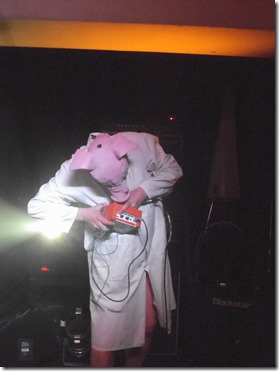
DSCF5078

Legion of Swine

https://player.vimeo.com/video/175067654


One of the benefits of being lower down the bill is that it’s possible to kick back, drink beer and watch the other acts, and while the temperature was steadily rising, it was a joy to sup a cool pint and listen to Fawn Spots road test a set based on their upcoming second album. I‘ve lost count of the number of times I’ve seen these guys since they started out as a snotty York-based two-piece and it’s been a source of pride to witness their evolution to a Leeds-based four-piece with a debut album on Fire Records. Their hard-gigging work ethic is admirable, and they’ve got both songs and attitude. If the new material showcased tonight is a little less frenetic than the older stuff, it’s no less intense, and there’s every indication that album number two will be a stormer.
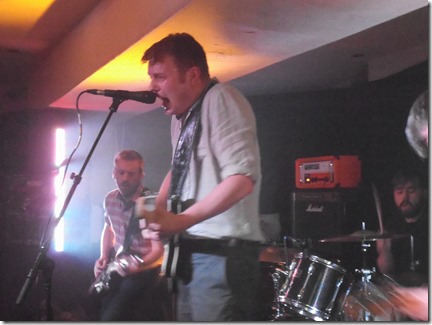
DSCF5085

Fawn Spots

It’s a little over a year since I saw Super Luxury play. Supporting Oozing Wound at the Key Club in Leeds, I’d been impressed by the power of their performance. However, as their gig photos and the anecdote I’d heard from a friend about front man Adam Nodwell delivering vocals for a large portion of a set from inside a box on stage, it seems they’ve been evolving the performance aspect of their show. They pulled out all the stops for this one, Nodwell arriving on stage cowelled in a hooded cloak, stripping it off to reveal some crazy man/badger legs thing that simply looked wrong. With confetti guns bursting all over and crowd-surfing and a general air of crazed mayhem, you might think the music was taking a back seat. But you’d think wrong: with enough back-line to shake a venue three times to size to its foundations, they blasted through a ferocious set with terrifying vigour and psychopathic precision. They may be zany in their presentation, but when it comes to the songs and slamming them in hard, they’re entirely serious.
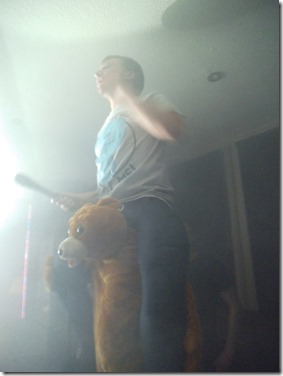
DSCF5127

Super Luxury

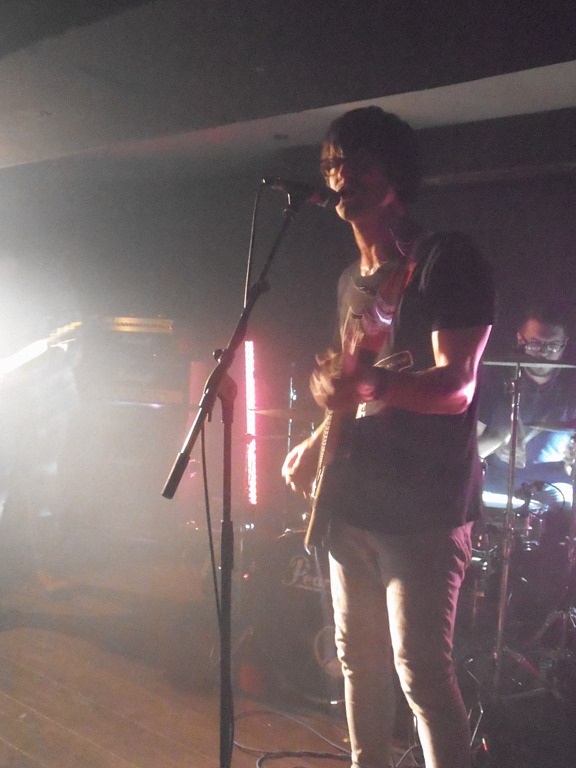
Irk are pretty fucking serious, too. It’s barely been a fortnight since I caught their set in Manchester supporting Berlin’s heads, and while they were pretty ripping them, tonight they really do take things to another level. Of course, when I previously stated that they sound like fellow Leeds band Blacklisters, I meant it as a compliment: Blacklisters are one of my favourite bands of recent years. They’ve delivered two gut-wrenchingly hefty albums and are one of the most consistent live acts you’ll find. But it’s on this outing that I first truly appreciate Irk in their own right as the drum / bass / vocal trio lumber, lurch and piledrive their way through a full-throttle set. Jack Gordon – an affable, articulate chap off stage – comes on like a man possessed, hurling himself about the low stage amid crushing bass riffs and powerhouse percussion. While the power trio format is often lionised as the optimal band configuration, there’s even less room to hide when there are only two instruments and a vocalist. And so it is that Irk are tight as hell and double the intensity of the playing to compensate the absence of instruments and bodies on stage. In contrast to Super Luxury, here’s little by way of over showmanship on display here, and instead it’s all about whipping up a blistering intensity through directness and unadulterated force.

DSCF5231

Irk

With not a weak act on the jam-packed, super-value bill, and every act giving every last drop of juice to their performance, this is going to stand as one of the gigs of the year. The venue may not have been packed to capacity, but there’s no question that those who were there will be talking about it. That’s precisely how legends are made, and I’d wager that that at some point in the future, tonight will go down as one of those landmark events. And if I’m wrong… fuck it, it was a great night.
Southern Lord – 10th June 2016

Christopher Nosnibor

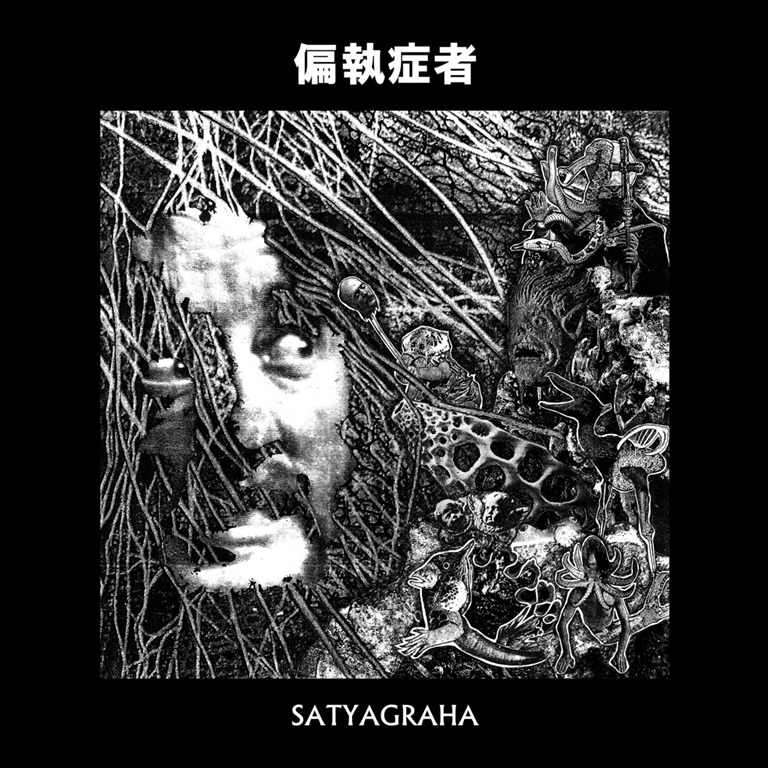
For the uninitiated, 偏執症者 translates as ‘Paranoid’. But despite the logographic characters, 偏執症者 are, in fact, Swedish, although their brand of full-on, fiery, D-beat hardcore punk is heavily influenced by Japanese noise. Satyagraha, first released in 2015, is their first full-length album. Full-length is relative and contextual, of course: with ten tracks and a combined running time of under twenty-eight minutes, it’s shorter than the majority of individual tracks on the latest Swans album. Of course, this squally, thrashy mess of noise exists in an entirely different realm from the new Swans album, and in many ways stands at the very opposite end of the spectrum of antagonistic noise.

The impact of the album relies on its frenetic, breakneck speed, and its relentlessness. Satyagraha does not offer texture or range: it’s an all-out assault, and the album’s primary objective is to slam everything home at full tilt, optimal speed and maximum volume. It’s no bad thing, and it certainly works for them. It’s an album that begins as it continues, with the blistering wall of noise that is ‘Kaihou’. The guitar sound is so mangled, distorted, metalicised and trebled up to the max that it sounds more like power electronics than anything from the rock side of the musical spectrum. It’s an obscene, brutal assault, relentless, remorseless, unforgiving.

The vocals on ‘Bouryoku’ are hollering, screaming, blind with rage, are spewed forth into an infinite cavern of reverb, while the guitars fire so hot they could strip paint. From amidst the squalling bluster of noise, a guitar solo emerges. The shrieking feedback and dense mass of treble on ‘Shisuru Sekai, Iki Jigoku is the sound of a new kind of punishment, before the thunderous drums and bass – for the first time apparent on the album – ratchet up to demolition to the power of ten on ‘Shihaisya’. This is one to play loud.

The final track – by far the album’s longest – sounds like an entirely different band and entirely different album, the soft, analogue instrumental belonging to another world. And yet it works and curiously, it fits, revealing a very different facet of the band, and one which is not unpleasant: quite the opposite, in fact, and it serves to soothe the senses in the wake of the punishment inflicted by the nine preceding tracks. As if the brute force of those tracks weren’t already enough to separate 偏執症者 from their peers, then this truly clinches it, concluding a devastating album in intriguing style.

It’s one hell of an album, and one absolutely hellish album. Visceral and intense, even by D-beat standards, Satyagraha qualifies as an essential work.

Paranoid

17th May 2016

Christopher Nosnibor

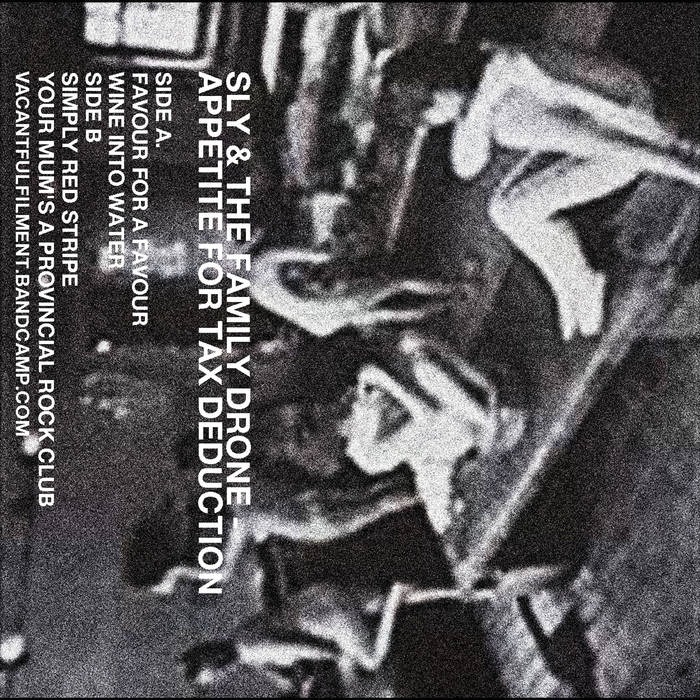
The ever-awesome Sly & the Family Drone return with another puntastically-labelled slab of awkward noise. Sticking to their staunchly DIY ethos (although, and I mean it as no criticism when I say that this may well be a choice but their options are likely to be limited), this latest effort is released on translucent green C33 cassette in a limited edition of 50, and digitally.

Apart from being a killer live band, their offbeat humour, not least of all as manifested in the referential titles have always been an integral part of their appeal (at least to me): 95 Minutes Over England documented their first tour, and all three of the recorded sets lasted longer than Suicide’s notorious show, and the band are willing participants in the ensuing percussion-led riots.

Understanding Appetite in any context of chronology is rather difficult, given that it originally appeared as a digital-only release a few months before their colossal full-length album proper, Unnecessary Woe. It’s not so much a companion piece but a contemporaneous standalone counterpart. But the main thing is that it contains a whole lot of dark noise.

While each of their other releases features at least one long-form sprawler, Appetite For Tax Deduction is an unusually concise work, with none of the four tracks crossing the ten-minute mark. Still, the first track, ‘Favour for a Favour’, is a dank, rumbling semi-ambient piece. Heavy, shuddering low-end sounds and growling vibrations sound like subterranean earthworks. It bleeds into ‘Wine into Water’. A mangling mesh of distortion and a continuous bottom-end drone that tears the air provides the gut-churning backdrop to extraneous electronic noise, shrieks of feedback and indecipherable, distorted to fuck vocals. It’s pretty sinister stuff, and its claustrophobic intensity is a world away from the cathartic and communal live performances.

With a title worthy of That Fucking Tank, ‘Simply Red Stripe’ is a classic example of the Sly humour. Its nine-minute sonic assault is built around an insistent, low-end throbbing, dense and immersive. Tonal shifts trick the ears into thinking there are fleeting moments of melody submerged in the hum, only for it to become apparent that it’s little more than a rising wail of feedback and the fizz of melting electrodes. It’s by far the most rhythmic track of the set, and, with nods to Suicide, Throbbing Gristle and Whitehouse, it’s magnificently uneasy listening.

‘Your Mum’s a Provincial Rock Club’ features what appear to be horse’s hooves – the only overt percussion to feature on Appetite – beneath a cement-mixer mess of collages sound, booming bass blasts and fractured tweets and flutters of treble spiralling in a vortex of echo and infinite delay, building and building until the sound coalesces into a vast tidal wae of white noise that ultimately swallows itself.


Sly and the Family Drone - Appetite

Wharf Chambers, Leeds, 4th April 2016

Christopher Nosnibor

Despite there being a fair few middle-aged blokes in black jeans milling about, the demographic of the crowd who’ve turned out to Wharf Chambers on a Monday night is pleasingly diverse.

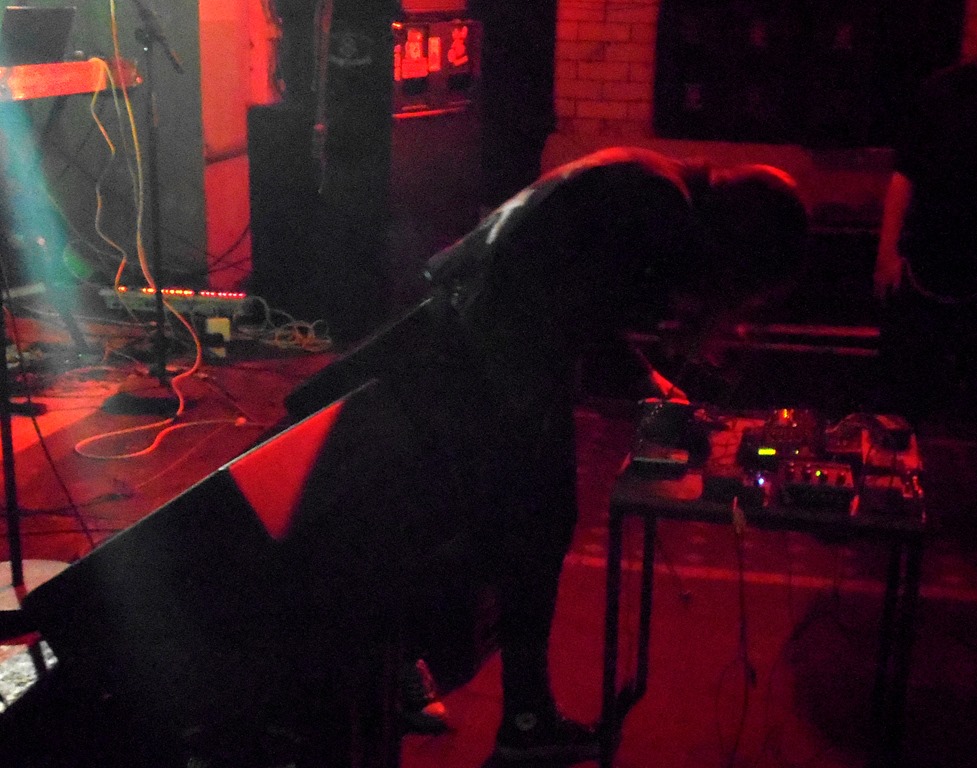
Knifedoutofexistence is one man, Dean Robinson-Saunders. A lone artist with a substantial array of pedals and electronic bits and pieces and a bleak outlook. A fairly standard stereotype on the noise scene. He’s dressed in black, long hair down over his face as he hunches over his spread of kit, laid out on a table on the floor on front of the stage, in near darkness, growling and howling impenetrable intonations of pain and anguish amidst a wall of raging noise. But Knifedoutofesistence stands out by virtue of being making a raging wall of noise that’s texturally interesting, and by the sheer intensity of the performance. He clutches a chain, which he wields and occasionally thrashes against the ground in nihilistic fury.

Knifedoutofexistence

Knifedoutofexistence

A common shortcoming of noise and power electronics shows is that the lineup will be packed out with acts all doing pretty much the same thing, which ultimately gets wearing long before the headliners take the stage. So, credit is definitely due in recognition of the diversity of the bill here.

Circuit Breaker, who’ve been supporting Harbinger Sound label-mates Consumer Electronics around Europe may have proven somewhat divisive amongst the audience members, but the Milton Keynes duo’s brand of dark synth pop, overlayed with screeds of murky guitar provided vital contrast. Wirth his eyes obscured by his hair, and an idiosyncratic style of enunciation which reminds me of Brian Ferry (think the footage of Roxy Music performing ‘Virginia Plain’ on TOTP), I find myself spending much of the set looking at the singer’s teeth. Musically, they’re more like a guitarier, gothier Gary Numan.

Circuit Breaker

Circuit Breaker

Sarah Froelich – aka Sarah Best – has very nice teeth. She also has some serious lung capacity, and opens both her lungs and mouth wide to vent streams of lyrical abrasion. Flipping in a blink of an eye between sultry poses and a serene expression to raging banshee, she presents a formidable and fearsome presence on the stage. Her whole body tenses as she hollers maniacally, giving her performance a ferocious physicality. Wild, unpredictable, dangerous, she’s the perfect foil to Philip Best’s splenetic tirades.

Having seen Best perform with Whitehouse on four occasions between 2003 and 2007, it’s reasonable to expect some crossover in his stage act, but while he still throws the occasional power pose and postures with parodic lasciviousness as he tweaks his nipples, it’s the differences between Consumer Electronics and Whitehouse which are most evident tonight.

Consumer Electronics 1

Consumer Electronics

First and foremost, the thudding beats which drive many of the tracks mark a clear separation from the largely arrhythmic noise of the overlords of the Power Electronics genre. There’s a more overt sense of structure and trajectory to the compositions, and while there is noise, there’s also a greater diversity of texture, and a sense of restraint. More than anything, the sonic attack is used as a means of adding emphasis to the lyrical content, rather than something that buries it.

Best’s lyrics have a poetic quality. We’re not talking pretty pastoral vignettes or vogueish socio-political commentary with a hip-hop vibe, but nevertheless, this is not just some guy shouting obscenities in a blind, inarticulate rage. In fact, you’d be hard-pressed to find rage more articulately expressed, and on numerous occasions during the set, I felt like the Consumer Electronics live experience is in many respects a (brutal, vitriolic) spoken word performance, with the emphasis very much on performance, bolstered by beats and extraneous racket.

Russell Haswell’s contribution to the dynamic shouldn’t be undervalued, either, and his featuring in the current lineup brings new dimensions to the sound. Standing unassumingly at the back, and often nipping off stage, as he unleashes shards of sharp-edged analogue fire.

Consumer Electronics 2

Consumer Electronics

There are some tracks that go all-out on the assault – ‘Co-opted’ finds Best and Froelich duelling over the most ferocious delivery of the refrain ‘Cunts! Co-opted by cunts!’, but much of the set, culled largely from the two most recent albums, Estuary English and Dollhouse Songs, shows just how much Consumer Electronics have refined Power Electronics and the extent to which they explore nuance and contrast. Tonight, they’re nowhere near as loud as many Power Electronics acts, not least of all Whitehouse at their most explosive, but the impact of the set is truly immense.