Posts Tagged ‘Noise’

WHY Record Company (WRC) – 20th March 2021

Christopher Nosnibor

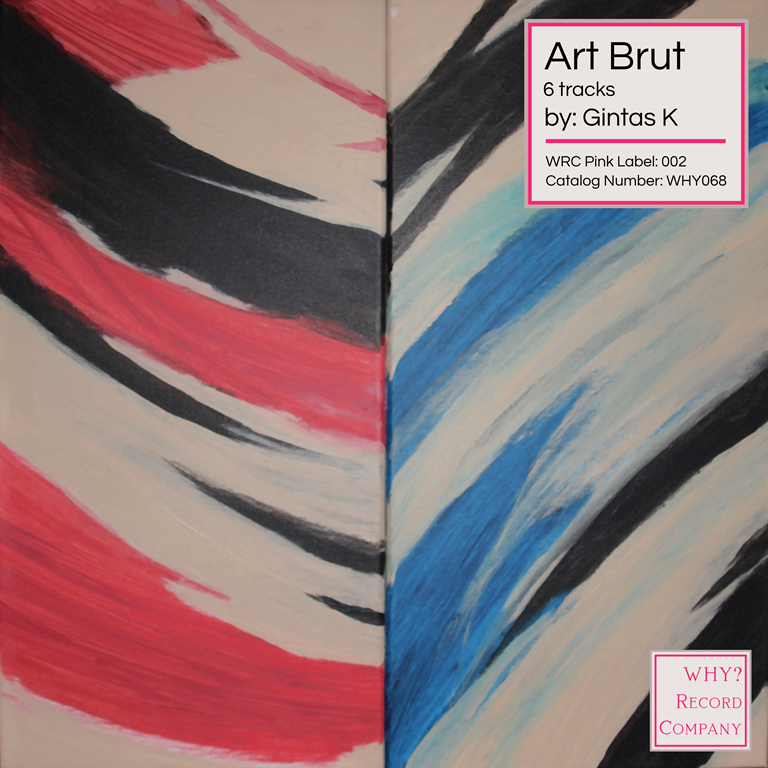
Once again, Gintas Kraptavicius, aka Gintas K has shamed me with his relentless output. Sure, Art Brut is only his second released of the year, but then, it is only the first week of April, and he’s maintained a pretty steady flow of two or three albums a year since 2003, and that’s before you get to the collaborations and visual projects. And if cranking out improvised sets using various permutations of keyboard and battered laptop with software seems to be something that can be done relatively quickly in principle, the setting up of said software for optimal effect, and devising how best to exploit it to achieve one’s aims and objectives can be time-consuming.

Art Brut finds Gintas delve deep into the most extreme digital territory in a while, with some wild improvisation and some pretty harsh keyboard battering conjuring a brain-frothing array of stammers and glitches, bleeps and bloops, all stop-starting, stutters, judders and clunks. This is one of those ‘everything all at once’ efforts that leaves you dizzy and bewildered, drowning in a digital foam. The experience is jittery and intense.

Although a digital release, it’s clearly designed as an album of two halves, corresponding with two sides of vinyl or cassette, with the three parts of ‘Art Brut’ in combination spanning some twenty-two minutes, and virtual B-side, the three parts of ‘Al Sublime’ stretching out over a similar duration, with the ten-minute ‘Al Sublime #2’ extending beyond the ten-minute mark.

The three movements of ‘Art Brut’ melt together in a transistor-troubling digital meltdown. Tractor beans and laser blast tear through warped tapes spinning on fast forward, and the whole bathful of bubbling noise swashes and sways in lurching waves. Fizzes and crackles and sparks fly like a heater dropped in, and you can almost hear the sizzling of flesh as electrodes pop at a rate of a hundred a minute. Everything fizzes, pops, squeaks, squeals and crackles in a crunching blizzard of scrappy, scratchy skitters and scrapes, and every single second is different.

‘Al Sublime’ isn’t radically different from ‘Art Brut’, but it is different nevertheless, with the effervescence countered by a broiling volcanic low-end simmer that grumbles and ferments. The low-end thrumming is at times almost subliminal, a humming drone that buzzes and grates, but is so often almost buries in the hectic insectoid clamouring. But this is also slower, lower, more warped and droning. Twisted tones resemble human voices, elongated moans droning become quite unsettling as gurgling electronic trails rise and fall and as jangling, chiming blips bounce off one another at random angles atop the gurgling discombobulation as if a blender is being sucked into a minuscule black hole, it all becomes to much to digest and assimilate… but then save for the two minute scrabble and scrape of a curtain closer in the form of the stammering ‘Al Sublime#3’ – a brief but tense bookend to an extended exercise in fractured fragmentation that digs deep into the cranial cavities and leaves you feeling slightly violated.

It’s a return to previous territory for Gintas K, and Art Brut finds him on peak form.

AA

AA
cover

DRET 05 — 2nd April 2021

The fifth release on Swedish label Dret Skivor, which coincides with another Bandcamp Friday, is Blue Oblivion by Tore Honoré Bøe. Information about the artist or the material is non-existent, so everything is left open for the listener to extract and interpret from these layered sonic collages. My initial response is the ocean, being immersed in the vastness of the expanse – or, more specifically, drowning, before my thoughts turn upwards, to the eternal endlessness of the sky. Starring up on a cloudless say, it’s easy to lose yourself in the infinite space.

But the sonics captured here evoke neither. This is, for the most part, a snarling, swirling tempest of electronics pushed to – and beyond – their limits, a shrilled, shrieking assault on the senses that utterly engulfs: this is not a pleasurable or ecstatic oblivion, but the oblivion that arrives as a welcome relief from a relentless battering.

On the first piece, ‘Foosa!’ a piano note fades into the fog as a crackle of static builds to a sustained fizz. Scrapes and drones take on the presence of creeping chords in the absence of any overt musicality. It howls and wails and drills into the cranium randomly, one shill blast of noise replaced by another shrill blast of noise of a different frequency. Like cowboys armed with two pistols shooting from each hand alternately, Tore fires off drill-like frequencies one after the other, hand over hand, whirring and buzzing… and then it’s all down the toilet in a single plunge.

‘We Love King Julien!’ is less abrasive, at least initially, but no less challenging: a woozy, stammering mess of glitching drone that cracks and churns through a succession of misaligned subsequences that stammer and lurch, it’s a different kind of discoordinating. Metallic smashes scrape and buckle to forge brain-clenching streams of static noise that bubbles and churns. In time, it all breaks down into a mess of fractured noise and fizzing static, a horrible mass of treble that jumbles all focus. It descends into alternating drones and explosive blasts of speaker-shredding noise, and culminates is a tsunami of churning while noise and synapse-melting overload across a wheezing drone so flat it feels like it died a long time previous.

There is no kind or considered response to this, no neat finisher. It’s not an easy or pleasant release – but then, that’s not what Dret ‘do’, and seemingly, it’s not what Tore Honoré Bøe does either.

Blue Oblivion is unquestionably immersive, but it’s not entertainment: this is harsh, uncomfortable nose. It’s noise to lose yourself in.

AA

a3756016703_10

11th March 2021

Christopher Nosnibor

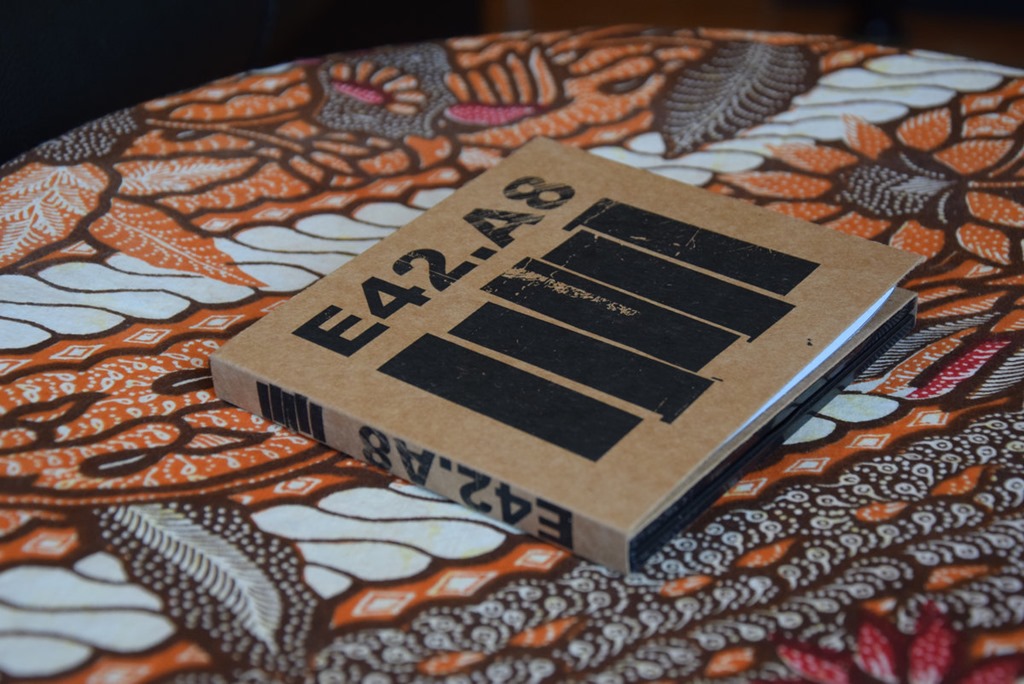
Sometimes I find myself in a state of confusion. Sometimes / often. Admittedly, work fatigue, lockdown fatigue, parenting, and beer on an evening are all likely contributors on many an occasion, but sometimes, I’m almost certain that life and situations are simply addling and that’s all there is to it. E42.A8’s press release is a source of a degree of bewilderment for me, as they outline their latest release thus:

‘E42.A8 lies between a place, a process, a group or several, or maybe as we were introduced in Frankfurt once: a Musikkapelle. We like to think that what matters are the following guiding notions: freedom, play with opening(s) & interaction, resulting in music marked by textures, variations between pulse & stretch, moments of varying intensities, détournements (Verwandlung?), oscillations in saturation and silence.’

IIIII is in fact a compilation, a double CD, which draws on a morass of releases spread across downloads, CDr and one tape, and features 21 musicians, in varying ensembles, from 2 to 9 people, recorded during the first five years of the collective’s existence. Said collective, which operates around a ‘disused farm/barn in the countryside in Picardie ( a region spread over the north of France +southern Belgium’ is centred around improvisational works, and as the fifteen pieces, which span a whopping 141 minutes – which isn’t far short of two and a half hours – and which makes listening to this in full a serious time commitment. The chances are that few listeners are likely to repeat it more than once or twice.

And while most of the compositions are under the eight or nine-minute mark, there are are handful of absolutely epic works that sit in the twelve to twenty-one minute mark that really illustrate the expansive plains E42.A8 ere capable of exploring when given the time and the space, and of course, the right atmospherics.

As one might expect from such a loose framework of musicians improvising over such a time-span, this is a pretty mixed bag, centred around immense drones, grinding organs and elongated oscillations. At its best, it’s haunting, evocative, unsettling, while at its worst its clunky, uncoordinated, experimental but without focus. And that isn’t a problem: the avant-garde and the postmodern so often delights in revealing its workings, demystifying the creative process, pulling apart the myth of the ‘creative genius’. IIIII reveals E42.A8 to be multi-faceted and willing to take risks in the interest of progression, of artistic evolution.

Insectoid skitters and creeping drones, scrapes, and all kinds of bleeps and twitters and stream-like trickles combine to forge the peaks and troughs, gulfs and chasms which make up this immense work. Heavy clanks like the sound if a blacksmith mishitting his equipment as shards shower everywhere in such an enclosed space. Chinks and stammers and fractured tonal cracks break the surface, and disruptions and discord and discombobulations abound.

A track-by-track analysis would be even more pointless than Brexit or an episode of Pointless, because this isn’t a work that has standout tracks: compilation it may be, but ultimately it’s an immense document which collates a vast library of experimental ambient electronic works which will shred your brain, make your eyes pop leave you feeling bewildered overwhelmed, which is, in context, a measure of artistic success.

AA

a3729120449_10

Crónica 166 – 19th February 2021

Christopher Nosnibor

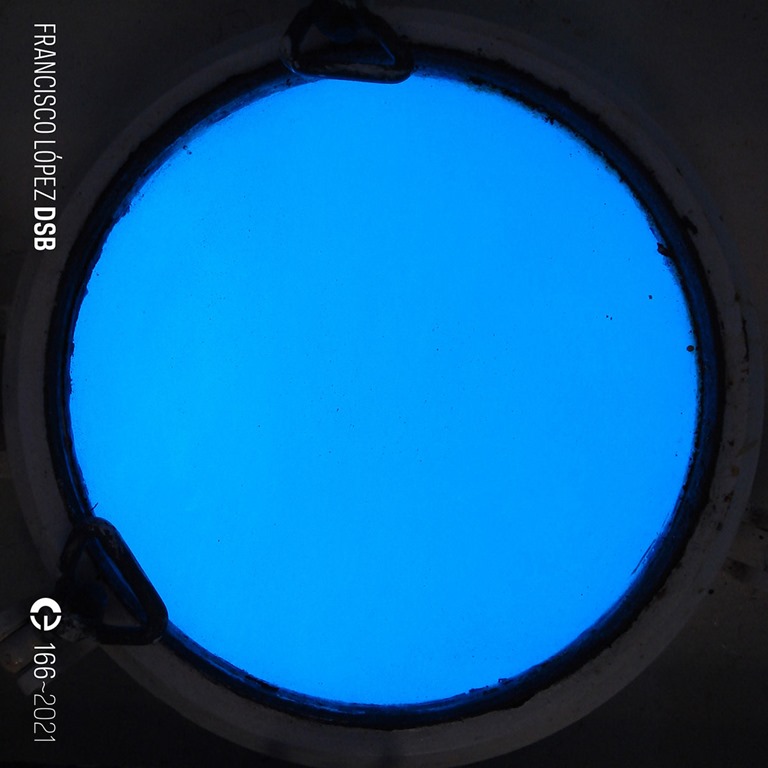
From the very opening seconds, Francisco López’s latest offering assails the ears and scorches the brain: the first track – which hits the magical running time of twenty-three minutes – is nothing short of explosive – literally. Opening with a roaring blast of brutal harsh noise, it soon separates into a series of samples and sounds, whereby propeller engines swoop low, spitting machine-gun fire and dropping detonations all around and bomb blasts tear the air. I’ve previously described certain noise works as sonic blitzkriegs, but this is actually nothing short of total war – captured in audio.

DSB is the accumulation of a decade’s work, which was, apparently, created at ‘mobile messor’ (worldwide), 2009-2019. Mixed and mastered at ‘Dune Studio’ (Loosduinen), 2020.According to the press release, López’s objective over the forty years of his career to date is to ‘Destroy boundaries between industrial sounds and wilderness sound environments, shifting with passion from the limits of perception to the most dreadful abyss of sonic power, proposing a blind, profound and transcendental listening, freed from the imperatives of knowledge and open to sensory and spiritual expansion’.

But with DSB, López doesn’t just destroy boundaries. It destroys everything in an obliterative sonic attack that’s sustained for some forty-five agonising minutes.

When it does pull back from the eye-popping extremes, it presents a dank, ominous atmosphere, and one minute you’re underwater, as if being drowned, the next, your head’s above water and you’re surrounded by a roaring sonic assault that lands blows from all sides. The quieter moments are tense and oppressive, and with unexpected jolts and speaker-shredding blasts.

A low rumble and clodding thuds and thunks, like slamming doors and hobnail boots create a darkly percussive aspect that dominates the start of DSB-B… but then you’re under water again and everything is muffled… you can’t hear or breathe, but all around there are bombs and you’re feeling the vibrations in your chest. It’s all too close and you’re terrified. It’s eighteen and three-quarter minutes of ominous atmospherics and tempestuous crescendos of noise, raging storms with protracted periods of unsettled turbulence in between as strong winds buffet away. The dynamics are extreme, as is the experience.

Something has clearly shifted here: López’s work a decade ago was predominantly experimental, wibbly, electronic ambient in its leanings, predominantly layerings of drones, hums, and scrapes. Interesting enough, exploratory, but not harsh. Yet DSB is so, so harsh, it’s positively brutal. But these are harsh times, and when everything is a grey monotony, same news on a roll on every outlet, the instinct is to slump into an empty rut.

DSB will kick you out of that and kick you around unapologetically, landing boots in the ribs, and then more. It will leave you dizzy and drained. But it will make you feel. And that’s essential.

AA

a2805823699_10

Dret Skivor – 12th February 2021

While there have been a few shady folks who have dwelt in prominent places on the noise scene through the years, leading to a certain association between noise and the ugliest aspects of the far right, my own personal experience has been, fortunately, quite different, and the noise-orientated circles I’ve found myself moving in are populated by some of the most sincere left-leaning people who devote their time to speaking up for equality, workers’ rights, and railing against bigotry, discrimination, and fascism. In a way, it feels strange that I should even feel the vaguest need to preface a review by setting this out by way of a context. But there we have it: the world is full of cunts, and sadly certain genres have more than their share of prominent ones, and it only takes a couple of mouldy grapes to taint a batch of fine wine. Or to bypass the metaphor, a handful of cunts to tarnish the reputation of a large group.

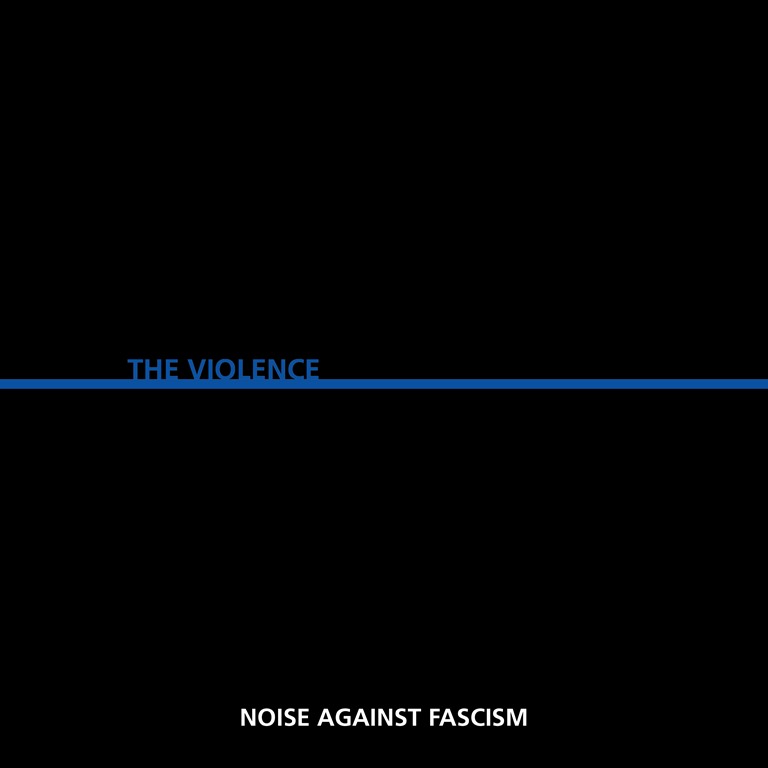
There’s no question around the politics of Malmö act Noise Against Fascism, the latest additions to the Dret Skivor label, founded by the ubiquitous Dave Procter following his recent relocation from Leeds to Sweden (prompted partly by the shitshow of Brexit). The band’s bio describes the project as ‘harsh noise against all forms of oppression and injustice. A violent non-violent tool of resistance’. And it makes sense: noise, when it’s harsh, can be one of the most brutally violent things around. And The Violence lives up to its title. Released on limited cassette, it features a longform track on each side, and they’re unswervingly optimally harsh.

‘Policemachine’ is a churning blast of mid-range noise, a welter of distortion that’s remorselessly abrasive. It’s difficult to tell it it’s resonance of a rapid phase, but it pulsates at a high frequency, the metallic shuddering racket positively shaking the walls, while occasional snarls and crashes and heavy blows add more horror to the relentless assault. It is, of course, entirely fitting of the title, which is take as a reference to both police brutality – a topic which has been hot for some time now, and never more so than in the last year or so, giving rise to the Black Lives Matter movement. But it’s a trope that reaches back far further. A Clockwork Orange was published in 1962, and forty years, how much has actually changed? The track is a real fucking horrorshow, a nuclear assault of devastating sonic proportions that speaks of every kind of violence. Lasers blast through the tempest toward the end, only accentuating the sensation that this is a war trasmited sonically. It’s an aural battering, a sonic blitzkrieg, a full-on gut-shredding mess of overloading nastiness, that’s sustained for over half an hour, with not a moment’s respite, and it’s enough to leave you feeling absolutely ruined.

And so, still staggering, battered and bruised, the listener is thrown headlong into the engulfing racket that is the title track, a further twenty-five minutes of extreme noise that beings with a sample that’s cut to a loop and separated by some dramatic stereo that feels like a sharp left-right punching before the devastating noise crashes in like a bulldozer. Obliterative is an understatement. The cut loop of ‘the violence’ continues throughout, reminding me of Rudimentary Peni’s Pope Adrian 37th Psychristiatric album, with it’s mind-bending loop of ‘Papus Adrianus’ which runs for its entire duration.

It’s noise, and holy fuck is it harsh. The monotony only accentuates it, of course, but sonically, it’s a howling mess of overloading circuitry that offers not even so much as a microsecond’s breathing space. If you want to lose yourself in body-breaking, brain-shredding noise, then this album is going to deliver. With the added benefit of knowing they’re not nazi cunts.

AAA

Thin blue line cover DIG

Human Worth – 26th February 2021

Christopher Nosnibor

From the first twisted, dingy powerchords that herald the arrival of Fraught in Waves with the punishing – and appropriately-titled ‘Breakage’ – it’s abundantly clear that Gaffa Bandana’s debut album is going to be an absolute fucking beast. The rest of the album only verifies this as fact: Fraught in Waves is indeed an absolute fucking beast. It may only contain six tracks and have a total running time of half an hour, but the sheer intensity is ear-bleeding, eye-popping, and gut-tearing. Yes, this is a truly physical experience, one that’s exhausting and exhilarating in equal measure.

Gaffa Bandana is Gill Dread (Bruxa Maria) and Jennie Howell (So3ek, Sleeping Creatures, Gorse, Dooman Empire), and Fraught in Waves was first released as a digital-only effort back in September of last year.

While they’re pitched as a punk duo, the pair’s noise is a full-throttle hybrid of hardcore and sludgy noise, the guitars coming on like Fudge Tunnel covering Tad. The clattering drums also call to mind the heavy noise scene of the 90s: if obscure namechecks like Oil Seed Rape and other band on the Jackass label spark a light of recognition, then we’re speaking the same language. And the vocals are just terrifying: deranged, demonic, they’re at a pitch that’s rare in the fields of either punk, metal, or doom – it’s a cracked, guttural howl, bordering on a shrieking agony.

The contrasts are a major factor in its impact: the riffs are stop / start, and for all the density, there’s a lot of space where metallic clanging chords simply hang in the air before everything piles back in, hard, and deliberate.

There are hints of The Jesus Lizard about the churning ruckus of ‘Charm Offensive’ with its choppy guitar buzz and the hollering vocals low in the mix – but if you’re looking for more contemporary touchstones, Blacklisters and (early) Hawk Eyes are fair comparisons: jolting, metallic, uncomfortable and unforgiving, everything lurches one way and then the other, from stuttering stalls to incendiary riffage that absolutely burns, there is absolutely no room to breathe, not an inch to unwind in. This shit it tense, the kind of tension you feel in your chest and your stomach, and the seven-minute behemoth that stands as the album’s centrepiece, ‘Paralysis of Will’ is all the anguish, all the torture.

Every track feels more tempestuous than the last. ‘Evil Whispers’ has its moments of stuttering Shellac-like mathy judders as it stammeringly halts and resumes, but ultimately, it’s the relentless, balls-out, stomach-churning riffing that defines the sound. There isn’t a clean note to be found in this furious mess of noise. It’s rare for an album to grab you by the throat quite so brutally, and to maintain its choking grip without a moment’s respite, but Fraught in Waves is full-throttle from beginning to end. It is harsh, it is relentless, and at times borders on the psychotic. It’s pure catharsis, and it’s perfect.

cover

Thrill Jockey – 29th January 2021

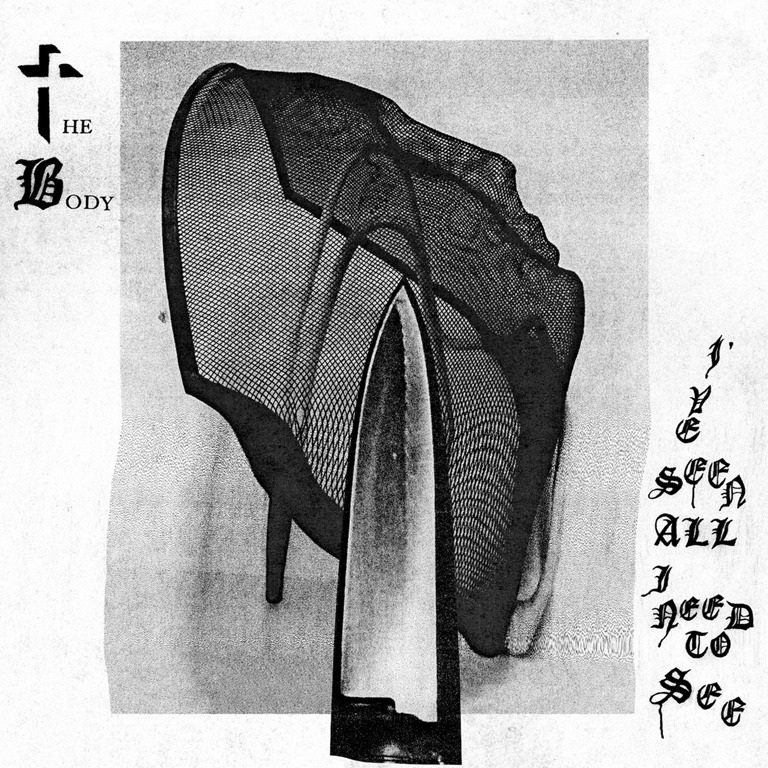
The sheer quantity of The Body’s output – often produced collaboratively – is little short of astounding, and since coming together some 20 years ago the duo comprising Lee Buford and Chip King have forged a reputation as masters of noise, and, as their biography attests, they’ve ‘consistently challenged assumptions and defied categorisation, redefining what it means to be a heavy band’.

There is no question that I’ve Seen All I Need To See is heavy: listening to it from beginning to end truly hurts.

It opens with crushing slabs of overloading distortion backing a monotone spoken-word piece. The juxtaposition of the blank, the bland, and the speaker-breaking blasts of bass-orientated menace is difficult to process, and that’s before the screaming demon-howl vocal begins howling its hellish anguish into the dense, murky mix of thunderous drums and bowel-churning low-end. ‘Lament’ is six minutes of pure heavyweight abrasion that tears at the guts and the soul. Every cymbal crash is an explosion, the decay distorted by deep bass detonations as it trudges doomily onwards – or down. Down. Down.

Everything simply splinters and overloads on the punishing single release, ‘Tied Up and Locked In’, which is a whole next level of heavy shit, a churning mess of overloading noise that’s utterly brain-pulping.

If the prospect of a slower song, which arrives as the album’s third track, Eschatological Imperative’, suggests some kind of respite, you’re going to be disappointed: slower, yes, but it’s a dirgy wall of noise that’s nothing short of overloading in every sense. It’s horrible, painful, but utterly perfect in fulfilling its purpose: there is no respite here, only pain, and pain articulated through brutal sound. ‘Pain of Knowing’ is so dense and dark, you could almost cry in the hope of a return to ignorance. A low, griding bass feedback noter hangs for eternity and rings a resonating pain, and the reminder that knowledge isn’t power, it’s pain.

The pain continues with the percussion-dominated slow throb of ‘The City is Shelled’, which crawls, bloodied, into the kind of territory occupied by Swans circa 1984, with crushingly slow beats and a buzzing bass that practically swallows everything. It’s a trajectory continued by on ‘They Are Coming’, a stop/start piece that’s utterly obliterative. The stops leave you hanging: the starts make your stomach lurch. There isn’t a moment’s respite or implicit kindness here. Hearing the bass drum downtune into a morass of distorted extranea and broken bass on ‘The handle The Blade’ is a most physical experience, and one that’s only heighted by the final track, ‘The Path of Failure’ which is utterly crushing. It’s megalithically, slow, and heavy, but also dark and punishing, and when noise does erupt on ‘The Path of Failure’ it does wo with a slow, brutal violence

I’ve Seen All I Need To See is a distillation of pain, and the production and mastering takes that to the max, to the point that I repeatedly found myself checking my connections and cables and even my speakers. In short, I’ve Seen All I Need To See is as brutal as anything you’ll hear, a work of total sonic overload.

AA

a0754428179_10

Since forming in 2013 UK label Blackbow Records has continued to release music created and appreciated by those who worship tone and riffs. Now in 2021 they are set to continue this trend with a new split LP of pure heaviness from Belfast based, sludge-juggernauts Slomatics alongside the blistering and crushing sounds of Ungraven. With 3 new tracks from each band the split is set for release on 5th March.

Formed in 2019 by Conan frontman Jon Davis and featuring Fudge Tunnel bassist David Ryley and drummer Tyler Hodges (Tuskar), Ungraven pay homage to the 90s heavy and industrial sounds of the likes of Ministry, Godflesh, Sepultura and Nailbomb. On the split with Slomatics Jon states,

‘As the world groans and creaks and crawls forward in slow motion we chose to release three tracks with our brothers in Slomatics, our first on vinyl. Ungraven was an idea that started in my head as I drove into Richmond Virginia in 2017, on tour with Conan. It was originally intended as a solo act. Blackened Gates and Onwards She Rides were initially written to be performed with a drum machine, while Defeat The Object came along during rehearsal with Tyler before we toured early March 2020, before the earth stood still. Enjoy.’

Listen to the new Ungraven track ‘Onwards She Rides To A Certain Death’ here:

AA

a3001263949_10

Editions Mego/Cave12  – 8th January 2021

Christopher Nosnibor

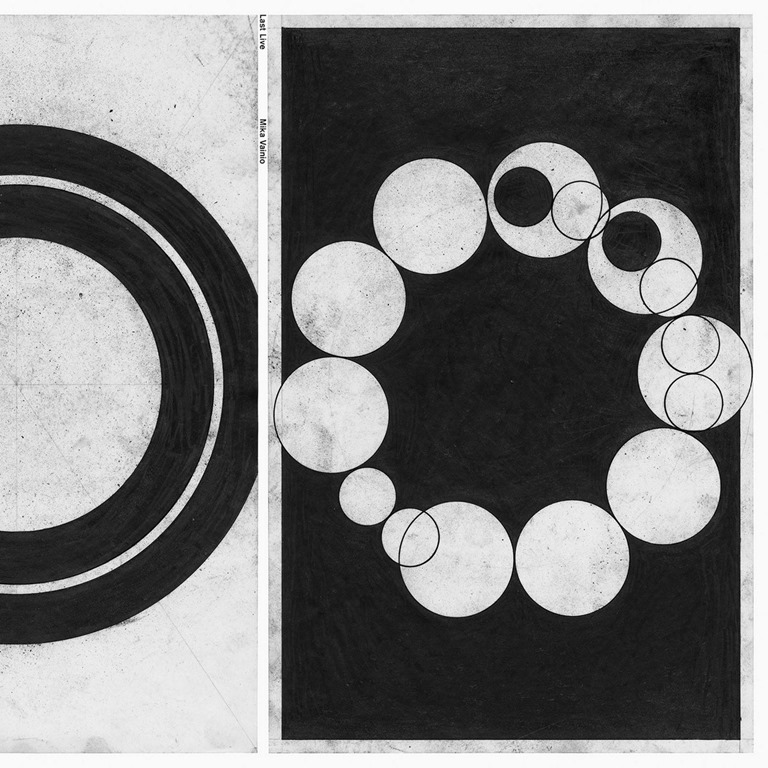
There’s a heavy air of finality about this release, encapsulated simply and plainly and unemotively in the title. Mika Vainio, best known as one half of Pan Sonic, produced a quite remarkable body of work under various guises and through numerous noteworthy collaborations, before his death, age 53, in April 2017. Last Live is a document of his final live performance, recorded on 2 February 2017 at Cave12, in Geneva. This is by no means a cash-in release or some poor-taste milking of the vaults.

As the liner notes recount, ‘we needed time to listen to this archive again, which we did in situ in June 2020 with Cindy Van Acker. After this listening, we felt invested in having to make this archive public.’ And instead of just banging it out, Editions Mego invested in making it fit the format, with Carl Michael von Hausswolff to do the mixing, and the recording was organized in 4 movements, with Stephen O’Malley involved in the pre-edit process and the legendary. Denis Blackham doing the mastering. This was, of course, necessary, in order to fit the double-LP format, and each segment spans between ten and nineteen minutes to cover the full hour-long set, which begins as a low, oscillating hum.

The drone goes on through the duration of ‘Movement 1’: indeed, it’s almost torturous after a mere five minutes, and we’re reminded early on that Vainio’s reputation was not based on his commercial appeal. Eventually, the hum halts and is replaced by a low-level throbbing, and a softer tone, before plunging into a drone of ow-level murk that one feels more than hears.

There are breaks in the ever-shifting sonic blanket pitched forth by Vainio, and the near-silent spells don’t correspond with the lulls between tracks as you might expect – but then, on the CD, the tracks beleed together anyway, giving a true sense of the set as a continuous piece, and a performance that explores tonality and texture, as well as frequency and dynamics.

There’s no question that this performance was loud: circuits creak, wail, and scream in a bulldozering barrage of grinding earthworking sound, a nuclear wind in the middle of a construction site drilling through the mantle to the earth’s core. But Vainio also ventures effortlessly into quieter, more tranquil bywaters, as well as bringing it down into semi-ambient territory.

At times, it hurts. The density is just bewildering, and twelve minutes into ‘Movement 2’ when everything starts to overload, it’s tempting just to lie down and stare at the ceiling muttering ‘holy fuck.’ When the sound really starts to crescendo, it’s a brutal, speaker shredding wall of noise, and it’s dark, and utterly obliterative. It’s also absolutely fucking punishing. So much so, any kind of analysis or critique feels almost futile.

Even without the context of death and finality, while penning this review in a place where there has been next to no live music in ten months, listening to Last Live is an intense and moving experience. It serves as a reminder of just how physical and how transportative live music can be, how songs may be important but sometimes, all you need is a sea of sound which will carry you away. There is no destination here, just an immense flow of sonic waves. And this is all you need.

It may well have been an unintentional sign-off, but as a last, and lasting, live statement turning the light off on an illustrious career, this is an appropriate curtain close.

Dret Skivor – 11th January 2021

I had the pleasure – and it was a pleasure for me, if not necessarily the audience – to perform a couple of times with Legion of Swine. They were noisy, brutal affairs: while Dave Procter’s many musical guises span most shades of noise, with a particular leaning toward all things drone, his work as the lab coat wearing porcine purveyor of aural pain.

The audio on this release is taken from Legion of Swine’s set for the Chapel FM 24-hour Musicathon, which took place on 12th-13th December 2020, which featured forty-five acts in twenty-four hours. Performing at 6:15am on Sunday 13th, the chances are few caught the performance as it aired live, but here, a year on, is an opportunity to bask in the gnarly noise at leisure and a more socially amenable hour. Not that there’s much that’s socially amenable about this: the liner notes explain how ‘It’s “almost” Harsh Noise Wall, but not quite as some random parts of reverb tails interact with others at various stages to create the slight variations.’

So how does that translate as a listening experience? Well, as the title suggests, the noise never abates during this twenty-six-minute blast of electronic abrasion. There are no breaks, no vocals, and next o no sonic variety, although there is some – and it’s heavily textured. In fact, it would be most readily summarised that it sounds like the cover looks: grey, grainy, but woven so as to be not entirely monotone and uniform in shade.

When I find myself listening to HNW – which admittedly, isn’t that often, as I generally prefer the concept to the experience, despite the fact I do very much like my noise to be immersive, not to mention somewhat testing – I find myself hearing subtle shifts in tone and frequency. I suspect it’s the result of some auditory illusion, the aural equivalent of an optical illusion as my receptors strain to find some variety, some detail on which to pin a response of some sort, in the same way a freshly-painted wall will reveal patches that are not as well covered as others the longer you look at it. The beauty – and I use the term with extreme caution here – of this performance is that those patches do exist, and are purposefully brushed into the finish.

This is alternately the sound of a distant swarm of hornets and swimming underwater. The recording doesn’t convey the kind of extreme volume that is an element of a lot of harsh noise, although one suspects that a large proportion of the interplay between sounds is derived from the way that reverberate, resonate, and rub together and against one another, and any comparison to Merzbow is entirely appropriate. But the lack of overt volume only accentuates the sameness – or near-sameness – of the sound, and what’s more that sound is a continuous torrential churning noise that sits in the midrange, and hammers like metal rain, a relentless digital downpour. It’s ultimately oppressive in its relentlessness, and over time seems to fade into the background, as anything with such a lack of dynamics inevitably will. But this is not about stimulating the senses so much as numbing them and challenging the listener to endure. It’s a test alright, and a tough – but good – one.

AA

a2596588712_10