Posts Tagged ‘Neurot Recordings’

Neurot Recordings – 16th May 2025

Christopher Nosnibor

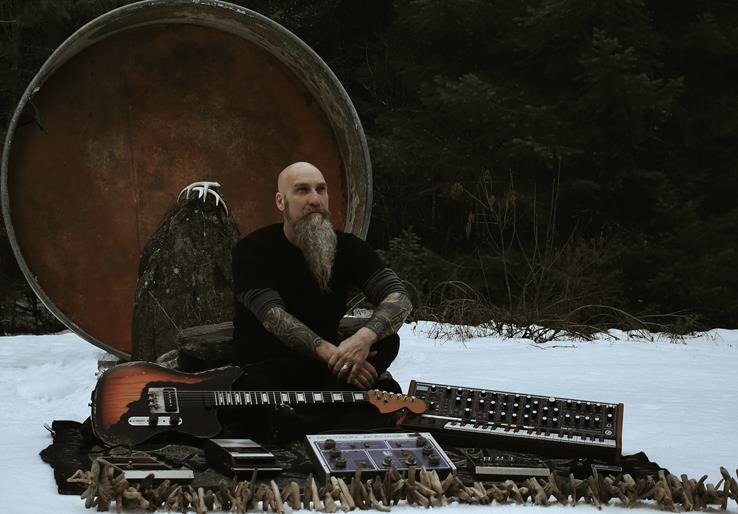
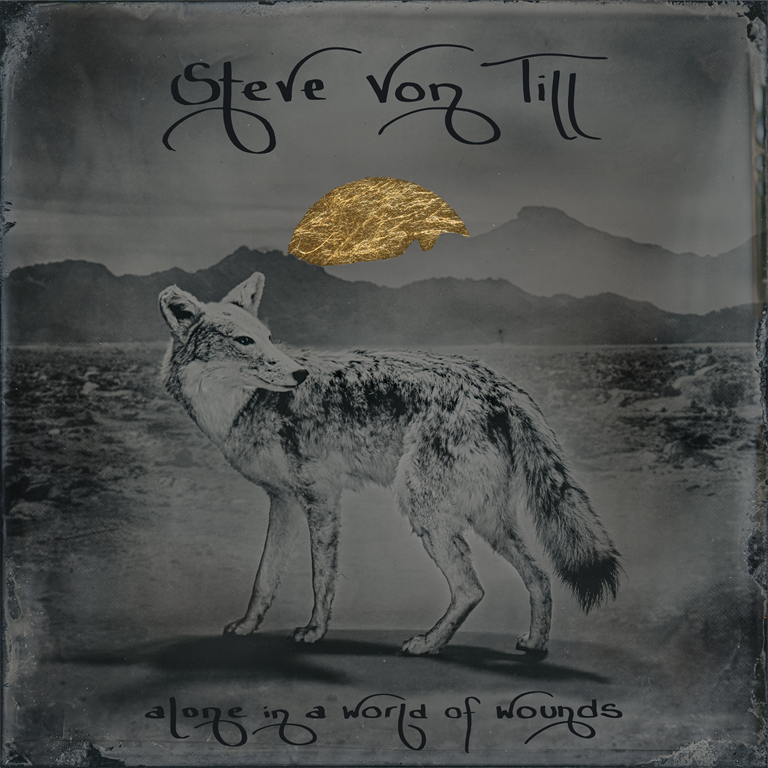
Steve Von Till doesn’t really require any introduction or preamble: the chances are, if you’re reading this, you’re already aware of his work, and if not as a solo artist, then as the guitarist / vocalist with Neurosis, active between 1985 and 2019. As much as Neurosis were labelled a post-metal band, they very much forged their own sound, which has, to an extent, become the house style of Neurot Records.

Von Till’s solo works may lean more toward folk and the gentler side of that style, but nevertheless have significant heft, and Alone in a World of Wounds – his seventh solo album, the follow-up to No Wilderness Deep Enough (2020) is no exception (he’s been busy in the intervening years with a trilogy of Harvestman albums, all released in 2024). The heft here comes from a sense of gravitas, rather than volume and distortion, and continues the softer trajectory of its predecessor, an album ‘initially inspired by the harmonic resonance of piano and synths and his long-standing love of ambient music’.

‘The Corpse Road’ sees Von Till croak and croon in a fashion that could me taken for Mark Lanegan in a blind test, against a sparse backdrop of strings which swell and swoon, heavy with sadness and gloom. There is a sense of times past, not just fading memories and bygone days, but a sense of the creak of wood and worn clothing of harder but simpler times. I find myself unexpectedly transported to a walk my daughter and I undertook from Ambleside to Grasmere in the Lake District a year or so back, via the ‘Coffin Route’. It was winding, and wet, and uneven, not to mention long, and it’s billed as a ‘strenuous’ walk, while still suitable for tourists: as the rain battered the hood of my anorak, I found myself contemplating what it must have been like hauling an actual coffin along that four-mile stretch without the benefit of modern hiking gear. Life must have been tough. Von Till taps into the essence of these past times, and a sense of the elemental.

The mood remains lugubrious on ‘Watch Them Fade’, a song redolent with sadness and reflection, weighted down with the reminder that mortality affects us all and is never far. Despite the fact that life’s only certainty is its expiration, we continue to shy away from the topic. While Alone in a World of Wounds does not confront mortality and death head-on, it’s there at every turn. “Keep on diggin’… dig a little deeper” he implores on ‘Horizons Undone’, and while there are psychological connotations here, it’s hard to ignore images of graves.

The eight-minute ‘Calling Down the Darkness’ is a super-sparse piano-led slow-burner, and confounds any expectation for a surging finish by remaining low-key and minimal to the end, ad something about it is so, so achingly sad.

‘The Dawning of the Day (Insomnia)’ is a brief spoken-word interlude with a moody piano accompaniment, while paves the way – or perhaps scatters woodchips – for the arrival of the swirling atmospheric start of ‘Old Bent Pine’, another song which revels in the forces of nature, before the six-minute ‘River of no Return’ flows toward the finish. It has hints of Slowdive about it. Moreover, its superficial ominousness reminds us that rivers only flow in one direction, and as with rivers, so with life: there is no return, no replay, no turning back. there is no undoing mistakes, only not repeating them.

‘Alone in a World of Wounds’ may be a largely acoustic album, but it is still heavy – really heavy – emotionally more than sonically – and consequently not an easy one to process. It would be impossible to deny the album’s quality. But the weight, the sadness…

AA

AA
450947

Neurot Recordings – 7th March 2025

Christopher Nosnibor

If a release is on Neurot, there’s almost a guarantee that it’ll pack some heft, and that it’s likely to be good. And so it is with the debut album from Guiltless, who feature members of A Storm of Light, Intronaut, Generation of Vipers, and Battle of Mice and were ‘born from a love of experimental rock, noise rock, early industrial, sludge, and doom’. Their bio describes their first release, the EP Thorns as ‘crushing and cheerless’, adding that ‘it seemed to welcome the apocalypse looming on our collective horizon.’

The horizon is feeling closer than ever, the Doomsday Clock now set to just 89 seconds to midnight, reported as being ‘the closest the world has ever been to total annihilation.’ Teeth to Sky is a worthy successor to Thorns, and while it may not be quite as unutterably bleak, it sure as hell isn’t a laugh a minute, or even a month. And if anything, it’s heavier, denser, and it’s more layered, more exploratory.

‘Into Dust Becoming’ crashes in on a howl of feedback before the riff comes in hard. No delicate intro or gradual build-up here: just full-on, balls-out explosive power. It’s a veritable behemoth, dragging a megalithic weight and a brutal rawness as it churns away with devastating force. It’s one hell of an ear-catching way to open an album, and serves as a statement of intent.

‘One is Two’ barrels and lurches, the bass booming low while the guitar slices and slews across at jagged angles, and with the roaring vocal delivery, it’s dark and furious, as is fitting for a song that explores human behaviour and the fact that as a species we seem utterly hell-bent on destroying our own habitat. It’s a perverse contradiction that as the most advanced species to have evolved on earth, we have seemingly evolved to bring about the hastening of our own extinction, but then again, perhaps it’s for the best. But considering this, and the state of everything, brings a range of complex emotions which aren’t necessarily easy to articulate through language, or language alone – and this is when one comes to really appreciate the catharsis of visceral noise. And it’s a crushing force that blasts from the speakers on ‘In Starless Reign’; the guitar tone rings a squalling dissonance, and there are some deft tempo changes which accentuate the textural detail and enhance the impact.

They slow things to an eerie crawl on the epic ‘Our Serpent in Circle’ to round off side one, and although it doesn’t exactly offer respite, it does provide some variety ahead of the assault which ensues with the title track at the start of side two, followed by the utterly merciless ‘Lone Blue Vale’, a track of staggering density. Combined, they deliver a relentless sonic barrage. ‘Illumine’ closes the album with slow-paced precision, a harrowing seven-minute dirge designed to snuff the faintest glimmers of hope in your soul.

It’s a significant achievement that Guiltless manage to maintain such a punishing level of intensity for the duration of the whole album: Teeth to Sky will leave you feeling utterly pounded, breathless, and dazed.

AA

160821

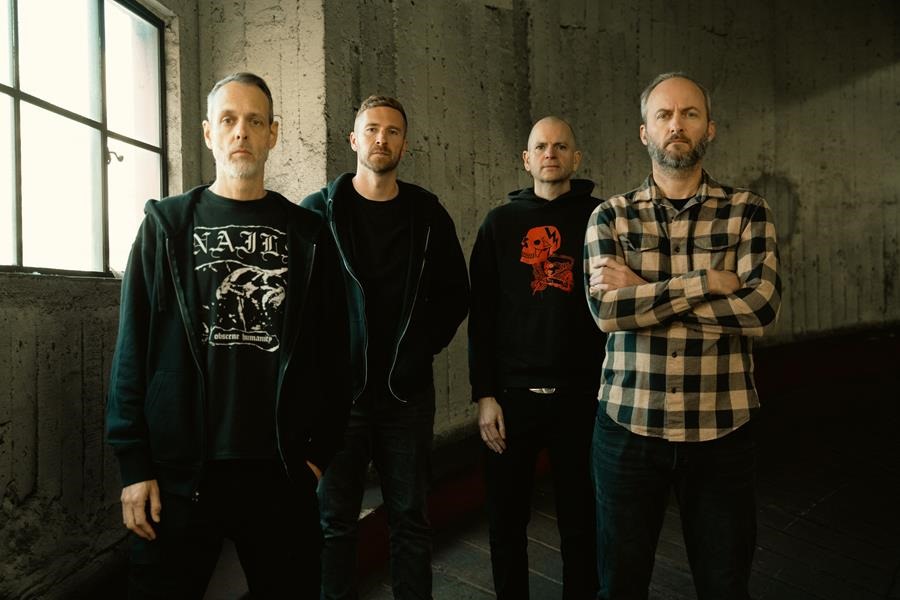
Born from a love of experimental rock, noise rock, early industrial, sludge, and doom, Guiltless (featuring members of A Storm of Light, Intronaut, Generation of Vipers and Battle of Mice) heralds the coming of a heavy music which looks both inwards and out to convey the encompassing mixture of hope, despair and determination which comes from observing life as we know it today. Guiltless released their debut EP, Thorns, via Neurot Recordings in early 2024. Crushing and cheerless, it seemed to welcome the apocalypse looming on our collective horizon.

On March 7th 2025, Guiltless shall release their debut full-length album Teeth To Sky via Neurot, a record more pulverising, focused and introspective than what came before.

Today they share the bruising title track today, which combines the gnarled sensibilities of The Jesus Lizard, Cherubs and Barn Owl into a rumination on Mother Nature’s revenge. “The title track represents a surrender to nature’s unstoppable force,”  vocalist Josh Graham says. “As climate extremes continue to grow and impact virtually everyone on earth, we are now facing the impact of our forefathers’ actions, and our children will live through a new and unprecedented future.”

AA

Guiltless_Spire_031-9900000000079e3c

Photo credit: Gulnaz Graves

Throughout 2024, and marking three full moons, Harvestman (a.k.a. Steve Von Till) will be presenting his ambitious Triptych project, a three-part album cycle. This album trilogy is a distillation of a unique approach that finds a continuity amongst the fragmented, treating all its myriad musical sources and reference points not as building bricks, but as tuning forks for a collective ancestral resonance, residing in that liminal space between the fundamental and the imaginary, the intrinsic and the speculative.

Today, Harvestman share ‘Galvanized And Torn Open’ from the upcoming Triptych Part Two, which will be released on 21st July via Neurot Recordings to coincide with the Buck Moon. Part One was released on 23rd April on the Pink Moon, and Part Three will be coming on 17th October’s Hunter Moon.

Harvestman has also announced a listening party for Triptych: Part Two on the day before the album’s release. The session will take place via Bandcamp on Saturday, July 20th at 7pm GMT. Save the date and RSVP HERE.

The new visualiser for ‘Galvanized And Torn Open’ was created by Von Till, who writes of the song, “This track was composed entirely around a very simple beat performed by Dave French and I on an old steel water tank that I had accidentally destroyed with my snow plow during the Winter of 2019/2020. The following Spring when rolling it to my truck to take the scrapyard, I heard its rolling thunder and knew it was a piece of percussion magic. Shortly after, Dave came out to Idaho to visit for a while, and we worked together to compose three pieces based on its various sounds. This second piece is centered around giving space to its thunderous low end. A few simple guitar and lines and synth harmonies help give it movement, accentuate its natural breath, and let it guide us on a sonic journey to a few different internal landscapes.”

Watch the video here:

AA

PhotoFeb10202432154AM-99028a0b6d05143c

Photo credit: Kylee Pardick

Neurot Recordings – 23rd February 2024

Christopher Nosnibor

The band’s website contains, if not exactly a manifesto, an eye cast over the world in which we find ourselves here in the early weeks of 2024: ‘Human singularity, a third world war, scorching deserts, rising seas – it’s all coming for us. The slow grind is already in motion, pushing concrete, bodies, Teslas, skyscrapers, shacks, banks and bitcoin into a collective abyss. Piles of discarded trash will inherit the earth. It’s anyone’s guess as to what happens next. Is this the end of the world? Who knows. Who cares? Stand by with the rest of us and watch it burn. We’re all guiltless. We’re all blameless.’

Here, then, we come to learn the origin of the band’s name, a grim, grimacing irony condensed into a single word. This articulates the sense of pit-of-the-gut despondency we should all feel when we look around us. The drivers to take to the roads in their SUVs to drive five minutes up the road for the school run because it’s raining doing their bit to ensure it’s going to rain a hell of a lot more; the moneyed who jet off for their annual skiing holidays who bemoan the lack of snow without for a second considering the fact that they’re the reason there’s no snow, may be small-scale compared to Shell declaring profits which are double the UK’s climate funding and being pressured to can their ‘green’ strategies in order to siphon off even more for their shareholders, but the point is, we could all do better, much better, but simply none of us is truly willing to sacrifice comfort and consumerism for a future they can’t comprehend.

The accompanying press release delivers a similarly positive pitch, telling how ‘Guiltless creates apocalyptic soundscapes in their imaginings of the surreal return to proto-human civilisation, as well as what life might be like for the survivors of the next mass extinction event on Thorns.’ Prepare to be harrowed, people, prepare to be harrowed. But also, prepare to take a look in the mirror: do you need to buy products from Nestle and Unilever? Do you have to shop at Tesco and Amazon, or are their local business you can buy from? How about loose fruit and veg instead of packed in plastic? And do you actually need that thing, the latest phone model, the delivery from McDonald’s? It’s a tough one: the majority of people who are most driven towards such basic convenience choices are on the lowest wages and are the ones generating the wealth for the rich cunts who will happily watch the earth burn rather than pay tax. You might think they’d grow a conscience for the future their children will find themselves in, but they’re banking on shipping off to Mars before the half of the world that isn’t incinerated is under water. Hey, they can probably take a few polar bears and pandas along, too.

Thorns is twenty-four minutes of hellish bleakness. It’s an EP to play when you’re in the mood for basking in bone-breaking blackness. ‘Devour Collide’ begins deceptively gently, a hum of extraneous noise which is overtaken by some gentle guitar and an understated bass, propelled by rolling toms – then forty-six seconds in, everything slams in, hard and heavy, the distortion rages and the snare crashes like a tectonic event. The riffage grinds to a crawl and churns it way to crushing lows, while Josh Graham’s raw, ravaged vocals sound as if his larynx has been scorched by fire and pollution. It makes for an utterly punishing six-and-a-half minutes, and sets the tone for a truly monstrous set.

It’s a thick blast of flanged guitar which powers in on a wave of thunderous drums on ‘All We Destroy’. It’s a criminally underrated and underused effect, and one which is far more versatile than is perhaps appreciated, with the capacity to create brittle metallic tones with quite the old-school goth vibe as well as sweeping swirls – and it’s a bold ‘whoosh’ which yields to a thick, sludgy grind, as dense and heavy as a mudslide. ‘Dead-Eye’ delivers repeated punches to the gut with its lurching, lumbering low-end tumult, jarring, sinewy guitars and clattering, slow, slow, slow drumming reminiscent of early Swans, but with a doomy metal aspect. It makes for a long and challenging five-and-a-half minutes, which leaves you drained, physically and mentally, weak in the limbs and gasping for air in the wake of its devastating intensity.

The EP’s closer, ‘In Radiant Glow’ starts slow and low, and as such, it’s vibe is classic Neurot. And then, just around a minute in, BOOM! Everything slams in and hits like a tsunami. It’s utterly punishing – and rightly so.

It’s perhaps fair to say that everything is fucked. As I write, the UK government is adamant that it’s bombing of Yemen and a growing number of countries in the Middle East is ‘not an escalation’, while continuing to give support to Israel’s ‘right to defend itself’ against Hamas. No-one would reasonably deny any state’s right to defend itself, but can anyone really justify 25,000 deaths and rising daily as ‘proportionate’ or ‘defence’? Meanwhile, Russia continues to pound Ukraine, and shareholders in weapons manufacturers like BAE Systems are making a killing from all the killing. Well, might as well make as much as you can while you can, eh?

And so, here we are. Twenty, twenty-five years ago, you’d have been labelled an apocalyptic nutter for stressing out over the future and over climate change. Sadly, big business and cunts like Trump and his supporters still will, raving about the ills of wind farms and favouring fracking and nuclear power instead. Even when Venice becomes the new Atlantis, they’ll still be saying the same. But there’s no escaping now that we are fucked. Guiltless know it and they’re not here too win anyone over or to change anything, because they recognise that it’s too late and it’s all utterly futile. Thorns is a dark document which faces the grim reality. Its purpose is not to offer solace, but simply solidarity for those who also realise that we’re on a one-way road to oblivion.

AA

527031

Neurot Recordings – 10th November 2023

Christopher Nosnibor

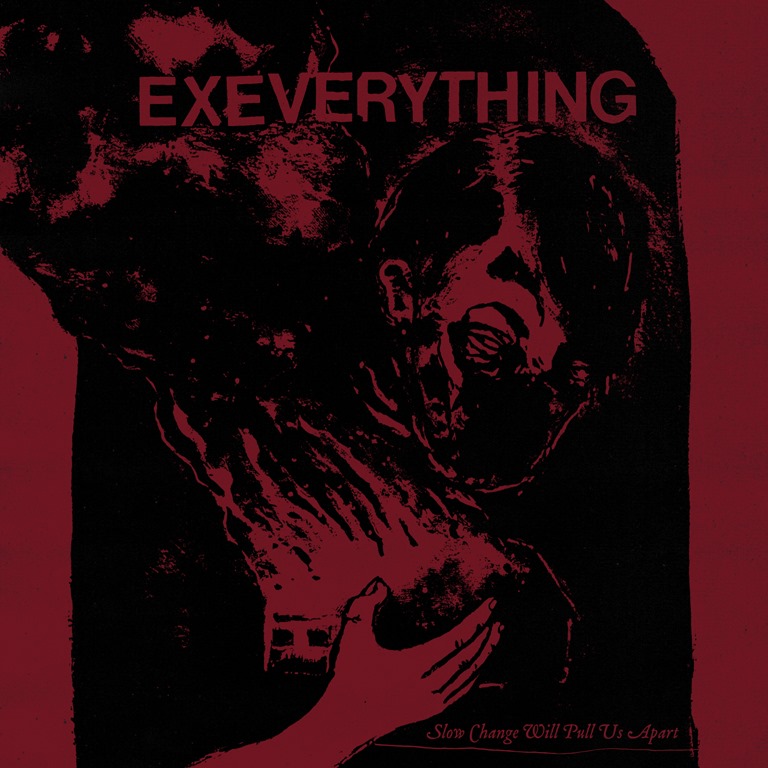
It’s practically impossible to overstate just how grim things have got lately. It’s not just any one thing, either. The climate is fucked, the economy is fucked, the world is at war. This isn’t about local pockets of fuckedness. It’s all fucked. Ex Everything very much appreciate this, as set out in the notes which accompany Slow Change Will Pull Us Apart: ‘Our world has been gradually falling apart. This may seem like a bleak point of view, but the collapse we’re all witnessing inspired post-mathcore outfit Ex Everything as they created their eruptive debut Slow Change Will Pull Us Apart… “Everything around us–politically, socially, environmentally–seems to be stretching and breaking,” says guitarist Jon Howell. “Our record sits in that terrifying place where you’ve been watching it happen.”

A fair few people I know – my age bracket in particular – have said they’ve stopped watching or reading news because it’s detrimental to their mental health. No doubt it is, but the bliss of ignorance can’t last forever and ignoring everything that’s going on is the ultimate compliance. British politicians in particular repeatedly begin sentences with ‘let me be clear’ – before rolling out an endless ream of obfuscations. So let me be clear. Everything is fucked, and things are only going to get worse.

As their bio summarises, ‘The Bay Area quartet boasts current and former members of Kowloon Walled City, Early Graves, Mercy Ties, Blowupnihilist, Less Art and others, but listeners shouldn’t mistake this for a short-term project or side band. This is a priority, every member focused and committed, and it only takes a few minutes with the album to understand how serious they are. “This band is completely its own thing,” says Howell. “It addresses the part of us that wants to write fast, chaotic, knotty, messy, pissed off music.”’

Fast, chaotic, knotty, messy, pissed off music is precisely what these chaotic, knotty, messy times call for. It feels as if the world was waiting for the pandemic to end to go absolutely all out to annihilate one another. There has, throughout history, always been a war somewhere, but now, there’s pretty much a war everywhere, and in less violent, bloody battles, governments wage war on the poor in the interest of ‘the economy’ and fuck over society’s most vulnerable, from the unemployed to the disabled, not to mention the homeless, the wounded, mostly in the interests of capitalism.

Slow Change Will Pull Us Apart packs eight hard-hitting, heavy tracks which rage and rage and rage and hit so hard, in a furious frenzy. The guitars are often busy and brittle and mathy, but the rhythm section is welded together and blast the hardest sonic attack. Slow Change Will Pull Us Apart is the sum of its parts, and that’s a positive here: it brings together the best elements of the contributors and fuses them into something tight, taut, uncomfortable. Single cut ‘Exiting the Vampire Castle’ is exemplary: full-throttle noise rock with dominated by shuddering bass and thunderous drums, with guitars which are both grimy but also reverby clanging over the top, while the vocals and raw and nihilistic. This is some full-on angst: ‘A Sermon in Praise of Corruption’ is a full-on, blistering rager, and there really isn’t much let-up in terms of ferocity. This is an unashamedly political album, as titles such as ‘Slow cancellation of the Future’, ‘The Last Global Slaughter’ and ‘Plunder, Cultivate, Fabricate’ suggest. These are highly political times, so it’s only right that Ex Everything tackle the issues.

There is detail, there are moments where they pull back on the pace and the blunt force, but they’re brief, and serve ultimately to accentuate the immense and intense power of the rest of the album when they put their collective foot hard on the pedal And drive forward hard.

In the face of everything, rational contemplation and collected consideration are difficult. The real urge is to give in to the temptation to simply give up, give in, and to scream at the world to fuck off. Slow Change Will Pull Us Apart comes close, but better than that, it noisily articulates the nihilistic rage which sprays in all directions. There’s no one thing that’s shit or fucked up: it’s everything. And sometimes the only way to deal is to let it all out. Ex Everything do that, channelling every last drop of fury into this bleak and hefty beast of an album.

AA

403960

Oakland, California-based post-hardcore quartet Ex Everything – formed by current and former members of Kowloon Walled City, Early Graves, Mercy Ties, Blowupnihilist, Less Art, and more – present ‘Exiting The Vampire Castle’. The song is the third single from the band’s debut album, Slow Change Will Pull Us Apart, which will be released 10th November via Neurot Recordings.

About the track, vocalist Andre Sanabria says, “The song, ‘Exiting The Vampire Castle’ is named after an essay by political and cultural theorist Mark Fisher. In that essay, Fisher argues that people on the political left will reinforce organizational solidarity by orienting around economic class, rather than identify and culture.

Andre continues… “As the 3rd single off Slow Change Will Pull Us Apart, the song’s lyrics ruminate on the essay’s themes. The band invites listeners to not only come along on a sonic adventure but to act as a spark for progress long after the album is over.”

Listen to ‘Exiting the Vampire Castle’ here:

Ex Everything have hope for the future. The caveat? “Hope without action is meaningless”. For this band, action comes in the form of creation, and creation comes in the form of frenetic, raw music, full of rage but driving for change in the system and in our lives.

Despite the pedigree of players, Ex-Everything will be the first to admit that this band is very much its own thing. Jon Howell says, “It addresses the part of us that wants to write fast, chaotic, knotty, messy, pissed off music.”

The music is a fusion of Dischord-influenced math rock and noisecore, a nuanced rage that refuses to accommodate the passive listener. Jon Howell’s percussive, angular playing is as impressive as it is baffling, with malformed chords and abstract melodies that still burrow effortlessly into your brain. Dan Sneddon’s drumming is a stampede of frenetic time signatures, deceptively understated patterns and anthemic bashing, while Ben Thorne’s bass roils underneath like a ship’s hull scraping the ocean floor.

The band’s true skill, though, lies in how their instruments interlock, the structuring of movements that grow songs from rotted dirges to triumphant war cries, rhythmic tension building until a riff explodes it into something unexpected and completely satisfying. Notably, the band welcomes Andre Sanabria to take over vocal duties, “Andre has been a musical force in all his previous bands. His vocal intensity is compelling,” Howell says. Sanabria screams like he’s trying to tear the songs apart, though he manages to find moments of almost zen-like contemplation. It’s a deft and mesmerising performance, aided by his deeply thoughtful lyrics about, as Howell says, the steady dismembering of the things that bind us.

a3616042244_10

Oakland, California-based post-hardcore quartet Ex Everything – formed by current and former members of Kowloon Walled City, Early Graves, Mercy Ties, Blowupnihilist, Less Art, and more – present a video for “Detonation In The Public Sphere”. The song is the second single from the band’s debut album, Slow Change Will Pull Us Apart, which will be released 10th November via Neurot Recordings.

About the video the band says, “We selected ‘Detonation In The Public Sphere’ as our second single off Slow Change Will Pull Us Apart because it’s a fucking banger. Clocking in at ninety-three seconds, the song is a 203bpm sprint from start to finish. The video shoot was a grind for the band (thirty-five full song takes!), but we felt very confident with Bay Area cinematographer Ryan Castaneda behind the camera. With all that great footage, Wendy Leuthold and Andre Sanabria’s edit highlights the band’s explosiveness both live and on the record.

They continue, “’Detonation In The Public Sphere’ is written from the perspective of a person who HAS recognised their place in the machine of capitalist imperialism and the actions needed to change conditions for the better of humanity. We hope this song will move listeners to think about their place in that machine and then hit repeat to play it again.”

The video for ‘Detonation In The Public Sphere’ was directed by Ryan Castaneda with additional filming and DIT by Katie Grubbs, gaffer Tehan Davis, editor/colorist Wendy Leuthold, and editor/producer Andre Sanabria.

Watch it here:

AA

Ex Ev

Photo credit: Scott Evans

Neurot Recordings – 13 October 2023

Christopher Nosnibor

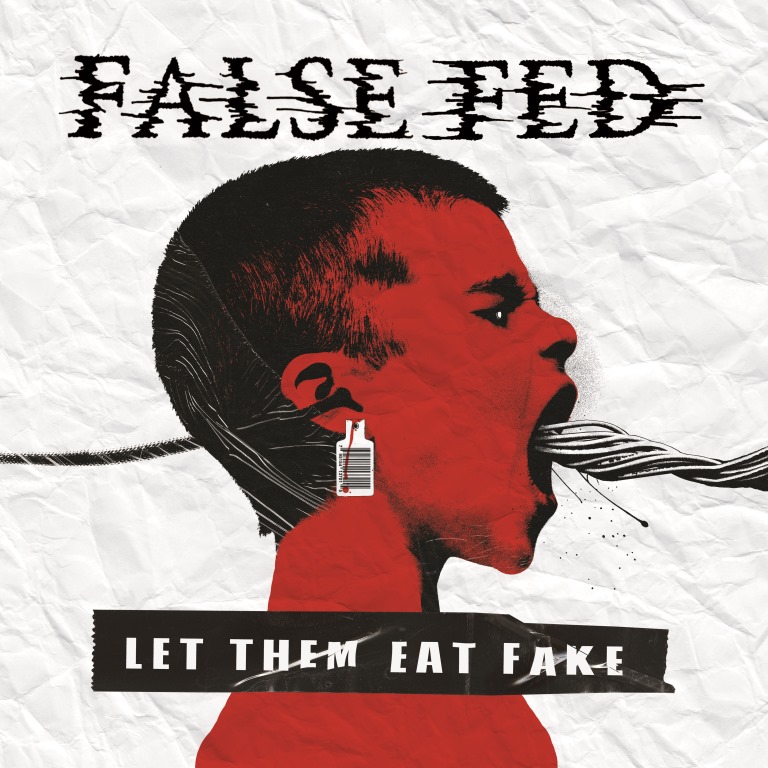
Let Them Eat Fake may be False Fed’s debut, but the members have between them a substantial catalogue of releases. The band comprises Discharge frontman Jeff Janiak, Amebix guitarist Stig C. Miller, Nausea, Ministry and Amebix drummer Roy Mayorga, and JP Parsons, and collectively, we’re told that this album sees them ‘all stepping outside their musical comfort zones to present an album of discomfort and rage in the face of reality’.

The solid, throbbing bass, glacial synth and squirming guitar that mark the album’s opening with ‘Superficial’ may come as something of a surprise given this preface: we’re deep in dark post-punk territory here, and it’s a huge shift from the hard, attacking pace of either Discharge or Ministry, as well as an immense stylistic departure. Janiak’s vocals, too, aren’t hardcore hollering, but a resonant baritone, at least unto he breaks our roaring and raging toward the end. The vibe is more UK goth circa ’86 than anything else, but this is fitting, given the many parallels between now and then. Yes, so much for progress: we’re right back to the 80s in a climate of fear and a new cold war… and not just a cold war. Instead of coming together to make some kind of effort to address the self-made catastrophe of climate crisis, we seem hell-bent on destroying one another.

‘The Tyrant Dies’ is more what you’d expect from this bunch: industrial-strength hardcore punk with a metal edge: the blasting punk fury of Discharge with the gritty heft of Ministry… but then the bridge slows things and we’re back in goth territory – well, goth as filtered through a strain of Rammstein – and the portentous refrain of ‘we will rise’ feels like a call to arms while at the same time calling on the ‘undead, undead, undead’ refrain of ‘Bela Lugosi’s Dead’: it’s time for a resurrection.

This album hits harder as it progresses: the guitars drive harder, the drums roll heavier, and goth, punk, and metal tropes melt together to forge something devastatingly intense. I haven’t heard anything that amalgamates these elements – and so successfully – since Alaric’s End of Mirrors, released in 2016 – also on Neurot.

‘The Big Sleep’ is all driving fury, hell-for-leather drums, chunky, chugging metal guitars, and high-pomp vocals echoing from the chest. Meanwhile, ‘Dreadful Necessities’ comes on like Killing Joke with its taut compressed guitar sound and driving beat. It’s dense, and probably more accurately described as steely grey than dark, since it brings a strong, melodic chorus.

The title – Let Them Eat Fake – may be light-hearted on the surface – but obviously has darker undertones in terms of its reference to class division, and that’s one of the major factors behind the album’s anger. And this is an angry album. Let Them Eat Fake is also an album that has a clear trajectory, and it builds as it progresses, becoming louder, faster, harsher, more angry with each song. By the end, it’s positively incendiary, a full-on roar of fury driven with guitars that burn. And ultimately, it makes sense as an articulation of ‘discomfort and rage in the face of reality’. We’re all feeling it. Reality is pain. Let Them Eat Fake tells is like it is.

AA

589049

Neurot Recordings – 29th September 2023

Christopher Nosnibor

I’m finding myself on something of a Neurot trip this week, following my fervent frothing over the mighty new album by Great Falls. As if to prove that the label has been putting out outstanding records for a very long time (and with unstinting singularity, presenting a broad stylistic range, too: this is anything but heavy), twenty years on from its original release, Grails’ debut is getting a reissue. While the nice coloured vinyl pressings (in ‘Coke bottle clear’ and ‘beer’ hues) aren’t necessarily for everyone, the release does afford a timely opportunity to reflect on the debut release of a band who have gone on to forge a significant and varied career, with their latest album – number eight – being released next month.

Steve Von Till’s comments about hearing the demo for the album, on which the offer of’ the release was made, reminds us of the musical landscape of the time in 2002: ‘Most instrumental music at the time was trying to emulate Godspeed You! Black Emperor or Mogwai, but this was different. This seemed to have elements from more diverse sources that I loved such as Dirty Three, Comus, Richard Thompson, and Neil Young, not to mention, who in hell would dare to cover Sun City Girls?’

There was a lot of instrumental post rock around, and while there was a wealth of great bands around, locally as well as nationally and internationally, it’s fair to say that a large proportion of it was much of a muchness, with myriad explorations of chiming guitars and slow-building crescendos.

The prominence of acoustic guitars, softly picked and strummed, and rather unconventional use of violin creates an unusual dynamic on these compositions, which tend to be sparse in arrangement and with considerable space between both the instruments and the individual notes, and the crescendos are few and far between – the first doesn’t arrive until over halfway through the third track, the slow, meandering ‘The Deed’, when the swell of guitar pushes upward through yawning strings and finally the full drum kit crashes in. But the impact is less from whacking on the gain on the instruments, but the musicians utilising the dynamics of playing, and the simple equation that playing harder is louder. Against the prevailing tide of pedal boards as big as drum risers packed with effects, this stands out as being not only very different, but bold, the emphasis on the tones and timbres of the instruments in unadulterated form, the sounds the result of technique.

The soft piano of ‘In the Beginning’, when paired with picked guitar has an almost pastoral feel; the heavy smack of a drum feels incongruous before a soft yet almost clumsy waltz emerges briefly, and structurally, the pieces seem to belong more to jazz than anything else, although ‘Space Prophet Dogon’ (the Sun City Girls cover) draws together elements of Celtic-influenced folk and psychedelia, and goes for a long toe-tapping groove over a crescendo by way of an extended climax. It takes a certain courage to fly in the face of fashion in such an obtuse fashion, as well as to play in such an intimate way that you can hear the sweep of a finger across a fret, where natural reverberations become as integral to the sound as the notes themselves. This is nowhere more apparent than on the hyperpsarce intro of ‘Broken Ballad’, a sedate almost country-tinged tune and one of the album’s more conventionally-shaped pieces. The slowly-unfurling ‘White Flag’ shares a certain common ground with later releases by Earth: slow, spacious, revolving around a simple, picked guitar motif, but it does swing into an exhilarating full band finale that’s different again.

Closer ‘Canyon Hymn,’ presumably a reference to Laurel Canyon, the name of the and when they recorded the demos which would become The Burden of Hope, is by no means an anthem or a theme, but encapsulates all aspects of the album’s range within a soothing five minutes. If the title, The Burden of Hope, implies a certain weight of responsibility, the music it contains sees that hope take wings. Twenty years on, The Burden of Hope sounds uplifting, and still fresh.

AA

cosmicimg-prod.services.web.outlook