Posts Tagged ‘narrative’

Strategic Tape Reserve – 21st March 2025

Christopher Nosnibor

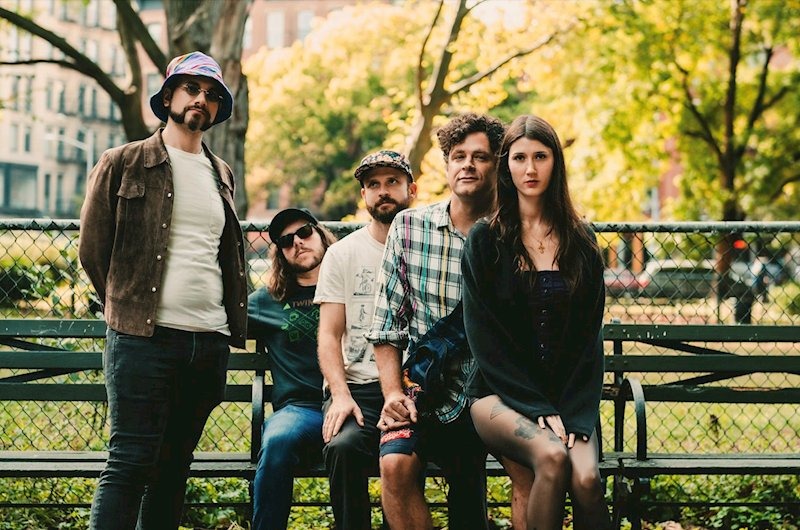
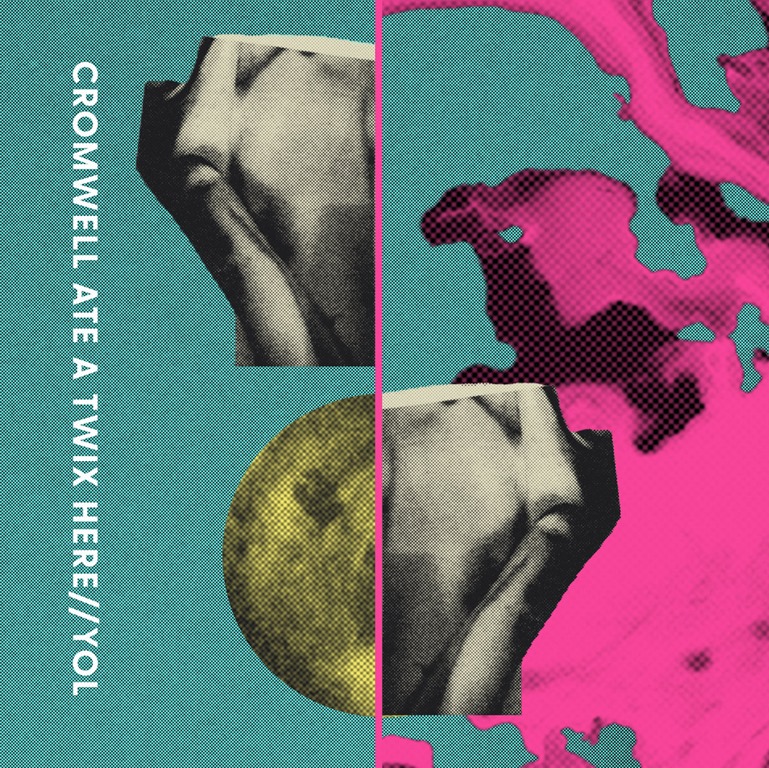
It’s certainly been a while since we last heard from Justin Watson, the epically-bearded being who formerly ran the Front & Follow label, but here he has temporarily resurfaced as one half of the absurdly-monikered Cromwell Ate A Twix Here on a split release with underground noise legend YOL, released by Spanish cassette label Strategic Tape Reserve. As such, even before hearing a sound, one can predict that this is destined to be unpopular – by which I mean an ultra-cult release for a microniche audience – or, put simply, the noise scene.

The bio for Cromwell Ate A Twix Here tells us more about what they aren’t than what they are, hammering home that ‘Justin ran Front & Follow and definitely doesn’t now. It’s over. He’s half of MORE REALISTIC GOALS, a third of The Incidental Crack and a quarter of The Watson Marriage Experiment (2006-)’. So in the wake of its brief revival for the charity fundraising Rental Yields series of complications not so long ago, we can be confident that the lid is now firmly nailed onto the coffin of F&F and even Dracula wouldn’t resurrect the label’s activity. But this is how it tends to be with those of a creative bent. They simply can’t not do anything forever. It’s not even an itch: it’s a compulsion. ‘Fragile’ occupies side one, and is eighteen minutes of expansive, filmic music, constructed around quavering, wavering drones, sparse pseudo-strings and soft, supple abstractions by way of an accompaniment to a somewhat surreal spoken-word narrative about… what is it about, exactly? Death, yes, but also a new relationship, interaction… The music fades into the background during the narrative, rising to the fore between passages. David Yates’ delivery is natural, down to earth, friendly, even, and is fitting for a tale which is largely given to quite mundane details before shit gets weird at the end. The audio begins to grow more unsettling, a shade disturbing around the seven-minute mark, and things only get darker thereafter.

And then there is eighteen minutes of Yol, which is pure derangement. Anyone acquainted with his work will be expecting nothing less. It begins with him stuttering and choking in convulsions over a mess of noise about ‘wheel of life, wheel of cheese’, and he yelps and roars, sounding as if he’s utterly possessed or dying, spasmodic ranting overloading over a horrific mesh of feedback and sonically rough terrain. You can practically hear your speakers wilting as the blasts of distortion scratch and scrape and glitch and burst and grind and buzz like so much sputtering, sparking, damaged circuitry. The whole thing is deranged, although it’s no less deranged than Liz Truss’ famous proclamations about cheese or any statement issued by The Whitehouse in recent weeks. He knows this, of course: however insane his work sounds, there are political undercurrents and a certain knowingness to his brand of frenzied avant-gardism, as evidenced on viral cats and dogs (2021).

The fact that this is just short of twenty minutes of a man yelping and barking and seemingly losing the plot before a microphone, and yet making more sense than five minutes spent perusing the news or social media tells us where we are in the world right now.

The two sides of this split release may be very different, but the contrasts are complimentary, and in combination, offer a welcome excursion beyond the everyday madness we’re living through, offering insights into rather more specialist madness instead. But this is artful madness, or good mad, or something. These guys won’t wreck the economy, invade or annexe your country, or fuck you over. They’ll just be over there making some weird noise. I’ll be over there with them, and you’re more than welcome to join us.

AA

a4054677057_10

Ideologic Organ – 10th January 2025

Christopher Nosnibor

It’s already looking like 10th January is going to be an intense date in terms of the sheer volume of releases. Time was when January was something of a quiet spell for new music, as everyone recovered from the Christmas glut, and labels tended not to release much since people were skint. It also used to be the case that unexpected releases would sneak unexpectedly high in the charts, especially the UK singles top 40, with remarkably low sales figures, usually with cult acts with savvy labels whacking out a release that would have barely scraped the charts any other month – White Town’s ‘Your Woman’, released 13th January 1997 and hitting number one in the UK and going top ten globally – however briefly – is a classic example.

There’s no danger of Nate Wooley registering on any charts with Henry House, released on the Ideologic Organ label, curated by Stephen O’Malley of Sunn O))) legend, and home to a long line of truly magnificent avant-garde and otherwise most unusual musical works, of which this is very much one. That’s not because it’s not good, it’s just that the nature of charts has changes beyond recognition over the last thirty years. There is also the statistic which recently came to light that there was more music released on any single given day of 2024 than during the entirety of 1989. It’s a pretty staggering statistic, and one of many factors when considering just how difficult it is for artists to make a living from making music. Something I have touched on previously is the fact that simultaneous with this explosion of output, culture has become both more homogenised and more fragmented. In terms of the mainstream, this homogenisation has facilitated the advent of multimillionaire and even billionaire ultra-megastars like Taylor Swift – but at the other end of the spectrum, there are tens of thousands of artists releasing music on Bandcamp and Spotify with no backing or publicity whatsoever, to be heard by maybe five people.

But we need music that’s unpopular, that isn’t created with any commercial intent, and we very much need labels like Ideologic Organ to provide a platform and to point us toward the cream of those artists who may not otherwise reach the audience they so richly deserve.

And as an album containing a single composition split into five parts, described as ‘a recurring dream song’ with a running time of some eighty minutes, this is a work which is very much non-commercial in every way.

As the accompanying notes detail, this is a work which combines ‘closely tuned instruments and sinetones, tape-music editing techniques, field recordings, and voice,’ providing the context that ‘this eighty-minute, five-part song cycle is an evolutionary step away from the spontaneity of the free jazz/noise aesthetic usually found in the music of Nate Wooley. Henry House expands on the ecstatic, durational work found in Wooley’s Seven Storey Mountain, a six-part composition that has been premiered over the last ten years by an ensemble that now includes multiple drummers, guitarists, a twenty-one-person choir, and the composer on amplified trumpet. But its ritual is more serene, more natural, slower.

Henry House is the first long-form piece that doesn’t feature Wooley’s trumpet. It is also the first to be constructed around his poetic writing. Wooley weaves a strange funeral mass for a fictional everyman from isolated phrases culled from essays, poems, and non-fiction written by Wendell Berry, John Berryman, Joseph Mitchell, and Reiner Stach. After organizing the fragments into a dream narrative, Wooley rewrote the text dozens of times, manipulating the stitched-together story until only glimpses of its sources remained.’

It’s ten minutes into the twenty-minute opener, ‘Acacia Burnt Myrrh’ that the poetical oration begins, with the words spoken by Mat Maneri. He speaks in a calm, not entirely flat, but level tone, of geometry, of space, of time. The words conjure abstractions, images, moods, against backdrops of elongated hovering hums, oscillator-driven quivering drones. The words are audible, but comparatively low in the mix, and it’s not always easy to stay focused on the narrative, such as it is: instead, the mind focuses on absorbing the atmosphere. There’s a lot of that, and Henry House is an immense project with near-infinite dimensions. Megan Schubert’s faster-paced, more driven-sounding delivery is quite a contrast to Maneri’s, and from these counterpoints, the album grows in terms of dynamics and depth.

So much happens: listening to Henry House is like reading a book which contains stories within the story, and illustrations in a range of styles. No two tracks are really alike, and the arrangements change across the course of each piece. It draws you into a dark fairytale, a unique world which isn’t exactly scary, but unsettling because it feels unfamiliar, dissonant. The fact that two of the pieces bear the same title only add to the bewilderment. Horns and drones radiate between the narrative segments, and the final piece, ‘Aleatory Half Sentences’ is led by some flighty piano work, which trills and flickers against a heavy, nagging, low-level hum. It’s one that really takes some time to process, but it’s very much worth the effort.

AA

a3180996504_10

Self-Released – 13th December 2024

Christopher Nosnibor

Sometimes, the notes artists pen to accompany their latest works are somewhat dry, rather technical. Others provide effusive essays, while others still no details whatsoever. Flin Van Hemmen’s words which accompany Luxury of Mind are poetic, somewhat vague and elliptical, but lyrically rich and personal, if vague.

In order to thaw matters of the heart, one must go to where it’s cold.

It was the summer of 2022 and I was finally summoned there.

My personal winter had come, a place at once foreign and familiar.

In a flash I was made aware of all my life’s dimensions – the ones less welcome, or simply too big to face.

My sense of musicianship was temporarily halted, at that point unsure of its return.

Early 2024 I knew my personal winter was waning, and so I started tinkering away again, musically.

The pitter patter of the rain, the orchestra rehearsing their parts simultaneously, the sounds inside the corner store where I buy my daily coffee.

And how do they sound, together?

What indeterminacies reveal itself, or do I pick up on?

That’s my journey and a journey I wish to share with you in Luxury of Mind.

I have elected to quote in full because they are clearly pertinent to the substance of this material. Van Hemmen is clearly and peculiarly specific that he feels the need to share this specific journey, which clearly has involved stasis and self-doubt. Writer’s block? He seems to allude to rather more than that here.

Flin van

‘A Picture of Your Face (In the Light of the Fire)’ is bold, choral to begin. It’s not grand in the bombastic sense, but feels deeply spiritual, ceremonial, and for wont of a better word, ‘churchy’. While the sense of grandeur is uplifting, and spiritually powerful, the drone of organ and voices coming reverberating in a large, echoey space reminds that where there is a ‘churchy’ aspect, religion – particularly of the Christian persuasion – for all the exultation, is laced with guilt, apology, pleading – pleading forgiveness for sins, pleading for entry into heaven. And as such, it reminds of the paradox whereby Christians prefer to confess and atone their sins rather than simply try harder not to err in the first place. There are scratches and crackles which rupture the graceful smoothness of the piece, and the title track slips into a darker, danker space, with a sound like torrential rain on a tin roof, with murky ambience lurking about.

‘Eloquence and Grief’ brings new levels of disorientation, sort of a film-soundtrack piece with discordant background babble and crowd noise as an orchestra forges a soundscape which evokes mountains and canyons. Its meaning is difficult to extrapolate: it feels like multiple narratives occurring simultaneously, and the same is true of the eerie dark sound collage of ‘Volition & Velocity I’, and its equally gloomy, dolorous counterpart, ‘Volition & Velocity II’.

The whole feel of Luxury of Mind is haunting, unsettling, like walking through the soundtrack to a vague and abstract film, traversing time and space, intersecting scenes of bustling medieval towns, and post-apocalyptic shots of burning villages, intercut with occasional psychedelic visuals, while electronic circuits in heavy rain and church bells chime for the funerals of unnamed bodies. It’s not quite horror, but it’s heavy with gloom and trauma, and, by this measure, Luxury of Mind sounds like the soundtrack to a period filled with anguish and psychological pain. It concludes with the sparse and dank clanks of ‘Last Year in Cantecleer’ – and it must have been a washout.

It feels as if we’re sinking in floodwater, drowning in a tidal wave of toxic bullshit, while all around everything goes wrong. But at least one thing has gone right for Flin Van Hemmen: Luxury of Mind is an album with so much texture, so much depth of texture, so much mood, that it’s impossible to deny its creative success.

AA

a0351313896_10

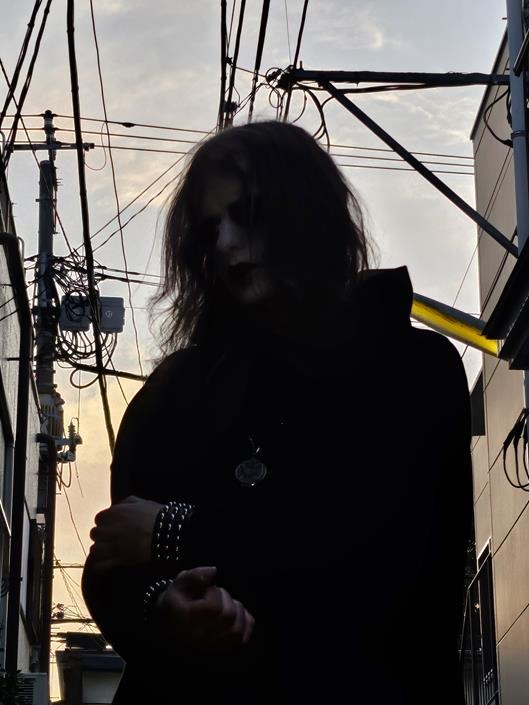
‘Dröm Sång’ emerges as a poignant ballad from Këkht Aräkh, blending melancholic melodies with an introspective narrative. Rooted in a draft originally conceived during the Pale Swordsman sessions in 2021, the song carries a familiar resonance, particularly reminiscent of the track "Swordsman" from the same album. However, its creation followed an unconventional path, with recording taking place under spontaneous, often cramped conditions across Berlin, Germany, and Tokyo, Japan.

The accompanying music video was shot entirely in Tokyo and features scenes filmed by Nick from the electronic duo IC3PEAK and additional footage self-recorded by Dmitry, all using a handheld camcorder to create a raw, personal aesthetic.

Dmitry explains:

“There’s a deeper reason behind choosing Tokyo as the location for the music video, beyond my admiration for Japan. This particular place is often idealized by people around the world who have never lived there, making it a perfect fit for the song’s escapist theme. The song reflects on life, with all its hardships and evils, as nothing more than a dream from which you’ll eventually wake into a peaceful world.”

AA

ka_drom-sang21-9903cf045103cf3c

Photo credit: Nick Kostylev (IC3PEAK)

Mortality Tables – 16th June 2024

Sometimes, personal events drive creative work in a way which runs away from the artist. It ceases being first and foremost about ‘art’, and the need to expunge, to offload, to outpour takes precedent. It’s not a conscious thing, something planned: the fact is that creativity leads the way, and art is not something one necessarily can direct or determine – at least, not true art. Art happens in response to things, and oftentimes, the most powerful art is born from exploring the deepest, most intensely personal scenarios. Such explorations may not reveal a great universal truth, but then again, they may present something that’s unexpectedly relatable. And this is where we find ourselves with The Engineer.

Mat Smith has no ambitions of leading the country, and nor does his musical output seek to obfuscate his journey or his reality. The Engineer documents this reality, and I shall quote, quite comfortably, the press release which provides vital context here:

‘In 2012, writer and Mortality Tables founder Mat Smith (Electronic Sound, Clash, Further. wrote a short story, ‘The Engineer’. A work of fiction, the story was loosely based on his father, Jim Smith, a skilled mechanical engineer who had spent most of his adult life working in a factory in Stratford-upon-Avon. The Engineer represented Mat’s thoughts, feelings and fears about his father’s retirement.

‘The story was later narrated by author, producer, playwright and poet Barney Ashton-Bullock. 29 artists, working in the fields of sound art, electronic, experimental and contemporary jazz music, were then approached to provide a sound response to a thirty-second extract of Barney’s narration. The order in which they agreed to be involved determined which section of narration they would be asked to respond to.

‘The collated 29 responses were curated and recorded over the next two-and-a-half years and assembled into a single, 14-minute collage by James Edward Armstrong. Its sprawling, disjointed presentation of short, rapidly-replaced ideas is intended to evoke the devastating confusion of Alzheimer’s, which Mat’s father was diagnosed with in 2018.’

This is about as intense and personal as it gets, and I’d like to think that this well-crafted work makes for a fitting homage. The sleeve image depicts a teenage Jim Smith on Margate’s Promenade in the 1950s, and the narrative tells the story based on his life against a shifting sonic backdrop.

On the surface, it’s a quite charming work. But it’s also sad, a tale of the way the ageing process is one of decline. And as the story progresses, a different kind of decline becomes the focus. It’s also a narrative of the way work has a way of stealing life away, especially for the manual worker. It also speaks of the difficulty of relationships, emotional disconnection, and ultimately faces the issue of mortality in the most real and matter-of-fact way. Time passes, and it passes far too fast. When you reach a certain age, every birthday gives pause for thought, and every picture gives rise to a pang of sadness. Even the passage of a year or two… how do you compute? How do you deal?

It seems that many simply don’t: I often hear or read people remark how people dying – and they die, they don’t pass, although hardly anyone ever says or writes it – people dying in their 60s or even early 70s is ‘no age’ or how they were ‘taken too soon’. I struggle with this. People have a finite time, and I speak from painful personal experience when I write that I feel that it’s quality of time which counts most. To witness a slow degeneration tends to be far more painful for those around the person experiencing it. Alzheimer’s is a cruel disease, and all profits from this release are going to the Alzheimer’s Society. This is to be applauded, of course, but not simply for its charitability, but because of its art.

The Engineer may only be fourteen minutes in duration but represents twelve years in the making, and the input of more than thirty people in various capacities. In short, it’s an immense project, and the amount of time and energy poured into such a complex, detailed work is immeasurable.

The narrator starts out feeling vaguely AI, but in no time, we come to feel a connection with poet Barney Ashton-Bullock’s delivery. It’s crisp and clear, and in some respects has BBC documentary commentary. Its power derives from its simplicity: the narrative itself is straightforward and linear. Its sonic backdrop is not, and it’s disorientating, and at times uncomfortable, incongruous, at odds with the point of the narrative with which it’s paired. The sounds behind the narrative range from grinding, churning industrial din to woozy blooping electronica and shuffling disco and is altogether less linear, mutating over the course of the piece. It will leave you feeling disorientated, it will leave you feeling harrowed, possibly even stunned, and drained. But this is as it should be. The Engineer is ambitious, and a quite remarkable work.

AA

a0182982649_10

10ft Records – 24th May 2024

Christopher Nosnibor

Percy have been going since the mid-90s, but didn’t get to release an album till 2013. They’ve maintained a steady flow since then, particularly since the solidification of their current lineup in 2017 with New Phase being their fifth album in and their fourth in six years.

‘Workmanlike’ isn’t a criticism when it comes to certain bands, when their solid and consistent output and regular gigging is central to their way of working and to their identity, and while it’s not an exclusively northern thing, The Fall and The Wedding Present are bands which immediately spring to mind as acts who deliver albums like it’s a job. Said albums may all share a certain commonality, but push those tight parameters each time, and if Percy can be guaranteed to sound like Percy, then it’s all to the good.

New Phase is an apt title for an album which sees them take a lunge into darker territory, both sonically and lyrically. A fair few of the songs have featured in their live setlist over the last year or two, giving a fair indication of the direction they were heading with the new material, but to hear these songs all together and as full-realised studio recordings has a different kind of impact. On New Phase, they sound invigorated, vivified, but also tense, paranoid, embattled. Colin Howard’s lyrics are less given to social critique and instead present scenes of horror, of personal torment and heightened anxiety. Whatever the fuck’s been going down in his life or neighbourhood, or whatever grim stuff he’s been streaming on Netflix, the resultant art is powerful. The musical accompaniment captures the same uneasy mood of high tension and darkness.

‘Sink Estate Agents Satanic Rites’ is – remarkably – their most Fall-like track to date, a jagged paranoid spasm that’s dragged from the space between Grotesque and Slates. It’s tense, uncomfortable, and there’s something weird about the production that pulls in different directions and renders it even more difficult, and vaguely gothic in the early post-punk sense, too.

‘Blackout’ has hints of early Arctic Monkeys lurking amidst its clanging mess of guitars and panic-filled lyrics which narrate a bleak tale of alcoholic excess ‘there’s bloodstains on the floor / there’s bloodstains on the wall / and someone’s banging on the door… and then it hit me’.

Narrative is a strong feature of the lyrics, as is nowhere more evident than on the nightmarish ‘I Can Hear Orgies’. Are these auditory hallucinations or is weird shit going down round Colin’s way? Or is it a side effects of the meds?

The title track is raw, ragged, angular, more Shellac or Bilge Pump or even Part Chimp than The Fall, bringing a new level of aggression and noise to Percy’s repertoire.

More conventional Percy territory is covered in ‘Thinking of Jacking It In Again’, ‘Do You Think I’m on the Spectrum?’ and ‘Last Train to Selby’, delving back into the world of work and sociopolitical matters and delivered with powerhouse drumming and choppy, clanging Gang of Four guitars – and of course a dash of Fall-like rockabilly, because it’s Percy. ‘Wah-wah-wah-wah’ Howard signs off. ‘Greedy People’ is a classic Percy swipe at an obvious target, but as Colin spits ‘It’s not about the money / it’s about the principle’, there’s a palpable anger, articulated as much though discordant guitar.

New Phase marks a step up for Percy, and in many ways. They sustain the tension across the duration of the album’s ten tracks, with only the six-minute closer, ‘Afterlife’ calming down and taking a more synth-led dimension, but still presenting a bleakness and heavy melancholy that fits with the album as a whole. The production is tight and solid, bringing to life the album’s sonic and lyrical tensions.

New Phase is a magnificently awkward, challenging, angular set, and perhaps Percy’s least commercial, least overtly ‘indie’ album to date. But for my money, it’s also their best-realised, most authentic, and most exhilarating album yet.

AA

a0857077590_10

1st December 2023

Christopher Nosnibor

I’m aware that there’s a conspicuous absence of rap and hip-hop to be found in my coverage. I suppose that’s largely because it doesn’t really fit the rubric I envisaged for Aural Aggravation when I decided to do my own thing back in 2015. But occasionally I worry that this feels discriminatory, not to mention unjustly dismissive, of a huge swathe of music that could well appeal not only to myself, but visitors to the site. The fact I’ve raved about dälek on more than one occasion not only evidences that I’m not completely hip-hop averse, but also reminds me of the same. Some hip-hop is pretty dark, and also pretty heavy.

Snoop Dogg isn’t a name one commonly associates with dark or heavy, and my interest in this release was in fact piqued by noticing that Ooberfuse are playing a tiny venue in York ten minutes up the road from me here in York next week. How does an act who’s just released single with Snoop come to be doing that? The music industry is screwed, but it’s clear Ooberfuse aren’t doing it for the fame or the glory.

Said single, ‘Hard Times’ represents the best of hip-hop. It is dark, and it is heavy, and comes with a hard social message.

That many people find Christmas a challenging time, and in particular the homeless, is widely documented, but this documentation tends to remain the domain of the further corners of news outlets and adverts from charities. But against a stark, dark musical backing – and this is when hip-hop is absolutely at its best.

The first-person lyrics are direct and powerful, and backed by a shuffling beat and stark piano, it’s a hard-hitting track paired with an equally powerful video. One gets the impression that Snoop’s contribution serves primarily to draw attention – and I say ‘good’. This track needs to be heard and people really need to fucking listen. In a world where we have billionaires, there should be no such thing as poverty.

AA

su80596-Hard_Times_Artwork_29

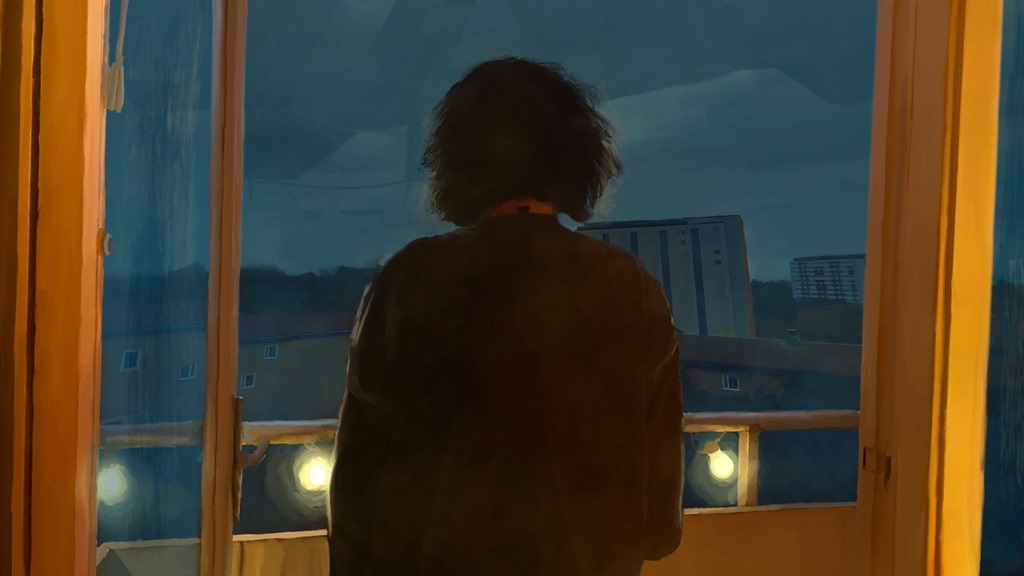
Darkplace is a mysterious new Swedish dark dream pop/post-punk group whose just released debut album, ‘About The End Of The World’, is a conceptual work inspired by the bleak landscape of the Stockholm suburbs that birthed them.

Centred around an alternative reality – or is it just a grim present and future? – the album has been unveiled gradually via a series of videos based on animated digital paintings for several of its tracks.

Four singles have been issued ahead of the album, with the introductory ‘Arken över Hesselby’ (The Ark Over Hesselby) presenting the outskirts of a city haunted by an unknown aerial presence. Its follow-up, ‘Fearmonger’, offered an apocalyptic scenario with sirens wailing and a lone soldier fleeing the prying ‘eye in the sky’ of a mysterious airship. The third, ‘Cars’, was the first to feature vocals and saw the story move on to a man travelling north following cryptic messages written on motorway signs. ‘This Is Loud’ saw the plot thicken and bring the story full circle…back to the beginning and Hesselby…with another stunning visual to accompany it.
A video for the track ‘The End’ has been made available to celebrate the release of the album and can be seen HERE. The band cryptically comment that “when the Monuments switch on you can taste metal and your ears pop. Working from home became vital for people who lived close to them. GPS’ seem slightly off. Is it because of interference from them? My regular walks also seem to differ in distance.”

A 25 minute video for the full album can be seen here:

Although rooted in late 80s/early 90s indie styles, Darkplace incorporate a variety of other genres into their sound. However, for the members of this highly secretive group, it is not just about the music. They perceive themselves as more an art project that happens to be exploring and commenting on the state of the world through their chosen mediums of music and video.

The majority of the tracks on the album are short instrumentals that were written with specific storyboards in mind, with the group revealing that: "We started creating the art before we had the music in most cases, so the tracks were written as soundtracks to the animation.”

The art itself is a multi-layered process that involves photography, sculpting, oil painting, digital editing and animation. Using apps like Nomad Sculpt to create it before exporting scene specific angles and imported into Procreate to be painted, they add: “we use oil paintbrushes and paint over the photo. It is layers upon layers and it gets messy. Exporting gets even messier since we want depth in the scenes and need to export them in layered depths. A few scenes in this project have been animated frame by frame and it has taken almost two years to complete.”

b6893297bad438aad16874077803dfb07c8cbfff

21st October 2022

Christopher Nosnibor

It’s been almost three years since Paul K delivered Reconstructed Memories. Listening to The Space Between, it becomes apparent why. Pandemic or nay, this is an ambitious and complex album which sees Paul return to the territory explored on 2018’s The Fermi Paradox and go the whole hog on devising and scoring a vast conceptual progressive work that’s heavily invested in narrative as it traces what he outlines as being a story ‘about an astronaut who has volunteered for a one way journey through space to pass through the Heliopause and is set maybe 30/50 years in the future.’

Space is both the backdrop and the story, in many ways, and the fascination it holds is something that transcends words or even rational explanation. Perhaps the fact that the sheer enormity and infiniteness of space is beyond our comprehension is a major factor in our space obsession. And however far and deep we probe, I suspect we will never truly be capable of assimilating the universe, especially as we, as a species, struggle to comprehend that we do not exist at its centre.

In classic sci-fi form and echoing 2001: A Space Odyssey, the concept behind the story is that the astronaut’s sole companion is an AI robot that becomes sentient during the journey, before the astronaut eventually dies and the robot continues the journey alone.

As Paul explains, ‘Each track plots the journey from liftoff looking back at the Earth (True Splendour) to the debilitating effect of years alone in space (Pareidolia) and is also related to the love and loss the astronaut has felt in his life’.

Understatement is the album’s defining feature. While it is unquestionably ambitious and incorporates cinematic arrangements, and notably choral-sounding vocals, the instrumentation is subtle and layered.

‘True Splendour’ makes for a gentle introduction and very much sets the tone. The Space Between keeps the drama and pomp to a minimum, and instead, the mood is contemplative, almost subdued, as strolling basslines wander sedately through soft washes of sound. Percussion is minimal, and low in the mix.

‘Sleep Within’ is perhaps the album’s most conventional ‘rock’ composition, but there’s a subdued, soporific overlay to its mid-pace melodic drift, although the reflective, wistful ‘Spektr’ has a certain solidity to it. In contrast, ‘Artifact’, the point at which the AI assumes autonomy, is almost vaporous, a soft piano reverberating among wispy sonic contrails.

The Space Between is an album that functions on numerous levels simultaneously, although they’re not all necessarily obvious. But it’s not imperative to follow the narrative to appreciate the detail; the album works in a way that not only creates space, but conveys space, the eternal distance, the vast emptiness… we are all lost and floating. But some are more lost than others. Welcome to The Space Between.

292588895_411372567443242_3679202510317740520_n

California darkwave duo, Male Tears has just unveiled their latest single, ‘Deal3r’. The song plays into the themes of an upcoming record that speaks on the abuse and hypocrisy of city night life.

‘Deal3r’ tells the story of the ultimate example of ‘style over substance.’ It’s the tale of an important person; a ‘legend’ embraced by the ‘scene’. But beneath the ‘image’ and artistic craft, lies an individual empty and shallow; a hypocrite and drug dealer whose true identity was hidden under the skin of the community.

The song is intended to be an aggressive dance-pop track pulling from darkwave and EBM influences. Filtered through the lens of 90’s pastiche and acid house, ‘Deal3r’ is a departure from the band’s established 80’s new wave sound.

Watch the video here:

AA

DEAL3R cover