Posts Tagged ‘Leeds’

Christopher Nosnibor

It’s a cold, wet, February night in York. The wind is howling and the air is bitter. It’s not much warmer in The Crescent, despite a respectable turnout for this incredibly good value five-band extravaganza hosted by Leeds promoters and label Come Play With Me (and while I’ve never asked or otherwise bothered to research, I’ve always assumed the name is taken from the 1992 Single by Leeds indie stalwarts The Wedding Present, rather than the 1977 sex-comedy movie).

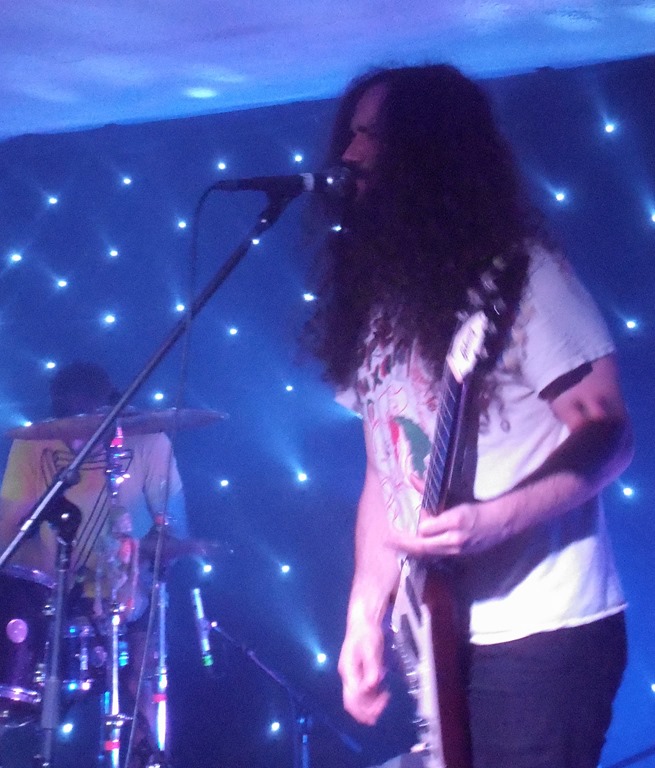
Perhaps it’s because they play so frequently in and around York that I often pass up on seeing Bull play. As a consequence, I tend to forget just how good they are, and often feel as if I’m, discovering them anew when I do see them. Their breezy US alternative sound, which hints at Dinosaur Jr and Pavement is laced with a distinctly Northern attitude, and they’ve got a real knack for a nifty pop song. They make for an uplifting start to proceedings.

The ubiquitous and multi-talented local stalwart Danny Barton features among the lineup of three-piece Sewage Farm, in capacity of bassist. Their post-grunge style is a sort of hybrid of US alt rock and 60s pop: more New York than Old York. With nods to Sonic Youth, but equally, Weezer, they’re good fun and make a dense noise for just three people.

Looking around the venue, I observe a number of long coats and above-the-ankle trousers. It’s starting to look like 1984, while on stage it sounds like it’s 1994. Time is warping, history is bending in on itself. Clearly, I need more beer. While I’m at the bar, The Jesus and Mary Chain and Slowdive pour from the PA, setting the tone nicely for the next act.

While they’re setting up, I chat briefly to Adam Weikert, drummer with Her Name is Calla. I waffle a load of bollocks, and as he heads off to get warm and grab a beverage, I realise just how unbelievably fucking tired I am. Maybe if I drink enough beer I’ll perk up, or otherwise fall asleep at the table I’m sitting at to make notes between bands. Perhaps I’ll simply care less, and also develop a much-needed beer-coat.

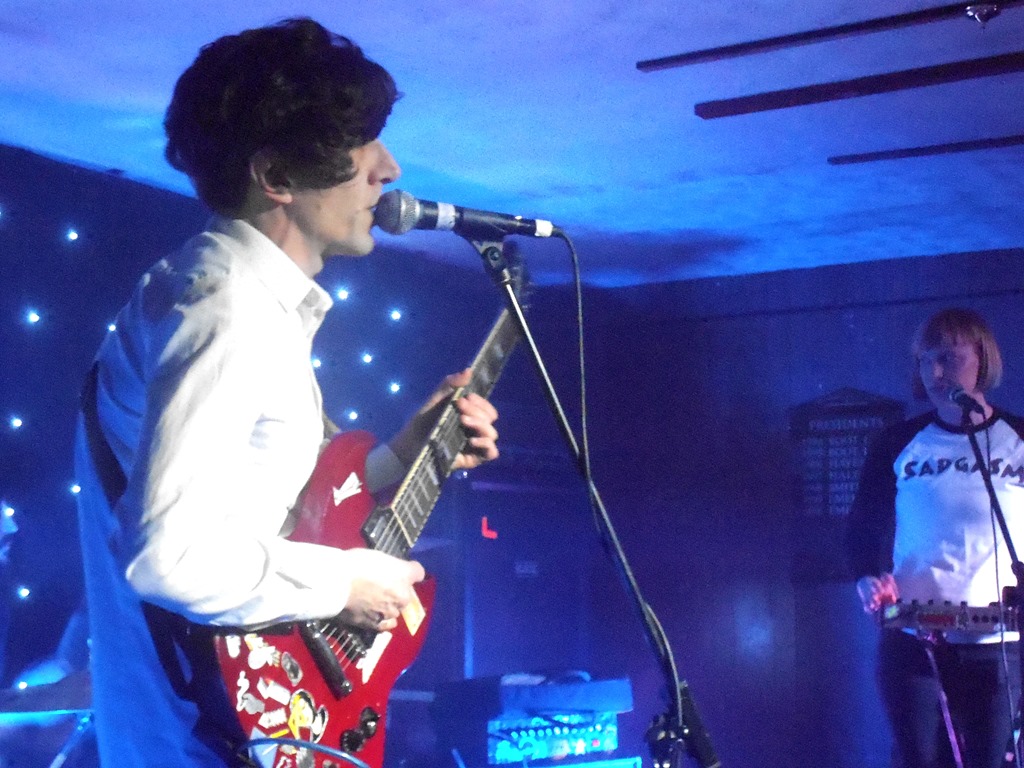
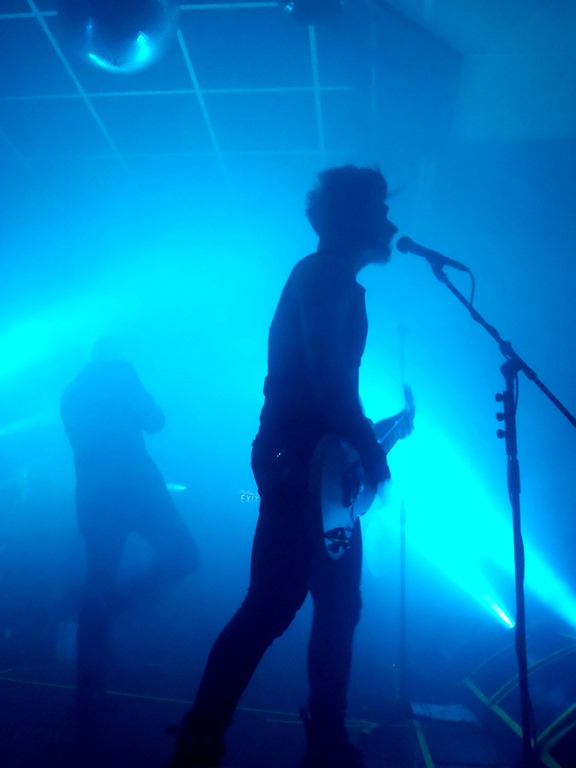
Team Picture describe themselves as ‘One part post-punk, two parts fuzz’, and having been impressed by their single cut released by CPWM the night before, I was keen to check them live. Biographical details about the Leeds act is scant, and despite the positioning of old-school cathode ray tube television sets around the stage and the female singer being one of the hyper-retro bods I’d clocked, giving an air of hypermodernism of a vintage circa 1979, they’re really not an image band. They are, however, an exceptionally strong live act. The six-piece forge a layered sound that oozes tension: the monotone dual vocals and fractal guitars trickle brittle over strolling basslines and taut drums. The songs are magnificently composed and executed. Atmospheric segments blow out into expansive passages propelled by motoric rhythms. I’m totally sold: it’s a cert that this is going to be a band who are on an upward trajectory and 2017 could be a big year for them.
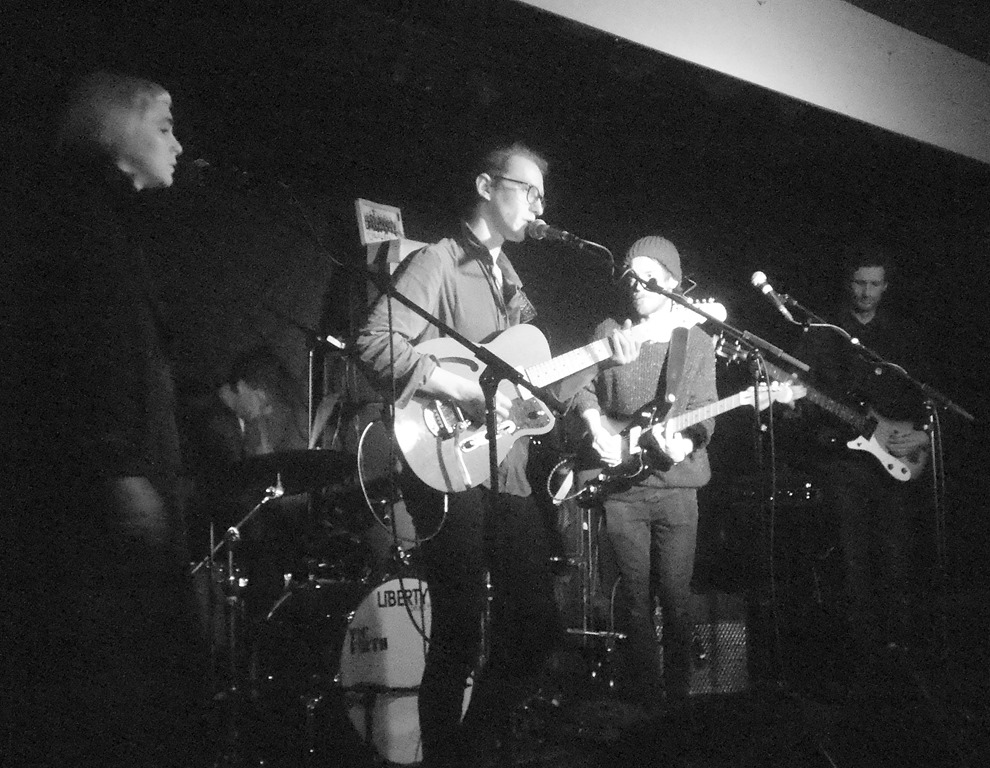
Team Picture

Team Picture

I’m still freezing my tits off, tired, and feeling disconnected and out of sorts, so I buy a third beer: surely an Old Peculier will unthaw my toes at least. The barmaid throws a friendly smile as she hands me my change. Inexplicably, I feel hopeless and empty, and now, I’m without a seat, as the girl who stood right at my elbow during Team Picture’s set, despite the venue being only a third full is now sitting with her mate at the table I was at previously. She looks vaguely familiar, but I’m not about to embarrass myself by attempting conversation. Perhaps it’s the chilly post-punk vibes lingering in the air spurring my existentialism; perhaps not. Regardless, I don’t go to gigs to socialise.

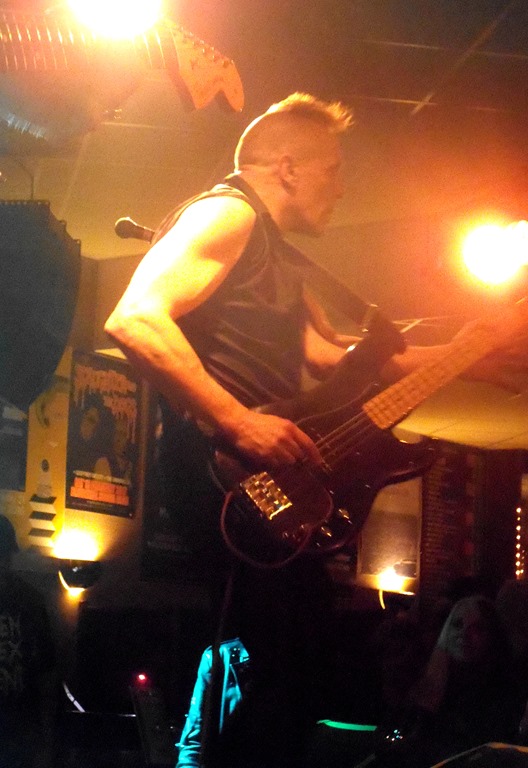
It’s a relief when Halo Blind begin their set. Another York band featuring another ubiquitous face on bass, this time in the form of former Seahorse Stuart Fletcher (currently rocking a look that says he wants to be Tom Hardy), they’re classic exemplars of post-millennium neo-prog, and they’re seriously good at it. Having just released their second album, Occupying Forces, they showcase an evolving, expansive sound. Layered, dynamic, melodic and harmony-soaked songs, rich in atmosphere and calling to mind the likes of Oceansize and Anathema, define their set. They explore dynamics fearlessly, building some sustained crescendos and executing them with admirable precision. During ‘Downpour’, I find myself drawing parallels with ‘Pictures of a Bleeding Boy’ by The God Machine. But if a band’s worst crime is betraying echoes of The God Machine, then you know they’re a band worth hearing.

DSCF7378

Halo Blind

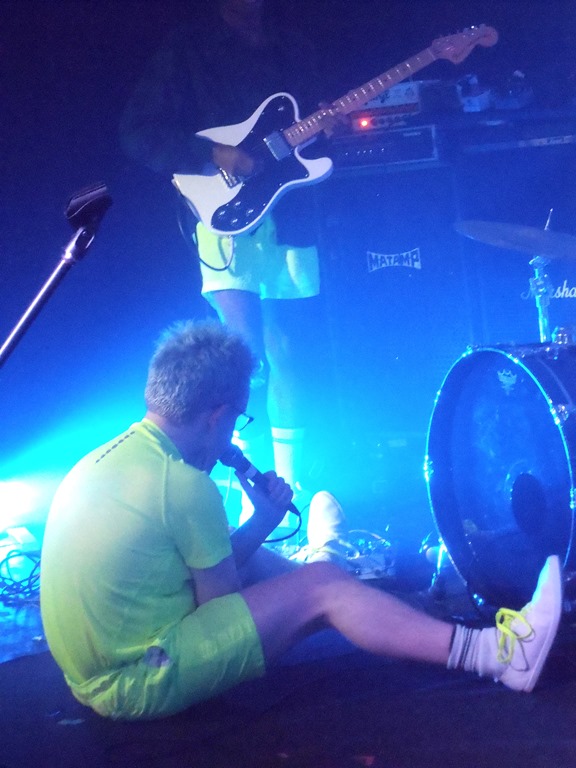
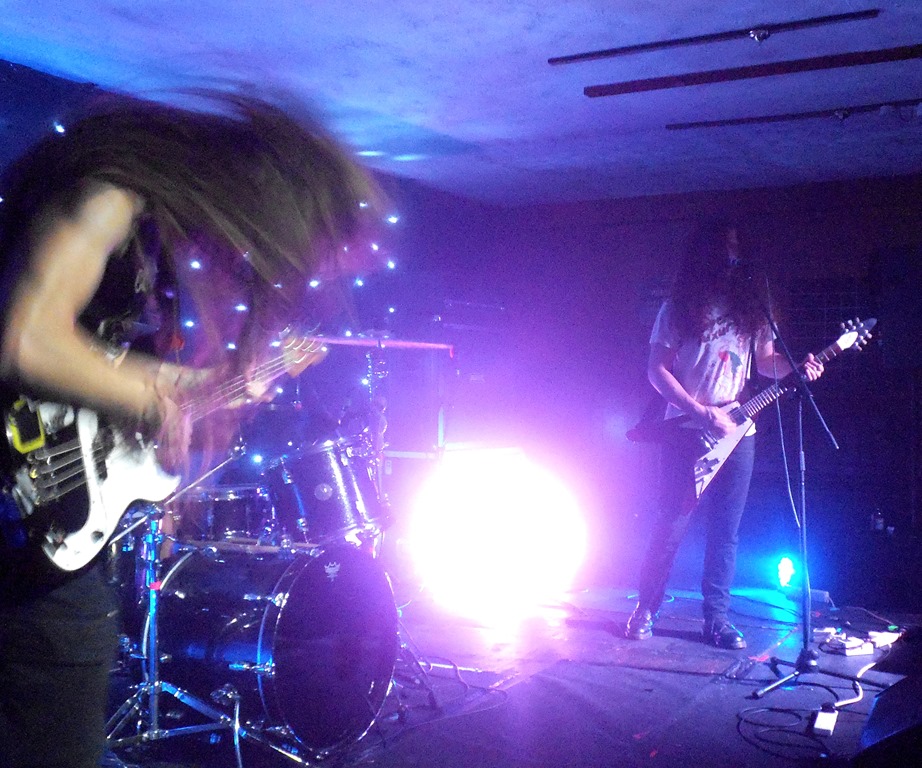
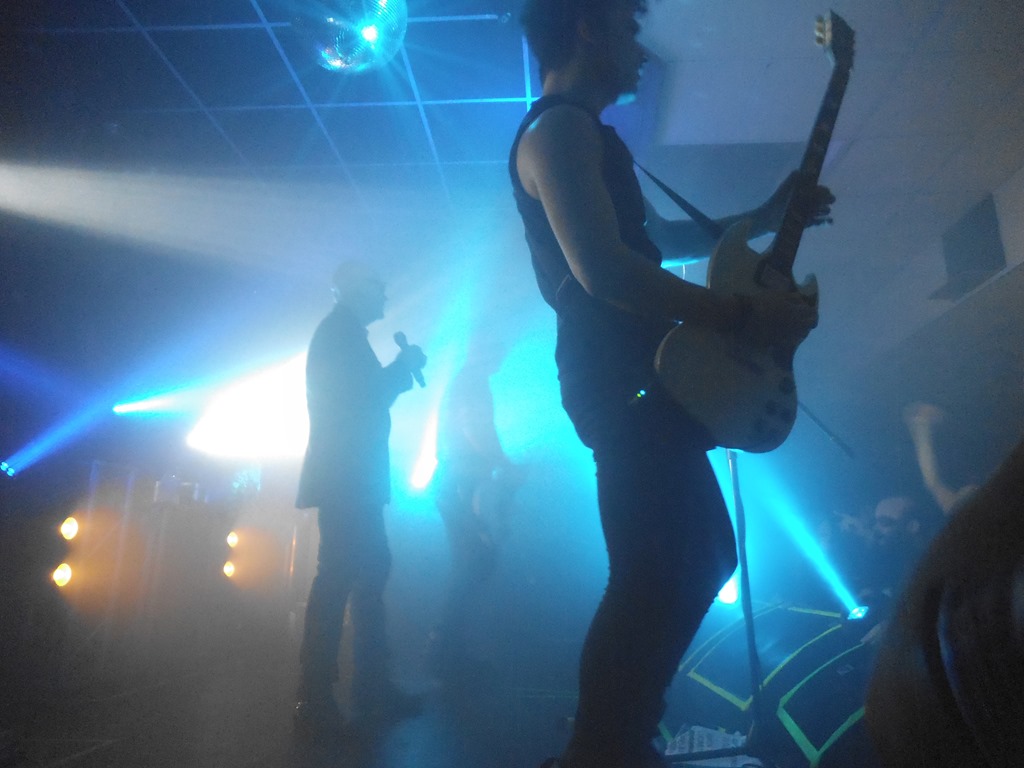
Her Name is Calla: another tour, another lineup. Sophie Green is out (a shame, as she’s an awesome presence), making way for a return for Anja Madhvani (which is cool, because she’s a superb player). And that bearded guy at the back, manning a bank of electronics and hoisting a trombone: is that really departed fonder Thom Corah? Yes, yes it is, and they open up a tempestuous set with the rarely-aired single-only track ‘A Moment of Clarity’. I may be in a minority, but it’s one of my favourite Her Name is Calla songs, and as Tom Morris pushes his voice to the limit with the cry of ‘the crunch / is the sound / of a human spirit breaking’ as the band erupt around him, it’s a powerful and emotive moment.
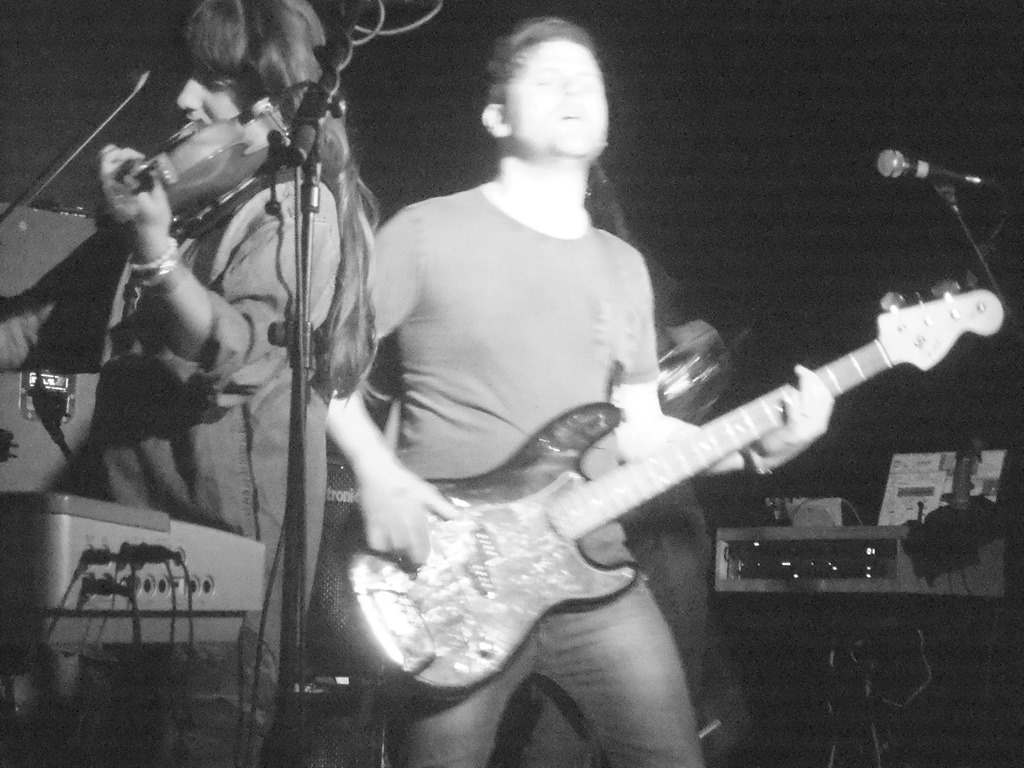
DSCF7399

Her Name is Calla

The band play a varied set with intensity and vigour. Quiet and melancholy, ‘Pour More Oil’ is delicate and moving; ‘Meridian Arc’ brings an insistent throb, vlume and tension in spades. Tiernan Welsh’s bass coms to the fore and his complete immersion in the songs is compelling.

They close the set with ‘New England’. I stopped taking notes, beyond scribbling ‘fucking yes’ in a barely decipherable scrawl. One of the highlights of The Heritage¸ this is precisely the kind of slow-building, explosive epic that made the band their name, and to see them thrash wildly, with Tom gnawing his guitar strings with his teeth amidst a tumult of ever-swelling noise, is an experience that’s something special. There is no encore: there doesn’t need to be. There is nowhere to go from here: an awesome finale to an awesome night.
Reject and Fade – 28th February 2016

Christopher Nosnibor

Tim Hann used to front a Leeds-based alternative rock band called I Concur some years ago. I forget exactly how I discovered them now, but they were really, really good, one of those bands you would see play liv and think ‘Fuck. How are they not immense?’ One of the most precise and exhilarating live acts around, they were in another league, and it felt wrong to see them play as a support at the 450-capacity Brudenell Social Club. With the NME and Huw Stephens backing them they should have been huge. Sadly, the show I caught at the Packhorse in Leeds in 2010, where they tried out some of the material that would appear on the 2012 album Burial Proof would be one of their last, and Burial Proof would effectively be their sign-off. Life had already got in the way prior to the album’s release: ‘the usual thirty-something excuses of jobs, kids & houses’, as they put it on Facebook. And so it goes: ambition and dreams crushed by reality. The guilt and the money-pit of leaving your wife to deal with the children, while you go out on tour, pursuing the life of a young, single man.

I get it. Bands slog their guts out for fuck all. So do music reviewers, it so happens. ‘It’s not work, you don’t get paid for it,’ Mrs N retorts as I wade through the thirty or so emails which have crashed into my inbox while I’ve been at the day-job. Don’t free CDs, downloads and gigs count as pay? I’m not going to argue: I take the point. At least I get free stuff in abundance. Bands just hand out free stuff to buggers like me in the hope they’ll get a review. I review maybe 20% of the material I receive these days. It’s not because I’m a shit – no, it’s not the reason – it’s because I simply can’t do any more. The point is that being in a band is hard. It’s no life for a grown adult with mouths to feed.

A brief backtrack: in my endless quest for self-promotion, I used to run round slapping stickers and postcards everywhere every time I attended a gig. I didn’t sell many books off the back of it, but I did get an introduction to Tim’s younger brother Michael, a writer and soon-to-be head honcho at experimental Reject and Fade, a label devoted to dark ambient and generally weird, dark electronic-based nastiness. It’s a small and sometimes wonderful world. Were it not for all of this backstory – and I make no apology for the anecdotal meanderings with their Sartrean, Robbe-Grillet tinted reflections – this review would not exist. You should be grateful for the existence of this review because this offering by break_fold – Tim Hann’s latest project, released on brother Michael Hann’s Reject and Fade imprint is an inspired underground work, which, by its nature is unlikely to receive much mainstream critical coverage, deserves your attention.

break_fold represents a significant departure: there isn’t a jangly guitar to be heard here, not a single emotive swell, and no vocals: in other words, nothing remotely resembling the conventions of rock. This is music produced slowly, during moments away from life. And it’s music made by one man, at home, likely in the small hours, without the need to rely on the input of others. Hann clearly has music in his blood, and possesses an incredible focus when he’s making it. As a dark ambient work, amorphous, intangible yet curiously challenging, it’s an outstanding release and one which displays a meticulous attention to detail. The tones, the texture, the crispness of the beats and the overtly synthetic elements, in contrast with the swirling background elements is quite something.

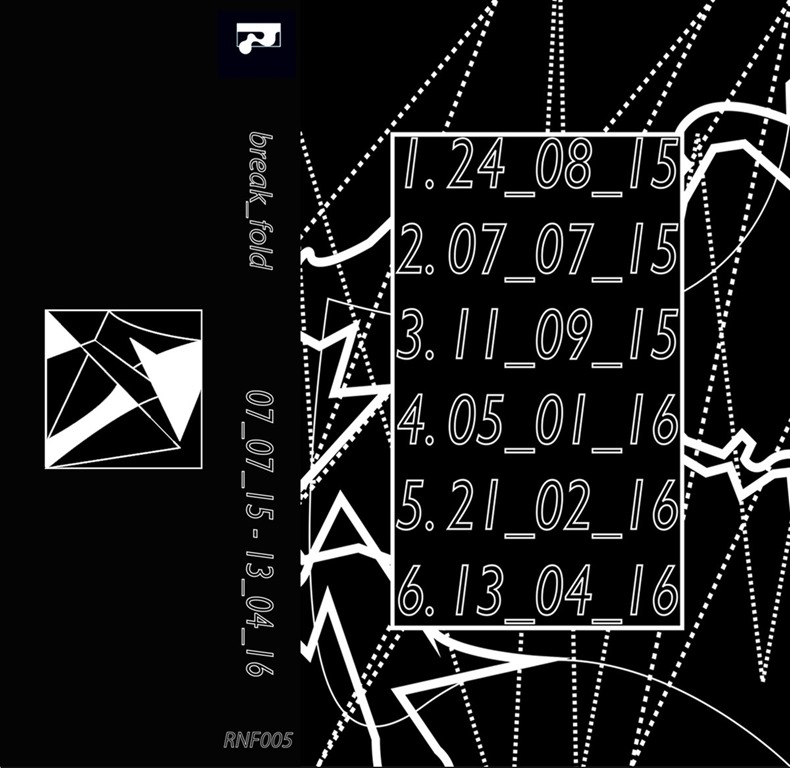
About the title: 07_07_15 – 13_04_16 is pitched as ‘a record of memories and time stamped bursts of creative activity, captured and crystallised in glacial beats, foggy textures and electrified rhythms.’ The track titles are, in fact, the dates on which the individual track were started. As a whole, it’s a document of a specific time-span. There is something simultaneously resonant and alienating about this location in time, in that time is both universal and personal. Events take place at given times which are known globally. Other events are strictly personal. But our location in time is often marked not by the event but by our reaction to it. Take, for example, the announcement that the UK had voted to leave the EU. Many, if not most, UK citizens will forever have the fateful events of the 23rd June 2016, and also the 24th (very much the morning after) etched into their memories. But their responses will vary wildly, and the memories will inevitably be shaped by that immediate reaction on hearing the result.

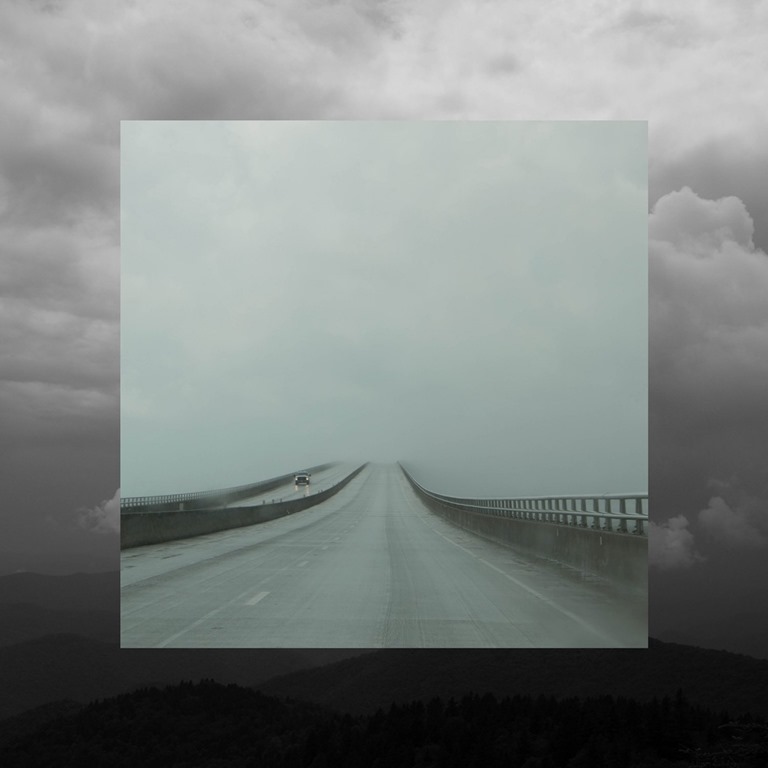
07_07_15 – 13_04_16 is a journey into the break_fold mind-space, but without context in terms of the events of the dates in question. This accentuates the sense of dislocation already present in the music itself – music which conveys emotional tension, conflict, unease through the medium of rumbling, uncomfortable layers of sound which drift and hang like mist or toxic gas. Murky, impenetrable, tense and dubby, it’s a challenging journey into the unknown defined by low, strolling basslines streaking, slow-turning ambient tension and clamorous beats swathed in echo.


break_fold

1st December 2016

Christopher Nosnibor

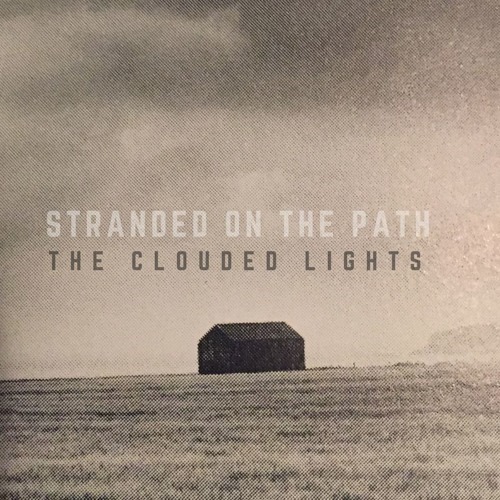
With Stranded on the Path, The Clouded Lights showcase a sound that’s very much rooted in the distinctly post-millennium revisioning of the post-punk sound, in the vein of early Interpol, Editors, et al, as well as contemporaries both regional (The Exhibition, for example) and international (New York’s New Politicians come to mind). So, there’s a real precedent, and a sense that The Clouded Lights are part of an expansive zeitgeist. Increasingly, it feels like that zeitgeist exists under the shadow of the apocalypse: the fear of the mushroom which loomed large over the 1980s is in many ways reborn in the 2010s (which still don’t sound like a real decade, but what can you do?) It’s an observation I’ve made previously, but the point is worth restating: the parallels between the early 1980s and the present are astounding – and depressing – and it’s small wonder that so much contemporary music echoes the sound of 30-odd years ago.

One of the key elements in the bands of the original new wave – Joy Division in particular, but listen to any of the darker, gothier bands, like Danse Society, Skeletal Family and you’ll find the same stylistic features – is strong, dominant drumming. The Clouded Lights have nailed the drumming, with a percussion style that’s urgent, tense, and, importantly, tight. The EP’s first track, ‘Borrowed Hearts’, is arguably the strongest and an obvious choice of lead, which balances bounce and bleakness, and is propelled by a busy, bluster-filled bassline that brings energy.

I’m a sucker for songs driven by rolling tom-led drumming, and the slower ‘Barter With the World’ ticks the box nicely. Chiming guitars and a vocal melody which casts melancholy shades define the song, and across the EP’s four tracks, there are some strong harmonies.

While shaded with heavy hints of darkness and defined by spindly, fractal guitars, Stranded on the Path is by no means a wholly bleak, pessimistic release, and the strong choruses and a leanings toward more uptempo material means it’s a release that’s inspiring, rather than a soundtrack to hang yourself to. It’s also a strong set, which suggests that, with live dates booked for the new year, The Clouded Lights could well be ones to watch in 2017.


The Clouded Lights - Stranded on the Path

Happy Happy Birthday To Me Records – 18th November 2016

Christopher Nosnibor

I’ve been a fan of The Wedding Present for a long time. That said, I did rather lose track of their output at some point. It happens. For some reason, I felt that they’d somehow become mired in a template-based middle-ground. Nevertheless, one of the things I always admired about the band was their ability to constantly reinvent themselves while still sounding like The Wedding Present. Going, Going… released in Europe in September and now receiving a US release, is a perfect exemplar of the way in which they achieve this: it’s an immense 20-track double album, full of overtly Wedding Present songs and songs that explore a host of different forms.

The dense guitar trudge which drives the post-rock instrumental of ‘Kittery’, the opening track on Going, Going… does not sound like The Wedding Present to my ears. But it is compelling. ‘Greenland’ features a female radio voice reading out co-ordinates over a thundering drum beat and very little else. It sounds more like Shellac than The Wedding Present. And yet, as a slow-building rumble of noise builds in the background before the track fades out slowly without anything actually happening, it shouldn’t come as a surprise: The Wedding Present called in Steve Albini to rework breakthrough single ‘Brassneck’ from their 1989 album Bizarro¸ and he ‘recorded’ one of their biggest albums, Seamonsters in 1991. The Wedding Present also covered Pavement long before Pavement were cool – before anyone had even heard of them, in fact.

In some respects, given David Gedge’s longstanding interest in the obscure and his impressively long career spent cultivating a distinctive sound has paved the way for tis radical departure. Because, while words like ‘workmanlike’ and ‘jangling’ have long been associated with the band, they’ve always been more than their critical reception, and have long gone out of their way to do something outlandish or perverse – like a single a month for a year. Put another way, The Wedding Present have always espoused the indie aesthetic on the absolute sense, in that they’ve always indulged their contrary side because, well, simply, they can.

With a haunting, wordless, female vocal and soaring post-rock guitar sound, ‘Marblehead’ is a far cry from the twangy, three-chord thrashabouts that are the band’s trademark, and the string-soaked, piano-led chamber orchestra piece that is ‘Sprague’ finds Gedge lead his crew – not to mention their fans – further from familiar territory.

It’s not until the fifth track, ‘Two Bridges’ that we get a song that showcases Gedge’s familiar gruff northern tones amidst a choppy guitar attack. It’s a thick, rough and ready and in many ways primitive indie tune that could only come from one band, even when it lumbers off on an extended riffy workout after a couple of minutes. What we can take from this is that while The Wedding Present can sound like pretty much anything, no-one else can make songs that sound like The Wedding Present. There are plenty of thumping guitar tunes – more carved from the hefty riff-driven template of Seamonsters and beyond than their jangly indie early years – and they’re decent tunes. ‘Bear’ is one of several classic examples of the Pixies-like grungers which exploit the quiet/loud dynamic. Lumbering riffs about, driving the lurching alt-pop of ‘Fifty-six’ and the all-out stomp of ‘Emporia’, which is pretty heavy and fires up a roaring guitar racket while retaining a keen sense of melody.

‘Secretary’ brings some jangle, but also a fuckload of noise all bound up with a post-punk sensibility and a jarring angularity that’s unexpectedly exhilarating, while ‘Bells’ is a standout by virtue of simply being a great song with a cracking melodic hook.

Who would have thought that some 30 years into their career, The Wedding Present of all bands, would produce something as ambitious and as impressive as this? If anything, rather than being an exercise in indulgence for the band and a drag for the listener, Going, Going… is as strong as anything The Wedding Present have ever released, and the longer format finds Gedge really going all-out to try new sounds and shapes. It’s also an album which reveals a band really concentrating on tight and varied songwriting, and when paired with a focus on tone and dynamics it makes for an unexpectedly great record.


The_Wedding_Present_-_Going_Going_1200_1200

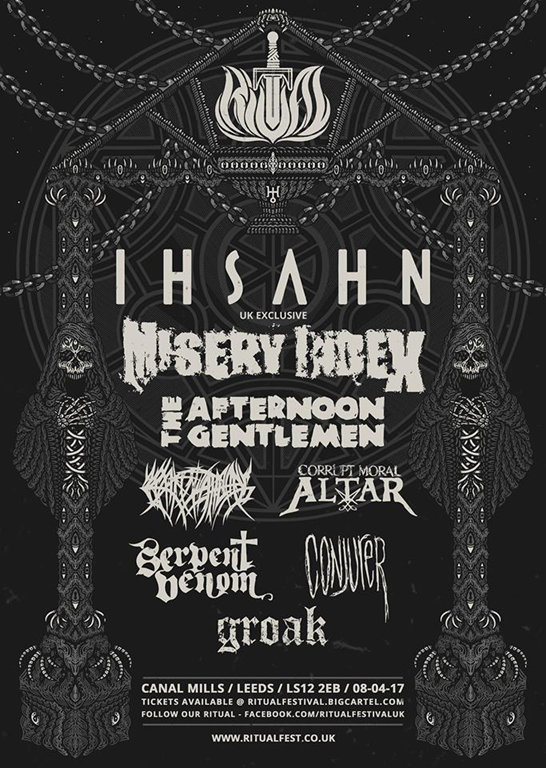
Ritual Festival, which aims to be bring the best in doom and death metal to Leeds will return on 8th April 2017. Following the success of this year’s festival which boasted the likes of 40 Watt Sun, The Body, Conan, Venom Prison and Full of Hell, Ritual have announced that Norweigan black metal pioneer Ihsahn will headline next year.

Alongside Ihsahn, the lineup so far is looking pretty strong to say the least, and includes Misery Index, The Afternoon Gentlemen, Crepitation, Corrupt Moral Altar, Conjurer, Serpent Venom and Groak.

Ritual1stFB

The first 100 early bird tickets are on sale now priced at just £25 rising to £30 from here: http://ritualfestival.bigcartel.com/

Alongside two rooms of live music, the festival will also feature art exhibitions, a wealth of merchandise, as well as local food vendors. 

More information about the festival and venue can be obtained from the following links:

www.ritualfest.co.uk/

www.facebook.com/RitualFestivalUK

www.canalmills.com/

Christopher Nosnibor

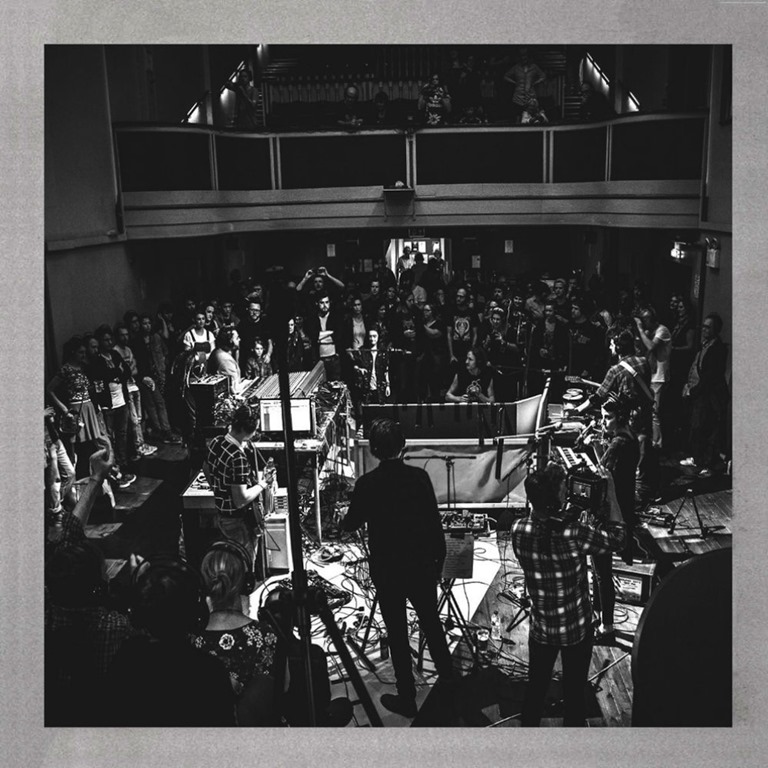
It makes sense for a band renowned for their killer live shows to release a live album, but it takes a band with a certain amount of guts to make that album a project that’s part of a festival’s proceedings, and to go for the live album by way of their third full-length. Post War Glamour Girls have got guts, alright, and Live at St Austin’s was recorded as the ‘watch a band record a live album’ Sunday night session at the end of this year’s Long Division festival in Wakefield.

They open with a very curious hybrid of ‘Sestra’ and ‘Brat’, which respectively stood as bookends to their debut, Pink Fur. In parts completely unrecognisable in relation to either of the originals, it’s a more sedate and altogether less fiery reworking. James Smith shows remarkable restraint, his rowdy raving replaced by a crooning style, which sits alongside some soulful harmonies, the likes of which haven’t been heard from the band previously. Structurally, it’s also completely different… and comes to an abrupt and ungainly halt that sounds like the tape being chewed. Well, it is live, after all. Anything can happen and you only get one take.

‘That’s probably it for music,’ James quips. ‘I’ll now be doing my stand-up set’. Granted, there’s a lot more music and no stand-up, but you wouldn’t put anything past this band. So premiering a new track from their upcoming third album by way of a second track is pretty much par for the course. There’s something of an early- to mid-eighties guitar pop feel to ‘Polyanna Cowgirl’ (commercial pop was seemingly a fair few shades darker then), and it boasts a bold and hooky chorus.

If making their first album a greatest hits / best of set seems like the obvious a to go, you know that’s precisely what you’re not going to get, and second album Feeling Strange (released less than six months before this performance) is largely shunted to one side in favour of their debut, new material, and a handful of covers – which, naturally, are off the beaten track and are drawn in from far out on the left-field (and their version of Elvis Costello’s ‘Shipbuilding’ is as moving as it is unexpected… not that it should be expected for a band who’ve previously covered Robert Palmer).

The vinyl, which presents an abridged version of the occasion to present a different aspect of the set-list (in an alternative sequence) omits the spiky, goth-tinged rendition of ‘Stolen Flowers Rust’ and two of the tracks culled from their second album, presumably on account of space. ‘Cannonball Villages’ (not on the vinyl) is one of the standouts of Feeling Strange and builds an immense, dark, brooding twisting epic journey. As Smith growls the refrain ‘I knew the moment I laid my eyes on you / that I would do anything to get my hands on you,’ it sounds as much like a threat as an expression of desire. Closer ‘Count Your Blessings’ – a bleak choice of a set-ender, if the truth be told – is also omitted from the vinyl, and the fact that such a great rendition can be relegated to the download is testament to the depth of their material – and of course, their unswerving perversity in selecting unreleased tracks and covers over others. Single cuts like ‘Jazz Funerals’, ‘Southpaw Stance’ and ‘Felonius Punk’ don’t get a look in

The slowed-down version of ‘Black Dolphin’ and the dreamy version of ‘Gustave’, on which Alice takes lead vocal duties, offer very different perspectives on established songs, and the piano motif which runs through the Curesque take on ‘Red Terror’, with its crazy reverb action, again places the familiar in an unfamiliar context. The addition of organ and keys to a number of tracks also adds a new dimension to the sound.

Live at St Austin’s works precisely because of its imperfections and its – superficially, at least – perverse set-list. As a live album, it captures the immediacy of a band who thrive on live performances, and at the same time, are all about taking risks and showcasing new material. Go to a PWGG gig and you’ll see a band testing themselves and the audience with new material. This makes the inclusion of debut single ‘Spitting Pearls’ all the more surprising and welcome. They’ve probably played it about twice since its release: it’s a personal favourite, and they more than do it justice here, Smith finally unleashing his full-throated Tom Waits holler. It’s fucking brilliant, and met, briefly, with a stunned silence.

Live at St Austin’s is an honest live album: it’s not that the sound is rough, because it isn’t: but in places, the instruments aren’t perfectly balanced and there are some dud notes and off-key harmonies. And that’s precisely why it’s so good: it sounds like you could actually be there, it’s not dressed up and overdubbed and polished to studio quality. It’s very much a document of the band that Post War Glamour Girls are, a snapshot of a band who are continually evolving, forever restless, always trying out new arrangements and new material. And yes, they’re the kind of band who place art over commerce, who really are bursting with creativity and are making music for the right reasons. And they truly are one of a kind.


Post War Glamour Girls - Live At St Austin's Cover

Christopher Nosnibor

Doing what I do, I get to hear a lot of music. I’m talking 30 or so CDs in the mail each week, and at least twice that in terms of emails offering downloads and streams. It might sound glamourous, but actually, with time, it gets increasingly dull. So many dull, derivative bands, all being hailed by their PR and labels or themselves as the next big thing, the most exciting band to emerge in a decade or whatever. On first hearing ‘Sick’ by Mannequin Death Squad, I found myself getting properly excited for the first time in a while.

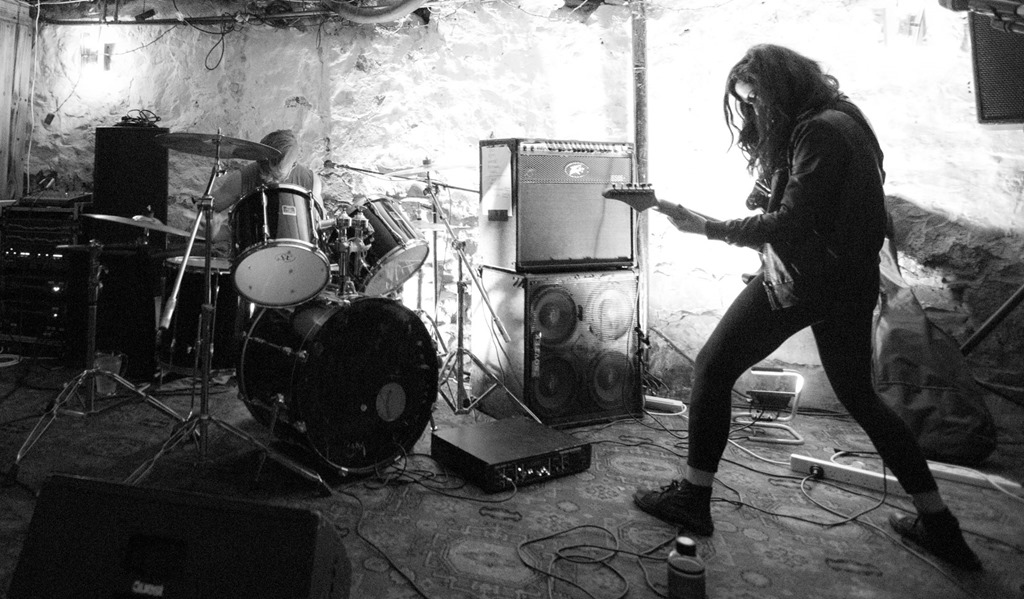
On meeting the Australian duo, consisting of Daniel Cohn and Elena Velinsky – who surely have one of the best band names around – just before their gig at Santiago in Leeds, as main support to Hora Douse, I was immediately struck not only by how down to earth and thoroughly pleasant the duo are, but by their insuppressible enthusiasm and the fact they’re so genuine. We meet in the downstairs bar of the little venue and sit around a table. The idea is that I’ll do a five to ten-minute quick-fire Q&A, but we end up chatting and talking around stuff instead. El is the ultimate rock chick, sporting a faded Led Zep T-shirt, shades perched on top of her head, and immediately I get a sense that these people were born to do this. They may be about to play to room with a capacity of 100 or so, which looks and feels like someone’s living room, but they’re rock stars irrespective of sales or fanbase. That said, on the strength of tonight’s outing and their Eat Hate Regurgitate mini-album, they won’t be playing venues of this size for long.

I ask them how their first trip to the UK as a touring band has gone so far.

‘Good,’ they both reply without hesitation. ‘I think the Adelphi’s probably been our favourite show so far,’ El expands. ‘It’s a cool, real, dirty venue…’

‘…and a big community,’ Dan adds.

I’ll admit I’m slightly surprised, but then, Hull is a surprising place. It’s not the first place that springs to mind when you’re listing cities with buzzing music scenes, but as the City of Culture for 2017, there does seem to be a lot going on there these days.

‘It’s amazing. It’s a lot like the scene back home in Newcastle,’ Dan says. ‘It’s got a strong community, and big bands…’

‘Everyone takes care of each other, and likes each other’s music and supports each other, it’s cool’ El adds.

They’re archetypal Australians, in many ways: they’re paid back, and say ‘cool’ and ‘awesome’ a lot. They also finish one another’s sentences in a way which shows a real synchronisation and intuition, and I feel that I’m witnessing the key to their music-making in action.

Mannequin Death Squad 1

They’ve been equally impressed by the reception of their shows in London, and in Brighton, at the Hope and Ruin. Their tour has certainly taken them to some of the country’s less obvious cities and venues: not only Hull, but also Scunthorpe… Still, that gig (along with a second Hull date) was supporting Slaves, which a big deal and remarkable exposure for a band with only two singles to their credit. I’m eager to find out about how they scored that slot on their very first trip.

‘We had a gig booked in Scunthorpe, at the Café independent, which clashed with theirs,’ Dan begins

‘…so they wanted to book it,’ chops in El.

‘They listened to our music and they liked it, so they asked us…’ and being rather a music-starved backwater, the show went down particularly well, ‘They really appreciate musos coming up that way. I think it’s like an ego thing for those big cities that are really highly rated with music, that people take it for granted, and then at the other end of the spectrum, you go to small towns and everyone makes the most of it.’

How have you found UK audiences have differed from audiences at home?

‘They’re pretty similar,’ El observes.

‘We were getting a good response in Melbourne just before we left,’ adds Dan. ‘We’re a relatively new band, kinda like a year of playing gigs, but we’re getting really good responses here, probably even a bit better.’

‘We’ve got a lot of our friends back home, so it’ always going to be a good response,’ El says with a laugh.

It’s a fair observation: the test of any band is how they go down when playing to strangers and non-fans. The reactions of audiences on this tour indicates it’s a test they have nothing to worry about. El talks about the number of people going up them to compliment them on their sets – particularly the diversity of their style – afterwards, which is gratifying.

‘We’ve got a good mix of songs in there, there’s only two of us, and people seem to like them all differently, evenly.

They certainly do have a good mix: the band pitch themselves as existing in the space between The Melvins and Taylor Swift, which I suppose is a fair summary of their balancing sludgy riffs and magnificent pop melodies. Are their individual tastes conflicting or simply diverse?

El laughs. ‘Well, actually, I listen… he’s like the heavier guy, but I do heavy too, but he actually loves ‘Shake it Off’, and I like Melvins, but we both like Melvins, and we both like I all sorts. We listen to things that are heavy and poppy.’

‘We listen to absolutely everything,’ Dan confirms. ‘It helps to break the monotony of one genre.’

‘Slaves are awesome, because they’re so heavy, but when you look, they’ve got really catchy, poppy choruses,’ says El.

Dan feels compelled to explain the Taylor Swift thing in more detail: ‘The Taylor Swift thing came from when we were backpacking in Thailand and we went and did karaoke, and I absolutely smashed that ‘Shake it Off’ song…. Terribly’, he adds at El’s prompt.

They throw an eclectic and quite unexpected mix of acts into the ring when listing other artists they listen to: (Led) Zeppelin, (Pink) Floyd, Breeders, Hole, Marilyn Manson… ‘Going back to my roots, I used to be a thrash metalhead,’ Dan adds, and we love grunge. But we love pop as well. I’ll like something completely left of centre and not be embarrassed to say it.’

England has a strange perception of Australia, filtered through Neighbours and Home and Away, and internationally, Australia has been represented by the likes of Kylie and Savage Garden. How do you reconcile that with the actuality of bands like yourselves and, say, DZ Deathrays? I imagine they, and you, are more representative of what’s actually going on…

‘For sure!’ Dan says.

El gives some cultural context: ‘Neighbours and stuff is for, like, stay at home mums, I mean, you can watch it, it’s a good show and all, but…’

Dan: ‘The whole country’s obsessed with AC/DC still, but…’

El: ‘…we’ve got this whole buzzing music scene in Melbourne, we just keep going to gigs and there are so many awesome bands…’

Dan: ‘It’s an amazingly diverse scene in Melbourne. You can find anything in there: there’s an underground punk scene where everyone’s playing in squat houses that no-one knows about, you have to know somebody, there’s this rock scene that’s happening in all the bars, and little grunge scenes…’

Do you think, in your experience, that music scenes have fragmented and that there’s more underground than there ever was but you really have to seek it out?

‘Yeah’, they reply in unison.

Dan: ‘There are so many venues in Melbourne, that you’re spoiled for choice. There’s this avant-garde thing happening…’

El: ‘There’s a good gig guide, and if you go on the gig guide in Melbourne, you can just see all these bands, and you can just choose one and go and I’ll always be pretty cool.’

Dan: ‘There’s always something on. We’ve been all around Europe and we’ve tried to catch gigs, and haven’t really taped into the underground bands, but we came here and playing in Hull, and there are all these good bands. We went back to the same venue the next night and have drinks at the Adelphi, and all the bands are great. It reminds us of back home in Melbourne, there’s talent everywhere.’

I suggest that in terms of getting bands to an audience outside their local catchment, the Internet, far from killing the music industry, has simply made it different, particularly where small bands are concerned.

El concurs. ‘I think it’s made the game more creative,’ she says. ‘And we certainly have more access to bands.’

Do you consider yourselves primarily a live band? How do you enjoy the studio work?

‘’Cause we’re really new,’ El says, her voice going up at ‘new’, ‘we’ve only done one studio session, for the EP, so we’ve played live more. But we love both. I think you have to play live if you’re recording an album, that’s the fun part.’

‘We love all aspects,’ Dan adds. ‘Our favourite thing is to record a song, listen to it back, and change it, and experiment, but then, there’s nothing like playing a show, either. But even promoting can be fun, putting so many different mediums of art into it.’

MDS_picBW1

They’ve certainly been creative with their own promotion. ‘Sick’ was a hell of a debut, and the video is fucking brilliant. How did the ‘zombie’ video come about?

El: ‘Well, we had a different idea, and it kind of failed… and then we came up with this idea really quickly, ‘cause the lyrics are “cigarettes and soda pop” and we wanted to pretend that it’s really easy to sell something like that…’

Dan: ‘It’s a bit of stab at consumerism in a way, and how everyone’s pretty easily manipulated by branding. It goes for everything, where you like stuff because you’re told to like something: don’t be a sheep and figure it out for yourself.’

El: ‘And then we came up with the branding thing, like a stamp…’

Dan: ‘It wasn’t supposed to be zombies, but kinda just escalated really quickly, and it worked.’

El: ‘It was fun, a lot of fun. My brother directed that one.’

So you’ve got elements of social commentary and criticism in there, and there’s a certain venom and angst in your songs. Are you angry? Or is the music just a release?

El takes a moment to consider this. ‘I think it’s more… it’s fun. It is fun, yeah!’

‘From my side, it’s pretty much all expression,’ Dan says. ‘We like just getting in a rehearsal space and just jamming songs, and it’s good fun: you’ve got good vibes going round…’

El again: ‘We’ve got older songs that I wrote where I was upset about something, as well, and then you put them in, and it’s sort of attitude behind it…’

Dan: ‘Lyrically, usually there’s a lot to be said…’

‘Yeah, it’s definitely a release,’ El concludes.

That release is clearly apparent in the medium of the live show. They explain how they like to layer things up, with bass tracks and additional guitars to create a full band sound, something which isn’t possible on stage, however much instrument-swapping they engage in. Still, this gives the live sound an immediacy and when cranked up loud, it works a treat. And, of course, such multi-instrumental capabilities afford them a lot more flexibility than the average two-piece. How do you decide who plays what on which track?

‘It’s kinda like who writes the guitar part does guitar and sings’ El explains. ‘And then if I have an old song, I’ll bring it in and if he has one, he’ll bring it in, and I’m like “right then, I’m drumming for this song”. We work together to make the song, though. We try to make it equal, but at the moment, I’m doing more guitar than him, so he’s going to get at some writing.’

‘That’s our opposite instruments, too’, says Dan.

‘I’m originally a drummer,’ El confirms.

‘I’ve only been drumming for about a year,’ Dan admits. ‘El smashes it on drums. It’s good to mix it up.’

So, finally, the burning question: when can we expect an album proper?

Dan hesitates. Can they say?

El steps in: ‘We’re going back to Australia – ‘cause we have to, and we’ve got gigs set up after this tour – and the we’re going to start writing. We’ve actually already got about half the album done…’

‘…about six tracks,’ Dan confirms.

El: ‘…yeah, about six tracks, so we only need a few more. So once we get back, we’re going to save up money to actually do the album. We might even try to do a Kickstarter.’

Dan: ‘Yeah, maybe.’

El: ‘Yeah, I think an album by the end of the year.’

Dan: ‘Hopefully, next time we come here we’ll be promoting it.’

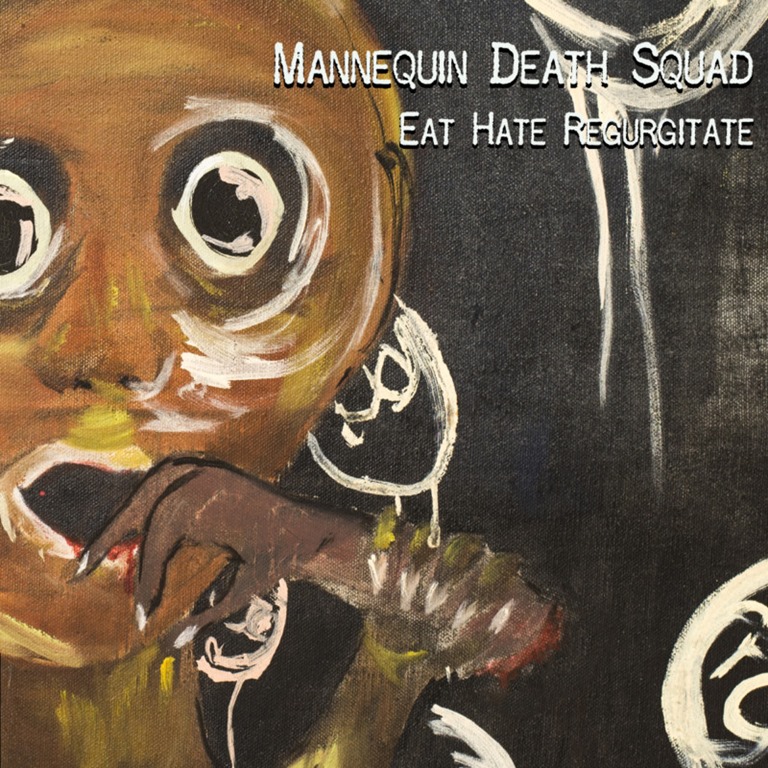
Here’s very much hoping. Meanwhile, the mini-album Eat Hate Regurgitate is a blistering five tracker, and it’s out on October 7th through Integrity Records.

MDS_album_frontcover

Too Pure Singles Club – 30th September 2016

Christopher Nosnibor

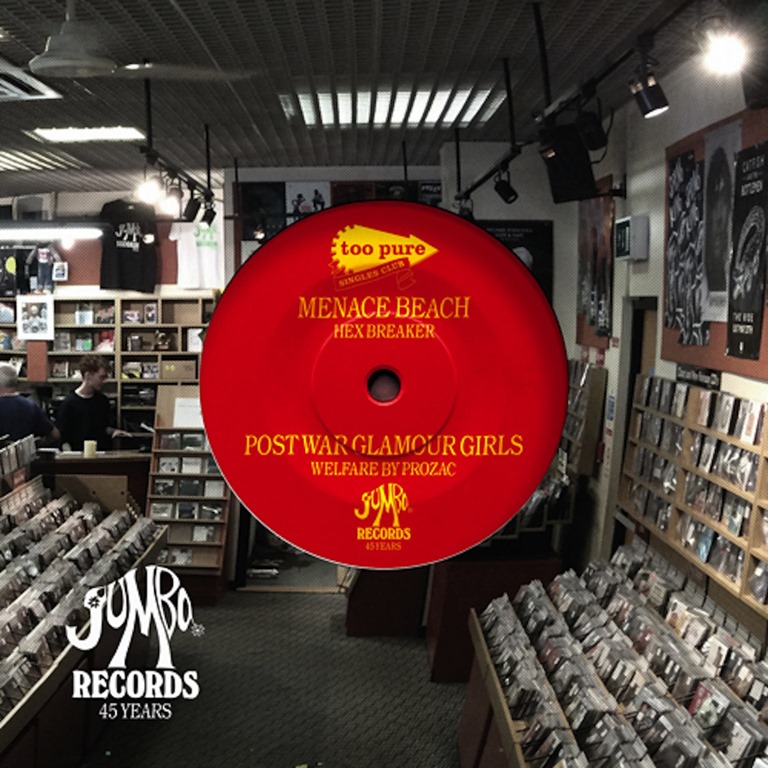
I’ve been saying that Post War Glamour Girls are one of the best bands to have emerged from anywhere ever since I first clapped ears on their debut single, and never once have they disappointed since, thus justifying my opinion. Actually, it’s not an opinion, it’s a fact. And here they are on a split 7” in the mega-cool Too Pure Singles Club series on a Leeds showcase edition shared with Menace Beach. The occasion? The 45th anniversary of legendary Leeds record store, Jumbo Records. I’ve spent a fair few quid in there over the years, and the fact they’re still trading is a testament to the fact it’s as great an independent music outlet as you’ll find.

The two tracks couldn’t be more different: Menace Beach’s ‘Hex Breaker’ is a hazy, fuzzed-out lo-fi drifter, a mid-tempo slow-burner that sounds like it was recorded on a condenser mic. With laid-back vocal and hefty, plodding riff, it’s something of a departure from their conventional feedback-drenched motoric slacker indie. That said, it’s still a brilliantly loose performance and boasts an effortless melody that’s breezy and accessible. File alongside your early Pavement EPs if you do that ‘by style’ thing. If, like me, you file your vinyl alphabetically, you might struggle with this.

Despite what the title might suggest, the PWGG offering on the other side, ‘Welfare by Prozac’ is anything but sedated, a characteristically tense and angular burst of post-punk that’s over and done with in a fraction over three minutes. It packs so much in, too: a nagging, jangling rhythm guitar is cut by a howling angular lead. A stonking bassline and thumping tom-led drum track meld together to provide the backdrop to the contrasting vocals: Alice’s nonchalant monotone is the perfect counterpoint to James’ wired hectoring, calling to mind the best of Brix era Fall and then adding a twisted pop sensibility.

This is a perfect example of why 7” singles are cool, and why not only records, but the split single endure. A split MP3 release just doesn’t cut it.


PWGG Menace Beach Split