Posts Tagged ‘Jazz’

Thanatosis produktion – 24th March 2023

Christopher Nosnibor

Having frothed with enthusiasm over Mammock not so long ago, I was particularly thrilled to discover Organ Donor, a Swedish/Greek outfit featuring members of Viagra Boys, Grismask, VÖ, Mammock, Angles, Fire! Orchestra, Aurora Ensemble, CBVB and the Mute. Admittedly, I’d expected something more guitar-driven and noisy in the rock sense, but expectations are best when confounded.

Malplacé evolved through improvisation, resulting in what they describe as ‘6 diverse yet coherent tracks, spanning from instrumental kraut, to mystic themes perhaps reminiscent of John Lurie or Loren Connors, to dark, minimal pulsating improv and punkish, full-on, noise outbursts.’ Diversity and coherence tend not to converge too commonly, and in truth tend to sit at opposite ends of the spectrum.

As the rippling vibes and subtly trilling horns of the abstract jazzy post-rock of the first track, ‘A Sleeping Beauty’ meander their way from the speakers, I’m struck by just how far a cry this is from Mammock and The Viagra Boys, and, on reflection, this is something to be pleased about. Why have a collaborative side project that sounds like your main project? It’s like having a hobby that’s the same as your dayjob. You can insert your own example here, because, well, I can’t help but feel that too labour  the point with explicit examples would be crass.

‘Touch’ spills jazz juices across a chiming guitar that jangles over an insistent yet mellow groove, where post-rock meets psychedelia and krautrock. Sometimes, for a moment, I find myself wishing there was slightly less sax, but then, again, the overloading nature of the jazzery is what makes this what it is, and things get really scratchy and discordant on the ten-minute ‘Stemless’. This is one of those freeform pieces that hurts the brain. Everything jars and flits, and toots and parps, squeaks and squawks and twangs and pings, like rubber bands being stretched and plucked across pans and bin lids, bowed notes bend, drone and grind, and it sounds more like a scrap than a song. It groans and wheezes and stutters and heaves, to the point that it’s enough to induce motion sickness.

‘A Sleepwalking Beauty’ provides a welcome moment of rest and tranquillity, before ‘Power Tools’ goes all out on the avant-jazz noise frenzy trip. It’s noisy, noisy, and noisy, a wild chaotic and cacophonous blast and an instant headache which feels a lot longer than a minute and a half.

In contrast, ‘Sci Fi Marmots’ is slow and smoky, an odd yet sedative piece where everything melts away into a haze. I’m tired, and need sleep. I’m all the more tired after experiencing the bind-bending chaos of Malplacé, but have to hand it to the guys in Organ Donor for creating an album that has the capacity to both exhilarate and drain the very life through aural excess. It’s a significant achievement.

AA

THTD4_art

Northern Spy – 24th February 2023

Christopher Nosnibor

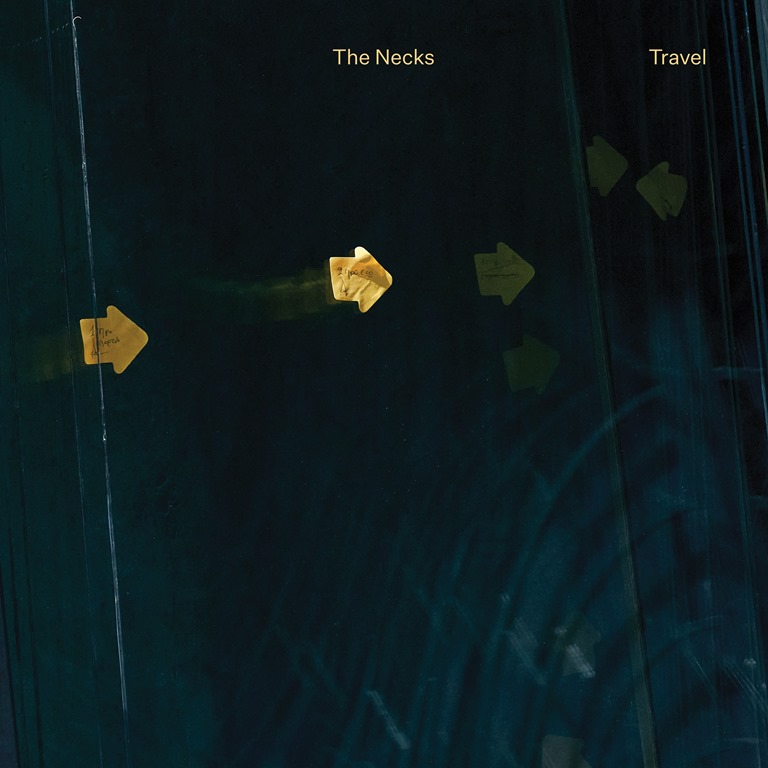
The Necks are never dull: an act that can be depended upon to deliver something different, which is no small feat for a band who’ve been going for more than thirty years. Travel sees them revisit the fundamental methodologies of Unfold, released in 2017 on Stephen O’Malley’s Ideologic Organ label. Admittedly, it’s not an album I’ve revisited all that many times since I wrote about it, but then, that’s true of many records I’ve appreciated. Some of it’s a time thing, but some of it’s an instrumental / jazz thing. I prefer to engage in the moment – and then the moment passes, and I too move on.

Where this album different from the majority of their others is that the format was integral to the form of the content, as the accompanying blurb points out, proving ‘four sub-20-minute pieces – instead of the typical 60+ minute arc for which the band is known – along with an obfuscated track list which leaves play order to the listener’s hand.’

Travel isn’t quite a straight live improv set, but does, they feel, come closest to recreating the live experience, and was recorded – save for some light overdubs and post- production – primarily live. And it’s very much oriented towards slow grooves and rhythmic repetitions. It’s hazy, mellow, almost sultry.

Side one is occupied by the twenty-one-minute ‘Signal’, built around a repetitive bass cycle and some rolling piano that brings with it a classical element, and, propelled by some busy hand drumming which transports the composition some way from what one would ordinarily expect off jazz-orientated works and into the realms of ‘world’ music (a term I try to avoid, with its connotations of western superiority and self-centredness, but sometimes short-cuts are necessary).

On side two, ‘Forming’, which again stretches languorously past the twenty-minute mark, is led by ripping piano, underpinned by some crunching bass stutters and rumbling groans. It’s jazzy in a psychedelic, Doorsy sort of a way. In this sense, it feels more like an extended mid-song workout than a piece in its own right, but it’s both pleasant and tense at the same time as it builds to a crescendo that never fully materialises.

‘Imprinting’, the album’s shortest cut at just over seventeen minutes, brings the multi-layered percussion to a more prominent position, and clanks and trembles along with almost hesitant-sounding keys and twanging strings drift in and out. It’s also perhaps the most overtly ‘jazz’ piece on the album, although it feels stretched out, the pieces pulled apart and as three instruments drift along together on a steady way, the sensation is quite hypnotic.

Organs always create a sense of grand scale and space, and the heavy drone and trill of ‘Bloodstream’ is utterly mesmerising. The piano is soft and ripples along atop the sustained mid-range drone as ethereal notes drift in and out. Part,

The album feels like a moment in time, somehow transient, and yet also something more. Travel may not really go anywhere, but it very much captures a mood – which is, for the most part, whatever mood you project onto it.

AA

Print

Cruel Nature – 6th January 2023

Christopher Nosnibor

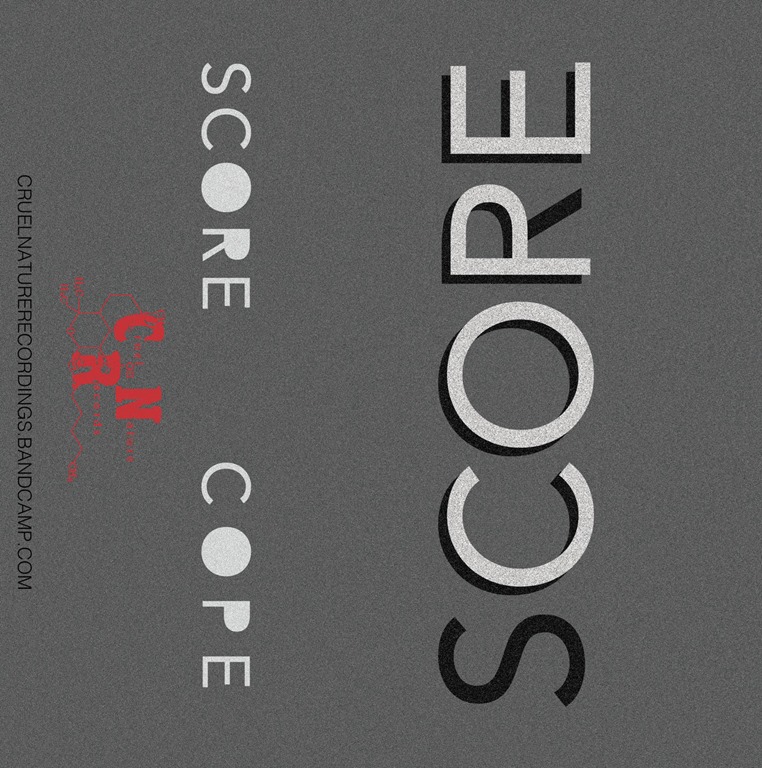
It’s something of a relief to discover that Score’s seventh long player for Cruel Nature isn’t some gentle exercise in self-help and mental health wellbeing, or otherwise the soundtrack to some existential post-pandemic breakdown – because the former are utterly fucking nauseating, and the latter, while I’m all for those primal screams of anguish, which I often find relatable, at least to an extent, variety isn’t only the spice of life but the key to staying within the marginal parameters of sane in an insane world. No, COPE, recorded in six weeks at the end of 2022, which somehow feels like a long time ago now already, takes its title from Julian Cope.

As the blurb explains, ‘the album was directly inspired by the musical descriptions to be found in the autobiographies of Julian Cope: Head On and Repossessed. Using Cope’s impassioned words as instructional starting points for each track, COPE references Mott the Hoople, Patti Smith, CAN, Duane Eddy, The Doors, Suicide, Dr John, Sly & The Family Stone and more.’

Julian Cope of one of those people who I’ve long been somewhat perplexed by, and, truth be told, haven’t spent too much time investigating, either musically or biographically. He has always struck me as having a career less centred around his relatively low-key musical output following a degree of commercial success with The Teardrop Explodes, and more around the fact that he’s Julian Cope. Some may want to set me straight on this, but right now, I don’t need to hear it, and a familiarity with the source material shouldn’t be a prerequisite of my ability to critique the work at hand, which interestingly, in drawing on his biographies, only serves to further indicate that Julian Cope spends more time writing about being Julian Cope than making music I need to hear.

COPE is a document to creativity under intense circumstances. To quote from the accompanying notes, COPE was ‘recorded as it was written, in one or two takes in a tiny garage and drawing on an old quote from the arch-druid himself as a creative manifesto: “It had to be very cheap, very fast, very loose. I needed to be an ambassador of looseness”’… ‘COPE is an exercise in embracing limitations and existing in the moment, a lyric-less love letter to Rock ‘n’ Roll itself, and a one-word command to the fried modern human.’

Containing nine instrumental compositions, COPE is a pretty demented journey, an absolute rollercoaster of a ride, that swings between psychedelia and krautrock, twangy desert rock, swampy jazz, with the six-minute ‘Brick’ bringing it all together with a Doorsy kind of trip with the added bonus of some woozy brass in the mix. ‘On The One’ goes deep into a funk workout that grooves hard, but ‘Old Prick’ stands out for its darker post-punk feel that suggests it could almost be a Psychedelic Furs or The Sisters of Mercy demo. The twelve-and-a-half-minute ‘Softgraundt’ is more than just expansive in terms of duration, and is a multi-faceted musical exploration that wanders hither and thither, shifting, evolving, a dozen or more songs in one. And perhaps this is the key to COPE – both the album, and the man. It’s everything all at once, and it’s more than you can really keep up with. It’s a challenge, and one I’m not entirely sure I’m up to, but there’s never a dull or predictable moment here.

a1384536327_10

Efpi Records – 27th January 2023

James Wells

Twittering birdsong and delicately tranquil tunes may not be things you’d immediately associate with jazz, but this is how the third studio album from Beats & Pieces Big Band announces its arrival. But as the track’s title suggests, you should wait: because in a moment, they’re offering up strolling, rolling sultry piano and bold brass on ‘op’ and we’re plunged deep into big band jazz territory.

There’s a lot of that, but the most striking thing about Good Days is its variety. The droning nine-minute ‘elegy’ is a sparse dirge of a tune, but it’s soft, contemplative, and ‘cminriff’ saunters into sultry, smoky territory with effortless ease.

The technicality of the playing is something else – and I really mean something else, on another plane.

Mojo have described them as ‘Spine-tinglingly good’, The Guardian love them, and the press release suggests parallels and links with not just Charles Mingus, Keith Tippett, Gil Evans, Charlie Haden’s Liberation Orchestra, but also suggests ‘there’s also a post-rock undertow to many of these tracks which shows a consciousness of such contemporaries as Björk, Radiohead, or Everything Everything’.

Whether or not you hear these – and I have to admit that I personally don’t so much, and I didn’t find my spine tingling either, although my ears were definitely totally grooved – there’s both a busy and a smooth element to Good Days as notes twist and spial against busy percussion. ‘blues (for linu)’ sounds like a sleepy improv based on Dave Brubeck’s ‘Take Five’. ‘woody’ gets woozy and goes all out on the bold brass, before the album is rounded off as it begins, with a snippet of a ‘reprise’ take on ‘wait’.

And at the end of the day, Good Days brings the swing – and if you’re talking jazz, that’s just what you want.

AA

B&P Big Band - Good Days album cover 3000px

PNL Records – 16th December 2022

Christopher Nosnibor

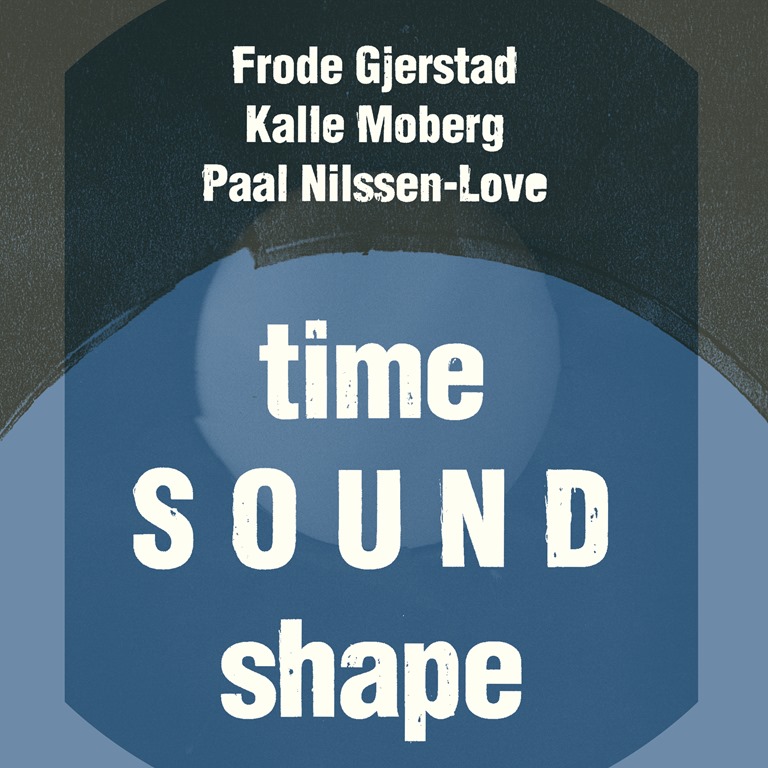
Nice… as you’d probably expect from this three-way collaboration, Time Sound Shape is a work of atmospheric instrumental experimentalism with some strong jazz leanings. That’s not smooth or mellow jazz, of course: more the weirdy, spaced-out non-musical kind of jazz. So not so much nice, as awkward, uncomfortable, challenging. This is not jazz of the cardigan and slippers variety, and you certainly wouldn’t play it at a dinner party, apart from perhaps at thee point when your remaining guests have overstayed their welcome and you want them to fuck off home.

Time Sound Shape is a single continuous piece with a running time of a full-length album, clocking in at precisely forty-nine minutes, and it’s a great example of intuitive improvisational collaborative work, and it sounds far better than the clunky text-based cover art suggests.

There are some dissonant, discordant, even outright difficult to digest crescendos, and moments of queasy chamber orchestral meanderings, as they tweet and toot together in a sort of droning solidarity. It begins gently enough, with some trilling woodwind courtesy of Frode Gjerstad who brings flute, and clarinet to the party as well as sax, but it doesn’t take long before things shift in numerous different directions.

There are moments that almost feel ‘continental’ in vibe, perhaps not least of all on account of Kalle Moberg’s accordion work. And all the while, Paal Nilssen-Love brings texture and atmosphere with his application of a wide selection of Paiste gongs, bringing doomy dolorous chimes and rolling thunder. At times, the crashing gongs are strong enough to vibrate the internal organs within the ribcage.

In many respects, Time Sound Shape delivers precisely what you would expect from these three musicians coming together, and yet at the same time, it brings more. It’s a richly textured work, that evolves as it progresses, and it never stays stull, and yet the changes are often subtle. Time drifts and bends as the sounds transition, changing shape. Let yourself be carried.

AA

PNL052_front

23rd September 2022

Christopher Nosnibor

Perhaps it’s that media has a numbing effect, or perhaps it’s simply that however strong the quality of the reportage, it can never truly convey the details in a way that are relatable. I’ve spent the best part of the last year seeing footage or the War in Ukraine and seeing and reasoning about the humanitarian crisis, and, like most people, it’s been quite overwhelming. And yet, ultimately, it’s just more TV, more news media online, on the radio.

I receive missives from around the globe, most containing new music for my ears, and this week, the arrival of Nefas EP by Sora, an offshoot of Kadaitcha piqued my interest with the offer of instrumental southern Ukrainian jazzcore.

Sure, I’m up for a challenge, and hell it’s definitely that. But if the music is a challenge – and if you look up ‘challenge’ in the dictionary, you’ll find it starts playing this EP – the backdrop to its release is even harder to process, with the context of its having been recorded and released shortly before its makers fled Ukraine and decamped to Estonia for their survival, leaving their musical equipment behind and a new Kadaitcha album in the can and in suspense.

Like many, I simply take my home and possessions for granted, writing in my review of the last Kadaitcha release – a lathe-cut 7” ‘with a true physical format, apart from fire or flooding, you have something pretty robust’. It feels pretty crass in the face of everything, in hindsight.

But… but… these guys have continued to make music right up to that moment of departure. It’s not heroic, but a real indicator of just how essential art is, even in the most desperate of time. And more than anything, it shows how strong the need for normality is in the most extreme of situations. The world is seemingly ending, what do you do? Keep going, do as much as you can of what you were doing before. Because it’s a way to cope. Channel that anxiety creatively, and who knows?

Well, we know now. Sora is something special.

The five tracks drag the listener on a wild journey, with the first piece, ‘kings’ but a prelude to the frenetic manic sonic explosion of ‘limit’, a frenzy of crashing drums, jagged guitars, freewheeling bass grooves and crazy brass that brings a whirlwind of discord and by the end, it’s all whipped into a head-spinning cyclone of chaos. It’s a maelstrom of madness, there’s just so much going on all at once, and so much noise and dissonance.

‘Schizoid’ brings some truly nefarious low-end to the party, and it’s hurled against some crashing drums, and in combination conjures a tempestuous storm of sound that rages and pummels, before ‘No’ lumbers heavily onto a hooting, tooting onslaught of mayhem.

There’s a serious risk of a headache with this one, but it’s a headache that need poking: Sora is brain-bending, dizzying, and at times intense and harsh. But that’s why we like it.

AA

a3705471243_10

2182 Recording Company – 2nd December 2022

Christopher Nosnibor

While books have blurbs that likely indicate whether or not you want to read them, records are altogether less pitch-orientated in their physicality, which, back in the day, used to make sifting through vinyl in shops and at record fairs an exercise which was a measure of one’s attitude to risk. Sometimes you’d take a punt on a record because you’d heard of the band and they sounded interesting, others, you’d go by the label or the cover or something.

Some traders – and this is something Jumbo records in Leeds still do – is put a short summary on a sticker on the PVC sleeve the record is stored in.

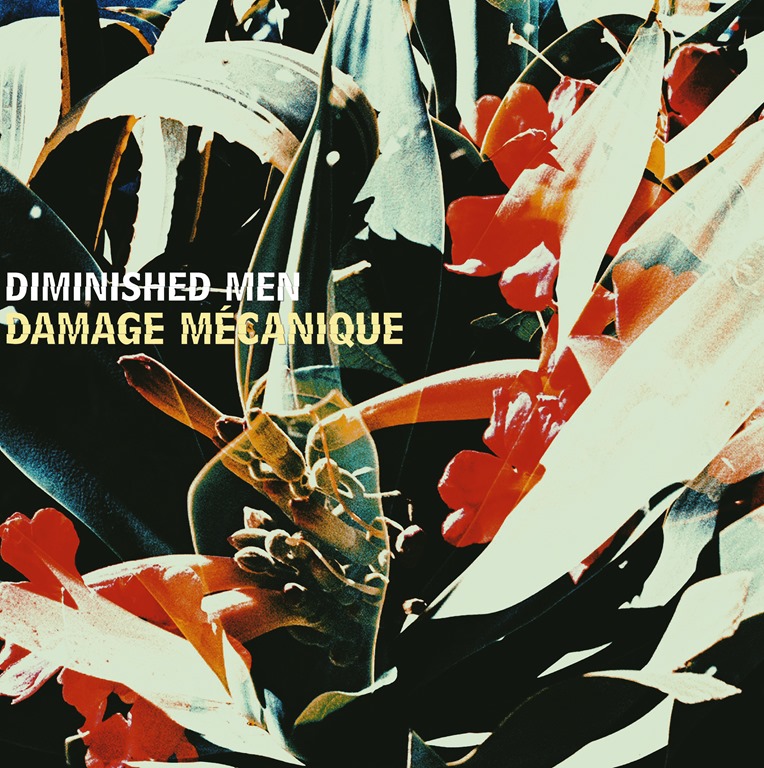
The virtual equivalent, for me, is scanning press releases. No way can I listen to everything I receive, let alone write about it, and some nights my inbox feels like flicking through boxes of records, unsure of what I actually want to hear until I find it. And lo, as I wander, aimless and befuddled, fatigued from another day of corporate chairpounding to keep the roof over my head and the bills paid, I stumble upon Damage Mécanique by Diminished Men. I’ve never heard of them, but on reading the pitch, I felt as if this was the thing I needed but didn’t know I needed until I found it.

Drawing from elements of film noir, psychedelic exotica, experimental rock, deviant surf and musique concrète, Diminished Men refocus their influences into something entirely unique. Collaged with menacing electricity, the raw materials are broken up and reassembled in their crude private facility. The group has spent more than a decade crafting their style and have established themselves as an integral part of Seattle’s underground music scene.

Their latest record, Damage Mécanique, thrusts the listener into a malfunctioning industrial sci-fi soundscape. Trance inducing guitars beckon with haunting wails, high-tension wires spin and spit with a crackling hiss. Circular kosmische rhythms and anxiety-drenched beats destroy and rebuild around fractured melodies and noise. The band oxidizes and melts into experimental post-punk and acousmatic environments as hypnotic groove and vertigo copulate in cinematic assemblage.

And there’s no question that they’ve got pedigree: drummer Dave Abramson is also a member of Master Musicians of Bukkake, Spider Trio, and has collaborated with Eyvind Kang and Secret Chiefs 3 among many others.

As ‘Double Vision’ crashes in amidst clattering, explosive percussion and dingy bass, I’m hauled by the collar into the realms of early industrial in the vein of Test Dept and Perennial Divide, and instantly, I’m home, knowing that this was indeed what I needed. It’s sparse in terms of arrangement, but dense in terms of sound, and it’s abrasive, rhythm-orientated, loud, heavy, and batters away at the brain.

It may seem counterintuitive to suggest that when your thoughts are in a mangled disarray and your focus is no-existent that the answer lies in music that bashes you round the bonce from all directions at once, but for me, at least, it’s infinitely more beneficial than any kind of chillout shit or ambient – although amidst loping, rolling rhythms, ‘Wet Moon’ conjures a shimmering ambience of sorts, while pointing towards esoteric oddity.

‘The Maze’ confuses and confounds with its daze-inducing cyclical riff and motoric beats which are pure Krautrock, evaporating into a mist around the mid-section of its six-and-a-half minute duration that sees it build through a jazzy post-rock segment before tumbling back into that nagging, dislocated groove – and it’s a nagging dislocated groove that dominates the wig-out weirdness of ‘Panopticon’. It’s likely of help to no-one to comment that it sounds like Murder the Disturbed but with the wild sax of These Monsters, but there it is: obscure post-punk collides with obscure jazz-infused noise rock, and it’s a corking way to end the first side of the album.

If ‘Axiel Tremors’ suggests rock excess played at a crawl, then it’s equally dragged out via some expansive jazz expressions into the realms of darkness. ‘Silver Halides’ brings a bold, brawling swagger to a cautious and subdued party of picked guitar introversion, and the final piece in this mismatched musical jigsaw, the six-minute ‘Spy’ hits the groove and drives it out of the door – while the door is still closed. Just as they clearly know how to make an entrance, they obviously understand the importance of a memorable exit.

There’s no particular or overt theme which unifies Damage Mécanique, and nor is there really anything that’s obvious stylistically speaking, as the album tosses a whole load into the mix and feels, in many respects, quite introspective in its influences and inspirations. There are, however, strong and unusual contrasts in evidence, with doomy bass and twanging desert rock working in tandem to forge a unique sonic experience., alongside, well, you name it. Quirky, atmospheric, Damage Mécanique is odd, but also compelling. It could be just the album you need, too.

kHz-1009_front

Efpi Records – 18th November 2022

Christopher Nosnibor

Time flies when… life. And especially when a pandemic and a series of lockdowns rob you of two tears of doing anything. And so it is that Let Spin are marking the ten-year anniversary of their fourth album, Thick As Thieves.

The band are something of a supergroup: Formed in 2012, Let Spin feature four highly acclaimed musicians: Ruth Goller (Melt Yourself Down, Vula Viel), Chris Williams (Led Bib, Sarathy Korwar), Finlay Panter (Beats & Pieces Big Band, Sound 8 Orchestra), and Moss Freed (Union Division, Spike Orchestra), and Thick As Thieves features ten segued tracks of what they describe as ‘adventurous post-rock, experimental jazz’.

Thick As Thieves may be a cliché, but the music it contains is anything but. In fact, quite the opposite is true. Much as it subscribes to aspects of both jazz and post-rock, it’s an exploratory instrumental set that doesn’t really conform to any specific genre trappings, instead borrowing from them in order to form a unique hybrid.

While it’s largely driven by some crunched-up, noodling guitar work, Thick As Thieves very much mines an overtly jazz theme, and while it starts out quite gentle and doodly, on the third track, ‘Red’ it takes a hard lurch into altogether nor challenging terrain, and not just because it gets louder and more percussive: it’s altogether more jarring, the tempos and signatures tumbling into stop/start confusion before the brass ruptures into a cacophonic maelstrom.

‘Broken, I Told You!’ brings a chubby, strolling bassline that’s got some serous groove in a stuttering sort of a way and packs in some deft runs that weave in and out of the wild woodwind and jittery guitar work that’s disorientating and discombobulating. It’s pretty much ok that this feels a bit weird and woozy: it needs to be. ‘North Sea Swim’ takes things down a way and meanders along before swerving into ‘’Mixed Messages’. ‘Bead’ is perhaps the most overtly post-rock / jazz hybrid work, an expansive succession of crescendos with a soaring sax undulating into waves of stratospheric reverb. Closer ‘Liminality’ is almost nine minutes long, and is a space-rock jazz monster that’s absolutely dizzying.

This is one of those albums that not only feels like its album status is essential – you don’t seek out or skip to particular tracks, but experience it as a whole – but there’s a keen sense it would lend itself nicely to being performed live, in its entirety. It flows from end to end, with judiciously-placed peaks and troughs. The ten songs may be marked out individually, but this really feels like a single continuous piece segmented out into ten slices, and it’s a listening journey. At times intrepid, at times curious, it’s got a lot going on, often all at once. Brace yourself!

AA

LS03 Thick As Thieves FRONT

Italian post-punk band Leatherette have just released ‘Fiesta’, the title track from their debut album out on 14th October via Bronson Recordings.

One of the darkest, smokiest tunes of the record, ‘Fiesta’ is a minimalist, abstract love tune about absence and distance. The band explain: "We wrote the theme thinking of jazz standards, while the title and the atmosphere were inspired by Hemingway’s homonymous book. And there’s brushes and 7th chords and a sax solo in the end".

Listen to ‘Fiesta’ here:

The latest single from the album, Fiesta follows previously released tracks ‘So Long’, an extravagant and catchy slice of modern post-punk, full of rugged noise and crushing melodies and ‘Sunbathing’, an irresistible punk-shoegaze anthem.

Leatherette are, by their own description, “five shy guys who sometimes get off the stage and punch people,” a quintet whose car-crash of jagged noise, twisted love and dark, anguished melody has delivered a remarkable – and eminently combustible – debut album. 

The group are based in Bologna, but all hail from different towns in Italy. These five young men – singer/guitarist Michele, bassist Marco, drummer Francesco, guitarist Andrea and saxophonist Jacopo – are united by a profound need to make music, to express themselves naturally and honestly.

The group bonded over wildly differing influences – everything from midwestern emo gods American Football, to Berlin-era Bowie, to James Chance & The Contortions, to rap and electronic music – to create a dense, passionate, articulate sound of their own.

You can file them near fiery post-punk kindreds like Shame and Squid, or unhinged 90s noisers like Unwound or Hoover, or squalling No Wavers like James Chance, but the truth is there are few bands like Leatherette that walk this Earth.

Their first full-length, Fiesta follows an EP, Mixed Waste, recorded during lockdown. The songs on Fiesta precede the Covid era, though the group spent the pandemic rewriting and overhauling their maiden batch of songs at leisure. 

The result is an astonishing and remarkable debut: poetic, caterwauling, broken and beautiful. The album title is “a reference to the bullfights in Pamplona,” the group say. It’s no empty metaphor. “Bullfight is a strange ritual,” they elaborate. “And we’re against bullfights, but they’re fascinating in an iconographic way. And also metaphorically, violence flows on both sides, but in a feastful way. It’s similar to a concert, really – you’re expressing violent things, in a physical way. And people react to that, which is wonderful, which is fantastic.”

5tqs_quadrata2650--1

Let Me Out Records – 20th May 2022

Christopher Nosnibor

The connotations of jazz are myriad and varied, and it’s also perhaps – not coincidentally – one of the most divisive genres, even after all this time in existence. It’s also one of the hardest to really pin down, largely because it spans such an expanse. On the topic over a pint a few nights back, a friend of mine was telling me how he had become quite partial to jazz, which he was best able to describe as (I paraphrase) ‘random notes that don’t join up… but work’. He’s right and he’s wrong, of course: there’s avant—jazz and freeform jazz that very much is in this vein, but then there’s that kind of slick, smooth jazz, and the kind of jazz you used to get either mega-late at night or on a Sunday evening in a smoky basement bar – the kind of jazz there’s likely a proper term for, but which I refer to as ‘background’ jazz, played in the kind of setting where it’s actually Ok to chat while the music’s playing.

Brigitte Beraha straddles a number of these fields, and Blink is kinda smooth, kinda background, and kinda cool – not in an overtly slick, smooth, nauseatingly muso way, but very much laid back and sultry nevertheless. Her vocal is breathy and intimate at the start of the title track, which sashays between a stop start rhythm and something altogether smoother, and the sound swells and rolls through a succession of passages over its seven and a half minutes that carry you along and make you forget yourself as you’re carried beyond the confines of conventional song structures.

“I love Doors… Everything about them. Well, almost everything,” Beraha reveals on ‘Doors’, seconds before a cascade of calamitous percussion rains down onto ringing chimes. “Light… heavy… ones that resist pressure…very well-oiled ones…” Ah yes, Doors. Not The Doors. I didn’t used to like The Doors, but came to appreciate them in my mid-teens, before realising that no, they were as crap as I had originally thought. I much prefer the wooden slabs these days, particularly over veneered chipboard or MDF: they may or may not be “fascinating pieces of history,” but they tend to be functional in the main, and while they can be frustrating if they don’t close properly or keep blowing shut, they’re not self-indulgent toss.

There are other unexpected insights to be found over the course of Blink, although most are musical rather than lyrical, and tend to be fleeting flickers whereby the listener gets to peer in between the wavy lines that drift effortlessly as a piano tinkles behind quavering woodwind, and see snippets of another world.

The thirteen-minute ‘Modulo 7’ is breezy, and skips along lightly for the most part, starting sparse and strange, and through twists and turns the layers build over and across one another, a serpentine melange of parts that spread and circle in different directions, landing in precisely the terrain that people find difficult to navigate, particularly as it’s both busy and smooth at the same time – and then, abruptly, it halts, and we’re plunged into darkness, and a deep throb murmurs ominously. The pace quickens and the tension rises: the last thing you’d be expecting is pulsating dark ambience with an industrial edge in the middle of this album. The oscillating waves and echoic brass that drifts from the darkness is compelling, and in places calls to mind some of Throbbing Gristle’s exploratory works.

That it’s hard to really summarise or even reasonably convey an album that carries such contrasts with the sparse-tone challenging ‘Too Far to Hear My Singing’ skipping and swooning between moods in a moment, and it’s perhaps futile to even contemplate doing so while wrestling with the idea that some note sequences simply shouldn’t exist, while other still don’t sound like they’re possible or within the realms of music. But they do, and they are, and they’re here, woven into the complexities of an album that’s intricate yet sounds deceptively simple, leaving plenty to ponder.

AA

Blink front cover 3000 px RGB