Posts Tagged ‘instrumental’

Neurot Recordings – 29th September 2023

Christopher Nosnibor

I’m finding myself on something of a Neurot trip this week, following my fervent frothing over the mighty new album by Great Falls. As if to prove that the label has been putting out outstanding records for a very long time (and with unstinting singularity, presenting a broad stylistic range, too: this is anything but heavy), twenty years on from its original release, Grails’ debut is getting a reissue. While the nice coloured vinyl pressings (in ‘Coke bottle clear’ and ‘beer’ hues) aren’t necessarily for everyone, the release does afford a timely opportunity to reflect on the debut release of a band who have gone on to forge a significant and varied career, with their latest album – number eight – being released next month.

Steve Von Till’s comments about hearing the demo for the album, on which the offer of’ the release was made, reminds us of the musical landscape of the time in 2002: ‘Most instrumental music at the time was trying to emulate Godspeed You! Black Emperor or Mogwai, but this was different. This seemed to have elements from more diverse sources that I loved such as Dirty Three, Comus, Richard Thompson, and Neil Young, not to mention, who in hell would dare to cover Sun City Girls?’

There was a lot of instrumental post rock around, and while there was a wealth of great bands around, locally as well as nationally and internationally, it’s fair to say that a large proportion of it was much of a muchness, with myriad explorations of chiming guitars and slow-building crescendos.

The prominence of acoustic guitars, softly picked and strummed, and rather unconventional use of violin creates an unusual dynamic on these compositions, which tend to be sparse in arrangement and with considerable space between both the instruments and the individual notes, and the crescendos are few and far between – the first doesn’t arrive until over halfway through the third track, the slow, meandering ‘The Deed’, when the swell of guitar pushes upward through yawning strings and finally the full drum kit crashes in. But the impact is less from whacking on the gain on the instruments, but the musicians utilising the dynamics of playing, and the simple equation that playing harder is louder. Against the prevailing tide of pedal boards as big as drum risers packed with effects, this stands out as being not only very different, but bold, the emphasis on the tones and timbres of the instruments in unadulterated form, the sounds the result of technique.

The soft piano of ‘In the Beginning’, when paired with picked guitar has an almost pastoral feel; the heavy smack of a drum feels incongruous before a soft yet almost clumsy waltz emerges briefly, and structurally, the pieces seem to belong more to jazz than anything else, although ‘Space Prophet Dogon’ (the Sun City Girls cover) draws together elements of Celtic-influenced folk and psychedelia, and goes for a long toe-tapping groove over a crescendo by way of an extended climax. It takes a certain courage to fly in the face of fashion in such an obtuse fashion, as well as to play in such an intimate way that you can hear the sweep of a finger across a fret, where natural reverberations become as integral to the sound as the notes themselves. This is nowhere more apparent than on the hyperpsarce intro of ‘Broken Ballad’, a sedate almost country-tinged tune and one of the album’s more conventionally-shaped pieces. The slowly-unfurling ‘White Flag’ shares a certain common ground with later releases by Earth: slow, spacious, revolving around a simple, picked guitar motif, but it does swing into an exhilarating full band finale that’s different again.

Closer ‘Canyon Hymn,’ presumably a reference to Laurel Canyon, the name of the and when they recorded the demos which would become The Burden of Hope, is by no means an anthem or a theme, but encapsulates all aspects of the album’s range within a soothing five minutes. If the title, The Burden of Hope, implies a certain weight of responsibility, the music it contains sees that hope take wings. Twenty years on, The Burden of Hope sounds uplifting, and still fresh.

AA

cosmicimg-prod.services.web.outlook

Cruel Nature Records – 28th July 2023

Christopher Nosnibor

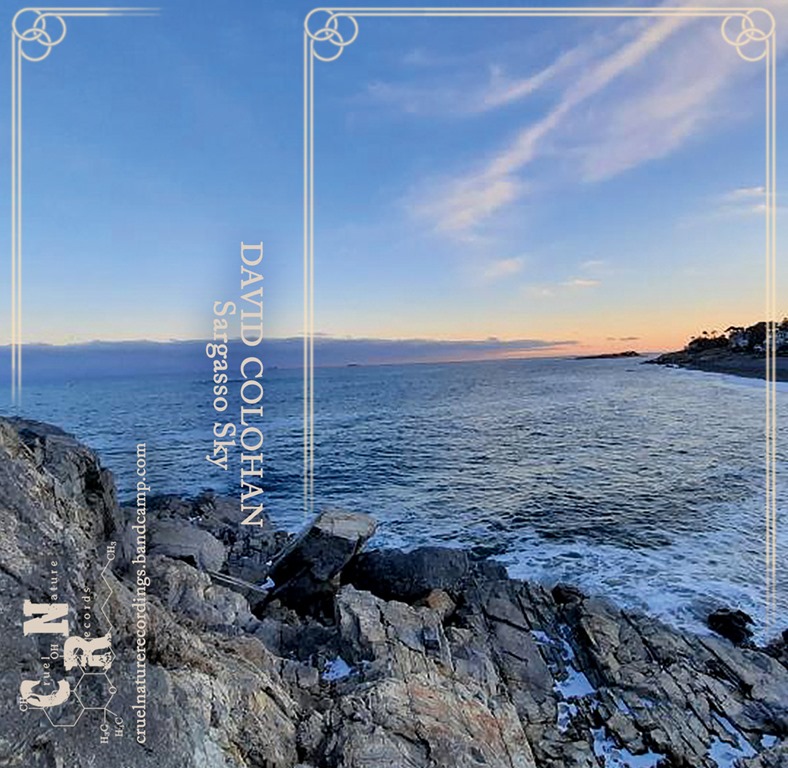
The Sargasso Sea is a unique place on earth: situated within the Atlantic ocean, it is the only sea without a land boundary – a sea within an ocean, in other words – its borders defined by sea currents. Its name is derived from to the vast ‘sea’ of free-floating seaweed called Sargassum which occupies the space, and it’s an ecosystem like no other, the aquatic equivalent of the Amazon. And yet its existence appears to be considerably less well-known, despite the success of Jean Rhys’ 1966 novel, Wide Sargasso Sea, which has been adapted for film, stage, TV, and radio and has been lauded as a pivotal work of postcolonial feminism. And it’s this book which I think of when I hear the word ‘sargasso’ – although clearly, it has absolutely no bearing on this album. What even is a sargasso sky?

The liner notes paint the scene, where ‘A sargasso sky shimmers above a twilit American shoreline, slipping in & out of time. Via a way slowed down take on jazz fusion, limpid pools catch its reflection, ebbing & flowing with the soon to come stars… The cover images taken at Marblehead, Massachusetts depict something of the aura of an area that H.P. Lovecraft considered life-changing. Step into the sea & sky….’

There are many layers, then, to this release, which extend far beyond the surface of the music itself. But when it comes to the music, Colohan presents ten pieces, all comparatively concise (only four extend beyond the five-minute mark, and none reach beyond eight), and the form is ambient yet structured, with rippling washes of synth gliding over the mellow mists of sound which float invisibly through the air. Despite its title casting its eye above the horizon to the sky, parts of this album is given to a preoccupation with the water, still, as exemplified by titles such as ‘Sacred Teeming Waters’ and ‘Longshore Drift’.

Whereas much ambient music is formless, abstract, the instrumentation vague, on Sargasso Sky, David Colohan offers musical works with structure, and with the implementation of identifiable instruments.

‘Longshore Drift’ is led by sparse piano, backed by a sliding, bulbous synth bass that’s extremely eighties in sound, and elsewhere on the album, long resonant voices dominate, from flute to organ. These are clearly synth voices, sounds conjured digitally in response to creative needs but also evolving technology facilitating new music. There are some bold drones which surge and swash on ‘Anoint’, and ‘Summers Old as Stars’ brings late 70s and early 80s synth stylings to the fore, with hints of Tubular Bells and Vangelis, and the myriad music of this era which remained anonymous. But for all that, Sargasso Sky is subtle and it’s still not overtly electro for the most part, and it’s not of the prog persuasion either. But what is it? Certainly, there are parts which do very much pursue progressive forms, and Sargasso Sky is very much an exploratory work: spacious, undefined by limits of composition or instrumentation.

AA

a2197923751_10

nynode intermedia – 7th July 2023

Christopher Nosnibor

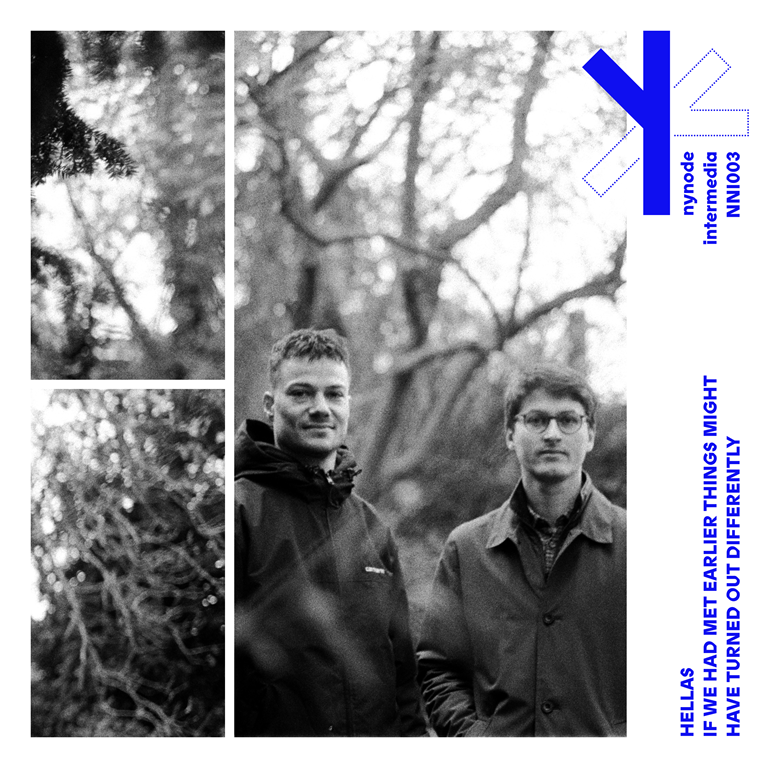
Sometimes, a title just captures the imagination. And in some respects, art – be it a book, an album, or a movie, will take one unawares in the same way as a new person. Sometimes, it’s something unexpected at precisely the right time, discovering something you don’t even know you need until it’s there. To select a quote from what may appear to be an unlikely source, ‘just when you least expect it, just what you least expect’, sang The Pet Shop Boys on ‘Love Comes Quickly’. It’s a great line because it so succinctly summarises the unpredictable nature of life, and this wordy title tripped a similar trigger, which, I accept is uniquely personal…. But then, in the personal lies the universal. It must be so true for many that we’ve met the right person, but at the wrong time, for whatever reason.

And so it is that I’m spiralling on a chute of reflection, a wall of mirrors inset with faded and distorted memories of people I’ve met and lost along the way as I begin to ease myself into what ultimately proves to be a remarkably diverse album, with deft compositions flitting between retro electronica, sparse techno, trance and shoegazy electrombience – and a lot more besides. Other times, mood-dependent, I may find the perceived lack of identity frustrating, the gentle mellifluousness without any obvious focus nigglesome, but right here, right now, I’m ready to experience transportation. And having emerged from a journey for the artists, If We Had Met Earlier Things Might Have Turned Out Differently feels like a suitable soundtrack.

As the accompanying notes recount, ‘Hours of recorded improvisations were arranged afterwards to slowly shape what would be the new sound of the duo. After three years of experimenting and writing various compositions the album slowly began to unravel itself and took its final form. Eleven unique pieces — deep explorations of sound — that all have their own story to tell are assembled in this collection of snapshots from the past years.’

In some ways, then, If We Had Met Earlier Things Might Have Turned Out Differently is more of a work of sculpture than composition, moulding and shaping the recordings into pieces with form and structure. Rising from a mist of gentle ambience, ‘Arbour’ soars, but is pinned down by a solid martial drum and ambulant, bulbous bass.

Listening to the ominous discordant experimentalism of ‘X’, I reflect on the fact that there was a time I’d have found this boring, just as I’d have cringed at anything remotely jazz-flavoured and sneered at anything overtly dance, before the clattering mess of ‘Techno | Hovestaden’ arrives, chanking and chiming over some ponderous keys, rippling piano, and evolving drones. In the background, as the piano plays mellow chords, there’s a banging tune giving it large way off in the distance, and it’s like hearing a neighbour’s music through your own. It’s irritating, but it’s real: as William Burroughs wrote, ‘life is a cut up’.

‘Ghost’ is suitably eerie, and ‘Shinjuku’ goes all-out tweaking electro, straddling late 90s dance and new age which just shouldn’t work and I should detest, but having lived through this and experienced a somewhat fractious relationship with tunes like ‘The Sun Rising’ and ‘Sadeness Part 1’, I’m rather more at peace with the incorporation of diverse elements to conjure sensations of spaciousness and spirituality, as long as they don’t involve pan pipes. Gotta have limits, y’know. This doesn’t actually sound like these musical forebears, but it feels as if there’s a certain context and progression at play here. The present only exists because of the past.

We’re plunged back into ominous drone territory with ‘Odessa’, and its warping grind which quavers up and down is most unsettling, building to a droning roar that’s hard not to equate to missiles and jets as the oppressive buzz grows louder.

The looming brass and slow, deliberate percussion of the spacious ‘Noon’, as it trickles slowly toward the album’s soft ending, with clattering percussion slowly marking a long wind-down before ‘Tide’ smoothy washes everything away to a smooth, blank state once more.

So what does this say? It says Hellas have conjured a majestic work from – well, who knows what source material? How much of this album came to fruition in the wake of its recording? And how much does it matter? It’s not as it’s an AI work, contentiously bypassing human input: pianist Peter Sabroe and drummer Jeppe Høi Justesen, with the assistance of producer Brian Batz have created something with personality, intricacy, depth. If I’d have heard it ten years ago, I’d have hated it: now… it reaches me. It’s an accomplished work, subtly complex and possessing significant depth. It’s amazing how things can turn out.

AA

NNI003_art

Scandinavian post-rock giants SPURV have announced the release of new track ‘Som skyer’ via Germany’s Pelagic Records. The penultimate single from Brefjære, the band’s fourth full-length release due September 22nd; ‘Som skyer’ sees the band layer orchestral grandeur over a shimmering, glacial guitar refrain as thunderous drums push the five and half minute piece to ever greater heights.

Having recently moved to Tromsø, a remote northern province far above the Arctic Circle, principal songwriter Gustav Jørgen Pedersen took inspiration from the forces of nature he found himself surrounded by. Despite the overwhelming presence of the mountains and the unrelenting Arctic winds, Pedersen was struck by the resilience and sheer determination of life, from the birch trees outside his window to a single butterfly battling the breeze.

This delicate balance is perfectly captured in the sheer euphoria of ‘Som skyer’ and its accompanying video. SPURV take us soaring through the sky as the sun peers over the jagged Norwegian fjørds; finding the joy of life in even the most desolate places.

Brefjære sees the band take their latent exploration of neo-classical composition even further. Throughout ‘Som skyer’, guitarist Herman Otterlei’s celestial, spiralling motif is complemented by glockenspiels, a brass section and a 14-voice choir; adding further depth to the incredible dynamic sensitivity that SPURV have carved out over their decade at the forefront of international post-rock.

Gustav Jørden Petersen on ‘Som Skyer’:

“’Som skyer’ is Spurv at its perhaps most ethereal. The song is about the wind that flies over the earth, rustles in the treetops, and plunges down over the mountain. It represents time and fleeting memories, words and ideas that are shared across generations. The song contains old melodies combined with new arrangements, and was finally realized as part of Brefjære after many years.”

Watch the immersive video here:

AA

MclyUEoQ

Kranky – 7th July 2023

Christopher Nosnibor

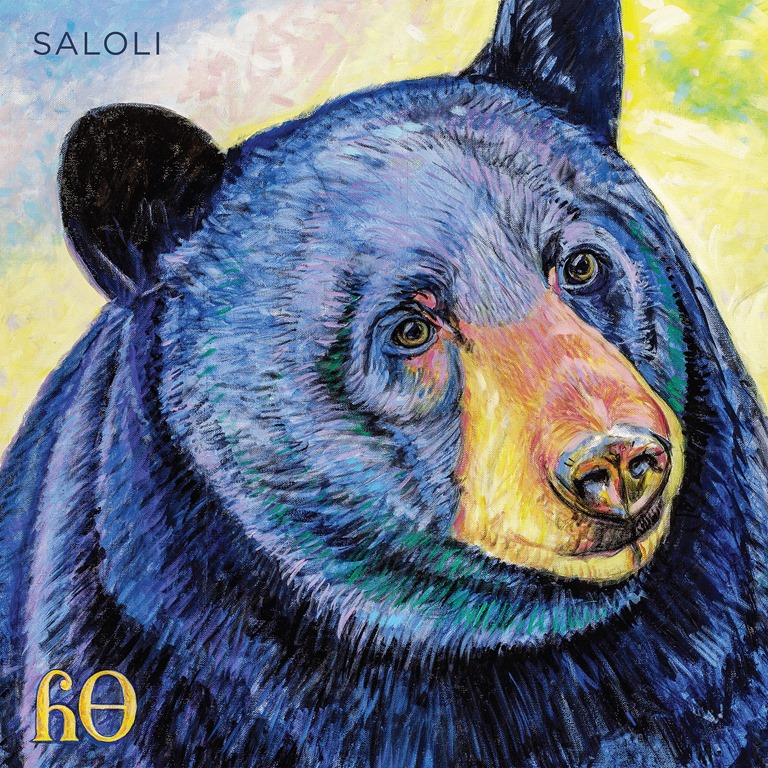
If the prospect of an album from a solo pianist whose recording moniker is the Cherokee word for ‘squirrel’, and which is intended to evoke ‘a day in the life of a bear in a canyon in the Smoky Mountains,’ with each track channeling a different emotion or experience in its daily explorations, sounds as if it may be soft, neoclassical tinkling, Canyon will come as rather a surprise.

As the accompanying notes explain, ‘Canyon was composed and performed live on a Sequential Circuits MultiTrak synthesizer…routed through a delay pedal. This refraction adds a lyrical spatial quality, as though “echoing off canyon walls.” It’s music both gentle and adventurous, curiously rooting through soils and streams, in a sustained state of discovery’.

It’s a proper vintage piece of kit, an analogue synthesizer only produced for a couple of years in the mid-1980s. Described by Vintage Synth Explorer as ‘a six voice analog synth with sophisticated filters, envelopes, modulation capabilities and built-in sequencing’, it’s clearly got versatility in its favour – which means Saloli has a broad range of sounds and effects at her disposal to articulate the range of moods and emotions of her subject. But above all, it has that classic analogue warmth of tone, the rich, organic texture that resonates in a way that’s almost biological. It’s something that’s both affecting and in some way comforting, the fuzzy edges conjuring a sonic blanket, and even when venturing into more abrasive territories, analogue synths very much have the capacity to reach the parts their digital successors somehow can’t.

The album starts strong: ‘Waterfall’ spirals and cascades in a swirl of synth that doesn’t necessarily evoke – at least to me – anything bear-like, but the more ambient end of Krautrock ‘Lillypad’ drifts soft-edged semi-ambience strolling and ‘Snake’ is unexpectedly graceful. But then, if you’ve ever watched a snake move, it is a graceful, supple movement, and snakes have an undeservedly bad reputation among humans. Very few of them are dangerous, and they’re certainly not the only creature to shed its skin. Again, the notes provide an insight which perhaps has a bearing on the tone here, explaining that ‘In Cherokee teachings, humans and animals are considered to have no essential difference – originally, all the creatures of the earth lived together in harmony’, and as such, ‘Canyon captures shades of this Edenic notion across eight elegant pieces, alternately meandering, pensive, playful, and pure. Sutton’s playing, as always, is dexterous and dimensional, mirroring the dazzled senses of its muse. If then, the compositions don’t quite confirm to our expectations, based on our perceptions of the various inspirations, it could well be on account of Saloli approaching them from a very different perspective. Why are we scared of snakes? Some of it is likely biblical in origin, some to popular portrayals in movies and media. But one is not afraid of one’s equal, and living together in harmony means there is no reason for distrust.

Such belief systems may be difficult to comprehend, but how much better, more pleasant, more bearable, would life the world over be if everyone held these views? There would be no social hierarchy, there would be no capitalism, there would be no war. Consider that for a moment.

The beauty of Canyon is that it’s a work which encourages and inspires contemplation.

It’s the playful side of Saloli’s songwriting that comes to the fore on the slowly bouncing ‘Yona’. It’s mellow, light, uplifting, and contrasts significantly with the introspective ‘Silhouette’ which follows, a reflective, melancholy pie, which makes you ache ever so slightly inside: you can’t quite pinpoint the reason, but that’s the power of music. Moreover, it’s the power of Saloli’s music, as the forms shift from string-like elongated notes to shorter, more piano-like sounds, with all of the variables in between.

‘Full Moon’ is positively bloopy and gloopy, trilling tones like synthesized pan pipes echoing out over a bubbling, bass, and it works nicely: there is contrast, there is movement. And in an abstract way, it captures the energy that seems to emanate from a full moon. And there is an energy which affects creatures and humans alike: some if it’s mystical and mythical, but I’ve often felt hyper without even realising it’s a full moon.

There’s something buoyant but also stealthy and predatory and then again, at the same time, increasingly discordant and with shades of darkness, about ‘Nighthawk’, a seven-and-a-quarter-minute monster with transportative qualities, before the true closer, the eight-minute ‘Sunrise’ heralds the arrival of the new. A new dawn, a new hope. Breathe deep. This could be our reality too.

AA

604344

Darkplace is a mysterious new Swedish dark dream pop/post-punk group who created a conceptual debut album inspired by the bleak landscape of the Stockholm suburbs that birthed them.

Centred around an alternative reality – or just the grim present and future? – and entitled About The End Of The World, the album is being unveiled gradually over the coming months via a series of imaginative visuals based on animated digital paintings for each of its eleven tracks.

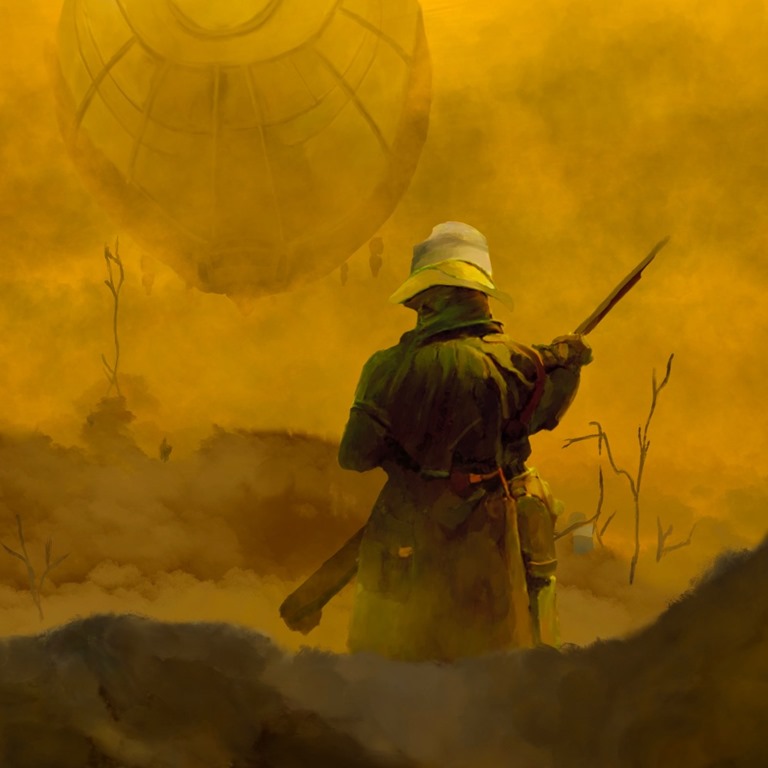
Having recently released ‘Arken över Hesselby’ (The Ark Over Hesselby), the video for which presented the outskirts of a city haunted by an unknown aerial presence, the clip for brand new single ’Fearmonger’ takes us into the heart of that city, presenting an apocalyptic scenario as ominous sirens wail and a lone soldier flees the prying ‘eye in the sky’ of an airship.

The Swedish national alarm system is still tested on a quarterly basis by the army. A familiar sound to all Swedes, the sound of the siren has the nickname ‘Hesa Fredrik’. Darkplace state: “After trying to improve Hesa Fredrik, the government learned that the new horns scared the shit out of people.”

Although rooted in late 80s/early 90s indie styles, Darkplace incorporate a variety of other genres into their sound. However, for the members of this highly secretive group, it is not just about the music. They perceive themselves as more an art project that happens to be exploring and commenting on the state of the world through their chosen mediums of music and video.

Most of the short instrumental pieces on the forthcoming album were written with specific storyboards in mind, with the band revealing that “we started creating the art before we had the music for both singles to date, so the tracks were written as soundtracks to the animation.”

The art itself is a multi-layered process that involves photography, sculpting, oil painting, digital editing and animation. Using apps like Nomad Sculpt to create it before exporting scene specific angles and imported into Procreate to be painted, they add: “we use oil paintbrushes and paint over the photo. It is layers upon layers and it gets messy. Exporting gets even messier since we want depth in the scenes and need to export them in layered depths. A few scenes in this project have been animated frame by frame and it has taken almost two years to complete.”

Watch ‘Fearmonger’ here:

AA

ba03807830e148ce85e902a5eea7b6fe5d6fb95f

3rd March 2023

Christopher Nosnibor

Where does the time go? I type this with a rising panic in my chest, the same one which kicks me awake at 5:30 most mornings. I may often panic about the mounting chores and deadlines, the crumbling state of my house and cost for repairs, but mostly I panic about time and its passage. How is it 2023? How is it March already?

However much time you think you have, you always have so much less.

And so the arrival of the new break_fold album is something which both elates and trips me. It’s been six years almost to the month since the first break_fold release, 07_07_15 – 13_04_16 , which in turns reminds me it was thirteen years since Tim Hann’s previous musical venture, I Concur, were an active band. What happened? The simple answer is, of course, life. It happens when you’re not looking. It’s hard not to feel nostalgic for that time: it was a period of discovery. The Brudenell was still emerging as a venue, and putting on lots of local acts, and at the launch of their debut album, I Concur sounded immense, like they could be the next U2 – only not cocks and unencumbered by a Bono, of course. You get the idea. They were just SO good. But then… life. It gets ahead of you.

Tim Hann has been tinkering as break_fold for a while now, because ultimately creatives can’t simply stop creating, even if it’s at night working in the cupboard under the stairs or the shed. You can’t help it. However tired you are from work, life, parenting, there’s an itch that can’t be scratched any other way, and ultimately, it has to be done.

And it’s been done nicely here, a year on from the release of the single ‘Welwala’, which features on This Was Forever and again, I have to pinch myself. Again, a year already?

The title – and perhaps it’s just me – bears an element of melancholy. It was forever, but now…? Well, nothing is forever, and the realisation that something forever has a finite existence is something sad and regrettable. The title track spins together shimmering top synths over stuttering beats and rolling mid-range create a dynamic tension and a certain sense of drama.

This Was Forever is a set of solid instrumental electro with some deep grooves and some dark, jittering moments. It is, overall, easy on the ear, ‘Everything Affects Everything’ mines a dark seem that’s pure 80s movie soundtrack. Indeed, the vibe is strongly eighties for the most part, not least of all with the cracking snare sounds that drive some of the faster pieces – but then again, this type of one-man synth-based style is ultimately contemporary, possible due to the wealth of inexpensive software that has meant that making music is possible for anyone with a laptop. But with such availability, it means you have to be good to stand out. And break_fold’s output showcases Hann’s ear for atmosphere, for range, for texture and form.

‘Welwala’ is one of the album’s standouts, and packs some energy in a track that’s actually danceable, if you’re that way inclined. It’s a solid, meaty groove. Grooves and beats are perhaps the defining feature of This Was Forever, with the murky undercurrents of ‘Did I Say it or Just Think it?’ landing in the space between latter-day Depeche Mode and Ghosts-era Nine Inch Nails. At the lighter end of the scale is the buoyant ‘Mishby’ which bounces along in an overtly synthy-piano way, with the beats backed off a way.

This Was Forever is the kind of album you could pop on while working without getting distracted by it – and sometimes, that’s just the kind of album you need.

AA

11183_JKT

From Coma To Catharsis is the second full exploratory mission in the current five-piece incarnation of NYC / NJ-based instrumental ensemble, The Royal Arctic Institute.

At present, The Royal Arctic Institute comprises five musicians who have played extensively with other groups and/or as backing/session musicians: drummer Lyle Hysen (Das Damen, Arthur Lee, The Misguided), guitarists John Leon (Roky Erickson, Summer Wardrobe, Abra Moore) and Lynn Wright (And The Wiremen, Bee And Flower, Shilpa Ray), bassist David Motamed (Das Damen, Two Dollar Guitar, Arthur Lee, Townes Van Zandt), and keyboardist Carl Baggaley (Headbrain, Gramercy Arms).

What are the first things you would feel coming out of a coma? Would it be cathartic, a full release of all your emotions? What would that sound like? From Coma To Catharsis tries to capture that auditory experience replacing the steadfast emotions expressed on From Catnap to Coma with the sounds of dreaming, then awakenings.

All the pieces were created communally, deconstructing then reconstructing material mainly composed by guitarist John Leon with a couple written by other band members. McNew recorded the band in a live setting with no digital magic and minimal overdubs except for pedal steel work by John.

This record also highlights the band’s musical development after a further year of playing together. This includes songwriting contributions by Dave (‘Angleman’s Lament’), and Lynn (‘The Elated World’) as well as more input from Carl. “This is the third record I’ve played on,” explains Baggaley, “and on this one we really broke the songs down to the bones. I was able to bring in new influences like King Crimson-style mellotron and electric piano inspired by the late Billy Preston performances during the recording of the Beatles’ Let It Be album.” Besotted by 2021’s Beatles documentary series stemming from those sessions, Lyle draped his drums in tea-towels ala Ringo for the song ‘Passover Bucket.’

Regarding that same title, John says, “During the COVID lockdown, everyone’s kids were home and parents were scrambling and grasping at straws to entertain them. A Jewish friend of mine decided to celebrate Easter with her children to give them something to do. They were fascinated by the concept of Easter baskets. The following year, instead of Easter baskets, the children were given Passover Buckets to keep them quiet.”

‘K-Style Circuit’ provides a flavour of the album, and you can watch the video here:

Cruel Nature – 6th January 2023

Christopher Nosnibor

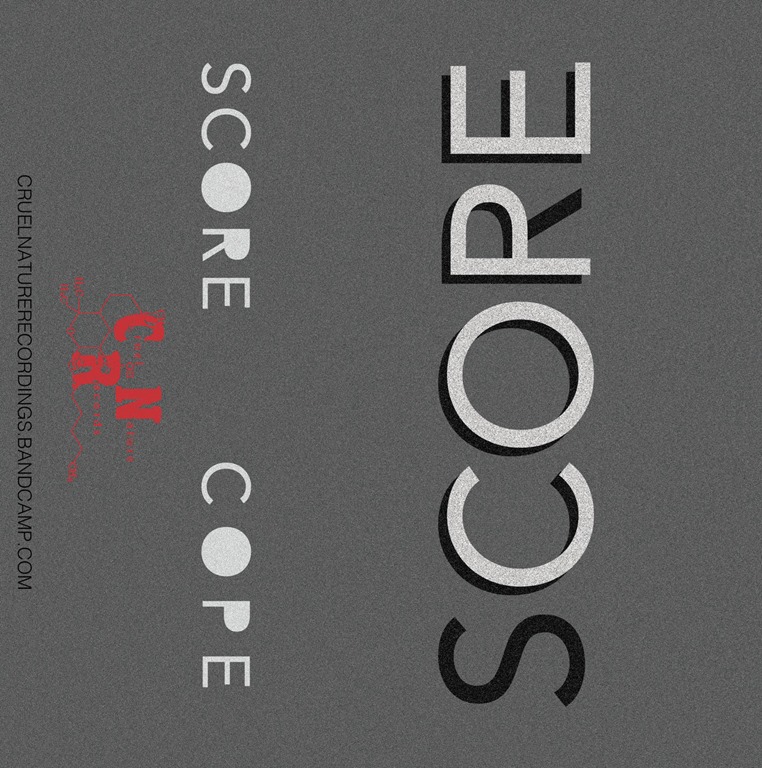
It’s something of a relief to discover that Score’s seventh long player for Cruel Nature isn’t some gentle exercise in self-help and mental health wellbeing, or otherwise the soundtrack to some existential post-pandemic breakdown – because the former are utterly fucking nauseating, and the latter, while I’m all for those primal screams of anguish, which I often find relatable, at least to an extent, variety isn’t only the spice of life but the key to staying within the marginal parameters of sane in an insane world. No, COPE, recorded in six weeks at the end of 2022, which somehow feels like a long time ago now already, takes its title from Julian Cope.

As the blurb explains, ‘the album was directly inspired by the musical descriptions to be found in the autobiographies of Julian Cope: Head On and Repossessed. Using Cope’s impassioned words as instructional starting points for each track, COPE references Mott the Hoople, Patti Smith, CAN, Duane Eddy, The Doors, Suicide, Dr John, Sly & The Family Stone and more.’

Julian Cope of one of those people who I’ve long been somewhat perplexed by, and, truth be told, haven’t spent too much time investigating, either musically or biographically. He has always struck me as having a career less centred around his relatively low-key musical output following a degree of commercial success with The Teardrop Explodes, and more around the fact that he’s Julian Cope. Some may want to set me straight on this, but right now, I don’t need to hear it, and a familiarity with the source material shouldn’t be a prerequisite of my ability to critique the work at hand, which interestingly, in drawing on his biographies, only serves to further indicate that Julian Cope spends more time writing about being Julian Cope than making music I need to hear.

COPE is a document to creativity under intense circumstances. To quote from the accompanying notes, COPE was ‘recorded as it was written, in one or two takes in a tiny garage and drawing on an old quote from the arch-druid himself as a creative manifesto: “It had to be very cheap, very fast, very loose. I needed to be an ambassador of looseness”’… ‘COPE is an exercise in embracing limitations and existing in the moment, a lyric-less love letter to Rock ‘n’ Roll itself, and a one-word command to the fried modern human.’

Containing nine instrumental compositions, COPE is a pretty demented journey, an absolute rollercoaster of a ride, that swings between psychedelia and krautrock, twangy desert rock, swampy jazz, with the six-minute ‘Brick’ bringing it all together with a Doorsy kind of trip with the added bonus of some woozy brass in the mix. ‘On The One’ goes deep into a funk workout that grooves hard, but ‘Old Prick’ stands out for its darker post-punk feel that suggests it could almost be a Psychedelic Furs or The Sisters of Mercy demo. The twelve-and-a-half-minute ‘Softgraundt’ is more than just expansive in terms of duration, and is a multi-faceted musical exploration that wanders hither and thither, shifting, evolving, a dozen or more songs in one. And perhaps this is the key to COPE – both the album, and the man. It’s everything all at once, and it’s more than you can really keep up with. It’s a challenge, and one I’m not entirely sure I’m up to, but there’s never a dull or predictable moment here.

a1384536327_10

Cruel Nature Records – 2nd December 2022

Christopher Nosnibor

Many of us were waiting for the snow. And then, it arrived. And then everything ground to a halt. Welcome to the world now. What happened? It wasn’t always this way.

It’s all in a single word: ‘remember’ immediately imbues the album’s title with a sense of nostalgia. It isn’t explicit, of course, but it’s so, so evocative. Because, so caught up in life and the way everything blurs as time races past, we forget so much. The things we remember, then, hold a special place in our crowded minds. Reminiscences between friends, where moments, events, occurrences, people and places are conjured in those moments of reflection whereby we ‘remember when…’

Winters now are simply not the same as they were. I remember, in the early 80s, a full foot of snow on my parents’ back lawn, from which I would build a six-foot snowman and an igloo. We’d even build igloos on the school field during breaks. Snow didn’t stop school busses from running then. Perhaps it’s because of climate change, perhaps it’s because of the sheer volume of films, art, and literature, that depict idyllic, snowy winters, that show is so evocative. Most of can only dream of a white Christmas, but then, even Irving Berlin’s 1942 song was in itself a slice off nostalgia: ‘just like the ones we used to know’ is perhaps more accurately summarised as ‘just like the ones we see in fiction dating back to Dickens’ but obviously, it doesn’t have the same chime. Ultimately, the world is changing, and

The text which accompanies the album’s release serves almost as an affirmation of my line of contemplation, with the explanation that Remember We Were Waiting For The Snow is about what is called ‘solastalgia’: our anxiety, our concern, our sadness to see some natural phenomenon disappear. Written 5 years ago, after Žils [Deless-Vēliņš – aka (Lunt)] relocated to Latvia, it is a collection of exquisite reflective moving guitar-driven ambience drawing from same the sonic well as soundscapers like Jim O’Rouke’.

The nine tracks of Remember We Were Waiting For The Snow range from the expansive – the eight-minute opener, ‘Flakes and Feathers’ and the nine-minute closer, ‘Auseklis’ – to the fragmentary – the sub-two-minute ‘Dead Man in the Sand’ and ‘Dead Man in the Snow’.

Between the bodies, there is atmosphere. There is tension, but it’s contained by the soft curtains of sound. ‘Plasma (Under the Ice)’ is stark, scraping, brooding, dark, and difficult, uncomfortable, uneasy on the ear.

The instrumentation is varied, from screeding synths to picked guitar and mellow woodwind that falls between jazz and post-rock. But genres matter not and dissolve in the face of such magnificence. Remember We Were Waiting For The Snow drags hard on melancholic reflections. It’s also melodic and intimate, and ultimately, quite magical.

AA

cover