Posts Tagged ‘instrumental’

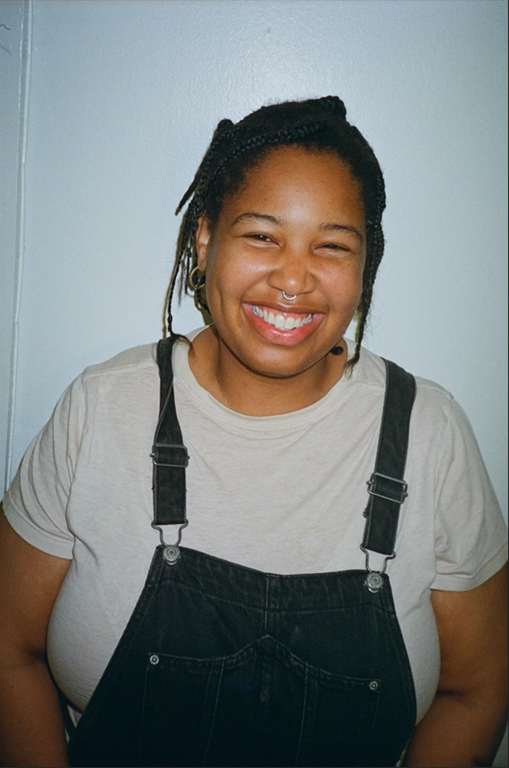
Helmed by Black and Cherokee composer and multi-instrumentalist Takiaya Reed, Divide and Dissolve will release their new album, Insatiable, on April 18 via Bella Union.

The 10 track album run the gamut of doom metal – from the ear-splitting depths of lead single ‘Monolithic’, to contemplative, softer moments on the aptly titled song ‘Grief’, released today. Like all of Divide and Dissolve’s music, Insatiable is almost entirely instrumental.

While the album’s sheer grandiosity represents an evolution in Divide and Dissolve’s sound, it also marks the very first time that Takiaya has ever lent vocals to a D//D song. On ’Grief’ her distorted voice echoes atop a vibrating bass tone, repeating the lyrics: “I don’t know what I’m supposed to do/ I’m so lonely without you.” Takiaya explains, “The voice is such a mysterious  instrument. This album feels different, and I wanted to honour that”.

The director of the music video, Sepi Mashiahof, adds; “The music video for ‘Grief’ is an ode to the feelings of empowerment, resistance, and sadness that Divide and Dissolve weaves into our bodies. It’s an expressionist diary made up of dissonant and revelatory memories. Grief eclipses everything around us, innocuously lingering in the functional movements of our daily lives, then aggressively literal in the reflective silence behind our eyes. Grief is inherent to our existence, knowing that a better world exists for all of us and its potential is boundless, yet we’re made to suffer the atrocities of greed and exploitation instead. We can honor Grief as a passage of life, but we must resist the forces that impose it as a numbness to injustice.”

AA

Divide and Dissolve live dates (so far):

18-05-2025 Desertfest London – London
30-08-2025 Supersonic Festival – Birmingham

AA

Screenshot2025-03-25145553-99079e0b6d03cf3c

Photo credit: Brandon McClain @eathumans

17th March 2025

Christopher Nosnibor

Deborah Fialkiewicz has been busy again, recording and releasing her latest offering in a compressed timeframe. Deborah Fialkiewicz is a low-key and predominantly ambient set, comprising twelve sparse, minimal works which rumble and eddy around the lower reaches of the conscious mind.

There are beats, but they’re way off in the background, as is the rest of everything. The restraint shown on ‘summer mantra’ is impressive: it’s the musical equivalent of holding your breath for five minutes. ‘the lief’ is rather more structured, centred around a descending motif which tinkles and chimes mellifluously, guiding the listener down a delicate path which leads to a murky morass of unsettling sonic experimental in the vein of Throbbing Gristle. The crackling static and muffled, impenetrable verbal mutterings of the ominous title track is exemplary, and it makes for uncomfortable listening. A hovering, quavering, UFO-drone hangs over words which are indecipherable, as if spoken from the other side of a thin wall – but their tone is menacing, and everything about this tense experience feels uncomfortable.

The circular, rippling waves of ‘star lady’ offer some respite, but it still arrives with strong hints of Throbbing Gristle circa Twenty Jazz Funk Greats and Chris and Cosey’s Trace, but also alludes to both Kraftwerk and Tangerine Dream. Thinks take a turn for the darker on the swarming drone of ‘Corpus’, which feels angry, abrasive, serrated edges buzzing attackingly, a thick rippling dominating like a helicopter directly overhead. In the present time, I can’t help but feel twitch and vaguely paranoid hearing this, even as it descends into a lurching, swampy nothing, because ‘bloodchild’ goes full churning assault, an echo-heavy wall of noise that cranks the oscillators this way and that, churning the guts and shredding the brain in a squall of resistor-driven frequency frenzy.

‘norther star’ is particularly mellow, as well as particularly tied to vintage beats and rippling repetitions, a work that’ simultaneously claustrophobic and intense. Synth notes hover and drift like mist before the next relentless, bubbling, groove. ‘widershin; is static, a locked-in ripping of a groove. And then there is the thirteen-minute ‘timeslip’, which marks an unexpected shift towards that domain of screaming electronic noise. The fact I found myself zooning out to the thirteen-minute monster mix of ambience and noise that is ‘timeslip’ is testament to the track’s immense, immersive expansions which massage and distract the mind.

Genetic Radio i.d delves deep into the electronica of the late 70s and early 80s, embracing the points of intersection between ambient and industrial, early Krautrock and BBC Radiophonic Workshop, while at times venturing into the domain of noisemongers like Prurient. It’s a harsh, heavy, extraneous incursion into the quietude of daily living, and it’s a sonically gripping and ultimately strong work which stretches in several direction simultaneously.

AA

AA

a1096582352_10

Metropolis Records – 21st February 2025

Christopher Nosnibor

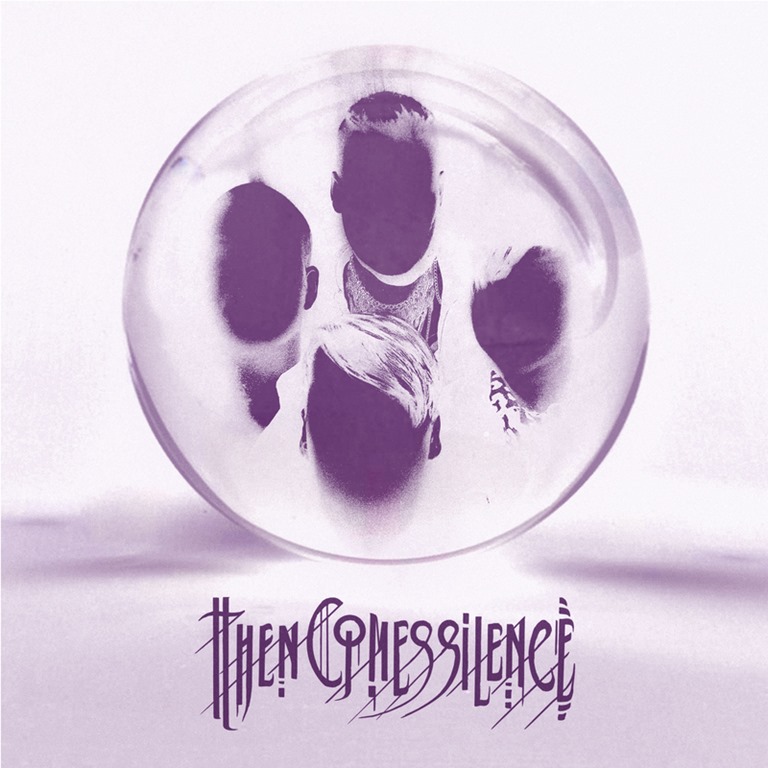
If one nation really loves its rock and it’s goth stuff, it’s Germany, and there are a fair few UK bands who, while they fair ok at home, are absolutely massive in Germany: the fact The Sisters of Mercy have continued to headline major festivals there well into the 00s, while at home, apart from Reading in ’91, they’ve never really featured in festival lineups gives a fair indication of the difference. So it should be of no surprise that it’s in Germany that Swedish post-punk/goth act Then Comes Silence grew their fanbase first in Germany, before expanding across mainland Europe after sharing stages with artists such as A Place To Bury Strangers, Chameleons and Fields Of The Nephilim.

Boxed should probably have been retitled Unboxed for this edition, being a digital reissue of tracks included in a limited and long-sold-out box set edition of their 2022 album Hunger, Consisting of two songs in Spanish, two instrumentals, two remixes and one outtake from that album, its reissue lands coincidental with the completion of a US tour in support of their seventh album, Trickery, released last year.

As one may expect from the summary, it’s more of a mixed bag of novel odds and ends than a serious or coherent EP release, and the presence of the songs sung in Spanish remind me of when The Wedding Present released ‘Pourquoi Es Tu Devenue Si Raisonnable?’, a French-language recording of ‘Why Are You Being So Reasonable Now?’ Sung in Gedge’s flat, Leeds accent, it sounds like… The Wedding Present, of course, and I’m sceptical about the translation given just how nearly the lyrics fit the melody.

Anyway. Boxed. The Spanish language versions of ‘Dias y Años’ and ‘Cebo’ are solid, but obviously don’t really bring much to the table, especially for the non-Spanish speakers – beyond a novel spin, that is. But make no mistake the ultra-percussive, stony goth groove of ‘Cebo’ (or ‘Worm’, as it is titled in English) is a killer cut in any language.

The first instrumental, ‘Spökenas Intåg (Walk-In)’, which in fact lifts the curtain on the release, is a somewhat spooky, atmospheric composition, imbued with filmic qualities, and it would sit comfortably on the soundtrack of a movie or maybe even a docudrama about a serial killer or something.

‘We Only Have So Long’ is a thrusting, energetic, guitar-driven song, packing groove and force into two and a half minutes, and while its offcut status is because of how it doesn’t really sit in the framework of the album, it might have made a standalone single, because, why not? It’s certainly not weak.

Although remixes rarely mark an improvement on the original – although there are notable exceptions – the H Zombie Remix of ‘Blood Runs Cold’ does at least bring something different.

The final track – amd second of the instrumentals – ‘Skuggornas Intåg’ bookends the EP and strives to give it some kind of cohesion, some kind of shape, being a clear counterpart to ‘Spökenas Intåg’. It’s atmospheric but inconsequential, and does feel rather like a space-filler or odd-end outro.

Ultimately, this release is simply what it is: a reissue of some bonus cuts for the benefit of the fans who missed out on the limited version of the album. It’ll no doubt make for a tidy addition for the new fans they accumulated on the tour, too, and it’s decent – but by no means their most essential offering.

AA

629423

Room40 – 13th December 2024

Christopher Nosnibor

Nostalgia is a subject I’ve touched on on a number of occasions in recent pieces, because it’s become something of a preoccupation in contemporary culture. Arguably, this is the natural evolution of the postmodern, an epoch in which the new was primarily a fresh – or not so fresh – permutation of the old. The culture of the twenty-first century has been marked by an ever-increasing acceleration of more of less everything: the accelerated communications and technological innovations and ensuing blizzard of media Frederic Jameson wrote of when defining postmodernism has gone into overdrive, and we’re now moving at a pace whereby we’re nostalgic for breakfast by lunchtime.

Nostalgia is big, big business, and this has been no more evident than in the response to ABBA’s hologram shows and the Oasis reunion. This isn’t to overlook other huge musical events – Taylor Swift’s Eras tour, for example – but it’s fair to note that she’s been established for over a decade and a half now, and can’t be viewed as representing ‘newness’ in any way – especially given that four of her last six albums were rerecordings of previous albums. This encapsulates the way in which culture laps up endless recycling on account of its familiarity.

Comfort culture is rather like comfort food: you know what you’re going to get, there are no unpleasant surprises, there’s probably not a great deal of chewing involved, and it’s less scary than the unknown. The world’s gone to shit, and people feel a real and quite desperate need for that blanket of safety and reassurance that there are still at least some things you can rely on. The good old days have happened, they’re fixed and can’t be taken away. And nostalgia has a universal appeal, because it’s something we all feel for certain things at certain times. We tend to feel – and I accept this is a colossal generalisation – that our childhoods and teenage years took place in simpler, better times. They didn’t, but because we didn’t have the burden of adult responsibility, and were discovering things for the first time, they’re coloured with brighter hues.

This latest offering from Glim – a project by Vienna based musician and composer Andreas Berger – is steeped in nostalgia. Berger outlines the inspiration and creative methodology with enthusiasm:

I have a particular love for cassette tapes and how they can influence the character of sound – even just by the simple fact of being played on different quality sources. I like the way they can color audio material, especially when using lower-quality gear. It adds modulation, sometimes (a long time unwanted) degradation of sound, but also gives a certain nostalgic touch – at least for me.

I recorded (and played) most of the material on an old Walkman cassette player, and what I got in return were some faded sonic Polaroids which might trigger a hidden memory or at least evoke a vague feeling of nostalgia.

Perhaps somewhat ironically, Tape I is only available as a download, or to stream online. The tape revival remains some way behind vinyl, despite the format being considerably cheaper to produce. Perhaps it’s because tapes just don’t have the same effect on Instagram, or hung on your wall.

Having grown up in the cassette / tape era myself, I can vouch for the unique nature of the format. When I started making music, I would sketch stuff out with a condenser mic on a portable tape deck, later progressing to a four0-track portastudio, bouncing tracks down to create additional tracks. Each stage would erode the quality of the audio by some incremental degree, but what it lost in fidelity it would gain in character. You just don’t get those happy accidents with infinite digital tracks, just as you don’t get the same sense of the personal with a link to a playlist as one-off compilation tape with handwritten track-listing, smudges and misspellings and all. Don’t get me wrong: tapes were a massive pain in the arse, difficult to skip tracks, easily chewed, easily overrecorded – and for these and other reasons, I have not leaped aboard the tape renaissance train. I’m happy with my memories, thank you, and don’t feel the need to start spooling reels with a biro to remember the good old days of recording songs off the radio.

It’s the happy accidents, the whorling analogue fogs, the fuzzy edges and softened-off corners which define the eight pieces on Tape I, unnamed beyond sequential number. But while I feel richly textured, immersive atmosphere, and the pull of strains of sonic palimpsests filtering through the recordings like ghostly whispers, vague, elusory, like memories which linger in the hard-to-reach recesses of the mind, and with a somewhat grainy texture like an old photograph or a photocopy of a photocopy, akin to the kind of fanzines which used to circulate in the eighties, I don’t feel as if I am truly connected to Berger’s sense of nostalgia.

Herein lies the paradox of memory, and of nostalgia: as much as there is a unification to be experienced from reminiscing with friends about those good old days, we each harbour subtly different recollections of those experiences, and as such, our experiences all differ. It also highlights the scope for the disparity between intent and end product. ‘1_4’ is incredibly haunting, eerie, and a quite magnificent exercise in ethereal dissonance, and ‘1_6’ is at times barely there, thin streaks of aural contrails drifting through a big and darkening sky. I feel a certain melancholy, a creeping chill, perhaps, but not any real sense of nostalgia. And yet it’s apparent that his creative process has involved a quite intense and personal engagement with the source materials and the tools necessary to create this diaphanous gauze of slow-drifting ambience. This simply highlights, however, the way in which, while large social brackets have a collective appreciation and nostalgia for one thing or another, the detail, when boiled down to an individual level, looks very different when viewed from that specific individual perspective. It’s here where you realise that you are completely alone: not even your partner or your best friend sees that shade of green or purple the same as you do. No-one else’s perception is entirely aligned to yours, and no-one sees, or hears, the world in exactly the same way.

AA
DRM4201 art

Lamour Records – 16th December 2024

Christopher Nosnibor

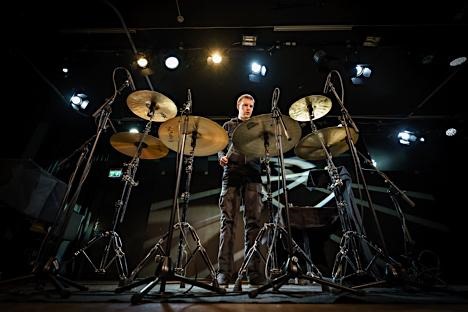
When you read that someone is exploring metal, the likely response is to think it’s a metal album in terms of genre. But not Tomas Järmyr: his explorations into ‘the deep frequencies of metal’ are quite literal. ‘Using only cymbals’, the notes accompanying the release explain, ‘Järmyr creates a slowly rotating musical sphere that holds beauty, deep emotion, and fierce heaviness… Entrails is an album that shows the core of his artistic expression and serves as the perfect introduction to Tomas Järmyr as a solo artist.’

As titles go, Entrails is unquestionably visceral in its connotations – another thing which would, for many, suggest a ‘metal’ album rather than a ‘metal’ album. But here we have an album containing a single track, which runs for thirty-eight minutes, consisting of nothing but cymbal work.

Thomas J

Photo: Thor Egil Leirtrø

In the context of a full drum kit, cymbals provide expression, and also an amount of ‘fill’ to the overall sound, not only of the kit, but the band, creating a wash of resonance in between the notes of the instruments and the beats of bass drum, snare, toms, etc. How do cymbals stand up when separated from everything else?

In the hands of Tomas Järmyr, we come to appreciate the range and versatility of the cymbal. Size certainly matters, and Järmyr’s setup which spans small, light crashes to huge, resonant, bell-like peels, against a backdrop which builds from a delicate clatter to a clashing, splashing tempest, is educational.

There are passages where the clatters and chimes diminish, and make way for dank, atmospheric reverberations which evoke the gloom of subterranean caverns, dark ambience which bears no discernible resemblance to anything remotely percussive, at least to the average ear – or mine.

Sometimes, with experimental music, the mystery is an integral part of the appeal: I prefer not to know which instruments have been used to create which sounds, and similarly, knowing how certain synths or laptop-based programmes have been used to conjure alien sounds feels like something of a spoiler, because I find myself scrutinising the sound and seeking to pick apart its construction. On Entrails, the opposite is true, because most of the sounds simply do not correspond to the source. So on the one hand, Entrails does lay bare the guts of the instrumentation: on the other, as I sit in the swirling drone which fills the room around the eighteen-minute mark, I find myself perplexed and in absolute awe at the creativity of the musicianship. How does anyone come to discover that cymbals have the capacity to be this versatile, to create sounds like these? Who has both ready access to this many cymbals and the time to explore their sounds and the way they interact with one another in such detail?

Sometimes the crescendos are delicate, slow-building: others, they explode unexpectedly. At others still, the sensation is more like an outflow of molten lava from a volcano.

Järmyr’s metal album may be devoid of guitars and guttural vocals – or, indeed, any vocals – bit it is still, for the most part, a heavy album, issuing forth an immensely dense, dark atmosphere, not to mention some quite challenging frequencies, spiking at the top end while rumbling heavily around the lower sonic regions. Ominous, oppressive, Entrails is not a fist-forward punch to the guts, but instead prods and pokes. The effect is no less potent.

AA

a3439715063_10

Sound In Silence – 5th December 2024

Christopher Nosnibor

Ludvig Cimbrelius has been around for some considerable time now, and the label bio outlines how the Swedish musician – now based in Turkey – has, for over a decade, been producing music ranging from ambient and modern classical to deep electronic and minimal dub techno, under his own name and many different aliases such as Eternell, Purl, Illuvia, and others. His latest offering incorporates sound sources such as ‘calm acoustic piano, ethereal vocal spheres, atmospheric electric guitars and field recordings’

Despite containing only six tracks, Here has a running time of almost fifty minutes. These are expansive, contemplative works, and offer more than a hint of neoclassical gentility. Hearing ‘Left But Never Left’ is a wonderfully calming experience. It’s true, of course, that any individual’s response to anything musical or otherwise creative is entirely personal, but Cimbrelius transcends the layers of atmosphere between floating adrift and arriving in layers of mist and haze. The notes flow with space in between, and this space provides a lull in which to exhale, and to reflect. This piece, at just under four minutes in length, is just a prelude to the immersive soundscapes which follow.

‘When Warm Tears Fell from the Sky’ is a composition of the kind of ambience which evokes the soft wash of diluted watercolours spreading on paper to conjure, as if by some form of magic, a sky, a sea, fields, with just a few simple brush strokes, whereby the effect is greater than the input, at least to the eye. This is the sound of currents in the air, of mist, of cloud drifting, evaporating, reforming, changing shape as it moves through the sky.

The fourteen-minute ‘These Flames I Gently Let’ encapsulates the essence of the album in its entirety within its parameters. It begins with lilting, light-as-air piano and gradually melts into a soft swash which includes what sounds like rainfall and wordless vocalisations which slowly run into the broad flow of non-specific sound which slowly slips from being the focus of your attention into the background. It is, in this sense ambient in its purest form, falling into the background. ‘Lost in the Mists at Dawn’ is the soundtrack to the narrative vignette contained in the title: haunting, evocative, it conjures the scene in your imagination without actually saying anything, and its power lies within the depths of its wispy vagueness.

The execution of Here is magnificent. The tracks trickle into one another imperceptibly, creating a seamless sonic flow. The layers are interwoven so as to meld into a finely-textured gauze, and everything is so smooth, so soothing and soporific.

AA

a2808403183_10

Trestle Records – 18th December 2024

Christopher Nosnibor

Tout isn’t a seedy guy flogging – or trying to buy, at a cut-price – tickets outside a gig, but a band which, on this, their fourth album (bet you never guessed that) brings together aspects of contemporary classical, jazz and ambient, in addition to the ‘folk and new age traditions’ which influence their previous works. It follows and extends the trajectory of their previous albums, sequentially numbered with the exception of their last Live, released in 2017.

It’s certainly a lot to toss in together, and with no fewer than ten musicians contributing to this release, the compositions certainly afford a considerable amount of layering and offer much to process. Even after a few listens, I’m still digesting and on the fence as to whether the combined elements are appealing or not.

Jazz comes in almost infinite flavours, and it’s not the ‘nice’ jazz to which the cliché of the listener sporting a goatee and cardigan applies which is the strain that tantalises my taste buds – but Tout do sit perilously close to this at times. At others… they’re truly sublime.

One of their habits is to title the tracks – instrumental pieces, all – in such a was as read in sequence, they form a poem, although on Fourth, it ends abruptly, despite the full stop making it clear that this is no accidental cliffhanger.

I rob the rich to feed the poor

Which hardly is a sin

A widow ne’er knocked at my door

But what I let her in

So blame me not for what I’ve done

I don’t deserve your curses

And if for any cause I’m hung.

‘I rob the rich to feed the poor’ makes for an expansive, atmospheric start to the album, slow-swelling cymbals and understated percussion hover in the background while delicate sonic waves rise and fall, while smooth saxophone echoes out atop it all, growing increasingly excited toward the climactic finish.

It’s broad-brushed, sweeping synths and soft strings which provide the backdrop to ‘Which hardly is a sin’, where a strolling bass stumbles and stutters from time to time. ‘A widow ne’er knocked at my door’ marks something of a change in tone, with sparse acoustic guitar mournful strings bringing an altogether folkier feel in contrast to the jazz vibes. At the same time, it’s reminiscent of some of the post-rock which was all the rage circa 2005.

‘So blame me not for what I’ve done’ is truly magnificent: a minimal, piano-centred piece, it’s haunting and melancholy and leaves you feeling somewhat hollowed and bereft, and it’s apparent that – to my ears, at least – the less overtly jazz works are the superior ones on the album. Admittedly, that’s a matter of taste, but, objectively, Tout seem at their most inventive and creatively enthused when venturing into these different territories.

The album ends as abruptly as the poem it spins: one moment, ‘And if for any cause I’m hung.’ after a subtle, sedate start, is jazzing along, the bass strolling and ambling – and then suddenly it isn’t, petering out, unresolved. Et c’est tout. It’s well played, both literally and figuratively.

AA

a3531274275_10

Greek stoner rock trio Tidal Shock has recently premiered their latest single, ‘Umbra Planetae’. The track is the first offering from their forthcoming album Riffs of Ha, and it marks a defining moment in the band’s creative journey.

The band comments: “This song marks the beginning of our creative journey for this LP, encapsulating the essence of our instrumental stoner rock style. With a perfect blend of crushing riffs and hypnotic, intricate passages, it pushes the boundaries of psychedelic instrumental music. Designed for the live stage, this track immerses listeners in a dynamic sonic landscape, creating a visceral experience that demands attention. It’s not just a song—it’s an invitation to explore new realms of sound, and it sets the tone for the energy we bring to every live performance.”

Check it here:

AA

AA

Formed in 2018 on the island of Crete, Tidal Shock consists of Alex (guitar), Beppe (bass), and George (drums). Born from their shared passion for loud, fuzzy rock ‘n’ roll, the band quickly built a solid reputation in Greece, touring with local legends such as Nightstalker, Naxatras, and Automaton.

During the pandemic, the trio relocated to Luxembourg, where they refined their sound and began working on Riffs of Ha, their upcoming full-length album. The new record promises a dynamic mix of heavy, stoner-infused rock with progressive twists, marking an exciting evolution in their sound.

Tidal Shock’s debut EP Black Hole Genesis was well-received in the local scene, and their live performances, including festival appearances alongside 1000Mods, have solidified their status as a rising force in the stoner/doom/groove rock world.

AA

e8afe617-b2cc-1a78-df62-de7540fab584

Petroglyph Music – 25th August 2024

Christopher Nisnibor

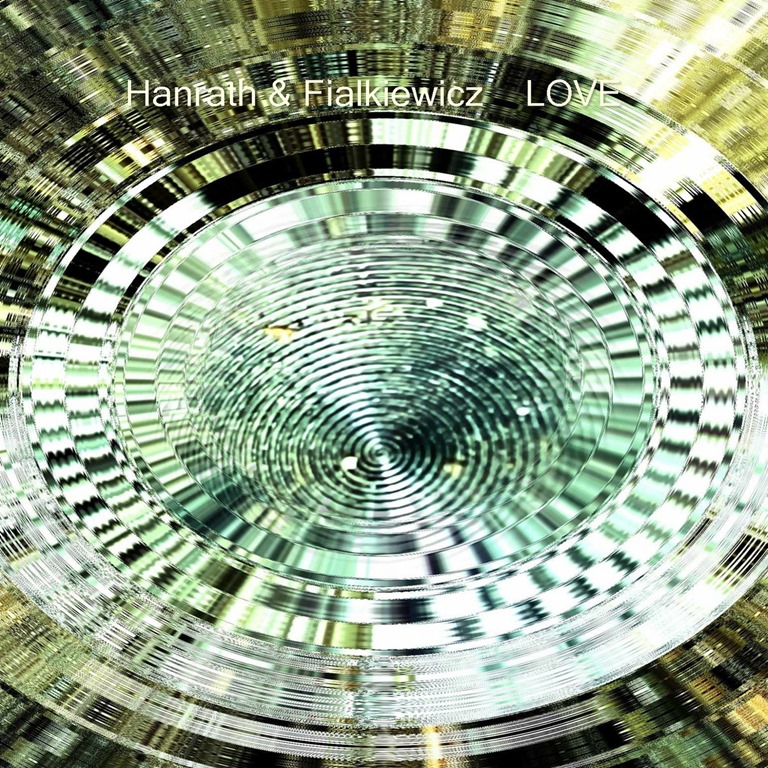
Deborah Fialkiewicz, who I first encountered performing as one half of her noisy dark ambient duo SPORE, is one busy and highly prolific creator, who not only manages to whip musical work spanning contemporary classical to ambience from out of the air at a remarkable pace, but clearly thrives on collaboration. This latest one, with German sound sculptor Wilfried Hanrath, is a further example of the way in which the coming together of artists with slightly different background and musical bents can make for unexpected – and brilliant – results.

As the accompanying notes explain, ‘the album starts with Deborah’s wonderful piece ‘Love’ and ends with Wilfried’s interpretation of it – ‘Love in other words’… The eight tracks in-between are based on noisy, dark ambient drones Deborah provided. Wilfried, inspired by a short trip to the sea, added to these by playing his synthesizer in the beautiful seaside resort. The result is a melange that combines the influences that both bring into this project to something larger than its components.’

Having recently returned from a week by the sea – on the Cornish coast – I can certainly vouch for the replenishing, refreshing, and inspirational qualities of the sea. Living inland and in climes which are perpetually humid and polluted, one immediately notices the difference in air quality when in the presence of a sea breeze.

As collaborations go, this is a particularly interesting one, not only musically as of and in itself, but it’s difficult to separate out what each of the contributors has brought here.

Fialkiewicz’ opening composition is gentle, combining tweaks, tweets, and twitters over the picked strings of a chamber orchestra of sorts, and a billowing wind which fills the background. It’s simultaneously sedate and mournful, and ends feeling unresolved.

Fialkiewicz’ capacity for conjuring dark drones is well-documented, primarily with her work as one half of Spore, but just how much manipulation they’ve been subjected to at the hand of Hanrath – which should really be an album title for a future collaborative / remix work of his – is impossible to determine. This is how collaborations should be, really: the aim should be to achieve a blend, to, and to conjure something which is neither one party nor the other. LOVE fits this criteria: it’s not about who does what, specifically, but the overall listening experience being something different, which is neither one artist or the other, but what they create in combination.

Following ‘Love’, ‘Oneness’ marks a complete shift in every way: it’s a bubbling quickfire electro piece that pretty much brings Kraftwerk together with Gershon Kingsley’s ‘Popcorn’. This numerical sequence of pieces, which runs from ‘Oneness’ to ‘Eigthness’ is an evolutionary, exploratory series, the majority of which are an expansive seven or eight minutes in duration and really mine a deep seam of bubbling, squelchy electronica which becomes increasingly engrossed in the quite granular details of the interplay and interaction between tone and texture, but without venturing fully into the dots-in-front-of-the-eyes details of the truly microtonal.

Slow winds and wide washes define the soundscapes offered here, and I suspect these are the foundations Fialkiewicz provided before Hanrath began to add his spin to them, with stabbing strikes and all kinds of digressions and generally unpredictable incidents which change both the course and the mood of the pieces.

‘Threeness’ is a particularly layered piece, ominous and brooding at first and subsequently, but interrupted by wibbling bleeps, a hint of an R2D2 seeking escape from the haunting confines of the track’s opening. Nothing is quite as it seems, and nothing feels quite right here.

‘Fourness’ is a torturous mess of oscillating drones and groans pitched against a mangled sampled vocal loop, and as one of the album’s darkest and most uncomfortable pieces, it’s very much in the vein of Throbbing Gristle. But suddenly, emerging from the frothing tempest of noise emerges a piano which brings tranquillity to provide balance. And this is where LOVE exceeds. There is a lot going on, and it’s an album which really revels in its contrasts and its manifold depths. This means that overall, and in context, LOVE is a standout work which conforms to no set parameters, doesn’t really sit anywhere, not least of all within the realms of expectation.

AA

a0291842123_10

Möller Records – 9th September 2024

Ambient Short Stories is the tenth album by Frosti Jonsson, who records as Bistro Boy. As selected monikers go, this isn’t one of the best in terms of what it connotes, at least for me. While I accept that there’s an element of personal perception involved here, there’s little escaping the fact that there’s a strong whiff of middle-class superiority in the mix here, a late-nineties / turn of the millennium snobbery with a hint of contemporaneous IKEA-tinged cool.

Cut back to 1997, my then girlfriend and I bought our first flat, a cardboardy newbuild with magnolia walls and magnolia carpets, which we stuffed with pine units and furnished the dining part of the open-plan kitchen-dining space with a trendy bistro-style circular table and chairs. On the other side of the same room, we’d sit on the IKEA sofa and watch Friends. I’ve actually got no beef with Friends, but fuck me, talk about cliché. We actually thought we were cool, and our friends did, too.

Ambient Short Stories contains eleven instrumental – and as the title suggests – ambient works, which are pleasant, mellow, easy on the ear. Fair enough. The compositions aren’t the sort of thing you’d actually hear in a bistro, or any other social setting for that matter, although the style is very much background when it comes to the level of attention the album demands. From amidst the generally gentle drifts and rippling waves pipe up some unexpected incidental bits and bobs, and these interjections – whether they’re woodwind or some dominant lead synth or something else – feel a bit out of place, a fraction loud in the mix, a bit wrong, and also a bit dated, a bit post-Tubular Bells 80s / 90s New Age.

Ambient Short Stories isn’t bad, by any stretch: in fact, as a gentle ambient work, it brings almost exactly what you’d probably want: it’s slow, supple, soothing, spacious, and quite soporific, to the point that it almost feels like AI has conjured the perfect balance of light and dark. It isn’t particularly gripping, but I don’t think it’s intended to be, instead sowing seeds of ponderousness.

AA

Ambient Short Stories - Ambient Short Stories - Bistro Boy