Posts Tagged ‘Industrial’

Christopher Nosnibor

Purveyors of aggrotech and dark electro, Against I, take something of a swerve for this new release, a four-track EP led by single ‘You and I’, which features guest vocals (and lyrics) by rising star on the scene, J:dead, who comments that “‘You And I’ is a story about a relationship breaking down, because either person cannot love themselves first. Each person is trying to hold the other up from their own struggles but in turn, is forgetting about themselves and their own needs.”

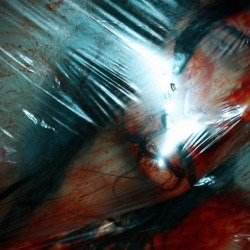
The cover art is more horror than dark techno, and it’s not entirely representative of the EP’s sonic contents, but you should never judge an EP by its cover of course.

First things first: ‘You and I’ is a richly atmospheric tune, with a so much texture and detail. There are strong leanings towards later Depeche Mode, and I’m most reminded of ‘Little 15’, but there’s a lot going on here, not least of all a thick, chuggy guitar and an insistent bass that’s pure goth vintage. The baritone vocal – rich and crooning – very much invites positive comparisons to Dave Gahan and it broods and cruises the mid-pitch, mid-tempo sonic structures that climb and loom over damaged emotional states. As a single, it’s a sock in the chops.

As an EP, this does feel like a bit of a cobbled-together effort that may have worked better with either the lead track and either the instrumental ‘My Madness’ – a high-octane technoindustrial stomper (a strong contrast) – or the ‘Club’ remix of ‘You And I’ as a B-side. Said remix is pretty decent. I don’t actually know if goth club nights are still a thing, but then this isn’t excessively dancey, and hasn’t been remixed as a dancefloor-packing stormer, but instead accentuates the track’s solid mid-tempo groove.

But then there’s the ‘Mayhem’ remix of ‘OMG’ from the debut EP, courtesy of Guilt Trip, which is so much more overtly metal, and snarls and rages like a rabid beast – save for the mellow Kraftwerkian rip in the mid-section. And if ‘You and I’ was intended to showcase a different aside of ‘Against I’, the inclusion of an older track feels like a slightly awkward fit.

Minor niggles aside, it’s a solid effort led by a cracking single tune.

AA

065550

The latest release from the darkly delicious mind of Raymond Watts aka PIG is ‘Baptise Bless & Bleed’, a brand new EP awash with religious lyrical fervour and riffs that could effortlessly crush a tank. The title track is a relentless juggernaut before ‘Speak Of Sin’ takes to the dancefloor. It sounds like an instant PIG masterpiece.

Things take a turn for the sublime as ‘Tarantula’ sinks its pernicious fangs deep into the psyche, clasping the listener tight in its electronic web, while closing out the release is the slower but no less ecclesiastic ‘Shooting Up Mercy’, an epic paean to the cosmic joke that is human existence.
Accompanying these four new slices of PIGgish playfulness on its 12” vinyl format are three bonus extended versions added to the digital release to fully sate your fix.

The beginning of the end or the end of the beginning? ‘Baptise Bless & Bleed’ completes PIG’s tarot quadrilogy, a tragedy in four parts that also includes the earlier volumes ‘Sex & Death’, ‘Pain is God’ and ‘Drugged Dangerous & Damned’.

Providing blessings, but hopefully not the bleeding, on this particular release are regular PIG collaborators Steve White, En Esch and Michelle Martinez.

As with the other releases in the set, Watts has determined that presentation is paramount, and the spellbinding physical edition of ‘Baptise Bless & Bleed’ comes on opulent 12" white vinyl in a die cut custom sleeve that houses a printed inner sleeve and three brand new tarot cards.

Watch the lyric video for ‘Baptise Bless & Bleed’ here:

AA

AA

3ed89b3697c7f69793220529f05fcf2f8a0eb59e

eMERGENCY heARTS – 6th May 2022

Christopher Nosnibor

SINE’s new 5 song EP, Mantis 1, is the first in a trilogy of EPs, “Mantis 1, 2 & 3”. The hype for the release pulls a spotlight on the involvement of a name producer, with the EP being ‘produced by SINE founder, Rona Rougeheart in collaboration with esteemed audio engineer Charles Godfrey at Scary American Studio in Austin, TX. Godfrey, in his two decade plus career, has been engineer/producer on over 75 recordings, including the Yeah Yeah Yeahs’, It’s Blitz! and Mosquito, The Black Angels, Indigo Meadow, and notable work for…Trail of Dead, SWANS, among so many more’. No question: Godfrey’s resumé is impressive, and there’s similarly no question that a decent producer can make a huge, huge difference, with great production having the capacity to render a recording far more than the sum of its parts (Joy Division simply would not have been the same without Martin Hannett’s work, however unconventional and difficult his methods), while equally, poor production can be crippling. Then again, engineering is perhaps equally important: it’s worth noting that Steve Albini doesn’t consider himself to be a producer, but his engineering skills have brought the life to so many albums, and not just the ones he’s renowned for. Still, for all that, you can’t polish a turd: you still need songs and for them to be played in a way that does the material some kind of justice.

Everything comes together just so on this release, and one question I often consider is how close to the artistic ambition is the end result? I have a sense that Mantis I is everything Rougeheart had in her head at conception.

‘Attack’ certainly brings plenty, a combative, dark disco thud of a beat pitched against a relentless throb of synthesised bass. In contrast, ‘Until’ is more overtly pop, but it’s pop in the way Garbage are pop – eclectic, savvy, the production simultaneously crisp and grimy. ‘Future Whores’ is stark, and if there’s something of an early New Order vibe about it, there’s equally some early Pet Shop Boys, and that’s by no means a criticism. Then again, the expensive, yawning notes border on the mellow new age grooves of The Beloved, while the distorted vocals and thumping bass are more industrial… in combination, it crashes hard in the domain of industrial shoegaze, and if that’s not yet been recognised as a thing, now is the time because it’s here and it’s in your face.

Things get murkier and meaner on ‘Blurred’, where I’m reminded of The Human League’s ‘Being Boiled’, only with a harder technoindustrial edge, and the pulsing, bulbous bass is dominated by Rougeheart’s blank, robotic monotone vocal, that’s treated with a metallic edge and some grainy reverb.

Closer ‘Control’ burrows deeper into the darkness, a shuddering mass of slow velocity – yet for all the crushing grind and gnarly digital distortion, the dislocation and thunderous tribal drums, it still slides in a truly aching bridge with a magnificent vocal melody that evokes wistful summer scenes, before crushing them like ant underfoot in a driving death-disco slam.

It all adds up to a meaty and pretty powerful release, and if the idea of releasing three EPs instead of an album seems perverse, it will be interesting to see how SINE utilise the format after such a strong start.

AA

a2098796503_10

Editions Mego – eMego016X

22nd April 2022

Christopher Nosnibor

Context counts for a lot, particularly when evaluating works which represent the time in which they originated. This is no more true than when it comes to evaluating this reissue of Christian Fennesz’ Hotel Paral.lel, originally released in 1997.

For some of us – those of a certain age – 1997 seems recent. But then, there will be great swathes of the population who are actively listening to music -and who are fill-fledged adults, many with children of their own now – who weren’t even born in 1997. Stop and consider that for a moment. 1997 was twenty-five years ago. A quarter of a century.

Cast your mind back twenty-five years, if you can, and try to recall the musical landscape, what you were listening to, what was fresh and exciting, new and emerging. And cast your mind back, if you can, simply to life as it was back in 1997. Pre-millennium tension was beginning to slowly build around the end of days, and the millennium bug that would bring all technology to a halt. Nu-Metal was only just breaking, with the release of Limp Bizkit’s debut, Three Dollar Bill, Y’All. It was the year of The Prodigy’s The Fat of the Land and Portishead’s debut, as well as Radiohead’s OK Computer. It was also the year of Princess Diana’s death and here in the UK, there was a sense of hope as Labour won the election, deposing the Conservatives after eighteen years in power.

But it’s also worth remembering just how far technology has come in twenty-five years. As the liner notes remind us, Hotel Paral.lel was ‘recorded just before mobile computing devices became omnipresent’, and that ‘it was an investigation into the sonic possibilities residing in guitar based digital music. Sz launches the career with a constantly buzzing sound that resembles a fax machine encountering a G3 laptop for the first time, realising the game is up. ‘Nebenraum’ is the first foray into the style for which one would attribute to Fennesz. A glacial drone unexpectedly morphs into a gorgeous melody and microscopic groove. Adding pulse and melody was hearsay in the radical end of experimental music up until this point and with this single gesture, everything changed, for everyone.’

It seems hard to comprehend now, but Christian Fennesz’ debut full-length release really wasn’t so much ground-breaking as earth-shattering – only it wasn’t apparent at the time, and no-one was really paying attention anyway. There was a 2007 remaster to mark the album’s tenth anniversary, but this version isn’t only re-remastered buy boasts a bonus three tracks.

Listening to Hotel Paral.lel with the distance of time and the benefit of hindsight, it’s clear just how out of time it was. It’s a disturbing mess of static fizz, crackles, and hissing, clanks and rumbles, thuds and glitches. It’s an assemblage of dark ambient grating and griding, droning and grumbling., but then ‘Fa’ is more a gritty slab of bouncing heavyweight death disco: it’s got beats, it’s got groove, but it’s got some grainy bite to it.

If ‘industrial’ had become synonymous with Ministry and Nine Inch Nails, Hotel Paral.lel was a reminder – for those paying attention – of the roots of the genre, which lay with Throbbing Gristle and early adopters of emerging Technology like Cabaret Voltaire. And on Hotel Paral.lel, Fennesz exploits the latest emerging technologies to conjure alien soundscapes and strange forms.

There are moments, such as the closing couple of minutes of ‘Nebenraum’ which are surprisingly and incongruously mellow and melodic, in contrast to the warping, circuit-splintering dissonance of ‘Zeug’, one of a number of incredibly short experimental pieces.

Hotel Paral.lel also serves as a reminder that experimental is not a negative trait or a critical dismissal: without experimentation there is no progress, and in ‘97, Fennesz really was flying in the face not only of popular opinion, but, well everything. Now, of course, it doesn’t sound too radical, sonically or in terms of objectives. It does, however sound difficult, gnarly. It sounds dark. And it’s a beast.

AA

_ eMego016X_front

17th April 2022

Christopher Nosnibor

There’s something quite surreal about the imagery of ‘eye gymnastics’: it’s highly visual, yet at the same time, beyond physicality, and as such, it possesses a cartoon-like quality. This surrealism extends to the cover art, too: what exactly are we looking at here? It’s the debut album from a Lithuanian duo consisting of Viktorija Damerell and Gailė Griciūtė, who first came together in 2018.

And so it is that these clues are also representative of the music: the words are strange, fragmented, abstract – but also not, with improbable and incongruous images, and the album’s first piece, ‘Eye Gymnastics’ could be something of a signature tune for the pair. It’s sparse, the beats subtle, distant, subdued, yet insistent as they pulse through eddying swirls of semi-ambient synth drifts, through which a spaced-out, vocal dreamily intonates lyrical abstractions. If surrealism has a certain preoccupation with dreams and the subconscious, then on Nothing Supernatural, Eye Gymnastics plunder that inner realm for inspiration and render it in such a way as to remain to the vagueness, the indistinct focus of the fugue state, the disconnects and strangeness of dreams, and recreates the way those sensations and images echo, hauntingly, in the waking hours which follow those most vivid of nocturnal experiences.

The title feels vaguely ironic in the context of the disconcerting, dislocated vocal treatments of the ominous and eerie ‘Tree Tops’, where a glitchy, industrial beat clatters in thick and leaden. Then again, it’s dark pulsations feel as much the product of a troubled mind as of anything supernatural.

While there are some significant leanings towards ambience and hypnotic drifts imbued with an ‘otherly’ feel, elsewhere, snarling, growling electronics dominate a number of the tracks, with ‘Sadness and Joy’ being really quite heavy, with a gloopy bass that whips and whirs and fizzes. ‘You Destoy Me’ epitomises this industrial darkness: the murky drumming pumps away with the palpating tension of Nine Inch Nails’ ‘March of the Pigs’, while the multi-layered vocals whisper and echo dark thoughts, and the relentless pulse of ‘Let it In’ is harder and harsher still, the bass drum a booming throb, the snare – such as it is – a smash of distortion. You don’t want to let it in: no, you want to shut it out, make it go away. It’s not pleasant, it’s uncomfortable, claustrophobic, suffocating. Sparse and spooky, ‘Bitter Night’ bridges the territory between Young Marble Giants and Throbbing Gristle.

It’s unsettling, a creeping burrowing into the brain, as if overhearing someone’s internal monologue. This is not what you’d really call a ‘relatable’ experience, at least for the majority. It’s not full-on horror, but it is chilling, challenging, eerie, unsettling. But it’s also compelling, hypnotic, and a quite remarkable debut.

AA

Nothing Supernatural art

Cool Thing Records – 1st April 2022

Christopher Nosnibor

BAIT exists as a side-project for Asylums’ Michael Webster and Luke Branch, and they couldn’t be much different, with Webster using this vehicle as an outlet by which to channel all his angst and anger through sharp-eyed and sharp-tongued social observation and critique.

This debut long-player has been a long time in coming. Their eponymous mini-album landed back in March 2017, and apart from the standalone single release of ‘DLP’ in the spring of 2019, they’ve seemingly been dormant, at least in the public domain. But despite the obstacles of geography during lockdown, they’ve been busy, and the last couple of years have provided an abundance of grist to their mill.

The band describe it as ‘a digital post-punk lockdown docu-record which watches the clock, gets the jitters & lashes out just like the rest of us. It’s an internal monologue that accounts the anxiety, the struggles, the pressures experienced living by the sea during an international pandemic’.

Most struggled in one way or another during the pandemic, some unspeakably, and for a great many, the lasting effects of the trauma of lockdown and isolation are every bit as bad as those of the virus itself. Many lost loved ones, but were unable to gain closure or grieve with friends and relatives due to restrictions – while, it turns out, the government of ‘Great’ Britain partied on. It was often hard to know what to make of anything: conspiracy theories abounded, but over time, some of those theories began to look rather less far-fetched, and under such close surveillance, people could be forgiven for getting paranoid, for being angry.

Sea Change is one angry record. But to describe it as such is to overlook the emotional range it articulates: it’s an album that gives voice to anxiety, panic, fear, trauma. Perhaps it’s the ‘internal monologue’ aspect of its evolution is why it really speaks. As is so often the case, in the personal lies the universal, and it conveys the rapid changes in mood and general state of confusion, questioning, and self-doubt that defined the lockdown experience for so many of us. And just because we’ve left lockdown doesn’t mean that we’ve left lockdown behind, psychologically, meaning that Sea Change’s resonance goes far beyond that defined period in time which spawned it (‘inspired probably isn’t the word).

The mood is tense and dark throughout, and the production has that mid- to late-80s Wax Trax! Industrial feel to it: the guitars are gritty, but everything is condensed into a dense lump of sound that batters rather than saws at the senses. ‘No Sleep for Light Sleepers’ is more minimal, haunting, but also ominous, the processed spoken word like the mutter in your ear that just won’t let you settle.

It’s not entirely without humour, either: if the frenzied, pounding ‘DRAMA DRAMA DRAMA DRAMA’ encapsulates the way in which a heightened state of anxiety is a shortcut to a loss of perspective, whereby the smallest, most trivial things give cause to great panic (things you know are irrational, like, say, getting twitchy when your phone battery drops below 49%), it also highlights just how self-obsessed and microfocussed we are as a society (that that incident at the Oscars totally engulfed the internet against a backdrop of war, a cost of living crisis, and rising Covid cases and hospitalisation is perhaps the definitive moment in our culture of self-absorption, and perhaps, in the wake of lockdown panic, the need to have something to fret and opine over obsessively just to fill the gap). It’s not all completely oppressive, either: ‘Electric Murder’ is a straight-up dark electropop tune that would comfortably sit in Depeche Mode’s catalogue.

‘The Weight of the Water’ finds them punching through a steely grey mesh of guitars, and it’s dense and tense; the jitters amp up tangibly on ‘Somewhere to Be’. ‘I’ve got somewhere to be… I’ve got somewhere to be’ Webster repeats as if a mantra, like the White Rabbit trapped in a postmodern world in which all holes have been concreted over and gentrified in the name of ‘progress’. ‘Sugarlumps’ leaps from a queasy, claustrophobic wheeze to a roaring metal blast reminiscent of Ministry’s Filth Pig, and the album ends with a ferocious finale with ‘We Will Learn to Bark’, the sound of pure catharsis.

It’s pretty much an instant grab, but Sea Change is definitely an album that offers up more over repeat plays.

AA

Sea Change

25th March 2022

Christopher Nosnibor

In today’s low-attention-threshold society, quite literally everything has to be instant. People simply won’t wait: they don’t have time. A 2019 survey found that the average person grows frustrated after waiting sixteen seconds for a webpage to load, and twenty-five seconds for traffic signal to change, and as far back as 2011, the average time spent on a webpage is under a minute. On Spotify, again pre-pandemic, there was a 24.14% likelihood of skipping to the next song in the first 5 seconds, 28.97% in the first 10 seconds, 35.05% in the first 30 seconds and a whopping 48.6% skip before the song finishes.

‘Nightmare’ piqued my interest inside five seconds, then had me fully by the throat at eleven. Why eleven? That’s when everything slams in – from a fade-in of dirty, distorted guitar chords (and it’s not often you get a fade-in), there’s a pause, a moment of silence, of suspense… the tenth second passes as you’re holding your breath, and then BANG! A pumping industrial disco beat and booming bass provide the driving backdrop to a vocal performance that’s all attitude, but it’s also clear that Eva Sheldrake knows her way around a hook, too.

Robin G Breeze’s production is a strong asset, in that is balances a slick, digital aspect with noise, in a way that’s reminiscent of Nine Inch Nails. Throw in a dash of metal and a dose of shadowy goth and you’ve got a killer formula and a cracking single.

(Click the pic to play)

276000518_526724322200097_3037072524324268890_n

Pic: Derek Bremner

Cool Thing Records – 25th March 2022

Christopher Nosnibor

Cool Thing isn’t just a name: it’s essentially a manifesto. Established in 2014 as a conduit for Asylums to release their music, the label is truly a beacon of DIY independence, with in-house PR, the lot. One suspects the success they’ve achieved is in no small part to the calibre of the releases they’ve put out, not only for Asylums and side-project BAIT, but also the various acts from their locale of Southend-on-Sea, and occasionally London that they’ve given a home through the years.

The latest is ‘Submission’ by Southend electronic duo A Cause In Distress’, the follow up to the band’s third single, ‘Paraffin’, released just short of a year ago.

The band describe themselves as ‘The lovechild of Nine Inch Nails, Fugazi & Radiohead, if it was fathered by David Lynch’, and on the basis of previous press coverage, they’re everything all at once, which sounds like a tightrope walk that could be spectacularly amazing, or the most disastrous plunge into a catastrophic platter of shit imaginable.

Cool Thing know how to pick ‘em, and this is an outstanding hybrid that packs a throbbing synth that weaves and waves, propelled by an urgent shuffling beat and a vocal reminiscent of Morten Harket: it’s as if Factory Floor had perfected soaring melodic pop instead of running out of steam and ideas after just two EPs. At three minutes, it’s succinct, and it feels like half that. The cyclical groove just sucks you in, and tugs you along, and you’re completely immersed. It’s not music, it’s alchemy. Give in to it.

A Cause In Distress - ‘Submission’ _ Artwork

This is it Forever – 25th March 2022

Christopher Nosnibor

There are many artists who can boast bodies of work that are solid, and illuminated by outstanding gems along the way, but there are few artists with bosies of work as consistent as worriedaboutsatan. Fifteen years into the project’s existence, that’s a significant achievement. Some artists go off the boil or seem to struggle with maintaining that level once they achieve a certain degree of success, whether it’s simply through a perceived pressure to deliver something or create something that will replicate whatever it was that achieved that success, or simply diminishing returns, but worriedaboutsatan, despite having tracks featured on Coronation Street and Adam Curtis’ Hypernormalisation documentary, not to mention radio play on both 6Music and Radio 1, and the very vocal support of one Ian Rankin, remain unstinting in their path.

Operating solo since 2019, Gavin Miller has maintained a constant flow of output: so constant that since Providence last May, Miller’s slipped out a brace of album-length single track releases (Circles I and Circles II) and an EP Live from the Studio that entirely bypassed me while I was, well, I don’t know, what was I doing?

The thing about consistency is that it absolutely does not equate to sameness, and worriedaboutsatan’s output is defined by its evolution, incorporating wide-ranging stylistic elements from delicate post-rock to pounding beats within the overall sphere of haunting, reflective ambience of varying shades of darkness and light. And while satan’s sounds exist in a rarefied space all of their own, no-one lives in a complete bubble. We live in dark times, and not insensitive to this, this latest offering finds Gavin channelling that global turbulence through his work.

Bloodsport promises a departure, and it delivers. Miller describes it as ‘still very much a worriedaboutsatan album, albeit a fairly angry one.’ It’s a fair summary. The intro piece, ‘Je Suis Désolé’ is a classically ‘electronic’ composition with oscillating waves cutting across one another, but the treble tones sound like sharpening knives, and it has an edge that scrapes at the skull quite unexpectedly.

Making a linguistic and stylistic switch, ‘Bis Ich Komme’ is slow and dubby, a dense bass and backed-off beats holding the structure of a drifting ambience, before it solidifies and hardens around the mid-point. There’s a tension, a simmering aggression in the tone of the barbed synths, something uncomfortable and uncertain in the samples, before jungle beats hammer through the woozy, stomach-clenching undulations like machine gun fire

Released ahead of the album as an EP with three remixes, ‘Sigourney Weaver Fanclub President’ is the theoretical lead single, and it’s a brooding eight-and-a-half minutes of echoes guitar sustain and crashing sheet metal. It’s the sound of shattering destruction and trepidation. It’s classic ‘satan in that it’s all the layers, all the atmosphere, but it’s also steelier, with a certain bite previously unheard.

The two parts of the centrepiece, ‘An Absolute Living Hell’ are definitive and are a statement in themselves. Dark, dank, oppressive, bass-heavy and bursting with shards of extraneous noise, rippling in deep, deep echo, this diptych is the soundtrack to this bleak moment in time. ‘Part 2’ goes full industrial with a throbbing bass and crashing percussion worthy of Test Dept or Neubauten.

The stark robotix of the brief but claustrophobic ‘Perfekt’ makes for possibly the least WAS-like track of their career, before the metronomic thud of ‘Slur They Words’, dives headlong into the territory darkest hi-hop: the origins of the vocals are unclear, but they’re abrasive, and ‘Apex Redditor’ draws the curtain in a bleak fashion, but with a redemptive hint of a rippling piano and twitchy percussion that – I hope – alludes the prospect of a new dawn. Because surely, surely, there has to be a light at the end of this tunnel.

AA

a2575977490_10

Digital Horsecore pioneer Petrol Hoers is kicking off this year’s gig schedule with a UK tour in April, alongside techno punks Petrol Bastard and antisocial rock three-piece The Ducks.

Starting in Blackpool on April 7th, the tour will run for 11 days, finishing with an early evening show in Brighton on April 17th.

Part man, part horse, part hallucinatory nightmare; Petrol Hoers is galloping out of the strangest corner of the Yorkshire music scene with a unique blend of hardcore punk, hard drum+bass and surreal comedy.

The equine entertainer has built a cult following through his online antics and energetic live shows which has led to national radio airplay, festival appearances and being described by music industry legend and BBC Radio 6 presenter Tom Robinson as “…one of the oddest and most original artists it’s ever been my pleasure to come across in the last 15 years of BBC Introducing.”

The most recent Petrol Hoers album Oh I Don’t Know, Just Horse Stuff, I Guess is available to listen and download via Bandcamp

You can catch Petrol Hoers at the following dates:

Thursday, April 7, 2022 – Scream & Shake, Blackpool

Friday, April 8, 2022 – Outpost, Liverpool

Saturday, April 9, 2022 – Aatma, Manchester

Sunday, April 10, 2022 – Santiago’s, Leeds

Monday, April 11, 2022 – Network, Sheffield

Tuesday, April 12, 2022 – The Chameleon, Nottingham

Wednesday, April 13, 2022 – Heartbreakers, Southampton

Thursday, April 14, 2022 – The Tin, Coventry

Friday, April 15, 2022 – The Lab, Northampton

Saturday, April 16, 2022 – Poco Loco, Chatham

Sunday, April 17, 2022 – Hope and Ruin, Brighton

Ticket and social links can be found at https://linktr.ee/Petrolhoers

HoersposterHoers1